Cosmic Connections and Heartfelt Hospitality with Chef Adam Lamb
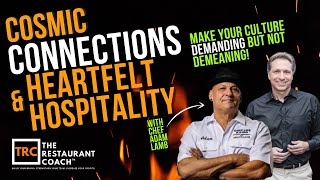
This is a Restaurant Coach podcast episode (YouTube) featuring Donald Burns interviewing Chef Adam Lamb. The conversation blends personal vulnerability (death anniversary/rebirth, faith reconnection, opioid addiction and recovery) with practical leadership coaching for the restaurant industry: emotional intelligence (self‑awareness, self‑regulation, communication, empathy), mentorship, onboarding, hiring, culture change, and team dynamics (trust, respect, fluid teamwork). They also discuss concrete staff retention ideas (benefits, goal boards), the need for structured leader development, and promote the Restaurant Success Summit (Tucson) and Adam’s coaching/podcast offerings.
Chapters
Hey, welcome to the Restaurant Coach podcast. It is the cure for the common restaurant. I have the honor today of having a gentleman on my show who's been actually a guest on the podcast quite a few times. Chef Adam Lamb is in the house today.
Donald Burns. I am so excited to be here. I think the last episode we did, you titled it Quantum Chef.
Quantum Chef. That was. It was some deep stuff, man. You know, it was great. I. I love my conversations with you because we always, like. We start off with kind of like a plan, and then we go into some quantum really, like, deep that goes just crazy. But it's always. It's always a great. It's always a great conversation. I always look forward to talking to you.
Well, that's why I appreciate you so much, Donald. And you and I go back so far. You know, I think our first contact was, you know, I had you on the podcast, and then we've been kind of doing this thing between us, and there's always an opportunity for, like, really frank and honest discussions between us. Like, yeah, there's the outs, there's the outside concept and. And what we're trying to promote. And yet, you know, when you start getting real about the fact that, you know, you almost died and you were on the pavement and that's when your life started to pivot, you figured, I've got so much time left, and I want to make it valuable, not necessarily for yourself, but for others. Like, that's. That's hard not to. Not to challenge that type of transparency and vulnerability. So I. I honor and celebrate that about you. It's like, regardless of anything that's going on, you and I can really get into some good stuff.
So always can, always can. I just celebrated my death anniversary September 27th.
Your rebirth. Rebirth, yeah.
Talk about. Yeah, bring coming back and having. You know, and that's the thing. It's like, man, life is just so short. Don't waste time selling for mediocre. Don't waste time selling for a life that's less than you are capable of living. Is the. Probably the biggest thing I tell all. Yeah.
And I also acknowledge the fact that, you know, for a lot of us out there, myself included, you know, there's this doubt, you know, and I encourage, you know, a lot of my coaching clients have a gentleman right now who's wanting to pivot into coaching, and he's a person of faith, and I'm like, dude, that is your edge. Like, how. How many people of faith in the hospitality industry feel completely left out because they're not dirty kitchen pirates. Exactly right. And I also understand that that's a risk because when you put yourself out there.
Oh, no, it's true. I recently had a big, huge connection with my faith.
Did you?
I had been separated from a long time and I. I start. I went out to a boot camp. I joined a mastermind group, a high level mastermind group that Jarrett Garrett J. White runs from my Wake up warrior.
Yeah.
And I tell you, man, he just like, he. You talk about raw, real raw, relevant and results. He really helped me dig out some stuff I had been suppressing for years. It was a realization and it was a reconnection to. To God. And I'm telling you, man, and like you said, yeah, I'm throwing it out there now and we're gonna see what. We're gonna see what happens.
Well, the cool. The question that comes to my mind right away is like, so how does that inform your way of being and your particular form of marketing yourself and stuff? Because, you know, one of the things that I so, you know, appreciate and model you about is this relentless commitment to, you know, you gotta like, if you're in this space, if you're coaching and mentoring other professionals, you have to be willing to stand on the soapbox and yell louder than anybody else in the room whether or not you feel like you're up to that or not. Because I think most of us, you know, are challenged with this idea of imposter syndrome. I mean, how many times coming up in the industry, like, chicken, I really be the chef in this place or, or a very dynamic operation. And you look at it, firstly, I'm like, oh my God, my balls. Just.
Sure. Or like, you know, like in your, in your space a lot. And, and you. And I deal with this thing a lot. I'm depressed. I have some mental issues. I have some drinking issues, I have some drug issues. I have some other addictions. But man, if they, if they know about it, they're going to look at me wrong.
Yeah.
Less of me, right?
Yeah. And again, I just want to thank you so much because we get a chance to share a stage. You've been so kind to invite me out. And one of the conversations that I get to have with the audience is this idea of like, it's okay to not be okay. And previous to Covid, you know, I don't think there was ever a line cook that said, hey, Shaft, I'm feeling a little edgy. I think I need to go to an AA meeting this afternoon.
Yeah.
Yeah. Because nobody Gave a like, suck it up sunshine. Let's just keep going. And you know when a shock to the system happens, when we lose 6 million people almost overnight to the industry and a lot of them are reticent to come back because they don't feel safe. Yeah, I think it's a valid concern. And you know, I. Coming up, I think you and I wanted the same things. We wanted to be seen, heard and valued. But when we came up, we looked around and we're like, holy, man, I'm not going to say a word. Because everybody's just, they're in the grind, they're doing it as hard as anybody else can. So the, the implicit agreement is you got to work your ass off, man. You got to work your ass off or you're not going to end up with anything. And I bought into that lie. And there wasn't a day that went by that I didn't somehow feel like a little. Yeah, there's got to be a better way, man.
Not being authentic. I was, I'm suppressed. I was suppressing so much of who I really was. Talking about this too, you know, that mask of mesque, you know, masculinity. You have to wear it. I have to be tough. I gotta be the chef, man. I gotta be brutal. I got, I can't show any weakness.
Yeah, I, I just recently like you had this, I wouldn't say conversion, but certainly awareness. I also came to awareness that now since 2011, I've been doing not only my professional work with coaching culinary professionals or hospitality professionals, but I've also had this side gig which is doing men's work primarily because of my own. And then I got into a place of leadership where I was, I ran a circle here in North Carolina, in Asheville, N.C. ended up giving it to the people that were in the circle because I just couldn't keep up as a one man operation doing all this stuff. But I always felt like I had to be either or right. And I didn't necessarily recognize that both actually inform the whole and support the whole. That I could actually be a person who is. Thinks deeply about men's work and rite of passage and all these different. Seems like rite of passage is like, yeah, that happens once in our life. It's like every 10 years or so there's another challenge that is inviting us to stretch a little bit bigger and to open up our hearts to other men. When we've been trained, shamed and conditioned to view others as like, no man, you're gonna come into my Cave. You're gonna steal my woman and take my meat. I can't have that happen.
Yeah.
And when you can actually drop that and be in a circle of other men who only just want to hear you with ears of love, that's life changing, man. And so I agree with you. Like, it's only until we can actually bring all these pieces back and say, listen, I do this, and I also do this. Like, I can be a person of faith and still serve the community where for most of it, it's been like, yeah, unless you're a dirty kitchen pirate, you know, you suck. Get the out of here.
Exactly. Is that. Let's kind of start at the beginning of everything. You know, tell me about the moment where you realize you kind of had lost touch with why you became what kind of really, what was the kind of the trigger that inspired your journey.
Yeah. I was on the island of British Tortola, British Virgin Islands. I had just been fired from the best job I ever had. I was actually the very first true corporate chef of Winn Dixie supermarkets. And I'm at the tail end of a five year addiction of opioids. After my second back surgery. Not like I was going out on the street and copping. I just, you know, would run short. Every cycle.
Run short, man. Hey, Doc, I need more.
And I'm talking to this guy in a bar who's in my department. And I go in the next day and I get called to hr and they're like, yeah, we think it's probably time to part ways now. I had just been given an entire sheet of Jacksonville Jaguars box seats because I was supposed to be kind of like the mayor of. Of, like, when everybody's tailgating. Like, I was supposed to be out there and doing all this stuff. And I had three other people in my house that I was carrying. Nobody was really working except for me. And so for a week after I got fired, I went to Kinko's every day and dressed like I was going to work and go to Kinko's and fire off resumes. And nobody was replying except this crazy dude in the islands. So I went down there and I had like 10 pain pills left and half a bottle of Brugal rum. And I'm sitting there looking at myself in the mirror going like, dude, what are you doing? What are you doing? Like, I felt myself slowly dying. Yes. Instead of actually thriving in my career. So I rolled myself up in a blanket and sweated it out over the course of three days. And, you know, 290 pounds, swollen, sick. I didn't give a. I put my tennis shoes on, and I just started running in the heat as a signal to the universe, like, nope, I'm here. I'm making a stand. I'm going to have it. My space now. I'm going to have it. Yeah, my. Or at least I was willing to. To step into my greatness, right? So that was a moment where it became clear to me that I had so lost my way because I got in the industry. Because, you know, I was 15 years old when I started washing the dishes, Donald. Do you know that?
Oh, yeah, me too, man.
Two. In two years, this. This sucks. But in two years, I will have spent 50 years in the industry. Five. Zero.
Dude, I was like, I'm only at 44, man. I'm only 44 years, dude.
You're a young man.
You're younger. I'm a youngster, man. Yeah.
And I know that might come as a shock, but, you know, I bought into a lot of the. When I was younger. That had to be a certain way. I remember in 1986, I had just opened Ditka's Restaurant, downtown Chicago, after they won the Super Bowl. Needless to say, the place was lit. We were doing dishes in the parking lot every night. And I'm sitting with my girlfriend, who's a server there, and three other girls, and we're at a bar after work, and they're like, have all this cash out on the table from four shifts, and the restaurant's doing $21 million a year, and I'm making 19, $500 as the executive sous chef. And I looked around and I said, I am doing something really wrong. I couldn't even afford child care for my son. And. And that's when I decided that all this goofiness, the friendliness, like, this big, goofy guy that likes to be in relationship with, like, that had to stop. And that's when I decided to be kind of like the apex predator in the punch bowl. And what I didn't realize until much later is that's actually my superpower. My superpower is to be in relationship, to lead from within the community, not standing on the ridge, going, okay, everybody go up that hill.
Take the hill.
Yeah. Yeah. And so, you know, I realized that as much as I didn't want to be my dad, I ended up exactly like him. I actually. I'd actually built my prison with the. That he had left over.
Like, that's so true, man. My dad was. You know, I. I'm like, you. I I did an apprenticeship with my father. My dad was one of those Hell on wheels.
My.
In fact, my dad's nickname was Wild Bill. A. All right.
My dad's.
Wow. Bill Burns.
Yeah.
He was like, hello. He would make Gordon Ramsay look like a nice guy.
Yeah, exactly. And.
And the sad thing was, that was my model of what a chef was. So when I started becoming a sous chef and chef, I modeled that same behavior. And I was like, I didn't want to become my dad, but, man, you know what? I was a spitting image of him. Right?
I mean, you were. You know, it's like, I. I've come to this awareness that the industry didn't do. To me, the industry did not promote my drinking or my drug taking. Like, it made it really easy. It made access really easy.
It makes it easy. Yeah.
But I'm not. But I'm not going to sit there and carp and say that, you know, all my problems were due to. That my problems were due to the fact that I was never actually being all of who I was, and I.
Wasn'T trained how to manage my emotions properly.
Exactly. Which comes to the second presentation that I get to do, which is about emotional intelligence. Because right now it seems like a lot of. A couple of the buzzwords out there is emotional intelligence. Another one is mental fitness. And mental fitness to me is like, oh, man, there's. There's like, almost a trigger there because I spent a lot of time in the gym. I spent a lot of time, you know, I. I'm kind of a big, burly guy, and I've used my physicality almost as a weapon in. In that space, because I cut. I cut a big swath, and everybody's like, who. Who the. Is that? Like, you very rarely have to have chef coat on. All you're actually looking for is the person with the attitude like, oh, they leave this place. So. So mental fitness could be misconstrued as, like, putting up with a lot. And that's not. That's not what this is about. Emotional intelligence, you know, has basically four different. Four different spaces. One is self awareness.
Yes.
Another. Another one is self regulation, which is.
The thing we all have problems with.
Right. Social communication skills. And. And the fourth is empathy. So in my coaching right now, I focus on three things. Number one is communication skills, relationship skills, and community building. Because really, as we've discussed before, there's still lots of people that want to come in the industry, but they need to know that they're safe, both physically and emotionally. And let's face it, you know, we prey on those folks for a long time. Oh, no.
Restaurant people have done a job of treating people like we have done a. And that's one. One of the things I talked with my coaching clients is like, you know, you gotta. You gotta market your culture. You gotta show me that you're different. Because if not, I think you're like every other restaurant in town. You're gonna treat me like crap. You're gonna yell and scream at me. I'm never gonna get a chance to have a decent meal. I might eat out of a goddamn deli cup over a trash can in between orders. I'm never gonna see my family. I'm never gonna see my friends. My goldfish is gonna die. So if you don't tell me why you're different, I assume you're like every other restaurant in the market that's going to treat me like crap.
Right? And so the challenge becomes, how do you actually communicate that to someone else? And the reality is, is static images of plates of food or is not going to tell anybody about your culture. Like short form videos, a little joking behind the line as you're setting up, or talking about this or talking about that. Produced and posted on the social media channels where your potential customers and your potential associates live. And let's face it, this whole idea of short form video, man, is so powerful because now I know that there's a couple organizations out there. One is called Wise Tale, another one is called the Pineapple Academy, where they're making the. The backbone of their business. These short form videos that as an operator, you can buy into and have everything from how to turn on a fryer to how to clean out the grease trap. And you can also upload your own videos so that your culture and your particular food focus is also highlighted. But this becomes your entire operating plan. On a cell. On a cell phone. And not only that, they're partnering. Pineapple Academy is partnering with a French company that's doing online checklists. So you as the manager can actually be assigning closing duties. And it shows up on the person's cell phone. Now, I know that's a little bit of culture shock because I don't know, Donald, probably share my same experience. Put that phone away. What are you doing?
Get this goddamn phone out.
Did you read the policies around cell phones? And now it's kind of like, okay, well, if we're going to be continuing to, you know, paddle upstream at some point, man, that's going to be incredibly debilitating. And you're like, again, kind of like, what's the better way? The better way is to understand the way the new associates are thinking, what actually affects them, how they are viewing. Like, come on, if you're going to bring somebody, and I don't care what position they're in, but if you can't clearly articulate what their career path could, could be. Yes, based upon clarity of job descriptions, a, a structured wage scale, skill tests, whether they're written or, or, you know, mystery baskets or whatever. But the associates showing up today, they want to know what's possible for them. And it's not enough to be like, hey, you know, get behind there and make salads now. Let's face it, there's always going to be those folks who are, for lack of a better term, you know.
Mother.
And father are actually have two different jobs or two jobs each because they're trying to make their kids lives better. They're not interested in any upward mobility. They just want stability. And again, if you're not showing them in clear, concrete terms what stability means, means that you're treated with respect, that you're invited into the conversation, even though there might be stakeholders who are going to make the decisions. You know, daily standups, I see you, I celebrate you in front of everybody else. Like, this is not patting everybody on high knee saying you're special. This is about, this is hard work and we can only succeed as a team. And so how do you actually build that? And so all these things about emotional intelligence for me was kind of like the game changer. As soon as I became self aware, which was part of that was my men's work, then I was able to think about, man, what's, what does self regulation look like? Because I'm like you, D.B. i'm passionate person. And so what do I do if I have to like kind of turn that nozzle down so I'm not drinking from the fire hose, right? And what I realized is that passion is a double edged sword. I've seen some, I can't remember the chef, but he said, you know, passion is, passion is the danger. Because in order to show up consistently, you have to have something more than passion. Because passion ebbs and flows and you burn out and, and then how else do you show up then?
So that's the truth now. So just to give everybody a little bit of clarity, Adam Hurry mentioned that he's gonna be doing a couple sessions. What he's talking about is every October I have a summit I host in Arizona. It's called the Restaurant Success summit this year. It's down in Tucson, Arizona. Adam is one of nine speakers.
Nine great speakers. Like, really, really hot chick.
I mean, and you want to talk about. So in Adam and I. And I formatted this whole restaurant success summit around the premise of, like, Adam and I go to a lot of conferences, and the conferences are like this. There's usually a huge agenda, and you have to pick and choose which ones you want to go to. And unfortunately, a lot of times, oh, man, I want to go to this one, but, oh, there's this other great one, too. And then now you're like tossing a coin, which one do I go to?
Right.
I didn't want to have that problem. So I was like, listen, why don't we just make an agenda where it's like, we have one room, one stage. Speakers are up there. We're going through everything that you need. Day one, day two, day three. We go from 9am to 6pm every single day. Monday, Tuesday, Wednesday. I got nines, people lined up. We have a little break for lunch, the breaks in the room so you don't have to go anywhere. We're just gonna dig down. We're gonna talk about, like, Adam's gonna talk about mindset. Adam's gonna talk about emotional intelligence. He's going to talk about communication. He's going to talk about, you know.
Mental health and wellness, Mental health, mental.
Health and wellness, community. I mean, all the stuff you need. I'm gonna talk about leadership. I'm gonna talk about business. I'm gonna talk about a little bit about being. I'm gonna, you know, we got people in there. I got people talking about, you know, hr. I've got people from. I got Ramon Dios coming over from Spain. He's going to talk about some leadership stuff, too. I mean, it's a great thing. Beau Bryant, the restaurant giant's going to be there. We've got a huge list. Kyle Cerna is going to be there. Kyle's an amazing, amazing speaker. We've got such a great lineup. And if you want to join us, it's coming up this. It's coming up pretty soon. So it's October 23rd, 24th, 25th, Tucson, Arizona. If you go to restaurantsuccess summit.com you can grab a ticket. Right now we're doing a deal. It's basically. It's 300 bucks off the normal price and you can grab a deal and you still get all the $10,000 in bonuses. And we also have a great rate at the hotel, the resort. We're at, it's called, it's at Hacienda del Sol. Beautiful resort. And we have a really, really great deal as far as a room rate too. But there's other hotels available if you don't want to stay there. Don't feel like you obligated to. But yeah. So, like, when Adam's saying, hey, I'm speaking two sessions. I just want to give everybody a little context.
I got a little ahead of myself. Sorry.
That's all right, man. That's what we do, brother. We roll, man.
Exactly.
So, you know, let's talk about, let's talk a little bit about this new kitchen culture.
Sure.
And what really, I mean, and you talk about a lot of this on your podcast and you have Chef Life radio podcast, and you have Chef Life radio coaching. You know, Chef Life Coaching is your website, Right. And you talk a lot about this new kitchen culture. Talk about that a little bit and tell me, what does it really look like and why is it really essential that we move to this new direction?
That's a great point, because I, I liken it back to when the millennials started showing up, right?
Oh, yeah.
And there was a lot of old timers who were like, bitching and griping about the fact that, you know, crying out loud, these kids, they want this and they want that. They're entitled. And again, to kind of go back to the point I was trying to make before, you know, I don't think what they were asking for was anything less or more than what I wanted or what you wanted. When we showed up in the industry all fresh eyed and like, ready to go. And I'm here, Chef, Sure. And yet the reality is through, you know, Covid basically stripped the polished veneer of the industry off. And all he read was how shitty it was to work in the industry. And for those of us who've been in the industry for a long time, we knew it sucked. I mean, there are brutal environments, you know, no ac, bad air ducts, grease on the floor, no mats. And for the longest time, we were kind of expected to shut up and put up. And that worked when you had 550 resumes for one position. At the beginning of the 80s, with the advent of both Food Network and for profit culinary schools, you know, a lot of students were sold a bill of goods about what they were able to achieve once they graduated from these particular programs and they showed up in the industry and we were like, what? But for a certain segment of the population of the industry, they realized, well, man, we don't have to. We don't have to train anybody anymore. Oh, yeah, they're actually getting this over here. So the expectation was you show up, you know, what you're supposed to be doing. Back in the day, when you wanted to be a chef or you wanted to be a restaurant manager, you paid the price. You were apprenticed to chefs and. And restaurants and had the lowliest jobs for the longest time because of. Build character.
Yeah, yeah, yeah.
And there was a certain. Like, they actually knew how much this industry would take from us as human beings. So they tried to build up resilience in us by giving us these shitty jobs. And for most of us, we kind of kept going through it and kept. Kept focused. The problem is, is that now people have so many different options if they want to do a career. And for those who are called, because I truly believe this is a calling. It's. You know, it's no surprise to me that everybody in this industry, whether you're in the back of the house or the front of the house, are sensitive people, right? They're very. They're very often musicians or they're artists or they are actors or whatever the story is. There's some other thing that fills them. And when someone shows up in my kitchen and they say, oh, chef, all I've ever wanted to do is cook. You know, this is my passion. I really, really love this. My first piece of coaching for them is get a hobby. Because if you invest yourself emotionally in one particular thing, you know, at some point you have to hang up your apron. Like, I can't do 14 hours.
No.
On the pass anymore. I am at an age where I have to understand that it takes a huge toll on my body, which it has. And I paid the price for not being conscious and aware in those moments. So we have to be where these new associates are. Because the fact of the matter is, during COVID and 6 million people left the industry, there was lots of restaurants that closed. I'm of the opinion that we don't need more restaurants. We need restaurants of quality. We need management groups of. Of quality, where we can take somebody who maybe. Let's face it, a lot of folks who show up in this industry have been marginalized in their personal lives. Me, I got in this industry because I was looking for a place to belong. And when I was in high school, I started washing dishes at 15, I walked past the kitchen one night, and I saw what was going on in there. And there was steam and action and everything was going on. I was like, Mesmerized. I'm like, whatever that is, man, I gotta get me. So I gotta do that, right? And it was just something that spoke to me about being with a, with a heavy click that knew what they needed to do and could slam all night long and there's nothing left in the past and no bring backs. And that perfect cell is like, you know, it's a heavy metal chorus of angels, you know, background. And then you go, okay, so what do we do now? It's 10 o', clock, let's go. But nobody ever taught us about leadership. There's no culinary class called leadership. And I'm starting to work with our local here at Ab Tech, where I go in once a quarter and I do this presentation about emotional intelligence. Because the things that they really need, at some point someone's going to toss them. Listen, if you work hard, you will be promoted. Because that's what people like to see. Someone who's willing to buckle down. But at some point someone's gonna throw you a set of keys and say, okay, good, you're closing tonight. And a lot of us take that as like, okay, that's my first step into management. Yeah. And most culinary schools do a great job at coaching and teaching management. And that's typically about diminishing supplies, diminishing supplies with labor, diminishing supplies of food and all that. And so we're really good at almost time travel, like figuring out it's 10 o' clock in the morning and we're already in our minds. Five o', clock, setting the station up and you put your hand down and it's empty. I'm like, okay, I gotta practice, right? So it's, it's, there's some magic that goes on there in, in the entire industry. I'm not talking about just in the back of the house. But there is magic that happens when there is a connection made in the front of the house. And a server actually, you know, shows enough of their heart to connect to another person. And I had someone once, someone once told me I was all pissed off. I was pissed off at the staff, I was pissed off at everybody. And this, this general manager of mine says, well, Adam, don't you see the God in what you do? And I'm like, what? Like. And I had to stop for a second. And she said, you know, today's, in today's society, you go to the gas pump, you don't go inside, you pay at the pump. Nobody there. You go the atm, nobody there. Like, as a society, we're Becoming more fragmented and more siloed. And there's. There's been some studies that have just come out that said that this is the loneliest time ever in the United States society. And there's like, I don't know, 70 of men say that they have 3 or less friends. Like, society is built to silo us into these individual places where all we're doing is consuming social media. But we are very, very short on human connection. So when the restaurants opened after the lockdown, everybody poured in and we were, like, hanging on with tooth and nail. So if we don't do something to create a safe environment for future hospitalians, as, as, as. As lame Danny Meyer quotes it, if. If we don't create a safe space for hospitalarians to come in and learn and grow within this community, there's not going to be too many of us left. So this whole idea of segmenting down, of niching down and menus and concepts to where, like, the days of being all things to all people are over. Like, how many more goddamn spinach dips do we need? I'm looking for the best dumpling in town. That's what I want to know. Right? And rather than kind of brook against that, again, you're paddling upstream, brother. Like, look around and, and, and test the waters and just find out, like, do I actually need, like, not only from the stock and all that stuff and the prep, I mean, once you start niching down, you can actually start producing a product that can really be proud of. Like, that's the one thing I do. Tacos, whatever that thing is. Kolaches or cold cheese or whatever. But we need to make sure and signal to the outside world that this is still an honorable profession, that you can go all over the world, that you can see different cultures and experience people and create relationships that you'll honor for the rest of your life. There's so much good in this that we need to convince everybody to come on in, man, the water's fine. And the only way we do that is making sure that when we, when they come in the door, that they have a solid, solid onboarding experience, like a true onboarding experience one day where it's just this, this, this, this, this, and here's. Here's a little thing. And I love the fish video. Have you ever seen that, Donald? The Fish video? It was produced by the guys of this particular fish market in, In Seattle. These are the guys who like, throw.
Market where they throw the fish. I've been there before. Yeah.
Yeah.
Actually, right.
So there's this, there's this promotional video they do called Fish, where they talk to the guys about what they have.
Yeah, yeah, yeah, I've seen the book.
Yeah, it's like 10 or 15 minutes. But for somebody who's like just coming into the industry because the one guy says, I stand out in front and I get asked the same question 70 times a day, and I might get pissed off and say, well, why don't you already know that? But for this person who just showed up, that's the first time they're asking it.
That's it.
Excuse me, sir, where's the bathroom?
Yeah, exactly.
And to. And to meet the guests where they're at, and to create this confidence, cosmic connection of heartfelt hospitality that sets you apart from so many other operations. So there's, there's a success. There's. There's drive and profit to the bottom line. There's creating an environment where, you know, we're really good at creating community outside of a restaurant, like farmers market and stuff like that. It's time we started viewing the interior of our operation as a community and really treating them that way. There's all kinds of kind of out of the box ways of, of rewarding your staff. And it doesn't always have to be a higher wage than everybody else, because Nobody's leaving for 25 cents. They're leaving you for 25 cents, but that's because you're a dick. Right?
No one leaves for 25 cents. Anybody that says, or leave me. Right.
And so there's these people out there who done things like added pet insurance because their experience was they had someone on their staff who was making a decision whether to get the pet treated or buy their groceries. So why can't we do that? Why can't we? Here's something that doesn't cost any money at all. Create a big board, a whiteboard, and put it above the. Put in a place where everybody can see it and ask your associates, what are their personal goals? Well, I want to record a song, or I want to do this or I want to do that. Great. Make that a goal. Put it on there with their names on it and celebrate the wins when they happen. So there's a. There's an idea of not to trying. Treating everybody as a whole human being, recognizing that they're not just a pair of hands, they're not just a strong back, but they're a whole like asking about their family. I know that's so stupid and trite. Well, the fact of the matter is Huge, dude.
It's huge.
Yeah. I had. I had an associate come in, and she was. She'd been at this place for a really long time, and so she was angling for more money. And I said, well, you know, you're. You're at the top end of that particular job description, and the only way you can go is become a lead cook. Are you willing to go on the hot side? No, no, no, I don't want to do that. And so instead of taking that as the rote answer, I kept asking her why and why and why it turned out that she couldn't afford insurance for her kids. And the insurance that was being promoted at work didn't cover her kids the way that she wanted to. So what did I do? I don't know. I went to all these places, like Walmart. There was always some dude out there in a. In a little table talking about insurance. And I got all this information for. And she was able to secure reasonable health insurance that was appropriate for her family. That didn't include us incurring any other cost, but it showed her that we cared enough about her to actually try to solve that problem instead of just saying it. I got other things. And don't get me wrong, I was also that. Who was like, I don't like. The reason I'm not asking you whether or not you need to go to an AE meeting is because I don't want to open up that can of worms. Because if you have to go, then that means I cover that station if.
I have to go, too.
Oh, yeah.
That's where I probably have to go, too. So, like, God damn it now.
Yeah, I probably have to go.
Shame now. I got shame and blame now. But it's funny you talk about this. I mean, it's so true. Talking to your team. How many people do you know?
And we.
And you know, I mean, I talk about a lot about core values.
Absolutely.
And one of the things I always tell restaurant owners, like, tell me your core values, and they'll say, family. I'll say, drop family. Why? Because I'll tell you right now, you don't treat them like family. You think you do, and you want to have this illusion that their family. But I say right now, do you know the birthdays of everybody in your family? Do you know your brothers and sisters?
Yeah.
You know the birthdays of everyone on your team? No. Then shut the up. They're not family. Well, don't act like you do until you know exactly and you celebrate their life.
And here's the thing DB about family. I don't know about you, but I had a pretty up family. And there were things that happened. There were things that happened in my family that. That I've talked about in other places, but that were pretty traumatic. And so when someone says, treat you like family, I go, like what? Like, I don't want that.
Family did not treat me that way.
Right. Because the assumption is that we're family and we can get away with it. You wouldn't do that if you were a coach of a team. If you were Phil Jackson, there's no way you'd be able to get past, you know, the personalities on your team in order to, like, blow smoke up their ass and say, oh, it's. It's really nice. You're really doing. No, no, no, no, no. Treating people like a team is probably more appropriate than as a family. And I understand kind of like the warm fuzzy of a family, but I would much rather treat everybody firm but fair, equally across the board, and that doesn't happen in families.
I would rather have respect and trust.
Yeah.
You know what I mean?
Yeah. Yep.
And I use the analogy a lot. Like, say, oh, so there are a lot of people, but everyone uses the word family for their core values, right? I'll give you a great example.
Family values.
My brother. My brother comes, crashes on my sofa for a while. I have a little bit of money stashed in a shoe box somewhere. My brother decides, you know, he's gonna.
Help himself to liberate it, right?
Yeah, a little. Liberate a little bit of the cash. And then I find out I'm pissed off at my brother, but he's still my brother. I might be pissed at him for a while. Eventually I forgive him because he's my brother. I said, yeah, same thing in your restaurant. Someone decides, oh, safes open. Liberate some funds out of that safe. Hey, your family, right? Family forgives, Right.
How many bars in Chicago still have those old national cash registers precisely because of the fact that you can cut the receipt? Okay, I've skimmed that hour.
I'll tell you a little inside secret about my grandmother. My grandmother, my great grandmother had a little diner. And I remember I was a little bitty kid. And I remember, like, I would go on the weekends and help my grandma, and she would help me, you know, and it was like one of those open counter diners, old fashioned thing, right? And I would stand on, like, a milk crate, and I would, like, stir the scrambled eggs and stuff like that, and it was really cool. I remember to this day, my grandmother one day taking the old fashioned cash register, she opened it up, took the register tape out, and she says, today's Grandmother's day. And I'm like, oh my God. My grandpa and I didn't really connect the dots. Still, oh my God.
Sales tax. I did like I did 100 bucks today. What are you talking about?
Yeah, I don't know what you're talking about.
Buddy of mine still does everything in the envelope style. Right. Puts it in the envelopes. It's like, oh, no, no, no. Uncle Sam doesn't get this. Not today.
Not today. Yeah.
But anyway, to your point. Yeah.
But it's funny, you talk about leadership too. Like, there is no, like, real leadership training. One of the things I've done in the last year is I actually created a course. It's called the Leadership blueprint. It's a 16 week leadership course that I put all my, all my owners through, but I also haven't put all their team members through. Right. Because there's no one teaching leadership out there. No.
And it's, you know, it's such an interesting conversation, this whole idea about leadership.
Yeah.
And it could mean a bunch of different things to different people. Again, it's from, from my worth. You know, it's. There's a different differentiation between being a manager and being a leader. And then there's a differentiation between being a leader and being a mentor.
Definitely.
And so throughout your career, career trajectory, you might inhabit all three spaces and still have to do all three jobs. I mean, the trope is, you know, a chef has got to be so many things to so many people at every single time. But mentoring is a lot of work, man. It is a huge deal. And yet, if it wasn't for two people in my life who actually, who actively mentored me in a way that I was like, I. I had no framework for what they did for me. Yeah. And. And both of them pulled my ass out of the fire a couple times, which would have meant the end of my career, without a doubt. But they never let my failures affect the team or the guest. And so that's the hallmark of a true mentor. And when I say there's some magic going on there, there's a male archetype about the wizard. The wizard is the one who holds secret knowledge and the right of initiation.
Right.
And I thought that was so appropriate for a chef because, you know, you didn't get to be a chef until somebody deemed you, like, worthy of, of passing along these little tricks of the Trade. Because, dude, I worked for a lot of chefs who like, did this with their shoulder. Like you're in back of them trying to figure out what they're doing in the bowl and they're hiking their shoulders up. I had a chef who. So this is the biggest scam. The best selling dessert was a chocolate mousse cake. And what he would do is he would have the, the restaurant buy all the product he would take. He would prep everything on this cart and then take it into the freezer and shut the, lock the door from the inside so nobody could see him, how he, how he prepped it, and then he sold it back to the restaurant at whole, at retail cost. Everybody was okay with that.
That's gangster.
Like, I almost, I almost want to say his name, but you know, I don't.
That's gangster, man.
Gangster.
But the gangster.
Like, there are those who are going to be willing to, to teach and to mentor. And when someone says, well, you know, how do I find a mentor? You ask. You just ask somebody that you respect, like, would, would you mentor me? And it's a yes or no. And sometimes, you know, a lot of times, speaking for myself, I don't want to ask the question because I already think that the answer is no. But the answer is always no if I don't ask the question.
Exactly. Right there, you nailed it.
Yeah.
And to your point, unless you ask.
And this whole leadership thing is at some point. So there was a book in the 1950s written called the Peter Principle. And the premise of this book was, is that in corporate structures, almost everybody will be promoted to their level of incompetence.
Exactly right.
Because I'm a good, because I'm a good waitress, that means I'll be a good floor manager. No, not true. Because you're. Because they require two different skill sets. So if you're not preparing those associates who want to move up with those skill sets. That's why I started early developing leader and development programs where it might have been a lead cook who wants to be a sous chef. Here's the skill sets. These are the books you're going to need. These, these are going to be our one on ones every week, aside from anything. And I was. It never failed. Like, those were always the people who wanted to be respected the most. Like, like, I want to be respectful. Like, dude, you know as well as either, you don't demand that you get what you give. So if you're respecting everybody else, they're going to show up that way. And there's no way that that lesson gets taught unless it's actually modeled in front of them, like you and me. Okay, now you're going to review me. Okay? And so let's go through that review process and see how you do. Because for most of us, nobody showed us that. I'll never forget this corporation took over a hotel I was working at as executive chef. And the brand new food and beverage director said, okay, I'm gonna need all these figures in an Excel spreadsheet on Monday. And I said, I don't know Excel. And he said, you better learn. And So I spent 72 hours in my glass lined office teaching myself Excel. And this is before, you know, YouTube was really big.
Yeah, yeah, but I love anything on YouTube.
I taught myself the rudimentary basics of, of Excel by making constant mistakes, then going back there and trying to analyze the mistakes. Okay, what's up here in the bar? And so when he came in on Monday, you know, I was hang dog, but I handed him the, you know, the, the flash drive. But I, I certainly don't want that to happen to anybody else, man. I want you to be prepared when I give you the keys because I don't want to get a call several hours later.
Oh, yeah, yeah. I mean, how many? Especially in our industry, the battlefield promotion is the most.
Oh yeah. Because if you're, if you're doing a lot. It happened to me, man. I was a go getter. I was always wanting to learn, always want to do. I. The very first cookbook I ever read was Pablo Cus's French Cooking. And I read it cover to cover, like a novel, not like searching through it because I was clueless and nobody was going to teach me. They all, they all expected you to have the knowledge, but they weren't going to be the ones to give it to you. So I think there's a lot of us who feel like, because that's the way we were done, that's how we're going to do.
Yeah.
And that is actually the death knell of our industry because if we don't go back to the old ways, which is taking people under our wing, she's viewing them as whole human beings and recognizing that that's happening outside of work is affecting them inside of work and that's happening at work is affecting their home. Like the biggest lie I ever told myself was like, oh, I leave that at the doorman.
Yeah, that doesn't affect me the biggest. I leave it at the door.
Right? So I think anybody, like, man, life flows. Kudos. To you for creating a structured environment out of this whole leadership thing. I'm getting ready to put a cohort together for leadership in the hashtag new hospitality culture. Because I think even now, it's changing even as we're speaking, because as new people start showing up, you know, there's the basic need of running a successful restaurant and earning a profit, or, let's face it, we're all out of work. And so how do you balance that with the needs of the associates and creating an environment where we as leaders can actually, you know, it's. It's not delegation, but it's actually, this is your responsibility. You got it. And giving them an opportunity to actually earn that trust.
It's trust. It's trust. It's trust and respect. You mentioned a lot in a lot of your stuff, like, you know, a kitchen should be demanding, but not demeanor, demeaning.
Yeah, that's. That's the old adage from Chef Life Radio. It should be. Yeah.
And it is demanding. The restaurant industry is demanding. There's no way. I mean, you can't sugarcoat that. It is.
No, no, no. Like, exactly. And it doesn't have to be. There's. There's a quote from someone that we had on Turning the Table, podcast chef Ryan Dodge, who was at the time was the executive chef of Lifetime Fitness, who had like 3, 000 locations and I don't know how many associates. This dude, this dude was a baller for sure. And he said, you know, I think we do a really shitty job. And I'm like, what? What are you talking about? I think we do a really shitty job at communicating to those who want to come into the industry, that there are going to be some things that you're going to be able to do right out of the box with, with skills that you're going to learn. You can learn how to make one omelet, you can probably make a hummingbird 100. You know, if you're really dedicated, you'll be able to hold that station down, no problem. He says, but there are some things that no matter how vested they are in their career, they are not going to learn until they reach a certain amount of maturity. And so I think our primary responsibility is to model what that kind of maturity, mature professionalism looks like, because myself and a lot of people included were. Were enabled by our direct reports and our owners, like a little wink and nod at the. At the bad behavior. I remember friend James Shirley, who worked in Chicago. He was working at a restaurant, five star restaurant downtown and the owner on New Year's Eve brought back, I think, a case of beer and an eight ball to the kitchen. I said, you guys did a great job. Thanks very much, and left. Now, that was, that was the 80s.
I mean, I, I, I worked in college and in restaurants in Miami in the 80s.
Yeah, bro.
What do you think the number one perk was, you know?
Well, you know. Yeah, yeah. The Cocaine Cowboys, you know, the owners, probably Miami.
I mean, in the 80s, that was the perk, man. You guys did a great job.
And it, and it meant something it within that context. Right. But we're not in the 80s anymore. And so this whole idea of, of creating an environment, you know, it's hard work. I don't give a what anybody says, and there's nothing that anybody's going to say to make it any less so. So let's be real with everybody. Let's let them know what the expectation is and let them understand that there's some things that you are just not gonna get until you reach a certain level of maturity in your career and your personal life. If you're not willing to do your own work, then a lot of this is going to go right over your head because you think that leading is telling people what to do. And that ain't leading.
That ain't leading.
Yeah.
That's being a boss.
Well, that's one word for it.
Yeah. Being a.
I'm so looking forward to the restaurant success summit, Donald.
Really awesome, man. I'm telling you, man, it's great speakers lined up, some really great stuff. You've heard of Craig Shelton?
Yes, I have. Absolutely.
Craig Shelton, amazing, amazing James Beard award winning chef. You want to talk about, like, you and I have conversations that go to that quantum level.
Yeah.
Craig Shelton and I have these conversations that go to, like, the metaphysical crazy, like quantum realm, string theory. I love it. Craig is amazing. I'm sure I'm gonna look over, I'm gonna find you and Craig and Bo, my real cerebral kind of guys. You guys are gonna be sitting in the corner just like. And it's gonna be like, I'm a, like we're Summer goes from 9 to 6, it be 10 o', clock, I'll find you guys still at the same table talking about this crazy stuff. It's gonna be awesome. It's gonna.
Yeah, that's one of the things I'm most looking forward to is like, it's all one degree of separation. We've had Kyle and Sarah on our podcast and all this different stuff. And so Some I've met, some I haven't met, but I'm like, I'm, as a. Like, not only as a speaker, but also as like an attendant. I am actually looking forward to a lot of these conversations because, you know, a lot of these people I look up to as, as, you know, thought leaders within this particular environment. And I, you know, it's taken me a while to be humble enough, but, you know, I am constantly coming at this with the mind of the apprentice. Yeah. On the road to mastery, but not yet arriving. And so that leaves me in the. I don't know which. Which opens up the space for, like, at least I'm willing to listen to something and consider a different viewpoint.
If I had to give someone, like, if someone asked me what would be one trait down one. One trait you think is. Really leads to success, I would say be curious.
Yeah, absolutely. It's saved my ass so many times.
Be curious, man. Don't just be curious. That should save your ass, right?
That's. That should be a TRC bumper sticker, man.
You should just be curious.
Yeah, yeah.
Well, I always. I always say the best things for leaders to be three things. The leaders should be curious, they should be action oriented, and they should always be time driven.
Yeah, yeah, time driven. I love that.
Yeah. Because, you know, how many times have you asked somebody something, oh, yeah, I'll do it next week.
Well, when.
Right?
And to your point, I was having a conversation on the podcast the other day where it's like, like, okay, so there's. There's times when I actually need to be present on the floor clear. So when do. So when do I actually get to do the management piece, which might have to do a lot with paperwork and stuff like that. And I don't think anybody can ever be successful, like, taking time off the floor if they don't have buy in from their fellow manager. Like, dude, we got this. It's covered. You don't have to sweat it. Close the door. And when you come back out, you know, you can take your space amongst us. So it's again, coming back to this team effort. So I would actually say, you know, team driven for sure. I mean, definitely, you got to be. And a lot of people do this by their personality, you know, by being either the joker or the funny person or the charismatic one or the. Or the creative one.
Yeah, I get those. Right.
And everybody just starts fawning like, oh, like, that's not what I'm talking about, because we don't need an entire kitchen or restaurant of me. Like, if it's you and me and we think the same way, then one of us is superfluous, man. I want to be challenged in what I think and do, and the only way I can do that is by creating diversity on purpose.
Yes.
Right. And so that goes back to the hiring process and the orientation and how people get onboarded and. And the. And the career trajectory through which they can actually see for themselves what's possible. Because if it's all hidden behind glass or it's spurious or like, oh, chef likes that person, like, that's why they got the job. No, no, no, no, no, no. They went through the process, they did the tests. They. That became the things they failed on, became their training process. Right. And so all of this is like, I think. And I think you share this opinion that really the true mark of success is, you know, how many other restaurant general managers, how many other restaurant chefs came through your space not. Not in spite of you, but because.
Inspired and like, and became, you know, and reach your potential. That's my whole goal, is, like, I want to inspire people to reach their potential. That's the biggest thing I can.
Couldn't agree more, brother. Couldn't agree more.
And I also have to say, like, I think we all have this. There's a big misperception about. And you mentioned teamwork a lot. And I'm going to say I think there's a big misperception of what people think. Teamworkers, team teamwork. A lot of people. If I went to a. Any random restaurant and say, what's teamwork? What's teamwork? We like each other, I'll say, that's not teamwork. That's friendship. Teamwork has nothing to do with liking each other. It has to do with trusting, respecting each other.
Right.
Because I use. And I use the analogy, like when I was on pararescue teams in the special ops teams.
Yeah.
There's guys in my special ops team. It's main. I didn't like these guys. All. They're right, Right. But here's the thing. I trusted them to do their job, and I respected them. They would have my. My back and have my ass if hit the fan.
Yeah.
Yeah.
And. And you know, that. That respect is part of it. It's also like having clear lanes, like, understanding the roles and goals such that, you know, I'm not. Jennifer and I. My wife and I were. We're hiking this small part of the Appalachian Trail now near where my daughters have this little farm. But it was icy and it was going up a bunch of rocks, and she was in front of me, and I kept getting tripped up because my stride is much bigger than hers. And so in throughout that very frustrating process, I. I realized two things. Number one is you always have to hike your own hike, right? And the other thing is everybody needs to know where they're at at any given time, because you don't want me, like, in your lane impeding you the entire time. And I know we need to be flexible and pivot a lot, which is probably another hallmark of a great team, is they're able to pivot and shift on a dime, which is why those who did during the pandemic are still successful now, and those who couldn't aren't. But this whole idea of, like, I. I don't want you in my way, and you don't want me in your way. Not to say that there's any competition in it, but we can be much more efficient if our. If our roles and goals are clearly defined for us. And that can't happen at our level. It has to happen. You know, Mahogany Row culture flows down, not up. Well, I know you say that, but I. But I'm also, in some of my experiences, understanding that culture is actually being created at the bottom elbow.
Cultivated. It started from the top, right? And that mission, vision, core values. Oh, you know, they all transcend down. But then it's cultivated within the team. Right here is perpetuated or killed within elements of the team when you have.
Leadership who are actually embodying the core values. And the core values inform everything from the questions that get asked on the interview, how you close down the operation at the end of the night. Then it's very, very easy. And it's. It's hard not to. Hard not to either agree with it or disagree with it, and you're out on your ass. But I've also been in. In Operations, where it's a poster on the wall, and that's it. Ain't nobody living by those rules.
No one's reading it. Like, I would say, what are your core values? And Guy pointed to the poster on the wall. I said, well, do you. Have you ever read that poster? No. I'm like, all right, that's worthless. Piece of. Why not?
Even for toilet paper. Yeah.
I'm gonna add one more word to teamwork. One more word, I think is teams should be. Is fluid.
Yeah, yeah, yeah, I. I agree with that. 100. I think that was the point that I was trying to make with that whole idea about Pivoting, but the fluidity. Fluidity is a much better adjective for that because in. In my mind, I can actually see the. See, like taking a stand back, like watching the floor over a given shift and see how it kind of es and flows. Man, there's like magic. It's like a. It's like a very highly orchestrated ballet.
Exactly.
Either that or it's a train wreck.
Don't you love it when someone says to you, that's not my job.
Oh, yeah.
Or it's not my section. That's not my section. Ah, you know what? I had a kid one time.
I don't think. I don't think this is your section either. I think you can just punch out and hit the door.
Well, I remember. I remember a kid said to me, what is that? In my first restaurant, kids said, that's not my job. I go, you know what? You're right. It's not your job anymore. Thank you. Thank you for the clarity. Thank you. I appreciate it.
I know.
And it is not your job anymore. Thank you. I appreciate that.
And I think that, you know, given a little space with that, I would. I would actually. Someone actually said that to me, I would take a step back and try to figure out where the. Did they get that idea?
Like, where did I go wrong as a leader?
Right? Where. Where was it not communicated to them?
Like, again, expectations.
Exactly. So while it's important for us to, like, call it what it is, I think it's also important, incredibly powerful, to be self aware and be worthy of that introspection going like, man, there's nothing here. On the onboarding documents, it says, I.
Have this little poker chip. I hand out to all my members and I give them a poker chip, and it has two. Two sides of it. And I say, like anything in life, there's two sides to a coin, right? The first side of the coin is they don't know. So anytime there's a problem in the restaurant, I always say, they don't know. That's my fault. You know what?
I did not.
I did not clarify the expectations. I did not train them properly or train them enough. I did not set the expectations of standards, tell them exactly what I wanted, how I wanted it, when I wanted it, done by. That's my fault. Now if I've done my side of the coin, it's the other side of the coin. They don't care. And here's the thing. You can't make people care.
No, you can't. And I can't wait to get my Coin in three weeks or I'll bring you. I'll bring you better.
Well, hey, listen, if you need to get a hold of Adam, I. If you're in the culinary side or even in the front, doesn't matter. Cheflifecoaching.com Adam is. I would tell you right now, there are only a handful of coaches I recommend.
Thanks.
Adam is one of them. Adam is one of them that I really, really recommend. I think he is a fantastic. Not only a fantastic leader, he's also a fantastic coach. He's also a fantastic human being. He's got a lot of empathy. He's got a lot of personal experience. He's one of those guys, like, he's been in the. And he's actually pulled through. And I always think that's the biggest thing about being a coach. I think a coach can only coach you if they've actually have real experience, you know, in the mud, in the quicksand. And then they pulled themselves out by their own kind of just pure will, sometimes just tenacity. And just like not having that, I'm not quitting. So contact adam, chef life coaching.com please, so much. DB if you'd like to talk to him, he's more than happy. He's like me. Hey, reach out. You know, we're more than happy. Conversations with anybody.
Yeah, DM me. DM me on LinkedIn, Facebook, I'm not so great on Instagram, but either one of those two. Facebook and LinkedIn. And if you're looking for a great podcast, chef liferadio.com it is a great podcast.
It's a great post. I've been on there.
I mean, other than this one, this. This is a restaurant.
It's a good posse. But hey, and again, if you want to see admin person and you really just want to sit down, have a conversation with them, trust me, Adam's super, super approachable. All the people I invited to be speakers are super approachable. They're more than happy to sit down, have a conversation with. With you about your restaurant, what your problems is. Trust me, they're not. They're going to be very open. They're going to be very empathetic to hearing what you have to say, and they're actually going to give you some real solutions. So if you want to roll the dice, have a great experience and really take your whole. I mean, not only just your restaurant, but your life to the next level, come and join us at the restaurant success Summit in Tucson. Three days. I guarantee it will change your life. I guarantee that.
And your business.
And your business too.
Yeah. Yeah. So thank you.
Restaurantsuccesssummit.com you always reach out to Adam. Adam, my friend, always a pleasure.
I can't wait to get a hug.
Always my honor to talk to you. I always, like. I'm always, like, I always have a pen and paper, like, whenever we talk, and I'm always, like, taking notes. Me too. I always get some great stuff. Stuff, man.
It's. It's. It's a mutual love affair, brother.
It is awesome, brother.
Thank you.
I really appreciate you so much. So, again, chef life coaching.com restaurantsuccess summit.com Be there, meet us, have some fun, and let's just make the. Let's make the industry better.
Y.
It.
More from Donald




If your restaurant only works because you work 80 hours a week, it doesn't work.






