Create Media Buzz with Matt Plapp
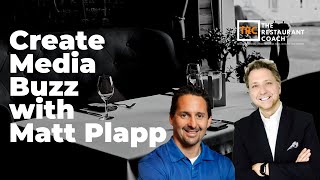
Matt Plapp built a digital marketing agency that works exclusively with restaurants. He says own your customer data through email and phone, use QR codes on menus and delivery bags to capture contacts, and leverage Facebook local groups and geofencing to reach nearby diners.
Questions this video answers
August 26, 2020
mattplapp.com
859-743-2408
"Don't 86 Your Restaurant Sales" and "Sell More Slices"
1999
Chapters
Hey, welcome to the show. You know, I'm very excited to be having. Today on my show is a new guest to the Restaurant Coach podcast, Matt Plapp. And he's calling in from Cincinnati, Ohio. How are you doing today, Matt?
I'm amazing. I appreciate you having me on.
Oh, it's awesome. You know, we've been, like, following each other around on social media. I was like, you know, I mean, you got a great story. You do a lot of great things for restaurants. I was like, you know, I gotta get him on the show so he can tell his story and. Because, you know, right now, restaurants need help, and one of the things they need help with is marketing. And you have a very, very unique program. And, you know, I didn't. Of course, you know, I do research on people, and you have a way of really helping people really, really kind of increase the, you know, buts and seats kind of thing. So tell a little bit. Tell. Tell the audience a little bit about your background and how you kind of got into the. In the restaurant business in the first place. Yeah.
So the short story is 1999, Grant 98, graduated from college. 1999, started working in TV and radio and was in the sales side of it. And at the same exact time that summer, my brother came back from the Navy, and my dad said, hey, let's start a business together. He's like, well, I don't know if you guys are both idiots, so I'm not gonna put a bunch of money in it. Let's do one of these website companies. And so none of us. Like, I used to make fun of my wife for being the email girl in college. None of us were tech. We're all. Me and my dad are salespeople and marketers, and my brother's a former Navy man and very systematic. And so I went and bought a book on how to create a website. In 1999, our first venture at boat RV dealership consignment website was built that grew into, six months later, a physical location that grew into three locations. 15 million a year in sales. A big business. Wow. And. And so started with a. We went and got a $5,000 loan at bank of Kentucky. We built the website, and off and running. Well, for four years, I did both. So from 1999 until 2003, I did both. And in 2003, we realized that I had to. I had to make it. We had to hire somebody to run the company, because my dad is not built for that. My brother isn't built for it, and our consultant Was like, I got good and bad news number one. I think your problems are going to be solved by hiring a general manager, a vice president, somebody to run the business, not be involved in that stuff. He's like, the bad news is he's got to quit his job in radio. And I was making a lot of money, and so that was a tough pill to swallow because at that point I hadn't really paid myself in the business. And so here we are like, okay, Matt's got a six figure income here. Can we support him? So we did. And at that point in the journey from 03 to 08, exclusively running a dealership, we just learned a ton about digital marketing, chat rooms, discussion rooms. And we at one point where it all kind of came together was about 2004. We're in Nashville, Tennessee at the Grand Ole Opry. And that was retroiton bass boats and Yamaha Marine. A lot of companies held their annual meetings. And so we were always a dealer that was on the edge of doing what we were allowed to do and not allowed to do with regards to selling product across the country. If you're a restaurant, you're selling to somebody three to five miles. If you're a boat dealer selling 500 boats a year, you know, you got people from everywhere. People drive states, states away. So this guy named Ben Jarrett comes over, he's like, matt, I need to have a conversation with you. And he had a little computer kiosk where you color your boats out and order engines. And I said, what's up? He's like, I want to show you something. He goes to this website called Google, because back then nobody knew what it was. At least in my world we didn't. And he Googles Yamaha four stroke motors. And the number one thing that comes up is PLAPS Pro Outdoors. Yamaha was like number two. And I'm like, bro, I didn't do it. He's like, yeah, you did. I'm like, no, I didn't do it. He's like, you're not in trouble. I said, okay, I probably did it. And at that point, I didn't know how I did it. I just knew that we were really active online and figured it had something to do with it. So I sat down with my IT guy because Yamaha said, hey, I was part of a 20 group of dealers. I see the. See the sign behind you. Join restaurant masterminds. I was a part of a boat dealer mastermind called the Symposium 2020 dealers across the United States. We met with Yamaha every quarter. And we deep Dove into why we were successful or what problems we were having. They took it, made a packet, and they trained every dealer nationwide, a few thousand on, hey, these 20 people are doing this, do it. Well, I was the marketing guy, and when all of this happened, Yamaha said, hey, we want you to come to the symposium in three months with exactly how you did this. And so I didn't even know. I mean, I was a marketing guy, but I didn't know what we were doing. Well, we had been really active at about 20 chat rooms back then. Airstream forums, Arctic Cat, ATVs, fishing boat dealership, you know, Fishing boat, Bass Boat Central, Bassboat runners, fishing dot com. All these different websites which predated social media and kind of moved the Facebook now Facebook groups, basically. Well, all of the content, my salespeople were mandatory to be on those chat rooms. We were sponsors of them. We had keyword rich content in there, links to our websites. Well, long story short, that's how we became the this number one place. Well, when that all happened, I'm looking at my wall up here. There's three big articles from back in those years when the Cincinnati Business Courier did an article on us with the Cincinnati Inquirer features where the boat motor dealer features on the front cover. All my radio clients started calling me and saying, hey, Matt, show us how to do this Internet thing. And so I didn't need money at the time, but I'd say, okay, well, give me $1,000 in gift certificates to your restaurant. I'll come show you. They'd come show me. And we were always friends. And so I'd eat for free for a year. And they'd get some really good advice on how to build a website, how to do Google and all that good stuff. Well, back to how I kind of got in the restaurant business was when I was in radio to rewind a little. I was known for trade. I looked around and thought, okay, I need to eat. And this restaurant, like one of my first clients, a place called Ferrari's Little Italy in Madeira, Ohio. The Basanos own it. Tony, the son ran then. Now he runs Eddie Merlot's. Tony's family couldn't afford to be on a radio station. They're one location mom and pop restaurant. It'd be a waste to be on radio for three, four grand a month. But I came up with a package. The market Friday and Saturday nights. Thousand five hundred bucks a month, cash, five hundred bucks a month trade. You'll be on the station with targeted. And it worked well for them. And they got on the radio station. Well, I became the low dollar advertising sales guy and I would find restaurants. And so I had a lot of restaurant clients. So flash forward to 2008, which. This is where I've had a great understanding of what my clients are going through this year. Because we work with hundreds of restaurants all over the United States. A couple in the UK, Australia, New Zealand and Canada. In 2008, the economy crashed. And to put it in perspective, like a lot of restaurants are closed. I understand the pain. We went from a million four in sales July of 07 to 48 grand in sales July of 08.
Wow.
Our overhead was 600,000amonth and we didn't realize it until July, late July, early August when it happened. I had. We had decided to sell the dealership the December of 2007 and we had a plan in place. It was perfect. It was going to close in October of that year. We had everything sold, the real estate sold. I had. I was 32, I had a seven figure cash out. It was. Life was great. I started my consulting agency helping businesses with Facebook and digital marketing online. And May came around. I went and took a gig with the Cincinnati Reds and Cincinnati Bengals. I was doing that as like a, I would say a side hustle, but it was a full time. It was like a second full time job. And then the economy collapsed. We end up closing. The dealership lost, instead of making a million bucks, lost a million dollars. Like literally liquidated every penny I had. Think we were going to save this thing? And then August comes around and our attorney's like, hey bro, the economy collapsed. You ain't saving anything be done. So at that point I just had the agency. And so since 2008 we've had our agency. And the way I got my first restaurant for my agency was this little burger joint down the street called Bars Burgers. Hole in the wall. What you see on like diners and drives. The giant 10 patty burger. Amazing food. They had a Facebook name, a person named Bars Burgers. Well, I happen to go there to get food because a friend of mine had bragged about it, shared a coupon they had put on Facebook. Just a generic picture. And as I'm eating, I noticed the guy was the owner. I could just tell by the way he was handled. I said, hey, by the way, you need to change your Facebook account to a business page. Facebook will find it and there's a good chance that one of your competitors will report you and they'll delete that account. And he's like, how do you do that? I'm like, I'll do it. Give me. Give me some. Give me some login stuff. And so we went on there. I created a Facebook page and helped him do it. And so at that point, they became our first client. He's like, hey, I don't know this stuff. What do you want? I'm like, I don't need money. Just give me a burger once a week. And so every week we would go there and eat a burger. And that started my career. And my big thing I started our agency with in 0809 was helping small businesses mom and pop, not big boys. I don't like dealing with the big boys. We have a couple of them now as clients, but I prefer to deal with the husband or wife that owned one location or five locations or maybe have a budding brand. They have 10 or 20 locations, but that don't have the money to hire, like, you know, two blocks from me is Kroger, his headquarters down downtown Cincinnati. Their agency can buy and sell me every half hour and just throw me away. I don't want to play in that level. I want to play with the mom and pop that need to understand how they can make an impact with their marketing. One thing I've always used as a marketing slogan is create your own radio station. Because what I saw when I sold advertising for radio stations, a lot of those radio stations, you know, a small business, Ferrari's Little Italy and Madeira. The first restaurant I sold, 99 of the people who heard that commercial were never going to Ferraris. They weren't driving 30 minutes like, I live in Florence, Kentucky. I live in Union, Kentucky, right below Florence, Kentucky. I don't drive past the Florence exit for dinner, hardly ever. So if somebody's advertising on radio, which they are, and there are one location or two location, you're wasting your money in my mind as far as that goes, unless you got a giant budget, which most of them don't. And so I had a theory I called create your own radio station. And my concept was simple. Through email and through website traffic and through social media, LinkedIn, Twitter, Facebook, YouTube, you can create a following that you own, that you control. And that changed as social media evolved. It became pay to play. But that's the basis of how we built our company. 2015 National Pretzel Day, you know, great American holiday. And we all should celebrate one of our great food Hallmark holidays. One of my clients brand called Hofbr House, Hofbrauhaus, Newport Pittsburgh and Columbus, a franchise out of Munich. They were not believers in social media. I was spending on their behalf a million to a million two a year for the three stores on everything you can imagine. They were big mass media users. Before I became their agency, they continued it. We were spending about four grand a month on Facebook, YouTube, and some digital media. And they didn't like it. The one guy had a flip phone, and he used to say, matt, I can't deposit likes. I can't go to the fifth third down the street, deposit likes. And I'm like, well, we don't even know what's happening on radio. We spent 60 grand last year to have the Cincinnati reds do the hofferhaus chicken dance every other game. Did anybody come in here and buy a liter of beer from that? We don't know. And so I at least could show them that we had video views, we had likes, we had comments, we had engagements. And they said, well, show us that those people on Facebook will walk in here. And the big thing was, like, their Pittsburgh location went from 9,000 Facebook fans to 39,000 Facebook fans. Our second year working with them. He's like, that doesn't impress me unless I don't have 39,000 people walking here to eat. So we put together a campaign for national pretzel day. And it was pretty simple. $50 spit on each location. The only way they knew about it was Facebook. They had to show their phone. And that was my just to, hey, look, this is the easiest way to show you. And sure enough, it did 18 grand in incremental sales that day from the people they had. Thousand, thousand plus people walk in and say, I want the buy one, get one free pretzel promo. And he said, okay, I believe you. Have fun. At that point, we, you know, my agency at that point had 30 or so clients, a handful restaurants, a bunch of other type of businesses. And 20, 15, 16, we started tweaking that. Okay, well, how do I get data? I don't want people coming every Sunday for a free offer. How do I get their name, email, and phone number? How do I exclude them or include them and take them down a path that maybe they're a lunch customer? How do I get them to come for dinner on Monday night when we need people? And that led to. By 2017, we decided to remake our agency into what's known as restaurant marketing. That works today, where we only work with restaurants, we have every type of restaurant you can imagine, and that's where we're at today.
Awesome. That's so cool. What a Great story. And you do have a book out. It's called don't 86 your restaurant sales. It is available on Amazon if anyone wants to head over there and grab a copy.
There's also sell more slices. It's more a newer updated version of that geared towards the pizza business. Yeah, but I always tell people, sell more slices. Yeah, here we go. Here's a copy right here. I always tell people to take the book and just cover the word slices and sell more steaks.
Whatever you want, Right?
Yeah. Concept is simple. How do you leverage your marketing dollars to build a database and then how do you nurture the database? They're longtime customers.
Oh, we should, we should do a book exchange, you and I, and do some book swapping so that way we can give each. Give books out to each other's clients.
Love it.
My clients are always looking for, you know, and you know, marketing's. I do a broad general stuff, but I don't, I'm not an agency that takes care of stuff per se. I'm more high level coaching and I coach more on culture and KPIs mostly. So.
Yeah.
So anyway, let's jump into some questions that I have for you now. You know, COVID 19 has really shaken our industry to the core. What's your view of the industry right now as you see it?
So I'm not a restaurant person, so I'm not in the kitchen. So I have a little different take on it. Couple things I've seen personally that we helped clients with the last couple years. It was tough to find restaurant employees a year ago, two years ago, three years ago, it was almost impossible to find good managers. And the complaint I heard from a lot of restaurant owners was there's too many restaurants. Well, I think Covid just solved that problem. So I. So I'm hoping that the people who survive, I mean it's. It's my boat. Dealership went out of business. So I'm not being insensitive. People are going to close. And from what I've seen, a lot of places that weren't, should probably shouldn't have been in business are going to close. It was a great market, I called it. I used to say that a lot of restaurateurs had a marketing ego. You know where I'm at in over the Rhine, Cincinnati, it's a ghost town right now. And I don't think it's going to come back for a few years. And restaurants, when I would go in there and patronize them and eat and have company meetings, there they knew who I was. And they go, we don't need marketing help. We've got this. I'm like, well, you think you, don't you. In reality, do you never. There's always a time here you need help. But so many people are flocking down here that an average restaurant looks great right now. Bad restaurant looks good. I think it got rid of a lot of those. And unfortunately, there's a lot of great restaurants are going to go out to because there's conditions you can't control. I mean, where I'm at right here, Kroger and Procter Gamble and Great American Insurance Company aren't working downtown anymore. One of my friends, Shaheen, I had dinner with him at Eddie Merlot's a couple nights ago, and him and I were talking. There's 3,000 people in that building. That's why his place, Simply grand, is in that building. Those 3,000 aren't there, 200 are. And so his business has been closed since March for that reason. So I think that it's going to open up the workforce and hopefully put a lot more talent that are going to help. I think it's going to drive a lot more people to the suburbs because most of my friends, I mean, I still come to my office downtown because there's only a couple of us here. Most of my workers can work from home if they want. Half my workforce is local, half is across the United States. But most businesses down here aren't coming back down. And so I think a lot of these people are eating at places in the suburbs versus downtown Cincinnati. And so that's going to help there. But I think the big thing is, is it's shaped, it's changed. I mean, I bet we're going to have 40% less restaurants in 12 months.
Yeah, I think 40 to 60% is going to be the number I'm kind of estimating. And like you said, I kind of call it. It's Darwin, you know, survival of the fist. You know, the market always seems to course correct, sometimes naturally. And there was too many restaurants. And I think this is just kind of the economy's way of recorrecting. So unfortunately, you know, being able to change and pivot concepts is real paramount right now. What are some ways you've been recommending to your clients to shift their marketing programs?
You know, I think probably the biggest thing, it gets a bad rap, in my opinion. I'm actually doing a conversation, having a conversation on the tomorrow is third party. You know, I was saying it before it happened before COVID hit. I was fortunate that one of my friends who's a mentor of mine that has. Does he have nine, 10 restaurants? He was big on third party two years ago, and he used to tell me, Matt, and he was like, the one that exposed me to it the most. And he's like, yeah, I can tell you this. The people that are ordering on these apps aren't coming to my restaurant any anyways. And he's like, so, yes, I have to. I have to pare my menu down to make sure I have a product I can give them that holds because their French fries weren't good to travel. And he knew that, but he said at the same time, I've got to be able to maybe give them a good enough product that makes them go, man, I want to come to that restaurant in the future. He said, but, you know, it's money I'm going to get. And, yeah, it's not as good a money. I'm not getting my $10. I'm getting seven. But I'm looking at that as advertising. It's acquisition. And I think third party. When this all hit. Yeah, one of my clients, one of the restaurants we work with, the guy has a handful of restaurants was anti third party. Like you would have thought third party was. Was the worst thing in the history of the entire world. And I'll never forget the day this hit. I get a text message, bro, how do we sign up for third party? Oh. And so we held. I just. I gave him advice and said, hey, here's some things I would do. Number one, I would give them a different menu than what you currently have. You need to make sure you can deliver on it, but also make sure the prices are a little higher. Because me, I order third party. I'm going to order third party. There's a place called Citybird two blocks from here. I don't feel like walking there. Yeah, they actually have an option now on Uber Eats where it says, give the restaurant a couple extra dollars. I do that. I know I'm paying a premium because my lazy butt doesn't want to walk down there and get it. You know, it's like 500 degrees outside today, so I'm just going to hang out in the office. They're going to bring me some food. I'm going to eat it. But I said, you need to make sure your menu is correct and make sure your prices maybe if you're allowed to do it. Some places get a little different with it, but you can beat the system, get a little Higher prices. Guys like me will pay a premium. But at the same time, I thought it was comical because third party. Most of my friends didn't know what UberEats was. And I'll never forget my buddy calls me up like the, like the first week of COVID Hit. He goes, bro, this is amazing. I'm on the sofa, I'm watching tv, and I'm eating wings from Quaker Steak. And I'm like, okay. He's like, I didn't have to leave. And I. And I remember thinking, you know, I told Jim, the guy that owns that location, I'm like, you know, that guy's never coming to your restaurant again. I know him. He will eat your food twice a week. He's never leaving his house to go get it unless he goes out once a month. But I think that was the biggest thing, is learning how to adapt third party to you. Learning how to pivot. I just watched a testimonial video that we shot two weeks ago in Moore, Oklahoma, Fatty's Barbecue. Brian Picard, Mark Picard and Katherine Picard owned the restaurant. They were 100%. They were 85% dine in, 15% pickup. So 100% walk in the business. They were up 18% in May with not one person ever eating at their restaurant. And the majority of it being pickup and third party.
That's crazy. See?
And so my big pivot was my clients was like, you know what? Don't look at third party as eating your margin. Look at it as an acquisition cost that you acquired matplap as a customer. What can you do to possibly get my information? Like put a QR code in the bag and say, hey, Matt, want to cookie your next visit for free? Scan this, takes them somewhere and says, hey, next time you come, we'll give you a free $5 giant cookie. If you come to the restaurant and get it versus third party, there's opportunities. So that was probably, to me, the biggest opportunity to pivot that I think some people did and some people didn't, obviously. But I think the comical part about it was I thought third party companies dropped the ball personally. They got the most advertising they could have ever gotten in their entire life. March, April of this year, because businesses were all of a sudden bragging on Facebook, Instagram, Twitter that we have third party, go to Uber Eats, order our food. If I was UberEats, I would have been like, you know what? We're waiving all fees for two or three months to help you. But honestly, from their point to condition consumers because he's all their advertising was the restaurants.
Yeah, no, that would have been a smart move for them. But, you know, some people aren't as smart.
So.
Yeah, third party is. Like you said, you can make it work for you by, like you said, putting in a QR code or something like that. You know, data. And I'm telling everybody lately, the data is the new frontier. You got to have data, and you got to be able to know how to use it.
And you know what data was? You say, it's a new frontier. 1999, the summer my dad took me to U.S. bank arena, and he took me to Success Summit, Zig Ziglar. Tom Hopkins were. And Brian Tracy. And it was Brian Tracy. And I went to the back of the room when. When they got up there, they had their speech. And Tom Hopkins is like, go to the back of the room for $289. Only today you get a half price. You get my cassettes. I had no money. I was broke. I was right out of college. I was making like $1,600 a month guarantee. And my dad's a sales coach. And my dad was like, you're making it on your own. I'm not helping you. I'm going to train you, but I'm not giving you a penny. I already gave you a penny in the last 22 years. And you bled me dry in college. And so he went back and he's like, I'll go 50, 50 on it. But we split the tapes. And so we did it. He had plenty of money, but he wanted me to have vested interest. I bought those tapes. The biggest thing I remember from 1999 was Brian was Tom Hopkins saying, own your data. You're a salesperson. You might not be selling what you're selling today in two years, but you might be selling to the same people. So every customer get a software. I got ACT back. Now. I've ACT is still around, but I used act, and everybody I touched, I ever talked to, I got their name, their fax number, their email address, their mailing address, their birthday. And I'll never forget because two years later, our radio station got the biggest order we had ever gotten from the Ohio Lottery. And Ohio Lottie wasn't even a client. Year earlier. It all came from the fact that Michelle, the buyer for the agency, I had found out through the grapevine and through conversation like you pry people that her husband was from Cincinnati, Ohio. She loved Grater's ice cream, and she loved Grater's raspberry chip that they rolled out seasonally. Well, by luck would have it, Graters was my client, and I could get stuff on the side sometimes. I found out her birthday, and so the month before her birthday or the month of her birthday, she got a package from graders of her favorite ice cream.
Wow.
That became the biggest client of our radio station the next two years. That's the. That hasn't changed. And what's happened is like, you know, the book that I'm writing right now is called Restaurant Marketing 101. And it's because restaurants haven't done the basics. The basic is everybody that walks in your building, your job is to stalk them, to find out who they are, their first name, their last name, their email, their cell phone. Touchless menus are a goldmine. I've been telling clients, yes, send them to a QR code to your menu. Why not send them the messenger? Now you at least know that Matt Plapp came in. Here's a link to my menu. It's one more step. It's a little friction, but at the end of the day, you now have the ability to say, hey, Matt, you're in the restaurant two hours ago. How was your visit? And they tell you and they go, great. You want a free offer your next time or you want something? Click here to give us your email. Phone data is where it's at. If you don't know who your customers are, you. All you have to do is hope and pray. And that's the biggest problem is most restaurants, most small businesses, their marketing plan is hope and pray that somebody who comes in here, they had a great experience, comes back next week.
Exactly. I always say hopes, not a strategy, not one you want to invest in.
Very true. You know, follow up on that. You know, my favorite restaurant, I use them as an example all the time. Some point they're gonna ban me from the restaurant, even though I love it and spend money there. But it's a place called Walt's Itching Post in Northern Kentucky. By far the best restaurant, in my opinion, the entire city. I go there three to four times a year. It costs 250 to go there. Typically me, the wife and kids. It's a cheap place to eat. They have no clue who I am. They have never done any effort to find out my name, phone number, email, nothing. And I crack up because I'm like, the reason I say this is I don't live near Walt, and I don't drive by Waltz, so I have no exposure to them. That would make me go Walt, if they had my cell phone number and every month shot me a text like, hey, here's a link to make reservations. We can't wait to see you soon. I would come four to five more times a year. And if there's Matt Plapp out there, that will come four times a year at 250 a pop, that's a grand. I can promise you there's a hundred mats out there that could spend a grand more. At Walt Dishing Post, there's a hundred thousand dollars. There's 30 grand in employee bonuses right there.
I know people just don't take advantage of the data. And here's. I think a lot of people have misconception about what marketing is about. I think people think marketing is about just getting a sale immediately. It's not. To me, marketing is about keeping my brand top of mind. And I use the example of McDonald's. Everyone knows who McDonald's is. But do you see them stop advertising? No.
You know, so I don't know if you can see this. Good. That's a little strategy I call the RO Engine strategy. It talks about the fact that businesses spend money to drive sales. You're spending money on a radio commercial to get me to hear it. To get me to buy your food. Papa John's last week with their new Shack Daddy pizza. It worked. I heard their radio commercial. I'm also in their loyalty program, but I heard their radio commercial. I saw a video on YouTube pre roll. And we ordered the Shack Daddy pizza and we got. It was not bad. It wasn't like Shaq Daddy. It was pretty good. But they spent money to get my attention and drove me to sales. Now if they didn't have me in a loyalty program or have my information, that's all they did. I'm a fan of when you spend a dollar. Get somebody's information.
Exactly.
Get their. Get their information so that you don't have to spend an hour to reach them again. That now you just spend your money to find new people each month and then you cultivate your database. Yeah.
And all you're doing just keeping your brand in front of them. That's it. That's all it is. Because, you know, it's crazy. Yeah. But marketing definitely. I think a lot of misconceptions about what marketing is and how it should be used.
So great.
You know, let me kind of segue it into leadership. You know, leadership's really critical for restaurants right now. What do you think is the number one trait a leader needs today?
Listen, I think a lot of myself. We think we have the answer. We think we know what's right or wrong. And a lot of your employees, especially the restaurant world, they're on the front lines. They can see things. When I was in that Yamaha Symposium 20 program, they had a guy named J. Conrad Livingston come in. He's known as the godfather of guerrilla marketing. He's written many books on it. Well, that was one of the perks, was we got to meet cool people. Jay, he came in and he spoke to us for an entire day on marketing. There was only 20 dealers. There's 20 people in a circle. And he's in the room. And I knew who he was. He's a huge name. And he goes, I'm going to tell you a story about why you're probably making mistakes at your business that you've been told are mistakes, but you won't listen because it's not coming from the person you respect enough for their opinion. He talked about Tabasco, said Tabasco paid him 250 grand to come in there and give them a marketing strategy to make their sales go through the roof. They had to have something. He had created the Pillsbury Doughboy and stuff like that, but said, we want to have. We want to have our sales go up. We want to have a new brand new advertising campaign. So they pay him 250. He goes, what? We do, we go in there, me and my team, we spend a week. And he's like, so of course, Tabasco. We use it on everything. Every breakfast, lunch, dinner. He's like, we get to the end of the week, we get front of the board, we got all the people there, they're waiting for this big wow. And he goes, well, I got good and bad news. Good news is we got an ad campaign that's fine. Logo, mascot, all that good stuff. You're gonna like it. He's like, the bad news is the actual answer is not my campaign. It's something somebody in this building's probably told you a hundred times. You've never listened. The stupid hole on your bottle is too small. I couldn't get this crap out every meal. And he's like, everybody's looking at him. And you can see people in the back going, I've been saying that. He's like, because you just told me in the past week that your biggest customer are restaurants, right? When a consumer goes to a restaurant and restaurant owners know this, they don't care how much ketchup they dump out. No. Fill the plate, and they dip two fries in it, they go, I'm Guilty. He's like, so if your biggest customer's restaurants then make the hole bigger, consumers will use the Tabasco more, they'll have to buy more bottles. And now you just increased your sales. And they did it. And the next year they actually had to go back a little. They had to add the plastic cap because restaurants were like, dude, people are just dumping this crap everywhere. Give us the smaller hole back. And so they back and. And they put the little cap on there. Now both people had it, but it was the fact they hit. And he said, I guarantee you somebody in this room and a lot of people in this building have said this to you guys and nobody listens because they're not on the certain floor of the building. They're not a suit. And I think a lot of restaurants probably fall into that where there's servers, there's bartenders, there's bar backs, there's bussers, there's hostess that can probably give them some pretty good insight of how to make something better in the restaurant. And the best way, in my opinion, to earn the respect of your team is to lead by listening and listening to the people that probably interact with the customers more than you do.
Very, very true. Yeah, listening is. I think it's an. It's a highly underrated skill that most leaders forget about. So let's talk about self care. Do you believe in self care?
I was up at 6 o' clock this morning. At 6:10 I went outside, did 10 minutes, 15 minutes of mobility. At 6:25 I started my running workout. And at 6:55 I went in the house. I work out twice a day. I eat average. I take off probably three days a week and go shoot basketball. Last Thursday I had three hours in the middle of Thursday where Matt Plapp from five years ago would feel guilty. I've got to work. My clients think I'm working. It's during the workday. I literally last. Like I had a person actually text me because I post a picture of it. I'm pretty visual what I do because I want people to do the same thing. I tell my employees. So guy the other day, his with his. With COVID his kid is not back in school yet and he's one of my managers. Like, hey, I want to have a conversation. My schedule. I said, are you getting at us? I don't really care. Like work when you want to. If you're with your kid teaching him school, he's in kindergarten. Teach him school during the daytime. You can do your job at 8 o'. Clock. Or 9 o'. Clock. I said, if you work 30 hours, one week instead of 40, I don't really care. You got to be healthy, you got to have your family right and mind right. It's like I post pictures of me out doing stuff and I posted last Thursday of my foot on top of the basketball to court, and I went there and shot basketball, went to the gym, did a CrossFit workout, and then went home and swam for an hour, three hours in the middle of the day. And I said, people said, how do you do that? Like, I'm like, you have to make your mind up that you're the most important person in your life. Because if you're, if you don't take care of yourself, it negatively affects everybody around you.
That's it. Yeah, you have to take care. I mean, I think the number one thing a lot of restaurant leaders, especially in the restaurant industry, because it's a brutal, I mean, physically demanding industry, if you don't take care of yourself, because, you know, we give and give and give to others, but if you don't give to yourself, you're basically, you're running on. And I use the example of this. If you, you know, your cell phone, if you went to work in the morning, like you got this morning, you didn't charge your phone last night, and you went to work and your phone was only 50% charged, and I told you you couldn't recharge your phone all day at work. How long do you think you would make it?
It's gonna go dead in about two hours.
Dead in about two hours. Right. But people go to work like that. People go to restaurants like that, working, thinking that, you know, I didn't get a good night's sleep, I didn't take care of myself. You know, I just gotta go and just plow. Power through, you know, power through it. And then what happens is then we get edgy, we get cranky, we get snippy, and it just creates a toxic culture.
So, you know, the number one thing I do to take care of myself, that's a little different, that people crack up when they see is I'll nap for 12 minutes every couple of days and I'll do it anywhere. Like, I've got a sofa here at our Cross, I'm a partner in a CrossFit gym, and people crack up because I'll walk in the gym and I've trained myself on how to fall asleep asap. I'll walk in the gym and I will lay on the floor at our gym I'll put it, we have a mat. I'll put it behind my head and I'll fall asleep. And like there's been so many pictures in our private group that say, how is this guy? Like there's a CrossFit class going, there's Jay Z music blaring, there's barbells dropping everywhere and I'm knocked out for 12 minutes and I'll wake up and I'm rearing to go and they're like, how do you do that? Because I, number one, I think that that like I found that 10 to 15 minutes is optimal for me. Any longer, I get groggy. Any less doesn't do a whole lot. But if I can get 10 to 10 to 15 minute nap in, I've learned how to lay down, close my eyes and I go to sleep instantly, no matter where it is. And that's a key thing. I think a lot of people, restaurants have it hard. I mean most restaurants are open lunch and dinner, which means somebody's got to be there at 6 to 7 o' clock in the morning. Somebody's got to be there one or two at night. We eat based on our environment. Like, oh my God, I'm having a great day. I'm having a Mountain Dew, a burger and fries. Oh my gosh, I'm having a terrible day. I'm having a Mountain Dew burger and fries. So if you're a restaurateur, I couldn't imagine the temptation of what it would take to not eat like that. And then at the same time they have a hard time delegating and letting go. And I think I tell my clients all the time, like, I've got a handful of restaurant clients I do one to one coaching with and I'm like, dude, leave your restaurant, go shoot basketball for two hours. Go jog, go go swimming with your kid. Go on a hike.
Do something.
Do something that gets your mind right so that you're not thinking.
Yeah, I used to drink. Oh man, you know this just because it's so available. Soda.
Oh my gosh.
Just grab it all day. Just grab it all day. I mean I was like my, I think my blood was 80 Dr. Pepper and mountain Dew. It was terrible.
My, my worst time, my worst time in my life probably nutritionally, was when for six years we handled the marketing for four HOF per houses and three Quaker shaken loops and they all sold Mountain Bill and a Hoffer house especially. I would be in Pittsburgh, Columbus, Cleveland and Northern Kentucky, Newport. And I would be near, I'd Walk over the pop machine. I'd Mountain Dew. Mountain Dew. Pretzel, beer, cheese, Mountain Dew. I'd be there for four or five hours working. And it was just so convenient. I used to think, man, I thank God I'm not here seven days a week. I'd be £500 and diabetic.
It was funny you mentioned about taking like power naps in the afternoon. So I, and I'm, you know, I'm not sponsored by this company. This is a company called Silent Mode. And they have these head. It's a, it's a blackout mask. You wear it.
I've never seen that.
Headphones built into it. So it connects to your thing. So every afternoon. And I have an app. And so every afternoon I, I always say it's on my calendar as a 3 or 3pm recharge. I put the power mask on and I listen to the program. It's like a 10 minute thing and it just like, I just kind of like relax. It goes as it blacks out. Everything totals total just to that. And I tell you, I wake up refreshed, ready to rock and roll.
I'll say one word of caution to nappers. You've got to find your time and you've got to set an alarm. I had before I learned out my time. I was driving back from Pittsburgh. I stopped in Wheeling, West Virginia. There's this awesome gas station there with like everything. And so I would stop there on my way back. It was like two hours, like an hour and a half from Pittsburgh usually I think is what it was. And I would stop there and I was just exhausted. And I said, you know what, I'm gonna, I'm gonna close my eyes for a couple minutes. Well, 45 minutes later, I woke up, I'm at a gas pump. So I'm surprised somebody didn't come. Like, think I met out or something because I got a gas pump, I woke up, it took me numb, not even exaggerating. It took me 20 minutes to figure out where I was at. I remember waking up and being like, where am I? I had no clue. And I remember at that point I was talking just complete coincidence. I think things happen for a reason. But I had met a guy in the sleep industry. The next week, actually, through a referral from a friend of mine, one of my employees, Doug Smith, who's back there, and he had introduced me to this guy and this guy was looking for marketing help and I got talking about sleep and he's like, your body goes into a certain level, it thinks you're out for the night when you get to a certain point of sleep and he's like, what I suggest you do is start at 30 minutes, take a 30 minute night. Next day take a 29, next day 28. Find that time that gives you what you need. And I found like 12. But I'll never forget that I'm waking up that gas station and I had no idea. I know what's going on.
That's crazy. I see you and I both have an affinity for the color orange.
It's. It's my shirt, my cups, my shoes. Every day. Yeah. Book cover, my. One of my cars is orange. I have orange everything.
You have an orange car? Really? That's crazy. So have you ever invested in a mastermind group or coaching or a coach before?
Yeah, I've had two coach three coaches in my life. I had a gentleman named Billy Jean who's out of call his Billie Jean Shaw is his real name. But Billie Jean's way goes by. He's out of California. I hired him personally 2016-2018 and he helped reshape my business like you wouldn't believe. Yeah, Billy James Martin, he's a good friend of mine.
That's awesome.
Yeah. Crazy guy. But yeah, I was one of five people for an entire. He only did one to one coaching for one year and I was one of five people that probably could afford to hire him but also trusted, you know, I had to have it. And so he helped me really. He's the reason I do restaurants is that he sat down with me February of 2017 and he said, show me your business. I was in San Diego for event called traffic and conversions. We put my business on a big blue, big whiteboard and broke it down and unpackaged it and said man, you're the restaurant guy. Why aren't you. Why are you working with hv? Why you got all these companies you work with like you, you're not sharing the data. You're. You're doing a bunch of great stuff for a lot of companies. But if you just went down the restaurants because I had nine at the time and so we did and it was a tough task to go from basically firing a lot of your clients. You had for seven, eight years over 12 to 20 more process to go exclusively restaurants. So Billy was instrumental. Unbelievable. You know there's a song. I want to be a billionaire. I want to be a billionaire. So freaking. He says, I want to be on the COVID of Ford magazine smiling next to Oprah and the queen in my mind I say, smiling next to Billy and my team, because those are the two people that got me on the path where we're going. Second was a guy named Chris Patterson out of Florida. He does a lot of goal setting and mindset coaching. Good friend of mine, I used him all of last year, and then this year I hired, actually two weeks ago, a guy named Josh Nelson. I haven't looked to see what's in here, but he just sent me a package. So I got a big box that came in. But I hired him to help me figure out the scale of my business and become a better leader.
So every time you've invested in like a mastermind group or a coach, what kind of ROI do you normally see?
Huge Thousand and one thousand. I mean, I still have the same.
Business coach I originally hired and, you know, talk about this like, similar past 2008, I was just doing consulting, restaurant consulting. The market crashed, all my clients dried up. So, you know, I hired a business coach to help me kind of, you know, reassess my business model. And he would take me through his coaching process. Like, you know, I really like the coaching process. So I said, do you certify people how to get be a coach? And he does. So he certified me, and that changed my whole direction. That's when I became like 2009, became the restaurant coach. And I've never looked back. And I still, to this day, since 2000, 2009, when I hired him, I still have the same business coach.
That's awesome. I think for me, what's happened, why I've changed coach? Well, number one, Billy quit doing coaching, right? So he's a good friend. We talk, we hang out when I go to California, but where his company is at, he's not in that place anymore. So it wasn't an option. But two, Chris is a friend of mine as well, and I hired him for a specific reason, to kind of get me going a different route. And then Josh is, you know, he's got a program that teaches agency owners how to scale at the level I'm at now. So it's helped, but it. I think it's the biggest, biggest missed opportunity for small businesses. I knew about it from the boat dealership days. The boat dealerships call them 20 groups. They're in the automotive business as well, but it's 20 groups. 20, like businesses in different markets, you get together every month virtually. You get together in person every quarter, and you deep dive into your business. And I think it's missed a lot of restaurants. Like, they hang out in their, they hang out in their own world and they don't reach out and talk to 10, 20, 30 different restaurant owners. Like I'm in the process. I've got what we have like a seven or eight now. But my goal is by the end of this year to have 25 in my restaurant marketing master model. And it's not for me. It's for those people to talk to each other and say, man, I did this with third party and it worked. I did this because I don't have the answers. I have my answers, but I don't have the internal answers. And so I think it's the biggest missed opportunity out there. But the example I always use, I think Michael Jordan was a pretty good basketball player and he had a coach. Tom Brady can sling the rock pretty good. He's got a coach. Tom Brady's got a nutrition coach, he's got a body coach. He's got a quarterbacks coach. He's got a strength coach.
Yep. No, they all have coaches. Everyone, everyone who wants to be at the top of the game and stay there long term usually has a coach. That's what I would say. So what is one topic you think Russians should be talking about on social media now?
Their story. Their story. And their story should encompass their, their team, their employees. I, I'm amazed. I've got a conversation today with a brand that's a pretty big one that we work with of non other franchises and every day the same Facebook post goes out to 100 plus restaurants Facebook pages. It's the same exact thing. And they've made it to where they, they're comment. They gave up on the franchises making social media posts and so they said we got to have something out so we're going to make the post. And it goes globally. I'm like, well that doesn't tell that, that location story, that location, that owner, that general manager, that manager needs to be live a couple times a week talking about what's going on. Especially now. Brian Picard from Fatty's Barbecue from Fatty Smokehouse in Moore, Oklahoma. One thing he credits his success with was transparency. During COVID when, when things happen, there are barbecue places. There were times where brisket went through the roof.
Oh yes.
And he said we and I watched the videos. I encourage you go look up Fatty Smokehouse in Morocco Malt. Some of his videos he was, he had one video where he almost cried because he was so happy at how the customers had supported him. But he's like, it did a couple things. Number one, it Put a personality to the business that people relate more with you than they do. That everybody thinks restaurant owners or business owners are billionaires in some ivory tower. They're not. Majority of them are guys like you and me that are hustling every day that are blood, sweat, and tears. That. That negative review that left cost me five customers and it could have been fixed. And get on there and say, we had a bad review today. Here's what happened if you wanted to take that route. But like Brian's saying, as he gets on there and he talks, tell stories, he said, hey, we. When brisket prices went up, we got on there and told him, hey, our prices are going up. Here's why. Here's what it's going to do. And he's like, number one, I wanted to be honest. Number two, I wanted to show them that it affects our business. But number three, I wanted my employees, when that customer walked in and saw prices were higher, not to take it out on the employee. I want them to be prepped. So I think telling your story and your story should encompass your employees. It should encompass the why you're making the food. Like, I think the biggest missed opportunity is chefs. Like how every restaurant doesn't have it mandatory that the person cooking that food goes live one time a day. Get on stream yard, get on the phone, go live and go, hey, what's up? It's Chef Jose. I mean, making burritos today. And let me tell you why. What. Let me show you something. This is my favorite off the menu burrito. Not on the menu, but you can probably get it if you want. Stuff, frying it. People love that stuff. And nobody does it.
Nobody does it. Video is the. I mean, the underdog. No one does live. No one does videos. Very few do.
It's. I do thousands of videos a year. And people ask me, People ask, why is your business growing, Matt? I'm like, because people know me. People relate to me.
Yeah, they get. You know, posts are great. And I love. And I always tell people, man, no, that that picture of your food is beautiful. But tell me about you. You know, I. Yeah, you know what we always say in marketing and sales all the time, people buy from people they know, like, and trust.
Yep.
Yep, exactly it. Yeah. So what is your favorite social media platform?
Facebook.
Facebook. Why?
Because it's not used by enough people correctly, and people haven't reached its capacity. I had a friend the other day ask me, like, okay, Matt, he's not in the restaurant business, but in a small business, he's like, okay, so the things I'm looking at, YouTube, Facebook, LinkedIn, Instagram, Snapchat. I said, okay. And he's like, here's what I'm thinking. All of them. I said, stop is what I said. Your average client is a 35 to 50 year old female, right? Yeah. You suck at Facebook. I said, I want you to envision this. We have the Ohio river over here. Imagine if the Ohio river had no bridges. But imagine if Kentucky decided to partially build five bridges. Would that help you get over the river? And he's like, well, no. I said, exactly. You'd be an average at Facebook, Instagram, Snapchat, YouTube, LinkedIn and Twitter. Is it going to help you dominate what you want to dominate? Find one medium and dominate it and own it. And he's like, well, what about advertising spend? I said, dude, you don't have the budget to dominate it. Like, we've got clients right now. One location, restaurants. We have clients spending 200amonth on Facebook ads. We have clients spending four grand a month. And the four grand still has an eclipse the opportunity.
Yeah.
So I would say Facebook, because Facebook groups are a gold mine. You're a local restaurant, you've probably got seven or eight local community groups. You, if you put out the right type of content, then people will, people will put it out there in their groups like, hey, just see so and so is doing this. They got a food truck, they'll come to neighborhoods, whatever. So I think Facebook is there a marketing standpoint. I mean, why do you think Zuckerberg was in front of Congress? He gave Trump too powerful of tools to market to win an election four years ago. And they went, oh, okay, it's out there. Your restaurant has it. You can get on there and say, hey, I want women who like soccer. I'm a restaurant near a soccer field. And let's imagine soccer fields were open again, they're not right now, most places. Let's imagine they were. I want women who are married with kids that live within 25, you know, 10 miles of my restaurant that like soccer. Oh, there's a soccer event coming up. I can target that soccer event. Come to my restaurant. Soccer moms get this price, you know, it's so powerful and it's used poorly. Right now we've got clients getting 75% better results on opt on acquisition of customers through Facebook because nobody's using it. Yeah, yeah. Facebook's inventory is way down. Kroger, Proctor and Gamble, they're printing money because people are forced to buy groceries. That's what they're being told to do. Basically the restaurants, I can't. You can go stand in line at Kroger with 500 people, but you can't go into a restaurant. That's a different topic. But the big boys, like, makes sense. I know the big boys like Kroger and P and G aren't spending money on Facebook right now. They don't need to. So they've pulled their budgets back. A lot of small businesses have pulled their budget back. So Facebook is going, okay, we've got this, we've got this news feed that is empty with ads. And so you can like we're getting right now, like anywhere from some clients, 15 to 20 cent, what we call opt ins, people like we acquire through ads versus $2, six months ago.
Yeah, yeah. No, it's huge. Yeah. I've seen a huge drop in the, in the cost of Facebook advertising. So it's awesome. So let me ask you, do you do any, any kind of geofencing? Tell the audience a little bit about what I think geofencing is most underutilized, you know, tool out there.
Yeah. And there's, there's a few forms. I mean, Facebook has a generic version of geofencing in that it's more of a rami. Traditional geofencing is, I'm in Cincinnati. I have a restaurant two blocks from the convention center. There's a convention center. I'm going to draw a line around that building and anybody that walks in that line is going to be delivered my marketing message on plethora of platforms. Facebook, Instagram, CNN, YouTube, the Solitaire app you're playing while the speaker is talking. So that's traditional geofencing. The way most people kind of know geofencing is that I take my restaurant and I say, okay, I want to market a mile around it. Well, one thing we encourage our customers. Look at where you're at. Like, okay, so you've got a restaurant here, but there's a minor league baseball field six miles away or there's a school three miles away. And so find it. There's a big competitor. You're a barbecue shop here. There's another one that has a lot of attention here. Run ads targeting people within a mile of that barbecue shop and like, maybe build out your avatar of who you think is your ideal customer. And when they're in that place eating barbecue, maybe they see your ad. So that is geofencing. I mean, there's a couple ways. Traditional geofencing is literally drawing that line. But a lot of people today look at geofencing is just kind of that geography of where your ads are.
Very cool, very cool. And how influential do you think culture is to restaurant success?
So with regards to inside the four walls, I think, I mean, if you don't have the buy in of your team, if they don't love you, they're not going to. The rider dies, man. Businesses have that person that's either on the bus or they're not on the bus. I think that if employees don't understand what's happening and like you and know that you like them, then you're probably gonna. It's just a job to them. And I prefer to have like on my team, I prefer to have people not have a job. This is where they're at. With restaurants, it's tougher because you got people that are lower wage, hourly people and you got to find a way to connect with a guy who could be a busboy at 500 restaurants or a dishwasher or taking the trash out or whatever. But I think that culture is huge, that people have to understand, have to understand what you're trying to do. What is the vision of your brand with regards to relating to customers. And I think if you have, they understand why you exist and then there's a theme of why you exist, then it will kind of, it'll go throughout. But I think if you've got, I mean, there's toxic cultures, like there's a restaurant I won't mention, but there's a restaurant that I know in my area that I enjoy, that the owner's son runs it, doesn't want to run it. He should have been gone. He should have personally left 10, 15 years ago, he'll tell you that. But he hasn't. It's a good income, it's good business. But you go in there and you can tell people do not like him, he does not like them. And it's. You can just see the frowns. But then you go to other places where I know that the person that's that general manager, that owner, that manager, they love what they're doing and that person that's taking the garbage out loves working for that person. So I think culture, I think it plays a key part. And if you don't think consumers see that, then you're blind.
You're blind. Yeah. So how do you deal with stress?
Somebody asked me the other day, I was a guest on a podcast. I didn't have an answer. I don't want to say I don't have a lot of stress. And I don't know if that's possible. I think we all have stress. I guess it's working out. But, like, I literally, I've been fortunate. I think, that I don't have a ton of stress around me now. I'm not. Like, I always tell my employees, like, we're not in a business where, like, if you're at a restaurant, like, we went to Buffalo Wing place last week, and it took an hour to get our food. Like, there's a stress. Communicate. There's a stress there. You can't get food out in an hour. It should have been 14 minutes. It was an hour is what it is. Stuff happens. I didn't care. We ate. We gave a good tip. We left my business. We don't have that stress of a ticket time. And so, you know, we do marketing for restaurants. We do, you know, we have certain things.
We do.
We have things that happen. We turn things around in three to five days. We don't have a whole lot that has to happen now. And when we do, it's so minimal that it's not a big deal. So I don't have a lot of stress there financially. I've actually always worked better when I have less money. If I have $10 in the bank versus 100,000, I'm like, let's go. I'm a little better. So I'm a little more stressed when there's more money in the bank. But if I had. I honestly don't know. I don't want to say I don't have any stress, because, I mean, we all do. I mean, I Probably not the greatest husband, probably not the greatest dad I can be, probably not the greatest boss, but I've just. I've never really let things affect me. I kind of have the life that. You know what? I'm gonna drive fast and have fun today. And if tomorrow's here, then we'll attack tomorrow.
That's it. That's awesome. All right, I'll throw a curveball question at you. Answers to my first time my show. What's your favorite swear word?
My favorite swear word. I guess it's the F bomb. That's probably what I turn to when something goes wrong or I stub my toe or I run into, like, I have this weird habit. I don't know why I think I missed my. Pay attention. I run in the walls of my house. Like, I'll be leaving my bedroom, and there's a clear path to the kitchen, and somehow I will hit the wall and I'll like, my pinky toe all.
The time, every time.
And I'll be like, and so I'm guessing I dropped the F bomb. Probably. I. I guess that's it. I don't know. I've never, never, never been framed with that question. But I would say if I had to say something, probably more than I should, it would probably be that, yeah.
I use the F word, but it's more like, what the. You know, what the. Every day I see it. Okay, name one book, audiobook, or podcast that you recommend.
Book, audiobook, and podcast. And by the way, restaurants, take note. I just texted Doug back behind me to order city bird through UberEats. So nice. There's business to be had. Make sure that, like, we're ordering City Bird from there because we're not just looking randomly, but it's out there. Business to be had. So best book, best podcast. I think best book that I think is relative to your audience is Profit first by Mike Michalowitz.
He's actually gonna be a great podcast. Wow.
Can't wait for that. I love him. I think that it's. Long story short, I think a lot of his book's right. We all. I've grown up, like, from mid-20s to 32, running the boat dealership. I used to look at our profit loss, and I go, okay, we did 15 million in sales. We have 1.3 million in profit. Our bank account has 30 grand.
Yeah.
I remember asking my account, like, he mentions that in the book. I remember asking my accountant, where's the million three?
Right?
And they're like, what do you mean you spent? I'm like, well, how did I spend this? So I saved it, and I never could put the connection there. So I think Profit first is a good one from a standpoint of being able to understand where your money goes. Podcast. I don't do a ton of podcasts, to be honest. I listen to a few. One that I like from a marketing standpoint is Russell Brunson. I like his. He comes with some. And somebody the other day was like, I don't like it because he repeats himself a lot. Like, he repeats himself a lot because people don't do the stuff they're supposed to be doing, you know? And if you, like, you tell me 10 or 20 times to do something, I'm gonna eventually do it. So I like his podcast. And then was there. Was there a third one there? Book, podcast? What was the other one?
Or an audiobook?
I don't do audiobooks. I find I don't retain the Content. I find that when I do an audiobook, I start playing solitaire on my phone. I start looking at the guy on the plane next to me and wondering what he's eating because there's stuff flying everywhere. And I'm like, what kind of headphones are those? And then I turn around and I'm like, what was I listening to? What is this book about?
And finally, give us one quote that you live by.
One quote that I live by. So there's a song by a guy named Kid Quill, and at the very end of the song, he says, the hardest part about writing your story is knowing that you're worth the ink. I think that a lot of us don't believe in ourselves enough. And I think that that's what holds a lot of us back. It gives me goosebumps when I hear it. I said just now is that, you know, there's a lot of self doubt. A lot of entrepreneurs, business owners, we're on a journey that most people don't understand. And so the support system's not there. And so people are doubting you. Or we get negative. If you're a restaurant owner, like, you get negative reviews here, you get one here you get people complaining. You're thinking, man, am I doing the right stuff? And I think that a lot of us, if we don't believe in ourselves, then it's harder to build a culture. People who believe in us. That's a big one. I always look at is the hardest part of writing your story is knowing you're worth the egg. Once you realize, like, I know without a fact, without, without a doubt, I know that in the next two to three years, I will be known as the number one restaurant marketer in the world. I believe it. I know I'm the best. And if I believe it, it's going to help me get where I want to go. If I don't believe, I'm never going to get there.
Exactly. No, it's the truth. You have to have that identity. You have to have that confidence and belief in yourself. My favorite quote is. It's on the wall behind me. It's a Zig Ziglar quote. And I actually built my whole. You see it right there? Yeah. And I actually built my whole brand around it. And it's my favorite quote in the whole world is that you can have everything you want in life if you just help enough other people get what they want.
Yeah, I said that this morning.
I truly believe that. I mean, 100%.
I was in the kitchen this Morning drinking a little protein drink. And I don't know what happened. I was, somebody had messaged me something and I was like, you know, I literally, that was why I said, you, if you want to help, if you want to get what you want, help others. And quick fact, my second coach, Chris Patterson is one of. Is the only person to ever do one to one coaching with Zig Ziglar. And yeah, he, he was a. It's a different story, different time, but he was a personal train. He was in charge of like 6 gyms. Huge zig Ziglar guy down in Florida. And one day one of his trainers comes and goes, hey, we got a PT client we need you to wait on. He's like, why am I. I don't do that. You guys do it. He's like, you're gonna want to wait on this one. Trust us. He walks out at Zig Ziglar and he ends up selling Zig Ziglar. And his deal was, Mr. Ziggler, I'll do these personal training sessions in exchange for one to one coaching. He ended up doing it. He's a Zig Ziglar coach. That's what he taught me last year. On my desk here is the planner somewhere. Zig Ziglar's planner. So Zig Ziglar is a king.
Yep. Love Zig. So people can connect to you. If they want to get a hold of you, they can go to matplap.com. yep.
Mattplap.com My website, my email is matt mattplap.com My cell phone is 859-743-2408. You can call me on that. You know, that's our company. It's kind of comical. Our company phone is my cell. And people like, I've had coaches. What do you. Why do you do that? I'm like, if I can't take like, we don't. We're not a huge company. We have a couple hundred clients and we deal with, you know, couple, you know, three, 400 businesses a month in some manner. I said, but if my phone rings five or ten times a day with an important question, I can help somebody. I'm fine with it. I don't know. It is what it is. Nobody doesn't get like anybody beats my door, down with it. But you know, we get calls every day from like, people watch podcasts, we'll watch a video, let's do it. And they'll be like, is that really his phone number? And people call. Guy called me one night, Saturday night at 11 o' clock to leave a message for the company. And I answered. He's like, who's this? I'm like, it's Matt. Matt who? I'm like, matt what? Oh, let's see your company number. I'm like, well, yes, the company number goes to my cell phone. We don't. And my employees, you know, I'll answer that whole question.
People. People freak out, like when I answer my. My phone, I go, hey, hi, this is Donald. And they're like, this is Donald Burns. This is the restaurant coach. I go, yeah, it's just me answering the phone.
But it's unusual because, I mean, there's not many businesses or people that, like, I've read your book. I look up to what you do. You're amazing what you do. There's not many people like you that are of your level, that typically are reachable. They're insulated, insulate themselves. They put themselves. They're not in the community.
Yeah, I love talking to people. So, yeah, I'm always big, you know, email me, text me, whatever people need. All my clients know they can get a hold of me any time of the day. So sometimes that's weird at 2 in.
The morning, but makes for some interesting calls.
Makes for interesting conversations. Because when you're Texting me at 2 in the morning, something bad is happening. Okay, let's just put that way. You're not telling good news. It's usually something. Oh, shit. Okay. Yeah. Well, hey, Matt, I want to say thanks for being on the show. It was amazing to have you on. And let's stay in contact. Let's do some more stuff. Actually, you know, I'd love to.
I'd love to have you on one of my lives. I do lives as well. I'd love to have you on.
You're like, live king. I gotta, like, take some tips from you, man. You're like live king. I see you all the time.
I do a lot of lives. I think it's. I'm like, you know what, it's free. Minus, you know, there's not much out there. You look at marketing, there's no cost to go live on Facebook, YouTube, LinkedIn, Instagram. Might as well use it.
Exactly. All right, well, thanks, Matt. And if you want to reach out to Matt Again, it's matplap.com reach out. He'll definitely get you set up. If your marketing needs a little kick in the ass, Matt's the guy you want to talk to. Cool.
Love it.
More from Donald




If your restaurant only works because you work 80 hours a week, it doesn't work.






