Day One: 10-Day Marketing Power Challenge
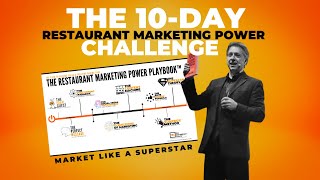
This is Day 1 of Donald Burns' "10-Day Restaurant Marketing Power Challenge," a practical workshop series for restaurant owners. Day 1 focuses on the foundational module: defining the "Ideal Guest" (guest avatar/persona). Burns explains why clarity about demographics and—critically—psychographics (values, behaviors, concerns, buying patterns) drives more effective marketing, menu design, dining-room layout (revpash), advertising (targeting, platform choice), and staff hiring. He gives a detailed worked example ("Johnny Rocket"), prescribes homework (a two-paragraph narrative avatar plus an employee avatar), and previews later modules (perfect message, positioning, emotions of marketing, content machine, review response, soapbox/geofencing/retargeting, and superfan theory).
Chapters
Hey, hello out there. Welcome to the 10 day restaurant marketing Power Challenge. I am so excited to kick off today. This is going to be the start of a kind of a in depth 10 day workshop basically is how I'm going to look at it each day. I'm going to come on, I'm going to come on for about an hour. We're going to walk through one of the modules of my restaurant marketing power playbook. We're going to walk through a module, I'm going to explain it to you and then what we're going to do is I'm going to give you some homework so you can jump in and actually take some action and take your restaurant marketing to the level that you know, it has to be. I hate to say this, but when I'm looking around and working with a lot of restaurants or I'm going out, out in public and I'm working, going to conferences, speaking, I always do a lot of research on restaurants in the market. And one of the sad things I see is a lot of restaurants post, a lot of restaurants post like crazy. Very few restaurants actually effectively market. And when you fail to market effectively, basically you're wasting not only your time, you're wasting your energy, but and if you are paying for advertising, you're, you're wasting your money. So this whole kind of course, this 10 day restaurant marketing power challenge, is designed to give you the elements you need to create an outstanding marketing program so you actually can take your marketing to that level where you know it need to be. So here's exactly. I'm going to give it, kind of give you a breakdown of what the 10 day marketing power playbook looks like. We kind of break it down into three phases. We're gonna talk about foundational stuff, which is think of it like building a house. If you're building a house, you don't have a really solid foundation. What chances do you have of building multiple levels on top of a weak foundation? It's pretty bad. In fact, most of it's gonna come crashing down on you. So first thing we're gonna do, first three kind of classes. The first three days we're gonna work on the foundation. Today we're gonna work on Ideal Guest. Tomorrow we're gonna do Perfect Message and then we're gonna do positioning Paradox. After that we're gonna move into the next phase, which is another three step phase and we call it the framework. Just like you're building a house, once you have a solid foundation, now you can put up the infrastructure and we start creating the framework of what our marketing program is gonna be like, our marketing power playbook. We're gonna talk about what I call as a social media matchmaker, making sure you're on the right, the right social media channels and marketing channels based on what you've. Although basically the work you've did in the foundational phase. We're also gonna talk about. One of my things I love talking about is emotions and marketing. We're gonna talk about the 13 emotions of marketing. And then finally I'm gonna talk about the content machine, how to create posts with ease. Most people have a really hard time creating post. They seem like they just kind of rehash the same stuff. And sometimes I think they post out of desperation, like I gotta put up a post right away so they post anything. And sometimes when you just post anything, you're not really being, you know, thoughtful. You're not really having a plan and it just kind of just seems like it's half ass. And then the final phase is what we call the floodgates is where your marketing really opens up the doors and we take it to that next level where you go from just having great guests to just loyal guests to actually having raving, raving fans. We're going to talk about the rave review formula, how to respond to the positive and the negative reviews. Because if you've been in business for any time, trust me, you will eventually get a negative review. No one likes them. I don't like them either. But you have to learn how to deal with them. Then we're gonna talk about the soapbox method. This is how you actually keep your brand out in front of everybody. And then the last one in the floodgates is we're gonna talk about what I call is a super fan theory. How you're gonna basically start getting your guests to market for you by creating raving, raving fans who actually help you get your word out there. Boom, boom, boom, boom. So if you're just joining me today, now day one is normally I was going to just broadcast it in the private Facebook group, but I noticed a lot of people out there might not know about this thing. So I want to make it available if you want to join the rest of the days. Now day one will be available publicly on YouTube and also on Twitter and also in the Facebook private Facebook group. If you want to join the 10 day restaurant marketing challenge, I would suggest do it now. All you got to do is just go to facebook.com groups forward slash. I know it's a lot 10 day restaurant marketing challenge. Find the group you have to ask, answer a couple questions. The reason I ask a couple questions, this is for restaurant owners only. I want to make sure we keep all that kind of riff raff out there so people aren't soliciting the group. So just head over to facebook.comgroupsforward/10 day restaurant marketing challenge. Answer a couple questions and then you're in. And then you can actually watch the replays. You can see the homework. You can ask questions of other people in the group. It's a really great format and stuff like that. So without further ado, let's jump into the house rules. Here's the house rules for this challenge. Number one, I want you to have some fun. Number two, I definitely want you to take notes and I definitely want you to take notes in your own handwriting. Research has shown if you take notes in your own handwriting, you, you're actually 70% more likely to retain information. Also, at the end of each day, I am going to give you an assignment. You can call it homework if you like. In fact, I think I called it homework on the slide. You're going to have some homework. You must do the homework. This whole challenge is about taking action. It's not about sitting there passively and just saying, oh, yeah, that's some cool stuff. Yeah, writing a few notes saying, yeah, you know, that makes sense. I like that. I might try that. No, I want you to take action. I want you to actually take what we're talking about and I want you to put pen to paper or whatever, or fingers to keyboard on a computer. But I want you to take some action. I want you to actually implement. I want you to do the homework. This challenge is useless unless you do the work. And finally, if you've been to any of my sessions, been any of my coaching programs, any of my workshops around the world, you know, a lot of times I'll drop little gold nuggets and I'll say, hashtag wtsd. What does WTSD mean? It means write this shit down. It's the stuff that I really want you to pay attention to, the little gold nuggets that are going to help you kind of separate the good, the bad from the outstanding. Fair enough. If everyone's ready to rock and roll, let's jump into what we call is the ideal guest. Knowing your ideal guest is probably one of the most important elements of a really, really effective, effective marketing campaign. And I made a lot of mistakes with this myself. Everyone here is one of those first Ones hashtag, write this down. Knowing your ideal guest gives you clarity. All right? Creating clarity creates a niche, and then a niche creates, gives you an edge. In fact, let's change this real quick. I know it's already. All right, right off the back, Right. Knowing your ideal guest gives you clarity. Clarity creates a niche and a niche, or a niche, however you want to say it gives you an edge. If you want to stand out in marketing, you have to know who your ideal guest is. It is critical to not only dialing in, who do you want to attract to your business, but you're going to see we're also going to use this to help us dial in our ideal employees, too. If anyone out there is suffering right now trying to find help, trying to fill positions, trying to get people to come work at your restaurant, another thing you want to do is you want to create not only your ideal guest, but also your ideal employee. And so everything we talk about today, even though we're talking, we're going to focus more kind of guest centric today if I want you to know. And also, hint, hint, part of the homework will be writing your ideal kind of avatar for your ideal team member. Without further ado, let's jump in a little bit more. Defining your ideal guests. Defining your ideal guest. What we're going to talk about is creating a restaurant avatar. It's avatar is basically a marketing kind of term that we use for like Persona profile. You can never, you can call whatever you like. And there's a couple different ones. There's ones, and I've heard people describe them as like, you know, a buyer Persona. That's a lot of times for retail. Sometimes they call them marketing Personas. Sometimes they call them like, you know, I call them the guest avatar, or sometimes some people, I've heard them even call it your target market. Those phrases are all used interchangeably. The one we're going to use is basically I'm going to say it's your ideal guest or your guest avatar. You'll hear me saying guest avatar. What the avatar is, is basically it's a fictional kind of general representation of a Persona of a person who's most likely to come to your restaurant. Or if I was looking at this from a team standpoint, an employee, employer standpoint, employee standpoint, who is most likely to work with you and work with you. Well, it's critically, I mean, super critically important for the success of your marketing, for your sales, for product development, for your menu development, and actually also for the delivery of your services to have A very deep understanding of who your ideal guest really, really is. You've probably heard this saying before. You can't hit a target that you haven't set. This is where a lot of people's marketing goes astray. They're marketing like a blanket approach or marketing like a shotgun approach. You're trying to be everything to everybody. Hashtag, write this down. You cannot be everything to everybody. You want to be something special to someone. That's exactly where we want to go with this. When you have a really, really clearly defined outcome of who your ideal guest is or your ideal team member, what's going to do? It's going to help you. And as we move through the program, you're going to see it's going to help us determine what social media platforms that they're spending their time on. So you know where you want to be present most of your time and also active. It's also going to help you be more effective in your advertising because your marketing dollars are going to actually reach that person that you're really trying to target. And the beautiful thing about a lot of marketing today is you can really dial in your audience. You can really dial in down to be very specific about who you want to reach, who you want to see your ads on social media. And that's a huge game changer. Instead of just hoping you actually can dial it in and then you tweak it a little bit tighter and you dial it even, even better. When I started really paying attention to who my ideal, my ideal client was, for me, I use the word ideal client. When I started dialing in who my ideal client is, my business took off dramatically because I wasn't wasting time with people that weren't going to become, eventually become ideal clients. So this is a game changer as far as not only for your sales. Again, it's going to change how you basically you market in the future. It's going to change how you, how you develop products because it's going to be a lot better connection with people. And that's what we're going to talk about too. When you connect with your avatar, your ideal avatar, you're going to understand what drives them, what motivates them. You're going to understand their pleasures, their desires, their wants, and also what they don't want, which is another huge thing. It's also going to help you kind of set up your dining room better because if you know who your ideal guest is and what the kind of size is, you can actually kind of re figure your dining Room to take advantage of. There's a KPI out there I love to manage and look at. It's called Refpash. And Refpash is revenue product per available seat per hour. So by knowing my ideal guest, this is going to really help me kind of dial in my ref pass too. And then here's the thing. If you know your ideal guest, you can deliver and develop so much better products. Really dial in your menu. So you're anticipating their needs, their behavior, and also their concerns. So defining your ideal guest is critical. There's a great quote out there. This is from Simon Sinek. It's got a. And I recommend this book to everybody. I always recommend to all my. All my clients. It's called Start with why by Simon Sinek. This is a huge thing. We're going to dig into this why thing a little bit more tomorrow in the perfect message. I'm just going to give you a little kind of foreshadowing here. People don't buy what you do, they buy why you do it. That's critical. It's so critical to understand what you do and why you do it. And we want to communicate that. And that's why the next two modules and foundation are so critical, is that after you understand your ideal guest, now we're going to take it to the next level. We're going to understand our perfect message, how we communicate that. And then the positioning kind of part. And the third, the third day, I'm going to show you how to position your brand in the market where your message will be most well received. And it's called positioning. There's some things that you want to do with your menu and with your marketing and with your avatars that will position you better. And there's some things that if you do them wrong, you will basically get out of position in your market. Actually, what that does is like, you know, and think about that kind of like your ranking, like on Yelp or TripAdvisor, like the number one number. You know, top five restaurants always seem to do be positioned very well. Well, imagine that you were like the number one restaurant in your market and all of a sudden you did something and now you're like number 100. What happened was, is that the positioning changed, your position changed. But there's some things I can tell you about positioning that you can look for in advance so you can make sure to hedge your bets and make sure you always maintain a great positioning in your market. That's what we want to talk about. Boom, boom, boom. Hashtag Write this down. Emotion drives behavior. I actually, I would make that into a banner and post it up on your wall. Emotions drive behavior. There's a big difference between repeat business and loyalty. Repeat business basically means someone's willing to continue to do business with you, which is awesome. I love that. I love repeat business. I know everyone in the in on this call or watching this presentation wants repeat business. And perhaps they come back to you because of your price point. Maybe there's a certain menu item they love, or maybe it's some kind of convenience that maybe you're close to their house or close to their friend's house, whatever. But as soon as convenience and maybe the price point changes, the guests will complain, and then they tend to leave because they want those needs met somewhere else. Loyalty, on the other hand, is quite different. Loyal guest will choose you, even if it even it means overcoming some kind of inconvenience. Because they want to keep doing business with you, they're going to pay more, they're going to travel further to your restaurant, and they probably actually, they have great pride in sharing your brands. That means they talk about your brand to their family, to their friends. And, and I tell you right now, if they're loyal, even if your menu is a little bit more expensive, they're going to actually find a way to get there. Guests become loyal when they feel they're a part of your tribe, they're part of your kind of community, a part of who you are, your kind of group, your family, your restaurant, your brand. Here's the thing about needing to belong. It's not rational. It's not a rational need. But here's the thing. It's a need that exists across every culture. I travel all around the world. I speak to countries. South America, all over Europe, North Africa, Australia. I speak to restaurant groups, see restaurants all around the world. All human needs are the same. No matter where you go in the world. That's something you can always, always bet 100% on. When people have a feeling or a connection that they're kind of with people that share their values and beliefs, then they start feeling that we care and they feel safe. They actually start having this bond with you. And it's a great thing. And that's what you want to aim for. You want to get this bond with your guests. Human beings, we all seek and crave emotions, and we seek them out. And no matter where we go, here's the thing, we trust those people who have kind of the same perceptions, beliefs, and values that we do. We want to be around people and companies or brands that like us and share our beliefs and our values. And when you get to that point, you've actually created what we know as raving fans. Now we're going to dig more. And today, I think it's day, let's say 1, 2, 3, 4, day five, we're going to dig into the 13 emotions of marketing. I'm gonna take you on a deep dive on that. That's going to be a great, great workshop. It really is a game changer for all my clients when they start incorporating more emotions into their marketing. They see they go from just getting some comments to actually start getting a lot of people buying into their brand, which is awesome. All right, creating a restaurant avatar. We're first going to start on what we call as the ideal avatar. Ideal avatar. So what I mean by ideal, right? So having a clearly defined guest avatar is important in your question. I know it's probably going to be one. Hey, Donald, how do I create one? The good news is that creating a guest avatar is not difficult to create. If it's a big if. If you ask the right questions, if you ask the right questions. Now here's the other question you're going to probably ask. Well, Donald, what are the right questions? Now you're in for some tremendous value because I have, you're going to see it in this thing. I have a basically a complete kind of template. It's going to help you create your ideal guest avatar. And this template makes it so easy. And I'm going to ask you a bunch of series of questions. So if you don't have a piece of paper and pen, grab a piece of paper and a pen right now. Or grab your computer, grab your phone, whatever you have that you can take notes on, because this thing is going to actually help you create that journey, help you make a successful marketing cycle. One of the things you can do too, and we'll talk about a little bit later when we talk about superfan theory. And you might want to just look at it. You should be able to get a customized audience pixel from Facebook to add to your website too. If you don't have a Facebook pixel on your website, you're missing out a great way to track and learn more about the people who visit your website. So even you just Google that one right away if you just wanted to look at it right now. We'll talk about it later on the course. But one of the things you want to make sure is that you have an avatar or a. You want to Have a pixel lined up and stuff like that. Now when you're doing this, you might say, well, hey, what if I have multiple avatars? Or if I have more than one? Now, you might have multiple avatars, and most restaurants do have multiple avatars, but you're going to have a primary one. That's the one you want to put most your energy in on your marketing campaigns, on your advertising is your primary one. Now, instead of writing three or four avatars at the same time, what we're going to do is I want you to kind of focus in on one at a time because that's the best way to tackle this. Once you do it, go through the exercise one time, then you can reproduce it and do it for multiple avatars. And then we're actually going to reproduce this kind of whole process. I'm going to take you through today and you're going to do it for your ideal team member, too. So let's start off with this part. Ideal guest avatar. Again, we talked about some of this. Things could be more effective in your advertising. It's going to help you kind of better connect with your avatar, with your copy because you have an understanding of their pains, pleasures, desires, wants. It's going to help you develop better products for your menu and services because you're able to anticipate their needs. So we first start off with what is known as demographics. Demographics is big. Demographics is huge. It's the number one thing probably I would say most restaurants know about. And when we talk about marketing, most restaurants know exactly what the demographics is. And it's basically right here. It's geographic. It's where do they live? They live in, like, Arlington Heights. They live in, you know, Cook County. So you want to write down, like the geographic part of this. You want to write down their age. Now, again, when I'm looking at an ideal guest, we're going to create a fictional character. So don't say they're between, you know, 23 and 48. That's not. That's not an ideal guess. That's a broad range. You want to dial this in. We're going to create one person first. And like I said, you can have multiple avatars. But we're going to start. So we're going to say they live in Arlington Heights. I'm gonna take some notes, too. Arlington Heights, my average. My avatar is going to be. I'm gonna say they're 47, right? They're basically their baby boomer. Relationship status. I'm going to say they're married. This is all general stuff. Education, college, College degree. You just put down basic stuff. Now where they work at, I'm gonna say they're a. Mid level supervisor at American Airlines. Their income, I'm going to say they make 150150k home type single family home. Their owners, average family size. They're married, they have two kids. And their kids are in high school. Now you might say this is kind of crazy. Why am I getting this specific? Because the more specific you get, remember we talked about this in the very beginning. Clarity is power. The more specific you get, the better you're going to be able to dial this all in. So that's like just demographics. Demographics is just basic nuts and bolts about who you know, where they live, how they are, what generation they are, are they married, what school, you know, educated. And here's the thing, if you're kind of a casual, laid back brand and you don't know if your people are, you know, college degrees and stuff like that, or super sophisticated, where would that matter? That's maybe. So let's say I'm in downtown Chicago. My restaurant's downtown Chicago. I'm a super high end restaurant. I'm basically, you know, chef table menu or a chef tasting menu only. My average plate is 150 to $200. From there I might say, you know, education for stuff. I might have to dial into people that maybe have masters or PhDs. That might be my ideal avatar. The doctors and lawyers of that market that live in that area are the kind of people that want to be able to. As far as income, those are people are going to be more of the higher end bracket. They're like 250 or higher as far as income a person making, you know, and not, not to dissuade any kind of, or talk negative about any kind of cultural things, but a person making 45,000 a year is going to have a different kind of lifestyle than someone who has something that's, you know, 250 or above kind of income level. But this stuff is really going to help us dial in. So your demographic is just your basic nuts and bolts. Everyone got that good. Right after we got the demographic down, we're gonna move more into what we call kind of. And this is the part we set. We got demographics and we have psychographics. I know psychographics sounds like a really cool word, but psychographics is where the money's at. Hashtag, write that down. Psychographics are where the money is. Demographics. Everyone understands demographics. Everyone markets the demographics. Pretty much most restaurants in the world market the demographics. Very few restaurants understand the psychographics, what drives their ideal guests behavior and they don't market to that. That's going to be your brand differential. That's going to be your marketing differential when you understand their psychographics. So when I'm looking at their interest, there's basically some questions I'm asking myself like what business or industry are they in? So I already said this person works corporate America. They work at American Airlines. Right. For entertainment, let's say, you know, say live out in our own times. They're out Chicago. They're a Bulls fan. Of course. They like, I'm gonna say they're a Cubs fan. And then. And they like hockey, so they like the Blackhawks. I'm not really a big football fan. So they're like, they like Black Eye. So I got that down. Entertainment. Movies. Movies. They might like action venture romcoms because you know, they're a married couple, got a couple kids, but they like romcoms. He likes action. Of course. Now when you're doing this and you're picking this person, pick one of the two. Like if you think the, if you want to do a male avatar. So I'm going to give this person's, I'm going to say it's Johnny. Johnny Rocket is this guy's name. Johnny Rocket lives in arlington heights. He's 47. He's a baby boomer. He's married, has a college degree. He's a mid level supervisor at American Airlines. Makes 150k. He has a single family home. Right. He has two kids. His wife is named Jennifer. His kids are Skyler and Hope. Skyler is 17, Hope is 15. They go to high school scholars about to graduate. Hope still has a couple years left. This is going to be really, really huge when we start dialing in, especially when we start needing stuff for our marketing, for our marketing audience. When we're starting getting into the Facebook marketing part. So entertainment. I got that down. Family relationships. Right. Again I talked about. They're married. He's married to his, his college and I can even go as detailed as his college sweetheart. Jennifer married his college sweetheart. Fitness and wellness. They're both pretty active. Johnny works out, you know, five days a week. He goes to LA Fitness, he likes weights plus some cardio. I can say Jennifer works out at Orange Theory. She goes five days a week and she also does hot yoga twice a week. Okay. You know, because they're 47, he's 47, she's 40. She's 46. So they're getting up there in age. Thing about that is that. See, this helps. Again, when I'm looking at my avatar, I'm looking at my menu. If my ideal person's getting a little up there in age, they're looking about taking care of themselves a little bit better. Do I have enough health options on the menu? If that fits my kind of ideal Psychographic. Okay, remember, psychographic is where the money's at. Food and drink alcohol. Yeah. He likes tequila. She's a wine drinker. She likes white rye. She likes white. White wines and she likes, she tends to go towards that kind of rose palette. Hobbies and activities. Yeah, they have a couple little family. They have a couple little friend groups. They do. They have like a Thursday night poker game or you can say Thursday night, you know, bridge, whatever. Thursday night bridge with friends. And then Sunday they usually do kind of a friend barbecue, especially during the summer. Sports, you write down any kind of sports. But again, the more information you give, the better you'll be off on this thing. So that's their interest. Next I'm going to talk about their behaviors. Again, we're still focused. Now we're focused on again, more psychographics. Whether they're charitable donations. I'm gonna say they love working with no kid hungry. It's a local, it's a national kind of organization that helps, you know, stop childhood hunger. Digital activities. Are the gamers, you know, Facebook online spenders. Oh yeah, Jennifer loves. Amazing. Are they early adopters, late adopters? I'm going to say they're kind of, they're kind of late adopters. Late adopters are basically in technology. They're people who like base, you know. Early adopters are people who line up when the new iPhone comes out every fall. Late adopters wait for. It's been out for a couple months and then they see what all the reviews are and then they jump into it financials. Again, you want to get as more details as you can. What kind of investments they have. They play the market. They have most of stuff in stocks and bonds are in the crypto. What are they into, what's their spending? What kind of credit cards do they have, what kind of bank cards, what kind of retail stores. Do they have any premium cards? Oh yeah, he works at American Airlines. They probably got the American Airlines, you know, rewards card where they're getting their points when they buy stuff. Purchase behavior, kids, pets. We didn't talk about. Do they have a pet? Yeah, they have a dog. Okay. They have a Maltese and Maltese is named Echo. Maltese are a certain breed of dog. Again, there's whole little kind of subcultures to that thing. Same thing if, like people had pit bulls. It's a whole subculture to that thing. Travel. How often do they travel? Where do they travel? They like to go to Canada. They like to go to Europe. They like northern Europe. They like southern Europe. They like Italy. Where do they travel to? You want to get as much detail as possible is going to help you. I'm telling you, it's going to really, really help you. Dial in a fantastic, ideal guest avatar if you understand their behavior, what drives them. I want to go back here real quick on just on behaviors. One of the things I also want you to talk about in your behavior is I want to talk about, like, where do they ship? Where do they shop? Where do they shop? And you wanted to look at this quite a few different levels. Grocery stores. Grocery stores tells me a lot about a person's, what they value. If someone goes to like a general store, like an H E B or a Smith's, where someone else, one of my avatars might be, maybe they go to Whole Foods or Sprouts or a specialty thing. Tells me a lot more about their buying behaviors. If I know, understand your buying behaviors, I can help customize my menu or the words on my menu to appeal to them better, right? I mean, are they Target or they Walmart? Do they like Dillard's or Saks Fifth Avenue? What are some brands? But if they shop online, like, you know, we mentioned that Jennifer is a big, you know, online Amazon shopper. Does she have certain brands she like? Does she like, you know, Tommy Bahama? Does she like Tory Burch? You know, how about Johnny? Is Johnny more of, you know, is he Hugo Boss or is he Calvin Klein? Again, the more detailed you can give me, the better you're going to be off, right? And that's where we really die on the behavior, general stuff. This is where I start asking myself these questions. You know, what are their concerns related to your product or your service? Are they kind of. And what I mean is by concerns is, do you have lots of options? Do you have healthy options? What could be some of their concerns based on what you know so far about them? What could be some of their concerns? You know, enough health options? Maybe their daughter Skyler is a vegetarian. Do we have enough health options for their lifestyle? Do we have vegan options or vegetarian options for their daughter? If they bring their daughter, what happened in the past led Them to this point in their life. What are some things that's happened to them? You know, Johnny had maybe a health scare when he was. He's 47 now. Maybe when he was 45, he had some weird heart palpitations. So maybe that kind of concerned him about cholesterol and concerns. Concern about health and stuff like that. So maybe I need to watch that with my stuff. Okay, what about your product or service matters to this person? Is it convenience you offer online? You offer delivery? Do you have a huge patio? Do you have bigger booths, bigger tables? Are they the type of people who like to go out in groups? They like to do it more family, or do they have to go just as a couple? These are huge questions you need to ask yourself because they answer a lot of stuff about your brand. Remember I talked earlier about rev pash? Rev Pass is revenue per available seat, per hour. If I understand my avatar, my ideal guest avatar, I can set up my dining room to be more successful and more profitable. If I understand. If I'm looking out in my dining room and I see couples, mostly couples, that's four tops, right? So let's say I'm looking out and all my four tops, or maybe like I'm looking at my reservations, my four tops get filled up the fastest. And it seems to be. It's always like they come in groups. It's like a couples always come out together with couples. Or I'm looking out in my room, my dining room, and I see it's like mom and dad with maybe one of their kids or two of their kids. So maybe these people, you know, maybe Johnny Rocket, maybe the Rockets, what they do is maybe they like to go out a couple times a week, two times a week they go out as a family, and one time a week they go out as a couple. These are important things to know. Two times a week they go out as a family. One night a week, they go as a couple. Now, my ideal avatar is mostly families or maybe friends and families. So maybe they go out one time a week with their family, one time a week with their friends, and then they go one out, one night a week out as a couple. If I've got tons, and I've seen this before, I had. I had a client who had tons of huge tables. Means six tops. Eight tops. Six tops. Eight tops. All over the place. Not enough. Four tops. Not enough. Two tops. He was killing himself as far as his rev patch because he'd take four people and put them at a six top hashtag. Write this down. The most expensive thing in your restaurant is an empty seat. If you want to maximize your rev patch, the best thing to do is make sure that your tables match your demographic and match your cycle graphic. Match your ideal guest. All right. How does your restaurant make their life better? What goes through their mind before they come to your restaurant? What goes through their mind before they come to a restaurant? Is it just convenience? I just need to grab a bite. Is it. I like going there because it's relaxing. They have great atmosphere. What is it about your. Your restaurant that goes to their mind? They feel like they belong. They feel like it's a place where they can walk in, be casual. It's not stuffy. It's laid back. What is it? And then this great question here is like, what is the final straw that makes them pull the trigger and move forward to come to your restaurant? What's the final trigger? Is it your price point? Is it your quality? Is it your service? Is it your location? Is it your parking? What's the final straw that makes them want to come to your place? What is the final thing that says, yeah, those guys are good? Okay? And I want you to understand it has to tie back to an emotion. How do you make them feel? That's the driving question. Hashtag, write this down. How does your restaurant make them feel? And if I had to ask you to sum it up in one word, what would that word be? How does your restaurant make them feel? Welcomed, Happy, Satisfied, Content, Relaxed, Romantic? If you had to pick one word, it's a huge exercise. One word. If you want to write it in the comments, that'd be great. I always respond to the comments. I love the comments, you guys, everyone puts in there. How does your restaurant make them feel? How does your restaurant make them feel? One word. How does your restaurant make them feel? They'll be a game changer for you. You nailed that. It's a game changer. Telling you right now, now, sometimes when you're creating your ideal avatar, it might be complicated for you. So what I offer is also write the anti ideal guest. So sometimes when I'm doing this exercise, I tell people they're having a hard time coming with their ideal guest. Think of all the things that you definitely don't want. Think about the negative guest. The person that you definitely don't want. The person that's just shopping for a discount. The person that's a, you know, just a raging alcoholic and gets drunk and makes a scene in your restaurant. The, you know, the guest who makes negative or, you know, really rude comments to your staff. The guest who basically talks down to your staff, treats them like they're servants to them. You know, what are some of the things you definitely don't want? Because sometimes that's an easy thing to start with. If I know what is like the guest from hell, I can create the guest from heaven. And a lot of times I'll have. Especially if you're hung up on this, I want you to know there's a way to get around it. And the way to get around it is basically make sure that you basically understand both sides of the coin. You gotta know what you want and we're gonna focus in on that. But you also gotta know what you won't, don't want and what you won't tolerate. That becomes like the line in the sand. I'm not going to tolerate someone coming in talking down to my team. When I have my own restaurants, I've actually kicked people out for talking down to my team or being rude to my team or using curse words to my team. And I'd say, no, get out. I don't need your business, I don't want your business. And you're not welcome back. Of course, everyone who does that always thinks they're a bigger deal than they are and they want to, like, you know, you know who I am, you know how much trouble I could cause for you. I'm going to go, I'm a write negative reviews, do what you feel like you need to do. But I'm not going to let you treat my staff like that. So sometimes start off with that one. Now when you put this thing all together, and this is going to be your homework, when you put this thing all together, you should have basically a narrative or a story. Your Persona has been, it's kind of a semi fictional representation of your ideal guest. And also you're going to do one for your team member too. Now you've done. You've got a lot of questions here. What I always recommend to people is like, watch, watch this presentation again and run through it again. Because there was a lot of questions I threw at you. A lot of questions to ask yourself, a lot of questions to ask about your ideal or perfect, however you want to. I call it the ideal guest, you call it the perfect guest, call it the guest from heaven, the ideal team member, the ideal team player. But I want you to develop a narrative. And when you get done with it, basically you're gonna have a little story. And when you have a little story behind it, it really, really Changes stuff. So I'm gonna kind of, I'm gonna kind of give you an example of a story how I would kind of write this out based on some of the stuff we talked about today. So Johnny Rocket, Johnny rocket is a 47 year old married man, lives in Arlington Heights. He's basically a baby boomer. He's got a college degree in business and he's a mid level supervisor at American Airlines and he works at o' Hare out of Chicago. All right, so he works at O', Hara, makes $150,000 a year. He's married to his college sweetheart named Jennifer, who is 46 and they own a home, single family home in the suburbs out in Arlington Heights like we talked about. They have two kids. They have Skyler, who's 17 and Hope, who's 15. Skyler is 17. She's dreaming about becoming a architect one day. She's also a vegetarian. Right. So I start dialing in. That's the demographics part. Now I'm gonna start making this thing, thing about their demo, their psychographics. So you know, Johnny and Jennifer, they basically they drive, he drives an Acura and she drives a BMW. She's a dental hygienist. And together, you know, they're making a little over. I mean she's probably pulling close to 100,000 too. So they're making around 250k a year as a couple. They like to go out to nice restaurants every once in a while, but they like to stay mostly close to their neighborhood. They like to go out at least two times a week. Usually they go out one time a week with their, with their daughters and then they usually take one of their friends, a couple go out with them. But they also like to have date night on Friday nights. They like to work out five days a week. So health and fitness is both important to both of them. Johnny likes to work at LA Fitness where Jennifer likes to work out an orange Siri. He's more of a tequila drinker. She's also more of a kind of a rose wine drinker. They like to kind of do their meals are more kind of health focused. They like smaller plates. They're not into huge, huge plates. They're not into big size proteins. They like to order lots of little plates and share talk about them. They're also very much into healthier kind of items on the menu. They like entree salads. They like leaner proteins. They both love fish. They also like to, you know, shop at Whole Foods in their neighborhood. Jennifer tends to do a little More shopping online. She loves Tory Burch, Tommy Bahama. Johnny's more of a Calvin Klein kind of, you know, Tommy Hilfinger kind of guy. He likes Cole Han shoes. He likes Lucky jeans. And so why is all this stuff important? Because this stuff's really important. When we start getting into advertising and we're going to talk about, eventually I'm going to talk about, when we talk about the soup, the soapbox theory, we're going to talk about a thing called geofencing. And geofencing, to me is the number one marketing hack in the world. Geofencing is how I pretty much basically, I can basically be in front of people all the time. So there's two words you're going to learn during this program. Geofencing and retargeting. Geofencing and retargeting are probably the two most critical tools you can put into your marketing toolbox. They're going to help you be omnipresent in front of people all the time. And you've seen what retargeting is before retail retargeting is when you go online to look at maybe some shoes. And I've done this, unfortunately. I've seen like an ad for Kohan shoes on Instagram. I looked at the damn ad. Now I see shoes from every manufacturer. Because I looked at somebody's shoes. Now they think I'm getting retargeted for other brands and their shoes. That's retargeting. Geofencing is basically where I can put up a boundary on certain areas in my town and I can retarget those people, too. So let's say again, Acura, they drive. Johnny drives an Acura. Jennifer drives a BMW. Maybe I know, maybe my restaurant's a little more upscale. Maybe my price points in the 30 to $45 per person range, okay, that's gonna be a little bit different than a Portillo's, which is a little bit on the lower end. Now, if I'm a little bit higher end restaurant. Now this again goes to what your concept is, too. You have to tie it all together with your concept and make sure it matches. And we'll talk about that more when we talk about perfect messaging after you've given me your avatar homework. So let's say, like for my brand, let's say this brand that we're doing, we're a high end, we're upscale. Kind of southwestern bistro. That's our brand. We're upscale Southwestern bistro. Our guest check average is $48 per person. Now, if I know like, my ideal kind of guest drives, like Acura, BMW, Audi. All right, maybe Lexus. I can use that information to my advantage. And I can geofence those. Those local kind of dealers in my market, I can put a geofence around them. And then anyone who goes into that place looking at Acura, BMW, Audi, Lexus, whatever my brands are, they start seeing my ads about my upscale Southwestern bistro. Also, same thing. If I know they go to a certain mall and I know Johnny is more of a. He likes Dillards, I could put an. I could put a geofence around Dillards. And anybody who goes into Dillard's, now I'm gonna start seeing my ad. If I know they go to Whole Foods, I can start putting a geofence around Whole Foods, and now they start seeing my ads. Geofencing and retargeting is probably the two most critical things to getting your brand in front of the right people all the time. And that's in that floodgates part. That's what we're going to talk about. But today, what I want you to do is I want you to write a narrative. I want you to write one or two paragraphs, kind of tell me exactly who they are and not. Not just say, I know somebody wrote down, you know, you know, my ideal guest, our customer, is one I already have. Kind of. What I usually do is a lot of times, if you're having trouble with this, pick someone who's like a really, really. I mean, a loyal. I mean, a raving fan of yours. Not just like the average person who comes in your restaurant who's someone who's like, man, if I could clone that person, I would clone them. Right? So it might be a hybrid of someone who already comes in your place, but you want to get into a little more detail with it, and you want to go a little kind of. You want to have a little creative license on this. You want to create this kind of Persona about them. Now, here's another warning, too. Hashtag warning. Sometimes the guest you have right now is not the guest you need to be marketing to. So be careful about that. Sometimes people have the wrong guest coming to the restaurant. You know, you might see this guy coming in a lot, but, you know, he basically orders the cheapest thing on the menu. He's always looking for a discount or a coupon. He buys, you know, a draft beer. He sits at the bar by himself. That's. To me, that's not like, you know, that's not a raving fan. That's he's a, he's a repeat customer, a repeat guest. That's great. I love repeats. But it's not my ideal. So sometimes a lot of people take their. Who, who's coming in their restaurant now and I think that's my ideal guest. Sometimes it's not. Who would you like to, like I said, who would you like to clone? Who would be someone who comes in all the time? They're a great guest. They love the place. They love you. They love your team. Your team loves them too. Who would be someone you would clone? That's going to be your homework. Write a narrative right? I'm telling you, you know, I'm not asking to be a writer. I'm not asking you to go crazy, but I want you to send a copy to me of your kind of ideal guest. This thing again. Before you can hit a target, you got to know what your target is. You got to put the parameters out there. Having this thing dialed in, knowing your ideal guest is going to be a huge game changer for you if you do it right. Remember we talked about in the getting the house rules? House rules are take this information, actually do the work. Send me over your ideal guest kind of narrative and again, write out a couple paragraphs. You know, hey, Johnny rocket, he's a 47 year old guy. They live in Arlington Heights. He's married to his college sweetheart named Jennifer. She's 46. They have two kids, Skyler, and they also have Hope. Skyler, 17. Hope's 15. Skyler's probably going to want to go to school. She wants to be an architect. She's also a vegetarian. Hope is basically in cheerleading. She's in the health food. She's thinking about becoming a vegetarian because she sees Skyler doing it. They both kind of like to eat healthy. They work out five times a week. Again, the more detail you get, the better it's going to be. Write a nice little narrative. I'm going to put you a parameter down too. It has to be at least two paragraphs. At least two paragraphs. This is like old school, old school homework. Two paragraphs minimum. If you can write a whole page, that's fantastic. And then you can email it to me at donalderestaurantcoach.com donaldtherestaurantcoach.com email me your ideal guest story. That's your homework for today, for tonight. Write it out. Don't just give me bullet points. Johnny Rocket, 47. No, those are bullet points. I want you to write a narrative. Like write a story like you're writing us, like you're writing something for a movie. I want you to write me the backstory about this person. That's your homework. And then tomorrow what we're going to hit perfect message. But you got to do the homework on this. Does not help if you just jump around to module after module. But don't do the work for it, Please, please. That's why it's called a 10 day restaurant marketing Power challenge. The challenge part is you doing the work to get better results. So with that being said, I'm going to say have a great day. That's our hour for today. Tomorrow, again, day two of the 10 day restaurant marketing Power Challenge, we're going to talk about the perfect message. Do your homework today. Email it to me at donaldtherestaurantcoach.com donaldrestaurantcoach.com Send me over your narrative. Send me over your ideal avatar story. I look forward to reading them. I'll give you some feedback on them and then we'll be here tomorrow. Have a fantastic day, everybody. I appreciate you being here. I also appreciate you taking the time to improve not only yourself, but improve your marketing and make sure that you do the work.
More from Donald




If your restaurant only works because you work 80 hours a week, it doesn't work.






