Digital Maturity Is The Key To Restaurant Success
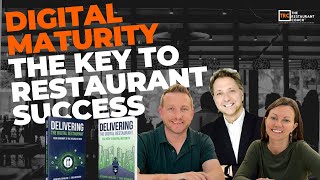
Carl Orsborn and Meredith Sandlin outline their digital maturity framework for restaurants. Most should master marketplace presence and first-party sales before chasing ghost kitchens or automation. They call transactional data 'liquid gold' and show how AI powers ETA quoting, chatbots, and marketing.
Chapters
Attention restaurant owners. What exactly is digital maturity and why should you care about it for your restaurant? That question is going to be answered on this coming episode of the Restaurant Coach Podcast. Welcome to the Restaurant Coach Podcast. Take two. It is the cure for the common restaurant. I am joined today by Carl Orsborn and Meredith Sandlin. They are the authors of, of two amazing books and they've been in my podcast before. They are author of authors of Delivering the Digital Restaurant, your road map to the future of food. And they just came out with their sequel, the follow up book, Delivering to Digital Restaurants the Path to Digital Maturity. Carl.
Thanks for having us back on, Donald.
Back on. It's good to be back on. You know, it seems like we just did this a few minutes ago.
Yeah, sure does.
You know, restaurant technology is tough, Donald. Stream casting, webinars, podcast technologies, even, even tougher. That's all I'm gonna say.
It is so tough. It is like it is a nightmare sometimes. And that it just goes to show you, sometimes you think you know what you're doing with, with technology and you don't know what you're doing.
Well, you know what, thankfully, thankfully there are, there are folks out there that can help and I'm glad we had a bit of a dry run earlier just to be able to make sure that we, we're ready to go. To make sure you're listening. Perfect.
Perfect.
The useful session here.
Well, so what we want to talk about today is we're going to talk about mostly the follow up book Delivering the Digital Restaurant, the Path to Digital Maturity. And the thing I want to talk about, and I got this really great graphic here. There is a path to digital maturity and I want to give credit where credit is due. This is from their book the Path to Digital Maturity. Let's talk about what exactly is digital maturity and how do people, how do you, how do you get from point A to point B or point a or from 1 to 8? How do you tackle this thing?
It looks like when we started the first book, the first book was written, started to be written before the, the pandemic, right. And so in that time we were trying to help restaurants understand why digitization is so important. How to treat it with, with actually a lot of excitement. But the second book, and certainly in the conversations that Meredith and I have had since we wrote the first book, a lot of it is okay now I get it. We've gone through the pandemic. We've had to deploy a lot of digital tools and technology into our restaurant. We're seeing the new channels that are emerging for us, that's great. But Now I've deployed 15 to 20 different pieces of technology across my restaurant. I don't really know how to optimize and use all of them to the best of their capability. I'm probably paying too much money for everything in technology right now. And so what do I do about it? And so our second book, the Path to Digital Maturity, was written to be able to help restaurants focus, to be able to say, look, find your place first of all on the path and then really look to optimize your presence in that area before moving on to the next. And I think many will probably recognize elements of what they're doing in a number of the different chapters here, but it's fair to say, I'd say that probably in the first two chapters is truly where 70 to 80% of restaurants need to be and are right now before they then progress further up the. The path here.
Yeah, I, I look at this thing and I, I look at, like, I teach a framework in my coaching and at the end of my framework is of course, profitability. And everyone wants like, oh, I want that piece. I want, I want that part. And I was like, all right, I'd love to give you that right away, but we gotta build everything else, the foundation and, and the other elements, before we get to the profitability part. Oh, this is not going to work. Same thing with your Path to digital maturity. I can see where people right away saying, oh, hey, Carl, Meredith, I want grow top line and be guest centric. I want that.
Absolutely. I think the temptation is to gravitate toward the outcomes instead of the inputs. Right. And that is true for all of us. You know, when I think about being more fit, I don't think about all the runs I need to go on to accomplish that. I think about how fit I'm going to be. Right. Like, that is, that is the thing that motivates us and that's great. But grow top line, specifically that chapter number five is about these virtual brands and ghost kitchens, which of course in the last two years, three years with the pandemic, got so much news and so much excitement. And I think every restaurant thought to themselves, is this for me, Many restaurants adopted one or the other, if not both of those. But truly, you can't be a great operator inside a ghost kitchen with really good outcomes unless you know how to be found in a digital sense. Right. So you know how to do digital marketing, you know how to do SEO on the third party Platforms, all the things that we talk about in chapter one. And if you haven't done that and you haven't figured out how to drive first party sales digitally again, but you're trying to do a ghost kitchen, guess what? It's, it's not going to work. Right. So you've got to put those first two pieces in place. And the same is frankly true with the virtual brands. You know, there's a lot of different ways to do virtual brands, but if you have not figured out how to advertise them, if you're doing them yourself digitally, or how to pick the right partner who's doing a great job with digital advertising, it's going to be really hard to drive enough sales to have that be worth the effort. So absolutely, it's one of these cases of, I know you want that, but before we get there, let's just make sure that we've got all the other pieces in place that are going to make that successful.
Yep, that's the truth. So of all eight chapters, what would you say is your favorite?
Haha. Well, it's. We, we like, we like them all, but there are a few favorites.
I just, I have a favorite child. I have a favorite child.
Everybody has a favorite child. I have a favorite all my books. I have a favorite chapter in all my books.
Meredith, you only have one child, so that's, you know, so I'll, I'll go first because I know what Meredith's one is and it makes sense for me to go first. Mine's the first, the first chapter. And it's all about being found. It's about marketplace optimization. You know, today's marketplace is very different to what it was five, six years or so ago. It's, it's almost. If you were to liken it to the Yellow Pages, when the Yellow Pages first came out. It was probably a relatively small book back then, but these days it's huge. Right? And now every restaurant is on a marketplace. And I think the overarching message from that first chapter is you can't just be on them. You've got to really focus in on how to, you know, optimize your presence, how to really think about this being as good as a representation of your restaurant as it is on the front doors of your restaurant today. How the amount of care a restaurant owner operator takes to the front doors, the cleanliness of the areas in front, the imagery and the signage, all of those things are just as apparent in a digital context. And for many restaurants, the way in which they get found Today, for the first time will be through those marketplaces. And so we focus in on that chapter there about be found, create a great experience first of all. And then from there you're putting yourself in a great place to be able to grow your digital restaurant muscle further down the line.
And you talk about creating that great experience. I love, I follow you, I follow you both on social media. And one of the things I love about when Carl does is he goes out to these restaurants and he kind of breaks down the digital experience that he has. And sometimes I'm telling you, it's, it's kind of like you're like, oh man, they dropped the ball there. Especially when like you see him standing there, he's like, I can see my food sitting in the window 20ft away and no one's getting my food. And it's like, this is like really bad or the interface is really awkward. Right?
Yeah, it's. Look, I'm always caught in two minds about those videos because in no way am I ever trying to suggest that I, I could do it better because the, the ways in which these restaurant owner operators that are having to now navigate all these different channels of trade on top of a very tough environment from a labor perspective makes it incredibly challenging. But what I am trying to do is to be able to say, look, because this is the first time that a guest might be experiencing your brand, if you don't give them a great experience, whether it be through a third party marketplace or through your direct channel, they may never come back to you again. And we've got to find a way to be able to create the off premise experience, to be as good as, as the on premise experience for different reasons. You know, there are different reasons why someone chooses to have food delivered or picked up. And largely you could say it's associated to convenience and ease. But the guest today is someone that doesn't just choose one channel and exist on through that one channel. Someone that's ordering delivery on Tuesday night could be there on Saturday night for date night, for example. And so every opportunity is a chance for you to give a great impression.
Very true. What do you think, Meredith?
Well, it's definitely a do or do not. There is no try situation if you're going to be engaged in delivery.
Nice.
Yeah, from Yoda. If you're going to be engaged in delivery, do it well. And if you're begrudgingly on those, on those third parties, like why are you bothering? Just as Carl says, don't make a bad experience. Do focus on your Diamond. So my favorite chapter is chapter seven, Disrupt Yourself. And I think it is my, it is my favorite in part just because I love disrupting things. I think it's. I think it's really fun to be innovative and be thinking about how things could be totally different from what they've been in the past. But I'm also really passionate about it because I think the restaurant brands that figure it out are going to be able to bring better quality food more conveniently at a better value. And that's just, that's so exciting, right? To be able to figure out how to improve the overall American diet by just operating a restaurant in a completely different way. And there are a couple hundred, I think, of these digitally native restaurants out there, that's what Carl and I call them, digitally native restaurant. And you know, so far I think they're all putting together different elements of what will be the future. Right. Some of them just have an incredible set of technology. Some of them have used back of house cooking technology to great effect in terms of lowering the price and eliminating labor. Some of them are, they've really got the ghost kitchen piece mastered. Some of them got the virtual brand piece mastered. I've yet to see anyone who has all of it in one configuration. And by that I would mean they've got an automated back of house. They're spending very little on labor or real estate. It's ghost kitchen only. They've reinvested those funds into the quality of the food for the price that the consumer's paying. And, and things are going out the door delivery and then they're engaging with them completely digitally. That would be like all things in one place with multiple brands. And probably the closest ones I've seen are certainly clustertruck. They're doing multiple brands out of a ghost kitchen delivery only with great use of. There are several brands that are doing multi concept ghost kitchens. So they've got a lot of, a lot of virtual brands playing together so that we have people like Bite to Bite and Salted that are getting started with this. And then there is, you know, someplace like Stellar Pizza that's using an incredible amount of autonomous cooking, I guess I would call it, in order to dramatically bring down the price of the food. So, you know, different folks are taking on different aspects of it, but I can't wait to see until it fully emerges. And what we predict in the book is that just as, you know, first there was fine dining and then counter service and then QSR and then delivered pizza and then casual dining and then Fast casual. Well, what comes after fast casual, Donald? The digitally native restaurant.
That's what native restaurant exactly does, right?
Yep. And I think they're just going to take off tons of growth.
Awesome. So if you had to pick an example. So I'm gonna use each of your chapters. So, Carl, give me an example of who you think is a brand that is the best at just that being found at just that presence they have. Who you think is a great brand that just as a great example.
Cool. Well, I really like. Because part of my answer to this one, Donald, is you've got to think about the journey you want the guest to go on.
Yeah.
Right. So as we get into the second chapter, we talk about converting those fans that you've made from a great experience in the first. You've got to think about, well, what is it going to, what are you going to be able to do after that first experience to bring them across to your first party channel where you get better margins and you get customer data. So the folks over at Carver, for example, do really good job at being able to create a differentiated first party experience. But similarly, once you go onto the third party and perhaps you discover Carver for the first time, you can see a very consistent level of product descriptions, you can see a very clear level of consistent photography. And similarly, more often than not, you're able to find that they can fulfill the orders in a consistent level of time. And so I really like the way in which they set themselves out there. There's also a company called ITSU over in the UK that I like as well in this regard. But the reason I call them both out Carver and ITSU there is that when you go to their first party, it's differentiated. It's differentiated in the way that it's a better, it's more fulfilling experience and it's a seamless user experience when you go through the process that actually it's more fun then going through just the marketplace. And so I would, I would encourage just folks looking at the two representations both on the marketplace and seeing their first party as a reflection of that. Because you want to be found, you also want to be able to create an experience on the, on the first party that's differentiated enough too.
Very cool. And then Meredith, who you think is a, who you think is a great example of disrupting.
Well, I think probably the best example so far that we have is cluster track because they are doing, I mean, doing $8 million out of a delivery only kitchen.
Wow, that's incredible.
It's incredible. And Impossible for most people to imagine they're doing it in 29 minute order to delivery times. The food is never older than seven minutes when it hits the consumer. Their Delivery costs are 7% of sales, their labor costs are 19% of sales. So for less than most restaurants can run a restaurant, they are making and delivering the food, which I think is absolutely incredible. But there are a lot of brands both here in the US and frankly internationally that are figuring out this combination of virtual brands that enable them to drive enough top line out of a single ghost location that they can then say, we're not going to do takeout, we're not going to do dine in. We're getting rid of these other things and focusing solely on delivery. And because of that, we're going to design a business model that's optimized for delivery and we are going to therefore be able to reduce labor and real estate costs to reinvest in the consumer. There's probably every time I turn around, I feel like I discover a new one. So I would feel remiss if I, if I don't mention all of them. But Donald, the one that I like in Phoenix near you is Charlie Mays. So go check that one out. They are operating a number of different brands out of a single kitchen. And then internationally there's a place called Casper in Benelux that's doing something very similar to this. There are a bunch of different ones in the Middle east and in Asia. I think they're a little bit further ahead than we are on this dimension. So there, there's a lot of it coming. Everyone's experimenting. I can't wait to see who creates the first national brand out of it.
What's interesting about some of those is that you also get to sometimes see the background stories of those that created them because a lot of them come into this space without 20, 30 years of running a traditional restaurant coming in. And when you talk about disrupting yourself, isn't it easier almost to start with a blank sheet of paper saying, well, what is the most optimal way of being able to do this right? And so part of that is actually, how do you rethink the entirety of the business model because that disrupts yourself. Chapter it sometimes can feel, you know, are we talking about technology here? But quite honestly, it's the entirety of the business model. It's the operating system itself. And technology can enable it. But actually you need that mindset first to be able to get to that point.
Very, very cool. So as we move up the ladder of the path of digital maturity. I'm going to throw this question out to you. Can you discuss real quick the role of data analytics in understanding guest preferences and optimizing restaurant performance? And then also part two, what type of data is most valuable for restaurant owners to collect and analyze?
Wow, that's a huge question. That's a huge two part question. Each one.
That's a two parter. That's a twofer.
Each part of the question is a huge question. Well, I think in terms of understanding data, particularly as it relates to your customer, it is all about making that customer feel as special and valuable as possible. Right. So personalizing their experience, personalizing the offers that are coming to them, understanding what it is that matters to them. And we think about this very much in terms of the E commerce funnel. So where are your customers coming in? Where are they transitioning through that funnel? Where are they falling out of that funnel? And what are the things that you can a B test to keep them moving along what we would call the happy path all the way to purchase and happy path.
I like that.
Yeah, that's right. We don't have them fall out. But you know, you can get really, really detailed here. Right. If you understand someone's behavior at the individualized level, you can do things like say, wow, that product, everyone orders it once but no one orders it twice. Maybe it's not as good as we thought it was. Right. Which is something historically we wouldn't have known in restaurants. We would have known that, you know, people, people seem to like it, they talk about it and they come in and they get it. But we wouldn't have known until like three months later when the sales fell off a cliff, when we stopped supporting with advertising that it wasn't actually that good. And instead you can see in the data somebody ordered it and then they never ordered it again. They came back but they ordered other things or they ordered it and then they never came back because they didn't trust us anymore. That is like next level data. You can also understand things like how does, how did this consumer come to us? Therefore how do we need to convert them? So let's say they came to you in a group order. You're going to put them on a different marketing path than someone who came to you via the third party. Right. You're going to talk to them about different things and convert them to a consistent individualized ordering behavior in different ways. So, so, so so much there, so much that you can do. And that probably leads to part two of your Question, which is what types of data are most valuable? Because you could do lots of things and there is all the data.
But what is data? Right.
Yeah, you could drown in it, honestly.
Yeah, I think that's right. And there's a line in the path to digital maturity where we talk to the fact that restaurants are now becoming e commerce companies. And so everything Meredith has just said is all about e commerce metrics. We talk about the terminology in the book about how to think about calculating, acquiring the information appropriately, but also the different stages of when to collect it. And the data collection piece can start earlier than you perhaps might think in terms of the most valuable data to collect there in that second part of the question. Well, first of all, transactional data is the first liquid gold. I would suggest, you know, being able to use your transactional data to be able to use for forecasting, to be able to understand the trends of your business can help in so many different ways. It can help with your purchasing, it can help with understanding your staffing requirements. You know, my business that I've co founded at Jucer, we're helping use forecast the data to help improve off premise pricing. So we're bringing dynamic pricing to restaurants and that's therefore enabling us to optimize off premise margin. So the main thing here is how do you collate that data, how do you make sure it's clean so that way you can do that, do this in such a way that really helps you make sense of it. And that's where companies that are specialist data scientists like my own can really help in that regard.
Very, very cool. I tell you, dynamic pricing is a whole topic by itself. Yeah, sure is dynamic pricing is, is the new frontier. Yeah, it is way out there. All right, next question. In what ways are restaurants leveraging? You've heard everyone talks about Chad, gbt, chat, GPT, AI. What ways can you. Have you seen restaurants leveraging artificial intelligence AI, machine learning to improve operations, menu offerings and the overall guest experience?
Yeah, well, certainly in. So the company that I'm working to launch is Empower Delivery. We came out last year and we use artificial intelligence and machine learning to improve the quote times so we know we can learn what are the make times, what do we think they are, how do they differ by time of day, by how much demand is on the kitchen, by who's working, by how much training they've had, all those types of things. And as we get better and better and better at understanding that, then we can obviously give more refined quote times, which is exciting. I Think, you know, probably the first place that truly like the chat GT GPT stuff will get utilized is in marketing.
Yeah, that's where I'm using it with my clients. Yeah, I have them using it to write, to revamp. So like they'll have an Instagram post and I'll say, take your Instagram post, put it through chat p and just say, improve this, this post for Instagram to increase engagement.
Yeah, right.
Really just like it, it knocks out apart. Or you can say, let's say you.
Want to write five different versions of this.
Or write, write this in the, in the style of, you know, Guy Fieri. And it'll write. It's really crazy. It'll write newsletters for them too.
Correct. So I think there's a lot of opportunity there, particularly when we're in such a. Digital marketing is a very volume marketing game. Right. It's about putting out volume of content and you know, no, it's not. It's not like tv Back in the old days, you know, we would count TRPs and we would say, you know, how many, how many impressions did we get of this one ad that we made? And we would send millions of dollars making one single ad, you know, and putting it out there. And everyone in America would see it. If you did a great job, everyone in America would talk about it. It's not like that anymore. Now it's about all these little different fragmented pieces of content that go to all these different places and different people see different versions of things. And therefore you have to put a lot of content out. Well, most restaurants don't have the staff to create content engines to sit around coming up with different versions of things. So if you can use AI in a way to help you write different kinds of content, I mean, you're going to have to give it the prompts and you're going to have to tell it what you want it to say. Right. You have to do something and you have to check it. Right. Because sometimes it comes up with the craziest stuff and you're like, that one doesn't make any sense. I kick that one out of here. But it helps you put different content out for different types of people. And the algorithms in turn are going to push that content to the types of people that it makes most sense to see that. So I think there is a lot of opportunity for, for AI machine learning there.
What do you think, Carl?
I think absolutely right. But I also think it's a term that's overused like crazy. I think there's so many people out there that are going, oh, yes, check out this artificial intelligence thing here. And it's like, is it really, you.
Know, truly, no, it's just a fancy vlookup is really what that is. You put a user interface on it and called it AI.
Yeah, exactly what they did. Right?
Totally. So many times. Yeah.
Yeah. So. So I think that's something we have to be mindful of. But look, the. The reality is, is that a lot is happening in this space. I think it's probably going to become more prevalent initially in chatbots, helping guests get resolutions to issues earlier on. So I think that's probably going to be an area we see a lot of the kind of type of chat GBT type interface occur. And. But I think we also have to be mindful of this word hospitality. Right. So tell me how chat GBT can create better hospitality right now. And sometimes that's about that other word, empathy, and being able to understand how do you bring empathy to digital transactions and be able to create an experience that really understands the situation that's going on. So there's a bit. Bit of work to go in that regard.
Yeah. But if you believe that something like ChatGPT is as disruptive as the creation of the graphical user interface, which many people have said that it is, what that implies is that this will be disruptive to restaurant operations in the sense of instead of touching a kiosk to place an order, right. I will just talk to. Place an order to whatever thing I'm talking to. Right. Whatever computer is accepting my order. And as a restaurant general manager, instead of sitting down and placing my orders at a keyboard with the screen in front of me, I will just talk and say, how many cases of this do I have? You know, what's the run rate that I'm going through them? How many cases do you think I should order? Sounds right to me. Oh, no, wait. I know something about Saturday that you don't know. Get one more. But it will all be voice. Right. And that hasn't come yet, but I think it will.
That's gonna be crazy. I'm telling you. Like, when you guys go to these and you. And we all. We travel a lot around the world and you go to a lot of trade shows. Do you guys ever, like, go to a trade show and you just get, like, overwhelmed?
We have a. We have a feature in the. We have these fictional vignettes at the start of each chapter. Donald. And we. We focus in on this one character, Kizzy, who is a restaurant owner. Operator fictional. But we've seen so many of this situation where someone turns up at these conferences and they go, where the heck do I start? You know, because half the challenge is there's everyone out there saying that they can do everything, which isn't necessarily the case. And second of all, again, what do I really need for the type of restaurant of where I am right now again? Hopefully this book will start to help people understand where to start walking towards in those large conference halls. Because it's not easy. There are plenty of different technology maps out there. I'd direct people to Brizo's Tech Map. If you Google Brizo Tech Map, you'll. You'll see something that lists out hundreds and hundreds of different technology companies in all these various different categories of restaurant technology.
Wow.
And it just shows you just the enormity of choice that's available. And, you know, that's why in our last chapter of the Path to Digital Maturity, we talk about how the technologists themselves need to get better at a understanding what restaurants need when and to know who they shouldn't service and who they should. But also how these technology companies and the product teams behind them and the engineers behind them need to develop better ways to be able to engage technology so that it works together in a more harmonious manner. And that I think is going to be truly the point where we can say the restaurant industry, once it starts doing that with the technology in place like that, that it can be digitally mature.
Yeah. And I noticed the same thing you mentioned this before is like everyone's advertising that are a one stop shop. But are they really?
It's funny, we saw that Carl and I were just at the pizza expo this week and we saw all in one solution.
Yeah.
On so many different signs. And it was funny because the companies, they were an all in one solution for that thing that they were doing really. Right. So they were. I'm an all in one solution for consumer ordering front end. I'm an all in one solution for deliver logistics out the back end. Right. And that term is so overused that it makes things even more confusing, I think because now as a restaurant I'm like, wait, you're all in one? That means I'm done, right? Oh no, wait, I still need these other things. Like it's.
Yeah, it is confusing. Yeah. It's like I get restaurant owners all the time that like they want maybe a software like for food costing and they, they sign up for a food costing software. And of course I always tell people there's all the programs are the same. There's a huge learning curve at the beginning. It's never easy. There's always some work to be done. It doesn't just like fall into your lap and just automatically cost out all your stuff. You need to have the data, you got to input the recipes. You gotta have the recipes cost, you know, weighed out. You got accurate. See, you know, it's like data in, data out. Right. Good data. Garbage in, garbage out. Right. And then all of them will like, they'll start a food costing program and then someone on their team will go to one of these shows like the Pizza Expo or the Bar and Restaurant Expo and oh, I saw this one and they said they were easier to use. So then they jump onto a new one. Right. And then like two months later, of course they haven't made any headway and then they jump onto a new program. Oh, and they're like, I've got clients. Like, there are like five different programs into food costing. And I say, you know, it's a lot like dieting. Like how many diets does it take to lose weight? Just one. The one you stick with. Same thing with it. You gotta like find one piece of software and decide, this is the one we're going to use and this is the one I want to. We're going to stick with it and we're going to make it work, I think.
Yeah.
Or at least set a time limit on it.
We're not.
Right, right.
Well, and here's another tip I'd suggest. And you know, our book is full of tips and worksheets, but this one isn't it.
Yeah.
And the worksheets are great in the new book. I really love the layout of the new book book because it has like a recap, has lessons learned and has how you can kind of take it forward, which is really great.
Yeah, absolutely. But the, the tip in this regard, which I don't think is in the book, is when you are selecting a technology supplier, really focus in on the after sales support, you know, how much are they going to be there for you after the onboarding or the ability for you truly to optimize the use of that technology to its full capability. You know, there are a lot out there that promise a lot. But I think those of us, and you know, Meredith and I are now in restaurant technology ourselves, we have to really be very transparent and honest to say, are we truly delivering what we promise? Because there's a lot of over promise and under delivering happening out there.
Definitely, definitely, definitely.
Yeah, and each other a lot, which I love. I absolutely love going on YouTube and just looking for videos of people using technology and saying, you know, here's how I did the settings and here's what you can do with it that you might not be aware of. You know, lean on each other. You don't always have to do exactly what the tech company itself says or certainly don't have to use it the way it came out of the box, the metaphorical box. But there's a lot of folks out there, I think, generously giving of themselves and putting what they've Learned out on YouTube.
Very cool. All right, next question. How have restaurants digital marketing strategies and just talk about the last six months. It's April 2023. Right now we're going to say it's April 2023. In the last six months. What role do you think does social media plays in driving customer engagement and loyalty? And let's talk maybe about loyalty programs too.
Another big question. I think that's a three parter, Donald Parter.
I was involved in the last six months. The social media play a role in driving, you know, guest engagement and loyalty.
Got it. All right. Well, I might start with what's really changed in the last six months. And I feel like what's changed is that some of the off the shelf tools have gotten even better.
Oh yeah.
Such that. Well, I really love what thanks is doing, their loyalty program, but they also do first party ordering and a bunch of other things kind of just off the shelf. You can go make things happen, which I think is great. And there are a number of companies like that. Toast certainly has expanded their offering so that you can, can use their own, you know, first party website and things like that rather than having to get another different company and stitch it together. And so I do feel like it's starting to get easier in that sense because there are some companies with some great off the shelf choices and that makes things a lot less complicated.
Right.
And that's probably speaking specifically to digital remarketing. Right. Once you have someone in your system, how do you continue to talk to them? Drive frequency, all of those kinds of things. And then from the customer acquisition standpoint, I think social media is incredible and important there because that's how, that's how the kids these days consume. Right. I'm not one of them. I'm a little bit older.
I'm not one of them. What's your favorite social media platform?
My favorite social media platform.
Which one do you visit?
Very funny. I, I really, aside from LinkedIn, which I, I guess is a social media platform, but it's like a work. It's a work social media. It's not like I go there for fun. Right. Yeah, I'm really not. I'm not a user. I. I'm too. I'm too old for this stuff. But the kids these days, that's how they find things, right? They're.
You might you make yourself sound ancient, but that's not the truth.
She's like younger than I am. Way younger than I am. She acts like, now you're making me feel like I'm a dinosaur.
Not that much younger than you, Donald. Oh, my God. So, yeah, hugely important to get. Get customers engaged and the, the value of what we call social proof, which is to say other people are doing it, so it must be good. Yeah, it's huge. And it often happens in social media where you, you see and you not only discover these things, but then discover that other people are doing them, and then it becomes something that you should engage in as well.
Yeah, look, I think what I would say about both those questions there, Donald, is first of all, many restaurant chains out there are starting to realize they need to bring marketers in from other industries. I speak to a lot of CMOs and VPs of marketing, and they have come from retail or E commerce in some context, and they come in, they go, wow, this is some heavy lifting just to be able to get the rest of the team aware of exactly what we need here.
It.
And I think one of the things which I would point out is that we're starting to get an understanding that you need to have a digital marketing budget. Right? You need to have a digital marketing budget to invest. You need to have it on at all times. You need to make sure that there's a distribution between that budget, not just on the marketplaces, but also in your conversion tactics, but then also in. In the ability for you to be able to draw people back into your restaurant through loyalty programs and the like. And you asked about loyalty. Yeah, look, loyalty is an interesting one because what is a loyalty program? Why do we have loyalty programs? For me, I think it's about being able to build a better relationship with your most important guests, but also to try and drive the basket size and frequency rate of those guests as well, and hopefully over time, understand a better impression of what your restaurant is to them so that you can make it even better. So it comes back to that word data. Right. But actually, how much do you need that just for the top 10% the top 20%. There are different customer segments that may not be as loyal in the way in which we traditionally would refer to them as loyal, but actually still have a level of value that support your overall, your overall revenue rate. And so in that sense, today I think it's about how do you create a platform that creates an ability for someone to be a loyal guest even when they perhaps don't know that they are a loyal guest? You know, you mentioned thanks earlier, Meredith. You know, thanks have something like a 70% sign up rate when people just check a box at the bottom of, of a first order transaction where they keep the credit card for the next transaction, making it a more seamless transaction. And guess what? The guest is signed up to the loyalty program which then gives them the ability to be communicated to for further follow up orders. So there are other ways, you know, there's spango out there that are doing the same thing with, with, with telephone numbers. But it's, it's a slightly different way of thinking about loyalty. And the last thing I'll mention about it is it's not always about discounting. You know, I was, I think it's about how do you create the right type of guest experience for the type of guests that you're servicing. So you know, the, the top 1% of, of McDonald's customers, do they really need to have a $1 off a big Mac? Or what about if they are the ones that get access to McRibs all year round or they're the ones that get invited to the taste panel so that they can design the next product. Those are the types of things that the top 1% are going to love. And so it's about being able to understand the customer segments and give loyalty to them back in what's most important to them. And I think that.
Other verticals tell us how the future is going to happen. Right. So most restaurants who have loyalty programs, the loyalty program itself, the software that's running it, is a small fraction of the cost. It's the redemptions that really kill you. Right? And most restaurants who are running them typically are running between 2 and 4% on their redemptions. If you were doing an old school punch card and giving away one free sandwich for every 20, that's 5%. Right? It's a lot. And so thinking about are these giveaways really that valuable? First of all, who values them? Is it the people that you really want coming or is it the people who just want deals? And then what else do they value? And here's where other verticals tell us how it's going to play out. Right. So you think of your experience flying? Sure. Like you, you appreciate the miles and occasionally you book a free ticket and it's great. But what you really appreciate is that every time you fly, your bag goes for free. You get to board first. You have access to better seats, they don't charge you fees. Right. Those are the things that make your day to day flying experience better.
Right.
And those are the reasons why you're in the loyalty program and why you're incentivized to get to that next tier. Right. You don't like. Yes, the miles are great. And don't get me wrong, like you're going to redeem them and you're going to go somewhere great and it's going to be fun.
All that time when we got marooned at somewhere, Meredith and I had to rely upon your American Airlines platform level or something to get us out of.
Wherever we were, they were like, it was like a horrible storm. They're like, carl, we will call you back in three days. It was, it was awful. Like they were completely overwhelmed and I just, yeah, I got right in. So, yeah, yeah.
I push my clients to push, to redevelop, to rethink their loyalty programs is not. And I think we both agree that, you know, discounts and stuff like that and giving away stuff is not the way to financial or prosperity, but to be creative and think outside the box. And like you said with the airlines, how can we create a loyalty program that gives people perks that don't really cost us anything, like preferential, you know, reservations? I like to do. One of my favorite ones is, I call it the extended happy hour. A lot of restaurants run a happy hour and they usually run Happy hour like 3 to 5. I say if you're a VIP member, you get extended happy hour till 6. Or do reverse happy hour hour. Like if you're a VIP member, you get reverse happy hour. The last hour we're open from 9 to 10. We also have reverse happy hour for VIP members. That's awesome to do that offer like people like you said, you know, why do I, why do I sign up for, you know, why am I in the American Airlines platinum plus? Because, yeah, my bags fly free. I get to the front of the line, I get on the plane easier. I get, you know, it just makes my life easier.
Yeah, yeah, I can show up at the airport later, all those things. And the same. I don't have to think, I don't have to Think two weeks in advance to make a reservation. I know I can rock up at the last minute because I'm important to you. You're gonna let me in. That's great. That's like the velvet rope, man.
That is the velvet rope. That's what we, I think we gotta start thinking of is what's the digital velvet rope that we want to be able to give people access to.
Yeah.
Without giving away our hard earned profits.
And to the other part of your question about social media, when you do those types of things, that is when you share them, customers become your biggest marketing vehicle because suddenly their own networks get to hear about this stuff, they want to have it. You create a bit of fomo. And of course now as we know, video is so, so critical. So for those of your listeners that are a little shy of video, video is so important. You know, it's really, really important for you to be able to engage in the storytelling of your restaurant. Because the advantage, especially for those of your listeners that are independent in nature, is that is your superpower. You know, everyone knows the big chains, but your independence makes you stand out. Celebrate your own food that is different from everyone else's. Celebrate your people that and put that out on video. Because that kind of thing is resonating with more and more guests these days. And of course the TikToks out there and the Instagram reels, all of those are certainly driving more engagement than traditional text.
Very, very cool. All right, one final question for you. In terms of digital maturity, what do you think separates industry leading restaurants from their less techie savvy counterparts? Two parts. And how can smaller establishments catch up?
But we're spotting the trend here.
I, I, I pitch you one question by breaking into multiple parts.
Oh man, oh man. So there's two of us. So that gives us both an opportunity to talk.
Yeah, look, I think I'm gonna probably say someone here that Meredith will often refer to and we'll see whether she, she adds to someone else to the mix. But I, I think an industry lead restaurant right now is Chipotle Way. And one of the reasons why I put them out there is a, because their operation in the back of house is set up to really optimize the operation for the food development part of it. But the rise of the Chipotle is something that we often talk about because it's an ability where they're encouraging their guests to say, you have to use our first party ordering platform first of all. But when you do that, you can then drive through this lane, and we will know it's you because of geofencing and the like, and we will be able to just pass over the bag into your car as soon as you arrive. That seamless level, that frictionless level experience is amazing. So that clearly is a differentiator, not just to the smaller establishments, but many other larger establishments out there. So what can the smaller establishments do? Well, they should certainly think about, first party frictionless ordering. How many steps does it take to order versus a marketplace? And secondly, how do you make that pickup experience as seamless as possible as well, from even the location of your pickup area? If you haven't got a pickup shelf at the front of your restaurant area where your drivers know to come and collect the orders from, find the ways to make those types of experiences easier because that will differentiate you from most.
Meredith?
Well, I think smaller establishments actually have a huge advantage here because they can try things. So as. As awesome as Chipotle is, and Carl knows I talk about it all the time, I love that Chipotle. And they're great. As awesome as they are, they're a big ship and they turn slowly. And a small establishment can go out and try things, see what happens, what resonates with their particular consumer, try something new, get feedback on it right away. And I think that's great. And because of the rise of SaaS software solutions, they can do it really easily. Right. You can sign up, you can turn it on, you can see if it works. Now you do, Donald, as you say, you have to go all the way through and really be dedicated to it. You can't just, you know, turn it on, turn it off.
Yeah, yeah.
And expect it to do all the work for you. But there are so many great things out there that restaurants can try compared to not having it, compared to having a different one. And then what it is is about failing fast and it's about doubling down on the things that work well. Right. And so we talk about the concept of a B testing as we talk about the E commerce restaurant. And a B testing is really all about put two things out there. You don't know which one's going to be better. Do more of the one that does better, do less of the one that does worse. Repeat. I mean, it's pretty straightforward.
Wash and repeat.
Exactly. And a small independent restaurant can do that so much more easily than the large chain.
That is true. I think. I love. I wrote your quote down. The bigger, the bigger the ship, the bigger the longer the turn, Right?
That's right. That's exactly right. They move slow, man. And that gives a lot of. A lot of opportunity for someone who's smaller and more nimble. As long as they embrace that attitude and that advantage to really pull ahead.
Very, very cool. I don't know if we talked about this, but in your book you have quite a few chapters. Did we talk about what your favorite chapter is?
Yep. We went through Be Found for Myself and Disrupt Yourself for Merida.
That's it. That's it.
I forget, Donald, you know, between the things that we've talked about on, on this show versus the things we just talk about generally.
I know. We talk about a lot.
I know. Maybe we should just tape our regular conversations. I don't know.
What I will say is if you want to get copies of the books, you need to go to Amazon, but you also, you can contact Meredith and Carl at Delivering the Digital Restaurant dot com. You also just rebranded your podcast, correct?
Yes, it's called the Digital Restaurants. We come on the airwaves twice a month. We talk about five headlines that are affecting the world of restaurants, off premise and technology. It's 10 to 15 minutes long. It's supposed to be short, sharp. There's no commercialization. We're there to basically help those that like to listen into us and are interested in our book. Hopefully they can get further value from tuning into our podcast.
Perfect. What's on the next for you guys? Nope. What, you got another book in the works or.
Don't, don't, don't. Don't set Meredith off. She might faint on us. I keep on joking with her that the. The board game comes next. So who knows, that might be the next part of the delivery. Oh, yeah, you never know. It could be the one. But I've gotta, I've gotta let Meredith calm down from the book tour first.
Of this one before we get out there. Got cards against humanity. You'll have Digital against the humanity.
Is that what something like that? I mean, true, true fact about Carl, he loves board games more than almost anything, except in perhaps his wife. And I think if he could change any, like, daily activity into a game, he would.
Absolutely. Gamification. There's a lot. There's a lot to be said for gamification and everything.
Yeah, gamification, hot. Well, I want to say thank you so much for being on the show today. Thank you for sharing such great content with my audience. And again, you can either go to delivering the digital restaurant.com, check out their podcast, the Digital Restaurant, or if you're just oldfashioned you can go to Amazon like I did. Just get the book on Amazon too, right? Any way it works.
Yes, we, we love our Amazon folks just as much as we love our first party folks. Now you know the benefit of the Amazon folks is that they can leave a verified review and help other restaurants like them find the book which you know we truly wrote these, these two books in the spirit of helping the independent restaurant because they they don't have all the resources to go out and hire you know the best consumer insights team and and a greatest team of technologists to custom build stuff and and we want to be able to give them the same kind of information that the big chains are getting. So help another independent restaurant or find these books by leaving a review.
That is awesome. Thank you so much. I appreciate you guys have a fantastic day and we'll talk soon.
Thanks Donald.
More from Donald




If your restaurant only works because you work 80 hours a week, it doesn't work.






