Dreams To Reality with Adam Barringer
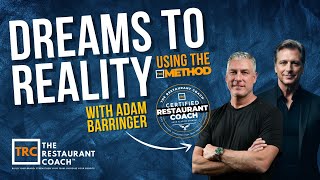
YouTube interview (April 10, 2024) in which Donald Burns interviews Adam Barringer, founder of So Napa Grill (Napa Wine Company, LLC). Adam describes his path from waiting tables to launching three Florida restaurants (New Smyrna Beach, Ormond Beach, Jacksonville Beach), building a wine-focused concept, and launching a wine podcast ('Grapes & Debates'). He explains his leadership philosophy (empathy, leading by example), fitness/self-care practices (triathlon training, cold plunges, supplements), and his role as a certified TRC restaurant coach. Adam recounts using the TRC method's 3P process (People → Product → Process) to fix cultural and operational gaps: after ~8 months of coaching they moved from industry-average profitability and high food costs toward improved weekly profitability (seen in the 12–20% range on some weeks) and reduced food cost (theoretical ~27% and actual ~30%, down from ~35%). He gives concrete operational practices (weekly inventory for ~26 weeks, menu engineering, new happy hour menu) and shares past capital losses in expansion (a failed Maitland project ~ $600K; later stores cost roughly $1M and $1.2M). The episode closes with coaching/contact info and a marketing partnership announcement (Restaurant Growth / formerly Skytail Digital).
Questions this video answers
2006
New Smyrna Beach, Ormond Beach, and Jacksonville Beach (Florida)
About 150 employees and closing in on $9 million in sales
About eight months
Theoretical food cost ~27%; actual around 30% after improvement (previously close to 35%)
Chapters
And welcome to the Restaurant Coach podcast. It is the cure for the common restaurant. I am so happy and honored to be joined today by Adam Barringer. Adam is the founder of so Napa Grill in Florida. And he's also. Full disclosure. Adam is one of my certified restaurant coaches, certified in the TRC method. Adam, welcome to the podcast. So great to have you here.
Listen, it's an honor to be here. So thank you very much, Donald. I appreciate that.
Awesome. Awesome. Hey, why don't you give people a brief introduction? I mean, you have three amazing restaurants in Florida. How did you go from, you know, starting off in restaurants to this little like, you know, kind of a brief kind of synopsis of your journey?
Yeah, so I started waiting tables and really introduction to the restaurant industry back at my early days at University Central or. Yeah, ucf University of Central Florida. And then after I graduated, I naturally gravitated towards a career in the restaurant industry with my first job being hired as a manager for a chain called Bennigan's. Shortly thereafter, I started a career with Outback Steakhouse and then led to Bonefish Grill. And you know, when you're working in those big companies, you know, you always have dreams of, you know, you're owning your own. And it seems so easy when you're working in the confines of a big corporation. And so I just decided to go on my own and it's been a fun ride. We started in 2006, so Napa Wine Company, LLC. And we moved really from a wine club to a small bites restaurant under 2000 square foot, to a full service restaurant with full bar and. And then just the path of growth since then. And really during COVID we opened two more restaurants. So we're in New Smyrna Beach, Florida. Ormond Beach, Florida. Jacksonville Beach, Florida. We've got 150 employees and we're closing in on 9 million in sales. That's awesome.
That's awesome. Yeah. And tell a little bit about the background, like how, you know, so you're in Florida. How'd you come up with this like California wine kind of concept?
Yeah, I fell in love, or I fell in love with. I found a passion for wine and I started taking a sommelier course. And I realized going through that course that I really like wines from Sonoma County, Napa Valley. Then I started teaching the wine program at the Orlando Culinary Academy. And we were teaching the program Windows of the World wine training. And so we would start with old world wines and we go to New world wines. And that's when I knew I really liked wines from Sonoma county and Napa Valley, and I thought maybe I could create some kind of restaurant around my passion for those two regions. And. And I just combined Sonoma County, Napa Valley, so Napa. And that's kind of how that all started.
How it started. Yeah. You can't tell you like wine by your background there. You know, a little private win wine rack behind. Is that yours? Is that the. Is that the Adam Private Reserve?
No, but this is. We created this little podcast room, and we're. We've just launched our own podcast, Grapes and Debates. And so we'll open a bottle of wine. We'll talk about the wine sometimes with, you know, with a wine rep or a wine vendor or. Or wine maker eventually down the road, and then we'll debate an issue or a topic that we face in the restaurant industry. So.
Grapes and Debates. Grapes and Debates. Is it already public? Is the podcast up? It is.
It's on. We're. Today is going to be our fourth episode.
That's so awesome. That's so. First one. Congratulations.
Well, you encouraged us to do it.
So I try to get everyone to do. I love podcasting. I think podcasting is a great way to get your message out there and talk about things with people.
Right. So the first one was definitely wonky, not good. The second one did much better. We had one of the national account managers for Foley family wines. And then let's see that. Kim Braddock, who lives here locally. Last week we had a guy that we took kind of an your everyday guy that went out to Napa with us, and he, you know, we introduced him to wine, and his name is Charlie Barley. Of all names. Charlie.
That's a good name. That's rockstar name right there. Man, I wish I had a rock star name like that. No.
And. And then today we have a guy by the name of Pablo Afaro, and he is a national account manager for Pacific Southern Distributors. So it's like they represent maybe about 17 to 20 wineries that they distribute for and they bring it into. In the state of Florida to Republic national, who is our. Who is our distributor. So.
Yeah, that's awesome. So let's talk about leadership. So, you know, you and I are both on the leadership bandwagon at. Leadership is so crucial, critical to restaurants. What do you think is the number one trait that leaders need?
Well, before we go into that, I just want to say that I. To clarify, I. I continued on my education from UCF and I did get my degree, my PhD.
Yeah. You are a doctor. You are a doctor, Adam.
It is a doctorate. Yes. And so my degree was in leadership, and I. And I learned so much about it. And I think in today's day and age, the most important thing for a leader to be is empathetic.
Oh, yeah.
Empathy to understand the needs of their employees, to understand the needs of their fellow managers. But also. And as we get further into some of the questions that you're going to ask and into the TRC method, I also think leading by example is so huge in. In the industry right now.
Yeah, yeah.
Not being critical, one of the big.
Things, I think there's a big kind of issue with leadership. And you mentioned empathy. I think a lot of leaders forget empathy and sympathy are two different things. Right. And they go too much on the sympathy side. Yeah, yeah.
I think you've gone into that quite a bit.
Oh, yeah. I talk about the boat. People say, well, what's the difference between empathy and sympathy? I say, well, okay, imagine I'm standing on a dock. You're sitting in a boat next to the dock. Empathy is. I'm on the dock. I see you crying in the boat and I understand why you're crying. I understand the pain. Understand it's. It hurts. Sympathy is. I'm in a boat with you and we're both crying. That's the difference right there. Right. So, you know, you know me, I'm huge about self care. I talk about self care so much. It's part of, like, all we talk about in, you know, the TRC method. What do you do to take care of yourself? You're. You're quite the athlete, actually.
So, so. And it, you know, again, I'm trying to keep it on track here. I was also mayor of our city and. And I was going by the police station and I saw this really cool obstacle course. Come to find out it's a SWAT training obstacle course. And as mayor, I'm thinking, man, I'd love to run that course. And then I thought, well, maybe we could do some kind of fitness activity around that. And so I started the Mayor's fitness challenge in 2010 in the city of New Smyrna. And much like you back back then, I googled Mayor's Fitness Challenge, found it nowhere. There was a mayor in Oklahoma City that did. He did a program to try and lose a million pounds of weight for the city.
Oh, that's cool.
And so, but I took it a step further, created an entire program, and really, since 2010, I've become more involved in fitness and then in about 2015, I started getting involved in triathlons and from triathlons, listening to Ben Greenfield and Joe, man. And so I got to the point where I'm not only into fitness and self care, but also longevity and some of the longevity hacks. And between my workout regimen of training for a triathlon, which I. I've got a half ironman. And again, it's not till the end of the summer, so I got a half ironman I'm training for. I'll do a few triathlons in between, so running, swimming, biking, every day. Then cold plunges.
I'm trying to get into cold plunges.
You know, it's not my favorite thing, but I do it. And it's.
I do cry. No cryotherapy, man. It's easy peasy, you know, minus 220 degrees. Stand up for three minutes. I'm cool. I can do that easy. Cold plunges hurt like a mother.
Oh, yeah. But that's, you know, so I hop in and then, you know, kind of after you kind of listen to some of the things that you recommend for us. So I'll do box breathing while I'm in there, and my mind goes, you know, so I'm able to stay in there four minutes. I also do compression boots after I go for a long run or a long bike ride. And I think I've, I think I take about 17 supplements every morning.
That's me. And a huge supplement person. You know, I got, I got the new Warrior restaurants, the limitless cereal Fuel series. I got my greens, I got my reds. Got my, you know, I got my nootropics. Yeah.
And I have to get. So the nootropic. I took this. Well, I take the Alpha brain.
I love Alpha brain. A black label. Yeah, yeah.
So I just started on that. But yeah. So self care every morning.
Right. Every day.
Try to inspire everybody that works with us. And we, we host a 5k every year at the restaurant. So. Yeah, yeah, yeah.
Leading by example is the number one thing I think all people need. If you really want to be a leader, just look at the word leader. It means lead. It's not right. I say this often. Managers manage, leaders lead. That's just the basic definition between what a manager and a leader is. So let's jump into this TRC method. So describe to me what you think is the core principles of the TRC method and how, you know that this different, you know, it's really different from traditional restaurant coaching approaches.
Well, first of all, I've never Done restaurant coaching. I didn't even know it existed. And we have, you know, in kind of our story is that we had two restaurants. Well, the one restaurant in New Smyrna doing fantastic. We opened in Ormond beach, also doing fantastic. We opened a third one in Jacksonville beach. And we started out doing fantastic. And then we noticed some cracks in our foundation and. And we thought we can just work our way through it. And you know, I would drive from New Smyrna beach to Jacksonville beach. It's about an hour and a half. And I started listening to your restaurant sucks. And so listen. And I would listen to things and I would have to, you know, you know, go back and listen to it again and think we're doing really good on this, but man, we could do better on something else. And then we lost a front of house manager, we lost our general manager, then we lost our chef. So really we turned over our entire management team within a year of opening. And then the next GM we hired, he didn't stick with us. So we're so now my business partner. I thought that we our way through it and it was really listening to your books and then us taking the time to reach out. You know, have two restaurants that are so successful, they're doing well, profitable, and yet we have this one that's kind of this problem child. And once we got into the coaching, and so I can speak from it, not just from what you've taught us as a certified restaurant coach, but firsthand knowledge. And is we had a lot of the pieces of the puzzle together. We just weren't doing it in the order they needed to be done. And so what the TRC method taught us was the 3P process. And we had to get the people part right. And including in the people part was the mindset. And really that was my mindset. I had to get my mindset right. And there were things that we were doing that were really counterproductive, you know, and as an owner being the leader, I needed to change my mindset. And I have done that over the course of the last shoot. I think we've been in the coaching program now for going on eight months and it's helped us tremendously. So I think it's the 3P process and kind of the notes that I had written down. One was changing my mindset and teaching me that we could be more profitable. But I had to start, it had to start with the top, because culture always starts from the top. It doesn't start from the bottom. And the next thing is changing the culture within our restaurant. Why is one restaurant so good, the other restaurants good, and the third one not? And I couldn't really put our finger on it, but it's really. We never were able to write down to really codify what is our culture. And so you helped us to get through that process, to our mission, what's our vision? And then what are our core values? What are our non negotiables? Once we were able to write those down and really work with our teams and say, do you think these are what's making us successful in New Smyrna or Ormond? And collectively, we. We all agreed on those. We created our culture card and we were able to roll that out in all three stores and we noticed a tremendous impact in the Jacksonville store.
Yep, yep. Yeah. And I would say so, you know, and Adam is actually a great example of like, people that start off, and this is how most people come to my world, is like, they'll either listen to a pod, this podcast, they need to read one of my books, and then they realize, oh, my God, there's such a thing as a restaurant coach. And then they reach out, they get into some coaching, and then Adam, like just jumped all the way in is like, wow, this restaurant coaching is really cool. You know what? I would love to teach this and coach other people and help other restaurant owners. So Adam decided, he reached out to me when he heard I was doing certified restaurant coaches. Like, hey, I'm in, man. And I have to say, Adam is going to be an amazing coach because he actually uses the TRC method in his own restaurants. He actually takes the tools that he learns in the system and he actually applies them. And Adam's very methodical. And I will tell you, he gets really great results because he has been very methodical. And like a lot of people, like, when they see the TRC method and they see that it's people product process and they see some of the product stuff. Oh, marketing. Oh, Donald, just want to jump into marketing. Oh, hey, Donald. I just want some profitability stuff. But Adam's been known. No, no, we're going to follow the combination. We're going to do it by the book. We're going to do it step by step. We're not going to take shortcuts. And I tell you, man, you guys have been really, really great about really taking your time, learning the theories, taking the theories and actually applying the theories. And I think, and you mentioned the other day that, I mean, you've seen your profits slowly start just hit you up and we haven't gotten to the profitability part yet.
I know. That's, that's what I feel that we, you know, we've gone through the people part.
Yeah, you're in the people part.
We're in the product. We're in the product part. But I will tell you, just getting the people part right, and I'm not saying we're 100% right, helped us tremendously. And I would say last year, we probably finished the year industry average, 4% profitability. And I would say, and once you split that out over, you know, after we take profits and we reinvest in the restaurants, all of a sudden we're ending the year and we don't have much to show for it. But I can tell you it's the beginning of the year. Following this, the 3P process, the TRC method, we're seeing anywhere from 12 to 20%. And that's, you know, it's on a week, you know, we're doing the operating summary and the PNLs and inventories on a weekly basis. So each week, you know, it may vary. 10%, 12%, 15%, 18%. These are numbers that, first of all, we never tracked them before, so that was a, that was a part of the mindset. But now we're tracking it, we're seeing where the money's going. And it has been. It's a game changer. We actually have a business that's making money and, and it's doing well.
That's awesome. That's awesome. And just like we always talk about in the tier shipment, you can't measure it, you can't manage, you can't manage, you can't improve it. Right? Yeah. So, you know, for people starting out and, you know, especially restaurants that are really struggling, what tools or strategies do you think that the T or C method offers to help them really, really kind of get going in the right direction?
Well, again, when I mentioned it, you know, a lot, the. Everything starts at the top. So going through the first part of the 3P process, it's people. And, you know, you go into mindset and, and, and I have to, and I tell you that the owners, the managers, the leaders, they have to really believe that. In which I never, I didn't even fathom restaurants can make 20%. When you hear the National Restaurant association saying it's 4%, 5%, and then 80% of all restaurants are going to go out of business within five years, you know, it's just, it's doom and gloom. But really, you can Have a sustainable business and make 15, 20%. So I think the first thing is definitely when you're going through this, it's understanding yourself, understanding what you can accomplish, and then, you know, through the. The again, staying within the. The people part is the culture. The know why workshop, which I found, you know, at first I'm thinking, ah, this is. Is this really gonna work? Is this.
Everybody does.
We need marketing. We got to get to the food cost part of it. But we. We stuck with it. And man, I'm telling you, once we got our culture right, which is our. Our mission statement, our core values, then it was our non negotiables. All of a sudden, we're seeing a. A shift in attitudes and almost all of our locations. And then when we talk about the things. Now we're in the. The product part, and we did the whole food cause boot camp. Now I've got our chefs and our. Our assistant kitchen managers and the Sues. They are all buying into everything we're doing. And we've seen our food. Oh, and also with the menu engineering, we've seen our food cost go from close to a 35%. And we didn't know what our theoretical was prior to us doing this. Now we know our theoretical is now close to a 27%, and we've closed that gap. We're at a 30%. So we've dropped our food cost 5%.
That's awesome.
And really, 5%. Just really since we started doing this, which, let's just say January 1st. I mean.
Yeah, that's awesome. That's incredible, man. The close 5.5percent in just a few months is great work. Yeah. And again, so. And the reason we put, you know, And I've this 3P framework we talk about in the TRC method is always. It's like a combination lock. And if I gave you the combination and I told you to order, the numbers go in, but you don't put them in the right order, you won't open lock. So we always. We're really, really. And Adam knows, as the restaurant coaches, I teach and certify they know it's like you trust the process, and you got to follow the framework. And. And that's why we always put the people part first, because the people part. Without that people part in place, they're not gonna give a about the food cost. They're not gonna give a about portioning. They're not gonna. And they're just gonna put the menu together because they're just. Again, you're just giving them a Task to do. But when they have buy in and they really buy into the culture, buy into where you're going with this vision. I tell you, that's why so many restaurants, like, I get people all the time. Hey, no one's following my checklist. What's wrong with the checklist? Oh, nothing. I don't think it's because your culture's messed up. Right?
No. I'll tell you what, I, I couldn't, I mean, couldn't say it any better. I mean, you have to follow that process because I think we had, we had all the pieces.
We, we had them. Yeah.
We just didn't have the combination.
Right, right.
And once you helped us figure out what that combination was, it's people, product, process. And then with each one of those three Ps there's sub modules and you have to get each one of those modules done before you unlock the lock to go to the next step. So. Amazing.
Yeah, I think it's a thing. So, you know, looking ahead, how do you see the tier C method evolving to meet the future needs of the restaurant industry?
Well, first of all, I would say that since you've started back in 2009, your vision and your growth, I think you've evolved over the course of that amount of time. And, and then also going through Covid and understanding what restaurants were going through. And I think with, with your leadership and your vision, you're going to continue to tweak the TRC method along with, I think the input from the certified coaches. We stay current with what's going on in the industry and we need to be, I think we need at the vanguard of what's happening. And as long as we're working together, we can be the, the leaders or the, you can have the education for the clients that we have.
Yeah. And so some people's like, you know, and for years I was real resistant about, you know, bringing other people in to be coaches. I was, I mean I was like for years and years real resistant to it. And then I basically really sat down with myself and I had some, like, some, you know, I did some prayer and I just basically I got this message that, you know, it's time to, you know, really have bigger impact. And to do that, I knew I had to enlist people that were dedicated like me that really had a passion for helping restaurants, that they weren't quick buck artists. They actually love the industry. They loved people, they loved restaurants. They loved the restaurants they work at the were, you know, own and that they just. And they also Felt the frustrations. And they also saw the benefits of having someone, a coach that actually helped them out, because that was a game changer for me. I was. My first restaurant I was heading into. I was like taking the. I was like the pilot of the plane, and I was just burying that thing heading right into the mountain. And if it wasn't for someone who just like, whoa, whoa, whoa, whoa. Why don't you pull up a little bit? You know, very bury this thing into the. Into the mountain and kill everyone on board. Why don't we just kind of pull up a little bit, take a look around? And I had a coach who pulled me out of my pit and showed me it a way. And I always say that's my number one inspiration to liberate restaurant owners from the handcuffs that their restaurant has them in. And you've seen the power of coaching, too. And you've only been in the coaching program for a while. And you. And you were like, me. You're like, I'm in, man. Let's do this. I want to help other people.
Well, it kind of goes back when I was training for my first Ironman. I hired a coach because I'd never done it before. So I have a coach that's teaching me how to get through to, you know, to be ready when I got the starting line, but also to finish that race. And it really. It clicked one day when I thought a coach. It just makes sense for the business. And I will tell you, it's the number one best investment that we've made, period.
Awesome. Awesome. So let's kind of go off topic a little bit here. What's the. What's the best meal you ever had in your life?
So that's. This is a. It's. It's a tricky question. So just recently, I spent time out, obviously, with the name so Napa. We go to Sonoma County, Napa Valley. We take a trip every year with our team. Well, this time we stayed out a little bit extended. We had other friends come out and meet us after our. After our entire leadership team went back back to Florida, and we had the opportunity to eat at the French Laundry.
Oh, that's awesome.
I will say it was the best dining experience I've ever had now. So the best meal I've ever had was two weeks ago at so Napa Grill. We were hosting There you go. Wine dinner. We're closed on Sunday. So it was just a small group of us on a Sunday. And so we started with the fresh baked bread with the four dipping Sauces went into a salad, a soup that chef made. Then we had, we had Korean ribs. I'm telling you, when we sat down and ate our own food, I thought, God dang, this is so good. That's halibut. Fresh halibut. Yeah, it was, it was the best meal I had in a long time.
So I'm going to give you a sidetrack question. It wasn't on the list that I sent you earlier. So if you're on a deserted island and you only had one, one food, one meal you could have for the rest of your life, what would it be?
Pizza.
Pizza. What kind of pizza?
I'm good with just plain old cheese pizza.
Yeah, yeah, yeah, yeah. So I had, you know, I had a restaurant owner boot camp here in Scottsdale last two days, Monday and Tuesdays. And I had some, you know, restaurant owners came in for restaurant a boot camp. And we went to. We know, you know me, I like to take you to a couple different restaurants in the area. And we went to, we went to the mission like we always do. I like the mission to. And then yesterday we went to a restaurant owned by the fox restaurant group called north Italian restaurant and we got a meatball pizza. Man, that was so good. That was so good. So what do you think is like the biggest problem you see with restaurants when it comes to profitability?
Well, I, I would. I'm just going to say that I think there, if it. There's two issues. One, having a budget and then having a piano. So those are. That, that's so important. The next is what is your food cost? Knowing your food cost, and then the difference between theoretical and actual your food cost. And then probably then the next one would be prime cost. And I think you could, you could probably look at somebody's P. L and see whatever their prime costs are and then know if they're making money or not making money. And. And again, that was a huge game changer for us. Reading, you know, just listening the book your restaurant sucks. And we had for, for so many years. It was just. With just one restaurant. Ah, we don't need to do food inventory. We got.
I thought that too.
And we laughingly would say that. So Napa was our wine ATM because we would just get wine. We enjoy it. But since then, again, changing our mindset. And my business partner Joe came from Stonewood grill and from Outback and he was conditioned to do inventory once a month. And I, I got to the point where I dislike corporate so much. I'm like, we're not even doing inventory. So then we both had to change our mindset. We do inventory every single, every single week. And we know what our theoretical is, so we know how well we're doing so we can measure it.
That's huge.
How well we're doing. And we're comparing all three of the stores and we've been doing that now for about 26 weeks in a row. And it's, it's, I'm telling you, that's a game changer. And we've gone from, like I said, A 35, 36% food cost. We're all the way down to a 30% food cost.
And that's awesome for your place. And like you said, your theoretical is 27.
27. And yeah, so you're like, you're only like.
Yeah, you're like one point away from being where you in that sweet spot to be in. Yeah, yeah. So, you know, and Adam can attest to this. A lot of restaurant owners, when they start in their, in our program and they get involved in the TRC method with the coaching program, most of them are doing the average 5% profit. And I say, hey, listen, I can easily getting to 15 profit is actually pretty easy. Now you might not think so because again, limited mindset. It goes back to the Roger Banister thing. Oh, no one can break the four minute mile. It's impossible. A human being will die if he breaks a four minute mile. Then Banister does it, and then what happens right afterwards? Boom, boom, boom. Everyone starts breaking a four minute mile. Same thing. When your mindset says, oh yeah, the national average is 4%. Hey, I'm doing five, I'm doing okay, well, all right, that's, that's a, that's a broken belief system that you got to change. So theoretical actual food cost. Adam talks about this. The average restaurant, United States has a gap between theoretical and actual of 9%. So just by understanding your theoretical actual gap, you can just do like Adam did too. They dropped food cost 5%. So we add 5% to the bottom line. So we go from 5 to 10 right there. Now once you have your food cost dialed in, now you can put together a profitable menu. And when you put together a profitable menu using the tools from your food cost and then using menu psychology that we teach in the, you know, in the TRC method, now you can add another 3% to the bottom line using menu engineering. So now we're at 13%. Now when you got a profitable menu, now you open up the floodgates to marketing. Now you Have a product that you can market. But also, you know, when I open the doors to have more people in my place, at least I know I'm not bleeding out. So now we add another 2%. You're at 15. Yeah. It's not. And then you hot. You know, you got Emily. You're marketing. Oh, man. Emily is a rock star on the marketing. And she's really amped up a lot of the stuff with you guys.
She has. She has amped it up for sure. And I can tell you that, you know, taking the, you know, so we got into the menu engineering, we kind of jumped, you know, we were going through the product part.
Yeah. Because you were going to a new menu really fast.
So I told you, and we sent, you know, we showed you the copy of the menu. You sent it back with changes.
And then.
But before that, let's say, as going into the first of the year, you said, when it comes to happy hour, do not discount the items on your menu. If you discount those items, people are going to come in. And our items at the time, for appetizers, you know, we've got lamb chops, we've got, you know, some expensive items on there, scallops. We're at about a 30% food cost on just those items. And then when we're discounting by 2 bucks, we had a 36% on our just for happy hour. So we've come up with a whole new happy hour menu that is. It's cost out at 25%. So that helped bring the cost down then with the menu engineering. And we didn't employ all the things that we could, you know, we just, you know, some of the things. So it's. It's been a game changer.
Game changer. Yeah. It is a total game changer. So, you know, one of the things also, too, a lot of restaurant owners talk to us about is labor. And, you know, a lot of people say that, you know, there's a labor crisis, there's a, you know, there's a war for talent. You know, I always say it's not a war council, war with talent. What do you think is really the real problem with the labor situation out there?
So we have battled that, and I think number one again, is getting your culture right. But even kind of before that, it's knowing for every restaurant that's out there, whatever city you're in, whatever town you're in, we all pull from the same pool of people. So we all have to recruit the same people. And why does it look like One restaurant's fully staffed with a bunch of happy employees and another restaurant might have extremely high turnover. It all goes back to the culture. And then, you know, and then you could take that right on back up to the mindset, you know, what's the mindset of the owner? Do you want to try and pay as little as you possibly can?
Right.
You're gonna get the person that you know, because you can't get entry level people in anymore. So if you want to get an A player, you're gonna have to pay for player.
You think basketball teams get those superstars for cheap?
No, they. They don't.
They pay top bucks, you know. Yeah. So yeah, it goes back to. Like you said, it's. Oh my God. Mindset is the number one. I would say mindset of the owner is 80% to chokehold on a restaurant growing. And like you said, it's. It's like these outdated belief systems. And you hear it all the time too. And like, I know I've said it too, is all these kids today, they're just lazy. They're entitled. They don't want to work. That's. Yeah. Now there are some people out there are lazy and want to work, of course.
Right, right. But I think. So it goes again, it goes back to your culture and what is the culture and how do you take care of your people? And again, going through the, the 3P process on one, recruiting to retaining. What systems do you have in place to retain your employees? And it's not only about. It's not always about money, but it's about how they're treated. They have flexible schedules. I mean, there's an, you know, an entire hour we could speak about retain, definitely. But so again, going back to culture and mindset and how you view your employees and what you should pay, etc.
Yeah, we have a. So in the TRC method we have, we have this restaurant accelerator program. So. And Adam talks about it. There's like people probably process in each part. There's mindset workshops, there's culture workshops and no why workshop. He mentioned that earlier in the talent one, we call it the talent attraction method. And we teach you how to attract better talent, how to be like the employer of choice, how to actually recruit better, how to interview using behavioral based interview questions, how to onboard like a rock star, how to set up a training program that actually gets people to do what you want, how you want it. The majority of restaurant owners spend a majority of their time retraining because they don't get the training Right. The first time. What's our motto about training?
We train not until they get it right, till they can't get it wrong.
There you go. You passed. We haven't trained. So they get right, you train till they can't get it wrong. Yeah. Yeah. So if you came with a warning label, what would your warning label say?
Try to keep up.
Try to keep up.
Try to keep up.
So for people listening to the podcast, you don't have the video version. Some people on the YouTube would say it, but Adam's wearing a T shirt right now, says, nobody cares. Work harder. And I said, well, that's a really great T shirt. Goes. Yeah, it's a. It's the mantra that Jimmy works out at. So. Yeah, I love that one. That should be. You should just wear that around at the restaurant. No one cares.
So, yeah.
And I.
And I say that because we've got three restaurants. And again, with your coaching, where we just launched a podcast, we're launching a wine club. We continue to have wine dinners every single month, wine events to further brand us. I'm training for the triathlons, the half Iron Man. So I. I'm. I don't know if it's an adult add, but I. I can't. Can't stop. Just try and keep up.
Yeah, we're at. So at restaurant boot camp, some of the. We're talking about words and the power of words and limiting beliefs a lot. That's what we do at the restaurant owner boot camp. We talk a lot about those mindset stuff, and I hope you break down some of those outdated beliefs. And one of the ones. And you've probably even said this before, too, or you've heard people on your team say this. I got too much on my plate. Ever heard somebody say that before?
Absolutely.
You know what, you know what I say when someone says I have too much my plate? You know what I say? Get a bigger plate. I got too much on my plate. Just get a bigger plate. I always say it's not. Restaurant success is not rocket science. It is people science. It. Oh, totally is. That's one of the reasons I'm really happy to have Adam on as a certified restaurant coaches. I feel like, you know, his. His degree being a doctor in, you know, organizational psychology is going to be. I mean, it's going to be. I mean, it's going to be. Help us really grow our coaching dynamic to a whole new level, because now we have an influx of people and of the coachings, the coaches that we have, we have a really Great, diverse team. And I'm excited about it. And I, I think it's. We're going to rebuild to help a lot more people, so.
Yeah, absolutely.
Yeah. So what do you think? What is one thing that you suggest restaurants do right now to make 2024 outstanding? I mean, we're already in April. We still got a little bit of, you know, game, you know, on the, on the playing field for this year. What's something they could do right now to kind of ensure that they're heading in the right track to make 2024 a success?
So it's interesting. I just read an article in Food and Wine magazine about skyrocketing costs of food.
Yeah. Yeah.
And so I think the number one thing that any restaurant owner could do is know, you know, first of all, do. Do your food inventory. Know your actual. Know what your theoretical is the average restaurant, the difference is 9%. And think if you could just close that to an acceptable gap of 2 to 3%.
Yeah.
You're more in 24. That would be the number one. Yeah, I'd recommend.
That's awesome. Yeah, I would say that too. And like, you know, financial literacy is something that we don't talk a lot about in the business, but it's one of the things it's actually, in fact, it's funny you mentioned that because, you know, we have different coaching programs. I have Warrior Restaurants, which is my kind of advanced accelerator program. It's like, I call it like the restaurant accelerator on steroids because we talk about the four domains, Body, being balanced and business. And every week we have one of the different domains we talk about. Today the Warrior Restaurants call is about business. And today we're actually digging into financial literacy because it's one of the things I find a lot of people don't. They know, but they just don't really, like, dig into it like they should. What I say, if you don't know your numbers, you don't have a business. Business.
If you don't know your numbers, you don't have a business.
You got a hobby. Very, very expensive hobby, which is not good. So I, I probably already know the answer to this, but how do you deal with stress?
Yeah, I don't get stress. I drink a lot of red wine. We all experience stress in some form. I've found my outlet to be obviously, you know, staying so physically active and, you know, getting up in the morning, running, swimming, biking, hitting the gym, doing the cold plunges, all of that together. And then, yeah, I, yeah.
Cold plunge coach. That's What I need.
Well, the gym that we had, the gym that I go to, it's called Purefit. It's a small gym in New Smyrna beach. And it's all. It's all functional fitness. They don't have a lot of freeways. They do have some. And they. In the very back of their property, and it's not very big, they put two cold plunges and a sauna. And it's just. It's been. You have to get on the list because so many people are signing up for it. It's a pretty cool thing.
Yeah, I go to a place here in. In the Phoenix area. There's a. There's a. A wellness kind of a place. It's called Augment. And Augment has a protocol. You do. And you start off with the compression pants, the nomatech compression pants, which I love. And then they also have the brain tap, you know, mindset stuff that you do while you're doing the nomatech. And then they have you go into this infrared sauna, and you sit in this infrared sauna for 15 minutes. And you do the cold plunge. You do cold, then you do the hot tub, then you do cold hot tub. And then you finish on cold again. And they also have red light therapy, which I love too. So I'm working my way up.
There you go.
I'm working my way up. It's very painful. I gotta definitely start. I gotta get my mindset right. I gotta. Here's the thing. A lot of restaurant owners, and I'll give you practical examples. A lot of times we know what to do, but we don't do what we know. I know how to box, breathe. I know how to do stuff. But, man, when that cold water hits. Oh, yeah, breathing goes out the window. I forget everything I've learned about mindset and like that. Oh, my God.
Come on, you. But you know, you had to. To really dig down and get mentally bright with some.
Of the coldest special forces. I'm telling you, man. But that cold plunge is, like, brutal on my. And you know what? It hurts my knees. I don't know why it hurts my knees.
I don't know, but it helps. It's supposed to help with inflammation.
I'm getting there. I'm getting there. Okay. All right.
Don't get stressed over that. You're gonna need to do something to get your stress from being stressed on getting in the car.
I know. That's what it is. I gotta do some. I gotta do some mindset stuff before I get in there because I'm getting stressed about this, about the cold plunge and I'm getting myself worked up before out. So yeah, I've already like psyched myself out. Right. Yeah. So when you do like iron mans, what's your favorite part? You like the running, you like the biking, you like the swimming.
But I grew up lifeguarding, so yeah. So swimming for me is. It is easiest part and once, once I'm in shape and again it's all about the breathing when I'm in the pool and when I do the ocean swims, it's just about breathing because then I can swim forever as long as I get my breathing right and I don't breathe every single time. Then next getting on the bike. I enjoy, I enjoy cycling and running is the least favorite.
Yeah. Yeah. So I was in. When you know, you talk about pararescue, I was in pararescue. It's like I hated running, but man, you put me in the pool and I was a shark in the pool. Yeah. I love the pool. Yeah. And so I was like trying to think of like there was like this last week of, they call it induct eight week, you know, indoctrination training. And they had to thin the crowd out, they had to thin the team out before they sent them down the pipeline. Before you start going to like airborne school, halo school, you know, combat diver school. And I think on purpose they turned the heater off on the pool. It was the coldest water I've ever been in in my life. And you had to do a 2000 meter fin swim in this cold water. But you know, once, and once you got in it was freezing, but once you got moving, it was, it was, it was fine, right? Yeah. I just got. I get back to that mindset. Just like just becoming one with the water.
Yeah. At least you had fins.
At least that fin. I love man fin swimming. I can kick off. I can kick. I can, I can swim pretty fast with fins on. So when you were a kid, what was. What? You know, what was the first thing you wanted to be when you grew up? Probably not a restaurant owner.
No, it wasn't. I. I have no idea what the first thing I wanted to be. You don't remember idea at all? I can't even remember.
I always think it's great about kids. Like they want to be something like crazy. I want to be an astronaut. I want to have an ice cream truck. Oh, I want to have an ice cream truck in space. Yeah. Like the sky's the limit. You don't think about. You don't have limitations when you're a kid. Oh, yeah, you're. You're. You're older like me. You remember Mutual of Omaha's Wild Kingdom?
Yes, yes.
Yeah. I want to be Marlon Perkins, man. I want to be a zoologist. That's what I want, believe it or not.
Yeah, that's. You know, I. And I thought because I.
You.
You sent me that question. I have no idea. And I was like, I really don't know what I wanted to be when I was young. So.
So what's one book, audiobook or podcast that you recommend?
All right, so being in the restaurant industry, I've read a lot of different books, and I really got to say that your restaurant sucks. If any of the listeners haven't read it, you need to read that book next. Can't Hurt Me by David Goggins.
That's a great book.
I love it. I mean, definitely colorful language throughout. More colorful than you, Donald.
I tell you, I have to. I have to amp it up to get the Goggins level.
I know, but that was. That's just an inspiring book. If anyone thinks that they've had it hard in life.
Yeah. This guy overcoming. You know, it's funny. Goggins tried out for a pararescue. Did he really? He tried out and he washed out, didn't make it. But then he goes and becomes a Navy seal.
Oh, that's right. He. That's right.
Yeah, he tried out for Prayer rescue.
Yeah. And, yeah, so that was. That was the one book that I had written down. And the. Your Restaurant Sucks and then Can't Hurt Me.
Yeah, you talked about, like, nootropic stuff like that. You mentioned the guy earlier, besides Joe Rogan. Who's the other guy?
Ben Greenfield.
Ben Greenfield. He has a great podcast.
He does. I used to listen to it all the time. I mean, I was so into, you know, working out in my Ironmans, and I was doing Spartan races, and, you know, once I kind of figured out where I was with a baseline of nutrition and supplements, I kind of got away from it.
Yeah. Yeah. That's awesome. So we're about to make a big announcement, and it's going to be happening in a day or so that we are partnering up with a company called Restaurant Growth, formerly known as Skytail Digital. Now Skytel Digital. If you don't know who Skytel is, shame on you. They are, like, the number one restaurant marketing company in the world, these guys. You want to talk about people who understand the marketing Game at a high level, and that really help restaurants drive traffic. I mean, we talk about marketing, we talk about the organic game a lot and how to get people to do it. These guys actually know how to do paid advertising that actually gets people in the door. They take that dollars that you put out for marketing and actually turn it into ROI that you can actually see results on. So they were like, a lot of people, you know, they had restaurant owners that were doing marketing with them, but their owners were coming to them with problems like, hey, man, I'm having problems hiring people. What do I do? Hey, hey, hey, how do I make my menu more profitable? Hey, how do I make, you know, how do I get some systems going? How do I get some strategy going? How do I make more profitability? And they're like, well, we know marketing, but we don't know any of that stuff. So they reached out to me and said, hey, Donald, you know, you are the restaurant coach. Hey, you think we could work together? And I said, man, I would love to work with you guys. Because in the accelerator program that we teach and in the restaurant growth thing, we call it the Excel, we call it the accelerator 2.0 now. And in the TRC method, we focus a lot more on the organic game. On the marketing part, just understanding your organic game, we always call it. The concept we talk about in the TRC method is you crawl, then you walk, and then you run. We don't have, like. It'd be like Adam doing a triathlon. We don't just say, adam signed you up for Friday, dude, you're driving a triathlon on Friday. He's like, what? I never. You know. So same thing. We start you off small. We teach you fundamentals, we teach you foundations, we teach you lots of frameworks, because we find that when you give you a framework, then you have an operational guide. Almost like it's a map. We always say, the TRC method is the map. The coach is the compass. Because anytime you have a map, you're going to get off track. And the coach is there to say, no, go a little bit to the left. No, go a little to the right. You're good. All right, all right. You dial it in. So with restaurant growth, we're going to be able to reach out and help a lot more restaurants, which has always been my goal is I want to have. I mean, you want to talk about big, audacious goals. I want to have impact on a million restaurants worldwide. That's my biggest goal. I want to help a million restaurants worldwide. And I know it's a big, huge, audacious goal. There's 600,000 restaurants alone in the United States. So I don't think it's unattainable because, you know, I've coached 20 in 23 different countries over the years. So how do you see this kind of opportunity in this partnership with restaurant growth? How do you think it's going to help restaurants in general?
Well, first of all, I think it's going to change. Hopefully it will change the statistics of failure within the industry, I think, and I'm not sure what the exact statistics are, where 60% of restaurants will close within the first three years or 60% of independent restaurants close within the first three years. I think we could change that. And if. And again, what we didn't talk about is prior to me getting to the three restaurants, we've always had our mothership of New Smyrna beach doing great. And we opened a restaurant and we invested probably about $600,000 in the Orlando market in Maitland. And after two years, we went under. And I didn't even know about a restaurant coach and didn't really think of even hiring a consultant. I mean, it was just. We thought we could do it ourselves. And within two years, out of business, and we barely got out of it with our shirt on. And so it took me then a long time to mentally be ready to open a second restaurant, knowing that we had a really good concept and a good brand. But 600 grand. Let's just say 600 grand there. And then opening Ormond was close to a million, and then opening in Jackson was 1.2 million. And when we were having the issues in Jax, and I'm thinking, holy, there's no way we can lose 1.2 million. This has to work. And the coaching program has gone from taking us with cracks in our foundation to where we are now. And if we could do that for other independents, to avoid losing all the money that you've saved up to open your dream, you know, if you've saved up your entire life to open up a restaurant, whether it's a, you know, a small cafe or a pizza restaurant or a full service, I mean, if we can help them achieve their goals of having a successful restaurant.
Exactly.
And I think that we could do that with this coaching program and being able to affect more independent restaurant owners.
That's awesome. That's awesome. So what's a quote you live by?
It's not how many times you get knocked down that matters. It's how many times you get Back up. So I think that's kind of Vince Lombardi saying, just because life will knock you down and, and even listen, even David Goggins says it, man, you get knocked down, you get knocked up, but you gotta get back up.
That's it. That's it. Yeah. We, we talk about like, the Japanese have a philosophy, almost like a mantra, like, fall down, seven, get up, eight. Yes. Always give one more time. Just one more. Just get one more time. Just give one more time and you'll be fine.
Kind of like Rocky, the Rocky movies.
That's it.
You know how many times you get knocked down? But he just wanted to get back up. Get back.
You got it.
You.
Yeah. Got crap lightning chased under, like. Yeah. Awesome. So if you want to reach out to Adam, you want to talk about coaching and stuff like that, there's two options. You can either go to restaurant growth and you can find us there at the restaurant. Grow stuff, talk about. That's the accelerator program. If you just want to talk maybe about an individual program or something more advanced, you want to do a lot more stuff like that, you can always reach out to adam@adamactilerestaurantcoaching.com I put it here in the chat and I'll also put in the show notes for you if you want to reach out to Adam. I want to say, Adam, thanks for being here today, man. I appreciate it. And also if you want to learn a little bit more about the TRC method, I do a TRC method masterclass on Sunday. It's a free two hour master class. You just want to learn about the TRC method and see what it's all about. And then if you have some questions to me, you can always reach me at and you can find me there@restaurantcoachmasterclass.com Adam, I want to say thanks for being here, man. I appreciate you so much for having me.
It was an honor to be on your show.
Awesome. Awesome. And if again, if you need Adam, reach out to AdamActicalRestaurantCoaching.com and you can always reach me at Donald at the restaurant. Coach everyone. Have a fantastic day.
Thank you.
More from Donald




If your restaurant only works because you work 80 hours a week, it doesn't work.






