Faith, Focus, and Moving Forward with Rick Tramonto
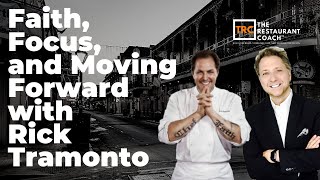
Chef Rick Tramonto talks about his path from Wendy's in 1977 through running Tru in Chicago, and how he led his restaurants through COVID-19 with cross-training and menu adjustments. He emphasizes faith, family, and studying pizza and barbecue as ways to keep moving forward.
Questions this video answers
September 9, 2020.
Hired at Wendy's Old Fashioned Hamburgers in 1977.
Chef John Folse’s “Death by Gumbo.”
tramontocuisine.com and email handle references (chefRickTramonto / cheftramonto at AOL).
Chapters
Hey, welcome to the Restaurant Coach podcast. It is a cure for the common restaurant today. I am so honored to have with me today from Chicago, chef Rick Tramano. Chef, it's such a great honor to have you on the show today. Thanks for agreeing to be on the show. I mean, I'm actually a little overwhelmed because I've been a huge fan of yours for a long time, so.
Oh, thank you. That's very kind of you. You know, I. When I was watching your stuff, I was so inspired. I was. It's a great need right now to have these conversations and to have somebody to have them with. So hopefully we can bless somebody today with some wisdom or something.
And just, you know, so people who, I mean, if there's a likely chance people don't know who shift Rick Romano is, why don't you give a little bit of your background.
Oh, Wendy's Old fashioned hamburgers in 1977. That says it all. You know, I mean, I was blessed enough to get hired by Dave Thomas himself in Rochester, New York, actually. Yeah, Dave had come out of, you know, Ohio and they started opening up in upstate New York. And a gentleman named Dick Fox, who I think still to this day is the largest Wendy's franchisee. And, you know, I was a kid who left high school rather young. My dad went to prison when I was young, so I quit, quit school. My mom was a cleaning lady and needed a job, so, you know, started to hunt around and I looked at a gas station, I looked at construction. You know, I was still, you know, 17, you know, ish. There was a new restaurant opening on Lake Avenue in Rochester, New York. Remember it like it was yesterday. That serves square burgers. Square burgers, right. You know, went and knocked at the back door and this gentleman answered, and his name was Dick Fox. And I said, look, you know, I don't, I don't have a high school diploma, I don't have any experience. I'm looking for a job. Explain the situation. He invited me in, sat down, invited another guy over to sit down, and he says, hi, my name is Dave Thomas, I own the place. And start telling me a little bit about his story. And he's, you know, I said, look, I'm just looking for, you know, I'll work really hard for you. I'm just looking for an opportunity. And I was hired. I started the next day. And on, on. They used to patty their own meat. So when you open the restaurant, you had fresh, you know, 20 pound sacks of ground burger meat and you'd put them in this hopper and you, you'd patty out all the burgers and I digress. Not, not. Don't want to dwell on it too long, but it was, it was, it was, it set the course is really, really why I want to make the point that it was somebody that gave you an opportunity and that stuck with me my whole life, that always answer your emails and have write thank you letters, but always, always give somebody an opportunity. You know, you don't know their backstory. A lot of times, you know, you, you have assumptions and I think that's some of our biggest mistakes sometimes as you know, you don't assume, you know, you kind of, you know, let, let somebody express themselves, explain themselves and learn about them, you know, and show some compassion, I guess. So for a couple years and had an opportunity to go to a steakhouse called the Scotch and Sirloin, which is a famous upstate New York. I grew up in New York, so Rochester, Buffalo, Syracuse was that triangle. And then had an opportunity to go to Manhattan. I mean, there wasn't a lot of, a lot of choices at that point. So as soon as I turned 19, you know, I said to my mom, look, I want to do this. I'm not really sure how to do this. So I'm not going to go back and get my diploma. At the time, I certainly wasn't going to be able to go to culinary school. So, you know, it's like apprenticeship was still alive and well and going to somebody's kitchen, you know, whether you were going to be an electrician or a plumber or a carpenter, you know, a craftsman of any way, any kind, you know, you still had a journey. You know, it was like journeymanship in a way. Right. So 81 went to Manhattan with a couple of friends of mine and we got a one bedroom apartment in the West Village on Weston on West 10th and 6th Avenue across from Texarkana and Belducci's at the time. My, I had a six floor walk up, so my, my, my bedroom used to look out onto this building that was actually the Joffrey Ballet.
Oh, wow.
So that was my entertainment because I had no money and I got hired at the Tavern on the Green. And Patrick Clark, you know, very famous, yeah, amazing, amazing guy. And Patrick is another one that just, you know, no experience for me. He's telling Patrick no experience and my first real kitchen in my life. And he opened the door and the Tavern was a beast to enter into, to say the least. So about a year and a half there, and there was a guy who was coming to New York. His name was Alfred Portale from Buffalo, and opening up a place called the Gotham Bar and Grill. I gravitated there because of the upstate connection. And Alfred again, third time's the charm, right? Welcomed me into the kitchen, did a stage, hired me, fell in love with it, and grinded there for, you know, two years. And then Alfred said, you know, there's. Those were the doors that started to open. And Alfred started to set me up with stages within the city because I, you know, Alfred was so, you know, a lot of ways classically trained. Worked with Michel Girard, you know, graduated number one in his class at CIA. Those are all foreign things to me at the time. And he said, you know, let's get you into some French kitchens on your days off. So you got me into La Grenouille and La Reserve. And at the time there was a new restaurant opening up called Aurora with Chef Pongo and Joe Baum. And I was friends now with a circle of cooks at the time, like Michael Lamonaco was one of my best friends, and Bobby Flay and Gail Gand and Tom Colicchio and Tom Valente and all this group. 82, 83, 86 was an exciting time in New York. It's a very special time, you know, and we were all grinding and it was, it was pretty awesome and it was a pretty knit group. So I went and did the opening of Aurora with Chanteau. That was like the first real hardcore French taste of life in that, in those four walls. And that was a tough ride. So 10 years in New York and then met my first wife, Gail Gand, who's a pastry chef and she was in Chicago. And we ended up back in Chicago. Came here and did a. Never left, but came here and did a wonderful stage and stint at Le Francais. And I didn't get the job with Jean Bonchet, so I was trying to figure out what I was going to do. I had long hair and earrings at the time. Jean Bonchet's kitchen was like, pretty, which is a great story we'll get to later. And I ended up interviewing with Rich Melman from Let us entertain you and getting a job at a restaurant called Avenzari as a sous chef, contemporary Northern Italian restaurant. And, you know, worked there for number of years, did a lot of Italian work with a restaurant called Scusi and Avenzari. And, you know, Rich kind of opened another door that was a very amazing foreign door in a lot of ways because it was the business store, right? Was learned, you know, Rich was my mentor for my whole life as far as being a restaurateur and a businessman and understanding the restaurant business. Right. Mm. So I had an opportunity to do that. And there was, you know, I like to kind of heal it back a little bit and say, you know, going to work was. I gotcha.
Yeah, there you are.
Yeah. Going to Chicago was kind of like culinary college.
Yeah.
What was missing was grad school. And for me, grad school was going to Europe.
Oh, wow.
How was I going to get to Europe? How was I going to work with the chefs that all the chefs that I worked with, worked with? How do you take one step back? And Rich made a few phone calls for me and introduced me to a guy named Bob Peyton, who had an amazing company in London, England, and who had a country house hotel in Stappelford park side of England. And I got a. I got a gig going to England. He got me work papers and the whole nine yards and went to Europe for four years and trucked it and traveled it and did France and Italy and Spain. And it goes to those. Those doors. You gotta open those doors when people knock.
Oh, yeah.
You got to be willing to knock. Right. So Bob introduced me to Raymond Blanc, and Raymond introduced us to the Rue brothers, and the Rue brothers introduced us to Pierre Gagner, and Pierre Gagner introduced us to Bubble Coos and the rest.
Yeah, yeah.
You know, it all just kind of just unfolds, you know, and you. And you work and you meet and you stage and you. You respect and came back to Chicago and went back to work with Lettuce again for a little, and then had an opportunity to do a little tiny restaurant called Trio, little tiny 50 seat restaurant that, you know, got the attention of critics and food networks and publishers and all of that. And. And ended up marrying Gail, and we started that whole journey as far as writing books. And Gail got her show on the Food Network and we opened up another restaurant called Brasserie Tea. And so all of these things, you know, happened over an eight period, you know, eight year period of time to kind of bridge the gap. Now we're kind of into the late 90s. We had a fire at Brasserie T. We lost our restaurant after three and a half years, four years. And I remember Rich coming. Rich used. Rich Maman used to live in our. In our neighborhood where we. Where we had our restaurant and kind of came and saw the burnt out wreckage of the restaurant and, you know, helped us kind of navigate that. That disaster. And then during that time, it was. It Was kind of time to leave Trio. We had kind of won a beard award and wrote some books and wanted to kind of do some other things. And Rich offered us an opportunity to do what we did at Trio in downtown Chicago. So that's when we did true. And then 10 years, almost 11 years of Tru in the Four Walls and six more books we wrote, you know, almost every year we kind of did a book during that period of time. And we opened up some Italian restaurants called Osteria Via Stato and had a chance to do a Tramonto steakhouse. And in osteria di Trimanto 9, 11 happened. 2008 happened. You know, disaster came crushing down on everybody at that point. And I just took a break actually after about a 22 year, 25 year run. I just needed to catch my breath. Took about two years off and wrote an autobiography called Scars of a Chef. And then one morning I was sitting there watching the Today show, watching Katrina unfold on the television. And I had a really good friend down in New Orleans, a chef named Chef John Fols. And I called John and said, hey man, how are you doing down there? And you know, for them, hurricanes are nothing, right? I mean, they're so resilient. Not that they're nothing, but they know how to fight pretty hard, man. You know, and there was the first time, you know, knowing anybody that knows John, you know, he's such a positive, you know, glass half full kind of guy all the time. You know, he's just an incredible ambassador to Louisiana cuisine, but also to people. He's just such an amazing people.
I met him a few times. He's an amazing man.
And to hear John not say anything on the other end of the phone, you knew that it was bad.
Yeah.
And I said, hey man, what can I do to help you? You know, and he's this long pause and he's like, want you to come down here? Like, what? He's like, I need you to get on a plane and come down here and help me cook for FEMA and the rescue workers. And we're going to set up in St. Bernard's parish and we have all these mobile kitchens. I'm like, okay. So next day I got on a plane. He had officers and military with him, met at the airport, brought us down into the hurricane, the disaster zone. We cooked for six weeks for rescue workers that were going out pulling bodies out of houses and doing, you know, doing some pretty hardcore stuff. And they'd come back and they'd rest and they'd eat and they'd go back out again. I remember, you know, after that period of time, he just kind of drove me to the airport and he said, you know, life's never going to be the same. And I said, you are correct. Life's never going to be the same. I've never been in war. You know, my, my family has not. You know, my grand. I guess my grandfather had served in the military, but my dad didn't, you know. And I went back to Chicago and about three, four months later, he called and said, hey, we're going to rebuild the Quarter and the Royal Sonesta Hotel in the French Quarter. Would love for us to do something together. Are you interested? I flew back down and was pretty amazing. I mean, we pretty. Was just like one of those godsend things that we were meant to do this project and to help rebuild this whole area of New Orleans, you know, 10 years again. 10 years. This year. It'll be 10 years in 2001, in July of 2001. Wrote two more books during that period. I like to write books during, during the, you know, I mean, I like to be in the shit as you're writing. I think that's a good outlet for me to stay sane.
It is.
So here we are.
That's amazing. Yeah. Yeah. I was, I'm a former US Air Force pararescueman, and a lot of, A lot of the pararescue guys went down and helped out at Katrina. So.
Yeah, you know, it's interesting because about three years into New Orleans, I have a really good friend, his name is Charles Carroll, and he's at River Oaks Country Club in Houston. And Charles would put a group of chefs together and bring them to Afghanistan to cook for the troops. Wow. Operation Hot. Yeah. I got to go to Afghanistan seven years ago with him, Rick Moonin and Charles Carroll and myself and some Food Network folks and some celebrities, and we got to do like a USO show for three days. We, like, we flew into, we all met in Washington, we all flew to Washington, we got on a plane, we flew into Beirut and then we took a, like a big, huge bomber, you know, another 10 hours to Afghanistan. Landed middle of the desert. And you know, you get out after, you know, 30 hour, 35 hour trip, you know, and there's all these tents set up and there's all this 5,000 troops in the desert and we did a two day barbecue event for them and then got back in a plane and scooted out, you know, it was insane.
Well, let's get into some questions. Covid 19's really shaken the industry down to its core. How. What's your view of the industry right now, as you see it?
Yeah, you know, I mean, the view is changing. That's the view. I think that's the only word that comes to my mind is hurting and changing and not hurting financially. But I think that, you know, people have kind of, you know, in this. In this business in my 40th year in the restaurant industry. So when you've spent a lifetime doing something and it kind of dissipates or it's so disruptive that you can't recognize it. During 9 11, I think we saw what. What the fix was. During 08, I think we saw what the fix was. I think this is a new strain of not sure what the fix is, you know, and everybody uses fancy words like, well, we're gonna pivot and we're gonna reinvent and we're gonna. But the core of it is hospitality.
Right?
It is cooking for people. And we can still have hospitality and cook for people, and they can pick up curd curbside and to go and all of that. But I, you know, I think this. This word, reinventing, goes a little deeper. Yes, I like to use the word. You know, I think when people lose hope is when they lose their center. And I think we have to continue to inspire, however that may be. And it could be just from a humane standpoint of giving somebody a hug or going and help them, you know, with whatever they need at the time. But, you know, looking at the industry, I think it just has to be continued hope, and we have to kind of stick together. And I think. I think it's going to continue to change. Like, there was a minute, you know, literally, in Chicago. Let me back up a second. You know, I go to New Orleans probably every six weeks and stay there for a week and then come back to Chicago. And I have a consulting company now, and I do a lot of things all over the country, but what I have in New Orleans is a licensing management deal. So there's a team there, and we created the concept and the menus and the food and the recipes and all the systems, and I go in and out. I didn't even get a chance to really say goodbye to my staff. Like, I'm just trying to put it all into perspective for you, that, you know, I saw them at Christmas. I came back in January. I was supposed to come back in March. The virus hit and everything shut down. And, you know, the sonesta has never really furloughed Anybody during tragedy, they've always been the beacon of hope. They've always been ground zero for Katrina, for Rita, for all these things. And I've never seen, you know, a hotel over a hundred years, never close over. This was the first time that 350 people were, you know, furloughed, and the restaurant literally shut in 48 hours. And it was like, wow, you know, I had to take my breath, you know, and it was like, okay. And I was actually doing a large consulting project in Manhattan Beach, California, for the band Kiss. They have a. A bunch of restaurants called Rock and Brews all over Southern California. And I just come back from, from that, and my chef at the restaurant called and said, hey, we're shutting it down tomorrow. And I'm like, okay, you know, it's going to be a couple of weeks, maybe a month. We'll figure it out. You know, two weeks turned into six weeks, turned into eight weeks turned into six months. Right. So, you know, it definitely knocked the wind out of me and, you know, being able to kind of take a step back and, you know, use the time wisely, as they say. But it's still trying to help the ones that maybe can't help themselves. There's dishwashers and line cooks and, you know, people that lives literally paycheck to paycheck, and, you know, those were the ones that you wanted to kind of grab onto and help or give a hug or see what they needed or whatever. And it was, it was too late. You know what I mean? It was, it would. I couldn't get back in that period of time. And we would do zoom calls and phone calls and, you know, try to keep everybody together, but it was, it was tough, you know. And so during this period of time, I'm in Chicago and Chicago's now going through that same cycle, and then the riots happened, like, and Chicago just blew up. I mean, the unrest and there, the period of time when we thought, like, okay, we're going to start the outdoor dining and we're going to start all these things, all these pivots. You know, it was just this horrific unrest in the city, which was pushing everybody out of the city and shutting everything down. And at the same time, New Orleans got from stage, you know, 1 to 2 to 3, and they had some unrest, nothing like Chicago. But then they had the Hurricane St. Charles, and then they started to. The hotel started to absorb folks and help with that. Right. So, yeah, I know we're on just the first question, but, you know, it really is. It really is a day by day thing, having it be a cop out answer, you know, because you're just really kind of looking to see what is, what is around the corner. Let's focus on today and not worry about tomorrow at this point.
You know, I think that's a good, a good attitude to have is like, you know, I think people can get, they can drown themselves in fear and doubt and uncertainty of the of tomorrow where, you know, you have control over today. So what can you do today? Manage it and just make it the best you can.
So 100%, I agree with that. 100%, yeah.
What are some ways you're recommending to your clients that they shift their business models? Right now?
It's different. I think it, it's all very different. I think the folks in California that I'm working with, they're going through the fires. I mean, if you seen any of the fires that are going on, terrific. I've never seen anything like it. Like, it's like the end times, you know, I mean, between the virus and the in, you know, waiting for the locust to show up. And.
I'm telling you, if locus show tomorrow, I'm calling you back. And I'm like, what?
But again, I think that, you know, everything is different. You're kind of looking at, is it a big restaurant company? Is it a single mom and pop place? Do they have any cash flow? Do they have any reserves? Do they have any. Like everybody is in a unique situation. And the ones that are reaching out that I've been able to speak with and help and work with, the ones that are at their kind of at their wit's end, they have gone into, you know, well, let's do groceries, let's do curbside, let's do dinner in people's homes. You see, the Internet is saturated with chefs that are certainly doing online classes and online cooking at home. I think everybody is so different. Then there's big companies that are kind of in an okay spot, kind of kind of scooping, have gone out of business. They couldn't hold on. They've gone out of business. And you know, they have a turnkey restaurant sitting there, you know, with a full wine cellar ready to go. You know, folks that are investors or that have money or developers that are able to go in and either partner with those guys or they, you know, they absorb it. You know, the strong, the strongest surviving on unfortunately, in some way. But how do we help the ones that are the weak? Right? How do we help the ones that are really great at what they do and didn't see this coming, don't deserve this. Not that anybody deserves this, but how do we help those? How do we help the ones that can't help themselves, right? And sometimes it's just liquidate, sometimes it's just sell it, circle your wagons and wait and get a job and, you know, go back to. Go back to doing whatever you were doing or go into another field of cuisine, whether it's going restaurant people going into the grocery stores, you know, places like Wegmans and Mariano's and Jules and all these mega grocery stores that are thriving. Right. I had, I had some friends. That one guy was an incredible butcher, you know, and he got an incredible opportunity to go be a butcher at a grocery store chain, large grocery store chain in Florida. And for him to close everything down, come to the. Come to a place of peace, that this moment in time is over. Sold everything, relocated, went into a whole different sector of the, you know, the food business and is doing great, you know, but he has a three year old and six year old that he's got to be responsible for. So he did what he had to do, you know, So I think some of it is you have to do what you have to do for your family, you know, and take care of, take care of that.
You know, that's so true, you know, and it goes, it kind of ties right into like leadership, you know, and, you know, leadership is so critical right now in restaurants. What do you think is the number one trait that a leader needs today?
Compassion. I think, you know, I think that it. Compassion goes a long way. I think that balance of, of, you know, making those hard decisions, you know, got to make the hard decisions. Right? But I think that, I think we're in a different period of time where leaders have to do what's best to drive their companies. But I think that the ones that are taking care of their staff the best that they can and that are showing some compassion, that's going to come back to them sevenfold. There is no doubt in my mind. The ones that are kind of throwing everybody to the curb, right, with maybe no compassion, and it's every man for themselves. I think you've had, you may have had some really great people that you could have helped and you didn't. And I think that loyalty and that throwing to the curb mentality is, is not going to suit you well later.
Yeah, Karma for sure. He has sisters.
Yeah, right. I mean, and can I ask, can I throw that back at you? I mean, what, you know, you, you do an amazing job with this show and with your, with your writing and your blogs and what do you think that is right now? I mean, if you had to, if you had to throw that out into this conversation, because I'd love to hear that from you.
Yeah, I think having, you know, being positive, you know, being optimistic is a huge thing I would say. Leaders lead vision. So you have to be able to navigate and see past what's going on right now. And you know, and you're, you're a man of faith. Have faith that things down the road are going to come together. They might, you might not see all the dots right now, but having faith and belief that, you know, there will be better times, you know, we will get through this.
Yes. This too will pass. Correct.
I mean, I'm a big believer in faith and whatever people's religious beliefs are, that's, that's their thing. But I'm also a big believer in that. You know, if I, if I can maintain my faith and have certainty that things are going to get better, I think that's the thing leaders need right now. It's just, you know, it's so easy, especially look at the news. I mean, it's so easy to get around in the doom and gloom and all, all the negativity. And I know it's a big political year and it's so easy get caught up in all that stuff. And it just, I had to like finally just like stop watching all that stuff because it was just so bad.
And I think transparency is pretty key. I think, you know, I think the folks that have been honest with their staff from the get go and that communication, again, I've seen people just, leaders appear like, just disappear. Not communicate with their staff, not communicate with their landlords and out of fear, you know, go hide or just out of confusion, like they don't know what to say to them so they choose to say nothing or to lead them on or not be transparent. I think that that's also the worst thing to do. I think that shows compassion and humanity to say, I, I don't know, I don't know what we're going to do. Things are really screwed up and I need some time to figure it out. I think that's also. Honesty is the best policy sometimes in these situations. As a leader.
Definitely. Yeah. I mean, I have a saying is that to take no action is an action. It's just not smart action and leadership. A lot of people I think have a misconception about leadership, thinking that leader has to have all the answers and you don't.
That's right. Yeah, that's right. I think they have to be willing to listen and they have to be willing to navigate and have compassion. But also, I think you're right if they have to reformulate their vision. You know, I love being part of teams and I think the greatest thing about being a part of the team is you don't feel alone. And you know, ask people what do you think, you know, what are some of our options? People that are much smarter than I around the table, you know, and, and give, give us some direction, you know, that's, that's very cool.
Yeah. I think Steve Jobs had a great quote. He says, you know, we don't hire smart people to tell them what to do. We hire smart people so they can tell us what to do. That's right. Yeah, sure does. I'm a big believer in self care. What do you do for self care? And you know, a lot of people, and kind of clarify, a lot of people think, you know, I say self care. I mean, go to the gym for two hours. No, self care is taking care of yourself, whatever it is.
You know, it's interesting. I pondered that for a day or two and you know, it's been, I've been very, I've been very good since this whole thing has started to think of all the self care things that I didn't do because I'm a workaholic and a, in a maniac when it comes to that. And you know, I do work out, I do go to the gym. I love to swim, but I have, you know, horrible arthritis. Being in kitchens my whole life and having a hip replacement six years ago or a rotator cuff. And so I battle.
So.
But I've always eat, you know, I've always, you know, not drank crazy, you know, the last 10 years after I've cleaned my life up and you know, eat well and take care of my diet and all of that. And. But I've always put off things like, you know, I need to have a knee replacement surgery. And you know, it's like, what am I going to have eight weeks to find the, recover from something like that? Right? So, I mean, jokingly enough, the two things that I've done is I've read all the stuff that I've never gotten to read over the last eight years. I've, I've planned my, my knee replacement surgery and I've spent time with family. So the three things that I have not had the chance to do have you know, and again, everybody has their own world of faith, you know, for me, God has stopped my whole world for almost a year, you know, eight months, and said, okay, here are the things. Get what you have to get done. Because once this ramps up again and we're going, you're gonna be busier than ever. So take care. Take care of what you got to take care of.
I always say, little messages from above, you know, and it's our job to, to listen, you know, it's like.
But you're right, you said something before. You have to stop the noise.
Yeah, stop the noise to hear it.
Right. Shut off the news for a couple. Right. Don't read, you know, everything on the Internet for a minute, you know, and give yourself a chance. You know, I think sometimes we hate quiet. I think we can't stand quiet. And whether you have to have the TV on in the background or you have to have music on all the time or whatever it is, like, you try to take that minute of, can you hear if God is speaking to you to hear it because there's so much noise.
Right? That's so true. So what is the best meal you ever had? And I'm gonna start off with this one because I'm a. This is, and this is honest to God truth. When people ask me, what's the best meal, the best experience, dining experience you've ever had in your life? I always tell them, the best experience I ever had in my life. I went to a restaurant downtown Chicago called True. And I tell everyone, and I've, I've told everyone this for years. The best dining experience I ever had in my whole life has always been True. It's an amazing experience. This. The service was so precise, the food was so precise, everything was so meticulous. I mean, I tell everyone, you know, and then when people say, well, how do I get my restaurant to a better level? How do I get my restaurant to a higher level? I always ask them, well, what's the best dining experience you've ever had? I describe it like driving a high performance car. If you've never experienced food and service at a super high level, it's hard to understand what that is.
Yeah, you know, I've been very blessed to have an incredible team around me all the time. People that are like minded thinkers. Right. And you have to trust, you know, just like a sports team, you know, Uncle Jordan used to have to trust Scottie Pippen was going to be there to throw the ball, even though he wasn't looking at him. And he was going to catch it. And I've been able to travel a ton my whole life and learn because I didn't have the traditional classroom setting or traditional educational setting. My thing has always been hands on and going and seeing it and tasting it and touching it and feeling it. So I always used to judge restaurants that were inspiring or my best meal until the next best meal. How depressed I was when I left the restaurant. Like walking out of Pierre Gagnier and Saint Etienne in, you know, 95, I was probably as depressed as I could be because I was like, fuck, I could never be that good. It's just. He's so good. It's so good. And then going to Ducasse or going to Robachon or back and you know, whatever your, whatever those great meals are, I think they're always evolving, right? I don't think there's this epitome of, of it. I think there's a compilation of it. And I think that's what made Tru so special is there was this compilation of every detail and, and never going in. You know, we, you know, there's always the great saying, and I'm sure you've heard it, and we would say it all the time at our pre shifts. If you can just do one thing better today that you didn't do yesterday and you have, you know, 50 people in a room, that's 50 things. You only have to do one. If everybody can just do one thing better, we can talk about it. Then we have 50 things every day that we're doing better. And you know, you're never there, right? So every time I would travel and I had this amazing notebook and we would sketch and I'd draw and I'd take, you know, wasn't able to take pictures so much in the early days it was all by hand, but now it's taking pictures of everything and going home and watching the film and what can I do and how can I do it? You know, there, there's, there's, there's, there's not one. That's the answer. You know, there, there's a, there's a dinner at David Boulay's, there's a dinner at Pierre Gagnier's, there's a dinner at Alain Ducasse's, there's two dinners at Alan Chappelle's, there's, there's a dinner at Anton Musselman's. I mean, there's, you can go on and on and it's the compilation of that greatness that, you know, and I can't forget my, you know, my grandmother or my mother. So, you know, where it all kind of began, you know. No, nobody can make an Italian cookie like my grandmother. Right. Nobody can make a like. Right. So. So I'm not, I know I'm not, you know, giving you the, the exact profile answer, but, you know, it certainly.
Is, you know, eating is about memory.
Yeah, 100%.
Some of the times when I look back in my life, some of the best meals, actually, I mean, and I can look at food as, from a aesthetic point as far as quality and service, like an elevated, like an experience, like a true. But then I think about some of my, my best meals I've ever had was my grandma, you know, going out, out in the garden with her and harvesting fresh vegetables and going inside and cooking them up fresh. I mean, those are some of the things I remember the most about my childhood.
You know, I wish, I wish I would. I don't know how to say this. I'm gonna just try to say it the best I can. I wish I was more. It's like, I don't know, it's like guys that write great music wish I was more in the moment. At certain times, like when young kid, young cooks and people ask me, you know, what would you tell your younger self? Or any of those kind of questions. You know, I always say sometimes you're doing your best work in your life and you don't even know so many other things flying. Whether, you know, you have three kids at home and you're trying to, you know, work your 18 hour shift and you're working six days a week and two days turn into two years, turn into, you know, eight years and life is flying by. But when it's all over and you're looking back and going, man, you know, this was a great team and this was a great menu and this was a great time in my life.
Right.
Was I miserable at that time? Was I appreciative? Did I, Was I listening? Was there too much noise? And most times, it's sad to say, but there was too much noise and I, I never appreciated it. And it was a struggle. I mean, the true years for me were a bitch. I mean, they were hardcore, you know, tough, tough times as far as personally and physically and, you know, mentally staying in the game every day. It was a tough journey. I wasn't able to enjoy it. And that's a sad thing to say. I wish I had that opportunity to redo that album and enjoy that recording session a little bit more.
So then People say, like, you know, True was awesome. I said, you know what? The thing about True that was really, like, took it over the top is as I'm leaving, true, I open the door, and who walks in but Sammy Hagar. Okay, that's cool. I'm a huge Sammy Hagar fan.
Like, oh, my God.
Walking in as I'm leaving.
Yeah, he was there a bunch of times. I mean, it was definitely a celebrity haunt. We. We took care of a lot of good celebrities there that were into food, that were generally, you know, kind and compassionate. And Sammy is one of the kindest guys on the planet and, you know, is a family guy and certainly has always been a great supporter, for sure.
I'm gonna throw you a curveball question. If you could cook for anybody, living or dead, would you cook one?
Yeah. It'd be my mom. Because my mom never got to see. I mean, I know she sees, but my mom never got to see any of my success. She never. My mom died right as I was opening up Trio.
Oh, wow.
Yeah. So she got to meet my. My son when he was, like, three. And that was the time we were opening, like, Trio. But she never saw any of my books. I mean, I've written eight books. She never got to see any of my restaurants. I never got to really go back and show her, like, what the journey, how the journey ended. Right. So that would be the one, I.
Think, for me and for being my grandmother, because she really introduced me to food, that kind of whole farm to table. I mean, that's how I lived back then, you know, farm to table. It was like, you go out in your garden, you get it, and then you cook it. Who are some of your mentors?
Oh, Rich Melman, for sure. You know, in so many ways, I think Pierre Gagniere for sure, because he had the. Know, one of the largest impacts. Alfred Portale, for sure, because he was one of the first John F. You know? Absolutely. I mean, just when I went to New Orleans, you know, it's like anything when. When you. When you know, when you know a certain cuisine, whether it's Italian, when, you know, when you know something and then you're able to be plucked out of that environment. It's like if somebody were to pluck me out of my world and throw me in China, Right. To learn the language, you had to learn the basics. You had to learn all the food. That's how it was for me going to New Orleans, because New Orleans is just not New Orleans. New Orleans is. Is the seven nations of cuisine to really study what that is and to have a master teacher teach it to you like John Folce, I mean it's like a young kid getting plucked in and getting, getting thrown into Paul Bocus's kitchen. And having Paul Bocus mentor you on the history of France and the history of each dish and what this dish is and where it came from and how it became. It was exciting. I mean it was a. We lived in a plantation home for a year while we were working on the concept of revolution, learning the seven nations. Because even as a chef, I never dug that deep. I never dug that deep in the ability to learn that cuisine. Not like that. Where John would throw me in his truck and drive me to the swamps of Louisiana and you go to south Louisiana and you know, you watch swamp people on television, but visit them and to truck through the swamps of Louisiana and to go, you know, froggin and alligator hunting and fishing and you know, going out on the golf and I'm a city kid. I never had a chance to, to, you know, the only guns that were shot around me were in the inner city.
Right?
So I mean it was a whole new. It was, was being on another planet for me. And that's what re sparked my life. Coming out of true, coming out of, you know, my steakhouses and my Italian restaurants and all of the body of work that I did, I was burnt. I mean, I was just tired. And to take that kind of journey revitalized my whole life at that point, which gave me another 10 years of excitement. Now I'm looking for the next 10. What's the next 10? Right.
Right now, how do you think restaurants should shift their menus?
Well, I think they should be them. You know, an Italian restaurant and all of a sudden you want to do Chinese to go, maybe not such a good idea. I think you could do, you know, your great Italian and kind of figure out, know your clientele, you know, know what, what you can do to engage them more. I, I don't know. I don't know if it's a menu shift versus maybe a menu accommodation. They slim it down obviously, you know, you're slimming your staff down. You're, you're, you're trying to slim all your overhead down to survive at the end of the day. So, you know, I'm a big believer of trying to also bring it to your clients. There's a lot of clients that still have a lot of cash that would love for you to go into their home and cook for them or do their Christmas party or to do, but they just maybe can't make it to your restaurant. So either start going to them. You know, I've had lots of people ask me to do like, you know, dinner parties online, right where, you know, there I would either go there and ship all the food there and do it there or I would, or they would cook along. I mean, all this innovation that's happening online, I think it's, it's almost a, I think it's invaluable because we would have never thought of it or done it.
Exactly.
Restaurants that never have done to go now that are doing to go, especially the high end restaurants. Kudos to them. Kudos to guys like, you know, Grant at Alinea and watching them reinvent this wonderful cuisine. So people can either do it at home or they can come and pick it up and finish it at home. I'm inspired by that. I was incredibly inspired by that when they, you know, those folks were doing that and guys like Curtis Duffy that, you know, had to open up in the middle of this pandemic ever.
I mean, that's crazy.
I mean, and that had so much in the center of the table, all the tips in the center of the table. But talk about a man of faith and talk about a man of focus and talk about a man of, you know, being persistent. That's inspiring. You know, there's, there is no room for failure. There is no looking back. You know, it's just forward and whatever forward is for you, move forward.
You just gave me a, the title for our episode. I'm gonna call it Faith, focus and forward.
There you go.
There you go. Keywords I got from you. Awesome. So what's your favorite social media platform?
You know, I, I'm, I'm not a, I don't have one. I mean, I, I, I, I go on Instagram and you know, I certainly am on Facebook and all this stuff. But you know, I don't, you know, I post, I post carefully, I post intentionally, I communicate intentionally. I share my passion with people that have the same passion, which is music and food and my faith. But you know, I'm not, it's funny because I've never been a big tele. Even though I've done a ton of television, I've never like, it wasn't like, man, I want a television show or man, I, I'm gonna create a YouTube channel and there's so many people that are so good at it. You know, again, it's that whole philosophy of, you know, when you walk out of a restaurant, how Depressed, am I? Of how good it is. Analyze it to the point of if I can do it as good as that, I'm going to go do it. Right. I just. It doesn't speak to me. I guess that's the word. You know, having an online show, it's not speaking to me enough to go do it, to put all heart into it, to go do it. But, you know, doing Iron Chef or Top Chef or Top Chef Masters or the Oprah show or, you know, the list of television, those were great. Those were moments in time, right? But if I was going to do any kind of social media platform, I'd have to really think about it, you know, and I love YouTube because I can go see so much old stuff. You know, I can go Google a Rush show from the 2112 Tour and see it, you know, or I could Google, you know, a cooking demonstration from Julia Child or James Beard and go. Go look at it. So that's. That's inspiring, I guess. So again, I'm sorry, I'm not. I'm not hitting your questions exactly.
Okay, so another curveball. If you had to see any band alive, you know, or like, not. Not together anymore, what band? If you could bring them back for one show, who would you want to see?
Yeah, so again, other than cooking, my whole life, the only other thing I've done from a standpoint is live music. My first show that I took my kids to go see was the Led Zeppelin reunion concert in London. Like, that's how I started. That's how I wanted to start their musical journey of live shows. Right? But, you know, the only person that I, you know, the only, the only. Really, the only group I haven't had a chance to see were the Beatles.
Right?
And I'm pretty content. I'm pretty spoiled. A lot of shows, a lot of backstage shows, a lot of. Lot of iconic festivals. It's always been a priority and it's always been a passion. But the Beatles got away. I mean, I would have loved to have seen that at some point in time, I think, but I got to capture most, mostly everybody else I wanted to see at least once, if not three or four times. Yeah, but I'm a metal guy, so a lot of that, you know, from Metallica to Megadeth to, you know, Queens, Reich to, you know, grew up in the 80s, so certainly, you know, all the 80s, but the 70s and the 80s and the 90s, rock and roll metal, you know, that speaks to me. My favorite band is Rush, so I think I've seen Rush. I think it was 19 times before perk died.
Wow.
You know, a lot of Rush shows. My kids have seen a lot of Rush shows. I've dragged them, all three boys, to a lot of Rush shows.
My first rock concert was Van Halen, when David Lee Roth was the lead singer.
Yeah.
And then I always make the joke to people. I said, I saw Def Leppard on the Pyromania tour when the drummer had both arms.
And I joke with people about that Van Halen tour. I always say, you know, van Halen open for Black Sabbath. They were just an opening act.
That's crazy, huh? Now, you know, looking back at through and some of the other restaurants, you have, like, you know, revolution down in New Orleans, you know, culture. I really think culture is a huge influence on a restaurant success. What would you say is the key to creating culture Again?
I think you got to be able to show people your passion. You got to be able to. You know, I have a great saying. Any restaurant or kitchen that I go into, I always imagine a line. And I'm the only one standing on this side of the fence, and everybody else is on this side of the fence. And my job is to pull each one over to my side of the fence one at a time. And that could be the Garmage girl, who I'm going to go mentor and talk to and open their world up to amuse bouche and all of those things and try to inspire them, but also know the name of their dog and their kid and, you know, engage them in that fashion. Or the runner, who I'm trying to, you know, articulate how important it is to, you know, get this food to this table while it's hot and, like, all these things. And once I feel I've won everyone over, whoever's left on the other side of the fence usually isn't going to make the team.
Right.
Because I wasn't able to. And I take responsibility. I'm not able to inspire them. And I start to find out, what are they interested in? Like, what do you do when you're not here? And some will say, well, I'm a singer. And I'm like, well, you know, you should. Why don't you go sing? Like, why are you here? Like, you know, how can we help you get into theater? Or how can we help you, you know, be a veterinarian? And, you know, they need a job and, you know, all these things. But I think you have to show your true colors to some folks and let them hear your voice in their Box and. And let them know that, you know, this is your life. This is. This is everything to you. And you try to do it with as much integrity and care. Kind. Always been, you know, always been the challenge. If that. You know, if that. If that makes it work, you know.
Definitely, you know, ins. When you. When you mentioned the word inspire, I'm a big. You know, I like to study words. You know, when we look at the word inspire, it actually comes from, you know, in spiros, which means in spirit.
That's right.
Yeah. So you got to find. I always say, you know, culture is about finding what inspires people.
Yeah.
That's the leader's job. You know, help kind of pull that out, you know, show them your inspires you, but then also find what they can connect to inside them and pull that out of.
And I've had amazing. Believe it or not, I've had amazing staff through my journey that they weren't foodies. They didn't. They weren't passionate about certain things that they were doing, but they were great at it because their work ethic was so superior. And I couldn't imagine somebody that I had somebody that was actually. That was a horse trainer.
Right.
She loved horses. She rode them, she trained them, she jumped them. And she was a. You know, threw in and throughout. Loved horses. But her job is she was a captain. She was a waiter.
Right.
And. And she knew every single dish, every single ingredient, single wine. Like, that was her work ethic, though. You were to ask her, like, hey, you want to go and, you know, jump on a plane and I'll take you to Dukas? Nah, I'm good. You know, it's like. Like, it was a very interesting line for me because I would have never have guessed that about her, because she was so good at her job. Yeah. But then she kind of threw it back at me, and she said, have you ever ridden a horse? And I said, no. Would you like to? I said, sure. And she brought me out and she showed me her world. How to feed a horse, how to pet a horse, how what a saddle is, what a. You like all these things about a horse. Right. But I never looked at that ever again the same way because the way I felt about service and food, she felt about horses and riding, but she reached out and made the connection. She reached out and said, you know, instead of you taking me to Ducasse, why don't I take you to the horse stables and show you how to shovel shit? Right. It was. Was awesome. It was a. It was an amazing Teaching moment for Rick.
That's awesome. That's really cool. That's a great thing too, about leadership too. It's like, don't box yourself into your world sometimes, you know, expand your horizons and look at, you know, look how other people see the world too.
That's right. Sometimes it's hard to remind yourself of that.
Yeah. I think being leader sometimes is being humble to the point where you're like, you're willing to listen and look.
Agreed?
Yeah, definitely. So what's one thing that you suggest that restaurants do right now to kind of get ready for this new economy?
Well, I think that they, they should do everything that they can to make sure that everybody is safe and comfortable and retool all of that. But I think it's also, it's a blessed time for them to keep saying to themselves, this is going to pass and we're going to rock again soon. What should we be doing to get back to capacity? And again, if it's, if it's funds or if it's not funds, but it's still things like, you know, let's rezone the coolers, let's redo the dry store room, let's clean everything top to bottom, let's p touch everything, let's look at new uniforms if there's budget, you know, let's continue to make it better every day for walls as we are. As if we were going to do, you know, 500 covers tonight. Right. How do we keep ourselves, you know, in the future? Let's get ready for the floodgates to open, knowing we're not going to have time to do any of this once the floodgates open again. Let's this time wisely. Right? Yeah, you can't afford to do that. It's still, it's still about grind and it's still about rolling up your sleeves and, you know, being able to either do it yourself, you know, or finding ways to cross train. You know, a lot of the people I'm, I'm talking to right now, a lot of their staff has, has not been cross trained, which was not shocking to me. But you know, it was, it was certainly a, a window that opened to say, look, guys, you know, there's that always great saying, well, you know, that's not my job. Well, you know, it is your job. It's everybody's job. But I mean, deeper than that to say, hey, my, my garment guy, he can run two days a week. My runner, he can bartend two days a week. You know, whatever that is, that cross Training moment. So then when, when the floodgates do open and you now have this incredibly cross trained staff because you had these slow nights or these really, you know, controllable nights that you can have that kind of training and movement and interaction with each other. Has everybody tasted every dish on the menu and do they really know it? Go back to testing, go back to tasting, go to systems, go back to organization and wine seminars and teaching and bring in one of your fishmongers and go do all the things that you're not able to do. Sometimes when you're just full tilt boogie on education, right? And I think you have to stir that up as a leader. You have to be able to continue to inspire your team by all those things. Take them to a farm, take them pumpkin picking in a few weeks and a pumpkin patch, whatever it is, for, for the connection to happen and for everybody to do that one thing better today that they didn't do yesterday. Inspiration.
Very cool. No, that's awesome. And Restaurant Revolution is getting ready to reopen again, aren't you?
Like I said, we were going to reopen. We were supposed to reopen on tomorrow, on the 10th, but because of the hurricane two weeks ago, they postponed it another month. So now we're October 10th. October 10th, another month away.
Now what are some things you're going to be doing different there?
Well, we're in a hotel and we're in French Quarter. So it's like being at ground 0 times 2. It's like being in Times Square, right? There's only so many things I can do because it's such a tourist town, right? Until there is a true vaccine, until the conventions are back, until the tourism's back, until people are getting on a plane, you know, they, the first six weeks of this virus, to see them cancel Jazz Fest, French Quarter Fest, you know, all the, all the festivals that drives New Orleans. You know, they're talking about canceling Mardi Gras this year or a different version of Mardi Gras this year. I mean, everybody's kind of waiting, waiting, waiting to see what happens. So like I said, I don't have this crystal ball. What we're going to do within the four walls is certainly, you know, trim it down, right? You know, probably not reopen for lunch. Probably we do room service for the hotel anyway. So, you know, maybe do Thursday through Sunday. I think, I think we're going to have to let the terroir speak to us. I think we're going to let the people speak to us and see how things Evolve. But we're going to open up one service at a time and see what happens.
You know, if you. Now, I know, like, for chefs, this is hard to do, but you're going to pick one dish on your menu at Revolution, what would you say is your favorite dish?
It would have to be John's Death by Gumbo.
Yeah.
If you all ever come to New Orleans, make sure you have Chef Folst Death by Gumbo, for sure. Because it really speaks to not only the seven nations of Louisiana, but it speaks to this, why revolution happened. Trying to take old. You can't mess with traditional, so you have to take all these iconic dishes and how to make them a little bit more contemporary to today without losing one inch of tradition. So that's a. That's a dish that I think really speaks to that.
Very cool.
What it is. I'll make you come and have it.
All right. Definitely. I'll definitely come down and have it.
Yeah. I love.
I have. I have a couple clients in Louisiana in the Baton Rouge area.
Yeah.
I mean, every time I go, I put on, like, five pounds. It's like gumbo and gumbo and Hush puppies. I'm just like, I can't help myself.
Yeah, A lot of. A lot of fat on fat on some fat. Right.
I mean, hush puppies get me every time. They get me. So how do you deal with stress?
Prayer? You know, fear and faith are those two things that are those polar opposites. And I, you know, I equate, you know, I do equate stress with fear sometimes. And. But, you know, I'm. I love. I love my Bible studies. I love my church family. You know, I certainly love to love to be with my family, my kids and stuff. But, I mean, when stress gets so peaked out, you know, there's a walk away moment. I call them my walk in meetings. And I. And I do. I walk in the. Walk in and close the door and have my moment and usually come back out and breathe, you know, but in the old days, it was, you know, it was okay to, like, go smash some plates and, you know, be a. Be a maniac, and that's how you were taking the stress out. But those days are over, you know, for multiple reasons. Right.
Walk in has always been great therapy.
The walk in therapy is certainly the key. When you start to arrange vegetables and make sure all the peppers are lined up and look, there's an orange in the lemon container. And, you know, cleaning the walk in is the best therapy in the world. Right.
I love going in you and I have similar backgrounds in the sense that, you know, you and I, you know, both did an apprenticeship program.
So, yeah, it was. It meant everything to me that somebody who didn't know me from Adam was kind enough to say, yes, I will. I will let you in my house. I will let you in my kitchen. And whether you speak the language or not, you know, your. Your recommendations of your character is going to allow you the trust to come into my kitchen and. And behave properly, have a high work ethic, ask the right questions, listen when you're not supposed to talk, all those things. Right. Awesome.
So, you know, I always say when we look at the Chinese word crisis, it's danger and opportunities. We have two characters and I know COVID 19. I said there's definitely danger, but there's also opportunity. What do you see some opportunities right now for restaurants?
Yeah, again, I go back to budget. I mean, I go back to cash flow and things like that. I think there's incredible opportunities. I think there's some amazing real estate out there that is available. I think there's some amazing partnerships with chefs that are suffering that is available. You know, I think that if you can find, you know, there's plenty of turnkey restaurants that you don't have to, you know, spend a fortune on. There's plenty of developers. I mean, my God, there's. There's still so much building going on in Chicago. Yes, it has slowed down, and it's. It's retooled itself in some ways. But, you know, again, I go back to, you know, look at. Look at. Just look at the cranes in the sky still in Chicago. They're not. They're not tearing those down yet. So. So that's a good sign. But I think there still has to be this time lapse of vaccination and safety, but there is preparation in leading up to that. So when that does happen and they turn the faucet on, you are prepared or you are ready to go. I've had a number of phone calls of folks that, you know, our deal in New Orleans is a licensing deal, licensing management deal. So I don't own a chair or a table. The Royal Sonesta owns everything. So, you know, they're licensing our concept and our recipes and our brand and our name. But all the employees, you know, report to their HR and their accounting and all of that. So there's a freedom in that and some ways. So there's been a lot of people reaching out that are hotel folks and restaurant groups that. That are looking to partner up with even guys like me to do opportunities and because, you know, it's time for the next generation. I'm not, you know, I'm probably not going to be working the fish station five nights a week if I have an opportunity to go do another restaurant. But I certainly will build and teach and mentor a team and lead that team to the Super Bowl. You know, I always joke, you know, I can get you to the super bowl, guys, but you're going to have to win it. You know, you're going to have to be on that field playing those positions. And I certainly can coach and participate, but, you know, there's going to be many plays that you're going to be running on your own, and you're going to have to make those decisions, you know, if you want to win the business. I think what I have to give at this point is lots of teaching and mentorship, but I still have such a creative mind and juice that it's collaboration. I want to be able to collaborate with the next generation, if you will, and find the next group of.
Of.
Of chefs that are right at the cusp of not being discouraged and getting ready to do, you know, to break out. And because I don't. I'm not somebody that I don't see myself ever retiring because I don't play golf and I don't, you know, I don't do those kind of things. Not that there's anything wrong with those kind of things, but that's not what drives me to get out of bed every day.
Right.
I would rather go into a kitchen than go on the golf course to. To get me, you know, to the end of my road, you know.
Exactly. Now, you have a lot of books behind you, so name. Name one book, an audiobook or a podcast that you recommend.
You know, I'm a big Tony Dungy fan. I love Uncommon. That's a inspirational book for me. You know, I listen to a lot of Gary Vee and Tony Robbins and. But I listen to a lot of. A lot of. For me, a lot of spiritual stuff. You know, I listen to my pastor, Pastor Gregory Dickow of Life Changers Church and who has lots of series, and so I listen to a lot of that. As far as, you know, cookbooks go, I'm a cookbook fanatic. I mean, I have, whatever, 2,000 cookbooks in this. In this arena, and. But it's a think tank, you know, for me, it's my library. It's where I write, it's where I think it's Where I. It's where I can create, you know, and I'm still discovering new, new books. Like, you know, the whole fish cookbook, you know, that has, has come out, which I'm fascinated by. And the new St. John's Cookbook. The, you know, the new. There's always new books coming out. So I think it's just, you know, being inspired to stay relevant and, you know, not have my wife yell at me too much for buying so many cookbooks all the time and, you know, trying to, trying to keep that driving.
For books. I say it's a healthy addiction.
Yeah.
In books, I think I always, you know, a great. Yeah, I'm like you. I have a huge cookbook collection. I have a huge business library.
Yeah, same. And now I'm micro. Like, now I'm getting into the. I mean, I don't know if it's a micro culture, but like, this last, you know, eight months. Okay. There's two things that I focused on that I never got a chance to get deep, deep, deep, deep, deep with, and that's barbecue and pizza. Right. I know them, I've done them. But to do a study where I, you know, got my pizzaioli certificate. I went to North American Pizza School and Leo Spazzari, who is my pizza instructor, you know, had the opportunity to be a part of his masterclass and then come home and really spend time. And that's somebody, you know, that would be perfect to be on this show and go look up Leo Spizzari, the North American Pizza Academy.
Like you were documenting it on Facebook when you're.
Yeah. I mean, so inspired. And so, you know, and then that broke me into, you know, sourdough cultures and doing all that at home and, you know, keeping myself busy and then. And then barbecue. So I have a really good friend that has a restaurant called Chicago Culinary. Yeah. Chicago Culinary Kitchen. And Greg Garbo and Christina Garbo are pit masters in Chicago. And they're incredible barbecue inspiring folks. So, you know, starting to read everything that Greg was starting to recommend and going and, you know, all hours of the night and, you know, studying and, you know, mentoring him, mentoring me and barbecue and then trying to make it at home and buying, you know, buying stuff for the house and doing, you know, smokers and green eggs and all these things at home that I never, never had the time for. I was always in the restaurant. I would be up, you know, five, I'd be out the door by six. I wouldn't be home until nine o' clock at night. Ten o' clock at night. So all those, you know, those two things that I really wanted to have the opportunity to pause my life and study them, I'm inspired. Like, I want to open up a pizzeria so bad now. Like, you know, you know, it's like, well, now it's like a pizzeria, barbecue maybe, you know, so I'm having fun with the time and I'm having fun with, you know, getting energized again and learning again and being a student, you know. You know, when you're a teacher for so long, sometimes you just want to be a student. You know, sometimes you don't want to lead today, sometimes you want to learn and you just want to kind of listen and have quiet time where you're, where you're watching a master, you know, at what they do, whether it's pizza or barbecue or Chinese or whatever, making dumplings. And you're just in awe of their craft because they've studied it their whole life and you want it to rub off on you. You know, it took me weeks and weeks and weeks for Leo to say, that's a damn good looking pizza. I mean, it was humbling, Humbling for a guy to just throw your away all the time. It's like this, look at this, look at this. This is wrong, this is wrong. It was awesome.
Pizza might be your time because, you know, pizza, the pizza segments up huge might be, it might be. This might be that calling from above saying it's time for a pizza place. I'm thinking, I think a pizza place would be great.
Yeah, and same thing with fire. Like, you know, in refined cooking, I didn't have a chance to cook on open fire, right. Like all these, you know, woodwork grills now and all the wood ovens and all the stuff that was inspiring. So that's another, you know, door of, you know, when I was doing this thing out in California, you know, going to Adam Perry Lang's restaurant or going to some master open fire guys that really know how to dance with the fire they call it, right? How to really work with fire. I think that's fascinating as well. I love it, love it. So I'm trying to, I'm trying to motivate myself during this time. And you're asking me how other people should motivate themselves. You're going to have to find what kind of tickles you, what drives your mind to go look. People would say, well, Rick Tramonto, you've done all this stuff, blah, blah, blah. But there's still Things that are, like, energizing for me that. It's like, I've never done that before. I've never done it that deep before. Let's dive in, and let's really study it. You know, I love it. I'm having fun. I mean, in some ways, I'm having some of the best time in a long time, because I've had. I have the time, which is a commodity.
No, that's the truth. I mean, yeah, I think the minute you kind of say, all right, I've done what I can, then, you know, you stop growing, you start dying.
Yeah, it's the. It's the. I keep going to keep teasing you about it. It's the depression joke. It's that depression level of, like, you know, and what I mean by depressed, I mean, like, you know, inspired or in awe some ways, but knowing that somebody like pastry. I'm going to use pastry as an example. You know, I've been very blessed to have a pastry chef along me with me for a long time who's a master pastry chef. So, you know, sometimes you neglect that area, and you're like, well, I got a pastry chef. And they study their whole life, chocolates and breads, and, you know, you know it. You know it proficiently. You have to go in and do it. You can. You know, you can kind of fake it till you make it. But for people that do pastry, I have the greatest respect for pastry chefs in the world because it's a focused segment. Proficient, and it's bright, it's brutal if you're great at it. And they make it look so easy all the time. So, you know, I think that there's a lot to be said about those kinds of segments to dive into.
You know, there was like a little. A little. A little cake. Gail used to do it. True. And it was a. It was a French one. Had, like, a special mold for it.
Canalet.
Was that it?
The little canal?
Yeah, those things.
Yeah, but those kind of things, like, you could spend months perfecting that and getting the right mold and, you know, having somebody like Gail teach you that over and over and over, and then go home and try to master it and, you know, have her throw. Throw them all away. See, they're not good enough. Do them again, like, those kind of things. So when you find those things in your career now, this is advice. All of you that are listening, that are looking for the. That's the ticket. Like, go find your weakest link. Go find some of your weak points. You know, barbecue was my Weak point. There's no doubt, you know, you know, pizza wasn't my weak point, but nothing like my new pizza game. Right. Pastry was my weak point. But, you know, as you. As you start to find some of your weak links, be inspired by that and go. Go challenge yourself on it, you know?
Yeah, I'm always in awe of pastry chefs. I mean, I, you know, I. When I used to work, I used to work with Wolfgang Puck for quite a few, for five years, and Sherry Yard was. I was just like, incredible, incredible. Tim, always make friends with the pastry chefs, right?
Always. And now for me, always. 100%. Yeah.
So what's one quote you live by?
Yeah, you know, treat. Treat people the way you want to be treated. You know, I think that that that kind of solves a lot of. A lot of issues. And as I look at. As I look out into the world today, you know, if. If, If. If some folks can just kind of rekindle that thought, you know, would you really want to be treated that way? Is that really how you want people to treat you? You know, I mean, just. Just take a breath and. And just respect and treat others the way that you want to be treated. And the rest of my stuff is, you know, pretty scriptural stuff, you know, is, you know, I can do all things through Christ. And those are some, you know, things that are either tattooed on my body or, you know, that I live by personally. But, yeah, I think that. I think that to distill it down for. For, you know, for today's time and, you know, even. Even our government, you know, if they could just treat people the way they would want to be treated, I think, you know.
Yeah, that's another flower discussion.
Yeah, it is. It is, for sure.
So how can people contact you?
Oh, I'm easy. I'm easy to find. You know, I'm@tramontocuisine.com I'm @chef Rick Tramonto at a. Chef Tramonto at aol. I have a website. I have, you know, social media everywhere, so I'm pretty easy to track down. If somebody needs something and I can help them, I be. We'd be happy to have a conversation with them.
Yeah. That's awesome. You know, I want to say, you know, thanks, Rick, so much for being on the show today. I mean, incredible value, incredible things for people, especially now. I mean, like you said, this is, you know, troubling times. Everyone needs a little positive encouragement and a little, you know, just something to kind of help them find whatever's inside them to kind of pull through this. So.
Yeah, and I think I want to just throw that back to you. You're always very positive. And, you know, I've seen a lot of your stuff now, and, you know, I appreciate you and I appreciate the value that you bring, because again, there are a lot of people that are just. They're just. They're just a little lost. You know, they just need some guidance or they need. You said they need a hug. You know, they. They need. Just need some encouragement to be able to pick up. There's. There's been so many families that I've talked to over the last six months, especially in Chicago, that they've lost everything. Right? And you kind of. You have to step back and go, man, you know, you start. I start looking at inside, you know, even. Even in California, all the families that lost the. From the fires, people in, you know, in Louisiana from the hurricanes, and. And you're like, you know, how are they able to continue? People that lost their family restaurant from three generations. I just talked to last week.
And.
You know, if this is meant to be, they will continue and it'll resurface itself, but they were just grateful that somebody went down there to this particular place and help them clean up and brought lunch and, you know, gave them. Gave him a hug and, you know, just. It was really. It meant a lot. You'd be surprised with. Just a little goes a long way, you know. So thank you for doing the show and for the stuff that you're doing during this time as well.
Well, thank you, Chef. I appreciate that.
Yeah.
Well, thanks again for being on the show.
Stay in touch.
Get a hold of Chef Tramano tramontocuisine.com Chef Tramano l.com Lots of ways to get a hold of the man. He is definitely someone, if you want to reach out to, please contact him. He's a great valuable asset, so reach out to him.
Thank you, sir. You stay well and we'll see you for that death by gumbo soon.
Down for it. You watch.
More from Donald




If your restaurant only works because you work 80 hours a week, it doesn't work.






