Grow Your Team Grow Your Restaurant with Chef Bernie Laskowski
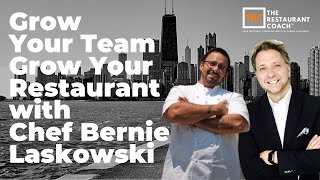
This is a podcast interview (YouTube) between Donald Burns and Chef Bernie Laskowski (owner/chef of Craft Urban, Geneva, IL area). They discuss Chef Bernie’s background (military, Chicago restaurants), the Craft Urban concept (farm-to-fork, artisan producers, music/ambience), how COVID-19 forced pivots (to-go, family meals, pricing adjustments, social-media-driven brand work), and current industry challenges — notably a labor shortage and a needed course-correction in wages, staffing models (tip pools/service fees), and cross-training cooks to serve. They emphasize leadership qualities (humility, delegation, gratitude), culture-building (reading, apology/ownership, 100% thank-yous), self-care for staff (exercise, health incentives), and practical practices (swarm service, interview prompts). Contact: crafturban website/Instagram/Facebook.
Chapters
Hey, and welcome to the Restaurant Coach podcast. This is gear for the common restaurant. I am so honored to have on here a longtime friend, Chef Bernie Lakowski from Craft Urban in Chicago, Illinois. Chef, welcome today to the show.
Glad to be here. Thanks, Donald. I appreciate it.
You know, people that might not know, you know, you and I work together, you know.
Yes. In the military.
In the military, yep.
So it's. We're kind of like the anomaly in the food and beverage industry. You don't see a lot of veterans making their way into doing what we do and as well as being so.
Very, very true. Yeah. And actually, you know, you and I actually worked together too, in Chicago, where the millennial.
No way. Yeah.
I was like the corporate chef with blue plate.
Oh, my God.
And you were opening, and I helped.
You open that place in the very beginning.
Yeah.
Yeah. Wow. I didn't know that. I'm blown away. Maybe it's.
Cause I didn't know. Well, good to show you how much of an impression I left. That sucks.
No, you did. I remember because that was the whole Jody Fife fiasco.
Oh, yes. Oh, my God, yes. The whole Jody.
Feisty. Did you remember? Did you hear how that whole tumultuous crash.
Yeah, it was a crash and burn. But I have to say, you know, karma's a right.
Oh, it's well, six degrees of Kevin Bacon. I leave parkro Millennium Park.
Yep.
And then I'm working for Bone Appetite, and they're having an issue with the shots. They're like, hey, I got this kid. You need. Need to come in and coach him. He doesn't know what he's doing. He's talented. It was her husband.
Oh, no way.
Yeah. So that was kind of weird to see that, like, dichotomy of a young guy married to an older woman. And you and I are older, but.
Right.
You know, it is what it is.
Yeah. She was interesting. She was a. She was interesting one. So interesting person to work for.
You were.
Right.
Before Dan Vogel. Dan Vogel took over for you, and then Paul Larson took over for Dan Vogel, and then Paul just left recently.
Oh, wow. Paul hung out for a long time.
Yeah. I still talk to Jim from time to time. So they relocated. They bought a building on Fulton street over there, and now he's currently looking for a chef and reinventing what blue plate is supposed to be, so.
And now you are the chef owner of Craft Urban. Tell people a little bit about. Tell us a little bit about Craft Urban and what you got going on.
Craft Urban is designed. It's Based on what we have done in the industry as cooks and chefs, so many people want to, they want to know what the brand is. The brand is truly farm to fork, innovative cuisine, innovative cocktails. We want to support the artisan producer of whatever they do that obsesses to the point of madness. And it's hard for them to get a platform in a restaurant environment because you have all the big corporations that are pushing this brand, this beer, this, you know, whatever. I like to work with the small people. I like to find all these gems that are out there and introduce it to people in the environment of what we have. And so craft urban represents artisan cuisine, art music. Even the staff here, we don't have uniforms for the staff. We tell them dress to impress, like you're going to go out on a date. Because we look more for personality as opposed to pedigree because we can teach anybody how to serve. That's the easy part. But if you have that natural ability to make a good time, that's what we look for. And it pays dividends to have someone that doesn't look like a robot that you see at every other restaurant.
Oh, yeah, yeah. That's so true. So before the show started, I was commenting about how long your hair has grown and you were mentioning that you stopped cutting it when we started doing the flatten the curve, the two weeks, the flatten the curve thing. And COVID 19 really has rocked the industry down to its core. What's your view right now of use as you see the industry as we're coming out of this and you know, starting to ease up restrictions? What do you see things at right now?
I. It's. Right now, it's still, I guess you could say we're shell shocked. We don't know because of past history. The last 15, 16 months, every time we thought something was going to happen in one direction, right away you're told it's going in another and you have to pull to pivot. You're in a fight or fight mode. Constant. I, I think if we get through this and what I mean, and that's a whole nother topic, this is going to be the roaring twenties. You're already starting to see that the movement in the housing industry. You're seeing people going out, spending money they want to get out there, and that's going to impact our economy. However, as you know, there's this huge labor shortage throughout the industry. We actually have to go black a few days a week because I can't support burning out the staff. Just, you know, the money. I think you're going to see a lot a huge course correction and it's particularly going to happen within the staffing and how we operate the business.
Exactly. Yeah. And we'll talk a little bit more about the staffing in a minute. So, you know, making shifts, changing, you know, in E Comm. I know the word pivot has been overused so much in the last year.
I hate it.
Yeah. What are some ways that you've kind of shifted your business model?
It's what's amazing. Every time the government would say okay, you need to do to go, only you would really notice. What you learned was brand awareness. Like what does your brand represent? Because you know, taquerias, pizza places, they had easy, yeah, fast food, burger joints, they stayed pretty consistent. But when you have a sit down restaurant, our brand is not about to go food. You know, we were the first ones out here to do Uber to go because it was, it was passive income. Like you're collecting, you know, two, three hundred dollars a week. They give you the infrastructure and you're able to operate through that. So that was an easy thing for us. But you waste all this energy of trying to reinvent yourself to educate the community that you have to go cocktails to go, beer to go wine. But it was a great exercise to teach the staff how to own the brand and how to communicate a message. Our social media platform is managed by us because we're a small restaurant. You know, we don't have that type of revenue that we can pay for a media company. So everybody was able to do it. And then you looked at, you paid attention and the staff was able to learn to pay attention to what were people asking for, what was the things that was going to bring more people in to grow the 10% to go business. So we focused on family meals. So as opposed to just a la carte to go, people really were looking for the deals and it didn't hit us because you already had the product in house. It forced us to rethink value to get more people to order through our website and things like that out here. Because the suburbs are an anomaly. And what I mean by that, in Chicago, it's a closed economic community where people are used to picking up a phone, going on the website, ordering whatever. Whether it's Grubhub, Uber or DoorDash, not so much out here. People are used to walking out the door, going to do that. So there was like the sales were kind of stagnant with the online platform. And we found that more people were calling in and talking to the staff. So we were able to operate that way and develop a better host system so that the kids, you know, our hosts are all the kids from high school, and they do a fantastic job. So we're able to work with them to answer the phone, process the orders, develop a tip pool so that they were incentivized to walk through the menu, try to get as much information, and do as many upsells as we can. After Covid, when I say, like, where we're at now, sales would just drop. You know, you do 10, 15% to go sales, and then as soon as people were able to allow to come back in the restaurant, that would dip. And competing with brand awareness, the cocktail to go program for us is not anything, you know, 1% of total sales, you know, and then it would. It would decrease. As you move down, you know, beers, you're competing with the brewery down the street. Because we have so many craft beer places in Geneva, we didn't want to take away from their sales. So it was more like an incident, you know, an incidental sales to say, oh, do you want a beer with that? Oh, can I get it? Sure. And, you know, you had to figure out the pricing because it's a different cost structure than what you would have if someone comes to sit down. But as soon as you start talking to some people, they freak out. They're like, I can't make a living charging five bucks for a beer. Well, you have to think that you're competing against the grocery store, you know, that person to come buy your product and not go down the street. So that was. That was instrumental. And then people like Nick Coconut, they were the first ones to really drive the to go business and rethink the cost structure. Because we did that first thing we said, hey, cost is what's on the menu. That's what, you know to go is going to be. But people didn't want to spend $30 for a butcher, you know, for our market stake. So we had to bring that pricing down to reflect what people would pay for to go business.
Wow, that's crazy. That's smart. Smart move.
You got to survive.
You got to survive, you know, and that leads me to the next kind of thing is like, you know, leadership. Leadership is such a critical thing in restaurants. What do you think is the number one trait that a leader must have?
Humility.
Oh, that's good.
That's. That's. That's the hardest thing for any leader. You and I'VE been in the industry long enough. You were in the teams. You know, I was a terminal lance corporal, so I was the one causing all the trouble. And so when I got out there was the leadership books didn't make sense, you know, so now there's lots of great writers out there. Brene Brown, you know, Jocko Willink, Leif Babin. And their leadership books are everything that they learned in the military, but now it's applicable to business. And the thing that they all talk about is humility. You know, the great leaders don't yell, they inspire, they listen. Who, who has the ideas in their team. And that is in our community. With your consulting business right now, so many people don't want to let the work go, but you have to delegate. And your job as a leader is you have to be humble enough to listen to what they're asking for. You can't push and, you know, envelop them in such a way that you break them down. You have to look at what they need, you know, and when you talk to so many people, they feel it's frustrating. Well, that's leadership. You know, you have all these different components that make up the team and you gotta kind of manage within that, otherwise you lose them.
I have to say that, you know, that break them down, build them up mentality just is such an outdated model. You know, it.
I. 100%, I was, I was all about break them down, build them up. Well, I was too, but now it's not that, how can I put it? Like the 80s or the 90s friction model. Yeah, it's about. Okay, the number one thing we tell everyone here is believe and remember. And then they're so surprised when you look at when they look and turn around and see what they have accomplished. And then now here they are, they're building up their confidence. Not by us yelling at him saying, ah, whatever, but we're saying, hey, you just did the impossible, good job, use that information. And you're, you're a bad. And that's what I, I tell them all the time. They can't believe how much they're capable of doing because, you know, in our industry, we're fitting 10 pounds of. In a one pound bag.
Exactly.
And so that's the number one stressor for all the kids with that, with, with the anxiety. I love the anxiety. I love when the machine goes off. I, you know, I look forward to it and that's when I get better. They're surprised that, you know, they would run away from it. But now they're leaning into it. They're challenging themselves. And, you know, we have three cooks left in the kitchen because of COVID And you know what? We're doing more revenue than we've ever done before. They're working as a team, and they're rising up to be these tremendous leaders that they never thought that they were capable of being.
You know, a lot of my clients are seeing the same thing you are. You know, even though sales are moving up, you know, revenue is higher than ever, and they're actually performing more efficiently with a smaller, kind of concise, precise team.
Exactly. Your profit margin goes through the roof. When you make your venue smaller.
It does. And also when you streamline your team.
Yep, exactly.
So, you know, I'm a big, huge believer in self care. Do you believe in doing self care at all for yourself?
For you? Well, when we worked together at Blue Plate Millennium Park, I don't think we were doing anything.
We weren't back then. Only self care was like, just make it through the day. So this care was just trying to try to survive.
Yep. It was a lot of smoking back then, a lot of drinking. And so now it's important, you know, with health. And so for me, it's, you know, I learned a long time ago I had an epiphany at the Park Grill when I saw a picture of myself where I was, you know, 250 pounds. And that doesn't look well on a 55 frame. And if you want to survive and you don't want to have a heart attack and you don't want to be on diabetes, and you want to be able to function as a human being, you got to kind of rethink, you know, what you put in your body, how much you eat, the quality of food, which our whole family, that's what we do. And we try. I try to work out. I have to five days a week because it just calms me down. It creates that routine. And then I take the weekends off. I don't work out because I'm here working with the kids in the kitchen, and it gives you a chance to reset, you know, and then there's so many positive benefits from just eating correctly, the activity. I have an ongoing challenge for all the kids here that we will pay for their health, will pay for the health club membership.
Oh, wow.
If they all quit smoking for 90 days, and I will give them $1,000.
That's amazing.
Have yet to take me up on it.
No one has.
Nope. You remember how it was when you were 20?
Oh, yeah, I would take it. I would have done anything. I would have stopped smoking for. I never smoked.
But.
Have you ever introduced, like any kind of meditation stuff like that to your team?
I. They're. My wife and I, we do all kind of weird stuff, you know, like we went to a Wim Hof clinic, which is fantastic.
I love Wim Hof. I do the brie exercises.
Exactly. They're not ready for that yet.
Not yet. They're not there yet.
Nope. They think I'm a crazy hippie, which is fine. They'll eventually get to it when they start hurting. I mean, these kids.
Exactly.
They could work doubles, smoke, pack cigarettes, drink a bottle of whiskey and be back the next day.
Yeah, yeah, we used to be able to do that.
Meditation's huge.
Meditation is huge. Now I tell my clients, I meditate for you, not for me. You want to talk to me after I've meditated. I'm a lot calmer after I meditate. But like you, I work out too. I work out seven days a week.
And you had a heart attack a little while ago?
Yeah, I died twice. Cardiac arrest. Died twice two years ago.
Wow. Did they say what was the cause?
Blockage. A lot of butter and cream in my life before. There's not so much butter and cream in my life as much as there was.
Was it genetic based or was it truly from the food?
Probably more from the food.
My dad had hardening of the arteries.
Oh, yeah. I didn't. I just had some blockage. But they put in some stents and then cleaned me all up. And now it's like. I tell you, it was like I had a brand new heart. It was awesome.
That's great.
My endurance level is like through the roof. I can go like today we did a timed thing and I did like three miles on the elliptical in just a little over five minutes.
Oh, that's great.
Yeah, I was hauling ass. That was great. So you know Chicago. I've had some of my best meals in Chicago. What would you say is like the best meal you've ever had in your life?
The best meal that I've ever had in my life. There's several. I would say Bangkok, Thailand. It was a street vendor. So we had stir fried frog. That was some. That was, you know, sweet and sour combination with the chilies. That really stuck in my mind. And then I saw so many of my friends from the military. We keep in contact, we travel, we go see them. And so there's always food based experiences. So the simplicity of. For me, fresh Seafood. And so I would say this last few years, just getting fresh seafood from the Gulf, you know, going to the wharf that most people don't have an opportunity to experience and get shrimp that's kicking right from there. Or you go to the oyster place, and these are the oysters they just pulled out from the ground. And then there's. I can't remember. Ad hoc in. It was Thomas Keller's restaurant in Napa, and that was the family style concept, and it was real simple. It was just, you know, focusing on ingredients, classic preparations, but nothing that was science food, shishi or anything like that.
Awesome.
And now I'm starting to see a trend in Chicago where a lot of kids are using MSG in the restaurants.
Really?
Yeah. And I don't know, maybe it's just me being an old timer. I'm like, yeah, that's cheating.
Yeah, that's a. That's a. That's a cheat.
Yeah.
So the joke used to be, when we were. And I was a young chef, the MSG was. You use that when you didn't know how to cook.
Exactly. You know, like, you know, we'll use MSG or saltpeter for, you know, caring for sausages, things like that. But, you know. Yeah, I just don't understand that. You know, my son's in the city right now, and he's working for a few chefs down there, and he's like, that's what they all do. So three to one ratio salt to msg?
Are you serious?
And I know some people will be upset that I said it, but I don't know.
Yeah. Well, hey, I always said, if you want to email me about your frustrations about our comments about MSG, you can email me at the donald therestaurantcoach.com I'm welcome to have a healthy conversation with anybody.
Yeah. You know, like, David Chang was talking about, you know, the. He was saying, MSG is not evil. You know, I get it. But we still cook for several private clients, and we deliver meals, you know, to them, and very sensitive. And I got a message, and he said, hey, what's wrong with the food? I'm like, what are you talking about? And he said, I noticed that there's something different about the food. My lips are starting to tingle. Back to the kitchen. I was talking to the guys because we just did a dinner at another restaurant, and they said, yeah, kind of did that seasoning mix. I was like, I can't do it. You know, we cook for so many people that they enjoy the purity of the flavor. And I showed him the text message and he was, you know, he apologized, he said, I'm sorry, and we just threw the seasoning stuff out and started from scratch. But you got to learn somehow.
Yeah. So that leads me to ask you the question, like, you know, who are some of your mentors?
There's quite a few. You know, I would say you got Jim Moran that you and I both work for.
Yep, yep.
You know, he was, you know, he was a hard ass bootstrapper, I call him, where he was pushing me to always think about what's life like outside of the chef code and, you know, telling me to read, telling me to study. Another one would be, I know you hang out with Brian Duncan from time to time.
Brian's cool.
Brian is a fantastic mentor and he's the one that taught me food and wine pairing and just the passion that the wine tells you what to do, which is what I love about Brian. The wine tells you what food to cook with it, what flavors, and not the other way around. And so I love thinking. I love his outside of the box thinking as well as his hospitality mentality, you know, where it's all about the guests. We do whatever we can still till this day, you know, the pre shifts that we do are all based on how the Brian would excite people and talk to them. And then Dan Sachs, who is also his partner, we opened bin 36 back in the day. And Dan is a very unique, savant individual. I mean, I know he's now in a adjunct professorship at DePaul, which is. Yeah. Which is kind of a, you know, twist. Strange, you know, twist to go into.
Yeah.
Self taught. Well, not self taught. Put himself through culinary school, went to La Cordon Blue in France. Worked with, I'm pretty sure Danny Meyer at Union Square. So he's one of his sous chefs. And then his, you know, his dad was like, all right, you got to do something other than that. And so he went to Harvard. And so to be able to work with him and how he thinks. So he was the first person that taught me menu design. He was the first one to really question how we do things. And also through an accounting mindset. So there was the first restaurant where we did things based on daily sales, where I know a lot of my friends who are accountants will freak out when they say you didn't do an inventory. Well, we had no storage, so it wasn't so much making sure that you had the right dollar amount on the shelf. It was making sure that you were purchasing the Right amount for the week. And that really helps you, from an accounting point of view, for what I call cash on hand. And so when we built bin 36, it was a booster. Now you're dealing with, I want to say, I think it was a 12,000 square foot rest facility.
Was huge.
That was all done. Not on a budget, but it was well thought out. You didn't. You didn't have designers coming in and you're spending $300 on a chair. It was trying to find the most cost effective chair because you have to provide a return on investment to the people that gave you money. And then I would say Jerry Kleiner. So I worked with Jerry Kleiner with KDK for Marche Red Light and his design and the way he thought about design and his statement really resonated with me where he said, I was always working for somebody who was an asshole. And then I finally got tired and I said, I want to be the asshole. And he figured out a business model, figured out a business plan. And so that's something I always say. And, yeah, I'm sure people that work for me will say, yeah, I'm an asshole. But, you know, I try to be better every single day. You know, it doesn't, you know, we can't all be perfect. But his design skills, the way he would think about design and put things together and think outside of the box and curate all these local artists that would build the restaurant. And he was constantly developing and building and doing all those different types of things.
Right, right. Yeah. Bin 36, man, that was one of my favorite places.
It was fantastic.
Yeah, I was. At the time, I think I was a chef with the Wolfgang Puck, and I actually was working at Spago Chicago when it was still open.
Oh, did you work with Giuseppe Tantori back then?
Yeah, Giuseppe and Francois. Francois.
And then was Tony Priollo there at the time?
Yeah, Tony was there, too.
And then Stephen Dunn.
Yep, Steven was there.
Small world.
I know all those guys.
Yeah.
Giuseppe's really taken off, huh, In Chicago market.
Yep. Yeah, he's. He's over there with Boca. Yeah.
And I know he has a couple of new concepts, too. He's got. I think he's got GT steak now and GT seafood.
I think so. Yeah.
Yeah.
It's been a while since I've been in Chicago to really pay attention to the culinary landscape. It's really just focusing on what we have out here.
Right.
River Valley.
Yeah. I love your area, though. It's a really nice area that you live in.
Yeah, it's we, you know, we moved out here in 99. I never paid attention to it because I was a city kid. And so I always focused on Chicago. And then when I got out of Millennium park, we started Prepared Meal Company And I read it was an autobiography of the son who started Dunkin Donuts. So it was his thesis that he did in Harvard, which was the business model for Dunkin Donuts because his dad was a roach coach salesman. And they focused on serving the best quality coffee with the best quality cream. And the donuts were just the amenity. And so they looked at all throughout the United States where you had the least amount of donut shops. And it turned out Chicago had the least amount of donut shops. And so that's called the absence of market. And so as a young culinary and I wanted to focus on Chicago, but there's so much competition when you did the Prepared Meal company and there was no competition in our backyard. And I said, hey, why don't we just focus and look at everything that's out here in the Fox River Valley? And that's what we've done since 2011. And it's. There's so many great people out here, so many great beers. I associate it with like Noma and Sinapa that you can drive within a 30 mile radius and 15, 20 great beer producers. You know, the whiskey we use is right down the street from DeKalb and it's all made in the corn from that area.
Well, that's really cool. That's awesome. Yeah, you definitely are farm to fork.
We try to be as much as we can. We do.
All right, so let's talk about a serious topic. And you put up a post on this on Facebook the other day. Let's talk about what's happening now with the labor crisis. What do you see as the real issue going on?
I think it's a course correction for our industry. You have what I call you got the media backlash, which is creating a larger division. A few of my friends that we talk that are in the industry, we were just talking last night, we were texting, going back and forth because he's back on the line and he owns four facilities and he has to work three to four shifts a week because people are making more money on unemployment and this is forcing us to rethink. And I say me because I'm not mad that they're getting the unemployment. I'm not mad that they're making more money on unemployment than for us. What I'm upset about is that we're Getting lumped into big business. We're not a Walmart, we're not a Menards, we're not a target. Those are the people. Or McDonald's. Like McDonald's just issued a statement, the CEO that said $15 an hour minimum wage. It's going to be automation across the board and it's creating backlash. That is a prefab, chemically laden instant food that's designed for the lowest common denominator. It should be automated, but they should be paying above market wage. They're driven by the stock market, they're driven by the returns to the shareholders. And we as independent restaurateurs get lumped into that.
Right.
Let's rethink what the modus operandi is. Danny Meyer at all his restaurants started that, I think 10 years ago and people did getting rid of the typical wage where it becomes a pool tip. So it's suitable to me and it supplements the pay for every employee within the facility. There's another restaurant out here that we just did a dinner with milk money. In Lagrange, the entire business model is based on pull tips so that people make on an average $40,000 a year. So now the biggest backlash you're going to get is saying, well, I don't have a skilled server. No. I can teach a cook to be a server or bartender in one shift. I can't teach a bartender or a server to cook. They can't learn the five mother sauces. They can't learn all the method and technique that's involved. So when you start thinking about it like that, we will eventually move to pool tips where it'll be a service fee at the bottom of the check and that money will go to supplement the staff and their pay scale. We will move to hiring more culinarians and cross train the servers to be able to work in the kitchen. What would be better than being able to take a break and not have to work a hectic Friday night or a busy brunch and you're on the floor to be able to have enough staff that you can ask for the weekends off? You and I know that throughout our whole career, if you ever ask for a weekend off or a holiday, you got, you got, you got that stink guy. Yeah.
Like, what are you talking about?
Exactly? It's like, what are you doing? You're supposed to work seven days a week. You're supposed to work 18 hours a day. You can't ask for a day off. You can't do this. We've been doing since we've Opened, you get time off. Request forms, fill them out. We commit to put the schedule up on Wednesday, turn your paperwork in by Tuesday, whatever day off you want. It's our commitment to hire enough people to cover those shifts. And that's, that's our ethos. It's about the quality of life. If you give people the quality of life, they're gonna put out for you 110, 120%. But if we continue to treat our staff like indentured servants or, you know, it's, it's mind boggling. We have all these kids that make, you know, below. They're making 15 bucks an hour now. They're skilled tradesmen. They have the same skill that a drywaller has, a carpenter, a plumber who makes 65 bucks an hour. But we're paying them 15 with no benefits, no health insurance, no sick time. Yes, it's going to come out of my, my pocket as the owner and the profitability, but I think that's the short play. If you play it like a stock, you're going to see the return in three to five years. And that for me is very personal because I was making eight bucks an hour when I got out of the military. We were able to pay the bills, pay our student loan, pay the mortgage and a car payment. You can't do that now. You can't handle all of that because inflation is through the roof. But you will see the course correction of pricing on the menu. Gone are the days of. When we were in Chicago, it was unheard of to charge more than $10 for a burger on the menu.
Yes, yes.
That is long gone.
Oh, yeah.
And it's the quality of the ingredient. We get lumped into mass produced box product that has filler added to it, that has sawdust added to it. A McDonald's burger that has 10 to 15% fat and water with flavoring. Ours is homegrown, maybe 50 miles down the road. We know the animals. It's good quality meat. And there's a huge flavor difference.
Yep. Huge, huge difference. Yeah. Yeah. It's going to be, it's going to be a. We, I think all, all, everyone in the industry, we start thinking about the long game.
You got to change, you got to change a paradigm. Because if you're paying $40,000 for a new car.
Yeah.
And you're balking at paying $15 for a burger that's hand patty. The animals processed a week ago. The fries are specked out because they're perfect starch content. And you have a young kid Back there, who's passionate about our industry, who's making it, what. There's something wrong here. You know, you're upset about the burger, but not upset about the car.
But the car. Yeah, you definitely have to switch that mindset of the consumer.
Kids get out of college $100,000 in debt, they sign that paperwork, but they can't get a mortgage because they don't have the earned, you know, the earning history to take on a $200,000 debt. There's. There's something wrong that things have to change. We have to get back to this trade school mentality, mainly in our industry.
I love your idea about cross training the culinary team into the service side. Like you said, you know, I could teach. I can go out and teach someone how to serve or bar, you know, make a couple basic drinks in a day, but I can't take someone and teach them how to cook in a day.
Exactly.
Yeah. I mean, that's gonna be a smart business model. The people that are gonna take advantage of that are the ones that are gonna cross train their culinary team into doing some shifts on the floor.
I mean, you've been in the industry long enough. How many food runners have you met that started off as dishwashers and then ended up becoming some of the most prolific general managers in the industry?
That was one of the. One of the things I have to say. My father was hell on wheels. I always say. My dad was a great chef. I apprenticed with him in high school. But one of the things he made everyone do is that you had to work shifts in other parts of the restaurant. I had to work a shift as a host. I had to work a shift, couple shifts a week as a server. You know, I had. I also, you know, pull time in the tank. There wasn't a job in the restaurant I didn't know how to do when I finally opened my first restaurant in the 90s, because I knew how to do all the jobs.
Exactly.
And that was the thing. No one held me hostage. Like, you know, a server called it. I can serve. What you're gonna serve, Chef? Yeah, I can serve. You know, you know, grill, grill guy sick. I'm on the grill. All right. No big deal.
Exactly.
I can bartend.
It just builds a better team. You know, everyone understands everyone's pain, suffering a little bit more sensitive. Empathy is involved.
Yeah. I think one of the things we all have to move forward, forward to as an industry is instead of being specifically task oriented, like team, you're just the bar. You're just no, you got to be able to be. Be able to work. Work the gamut of everything. Yep.
Here we started. We started swarm service. And so we. When we opened, that's always been a big philosophy of mine. A swarm service means even though that's your section, everyone has to serve the table, everyone has to run food, everyone has to clear food so that everybody's involved in the process. If a bartender in the service wells in the weed, we design the bar so they can come back, pour their beer or their wine. It took, you know, there was some tension back there saying, well, why am I tipping out if I'm pouring my own product? But once you do the swarm service, that doesn't become part of the vocabulary anymore. Everyone's doing it for the greater good.
Everyone's participating in the guest experience.
Exactly.
Yeah. That's awesome. So let me ask you a question. So if you came with a warning label, what would your warning label say?
Break class when shit hits the fan.
All right, so everyone, every chef has their favorite station. What's your favorite station to work in the kitchen?
Pretty much all of them.
What's your go to?
Come on.
Everyone has their go to one.
I. No, honestly, all of them. Like, I love production. So there's nothing more exciting than, you know, back in the days at the Park Grill or in the, you know, back in the Four Seasons Hotel, loading up a pallet that would weigh 500 pounds of product and just standing at the table and just pound out that production and fill up the speed ramp. There's nothing more Zen like, than being able to do that. And then there's no friction. There's no anxiety. It's. You're just looking at the clock. It's you, the knife, the cutting board. Then when it comes to service, there's nothing. I mean, and I don't know, I sound like a hokey, you know, liar. But I love expedite. I love expediting in such a way because you're doing math, you're problem solving in such a fast, passion, you know, way, and you're able to communicate with everybody and solve all these different things and think so far ahead. That's, to me, that's exhilarating. And then on the line, whether it's a wood burning grill, I love doing that eggs on the saute station. You know, brunch is so much fun, and I love teaching the kids here how to cook eggs. And so Kelly, who's our, you know, she's our chef de cuisine here, she loves to saute and do Eggs on the weekend. And so now I work with her on Saturdays. And it's just so much fun. It's the camaraderie of pulling tickets, calling, you know, being the inside expo and coordinating times with everybody. I would say my wife will probably tell you it's true. The station I do hate the most is pantry. And it's not because I don't like it. It's just always end up never designing a pantry station to flow the way it's going to flow for a grill or saute. It's afterthought. No one wants to spend money on those, on the drawers, for the lettuce. So there's always, you know, a door that you have to swing open, bend over, get your salad, put it into a bowl, and it's always this weird, you know, movement. I love. I love pantry if it's. If the station's designed correctly. And yes, I'm a hypocrite because I don't design the pantry station correctly because you're like, I don't have that money, but it is what it is. And then pastries, pastry plating is always so much fun because you have to be detail oriented. You know, I love teaching the kids how to do quinnel with, you know, quinnels with the spoon. And they always look at me like, how do you know how to do that? I was like, well, that was, you know, one of the main jobs that I did. Pastries, you know, at the Everest room. It's fun. You know, people look at me and they see this big, burly guy, and they're like, he can't do pastries. Yeah, yeah, I can do pastries. Yeah. And then the dish room. I. And even my kids, whenever they need help now, everyone runs to the dish room. They're like, why? Why are you running to the dish room? Because no one says anything to you. You just put your headphones on and you just go, yeah, the dish room.
So quiet. It's definitely. It's a little like it's meditation back there.
It is. And it, you know, you just. You get in the zone, and before you know it, you're soaking wet. You're, you know, but it's just so much fun, you know, I. And to be honest, I pretty much like all the stations.
Well, you know, one of the things I talk about a lot. In fact, my new book coming out next month is called, you know, I got my first book, your restaurant sucks. Second one, your restaurant still sucks. The third one is your restaurant culture sucks, because I think culture is Huge. It's so influential in the restaurant success. What would you say is the key to creating an outstanding culture?
Read, read, read. Your books really helped a lot.
Oh, thank you.
So many people, they come into this and they think the way they do things works. It doesn't read across the board. And you're gonna learn so much because it's about creating a tribe. So you have to be a psychologist. You have to be a mother, you have to be a father, you have to be a human being. And when you read, it opens up your mind to show you the shortcomings. And this way, you're always learning to be a better leader. And I think that's the key to building a culture, is just being humble. Open a book, ask questions, realize what you're not doing right. And also, when you fuck up, say you fucked up and apologize, say, it's on me. It's my fault. Everything just happened.
That's me. And if you go to that book, you know, extreme ownership. Yeah. Everything in your restaurant's your fault, you know?
Yeah. And that's. That's the hardest thing, you know, like, even till this day, I find myself gaslighting the staff, you know, and I'm like, wait, why am I doing that? Why is it their fault? It's my fault. I'm the one that made the plan. I'm the one that didn't give the direction, or I'm the one that didn't give the right amount of guidance to help them. So.
Yeah, exactly.
What do you think?
One thing is one thing right now that restaurants could do to really stand out. Whoa.
That's a good question. Let me think about that, because there's so many textbook answers like, oh, do charity vests do this? Yeah. Yeah, that's a good question. I'd have to say, like, be passionate, and it'll come through in your brand, which in turn will come through in the staff, and people will feel it at the table.
Yeah. I always say, yeah, actually give a shit.
That's it.
And about everything.
Exactly.
Yeah. About everything in your place, about the temperature, about the, you know, the lighting, the music, the silverware. And especially your team. I don't know how many people. And I've actually. I've seen you in action. You're actually a great leader because you know what? You really care about your team. You ask some questions. One of the things I think the most, one of the things we can do to change the industry right now is just say thank you to people more often.
That's. That's My biggest flaw, I don't say thank you, and I don't give the verbal rewards, you know, because how many times did we hear it in the old days? Right. It doesn't mean it's right. I think it's incredibly incorrect. We have to say, thank you, good job. I appreciate you. You know, and there's a brewer out here. Every time he comes into the restaurant, he says that to the staff. When they serve them, when they give them anything, they say, hey, I appreciate your. And it's. It's not a dismissive statement. I was like, wow, that's really profound. It means a lot. So I try to say that, like, hey, I appreciate you. Appreciate everything you've done.
I have all my clients, I have them working on. It's a concept we call 100% thank yous, is that they're not allowed to leave their restaurant without walking up to everyone on their team, looking them in the eye, shaking their hand, and saying, you know what? Thank you, I appreciate you.
And that gives me chills because that's my biggest area of opportunity. You know, I still don't do that. Yeah.
And what I do is I tell people, like, get a rubber band or get something on your wrist and just like, remind yourself of it, you know, and it's just like a little. Remember, put a piece of, you know, twine or something on your wrist or some butchers, you know, butcher twine and just tie a knot around your thing and just every time you see it, just. All right, that's 100%. Every time I see it, I gotta remind myself 100% thank yous.
I was scrolling through, you know, that time warp Instagram, and there's this one guy, he's a Marine Corps art major, and he put on there. When was the last time you made someone smile?
Exactly. That's a good one.
As a leader, it's about making people smile, make them happy.
So, you know, interviewing and stuff is always a challenge for a lot of owners. What's your favorite interview question?
Tell me about yourself. Just it. Tell me about yourself. And, you know, I. If they're really. If we're gonna go someplace and I see the conversation is gonna, you know, take off, I'm gonna say, okay, now you told me the textbook answer. Great. Appreciate it. You get an A for that. Tell me the truth. Who are you? What do you want to do?
Yeah.
And it's. And they. And you really get a chance. You see their shoulders drop. They're like, huh, okay.
Okay. Yeah. They take the attention out of Their body language. I'm just, okay.
Yeah. And that's. That's the most important thing. You know, I learned that a long time ago. It was Trattoria 10. Dan Rosenthal. I was interviewing for the chef, you know, back in the day, and he asked me that question, and I was like, oh, shoulders dropped. And I was like, bro, I need a job. I work hard for you. That's why I'm here. You know, I'll do whatever it takes.
So how do you deal with stress?
I work out a lot.
Yeah. I work out, workout, kind of make sure I don't get too stressed. But if I do find myself getting stressed during the day, I tend to do. I do. There's an app, a breathing app. It's called Breathtronics. And I'll do one breathing exercise on there. And there's actually a couple that we used to do in the teams is, you know, box breathing. Box breathing really helps me out.
Yeah, it's. I love stress. I'm kind of weird about that. I compartmentalize it. So as soon as I leave, it's done.
Yeah, a lot. That's the problem they have. And they drag it home with them.
Exactly. My wife wants to talk about work because she's doing work for the restaurant at home. And I. And we have this saying, okay, as soon as we get home, there's no, yeah, no talk about work. We're done. You want to talk about work? If we're at home, it's between normal business hours, so you can do that. And then you got to decompress. That's what we try to do. We sit there, you just decompress. We don't talk about work. We just. We talk, you know, Right. Like, we listen to the trees, listen to nature, and that's the best drug ever.
So when you were a kid and, you know, and the sky was the limit, what did you want to be when you grew up?
Everything.
Everything.
Everything.
I remember I wanted to be an astronaut. I don't know why. Maybe because I like Tang at the time, and Tang was a big thing. I was like, astronauts get a lot of Tang, so I want to be an astronaut, so I get some Tang.
I wanted to be everything. I wanted to be, like, a famous cartoonist, you know, drawing superheroes. I wanted to be a bodybuilder. I wanted to be, you know, a superhero president. I wanted to do, you know, pretty dope. Doctor, lawyer. Yeah. I mean, that's. That's. That was how my mind worked, you know? And I still try to tell people that you can do whatever you want. Just stick to it and do it.
If you didn't go into the culinary field, what field do you think you would have went into?
It was always going to be some form of art, you know.
Really?
Yeah, it's. I, I love anything that we do with our hands. You know, some of my friends, they stayed in the military, they became, you know, police officers. I call them dragon slayers. They just have that natural mentality. I didn't like people enough, you know, so I was like, I'm gonna do art. And whether it was carpentry, whether it was plumbing, something just to do with your hands, and you turn around, you look and you see that physical output.
Exactly. So name, name a book, an audiobook or a podcast that you recommend.
I'm really kind of into the Joe Rogan experience. I know it's kind of cliche. I like his format. He covers the whole gamut of just talking to people.
I like Joe Rogan. He's a great. I love his, I love his, I love his podcast. It's one of my favorite ones actually too.
Tim Ferriss. His was going really good for a while where he would just interview people and ask, you know, just want to know about them. And that, that, that was kind of insightful. Right now I'm re listening to don't ask me why. I'm re listening to all the classic books. So right now I'm through Ernest Hemingway, Dante's Inferno.
Oh, that's a great one.
And then, you know, right now, you know, I would say anything that Echelon Front puts out with Jocko Willink and Leaf Babin, anything that they put out is so applicable for our community and as well as a business community, I would tell every restaurant tour, listen to it. Yes, there's a lot of military, you know, they do a great. Because in the military it's about keep it simple, stupid.
Yeah, exactly.
So they bring the military example. This is what happened to them, this is how they learn from it. And then they do a practical application in their business consulting world. So now you have these two examples that make sense. Too many times in the old books, you never had it, it was more lecture. So it was all just telling you this is how it is, this is how it is. And so when they, when you break it down and you listen to it, if you want to read it, I say read it. It's going to help your business environment tremendously. And it's a, this is a non paid advertisement. This is just something that you know.
Yeah, It's a great book. I recommend it, too. So, yeah, yeah. So what is one quote that you live by?
Oh, wow. One quote. Don't be a dick.
Don't be a dick. I'm gonna have that frame.
Yeah, it's my. My friend Joel Frieders. He says that, like, don't be a dick. He goes, everybody's. Everybody. We're passionate, you know, about all these different things. Just be a good human if you're. You're not hurting people, you know, and if you find yourself questioning what you're doing, ask that question. Don't be a dick. Am I being a dick? And that really. It speaks volumes. It's real simple.
Let's go. Especially for today.
Yep. Yeah, exactly.
And then if people want to reach out to you, they can find you at www.crafterban.com.
That'S correct. You can also find us on Facebook or Instagram.
Yes. Yes.
We're not on all the other platforms. We just find Instagram and Facebook to be the most. What's your favorite one? I would say. Well, we grew up, and you and I both saw the beginning of social media, how it impacted the restaurant community.
Because we're old, by the way, people. Sorry. Yeah, we were there before the. Before social media, there was dinosaurs.
We had.
We had little slate tablets that we had to carve out with a chisel.
Exactly. I remember when Yelp came out, and it really messed up the entire restaurant community. They didn't know how to deal with it. They didn't know how to filter out the information, and it just created so much tension. Twitter, you know, I'm not a big Twitter person. Some people. Yeah, it's just not my thing. We focus on. I don't understand.
Tick tock. Yeah.
Yeah. That. Who knows? Because you and I are set in our ways. And that's how I said we are.
We are.
We are. Once you're over, you're used to Instagram.
A lot more than Facebook lately. I don't know why, but I like Instagram.
Yes. For food and beverage. You used to have to save money to buy a cookbook, to have to save money to get a magazine to see something that someone was doing across the continent. Now with Instagram, we see food. Like, I can see all the chefs doing stuff in France, Italy. We can see all these different types of inspirations for product, and those are the two things we focus on. Facebook and Instagram. Keep it simple and Maybe, who knows, TikTok may take over Instagram and Facebook. I don't know.
I hope not.
I'm not going to do that.
I'm ready to Macarena. I don't know what it is. Chef, I want to say thanks for being on the show today, man. I really appreciate you. Appreciate all you do for your community. I appreciate what you do for your team and how you're actually trying to inspire the younger generation, you know, and they keep that kind of passion for the. For that farm to fork and art all kind of tied together. I just want to say I really appreciate you for doing what you do out there.
You have me on the show. Anytime you need anything, shoot me a message, I'm here.
Awesome, man.
Thank you.
More from Donald




If your restaurant only works because you work 80 hours a week, it doesn't work.






