How Culture is Everything with Chef Romeo Regalli
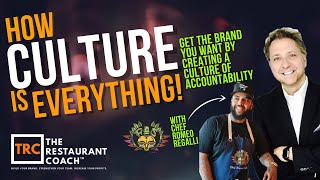
Chef Romeo Regalli opened Ross Plant Based, an Ethiopian-inspired vegan restaurant in NYC, just before COVID shut it down a week later. He built the business around team culture and self-care, including quarterly vacations for staff. He shares how to shoot restaurant videos on iPhone using cinematic mode and slow movements, then edit in Final Cut Pro or Fiverr.
Questions this video answers
March 7, 2020 (opened the week before pandemic shutdown; closed a week later).
October 23–25 (three-day summit in Tucson, Arizona; Hacienda del Sol guest resort).
Website: rossplantbase.com; email: Romeo@rossplantbase.com.
Chapters
Hey, welcome to the restaurant coach podcast. It is the cure for the common restaurant. I am so happy to have someone on the call today, someone as a guest who is definitely does not run a common restaurant. Welcome, Rome chef Romeo Regali from Ross Plant based in New York City. Chef Romeo. Hey, welcome to the podcast. I'm so happy you're here and thank you, Donald.
Thank you for having me on this podcast. I'm excited, you know, to share what I know.
It's awesome. It's awesome. Well, you know, I mean, and full disclosure. Romeo and his wife Milka are members of one of my coaching programs. So just want to give full disclosure up front. But so I know a little bit more about him than maybe you do. So I wanted him to share. He's got a really, really unique background because, like, you know, the traditional path, like to be a restaurant owner, a lot of times start off in the restaurant business, they go to culinary school, they're chefs, and then they just, you know, the next thing you do is open a restaurant, but you have a really unique background. Tell people a little bit about your unique background.
I sure do. I never thought in a million years I would end up in the restaurant industry. I started off in film school. I've always wanted to be a director and a producer, and people don't believe that I'm in a restaurant business because that's always what I whole life about. Film, film, film. So I went to film school. I lived in Paris for about eight years. Lived in Paris, went to film school, shot, you know, documentaries, music videos, and moved it to New York to pursue my filmmaking career.
Yeah, yeah.
And landed a job at, well, my wife's at the time, my bosses. She was, she was my boss when I landed a job at her mom's restaurant. She was the one who trained me. And I fell in love with the industry because I'm a people's person. I just love meeting new people. I love changing lives, you know, to. To the best of my ability. And that's how I fell in love. And my filmmaking slowly shifted towards the restaurant business. I started writing a business plan and now Ross Plant based is born. Has been doing so great. But what I've studied in film school didn't go into. Jane, I'm using. I'm utilizing that in the restaurant industry and it's helping us in so many ways. And it's one of the things I'm so excited about to talk about, you know, on. At the summit.
Yeah.
About my experience.
Yeah, yeah. So if you don't Know, every October I have a three day summit I always hold every year, every October, it's usually the last week in October. This year it's October 23rd, 24th, 25th. It is in Tucson, Arizona. It's called the Restaurant Success Summit. You can grab a seat, you can just go to restaurantsuccesssummit.com and grab a seat if you like. Romeo is one of the, I have eight other speakers plus myself. Romeo is one of the speakers. And the reason I'm having him come is because, you know, he is a member. But the one thing I really love about him is his social media. He does a lot of video and the video does look very cinematic, almost like effortless, like. And I'm like, dude, who'd you hire to do all that stuff? He's like, I did it myself. I'm like, no way. It's like too good. And he said, and he said, I did it on my iPhone. I'm like, no way. Yeah, I did. I shoot all on my iPhone. I go, no way. I mean, so people have a lot of this misconception that to have great video you gotta have a lot of fancy equipment, you gotta have a lot of fancy editing skills, you gotta have a lot of crazy stuff. But I think a lot of it's more about if you have a process map and understand the thinking. Like, you know, you have this, you know, this visualization, this process map of thinking like a director. So you know what the scene should be and you know how it should be framed. And so I think that's going to be one of the beautiful things that you're going to teach people at the summit.
Absolutely.
I'm really, really excited about that. Yeah. Because it's really great. Yeah. Yep.
And you know, yeah, it's. You can shoot a whole movie on an iPhone nowadays. You don't need, you don't need no extra one extra equipment other than your phone, your smartphone.
People do shoot full length movies on iPhones. It's really.
They do, yeah.
So tell us a little bit about, like, about Ross Plant based. What's like the whole. Because you got this really cool vibe about it. Tell us a little bit about Ross Plant based.
So Ross Plant based. So started off because of an experience and a personal experience we've had through family. My, my dad was sick at some point and it's through plant based diet that we were able to save his life. And that's how the whole concept started. But it's a combination of two things. One is we want to connect communities to real living foods that. That tastes really good. And also human connection. It's one thing I feel like these days restaurants lack are experience. There's no experience. Seems like the workers don't care about, you know, whether you have a good experience or not. You know, just. Just another a number you're in. Please just eat, pay, don't complain, yada, yada, go out. That's how it's been. And it's just getting worse and worse every year. And we're the total opposite. We're about, you know, really connecting with our community and with our guests and also with our team. It's one thing that you thought us is the team experience is as important as the guest experience. And that really changed the game for us.
Very, very cool. Yeah, I, I hear. I mean, you get rave reviews. Actually, one of our, one of our other members, Lindsay and Nick, were down in New York and they stopped by your place.
They did, they did, yeah.
They were really super excited. And I have to tell you, I'm gonna tell you publicly right here, they gave you raving reviews. They said, man, Romeo, Milk and run that place tight. And it's like, it's like they're on point. I said, well, that's why I didn't want to blow this thing up into multiple locations.
So, yeah, you gave us all the tools. Like you always say, it's just like putting a hammer on the table if you don't pick it up and use it, you know, there's not. There's not much you can do. You just got to use it and, you know, we're able to use the tools. Yep. Yeah.
Just potential.
Yeah.
You know, what do you think? You know, able to change pivot stuff, you know, make adapting to the different, you know, constant environment of the economy. What was, what do you think is some of the kind of key characteristics of you and Milka running Roz, that have helped you kind of really rise to the top so fast in that New York food scene, which. The New York food scene, I mean, it's competitive. I mean, brutal world.
It is very competitive. And especially for us, we were throwing the fire from the get go. We opened the week before the pandemic and we had to pivot real quick. We didn't have one, is we couldn't get the loan, the PPP loan, because we're new. So we really had to pivot. And I think the first step is really sitting down and looking just being outside of your restaurant to really think it through, not being, not being nervous, you know, Trying new things. Sometimes you fail, sometimes you know, it works, sometimes it doesn't. And for us. So we sat for, I think once or twice a day for the, for two weeks. Now. How are we going to make this work? We don't have money to. If this doesn't work, that means we have to close the business. We have everything we had in the business. Everything we had. So we said one is we never even thought of doing takeout and delivery because, you know, our food is kind of small, complicated than, you know, other cuisines to do takeout. So that's something that we wanted to do a year after we opened. And then we started trying new takeout containers. And how are we going to reach to our, you know, guests and so on and so forth. And we were able to pivot. We closed. So March 7th of 2020, we had our grand opening. A week later, we were shut down. We were closed for two months. Just, you know, brainwashing, brainstorming and on ways that, how we can make the business work. And may we reopen doing takeout and delivery. We were just doing so much marketing and videos and then maybe started doing takeout and delivery. Was just me and my wife and Milka. I used to lock the door. And a month later we were a media called Black Owned Brooklyn. They wrote us up about the business, how we started, and then it was just, it's gotten crazy busy after that. And since then we never looked back. It's been consistently busy. But I think what I'm trying to say is the pivot, the pivot part was so important for us, you know, to be able to save the business.
I think that just comes to having that open mindset about, listen, I'm not giving up. I gotta figure this out. You know me, I, I believe everything is figureoutable and it's never lack of resources, the lack of resourcefulness, resource.
Yeah, absolutely.
And I think that's one of the goals of coaching is to give you lots of tools. So you feel like I got lots of tools in the toolbox. So I feel I'm stuck. Just pick up another tool and I can use that to get break free.
Right? Yes, I 100 agree. It's just, you know, not giving up and keep pushing, keep pushing. Something doesn't work, you know, try the next best thing and don't be afraid to ask. I think I really leverage on people that know better than me because I just know what I know. I'm not, I'm no expert, so I'm not afraid or shy to Ask experts. And that's why we have you as our coach. Because we just know what we know and look with what, where we've gotten since we started with you.
And you got such a unique niche. I mean. All right, so Ethiopian food by itself is unique, right? Unique, yeah. And then plant based Ethiopia food, it was like, you want to talk about super niche? I mean that's like, damn, can you go down any further? It's like super, super.
We pushed it even further and then we did like a fusion, you know, like Ethiopian and southern mix. So you know that that whole thing is really working at first influences for.
Like your inspirations for culinary stuff.
Culinary. So I'm a self start. I learned everything I know from my mom and my grandmother. They were, they're amazing cooks. When my grandma, my grandma passed away, you know, years ago, but I learned from her and I learned from my mom. So they, they taught me all about my cooking skills, you know, flavors and all of that good stuff.
And when you think back to like your childhood memories, like me too, I was, I never went to culinary school. I was trained by my dad, who was a chef. But my early, early influence on my culinary kind of just that farm to table mindset was my grandmother who had a huge garden in the backyard. We used to go out and I remember on weekends we'd roam these country roads, take her old station wagon. We'd roam these country roads looking for wild asparagus and wild berries and harvest and come back. It was like crazy.
Yeah, Grandmothers are the best cooks too. They are.
And it was like the total appreciation for mother Nature.
Right? Yeah.
And respect it. And then taking the bounty of that and bringing it back and making something for family was like such a huge thing that I, I still carry to this day when I'm in the kitchen is that I always think cooking is a, is an opportunity to give, you know.
Yeah, I, I, I couldn't agree more. It is, it is an opportunity to give. Growing up, I remember we've always had get togethers, parties, lunch, dinner, and I think the hospitality part comes from that. You just want.
Oh yeah, coffee.
Yeah.
Well, hospitality is all about being a host, the ultimate host.
Right, Right, right. Yeah.
So from the culinary side, stuff like that, we also, you know, I know restaurants, there's a lot of restaurants have great culinary side, but the thing that makes a great business is also that leadership portion. What do you think really makes a good leader, a great leader in the restaurant industry?
For me, I feel a great leader is someone that can inspire yeah. Someone that can have your team committed. You don't want compliance, you want commitment.
Yes.
And I feel like you do that by one is making sure your team are happy, the team experience. And two, we used to have, we used to think so. We've always been so nice, me and Milka. It doesn't necessarily mean our culture was great, but one thing that you taught us is, you know, having standards and having high standards is really what attracts great talent. And we used to think like we're so nice, like why can't we get like, you know, great, you know, great people working for us just does not make sense. And it's because we never communicated what our standards were. And I think two things that really change for us is having, you know, our core values and our standards. Yeah. And now they know exactly what to expect. We know they know exactly what we expect from them.
Yes, yes.
So yeah, there's no. And we, we just so care. We care in their developments. You know, we help them grow within the organization or outside the organization. We always tell them it doesn't have to be in the restaurant, but whatever they want to do, we're there to help them achieve whatever it is they aspire. And I feel like that's what great, great leadership is, really caring about your team.
All right, so talk about caring. You know, I'm a huge believer in self care and I push all my, all my members, all my coaching members, I push them all to make sure you're taking time for self care. Have you noticed like a change when you like, have you changed some of your self care stuff since we first started? And then what do you see as the influence or impact of taking care of yourself first?
I think you can't be a leader if you don't take care of yourself. That's just. Yeah, you can't. And as I understood that, you know, when we, when we had you, as we started with you, it's the day, even how the day starts. I wake up early enough or at 6am I go to my gym, I, you know, meditate and I write my journals. My day usually goes great. When I go in the restaurant, my energy is different. How I communicate with my team is so different. The days I don't go to the gym, I don't meditate. I'm usually, I'm just such in a bad mood.
Oh yeah.
My energy so different. And it affects the entire restaurant and it affects the fact of, you know, how they work.
Because what's our number one say? Culture flows down.
Culture doesn't flow up. Culture.
I say it all the time. I preach it all the time. Culture.
And it's so true. And I now I understand it. Now I really, really understand it. Because at the end of the day, every. Every step of the way, they look up to you. Every second, they look up to you. And it's so important, you know, how we carry ourselves and how we take care of ourselves, because I, like you said, it really starts from. From us.
Yeah. And one of the things I'm really big on, too, is, of course, I'm big on all my members getting to the point where, because a lot of people, when they start coaching with me, they've never take vacations because they feel they can't leave the restaurant. Can't leave my restaurant. Can't leave my restaurant if I leave. Please. I can't leave. I can't leave. You guys just got back from a great vacation in Europe, didn't you? We went.
We went away for three weeks.
I know.
It never happens. Yes.
That never happens. You're gone for three weeks in Europe, having a great time. I mean, the pictures were great on Instagram. Yeah. You guys, what was the best meal you guys had over in Europe if you had to pick out one? Come on.
The best meal I've had in Europe. The best meal I've had in my life is in Tuscany, Italy.
Oh, wow.
I had this pasta. I just. I. I still dream about it. I can't wait to go back. Yeah, that was the best. So pasta. Pasta was the best meal I've had in Tuscany. Yeah, In Tuscany. And second best meal was in Aruba. We did a chef's table. It was like just 10 people. I think it was also one of the best meals I've. I've had. It was a ceviche. I don't know how they made it. It was like the best. It was. I think it was four or five years ago was the best ceviche I've ever had. So those two meals are the best meals. Yeah.
So you and you guys just got back this last weekend from LA, too, LA.
We took another trip. Another. So we promised ourselves we're going to travel every three months. So quarterly. We're going to go away.
I want my. I always, like, recommend my. All my members take up a vacation every quarter.
It's so important.
It is. It's huge.
And then also helps you how to trust your team.
It does.
If you can't trust your team, you know, you don't have a team. I mean, that's Exactly. Yeah. And I feel like when you have a good culture, you don't have to worry about anything. Nothing changed when we came back. Everything was as is. We kept getting our amazing reviews. I check resi surveys. You know, it just kept running the way we wanted them to run it. And I feel like that comes from leadership.
It does. So what do you think? Like, the biggest problem restaurants face today?
So I know staffing is a big problem. And I always tell Bill, every time we go to a restaurant, the service is bad, whatever. And I always blame the management, really. It is starting it, really. And it's getting worse. I don't know.
It's.
It's. I think it's so, so bad. Especially in New York.
No, everywhere is bad. Stacy and I went out to a place the other day or yesterday for brunch. I swear, I said to her, I think this. I think our server stoned. He was like, hi, I'm Kyle. I'll be taking care of you today. And it's like his eyes were barely open. I'm like, it's gonna be horrible service. It got so bad. Like, you know, he'd come by, he goes, can I get you. Yeah, could we get some ketchup? Oh, yeah. Okay. Disappear. I had to go up to the. I had to go up to the service station and ask for ketchup. You know, it was horrible. Horrible.
It's so bad. It's just getting worse.
But like you said, it's all leadership.
It's all leadership because they don't spend enough time with, you know, with their team. They don't. It seems like they don't care about the team experience. And they. I know there's a place a few doors down from where we are. All the staff, all the team members there, they're always smoking weed outside. How does this work? How can someone smoke weed all day.
While they are at work and perform.
At a high level and perform.
Yeah.
So I think it's definitely a problem everyone is seeing. And I. I just. At the end, still comes down to leadership.
It does. It does. So, like, you know, we start a coaching program. We use, you know, we use what's called the restaurant coach method, which basically followed our 3P framework. It's people product process. Now when I show people the people product process part, and I tell them, like, the people part's the biggest problem you have. Everyone looks at the marketing. Of course, everyone looks. That's what I want. So what I want, if you look back now, knowing what you know now, and when we first started and I, and if I, you know, I said to you before knowing what you know, I said, hey Romeo, you know, culture is going to be the biggest thing. You were like, no way.
We need systems, we need checklists.
It's like everyone thinks it's like the other, the other shiny pieces.
Always you, we always, I think for people that doesn't know, you know, including myself, I didn't know then if you have a system that said you don't have no problem. It's just, you know, a well oiled machine. It doesn't matter what kind of systems you have of the people, of the people part is not dialed in.
They're not going to follow. They're not going to follow.
Oh yeah.
If the culture's not right, if they don't have accountability culture, no one's gonna, I don't care how great the checklist is.
Absolutely not. You know, before, before we met you, we had, you know, we hired consultants.
Yeah.
The only thing they did was, you know, they gave us checklist system systems and nobody was following it. I'm like, we spent so much money on this. Like, what else do you guys need?
Or you and I, like, we'll hear like in our group, in our coaching program, we have a group chat and people like all the time like, hey, what tech stack should we get? What tech stack should we get? We're like, stay away from the text that work on your culture. Work in your culture. Because the tech stack won't matter. They won't use it dollars to implement this, Joe. Online, you know, online, check all these new things and it don't matter. You're going to waste so much money until you get the culture piece, right?
Yes. Yeah.
People spend so much time wasting time and if they understand culture drives the bus. It really does.
It really does. Everything else falls into place. It's just, you know, after we did it, I mean, it's just so crazy. All the systems that we had, nobody followed it. But now you don't even have to ask. They just, it's just so automatic. Because they care, because they have, they have a purpose now.
Yeah. Because they have a culture of accountability and they have a culture where they're dialed in and they're actually, they want to participate.
Yeah. Right. Yeah.
That's where we start elevating those cultures. We have different levels of culture. There's toxic, there's training, there's learning and there's leadership. Most people have a training culture where in most restaurants like this, someone gets hired, you train them on the front end turn loose. That's it. They get like four or five day shadow program and then that's no new education, no development, no hunger, no desire to be better. And then what we work on is trying to get you to this, what we call, it's 1% mindset. It's kaizen, the Japanese call it. It's like constant, never ending improvement. We want to be 1% better today than we were yesterday. When you get that attitude and the team and everybody just wants to be a little bit better, you start elevating your culture and it's a, it's a real huge, huge game changer.
Yeah, but like you always said, better people, better restaurant. And I, you know, I'll be the one to tell everyone. It's really, really all about that people.
It's true.
It really is.
Romeo is a testing way to say Donald's not lying. It's true. He's not lying. It's not a bunch of bs.
Yeah, it really is. And our reviews shows, they always talk about our service and it's because they.
Care people by name, which is a huge testimony that they left Impact.
It really is. Because now they, they, they know they have a purpose.
Yeah. So let's talk a little bit about video because again, one of the reasons I had you speaking at the, at the summit coming up in October is that you're really, really big on video. So just kind of give us a sneak peek. Now I have you speak in a couple days, right, Because I thought, I thought we'd break it down like one day we'll be like basic stuff and we're gonna give them some homework about taking their phones, going out on the resort and like actually shooting some video. And then the second day will be now how do we edit it and put it together to make it a format. So can I give like, like when you're doing video, what's kind of like your thought process? When you're looking at stuff, the first.
Thing to think about is how do I want this video to unfold story wise? And then story doesn't, doesn't have to be like, it can be in 30 seconds. You can tell a quick story in 30 seconds in it. So it's how does the story unfold and then what is the first thing I want to show? Yeah, so I think that's super, super important. Any great movie, if you go in, if you're watching a movie, it shows you from the first shot that catches your attention and that's what you want to do when shooting Even a short video for a commercial. And then it's really about how you're holding the camera and then your movements, your movements really, really, really matters. You know, slow movements. One, it makes it a lot easier for editing.
Yes.
It makes the video super clear. And number two is shoot as much as you can. It can be. If you can do a five hour footage, just do it from that five hour. You'll only use 30, 30, 30 seconds. But you'll have a lot to work with. So I always, when I shoot, I'm just even things I know I don't need, I'll always shoot it. Sometimes I end up using it in the, you know when in the editing room when I'm editing. So shoot as much as possible. Write down what the story will be. Always all help. It'll help. And sometimes even me now I've used it. AI chat gbt. I go on chat gbt. I'm like, okay, I want to make a one minute video marketing. And I give them, you know, I give it whatever I want to tell. It gives me a short script on how it's so amazing.
Is a game changer for doing short videos.
Oh my God. Game changer.
Game changer. If you're stuck, all you do is you put in a little bit of prompt. Now the prompts everything. And actually at the restaurant success, I actually have a class on AI. I'm doing a class.
Okay. Oh, that's amazing.
Yeah, I'm gonna do about how to. How to put up the right prompts. And one of the prompts we're gonna talk about is how to put a video script prompt. A good video script prompt that will actually generate good stuff. And so I'm going to show you how to do it at the restaurant success summit. But yeah, it's gonna be awesome. So. IPhone, right? So let's talk about the tools you need just to shoot a video. A good video. You need. IPhone. Is there anything you need? A stabilizer? Do you need like a gimbal? Anything like that?
You can use a stabilizer. I don't use it. As long as you're holding your phone like this.
Okay.
You don't need. And then it's just slow movement. And I. Yeah.
So I'm gonna bring the iPhone now is built in. It has a stabilizer in it. Right.
The new iPhone, especially the cinematic.
Is that what you shoot in cinematic mode?
Cinematic. Cinematic mode is the ultimate.
All you need is an iPhone in cinematic mode.
Cinematic Mode. That's it.
IPhone Cinematic Mode. I'm right on this Is a cinematic mode. Just gotta. And be slow and steady.
Be slow and steady.
Right. Get lots of footage.
Lots of footage.
Right.
Two kinds. Yeah, Two important shots. So one is a white shot because you want to. You want to show what's happening.
All right.
All right. And one, close shots. Close shots of, like, can be a product, can be anything.
Yeah. And you know me, I'm big about having people in the shot, in the frames. I'm big about. I always say I want to see people. I want to see a face in.
Your place, you know, Most definitely. And face. Not only that, try to catch it when they're smiling. Yeah, that really changes the video.
And one of the one thing I love about your videos, like, you'll have. You'll get videos of, like, your family and friends coming down, like, celebrating and, like, you know, it's just like, that's what gathering around the table is. People, like, hugging each other.
Oh, my God.
Those. I think those are the best videos you have. And you, like you said, usually have a wide shot of Roz. It's usually some logo, so you have identity right away. It's like, oh, that's Ross. And then you come in, and then you tighten up the focus, and then you show us some different montages of things. And then you have people.
Yeah, it's an introduction. You always have to start with the introduction logo and slowly showing the space. And then you go into the product, and then you go into the faces. You know, people just enjoying their time and so on and so forth.
Cool. Cool. That's all you need. So you don't need, like, any fancy, like, you know.
Absolutely not.
I have not used Nikon camera.
Oh, my God. A while since I've used those. And then for editing.
So I.
You can use. I use Final Cut Pro. Sometimes I use it on my phone. It's called Splice.
Okay.
But also, there's. There's another option. So on Fiverr, when I don't have time, I say 60, 70 bucks. They edit it for you. Just tell them, you know, how long you want it to be. Tell them, this is how I want the story to unfold. And you pay $60 and they'll edit it for you. You just, you know, give them the song you want to use. And it's so easy. You don't even have to do the editing yourself if you don't have the time.
Yeah. And Fiverr is a. It's a freelance website. It's F I v e r r 2 Rs I V-E-R r fiverr.com and you can find. And I also, like, I'll have, like, sometimes anyway. I know I. We have clients that don't like their voice and like, sometimes we'll do voiceover who do awareness videos. And you could also go on Fiverr. You have someone edit, but you also get an artist, like a voiceover artist to actually do a voiceover for you. So you have a nice overtone for, like, if you're doing an awareness video, you're doing like a commercial to give people awareness of your brand. That's always a great, great thing to do. Like, if you go to my. To the podcast, the Restaurant coach podcast, you'll hear a lady in the very front. That's Alice. She's my voiceover artist that I found on Fiverr. She does all my intros for my podcast. I have probably a dozen different ones that she has done for me and she is awesome and she does a great job for me. And she's such a pro. Yeah. It's always nice to have someone else, especially a professional. And if you don't like your voice, you don't like the way you sound on. On video or microphone, that's cool. Remember, you can outsource.
A lot of people don't like your voice.
I don't.
I hate to hear my own voice. So.
Really, you have a good voice. I hate my voice. I hate mine. No, I hate my voice. I don't like my face.
I think it's a human thing nobody likes to hear. Nobody loves to see this themselves, you know, in. On screen. Yeah.
You hear like, actors. There's actors who don't want to even see their own movies because they just.
Right.
I can't watch my own movies. I don't know. I never seen it. What do you mean? You haven't seen your own movie? No, I just can't watch myself on movie. It's like, horrible.
Yeah, Yeah. I think that's just human nature.
So. Yeah, come on down to the summit. We have some greater speakers. Kai and Cerna. I got Chef Adam Lamb. Beau Bryant, the restaurant giant. I got Chef Craig Shelton. If you never heard Craig Shelton speak, I mean, this guy. You want to talk about someone who's just like, I mean, mensa level thinking of restaurants and frameworks that, I mean, he just blows my mind. And I'll. You'll see me watch Romeo. You'll see me at the summit when Craig's talking. I'll be right in front. I'll be taking notes like crazy. He's like, Brilliant. And I love, like, listening to him. We've got all kinds. I got Ramon Dios coming over. I got Juliet Gus coming in. We got some really, really got. Zach goes from Ovation.
Oh, wow. Oh, okay. I'm gonna meet him. Okay.
Yeah, you're good to meet Zach. Yeah. You use Ovation, don't you?
Oh, you do. Yeah, we do. Innovation. Yeah. Yeah, you do use Ovation. Yeah, that's. That's very exciting. I mean, for anyone watching, this is definitely something summit that you don't want to miss, because you're going to get a lot, a lot out of this.
24, 24 sessions in three days, 9am to 6. We got an hour break for lunch, and I don't want anybody leave. So we're doing lunch, and I have. I'm having a buffet brought in for the lunch in the room. And here's the really cool thing about the summit, if you haven't been there before. So at lunch, we have really nice tables, and it's like an expert's luncheon where the experts, the speakers will be at different tables, and you can go have lunch with them. You can ask them personalized questions about. Because a lot of people are embarrassed to ask questions in front of a group of people. But you get a small little table of six, eight people and like, you know, hey, Romeo, man, I really want, you know, so it's a great opportunity to sit and talk to the speakers. And most of them will be there most of the days. I mean, some are, because of their schedules, are only there like one or two days. So take advantage of that. That's that expert lunch, and it's included in your ticket to the restaurant success summit, which is a huge opportunity, especially if you got something about your brand you want to ask specifically about, like, hey, I'm doing this, or I'm struggling with this. I'll be there. You can hit me up also, all the time. I'm. I'm easy, you know, Romeo knows I'm pretty easy to talk to.
Oh, yeah, all the time. Whether it's a text message, you know. Yeah. What's what time of the day.
That's it. Yeah. All my clients know. They can reach me 247 by text message or if they want to jump on another, a call. They usually get some calls each week, but they need to talk to me. Just extra, like, something's really. They. They have a code word. They text me and they text me. Yeah, the code word. And then, you know, it's an emergency. And I get. I usually get right on them right away. So let's talk about like stuff like that. So how to stress, like, how do you deal with stress?
A few, few ways I deal with stress. If I'm at the restaurant and I'm having a really stressful moment is I just take a moment, I leave the restaurant, I take a walk a good like 10, 15 minutes and I take a deep breath and that's how I deal with it when I'm at the restaurant. But in general, on a day to day basis, you know, going to the gym really helps me in meditating.
Oh yeah, me too.
Going to the gym and meditating, those are two things that are really, really helping me. And before we started, you know, with you, working with you, I didn't do those things and my stress level was just milk, milk. I used to tell me, can you please tone it down? Because it's just becoming too much to the point where it's not worth it to have a restaurant.
Exactly. Yeah. Yeah. In fact, I think she told me. Yeah. Before you guys started coaching with me, she thought about putting a pillow over your, your head at night.
She really did. She likes this too much.
Start watching Dateline. You know you're in trouble when your spouse is watching Dateline episodes. You're like, oh, why are you watching Dateline a lot lately? What are you trying to learn?
Yeah, that's the thing.
Just getting some ideas. What do you mean ideas?
Oh yeah, it's gotten so much better now.
It's gotten soda. Tastes a little funny. What's in here? Nothing, don't worry about it. Just keep drinking. It tastes kind of bitter. I don't know, it doesn't taste like Right. Is that anti freeze? No, no, no.
Yeah.
No.
Now I'm in this. I'm safe now.
You're safe now. Now you're safe.
I'm safe. And that's the thing also I love about, you know, your, your coaching is it's really not only about restaurants, it's about, you know, ourselves as humans. You made me a better person, you know, because I think I remember the first thing that doing is, you know, mindset and how to deal with stress. That's the first things that we learned, you know, on the videos and that really, I think that is so valuable on so many levels. Not only in a restaurant business. If I want to go and open another kind of business, you know, that mindset will help me, you know, succeed in anything I do. And I think that's really, really, really powerful. And we're so grateful you Know for. For all that you do. Yeah.
Awesome. So if you came with a warning label, what would your warning label say?
That's a good one. Warning label would be don't take my kindness for a weakness.
There you go.
Yeah.
When we first met, your warning label would have been contents under pressure, do not shake. When we first met. Yeah, that would be your first. When I first met you, that was a content, do not fake.
Yes. Yeah.
But now it's like, yeah, don't take my kindness for weakness. Yeah. Yeah. And that's the thing again, I think you've learned too, you and Milk have both learned, is that you can be a good leader, a nice leader, a kind leader, but you're also going to have standards.
Standards.
Yeah. And expectations. And then all as the team knows where that line in the sand is. And like you and I used to tell my team all the time, you can walk up to line, you can stand on a line, you can lean over the line, cross that line, we're done. That's it. You know? Yeah. As soon as you cross the line, we're done. That's it.
I think that's so huge because now they understand, you know, they're extremely, extremely nice, but they know that we don't play around with our standards.
And you always have a couple people want to test it, and then when you get rid of them, they're like, you serious? Yeah, I'm serious.
Yep.
Here's your check. What do you mean, that's it? Yeah. Oh, my God. He. He ain't messing around.
It takes one person. One person. And everybody all of a sudden like.
Oh, they're not playing no more. Yeah, that's it. Yeah, it's like the Sun Tzu thing. You gotta cut the head off one of them right away, and then all of a sudden the rest. Right.
Whoa.
Okay. Okay, let's do that the right way.
Yeah. So that really, really, really helps. Yeah.
Yeah, that's really cool. So what's a book? An audiobook or a podcast that you listen to?
So there's a lot of great books.
I love, but one look at that stack behind you. If you're watching video, you can see this stack of books. Romeo's like me, I mean, avid reader, you know, I love reading. I read. I read five books a month.
Yeah, I mean, too. I love reading. It makes me a better person. I love, you know, self development books. One that I really recommend to a lot of people is atomic habits. The reason being is because I've had bad habits before and then really that book really helped me change my habits. You know, it's shifting the goods, you know, the bad to, you know, to the good. So I feel like it's. It's a book that everybody should read because everybody has bad habits.
Everybody has bad habits.
Yeah. So it's definitely a book that I recommend. There's another book that I'm reading at the moment is Unreasonable Hospitality.
Oh, that's a great one.
It's a great. I love that book. It's a great book. So when we come to Arizona, I want to get your books because I've, you know, read great things about it. I really can't wait to read those books.
You don't have my books yet?
We never got it.
Oh, man. Actually, I'm coming out to New York pretty soon, before the summer.
Oh. So, yeah.
Yep, yep. Yeah, I'll bring. You know what I'll do? I'll bring you a hardcover edition.
Perfect.
I'll bring you a signed hardcover edition. Yes.
I can't wait. Yeah.
Hardcover set.
Yeah. Okay. Yeah, yeah.
The collector's edition. You get. Yeah.
So trilogy, right?
The trilogy. The Restaurant. Your Restaurant Sucks trilogy.
Yeah.
It comes in a nice little. It's a box set. It's a nice little box.
Oh, amazing.
Yeah, that's gonna be my next. Yeah, you'll get the box set.
I can't wait. Even my dad has been asking me that he. Because he wants to read it.
He hasn't read it yet.
He hasn't read it. He's been asking me, when are you going to get the book? When are you going to get the book?
I'll bring. I'll bring. And I'll. I'll bring you a hard set. I'll bring you a paperback set too, so you can hand them out to people.
Perfect.
Keep the box for you and then hand out the paperbacks to your friends.
Yeah. And that's another thing we started doing at Ross is we have book club now with the team book club. We have the gym membership. You know, everybody has to. To take a picture. So, you know, we're engaging our team and that's how, you know, we're able to have a good culture.
Yeah.
Yeah.
You probably notice your turnovers dropped down a lot.
Oh, my God. There's no turnover. And then we get a lot of applications and we just don't have room anymore. Yeah.
That's also why you're opening another location pretty soon.
Yes. Yeah, we're actually. Yeah. We're looking at a space this week, so hopefully it'll work out. But, yeah, we'll keep. We'll, you know, you on our side. We'll keep growing. 100 is. 100 is the goal.
100 is the goal. And that's the thing, too, is, like, when you're looking for another space, don't fall in love with location. Find a good location, but don't fall. Don't be so enamored with the location that you'll sign the deal and it might be a bad deal for you.
Bad deal? Yeah.
Because if the numbers don't work, the numbers don't work.
Numbers don't work. You're right.
Owners, like, just fall in love with the location. I gotta have it. I gotta have it. And then they're upside down. And you're working for the landlord, you know? Yep.
That's. That's so true.
That's another thing. Kyle and Cerna, who's going to be at the restaurant success summit, he's a huge real. He's actually a real estate broker. Really, really great at restaurant leases. So Kyle's going to talk a lot about, like, deal or no deal, the art of restaurant leases. He's going to talk about what sort of things that you should look for. What's. The things that are little things in the wording that you should actually avoid. So if nothing else, if you're looking to, you know, open a second location, third location, and you want to make sure you get the best deal possible, talk to Kyle first. Kyle and Cerna is like, the man as far as restaurant, real estate.
I can't wait. That's going to be really interesting because we do get super excited every time we look at a space. Everybody like, all right, this. This has to be it.
I know. You call me every week, man. I'm like, oh, my God, it's perfect. And Milk is like, yeah, it's okay.
It's always like that. I'm the one who gets, like, voice of reason.
She's. It's okay. And so I'm like, milka, why don't you tell me about it before Romeo signs his life away? Let's talk about this before Romeo signs the paper and you guys are upside down. Yeah, exactly.
We almost signed a lease this close. And she's like, no, we almost did. I was so excited, but I'm glad we did it. And that's why I have her on my side.
Exactly.
Yeah.
Having a good partner that you can bounce ideas off and listen to is huge because it does. It does really change the game for you because now you have someone that you can Actually have objectivity with someone who can help you look at things. Because a lot of times, like, especially chefs, we tend to be very, very creative, very emotional, Very like, let's do it. Jump in. Let's do it. Let's go.
Oh, yes, that's definitely me. Oh, yeah. I sign up on so many things that drive crazy.
Oh, yeah. You're like me. It's like, oh, I signed up for this. I signed up for this. I was like, all right, slow down, man. Let's implement. You're like me. I'm. I'm just as bad. Yeah, I signed up for stuff all the time. Well, I'm a big believer in self development. I belong in, like, forever mastermind groups, like online learning, online coaching. I mean, I got online marketing mastermind groups I belong to. I want to be a better coach. I have some different business coaches that I work with to help me become a better coach. So. Yeah.
Yeah, I think that's. That's so important. You know, that's the only way you can grow as a human.
You have to.
Yeah.
For every level, there's another devil, right?
No. Yeah. All the time.
Every level's another day or every level. Every new level of your life requires a new version of you always.
And the problem is there's no way you can reach that person. Every time you think that you reach that person, they're always ahead of you. Yeah. Oh, always ahead of you.
Your future self's always ahead. That's why it's called the future self. You're always trying to catch that person. And that's what I love about this constant, never ending improvement. Mindset is 1% better, is that I know I'm never going to reach it. I'm always going to have something more to shoot for, something better to be something I can strive for. One little skill I can fine tune. Because what's the number thing? In restaurants, we always. And we talk about this in the coaching program a lot. The biggest three, time management, time management, communication. Right. And mindset. That's our biggest three things. And the biggest three things that we always work on all the time. And everyone could be better on time management. You know, everyone could be better on a communication. Everyone could communicate a little bit better, and everyone could work on their mindset a little bit better.
I agree.
Limiting beliefs are the number one thing that hold restaurants back. You know, you thinking that there's no good talent out there. These kids today are lazy. They don't want to work.
No, that's. Yeah, there's. No, there's no such thing. And we had to learn the hard way.
But my guests don't want to pay that much. You know what I mean?
Right, right.
My guests are different. My market is different. You don't understand my market, Donald. You don't understand people. And I'll tell you right now, all business problems are people problems. And when you understand that as essence, and you understand that getting the right people on your team is the key to fixing the people problems. That starts with you fixing your people problems first. Then you're. You're on. You're on the way.
Yep, I agree.
So, so what's a quote you live by?
Motivation gets you in the game, but habits keeps you there.
Oh, that's a good one. That's a good one. That's good.
Always, always been like that. You know, you get motivated. At least for me, I start something, you know, the gyms, everything in life, you're so motivated one week, two weeks, motivation slowly declines, and then you, all of a sudden, you don't want to do it anymore. Now I learned it's not, you know, yes, motivation will get me there, but it's habits that's going to keep me going to reach where, you know, I want to reach, to reach my goals.
My favorite quotes in the world, my fa. My number one favorite quote. And I built my entire. The whole restaurant coach brand about this quote. It's a zigzag or quote. You can have everything in life you want if you just help enough other people get what they want. That's my number one. My number two quote is Mario Andretti. If everything seems under control, you're just not going fast enough.
That is so true.
Yeah. And my third quote was actually my. The best advice I ever got in life and in business was actually from my martial arts instructor when I was 17 years old. He had. Just like he did. We were like. I was, I. I just got my first degree black belt. I was getting ready. I got my first career back about 16. I was 17. I was just getting ready to test for my secondary black belt. And we were sparring, and he was going pretty rough on me, and he hit me one time really hard, and my head went into the wall. And I actually still, still have a scar above my eye right here from going my head in the wall. And I wanted to stop fighting. I said, I want to take a break. I want to take a break. And he gave me five words that have carried me through life and helped me really. And the five words are, you'll want to Quit.
Don't. Oh, wow. That's really deep.
Yeah. And he was just like, you want to quit? Don't. And I was like, all right. And I put my gloves back on, and we finished out the round. You know, blood poured down my face. Yeah. But, yeah, those are the things that really, really guide me.
And then those things, they work. It's a reminder.
Yep. It is constant.
Keep reminding yourself. Yep. It's constant reminding. You know, it's about reminding yourself.
Yeah. Because that's why we do nudges. We call trigger phrases all day. We're just talking to our team. What's your favorite trigger phrase used with your team?
The favorite trigger phrase we use in our team.
And for those that don't know. Yeah. Trigger phrases are, like, little things that we use to kind of keep the team on track. Like, my favorite trigger phase is what's next? Okay, what's next? What's next?
What's next?
Yeah, that's like, my favorite trigger phrase. So what's one. What's one that you use with the team a lot?
Action Trump's intentions.
There you go. That's a good one. Yeah, we like it. We have a whole list of them that we use in our coaching, bro. Like, one team, one fight, you know? Yeah.
So once you want to fight, I made a poster. I mean, it's with the right. You'll see it when you come.
Oh, cool. Yeah, that's awesome. Yeah, it's actually. There's another great quote that I love, and it actually wasn't. And I broke the essence of that down to one team, one fight. It was actually a quote. It's an African proverb. It says, if there's no enemy within, the enemy outside can do us no harm.
Wow, that's. Oh, yeah.
And that just goes back to, like.
There'S no enemy within.
That means one team. It's us together, not us against each other. Not front of house versus back house, not day staff versus night staff, not this location versus that location. It's one team, one fight. That was also a huge thing I learned in pararescue teams. That was one team, one fight, you know, and that's a beautiful. I think there's a beautiful thing that you'll see, like, in 911 was a huge, huge. I mean, it was a huge catalyst that it brought.
It was together.
It doesn't matter what our races were, what our religions were. We were Americans. It was one team, one fight. Right. It's the same thing in the special operations team. Like, you make fun, like, air Force guys make fun of Navy guys make fun of Navy guy, you know. You know, army guys make fun of Marines. Well, everybody makes fun of Marines. But I tell you, when the fight's on, though, it's one team, one fight, you know, one.
It really is. It really is.
Even next to me, if they're helping me what branch you're from.
And then in the restaurant, there's always that tension between, you know, connery team and service team.
Always. Always. Yeah, Also too.
Yeah.
So everybody always thinks the other team always other. Other shift always has it better. Those, hey, guys don't do anything, right? Guys don't do anything. Oh, the servers have it so easy, actually. So easy.
You know, we're actually thinking of. So on a weekly basis, let's say if a server will have to do each position at some point, just one day, just so that they see how hard it is, you know, whatever position, because they always think the other.
Easy. Yep.
So we're going to start doing that. Whoever is in the kitchen, we're going to have them, you know, do just. Just a day serving and so on and so forth. We're planning on starting that.
That's perfect.
Yeah, yeah.
So people want to contact you. They can go to rasplantbase.com yes, Ross.
Or my. My email. It's Romeo. Rossplantbase.com. right, right.
If you want to reach out to Romeo, if you want to talk to Romeo in person and grab a ticket to the Restaurant Success Summit. At the Restaurant Success Summit, Romeo will be there with hit me and seven other speakers.
I look forward to seeing 24th.
Actually, that's wrong. It's October 24th.
23Rd.
23Rd.
23Rd.
33Rd to 25th. Jesus. Getting my own thing wrong. October 23rd to 25th.
25Th. Yeah.
So it's a Monday, Tuesday, Wednesday. It's a beautiful resort called Hacienda del Sol Guest resort. It's up in the foothills of Tucson. Beautiful, beautiful resort. Been there since like the 50s. I think this resort is really, really cool.
That's very exciting.
Very, very relaxing. Great ambiance, great energy. It's going to be a great event. Like I said, you can go to a restaurant success summit and you can check out the. You can check out the agenda. You can see all the speakers, profiles and bios. And you can also grab a ticket. There's a few seats left. Get a deal right now because the prices are going up. So you can grab it for a deal. But make sure you grab a ticket restaurantsuccessummit.com and Romeo will see you there. If you want to talk to him on the side and have lunch with him, he'd be more than happy to tell you about filming, editing, all that fun stuff.
Absolutely. I. I look forward to it. I cannot wait.
I want to say thank you so much for being here today. Thanks for taking the time to share your knowledge and your insight and also your kind of, your amazing, amazing background. And I can't wait to get to New York to eat at Ross Plant.
I cannot wait. Thank you so much for having me on this podcast, Donald.
Thank you.
And I look forward to seeing you soon.
Perfect.
One question before you leave. What is your favorite book?
My favorite book of all books. The Dial of Personal Leadership.
Leadership. Okay.
The Dial of Personal Leadership.
The Dial of Personal Leadership. Okay. Amazing. Because I want to read it.
Yeah, it's awesome book.
All right. Amazing.
Thank you so much.
Thank you so much.
More from Donald




If your restaurant only works because you work 80 hours a week, it doesn't work.






