Ice Cream Empire Building with Phillip Ly
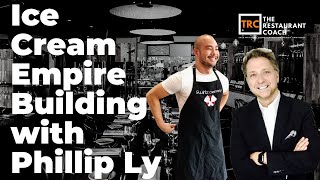
A recorded interview (Nov 24, 2020) where Donald Burns interviews Phil Lee of Swirls Creamery (Los Angeles). Phil describes Swirls’ fresh-to-order rolled ice cream process, tech-enabled operations (self-service kiosks, KDS, label printers, online ordering, third-party delivery), product development (working on a vegan/non-dairy rolled option), and the business pivots made during COVID-19. He shares his origin story (started making ice cream in a garage in Jan 2017 while in college), leadership lessons learned through coaching and masterminds, hiring and culture practices (Swirls University training), key KPIs (guest check average; discounts/comps; waste), and growth targets (three locations and $1M revenue by 2023).
Questions this video answers
January 2017
May 2017
October 2019
November 25, 2020
Open three locations and generate $1,000,000 in revenue
Chapters
Hey, and welcome to the Restaurant Coach podcast, another episode of the Restaurant Coach podcast. It is the cure for the common restaurant. I am so honored to have on the call today Phil Lee from Swirls Creamery out in la. Phil, how are you today?
I'm doing great. Thank you so much for inviting me on the show. It's an honor.
You know, the honor's mine. I mean, and just to give people a little background about you, you know, Phil and I have had a working relationship for probably over a year now.
Yeah, I reached out back in October 2019.
Right.
Yeah.
And I've been, you know, and he's been in. He's been in my coaching program. He's also in my Mastermind program. He's also in our new restaurant, KPI Mastery program. So Phil has a lot of, you know, kind of work with me. And here's the thing. I wanted to bring Phil on the show because I have seen this young man transform from a very young, you know, kind of like green, you know, business owner to now a very. A very mature, seasoned and really kind of growing as a leader as he's kind of expanding his brand. And I'm just really proud of you and I want to get you on the show and. And just kind of go over some of the things that are happening out in the world with you.
So, man, I appreciate you for saying that. It means the world to me. Honestly. I like a lot of things that I guess, like where I got myself here. Well, not even like by myself. It's a lot of times it's with you, it's with everybody else and the KPI Mastery Mastermind Restaurant. Mastermind group.
Yeah.
I think a lot of my growth.
Owes it to you guys.
So, you know, thank you guys for, you know, taking that time and taking that energy to answer a bunch of my questions and, you know, dealing with me, because I know, like, was it when we first started, I wasn't. I was a different Phil, you know, and you were kind of. Yeah, we were. We were a different feel. And I remember and I'm comfortable in my own skin saying this now, but like, back then when. When problems or type of issues comes out, like, let's say some somebody on the team kind of messes up, it would just be like a knee jerk emotional reaction instead of taking a more calmer, more logical approach now. So I think, like, that owes to, you know, coaching and like, learning from somebody like yourself and everybody else in the Mastermind group.
That's awesome. Yeah. I mean. Yeah. And here and a Little bit about. Tell a little bit people a little bit about your concept. What Swirls Creamery really is. No, absolutely.
Yeah. So for us, we make the freshest ice cream possible. What I like to tell our guests is that especially the ones that have never been here, is that we never pull our ice cream out from the freezer. We are the freezer. So we actually, we are the freezer. We actually make your ice cream to the order it's made fresh, the freshest possible because we never pull it in the freezer. We literally have our special cold plate machines. They kind of look like anti griddles but on caster wheels. And we literally pour on the ice liquid ice cream base that we make in house from scratch. And we just work at it. Chop in any type of mix ins any type of ingredients to form all sorts of different flavors that we have.
Yeah, it's really. I mean, if you've never been. If nothing else, go on Instagram. Fine. Swirls Creamery follow Phil. Phil does an excellent job. His social media marketing has really, really developed over the year, especially the last couple years. The last year I've been working with him and I'm telling you, the man is great at doing video. I told everyone on our mastermind group, how many times do I preach to him? All the time. Gotta do more video, gotta. And then who do I say, hey, go watch Phil's videos.
You know, I always feel. And that's the thing though, it's like, I don't know why, but maybe it's like a little bit of imposter syndrome where I just feel like, please don't look at my video.
Oh, you know, but you know what? They're, they're so authentic because they're you. I mean, it's your personality. I've hung out with you, I've been to your store, your place in la. I mean, it's you. And that's what marketing is really about, is about being authentic, really letting your personality come through. So LA right now is, you know, actually, I mean, oh, God, la's so screwed.
Yeah. So we just got hit with a news update with everything going on with hospitality industry. So in LA county by this Wednesday, tomorrow, actually. So November 25th, starting tomorrow, no outdoor dining whatsoever.
Damn.
And it crushes, Crushes us and it crushes me because it's like, I don't know, it's. It's really hard to operate, honestly.
No, it's not hard. It's like pretty much impossible. I mean, what are you supposed to be doing? I mean, takeout I mean, you know, and it's hard for ice cream for takeout. Yeah, yeah.
But thankfully we've been able to be okay with it. I mean, for us it's all about just adapting and pivoting and leveraging. Because for us at Swirls, we've always had a lot of like tech integrated within our operations. So we do like a lot of online ordering, you know, third party delivery. For us, we have self service kiosks as well. So for us, like with the whole self service kiosk, we've actually seen. It's so weird, I guess, like people like to order more through a machine versus an actual person. So that's what we saw. So that was a major, you know.
I think that's a trend. A lot of the fast food places have started going to self order kiosks too.
Yeah.
And they actually see that, you know, people like it. People like just walking up, putting in order, going.
I think so. And I think it's, it's about anonymity and I believe that, I guess like maybe like ice cream is a little bit self conscious. You know, you don't want your order.
Being repeated back to you people to know.
So you want a large chocolate with extra chocolate chips, dark chocolate, marshmallows and graham crackers. Got it.
All right.
No, people don't want to hear that. You don't want to hear that. No. So that's where the self service kiosk comes in place. And that's what we've seen. And it's been working and people love it. People love it. And it's been efficient and it helps the team be more efficient as well. Because before we used to do. What was it? I timed it actually before our self service kiosk installation, we would go about five to six minutes per cup on average.
Right.
Now with the self service kiosk in combination with other label printers and our KDS system, everything in tandem, especially fixing up sort of the operation side of it too. Like where the topping jars at and which stations to go from which. Right. So we had to really take a look at that and really pick it apart and really see or try to streamline, make sure it kind of moves very. There's a flow to it almost like water, right?
Yeah, exactly.
There's no blockage. So we took a look at that. So with the self service kiosk now, our average order, our average ticket time actually would be from three to four minutes now. So we knocked off. Yeah, we knocked off by a minute. Yep.
Very cool. That's awesome. And that's, that's probably, you know, and we talk and you just mentioned the word pivot. What are some other things that you're doing in your restaurant right now to kind of pivot?
Yeah. So for us, I know I've been working on this for a long time and, and I did have it on the menu, but I did take it off just because I just wasn't feeling okay with it. I didn't feel like it was. I felt like I can do better with this. So what I'm working on right now is our version of more vegan or like non dairy type of options, but kind of like spin it where we can actually have it in a rolled form, which is what we. It's our main signature item where we make it fresh right in front.
Right.
So that's what I'm working on. So starting tomorrow, I'm actually starting. Starting the trials. So actually going to be fun because I'm actually going to do sort of like a small video documentary of that to kind of start from the beginning all the way till end to the finished product and kind of see like, kind of give like a behind the scenes of how it looks like when you're creating new flavors in an ice cream shop. So we're doing that for us. Let's see. We are also looking at other places too. Like what other locations can we branch out at? Especially right now where obviously the, when the economy goes down, a lot of times it also means a sale. Right, right, right.
Yeah.
With. In terms of real estate. So we're also looking at that too. Looking for other opportunities to branch out and kind of expand.
Yeah, there's, there's huge opportunities out there if people want to look for them. I mean, there's some great. And I know you and I have been talking about some of the real estate deals. I mean, some sweet deals out there.
Oh yeah.
Oh yeah. Sweet deals. So, you know, I always say, you know, leadership's really critical, especially in times of stress and especially during this pandemic. And it's always kind of important in restaurants. And it's one of the things I think most restaurants lack is leadership. What do you think is the number one trait that a leader needs today?
The number one trait. I think you're gonna be proud of me for this answer. But the number one trait is that there's a lot of. There's 21 of them. 21 of them, yeah. So we just finished up the book by John c. Maxwell.
Right.
21 irrefutable laws of leadership.
Phil's referring to. We have a different, different group. It's called our Leadership Book Club, and we just finished up the 21 irrefutable laws of Leadership. Now, what's the new book we're on?
Who Moved My Cheese?
That's it.
There you go.
It could be a fun one.
I think so. It's a really easy read. I have it on audible. I just put it. Yeah, Put it on my car. Like, with one drive, I was able to finish everything. Yeah, Look.
Yeah. And how do you. How do you distinguish yourself? I mean, there's a lot. You know, there's ice cream places all over the place, you know, all over your market. How do you distinguish yourself from the competition? What are some of the things that you really kind of market or talk about? Right.
So every single time the. A guest comes in, I want them to feel like they're a guest. I. I think that's one thing I preach to the team, too, is that we have to be careful about the words that we use. So when we call people customers, we treat them like customers, but if you call them guests now, we're treating them like a guest. And so for us, it's all about giving that hospitality without sacrificing customer service.
Right.
Cause customer service, that's the tangible. That's what the guests can see and touch. But the intangible, the hospitality part, this is what they can feel, how you made them feel.
Right, Exactly.
So for us, one thing, and you can look it up on our Yelp reviews. We have stellar Yelp reviews. Everyone loves us for. For doing this, is that every single time I. If I can possibly talk to every single table, make sure they're doing all right, I share my story, share my journey, and to whoever wants to listen, really. And that's. It's very simple. It's just treating people like people. And this is one thing that I kind of liked and about a Starbucks. And I kind of, like, you know, like, took that quote, but then turn it around and kind of, like, reformatted for ice cream where it goes like this. You know, we didn't get into the ice cream business to serve people. We got into the people business to serve ice cream. Ooh. Yeah. So people come first. Ice cream is second. And our mission statement is to make people happy one cup of ice cream at a time.
Right? That's actually on your wall. It's on your wall. It's your mission statement, you know, and then, you know, you and I worked a lot with core values because I Work with all my clients on core values. How important do you think core values are?
Absolutely, it's, it's a non negotiable. Like you have to have your core values but not just like have your team buy into it, but you actually have to go up and show up and set the example.
Right.
I think that we see it all the time and I think that with me being in the mastermind group and being within the one on one coaching calls and when I walk out and I go to other restaurants and I kind of see what we're learning and I kind of see it in actual, in real life. Right. So it kind of goes to show like what we're learning in the mastermind groups is not just, you know, fluff. It's actually real, real evidence. And so what I, what I'm. What's my point is, you know, just the amount of hypocrisy, you know, from managers, from leaders, from the owners. Right. Where it's more like, you know, do as I say, but not as I do. Right. And it's really hard for. And I can touch on this with my personal experience and how I got into the restaurant industry too, of following someone that's basically a hypocrite. You know, it's really hard. Absolutely. You lose all integrity, you lose trust. And that's just a downfall of like a, just very, very slippery slope from there.
Definitely.
Yeah. And I think that a lot of times when you get to all the way down there, it's really hard to get back up.
No, it's. Yeah, yeah, it's like really hard. It's a long journey. It's a, it's a big fall and it's a hard climb to get back up there. So, you know, you know, I preach self care all the time and you know, I know all my clients have to do some kind of self care. What do you do for self care? What are some of the things you do for self care? Oh, man.
Okay, so meditate, do Tony Robbins, was it? I just actually just got into it. Tony Robbins priming exercise. So I got, that's in the routine right now. I do that every morning. 50 jumping jacks. So five sets of 10 if I'm in the kitchen, if I'm making ice cream. Do push ups in the kitchen.
Yeah, machine.
What?
You're like a push up machine in your restaurant when it's slow? I know like, like Phil's like, you know, if he's stressed, you know, some people. Take a deep breath, Phil, like knockout push ups.
Yeah. Just do push ups. Or I like to put a seat near the corner of the wall and just do dips.
Yeah. Really?
Yeah. Do dips. Yeah. And if, like, nobody's looking because we have, like, these two stools that has, like, these little divots in the middle. So I'll just pick them up, do some, like, shoulder raises, some lateral raises.
Next time you do that, get some video of that.
I want to. Right.
I want to see some dips and shoulder raises, man.
Oh, I should, like, do that with, like, the two milk jugs, too.
Like two milk jugs. Start doing curls. I mean, you could. You could turn anything into a workout if you're creative.
Yeah. And I think this is what one of our. Our mastermind group members said. It's not the. It's not the resources that you have, but it's the resourcefulness.
It's resourcefulness, Right? Yep. So how did you get started in the restaurant business? College.
Yeah. Did I ever tell you the story or no?
Yeah, I think you have, but tell everyone else on this. Yeah.
So I started making ice cream from my garage during my senior year in college. So that was January 2017 at the University of Redlands. I felt like, for me, I was getting my degree, Bachelor of science in global business. I studied abroad in Beijing, China, during my junior year, found a job out there, worked out there for corporate China for, like, Luxury Furniture Corporation. And I was in their international sales department. And when I came back home was I just finished up my degree, and I just felt like. I guess, like it felt a little weird, to be honest, that the curriculum that was pushing for business degrees.
Right.
In global business, you know, more in other schools, it'll be called international business. It's kind of the same thing that there was no sign for entrepreneurship. And I was kind of. Yeah. And I felt like when I brought up this idea that, hey, I want to start a small business and I want to go into ice cream, it just had, like, weird looks, like, all the time. Just weird looks. You get like those people that say, oh, are you really sure that you want to go into it? It's really risky. There's a high chance of failure. You're going to the restaurant industry. It's gonna be really, really hard. The margins are super slim, all that. Right.
What do we call those things? And bs, Right.
Exactly. Exactly.
It's all bs, which in coaching, we call those belief systems. But some people call it just bullshit, which.
Right, Right.
It is actually bullshit, so.
And the crazy part, Coach, is those same people have came Back and actually visited the shop and actually seen, you know, what we've built over here at Swirls Cranry. And so kind of like I just remember this one time where somebody actually said like, yeah, I thought you were like BSing, but like, you actually did it. I was like, thank you.
Thanks. Yeah, you know, we call that, we call that a backhanded compliment.
Yeah. I was like, okay, cool.
No worries. Oh, he really did it. Yeah, yeah, yeah. And.
It'S okay. To each his own. But I think like that, that kind of, kind of gave me that fuel. Right?
Yeah.
And so I'm in my garage. Don't know anything about cooking. Nothing in culinary, you know, if you were to ask 18, 17 year old Phil graduating out of San Gabriel High School in class of 2013, hey, in the future, you know what you're going to be doing? You're gonna be do an ice cream.
Ice cream.
You'll be like, go to hell.
Right? Yeah. Yeah.
And I didn't know that ice cream was gonna be something that I enjoyed doing and something I'm actually good at until I actually started doing it. And then slowly, over time, it became my passion project.
Really. And you actually, I've been to your place, I had your ice cream. You are really good, actually.
Yeah, yeah, yeah, yeah.
So that's amazing.
What we did. What I did was I didn't have money for machines, so at a time I was actually in a partnership with my cousin and my sister.
Right.
And long story short, it obviously collapsed. It was too much infighting. It was just. Was it too many cooks in the kitchen?
Right, Exactly.
Yeah. Everybody just wanted something and it just didn't work out. And at first it was something that was supposed to be super fun, right? A family business, right. And that's sort of like, you know, that American dream, right? And it just quickly became kind of negative and kind of toxic. And it just. For me, I saw what it was and I valued what I told him is I value your guys's relationship in my life than this business. So that's why I gotta go, right? Because yeah, like I, I value you guys more than what we're doing in terms of work right now. And I don't like the way that it's causing us what the type of behavior and the toxicity is coming out of us, you know, during this time. And I don't like that. And nobody likes that. Right? So nor first.
All right? Now, I've seen very few businesses, very few, where family works well together. I always tell people, love your family. Choose your business partners.
Yeah, yeah. So I learned that. So technically, I already failed at one business already. So squirrels is my second. Yeah, yeah. So swirls will be my second. Mm. So when I first started making ice cream, so what we did was we didn't have capital for the machines, so what we did was we took two aluminum plates, put the first one down, ran down the street to Smart and final, grabbed two to four pounds of dry ice, put it down on the aluminum plate, and then wrap the towel. Wrap up.
Sorry.
Grab a towel, wrap the dry ice, make sure it's all tight and tucked in so there's no air coming in. Grab a bottle of vodka, pour it over the towel and ice so it provides insulation. Your second plate goes down. And then afterwards, what I noticed was the sort of, like, device that we kind of had was just, you know, wobbly. So in order to fasten everything down, we took two rubber bands from my mother's vacuum cleaners that she wasn't using anymore and then fastened the two plates down. Yeah. And then. So wait about 15, 18 minutes, that whole thing freezes over. So what I had in my garage was basically the machines that you saw at our operation without any type of electricity.
Oh, wow.
That's kind of how we started fiddling and tinkering with, like, ice cream.
That's amazing. I did not know that part. I needed to tell me. Yeah, that's pretty cool.
Yeah. Yeah. So that's. So I literally made ice cream from my garage. And so it came to a point where I just remember, like, it was just failure after failure after failure after failure. We couldn't get it to roll. I couldn't get it to roll. Nobody can get in roll until the point where, for me, in my mind and what I was kind of like, rallying that hope. I was saying, like, we just need one. We just need one sucker to roll, and then we're gonna be okay. And lo and behold, one rolled for us. And it was just. That was it. All right, here we go. Let's go ahead and grab. Put in some savings into it and, like, try to get, like an actual machine. So, you know, went on Alibaba and, like, actually mess with, like, you know, import, export and getting all that from China all the way into the US So that was a whole ordeal, and that was a lot. It was something that was never taught to me in college. Right. And this was a 21. Yeah. 21 year old Phil doing all this and, like, getting the machines over here. And on the flip side, though, I was Actually learning how to make ice cream too, on top of it. So anything I can find, any type of knowledge I can find, any type of books I can find. And going all the way to even the chemistry behind ice cream. So understanding fat, protein, air, sugar and water.
Right.
How all five of those things need to be in balance in order to make great tasting ice cream. So for me, I kept failing and failing. Going all the way to four or five o' clock in the morning, you know, dirty pots and pans, you know, it's, it's, it was a grind. It really was. So the, the current version of the base that we use right now, that's actually my version number nine. So fail. So I ate failed eight different times before I got to this one.
Yeah. You have any pictures of your, like garage days?
I do have some video. Yeah, I do, I do, yeah.
That'd be so epic.
Yeah. The one thing that I didn't do and I looking back on it, you know, hindsight 20 20, is that I should have documented it. Gary Vee always says that. Don't create, just document.
Right, Document.
Yeah, document. Just document. I should have done that. And.
Photos I have on your new locations. This would be a perfect time to get some video and document how, you.
Know what, I'm gonna take that up and we're definitely gonna do that. And then, so what I did afterwards though, because once I was able to sort of get my footing in terms of the, the role, the, the rolled ice cream, I still didn't know how to do everything right, like actually roll ice cream, like actually operate this. Right. So one of the things that for me, I just went out there and found a job, you know, whatever rolled ice cream shop wanted to take me. And there you go. So what how I started was, it was actually, it was a pop up shop. It was about, it was a table about 6ft by 3ft wide inside of a boba shop in San Gabriel Valley in the city of Alhambra. And we had one cashier topping station and then one machine. And so I would be, I would be working there. You know, get this, I'll be working there from 11:30am all the way till 11:30 at night.
Whoa.
Every single day for 11 days straight. Then I get three days off. I didn't have any meal breaks. And this is straight up illegal also. Yeah, I had no overtime pay. Yeah, no overtime pay. I have no meal breaks. If I'm gonna go into the restroom's gonna be on me. If I'm gonna eat. It's Gonna be on me too. If guests come in, I gotta stop eating and actually get up and go help out the guests. There's no seat for me, so I'll be standing on my feet all the time. On top of that, when my. My employer comes in at 7 o'. Clock. So I go from. I start at 11 to go prep. We open by 12, and then 7 hours pass and then he kind of comes in. Sometimes he comes in a little bit earlier, but by seven o', clock, normally he comes in. Takes half my tips.
Too.
Half my tips. Yeah. Took half my tips. Yep, yep. And it was a learning experience, though. And I think I had to go through that experience in order to get where I'm at and to understand, I guess. Like, you know, when I look back on things, it's like whenever you ask or you put it out there in the universe, like what you want the universe, you kind of like it gives or tells you or asks you, like, how much, you know, how much you.
Willing to give, how much you have.
Yeah. How much you're willing to give. So I was willing to do that throughout. Was it from August? So I graduated in May of 2017. I got the job in August, went all the way till December.
Yeah. Wow.
And then what ended up happening was there was a little bit of infighting with the partners within the. My two employers. There's actually two of them. So one of them split off and then it kind of just went belly flop. It was just belly up after that. Yeah.
That's crazy. So what are some big, audacious goals? You know, we talk about these things, I call them bags. Big auditions. What are some big audacious goals you have for your brand?
Yeah, yeah, yeah. I've shared this to you and I shared this with the restaurant mastermind group too. Number one is we're going to open up three locations by 2023. So everything's going to be the next three years. We're gonna go into supply, like wholesale.
Right.
And we talked about this, like, what. What are our plans to go into that and what we can do with that. So I'll be the second one to be the supplier and then three generate a million dollars in revenue.
There you go.
Yeah. By 2023.
I love those. Yeah. So how important is, you know, I know you've been through the ups and downs this. And now you probably look back on it, but how important is hiring to your restaurant?
Yeah, don't hire your friends or hire your family.
No, don't do it.
Don't, don't do it. Don't do it, don't do it. It's very important, Very, very important. You really need to find the right person. You know, it's not normally it's not the best person on paper. It's the right one. And you know, we've, we've gone through coaching about that too where you know, maybe they're like the best rolled ice cream maker at swirls. Right. They can go toe to toe with me and where it's just like straight. Almost looked like a whole machine. Just no mistakes, just efficiently cups of ice cream being just churned and produced. It's almost like a whole crazy efficient machine going on at a squirrel scream with them. But it just feels like when you walk in the room, you gotta walk on eggshells and like. Exactly.
Negative energy. Vampires.
Exactly. You know, gossip. Right. Was it selfish behavior, entitlement behavior? Right. That it's, it's very important to like kind of weed out, weed out for that and you know, protect your brand. That's something that we talk about all the time. Protect your brand all at all cost, no matter what.
Yep.
So protect the brand. One thing that. And I also think that I was also a different person too. I don't think I was ready for that too. And I think I needed more for that. But the one thing for me was that I should have gotten rid of people a lot sooner than I actually did. I think I just wasn't ready for that. And speaking of hiring and speaking of in terms of our labor costs, I know like now our prime cost is like pretty crazy, right?
We have one of the best prime costs.
Pretty damn proud of it. I'm not gonna lie.
It's like one of the best ones I've ever seen in my life. So.
Yeah. And we're constantly improving on it too. Especially with KPIs. You know, we're constantly improving that even though like I've been a little lazy on the KPI. I'll admit that. Lies. I'll admit that.
Live.
Yeah. You know, I'm sorry. Yo, bad owner. There you go.
When something to mastermind group is I make them slap their hand, say bad owner. Yeah, there you go. Yeah.
But I was, I was out there looking for locations and stuff, so kind of like. But no excuse. No excuse.
No excuse.
You gotta do it. I know.
Gotta do it.
I think for us, our labor cost just, just hourly wages alone. Right. Hourly wages alone. Before, before we got onto coaching and also a little bit into the six month mark of our coaching together on one. On one. I'll tell. Dude, I'm getting a little conscious about this because it's just those things where it's like a mistake that you made and you're like, now looking back on it, you learned a lot. But what happened was this. Our hourly wages alone accounted for 42%, right?
Yeah.
And that's not even counting in payroll tax or workers comp insurance. And the reason for that was because so many people were coming in to work at Swirls, and then so many people are leaving. Like our turnover was through the roof.
Yeah, you're super high.
Yeah. On average, people would stay for one to three months and then leave. And so I, I think that I. One day I looked in the mirror and I was like, this is, I don't feel like this is right. I feel like there's, there's a, there's. There's another way for this and we shouldn't have this high of a turnover. And so I really had to look in the mirror and see who's actually causing that turnover. And it's not them.
It's.
It's more me, really. And I'm. I'm like, so, you know, comfortable saying this. Like, I wasn't the type of company that, you know, people would like to work at. I wasn't the type of leader that people would like to work for on top of that.
Right.
So I had to go through that personal coaching and I had to go through, you know, some of those dark places and, you know, give myself that forgiveness, give myself that compassion. Compassion is one of our core values. Right. That I'm still learning, I'm still growing, and that, you know, moving forward, we're not going to do that anymore. And so almost like a light bulb, flip a switch, it's changed overnight.
Yeah. Well. And, you know, maybe some of the listeners don't know, but, you know, I'm working on my third book right now. My first book was your restaurant sucks. Second book, your restaurant still sucks. Third book coming out in January 2021, is your restaurant culture sucks. And you know me, I'm a huge advocate and we talk a lot on the mastermind groups about culture. And I think it's really influential to restaurant success. What would you say is one of the keys to creating culture.
One of the ways to create culture? I think kind of like going back to the beginning answer. I think you got to live it. I think the leader, the owner, managers, anybody in leadership position, they got to own it. And they have to set the example every single day. And it's it's discipline, really. I know Jocko Will Nick talks about that.
Oh, yeah, yeah, yeah.
It's all about discipline every single day. Yeah, exactly. You gotta show up every day. You gotta show up now.
Discipline equals freedom. Hashtag. Write that down.
No, it's not easy. It's really not easy. It's every day. You have to, you know, do the work and you gotta show up every single day. Exactly. And you have to, you know, prove it by actions. Really?
That is so true. So what is one of the benefits you see of being in restaurant masterminds in the group?
It's like a wealth bank. You can make deposits and withdrawals of knowledge. Yeah, absolutely. And especially like someone in my position.
Right.
I just turned 25 back in September, and. And so someone as young as me, you know, being around these restaurant owners and operators and restaurant leaders, it's amazing.
And some of them are pretty seasoned. I mean, some have been in business 20, 30 years, you know, so every.
Single time, like when we have these calls every Monday, it kind of ups up my game where it's like, oh, shoot, I'm not doing enough. Maybe I should like, do more videos. I'm like, dude, no, for real, like straight up. I'm like, okay, maybe I should like take a look at my editing and maybe like, see where I can improve on this. Yeah, yeah, yeah. So it helps up my game, really. And there's. There's a saying that we say was it iron sharpens iron. And it's very true. It's very true. So there's a lot of value in that.
Very.
It's. I mean, think about it. When I think about it this way, it's like, I don't think I'll be able to get as far, especially during COVID Especially right now, had it not been for the restaurant mastermind group. And it's a great networking opportunity too. Absolutely. Yeah.
Yeah. We have people from like seven different countries.
Yeah.
That's pretty crazy.
Yeah, yeah.
All.
Vast amount of experience, vast amount of knowledge and it's been amazing. It's been, it's been a great learning experience. I've grown. I feel like I've grown a lot just by being exposed to the amount of talent within this group. Yeah.
So what would you say? How do you. How do you deal with stress? Because, you know, we all have to deal with stress and you know, this pandemic is crazy. So how do you deal with stress?
See, push ups. Push ups.
Yeah, lots of push ups.
Push ups. You got, you gotta lift something. You gotta hit Something, you know, I think. I think a lot of times it's just also accepting reality too.
Right.
I think personally, when Covet hit. And we've talked about this too, when you receive a phone call from me back in March where LA county got too crazy, like, Covet cases, confirmed cases, hospitalizations, that everyone was staying inside. And it was. It was pretty much. It was. So we were put in a situation where it was basically cheaper to close than to actually operate. And so we had that talk. And so for a couple weeks after that, I was stressed out. I really was. But after, you know, a couple calls from you and I in private, we just said, like, hey, what's. This is reality. So what we can. What can we do right now? What can we control?
Right.
Where are the three things you can control? And so that's one thing I remember. And so I can control what I think, I can control what it means, and I can control my actions from here on out.
Yeah.
So we just plot out a new course and then figure out a game, a game plan to come back.
All right. Yeah. And that's one thing I have to say is, like, you know, if people are members of our mastermind group, you know, you get access to me just beyond our normal calls. Like, you know, Phil, how easy is it to get ahold of me and to get some input on something?
Yeah, I'll just shoot you a text. I'll shoot you a text and you get my private.
You get my personal number. Shoot me a text if you want to talk. I mean, I always try to make myself available to everyone in my mastermind group and also my private coaching clients. Because, I mean, I work, you know, I work for you, so I want to make sure you have the resources you need and tools you need. Yeah.
And if it's a more complex issue, then I'll book a call with you.
Yeah. Yep, yep, yep. And then, you know, we talk about, especially in the mastermind group, we talk a lot about KPIs key performance indicators. What is your favorite KPI to watch?
Guest check average. Yeah. So whatever we can do. I'm always talking to the team about that. Discounts is also a big one too. We're always monitoring that as well, because was it one big thing would be wastes, too, like mistakes. Employee mistakes. Yeah, that goes into our discounts as well. So that kind of raises up. So guest check average, number one for me. Number two would be discounts and comps. Guest check average. That's one thing that I preach about. I know was it. Before we start our shift, we kind of talk about those things.
Yeah.
Like, hey, this is where we're at. This is where we want to be at now. What are some things that we can do?
Right? And we talked about that just on Monday on the Mastermind group call. We talked about being transparent and always be preaching, always having a pre shift, always being transparent about your numbers, always sharing the Data from your KPIs, your key performance indicators with your team so they know what your goals are and where we're going in what direction. Because if you don't tell them, they don't do anything, right?
Yeah, they don't. They don't. And so we have a program at Swirls Creamery called Swirls University.
It's kind of cool. I like that.
Yeah, yeah, yeah. So I literally when we have some free time on slow day, so like maybe on, on Monday and also Wednesday, so we'll stop what we're doing and we pop open my laptop and we go through lesson plans and we take out notes and then we discuss what we were learning. And so the last lesson we did was the neuro selling. Yeah. So we did that and two of my team members went through that. We went about. We talked about KPIs as well. So one of our team members is so into the KPIs now that he's actually watching it out for us.
Oh, wow. Where.
You know, at Swirls we give employee benefits. You know, if you want to, you know, purchase your own cup of ice cream, well, you get a nice discount to it.
Right.
And so I remember talking to this one team member, talking, asking him like, hey, how come you don't use the, the discounts? I mean, it's there for you. I mean, you deserve it. Right? I mean you put in the effort then. Yeah. And he tells me in verbatim, he's like, well, Phil, like I see our restaurant KPI for a discounted cops. I don't want it to raise. I wanted to keep maintain it, so I'm going to buy at full price. And I was like, wow. That was actually. That hit me, hit me pretty strong. I was like, wow, well, thank you for that. You know, you watch out for me, I watch out for you. So let me go ahead and make you your cup of ice cream. I personally, I'll personally make your cup of ice cream. And he's like, really? I was like, yeah, just sit back and relax, man. I got you.
Yeah. Yeah. See that's when you, you really start forming a cohesive team. When everyone's looking, everyone's focused on the same mission and the core values and vision and they're all working in unison of it. You know, it's like your team's here working with you or they're working against you. Right. And it took us a while, but I think we finally got your team in the spot where they're working with you.
And I think that goes back into your hiring question too. Right. Like, yeah. Finding that out. Yeah, yeah. And then just cut them out as soon as possible. As long as when they're giving you those red flags and they're showing you who they are. Believe them.
Exactly.
Yeah, yeah.
As soon as they show you who they are. Right. Then that's it. Yeah, I'm done. You know, the cost of keeping a toxic person is more damaging than letting them go. And a lot, and I know a lot of owners feel the same way. They're scared I'm going to run short staffed, you know, But I'm telling you, the damage a toxic person is like, toxicity is like cancer. And if you were found out you had you were diagnosed with cancer, would you like just like, well, you know, I'll deal with it next month. No, you get aggressive about it. You know, you get aggressive about treatment. Same thing. If you find a toxic person in your restaurant working, you need to get aggressive about it.
Yeah. Get rid of them.
Get rid of them fast.
Get rid of them fast, fast, fast. I noticed the moment. Every single time and every single time I've gotten rid of somebody that was toxic to the culture, the next day there's a, there's a sense of peace.
Yep.
You know, including the team, the team's happier, everyone's working optimally.
Right.
Everyone has a kind of like a, a, what do they call it? Like a little jump in their step. What's that phrase? Right. Am I saying it right?
Yeah, yeah.
Yeah, yeah. A little zip in the step.
Yeah.
Seriously, everyone's kind of like nicer. Everyone's like more calm. Yeah. Oh yeah.
People are so happy when you get rid of the negativity in the toxic, the toxic team players, when you get rid of those, I'm telling you, it lightens up. The whole atmosphere and culture to me is actually it's, it's, it's energy. And we talk about this a lot, especially in the mastermind group. That energy is everything. And energy starts with you. I say it all the time. Culture flows down, doesn't flow up. Oh, yeah.
Oh yeah. So whenever I'm getting into that funk and I mean I'm human. So we all are. Yeah, we all get that those days where we're just down. So I just be very straight up to my team. Like, hey, I'm not feeling like myself today. Like, just give me like five minutes. I'm just gonna kind of like jog around the block and I'll come back, right?
Yeah, yeah, yeah.
Or like I'll be in the kitchen, I'll do some of my push ups, I'm gonna do my jobs.
Yeah. Oh, we got like, we got like a video, we got playlists that we listen to that we have the mastermind group for.
Yeah, yeah, I'll go in there, I'll meditate sometimes too.
Yeah.
So I, I remove myself if I feel like I'm not fit to lead for that day, then I remove myself. That's how it's working. Like just give me about five, ten minutes. I'll be right back. Right.
Change your state, right?
Absolutely. Yeah.
I love the, you know, the one thing I want to talk about, I love your Swirls University. That's awesome. Thanks.
Yeah. So I feel like one of the things that I've seen is that people say like, you know, entry level job, like at an ice cream shop, you know, you're not going to really learn anything. I want to go ahead and be that, you know, pioneer of where you, when you come into Swirls Creamy and you're a team member of Swirl Scream, you are going to learn a lot of things. So we talk a lot about P Ls. How do you actually read a P and L statement? What do these terms mean, you know, and how these numbers translate into an ice cream operation, you know, what do they actually mean? And all that, all that stuff. All that stuff. And what's the difference between, you know, we, we actually did this course a couple weeks back. What's the difference between, you know, customer service versus hospitality?
Right.
Like tell me what's the difference and tell me what's the, the, the common areas within those.
Yeah, and we talked about also too. We talk about, you know, the prophet, the profit pyramid and stuff like that. We talk about the different cultures. Most restaurants have a training culture where they TR front end when someone's hired. But there's no more training where everyone in our groups, our mastermind groups and our private coaching, you have to elevate your culture to either a training to a learning culture, which is what you have. And then we move up to a leadership culture. Especially when you're going to have multiple units, then you're going to Create. You're going to move that learning culture into a leadership culture.
Absolutely, absolutely.
And what's that saying? I always have. Don't train them till they get it right.
Tram till they never, ever get it wrong.
That's it.
Absolutely, yeah, yeah. So we tell that, like, if trained.
Them till they can't get it wrong. I said train them to train out the old. All the bad habits.
Absolutely, yeah. So I'll have a roller come up to me. All right, Phil, I just finished my 1000th roll. I'll be like, do a thousand more.
Do a thousand more. That's it. Yeah.
Do a thousand more.
Yeah. Thousand more. That's it. That's it.
Do it until it's perfect. It's picture perfect, where it's muscle memory. There's no mistakes. There's no second guessing whatsoever.
Yeah. I think Malcolm Gladwell has a book out there called Outliers, and he talks about the 10,000 hour rule. And, you know, you don't really hit mastery until you hit over 10,000 hours of doing something. You know, actually, I. Actually I tracked it one time. I tracked how many hours I've worked in restaurants over the years. I've got over like 200,000 hours in restaurants. It's a lot of hours in a restaurant.
Well, that's information. That's why, like, I go to you, you know, whenever something's going. Going off or like when something's going good, too. Like, I'll ask, you know, I share all that with you.
Yeah, yeah, yeah, yeah. And our mastermind groups have, you know, different wealth. I mean, I have a certain set of experiences, you know, and a lot of people in our mastermind groups have different experience, which makes them. That's the power of a mastermind group is all the different knowledge that comes together. Like you said, man, it's just like, you know, it's like a well. You just go to the well and.
Just Like a bank.
Yeah, absolutely.
Yeah. You make your deposits and withdrawals. Yeah, absolutely.
So name one book or audiobook or podcast that you would recommend to someone like. And I'm looking at someone like you, a young entrepreneur, not sure what they want to do, but they're, you know, they're maybe hesitant. What's. What's something you would recommend a young entrepreneur like yourself?
Podcast. I really, really like Patrick Bet David Valuetainment or the Bet David Podcast. Yeah, so the Valuetainment that has a couple cool interviews, a lot of entrepreneurial stuff. Talks about, you know, economics as well. Patrick, the Bet David podcast keeps up with like, you know, current news and stuff like that. I really like that a lot. Let's see, so far, those are the two that two podcasts or like, sort of like channels that I watch on a daily basis in terms of audible. Audible, was it?
Yeah, Audible. Yep. Audiobooks.
I like Think and Grow Rich by Napoleon Hill.
That's a great one. Yeah.
Thinking Grow Rich by Napoleon, actually, so. So I got the Audible version and also got the printed version. And so what I normally do so that I can just like, really study it. So I have the, The. The audiobook playing on the background and I'm actually reading along with it. And sometimes I'll like, just rewind it and replay it again and again and again before until, like, I can actually memorize it.
Yeah, that's one of my tricks, is I'll listen to the audiobook at one and a half times while I'm reading, because I read pretty fast. Yeah. And then any books you recommend?
Any other books?
Let's see. Any book, books, books.
The one we just did.
Yeah.
The 21 year refillable laws of.
21 year referable laws.
I think there's a lot of. A lot of lessons. A lot of lessons within that. Yeah. That I think a lot of restaurant operators and owners and managers can benefit from if they're willing to, you know, do the time, do the work.
And then what is one quote you live by?
Okay, this is. This is Shout out to Mama Lee. Right. This is the one thing she always, always just like, hammers it in my mind. And she does it in both Mandarin and Cantonese too. And it goes by.
You got to say in English, then you got to say it Mandarin, then you got to say it in Cantonese.
Oh, for sure. Well, I'll do the Chinese versions, the Mandarin Canton. And I'll do the English because it's a little weird, like when you translate it from English or from Mandarin to English or Chinese. But it goes like this. So in Mandarin, it's. And then Cantonese is. And what it means is that after all the sheep of the wool. The wool of the sheep comes off its own back. So it's kind of saying that nothing in life is free in order to receive, you have to give or sacrifice.
Yeah.
Yeah. So that's something that my mom has done a really good job of, like, kind of hammering that into my mind at an early age.
That's awesome. Yeah. I would say my favorite quote of all time is. And it's one is right behind my wall. And you've heard me say it before. It's a Zig Ziglar one. You can have everything you want in life if you just help enough other people get what they want. And that's one I live by. I live my. My brands. Live by it. My goal is to help people like you, you know, get the restaurant and the life that they want and the desire. I feel it's my duty to help people break free from mediocrity. So, Phil, I want to say thanks for stopping on the show today. Thank you so much for sharing your insights. Again, if anyone wants to connect with Phil, you head over to his, you know, to his website, swirlscreamery.com Also, you can check them out on Instagram. And in fact, I forgot to ask that question. What is your favorite social media platform.
For operating or for.
For. So give me both. Give me one. What's your favorite social media platform for work and then one that you like personally. Okay.
For work. I like Instagram. That's something that I'm more comfortable with. And I know we've talked about this. Like, I need to start that YouTube channel. Yeah, I do. I do need to start that YouTube channel.
So.
Yep. What was it? Keep on a lookout for a swirl screamer. YouTube.
YouTube videos.
For that. For. Let's see. For. I guess, like, if I'm just like relaxing and being stress free. I really like YouTube. Yeah, same thing. Spent a lot of time on YouTube.
Yeah.
Just because, like, for me, like how I learned how to edit all those videos and stuff like that that just off on YouTube. Just like type it in, like how to do this on X software. So that's basically how I learned.
Yeah. Yes. Yeah.
Yeah.
Well, awesome. Thanks for stopping by today, Phil. I really appreciate having on. So this episode will be actually up on my YouTube channel and then it will be. I'll upload the audio on the podcast platforms that I'm on. I'm on Spotify, itunes, Stitcher radio, Google Podcast, Player, fm. I'm on all of them. So. Yeah, thank you, Phil, for having. For coming by and, you know, just keep plugging away, man. You're doing great. So I'm really proud of you. I'm really proud of all you've accomplished in the last year.
Oh, coach, thank you so much. I. I really appreciate you and thank you so much for, you know, having me a guest on this podcast. Happy to be on here and try to share as much as possible and thank you for your mentorship. Thank you for, you know, your leadership as well. I think a lot of things that I've been able to do is coming from your lessons, you know?
Really?
Yeah. So I appreciate you. Thank you.
Yeah. Appreciate you. Yeah.
Awesome. All right, Coach, I'll see you later.
More from Donald




If your restaurant only works because you work 80 hours a week, it doesn't work.






