Leadership in a Crisis with Kelley Jones
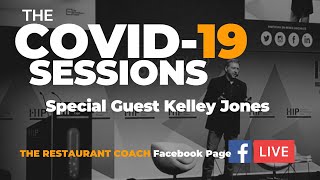
This content was created by Donald Burns. This content was uploaded by Donald Burns. This is a YouTube video titled "Leadership in a Crisis with Kelley Jones" created on March 31, 2020. It features a conversation between Donald Burns and Kelley Jones discussing the impact of COVID-19 on the restaurant industry, leadership strategies during the crisis, and community support efforts such as food pantries. They also talk about the future of the restaurant business and the importance of communication and adaptability in leadership.
Chapters
Oh, wow.
Here we are, Facebook live. Burns, the restaurant coach. Today, this is our special COVID 19 series. I am joined by my good friend and leadership, restaurant hospitality expert Kelly Jones.
Kelly, how are you? Fantastic. Donald, how are you?
Good, considering. Right?
Hey, listen, we are alive and healthy.
Yeah. I mean, we're just talking about this. Before the show started, like, you know, a month ago, we were in Madrid having a. You know, talking to thousands of people on stage, talking, hugging, handshaking. Here we are.
Yeah. Now, the conference center that we were speaking in is a hospital.
I know. Isn't that crazy? From all the energy that, you know, and the pictures of when we were there to now just seeing that, just totally transformed. And here's a funny thing. Well, not really funny, but an interesting fact is that I had Ava on my podcast this morning, and she told me that in China, it took them quite a few weeks to turn their convention centers into hospital. She says ifeema turned their convention center, and it's the biggest one in Spain, they turned it into a hospital in three days.
Oh, listen, we should have done that in New York as well.
I should have.
I don't think, you know, we took it as serious as we needed to. It's almost like we got on a plane. I got on a plane on the 22nd to go to Spain. When I got back on the 28th, it's like the whole world had changed.
Oh, no. And I have to say, a lot of times in crisis like this, we go through those five stages of grief, and I definitely went through a lot of them. The first one, of course, is denial. I was there. I was like, nah, you know, it's not that bad. You know, it's gonna be, you know, proportion. And then it got, you know, turned into kind of anger, you know, and then it was like, bargaining, okay, if I can just do this and this, you know, we can still make it. I can. I can take some shortcuts. And then I got a little bit of depression from it, you know, because, like, a lot of people, I saw a lot of my business, you know, change directions, and a lot of my clients put everything on hold, like, you know, a lot of your restaurants. And then finally, now I think I'm at that final phase. I'm at acceptance, where what can we do now? What can we focus on to make this better and be ready for when this is kind of over and we get back to normal?
Well, I don't know if we'll ever get back to normal. I think a lot of. Yeah, it's a new normal. It's, you know, we were having a conversation this morning, you know, after 9, 11, you know, it completely changed the way we travel. I think this will change a lot of the way we interact socially. I don't know if it's for the better because I'm a hugger. So, you know, I like to hug people. But you know, I think, you know, it's been rough. I've had to close five properties, including one I just opened three weeks prior. We opened a beer garden and barbecue restaurant in Dallas and we did a grand opening and a grand closing all in three weeks. You know, we laid off over 250 people. It's brutal because I take it very seriously that my businesses, you know, support people's ability to pay rent, to pay utilities, to put food in their, in their houses. And so, you know, the governor of Nevada in Las Vegas shut down schools. They shut down schools on Monday. Two weeks ago they weren't going to shut down the casinos. And then we get the message Tuesday night they're doing a full shutdown of everything. By Wednesday, Three Square and Central Church had already mobilized pop up food pantries. So from Wednesday through Friday that week and then now Tuesday through Fridays every week in the foreseeable future, we do pop up food pantries. So it's kind of been good for my, you know, my soul to be able to get out there and, you know, volunteer to, you know, almost every day we, you know, and there's six locations around the Las Vegas Valley and every location I've been at is done, you know, 500 plus cars a day. So we fed, you know, over 50,000 families and we've already moved over a million pounds of food.
Wow, that's amazing. That is a, that is a really, really fantastic thing you're doing. Is there a link for that?
Yeah, if you go to hopeforthecity tv.
Hopeforthecity tv.
Hopeforthecity tv. It shows all the ways that you can give, whether it's, you know, financially or your time to volunteer or, you know, donating food. We had a lot of the casinos shutting down. Well, they all shut down. So they donated, you know, everything that was in their walk ins. You know, we ended up boxing, bagging and handing out to people and you know, you see the best of humanity out there when, you know, people are just so grateful. You know, I mean, had families that are like, you know, you've been able to give us so we can have food. I mean, let me tell you what was eerie last Monday, going into the supermarket and the entire meat shelves empty. No chicken, no pork.
Oh, no.
I mean, empty. And it was like, whoa.
Yeah, that was probably the thing that kind of, you know, that denial turned into reality when I went to the store to get something and I just realized how empty everything was. And it was just like, whoa, you know, like total shock. But I have to say that things are starting to come back, and the stores here in Albuquerque, I'm starting to see a little more, you know, there's a lot more stuff on the shelves again. There's actually toilet paper, which is nice, you know, so, yeah, yeah.
One day we were actually handing out prunes at the food pantry, and everybody was laughing. It's like, oh, great, we're handing out prunes, but there's no toilet paper.
Yeah, yeah. That's kind of like, you know, like, great. Yeah, you gave me a bunch of prunes, but I have no toilet paper. Yeah. So, you know, in a time of crisis, this is where leaders really, really step up. And I've always considered you like my go to guy. Whenever I want to have a discussion with people about leadership, I always think of you as one of those guys because you've run so many organizations and you run a huge organization now, and I know everyone on your team is looking at you for leadership. So what are some. Some kind of tips or, you know, kind of concepts or things you want to talk about as far as, like, what. What do leaders really need to do right now?
Well, I think, you know, over. Communicate is. Is probably the most important thing right now. You've got to give people information. I think the hardest part of this whole thing is the unknown. Right. I mean, if somebody said, hey, this is all good, we're going to go back to normal in three weeks. Great. Okay. I can hunker down for three weeks. Right. But I mean, first of all, if you watch the news, you know, pick a channel and then pick another channel, then another channel, and you're going to get, you know, all these different, you know, pieces of information. You know, I think it's going to go on for another, you know, four or five, six weeks, you know, probably. But as far as, you know, leadership is communicate. You know, we have three of our restaurants are still open, doing delivery. I'm talking with chefs and managers every single day. We collaborate because a good leader is all about collaboration. You know, none of us are as good as all of us, if you will. And so, you know, having regular, you know, communication sessions where you're getting. Getting everybody's input. You know, I'm not in Burlington, Vermont, and I'm not in Boulder, Colorado, and I'm here in Las Vegas where, you know, I have one property. But, you know, making sure that I get up there and making sure that I, you know, see the team, you know, how are we doing, making adjustments? The only thing consistent in the world is change. And we're changing things every single day. And, you know, I think that, you know, it's experience. You know, there's one of my favorite sayings is success is the result of good judgment. Good judgment is the result of experience, and experience is often the result of bad judgment. And I think mistakes and evolving things are just part of being a good leader in listening to your team and then taking all the information and collaborating and making things better every day. I mean, you should have seen even the first food pantry we did. Tomorrow will be two weeks ago. And to today, we are so much more efficient because every day we get better and better and more and more efficient. And therefore we're able to serve and feed more people. And that's because, you know, we're evolving as we go.
Very cool. Very cool. So how's. Have you seen, like, a lot of people on your team, like, the younger leaders have it? Have you seen them step up?
You know, it's interesting. The short answer is yes, but, you know, a lot of people afraid out there. We're out there exposed. You know, we have gloves on, some people have masks on. But, you know, there are people that, you know, pull up in cars, won't even roll down their window.
Oh, wow. Really?
W. Oh, yeah. You know, we're trying to, you know, obviously not only, you know, feed their body, but feed their soul, too. You know, talking to them, in some cases, praying with them. But, you know, I think that so many people are afraid out there that there's two, you know, ways that, you know, they're looking at this. I'm going to hunker down. I'm not coming out, you know, until this is all over. And those that want to get out there and want to serve other people. Like I said, you know, there's some great humanity going on in the world right now by, you know, these first responders, these people that are, you know, in, you know, cleaning, you know, infected, you know, rooms, areas, buildings, you know, the doctors, the nurses, you know, the fire, the police. I mean, you know, these guys do this stuff every day. You know, what a great example, you know, they're setting for us as a society.
Yeah, exactly. What are some things that you're focused on right now since, you know, some of your restaurants have kind of closed down. What are you focusing on with those brands?
Well, you know, God willing, you know, they all open up and they're, you know, up and running again. You know, there's one that may or may not make it. You know, right now we're looking at, you know, how long this lasts is going to depend on whether or not, you know, we can continue to maintain it. You know, it's a business first and foremost. You know, you can make a penny a day and stay business for a long time, but you lose a penny a day, at some point you're going out of business. And, you know, we won't go from you know, doing, you know, 100 of our sales to now we're doing 5, maybe 10% of our sales through delivery and pickup. And so that's just not sustainable. You know, we've left all of our salaried managers on the payroll, but we've had to lay off all of our hourlies. So they're the ones that are doing the, the deliveries and not the deliveries, but the making food and packaging. So, you know, the other things we're still focused on as a company, we've got a lot of projects that are, you know, 20, end of 20, 21, 22 opening. So, you know, we're still working on our food hall in, in Las Vegas and Colorado and Napa, we're still working on, you know, the food hall that we're opening up for AT&T, which was supposed to open April 1, but, you know, we shut down the beer garden at, AT&T 3, three weeks after it opened. So everything's wait and see down there. You know, it's funny because, you know, we're so big in the food hall space. We operate, you know, quite a few of them with a lot under development. And, you know, food halls are all about being social, interacting. We've got this, you know, disease that's, you know, all about not being social and not interacting. So, you know, we're going to wait for a while until that opens, but we're pretty much ready to go. So, you know, we're focused on, you know, communicating with our team still. We're even, you know, showing our hourly people that we have to lay off how to collect unemployment, really diving into these new know, laws that were passed to find out what, you know, the options are, you know, to get people to at least get some sense of relief financially. So, you know, that's Kind of what we're focused on. And then, you know, four days a week, from 8:30 in the morning until 2 in the afternoon, out at these food pantries, just, you know, commuting with other people and helping.
What do you see as far as the future of, you know, restaurants are going to change? And we talked about it earlier, you know, that normal is not going to be normal. It's going to be a new normal. What do you think is going to be the new kind of model that restaurants are going to have to switch to?
You know, it's a great question because, you know, that's again, the great what if, you know, I think, I pray that we do get back to normal as far as being able to go out and socially interact. You know, it's really sad because, you know, obviously I'm seeing friends, you know, who've already closed their restaurants and don't plan to reopen them. You know, some of the things that we're already doing right now is, you know, I had a conversation with every single landlord over the last two days, and, you know, most of them are really good because it's not a rent deferment. It's like, we can't pay you rent, so it's not like we're going to defer it. And all sudden, you know, come June, we've got three months of rent to pay. That's not working either.
Right.
So, you know, a lot of them are deferring rent month to month. Okay, I'm not deferring, but we're going to forgive your rent for April. So we're not paying any rent in April. One landlord, and this is probably a really good story for a lot of restaurateurs. One landlord, basically, like, we're going to defer it until June. I go, okay, well, what happens in June if I can't afford that rent? And, you know, he's like, well, I mean, you know, we've got our bills to pay. We've got this and we've got that. I'm sitting there going, okay, well, you know, there's a lot of government, really, programs for everybody, including landlords. And, you know, I said to him, when finally, you know, it became very clear they were not going to forgive anything. Rent, it was all going to be deferred. I said, let me ask you a question. I said, let's say we close the doors and don't reopen. Who's going to want that space? Who's going to what. What new restaurants are going to come in and all Of a sudden, you know what, we just went through this crisis and you know, financially hit us, you know, spiritually hit us, physically hit us. And, you know, nobody's going to come in and go all of a sudden, oh, great, I want a second generation restaurant. I'm going to pay rent. And I said to him, I go, and what if you did find that person? That person is going to be really good in negotiating. I want a six month free rent period. I want tenant improvement allowance. You know, you got to give me, you know, 100 grand to build out my restaurant.
Right.
What's that going to cost you in the long run versus just giving us three or four months of free rent? And he was silent because he knew I was right. And I said, you know, I go, look, we'll stay connected, we'll continue to, you know, have a dialog as this thing progresses. But, you know, I mean, that's. Those are all the things we're focused on right now is, you know, how do we take care of our people, how do we make sure everybody stays safe and healthy and fed and then, you know, everything else, look, you know, I'm blessed. We'll get through this. At the other end, I just want to make sure that the rest of the team does too.
Exactly. You know, that was a good point you made about the landlords. You know, it's better for them to work with you now, you know, because it's in their best interest too.
So.
Yeah, I mean, empty restaurants be after this thing right now.
Well, my hallucination is if any of the restaurants that actually go out of business will probably empty for a year or so. No, definitely, because until, you know, we see the economy come back up and, you know, we, we have confidence in spending again, everybody's going to be doing what they did after 9, 11 and every other major disaster, the financial crisis. They're going to, you know, they're going to hoard and hold on to what they've got to until they understand, you know, what's at the end of the tunnel.
The mattresses will be stuffed with money again.
But true.
Sad but true. Sabbath true. No, it causes people to have kind of erratical and erratic kind of behavior. These, these things always seem to do. So how about social media? Has your team changed any of their social media for any of your restaurants?
You know, I mean, yeah, we're running specials to try to, you know, get, you know, as, as much delivery as we. All of the individual restaurants social media is all about, is all about, you know, what we're promoting what the specials are. We're still open for pickup or for delivery. You know how you can do it? You know, here's a link to our website to look at our menu. Here's a link to the delivery sites that deliver our menu. So that's almost exclusively what we're doing, social media wise. My personal social media, my company is all about trying to enlist people to come down and help at the food panel countries.
Yeah, yeah, no, I've seen it. Yeah. And your social media is great about that. Having people come down.
Come down because you have a need and we can fulfill that need with food or come down and help us out.
Yeah, either way, it's great. Now is the time. Number one, I think on social media, you don't want to go dark, you know, you don't want to, you don't want to spin into the negative. You want to stay positive and you want to keep your presence out there, you know?
Yeah. Quite the opposite. I. It's, it's a hoot to get on Instagram these days because some of the things that people are posting, I mean, they're getting stir crazy and they're getting really. So they're doing some really cool things.
Yeah, the memes are getting crazy and the videos people are putting out are like crazy people like dancing at home. What did somebody have the other day? It was a couple of dancing to staying alive, you know. Yeah, yeah, it's crazy.
So, you know, I mean, we'll get through it in our own way, but you know, at the end of the day, I, I just believe we were all put on this earth to help each other out. We should be helping other app.
Yeah. I had a Craig on the other day and he had mentioned, you know, the Escoffier quote that you use in your presentation.
Oh, I've learned that people will forget what you said. People will forget what you did. Oh, no, look at me, smile at me. Thank me.
Yeah, yeah. I think right now that's more important than ever. As for us to kind of remember the basics, you know, and get back to what the essence of hospitality really is.
Yeah, no, I agree with you. I mean, that is what hospitality is. It's. It's. Just because we have to keep our distance doesn't mean that we lose humanity. In fact, it should be the opposite. You know, what can we do to help each other? Listen, I've lived in my neighborhood and this is very vintage Las Vegas. I lived in my neighborhood. I moved about a year and a half ago for nine and a half years I lived in my neighborhood and I knew my neighbors as. How you doing? I didn't know any of their names.
Right.
No. You know, for nine years I lived there. I lived here now for a year and a half in my new neighborhood. And I know all the names of all the neighbors around us because we're helping each other out. You know, we have an elderly couple next door. We're checking in on them every day to see if there's anything we can get for them. But, you know, it's a sense of community. So, you know, out of this tragedy comes, you know, a sense of community that I haven't personally even been part of before.
Right, yeah. You know, we use the word social distancing, but social distancing is actually kind of a. It's actually more physical distancing. Yeah. We should be reaching out more socially to people.
Absolutely. Yeah.
So. And one of the things I recommend is, yeah, it definitely, you know, for a lot of brands especially, amp up your social media. Let people know you're out there. Still, it's all about social media. Again, a lot of people think, well, I'm not open. I shouldn't be on social media. No, that's not true. Social media is not about getting a sale. It's about keeping your brand top of mind.
Yeah. And. And, you know, listen, this, this will end at some point. There will be an end to it. And, you know, I think when it does, it's. It's, you know, the people that really learn to adapt and, you know, can. Can get lean quickly. They're the ones that are going to be catapulting out of this thing and, you know, getting back to normal.
Exactly. I'm like you. I think you mentioned earlier. You said four to six weeks. You kind of think.
Yeah, I mean, I thought it was kind of interesting, you know, when the president said two weeks, I think we needed all that two weeks just to understand, you know, the brevity of this whole thing. You know, right now, you know, our governor, like the president said through April, and I think that by, you know, mid April, we'll have a really good understanding of when the. The end of this is going to be.
Oh, exactly. Yeah, I, I thought, I thought Easter was a little ambitious, but. Oh, you know, like a lot of people, I was kind of hopeful.
Oh, you and me both.
Yeah. But, you know, I've kind of come to terms. I've always had the kind of expectation. I think may, especially by mid May, I think will be, you know, people will have the, you know, we'd be able to go back out to restaurants, stuff like that. Now, is people's behavior going to change 100, you know, and, and I, and I've been telling people that, you know, a lot of restaurants took seats, tables out to, you know, for social distancing. I told a lot of my clients, don't put the tables back right away because people are gonna still be a little gun shy when they come back to your restaurant. So kind of keep that social distancing at your restaurant and keep the table space a little bit for at first. Don't just think, you know, every. Like we, like we talked about, you know, it's not gonna go back to normal. Normal is now a new normal. So.
Yeah, I mean, I, I wonder, you know, how long face masks are going to stay on people's faces, you know, after this thing's over. But we did do that in, in all of our restaurants is we took, you know, a lot of tables out because, you know, at one point in New York, it was, you can't have gatherings of more than 50 and any. I, I think it was. I forget what the number, whether it was a hundred or more seats that you had in your restaurant, you had to reduce it by 50%. So we were doing this stuff all over the country and all of our properties and, you know, I think that, you know, we've had to obviously limit our menu because we're not having anywhere near the volume. So we've had to limit the menu so as not to throw out a lot of, you know, food, product. You know, my. My staff knows now my new mantra is better to run out than throw out. You know, I like that because, you know, I mean, if we run out, you know, okay, I'm sorry, we don't have it for another day or two versus oh, my gosh, I just threw out a case of pork belt. Like, you know.
Right. And that's definitely the way you do it. What do you. What are some of the things that you're doing right now as far as working with your team about the P. L and like, menu? Are you, like, revamping menus? You digging into cost?
You know, no, it's a. It's a new normal. You know, the last thing I want to do is throw on these managers who are already stressed because they're basically by themselves, you know, doing, you know, a lot of the hourly work, you know, cooking, washing dishes, you know, bag and food. You know, the slowdown has been more about, you know, cleaning projects and Organization a lot less about. And, yes, we have scaled menus back. We've had to. But it's not as much of, you know, really strategy for when we come out of this as much as really kind of nurturing each other as we go through this. I am so absolutely petrified to get my PNLs for March. In fact, all my restaurants are doing their inventory as we speak. I typically get my P. Ls within 5 business days after the end of a month. And almost. It's kind of like when I got my Ameriprise statement last week. I didn't open it up. I just filed. I did not want to sue.
I don't want to look at it.
I almost want to do the same thing with our P. Ls when they come out. But, you know, obviously, there's cash flow, and we have to really understand, you know, how we're going to weather through this without, you know, having to write checks.
That's gonna be crazy. So how's your team holding up overall?
They went through the same kind of stages you were just describing, you know, from, yes, we want to stay open because we want to keep our paychecks to, oh, my God, we're being exposed ourselves to this virus. How can you make us come to work every day? And, oh, wow. One of my general managers truly melted down, and she, you know, cried on the phone. It's like, I can't believe you're making us do this. And I'm like, listen, we're not making you do it. We can shut down. We'll shut it down. And she goes, well, am I going to get a paycheck if you shut it down? I said, I can't answer that. I've got to talk to my partners. I said, you know, maybe we can keep a paycheck coming for a little bit of time, but at some point, you know, we can't continue to pay people not to work. So, you know, you tell me what you want to do. Do you want us to shut it down? Because we'll do that. If you really feel that you're not safe, you don't want to come to work. It's your choice. Right, right. And, you know, the next day, she called me and apologized, but, you know, she had valid concerns and was very emotional about it.
No, no, it's been an emotional thing. I had a client in South Dakota who basically had their chef sitting on the floor in the corner of the kitchen, crying. Yeah, had, like, basically had to talk him up off the floor first. Told him to go home and relax, you know, just take it easy.
You've got to, you've got to balance the information. You know, I mean, sadly, our news media loves to sensationalize things and you know.
The fear mongering.
Yeah. And, and you know, if you really look at it, you know, I have friends that got the coronavirus and they, yeah, it was brutal. It was like having a really bad flu. But they got, you know, a couple of them already got through it and they're better and they're quarantined. Finished with their quarantine and they're good. Some of them have it right now. And you know, my whole feeling is, you know, I'm pretty healthy guy. If I get it, I can probably get through it on the other end. So I'm not like deathly afraid of getting it. Otherwise I wouldn't be out every day doing these food pantries. You know, I certainly want to be responsible because I have a family. I don't want to get them sick. But you know, I just, I'm from the school. Yeah. People are dying and you know, you can't discount, you know that because you know, you look at these stats and it's not as bad as the flu. It's like, oh, that to the guy that's got it and is in a hospital operator. You know, so it's all relative. Right. You know, we have to always, you know, keep that in mind as, you know, we want to poo poo it on the one hand, but on the other hand, you know, we have a responsibility to the rest of society to be safe and be careful.
So the hardest part of this whole thing for me has been not being able to go to the gym.
So I got to tell you a funny story. And my trainer's boss isn't watching this, but, you know, I have a turn a couple years ago and you know, I was only working, working with her like one or two days a week because I travel so much. I had so many, you know, lined up. So I actually go to her house two days a week and train with her. She's got a full gym. She's got a pretty gym in her house. And so I trained with her. But I agree the gym was a daily thing for me that, you know, I had my routine, I'd get up, I get, you know, with my kid, get breakfast and go to the gym and. And our gym had childcare. When you have a four and a half year old, you got an hour and a half that somebody else gets to have him.
Yeah. I was okay, you know, hoarding the toilet paper. I was okay. You know, you clear out all the shelves of the hand sanitizer. I was okay. But then when they shut down my orange theory, that was it. I was pissed. I was like, that's it.
I'm out. And, you know, those are the things that I think are going to take a little bit longer to get back up and running, but, you know, they will. It's funny because, you know, the whole now's about the time where the New Year's resolution, people stop going to the gym now. They don't have an excuse. They can say, hey, the gym's closed. Yeah.
So, yeah, yesterday I was out. I decided to, you know, I have a rebounder in the house. I've been doing some rebounding exercises and doing, like, you know, basic calisthenics, you know, push up steps, all that stuff. But then yesterday, I decided, you know, I want. It was a nice day here in Albuquerque. It was like 65 degrees. I'm like, you know, I'm gonna get outside and get some air. So I decided to go for a walk, but I miscalculated. I'm thinking, okay, so I decided there's, like, a little park down from my house. I'm gonna walk around the park.
Park.
I did not realize that the park was as big as it was because I never walked around it before. So five miles later, I realized I'm like, oh, my God, what am I getting myself into? It's like, you know. Yeah, that's good.
It's good you walk. Yeah. Now you gotta do it twice.
Good luck. Yeah. Nice thing is, you know, you're walking, you get some audio training in, so. Well, Bo says hi. Sup, fellows? He was on Saturday. You know, this has been really great, this Facebook Live getting people to come on and helping out and giving some, you know, great insight and input on what restaurants can do right now to help deal with this. What would be your, like, your number one tip for restaurants right now?
Well, if you're a restaurateur right now and you're still open, you're got a minimum crew and you are just doing to go and delivery service food. So the number one tip is your staff morale. Because, you know, if one of my managers or chefs decides that they don't want to do this anymore and they quit, I essentially have to probably shut it down because I'm not getting on an airplane to fly there. Right, right. You know, my number one tip is keep open as long as you can. Because it is very difficult if you shut down, to reopen, even if it's a matter of, you know, coming out of pocket a little bit, just to make sure that, you know, you're open and have that presence, that online presence, that website presence, social media presence, you know, lights on at night presence. I think it's really important because people are still out driving around, so they're seeing whether or not your lights are on or not. So, you know, my, my number one thing would be stay open and find fun promotions by which to generate revenue. So a couple things that I'm doing. I have a vegan restaurant here in Las Vegas. We are putting on the receipt $5 off for the purchase of $25 or more if you come back in within the next seven days. We're selling gift cards now. We're selling a $50 gift card for $40, and we're selling $100 gift card for $75 to generate cash. Now that can be used in the future with the steep discounts on that. And then the other thing we did, we're having great success is we're doing family meals. So we have various meal packages that serve families of four to six. And it's our food from our menu, but we just repurposed it and repackaged it so you can come in and you can pick up and there's dinner for your family.
Oh, very cool. It's Violet's Vegan, right?
Violet's Vegan.
Yeah, yeah. Violence Vegan. Here, I'll put the link up on. On the, on the thing so everyone can check it out. It's actually, if you, if actually, if you're like thinking right now it's a good time to redo my social on my website. Violence Vegan has a pretty good. They have a great social media presence and they have a really cool website. So check it out because I, I love it when somebody has a video on their landing page. Kind of welcoming. That's always great. You want to tell your story. A lot of people think websites is just kind of this boring place. You know, we just post all these pictures and that's it. But you got to be able to talk about your stuff. So.
Yep.
Nice website. Very cool. Very cool. So what are. I know you're. You're a big. You know, you use a Avero.
Yeah.
So what if. So restaurants who don't know what a Vero is. A Vero kind of measures a lot of your key performance indicators.
Yeah, it's a four wall management information system. It's it's, it extrapolates everything that's entered into your point of sale system and slices it and dices it into all kinds of different ways to analyze your information. Because you know, when you and I first started in this business, it was all about the gut, not the brain. So we didn't make decisions any other way. This is just how I feel it should be versus how I know it is because I have the data to support it. So, you know, Avero is something, you know, that's, that's really, you know, helpful to me. Our managers communicate through it. All of our managers logs are done on it. You know, before my feet even hit the ground in the morning. I've read through on my phone every manager log and you know, getting on and really looking at all the various reports and the way, you know, it's got a, it's got a weather link also. So, you know, weather affects a lot of my properties because I've seating so you know, it was 50% of my seating capacity. If it rains so I can look and wow, I know it's going to rain on Friday night. So how many fillets did I sell on the last three rainy Friday nights so it can help me with my order, my prepping and all that stuff. Server productivity, it measures it not by the nicest, most accommodating server you have on your staff, but you know, who's waited on the most guests, who turns the tables the fastest and who has the highest check average that productive server. So that, that's what Avaro does. It gives you the ability to really deep dive into your data and analyze it more effectively and easier to make better business decisions.
And I think moving forward, restaurants are going to have to get a little bit smarter with their data management. I mean, especially the way things have gone. I think one of the things I always say, the coronavirus isn't your fault. How you ran your restaurant up until then is so if you weren't managing your numbers properly, you didn't know the cost of everything on your menu down to the penny. If you were tolerating poor performers and allowing C players to, you know, create a toxic culture and environment that's this is the time to kind of have a reset button.
Yeah, I mean there's a lot easier to cleanse and, or purge your restaurants. But you know, if you're not managing that every single day in your property and having your leadership team manage that every day in your properties and A, you're allowing bad behavior and B, you're Not being anywhere near as high performance and profitable as you could be.
Exactly. Well, if you had to pick out three KPIs, what would be the three KPIs? The, you know, the average restaurant should.
Be looking at KPI.
Yeah. Key performance indicators. What would be the three?
An acronym I'd never heard of before. Well, performance indicator, certainly sales number one. Because sales. Sales hide a lot of issues. And it's so much harder to run a slow restaurant than it is a busy restaurant. So sales is the number one thing because you can never cut cost rich. You know, you drive sales. That's how, you know, you get rich, I think. So that's a big thing is, you know, you always got to spend as much time on how are you marketing and driving your sales and your top line as you are on controlling expenses. You know, I'd say the second thing is, you know, your vendors, your vendors are your partners. Right. So I always, you know, just like, if a guest sits in my restaurant and has a bad experience or perceived bad experience, then it was a bad experience because they perceived it that way. And we're going to do everything we can to make them happy so they don't walk out the front door, you know, not satisfied with how we've resolved it. And I always tell my team, err on the side of caution. Well, our vendors are the same way. They're. We're their guest. And so, you know, it's amazing to me how often we're not price checking, you know, proteins, especially other purveyors, how we're not talking with them about, you know, getting samples for free, you know, getting, you know, them to source us better, less expensive product that's still the same or higher quality. And so often, you know, that portion of the restaurant business is so, you know, it's almost like, it's almost like it doesn't matter.
Right?
It's like I have go where I have US Foods or I have shiitake or I have pick a vendor. And that's why order from. And so, you know, the chef goes down their clipboard once or twice a week. They order the same things and they never compare pricing with other vendors. I do it every month. Every time we do inventory, I send out my inventory sheet blank to all. All. In most cases, three to four vendors, let them all fill it in for prices for the following upcoming week. And then whoever has the best price on things, because I don't want four or five orders showing up, I want one big order showing up, typically because it cuts labor versus having to order it four times, receive it four times, put it away four times. I'll go back to the vendor that's got the best pricing and say, look, I need you to match this price on this, this, and this. And I've never said no. They're like, okay, I'll match the price.
Kelly, Bo just made a great comment. Ask your vendors what distressed product they are long on. They're wheeling and dealing right now. All of them. Ask.
Yeah, that is absolutely true. They're sitting on a lot of product. That's how we're feeding the public in these food banks. Oh, very cool. And also a lot of, you know, there's a local vendor called Chitakis here in Las Vegas. They actually had sent out their entire product list and allowing people to come and pay wholesale prices for retail product.
Wow, that's pretty cool.
Yeah, it's really cool. Like I said, you know, cool things are happening in this really tragic time. But. And then I think the third and, you know, the third thing is your team. You know, you've got it. You got to be, you know, joined at the hip with your team. You know, they're the ones that are in it every single day. You know, I said this in Madrid when we spoke, that when I go into any of my properties, I spend 50% of my time with the management team and 50% of my time with the line level team. Why? Because at 14 years old as a busser in a Greek diner in New Jersey, I knew something that I'm more convinced of now. Managers think they know what's going on in the operation, but the team does because everyone's in it. They're the ones doing. And so, you know, really staying joined at the hip with them and, you know, asking their ideas, you know, because how many times. Listen, you and I, we came up cooks and stuff like that. And at the end of a busy shift, hey, what are you doing? You want to go get a beer? And then you go to the bar and a bunch of you from the restaurant sit there and you drink a beer and you bitch about everything that's wrong with the property. I learned a long time ago, vent up. Because by bitching together, you can't change it. But if you to leadership, you can change it.
Exactly. No, that's the truth. Yeah. Yeah. So many times those, you know, one beer after work turned into two, three. You know how it goes, right?
Oh, yeah. Then the next morning it's like, oh, I'm not going out tonight. And then you finish your Shift. It's like, let's go out.
We're out, bro.
The only good thing about getting older, we don't do that anymore.
Yeah, we don't do it anymore. Or not as much.
Not as much. Yeah.
Now we actually do have one and then we go home. You know, it's like, all right, I have one and that's it. Then we're out. But hey, do you think this, this whole thing is going to change? You know, I know once we get back open and you travel, I mean, a lot, you travel more than probably anybody I know. Do you think it's going to impact your travel? Are you going to travel just like you did before? Are you going to do more kind of online virtual meetings?
You know, it's funny you say that because when I got off the plane from Madrid, I had flown 23,000 miles in January and February combined. 23,000 miles. So I have not been on a plane since. I have no plans, no trips booked to get on a plane. Obviously, we're going to see how the dust settles with all of this. I'm probably going to have to get on a plane pretty quickly after the dust settles just to check in and be physically with my management teams in all the properties. And then, you know, if, if all goes well, God willing, you know, I'm going to be spending a lot of time in Dallas because we've got a beer garden that is, was open for three to three weeks, as I told you, that's closed. And then we've got the food hall at, AT&T in Dallas that's ready to open. So probably spend a lot of time there, you know, getting, you know, the team hired, trained and getting the thing open. So do I want to travel as much as I did the first two months of the year? No. But will I probably have to? Yeah.
Okay, how about the CARES Act? Have you done anything, any of your companies applied for anything with the CARE act relief programs?
Yes, I did. So I have three different companies. My, my parent company, Kelly Jones Hospitality, which, you know, the other companies you know, pay dividends to and distributions to. I already filed Yesterday for the $10,000 loan that's going to be forgiven. You know, basically get a loan, it's a loan, but we don't want the money back kind of thing. So I already that and I've got a full time employee right now doing nothing but digging through all this, not to mention my two accounting firms digging through everything to really give qualified, factual information to my teams because, you know, we want to get this all the way down, even to the line level so that they know what they're qualified for, so that they can go ahead and apply to things. So I've got somebody full time right now spending the last two days doing nothing but researching this. And that's, that's their job in my organization right now. To, you know, every single level, from, you know, ownership on down to, you know, busboy, dishwasher, you know, what, what do all these various levels qualify for? You know, what is the tax breaks that we can assume? What are, you know, what are the loans that we can, we can look at? Because, you know, that's the big thing is, you know, everybody, everybody's freaking out. Tomorrow's the first of the month. How am I going to pay rent? Well, guess what? That's why I said earlier, I went to every landlord and said, we're not paying rent.
And you went to them and told them no.
So, you know, the dialogue wasn't adversarial. You know, I basically called them all up and said, you know, obviously, you know, what's going on. You know that we're not open or, you know that we're only open doing takeout, doing 5 to 10% of what we've been doing. What is your intention for, you know, rent relief? And the first guy came back and said, we're going to do a 50% discount. I said, yeah, not going to work. So I was able to get three landlords to give us. We're going to go month to month and see, you know, we're forgiven for April. We'll talk at the end of April for May, month to month for rent forgiveness. One landlord gave me blanket. Three months. I'm going to give you three months free rent. And then the one guy I told you who is just like, yeah, we're going to defer it, and I'm just like, this restaurant won't stay alive if you defer it. Because once that deferment comes due to the fall. Yeah, because I'm not, I can't pay it.
No, no, I. So any other advice you want to give out for leaders right now in.
This time, just, you know, as a leader, it's our job to give comfort, direction, compassion to our teams. You can't do that if you're not communicating to them. Pick up the phone, just check in. If nothing else, how you doing? How's your family? What can I do from. For you from, you know, a thousand miles away? If you're there and you're a leader in your Restaurant's driving distance and you're having them do to go and delivery, you should be there with them. That's something I think is really important. Just show up, have that moral support for them. You know, this is scary time. Like I said, it's, it's scary because we don't have an end in sight. And you know, I just think that it's incumbent upon us to, to help each other.
Any, any books or podcasts you've been listening, you read or listening to.
I got to be honest with you, Donald. You know, I get up in the morning and go to this food pantry. I get home at like 2, I have lunch and then I work until about 8, 9 o' clock at night. Just catching up, you know, from my day job. Because just because I'm not at my desk doesn't mean emails stop.
Yeah, no, I know. No, no, no, I'm, I'm inundated. I think I'm busier now with emails than ever.
Yeah, but you know, I'm on the phone with every property every day, multiple times sometimes. But you know, the emails, you know, thankfully we're still getting some income because a lot of our projects are, you know, a year or two out, so we're on retainers. So, you know, but we're still, you know, me and my partners were, you know, even us, we're down probably 50 to 75%.
Very cool. If anybody wants to connect with Kelly, I put up his website, kellyjoneshospitality.com Feel free to reach out to him. He's also on social media. Kelly Jones hospitality, please. Again, everyone, you know, stay focused, stay positive, be safe, and don't, don't buy into the fear mongering that's going out there. I mean, yes, there is some real apparent danger, but don't let it consume you and don't let it paralyze you from, from moving forward and actually, you know, building, rebuilding your brand right now. So when this thing is over, you are ready to hit the ground running.
And we'll all make it through together.
We will. Yeah. Together. I always say, stronger together, right?
Yep, that's it.
Well, thanks, Kelly, for stopping by today. I appreciate you, man. I always do.
Hey, it's good to see you. Even though it's under those occasions social distancing, right? Yeah, man. Can't touch you.
Can't touch you. Can't touch you. All right, thanks, Kelly. I appreciate you, man. Take care.
More from Donald




If your restaurant only works because you work 80 hours a week, it doesn't work.






