Lessons from Wolfgang Puck's Kitchen with Gregg Brickman
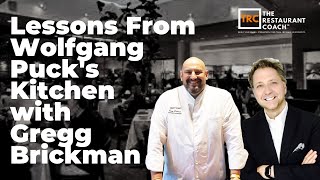
Gregg Brickman spent 13 years as regional executive chef for Wolfgang Puck, running kitchens for the Academy Awards and Governor's Ball, then moved to equipment manufacturing at Henny Penny. He talks about what Wolfgang's kitchen taught him about standards, mentorship, and why COVID broke the restaurant labor supply.
Questions this video answers
September 30, 2021.
About 13 years.
About eight and a half years.
Eaton, Ohio.
G.Brickman@hennypenny.com.
Chapters
Hey, welcome to the Restaurant Coach podcast. It is the cure for the common restaurant. I am so honored today. Talk about a blast from the past. Greg Brickman, who is now the corporate chef for Henny Penny. But Greg and I have a past together, don't we, Greg?
Yes, we do. We do.
We worked together at Wolfgang Puck, and it was. I mean, it's been quite a few years since I've seen you. I left the company, I think, 2004, something like that. 2005.
That's right.
And then you.
You.
You stayed with the company for 13 years, right?
Yeah, that's right. It's about right. Yeah, it was a great experience.
The last I saw you at Wolf, the last I knew, you were at the Georgia Aquarium.
Yeah, I opened up the Georgia Aquarium. And then after you left, I became the regional executive chef for the whole East Coast. Damn.
That could have been me.
That could have been you. All that and more. Damn.
That could have been my empire. No.
Yeah.
So then after, you know, and we, you know, we had great times at Wolfgang Puck. I mean, I know the thing I probably loved the most, and even though it was a lot of work, but I love doing the Academy Awards.
That was a lot of fun. It was one of those days, dude. Oh, I was gonna say it's one of those weeks where you just don't sleep. And the funny thing is, the Academy Awards was the easiest part of the whole week. It was everything else leading up to it.
And then the very next day, all the prep.
Oh, yeah.
I remember they would, like. They would get, like, a hotel room next door, and we would take shifts, going to sleep a few hours.
Literally two hours at a time, if you actually did it. Some people went to the green room and passed out there.
And then at the end. Here's the best thing, though. I tell you, Wolf knows how to throw a party. So at the end of the Academy Awards, after the Governor's Ball, he had a huge party for everybody.
We went down to Brasserie Vert downstairs, and we were there. Holy smokes. I mean, the. We were probably there to four in the morning, five in the morning.
I remember the first time I was in Chicago at the time I was at the MCA in Chicago the first time I went to the Academy Awards. And I remember we got so messed up at the after party. I don't remember. I don't remember going back to the hotel. I don't remember getting in the limo to go to the airport. I don't even remember getting on the plane. I remember about waking up halfway back to Chicago, and I was with Michael Washer. Remember Michael Washer, the pastry? Yeah. Yeah. And I was sitting next to Washer, and he's. I'm like, where the hell are we? He goes, man, we're like, halfway back to Chicago. He goes. He goes, yeah. I go, I don't remember getting on a plane. He goes, I thought it was something weird about you. All you had was your sunglasses on. You didn't say anything. You just kind of head down, walked on the plane. It was crazy. Yeah. But the good days. And so now you're, you know, you've had a couple changes.
I have.
You left Wolf. And then where'd you go?
You know, I went to work with HOA Brands, which is Hooters of America and Hoots Righteous Wing. Or Hoots Wings. And I was with them for eight and a half years. Wow. And then Covid hit, and I was. Everybody was let go, and I was doing some consulting, and then I got picked up by a great company, Henny Penny, which is based out of Eaton, Ohio, which is on the equipment side. And the reason why I knew them is because I used to purchase some stuff.
Yeah.
With HOA Brands from them, and I liked them, and I guess they liked me too. And we. We got a connection.
That's really cool.
Yeah.
And so now. Now what's your. Your job's a little more kind of routine or what are you doing now?
That's a great question. I'm trying to figure that out every single day.
What the hell?
I'm trying to figure it out, you know, but it's. It's really fluid, and I'm doing a lot of the stuff I was doing before when I was with HOA Brands, and that's menu development and product ideation. But I'm doing it now in. In partnership or in tandem with other restaurants, whether it's large chains or whatever, and helping them find solutions for their menu and what would work best, what equipment would work best with them. And, you know, it's. It's a little bit of the best of both worlds. I. I get to create menus and work with different chefs, but then I don't have to worry about it. If it doesn't go well.
It'S all yours.
Now.
Is that. Wipe your hands and walk away now, man.
Have fun with that, you know? But it's. It's been really. It's been interesting and exciting, and I. I. You know, I kind of reinvented myself after I was with Wolfgang, because going from fine dining and all the heavy catering to doing fast casual. It was a really a big switch. And it probably took me a solid year, year and a half to get my legs underneath me. Because, you know, you and I, we came from a world where it was, yes, chef, and that was it. And now. Yeah, and then I was in a world where, you know, I said, let's put green onions on. They'll say, why? What do you mean, why? Because this is what I want to do. And, you know, the thought process, well, the consumer is not going to buy into it. The consumer. You're not going to get credit from it. And, you know, I had to learn a different language, and I took some courses to get some food science under my belt and to understand the difference between, you know, making a sauce for, you know, a thousand people at the Academy Awards versus making a sauce for, you know, know, you know, a hundred, 100, you know, a thousand gallon or a 10,000 gallon run.
Right.
It's just a different animal. And I had to reinvent myself for that. And I. I'm doing it again with Henny Penny, and it's been great. It's, you know, it's a solid company, and they're. They're really incredibly nice. And it's interesting. They're allowing me to do my thing and they're trusting me and my experience to lead them, and then, you know, for the next. For the next round, so to speak.
That's awesome. But, you know, life is like that, man, about reinventing yourself all the time. You know, Covid did that to so many restaurants, too. So let me kind of lead into that. You know, Covid really shook the industry upside down. What. What do you think? What is maybe your take on the industry as it stands today?
You know, I think it depends on what part of the industry you're in. If you're. If you're in fast casual or something, that. That's not really fine dining. I think you're doing better than you were before. You know, people are coming in and their sales are up, and they're doing better than they've ever done. Look at Wingstop. Wingstop is gone through the roof. I think they had one of their best years during COVID Oh, wow. And then you look at other restaurants where you have the fine dining, but they've had to readjust themselves or reinvent themselves. And I know we keep on saying that word, but it's, you know, they can't get staff. People are afraid to come in, and it's just not the same. And now Even more so, you know, prices are going up and there's a level of concern with, you know, products being available and getting consistent products to the restaurant day in and day out. I mean, look at wing prices or look at oil prices going through the roof.
Exactly. So, you know, leadership is one of the things I think really helps when. When people have something, you know, turning the world upside down. We always refer to our leaders. Look to leaders, you know, and I always say a lot of restaurant. And we were both very lucky to work with some amazing people at Wolfgang Puck. That's one thing I always credit Wolf was that he hired really, really good people and let them do what they do.
Absolutely, yeah. Incredible people. If you look at it, Matt Lee, all these people just, you know, Sherry Yard, I mean, everybody just. They led by example and they. I don't think I ever went to a day to work where they weren't the first ones there and the last ones out.
Exactly, yeah.
And you strive for that. And even when I got my own property when I was with Wolfgang, I. I continue to do that. I would make sure it was. It was almost like a badge of honor to be there first and to be the last one out. And you just created that atmosphere. It's more of a younger man's game. I mean, I mean, granted, Wolfgang is like 150 years old now, but he's still. He's saying he's going to hear this and yell at me, but he'll, He'll. But he's still. He's still killing it.
He's still killing it.
Still killing it. Everything he touches. It's just great. And, you know, but again, going back to what you said, he surrounds himself with great people and he allows them to do their work and he. He kind of listens to what they have to say and guides them in the direction that he thinks it should go.
I always say that one of the things I, I took away from my time at Wolfgang Puck was that you knew where the line in the sand was. You knew what the standards was, and you knew what the penalty was if you cross the line.
Yes. You know.
Yeah. But he knew. Knew exactly what the standards was. It was not open for negotiation. I used to tell people, like, one of the things I tell people all the time nowadays is like, one of the things, you know, you and I have made those recipes at Wolf King Puck thousands of times. You know, you know the tbg, right? You made tbg, dude.
Yeah. Millions. You know, the chicken sauce, the tbg.
What was the rule? You Always had the recipe card in.
Front of you every single time. It's funny you say that. It's funny you say that. I literally. So I have a. A person that works for me up in Eaton, Ohio, and I was going through some things with her, and she's like, well, I can remember the recipes. You don't have to. It's not a point of doing it. Yes, you can remember, but you're. There's going to be that one time that you have three or four things going on, and you're going to forget that one ingredient, and it's going to be different. And, you know, I don't think she believed me, but I'm going to have her listen to this, and she'll. She'll understand that It's. It's true. You have always had the recipe card. Always have your recipe cards. And I still have. It's funny, the first restaurant I really worked in up in Boston, Massachusetts, Mistral, you know, Jamie Mamano, he used to bang that into my head, too. And I think, literally, he used to bang it into my head, but he. I still have my recipe cards back then, and that was, you know, in the late 90s. I still have every one of my recipe cards. I don't think I've gotten rid of any of them.
Yeah, I mean, when you're trained like that, it becomes a habit. See, I think most restaurants, the problem they have is they have bad habits. And I have a sign. I have a picture in my office wall. It says, your restaurant is a reflection of your habits.
It's a great sign.
Yeah. You know, and I tell people, too. It's like, you know, the thing I took away from having recipe cards is that it wasn't that you didn't know the recipe by heart. It was that you are setting the example for the other cooks in the. In the kitchen.
Sure.
Yeah. And if they see you. Everyone wants to be like this, you know, everybody wants to be like the chef. Right?
Right. Yeah.
He's not using a recipe card. I want to be like him.
Yep. I mean, every single time. So you would set, especially for the saucier. I mean, you write it on the prep list what sauces had to be made. And the expectation was they have those recipe cards with them and they're making it. And sure enough, when they're making five or six sauces at once, because you really don't have the time to do one at a time. You have to. You have to multitask and do a whole bunch of them. You need that. Because you're going to eventually. Why put yourself in a position to slip? You want to put yourself in a position to be successful. And if it's the small little steps, I think that makes sense.
Perfect.
Yeah.
So what do you think is the number one trait a leaders need to have in restaurants?
Wow. That's a great question. You know, patience and understanding.
Oh, really good. Yeah.
Yeah. And I get to say learning, and I learned that the hard way. I. There was a time, and towards the end of the. My time when I was with Wolfgang, I was the angry chef, and I didn't have the patience and understanding. I. My. And I put it all on myself. 100. Totally on me. I just set the. The standards for everything so high, and it was unrealistic.
Yeah.
When you're doing parties, I mean, you remember what we used to do? We used to do parties of four or five thousand people. We had that one went. That one party at the aquarium. It was between three properties. It was 10,000 people, and I was in a golf cart the whole time, running around to the eight different kitchens. And you just. You need to have a level of understanding that you don't know what the other person's going through or what they're working on. And you can't just assume that their last mistake is the consistent. Is a consistent error. And you try to understand the root of the problem before you jump on it. And that's. I. I think I've. During my time, I've learned to pause, step back for a second and look at the whole situation and see if it's really as bad as it really is, as I'm making it out to be, versus is it only going to be noticeable? To me.
Yeah. It's funny you say that you, you know, pause and step back. I developed a phrase, I think. I think I developed it when I worked for Wolf, is that I have this thing I say to myself. Pause and process.
Yeah. Yeah, I did. I mean, it's exactly the same thing. And that's really. And I got that from working there because, you know, many times I would react to what I thought was happening, but what I thought was happening isn't the actual reality of it.
No, that's the truth. That's so true. So I know this is going to be a. Probably. You have to really research the recesses of your mind for this. What's the best meal you ever had?
Wow. The best meal I ever had. You know, I think one of the most memorable meals is, you know, working with Wolf and going he was Wolf, Matt, myself, Sherry Yard, my wife. We went out to Vienna to do the Austrian wine consulate dinner. And he took us to Styreck Steinreck, I think I pronounced. It was up in the mountains. And that was. That was spectacular. That was probably one of the best dining experiences.
Oh, wow.
But probably my favorite meals is. And this sounds cliche, but usually when my mother used to cook for me when I was a kid. Yeah, I just love that, you know, Just, you know, and I'm thankful she's still alive. And whenever I go up there, both my parents are around. She. She still cooks those meals. She makes like a orange marmalade chicken. And it. It's fun. We sit there and, you know, just eat and talk and do whatever and that. That's stuff I enjoy.
What was your favorite thing off the Wolfgang menus? I'll tell you my guilty secret. I tell everybody my guilty secret is that freaking chinois salad, man. Love that thing.
Really? Every day, I think the smoked salmon pizza or the, The. The. The. The Asian beef salad that had the, you know, the brown velvet on it. That thing was fantastic. I could eat that every day. Yeah, yeah. But the smoked salmon pizza, for sure.
Yeah, for sure.
And then you gotta think about too, the tuna cones. You can pop them in like Eminem.
Yeah, the tuna comes. The miso tuna cones.
Yes.
Yeah, I forgot about those. Those things were awesome too. That was a good one.
I made so many of those.
Both of thousands.
Yeah.
I remember just one day, I think I made a thousand pizzas myself for a party.
You know, if you think about it, Espago and is really just a glorified pizza shop.
Really? Yeah.
I mean, that's what they have. It's pizzas and it's great pizzas. And he. He's so smart at what he does.
He's so smart. I always say working for him was like getting a PhD in branding.
Yeah. Oh, for sure.
Really was. I mean, a lot of people say, like, my restaurant coach Brand, man, your restaurant coach Brand's really tight. You know how. Who did that for? I said, I did myself. How did you learn this? And I just studied the best and I worked with the best and, you know, and I just took a play. I took it out of the Wolfgang Puck branding playbook.
Yeah. Yeah, he. He had it down. I mean, he. And he still does. I mean, you think about it. I mean, his name's everywhere. It's.
Everything he touches turns to gold, man.
It really. And even when. But even when it doesn't. Yeah. And Something doesn't go well, he gets out in a timely manner where it's not going to hurt him. And he. He's the one who taught me, and it was him and Matt, where it's okay to fail. It's just learning from your mistakes and moving on from it and. And doing it different the next time you do it.
I mean, he got out of Eureka. Yeah, yeah, yeah. What was that restaurant in Seattle? Abby Chin.
Oh, yeah, that's right.
Remember, he got out of that one fast, too. When they started getting some negative press, he's like, I'm out.
You know, Seriously, Even Chicago. He had Spygo in Chicago. Yeah, yeah. I mean, he's not afraid. Not everything he's done has been perfect, but he's been smart, about to say, hey, it's time to get out.
Time to get out. Time to get out. All right. So, I mean, and I know we've mentioned some of these people already, like, you know, Matt and Lee and stuff like that, but, you know, who are some of your mentors?
Oh, for sure. Matt. Matt Benzavanga. Yeah, yeah, yeah, yeah.
Every day he passed away, man. I mean, talk about not only a super, super talented chef, but just a. I mean, just a badass human being.
I mean, seriously was. I mean, he was the hardest working, the hardest playing. Even when it was at its worst, he was at his best. He. He's one of those few people that, to this day, I still get emails or texts or see things online. You know, what would Matt do? And it's. You know, it's. It's true. I mean, it's. I. I live by what he would try to do every day to me, to think that he's looking down or looking up. Who knows where Matt is, but, you know, just. Just to try to make him laugh because he. That used to be the best part of my day is making him laugh.
So, you know, nowadays, people talk about, in the restaurant, street labor crisis. Right. It's hard to find people. What do you think the real problem is? Do you think we ever really have a labor crisis or do you think we have an industry kind of stereotype crisis?
You know, I. I think a lot of it. I'm gonna say it's a little bit of both. I mean, I. You and I both know there's been so much take. I'm not sure the best way to say it, but there's always been that attitude where you're replaceable.
Exactly.
And you gotta come in, you gotta. You know, in. Granted, we know it's long Hard, brutal hours. But, you know, there's, there really hasn't been that sense of I, appreciation for that. And I think people are just tired of and say, you know what? I, I don't have to kill myself for it and I can do something on my own, whether it's doing a ghost kitchen or a pop up kitchen or some sort of virtual restaurant in, in a small space for very little money. And you do something differently. And I think restaurants that are embracing that appreciation for their staff, I think they're still doing okay. I think it's where you have to understand that, you know, it's not okay any longer to pay somebody, you know, what they were getting paid and expect them to work as hard and as long as they were.
Very true. Very, very true. Yeah, I definitely think, I think the restaurant industry done this themselves. You know, over the years we've become a stereotype, I guess, you know, we've become our own meme.
Yeah, well, it's true. Yeah. And we're our own worst enemy because what will happen is we'll do it again.
All right, this next question is a really good one and I know you're gonna have some fun with this one. If you came with a warning label, what would your say?
If I came with a warning label, what we had, do not stir.
Do not shake.
Yeah, don't, don't poke the bear. I think that would be a good one.
Yeah, don't poke the bear.
Don't poke the bear. You know, that's, it's funny. It's been one of something. I obviously I can't. I mean, you know me, I, I'm a Pretty big guy, six four, 293, 290 pounds. I'm not a small person and so even when I just speak normally to somebody, people have always taken it, like, why is, why is Greg so aggressive? And I was like, you know, it doesn't help that I'm from Boston and I'm a smart ass.
It does help, actually.
You know, people just look at it and so that's. Yeah.
Yeah, I talk about, One of the things I talk about a lot too is perks, you know, and give it and make sure you're rewarding your team, appreciating your team, rewarding your team. And I always go back to, I said, you know, one of the cool perks I remember working out and we worked at, you know, Wolfgang Puck Catering in LA is remember we got to go to a Clippers game and watch this. Now, was it the Clippers? It was a Lakers game versus the Celtics. We got this.
Right.
Private box, remember?
Yeah, that was great.
That was awesome. That was like.
That's right. I forgot about that, too. Yeah, I remember that drink a little bit that night, too.
Yeah, it was awesome. They had that private box up there.
Yeah. You know, working with Wolf, you had a lot of perks.
Yeah, a lot of perks.
We had a lot of great perk, you know, and when I was working with HOA Brands, I had a lot of perks. It's. I didn't realize the. The.
What's the perk you had there? What's the perk you had there? That.
Yeah, I would have vendors wanting to take me out to. I've gone to the Masters, to Super Bowls, World Series games. I mean, pretty much anything. One of the. You know, because you think all the. The beer vendors sponsor all this stuff, so.
Yeah.
Get all these tickets and they'd want to, hey, let's go to the. Let's go to the Super Bowl. Okay. You know, who's gonna say no super bowl, man? What's that?
Who's gonna say no to the Super Bowl?
Seriously?
Patriots, when you were there.
That's what I'm saying. It was always a good situation. Although it was tough. The one year when we were in Atlanta and we kind of blew Atlanta out, and that was. That was rough. Going back to work the next day.
That's tough. Talking smack about Atlanta, right? Yeah. Yeah.
But, you know, it's. It's good perks. And now I'm finding the good perks on the other side, too. When I'm with the, you know, going on the equipment side, I'm going to all these different conferences, you know, like going to the Arby's conference, the Buffalo Wild Wings conference. You know, my. The company I work for is really great and going to say, hey, go to different seminars. So I'm actually going to the Create seminar next week. And my. The. The. My corporate chef at the. At the Eaton facility, I'm sending him out to Flavors at. At the CIA. So, you know, we do a lot of good things like that. And it's important to, you know, just to see stuff, because when you get stuck in your little corner of the world, you miss a lot of what's happening outside. And there's really no other way of doing it unless you travel and you go to these places. And now that places are actually opening up a little bit, it's even nicer.
I love it that they're opening back up. Yeah, I know. I think the first time I got out was I just spoke at nightclub bar show in Vegas. And then in a couple weeks, I'm going to the Mirtech Executive Summit in Orlando to speak, to be the keynote. So it's nice to be able to get back out there.
It really is.
Yeah, it's really nice.
Yeah.
I love it. I missed it. I never. You don't realize how much you missed it until, you know you think it back out, right?
Yeah. And yeah, I love my kids. I love being in my house, but I think they would like me more if I wasn't here so much. True.
I know that. I know my girlfriend feels that way. I think she appreciates me more when I come back from a trip.
Yeah, they're always grateful to see me, but they're really happy to watch me go.
Yeah, watch me go. She's really happy sometimes. So, you know, you and I both come from. And we also know the impact and influence of culture has on a restaurant. What do you think is the key to creating a really, really great culture?
You know, kind of going back to what I said before is listening and understanding and having the ability to pause and see what other positions other people are in. I think it's also important for, you know, the top leaders to work as hard or harder than the people beneath them or who they're working with. And I think that's. That's important. I think people, when you're. If you're an employee and you're watching your boss hump it, you kind of want to do the same. You don't want to let that person down. And, you know, it's. I. I think we've kind of flipped the script a little bit with management. Where it I from, what I've seen management nowadays isn't so much about pointing and going to do as much as they are actually physically doing it and leading by example. At least that's what I've seen. I'm not sure if that's the case everywhere, but that's what I've seen. And it's different from in the past where you have the clipboard managers and they just, you know. Yeah. And I think that creates an atmosphere where people want to do more or at least be part of it. And something that I've always done is, you know, I. If you do the same thing over and over again every single day, you get bored. Working in the restaurant industry, there's so much to learn. I mean, you and I both know that it's never ending. You can always learn something new and if you're able to bring somebody in to do a demo to show your staff how to do something that they weren't used to doing in the past, I think that goes a long way. And it gives them reasons to stay, because once they've learned everything that you're there to show them, well, they're going to go somewhere else. Yeah.
Growth, man. Everyone needs growth. Yeah, everyone needs to grow. Everyone does. That's a huge thing.
Yeah.
I think a lot of restaurant cultures miss that. You know, they have training cultures where they train on the front end. They only have learning cultures where they're constantly trying to teach people and learn and improve. That's one thing I have to say. Working at Wolf was huge. Like, going to work, you know, especially with Lee, who had the most amazing palette I've ever seen in my life.
Seriously, right?
Seriously. The most amazing palette I've ever seen in my life.
How does that happen? I mean, he. He could taste something and dissect it, dude.
Exactly. What it had and what it didn't have, what it was missing.
And I made the mistake once of using the wrong soy sauce and something. And I'm thinking, there's no way it was an off brand. It was supposed to be Kikoman and it was an off brand. And he knew. I'm like, how the hell is that possible?
His palate was super fine. I always tell the story. I call it the mash. I have a little, like, thing I talk about. I call it the Mashed Potato Manifesto. We were doing a tasting for the Walker Art Museum.
Yeah.
Yeah. And he told me, go, hey, make some mashed potatoes. I make mashed potatoes. He comes back overcooked. Do them again. So I went back, made mashed potatoes again and come back undercooked. Do them again. Seven times, dude.
No.
Seven times. But. And at first, you know, the first couple times, he just. He's just with me, Right?
Which he could have been.
He could have been, but he wasn't. You know, I tasted him, he was right. But then I realized, you know, he was teaching me. He's teaching me respect the product.
Yeah, that's. That's a huge thing.
Huge thing with him. Respect the product, man. Respect it. Just like you respect yourself.
Yeah.
Don't just half ass put shit together.
Right. And I can give a story similar to that where we were doing. We were in Brass revert and I was making pasta and, you know, so all the. The handmade agnolates, and I just kind of threw them inside the container and they clumped together. And he waited till after the shift. He says, all right, tomorrow you're making the agnolates. And I was, I was like, oh, okay. I didn't think it was a big deal until I actually made the agnolates. And when you have to make. Just so happens we're also making it for a catering party. So I, I made agnolites for four hours. Yeah. And realizing how much work goes into each, each one of those and how delicate is between, you know, you think about, you make the mousse, you make the pasta, and then you're actually forming it all together and how much respect you have to have for it. It changed my outlook on how I treat everything. And it's, you know, it's really important to. It's a great lesson. That's a great lesson to learn.
Yeah. No, I mean, some of the most foundational stuff that I've learned and some of the best stuff I ever learned was working there.
Yeah.
Yeah, yeah. So what's your favorite interview question?
What's my favorite interview question? Wow. I, you know, I should have been more prepared for that. I, I don't know. What have you gotten in the past for that answer?
Well, you know, I get all kinds of ones. A lot of people ask him, they want to know, like, again, what's your favorite meal? Tell me about, you know, most crazy dining experience you've ever had. The best dining experience you ever had. My favorite interview question is, I love to ask people, do you respect yourself now? It's kind of a double edged sword because everyone will say, yeah, of course I respect myself. And then the follow up question is, give me some examples of how you respect yourself. Because I want to see if they actually set boundaries, if they actually do some self care. You take care of yourself, you watch me eat, workout, you meditate, whatever you do do journal. I want to see that they actually know what self care is.
Really? Wow. So that's, that's a great one. I like that. And I know I kind of flipped the squid the script on you by asking you the same question. You know, I don't know. That's smart right there, dude. I'm not sure if I have a favorite interview question. You know, I think I'm like anybody else. I like when you, when you have the opportunity to talk about yourself. I think people generally like doing that. And so I, you know, especially when you and I go back and I, I enjoy speaking with you. I've always enjoyed, you know, with you. It's, it's Pretty easy. So this is, I, I would say this whole process so far has been enjoyable, but come back to me later on in the end and ask me that question again.
All right, cool.
All right.
So how do you deal with stress, though?
You know, a lot of different ways. I, and like I said before, when I was with my final time, my last couple years at Wolfgang, I was letting the stress get to me. I became almost angry and I didn't like who I was becoming. And I was doing meditation a lot. And you know, my wife, God love her, she sent me to a doctor to get ADHD and anxiety medicine. And I didn't like the way that made me feel. I believe that kind of just puts a band aid on the situation.
You're true. That's true.
And so I really started doing a lot of other things. I, I, you know, after, right before Maddie passed away, I got into boxing.
That's awesome.
Yeah, so I've been boxing for about four and a half, five years. Had one amateur fight. Did you really?
That's cool.
I did. It was in front of a thousand people. Yeah, it was great. And I knocked the guy down four times. Three of them was legit. One of them, I kind of pushed him, but I, and I won. It was great. And so I probably go there too. I'd like to go there more, but I'm probably there two times a week, and that's great. And I really enjoy that because the camaraderie, you know, the guys. Granted, I'm 50 and these guys are 22 years old, and I'm fighting with kids who are my size and they just don't get tired, which is great. But what I enjoy is they back up for me sometimes, so that's fun. And I'm lucky that I have a great family. So I like spending time with my kids, although I don't think they like spending time with me. They're 12 and 14, so I think they're at the age, yeah, they're at the age where everything dad does isn't that cool? But this is really cool. My young, my oldest daughter, she, she cured eggs yesterday and she cured eggs in soy and marin and then she popped it over rice and I was like, wow, good for you. And you know, as a 14 year old, I think that's pretty good. Good for her. You know, so she's, she's creative and doing stuff. So that's how I deal with stress, is stuff with my family and going to the gym or boxing. I, I, you know, just, just hanging out I really like going boxing.
That's cool. Yeah, it's sort of cool when your kids, like, pick up the stuff, you know, without you really pushing them. Like. My son just sent me a picture yesterday. He made his own lunch now he's in college. He goes to Michigan. He's 35. He made his. But, you know, he's the guy, he's got a little apartment up in, you know, in Lansing. And he made, he sent me this little picture of this little pork boy. Did pork rice bowl and he did his own pickled cucumbers.
That's great.
That's pretty cool. I was like, I was impressed.
I think that's awesome. Yeah, it's exciting. It's funny. The more you push, the less they're gonna want to do it.
Exactly.
So, you know, it's funny. One of the first things they ever learned was I taught him how to make schnitzel. And that's, that's all he ate for, for months. They just, every single time we, we have to make more, and that's all he wanted to make.
What was that dessert Wolf used to do? The Kaiser smarn.
Kaiser smearing. Which it was fantastic. I could never make it, though.
It was awesome. I love that thing.
Yeah. Yeah. He had great food. And it was funny. All the food that was the best was the simplest.
Is it stuff off his childhood memory? Wolfgang's childhood memories?
Yeah.
I was the stuff that was like the, I, I love that stuff too. The schnitzel, Casual, smart. All that stuff was like, awesome.
Yeah, for sure. Yeah.
So when you're, Think back to when you were a little kid. I know this might be a stretch for you, my friend, but kid, and think back, what'd you want to be when you grew up?
You know, I, I, when I was 12 years old, I wanted to be a chef.
Did you really?
Yeah, My first job, I was 13, and I got a job as a dishwasher for a caterer, and I worked with that caterer all the way through college. Yeah. And I've always wanted to work in restaurants. I always wanted to work in restaurants. You know, I think that that's, yeah, that's it. That's it. I, I, I, that's really all. I, I really just wanted to go any place that could feed me.
Yeah. Really? That would be a good career. Yeah.
I could eat and I can cook. That's perfect. Yeah, that's pretty much all I've ever thought about doing.
What's a quote you kind of live by?
Do what you love and love what you do.
There you go. There you go. And if people need to contact you, how could they get a hold of you?
Well, there you go. G. Brickman@hennypenny.com.
Talk about timing, right?
Yeah, that was pretty good. Couldn't explain that any better.
I'm telling you, man, it's like I've.
Done this before once or twice.
A couple times. Oh, hey, man, I want to say thanks for jumping on the call today. Thanks for jumping on the podcast. It's so good to talk to you again, my friend.
Yeah, I. I would actually enjoy that. I would enjoy that a lot. I hope. I'm glad to see you're doing well and it's great to catch up and it's. It's fun to listen to the stories that we used to do and we didn't talk about too many of the. Too much of the trouble we used to get in.
Oh, my God. Yeah, we, we actually, we could tell some really good stories. We should do a tell all book.
Could you imagine what that tell all book was?
Oh, my God.
The Wolfgang Years.
Seriously, behind the scenes.
Behind the scenes. We can show an actual behind the scenes versus what was done at the. On the HBO thing.
No. Yeah, it would be like a down and dirty version. Yeah, this would be the R rated version for sure.
Oh, my gosh. Absolutely.
I got some stories about Matt. Oh, my God. Some crazy stories. Crazy stories with Lee, too. And he loves that Maker's Mark, remember?
He does.
Oh, he loves Maker's Mark. Lee's gonna call us right now. He's gonna go, what the you guys doing?
I know. Hey, guy. Hey, guy. Hey.
Hey, guys. Hey, guy. Hey.
I invented water. Hey, guy. Yeah. Hey.
What are you guys doing? Well, thanks, man. I appreciate you being on the time on the call today. Thanks for taking the time out and thanks for sharing your insights for people in the industry. Because, you know, I always, like, bring on people like you to have some different insights and just show that, you know, the restaurant industry is a great career. If you really like, you know, you dedicate yourself to it and you basically have some solid core values and really follow a kind of a code of ethics.
That's great. Well, Donald, it's a pleasure seeing you. I'm glad you're doing well. Awesome. And quit. Stay in touch.
Thank you, my friend. All right.
More from Donald




If your restaurant only works because you work 80 hours a week, it doesn't work.






