Mindful Mastery: Balancing Life and Profits with Angela Hepler
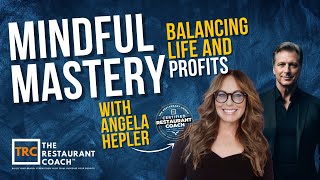
A podcast interview (host Donald Burns) with Angela Hepler, a restaurant owner-turned-coach. Angela recounts a long restaurant career (Chicago, multiple concepts), a 2017 health scare that prompted a life-coaching pivot, and her focus on leadership, self-care, and empathy. The conversation centers on the TRC method (3P: people, product, process), the importance of culture, profitability (fixing ‘holes in the bucket’), hiring/onboarding, and the new partnership to scale coaching via Restaurant Growth (formerly Skytel Digital Marketing). Practical takeaways include mastering the organic marketing foundation before paid ads, coaching as a compass, and concrete self-care practices (meditation, naps, strength training).
Questions this video answers
March 27, 2024
People → Product → Process
14 years
About 2,800 restaurants
Five (Donald plus four certified restaurant coaches)
Chapters
And welcome to the Restaurant Coach podcast. It is the cure for the common restaurant. I am honored and very, very thrilled to have a discussion today with one of my new certified restaurant coaches. Angela Hepler is here from. Are you in Michigan right today?
I am. I'm in Michigan today. Yeah.
I mean, how is the weather there?
Gloomy.
Welcome to Michigan. Right.
Tomorrow might be 80 and sunny, but today it's.
Never know. You never know. Michigan's always a crapshoot. You never know what it's going to be like. Yeah. So, Angela, Josh is in my certified restaurant coaching program. She's going to be helping me. One of the things that I really wanted to do for this new year was I wanted to start expanding my ability to help more people. And I was. I was very, very, very, very particular and very, very selective about who I brought into the fold about becoming a certified restaurant coach. One of my requirements was they had to have been a restaurant owner. I think, you know, you and I can both agree, Angela, there's a lot of these, like, restaurant coaches out there that never, ever really owned a restaurant. And one of the things I want to do is I want to perpetuate this. If we're going to, like, talk about coaching, coaching restaurant owners, then I need people that have been restaurant owners. They understand the struggles, the anxiety, the dynamics, and the pressure of actually running restaurants. So real quick, kind of tell people a little bit about your background. I mean, you have an extensive background in the Chicago area, so talk really briefly about that.
Yeah, yeah. Okay. So I'm going to start. I'm going to start with the fact that I was raised by a single mom, because I think I had a lot of. Without a father. It had a lot of effect on me in terms of, you know, my belief system, systems. I was. Because I was raised by a single mom who was also voted most likely to succeed and was really powerful in the real estate world. Living up to her standards was always very hard. So a lot of my work ethic came from her. And then not having a father. I also was constantly trying to prove myself around people that I was worthy. So that is sort of like the driving force behind who I am. And. And also why I think I got into the restaurant business. I was sort of a black sheep in my family, which I think a lot of people are in the restaurant business.
Me.
So I.
That's why we connected. Yeah. Black sheep, too.
Yeah, exactly. So I. I started working in the restaurants when I was 15. My mom owned a few shops in the. In the In a mall. So back then, I'm. I'm now almost 55. Back then, going to the mall was what was a cool thing to do. So I worked in the mall when I was 15, earning my own income, because if I wanted the same things my friends wanted, that meant that I had to work, whether it was Jordache Jeans or whatever it was I was trying to impress people with. So I started working. I was 15, and it really never ended. I went from Caesars, Little Caesars, because that was new. Then Domino's Pizza. I. Then when I went to Michigan State University. I was cocktailing when I was 17. Illegally. I mean, like, it just kept going and going. I became a. I moved to Chicago to go to Loyola to study philosophy and thought theology, and I worked at a cafe as a server. Hated. I've always hated serving, by the way. I've always been. My. My strength has always been in hosting and managing. So I immediately moved to hosting and then turned into assistant manager of an Italian restaurant. Then I. I was hired out of a marketing. I was hired out of a restaurant by a marketing company to start marketing for restaurants. Because I understood the language, they sent me out to Los Angeles. I started working in Los Angeles in the restaurant industry, selling marketing to different restaurant owners. I started working for a restaurant owner out there. His name is Lee Main. He was. He was opening up Sushiroku, and he hired me because he liked my work ethic. He's basically like, come help me. So I came, helped him, took a course at UCLA called Business development for entrepreneurs, wrote my first business plan called Sushi Wabi, moved back to Chicago, opened up sushi, met my business partner Susan, who was my business partner for 25 years.
Wow.
And. Yeah. Fantastic, right? Yeah. And we opened up Sushi Wabi together. We went on to open up Decero hello. Tacos, a few blocks down. Five years later, we. We both split up and opened up our own ventures. I opened up Bearsway, Backdoor Saloon, Grange Hall, a whole bunch of restaurants on Randolph street, one after the other. Susan went on to open a few restaurants over on Division Street. We came back together, opened up another sushi restaurant together, and every time we worked together, we were successful. Like, it's literally like the. The perfect partnership because we both did opposite things. Yeah.
Yeah.
From opposite ends. Anyway, so I opened many restaurants, one after one after one at the other. I think that's part of this whole thing with. This is why I bring this back to my mom, where it was like, just keep building. Just keep building. How Much do you have? Do you matter? Are you successful enough? And I just kept building, building, building, building until the point where I grew a skull tumor, literally from the amount of stress I was literally. Yeah, you literally did like big, gigantic lump in the top of my head. And that was a wake up call for me that. It kind of brings me back to the thing I learned with you is that when we get to the top, when we get to, like, great, we, we tend to get bored or we backslide. For me, it was a lot of boredom. Constantly trying to add to my. I have this drive to create and to. And to have more. And it just was too much. It was just too much. So that was in 2017. I had the surgery. When I came out of surgery, I was literally like, to my husband, I'm like, I'm not signing this lease. I just started, like, because honestly, I, I, I felt lucky to be alive at that moment. And I was like, that was my one. That was my one chance. So I just really decided it was time to make a change. And I did. And it was the best decision I've ever made. It was hard on my ego. It was really. It was like I was breaking up with myself in a way. And. But I'm. I'm here to say it was the best choice. It was just to scale down and to like, figure out what was working and what wasn't. And then I. And then covet hit. And that took another toll on all my restaurants. Sold my shares to my business partner who was still in Chicago because I had moved to Michigan because of the urgency of COVID and I'd moved my family to Michigan because we have a farm here. And then Susan wanted to. She was still all in. She was like, this is perfect timing. It was great for both of us because you wanted. I got what I wanted. It was a perfect ending. I closed down the ones that just could not. I just was like, I just not going to do this. I'm not gonna drive back and forth to Chicago and do this. Close those.
That's a good drive.
Yeah, it's 100 miles and. Yeah. So then in 2017, I started working closely with life coaches, all different one after the other, reading a lot of books, trying to really figure myself out. And it's where, it's where I'm at now. So I actually had a passion to be a life coach. And I started a company called Sol Lux and just didn't. It didn't really come off. It didn't take off because I was so Involved with catering still, like, it just was too much for me all at once. But I really, really think my success was because I really, I love to support other people and build other people around me. I, I just think it, I just, I'm very empathetic. I'm big hearted. And actually my restaurant company, which was actually a group of people that I manage, was called the Happy Point Restaurant Group. And the reason why I call it the Happy Point Restaurant Group is because the goal was to create that Maslov pyramid of getting to the point of self actualization. So, yeah, anyways, enough about that. But that's where I am now. And I'm super excited to be with you, Donald, because not only do you marry life coaching, you marry life coaching with the restaurant business. And it's literally like that's what I live through.
You know, it's kind of funny that you mentioned life coaching. So in 2000, I was consulting up until 2008 when the economy crashed. We had the big recession, 2008, and then I hired a business coach, helped me kind of rebrand because I was kind of like, well, shit, this coach consulting stuff's like, man, if the economy goes upside down, my consulting business dries up, so I need to figure out something else. So I hired a business coach and take me through that coaching process. And at first I thought about doing like life coaching, like executive coaching for entrepreneurs and restaurant owners. And then he just kind of said like, why don't you do restaurant coaching? I'm like, oh my God. So like 2009, I googled restaurant coach. Nobody was calling themselves a restaurant coach in 2009. Now everyone else, everyone with their, everyone who has a, has a book out is the now a restaurant coach, right? Oh, yeah, that's. That was one of the reasons too. I took this initiative to make sure people are going to call themselves restaurant coaches. I want to make sure they were certified restaurant coaches. And you've seen the TRC method. I mean, is a, is a beautiful program. I mean, it's 14 years of work, redefined, worked over. Definitely, definitely A. I mean, what do we always say if you want to win the game? Follow the frame.
Follow the frames. Yeah, it really is like that. You really can't skip around. And I think that's what makes this program different than any of these other things that people are selling, is that they're like band aids or quick fixes, but they're not actually starting at the beginning and following it all the way through so you can have results, you know?
Yeah. And we talk about all the time in our coaching calls with the, with other certified restaurant coaches. We talk about like, you know, one of the struggles you'll see as a restaurant coach is that people will see the low hanging fruit or the things they think they need. Oh, I just need marketing. Oh, I just need some checklist. I just, I need profits. I need profits. I mean, we understand that. Totally do. But the framework works. There's no shortcuts. There's no shortcuts to success. It's, it's. The 3P framework is the basis for the TRC method. It is people, product, process, in that order.
Yep.
And I tell people all the time, every call I ever do, I say, you will try to change the combination around. You will try to do people, you'll try to do process, and then you try to do product or you do product and you do process and you'll prep people. And I'll tell you, you'll try a dozen different ways. Because when I first started coaching, I tried it a couple different ways, I coached it a couple different ways, and I realized I wasn't getting the results I wanted with my members. So I actually dialed it in and then I realized it is people, product, process in that order. Yeah, it always only works when you do it that way. So let's talk about leadership, because leadership is something that a lot of restaurants today are missing. And that's one of the things that we talk about a lot in the TRC method. Leadership is really critical. What do you think is the number one trait a leader needs today?
Well, I wish I could just, it could just be one. But I will say start with accountability and then I'll definitely. To be authentic. So accountability in that. I mean, this is just something that you have to have your own personal core values and then you have to live by them. And then you have to be accountable to yourself and the people around you. You know, you have to know what they are. Then you have to be accountable for, for living that way. So, you know, you can say, for example, humility, you want to have. Humility is one of your core values. But you're not very humble. You know, you're the first. Yes. To judge. So I think that it's accountability to your own core values. Yeah.
Very, very cool. I say one of the things that. And I have like an, you know me, I love an acronyms. I have one that's like ois. And OIS means Own your. You got, you got to own your.
You know, yourself and check yourself, you know. Yeah. I find I, I literally have to check myself all the time.
Yeah, you have to.
Yeah.
So you had a big health scare and stuff like that and you realized that, you know, you got to take care of yourself. One of the things that we preach about in the TRC method is about self care. So what do you do to take care of yourself now?
Yeah, so. So that 2017 thing was like I said, was a big wake up, wake up call the tumor and basically getting a second chance. I. The first thing I did was life coaching. And then through life coaching, I worked with a woman, Sherry Nichols, who, I mean, really just develop my relationship back with God. Like just like really being connected to God, myself, my fears, my heart, you know, just really my limiting beliefs. It's just like my connection with, I think it's just my connection with God, you know. And I do a lot of light. I do a light meditation. I don't know if you know what that is. It may not have a term, but it's, it's me connecting with God and light and like pushing it through my body and just. It literally I feel like a million dollars after I do it. It's incredible. And I also do a lot of sound baths, so there's a. Oh, those are cool.
I've heard of those.
Yeah, I love them. Yeah, I do that because I'm a big believer in naps every day. So I take a 10 or 20 minute nap in the afternoon to reset my brain and my energy. And I use, it's a podcast called Spirit Spirited Soul. And they're just like 10 or 15 minutes and it's just sound waves going through and relaxing you. And it teaches you to just focus on the sound and not want your mind wander, you know, And I love that. And then for my body, like I used to be, I used to starve myself. I'd either I have this addiction, we all have done that before overeat, or I'd starve myself. I didn't have a healthy relationship with food. And I, you know.
You know, you'd be shocked how many restaurant owners don't have a healthy relationship with food.
Makes sense. And then, and then we're feeding people our addiction, you know?
Yeah, yeah.
But I, look, it was very simple for me to. It was like one thing clicked for me was that fill your body with nutrients. Like think about, think about nutrients. Like what are you going to put in your body that's going to be healthy for you? And so now I just, I don't worry about how much I'm eating. I worry about what kind of nutrients feed your body so that it can operate and it'll be optimum. And it's. It changed my life, you know, like, completely changed my life.
It's a game changer. Yeah, it's one of the things, like in my. In my new book, you know, Savage Restaurant Success, talk about, you know, the core four, and that's, you know, body being balance. In business and in body, we talk about fitness and fuel, and fuel is so important. The fuel we put in our bodies really, really makes or breaks our energy level. It actually impacts our different hormones in our bodies and it impacts our mood. I mean, I find that if I'm not tracking my. My macros on a daily basis, I can easily get off track pretty easy, pretty fast.
Yeah, yeah. And then in terms of, like, physical exercise, I. My middle. I have three daughters. My middle daughter really wanted to do some martial arts, so I introduced her to a place here in Benton harbor for martial arts. And they have a functional fitness side program which is basically working on strength training and agility. And I've been doing that for a while. And I mean, I just. Basically, for the last seven years, my. I have been working really hard at taking care of my body. I mean, the thing I. I think that's. Is fascinating about the body is, is it's a miracle. Like, you think, cut yourself, it just literally heals itself. Right. Like we're breathing by doing nothing. It's like breathing on its own. And that miracle needs to be taken care of. You know, it's like. It's just fascinating to me how incredible our bodies are. And so I. I really work hard at just taking care of it. It's a machine that needs to be taken care of.
I know it's like a lot of times on your social media, like, you're always going for hikes, you're always doing, like, some good walks. You're out there with dogs. They're having some.
Yeah, yeah. That's really important to me, too.
Nature, that's huge out outdoor. I think outdoor activity is huge. We, especially in the restaurant business, we spend so much time inside, and we think just because we're on our feet all day that we're getting some exercises. No, you're on your feet all day. You're not getting exercise. You gotta get up, move your body.
Yeah, I just made your feet hurt.
Yeah. So let's talk real quickly about the TRC method and the core principles. How do you think the TRC method differs from, you know, some of These other, like, restaurant coaches out there and these other, like, I would say, traditional coaching approaches.
Yeah, I would say, first of all, it's the framework. It's the. It's the people first thing that's huge. People, I don't even think they even have that part of their program. And it's the most important part. Also the accountability part with having a coach is constantly keeping them accountable. And I mean, we focus on maximizing your profit through, like, your food cost and your menu and then also creating successful marketing strategy. But honestly, it's the. To me, it's the 3. The 3P framework that we take you through in order that creates a success. And the other coaching are like, you know, marketing strategy or focus on one component. It's not a holistic approach. So that's the. To me, it's like the holistic approach of this program.
That's awesome. That's awesome. And then, like, you know, as you see, like, people implementing the TRC method into the restaurant, what do you think are going to be some immediate changes you see in their operations or team dynamics?
First thing will be a better relationship with themselves, definitely better relationship with their team members. And then it's going to trickle down into their culture. And if your culture is good, then your guest experience will be good because they're going to. If you treat your. Your team the way they need to be treated, your team's going to treat the customers the way they need to be treated, and it just starts trickling down. So, I mean, profit, the bottom line is you're going to see more profit. Definitely the result is profit. But it's. It's the process that gets you there, you know? Yeah.
Yeah. Everybody wants the immediate gratification. Everybody wants the, you know, I mean, that's. I think that's our society in general now. It's like, we want a pill, we want a shot. You know, just instead of like, it's like, people like, you know, people get on these, like, these new diet drugs and these new diet injections and like.
You know, they don't want to do the hard work.
Yeah, I always, like, make the joke. How many diets does it take to lose weight? 1. The one you stick with. That's it. You know, you just need one. You need one that you stick with, one that's proven and just stick with it. That's all you need. It's like, you know, you go to the gym today, you know, you start a new workout program. You go to the gym today, you come back, look in the Mirror, Nothing. All right, I'll try it again tomorrow. I go back to tomorrow, go back to the gym, come back and look in the mirror. Nothing. Well, this doesn't work.
Right. Then they give up, and then they give up.
That's exactly what most people do is like. But if you fundamentally believe this is the right course of action, this path has been proven. You will get the results. And that's one thing I love about the TRC method. It is a proven map. I always say you need two things in life to be successful. You need a map, and you need a compass. And the compass always tells you if you're on track or off track. That's what a coach is. I would say if you have a map, a proven map, and you have a coach who's your compass and say, hey, you're drifting. Let's go back a little bit. Then you're. You're gonna be. You're gonna hit your target every single time.
Yeah. Yeah. I think we. We tend to default back to our default back to things we need someone to do to help us stay on track, you know?
Yeah. And as, you know, as we go into these, you know, as the. As the economies change, the world changes, markets change. I mean, this whole movement of, you know, higher labor, you know, people asking for higher wages and stuff like that. As you see the shift in the future of the restaurant evolving, how do you see the tier. The TRC method kind of evolving to meet the needs of the industry?
That makes me think of your question answer series. I think it's on Thursdays.
Yeah. The Q A call. We have the tears of that.
Because you're listening.
Oh, yeah.
You're asking questions and you're listening. And I think that a lot of times people don't listen. They're just, you know, rambling on. And I think to stay current, you have to listen. And also the fact is, is that it's always people problems.
It's always.
It was when the Bible was written, it stole. People problems.
It's always people problems.
Yeah.
Since Eve said, hey, take a bite of this apple, it's like, got communication problems and people.
Hilarious. Yeah, it is.
So it's like, you ever hear that joke about what was the original argument?
I don't think so.
The original argument was Adam and Eve, and the original argument was miscommunication. It was like, you know, and then.
They said, I thought you said, blah, blah, blah.
I thought you said you didn't want to fight. I said, no, take a bite.
That's hilarious. Yeah.
Yeah. All problems. All business problems are people problems. All people problems are communication problems. All right, all right. So what do you see is. Now you, you tend to focus your, your niche, your specialty is the numbers part. You know, the profitability side. What do you see as the biggest problem with restaurants about profitability?
I mean, again, I'm going to say people problems. Biggest problem with profitability is that they're not starting at the beginning. They're not. They're not starting with themselves. They're not starting with their team. They're not starting their culture. They're not looking at their food cost. They're not engineering. Yeah. They have to not engineering their menu based off of their knowledge of their food cost. I mean, that's the problem. It's, it's, it's the system and the path in which they're taking. Yeah. You can't, you can't just keep feeding the, the marketing and thinking the sales are going to fix it, because that just makes you busier.
I call it the hole in the bucket.
Yeah.
Yeah. It's like most people have a. And think of your restaurant like a big bucket. And every restaurant has a bucket. And every restaurant, the goal is to fill the bucket with sales. That's to get people in your place. But then the downside is, is you got holes in your bucket. That's when you're bleeding out money. And you and I both know, we've seen restaurants do, you know, 2, 3, $4 million in sales, but their profits are like 2, 3%. So. Yeah, I mean, you got a lot of holes in your bucket. And then they think that if I just keep filling the bucket up with more and more sales, eventually I'll be okay. Now you gotta poke the holes. You know, that's. It doesn't work like that.
Yeah. I was, I was talking to someone the other day about different types of business owners, and there's a business owner that's called the hunter who's just always out hunting for sales. But.
Yeah. Yeah.
Isn't like taking care of his business. You know, they actually think that that's what it means to be.
That's their job. Yeah, that's the job. It's like, I just need to get more sales. I need more sales.
Yeah.
Sales hides sins. It does, it does. Sales hide sins.
Yeah. Yeah.
I have quite a few people have been in my coaching program currently that when they come to me, they're doing 4, 5 million dollars in sales and doing 2% profit. I'm like, wow, that's. You got the. You Got the sales part down.
How much work it takes every day, every month to get. I mean, it's so much work for absolutely pennies, you know, it's so much.
Yeah.
It's just unbelievable what we'll do.
I always say there's. There's three things a restaurant owner has to be able to do. Three skill sets. Number one, you gotta be able to make money. Number two, you gotta be able to keep money.
Yeah.
And number three, you gotta be able to grow your money.
Yeah.
Yeah. Most know number one, because that's what they're taught. They're taught how to make money. That's sales marketing. That's all I need. They don't know how to keep money, which is, you know, understanding your. Understanding your balance sheet, understanding your p. L. Having budgets, understanding that theoretical actual food cost gap. They don't have to actually, you know, keep money and then growing money. How do I take the money I have and actually how do I grow it into more sustainable revenue and more different revenue streams, you know, because, like, you have a catering company. Yeah. I mean, catering is a great vehicle for restaurants.
It really is, because you're cooking in. In mass quantities. It's very simple to cook a half pan of something versus.
And it's also. I love catering because you know what you're. You know what your margins are gonna be, you know, you know, how many people you're serving, Whereas a restaurant, you're kind of hoping. It's like, yeah, I.
When I first got into this catering, I couldn't believe how easy it was. I was like, what? All the problem, all the unknowns are gone. You know exactly when they're coming. You know exactly what they're having. You know exactly. All those unknowns are gone.
Yeah. Yeah.
You don't have a gigantic menu wondering what people are going to have. They're all eating the same thing, right?
Yeah, exactly.
All those unknowns were gone. I was like, this is like. It's unbelievable.
It's awesome. It's awesome.
Yeah.
All right, so let's talk about something that's really serious right now. And it's a common topic we hear about, you know, people call us all the time talking about labor, the labor crisis. I always say, do we really have a war for talent or are we having a war with talent?
Yeah.
What do you think is the real. What do you think is the real problem out there?
Well, I. I. Well, if we're talking about, especially after Covid, I think that people left them, left the market and decided to not come back. And it was because of the culture. I mean, exactly. I mean, like, why, if you, if you've been away from it that long and you found another way to live and you don't have to go back to a toxic culture, why would you, you know, so there are people out there still. You have to know how to find them and attract them. And then you need to know how to keep them. Well, on board them, keep them and retain them. There's. It's natural skill. You just don't hire and then, see you later, you know, hey, good luck.
Hey, you know what? There you go.
Yeah. So I think that a lot of it has to do with the, the hiring process and the onboarding and the retention and, you know, how you write your ad. Do people really want to work, work with you, for you?
The restaurant industry has, you know, the restaurant industry has done a great job of being its own punchline. You know, we are like, we are the biggest meme. Like, you know what? Like, and I hate to say a lot of these reality TV shows kind of perpetuate that, you know.
Yes, they do.
You see these, like, you know, these rescue shows and bar rescue and like, you know, everyone's a, everyone's drinking or. Yeah, yeah. Or a lot of restaurants that treat their team bad. Yeah. But there are some restaurants that are. Treat their team well, too. The thing is, and we talk about this in the TRC method when we're talking about marketing, especially about marketing culture, One of the things you want to start doing is marketing your culture, talking about what makes you unique. Why do I, why should I give a. About your restaurant? Why would I want to work with you? You know, because looking at apples to apples, like all restaurants compare. I mean, wages in a market are pretty competitive. You know, most places have employee meals. So what makes you different? Why should I come to your place?
Yeah, exactly. All those things are equal. What's it, what, what's, what's different about your place? Yeah.
What's the brand differential?
Yeah, yeah, yeah.
All right, so if you came with a warning label, what would your warning label say?
I really had, you know, I would. Bossy with a big heart.
Bossy with a big heart.
Bossy with a big heart. And the reason why I say the big heart part is because there was, there was a time where I took things really personal, you know, because I, I, I just put so much into everybody else besides myself that if, if they didn't accept it or they would leave the company, I would take that so personally. You know, a lot of times it was just they had outgrown it or they. They'd been with me for eight years and they're ready to do something else. You know, like, I just. Bossy. When I get stressed out, I get really bossy. I get really, like, you know, I'm very.
You know what that is? That, you know, you take the PRO scan. Yeah, that's your high dominance.
Surprise, surprise. Yeah. So, yeah, what I high dominance is that take charge. And the thing is, is now that I know. Now that I know that, and I don't consider that a strength, you know, because it's like, I'm woman. Hear me roar. I'm strong. It's like that doesn't really. Doesn't really work. You know, a lot of women think that that's. That's how you. You make it in the world. It's not really that it doesn't. It doesn't work. Actually. That's a whole other topic. But I think bossy is my. Is my weaknesses, is where I go when I'm stressed out. And I also think that that big heart part is the people pleasing part of me that I need to watch. Yeah, yeah, yeah, yeah.
And you and I have to have a. We have to have a call one time and go over your pro scan and I'll talk about your pro scan a little bit more. But yeah, that high dominance is that take charge factor. That's like. Yeah, I'm gonna make happen.
I'll take charge. Trust me.
Yeah. I have a. I have a sign in my office over here. And it's. It's all. It's purely hide. It's right down there in my office. You can't even see it because it's blurred out. But it's a pure high dominance statement. And it says this. It says either on my side, by my side, or you're in my way. Truthwise, that's a high dominant statement right here.
Yeah.
And I don't care which one you pick. Pick.
You know, I just need to know where you set.
Yeah, I just want to know where you're at, that's all.
Whatever you just choose.
I'm cool with it. Just pick something.
Yeah, totally. I get it.
Yeah, it's definitely right. So what. What's one thing you suggest that restaurants can do? I mean, right now? To make more in 2024, besides hiring certified restaurant coach?
Get a coach.
Yeah, get a coach. Yeah, definitely.
To make more right now? I guess just start with some core values and some self evaluation. Figure out what your mindset is. What you're living. Limiting. Limiting beliefs are. Because the thing is like everything streams from you. So if. Yeah, I mean, if you don't have that straight, how do you get anything else straight?
You know, it's really like in coaching we call it, we call it bs.
Yeah.
A lot of times I was speaking on stage, I'll say, you know, you know, everyone knows what BS is, right? What's bs? And then everyone else out I go, yeah, well, in coaching we call it BS Belief systems. But I'll say, here's the trick. Most of your belief systems are a bunch of. So yes is B.S.
Yeah, I. Those beliefs, for me, those belief systems were set. One of my, One of my life coaches pointed it was all about my childhood and like how I. You basically have knee jerk reactions to things, things in life. Anything that comes up that feels remotely like something that you. A trigger, you have a knee jerk reaction to it. And that default. And it's not really what it is. So it's just being aware of that. It's. And then how that trickles down into your business. It trickles down to everything you do. But if you've decided to run a restaurant and to be a leader of other people, you need to be really aware of that.
Really need to explore your own, your own limiting belief systems. Because those are what we in psychologists call it heuristics. And heuristics are these like natural kind of patterns. It's wiring things like. And you talked about it, when something happens, it's a trigger. And then you automatically have this kind of brain. Your brain makes this kind of connection. That. This equals that.
Yeah, they do this.
That means this. Yeah, this, and that's. And then you get triggered. And when you get triggered, you go into reactionary. Most restaurant owners, I would say they play checkers. Their mindset is checkers. Like it's. They're all reactionary. This happens, that happens. This happens. I do this. This happens. I do this. I said the biggest thing we do in the TRC method when we're coaching people is we try to get used from this reactive mindset to a proactive mindset where you're not playing chat, you know, checkers anymore, you're playing chess, you're thinking five, six moves ahead, eight moves ahead, 10 moves ahead.
That's a great analogy.
Yeah, it's a huge game changer for people when they start doing that. Yeah. So besides like working out and. Besides working out and the music and stuff like that, how do you deal with stress?
Well, how I deal with stress is. Is my blind spot is to get bossy. I'm aware of that. I take a deep breath. I literally just step away, take a deep breath, and I really think about what am I really afraid of here? What. What am I fearing? Because if I get stressed, it's something that I'm afraid of or that's bringing up fear. And then I. I analyze it and then I go back to the situation and I make better choices. So a great example would be this morning with my three girls. Only two were there, though, but one of them has a British Royal Conservatory test this morning on the piano. The other one just got back from her friends in Texas, and he has a whole bunch of. My kids are homeschooled, so they're always in the house. They're doing. She's had. Has all this work to do for school because she's been gone and she's stressed out. I'm doing a podcast today for the first time. I'm out and I'm like, hey, did you put wood? Because we use a wood burner to heat our house. Did you keep the wood, the fire going? You know, I screamed out as I'm blow drying my hair, and we're all just like in our panic mode. And then I come downstairs and I say something to her. She barks at me, and then I bark at her. And I was like, I stepped away and took a deep breath and was like, what's. What's really going on here, really going on here is that Harrison's afraid she's not to get her work done. Savannah's worked up because she's nervous about her test, and I'm worked up about the podcast. So then I was like, all right, guys, let's meet at the table. We sat at the table, we made a list, and we just talked about things because it's like, it's that, like those triggers and that, that, you know, that fast pace that you get into, and you can make some really poor. Say some really bad things and make some really poor choices if you don't step away, think about what's really going on, and then go back into it.
I have a. I have a. I have a trigger phrase in my head. I'll say when I feel I'm getting. I'll tell myself, pause and process. And that's my trigger phrase to myself, to pause and process. And a lot of times I'll do box breathing. Box breathing, to me, has been a game changer. I learned box breathing in my pararescue days. In the military and box breathing really calms down that parasympathetic nervous system, which lets me kind of just like, all right, just relax. And it kind of calms down those endorphins that are racing through. You start getting that adrenaline rush when you get all tense and anxiety.
Oh, I think it like worked up so easily if I don't watch that. And I think probably most restaurant owners are just like you and me.
Yep. You know? Yeah, they are. Definitely.
Yeah.
Yeah. So when you were a kid, what did you, what was the first thing you wanted to be when you grow up?
This is really hilarious. I wanted to be a farmer. And it was a secret.
Did you really?
Yeah.
Awesome.
It was a secret because if my mom, my mom was. Because my mom was born and raised on farms and so was my dad working farms. So I would spend a lot of time at my grandparents farms in the summer. And I just wanted to be just like them. And I honestly imagined myself, I would see, I could still see myself. I could still see the vision I had when I was a child of being in a garden and, and farming and like being outdoors. And I wouldn't, I was, I could not tell my mother that, you know, that to her that was, that was failing. And so then that switched to. I was, I'm identical twin, by the way. So my identical twin sister is an artist and she was always pushed that direction. And I was the smart one. I was, you know, I was the one who got A's in school and I was going to be, I was going to be a doctor. So I decided I was. Okay, well, I love eyes, so I'm going to be an eye doctor. And I literally went to Michigan State thinking, I'm going to go be an eye doctor. And I failed miserably at it because I didn't want to be an eye doctor. I actually, you know, I didn't really know what I wanted. I just, when, when you ask the question, I say to myself, well, that was the answer. But I never pursued it actively because I, I wasn't allowed to sort of do that, at least in my, my mindset. Yeah, yeah. But I guess feeding people is very much like farming. It's the next evolution of that, I think.
Yes, it actually is. Yeah, yeah, yeah. It's funny when I, when I think about what I want to be when I was a kid. I don't know if you remember this. This is like, this tells you how old I am. Remember Mutual of Omaha's Wild Kingdom?
Oh, yes.
I wanted to be Marlon Perkins. I wanted to be a zoologist. I wanted to run a zoo. That was my. It's like, that'll go from want to be a zoologist running a zoo to being a chef and then having restaurants. It's like, all right, that's a huge disconnect.
I really love that show.
Yeah, that was an awesome show. Poor Jim, though, man. Jim was, like, always in the thickest. Like, you know, let's go to Jim and Jim's, like, in the wild, get wrestling goddamn alligators and getting his ass kicked by animals. Getting chased by animals. Yeah. It was horrible areas.
Yeah. I wouldn't have remembered that show when she brought that up. Wow.
That was it.
I was like. I remember being at, like, Tindalaya, that. My mom's house at Taya, and I remember watching that with her. Yeah.
Oh, I used to love that show Mutual.
Oh, man.
Marlon Perkins had that real, kind of, you know, nasally kind of. Hey, today we're going to be looking at some.
Also, Lauren. Dude, I'm sure you watch the Lawrence Wel show with your.
Oh, yeah. Lawrence Welk was like. My grandmother watched Lawrence Welk every Sunday.
Yeah, all the time.
Every Sunday.
Yeah.
But here's a funny thing about my grandmother. Like, I. I don't. My grandmother loved two shows. She loved Lawrence Welk and she loved wrestling. Huh.
Like, what kind of wrestling? What was it like?
Like, WWE wrestling. There was, like, some local wrestling thing that was on, like, on Sundays. And she loved wrestling. She loved. I mean, it was on Saturday. She loved wrestling. I could not believe my grandmother was, like, really out there. Lawrence, welcome. Wrestling.
Where did she live?
She lives in Illinois.
Oh, she did? Okay.
Belvedere, Illinois. Belvedere. Out about 60 miles northwest of Chicago.
Okay.
That's where I grew up. I grew up. I was born in that little area, like, past.
Yeah. Okay.
Past Crystal Lake out there.
Okay.
George Rockford.
Okay. Yeah.
It's, like, right next to Rockford, actually. Yeah. So.
Okay, cool. Yeah.
So we're about to make a big announcement. We're about to launch a coaching program with a company that's been around for a while. The company is going to be called Restaurant Growth. They were formerly known as skytel Digital Marketing, and they approached us because, I mean, they're a marketing company and they know market. These guys are, like, badasses when it comes to restaurant marketing. But, like, a lot of restaurants, they had, you know, their members coming to them saying, hey, I'm having problems with my food cost. Hey, I'm having problems with hiring. I have Problems with this and that, hey, I'm having problems with my profitability. And they're like, well, we know marketing, but we don't really know that other part. So we decided, we, we had some great conversations, we decided to partner up with them and we're going to help them launch a new coaching program. It's basically we're going to be offering my restaurant accelerator program, which is my number one coaching program in the world. And it does follow that TRC method. It basically does take you through 90 something modules of people, then product and then process. And each module has a different set of frameworks inside. They always say there's a frame within a frame. So one of the things I think Andrew likes about the TRC method is it's a framework, but then there's a framework within the framework.
Oh, I love it.
Yeah, it's like the people part, we have mindset stuff or strengths workshops, we have cultural workshops, we have hiring workshops. And then in the product part we have a food cost workshop, we have a menu workshop, we have a marketing workshop, more about organic marketing. And then in the process part we have like system strategy and profitability. So we have a system within a system within a system. It's really, really, it's really been, like I said, 14 years. This thing's been tested, battle tested, 2800 restaurants in works. Yeah, yeah. So how do you see, how do you see this kind of partnership with restaurant growth? How do you see this is going to be an, you know, how is it going to help us help more independent restaurants? What do you think this is going to do for the game overall?
Well, all those restaurants that are working with Skytail right now, which is obviously the same thing as restaurant growth.
Yep.
We'll have an opportunity to, to have a more holistic approach instead of just the marketing. So the marketing is six or seven steps into the process. So I, in my opinion, Skytail now, now restaurant growth, they're going to have more success with their clients because they're going to actually see that there's some worth behind the entire system. You know, and again, we talked about this before. You can turn on the marketing machine, you can increase sales, but if your systems underneath that are not your systems and your people and your culture and your hiring crack, all that stuff isn't fit, fixed. It really just means more time on the floor, more work and definitely not the profit that you're really looking for.
It goes, it goes back to that old anachrony or that whole thing everyone wants to know, you Know every consult in the world tells everyone you got to work more on your business, less in your business, but they don't tell you how to do it. I will tell you right now and Angela can back me up. Method is the process map to work more on your business list in your business.
When you follow the map.
Yeah.
It literally makes people think that they can just be lazy and step out and like not do anything. Yeah. Like, yeah, if you work, if you work smarter with this 3P process, you will, you won't be working as much like in it in the same capacity, but you're still going to be working on your business and making it the best. I mean, that's the whole goal. Right. I mean, why would you open a restaurant in a business if you don't want to make it incredible? Was it just just to, to look like it's incredible or do you really want to make it incredible? And that requires hard work and consistency. Exactly. Doing it over and over and over and over again until, you know, there's no until. Just.
Yeah, I, I see this partnership with restaurant growth is almost like a synergistic kind of venture. And I love the word synergy because synergy is that each element by itself is great, like skytail digital. They are great at what they do as far as helping people grow their brand through paid advertising, running funnels, marketing campaigns, emails, blast, all that stuff, setting up all those kind of complexities of like a really, really robust marketing program. They are, they are the best of that in the world. They are the best at that. And I think the TRC method and what we do as the trc, as the certified restaurant coaches in our program is the best at what it does. And when we put those two together, it's just going to elevate everyone to a new level because it's not going to help our clients too that are in the TRC method right now and in the accelerator program. Because now they're going to have an avenue to really take off on that paid game.
Yeah.
Because one of the things we teach in the TRC method is really mastering the organic game. And I'm a big believer and I say this all the time. Don't get into the paid game until you've mastered the organic game or you waste a lot of money. Yeah. So now when they have our platform as like the, you know, as the foundation and we build on top of that, they're going to see just, I mean, I'm going to see, I'm probably estimating 10x20x growth for restaurants, be able to merge these two together. It's going to be. It's good, actually. I think it's going to help so many restaurants around the world. And, you know, and I'm so happy. I'm so honored to have, like, a certified restaurant coach like you and the team, you know, and we've got some other people on the team now, too. We've got four certified restaurant coaches besides me, so we're gonna. We have five total coaches. So we're gonna be able to help a lot more restaurants than what I could do by myself. And that was the whole. Whole plan for 2024 is how do I basically clone myself, you know, and get some stuff out there. So I'm excited about it.
I'm excited, too. The other part about that is they're helping the restaurants, but it also trickles down to the guests, and that means we all get to go out and have incredible service and.
Perfect.
Yeah. You know, like, just think about what that means as a guest when you get to go out somewhere and you can tell they really have a framework and. And, you know, culture and. And all that put together.
Yeah. I'm like you. I mean, I love the restaurant business with all my heart. I have been in it since I was 15. I love the restaurant heart and soul, and I just feel that. And I was very lucky that when I had my first restaurant, I struggled, and someone reached out a hand and offered me to mentor me and coach me about business. And because I knew how to run a restaurant, I just didn't know how to build a profitable brand. And he gave me those missing components, and he actually gave me that first foundational framework, that 3P framework, that people product process framework, that now I've taken and we've expanded it out for restaurants into that TRC method. And I'm telling you, the system works when you work the system.
Yep.
Yeah. Yeah.
Super exciting.
What's a. What's. What's one book, audiobook or a podcast you recommend?
Well, hard to do one. I read a ton of books, but if I had, that changed my life. Well, I'll pick two. Okay. Can I have two?
Yeah, please.
Eckhart Tolle is someone I love. I love his philosophy. I love the idea of being in now. The book was. I think it was called Live in the now or.
Yeah, yeah, yeah.
And why that was so important to me actually named my daughter my. My middle daughter that was pregnant. I was pregnant while I was reading the book Presence. Because being present is.
Oh, very cool.
I think the. The. The. I don't want to call it the trick, but the answer to true happiness. And because if you live in the past and. And are constantly measuring things against the past or with regret, that's. That's not a good place to be. And if you live in the future and you have anxiety, it'll freeze you and, like, literally freeze you. So the only way to actually live is in the now and make great choices here and now, and that actually creates your future. Ultimately, the future is.
No, it's true.
So true is the sum of choices. So I love that. And. And then also, Mary Morrissey really changed my life. I did a coaching program with her, and her book is called Brave Thinking. And that is really about wrapped around the word believe. I even have it, too, that says believe on my. My wrist. Because I do believe. If I believe. If you. If you believe, it's possible. You know, it's like it really starts with believing. And I did a lot of work with her is. And in understanding that you attract what you believe and live out what you believe. Like actually live it out and imagine it and see it and. And it will come true.
Yes. Yes. So true. What's the quote you live by?
Believe and it will be.
It will be. There you go. Perfect. Perfect.
Yeah.
And so if you want to contact Angela, you can reach out to her. Angela at restaurant hyphen coaching.com will also be featured on the restaurant Growth page. And then I'm actually redoing my restaurant Coach page, where I'll have a button on the new pages coming out after actually in April. It's right around the corner, a whole new revamp of the restaurant Coach website. And in that page, we'll also have a button on the top. It'll say, find a certified restaurant coach. And then that'll be a link to our bio page where you can actually see Angela's info, her bio, and if you want to contact her. The thing we have about the diversity of the restaurant coaches we offer is that everyone has a little bit of a different niche, which is really, really cool. And here's the thing. Not. And one of the things I'm really excited about is that I have a certain style of coaching. I'm not a good fit for a lot of people, but maybe Angela is a good fit for you. So the thing about is, like, don't look at restaurant coaching as, like, oh, restaurant coaching itself isn't for me, restaurant coaching. We have restaurant coaching programs for everybody, and now we have restaurant coaches for almost Everybody too. Like, if I'm not a good fit for you, talk to Angela. She might be a good fit for you. If she's not a good fit for you, we got Marcus. Marcus might be a good fit for you. That's not a good fit. You're a multi unit restaurant. Well, you know, they, they, these guys are more smaller. They deal with one, you know, one to six. You know, I'm a bigger restaurant group and I, we do four, we do $12 million. Then you want to talk to Adam. Adam is our certified restaurant coach who has that kind of stuff. Maybe you have, maybe you're from, you know, South America and you have a Hispanic concept. We have Ali. Ali is our, our coach who's bilingual and he really, really focuses on, on that kind of market and stuff like that. So we have a restaurant coach for everybody. So that's what we're saying. And the process works. Doesn't matter. Doesn't matter. All you need is to find the right guide. Like I said, we have the, we have the map, which is the TRC method. You got to find the right compass for you, and that's the coach that you can trust that, you know, has your back. And that's one of the things I will tell you about all the restaurant coaches I've certified. These are people that really deeply care about humans and they really keep, they care about the human connection. They also want to see you succeed. They're not in it just to see, oh, you know, I got this. You know, they actually, they've all been through the trials and tribulations and had to find their own kind of problems. And like, you know, Angela had a health scare and it kind of like, hey, what am I doing this for? You know? Yeah, so we all have those things. So please reach out to Angela. Angelaestaurant hyphen coaching.com if you want to learn more about the TRC method, I run a master class. It's available for people. It's a two hour masterclass. I will walk you through the TRC method. I'll show you exactly how the TRC method works and you'll have an option. You can either talk to us, talk to me, you can talk to, I, I can reference, I can refer you to one of my coaches. But restaurant coachmasterclass.com is the best way to jump into the TRC method masterclass. You've been on the method masterclass. It's a lot of information.
It is a lot of information, but it's, it's. I mean, there's so much there, but it's. It's worth it, you know?
So, yeah, jump on the masterclass.
How much stuff that's. That's offered there.
And it's a great opportunity, too. If you have, like, personal questions about your restaurant, specifically at the end of the master class, I usually have a Q and A session where you can ask me direct questions about your restaurant and I can give you direct answers that relate to your restaurant. Because every restaurant's a little unique. I know we all have all business problems or people problems, but some people problems are a little more specific or a little more unique to your restaurant. But please reach out to us. You can reach me out at that restaurantcoachmasterclass.com you can also grab a hold of me at. You can always reach out to me, Donald, at the restaurant coach. Or you can also reach out to Angela. Right? You reach Angela. Angela@restauranth coaching.com. i want to see.
I really look forward to helping all of you who are. Who are needing help. I can't wait to. Actually, I'm super excited to be able to use this tools and. And it's gonna be great, friends. Yeah, I'm really, really excited.
Yeah, we're gonna help a lot of restaurants, so.
Yeah.
All right. Thanks, Angela, for being on the podcast today. Hey, your first podcast. You got it. 1. Now you're a veteran. Now you're a podcast veteran.
Oh, boy.
More to come in the future. We'll have more. And actually, I want to get, like, all my coaches together on a one big, huge group.
Oh, that would be fun.
That'd be fun. And we all just kind of talk like, we'll call it Restaurant Coach corner, and we're gonna have all the coaches on there, and it would just. I'll just throw out some questions I get from a lot of our members, and then we'll see. You'll see that everyone has, like, a unique perspective of how they solve the problem, which is really cool because that's what makes it dynamic. That's what makes the coaching programs dynamic.
A little different. Yeah.
And if you're a member of the program, remember, we have multiple calls each week. We have group calls. We have one on one calls. We have lots of different resources, lots of different tools to get you the results you want. So don't feel like you have to go alone. If you're a restaurant owner right now, struggling, feeling like you're in a silo and there's no help and you don't know what to do, and your head's against the wall. Help us. Let us help you. That's all I can say is let us help you.
Exactly.
Thank you so much.
I appreciate you being here. All right, bye.
More from Donald




If your restaurant only works because you work 80 hours a week, it doesn't work.






