Quantum Chef Sh*t with Adam Lamb
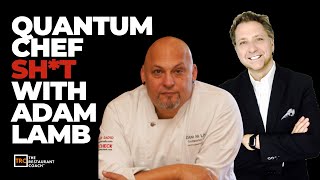
Donald Burns talks with Chef Adam Lamb about running restaurants through COVID, building team culture, and staying sane in a brutal industry. Adam shares his recovery story, what he learned managing dining at a retirement community, and why he started Chef Life Radio to connect struggling hospitality workers.
Chapters
Hey, thanks for tuning in the Restaurant Coach podcast. It is the cure for the common restaurant. I am joined today by my culinary brother from another mother, Chef Adam Lamb.
Chef, sorry to be here, brother. So nice. It's been a while. I was thinking about when I got your invite. You know, it's been probably about six or seven years since we first connected on my podcast, and I remember very clearly because I got lots of angry letters.
Oh, about me?
Not a lot. There was one. There's always one sour grape in the bunch.
Right? You know, I. I usually. I always either love me or hate me.
I happen to love you, man. I love the fact that you're so direct and. And you don't mess about, because I was listening to one of your recorded podcasts about the 12 lies we tell ourselves. And this whole idea about, like, it's later than you think, so you might as well fucking get going.
Yeah, that was my big epiphany. Because, I mean, you know, I mean, I died a couple years ago. I had a cardiac arrest and died. That was like. That was like the big guy upstairs saying, I'm gonna give you one last chance. It's like, okay, got the word. I got the message. This time, I'm going to get it out. I'm off here. I'm on it. I'm after it.
And so I would ask, what have you done with that chancer?
I've done everything. I've, like, you know, I blow up my podcast, I blow up my coaching business I'm working on. I'm almost done with book number three. You know, your restaurant culture sucks.
That's a big topic now, man. I think. I think we can do, like, two hours on that.
We could talk for days. You and I could probably talk for days about culture alone. In fact, let's kind of. Let's kind of kick it off with something like that, you know, I mean, Covid and I was. I was commenting before the show started about how your goatee look good, and you said, it's amazing what you can grow underneath a mask, you know, Surgical mask. Right. Surgical mask. For a year and a year and a half, almost. What's your kind of view of the industry right now?
I was lucky enough to get a job at a retirement community, which I. If you had asked me two, four years ago, I would have told you that that wasn't a possibility. But I kind of backed into this thing, and the universe kind of provided a clear path, and it was very easy. Although it was a lot of work, you know, took over for a chef who'd been there 13 years and a dining director who'd been there 13 years. And I was responsible for both front of the house for 650 people. And so when Covid hit, you know, the thought did occur to me kind of shamefully, like, man, I'm lucky. You know, I'm gainfully employed. And I know so many people who are, like, instantaneously out of a job.
Yeah.
And not not only out of a job, but out of prospects. You know, it took the government a while to react to that, so I was kind of like front row center for not only trying to create and nurture a culture of compassion and grace during this particular time. Because we had people who, you know, several line cooks, lead line cooks, had brothers, mothers. You know, there were people breaking down in the middle of the day for no apparent reason. And I look back on my career, and I. And I. And I know that there was probably a point where, you know, that would have fallen on deaf ears, and I would have just said, you know, okay, get back, get back. And I'm so thankful that for whatever reason, you know, I smartened up and got some Jesus in me. Because what I recognized was that my only job, really, was to be in relationship with these people and hold space so that they could go anywhere that they needed. And then upon reflection of that, I recognized how rare that is. You know, my experience of, you know, people who mentored and coached me, There were some really, really brilliant people, and there were some people who, you know, kind of blew me off on the shoulder and said, hey, listen, you're going to either sink or swim and suck it up, sunshine. So that's kind of where I come down on it. And so I consider this a huge opportunity for the industry. I call it the great Reset. Because if operators and culinarians and coaches, if we don't smarten the fuck up, we won't survive another.
No shit, Covid.
And it's only a matter of time. Might not be in our lifetime, but it is almost guaranteed that it's going to happen again. And it this, I can take the path all the way back to the 80s when the first time I saw, you know, 1, 800, be a chef sign, that was. That was it. That was in the early 80s in South Florida. And I kind of knew at that point that we as an industry had abdicated the responsibility of educating our young ones. And prior to that, the only way you really knew is to get a job and. And find somebody who was, you know, who was who would actually mentor you.
Right.
And so I think that's a lost art. And so we talked before the show started about this idea of building community. And so if we kind of throw out. This guy replied to me on Facebook today, kind of pounding the desk about, you know, a lot of chefs think it's just about great cuisine and how sharp and how cool your knife is. And we, as chefs, perform so many other duties. I shouldn't say chefs, but restaurant owners, you know, shift leaders. Anybody who's willing to take that responsibility to be in relationship with someone else, to me is a leader. So it doesn't really matter what's on your jacket, but this whole idea about, you know, we are ministering not only to our community, but also to. To our associates, so forgive me if I get a little religious, but, you know, it's. It's a sanctified thing that we enter into this relationship. Like, I'm gonna put my hands all over the food that you were gonna stick in your mouth. You're actually gonna take in my energy. And if I am not present and aware of what's going on in every moment, you know, you end up at McDonald's like, yeah, it's calories, but it's not really.
It's not. Yeah, yeah.
So, yeah, great opportunity and just kind of scared that there's gonna be a lot of operators who are gonna miss the boat on this. And the smart ones. The smart ones, clear opportunity, you know, and it's not necessarily always about money. Although we have, as a culture and an industry, you know, wasted our human capital for far too long.
That's. That's the big thing I see. I think we have, as an industry, and there's tons of stereotypes out there by the rest of the industry.
Absolutely.
You know, and here's the thing. Every time there's a stereotype, there's usually some kind of truth behind it a little bit, right? Yeah, exactly. Yeah. I mean, we, you know, treat people like. We work your long hours. We pay you. We pay you dirt. You know, we're gonna. You know, you're basically gonna miss your whole life. You're not gonna have any time for your family, your friends, or your kids. You know, we. We. We. We kind of. We set this thing up. And I hate to say a lot of those reality TV shows kind of perpetuate that too.
Yes, they do.
Jeffs are. You gotta yell, scream. You gotta break them down. You gotta build them up.
You know, one of the things that. One of the benefits that this. They call them CCRCs. But this retirement community offered all their employees was they were in contract with a local, I hate to call them, psychiatrist, but a counseling service. And so it was completely, completely anonymous. And all you need to do was go to the, go get a pamphlet, make a phone call. And the only thing the business knew is that they were getting a bill. And I don't know how many times I was in an office or in a hallway holding this pamphlet saying, listen, man, you got to go talk to somebody. I mean, I get you probably don't want to talk to me, or there's nobody in your family that you want to talk to, but that one simple benefit to me is like, is like proof positive. Like, like the simple things are really what matter in the long run. You know, it's the smile, it's the, like, you really kicked it, you really kicked it out of the ballpark. Or, you know, having a coaching counseling session where it's more about bringing awareness than it is pounding the out of somebody. And, you know, I'm a little long in the tooth. And there were many years that I wish I had been this wise, but now that I am, man, I'm gonna fucking preach it every goddamn day. Because the sooner someone starts adopting this type of way of being in their operation. I heard you say on that laugh my ass off your podcast. Talk about energy. Energy, you know, what you put out comes back.
Energy is everything.
Well, it's. Because I believe it too.
Yeah, it's true. It's true, man. Energy is absolutely everything. Hashtag, write this down. Energy is everything. Hashtag, write this down. Energy is everything.
You know, it's at the quantum level. Everything's commingled. So, so you, who you are in that emotional state in that moment, and you're, you're working with food, that energy is going to be bound up in the physical 3D world and then carried through to someone else. And so I'm even clearly aware of times when I was pissed off cooking for my kids or some other, because it's like, oh, my God, it's my day off. What the. I don't want to work the grill. And, you know, we're not always going to be, you know, rock stars, but it seems to me that I could have done a better job of just like that, that 30 second or three second moment between action and reaction. If I could have just taken in a deep breath, just for a second, even. Even walk away, like, listen, I'll come back to you in a second. And that's kind of My way of being now, like, I might be completely overwhelmed and stressed in that moment, but I'm not gonna on anybody else.
Exactly. So I got. I got the title of your new book, man.
Go ahead.
All right. I just. I just wrote this down. This is like, this is gonna be a. This could be an Amazon bestseller. Ready? New book by Chef Adam Lamb. Quantum, Chef.
Quantum Chef. I got it. I got it.
That's it. Quantum Chef. That's. That's gonna be the new bestseller, I'm telling you right now.
You know, I've written something very similar to that about seven times, but I get to that point where I start to self edit same 10 pages.
Just put it out there, brother.
I. I had a. I had a book called Lap Dog about this guy that I worked with, because he basically did everything, you know. Okay, yes, Jeff, absolutely. Meanwhile, he's seething inside. And I had the book almost done, and I turned around and there was Kitchen Confidential. And I went, you know, I didn't. I didn't appreciate in that moment that as. As, you know, as good as Anthony Bourdain is, it's his voice and your voice, my voice, the listeners voices that, you know, no one else is going to be attracted to that voice. And if you're silent, if you're keeping quiet because you don't think you got it or whatever that conversation is.
Exactly.
There are people who are going to miss out on that. They're going to people. And I don't know about you, Donald, but reconnecting myself with a lot of the Chef groups on social media, I am devastated, man, because there's every day a post picture about some chef and his buddy's like, gone too soon. You know, some. Some are natural causes, but there are clearly a huge group, a huge group of people who are deciding to check out, leaving behind small children. And to me, that's just. I wasn't necessarily present for my children when I was growing up because it was all about me and the pinnacle of my success. But to think that I wouldn't be there for them at all, that's harsh, man. That's a harsh decision.
That's really harsh. And we're gonna throw it right now, too. If anybody ever feels that way, reach out to us. Adam and I are both always available. You know, you can email me at donalderestaurant. Coach, you can. I'll put up my email right quick. You can always reach Chef Adam. He' over@chefliferadio.com. but, you know, hey, we'll listen. Let's talk, man. Nothing's ever that bad that either. There's, there's always, there's always opportunity and options, so.
And you might not necessarily, you know, want to talk to us, but, you know, the United Way's got two one, one.
Yep.
Excellent service. You know, there's websites like chefs with issues, although I don't think that's, that's on the Facebook page is still up. I don't know that the website is. And consequently there's, you know, after Cat Kinsman did that, there were some millennials and some really, really smart people who said, yeah, we gotta jump on that. You know, there's somebody I know in, in Philadelphia, Maria Campbell, who started an organization called Cooks who Care. There's a guy out in San Diego who created not only an organization, but a training program called I got your back.
Yeah.
And it's basically a way to communicate with people in. Stand up. How you doing? How you doing, John? I'm a little crispy this morning, chef. All right, maybe you need to get to a meeting then. Yeah, really, like, not really coming out with it, but at least, at least there's an attempt to connect. And I think sometimes that's all. All that matters for people, you know.
Kind of segues to my next question. You know, I think one of the things we're missing in this, in the industry is like true authentic leadership.
Well, I guess I would ask you, how do you define it?
Leadership to me is basically is, I think it's being there and being present for your team, you know, using emotional intelligence, being self aware, having self motivation, also understanding, empathy, helping people become their best version of themselves. That's what I think. What do you think is like a, what would you say is like a critical trait for a leader? A great leader.
So seven years ago, when I started Chef life radio, it was basically a beat up laptop and a USB mic that my girlfriend, who was Canadian, I was in Canada at that time, couldn't work. And so I sat at the kitchen table nights and crafted these audio love letters back to the crew that I was missing in Virginia. And over time, I got better and better and better. And one of the series that that I landed on was be a better chef. And so the question is, what's the difference between a, you know, a good chef and a great chef? And it comes down to most of it is emotional intelligence, but most of a lot of it is also presence and like actually looking people in the eye. Like, I know, I know that we as an industry are very, very risk Averse. And we don't like to get into a lot of confrontation at all. So we'll ignore, you know, somebody on fire in the, on the line rather than, you know, actually go and deal with it. And I know that's a gross exaggeration, so you'll forgive me about it. Some people might take offense at that, but I have walked away from situations earlier in my career where I knew that I needed to do something and I just didn't know what to do instead of just inserting myself in the process and just being like, just asking questions. And so I've developed this, this style of being the stupid one in the room. So I asked these questions like, I don't know anything. And usually it starts off with, are you okay? Is there, is there something I need to know? Because things don't seem like you're not the same today. And I totally get. We have our good days and our bad days, but you know, there's, you know, I'm a little concerned and there's some others that have. So is everything cool at home? Do you have any? And if they're going like, nah, everything's great, like, okay, you come here, come here is unacceptable. But, but if you don't start there, because I've had, especially in the last year and a half, so I'm thinking particularly of a lead cook who's a drummer of a thrash band and just one of the coolest guys you ever want to know. Hard working, comes in, wants to do his business, but he's very, and at points he's very kind of stoic. I got another sous chef over there on the side who's bouncing around the kitchen like puppy dog because he wants to kind of engage everybody. And he was rubbing up against, you know, kind of bouncing up around this guy who kind of wanted to know what was going on and definitely not keeping social distancing. Oh well, it took this dude three days and, and nine pages of single spaced handwriting to come in my office and explain to me how absolutely devastated he was because he was interpreting what this other person was doing as not only giving a. Not giving a about him, but also not giving a. About his wife, his dad, who had emphysema, because he was absolutely petrified that he was going to bring, bring the virus home.
Yeah, yeah.
And unfortunately, after taking every single precaution, that's what happened. And he was just completely, you know, emotionally like checked out for a while, man. He like kind of lost his, lost his mojo. And so at that point it's my job to like just be elbow to elbow and sometimes just be silent and not say anything. Even though I'm not working in the kitchen, you know, I'm still kind of just being present. And sometimes that's all it takes for someone to just actually start. I've learned this, this discipline where if you have a hard conversation, you sit side by side.
Yeah.
Sit face to face. So looking over a balcony, you're driving in a car or whatever and all of a sudden, and I think about all the times you're elbow to elbow with somebody on the line or in the front of the house and that's your natural position. It's not face to face. So if you can actually be conscious about how you're engaging somebody in a way that's non threatening, man, there's, there's all kinds of juice around that, man.
There's tons of juice. It's true. So you, you know, I'm a huge believer of self care. What, what do you do to take care of yourself now?
So pre, pre pandemic, I was doing great, working out every day. I wasn't doing very, very good as far as meditation. I had an interview with somebody who I've known for forever and she's pretty hardcore, you know, been working in the restaurant industry for 14 years and at this point now she's got a coach, you know, which she laughingly said, you know, yeah, it's six weeks, it's not a big deal. No, now it's been a year. And she meditates first thing in the morning, she meditates at 2 o' clock in the afternoon. And she's got a little insight timer whenever she needs to take a breath. So I've been following Joe Dispenza and his meditation work for the last, I want to say, four years and doing it sporadically. And so, you know, we laugh about a lot of these kind of ridiculous situations, but I'm clear that there were times in my career where I was absolutely the fucking problem. You know, I didn't smarten up for a while and I did my best to, to lead the team to keep them focused. You gotta understand, Donald, after years of this industry, I knew in my heart of hearts that there is a way to conduct business and be in relationship with the associates that far surpasses anything else. So this was gonna be my test kitchen. 100 associates, 600 residents. And I was so close until Covid hit and, and then every shit hit the fan. We pivoted immediately, we changed up our entire operation. We went from, you know, serving in person dining and four, four different restaurants to a single boxed meal a day delivered by the servers.
Wow.
You know, we had to, we had to ramp up, you know, these echo containers and put recyclable containers everywhere so that people weren't, you know, dropping them on the floor. We had to borrow vans. So there was, you know, me and two servers driving around the cottages dropping all that stuff. And it was surprising to me because there were, there's always a couple people who want to carp about. Right, right. They want to enroll everyone else in their emotional misery because they don't want to be wrong about it. But when Covet hit man, this team came together in a way that I'd never experienced ever.
That's so cool.
And they were all about the business. And, you know, I was having daily standups, you know, getting the entire team together in the ballroom and, you know, preaching about having compassion and grace for yourself and everyone else. And I wasn't doing anything to fill my cup. So by the time March rolled around, I was cooked, burnt, spent, you know, self medicating with alcohol. My wife was worried about me. And it just so happened that Joe Dispenza was having a week long meditation retreat in Orlando. And, and if you're not on the site at 10:00am Then 1003, the thing sold out and somehow it all worked out. So I told my boss three weeks later I'd had surgery on my neck and I'm like, no, no, no, no, I'm not taking this off. So went down there, 1600 people in a ballroom doing these really, really focused meditations. And my wife was, she didn't even know who I was every day when I came back. And so as my energy coalesced and got, When it got to be not so quite fractured and it started flowing, I knew that anything that wasn't of that same vibration was going to fall away, man. So it wasn't any surprise to me when I came back to work and you know, had hit the fan and people were talking about me and you know, my boss wanted to fire me and I said, okay, well, I tell you what, why don't I just give you the gift and here's three months. Not because I was being an to her, but I had realized at that point that there had been so much water under the bridge that there's some relationships that are never going to come back.
Right?
What, but what I made sure to do was to go to each one of the managers and sit in front of them. And say, yeah, I'm sorry that I wasn't present to you for the last two months. I wasn't present to myself, but I took. I took care of myself. And now I have some tools, and I am all in. Are we good? And, you know, I'm sitting in the fire where they're screaming, yelling at me, and I'm like, yeah, cool. I deserve it. Didn't try to make them wrong. I was just okay with the way it was because I knew that if they didn't expel that energy, it would reside in them for a while and they would carp and bitch all the side. So I have gotten to be absolutely rigorous about doing my morning meditation, even. Even if it's 30 minutes every night. So there's this great app called Mind Movies where you can actually. And some of the images are kind of bullshit, but, you know, the whole idea is it's. It's. It's an activated. Not storyboard, but dream boards where to put all the. But now you have images, and you put music to it, and you can look at it on your phone. And the idea is you get into right before you go to sleep, and you're in this liminal space, which is between consciousness and sleep. And you watch this. And there's no filter in the prefrontal cortex for those images to go back. And they're anchored by the music. So every time you hear the music, it's reinforced. And so I gotta say that some of the things that I put in that my movie are already starting to happen, which is kind of scary because that's.
I know. I think that stuff's cool. I have, like, a vision board on my office, and a lot of stuff's already happened already. It's like. Yeah, it's freaky.
Yeah. Well, your energy goes where your attention is.
Does energy. Energy flows where attention goes.
So if you're. If you're all about how shitty your boss is and how it sucks and you feel bamboozled and. Which I was for a while until I just checked myself out. I'm like, I got to go, man.
Yeah.
Because if I don't.
Yeah.
They're gonna be walking me out in.
Handcuffs, you know, and restaurant wouldn't be the first time. Yeah. But, you know, restaurant owners do it all the time. Like, there's no good people out there. People are lazy. People don't want to work. What do you think comes and applies?
I don't believe that at all.
Yeah, I don't believe that at all. But people put that energy out There. You know what I mean?
Yep. And so all the good people go somewhere else.
Yeah. And they attract, you know, they, if they think there's no good people out there, that people are lazy, people don't want to work, that's what they get.
So I, I, I don't think I've ever heard you say this, but I believe it to my bones. And you can take it if you want, but I believe job number one for any leader, owner or ship, like anybody, job number one is to put people in the positions in which they will succeed.
Exactly.
Because so many, like you're a great server, you're an assistant manager now.
Yeah.
Without, without any skills.
Without any training.
Like, without any training too.
Yeah, no training. You know, they did a survey, they did a survey, they said 85% of people who are put into a leadership role felt they did not get adequate training to be put in that role. Right. It's terrible.
Right. And you tag that with Peter Principle, you know, where people get promoted to the point of their incompetency again because there's no support and really the people above them are just looking to fill a slot. And, and it makes me very, very cautious to. So the last job I had, I don't know at what, like when I had time to do this, but actually created formalized, formalized training programs, job classifications, wage ranges. The only way you moved up is if you took a test. And all this different stuff. It's like, like if I was coming into the industry and I didn't really know anything, gosh, I wish someone would just point me in the right direction. Right. Instead of founding around. And then there are those guys. Guys are like, go get the left handed whisk, dude.
Yeah, really, like, come on, have we.
Had enough of that? It wasn't enough for us. Like just because, just because it was done to us doesn't give us permission to do to others, man. Because with, with as few people who are applying right now, we better get really good at training them the fuck up and giving them the emotional tools in which to really succeed. Because when they go on to do their thing and they come back years later and go, Chef, you know what, I didn't really get it when you said it, but, but now I get you completely.
Yeah. And that's one of the things I just, I just launched a new course in my, with my restaurant coaching program. It's called the leadership blueprint. Because I felt there was a huge gap between the leadership training people are getting and actually today's module we just had. I just had class before we got on the call. Today's module was all about emotional intelligence.
Yeah.
Yeah.
I mean, I don't. I can't think of very many places that I ever worked corporate or, or standalone that had any real type of. No one formalized training. One of the things I instituted was this, like, associate manager covenant. Like, okay, so you're gonna sign here, I'm gonna sign here. This is what I say I'm gonna do. And this is what you promised that you'll do. And at any point, either one of us can hold each other accountable for, like, where we're going from this. And I created a, a leader in development program, kind of like bootstrapped because there was this guy who was clearly foundering and there were people who wanted to bounce him the out. I'm like, yeah, I get he's a little weird and sometimes he comes off, you know, kind of like, I'm gonna be a policeman. But there was something about him. And so I basically, over the course of the weekend, put together a lot of these resources that, that I had used in other places. It cobbled this thing together. And God damn it, man. If he didn't end up to be sous chef and just came and gave his notice, he's going to be an executive chef at a, at a brewery.
Oh, wow.
And don't you know that during COVID he really got into brewing, so there's this whole career path that's not open to him. Yeah, man, I got to be really good at cheese.
Did you really?
Yeah, man. I, I can make like 12 different kinds of goat cheese.
Seriously?
Yep. From raw organic milk. I got three pieces right here, right in back of the. So this is kind of like the basement inspiration lab. It's actually a bunker, but so there's all kinds of. There's all kinds.
You're getting into some food price too. You have, you have some other food products too. You have a hot sauce, right?
I have four hot sauces, sir. Hot damn. Peppersauce.com and it's all chef crafted, small batch hot damn pepper.
Saucepepersauce.com huh?
There's a red Fresno. There's a Thai. There's a. A New Mexico hatch, believe it or not. So, you know, coming up here, I'm gonna make a call. Well, actually there was a company that took pre orders and so I've got like about six or eight cases that are going to be coming. And the last one is a Cayenne. So it's all like, I Said small batch, fermented, you know, about eight to 10 weeks. And I work out of the North Carolina agricultural extension here in Madison county in the mountains. They have a value added kitchen, and they charge 25 for six hours.
That's it.
Plus storage. It's cool. It's cool.
Did you say hot damn peppersauce.com?
Hot damn peppersauce.com.
I'Ll make sure I put this. I'll throw. I'll show it. I'll throw it in the show notes right there. I'll say, like it hot. Www.hot damn peppersauce.
Well, you know, it ain't just hot, bro. It's got lots of flavor, too, so.
Lots of flavor? Yeah, like a hot, like, flavor. How about flavor? We'll see. You like flavor? Check what? You know, you always connect with Adam, too, @chefliferadio.com too.
That's correct.
Yeah. So let's talk about mentors. Who are some of your mentors?
So this is where it gets a little dicey for me. Because I didn't have an apprenticeship. I basically started washing dishes at 15 and pretended that I knew what I knew to get a job. And then I was really, really good at. At learning, looking over people's shoulders. So my very, very first executive chef was a woman at the Lansing Country Club in Illinois. And she proceeded to visit upon me almost every single insult that had been given to her.
Oh, my God.
You know, she wasn't. She was. She wasn't being vicious about it, but she's like, you don't know. You don't know. And that was my very first taste at, like, gender inequality. And I think I was probably 19.
Oh, wow.
And as it turned out, at almost every. Every opportunity that I was an executive chef somewhere, there was always a. A woman as a sous chef. And what I came to recognize is that it ain't easy, man. And they. They're a lot harder than any men. And really, all they're looking for is someone to just acknowledge them as human beings. And then this whole thing comes down where they can actually inhabit their space in a way where they're comfortable and they actually produce more. So my very first executive chef job, there was a guy by the name of Ed Jamison. He was the food and beverage director, and his son JJ Thought the world of me. And so he came to work for me. And at that time, it was all fun and games. My very first one, Bears just won the Super Bowl. I'm working for Ditka's. I'm out at Arlington park racetrack, away from the corporate office. And, you know, me and a sous chef are splitting an eight ball every night or every weekend. Not every night. It wasn't that bad. But Ed sat me down in the office. He's like, so there's something going on, right? He was. He was. He was an old crusty dude. He was one of the original meat buyers for the. For. For one of the old Chicago steakhouses, where, oh, wow. They would go down and hand punch the meat. I mean, the stories he would tell me, but it was kind of like glory days, you know, I'd glaze over and like, no, dude, we're here. And yet in that space where I was really struggling, he. He gave me an opportunity to own up to it and to take care of it. And then when I. When I came back to him and I said, okay, I'm good, he's like, we done? Like, yep, like, okay, let's get to work. And in the end, there was a genuine love and affection between us that. That was really an important thing for me to experience early in my career, so. And along the way, there were others that. That kind of did the same thing. There was a guy by name Marc Sioko, who's dead now, and he was actually younger than I, but he was more corporate. He did Kenny Rogers. He did Kenny Rogers for years. And he rescued me out of a. Out of a really shitty hotel job with this. With the dreams of opening up this movie theater slash restaurant. Like, it's dinner and a movie, man. But, you know, the entire second floor was this huge expanse of a restaurant with, you know, handcrafted. Like, it hadn't been done yet. Yeah, yeah, you know, 60 inch love seats in the. In the, in the. In the balconies and free popcorn and concessions that are all. And so I was there for six years, and, like, year two, he tells me that he's got colon cancer and he's married to a woman that I had, like, the deepest crush on for the longest time because we had all come out of Charlie's Crab in Fort Lauderdale, and Mark was one of the most amazing human beings I've ever worked with and could be incredibly calm in dicey situations and just chill me right out. And I remember being in Vegas with him towards the end, and he's like, you know, I'm dying. Like, we're in the middle of this huge casino. Music is bouncing everywhere. Like, you know I'm dying, right? I'm like, yeah, dude, no, no problem. Like, where do you want to go? I'm your wingman. Whatever you want to do. If you want to smoke crack out of light bulbs, I'm good. Like, I'm. I'm there present, holding the space. You do whatever you want to do. And in the end, we woke up the next morning and flew back before the end of the conference. But it was one of these things about, I've always been a sucker for love, man. And I got into the industry because I saw an opportunity to be in relationship with people. Like, it was never about this. My type of cuisine. It was about being in love with, you know, the thieves and the pirates. And, you know, it didn't matter where you came from, because if you could hold your shit down, you were accepted. And that type of acceptance was really, really powerful for me. And so I've tried in my career to make sure that the people who I'm in a relationship with get that I accept them right where they're at, and I don't expect them to be anything else. Although. Although, you know, we got to call out bad behavior, and we also need to chart a path. And there's one. One person I'm thinking of in particular who's gone on to do very, very well for himself. But I pulled that out of apartments way too many times, smoke billowing out of it. And it's like, dude, what are you doing? What are you doing? And everybody else is just like, eh, he's done. Get rid of him. And yet, when you fall in love with somebody, it's hard, man. Like, I have fallen in love so many times with men, women, bosses, dishwashers. Presently, there's this really, really powerful dishwasher. I hate to call him a dishwasher because he carves melons. And he was taught by one of the best chefs in Asheville. And we've gone through this period where he'd, like, get mad at me, wouldn't talk to me, like, patently ignore me. And I'm like. And then turn around and grab each other and give each other a big hug. And it's like, those are the moments for me that just really encourage me to keep my heart open, because I know that when I close it down, that's when I'm in trouble. That's a really long answer. I'm sorry, dude.
That's a good answer. That's a great answer, actually. So let's talk about, you know, a serious topic that's happening right now with the headlines. Is that, you know, labor crisis.
Yep.
What do you think the real issue is?
Culture.
Exactly.
I firmly believe that the industry. And I know in some, you know, hashtag chef groups on LinkedIn and, and Facebook that it's, it's popular to, you know, bash bosses and owners and stuff. And I always try to kind of redirect that conversation to, no, dude, we're the industry.
Exactly.
We're the industry. And there were many years, Donald, where I was singing the same fucking song, man. Being the victim, even though I thought I was being, you know, being a leader, I recognize that if there was a moment where I was in judgment of anybody else, gave my power away, I'm a victim.
I get, I get in online arguments with people all the time because I put that question out there. What? And I always say it's, you know, it's. And I put up, like, a little meme. It's like, it's like an owner saying, people don't want to work, and then the other person saying, no, people don't want to work with you.
Right, right, right. The executive chef of, of the. My present opportunity. Very, very sneaky. You know, what do they call that when. Passive aggressive. So passive aggressive. So what he would do is he would put these screensavers on his computer when he left the day. Oh, no, I have to walk this. And he wasn't necessarily directing at me, but he's like, you know, people don't leave jobs. They leave managers.
They do. Exactly. Do. It's 100. True.
Yep. And so the question.
Culture, is that invisible? I always say culture is a secret sauce that separates the good degree from outstanding.
Yeah. I, I, I, I, I want to break it down even further, because sometimes culture, you know, gosh, is that a mission statement? Is a vision statement? Do we, do we have to have workshops? I mean, from. For me, it's about, like, how, like, how willing are you to actually build community in your space? Like, how willing are you actually, you know, to go there and, and let people know that you care about them as a human being instead of this. Who's on Friday? Today?
Yeah, who's on Friday? And then he's out of, he's out of whack. You know, something's wrong with him, but you don't address it. You just, like, ignore it, you know?
Yeah, there's. I'm gonna, I'm gonna call him out right now, Kevin. And I'm gonna. Won't say his last name, but there were times when he would be working the line at lunch, and when I'd walk up on the line, he would kind of straighten himself out and put his Hands on his hips and, like, breathe through his teeth. And I'm like, oh, yeah, dude. Oh, yeah. Yeah, you're outweighed. And there were some times when I just wanted to make them pay for it. So I, you know. Nope, dude, I'm not gonna cut you. And then there were other days. It's like, you gotta get to a meeting because. Yeah, because I say this in one of the articles on foodworks. That's F O O D W D R K S I N C dot com. Foodworks Incorporated. One of the kickout quotes is, chef, I'm feeling a little itchy and I think I need to get to a meeting. Said, no wine cook ever.
Ever. Yeah, no, no, that's the truth.
But it's because. Because we're not accepting of it. Like, we won't engage them in conversation about our own shit. And so they have this perception that, like, oh, but the reality is we're just as fragile as anybody else. But the difference is, is that we've actually either created disciplines, structures, processes, or been gifted tools by which we can mitigate that. Because really, in the end, everybody's just trying to, you know, meditate, like, deal with the stress, deal with the pain, deal with the sadness in whatever way that happens to be convenient. And it ain't easy to get up at 5 o' clock in the morning and go to the gym, but, you know, after about a week or 10 days, it sure feels good.
Feels great. Yeah. So that brings me up at a topic. You just mentioned it, you know, and it's a word. I think a lot of chefs and a lot of restaurant owners stay away from. Vulnerability because a lot of misconceptions about vulnerability.
Couldn't agree more.
Yeah. You know, being vulnerable is not being less or being weak. It's being open. It's being attentive, it's being present, it's being active, listening. It's being empathetic.
It's also. It gives people permission to be who they are as well.
Exactly.
Like, when they. When they can. And I'm not. There have been moments where I've been brought almost to tears by the beauty of what I've been beholding. But it's not like I was trying to push that off as, like, as some kind of act. I just was really moved. And in that moment, I was really, really happy that I could be moved, that I wasn't so jaded and bitter and broken up. Because there were times in my life when I thought that was the case. You know, I ended up on Islander, Tortola, British Virgin Islands, after five years and of an opioid addiction with. With 10 pills and a bottle of Brukal Rum in this shitty little apartment overlooking the sea, going, what am I doing, man? Yeah, like, what the am I doing? And true story. I went to the pharmacist and I said, hey, can you fill my prescription? And they're like, oh, no, no, we don't have those. Like, well, where do I have to go? No, no. On the island, they're only used for surgical procedures. Oh, wow. Shit. That means I have to fly to Miami every month, $500 round trip in order to get my prescription filled. Now, come to find out that, you know, St. Thomas, which is a U.S. protectorate, is only about 10 minutes away by boat. But thank God I didn't think of that. So it was just wrapping myself up in a blanket and going, it, man. I am not. This is not going to take me out. And I was 270 pounds, bloated, sick, sweaty, and I just started trudging up a hill, and I. You not Donald. In that. In that dark moment, I made a decision that I wasn't just going to survive, but that I was going to thrive.
Yeah. Yeah.
Four weeks later, somebody sends me an MP3, unmarked, listening to this woman talk about science and spirituality. And I get to the very end, and she says her website. I go to the website, and I recognize the fact that I had met her eight months before.
Oh, no way.
Oh, yeah.
Wow.
And I sent her an email saying, hey, listen, I don't know if you remember me thinking that I was going to get a discount on the program. And she said, oh, you're the chef, right? And I said, yeah. She said, well, you want to come to Bimini? Taking a p. I'm taking a group of 20 people there to swim with the wild dolphins. You're more than welcome. And. And that was the start of May 18, 2011. We reconnected again in Fort Lauderdale before taking a plane to Bimini. And Jennifer and I haven't been apart since.
Oh, that's amazing, man.
But. But that could not have happened if I didn't make that fucking decision, man.
Yeah. Yeah.
And along the way, there have been a couple times when, you know, I almost, you know, I was really tempted to make another decision. But, you know, she keeps calling me up and. And I'm glad for that. Not in a harsh way, but it's like, baby, you know, it's like, did you do your process today? Yes or no?
Yep.
As if she even Needs to ask, because by the time I'm getting home, I'm, you know, all angst ridden, and she's like, go do in your office. Shut the fucking door. I don't want to hear you for. I don't want to see you for another hour.
Mm.
So sometimes her discipline out outperforms mine.
That's awesome, though. Yeah. You know, we all need that, though. We all need some people. You know, everyone needs somebody that calls them out. I still have the same business coach I've had since 2009.
That's beautiful, man.
You know, same business coach since 2009. He calls me on my.
And. And as you say that, because this came up in conversation yesterday. Everyone needs a coach. I don't give a who. You are the highest performing people in any industry employ four or five different coaches. Like the. The lie that we tell ourselves that we have to figure it out ourselves.
It's such, man.
Well, it's not. It's what we've been fed, trained, shamed, and conditioned to believe. And the reality is that what you need in any particular moment is an outside perspective, and you can't solve the problem with the same brain who created it.
Thank you, Einstein.
Yep.
So thank you, Einstein, for that one. So if you came with a warning label, what would your warning label say?
Oh, that's a great one. Things are closer than they appear.
Really.
You know, I used to. I used to pride myself on being the tree shaker, you know, challenging people. Not necessarily emotionally, but I would, you know, be kind of up in people's space to. And I'm a big guy, so I. I learned earlier on that that can be very, very intimidating. And anybody who stands up to that is not ruffled. You know, that goes a long way in my book. And I got to tell you, if you're my friend and we're sitting in a bar and you're talking to me about your problems, get ready, man. Because, you know, continue to be a victim.
Cool.
I. I don't. Don't have to sit there and listen to it. And I'll give you plenty of reasons and opportunities to. To. To change that. But I also get that everybody comes to their own truth in their own time, and I've learned to be a lot more gracious about it. Like, I. I want to be concerned with, you know, my awakening, my peace, my discipline, and not quite so much about anyone else. Although I will tell you that, you know, if we were. If you and I were in the same room, you know, I'd be sitting Right next to your brother, so.
Of course.
Yeah.
Elbow to elbow, man. What's it, you know, when people first meet you? What's the first thing? What's the. Especially, like, you know, you do podcasting, you have, you know, Chef life radio. What's the first people's. What's the first comment people meet, say when they first meet you?
I don't know. What was the first. Com. What was the first thought that went through your head?
You're. You're bigger. You're taller than I thought. That's usually what people say to me. Damn, you're a lot taller than I thought.
What's weird is people ask me my age all the time now, and. And I don't know why, and I think it's because I carry myself as a very energetic, joyful, kind of goofy person of some indistinct age. But, you know, we're always trying to put things in boxes so that we can create an understanding around it.
Exactly. We always put things in boxes. We can understand it.
So I was with a coaching or I was with a consulting client over. Over last weekend. Dad and mom had owned these three restaurants, and they were going to bequeath them to. To daughter and son. So we were kind of working on some structures, and dad turns to me, and Dad's, you know, kind of. Kind of beat up. Just got done with colon cancer, and, you know, like, how old are you? I said 61. He's like, 61. He's like, I'm only 60. And so there have been these moments over the last probably six months where I have come to understand just how fucking lucky and blessed I am. You know, for someone who, you know, had. Had rode this industry hard both on shift and off, and made some really questionable decisions, My body has been my best friend and a champion, and all I got to do is get out of its way, and it comes right into stasis. So, yeah, so, I mean, that leads.
Me to another question. How do you deal with stress?
I guess I would say if I'm grounded in the morning and I'm doing my. My meditation, and I re. And I really, really, really feel it. So there's this whole philosophy about how you're supposed to meditate. Basically, there's an idea of, like, creating intention, like, getting completely clear and into the field, meaning the quantum field, like, where you just dissolve into nothingness. And then you launch a desire because it already exists there. So the brain. So thought launches it, and your heart brings it back. So you have to have an equivalent Emotion, like love, gratitude, compassion, in order to bring that back and land it in 3D. So 5D to 3D. By the time I walk out of that space, there is very, very little that's, that's going to pull me off.
Have you ever heard of heart math?
Yeah, absolutely.
I do heart math.
Yep.
So I have like a little. I call it the triad. So I always do. I always do mind work, which is meditation. I always do breath work, and then I do body work, which I usually go to. Orange Siri or plant Fitness.
Right, exactly. You posted enough pictures about that, sir. So I think the stress that I haven't been really, that has been the most challenge has been I had a narcissistic mother. And sometimes I, I forget that the women in my life are not my mother, even though they might be showing up that way emotionally in the moment, whether they're, whether my interpretation is they're being manipulative or whatever. So I have to be very, very not cautious, but just present. So Jennifer and I worked with a really, really great relationship coach from California, not last year, but the year before. And so she's explaining the difference between the masculine and the feminine. Of course, this is a lot of, A lot of stuff that Jennifer teaches. But she said, imagine that a woman back in the day when it was hunter, hunter gatherers. The men are all out hunting and the women are gathering and they've got their baskets and they're going through the field and they're all talking to one another about, you know, they found this over here, they found this over here. Well, that basket gets full, and if they don't have an opportunity to empty their basket, the basket is going to get dropped and it's going to come out kind of sideways and not really about what it is. So for a man who's very, very smart, he will always give his partner and sometimes his co workers an opportunity to say, hey, listen, you want to drop your basket, you need to empty your basket. Because I don't have to take it personally. Got nothing to do with me, but I can hold the space for you.
Yeah.
And the other thing is, is that the feminine, they'll all talk over one another. That's why you get some girls in a group and you just. Conversations are going all over the place. A man, I'm not going to say a man, but I would say the masculine likes to wrestle a particular concept or problem to the ground until he figures out the answer. And then he will get up and he will announce what the answer is. It's not a co creative process. This is the way it's going to be. However, the feminine thinks that it's co creation time. Yay. Jennifer and I out by the garden. She's like, but, honey, I thought we were doing this together. But it's given me a perspective by which I. I can grasp very clearly that each of us have emotional needs and that if we're not conscious to that and present. So Jennifer and I do this thing where we have kind of a mantra together. So what was your favorite part of the day or the last 24 hours? What was the most challenging? What was your aha. What's your experience with yourself right now? What are you grateful for or not? What are you grateful for? But what are you. Yeah, what are you grateful for? For yourself? And then it turns over. And so if there's this idea of being open, honest, transparent and vulnerable in front of somebody else enough that it becomes a second way of being. And the other thing is that I've made a point of engaging in men's work and being in men's circles. There's something really, really powerful about, you know, eight or 10 guys from all different walks of life sitting around, whether a fire or inside of a room and listening to someone else's pain in such a way that there was someone on Monday who said, I've never talked about this at all to anybody. And you could just feel the energy in the room where he was just able to release it and he felt lighter and he started smiling. So this idea of being able to hold space for other people is a good training for when you're in. When you're at work and things are moving hot and heavy, and before, you know, in previous situations, things are going so hot and heavy and I'm going at the light speed of light that I can't catch up to myself. So I'm off the deep end before I even recognize it. So slowing down, being present to others, being empathetic, you know, all those things are great trainings. You know, I'm a big fan of hobbies. You know, someone wants to. No chef. It's my life. Like, no, it ain't. Get a hobby. Broaden your perspective.
Exactly.
Because it's not all here, you know, She's a shitty mistress, man. She will jilt you at 2:00am and you're gonna go to sleep alone.
Exactly. What's one of your hobbies?
My hobbies? Writing, podcasting, riding my road bike, making goat cheese. I now make about six or eight different types of goat Cheese, the hot sauce, fermentation, drying food. You know, the last two years, not being in the kitchen, I didn't know to the extent that I missed it until my wife pointed out, like, what are you doing in the kitchen? Again, I'm a pretty curious guy, so I have endless, endless curiosity, which I think for me, has been a lifesaver, because I've remained the acolyte. I've never become. Become the master. I mean, I get that I am walking the path of the master.
Yeah.
But. But I'm not there. And I'll be glad if I never will, because there's just so much to experience along the way that. That I'm. Okay. I'll just. I'll chop wood and carry water. That's. That's what I'm gonna do. Just be present to that.
So what'd you want to be when you were a little kid? Obviously, you know, you always have these, like, you know, visions, like. So I was a little kid. I want to be a zoologist. You remember Mutual Volvo Hall's Wild Kingdom?
Yeah, absolutely, dude.
I want to be Marlon Perkins. Yeah. Yeah.
What about Jim? Jim. Jim was the bubble, you know, Jim.
Had it rough, man. Jim had to wrestle that alligator. Nobody want to be Jim, you know? You want to be Merlin, though. Oh, look at Jim wrestling alligator Jim. Oh, Jim, that thing's gonna bite you.
So there's this concept in psychology about brain chemistry in that a memory, after being accessed so many times, starts to lose its elasticity and becomes a faded remnant of actually what it was. So I tend to doubt the stories of my youth, although, you know, I'm in the process of writing this book called Circle Jerk Lessons of Manhood. My father never taught me.
Oh, awesome.
Yeah, it's. Yeah, it's. Yeah, it's great in a lot of ways. And if. If you want to be a Beta reefer. Me, I. I definitely appreciate your.
Yeah, yeah.
So I got a box, too. No, thank you. I got a box of stuff from my mother and stuff from, like, elementary school and stuff. And so two things really struck out at me. Number one was how much I wrote, like, writing stories and drawing. Although, if I think back, I remember, or I seem to remember that all I really wanted to do was was to draw comics. You know, that's what I really. My passion was art, even though I did a lot of different stuff. But writing, for me, has been a constant through my entire life. And so, you know, whether it's poetry or song lyrics for the band that I was in or short Stories. And I think my mom has the very first story that I ever wrote, which, you know, had to been like 7 or 8. But so I wanted really bad, I think, in my junior year to, to be an architect like Frank Lloyd.
Oh, wow.
Yeah, because there was something about what he did with the landscape and the integration and this and even, even the right angles to me was sexy as shit. So. So between being a writer and architect and an artist, that was, that was about it. How about you? So always a zoologist?
No, no, it was a zoologist. And actually I wanted, I wanted to be an architect too. Yeah, Yeah, I love drafting. I loved, you know, doing that kind of stuff. That was great.
Yeah, I'm of the age where, you know, those, they had the cheesy, the cheesy sitcoms where, you know, the father's always leaving New Rochelle to go into New York to do, you know, some type of work in an office building. Like nobody knows what the that is. He could be an architect.
So what's the quote you live by?
It's right here on my arm, so you can't really see it, but yeah, discipline is the price of my gift.
There you go.
And the gift being my life because I spent some years of my life kind of in self negation, taking on someone else's perception of what type of person I was. And then when I recognized that once you strip away all the personalities and all the shitters and could haves, dude, I'm just a big goofy who just, you know, likes to laugh and be in relationship with people. Like when, when I'm. In my truest sense, I just, you know, I'm completely ludicrous. And God, man, I remember so clearly being so pissed for years. Like, what a wasted opportunity. So I'm really glad to get back to that. But that discipline is about not only my physical structure, but my emotional and intellectual. And so I want to make sure that I am sharpening the sword every day. Whether that's reading, writing, being in relationship with other people. My curiosity is such that I love, love, love, love, love talking to people. And it used to be that I would be like much more interesting than I was interested, but I managed to switch that around so I spend a lot of time listening. Although this is probably not a good example of that.
Man, you do an awesome job listening, brother.
Thanks.
So what's a book, podcast or an audiobook? You recommend.
A book.
Podcast or an audiobook?
So I love Steven Pressfield on audible.
Oh yeah, yeah, yeah.
He's got some short ones Mark Manson is a beast. As a matter of fact, the first time I saw his website, I realized that that's actually what I wanted all my life, but didn't know it until I saw it, so. And I love the concept of, you know, you only have so many to give in a day, so you better meet her out. Well, it's on my shelf. I love Ryan Holiday, so I'm not giving a fuck.
It's right on my shelf. Right behind.
Exactly.
Ryan Holiday is great too. Ego. Ego is the enemy.
I love science fiction and fantasy. Some of the way older stuff. I was a big fan, or I still am a big fan of this guy by name, Stephen Donaldson, who wrote three trilogies of a book called Thomas Covenant the Unbeliever, which is when I didn't realize it then because I hadn't read Tolkien, but after you read Tolkien, you're like, dude, come on. But then he started writing some hardcore science fiction. That was dope. That was great. And so I would say that so for shifting perspectives, there's nothing better than this American Life.
That's a good one. Yeah.
And I listened to a lot of podcasts back and forth. Once. My dad was not only a college professor, but he was a prolific piano player. And we got in this argument. We got in this argument one day about modern music and how it all sucked. And so I went into my room and created this mixtape, the RJ Penworthy Hour. And it was like a really cheesy version of an npr, like, Saturday night dj. And believe it or not, somehow it fell back into my lap. I actually have a copy of it.
Very cool.
This whole idea of, like, just fascinated with radio and podcasting is such that, you know, it's intentional. Like, you make a decision to pick up a podcast and turn it on and put those earbuds in your ear and create. Create an intimate connection. And so when I think about what I working on achieving with Chef Life Radio, you know, it used to be a lark, it used to be a gag. And. And a lot of people still got some great stuff out of it, but I want to be much more intentional. And if that means taking my time, that means, you know, 20 episodes a year, I don't give a shit. But, you know, I, you know, the craftsmanship, I think, to me is what really, really inspires me. You know, I really get a kick out of your show. Paul Sorgel's podcast is really good. I love his blogs because he's, you know, especially to the industry. He, like, he doesn't Pull. He doesn't hold anything back. So I'm a big fan of truth and transparency, and anytime you can pull back the. The curtain, I'm all down for that.
Yeah. The first. First quote. My first book is my favorite quote, and it says, the truth will set you free, but first it will p.
I think I have a quote in. In an initiated man in one of the chapters. It's from the Merovingian and the Matrix. Go. You know, there's only one truth. There's only one truth in the world, and that's one truth in the universe, and that's causality. So, you know, be very, very cautious about what you wish for. Every. Because every action, you know, moving through this soup has an equal and opposite.
Reaction, cause and effect, man. Huge.
Yeah.
Hey, brother, I want to say thanks, man, for being on the show today. I really appreciate you, Donald.
I appreciate you, man. And it gives me great hope for the industry that you're out there shouting and playing in pans and. And there's somebody who I'm following about growing a podcast, but he's like, you cannot be shy.
Nope.
Right. There's so many voices out there. And this. This doesn't necessarily pertain to podcasting, but it could be about creating a certain style in a restaurant or writing a book or whatever. If you're not willing to stand up on the chair. On the chair and be counted, then there's really no point in doing it. And you have every right to that, because your voice is important and unique. And there will be people that will respond to that. That won't respond to me, won't respond to you, but all of us have to be singing a similar song.
Very, very true. No, that's true. And you can connect with Chef Adam here at I Put it up on the notes www.chefliferadio.com. check out his podcast, Connect with Adam. He's. Again, we've known each other for, God, what, six, seven years now?
It feels like we've been working together forever, man. Which is a nice feeling.
It's a great feeling.
Yeah.
Yeah, definitely.
So, again, if you send me an email or you put something in the contact form, I will respond, and I will make sure that, you know, you get directed to the resources that you need, whether that's, you know, how to. How to figure out a food cost or the fact that you're just having a bad night.
Yeah, yeah. Adam and I are both pretty open about that. You know, you reach out to us. We're here, you know, please, please, don't think you got to do this alone. There are a lot of resources out there. I would say it's never a lack of resources that stop people's lack of resourcefulness.
Well, part of it. Part of it is, you know, believing that you're worth it. Right.
That's true.
When you get to that sport, you know, like, if you know that your boss is going to drive you into the ground and not give you any quarter and back you up, like, that wasn't my situation, but there was a time in my past when that happened. You know, I can either fight or I can just decide to find something else, because ultimately I'm not going to eat their poison. Right. So it's not necessarily always about, you know, substance abuse, but. No, our. Our industry, you know, does a very, very poor job at providing resources for folks who. Who suffer from mental illnesses or borderline personality or whatever. The. It just depression, man. Like going through Covid for goddamn almost 15 months. We were closed for 365 days, you know, between in person and in person.
Yeah.
And all that time, all we were doing was more with less because people kept falling by the wayside. So you just put a smile on your face and you try to do the best you can, and ultimately that turns around and bites you in your ass because nobody's being vulnerable enough. Say, hey, listen, this really sucks, and I'm really having a hard time.
Yeah, yeah. So reach out to us. We're here for you.
Thanks again.
Thanks so much, Adam. I appreciate my friend, my brother.
Thank you, sir.
Thank you, sir.
See you soon.
And thanks for tuning in.
More from Donald




If your restaurant only works because you work 80 hours a week, it doesn't work.






