Restaurant Disruption! Delivery the Digital with Carl Osbourn & Meredith Sandland
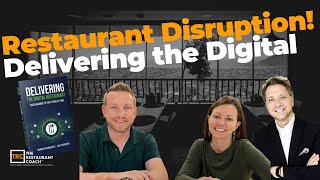
Podcast episode of The Restaurant Coach hosted by Donald Burns featuring Meredith Sandland and Carl Osbourn, authors of Delivering the Digital Restaurant. They discuss their backgrounds, the book’s key arguments about digital transformation in restaurants (ghost kitchens, virtual brands, off-premise profitability), effects of COVID, labor and culture challenges, social media, leadership, and practical advice for operators.
Questions this video answers
Over a hundred or so different executives (restaurants and tech).
Chapters
Hey, welcome to the Restaurant Coach podcast. It is the cure for the common restaurant. Wow. This is going to be an exciting show. I am honored to have on the show today as guest, the authors of Delivering the digital restaurant your road map to the future of food, Meredith Sandlin and Carl Osborne. Welcome. Meredith, Mark. Welcome, Carl, to the show today. How are you?
So good and thanks for having us. We're thrilled to be here. Yeah.
Great to be heads on off.
Yeah. So one of, say, one of the exciting things of 2022 has so far has been your book. It's an amazing book. And I'm telling you right now, if you've not read this yet, you got to get a copy. And if you don't like to read, don't worry. It's also available on Audible too. So no excuses. I'm. I mean, the. There's some great things in here. I think it's important information that every restaurant owner operating a restaurant in 2022 and moving forward needs to pay attention to. There's so many gold nuggets in there and I. I've got tons of questions and we're going to jump into them. So. But first off, why don't we start with like, just give me a little background about yourselves and Meredith will let ladies go first. Tell us a little bit about yourself.
All right, so I have been in the restaurant industry just over a decade. I have been started with Taco Bell, owned by Yum Brands, so kind of the world's largest restaurant company doing things in a large restaurant company kind of way. Worked on the brand turnaround for Taco Bell in 2012 and then went over and turned around our real estate development because that had stalled out during 2008. I don't know if you guys remember this, but the last big dip we had was caused by real estate. So trying to figure that all out and got the got us to a point where we added about a thousand new stores, which is awesome. They're continuing to add stores on fire and go internationally, which is amazing. But about halfway through that challenge thought, gosh, you know, why are we putting restaurants next to malls when no one's going to malls anymore? And wouldn't it be great if we could just be in a commissary and deliver tacos to the people? And I met these guys at Kitchen United and became employee number four there, where I helped them set up the business model and raise the initial capital from Google and all those fun things. And it was there that I met Carl.
Awesome.
Yeah, Carl.
That's A segue.
It's a wonderful segue. It's almost as if we've practiced this.
Meredith, I'm telling you, got to get your, your, your deal down. I'm telling you.
Yeah, we, we've done a few of these podcasts now. We. Thanks again for having us on. Donald. It's a real privilege to be able to speak to you and your audience today. My background's actually in Sea Store retail. I spent 15 years in the Sea Store space and that culminated in me running the AMPM retail business over here on the west coast, which is a thousand units, of course. And what was really fascinating for me there was just to see the change in landscape for how consumers in a C store environment works. Having just heightened expectations around food, whether that be fresher food, healthier food, but just not stuff that necessarily is what you typically associate with a C store. And when I left AM pm, I was really looking to move in a faster pace in an environment that was doing things right on the front of innovation. You know, big companies are great, but they can also be a little slow at times to move at the times. And what I noticed was really there were some changing things happening in the restaurant space. And a mutual friend of Meredith and ours introduced us. And initially it was just a networking meeting. And Meredith told me about her journey from big company to a Google backed startup. And I thought this could be interesting. And so the conversations went on and she invited me to run operations and customer success at Kitchen United. And it was there that we really started to see the disruption that was really happening, not just at the independent level, but but also all the way up to the huge restaurant chains that are global in nature and through customer success and through helping people adopt the ghost kitchen model that had already had the mindset to be in a ghost kitchen, but really hadn't figured out how to thrive and optimize in that space. But I said to Meredith, on a journey back from the head office in Pasadena one day to where we live in Orange County, I said, it'd be really nice if we could give our clients a book, you know, just a book that explains what's going on, why this is happening, and maybe just give some kind of breakdown as to how this is going to evolve over the years ahead. And of course a book did not exist. And when we left Kitchen United sometime later, we then said to each other, let's write this book. And obviously during a pandemic, which happened, you know, not at the beginning of the writing process, but through the writing process We. We really learned that there's a lot to be said. There's a lot of really amazing people that we spoke to. In fact, over a hundred or so different executives, both in the restaurant and in the tech space, and we started to pull it all together. And. And that really was the starting of the book and the journey that we've been on ever since.
Yeah, I mean, like I said, an amazing book. Tons of gold nuggets in there. Tons of things. Probably one of the biggest things for me was the first chapter. Just talk about the dissolve, the nuclear family and how people is just, you know, crushed for time and everyone's busy, busy, busy lifestyle and has really changed how people eat and how we. How we get food, you know, and that's just huge. And so right away, I want to lead into, you know, Covid really, really, you know, just rocked the industry. What's your view right now of the industry as you see it?
Wow. It, you know, Covid, yes. Has been such a challenge for the industry over the last two years. And, you know, it's odd to say this, but I feel incredibly optimistic for the industry forward. And I think that it can sound a little jarring relative to the pain that we've all been through over the last few years, but there are so many good things coming. I think, number one, you know, what normally happens in disruption is it takes forever, and a whole bunch of players go away because they just can't adjust. Well, this happened so fast that everyone kind of had to adjust. They adjusted or they went away. Right. And so, in a weird way, I think the pandemic sort of taught the industry what it needed to know very, very rapidly. Now, you know, the downside of that is I think people made a lot of changes to survive. Maybe. Maybe they want to step back a little bit and think about those changes and how they want to more strategically move forward. But it really convinced everyone very rapidly that life is going to be different afterward. And going forward, I think we now have slightly smaller restaurant base, a much stronger restaurant base, because they now have all these omnichannel tools, and they're able to talk to their customers in so many different ways, take orders in so many different ways, and fulfill them in so many different ways that as we move forward and that growth continues, I think what you're going to see is a restaurant industry that actually has same dining customers they've always had, but then on top of that, a whole bunch of digital delivery customers as well.
Well, yeah, I think that's right. I think the idea of delivery has become something that's become just so common in every people's just day to day lives now. Whether that be grocery shopping, whether it be just the Amazons of this world and now with food and meal kits, you're seeing it everywhere. And I think if anything, it's the customer's expectation that has really just gone through the roof. The good news for restaurants is that they're not the first industry that's done. It's. And there's a huge amount of recommendations out there just by looking at retailers and other kind of verticals to be able to say, look, you can do this. And I think the one hope we have from the book is to be able to say, look, it's going to be okay. It might be tough and change is tough, but actually this can be a great opportunity for you to take your business and this industry into a bright new future.
Very, very cool. Very, very cool.
You know, and I know you talk to a lot of restaurant leaders, you know, a lot of industry experts and stuff like that in the book and you get some really, there's some powerful, powerful quotes and also some predictions too. Leadership to me has always been very, very critical in restaurants. What do you think is the number one trait that leaders need today?
I think that's a great question. Well, certainly with the labor crisis, a huge one is culture and just being able to motivate people no matter what they're doing, whether they're navigating through these huge changes or serving on the front lines. Being able to make sure that everyone feels like they're part of the same team and all headed in the same direction is absolutely critical. You know, it's always been critical in the restaurant industry, but I think remains one of the top, top things that has to happen. The next one is probably a mindset shift around business model to embrace this digital e commerce world. And there's so much that is different about operating in an E commerce fashion and that really thinking of oneself as an E commerce, you know, digital storefront changes the way you think about everything. It changes the way you think about marketing, it changes the way you think about fulfillment, it changes the way you think about your back house. And so being able to have that mindset I think is critical no matter which role you're in inside of a restaurant.
Yeah, well said for me, Donald. I think the ability to be agile and to continue to innovate is really critical. We're just in the early innings of change here. Right. So what might feel like overwhelming levels of change right now, it's only just the beginning. So to be able to develop an agile workforce, an agile culture, and an ability to unlearn some stuff while learning some stuff, all of those things, I think are going to be critical, not just for the leaders, but everyone within the organization to be able to take the right steps forward.
Very, very cool.
Now, you know, one of the things I talk about in all my podcasts and I talked about in all my kind of coaching stuff is I talk about self care. I think one of the things we do as an industry, especially in the restaurant industry, is we really, really don't take care of ourselves, you know, and one of the things we've got to start doing is taking care of us. What do you do to take care of yourself? What do you do to kind of ensure that you're at your best each day?
Well, for me, it's about making sure to switch off.
Right.
And I think it's different for different people as to how they do that. That could be, for me, meditation. I like to do a bit of meditation at least a few times a week, wherever possible. Other times it's just getting involved in sports and being down on the beach playing some beach volleyball.
Nice.
I mean, that is what is so hard about the restaurant industry, because you feel that it is always on. Right. You cannot just take a break. But I, I do believe that humans get dumber if they do not take breaks. They actually start to make mistakes. Things start to get worse.
My new book get dumber. They don't take care of themselves. I'm gonna put that in my new book.
You know, people feel this need to, like, always be doing something they do actually, the worse it gets. And so I'm totally with you. Self care is super important. I personally try to do yoga every morning when I wake up. That helps set my mindset quite a bit for the day. I think it's very important to, to make sure you have that mindset going into your day.
Very, very cool.
Now, people might not know, but we're going to be sharing the stage together in March in Madrid at Hospitality Innovation Planet. It's a fantastic event. I'm always. This is my fifth year back. I'm excited about going back. I'm excited to be having and seeing you guys there. And there's gonna be some great food. Which leads me to this question. What's the best meal you've ever had?
Well, obviously Hamon in Madrid. I don't know.
You're gonna be sick of hmone. You're gonna have so much.
You know, for me, I'm. I'm glad. Glad you asked this question because for me, this is what it's all about.
This is.
This is a. It's about the memories that you get through food.
Right.
And it's very difficult for me to describe it through words, but as an author, I should give it a go. Imagine you're off the. Off the coast of Puket, and you're looking at the kind of mountains in the background. The sun is setting, and you're on this kind of floating pontoon. You don't speak a word of the locals language, but they hand you a net and there's seafood in this kind of already caught area of the middle of the pontoon, which you catch. And then they, you know, cook the. The seafood for you. And it's just an amazing experience. The food was obviously incredibly fresh. The flavors were just stunning. The scene was just amazing. And then we got into a dragon boat and went back to the mainland.
Sounds lovely. I don't think I can do that.
Put that on my bucket list.
That's absolutely incredible. I don't. You know, I have had so many amazing meals, and I would say as incredible and unique as each one was, my go to still remains Taco Bell. And I'm just gonna put that out there because I think people will think that's shocking. But I. I love it. And I go there all the time.
Yeah, yeah.
So you can say Chipotle. I know she likes Chipotle as well.
I like the Sofritos at Chipotle. Yeah, I love that stuff. So in your book, you know, delivering the digital restaurant, I have to say you guys do a great job of painting this picture of the future. And I think the thing that really captivated me, I love towards the very last chapter, menus become obsolete. You talk about Jackson, and now he has his apple watch. You know, apple wrist X. You know, they take. You don't have a watch anymore. Now you got a chip and playing it in your wrist. And then, you know, he actually. It communicates to him. And then, you know, the. The drivers show up and then the. He orders food on the go and the drone flies and drops off in his taxi. I was like, oh, my God, when's that happening? I'm ready for that. So I love that chapter. I mean, it really, like, made me like, oh, my God, the possibilities are endless, really, where we're going. What would you say? And it's probably different for each of you. What's the One chapter in your book that you say is a must read for every restaurant operating in 2022. If you had to pick one chapter, one child.
Okay, well, I'll, I'll give a very functional, practical answer. And it's a chapter that we really debated hard on as to whether we should write it, because it's what I call the elephant in the room.
Yeah.
And that is chapter seven, where we discuss the profitability of off premise and the whole idea of third parties and the fees and is it even worth it? And really trying to just get into the, the nuts and bolts of it. And it's a chapter, unashamedly, that we have with a whole bunch of P. L statements, and we basically break it down. And we break it down to be able to demonstrate that actually when you look at this through a marginal profit lens, actually it starts to make more sense. And when you start to understand about building in your first party channel and looking to convert customers that you've perhaps acquired through a third party marketplace and brought them across to your own private channel, that's the way in which this will grow. And then of course, the way in which you'll start to accumulate customer data and be able to have at your disposal an ability to market and create amazing guest experiences for forevermore. So for us, that was a really important chapter and. But it's one that certainly creates a level of debate too.
Meredith, what would be your favorite chapter?
Well, for me. Yeah, for me, it's why pizza works.
I love that one.
I love this chapter. Because pizza to me is a glimpse of the future. Pizza wasn't always the way that we experience it today. It didn't always come delivered in a box. There used to be on a. There's still a few of them out there. But it used to be a sit down red roof, dine in Pizza Hut. Right. And to see that shift from that old sit down, dine in restaurant now today to it always comes delivery and how the business models change to enable that, I think is really telling of where the restaurant industry is likely to go. And you know, there's a lot of people, you know, in keeping with what Carl just said, a lot of restaurant people who say, oh, deliver stuff, it'll never be profitable. You know, the venture capitalists are subsidizing all these platforms and I hate it and I wish it would just go away. And I point to Domino's and I say, well, they're, they're delivering, they've been doing a lot and they make a lot of money. So if they do it, I think the rest of us can figure it out too.
Yeah, I know, I know you mentioned like Pizza Hut in the book and stuff like that. And I remember so again, a lot of our early memories about, you know, food and when we, we were kids and stuff like that. And I remember like going to Pizza Hut when I was a kid. I was like, that was like going to Ruth Chris nowadays, like going to an ups, you know, like a high end steakhouse, like when you were a kid, like, we're going to Pizza Hut. We were like so excited, you know, was like amazing. Yeah, yeah. I mean, those are good days and stuff like that. So let's talk about a serious topic that's going on in the industry right now, and that's the labor crisis. What do you see as the real issue?
Yeah, the. This is a really, really important subject and I think it's, it's the subject that gets talked about first, I think, versus all of this stuff which might seem ancillary on the side around digital disruption. You know, the real issue for me, Donald, is that it's been an issue for way longer than the pandemic. That's the issue. The fact that restaurant turnover is as extreme as it has been for well over a decade, even longer. I don't know how long exactly, but it's certainly been an extreme problem. I think it points back to what Meredith was saying before about leadership and the importance of culture. I think for too long we've treated the restaurant employee as a transitionary employee in the sense of someone that can not necessarily lead a career through the entirety of that business and have treated them as such, as a bit of a transaction. And guys, the robots are not here yet. You know, they're coming. And maybe we can, maybe we can treat the robots a bit like that in the future, but right now we're talking about humans. And ultimately this is a service industry, it's a hospitality industry. And the happier that you have with your people, the more likely you are to be able to create happier guests to come back and time and time again. And I think whether it's wrapped up in the minimum wage debate, whether it's wrapped up in the discussions around how we can help employees find a future for themselves in the business. All there are perfect examples out there, you know, Ant Pizza doing some great things. You're seeing Smokey Bones doing some great things. All of these companies are doing it because they're putting their people front and center. And as a result, they're not experiencing the Same levels of challenge that many restaurants are doing right now. And also they're retaining their people as well. Saving not, you know, it's not worth forgetting. Saving a lot of money in terms of churn cost.
Very, very true. Meredith, what's your take?
Well, you know, the restaurant industry technically is smaller than it was before COVID Right. So I. I think technology came out and said they thought 2022 would be at about 90% of transactions versus pre Covid, even though revenue is higher. And I think the National Restaurant association has estimated that about 10% of restaurants have. That's permanently because of COVID So if you have an industry that was 90% the size that it used to be, shouldn't you have too many workers?
Technically?
Right, yeah. And the fact that we don't have enough is very fascinating. And obviously the economy is doing incredibly well, and there's other options. But I think that points back to exactly what Carl said, that if people have a lot of other options and they're leaving you, maybe you need to look at yourself.
Yeah, yeah. I say it a lot. And we've. We've. We've become our. The restaurant industry become its own kind of meme in the sense that we've treated people like crap for years, and then we're just like, we're upset now that they think that there's, you know, we. We don't. We don't appear as a viable, you know, career, and we gotta. We gotta actually start changing that. And, like, and we both mentioned it all starts with leadership and culture. I'm a huge believer. Yeah. All right, so if you came with a warning label, what would your warning label say?
Warning. Like, say if the book came with a warning label or if you came.
With a warning label. I.
We should get them for each other. I don't know. I'd say occasionally loses the off button.
Occasionally.
More often than not.
A little bit of a workaholic. Just a little bit. Yeah. It's true. I would say my warning label would be May contain numbers you do not want to hear.
There you go.
Open at your own risk.
Right, exactly.
So, you know, social media is huge with restaurants nowadays. What would you say is your favorite social media platform, and what's one that you kind of recommend? You know, we talk about digital, we talk about social media and stuff like that. What's the one social media platform you think is like, really, really the one to focus on in 2022?
Yeah, it's a. It's a great question. As a consumer of social media, I Probably lose way too much time in places like TikTok right now. I think TikTok is definitely going to be the.
Yeah, it's like the rabbit hole, I call it.
The morning has gone. I've gone through the black hole of Tick Tock. You know, it's. Yeah, it's that, that's a fun one, quite honestly. I. I think right now it's all about video. And so Tick Tock is great for that reason. But also Instagram and their Reels product is really good. Ultimately, people eat through their eyes.
Right.
And so I think it's a great way of being able to represent who you are, your brand, the community you serve. All of those things through video and actually don't try and be too polished would probably be my little bit of tip of advice. Just get things out there, recognize it is about lots of content, but also try and be genuine, try and be authentic. And I think that will resonate more with those that you want to follow you as opposed to those that you could perhaps just buy to follow you.
Exactly.
And I love LinkedIn in particular for people who are maybe at the professional end of restaurants and trying to do fundraising or sell their concept or franchising, things like that, but also for the hiring aspect and I think being able to share your brand and your brand culture with potential employees, it's a great place to be able to do it. Yeah.
I teach my clients how to like actively recruit on LinkedIn if you're looking for like a leadership. So in leadership team, you can actively recruit and use in messages, actually send like, you know, emails to some messages to people and say, hey, saw your. I saw your profile here on LinkedIn. Not sure if you're looking, but if you are, man, I'd love to talk to you, you know? Yeah, starting conversations, we forget the restaurant industry is hospitality. It's all about conversation, hospitality. Essence Latin word is hospice.
It means to be the host, you.
Know, and what all of these platforms do is really democratize access, you know, whether it's LinkedIn, I think, you know, back in the old days, if you wanted to find out about a job, you had to go door to door knocking for the hourly jobs and you had to know someone for the executive jobs. Right, right. And LinkedIn really makes that very even playing field. And the same is true of TikTok and Instagram and all these other things. Where it used to be only the big brands could afford to put an ad on television, but now everyone, everyone can reach their consumers.
Yeah, I mean, it's it's good that you mentioned about recruitment in the same bracket as social media, Donald, because, you know, it was. It was actually probably five or six years or so ago now that McDonald's were using Snapchat for a recruitment tool, right. Where the potential candidates would record a 20 second video as to why they should work for McDonald's. And that was it. That was the application form. So being creative with social media, being where your potential candidates, that your future employees are, is actually really, really important. And so social media, I think, is a great tool to be able to find the people that perhaps aren't coming to work for you right now.
Yeah, I think social media is a tool that we tend to focus on the food aspect of it. But I think, and we talked about this before, culture, really showcasing your culture, showing people having a good time, showing people having fun in your restaurant, you know, and talking about culture. You know, I always say a lot of people say, donald, what's the difference between brand and culture? I say, I'll give you a simple definition. Brand is what your guests say about you online to their friends, their family. Culture is what your team says about you online to your friends, to your family. And, you know, now there's like those websites like Glassdoor and indeed, where actually people can actually rate the companies about the employers and stuff like that. And you'd be shocked at some of the stuff you see out there. I mean, now, granted, some people might be disgruntled employees, but it gives you an overall picture of are these people treating their team like human beings?
Yeah.
And. And if I had to ask you, what would you say is like one key to creating a great culture?
I'm gonna big up a friend of a mutual friend of ours called Steve Holiday, who's the COO of Luna Grill. And when I was moderating a panel back, I think it was June, wasn't it? Meredith, I. I asked a very similar question to the panel, and Steve was on it, and he said it's all about creating moments and celebrating those moments. And he said it and he paused afterwards just to allow people to just let that sink in for a moment and to really think about what that really represents. And what he, what he was trying to emphasize was you've got to take a step back at times and recognize the moments of when your team throughout the entire organization, are doing something that reflects the values of your organization and then celebrate it and celebrate it all the way through and champion that kind of behavior. I thought that was brilliant. I thought that was a really Great example of someone being able to talk about culture in a very practical fashion that could exist across any ecosystem.
Yeah.
I have all my clients do core value cards, and they have to use them every day.
I mean. Yeah, step one is you have to know what they are, but step two, you have to.
You have to live them. I mean that to me, your core values are your compass.
Yeah.
Your ethical compass. How you live and how you act, how you conduct your. How you do conduct business, how you treat each other as human beings. You know, we've gotten so far.
I think it's quite amazing how many people who don't value culture. Oh, that stuff's all fluffy. You know, I don't need to do that. But the fact is you have one whether you're doing it on purpose or not, and you would much rather make one that is on purpose and lives up to what you're trying to achieve than have one that's happening to you because you haven't taken the time to say what's important.
Very, very true.
All right, I think you should drop the mic after that one. Donald, drop the mic.
All right. So, Hot Topic, do you think ghost kitchens are a fad or are they here to stay?
Oh, well, you know, we're biased, obviously. We think they're here to stay, so.
So here to stay. So then, and I know, I know in your one chapter, you give, like, there's like, different models, like different virtual restaurant models. What do you say is. What's your favorite virtual restaurant model?
Well, virtual restaurants and ghost kitchens will deliver. Differentiate a little bit. So ghost kitchens, to me, are like the. The hardware, they're the infrastructure. And virtual restaurants are like the software. They're the brands that ride on top. And a virtual restaurant could exist in a ghost kitchen. It could exist in a host kitchen, meaning, you know, a different restaurant that's already there. It could exist, you know, in a stadium kitchen, a hotel kitchen, a bar kitchen, whatever it might be. But its primary distinction is that it is brand forward, and it is serving food out to the consumer in a digital, direct to consumer way with no brick and mortar presence. Whereas that ghost kitchen is really the infrastructure that they might operate out of.
Right, okay, that's good clarification.
Yeah, people conflate the two all the time. So it is. I think it's only the super nerds of among us who've spent a lot of time on this topic that care passionately about the difference between the two of them and which I am one. So maybe to start with, ghost kitchens and your, and your first question first. I absolutely believe in them. And I think particularly in developing countries who don't have the same degree of restaurant infrastructure that we already have here in the US they make all the sense in the world, like skip the landline, go straight to a much more efficient model, deliver it out the door. Great. Now here in the US we have a lot of restaurants. We have about 600,000 restaurants, maybe a million kitchens in total when you count all the BNI and hotels and all that kind of stuff. And so, you know, there might be this transitionary point where we think about using what we have differently before you see a massive blowout of ghost kitchens. And in fact, revenue going through the ghost kitchen industry today is less than 1% of total restaurant revenue. Right. So you hear about them all the time, but it's really, they're very small. There's not that many of them and there's not that much revenue going through them. Now going back to that analogy of mobile phones, yes. The developing nations got the smartphones first. They were texting first. Absolutely. Because they skipped the landline. They went straight to that. But did the US get there? We sure did. Right. We eventually caught up and we took on all that technology and wove it into the fabric of how we do things. So I think the same thing will happen with ghost kitchens, for sure.
Okay.
I think that's right. You know, ghost kitchens also serve a number of different purposes, Donald, in the sense that they, they give the opportunity for restaurants to scale at a much, you know, more value orientated way that they use less labor. They give you the chance to test things more effectively without disrupting the operation of your current network. And with the 100,000 or so casualties that we've seen through the, the network across the US at least over the last year or so, there's a lot of restaurant infrastructure out there that might be repurposed to become a ghost kitchen. Ultimately what this is all about is proximity as well. Right. So it's about how close can I be to the customers that I wish to serve? And so for some that might be finding a location where they can actually support their off premise volume even if they've got a brick and mortar down the road. But, and for others, it might be a way of being able to expand their boundaries and reach consumers that previously would just not be within that 15 minute window.
Very cool.
So that's ghost kitchens. Tell us about virtual.
Virtual. So a couple things here. The first is if you follow the rise of direct to consumer Digitally native brands and things like apparel, CPG mattresses, you know that there's a huge opportunity there to sort of take the cost bar, the standard cost bar of doing business and take a bunch of money out of things that consumers don't care about.
Right.
And the primary thing that consumers don't care about is the retail channel and reinvest that money in marketing, brand and delivery. Things that consumers do care about, you know, reach them in a way that matters to them, you know, maybe on Instagram or wherever it happens to be, and then get the product fulfilled directly to them. And maybe in so doing make the shopping journey different and easier because you're able to compare things differently on online than you are in the store or virtually try things on in the case of glasses. Right. So if you take that mental model of an idea and you now apply it to restaurants and you say, maybe there's some things that consumers don't really care about with restaurants. Maybe they don't really care about TV ads, maybe they don't really care about a brick and mortar sit down experience. Maybe what they care about is having the right food show up at the right time, being able to shop that food differently in a much more digitally enabled way and having it brought directly to them. And that's what virtual brands can do. They can take that old cost bar of a restaurant, kind of turn it on its head and reinvest in the things that consumers really care about. And that is certainly why I think that you'll see a lot of success with them.
Very, very cool.
Yeah. For me, the opportunity that exists right now around virtual brands and virtual restaurants is really just this ability for a restaurant to look at their current throughput from their kitchen and understand how many dishes can they truly create from it. I mean, I'm sure you have restaurants nearby to you, Donald, where you go onto a third party marketplace and they're no longer on, they've, they turn the tablets off. And that is because the kitchen, the current kitchen, is either struggling for demand, so struggling for the ability to actually service their on premise business as well as potentially take on the extra business from an off premise context. So when you think about virtual brands, you say, well, how on earth is a restaurant going to be able to add on a completely new concept? Well, it can be done, but it can be done by really thinking about the right kind of items, the ones that are complementary to your core offer, the ones that actually aren't going to overly complicate anything associated to on premise operation. But it's a really important thing when it comes to operational process engineering for know restaurant executives to get their heads around. Because you're no longer needing to think about the number of tables in your restaurant, the turn times of those tables. It's now about the thousands, the millions of people that are within that 15 minute window of your restaurant. And how many dishes can you truly get out of that kitchen? Because ultimately if you can up the the approach from that standpoint, virtual brands become a great way for you be able to take advantage of those troughs in demand as well as potentially servicing niche flavor profiles.
Can you give me an example of a really, really good virtual brand out there?
Well, it depends on what we mean by really good. I'll give you a couple.
Okay.
One is a virtual brand called Plant B. And why do I think that's really good? Well, I don't know whether it sells a lot, quite honestly, I'm not privy to it. But it's part of the Dog House family of restaurants. And Dog House are a franchise setup, right? And they had a plant based burger on their menu. But when you write Dog House you kind of think, well, hot dogs, right? You don't think plant based and you certainly don't think burgers. And so from an SEO a search engine optimization perspective, having a virtual brand which is called Plant B, which for all intents and purposes is selling the same item on your menu, makes so much sense. So I like, I like that because it's not creating complexity and it's also enabling customers to find out about one of the doghouse brands without having to necessarily know anything about Dog House at all.
In a lot of ways, the best virtual brands are about shelf space, the digital equivalent of shelf space on the platforms. And so if you imagine walking through Target and going down the detergent aisle and seeing an entire aisle of Tide and thinking to yourself, no one needs this much Tide. And, and like I can't tell the difference between all these SKUs and I don't know why they exist. They exist purely to get the billboard of tied all the way up and down the shelf. That's, that's why they're there. Right? And virtual brands can do a very similar thing on the platforms where they are taking up a bunch of spots on that platform so that what you see as a consumer is maybe you see a bunch of different brands, but they could actually all be coming out of the same kitchen. So they do that very, very well. And in particular they do that very well when highlighting a more niche item on the Menu like in the case of plant B. Oh, very cool.
Very, very cool.
All right. So, you know, one of the things, again, we talk about self care a little bit. We talk about things that culture and stuff like that. How do you, how do you. And I think one of the things, I think a lot of restaurant executives or a lot of people just work in restaurants. Stress is a huge thing, especially with, you know, the changes with the, you know, there's a new variant coming out like every other month and stuff like that. How do you deal with stress?
Well, for me, the, the first thing is knowing when you're stressed. Right.
That's the choice. Choice proceeds change.
Right, right.
I mean, first you got to know when you're stressed. And I, as a outgoing extrovert, you'll often find me, it's when I go slightly more into myself and become a little quieter and a little bit more unsure. And I think that's always a good, important sign for you just to recognize it in yourself, first of all, because when you're in those moments, you're not necessarily going to make the best decisions. And also you're potentially not going to be able to find your way through whatever's got you to that point in the first place. And then how I deal with it, Well, I think it's about trying to take a perspective. It's about trying to take a perspective on actually how, how serious is this.
Right.
Ultimately is, are we going to wake up tomorrow, everything's going to be okay, are we going to figure our way through this and breaking things down into the necessary steps using my kind of process mindset. Ultimately, when recognizing that it's all be okay and you don't have to necessarily worry about it is fine, but you've got to recognize that you're stressing about it first.
Yeah, that's a good one. Well, Carl and I, as ever opposites, and I am an introvert, so I have the exact same reaction, but on the other side. And I think, you know, I'm probably, you know, put a magnifying glass on the issue. But in the, in the restaurant industry, even though it tends to attract extroverts and people like to be around other people, one of the challenges is that you have so many competing demands from so many different people happening constantly. Right. And for me, as an introvert, that's, that's a really tough environment to be in because I feel the need to try to make everyone happy. And it's very hard to do when you have so many different competing demands. But the ability in a restaurant setting to be fully present in each moment, I think is critical. And when you find yourself a little bit scattered and not able to be fully present with that particular customer or that particular employee, those are the times when, as Carl said, you need to be aware, take a moment, re. Center yourself, and come back to that. Because it is a hospitality business, it's a people business, and you need to be with people.
Exactly.
So looking back to when you were a kid, and I always love this question I ask everyone on this, on the podcast. This one, when you were a kid, what was the first thing you wanted to do or be when you grew up?
Your questions are amazing. I love these. This is fun. So kind of, I guess it turns out I became who I wanted to be. I. I really wanted to be an architect.
Really awesome.
I did. I really wanted to be an architect. My grandfather was a contractor. That was my dream. And then I realized that you had to use rulers to be an architect because kind of old. This is before cad, and I thought, oh, gosh, that sounds terrible. Using rulers every day and having to draw straight lines. Like, I'm not going to do that. And so I went down this business path and ended up in real estate development for restaurants. And for me, that was amazing because it was like, I got to come back around to the thing that I cared about as a child. I was actually just telling my husband the other day that my. My fourth grade teacher, he noticed that I was always drawing floor plans, and he was like, hey, I need someone to draw a map of the store school. Because, you know, Google didn't exist at the time, so there's no aerial. So, yeah, that my. My life came full circle. Everything's turned out. I'm super happy. I get to. I get to design stuff without having to use rulers. It's great.
There you go. That's awesome.
Well, I guess it depends for me as to what part of my childhood do I have an answer for you? Because at one point, at one point I wanted to be Luke Skywalker, but, you know, that would have been pretty fun from a career perspective. I always wanted to be a journalist. So in a way, I guess I'm similar to Meredith in the sense that over the last couple of years, I've been doing a bunch of interviews and putting things out there and blogging and stuff. So in a sense, that's. That's been realized as well. So, yeah, I always like the idea of putting things down into the written word.
Very, very cool.
I wanted to be a Zoologist.
Still at sign, Donald. You know, I remember.
I know when I was a kid, like, you know, Mutual of Omaha's Wild Kingdom was a really big TV show back then. And Marlon Perkins. I want to be Marlon Perkins, man. I wanted to, like, you know, just work with animals and talk about animals and explore.
Well.
So different sometimes. Yeah. That's awesome. So besides delivering the digital restaurant, what is one book, audiobook or podcast that you recommend? Cool.
You'Ve got yours, Meredith.
Yeah, well, I am currently reading Indira Newey's book. She was the CEO and chairman of Pepsi, so that's been very interesting, since she is such in our culture, anyway, an unusual person to rise as an immigrant and a woman to the job that she had. So it's been quite interesting. And then I would be remiss if I didn't recommend Greg Creed's book, Red Marketing, which, you know, he is just an absolutely amazing person. Speaking of culture, I think number one culture bearer that I have ever worked for in terms of understanding the power of both being relevant in the culture from a marketing sense and that branding sense that you were talking about, but also having and maintaining and actively pursuing a great culture inside of an organization.
Very cool.
Okay, so for a book, there's a book called the Go Giver that I really love because it talks about, you know, just being able to recognize you don't have to always take, take, take. And if you give, then there's a great way of being able to, you know, stake a path in life that will lead to good things for yourself, which is a really nice one. A podcast. I always like the Tim Ferriss show. Yeah, I like this stuff, too.
Yeah.
And I like it largely because he speaks to people that have been successful in all walks of life. And it's great just to be able to pick away on some of the common threads that you see on others that have found success in different ways.
Very, very cool.
And what's one quote you kind of live by?
Oh, it's over here behind this computer screen. It's Louisa May Alcott. Far away there Far away there in the sunshine. On my highest aspirations, I may not reach them, But I can look up, see their beauty, and follow where they lead.
Oh, my goodness. That's.
Meredith's like.
Yeah, that's mine too, actually.
How do you follow up with that, Meredith? That's, like, amazing right there.
I was gonna say something else, but now I've adopted that one. So there you go.
My favorite quote in the world. And I actually, I tell everybody I built My entire brand around this quote, it's a zig zig or quote is that you can have everything you want in life if you just help enough other people get what they want. And I truly believe that with all my heart. And that's one of the reasons I do what I do. And you know, it's, it's been an amazing journey and I want to say thank you so much for being guest today. How can people contact you if they need to get a hold of you?
Well, they can find us at our website Delivering the Digital restaurant dot com. We actually have our own little Monday minute podcast on or where we, we Talk for just 10 minutes each Monday morning about five of the top headlines from the previous week. So if people want to hear from us again, then that's certainly a great way. And hopefully for those of you that would like to get a copy of the book, they can also get it at that same website Delivering the Digital restaurant dot com. Or of course if they like their Amazons and their third party marketplaces, then Amazon, as you said earlier, is a great place to get it.
Awesome. And I'll make sure to include their website into the show notes so you can check them out, please. I'm telling you, if there's one book you read in 2022, read delivering the digital Restaurant, it will not only will open your eyes to some changes that are going on that I think a lot of times we put on blinders, you know, when we're running our restaurants and we tend not to look at the things that are happening around us. And I'm telling you right now, if you really want to grow your brand and not only just grow it from a profitability standpoint, but also grow it from a, just a, just from a human aspect of, you know, becoming a better kind of operation, overall it's, it's a really, really great book. It's going to open your eyes. So I highly recommend it. It's on my top list. My, my. I would say the number one book to read in 2022 is Delivering the Digital Restaurant.
Awesome. Thank you so much.
Thank you so much for being here today. I appreciate you guys. Again, if you need to get a hold of me, you can reach me at donalderestaurantcoach.com of course the rest of the website, Donald, or www.the restaurantcoach.com and we will see you on the next time.
More from Donald




If your restaurant only works because you work 80 hours a week, it doesn't work.






