Rethinking Your Digital Game with Jen Kern
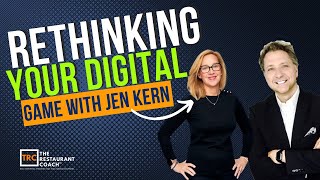
Conversation (podcast) between host Donald Burns and Jen Kern (Q) about modernizing restaurants. Jen defines Q as a platform "beyond POS" that unifies multi-channel ordering for enterprise restaurants, and discusses industry trends driven by the pandemic: modernization, mismatched in-store vs online guest experiences, labor and supply challenges, and the need for empathetic leadership and better employee development. She recommends improving in-store experience, authentic content marketing, modern tech (consolidated integrations, KDS, white-label ordering), and process-first adoption. Personal topics (self-care, favorite restaurants, social media preferences) and contact pointers (Jen’s email; qbeyond.com; podcast 'Restaurants Reinvented') are included.
Chapters
Hey, welcome to the Restaurant Coach podcast. It is the cure for the common restaurant. I am honored to have as my guest on today's show Jen Kern with Q. Now, Jen, a lot of people might not have heard of Q. What exactly does Q do?
Well, hello, Donald. Thank you so much for having me on the show. I really appreciate it. Q. Is the company going beyond pos, as we like to say, and we also like to say that we are fueling the restaurant commerce revolution. What we mean by that is that our platform, which is a technology platform, is unifying the entire ordering stack for restaurants to drive efficiency, consistent guest experiences, some simplicity that is very much needed within the very complex multi channel ordering process. So that's who we are.
Awesome. Awesome. Well, you know, I was, I was fortunate to be a guest on your podcast.
Yes.
I thought our conversation was so great. I wanted to invite you on my podcast and offer maybe some, you know, solutions for people and just kind of your take on, on what, you know, is happening now in the restaurant world. So what is your view right now of what's going on in the restaurant industry?
Oh, gosh, well, that's a big question. I mean, in one word, modernization. Okay, so transformation and modernization is what I would say is happening in the restaurant industry right now. Change is required. Change is painful. Change is necessary. Restaurants have never really been forced to use technology in an efficient and guest facing way. And thanks to the pandemic, thanks to the pandemic, they are now viewing technology hopefully as an enabler versus an inhibitor of their business. In the past, technology, to use your quote and the title of your book, has sucked within the restaurant. It's not helped operators do their job better, it's made it harder for them. So I'm incredibly passionate about bringing technology to restaurants in a way that actually helps them drive growth, revenue efficiency, and better guest connections.
Very cool. Talking about like, better guest connections, what are some of the things you see out there as like, restaurants, like, making mistakes as far as guest connections?
Yeah, well, you know, I don't like to sit here and say like, oh, look at all the mistakes they're making, because restaurants are under mistakes. They are, we all are. Right. Takes to learn, to grow and to change. But they're also under incredible duress right now. I mean, just, you know, everything with the pandemic and it just caused so much chaos. And now you've got labor problems, you've got supply chain problems, you've got pricing. I mean, just making a buck is tough in the restaurant industry. So on top of all that, you know, having these, you know, recruitment, retention, people problems and support supply chain. I mean, I don't envy restaurant owners right now, honestly. That said, I'd like to believe that my company, Q and myself, we're here to try to help in whatever way we can. One way is through, through this unified, you know, ordering process. Another way is also through podcasting and having these conversations that we need to be having that I believe can be helpful for operators. So when you say mistakes they're making, I can tell you that I'm a very frequent eater outer so I love to cook. I'm not like you. I wasn't a chef, but I like to pretend like I was a chef. I was raised by a foodie, organic, you know, James Beard and Julia Child era woman who was amazing and she cooked very elaborate gourmet meals that were delicious. So I was spoiled from a young age and I wanted to learn how to cook. And so I love to cook. But right now, in the period of my life, I'm an empty nester. And so I go out to eat a lot because I've been cooking for my family, my kids for 25 years. So I'm like, I love fast casuals. I love bowl places, salad places, Mexican places, Mediterranean. Like, I go to a lot of fast casuals, some QSRs, but mostly fast casuals.
What's your go to?
Chopped.
Chopped. Really?
Chopped and kava are probably my top two. Followed by sweetgreen, Moby Dick for. For acai bowls and things like that. South block, which is a local place. Chick Fil A. I love Chick Fil a when I'm in a crunch and I need something quick. But yeah, I would say those are all my favorites. BB Bop is another one which is an Asian inspired one, which is amazing. Yeah, so those are my top go to's. Like I definitely Chipotle. I definitely go there like chapped. I go to almost every single week. Cava about the same.
Oh, wow.
Yeah, so I mean, and they're all right down the street. I live in a pretty metropolitan area so I can walk to a lot of them. So anyway, I'd say the biggest mistake restaurants are making right now is that the in store experience is not great.
Right.
And the online experience is not great. Furthermore, the in store and the online experience don't typically match.
Right.
And I'm often disappointed in my experience as a guest, whether it's just how I'm greeted, how my food is prepared, the feeling I have when I leave. You know, I. I Pay. I'm one of those crazy people that pays 15 bucks for a bowl. Yeah, yeah. I would, you know, $5 for Starbucks and 15 bucks, you know, and I'm like, you know, it's a good, it's a decent amount of money to pay for a quick, you know, thing. And it's like I just would like a smile sometimes and I really get it. And, and then even online, like, if I'm ordering, like I have a lot of the apps and I'll do the online stuff, I very often show up and my order is not correct, it's delayed. If I'm doing delivery, I've had orders not show up. I feel like a burden a lot of times the places I go. Like, I'm just really sort of a pain. You know what I mean? Yeah. Now full service is a different story. And I do go to full service, just not as much because of the time and factor.
So I think that's a big thing for most people though, you know?
Yeah, yeah.
Full services become a lot more special occasion, you know. I mean.
Yeah, yeah.
But everyday living, especially, like you said you're an empty nester. I mean, convenience trumps everything.
Yeah.
Convenience and quality to me.
Right?
Yeah.
Right.
Yeah. Which is why I like this.
Both places, I feel like a lot of them have pretty fresh, some of them, you know, organic proteins. I love a lot of proteins and things like that and it's pretty organic, fresh food. Yeah.
Do you say you tend to eat more organic than anything?
I try, particularly with my meats, but I'm not like, my mom is really a stickler. Like literally she puts in her mouth is organic. I'm like, whoa. I try mostly with the proteins, but I don't kill myself over it. But it's a perk. Like if I see on the menu like a chipotle or one of them, like it's an organic chicken or something, I'm like, oh, good. I know it's going to taste just a little bit better and be a little bit better for me. Like, I don't really want to put hormones in my body if I don't have to. Got enough going on already.
I know we got a lot going on, especially as we start getting a little older. You know, things kind of. I would say after you hit 50, I would say the warranty goes out on your body. It's like everything just starts breaking down. The warranty's out. You're like, man, this sucks.
Everything sucks. Yeah, yeah.
So that kind of leads me, you know, eating a little Bit healthier, making better choices, making selections, you know, that are a little bit more, maybe on the organic side at times. Self care. I'm a huge, huge proponent of self care. What do you think? Or, you know, do you believe in self care 100%.
I mean.
I know. And what do you do for self care?
Oh, wow. A lot of stuff. So I'm in a recovery program. It's anonymous, so I don't talk about it, but I'm in a recovery program and there's a lot of self care there in the community. I have done therapy on and off for the better part of my adult life. I would say not doing it right now, but it's been a while. But it's been a minute. But I do believe in therapy and getting outside help. I have a regular meditation routine that I try to do. I don't do it every single day, but I try to at least sit still, be quiet, and remove myself and try to remove my ego from myself for at least five to 10 minutes. Because the ego is not your amigo. Did you know that?
Not your amigo. That hashtag, write that down. Your amigo. That is true.
I love to go for walks in the woods. No phone, nothing. Just go for a walk in the woods. I have. I'm blessed to have some woods near my house. And, you know, I do massage, I do acupuncture. You know, I'm like, yeah. So I feel like I do pretty well. I do take baths at night to like, calm down, you know, and de stress and.
You ever do the cupping?
I have done the cupping, I think. Yeah.
What do you think of it? My friends have done it and they keep trying to talk me into them. Like, I don't know about that. And afterwards, you look like you got the kicked out of you. You know what I bruised up?
I'm like, yeah.
To me, I don't know.
I don't know. Yeah. When I. Once I started doing eastern medicine, I. I got kind of hooked on it because I had Lyme's disease, which is like a autoimmune disease. And I was just worn down, tired and getting sick a lot, and. And all the doctors threw antibiotics at me and it didn't help. And so I got led to acupuncture, and I was like, oh, my gosh. And that's how I got well. And so my acupuncturist, who I've been seeing for probably 10 years, like once a month, he'll do cupping if he sees that my energy is really low and Everything needs to be recirculated in my body. He doesn't just like do it. He does it if he sees it. Something I need. So, yeah, it definitely helps. If your energy gets really stale, it helps regenerate, like flow all the movement through your blood, your blood vessels really. I think. I'm not a doctor, but you know what I'm saying, It's like, it just gets things flowing a lot like what acupuncture does. But acupuncture is like opening up all those, those points. So yeah, I mean, I, it's, I've liked it. It's. Yeah, it's not like something I have to have, but that's cool.
Well, you know, to me, energy. I'm a real big believer in energy state management. Energy management, I think is really, really critical to culture. And I think it also sets the tone for restaurants, you know, especially for the guest experience. The better the energy is, the better I think the experience overall. Which leads me to the kind of thing I would say is the role of a leader and leadership. Leadership to me is critical, especially right now in restaurants. What do you think is the number one trait a leader really needs today?
I would say compassion. Compassion and empathy, you know, because I do believe and I've, I've worked really hard to try to embody some like servant leadership, you know, styles. And I know that you're like much more well read and trained in that, but I just think like understanding where people are, you have to meet people where they are in their life. And you know, you asked earlier about mistakes restaurants are making and I think the whole model of how people have been trained and brought into restaurants and managed in restaurants really needs to change. And, and you know, you were on my, my series which is all about labor and leadership and people, and it's really boils down to the culture inside the four walls of the restaurant, whether it's in a corporate building or in the restaurant. But you know, and I know you grew up with that old school management style, which I did as well, which was like, you know, it's like command and control type of thing. It's like you do that and then I, that and then you do this and I'm your boss and blah, blah. And it's not like we can't operate like that as human in any industry. Restaurants alone, like, that's just not the way it is today. And so, you know, it's interesting for people like you and me that have grown up in a different era of leadership, which is not going to work anymore in today's. I mean, I'm going through it even with my company right now, you know, so it's like, how do you help build culture not only in a new era, but also in a very distributed virtual work world, which is what we all. Well, some of us are in hybrid, some of us are, you know, if you're in a restaurant, you're in a restaurant. But even a lot of the restaurants have virtual and distributed teams. How do you manage? Like, my team is in California and I'm in Washington, D.C. there's some leadership and management challenges that come to play. So it's, you know, it's. I think there's a lot of, quote, challenges and opportunities right now to do things differently. And I think we all have to help each other and talk about it.
Exactly. It's like that's why the thing I love about your podcast is it does, you know, we take these topics and we bring them out to, out to light where they need to be discussed. For so many times, so many years, we just basically just shoved it under the rug and just pretended like it wasn't a bit, you know, it wasn't no big deal. It didn't really matter, you know, but we have to start talking about culture. We have to start talking about, you know, like you said, we talk about empathy, talk about having compassion. We gotta start having these conversations with not only our team, but ourselves.
Yeah, yeah.
So thinking of culture, what would you say is like the best restaurant culture you've ever seen or you've ever experienced?
We all know Chick Fil? A, right?
And give me one word that you say that sums up.
I mean, I would say that's the best one today, particularly in the fast service sector. I've had great. I went out last night for Valentine's Day. My husband and I went to our, our favorite French restaurant here in Virginia, which you won't have heard of, but it's called Chez Francois Auberg. It's in Great Falls. And we had this amazing five course meal and the service was unbelievable. Now we don't do that often. It's a pretty pricey, high end restaurant. The special occasions only. So you kind of do expect that there. So I don't want to say like all restaurant experience sucks. No. But if you're talking about a fast, convenient meal, can't beat Chick Fil A. And it's just because when you walk in there, they, they greet you, which doesn't happen that often. Anywhere I go, like I said, they look at me like oh my God. What are you doing here? It's yet another person. And I got all these digital orders to fulfill, and now I got a person standing here too. Oh, God, this is a lot, you know, and I find that broken too, by the way. And I wish, I wish Starbucks would fix that, which is the in store people are behind the digital orders. We're like second citizens now. A lot of being so good, you.
Know what I mean?
Yeah. A lot of places I go, I just stand there and I wait for them to fulfill their tablet orders and I'm just standing like the only one there.
Yeah. And they're like totally ignoring you. Yeah, yeah, yeah, yeah, yeah. They've. People have changed their behavior of what they, you know, especially the guest service I think has really gone downhill is that we kind of tend to, we ignore, you know, we basically have become slaves to the digital board and, and the, you know, and what's on the tickets, what's on the rails, and we forget. One of the things I do when I work with restaurants a lot, especially when I work with cooks, you know, the culinary teams, is like, I'll go back and say, you know, you guys see a table number, like table five, table 10, you know, and you know, it's a two top, it's a four top. But I want you to start putting. When you see that table come in to you, it's just very unpersonal. It's just table five's a two top. Table tens of four top. But that someone's mom, that's someone's dad, that's someone's daughter, that's. I mean, think about, if it was in your family, would you treat that, Would you be a little bit better with the food? Would you be a little bit more precise? Would you be a little bit more exacting? Would you have a little bit more passion when you cooked and put on the table if you knew it was someone that you cared for?
How about this, Donald? You know, that woman's husband just died, or that woman's son is sick, or that woman just lost her job, or we don't know. Do you know what I mean? Like, these are students in your restaurant that all are going through life like the rest of us, right? And if we put a little bit.
More, like you said, we put a more compassion and empathy behind it. I think we just, I think we treat people just a little bit better overall. You know what I mean? So talking about that labor crisis and we talked about this on your, on your podcast, what do you think is the Real issue with labor right now.
I think it's what we're talking about. I really think there's a management issue with the mindset and the system that has been in place for what, 100 years in restaurants, which is you hire the cheapest person in front of you that's going to be able to get the job done and maybe they're the best qualified for the job, but they're the most affordable and they're going to just get a certain job done and you're going to manage them like they're a commodity versus a potential asset that can build the value and build the success, success and build the brand awareness for you, make your people, your guests really happy. And that is really the problem. It's not a wage war. It's not. Yeah. I mean, about wages and pay, of course.
Yeah.
But I don't believe we can lead with the problem of, of the wage, of the benefits. We need to lead with what are the right people for my organization and how do I motivate and incentivize them and how do I treat them and how do we start? I mean, there's a lot of talk about turning these restaurant jobs into longer term careers. I don't know how we solve that when you have a 16 to 24 year old as the main group that's being hired right now in restaurants. But I've talked to a few operators who are doing some really cool and creative stuff and definitely leading with empathy and love and care like you're talking about, and it makes a huge difference.
Yep. So one of the things I, I try to approach my, I tell all my clients is like, when you're offering people jobs, what are you offering a job for? What are you really teaching? So many times we focus on the hard skills. Like if you're a hostess. Right. Or a host, we focus on a hard skill. Well, you're going to learn how to greet people, you're going to sit people at a table, you might learn how to bus a table, clean a table, stuff like that. You're going to handle reservation systems, you're going to take phone calls. That's all the hard stuff. But what if you started approaching it like, hey, listen, I'm going to teach you a lot of really, really cool soft skills. You're going to learn how to read people, how to read body language. You're going to learn how to interact with people. You're going to learn social skills. You're also going to learn how to visually and basically mentally organize stuff. Because what does the host have to do? You have to mentally compartmentalize stuff and organize. I'm teaching how to deal with stress under pressure. I'm going to teach you how to organize your time a little better. I'm going to teach you how to prioritize, how to understand conflict management. See, if we under pro, we approach it more as like, I'm going to teach you all these soft skills which are going to be great no matter where you go in life now. It's just not a hostess job. Hey, I'm actually going to teach you some really cool stuff that if you decide to go down the road and do something else, you decide to go into a different career. You know, soft skills are what makes, makes, and breaks people that are at the high level.
I love that. I love that. That's. I mean, that's just great. You know one of, one of the local places here that I mentioned, South Block, it's a juice and smoothie place and bowl. They got great acai bowls. I've been going there for about 10 years. It's about 11 locations right now. And the founder and CEO was on my podcast and we talked over an hour because he was, it was so interesting to hear all the ways he's engaging his employees and he puts them through something called South Block Academy over there. Yeah. So it's not just the soft skills, which I think he's mentoring, but the, the tangible skills. These people are learning how to run a business. It's like an entrepreneurship program. He broke it down and described it and I was just blown away. And these people are learning how the, how the business makes money. They have dashboards and so they're in business school too, you know, and they're learning some really interesting things.
Yeah, that's really, really cool.
Yeah.
Let me ask you an off the wall question. If you came with a warning label, what would your warning label say?
Very high energy.
Proceed with caution. Very high.
Yeah. Yeah. I'm super, like, I'm like that prototypical, like extrovert, like in person when I see you, like, if I were to see you, Donald, like, now that I know you, I'd be like. And I scare some people. Like, really?
No way.
It's like, because I'm just very easily excited, but I have a lot of energy. I try to, like you said, I try to be cognizant of that energy and read my audience. I'm even a marketer. So, like I, I'm constantly reading my audience. So if I see that the person is like, Introvert and not into it. I just tone it right on down, you know. But yeah, I mean, that would be the warning. High energy, sometimes a very loud pitch.
Very cool. Very cool.
Yeah.
So social media, what's your favorite social media platform?
Instagram.
Really?
Yeah. I mean, I like LinkedIn too, but.
For business, I like LinkedIn, you know.
Yeah, but if you're saying social media, like, you know, it's interesting, you know, human behavior, watching myself. So I, you know, like you, I watched all the social media platforms be birthed and some of them, you know, get consumed and fail and other ones stick around. And I've pretty much participated on all of them. Again, I'm a marketer, so I mean, I've been on Snapchat. The only one I haven't actually joined is TikTok, which is kind of surprising. Surprising. But I've done Twitter, I've done Facebook, I mean, I did all of them. But right now where I'm in my life, like Instagram's the only one. And I actually just did a 30 day fast of Instagram, which was fabulous. I highly recommend it.
I think everyone needs to unplug a little bit. You can get a little dependent on it.
Yeah, I mean, social is not the greatest thing, you know, I'm guilty of.
It, you know, sometimes I gotta purge when I go on vacation.
Yeah, yeah, it's, it's. And so I've, I'm watching myself and on Instagram, I'm mostly following like, I mean, obviously it's my nieces and nephews. That's why I'm on there. Right. And they're on their post so I get to see them and I love that my family. But other than that, I'm like following like the brands I love. Not the ones that are annoying, but the brands I love. Musicians I love because I want to see when they're on tour and when I'm gonna go see them in concert and then like things I believe in you, my spirituality, like, things like that.
So what's a restaurant brand you think does a really great job on social media?
Restaurant brand that does a really great job on social media. Goodness. I gotta think about this. I think Sweet Green is really good. I mean, I think Sweet Green marketing in general is very, very good.
They're really great, I think.
Yeah, they're very, they're very clever. I mean, South Block, again, they do a great job. They're doing some really interesting partnerships. Yeah, I mean, I don't have a, I don't have a ton. I follow like restaurants that I follow. Yeah.
What's one thing you think restaurants could do right now to really stand out a little bit more?
I would say improving the in store experience, honestly, you know, I really would. And the second thing would be, you know, we're talking about social and we're talking about some, you know, maybe we'll talk a little bit more about some of the marketing and digital stuff, but, but building those channels and those connections in a much more authentic and creative way. I think restaurants have leaned on, like showing pictures of their food and whatnot. Like, that's great. Like you, you want to do that your restaurant. But thinking out, like pushing really outside the box and using some of the examples of, you know, some of the leading tech companies and seeing what they're doing in a much more personalized way and a much more authentic way, like letting us, the consumer know what they're actually going through, I think would go a long way versus, like the food porn sort of all the time.
Yeah.
Not following them all that much because I'm like, okay, I know that you have a chicken sandwich. Okay.
Every other, every other place in town has a damn chicken sandwich. Yeah.
Yeah.
I always say, I always tell all my. Stop posting boring. Oh my God. And I tell them all the time. I said, you know, that picture, man, that picture of the food, that was, that was a beautiful picture. I mean, that was a beautiful, beautiful picture. But you know what? It just bores the out of me. Tell me about who you are. Tell me what you stand for. Tell me what you believe in. Show me people. We talk about the labor crisis, right? Show me your culture. Show me your people having a great time at your place. Show me that you're not like every other restaurant that I've ever been to. That. And I have this perception of that. You're going to treat me like you're gonna pay me. You're gonna pay me dirt. I might get to eat, you know, some food standing over a trash can in between you know, taking tables, you know, and that you're not going to yell and scream at me. Show me those things. Show me or else. I just think you're like every other restaurant, Remember? If you don't tell me why you're different, I assume you're like everyone else.
Yeah.
Yeah.
Well, I grew up in the tech industry. Like, I've. I've been doing marketing for tech companies for the better part of the last, you know, 15, 20 years. And part of what we do in B2B SaaS and tech is we Develop what's called content marketing strategies.
Yeah, yeah.
And we hire like on my team, I almost always have, in addition to myself, who I'm a writer and I love content. We have content market. A content marketer who may be writing about the product, but their job is to come up with the differentiated angles, what we call the steep angles. And you know, people don't read a lot now, so you got to keep the content really short. You got to really grab. I mean, my team thinks it's hilarious. I'm sure. But we will spend a stand up meeting just talking about a subject line for an email.
Yeah.
How are we going to grab? Because people, we don't blast emails. But when we do send them that subject line, damn well better be good. Better grab their attention. So I think, you know, restaurants adopting a more content marketing mindset would go a long way.
Yeah, definitely. Definitely.
Yeah. Content first.
Content rules. We have come up with a clever tagline about content.
Yes.
Okay, content rules. The rest makes you drool.
How about content crack?
Content crack. You need content crack. You need to have content crack. Hashtag, write this down. Content crap.
Yep. You gotta craft it carefully.
Ghost kitchens. What do you think about ghost kitchens? A fad or Here to stay?
They're here to stay. They're definitely here to stay. I mean, they're still here. I don't think they're gonna take over the restaurant industry. But I think for some concepts that it works for, it's a great idea. I think it's quite awesome.
Have you ordered from a ghost kitchen before?
I'm sorry?
Have you ordered from a ghost kitchen?
I have no idea. I mean, isn't that the idea? You're not really.
See that's the whole premise. You shouldn't know it's a ghost kitchen. Right? Yes.
Yeah, that's the whole idea. You don't know where. You don't care. I don't care where my chipotle bowl is made. There's one across the street. I don't care if it come, if it's made there or if it's made a mile away. I mean, preferably it's not being made 20 miles away. But yeah, as a consumer, we don't care where it's being made, if we're ordering delivery, which that, you know, a lot of people are.
So like, when you're making a buying decision to go to a restaurant, what's like the number one thing on your list? What's like the number. Like give me like a little checklist of what you look for.
Quality of the food.
Yep, yep.
Fresh, good ingredients, healthy speed of service, friendliness of the experience. The people like the, the, the experience of whether it's how quickly can I get on and off the app or how am I going to be treated when I walk in and out of the store. Right. And then you know what else, Donald? This is so freaking important. Surprise me.
Oh, shock me, shock me.
Do something I'm not accepting, expecting, like throwing a freaking gluten free cookie because you know I'm gluten free. The people that don't know I'm gluten free that I buy from every week, shame on you. But some of them don't, right?
Yeah.
Technology's behind, but throw in a little extra perk.
So if I came to, if I came to Q, what are some things that you would help me with? I got a restaurant, you know, I'm doing some, you know, I'm doing some stuff I'm doing, you know. But how, what would be the first thing you guys do take me through, like your process?
Yeah. Well, first of all, one of the most important things to know is we. Our technology platform is geared for enterprise restaurants, which what we mean by that is restaurants that have more than 20 or 25 locations. So one location, two location, not a good fit for our product. Because what our product does and what we do with our customers is help them get their hands around all of their ordering channels in a way that they can consolidate and streamline. So it may even mean getting rid of middleware. Chowie. It's a checkmate. Those types of middlewares that came to be because you had delivery and you had POS and the two never shall meet. We have direct bidirectional native integrations with the delivery, the big five delivery partners. So you don't need middleware, you don't need that extra technology. You can just use Q. We have a white label online ordering solution. We also have an integrated KDS system for kitchen to help speed up kitchen production backlogs and drive visibility. And for ghost kitchens, they can use our product as well. It's a one tablet solution. So you get rid of all those ugly tablets on your counter. Whether using us for online ordering pos in store drive thru, you can have one system and in the back end of that one system, you have a significant amount of capabilities to personalize the experience to. In other words, change all we're talking about the pictures. Change the picture. I want this hamburger to show on UberEats, but I want this to show when you're ordering from our native site. Right. Like the dimensions, the brand imagery, that's important. Change all the prices, change the availability, do things on the fly, but from one back end system versus having to go into OLO and your pos and chowie and Ubereats and doordash. Right. And so it's, it's, it's consolidating all that and unifying that experience.
Very, very cool. Yeah, very cool. So, you know, the restaurant industry is known to be kind of a stressful thing, especially, you know, with all the stuff happening right now. How do you, how do you deal with stress?
Deep breathing. Deep breathing. Drink water. I do do yoga too. I missed that myself. I do core power hot yoga.
Oh, really? Okay. I have to give hats off to you for doing hot yoga. I tried hot yoga a couple times. I thought I was gonna die. I really thought.
Arizona, I live in. It's 20 degrees out here today. It feels really good to go into 100 degrees.
Yeah, it's only 76 here in Scottsdale. So yeah, it's a little chilly today. So, you know, I had to put on a jacket this morning, a fleece. It was like a little chilly. I was like, really? I thought about putting on sweatpants for a second. I went with it. I decided to go with shorts. I'm okay. I don't need the sweatpants, but it's good.
You know, it's an important question though. How do, how do we handle stress? Right. Like, yes, I do often because I can get. I told you, I'm high energy. I can get way ahead of myself. Really. And even in my own mind, like the wheels are turning, turn, turn, turn. And I find like the breathing helps slow me down. Like taking those deep breaths how slow me down trying to stay in one position. Sometimes I just close my eyes and I'll say like a little prayer or mantra. But also talking to other people, that's my nature. And I think there's some research that proves, like, you talk to someone about a problem, you split the problem in half. Right. Like it loses its weight. So getting out and having a network of people that you can trust and rely on and talk to when the going gets tough, like it really does help.
Yep, yep.
Yeah.
So, yeah, I'm a huge believer in mastermind groups. You know, I, I joined a mastermind group years ago and it changed my life because again, it gave me a vehicle to talk to like minded people that were experiencing the same issues. And then we could, we could brainstorm. I could throw, I could throw Stuff out to them, ideas. And I didn't feel like there was going to be, like, judged or critical. You know, they actually would give me honest feedback, which is a great thing.
That's awesome. Yeah.
Like having friends without the, you know.
Yeah, they're great.
They're like. Yeah, like work friends. Yeah. Yeah. So when you were a kid, what'd you want to be when you grew up?
Oh, it's so funny you're asking me this because I saw. Was it an advertisement or something about this where. Oh, no. I was looking at a website the other day and the entire team for the company, when you. When you scroll over their picture and their title, it turned over and said, when I was a kid, I wanted to be black.
Oh, yeah?
Yeah. I really thought about it for. Or it said, I want to be. I wanted to be blank when I grew up for every single team member. You know, it was a tech company, so it was interesting seeing I didn't really have anything in my mind as a kid. I mean, no, I didn't. Like, I didn't know. Like, I actually, once I got to be maybe high school, college age, I thought I was going to be a lawyer.
Okay.
That was college age. I took the lsat and I just got pissed off by how awful the writing was. It was so, like, it was so stuffy and didn't make sense to trick you. And there's so many words, and it wasn't creative, and it was, like, weird. And I'm like, I'm not gonna write like that. Like, that's awful. So I didn't do well on the test either way.
Marketing. Right. These guys don't have to write. I need to. I need to have a vehicle to write better for people.
So I honestly, I just feel so blessed because a lot of people struggle to find their thing. Right. And I did start in journalism, like. Yeah. And. And then it was like, oh, my gosh. Like, they were still smoking in the newsrooms. You don't get paid much. You work 24, 7. And I kind of found my way into marketing, which was pretty cool.
Very cool.
Yeah.
Yeah. I actually have a degree in marketing.
Oh, you do? My degree is in international studies. And that's at one point, really awesome. Yeah. I thought I was going to be like, an international, like, you know, what is it called? Like, work for the State Department or be like an ambassador or something, like. Or for. Or even just a translator, like, at the un Because I spoke a lot of different languages.
Oh, that's very cool.
What do you speak I. Oh, gosh. I used to speak French. Well, I still speak some. I still can speak French, Spanish, German, Russian. Wow. A little bit of Greek, and then I speak two African dialects.
Wow, that's a lot of languages. That's amazing.
Yeah. Because I live.
I know that about you.
Yeah. Yeah, I love languages. It's like one of my joys and hobbies and passions. Yeah.
Yeah. Really cool. So name one book or audiobook or podcast, and you can name your own that you recommend.
Gosh. Well, I want to take each category, so book that I recommend, I would say Jim Collins. Good to great. Like, classic business. Awesome book. I always like to, like, tout female authors, too, so I'd say Delivering the Digital restaurant. It's Meredith Salmon and Carl.
That's a great book.
Yeah, I read a lot of Hannah, Kristen Hannah, which is. It's like, kind of like Chiclet, but it's really like. She's awesome. In terms of podcasts, I'm gonna go with Christopher Lockheed. Oh, have you listened to him?
I've heard of him. You know, you're like. I have to say, you're the second person in a month who's mentioned.
Yeah, I. I really dig him. I mean, he's just. Again, he's thinking outside the box. Right. He's calling himself a category pirate, which is so funny. It's like, what? But he's, like, creating new categories. He's. He's always challenging the status quo in business and marketing, so. Because he's got that marketing lens I like. I like that. I used to listen to CMO Moves, which was Nadine Deets, and she did, like, numerous, numerous episodes, and then she took a break, and now I think she's. I'm not sure if she's still doing it, but she was a great one of the early podcasters I loved. Yeah.
And then what do you prefer to read? You prefer audiobooks?
I need to hold that book. I love that. Get into that.
You're a book. Like a physical book, not a Kindle.
Oh, yeah.
All right. You need the book.
Yep.
All right. All right.
I'm finishing the Ken Follett series right now, so if you haven't read that, Pillars of the Earth and then something, Something Fire. And now I'm on the third one. I can't even freaking tell you the name of it, but it's like his. You can get lost. It's like, better than watching tv.
Oh, very cool. See, it's a lot better than watching tv, actually. Yeah, I watch very little tv.
Yeah.
What's a quote. You live by a quote.
I live by be still and know that I am God.
Oh, that's a good one.
Just came to my mind. I mean, I really live by quotes. Right?
I mean, have it tattooed on your arm.
No, I don't, but I do want to get a tattoo.
What are you gonna get?
I want to get across. I want to get across with my boys and my husband's names, like, all around.
Yeah, on your shoulder.
Haven't done it yet. Yeah, back here on your back.
On your. Oh, yeah. Yep.
I guess it's not my shoulder. That's. What is that called back there?
Shoulder blade. Yeah, your shoulder blade. I always thought about getting, like, a monkey on my shoulder blade. That way.
I say, do you have a tattoo? No.
I thought about doing it. It's like, I never did it.
You don't have a your restaurant sucks tattoo?
No, I don't. I got a special operation, a special forces tattoo. When I was in Pararescue. I got a special forces tattoo, but that's the only tattoo I have.
I love that you did that. I forgot that you did that. I. I see it every once in a while when I, like, I'm looking at your stuff and I'm like, oh, my son's in the Navy, so.
Oh, very cool. And then last but not least, how can people contact you?
Oh, all the normal ways. They should just call you Donald. They should call you.
Donald.
How do I get Jen? She rocks.
She rocks. How'd I get Jen? Connect me with Jen. She's awesome. How do I connect with Jen?
I'm not going to get my cell phone out because I'm running too many spams. But my email is J. Kern. J kernqbion.com.
You guys want to check out the web? So, you know, you're a small restaurant, big restaurant. I'm telling you right now. Go to their website, qbeyond.com they have tons of information, right? Tons of blog posts, tons of really great stuff. And here's the thing. I'm a big believer in doing reverse engineering. So if I see somebody, even it might not apply to me as, like, you know, I might not be at that level. I got 20 units, 20 restaurants.
But you know what?
I could take those processes. I can break them down and see how could I apply to my place. Like, she was saying, like, you know, what do they do at the big level? Well, a lot of times they streamline stuff. They integrate. They upgrade their KDS system for the kitchen. So the pro IT orders, process A little better. There's little things that Jen talked about today that you could actually break out and actually use those things. Even you're a mom and pop one place, two off. It doesn't matter. There's always something you can learn if you want to take the time to just kind of break it down, reverse engineer and say, how can I apply this my restaurant? I'm a big believer that questions are the answers. If you want better results, ask yourself better questions.
Yeah, yeah. And the most important thing is just modernizing all the system. Whether it's a process, Get. Get modern tech in your restaurant and then those processes and those systems. I mean, you want. You want the process first, right? Not the tech. So what's your objective? What are you trying to achieve? Get. Get your process and then find a tech that fits. But there are so many restaurants out there using these dated. Oh, printers and kdm.
Horrible stuff.
Yeah.
So it's like I was at a restaurant. I was at a restaurant. And like, I was like, I noticed, like, I asked the guy, they were using square, which I understand small restaurants sometimes have used small, you know, POS companies. And I noticed, like, the server would, like, go take the order. He would go to the POS system, put in, he'd run behind the bar, grab the ticket, and then you run in the kitchen. And I'm like. And I asked him, why do you keep running the kitchen? Oh, they don't have a printer in the kitchen. I'm like, you gotta be kidding me. That's like one. There's no kitchen printer. You gotta manually run the kit, the order to. From the bar printer, one bar printer, and then run to the kitchen and take it. I said, come on. You know. So I pulled the owner aside, I said, have a seat. We gotta talk real quick about, you know, you gotta update your. Real quick.
Oh, we could go on. But I. I have almost. Well, I have two stories. The best one is not a story, but it's just like most restaurants today are still re keying digital orders into the pos. Oh, yeah. Delivery order. Come in a tablet, and they have someone standing there re keying. And it's like, oh, my God. Yeah, okay. The other thing is, I was at a restaurant about a year ago, and I walked. It was a fast casual. I walked in and they had a notepad on the table for delivery drivers. When they would come in, they had to write down the order.
Yes. Yeah, come on, come on. Make them. Make the process easier. And you will see tons of number one, You'll See a lot better workflow. You'll see your team happier.
Yeah. Yeah. So anyway, thank you so much for having me on, Donald.
Thank you so much for being here today. I really appreciate you so much. Go check out your podcast name. Show us the name of your podcast.
Restaurants Reinvented.
She says it's so much better than I do. See, she has a little more flair to it. That's that energy level.
Yeah. Yeah.
So check out Restaurants Reinvented. Available on. I think it's on the major ones. Spotify. Oh, yeah. I did not know. I just recently found out that my podcast is available on Audible. I did not know. I never signed up for it. I guess the. The service I use to post podcast automatically updated to the Audible. I bet you're on. If you check Audible, you might be on Audible, too.
Oh, interesting. Yeah, I'm gonna have to check that out. Yeah.
Because a lot of my. You know, I have a lot of people that. I have all my books now available on Audible and also on itunes, and a lot of people are saying, yeah, I got your books, but I also saw your podcast. I'm like, what do you mean, you saw my podcast? Yeah, your podcast on Audible. I'm like, what?
I'm writing it down.
Then I checked it out and I found out, hey, my podcast is on Audible and Spotify and itunes and Stitcher. All of them. Yeah. So it was really cool.
That's really cool. Yeah. Awesome. Thank you so much.
Have a fantastic week.
You too.
And again, always. I always. I love our conversations together. It's always great talking to you.
I want to meet you in person now.
You will. You will.
More from Donald




If your restaurant only works because you work 80 hours a week, it doesn't work.






