Stop Sacrficing Your Life To Your Restaurant!
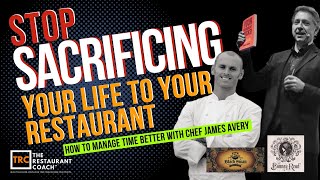
This is a podcast-style YouTube interview (July 29, 2022) where host Donald Burns speaks with Chef James Avery about modern restaurant leadership and avoiding the expectation of self-sacrifice. Avery describes his career (TV work including Hell's Kitchen, building restaurants Bonnie Reed and Black Swan in Asbury Park), argues that long 18-hour days are no longer required, and offers concrete operational advice (menu-first design, prep sheets, prioritization, staffing strategies) along with personal practices for self-care, values-driven decision-making, and building restaurant culture.
Questions this video answers
July 29, 2022
Bonnie Reed and the Black Swan — Asbury Park, NJ
Hell's Kitchen (worked with Gordon Ramsay)
41
24 years
Chapters
Hey, and welcome to the Restaurant Coach podcast. It is the cure for the common restaurant. I am so honored to be joined today with a not only an amazing, amazing chef, but also I consider a very good friend because we share a lot of the same ideology. Chef James Avery. Chef.
What's up, Donald? How are you?
Ashbury park, man.
Things in Asbury park are good. You know, things have turned around. Big difference from where we were two years ago. So telling you, huh? Jersey Shore is alive and well.
That's good to hear, baby. That's good to hear. Yeah, yeah. You know, and the reason I got you on the, on the, on the interview today is because, you know, I follow you on Instagram, and if anybody doesn't follow Chef on Instagram, I'll put the link right here. You want to go check them out? It's Instagram. It's Chef James Avery. I put an extra capital V in there.
I don't know why. You know, we get the point.
It all works, man. You know, but anyway, I was, you know, watching some of your YouTube stuff, and the thing. I mean, I mean, your Instagram stuff and the thing that got me going the other day, you talked about people like, especially these young chefs thinking they have to sacrifice their life.
Yeah, it's crazy.
It's crazy. You know, why don't you elaborate on some of that? Because I think time management is, again, something that people just think that I got to do it like this, I got to do it like that. And that's a bunch of. Right?
Yeah, I think it's a lot of, you know, we believe a lot of these false narratives because, you know, you know, you're. You're. You're slightly a little older than me. And, you know, when we were coming up, the chefs.
Thanks, man.
You know, it was like Marco Pierre White, and it was like, you thought 18 hours and. Yeah, and, you know, that may have been true at a certain time, but it's not true today. You know, between technological advancements and just the workforce and the way things are, you know, you really don't have to do these 18 hour days anymore. I mean, I do them because I own restaurants, and when I'm opening a restaurant, it's balls to the wall for a few months. But, you know, I was talking to one of my sous chefs the other day, and he just seemed so burnt out, just so you know what's going on. And he told me his work schedule and what he's doing. I'm like, you know, why are you doing this to yourself? What is going on. And listen, you know, two things that, you know, you lack early on in your career is confidence and skill sets.
Exactly.
And a lot of times, I think these younger chefs, they try to make up for it with time in the kitchen. Like, if they're there, they just feel more confident that they'll get the work done, that they'll get the job done, or if a task or a project takes them longer to do, having more time in the kitchen will alleviate that problem. Now, that might be true, but what I always say the goal needs to be, get it done in 10 hours. Like, you got it. You know, work fills the time allotted for it. And I don't like my guys working more than 50 hours a week. I mean, 40 hours a week. Maybe you picked the wrong profession. You know, I think I don't get going until 40 hours a week. But, I mean, yeah, like, there's a way to do balance. And it comes down to. And I prefer to look at time like money. Right. Like, it's a resource. It's a. It's money really is just an economic storage unit of your time. You spend your time somewhere, you get money in return. Correct. You spend time building a company or a business, you expect an economic return. So money and time are almost interchangeable, and I have to view them both the same way. So what can you do with your money? You know, you can. You can spend it and waste it or, you know, you can invest it and manage it. And I think that once you get that idea and you look at this finite resource that you have, it becomes much bigger. It becomes bigger in life. It becomes bigger how you spend time with your family. And it really. Once that is established at a subconscious level, you start acting in a different way. You stop wasting time. You stop going to work three hours early because you don't trust, you know, something. And that's really what I was trying to convey on my Instagram post.
Yeah. So let's slow down a little bit. Let's back up a little bit.
Yeah.
So, you know, James Avery. You own a couple restaurants in Ashbury Park. You own the Bonnie Reed and the Black Swan. And also, a lot of people might know you. And, you know, a lot of people say, hey, you look familiar. Where have I seen you before? Right. Like, oh, yeah, I was on Hell's Kitchen. I was one of the chefs. You know, I was one of the guys running around, yelled at everybody was Ramsay and stuff like that. So talk. Talk a little bit about your background and what got you, you know, to where you are today.
What got me to end it? Well, I was a, a terrible student and I love to have my own money, so I, I would always be working. I started delivering pieces at 17. Fast forward. I went to college, worked in restaurants. You know, I finally made the jump to back of house. And, you know, in New Jersey, I bounced around from job to job catering. But about, you know, 12, 13 years ago, I really made the shift of, like, going to Atlantic City working with, you know, chefs like Michael Mina in their kitchens. You know, I spent some time with David Burke. There's some really big, heavy hitter chefs. And I able to, I was able to network my way into the TV world working, you know, as a consultant with Gordon Ramsay on a few of his traveling TV shows. And ultimately, you know, in between opening like a half a dozen restaurants for other people and working for big companies like Be Our Guests and Chefs International here at the Jersey Shore, I found myself as his, like, right hand man on Hell's Kitchen as the, you know, blue team sous chef. So I did that for many years, and then I finally decided, like, you know, I had a lot of children and four kids. I consider that a lot. And I got tired of that traveling and living away from home. So I parlayed that into, you know, opening a couple restaurants here at the Jersey Shore. That is a very, you know, fast forward version of my bio. But, yeah, so now I'm, you know, I'm 41 and I'm starting my hospitality group. Nicely done hospitality. And currently our two restaurants under ownership and management. The Black Swan, which is our. In our British gastropub. Kind of a nod to my time with Gordon Ramsay and just a way to differentiate myself from all the, you know, these kind of classic Irish pubs you see.
Yeah.
And we also have the Bonnie Reed, which is a classic, you know, rum driven seafood chowder house, classic, you know, type seafood thing you'd expect to see in a Jersey shore.
Yeah, I've been to your Bonnie Reed before. It's a beautiful restaurant.
Thank you. Yeah. Very special to me. Yeah.
Yeah. So of course, you know, everyone's gonna ask, you know, the question everyone wants me to ask you all the time is like, is Gordon Rams really that mean?
He's very intense, you know, I mean, he's intense. I met him. Personality. And you're on tv. But I wouldn't say, you know, things can be dramatized, but that's who he is. He is intense. You know, again, I wasn't a contestant on the show. I actually worked for him. On the show, you know, we had a lot of on camera and off camera duties. You know, we were really up was an operational restaurant. We were doing things, and he had certain standards and both on the production side and as well as the, you know, the execution and the training of the chefs and the contestants, and it was intense. And he doesn't mess around. I mean, you don't get to where he is in life and what he's done as a chef. You know, being soft, being easy on everyone, not being intense. I mean, the guy, I don't know when he sleeps. So being around him was pretty magical.
Yeah, it's like working for Wolf. Wolf was like that too. Wolfgang was very, very intense. I mean, he knew his standards, he knew what he expected. As long as you. Long as you maintain the standards, you were fine, man.
You know, that was it. Oh, you know, it always has you a question, have an answer.
Just say, yes, Chef. Yes, Chef.
I'm on a chef. Yes, Chef.
I'm on a Chef. It's done, Chef. I'm after it, you know, so, you know, covet. Set us back a little bit now, you know, things are coming back around. Still got some supply chain issues now. We've, you know, we've technically are entering a recession. Depends on who you talk to. Some people say, yes, we are, some people say, we're not. Depends on who you're talking to, which side of the fence you're talking to. I'm gonna say right now, though, that, you know, the industry is kind of getting rocked a little bit.
Yeah.
Where do you see the industry right now, man?
You know, just being the eternal optimist that I am, I really just try to put blinders up and tackle each day as it comes at me, you know, face today's challenges. Today Covid, for the most part, is behind us. No knock on wood. I can't worry about tomorrow. I don't even know what that's gonna look like. So that's metaphorically speaking, right? Like, here's the deal today. What do I have to do today? I have to manage the world the way it is, not the way I wish it was. And that's how I look at it, to be honest. Like, I don't. I don't like blaming the. Oh, the labor market so bad right now. Oh, the supply chains messing me up. It's like, listen, you know, problems like this aren't unique to us. You know, if you look back throughout history, you know, the early part of the 1900s, like, they had depressions, they had Famine. They had these things happen, and people rose out of it. So I like to try to really work hard at keeping that mindset. Yes. We get shorted stuff all the time. We couldn't get aqua pana for, like, a month.
Are you serious?
Oh, yeah. Crazy stuff. Crazy things. Our French fries. We. You know, people love our french fries. Lamb Weston couldn't get us our french fries. Like, things like that happen, but, like, you can sit there and complain about it or him and ha. Right. Or you can just keep moving to the next solution. Keep moving to the next solution. And I. And I firmly believe that the people. People that keep doing that and have that mindset and that kind of mantra are gonna be the ones that succeed and get to the next level.
Exactly. Exactly.
Complaining about it does nothing. So I don't even.
Right.
I don't. I don't even let it, like, get into me.
That's it. So what are some of the ways you've shifted your business models? Expanded hours, contracted hours, Delivery.
Go ahead.
I mean, extra expanding hours or contracted hours.
So Covid had its own unique set of problems. You know, you had spatial issues. People. You know, obviously, we had outdoor dining. And, you know, being that we're at the Jersey shore, the weather could be spotty in the summer. So we had to change our plating because we had to be able to quickly package the food to go. Shouldn't start guests outside. We actually increased our seating capacity because we had more additional seating outside. So I had a. I hate the word dumb. Down the menu, but figure out a menu that we could quickly execute with minimal prep, because you didn't know if you're gonna have 10 line cooks that day or five line cooks that day. So you had to have things that were not as prep intensive. Listen, I'm a chef. I love making everything from scratch. I can do it. One of my favorite things to do at food shows is to find out, like, great products that I can bring in that take pressure off the prep team.
There you go.
You know, and people can make fun of me all they want, but I tell you what, I'm fully staffed and opened a restaurant during the pandemic, and people love. I know we just won best new Restaurant New Jersey. So, you know, and I make as much from scratch as possible, but there's things out there that, you know, like, guys making their own charcuterie. Like, are you're still doing that? Like, now? Like, there's great charcuterie you can get out there. You don't have to, like, cure your own salami to like, yeah, whatever. So, you know, things like that. And then just now with like, this whole supply chain stuff and prices just being astronomical, it's insane what some of these things are just. You know, there's always something else. There's always another way to move. You know, if lamb's expensive, you go to steak, and if filet is expensive, you go to skirt steak. And if skirt steak's expensive, you go to hanger steak. And you're just constantly bobbing and weaving. You know, there's always something. There's always this. I'm with the mindset that there's always a solution. It's just our job to keep. To keep finding it. You know, during COVID we weren't doing. We weren't doing happy hour. We didn't need to. People wanted a place to go. People, for whatever reason, were happy to spend money. So I'm like, what? You know, I'm having limited seatings. You know, things are crazy right now. Like, we, you know, we. We got rid of happy hour. Now people's wallets are. Have shrunk and. And. And Covid, you know, the restrictions have been lifted. So happy hours back. So again, we're constantly looking for ways to keep the. The guests engaged and. And to work with the staff that we have.
What do you think about. What do you think about the now? So a lot of my restaurants, I'll suggest to my clients too, like, when the, you know, walls tighten up a little bit. I'm a huge, big fan of, like, doing the. The preview menus. You know, how a lot of places do restaurant week and they do the, you know, course menu. I love doing those, like, during the weekdays and call it like a locals menu. How do you feel about preview menus?
I think pretty menus are good. You know, logistically, sometimes they're difficult. To be honest, I don't do them unless it's like a restaurant week or a certain. Like, I'm pairing it with like, a certain winemaker that I'm trying. I really look at the bigger picture. Like, you know, how can I put as much value on the plate? What, you know, where can I grab. How can I get my liquor vendors to say, hey, listen, what. You know, how can I really reward people with, like, a great stiff cocktail that's appropriately priced, that's not, you know, $18 martini? And those are the ways I try to find value. You know, really like working with different vendors and seeing what. Whatever food product it is. Like, for example, I found this. This pork Chop this pork product that's basically the meat that's in between the ribs. When they French the pork chops, they have like these little. It's almost like a boneless spare ribbon. So we, you know, then we fry them and we toss them like a little teriyaki sauce. And that's like, it, it's like a dollar fifty a pound. It's like literally. So it's like things like that you're constantly trying to figure out. That's how I, I navigate, you know, through things. And again, happy hours back. But I mean, preview menus are great. You know, we, we do them for holidays, like, you know, Father's Day, Mother's Day, Easter. Like, we've had really good responses with it.
Well, you and I are both big, huge believers in leadership. And I, you know, and I think especially now, as we're coming out of this pandemic, I think leadership in restaurants is critical. What do you think is the number one trait that a leader needs today?
I think, you know, I always think the leader sets the standard. So to me, it's. It's calmness, poise and discipline. Nobody wants to be around a nervous, hurrying, anxious, sloppy leader.
Exactly.
I think you need, you know, everybody wants to look at you as like this beacon. And I think even if you don't got it, you gotta act like you got it, you know, like. And I think that's the most important quality. Calmness and poise.
That's cool. And then, you know, that kind of leads into my other thing about self care. You know, I know you and I both are huge believers in self care. You know, what do you do to take care of yourself? And I'm going to say, kind of preempted that, like, you know, one of the things I, I love on your Instagram feed is like, you, a lot of times you go for a walk in the morning and you're just kind of like giving out these randomizing thoughts and stuff that popped your head and they're really great. Doing like the daily walk. What else do you love to do for self care?
So, yeah, I mean, I'm a big. I love jiu jitsu and martial arts. I do that. I'm currently injured, so really right now I'm sticking to just like my morning walks and I do weightlifting. So typically, my, you know, again, we'll probably get into this at some point, but, but my, my routine is everything, right? I want to get into a state of flow within minutes of waking up. So. And the best way to do that is to get your first win of the day. So, you know, I get up early, which I can now because I've changed some nighttime habits. Talk about that. But I get up early, you know, I get my teeth brushed, I get my running shoes on, I go downstairs, I crush my. My water with lemon and salt. I have my black coffee ready to go. My wife is with me. We get out the door and we do our hour walk, Come home, get the kids up, get the kids fed, and then we have breakfast together. You know, we talk about life. I'm like, I'm already in this, like almost like runner's high, you know, I go to the gym and I've done two workouts, spent quality time with my wife and kids, all before 11am, 12 noon.
Yep.
And that's on the late side. So that does a lot for my physical health, it does a lot for my mental health. It keeps me on the path and then, yeah, you know, you're. You're out. You know, your exterior is, is a product of your interior world. And it's like having that, I bring that energy to work now and that is like why I really do it, you know?
Exactly. Yeah. And I'm a huge believer in culture. And culture, I always say culture flows down, doesn't flow up. And culture starts with you. Your energy, your attitude sets the tone for the team.
That's it.
100. No joke. So looking back over your life, of the places you've dined at, what would you say is the best meal you've ever had?
My Chichirelli is. My wife and I were out in. I've had so many great meals, to be honest. But one thing that I always tell people, like, probably the best thing I've ever eaten was a Michael Cicciarelli's restaurant in Yountville. I don't know why the name is escaping my head right now, but my wife and I went there for our 10 year anniversary and we got the, you know, the, like, it's the. It's a ravioli made with gnocchi dough and I had the truffles, cream, spinach and the runny egg yolk in it and it was like brown butter. It was just like heaven on a plate. But my. Some of my favorite meals were like, you know, Blue Ribbon on Sullivan in New York City. I love the old school stuff, you know, those are like. I love the old school. I love it. I love the restaurants, you know, that were in, you know, Gramercy Tavern and Gotham, Gotham Bar and Grill and I love those Places.
I always say that the best meal I ever had was at Rick Tomano had a restaurant in Chicago called True. And. And I actually, you know, Trano is a friend of mine. He actually wrote the forward to my new book coming out. Your. Your restaurant culture sucks. And I. And I always. I was like, dude, you don't understand. That was like, the most amazing meal ever had. He's always. You know what I always find, too, like, chefs like you, the guys that are actually really, really good at their crafts, actually really, really humble, you know, they're actually like, thank you so much. I really appreciate that. You know, they actually don't have this ego about them. They're just, like, fun to hang out with, fun to talk to, and stuff like that. I always just find that, you know.
You probably will get you in trouble, man. Can't have an ego.
Can't have it, man. Ego, pride, denial, baby. First, the three things I take down the restaurant faster than anything, I always come to three horses.
Yeah. Chef's island. I had one. I just.
I had one, too, and in my 20s. That was horrible, man. It was horrible. Yeah. So, you know, we talk about labor and, you know, and everyone says there's a labor crisis. I think you and I both believe there's not really a labor crisis. I think we have a cr. You know, a culture crisis. Yeah. Yeah.
And. And it's also having expectations, you know?
Yeah. Yeah. What do you. What do you think is kind of like the big problem these kids have about having to sacrifice themselves, you know, for this, for. For a career?
To be clear, you're talking about, like. Like entry level sous chefs or just people that are. Are contemplating getting into the industry. Who are you?
I'm talking about people that have been in the business for a while.
Yeah. I just think they can't get it past their head that, like, the world has changed, people have changed. Every generation bitches and moans about the next generation.
That's the truth. You ever notice that?
Every generation does. I mean, somebody said about my grandfather, he was in three wars. You know what I mean? Like, so. So, like, at the end of the day, yeah, like, maybe they. They have a different set of, you know, difficulties. So I think number one is learning how to relate to these people. So I know they want work, life, balance. I know they don't want to spend 15 hours in a kitchen because they're looking at Instagram and they're. And they're not getting a really real perception of reality, but I know that's what they're that it's real to them. So I have to figure out how to manage my business to get these guys, guys out of your eight to ten hours. It's just. It is what it is. Nobody wants to work a 15 hour day anymore. So if you're going to sit there and pound your fist and try to get a square peg to around hole, you're in for a long ride because it's not going to happen.
Yeah, you mentioned it earlier. It's called Parkinson's law. Working work expands or contracts meet time obligated.
Yep.
You know, and, and everyone, everyone has a horrible. I think most people, they suck at time management. You know, they just have no, they just think that I'm coming, I'm busy all day, so I must be productive, right?
Yeah. I mean, there's, there's busy work and there's real work. You know, you can be, you know, it's basically, you're looking for the right, the right results. You got to be focusing on the results, what you're doing, you know.
How do you help manage. How do you help your team? Kind of, you know, teach them a little bit about time management. Do you like, give them assigned list? Do you give them prep lists with time sheets? How do you kind of help manage the madness of, you know, time?
Well, there's a lot, I have a lot of, you know, Chef James Isms that I've grabbed from all the books and things I've studied. But again, one thing is finding flow, you know, learning how to come in and just get your mind right. So when I'm driving to work, I tell these guys this. When you're driving to work, visualize your day. Marco Pierre White even talks about visualizing. Visualizing the perfect execution. So as you're driving to work, think about what you're doing, how you're getting ready. You know, back in the day when I worked for David Burke, and we were doing these 13 hour days, and we didn't have a prep sheet, we didn't have lists. We had a menu that was scribbled on and we had to figure out what our prep sheet was, and we had to know what we were supposed to make for it.
Yeah.
And we got to a point where we would come in and like the changing room was in the basement. So we'd come in and we'd get all of our pots of blanching water on in our street clothes because we didn't want to waste time. Like, the water could be getting hot while we're walking downstairs, like, you know, like really prioritizing your day. And again, going back to. It's finite. It's fixed time. Right. So you. You. It's a game. How much can you get done? How much can I get going? You know, multitasking is a bit of a myth. You can only really do one task at a time. Well, I mean, you can have water heating up while you're chopping your onions. I see a cook mincing herbs, and he's got nothing on the stove behind him. I'm like, dude, no, no, no, no, no, no, no. You need to get some stuff going on behind you, and then you chop your herbs, you know, so it's prioritizing tasks. You know, when you're a line cook, I like my line cooks to come in, get everything they need on their station. So they're not stopping every five minutes.
Yeah.
Or a spatula. Like, it should be, like, you know, it should be automatic. It should be almost at this point in time, like muscle memory. You come in, you get your pots, you get your pans, whatever it is you need for your station. You know, if you're on the fry station, you have your baskets, you have your bowl for your calamari, whatever it is, and then, you know, have your prep list, which is, by the way, on Excel spreadsheet. It's not a scribbled on menu. It's an extra thing that I've created. And then when I tell my. My sous chefs who try to, like, shoulder all themselves, oh, these cooks aren't any good. These guys don't know what they're doing. Okay, well, have you taken the time to train them and actually show them? And have you put a quantifiable metric on that task? Meaning, you know, that task takes 10 minutes. Don't bitch to me that it's taking them a half an hour. Did you show them a better way? And if you didn't, did I not show you a better way? Like, taking ownership of it? Right. That's another big, big, big, big, big thing that you have to do. But, you know, understanding, you know, the most important tasks that you have to get going first that take the longest, you know, eat the frog, getting, and then just prioritizing around that, and then get. And once you get in the flow, it's good. So get your. Get your hardest tasks done first, get organized, get into flow, get moving, and understand how long each task will take you, and then you can measure it. And again, a lot of times, it's like people come in and they hurry, and they just feel like they got to be going like this all day. It's, you know, they say, slow is smooth, smooth is fast. So we say in the military, yeah, well, I have a lot of military things. You know, Ooda loop is another one I like. You know, observe, orient, decide and act like that's hostile situations. Like, same thing in a kitchen when shit's going down, stop time out, observe, orient yourself, decide what has to happen, and then act on that. And then you loop it. You keep doing that constantly, so. Because inevitably, that's what's going to happen in a kitchen. Right. Like a pipe's going to burst or the plumber's going, order is going to get delivered, or a cook's going to call out, or a cook's going to be late. And you're constantly like. But your attention has to go to the hierarchy of needs. What's the most important, important thing? So here's a great, great bit of that. Like, you have to know what your most important tasks of the day are.
Exactly.
I told my sous chef, who's, you know, constantly running around hurrying and worried about getting everything done, worrying about every herb being cut. I'm like, I have two expectations for you. Make sure that the prep sheet is completed, that the prep cooks completed their prep, and that you've tasted everything on the line. Because I don't want to find out during service that the vinaigrettes are too salty or too oily. Yeah, that's it. Outside of those two things, everything else, you get to it. When you get to it and you've heard it from the horse's mouth, don't worry about, you know, what was left out last night. Don't worry about, you know, putting every order away perfectly. We'll get to that. Right now, time is of the essence, and we got to get ready for service. Then once we're set for service, we can move on to, you know, the ancillary tasks.
Exactly.
And that's kind of it. It's just knowing what. What's important and getting on it.
So how many years have you been in the restaurant industry now?
17. I'm 41. What is that, 24 years.
24 years. So. And would you say you're just as motivated today or more motivated than you were when you started?
You know, motivation is fleeting.
That's what I was getting to.
You know, I lose motivation all the time. Yeah. But I have a very strong burning desire to build a restaurant group, and that's what keeps me going. So there's days I'm not motivated there's days I'm like, oh, my God, I don't want to do this today. But I recall, like, no, you want to build a restaurant group. You wrote that down. And it's on a piece of paper, and you look at it every day. So get up, buddy.
I want to kind of circle that back to that talk you had this morning on your Instagram about values. Yeah. How important are values to, like, just keeping you focused on that front sight, you know? Any we talk about the military front, side, focus. Yeah, I think your values are that front sight, focus.
Yeah, it's, you know, it's everything, like, Right. You know, so it's. It's like your health, your wealth, your family, and those are my priorities in life. You know, I need to be healthy first. So, like, staying up, drinking Bing, watching Netflix doesn't serve me. Don't do it anymore. Okay, so it's like, my health, my wealth. All right, I gotta. My business is important. I gotta make sure my finances are in a row, that everybody is doing what it's doing to you. Investors are happy, so I can continue to grow my health, my wealth, my family. So I was spending time with my wife. You know, what am I, you know, a lot of busy people. Entrepreneurs, Chefs, even. Not an entrepreneur. We have this tendency that when we're at home, we're mentally at work, and when we're at work, we're mentally at home, and we're constantly feeling guilty where we are. And I've learned to be like, my feet need to be planted firmly where they are, so that's how I handle that. And really, it's just having those values and having those lenses to look through when you're trying to make decisions of. Is this the best use of my time? Is this serving me? Is this serving my values? Is this getting it? And, you know, again, I was talking today about, should I or shouldn't I do this? You're asking yourself that, you know, because, you know, you know, not in congruence, you already know the answer. You're just looking for your ego to be like, hey, no, you should do this. It's cool. Whatever. You know, you skip your workout today. You've worked out the last four days, or, you know, whatever, or. Or let that one plate that isn't really up to spec go. Yeah, okay. It's like, no, it's like, so having. Having your values and what matters to you and why they matter. It's everything. I mean, it's everything. And when we get out of congruence with that when we act in a way that's not in alignment with our values, that's what causes a lot of anxiety and resentment at work and all these things.
I remember having a conversation with a sous chef one time, and I was watching him, and he put a plate out, and I knew the plate wasn't right. And I asked him, I said, did you know? Did you. Did you hesitate for a second? Did you think about saying that played out? Because I know you stopped for a second and you hesitated, but you sent it out. He says, well, the guest didn't notice. I said, that's the problem. You did? Yeah. Yeah, that's the problem. You noticed it was wrong and you said it anyway. That's the problem.
Yeah. Standards and discipline, you know, like, holy. Yeah. It's like. What was it Henry Ford said like? Excellence is doing the right thing when nobody's looking. Like, something like that. Exactly. It's. It's. It's. It's. It's more or less like that's exactly what it is. You know, I had this rule, like, nothing. If I see something on the floor. I've done that since I was a busboy at restaurants. Like, to this day, if I see something on the floor, like, I run to it to pick it up. And it's funny. There's times where I see it across the dining. I'm like, all right, hopefully somebody else is gonna pick that up. I'm like, nope, nope. And it's funny. I walk in the restaurant and people see me, they immediately start looking on the floor because they know they see something on the floor.
Oh, shit.
Freak out if there's a napkin or a straw or whatever on the floor. So it's funny, but that's a great example of, like. Of, like, you know, leadership and leading from the front. Right? Like, that wears off on people. Your good habits will wear off on people. And a clean restaurant is one of my values. So if I. If I let that slide, if I'm like, yeah, like, I'll think about it. I'll mess. I'll be driving home, like, I should have picked that napkin up. Should have picked that napkin up.
So that leads me to talk about culture. You know, my whole new book, your restaurant culture sucks, coming out in August. Hint, hint. All about culture. What do you think is, like. What do you think is critical to creating a great culture?
Family vibes.
There you go.
You know, I'm a really good angry dad. I don't, like. I don't scream at people. I do a very good. You Know, disappointed dad. And. Yeah, yeah, that's how I kind of take that role on. But that's just like a joke, but it's real. But really, like, there's no. Like, my partner who was my general manager, he's making my director of operations. I've now made him a partner. We're like best friends. We don't fight. We do. We go sit outside. We have a very calm conversation if we're not in alignment on a certain topic. But he and I are like, best friends. We make jokes together. We are, you know, our kids are friends. And the. The front of house. Back a half staff see that. We react that way. You know, he goes to bat for.
The back of house.
I go to the bat for the front of house. And we don't. We don't tolerate that. We don't tolerate. Oh, it's the front of houses, and you're not dealing with the guests. The guest is yelling at them because you took too long to cook their steak. Now they're getting screamed at. So relax. When they forget to order. Thing of, you know, whatever. Say, sauce on the side, bud. Relax. It's not a big deal. We'll fix it. So, like, you know, foot on the pedal with that and making sure that, like, you're really driving that in everybody. That, like, we're all in this thing together and family, like, we're in. And it does, like, the bad ones weed themselves out. They're like, the family will jump on them or, like, they'll embrace the new guy or girl. And that's, like, critical to a restaurant. I feel like it's a family. Family vibe.
That's cool. That's so cool. So let me ask you a question. If you came with a warning label, what would your warning label say?
Holy smokes.
It's an adult show, so you can use whatever language you like.
Yeah. My warning label be, like, laziness, don't be lazy, and don't make me tell you twice. You know, I think I've really screamed twice. I have a temper. I'm human. You know, I've definitely mellowed out. You know, I'm 41 now. I'm not 31. When I was 31, you know, I had a big, big temper. So, you know, I don't know. I don't. That's a really. That's a really good question. Morning, label. Yeah, Just don't be late. And don't. Don't, like, be blatantly lazy or sloppy or show that you don't care because it's you know, it's pretty evident that I care a lot. And when there's people around me that don't care, like, I, like, come out of the side of my neck.
Very cool, Very cool. And. And how do you deal with stress?
You know, they always say, you know, I mean, in the last. So to be told, like, Covid was a. Was a motherfucker. Oh, it was. It was one of the hardest times in my life. We were dealing with you, you name it. Like a restaurant. You couldn't do right as a restaurant owner. You know, you'd yell at the people who wanted to wear masks. Would yell at you. The people who didn't want to wear masks. People wore masks. They're not going to go. And. And then you sprinkled in all this political divisiveness stuff and all these things that could possibly. I mean, I just was, like, up to here. I gained 25 pounds. I was injured at the time, so I wasn't training my body the right way. And I just succumbed to, like, you know, just like, drinking. Not like alcoholic drinking, but just, like, not taking care of myself. Like, I quit meditating. I quit going to the gym. I'd go from coffee in the morning and have an afternoon beer. Like, I was like, wait, I didn't have a glass of water period today. I'm very aware. I'm grateful. I went through that really stressful time. And I even opened a restaurant during that. And then shortly. So it was like, Covid open a restaurant during the pandemic. My father passed away. Oh, no. Yeah, yeah, it's. It's. But I'm just saying, like, these are all really heavy, you know, a lot of anxiety. And I was just like, in February, like, this is not going to work anymore.
Yeah.
Talked. I wasn't in congruence. I looked at the mirror. I literally didn't recognize myself. Like, who is this guy? He's bloated, he's bloodshot eyes, his skin's all messed up. Like, I just looked like a different person. And I'm like, all right, I gotta get. I gotta. Like, it's more like getting back to basics. Like, start exercising, start, you know, getting to bed early, you know, chill out with the alcohol, start eating what I'm supposed to be eating, meditating. So it's this whole stew of things. But now today, you know, I love all these new modalities, like the WIM HOF method. I do that. I'll do it after this podcast. I'll do it right in the middle of the afternoon to get grounded for dinner service. I'm currently on, like, a hiatus from alcohol. Not because I own two bars. I'm not against people drinking. I'm not. I'm not that. It's just for me with where I'm. Where I'm at in life. I like to get to bed early. I like to get up early. And there's a lot of things I'm trying to do in a day's time. You know, I'm working out two and a half hours every day. Sitting in front of the tv, you know, having a bottle of wine right now isn't really. So I've mitigated that. I'm tracking my food, and I'm, you know, focused on my marriage and all my business, and I have all these things to keep my energy going, and it's really suppressed a lot of stress. And working out, I tell all, everybody I know now, I'm like, go for a walk. Don't tell me you don't have time. Yeah, I solve my life's problems on my walk in the morning. Like, I talk to myself and I do a quick minute video of whatever I was thinking about. I don't even bring AirPods with me. I just enjoy nature and walk down this path behind my house for, like, four miles. That really helps alleviate stress. And then knowing that at the end of the day, it's over. No matter how bad dinner service was, no matter how bad Table 15 was, no matter who didn't show up, I'm home and in bed with my wife, and it could be way worse. And that gets me. That gets the stress under. Under management.
That goes back to, you know, just talking about gratitude. I think having an attitude of gratitude. One of the things I. I kind of have all my coaching clients do is every day they guys tell me, give me three things you're grateful for, you know? Yeah.
Good and bad. You know, I think when you learn how to be grateful for, like, everything like that, that's just. Just, like I said that all my walks, I'm like, you know, right now, somebody left their house and they're not coming home tonight or their spouse isn't coming. Just be grateful for the day, you know, Be grateful that you have an opportunity to go to a stressful job. Be grateful that, you know, there's an opportunity for advancement. There's so much to be grateful for. Like, so much and focus on, you know, what you have. And it sounds cheesy. It really doesn't tell people, like, oh, yeah, yeah. But if you really start to internalize it and digest that. It's powerful stuff. It really is. It's not just Kumbaya. That's the truth.
That's the truth. So when you were a kid, what'd you want to be when you grew up? Was it always a chef?
No, no. What did I want to be? I wanted to be an architect, but I graduated like, fourth from the bottom in my high school. I don't even think I broke a thousand of my SATs, so that went out the window. I loved animals. I still do to this day. I wanted to be an entrepreneur. I always knew that my mom. My mom will make that joke. And I was always like the lemonade stand kid. I always was like, shoveling snow. I've always had this very strong entrepreneurial itch. You know, I am a chef, but, like, my real passion in life is building businesses now and putting business together and leading people. It's just the flavor is I'm a chef and it's in hospitality.
Yeah. Yeah. Well, actually, it's funny you said architect. I wanted to be an architect too, but then I realized I couldn't draw for shit. So I was like, no, I can't even draw a straight line.
I mean, like. But I love it. I designed my last restaurant, the Black Swan. And I'm like, man, I really should have gotten into like, how to do this cad. Just like. Cause like, yeah, I enjoy that process. I enjoy the build out. I'm there when my restaurants are getting built out. I had a fast casual. We end up shutting down after. Right before COVID But I mean, I was there the day they started started, you know, doing demo to the day they did the finishing touches. And I watched the whole process. It's really fascinating.
But let me ask you a question about restaurant design. Then. What do you design first? You design the front of house or the back of the house first?
Well, the first thing I always design is the menu. So at the top of the pyramid is the menu. And then, then that tells you, okay, well, what's the food like? What's the food need to be? And then you figure out what's the service need to be. So that kind of gives you an idea of the front of the house. So you have to build them in tandem. To answer your question, the simple answer is I build them in tandem. And then it's like, well, what, what, what equipment do I need to execute this? What's the square footage? Is it cocktail driven? Am I going to have, you know, 12 service pieces for glassware? Am I going to have six? You know, is it so, you know, really, no matter what you do, whenever I concept a design. I'm sorry, concept restaurant, it's the menu first. What is the menu gonna be? What is this area need? What is the market demanding? What's the price point? The price point tells me the service experience, the service experience tells me the textures and the feeling of the dining room and so on. So it just spiderwebs out from there.
I'm so happy you said that. The menu first, because I'm gonna tell you. And you've done some consulting too. I would say probably 90% of my consulting gigs, they had everything done but the menu. And I'm like, you guys are totally ass backwards on this thing. Do you understand that? Now you're trying to fucking create a menu. It' like you said, that square peg, round hole. Yeah, me, you know, you already got the kitchen equipment picked. Well, now I'm like limited by what the menu can be. You know what I mean?
Right. Yeah. It's like all of a sudden you want to be like a very big sauce driven, like, okay, well, you have no room for a tilt skillet. And a lot of people do that. You know, it's like they. Yeah, exactly. They just think like a 12 foot hood's enough for a 500 seat restaurant. It's like. Yeah, so it's like the menu and you go, you know, front and back and down and left and it just kind of all comes together. But typically that's. That's how I do it. And I'll even go one step further. I'll do all my back of house work first. So I'll be like, all right, here's the menu. Apps, entrees, bum, bum, bum, bum, bum. And then I'll be like, I'll break each dish down onto a station setup sheet, which is like every component that this needs, and if I highlight it, that means it's on prep. So let's say the sauce, it's on prep. And then I can build a prep sheet. Once I have my prep sheet, then I can design my kitchen. So I can't design a kitchen until I know what I'm making and what.
I need to make. Exactly. So true. So many people don't understand that, you know, and then they wonder why, like the team has a struggle. You know what I mean?
They didn't consider all these things first. They have a heavy fry menu, but they have, you know, 135. Yeah.
One or one fryer or. I did a consulting Job for an Italian place, they had a four burner. Like, ain't gonna work, man.
By the time you put the pasta pot on there, you're down to three burners. Yeah, you're dead.
You're dead.
Write your menu. Write your. Man how I do everything, I write the menu first and then that. And then the menu kind of is like, all right, well, what is this gonna stand for? What are we? You know, are we a Ferrari or are we a F150 pickup truck? Like, what are we. What is our customer pulling up in? What is. You know, what does the feel need to be? Is it edgy? Is it cool? It's the brand language. Everything starts from the menu. Like, look at it like this. We sell a product, and the product that we sell is whatever's on our menu. And then you go from there. You don't, like, say, hey, I got it. Nike didn't design the swoosh first. They didn't know. They didn't design their. But they designed the sneaker first. So you need. If you sell food and drink, what food and drink are you selling? Then we'll start the design process. You know, that's.
That's so perfect. Yeah, this is so true. Then, you know, like I said, I've been to the Bonnie Reed before, and I have to say, like, when you walk in, it does feel like you're, like. You're walking into, like, someone's, like, summer home. You know, it's like, as open atmosphere, the kitchen. You see everybody in there. You see the energy, you know, the bars there. It's just, like, super. Just really, super inviting, which I think has always been really cool about your concept. I got. Next time I get out to Jersey Shore, man, I go to the Black Swan, so.
Yeah. Yeah. Black Swan is really cool. You should check out the Instagram. It's been great.
Yeah. Yeah.
Having a lot of fun, because I really. I really took it to heart. It's an old bank.
Yeah.
And one. One food that I never really cooked was Indian food. And since it's, like, got this British vibe, you know, we have tikka masala, Ram Rogan, Josh. We have, you know, doctor, like, all these different Indian dishes on the menu. So it's a lot of fun. It's a really, really traditional, you know, shepherd's pie with lamb. A lot of fun stuff. So I'd love to have you in there to check it out.
It'd be cool, man. Yeah, I can't wait. Yeah, I should be. I should be back east coast, probably beginning of the year.
Okay, cool. Well, make sure I know where you're speaking. If you're doing, like a speaking engagement.
You know, the New York restaurant show. I usually speak at the New York restaurant show.
I'll be there.
I'll be at the Florida restaurant show in November.
I gotta start going tomorrow. Last two years. I mean, the last time. Last restaurant show I went to, I saw you. It was at the u. S. Food show at the java center.
You know what I should do actually, dude, I should get you to speak. I should have you come and speak at my restaurant success. And I have a restaurant succession every October here in Scottsdale, three days. I should have you come out and talk about. About some of the stuff we talked about today about.
I would love to.
You could process. So, yeah. So. All right. So, hey, I'm just announcing now. Chef James Avery is gonna be speaking at my restaurant success summit in October here in Scottsdale. Could be three days. You're gonna have a great time.
That's it. Yeah.
Very awesome. So what's. What's a book? I know you. You're like me. You love reading, and you've been getting some of the classics, you know, lately. What. What's a book? An audiobook or a podcast that you recommend that people listen to?
I can't think of whose podcast, if it's how I built this. So it's a lot of different entrepreneurs from different walks.
Yeah.
Not just restaurants. I can't think of the guy's name. It's such a good podcast. How I built this. So they had the CEO of Panera on there, super story, Chipotle. So that's a great podcast for business. I love Joe Rogan's podcast. He has really interesting people. But everything's politically divisive today. I don't even know. But he's. He's got a good podcast. Books, man. I read so many. What have I read? I just finished Endure by Cameron Haynes, and it just talks a lot about working hard. And, you know, his big thing is, like, he's the number one bow hunter in the world. He's a fitness freak. He runs ultra marriage marathons, and he goes hunting in the deep woods. And he just talks about, like, I'm not a talented guy. I just work really hard and I'll outwork everyone. So it's such a. I love it. I love how he, you know, typically, he's like, you know, bow hunters are like these typical out of shape guys that just drink beer in the woods. He's like, I don't drink, I work out relentlessly and it makes me a better hunter. So it's like, wow, what if I apply that to my life? Like, you know, so I. That's a great book. Tomorrow, totally read it. You know, and again, I think. And grow rich. I think everybody should read that. It's just a great book. And don't think about rich just in terms of money. Think about it rich in terms of your health. Yeah, yeah. Apply it to all the things that you can be rich in. It's such a good book. And another good business book. Adam. Automatic Habits. Good one.
Atomic Habits. Yeah. James Clear. Yeah.
Yep, Perfect.
That's a great book too. So how can people contact you?
You know, easiest way is to direct message me on Instagram. But you know, I do have a website. I'm getting ready to update that because there's some, some changes I'll be making. I'm gonna start producing a little bit more content. You know, one of the things that I found, you know, is that I really want to help mentor some other chefs. Like seeing, just seeing how it is now. Like there, you know, there's some kid probably in Kentucky who's working at a restaurant and just is all bright, bushy tailed to be in the restaurant world and he can't find that right. Mentor, nor can he afford to get out. But you know, maybe by following me or reaching out to me, I can help mentor him and kind of give him some lessons that I've learned in life. So I'm kind of in the process of not going to be the restaurant coach, but, you know, I'd like to kind of dovetail.
You could be the chef coach.
That's it. Yeah. So, yeah, so you can get a hold of me at, you know, chefjamesavery.com there's an email there. But really the best way is on Instagram.
Yeah, that's a, that's how I messaged you to get on the show. As I messaged you on Instagram right away I was like. And you're like, yeah, let's do it, man.
Yeah, it's funny, you know, it's aggressive. Anything like for a guy that's like bigger than not wasting time, you know, sitting there and aimlessly wasting time on Instagram is not really what I do. But I am always posting. I, I do follow a lot of people that are like minded, like you. And it's a great tool if you're using it appropriately. Following people like you, like minded individuals, inspiring people, that, that's what I tend to do, but, you know, it's just like getting a text message, getting a notification. Somebody messaged me. I usually get right back. So perfect.
Well, thanks, Chef. Thanks for being on today. I appreciate so much of your insights. Again, if you guys want, go check out Chef James Avery's restaurants. He's got the bonnieread.com and also the black swan. AP stands for ashburypark.com and of course, please follow him on Instagram at Chef James Avery. I cannot recommend following enough. I mean, he's like me. I love, like, following like minded people. And again, thank you so much, Chef. I hope you have a fantastic week. Hope you have a fantastic weekend in the Jersey Shore. And all the blessings to you and your family.
Thank you so much. I'll talk to you soon, man.
All right, bye.
More from Donald




If your restaurant only works because you work 80 hours a week, it doesn't work.






