The Future of Restaurants with Christina Clifton
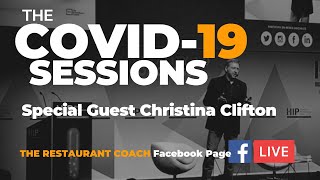
This recorded livestream (host: Donald Burns) with guest Christina Clifton (Fishfork) discusses how COVID-19 affected restaurants (examples from Boston). Key points: adherence to shutdown/social distancing, enhanced health/safety practices (gloves, handwashing, sanitizing), contactless pickup workflows, surge in delivery/takeout and use of third-party apps, vendor cooperation for returns/credits, menu and inventory rationalization (smaller to-go menus, reduce wine inventory), staffing and kitchen flow changes (social distancing in kitchen), closure statistics for one group (7 of 10 closed; remaining saw ~60% drop), and future trends including ghost kitchens, automation (robots, POS/tablet ordering), cocktail kits, and a likely lasting increase in takeout demand. The tone is advisory and opportunistic toward adapting operations for reopening.
Questions this video answers
Boston
About 60% (for the restaurants that remained open)
They closed 7; the group had 10 total
April 1, 2020
Chapters
Hey, everyone, Donald Burns, restaurant coach live again, Facebook, also on YouTube. Hey, today, part of our, you know, COVID 19 series we're doing. I'm very honored to have a good friend of mine, Christina Clifton here from Fishfork, on the call today. Christina, where are you at today?
I'm in Boston.
Boston.
Boston, yeah, the very quiet, quiet Boston.
You're actually helping out. You're working with a client, you're at a restaurant, right?
Yeah.
Goes on. Right.
I have my gloves on. I must wash my hands as much as a hospital professional. So you have to, though. You have to.
Yeah, it's crazy. I mean, last month you were part of the Team usa. We went to Hospitality Innovation Planet in Madrid. We're like hanging around, having great food, talking, and now elbow to elbow. Now world's upside down. Crazy.
It's crazy.
How have you seen the Boston Market kind of deal with this?
Well, when the shutdown came, everyone heeded the governor's ask. And that was probably one of the best things to see, that everyone stayed inside, did what they're supposed to do. And, you know, I walk from the parking garage to my place at night and everyone practices the social distancing, either covering their face with a scarf or making sure that I see more people wearing gloves like me on the street. So everybody's doing their part here, but it's so eerily quiet. You know, it's 9 o' clock at night and there's absolutely no one on the street. And that's so unlike Boston. Right?
Boston. Yeah, pretty. Pretty busy. Pretty busy. Pretty busy city. Especially at night. Especially North End, especially.
Oh, yeah, especially. So, yeah, it's. It's very different then. I started with this group on March 10, which is like the worst time to start. Yeah, but what can you do? Right? Right. But I feel fortunate too, that I can help and. Yeah, and I can be working unlike so many other people in our business.
Yeah, like I. Like I always say, you know, the Chinese word for crisis is actually two characters. It's danger and opportunity. You can look at this as, you know, just, it's terrible and stuff like that. And it is, you know, I'm not, I'm not trying to downplay the coronavirus. There's a terrible, terrible pandemic. But there's also a huge opportunity here. If you look at that way, and you're taking steps right now to kind of, really kind of plan your comeback.
Yeah, no, you're exactly right. You have to deal with what you have to deal with today. And then what are you going to become when we're on the other side of it, how are you going to be different? How are you going to offer different services? Is their health and safety program really as great as it should be? I mean, certainly learn in the hospitality industry, as you well know. I mean, we're really great at that health and safety aspect. We have to be. We're serving many people in the public, and you don't want anything to go wrong. So here you're adding more extra steps. But then you start to think, hey, you know, maybe just this, what I will be doing in the future, and maybe improving on what you've been able to put in place for more protection or, you know, even plating to go items. Every single item that you're offering on your menu has to be plated. And if you have standards for plating now, you're doing it in a little box. So you end up learning how to do that differently.
What do you see are some of the kind of, you know, I always say, out of these things, creates new behavioral patterns. What do you think are some of the new behavioral patterns that diners and guests are going to have that restaurants are going to have to adapt to or adjust to?
Well, I know when we open, there's been a lot of talk about social distancing in a restaurant. And I, you know, I'm thinking. I've been thinking about this almost every day since I heard it two days ago. How would you seat people, people in a restaurant? We kind of started doing it before we had the shutdown. We were strategically placing. You only had 40 guests versus your usual 150, but you could strategically place them six feet away. And at that time, it was three feet away, and then it grew to six feet. But we were doing it and doing it pretty well, and we were very conscious about it. So when we come the other side, you want to open, so how would you do it? Then I started thinking these crazy things, like, what do you. Do you have plexiglass in between every table? Like you have your own individual booth. Maybe.
Maybe that come out like hazmat gear.
I went. I went a little sci fi when I'm in my thought process. But it, you know, you kind of wonder, like, does that work? Do you put heavy drapery? You know, you do go Back to the third, back to the 30s when they used to have those private rooms for all the mobsters. Then they had heavy velvet drapes. I'm like, maybe that's. That's what you do. But you have to think about what's going to happen when those new rules come in place or people are genuinely afraid to go to a restaurant. Maybe your to go business becomes robust. Maybe that's what you do. Then how do you, how do you figure that into your game plan when you're not that kind of person? You're not in McDonald's where you have a speaker outside and a drive through window. But you know, we've figured out things here where, you know, on the east coast there's always a little foyer in two doors, one door in and one door into the restaurant. So we have a nice table set up out there. The guest wants contactless pickup. Then we, they call us in the parking lot, we put it on that table and they come in that foyer, grab it and go. So there's no contact with people at all. So that's the kind of thing I think we're doing now. But maybe for the future, that's something else you have to think about. Maybe that's when the little robots that we saw in Madrid can come out. Oh yeah, Remember that robot rig to go. That's crazy.
Yeah. In Madrid we saw quite a few different robots. We saw the one that delivered. Right. And then we also saw that one that made cocktails.
Yeah, that was good.
That was pretty crazy.
Yeah, for the age of the Jetsons that are here.
Yeah. So what are you doing? I know you're kind of, your kind of forte is automation. What are some things? Restaurants, you know.
Well, kind of. I don't, I don't, you know, we, we have signed up. They had never done like Doordash or Uber Eats. And with that, I mean, those companies are fairly, you know, inventive about the, they send you a little iPad and, and the orders come on there. So everything is contactless and that's all through automation. Right. So you're communicating strictly from beginning to end on a computer and they communicate that way by pop ups, pop up messages. And it's worked pretty well the last week. We only did it for the first week and it's been successful. So in that way, automation I think is great. And as I was telling our friend Ava last week, that if it weren't for the technology we have today, this kind of thing couldn't be possible. You and I talking to each other and having the opportunity to reach other people and operating our businesses still by these new technologies, Zoom has apparently become huge. Right. Everybody's having meetings by Zoom or, or people, families really now using facetime more and more than they've ever done before. So this is a plus. It's where, I mean, there's always a little bit of a silver lining in a crisis. And the fact that we have this kind of technology today has helped us be able to stay in communication or get things done quicker, get food to your home through whatever app service that you use. And we're fortunate that there are people out there still doing the manual labor of packing up and delivering.
So when the. When this kind of pandemic kind of eases up and people start going back out to restaurants, I mean, right now, you know, a lot of delivery and takeout is out of necessity. Do you think that need is still going to stay high?
I think it might be higher than it was before. I can't guess at the percentage, but I think people are going to be generally a little bit nervous about going to restaurants again. There's going to be that group like us that would be like, can't wait to get back to the restaurant and dine and enjoy this. Services and products that are so great. But I think there is going to be that. And it's like we kind of saw it before this all happened with the ghost kitchens popping up.
Right, right.
Yeah. And then that in a metropolitan city, it really does take off. People like to order at home. They really can't cook because they're busy or their kitchens are small. So maybe you might see that now infiltrate neighborhoods that aren't as metropolitan like, and people will, in those cities, will start to order takeout more and more.
Definitely. Definitely.
Yeah, I think so.
So what are some things right now you're recommending restaurants do?
Well, I think the number one thing is to assess your health and safety program. And do you have a certified professional, you know, person on your staff that isn't, you know, certified in safety? There are or a lot of health inspectors that don't have that degree. And I think it's important that maybe now you're adding another layer to the safety so that if you have multiple restaurants or you hire a consultant that has that degree to help you, if you're just one restaurant, to make sure that you have everything in place, because people think that they're always safe. But the hand washing is, you know, we always hand wash. And I'm obsessed with it, but now I'm even more obsessed with it. If I take my gloves off, I wash my hands and I put sanitizer on. I mean, I do all these, you know, I put gloves back on. So any task, as, you know, a cook does, but in Front of the house doesn't. They don't have to wear gloves. So this changes the way the front of the house works. They're almost like the kitchen. The kitchen. You know, typically you don't like to wear gloves because it prohibits you washing your hands and, and cross contamination can happen. Now the cooks have to learn differently. Like every task. New gloves maybe should get stock. And the glove company, I think the glove use is going to. Is going to go.
Take off. Yeah, take off. I mean, big time. In fact, I guess a friend of mine does security at a local hospital here and he says the biggest problem they have is like people, you know, walking to the hospital with duffel bags and stealing. I mean, taking, just going in with duffel bags, stealing gloves and mask and just filling up duffel bags. He actually said he saw someone one time like walk in and rip off the, you know, the hand sanitizers. Things are on the wall. The guy ripped it off the wall, put it under his wall and ran out the door.
I mean, it's crazy. It's like the grocery store, right? Person's baskets, just five, six of those.
24 pack toilet paper you use in like two years.
Like Save something for somebody else. That's crazy. It's crazy.
That's the worst thing we can ever do, I think is, you know, we buy into the fear, you know, buy into the. That's why I really keep a low information diet. I mean, I like to go like the CDC website and I'll follow like the restaurant business, you know, news sites like Restaurants Online, you know, Nation's restaurant news, you know, Ron Ruggles, who was with us in Spain, I'll follow him. I follow really good people. But I try to stay away off the mainstream media because I feel they're just pedaling, peddling, you know, fear and.
Yeah.
And kind of panic.
I think it's true. I agree with you there. I mean you have to in this time. It takes great leadership and you have your own staff who are fearful and if they are, you know, they don't have to come to work.
Right.
But the ones that aren't. And we make sure everybody's following all the strict rules and regulations and there's not too many of us here. So we practice social distancing in this space. We stay six feet away from each other. We have a path from the kitchen to the front and there's only like one person answers the phone and we sanitize every 20 minutes. So we're making sure that all these, all the right sanitation Rules are in place and we have good direction.
How much have they seen their business, the restaurant you're at right now, how much have they seen their business drop?
Oh, it's been about 60% because the takeout's been huge. But their restaurants, this group has multiple restaurants, so in the ones that exist it's 60%. But the others, it's zero. Right. 100% drop? Well, they're not open.
Oh, yeah. So how many closed down?
Seven.
They closed down seven. How many they have total?
10.
Oh, cool. So they have three still open. 10. Are they planning on reopening? The ones that close down at this point?
Yes. They're very popular restaurants. They've been here for well over a decade and a half. So people know them, they have great following and I think that they. They'll be able to start them all back up.
Yeah. Joel made a comment. I think there will be an increase in to go for sure. Sales were increasing on to go items already. I've seen across the board, I mean, I have clients who have seen online sales increase, you know, 150%. I know I do a lot of stuff with Upserve, the POS company. And they've seen an upsurge in their online ordering through their clients of 7,000%.
Wow.
Yeah. Crazy. Yeah.
I think the other interesting side is the beer and wine to go that states that are allowing restaurants that are only going to go, allowing them to also offer bottles of wine and beer, bottles of beer, cans of beer. And that's going to change. If we in the restaurant business can lobby for that to stay intact, that'll change the model greatly.
Definitely. Definitely. Lots of changes coming up and I think those that adapt fast will have the best chance. What are some of the things, you know, since it's a slower time right now, what are you recommending that restaurants do right now to help prepare for when this thing's over? What are some areas they should be focusing on?
Well, if you could afford it, certainly maintenance. It's something you can never get done when you have a restaurant open seven days a week. So where all the things that you put off that maybe you can do yourself, painting all that stuff that you. You generally can't get to all those kinds of things. Assessing now your space. What is your space set up, ideally for good flow and maybe thinking about when you reopen in those first. The first month. How would you practice social distancing in your restaurant? Right. Maybe you have to take it on the gin or with less seating at that time. I just think about your menu. You really can analyze your menu by your regular patrons ordering to go. What are they asking for? What are the sales like? Maybe your menu's too big in the beginning. You can maybe save on cost by reducing your menu. Same with your beverage. Maybe you approach beverage differently. You might price your wines a little bit more reasonable, customer friendly. You don't have to take as high a margin on them. You're still making a profit, but your beverage costs might go up a little bit, but you're moving product. And so you had to get rid of so much. Maybe you don't need to bring it all on again.
Exactly.
Reduction in wine inventory, all that kind of thing, you can really now take a good hard look at, spend some hours on it, you know, get that kind of time.
Yeah, I have a client, I have a client who just recently looked at his wine inventory and I was like, you need to reduce that thing like by 50%. He was getting crazy. It was like that wine was like really amping up there. Their wine aficionados, I'm like, that's a little too much.
Yeah, no, I agree. It happens all the time. You know, if somebody likes this, their favorite wine, so they put it on the list, but nobody orders it. Now it's sitting there. And now when times like this, you look at it, you're thinking, oh man, if I didn't have that sitting there, you know, I wouldn't have, you know, such high cost. But it is what it is. I mean, you have to reduce things. You can start to work on your, your cocktail list, items like that, you know, so if you, I just think reduction is in the future. For the first six months, the place.
You'Re at, they reduced the menu down.
Yes, the to go menu is reduced down. Now we're slowly adding back just a couple of things and that's customer driven. And now we're looking at Easter. How are we going to help people celebrate Easter?
Yeah. What are you planning for Easter?
Well, I think family meals is kind of the way to go. I've been seeing different restaurants across email blast offering family meals now where that's like a starter, a chicken, a whole chicken. So you can, there are a number of things you could do, I think for Easter. What are Easter traditional favorites? And then just put it out there. You got a 72 hour order window so that you know what to order for people because you're ordering in bulk and then making sure it's packaged in a good way for the guests to get home and reserve to their family.
Oh, awesome.
Yeah, I think it's smart.
You know, one thing I also do, I had a client recently, they had a. The liquor vendor actually, the beer and wine vendor actually came to a restaurant and said if you have any unopened or untapped kegs or any untapped, unopened cases of beer, they were more than happy to take them back and give them a credit for it.
Yeah, I think the vendors have been great.
They have been awesome, actually. And I know Bo Bryant, you know, you know bro Bo from Team usa. He mentioned the other day. It's like, you know, right now there's a lot of food purveyors too that basically are sitting on a lot of product that they can't move and they're really willing to wheel and deal. So reach out to them and say, hey man, are you sitting on some product that's going long that you really want to get rid of and help move? And they will help you. I mean.
Yeah, that's great advice, I think. Yeah. Distributors from all the spirits and wine have been terrific and I feel bad for them because they're not moving sales either. But there's going to be a lot of. Yeah. A lot of advantages price wise going forward too.
Exactly. What do you look at? Let's look into the future. What do you see is. And I want you to kind of paint a picture. What you see is like the. If you could just design the ideal restaurant of the future, how many seats would it be? What kind of revenue stream would they be getting from dine in versus, you know, takeout? What do you kind of see that if you had a. Paint a vision of the future.
Yeah. You know, I was talking to a colleague like a month ago about ghost. Ghost kitchens.
Okay.
I thought at the time there'd be a way to combine. If you had a restaurant that had not like a 200 seat restaurant, maybe you were half that and you could run a ghost kitchen in your kitchen that existed in your brick and mortar. That would be ideal because you could pump out maybe another. Another style menu in addition to your own menu and have two revenue streams going there. A food style that you don't serve in your. In your brick and mortar. So I think they're. I like the idea and obviously I've just started thinking about that and how you would mold that. But it's something to really think about. I think a lot of restaurants could kick off something like that within their own kitchen and have multiple styles to go out if they had enough team that'd be cool. Yeah. And the talent to do it. It's interesting, you know, and then I started thinking about that, you know, when I did the presentation about automation and the. And the restaurants that have almost full automation, except for the end where the expediter finishes off the. The item and puts it in the bag. And who knows? This. Now they could take off that style restaurant could.
Really, like, really.
Yeah, yeah, yeah, yeah.
Really tight. But, you know, I.1 I say one of the kind of opportunities about this, this crisis is that the labor market is going to flip. You know, where we had a hard time finding people, there's going to be now a flood of people out back into the market looking for jobs, because a lot of restaurants are not going to open.
Right. It will be, which is, you know, your transferable skills is what you have to think about how they can apply to different. Either a different industry or in the same industry.
What's your number one? What's your number one interview question? Your favorite interview question?
Oh, are you a people person? No, I hate that question.
Everyone asks that one too. Are you a people?
They always ask that.
Everyone always says, of course I am. Right. Who's gonna say, no, I'm not.
Yeah. Or the. The interviewee says that, well, I really like the industry because I'm a people person. I'm like, well, hello.
Yeah, no brainer.
The one question that. That I would ask or asked of me.
Yeah, you like to ask. What's. What's your favorite interview question that you like to ask interviewees?
Oh, I like to ask them what type of cuisine they like to eat and why. Because it's always an interesting answer. And a lot of it will be based around their home life. Oh, yeah. Their grandmother's pasta, you know, a sandwich that their mom makes. And I think that's. That to me, is really telling about a person's personality.
Okay.
You know, if they say something like McDonald's and I kind of thank you, that's wrong. But I do like to ask them that. And what. What made them come into the hospitality industry? What's attractive to them? And then I get. That's when I get the. I'm a people person.
So. So you answered an interview question. What's your favorite type of cuisine?
Mine's French.
French. And why French?
And why? My favorite dish is duck confit. And when it's done perfectly, it's the best thing you could ever eat in the world. Yeah, I like that. French cooking is steeped in tradition. And, you know, you got Those items like duck confit because they didn't have refrigeration so they had to keep it in salt. And here out of necessity comes these fantastic dishes. And so that's why I have such faith in our industry. Like out of this necessity we're doing now is going to come out some great traditions in our style of service and style of cooking and methodology. So you know, there, I think the forward thinking now is so important rather than just sitting and stewing about what we're, the anxiety we're in at the moment, you have to, because you have to keep everything top of mind and present. But where are we going to go from here? You know, I think it's important.
So I've been asking everyone on the show that's been on this week, how long do you think this is going to last?
Well, they say we can reopen May 6th.
Oh, did it really?
Wow. That's what the governor of Massachusetts said after the this April 30th deadline, restaurants could consider opening May 6th. It was April 6th. So if the federal government moves the date again, then we'll be forced to stay closed longer.
Right.
But after that you hear them strongly saying we don't want people going into restaurants or bars after that. So I think everybody should put their collective brains together and think about when we do are able you get the green light, how are you going to be able to allow people into your restaurant if you start tabling social distancing in your restaurant to figure it out, how can you allow them in? It's kind of tough. You know, it's going to all depend on the design of your restaurant and certainly what your government is going to say to you if you can or you cannot.
Right.
But it might relax the to go side more so you're, you're able to fulfill more order so you can have more staff on board. So you're restricted by social distancing in the kitchen and front. So you can't have that many people. You, you know as well as anybody you're going to need quite a few people to produce a volume of food.
Right? Yeah. You don't think about that. You don't think about social distancing in a kitchen, you know, ever think about.
Yeah, now we have like we, we have the Slim Jims up. So the cook, the guy in the middle, he can't get out. He's surrounded by two. Yeah, he's got two Slim Jims and a six foot dog. So you know, we have three people on the line. They're separated. And, you know, it's. It's interesting you post that picture.
That'd be kind of funny. Watch a guy kind of trapped in there with his Slim Jim on both sides. His companions are too. Slim Jim, trash cans.
That's right. Can't go near him.
Yeah, can't go near him. So what is your biggest takeaway from this pandemic?
The biggest takeaway. You never know our business. The reason I like it is because every day is a different day, you know, you never know what's gonna happen.
Yeah, I like, man, I like variety, but man, it's a little too much for me.
This is too much of a surprise in a day. You know, it's this. I would not have ever anticipated happening ever.
Yeah, I never would have guessed this thing. It was happening. So crazy, crazy, crazy.
So I just think you gotta even be more prepared for the unknown. And that's just. I don't know how you prepare for the unknown. That was kind of a stupid thing to say. But, you know, just.
What's the first place you want to go when all this thing's over? What's the first either trip you want to take or restaurant you want to go to?
So whatever corner bar is going to serve a martini five steps from here.
You'Re not really picky. Whatever first bar has a martini, I'm there. Right?
That's it. Everybody's going to need a really good quality drink when you're able to go someplace.
Yep, yep. So although some people are drinking at.
Home pretty heavily, so that's true too. But it's not the same. Right? It's not the same having your local bartender mix it up for you, having a chat.
You know what? I think this also. I think this will also help a lot of people in the sense that we are going to appreciate again what dining is really about. About getting around the table, sharing experiences, sharing life, breaking bread with friends and family. I mean, I think a lot of us, times, we take things for granted. And what I always say, like, you don't realize what you miss until it's gone.
You're right. You're right. And a lot of people now are being able to enjoy dinner with their family because of the quarantine. And hopefully no one in their family is sick, so they have to be apart from them. And so that's different. You know, everybody going out for a walk or playing out in the backyard. And in the time that we live in the world of technology that's kind of broken apart now, kids are always on Their iPhone and, or their iPads. And now they're spending more quality time. They have to. So it's changed the way that they function as families as well.
Exactly, exactly. Oh, crazy. Crazy times we live in. Crazy times we live in.
Yeah, it is. Yes.
So Joel said, you know, house made sides pre order only multiples. Doing multiples of four to eight.
Thinking about cocktails.
Nice.
Yeah, that's a good thing. I wonder how mixology will change now too. If your state would allow you to send out pre made cocktails, that'd be kind of interesting.
You know, I mean if you could do packaging, I mean if you could do pack. If you can sell packages and maybe you could sell small bottles of like vodka, you could probably do the mixers on the side. Like I'm almost like a cocktail kit.
Yeah.
You know, or you can pre make the mixers and have the mixers already. You can make the simple syrup and stuff like that and make like, you know, you can make Bloody Mary mix, your Bloody Mary mix, your signature Bloody Mary mix and then you may be able to sell it as a cocktail kit that they have to just put together themselves.
Yeah, no, that's a good idea.
That'd be interesting.
Little instructions.
Yeah. Back to basics. It's the truth, man. Right now is definitely the time. Brian Franz, he's out in Tucson. Find your true self and nourish. I think this is a good time for a lot of us to kind of recenter and get back to what's important to us.
Yeah, you're right. Well, it's a lot of time for reflection, right?
Oh yeah, definitely.
Yeah.
So if anyone wants to connect with Christina, you can find her here@fishfork LLC.com. that's her place.
That's me website.
Tell us a little bit about Fishfork. What do you guys do?
Everything from everything to do food and beverage related. So if you know, consulting from management, front of the house, back of the house development. Also any kind of emerging beverage brands we represent have done for years. I really like brands that have no foothold and able to get them on a platform where they can take off and. Or don't have distribution or if I think that they're interesting, I'm able to connect them up so they're able to. To get out there in the, in the open market. But I've a long career in food and beverage from, you know, just from serving all the way to overseeing $240 million worth of revenue. So quite a bit of experience to be able to help people improve their. Their space or if they're trying to change it in a development way, then I am able to assist that way as well.
Very cool. Well, Christina, I want to say thanks for being on the show today. It's great to see you. Too bad, you know, we're not hanging out. Too bad we're not hanging out at a table, having some drinks and having some great food. But soon enough, right?
Soon enough. Great to be with you, Donald. Thank you.
Thank you. I appreciate you.
You, too. Have a good day.
More from Donald




If your restaurant only works because you work 80 hours a week, it doesn't work.






