The Restaurant Coach Podcast with Andrew Steakley
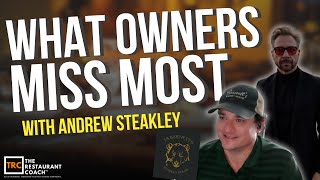
A recorded interview (YouTube podcast) where host Donald Burns talks with restaurateur Andrew Steakley about his non-restaurant origins (home building), buying and evolving Barnett's (from an Irish pub into Barnett's Whiskey House), and the operational and cultural changes he implemented after joining Burns' TRC coaching program. Key concrete facts: the pivot began around 2015; Barnett's holds ~1,300 different whiskies (≈1,800 SKUs including other spirits); Andrew stopped drinking and emphasizes self-awareness, routine, and emotional intelligence in leadership. Major themes: instilling core values, hiring for cultural fit, building career pathways for staff (tap university students), hospitality as the profit lever, and mental health advocacy. Closing includes contact/website for Barnett's and upcoming Restaurant Owner Boot Camp (Sept 15–16, Scottsdale).
Questions this video answers
2015
About 1,300 different whiskies
About 1,800 SKUs
About eight months
September 15–16 (year implied as the current year of the recording)
Chapters
And welcome to the Restaurant Coach podcast. It is the cure for the common restaurant. I am honored and I am excited about having a great, amazing guest on the show today. Andrew Stakeley, who is the founder of. Well, you have a couple concepts, actually, but is probably most well known for his Barnett's Whiskey House and Waco. And you also have a coffee place too. Andrew, I want to say, number one, thanks for being on the show today. And two, just tell people a little bit about you and about your journey. I mean, you didn't start off in the restaurant business. You actually came from a different career field. So why don't you tell people a little bit about your place and how you got into this crazy game?
Yeah, I went to. I'm originally from Houston, Texas and went to Baylor University. And then when I finished there, I got out of school and started a home building land development business and did that for about 15 years when my wife and I bought a. A bar called Barnett's. It was a little Irish pub and it had just closed down and we thought we could, you know, who doesn't want to own a bar and.
Idea.
Yeah. So we just dove head on into the restaurant industry with no experience like most people.
Right? Yeah.
And that was, I guess, 2015. And after losing a bunch of money in the first year and a half, we really took over running it and ran it for a little while when we decided we needed to make some serious changes to what it was and grew it from there. Right. Kind of as we were hitting our stride. Covid hit. And you know, that was a whole new change of philosophy and change of ideas. And around that time, we turned it into a little bit before then we had turned it into this whiskey bar kind of before the big whiskey boom happened. And we had the largest selection of whiskey in the state of Texas.
How many bottles do you have? I mean, your inventory is crazy. And I'm always like, I always freak out. Full disclosure, too. So Andrew is a coaching member of mine. He's one of my coaching clients, but, man, his whiskey selection is off the hook.
Yeah, we just finished doing inventory because we're switching over a point of sale system and had to get all that tight. And I think we're sitting at like a little over 1300 different whiskies, and it's a total of about 1800 different SKUs with tequilas, vodkas, rums, cordials, all that other stuff. So it's a lot.
That's a lot. Yeah. I mean, you probably have probably one of. I would, I would Say, probably the largest whiskey collection I've seen.
Yeah, it's a lot. It's when you take it out. We had to take it all out of the shelves and everything. Not for inventory, but because we were doing some update to the lighting in the place as well. And on the shelves, it doesn't look as much as it is, but once you unload it out onto the tables and on the bar top, you start running out of room to put it, and it takes up a little bit more room where it's not stacked vertically, so.
True. What's your favorite whiskey?
Oh, that's a long question. I don't actually. Don't drink anymore.
You don't drink anymore.
I know you're like me. Kind of got to be into that road. I mean, when you have the selection.
I think we all get to that point in our careers where we all get to the end of the road, like. Yeah, you know.
Yeah. I mean, I've tried it all, I've tasted it all, and it just. I just lost interest in it.
What's the most popular as far as, like, the skew that people buy the.
Most of, whiskey wise? Probably Blanton's. Oh, really? Is probably what we sell the most of. Oddly, our number, our top selling item at the bars, Tito. So, you know, we got this huge whiskey selection, but most of that whiskey gets split up between a whole bunch of different products. So as it relates to a single individual item, it's just kind of funny that it's Tito's. Tito. But we sell a lot of that as well.
Tito's is a big brand, man. I tell you, Tito sells. People love tortillas. Yeah.
Handmade here in Texas, right?
It is true. That is true.
That's what it says.
Have you ever been to the plant?
No, I have not. No. I've been to a lot of the stores.
Pretty cool tour. I've had a couple friends go to it, and they said it was a pretty cool tour. I've never been myself.
I imagine it is. Probably trying to get that set up.
I heard like. Like, I don't like, I'm like you, but. And I heard, like, in, like, in England, like, the Guinness tour is always really good too. So.
Yeah, I've been to a lot of distilleries, you know, different approaches. Everybody has their own kind of style that they do it in. And some are really neat, nice, clean, high technology. Others are, you know, the same guys. Been making it for his life and passed was passed down from his dad, his grandfather, and they kind of do it more on field, but it's just interesting to see the different beads of it.
That's so true. Well, you know, I feel, you know, I'm a big believer that leadership is really, really critical in restaurants. What do you think is the number one trait that leaders in restaurants need today?
Good question. Probably overall self awareness. Like if you're, if you're a leader, I mean, you already have kind of the skills that people come to you to follow, right? You're courageous, you're a decision maker, you know how to talk to people. If you do that, you wouldn't be a leader in the first place. So really evolving your skills and your talent to give people a reason to continue to follow you, I think is a big thing. You know, it's, it shows what your impact value is into somebody's life. If you're working on yourself and you're making yourself better, I think it's a big thing that allows for you to really be authentic with your team and really diving into your emotional intelligence as it relates to, you know, what you're going to be able to work on with this stuff and turn them into leaders.
And do you believe in self care?
Yeah, I think you have to. As it goes one on one. I spent a lot of time here recently talking with, you know, kind of each department leader that we have within our little hospitality group and you look at the things that they want to become better at in their life and you know, if I'm not doing those same types of things and give them something to hopefully try to aspire to, you know, I said I don't drink anymore. I used to a lot. And when I was, you know, our team would look at that, right? They would, they would look at that and see, you know, a rep coming in at noon and you sit down with them and tasting a couple wines which then turns into a couple liquors and they say, you know, that's 12, 15 degrees before noon. And they'll see that. And so you have to do like a, what you want your team to be like. And you know, nobody says that they want to aspire to being lazy.
But.
They need to help. A lot of the other people took that exam.
What do you do for self care?
Diet and exercise a lot, but that's more of a recent thing. And then the bigger aspect is, you know, really diving into that emotional intelligence, self awareness. Do have a good routine that I wake up at 5 o' clock in the morning and start with some reading and hang out with Ashley, my wife and coffee and do some reading and really take a slow approach into the day. After that, I work out and then get ready for the day and get into work and meet with all my team and then kind of try to get out of their way. If they need guidance, keep them there. So then I can go work on, you know, the, what we need to do to grow the business. And, you know, we have some pretty big goals over the next few years to expand into more places. And I've got, I'm the one that's got to set that, that direction.
So when you read in the morning, what do you like to read?
Right now I'm reading some CS Lewis. I don't know if you've ever read any attention. Yeah, yeah, I'm reading his kind of core books, Mere Christianity. I just finished that. He's definitely gives you something to think about. It's a little more pretty advanced stuff. Half the time I have to kind of stop reading and look up kind of the stuff of what he's talking about. Pretty advanced.
I love that guy reading.
I love the reading.
It makes me kind of like pause and just make me like, question like, what the hell is that? Right?
Yeah, I got, I got to go pull out several other books. Sometimes what he's talking about look up half the words he uses, but it's like, it's like Google the word, make.
Sure I understand what the word is. Like what does that.
That's one of those. Yeah, you. You read like half a paragraph. You gotta put the book down. Just take, take in what, what he just said. Exactly, exactly, exactly. But in the morning, I initially start trying to read something that's faith based and, you know, dive into that to start my day. And then usually after I work out, I switch into reading more stuff that's business related, you know, whether it's one of your books or, you know, some other thing of leadership, financials, industry. Just kind of, that's pretty wide open.
Cool. How would you say being like, you know, having like faith. You know, I know you and I are very similar in the sense that we're both Christianity based as far as our faith. How do you see that being Christian based or just any kind of faith based, how do you feel that adds to your ability to be a better leader?
Well, I think the big thing comes in too is so it's taught me, it's taught me how to really just trust in the path that he's putting me on. I've always been told to handle stress things real well and that is I just have this overall belief that, you know, he's working through me. So as long as I'm doing the stuff I'm supposed to do, as long as, you know, I'm doing the right thing and I'm keeping my dairy and I'm doing that stuff correctly, everything else will just work out. And he'll put people in my life that'll help the things that I'm not good at or the things I'm struggling with. Somebody will come along and let me support that. That's his way. And I can't really control the things that, you know, other people or other things. So just allow him to do what he does and work through me.
That's it. Let's think about what we always say like in our, in a TRC method. We always say it's if it's inside your coc, your circle control, you own it, but it's outside, you kind of just let it go.
Yeah. You can't change people. Do anything to make them look at things differently. But you know, I just have a firm belief that. And this is back to that question about faith. It's. It'll all work out.
So you, you've been in the program now, you've been in the coaching program probably what, eight months now?
Yeah, that's probably about right.
Eight months.
Yeah. It was some kind of fall, so. Yeah, I guess it's June, so. Yeah, sorry.
You know, and you know, we teach this, this TRC method. And the TRC method is basically a series of frames within frames. And our basic frame we teach is called the 3P framework, which is people PR process. What do you see as far as when you started implementing the TRC method in your restaurant? What did you start seeing as far as some immediate changes as far as either just operations or team dynamics.
A lot of pushback. You know, I can't eat. I've got three different places right now. One of them is currently. We just closed it recently to do a change of direction, some remodel stuff and two of those places. Everybody, Everybody. But I think two of the people are new now. Since we've implemented these changes. It really weeded out the bad culture more so than anything else. People just wanted to come to work and just kind of float through. And we were offering an ok. I mean we have this great whiskey selection that's kind of like a catch all. It's the safety net to the, you know, trapeze artist. All mistakes get covered up. Right. It's like the economy in a good Time. All the bad things just kind of get covered up by having higher margins and, you know, this really expensive product, but nobody can get anywhere else. That covers up a lot of the mistakes. So people have this false sense of success.
What do we always say that sales side sins.
Yeah, for sure. Absolutely. And doing. Starting to put in some more of these practices and just being harpy about implementing them. Really let it come really, really clear who was on board to be better and people just there collecting a paycheck. Yeah, you know, we. We pretty much took a completely different direction after people either quit or got caught doing some dishonest things. We let them go and rebuilt the company. And like I said, I think there's only two people at the main place that were there before and built with hiring really good people that really fit into our core values from the front end. Not most of them didn't have any experience. And, you know, that's the easy part to teach. It's easy to teach somebody how to. How to make a drink or be table if they care. We can't teach. We can't teach the other.
You can't choose nobody to care. No. And you can't change personality. I know. We all think we can. That's like the biggest misconception I think a lot of leaders have is that they think they can change. Change people. Where, I mean, you know how it is. It's like, look at New Year's resolutions. How hard is it to change yourself? But you think, I can go out and change other people.
It's not gonna work. Yeah. If somebody doesn't want to change, they're definitely not going to. And to be better every day and to grow, you have to want to do that.
What would you say is like the number one tool that you've implemented from the TRC method that has really helped you kind of of make this shift with the culture.
It goes back to the really instilling the core values through our core values through the company and what our mission is. It's always been there. We've always had it. You know, that's not really a new philosophy to me, but I've never really pushed that onto the team. And then you take it up. When I was home building, for example, you know, I subcontract. So they kind of each. Each individual subcontractor had their own culture, and they came to do their one job.
Right.
When it gets to this side, you know, it's kind of the same thing. Each person has their own department. But now I'm Working and teaching each of those leaders, they're not somebody that's been established in the business for a long time or running their own company, and they would have to deal with all the other people. Now that's me. And I have to create that amongst everybody. And this is really the first job that I had where I actually had the employees that were working for me. And so as it relates to the just general form of that, the core values, and making sure that everybody aligns with those is a really big deal.
That's so cool. Yeah, that's. Yeah. The core value card, to me, I always tell in you, and you probably hear me talk about this a lot on the calls, is that core value card. That core value mission card that we create is probably the most powerful tool everyone has yet. It's also the tool that most people don't use enough either. Everyone could use a card a little bit more with their team on a daily basis. One of the things we preach is this daily five sermon that there's five things you should talk about every day with your team. Talk about your mission, your core values, your vision, your standards, your expectations, and then words of appreciation, affirmation of the Daily 5 sermon. What do you think of the 5? What do you think is the hardest one for you as a leader to kind of be reminded of every day or to talk to the team about.
Well, again, it is that core value. I think we forget to use it. I think that, you know, it has to be all inclusive. And I think that's really where we slipped away in the past. We were just hiring bodies, right? We were hiring people. We were getting into that trap. We weren't referring to the decisions that we were making as a leadership team. And as, you know, the company. Do they fit in line with this? You know, does this, this person that we're hiring, do they want to grow, right? Do they, do they, you know, do they have a high level of hospitality? You know, are they believing, putting the best forward, foot forward and being excellent every day. If they don't fit that, then we're just not going to hire them. It's better for us just not to have that person on the female. And we're going to make you changes and all these different things. And we're referring to it now for what steaks we're going to carry in our restaurant and what cigars we're putting into our cigar lunch, what coffee we're doing, what Chihuahua we bring in.
It's.
It's almost now it's based in every decision that we make, sit there with my chef and with my general manager while we're going through the catalog. So, you know, these products aren't good enough for us. We gotta go out there and source something that. That's more local or the best product available, because we. We thrive in the higher end of products anyway, so.
Very cool. And so you. I mean, you travel a lot. What would you say is, like, the best meal or the best guest experience you've ever had?
I've had some good ones. That's one of my, I guess, guilty pleasures of things I like to do. I really. I really enjoy nice dining.
Yeah. Yeah.
Most. Most memorable, best experience. Well, this restaurant's not open anymore. I don't think it was in Alexandria, Virginia.
Okay.
So restaurant me and my brother got was getting married. He was. He's in the Navy, and he was getting married in the Navy at the Navy yard, and he was living in Virginia. And we. I went with my parent, my wife and my parents to restaurant called Restaurant E. And it was just like, the food was great. Some of the stuff, I didn't even know what it was that I was eating.
I love those places, man. I usually, like, when I go to those restaurants, I just tell yourself, he goes, what do you want? Serve it up, man.
Yeah, just. Just bring it out. And. And I just remember that meal because there was one dish that they had. It was a dessert. I had no idea what it was or how they made it or anything. When I, being a semi chef myself, it's kind of like I study food science, and it's like, I have no idea what that is. I couldn't beat until you. It was delicious.
It was amazing. So here's the question, though. So, I mean, the food was. The food was on spot, everything. But when you think back to that experience, how did it make you feel?
Like. Like, I mean, it's just one of those things where there's any stress, any. Any problems. No problems, no issues. You know, if there was, I don't even remember them because we were having such a good time that everything was taken care of.
Right.
Like, you can just sit there, you can relax. You. You're in the hands of this restaurant just enjoying the experience that they're giving you. Right? Like. Like, it's something different. It's something unique. And, you know, I was trying to think about a while back some of the best meals that I had. And most of them, I don't even really remember what the food was that I ate. I just remember the way I felt at the restaurant.
Yeah, yeah.
And you know, a lot of that has to do with the people you're with. And you know that the restaurant just, it's like a multiplier. It's like adding the salt to the steak or something.
Right.
Everything's good, but it's the enhancer.
What do you think is like the biggest problem with restaurants today when it comes to like profitability? Because the average restaurant, you know, hovers around 5% profit. What do you think is some of the reasons that, you know there's problems with profitability? What do you think is holding people back from breaking through and getting those high levels of probability that our members see? Like, you know, 19, 20, 22% profit. What do you think is some of the things that hold people back?
I mean, it's probably overall just the overall understanding of what true hospitality is. You know, it's kind of like what you said about how the mud meal, they're trying to make me feel deal. I mean, that's what we have to sell. You know, we can have whatever product we have, whatever, whatever whiskey you want. You know, kind of gonna dig at the expensive whiskey here for a second. You know, when I put Quinn, it was kind of like I got to this point where the price point didn't matter, like the, the cheap. You know, a bottle of thirty dollar whiskey is going to be the same as a ten thousand dollars. It's good to taste, but really it's about hanging out with people and enjoying that. And that's what we have to create as a restaurant. We have to give that person the best experience possible. And I think restaurants spend too much time chasing revenues as a whole and they forget about the hospitality, they forget a panel and you see your numbers increasing. But are the customers really happy? Are they there? Are they there to pay for the experience? Because the experience doesn't really cost us anything. The product cost us a lot, the labor cost us a lot. But if we can get the people to have this most awesome experience possible, I mean that's something advertising can't buy, promotion can't buy, food can't buy. It's just the overall feel of everything that we do.
That's so true. And I, you know, and I would say that's like, that's the biggest even to Europe. And you know, like the biggest difference, I would say between the United States and Europe is that United States, we go out to eat for substance, for food, where in Europe you go out to dine as an experience, it's a Social event and you know, say it again. Yeah.
You're gonna have your three hour meal, right?
Oh yeah.
Italy, like you start eating it 9 o' clock at night.
At 9 o' clock actually in Europe is like early. That's like early birds for like United States. Like I remember like, because I go to Spain and speak and I remember like, hey, we're going to dinner. Okay. What time you want to meet you? 10 o'. Clock.
I'm like, what?
At night? Oh yeah, yeah. That's like, that's, that's when we start. Like. What do you mean we start and then you go to like 1 or 2 in the morning. Yeah. Then you get up and go hit the gym and do it all again. It's crazy.
Yeah. I wish more people here would think about really enjoying that evening out. You know, we've got into such culture, you know, just grab a guy would have to go do something and. Yeah, just slow down a little bit. So they haven't figured out better than we do.
And you mentioned this earlier too about, you know, hiring warm bodies and stuff like that with labor. Do you think that. I mean, and you know, everyone always says there's a labor crisis. You know, there's no people out there. I want to work. You really think there's a labor crisis? What do you think the real problem is?
No, I really get know. And I always think about our. Did every generation complain about the generation that's coming up?
They always do.
It feels like that's. Yeah, that's always.
My grandfather complained about, you know, about, you know, my parents. And then my parents complained about my grandparents and then my grand. My, my parents complained about us being like, you know, you spoiled little entitled kids. Like, you know, and then now we do it to. We do it to. Every, every generation thinks their generation had it worse. Was that old joke I used to walk uphill to school both ways, barefoot.
Both ways in the snow, both ways.
I walked uphill to school both ways in the snow, barefoot.
Yeah. So I think that, you know, that's, that's just a bad rap and I think that's all the time. Everybody's complaining about somebody. So we have to adapt with the generation. You know, if, if a kid's walking uphill to school both ways in the snow, barefoot right now, well, he's probably not in tune with really what's going on. Why would he just jump in his car, turn the heater on, drive like, you know, we have cars now, so you got to get in there and learn how to drive. You know, how can we help do that from our standpoint, you know, we need to give people more than just a job. And this, this is a relatively new line of thought for some of our company's going based on the new people that we're hiring. But you know, they want to be successful. So why do I not give them the tools to be successful? Whether it's with our company or somebody else. We're a college town, have a first class university that's a mile away from our business and there's a lot of students over there in different fields. So what we need to be doing is trying to tap into that and you know, give them, let them be certain, but let's give them some really life experience as well. If you're an accounting major, start having you work at doing our books and working it, putting those systems in place. And if you're a communications major or a marketing major, get you involved in that side of our business as well, involve you in the meetings that would, that, that I have with, you know, the accounting firm that does arcos. Why put these students on with us and kind of give them a, a little bit of an internship as well. So when they, you know, graduate, either, you know, our company's big enough that we need them hopefully, or when they get a good job, they earn another job. They have the option of saying, hey, you know, as wish a bookkeeper for this bar for two years long in college.
Oh yeah, and there's, there's so many soft skills that we teach in the restaurant business that we don't talk about or we don't really, we don't market that we teach these soft skills. So I'll give you a great example. Like for most restaurants, the host job is usually the most boring job. And it's also usually low, what we call low level or entry level in the sense that, you know, you got these young kids, you know, and they're looking for a job for the summer. Oh, make them a host. And a lot of times we just think a host is just being able to smile and greet people and seek people. But there's a lot of soft skill stuff that goes into being a host that you understand. You understand. You start understanding time management. You also start understanding communication. You understand non verbal communication because you understand how to start reading people. You also start learning about spatial orientation because now you have to take something as a visual thing and you have to spatially orientate it as far as like knowing tables and orientating with the guest and with the floor plan. There's so many soft skills that we teach that we don't market. And I think that's one of the reasons, I think we have the labor crisis we have is that we're marketing just the hard skills, like, oh, come and be a line coat. Learn how to cook. That's great. But you're also going to learn how to communicate. You're going to learn how to work, work with other people. You're going to learn how to basically understand time management. You're going to understand how to prioritize your own time, understand your own agendas, how to organize your workload for the day. You're going to learn so much more about yourself in the restaurant business than just learning how to cook or just learning how to seat people or just learning how to take a. Yeah.
Why does the mindset from the restaurant owner have to be. And I think this is a lot where, well, they're just a server, they're just a host, they're just a line cook. I think if we, if us, from the owner standpoint, take the mindset of, you know, this is a valued member of our team and we're going to utilize them and give them all the tools they need to be successful, regardless of if they're cooking some of that time or waiting on a table or hostess. Let's let them use all of their skills and grow as a person within our company. And if we treat them that way, we're going to get more out of them and they're going to feel. Be more, more fulfilled when they're at work and they're going to have a great opportunity moving forward, and they're going to be a way better employee after they leave our company than when they came in.
And that's the real motivation right there. Like, a lot of, like, owners come to me all the time. How do I motivate my. My teams? You can't really motivate people. You can inspire them, you know, you can direct them, you can lead them, but you can't really motivate people. You have to inspire people. I love how, like, so the new book we have out in my new book is Ingredients. And I remember you have. You had someone on your team go and read the book, right?
Yeah, One of our members, she was kind of struggling with, you know, making sure that she made her job in her life and herself a priority read. And so, you know, gave her the book, gave her the day off and said, go to the park and don't go home and don't be Here, but go read this book.
What was the impact after she read that book?
Well, she came back saying that not only, you know, I wanted her to see it. To Mark, from my standpoint, this is what I'm seeing, right? Like inside of the restaurant, y', all, they'll see a problem with this staff member or this town table or that, you know, I'm seeing a lot more globally. And so that it gave her an insight to see that she's a brilliant girl and has all the ability to completely run whatever she wants. And so she got that. But she came back saying that, you know, a lot of the principles in there, I need to be applied to my life as well. And that's really what I said, what us as an owner or a leader really need to instill in people for them to work on themselves and get their life together. And if they get that together, the work side of it is, like I said, that's the easy learning how to weigh the table or greet somebody if you're in a good place for yourself. That's easy. That's easy.
Yeah, because, you know, you hear me, preachers all the time, all business problems are people problems. Yeah, those people problems just are just in individual people need to understand what's holding them back from reaching their next level. And, you know, in our 3P framework, the first part of the people part we teach is mindset.
The skills are easy there. Right? Like, I can't stress this, this part enough. Skills are easy. It's, it's. It's that being true to yourself, being who you are, and being in a good place personally so works easy. You know, people who are successful, they're successful at whatever they do. Like, you hear that all the time. And so, yeah, the skills are easily learned. For. For the most part, unless you're a doctor or surgeon or something like that, when you get into, like, a business standpoint, you'll be successful at whatever it is if you're in a good place, personal. And that's got to be my focus as the owner and the leader.
Yeah, that's why I think you've translated from, like, your construction business, you know, from the home building side to the restaurant side, is that you understood that people part. And I think that's what translated over for you pretty easily, is that you understood that people make the difference. It's not, you know, you can. Yeah, buying material is cool. How I price out stuff, bidding stuff is cool. That's all good, hard skills, but it's the people that really drive the Everything.
Yeah. And like I said, the hard skills are easy. I mean, you can look up a formula. You can now you can put everything into AI and it can spit out a good answer for you.
Or now you can go watch it. You can watch a YouTube video on how to do something, anything. You know, butchery.
Yeah. But none of that's going to make somebody feel great. That's not going to set somebody's life up for success. That's not going to make somebody come into your restaurant and say, you know, I. We are one of the more expensive places, and, you know, our customers, the only time we get complaints about, oh, well, that place is expensive is because we didn't deliver the hospitality to go with it, you know?
Yeah. How do you make them feel? How do you make the guests feel? How do you make your team feel? I think that's probably if there was, like, one driving question every leader listening this podcast should just ask yourself every day is how did you make people feel from every. I mean, in every aspect of your life? How did you make your spouse feel? How'd you make your kids feel? How'd you make your team feel to make the dishwasher feel? How'd you make.
Yeah.
How'd you make your vendor feel? And if you can answer that positively every day, you can go to. You can go to bed with a clear conscience and just know that you did the best you could, you know, best that you could as a leader for that day.
Yeah, absolutely.
So if you came with a warning label, what would your warning label say?
I mean, you're gonna get all of me. You know, I'm. I'm strong in my beliefs, and I, I. I really do. I genuinely care about all of our people, and I want them to be the best that they can be. And so, you know, you. When you come, when you sign up to be part of one of my teams or one of my people, I mean, I'm not just gonna ask you for. For you to come to work every day and wait on the table or, you know, be a barista, make coffee. I'm gonna ask. I'm gonna want you to improve your life. I'm gonna want you to be better than when you came in here. I'm gonna, I'm gonna be hard on you and hold you accountable to be becoming a better person. You know, if you, if you have demons and, you know, if you're an alcoholic or you, you know, have other addictions, I'm gonna force you to quit those things. I'm gonna make you really take a hard dive into who you are, and that's the only way I know how to lead people. Because it's, you know, I've gone through that transformation and I know the difference it made with me. And I'm gonna. I want the rest of the people on my team to do the same thing.
So if you had a warning label, what would your warning label say? We put a big sticker on Andrew. What would it say.
Man? Strong in beliefs, I guess.
Strong in beliefs.
Yeah.
Stand out of my. Get out of my way.
We're going this direction. Yeah. Yeah. Either, either, either jump on board or get out of the way for sure. Yeah.
You're on my. What? I have a sign in my other office said you're on my side. By my side or you're in my way. Choose wisely matter which one. I just want people to decide. My biggest thing is most people are like in this land of independence, indecision, you know, they're not really. They're just kind of stuck in this media. That's why I think mediocrity is the ultimate thing in as far as. The ultimate sin, as far as a restaurant is just mediocrity because you're not really just stuck in the middle. You're not. Not trying to push yourself to be better. You're not really. You're just kind of stuck in this just comfort zone. I, And I hate that I think mediocrity is the biggest killer of all small restaurants.
No, I mean, and also people's lives, right? I mean, if you just want to float through the meteor way, you're gonna, you're not gonna live happy.
What do you think one thing restaurants can do right now to make this year just. I mean, I mean, we're already almost. It's almost July 2025. What's one thing you think a restaurant could do to make the rest of this year just a great year? One thing.
Well, it's going to be a work to. In your business really, really dive into that and you know, find a way to build career foundations for your employees.
That's good.
You know, find a way to give them something to work towards. It's not like I said, and I know kind of gotten repetitive on this, but you know, if your server feels like they're just coming to work every day to wait a table, you know, and, and that's the only skills you. Somebody's allowing them to do or the home. I mean, where's, where's the light at the end of the tunnel? For they. If they want to be a photographer, why let them get involved in taking pictures for the restaurant? You know, let them, let them use you to build a portfolio, you know, and that goes to everything in life. Like I said, we get a lot of students, so, you know, we're letting everybody use. Do something that's in their major field and give them that part to run in the company. And it's made a big difference for us. You can see it on them. You can see they're excited to be there. They're showing up early to get the work done. And it's before the old team we had, you know, they mosey in whenever they decided to stroll into work and wait tables and get out of there immediately.
So how do you deal with stress?
You know, I hit on that one earlier as well. I've never really been a person that worries about the things I can't control. And I think that's what leads mostly to high stress levels, right?
You.
You sit there and you worry about things you can't do, things you can't fix, and then you have the right hand, that which is you can do something about it. You can't fix it. Why are you waiting, right? So just do it and just fix it and make the changes you need. And if you can't, don't even worry about it. Do what you do what you can. Stricters and, you know, God will make the rest. Clean up the.
That's my big thing lately, man. That's my big mantra lately. It's like, just let go and let God. It's like, all right, just let go. Just like, let your cat and let him handle the rest and have faith. Faith is like, oh, my God, faith is so hard for so many people because faith just. You just have to have this just unwavering belief. That to me, is what faith is. What does faith really mean to you.
When you go. Really go down to the core, right? Like, what do you. What is. What does God want? What is. What does Jesus want from you? And that's, you know, for you to be the best version of yourself and to praise him and to do it for him. And when you do something wrong, you know, you. You're doing something wrong, right? And everybody's sin is different, right? Like, I'm have an alcohol process. If I have a drink of alcohol, 1s other people, I mean, they can have a bottle and be fine. But, you know, when you're getting to a point where you're doing something you should and God lets you know that, and so, you know, whenever he gives you that feeling, you just, you just can't do it. And you gotta have faith that no matter how bad you want to do something right or wrong or good, you know, deep down, whether it's right or wrong. And the faith is that God's gonna make sure that when you make those right decisions that, you know you're gonna live right because of it. And if you don't, you, you need to go to the masculine to fix the problems you just created. So faith is just knowing that he's always going to be there, there for you, no matter what decision you make, right or wrong.
That's true. What was the, what was the hardest thing you had to learn? To let go.
Of course, you had some curveball. It wasn't probably anger, you know. Yeah, I really, you are not, you.
Never would strike me as an angry person.
Yeah, but I would get, I get really frustrated sometimes, and it's not. And, you know, I, I, I control it fairly well. But would you say to let go?
Yeah, yeah.
It, it's really that, like, I don't, I get frustrated with people. I get up, I, I get upset because they won't, just won't do something, they won't do it the right way. And I have so high, much high hopes with people I almost get angry at. And, and, you know, it's not anger in the sense of, you know, wanting to go beat somebody up or something like that. Don't want to throttle them, but, but it's, it's more that just letting that frustration go. Just let, let that suffice and don't let that consume the direction in which you're going or. Because all that's going to do is push somebody further away or make it harder.
Right.
It's, you know, the old thing about, you know, Ashley and I are driving in the car together and she yells at me to stop. Watch out for that car. Watch out for that red light or something. You know, what's my action? Don't tell me that. That just doesn't, you know, that leads to a bad road in an argument. So, you know, what should I say? Well, thank you for caring about us.
Right.
Her perception statement. So that frustration, that just bit of anchor that you get, let it go. It's, it's not worth it. And, you know, understand that people have different paths and different perspectives or something.
So when you were a kid, I'm sure you didn't want to, like, I'm sure when, like, you were a little kid, you didn't like, sit around in the backyard like, you know, someday I want to own a whiskey bar and a coffee shop. So what. What did you want to be when you were a little kid?
I wanted to be in charge. I was. Want to be in charge of whatever it was. I, I don't remember ever wanting to. To have a specific job.
My mom young.
I would walk into the room and just say, I want to be in charge. I'm in charge of everything. Like, I just wanted to. I want to. I want to do things my way. And you know, I'm. I don't think I've ever let that go. From the time I was little to now, I just take in a whole lot more information.
So the ultimate being in charge would be.
Could.
Could we see like Andrew running for President of the United States. You ever have any political aspirations?
Not really. I've been approached by it by some people.
Have you really? Have you been approached? That's cool. Not.
Not about being president. I think I probably got too many skeletons in my fault, some form of fraction for that one. But nor would I want to do that. That's a, That's a tough job.
No matter if you were to president. Okay, so I'm gonna go off topic here. So if you were president United States, what was one thing you would change.
What we're doing for mental health in this country?
Oh, that is so true. We're not doing. We don't do for mental health. We don't.
We don't do anything for it or.
We give people bills. We just like we.
Yeah. And in my view, it's led. It leads to. To crime, to homelessness, to all of these different things. And we spend all of this money just trying to put band aids on it just to suffice. And if we would really, truly spend money on mental, just overall mental health awareness and giving people the avenue to get that, I think it would make an outstanding difference even in, you know, the two political party side that we have. You know, we're just, you know, why can't we just all agree to disagree on some issues and you know, have some people that are on the other side of that. My personal views. And we sit around to talk politics. 95% of the stuff we agree that we think the exact same way. It's 5, 10% out there that we disagree on. And why can't we just really focus on the 90%, making those things the best possible. And I think mental health would go a long way with that side of it too. Not Just the people.
You got my vote.
Yeah.
You're running. You got my boat, man.
Be Secretary of State.
I think I. I'd want to be a secretary of war. No.
Yeah, yeah. Go back to your PJ days. Right?
Go back to my PJ days. Just. Yeah. Just, you know, just turn them all into it. Just. Just ssl. Send everybody.
Send them all.
How many?
Send them all.
I definitely would be. All right. So what's. What's one book? An audiobook or. Or a podcast that you recommend?
Book, audiobook or podcast? Yeah, I don't listen to a lot of podcasts. I read a lot and I listen to a lot of audio books. So one I always recommend, like our staff and our team that I want every. I think everybody should read is unreasonable Hospitality. Wilgo. I think that's. That's just. It's just a different mindset of what we should be looking for in a restaurant. I. I think that that's a. Just because something is done one way for a long time doesn't mean you can't change it. And I think he. In that book, it really accentuates that. That you can change things. Just have a reason to do it and trust it and do it to the highest ability that you can. Some other books that I've listened to, like, right now, like I said, I just finished CS Lewis, Mere Christianity, Pure Faith At All. That's. That's one you should read. It is. It'll really open your eyes to some different concepts. I like Marshall Goldsmith a lot.
Oh, I love Marshall Goldsmith. I love his stuff.
Take it to the Next Level is one I recommend my staff to always take kind of when they're getting into leadership. I think just that overall, that's an easy one to listen to. I don't know if he reads it or. But it's got some breaks in it that are pretty good to listen to. So that's a good audio going.
Awesome. And what's a. What's a quote you say you live by? Everyone has like. I always say everyone has like two or three.
Like one that I refer to like all the time. This one goes back to probably middle school, high school with me out of the good book.
Right.
So quite Paul here from second Timothy. I have fought the good fight and I have finished the race and I have kept the faith. That little verse things. I've always kind of had a problem finishing things. I have a lot of ideas. And, you know.
Is that you get a lot of ideas. You're like squirrel. There's not an Entrepreneur on the planet, if you're listening to this, will tell you right now, trust me, if you're an entrepreneur, if you're a restaurateur, you have a thousand ideas all the time that come at you from all over the place, and you just basically want to figure out how you can make them all happen. And that's okay. I mean, that's okay. Your gift is that you are a vehicle, a vessel for divine inspiration. That's the way I look at it. You are just a. Just a vessel for divine inspiration. That's just channeling through you that quote.
Overall, you know, finish it. At least. At least get it to the point where other people can start running. And, you know, that's. That's one way of running my businesses is really to give people the guidance, the parameters, give them the highway to run on and let them bring their car. That's a lot faster than me out there. But, you know, I got to get it there. So I'm always telling myself, I got to finish the race. I got to finish the race. And then, of course, you know, I've kept the faith, making sure that I'm doing it in a. In a manner that would make God happy.
Now, you've been to my restaurant owner boot camp here in Scottsdale two days. What would you say to anybody thinking about coming to restaurant owner boot camp? What would you say to them?
Oh, I think we have the opportunity to go. You need to. One, you're going to be dominant in person. I mean, that's a. That's a huge treat right there. I mean, I'm interested, but what I got. What I really got out of is seeing other people. Not necessarily the same situation I'm in either. Just seeing other people that, you know, we're part of restaurant associations and stuff. But that's all. Look, when everybody knows each other, right? So, like, you don't. You don't get for sure perspectives from people who don't already have a preconceived notion of who you are. You know, they. They've heard about us. They've been. Situation I'm in either just seeing other people that, you know, seen us. I know them personally, so they know so and so. Who knows so and so. Well, this was good because I got to meet a whole bunch of different people from all over the country, all over the world, and they didn't know who I was at all. And so being able to talk to somebody about that's in the owner. We're part of restaurant associations and stuff, but that's all local. Everybody knows each other, right. So like you don't, you don't get perspectives from people who don't already have a preconceived notion of who you are. You know, they, they've heard about those things that's in that G the general manager shoes and seeing their thoughts and their concepts over a problem that I explained or something I discussed with them the same perspective that I have from the owner standpoint. And either they've gone through something similar or, you know, their perspective is only for what would be in my best interest. There's no hidden agenda there by any of those people that I talk to and a couple of them I talked to since we just bounce little things off each other. So there's a little community there. But it's nice to be able to have somebody to talk to that's completely outside of the realm. You know, our circle in our community. And that's really nice to have. And that's a lot about what your course has been about. There's no, there's no judgment goal. You've seen us. I know the personally so they know so and so who knows so and so into it by something that's preconceived by how we are in the community. It's all a fresh start for everybody. It's an outside perspective.
And the next boot camp, if anybody's interested in telling you the next boot camp, the next one's gonna be September 15th, 16th is always in Scottsdale, Arizona. It's two days we go through what's known as the eight driving forces of restaurant success. I can tell you right now that and I've done this workshop dozen times easily. No two workshops are the same because of the people who show up. Like Andrew mentioned, like, it's a different group every time. It's usually very small group anywhere 12 to 14 people. I keep it small because I want to have that kind of one on one time with people. But also too, it makes it very organic in the sense that the people that show up really contribute to the content. So like even if Andrew showed up again in September, he would have a different experience experience in September than the one he did in May because he might be one person, but there will be, you know, 12 other different restaurants in the room that are going to lead to a different and just I always say like the restaurant or boot camp is so great because we kind of co create it. I have an agenda and I have like, I have a, you know, frameworks that I teach but they are. The content itself is very, very organic in the sense that it morphs depending on who's in the room. So it's a fun one to go to. Well, Andrew, I want to say thanks for, thanks for being here today. Number two, thank you for being a member of my coaching programs. I really appreciate you. I appreciate working with your team. If anybody needs to get a hold of Andrew, if you want to check out his, you know, his, his restaurant, just go to barnett's waco.com barnett's waco.com and you can check out Barnett's Whiskey House. And they're also, they're finishing up some new stuff. They're rebranding their coffee shop. What's your coffee shop called? Lighthouse.
Right. Lighthouse. Yeah. Yeah.
Yep.
Yeah, we're gonna do coffee gelato and add that in there and make it a lot more fun than it was it was when it was open. It was kind of somebody else's idea to start with with really high end coffee, like really good. Well, we're still gonna have that, but we gotta, we gotta update and upgrade our brand a little bit. Perfect.
Gonna be great. Well, thanks for being here today. I appreciate my friend and everyone else, if you need any questions, if you have anything for me, please, you always reach me. Donalderestaurantcoach.com and thanks for tuning in.
More from Donald




If your restaurant only works because you work 80 hours a week, it doesn't work.






