The Restaurant Coach Podcast With Madison Bree
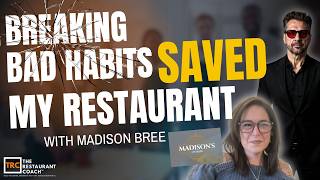
Madison Bree rebranded her Michigan restaurant from Kathy's 126 to Madison's on Main and cut kitchen ticket times and labor costs using Donald Burns' coaching framework focused on culture, people, product, and process. She created a signature sandwich called the Randy and started the Renovation Randy Foundation to honor her father's legacy.
Chapters
And welcome to the Restaurant Coach podcast. It is the cure for the common restaurant. I am so excited to have on the show today a very, very, not only cool, but kind of a badass guest. This is Madison. Brie. Bri owns a restaurant outside of Flint in Flushing, Michigan, called Madison's on Main. And I want to say, Bri, welcome to the show. And also, oh, full disclosure, Bri is a member of my TRC method. She's in our. We have, like, different coaching programs. She's in our restaurant accelerator program. So that being said, Bri, welcome to the show. Tell us a little bit about. Tell us about Madison's on Main. And then tell us, I mean, how'd you get into this crazy restaurant game?
Yeah, so Madison's on Main. We just recently rebranded to Madison's on Main. So I bought the restaurant three years ago as Kathy's 126. And really cool story there, because I was a lifelong regular of Kathy's 126. You know, I came in from the time I was a little girl with my family up until, you know, early 20s getting cocktails with my parents. You know, it's always been, you know, my home away from home before owning the place. So it's a really special place to me, you know, right in the heart of the town that I grew up in in Flushing. So, you know, three years we kept the Kathy's brand because I loved Kathy's. And then it was just time for change, something fresh and new. We just had an awesome new remodel. Everything in the restaurant, you know, ceiling to floor, is brand spanking new. And it's. It's really cool to be a part of, you know, grateful.
Very, very cool. What's your. And I know you just wrote it the new menu too, right? What's your favorite menu?
Oh, well, I'm biased, of course. So, yeah, my favorite menu item is called the Randy. It is a, like, souped up surf and turf. You get a filet mignon with some red wine demi glace. You get a southern fried perch, and you get a crab cake. And that was what my dad always used to order. That's what we called it, the Randy. And, you know, he would order this without it being on the menu. And, you know, I want one filet, I want one perch. I'm like, dad, you can't order one of everything. You're messing up my inventory. You know, so now it's on the menu and it doesn't mess up my inventory.
Yeah, yeah. Very, very cool. And so far I mean, the response has been amazing for Madison's on Main. People, like, been coming in, flooding the place. I love it. Got great reviews and things like that. Let me ask you one question. Like, before you joined the program, before the TRC method, what was kind of like maybe the biggest frustration or pain point that you had in your restaurant?
You know, things not always flowing the way that I wanted them to. Right. You know, because I can sit back and say, okay, I've been in the restaurant industry my whole life. You know, I've read all the books on, you know, the way to run a restaurant. I've done all the coaching, you know, before the TRC method. You know, why. Why are we still having some longer ticket times? You know, why are we still having some inefficiencies in the kitchen? You know, why are we still running out of product? And, you know, just, you know, they say your business is a. Is an extension of you. So I'm like, hold on. You know, if we're having problems and this is an extension of me, you know, let's. Let's get to the root cause of it. And so then after the TRC method and learning about how much culture influences, you know, all of those little points in the restaurant, like. Like the efficiencies, you know, everything. Everything. And so now when we're not treating the symptom, but we're treating the actual illness, you know, which is that culture, and then we just build it back from the ground up, you know, then it's like, oh, hey, everything's kind of falling into place. You know, this is. This is what I want to be an extension of myself. So.
That's so cool. That's so cool.
Yeah.
Yeah. It's like kind of in your own words, like, what makes a Tier C method kind of different? And you said you tried some other coaching stuff. You read some books. What makes the TIERC method a little bit maybe a little different than things you've done before?
I think it is exactly that with the culture, you know, because we're not. We're not just, you know, writing budgets on our food cost. We're not just writing budgets on our labor costs and saying, okay, this is the standard now. Get it done. You know, we're actually diving deep into how to get there, and that's all through culture. That's all through, you know, breaking old, bad habits that we might have, you know, everything that goes into the human element of the restaurants. Because, like, to use your words, restaurants become better when the people in them become Better people. So, you know. Yeah. Not. It's. It's not just, you know, setting that guideline and saying, okay, now. Now we're gonna make this happen. It's. It's the how and the why and. Yeah.
Very, very cool. Yeah. So, like, you know, when you were, like, hearing about the TRC myth and stuff like that, what do you think? Maybe. Maybe people misunderstand about TRC method when they first hear about it. Like, maybe what are some of your missing. Or maybe some things you guys are like, oh, is this gonna be like any. You know, what were some things you might have thought?
Well, you know, because I see the TRC method pop up when I'm scrolling through Facebook. Right. And so, you know, my Facebook feed knows that I'm a restaurant owner, and so it's gonna give me a million different, you know, coaching programs and stuff. And so I'm scrolling through, and I see it, and I'm like, okay, you know, whatever. It's just another coaching program. You know, I didn't really care for my last one. But then, you know, what. What kind of captivated me was just, like, the realness of it, you know, that this isn't just, like. I know that you personally, truly care about helping your clients, you know, and. Yeah. So I think that really is what differentiates it, that, you know, you yourself owned restaurants, you know what you're talking about, and, you know, from your personal life, like, this is what you want to help people do. So. Yeah. And most coaching programs don't have that. They don't have, like, the real, genuine, authentic care behind it like you do.
Oh, thank you. I appreciate that.
Yeah, for sure.
How. You know, and I've seen it. I've seen this. I've seen you evolve since you started the program and stuff like that. But how would you think your leadership has evolved, your leadership style, maybe, since parting come to the TRC community?
My personal leadership style?
Yeah. Yeah. You're. You know, what changes have you seen? I've seen some changes in you, but.
Okay, so, yeah, the number one thing, because my flaw is that I'm too nice, you know, as a leader.
And
I'm sure that's what you were thinking when you asked that question. Because I'm, you know. Yeah. Because I'd just be like, that's okay, honey. You know, we'll do better next time. And then it's like, you're not running a daycare. You're running a restaurant. You know, and, you know, I can still keep that kind energy with the way That I lead my team, you know, no one's asking me to turn into Nazi all of a sudden, you know, but to, you know, hey, these are the expectations. These are the standards. You know, let me help you get there. If we're not reaching it, but then, you know, after so many times, you
know, we have to make changes. Time to shake hands and go our separate ways, right?
Yeah. Yeah. Because it's not doing anybody any favors. It's, you know, hurting the person that you're keeping in that position because they know that they can't succeed. It's. It's hurting, you know, everyone else in the environment and the workflow. It's hurting the customers, you know, so, hey, you know, we're leveling up.
There you go. What do you think is like a leader trait every restaurant owner must develop if they really want to? I mean, in the next, like, three to five years. What's like one trait owners need to develop if they want to really? I mean, actually thrive, not just survive.
Discipline.
Oh, that's a power. Yeah. And most of us left.
Yeah, yeah. You know, and what you call it, the standard degration effect. Right. So, you know, without that discipline, without me saying, hey, this is what we stand for. This is how we do it. This is how we get there, you know, and being disciplined and what, you know, we want to see the business do. We want to see our staff do we want to see our guests do, you know, that's. That's what you need. And saying, hey, this is what we're doing every day.
That's it. And there's. It's not open for debate. It's like, yeah, what do we always make the joke of? A standard is called a standard because it's a standard. It's not called a flexible.
Right.
That's why it's called a standard, people. It's not called a flexible option. It's called a standard because it's standard. So culture, you know, I, you know, I'm always big on culture. You know, we have that. So the TRC method, basically, I always say, is like a frame within a frame. And in the frame within a frame, it's basically 3. 3. It's a 3 by 3 framework. So the main frame is people product process. Inside that, in the people part, there's mindset, culture, hiring. In the product part, there's food cost, menu marketing. In the process part, it's system, strategy, and profitability. And the first part we always have everyone hit is that people part, which a lot of times, you know, when People are coming into the coaching program. Of course they see the shiny object, like, oh, marketing. I just need that. Oh, profitability. I just need that. And I always tell them, like, unless you get the people part right, the other part won't stick. You might have, like, moments where it's good, but it's never gonna. It's not sustainable without that culture piece. In your experience with culture, what's the easiest thing to overlook but also the hardest thing to fix?
I mean, habits. When you say the hardest thing to fix, I do think that habits really, you know, think about any of your personal habits that are hard to break, you know, and then you try to get other people to break those habits. Now it's like, yeah, and. And that can really be something sneaky, you know, that it's easy to overlook someone's bad habit. Like, oh, yeah, that's just Dan. You know, that's just the way that they do things. And.
Yeah, yeah.
Then we just make excuses, bringing everybody in.
That's just the way he is. Yeah, he's just a curmudgeon. He's just an old, grouchy old guy. He's just the way he is. He's toxic. He needs to go.
And I use the name Dan. Dan's one of our best guys. So we're not talking about Dan, but
we're using a name, Dan in general. Sorry. And if Dan's listening, we're not talking about you. Don't worry. You're good. You're safe. You're good.
We love you, Dan.
We love you, Dan. Possibility leaks. You know, we talk a lot about profitability leaks, like holes in the bucket. Where do you see. Where do you think was some of your profitability leaks that you weren't really aware of before you started the TRC method?
Labor cost for me. And it does come in with my, you know, natural disposition to be a coddler and say, oh, that's okay, honey. You know, stay as long as you need, you know, because. Yeah, yeah. And then we've got, you know, crazy labor cost and. Oh, how did that happen? I have no idea.
Yeah, really? It's like, until you see payroll, you're like, what. What happened? How did that. How did that blowed up that big. What? I don't know.
Yeah, I've done that before.
Like, my first restaurant, I would be like, I was very similar. I mean, the reason I can coach from authenticity is because I've had most every problem I. I helped restaurant owners with. I had those problems at my first restaurant because, again, I Knew how to run a restaurant. I didn't know how to build a business at my first place. And it wasn't until I got a business coach that helped me kind of see the light. And I was the same way. I was like, you know, payroll should be good. And then all of a sudden, I see payroll and like, whoa, okay, where's that little brown bag to breathe into? It's like, I'm gonna have a panic attack. Like, way more than I thought. What happened? And it's like, oh, well, you know, remember, like, Freddy stayed over, like, 20 minutes, and then Sarah stayed over another, you know, 45 minutes. And then, you know, Joey came in at half hour early and clocked in. I wasn't watching the clock in clock outs. And then people just ride the clock and wasn't paying attention to it. And I like you, I just, like, I didn't want to. I just want to let people. I want people to be happy. And I wanted to make sure they stayed and they worked, but didn't hold them accountable, which killed.
Exactly. Yeah, yeah, yeah.
And as far as, like, guest satisfaction, what's like, one thing that you changed using the tiercument that had an immediate, maybe ripple effect with your guest, you
know, an easy one, is just, you know, going back to that culture, like the no I workshop and our code of conduct. So it's in our code of conduct, you know, like the 104 rule, right? So you make eye contact and smile within 10ft of someone. You say something positive within 4ft of somebody, you know, and that's just something that, like, as we're going through our days, you know, if you're a server, oh, my gosh, I got to get this food to this table. You know, we're all super busy all the time trying to get stuff done, right? So it's something that might really fly under the radars to just say, hi, you know, have that human interaction.
So being a human being, what a new concept, right? Yeah. Yeah. I hate to say that the chains ruined it. I mean, the chains are actually like. They took the. They took the hospitality out of the restaurant industry, and they made it all just about food, you know, just like serving substance, you know, just getting a meal, not really having the experience, which I think that's another thing I think most restaurants are just struggling with. They've lost touch with what's it mean to give a real experience, not just, like, put food on a plate and shove it in front of somebody and then say, here's your ticket. Here's your Check, pay for it. All right, next. You know, not like a transaction, but actually having this interaction, this human connection with people is what I think most restaurants are missing. And I really see you, especially with the new rebrand with Madison's on Main. I see you really, really pushing that forward as far as you want to have that full kind of on, like, I mean, human interaction experience with the new brand.
So, yeah, that's what it's all about. That's why I fell in love with the restaurant industry to begin with, because there really is magic and restaurants to, you know, to be the gathering place where memories are made and all of that. And, you know, we do. Getting back to that code of conduct, you know, our last but not least element is that we never forget the human element. Right. You know, I don't care how busy you are behind the line, we always remind our staff, hey, you know that that sample that you're making could be going to a single mom who. It's her first time out in a year, and this is, you know, the first time that she's treating herself. You never know, you know, and it's
always, yeah, we tend to generalize table numbers, like table 14, but, yeah, like, table 14. Somebody having an experience. And like you said, you don't know what they're going through. The beautiful thing about restaurants is, I mean, people go to restaurants to celebrate all kinds of things. All kinds of things. Yeah. Now, you know, a lot of restaurant owners will say to me, like, I'll get calls every. Every week from, you know, new restaurant owners talking about their business and talking about, you know, what's going on with the industry. And they always think there's a labor crisis. You think it's really a labor crisis? Do you think it's really a hiring problem, or you think it's a leadership problem?
I think it's a leadership problem for sure.
Why?
Yeah, I don't think it's a people problem. I don't think it's a. This generation problem. You know, I think that. Yeah. Yeah. You know, and from my experience in restaurants, you know, because I've been.
You've been.
You want to count Scooping ice cream? Yeah. It's been since I was 15 and throughout all of, like, the other restaurants that I've managed before becoming an owner. Places do not teach leadership. You know, they do not teach, you know, how to coach, I guess, instead of manage, because that is a huge difference, you know, that managing is extremely reactive instead of proactive. You know, managing is, you know, do this. Don't do that. You're getting compliance instead of commitment. You know, true leadership is, you know, teaching and helping someone get from point A to point B, you know, and that's. That's huge.
Yeah. So, yeah. And in. In the TRC method, we have like, this huge, like, library. Like, the TRC library is really, really thousands and thousands of hours of. Of coaching material, training material. But one of the things we really. I've really focused on the last couple years is we started developing a library for leadership. We have. It's called. It's called Leadership Roadmap. And Leadership Roadmap has, like, nine courses that, like, Bri can give out to her leadership team to help to give them those soft skills. Because, like she just said, no one teaches leadership. We all teach. We work on the hard skills so much. We. We want cooks to be faster cooks, better cooks cut better. So like that. But how do we teach people to actually communicate better? How we teach better people to how to listen? How do people. How to deal with stress? How do people deal with time management? How do we teach them just to be active listeners? So we've really, in the last couple years, I really put a full court press on developing this leadership roadmap. It's like a series of courses that, like, all my members, they can have access to all their leadership team can have access to. To give them those soft skills that they really, really need. And I think it starts making a big impact and stuff like that when your team starts getting on the same page with you. Yeah,
for sure. And they love it. You know, it doesn't feel like to them, like, oh, yeah, Bree's giving me some homework. You know, they're like, oh, my gosh, this is so great. Because it's not just leadership in the restaurant setting. It's. It's skills that they can take with them throughout their whole life.
They're actually life skills. Yeah. Soft skills. I always say, like, soft skills doesn't matter where you are. I mean, everyone needs how to learn how to communicate better. Everyone needs to learn how to manage your time better. Everyone needs to learn how to manage your stress a little bit better. Yeah. The things we teach is, like, stuff like, it's just. It's basically life skills. Not even. Just like. Not even just restaurant skills.
Yeah.
Self care. You know, I talk about self care a lot. A lot. A lot. Right. Do you think self care is a luxury or a necessity for restaurant owners?
Yeah. Coming from me, who will just, you know, naturally put all self care to the side and say, we're just going to full steam ahead, business only, you know, that's it. I can be a human robot, you know. No, that doesn't work. It's absolutely a necessity. Yeah, it's, it's.
How do you take care of yourself? I love you. You put really cool things on your calendar. Yeah. Share some of that stuff, if you don't mind. It's really cool because I had questions like, what is that? You know.
Yeah. So, okay, so my, you know, standard calendar, it starts, you know, 7:00 o' clock in the morning. That is, you know, meditation time. 7:30 in the morning, that's reading time. 8:00am, you know, that's my exercise time. And then we go throughout my day. Right. And then we get to 8pm and 8pm to 9pm is always up time. And that's what Donald was like.
What's that? A lot of my members, I have them like screenshot their calendars and send them to me. So I just see how they're planning today because we're really, we focus a lot on time management and being effective, not just being busy. And then. Sure. Honestly, like, what is that? I say, Bri, what. What is that? I have no idea what that is. You gotta explain to me. So explain what that is.
Right. And so that's what most people would call like, you know, buffer time or, you know, this is a time block to catch up. But yeah, not in my world. That's, you know, time. So that's, I was like, okay. That's usually when I'm, you know, asking my mom how her day went or, you know, it's just transitional time between work and home. You know, if I stay over work a little bit later. But it's, you know, basically if I want to go to the grocery store, if I want to, you know, do anything, that's my, that's my time put
on my calendar too. I need, so I need some time on my calendar too. Yeah. Because I'm pretty structured. I'm pretty sure my morning's real. I mean, my morning's super structured. I have like my hour of power in the morning where I do my meditation, I do my bible, I get my, you know, my supplements in, then I head to the gym, I do my workout and then I usually come back. Then I do my prep for like calls for the day and stuff like that. But I need, I need a little fuck up time in there somewhere.
Yeah, yeah.
Well, we all need a little time. Listen to this podcast. Make sure you add a little time on your calendar for Yourself?
Yes.
You gotta have it. Yeah.
Well, on a. On a real note, though, that's why time blocking didn't work for me at the beginning, because I would just time block everything back to back to back. And then if I didn't make that whole calendar, I'm like, oh, I'm a failure. You know, we all do that.
So.
Yeah. So, you know, all jokes aside, I mean, it really is important to schedule in that time for yourself to say, like, hey, this is. You know, you get pulled in a million directions a day. So this is your overlapping time. You know, that buffer.
Yep. And if you don't want to call it time, you can call it buffer time. If you're a little more, you know, you want to be a little more nicer than Bri and I are. More or raw into restaurant industry. Yeah. Yeah. All right, so if you came with a warning label, what would your warning label say?
Oh, crap.
Oh, crap.
Oh, crap.
Yeah.
Ooh. I think the people that know me well would have a better time answering that than me myself. That's an easy time to pick on me. My warning label would say, make sure you do your best, you know, because that's my number one trigger, is when I see people, you know, they're lying to cover their tracks or they're. Yeah, that's like the instant way to make me not explode. Because we don't do that anymore because I've had coaching. Yeah.
Now you basically pause and process.
Yes.
Yes. You do box breathing. Yep, I box breathe, and then I basically am in with anger, out with love.
That's right. Yeah, that's exactly.
Yeah. All right. And then, so thinking back, like, when you were a little kid, right, what was, like, the first thing you dreamed of becoming? And I know it wasn't a restaurant owner.
You know, maybe it was.
Maybe I'm.
It was a chef.
You want to be a chef? Hi. Nice.
Yeah. Yeah. When I was a little kid, that was my dream was to go to culinary school.
When I was a little kid, I wanted to be. I wanted to be a zoologist. Yeah. Yeah. And then I think I was, like, eighth grade. I decided, I want to be an architect then. But then I found out I can't draw. So that dream went out the windows like, ah, want to be architect. But, man, you. Donald, you can't even draw a straight line. So. Okay, that's not gonna work for you. All right.
Yeah,
Yeah. I did not want to be a chef after working with my dad in college. I remember, like, when I was 18, you know, he told me it was in your blood. I'm like, I want transfusion. I don't want to do this. Yeah. So that's why I went into the military, because I had to find something else to do for a while. And then, strangely enough, like, you know, the universe works in mysterious ways. God works in mysterious ways. Started working in college, working in restaurants, and found out I just really love the business and decided to jump. Go all in. Yep.
Yeah.
So what's that? What's the absolute best meal you've ever had?
That's a tough one, you know, because a lot of times at the end of the day, the best meal you've ever had really isn't even about the meal. It's about the people that you're sharing the meal with.
Yeah.
You know?
Yeah.
So, yeah, any meal,
ask this question to owners. A lot of times they'll pick out like, you know, some fancy restaurant, like, you know, French Laundry, per se, you know, things like that. And I always like the best meal I've ever had. I remember one day in the summer with my grandmother garden. She harvested these fresh tomatoes. She brought them inside, she sliced them up, she put them on bread with just some. As we. Her and I just sat there and had tomato sandwiches, and it was like the best meal I ever had in my life.
Yeah.
Yeah.
Yeah.
So if you could sit down with any. Any chef, any leader, any historical figure, past, present, alive, or dead, who would it be? Anybody? Have one mirror?
Anybody? Mark Twain.
Really?
Yeah. Yep. He's been my favorite author ever since I was a kid. I just have a book of, like, his. His quotes, his. His way of looking at the world. He's the most interesting historical figure to me, you know, born with a comet and died with a comet. I mean, I think that man was made from the stars and.
Yeah, that's a good one. That's a good one. Yeah. Most people, like. A lot of people pick, like, sports figures. Like, I get. A lot of times I have dinner with Michael Jordan. It was like, okay, yeah, how about, who else?
If you had to pick another one, you know? And that. That question's come up before in my life, and it's like, it's always old authors. Like, my number two is Edgar Allan Poe.
Yeah. Oh, wow, that's fascinating.
Yeah. Yeah. I. I love.
He was.
Love old English literature.
He was deep. He was dark. Man, that would be fun to have dinner with Edgar Allan Poe. Just kind of like, what's. And this kind of like, lean over and go, man, what was going on with you?
Yeah.
What mushrooms were you taking, man? Because that's some weird stuff, man.
Right?
Yeah, yeah, yeah. And then you also recently, you started a foundation.
I did, yeah.
Talk about your foundation real quick.
So the foundation's in honor of my dad. When my dad was alive, he had his company, Renovation Randy, and, you know, he was in construction. He owned this construction company. And there would be so many times that my dad would come home from work, you know, my mom would ask him how his day was, and my dad would start talking about, oh, you know, we. We had a job for this woman. She was recently widowed, you know, or. Or, you know, we had this job for this guy. He just had a stroke. He needed a ramp belt, you know, and. Yeah. So every time, you know, my mom. My dad never admitted it, but my mom would ask and say, you didn't charge him or her, did you? Right.
No, I didn't.
Right. And, you know, anyone who knew my dad, that was. The waves that he made was just pure generosity, you know, give you the shirt off his back. And so the foundation and had in his honor is the Renovation Randy Foundation. So that was a startup that we just had in the last few months. And, you know, we've already raised quite a bit of funds through. Through the restaurant, you know, through our partnership with the restaurant. And we're going to be helping a couple families this Christmas with renovations around their house free of charge.
Yeah, that's really awesome.
Yep.
Yeah, that kind of stuff just feels good. One of my favorite charities to I, like, donate time to. I have another company that does. It has apparel. It's called Ener. It's called Energy Active Apparel. It's a company I own. And everything from that company goes to a node Kid Hungry. So all the proceeds from that company go to no Kid Hunger. Because I. I think childhood hunger is a huge thing that's a problem. And I see there's so much abundance, but we kids tend to still go hungry, and there's no reason why. So that's been one of my big pet projects for years, is I've always been a big advocate of, you know, of really supporting no Kid Hungry. So. Yeah. But I think. I think every restaurant owner should have some kind of foundation or charity that you just feel that's in your heart that you want to give to, because that's what the business is about. It's not just about what, you know, a lot of people think, oh, I just want to get guests to come in. But, you know, what are you giving back to the Community. What are you giving back to people that live in your neighborhood? Stuff like that. So I'm really proud of you for doing that because that was a, that was. I know that was a passion project and I know every time you even think about it, you got a little, you know, get a little, your eyes get a little swollen up a little bit. Think about it. But it's good, though. Yeah,
it is. And it's, you know, the, the best scenario of a silver lining that I can possibly, you know, pull off that, you know, it is about our community. The restaurant is about our community. The foundation is about our community, and we get to do that in my dad's name and, and build a little bit of a legacy for him. So, so awesome. Yeah.
So awesome. What do you think is an unpopular opinion that people have about the restaurant industry? Or maybe a myth or maybe a stereotype people have about the restaurant industry?
Well, my, my least favorite one, my staff hears me talk about this all the time, is that, you know, oh, well, that's not a real job, you know, or people have this conception that is like, you know, if you're a service industry worker, you know, you're like a ditch digger or a, you know. Yeah, yeah. When people don't really understand the skills needed to work in this industry and it is by and far a profession and, you know. Yeah. So we, you know, we're on a mission every day to break those preconceived notions because, you know, it's something that I personally hate. You know, when I, When I see someone who, like, wouldn't give me the time of day when I was a bartender, but now that I'm a business owner, they're like, oh, hey, let me
be your best friend.
I'm like, yeah, so I remember you.
I remember you. Yeah.
Right, right. But yeah, I mean, the. Just looking at my staff, you know, the amount that they give to the restaurant, the amount that they give to the community, and, you know that their hearts and passion really are all in this. You know, you can't look at that and say, oh, this is just a, you know, part time job, or it doesn't take any skills or anything like that. It's. It takes a lot of skills.
It does. Takes a lot of skills, a lot of training, a lot of refinement, lot of practice. Yeah. So if you had to, if you could get one superpower, one superpower to run your restaurant, what would it be? And how would you use it? And please use it for good?
I'm trusting, not evil. Oh, well, you know, the ability to stop time, that'd be great.
Oh, that's. Or a type A time machine, huh?
Yeah, yeah.
Ability to stop time. Like, just like. Like stop time. But you could move it around in time.
Yeah, exactly, exactly. Like, we're gonna stop the time right now and then we're gonna move around.
You can move it. You can move in time. And everybody else is, like, frozen. And you're like, you can move around and move stuff around.
Yes, but my whole team can too. I want everybody to have this ability. Yeah.
Oh, that'd be cool. That'd be cool.
No one will ever wait for food.
That's it. Like time. And all of a sudden their food's like, right in front of them. Yes. That might freak people out. It's like, whoa, whoa. What do you mean? Where'd that come from? Yeah, yeah, yeah, yeah.
That well done steak only takes 30
seconds now when you stop time, it only takes. Yeah, it was take 20. Now it's 30 seconds at the most.
Yeah, yeah.
It's funny, like, when I ask Russia owners this, I get all kinds of stuff. Like, some people want, like, want to be able to fly. Some people want super speed. Like, they want to be like the Flash, you know, Some people want super smart someone, you know, I want to be. I want super brain power. Yeah. Time, though, that's the first. You're the first person to ever mention time, which is really, really cool.
Okay, nice.
If your restaurant had a mascot to represent its culture, what would that mascot be?
Does it have to be like an animal or a person?
Could be anything. Amen. Mascot.
Mascot to represent its culture.
I mean, it could be a person like, you know, like the Fighting Irish have a leprechaun, right?
Yeah, yeah, No, I would say. I don't know, the first thing that comes to mind is like a phoenix, but been watching a lot of Harry Potter lately, so that could. Yeah.
Actually, for what your brand is now, it actually is because Madison's on main is like the phoenix from Kathy's. And you've actually brought it out of the ashes and you're bringing it back to life. So I think a phoenix actually would be a good one.
Yeah, exactly.
We should get. We should find like a big phoenix, like painting or something like that or something we could put somewhere, like maybe some phoenix wings that people could take pictures of at the restaurant.
Yeah, something. Yeah. Stand here and have the phoenix wings.
The phoenix wings? Yeah. Like Matt and Stephanie who have slam dunk pizza. They put pizza wings on their. On their wall. They're doing.
Oh, my gosh.
They have, like, pizza. You know how, like, a lot, like, you go to. There's usually, like, on street murals, they have the big angel wings on the street, and you stand between the wings. And then people get their photos taken. They have big pizza wings on their wall, and people stand between the pizza wings and looks like they have pizza. Angel wings. Yeah. It's kind of crazy, right? This next part of the podcast is what I call in and out. Right? Is it in or is it out? And they're usually. These are fads or trends or just things that I've seen on the Internet. And all you gotta do is just basically, no explanation. Just gotta say in or out. Okay, you ready?
Ready.
Sriracha.
In.
Smash Burgers.
In.
Berea.
In.
All right. Nashville. Hot chicken.
I love it. Out.
Cauliflower is a meat substitute.
Cauliflower is a meat substitute. Out.
Out. Hot. Honey.
Out.
Hard seltzers
In. Begrudgingly.
How about mocktail In.
Big End.
Big in. How about flavor? How about flavored cold foam on coffee?
That. That's in, actually. Yeah.
Very cool. Yeah. And then what's. What's a book, maybe a podcast or an audiobook that you recommend. You're a big reader, so, like, it doesn't have to be like a restaurant book. Like, what's one. One book, a podcast, anything that you would recommend that people read.
Yeah. One that just had a really big impact on me. And this can be a book and a podcast because it's Ed Mylett's the Power of One More. That. That book is. Yeah. Amazing. And his podcast in general is amazing.
Yeah, he's a. He's a really, really awesome. Yeah. And then what's a quote you like to live by?
Got a couple. I'll do this one. Raise your standards.
Raise your standards.
Raise your standards.
Trc. Raise your standards. Right? That's a good quote. Yeah.
Yep.
And we give out, like, all my members get, like. We get a little swag and stuff like that. We give out wristbands, hats, we have T shirts. But we always want, like, little ways to just. We call them nudges. And that's the best thing to do is because when you're constantly just reminded of something, it just kind of stays in the front of your brain, and then you basically implement a little bit more. So what's one thing you want every restaurant owner listening to this week to make? What's one thing that. What's one thing that any restaurant owner could do this week to start making more money?
Social media.
Yeah, that's true.
Tell. Tell your story on social media.
Mm.
Yep. And not just posting pictures of your food, but, you know, talking about. Yeah, talk about your. Your people. Talk about, you know, your. Your guests, your. Your staff, your. Why you do what you do.
Exactly. And if there's any restaurateurs listening to this podcast that are kind of on the fence about jumping into a coaching program, what would you tell them? It's really like getting coached with me.
Well, you know, no, no, for sure. Any decision you're going to be on the fence about, you know, like, me pushing the trigger, you know, to do the go button for. Hey, I know it's a lot of money, and I don't know, you know, you're always gonna be on the fence about it because you're a business owner, and so you're gonna make a calculated decision on what's best for your business. But, you know, it's not like any other coaching program, and I know that because I have done other coaching programs. You know, if you want real results in your restaurant and you want the real way to get there, then just do it. That's. That's what I think. You know?
And then what would you say is, like, one word to describe your restaurant today versus before you joined the TRC method?
Structured.
Oh, nice. That's a good one. I get structured a lot. I get aligned a lot. A lot of times people say aligned. A lot of times people. You're the first person to say structured, but, yeah, that's a good one, too. And then you guys are on social media. How can people find you guys on social. Find you or your restaurant on social media?
Madison's on Main.
Madison's on Main. And that's your website, too, right?
Facebook and Instagram? Yeah.
Madisonsonmain.com madisonsonmain.com what's up? Website. If you're up in. Up in. What's it? Flushing.
Flushing. Yep. It's a. Right outside of Flint.
If you're up in that area, please stop by Madison's on Main. I mean, I haven't been up there yet. I. You know, luckily, my daughter does live in Michigan, so I actually plan on being at your restaurant sometime, because I actually go up to Michigan and see my daughter every once in a while. But, yeah, if you're in Michigan and you want to have just. You want to experience, like, a great owner who is passionate, compassionate, really, really trying to do a lot with her community. Right. You know, doing the right things, trying to, you know, just elevate everyone that she works with the stop by masses on main. Stop by. See, Bri, she'd be more happy to help you out and show you around, maybe even give you a tour. She might be in the kitchen cooking in high heels. Right.
I'm trying to break. I'm wearing an apron now.
You are wearing an apron, like. Yeah. So she has a, she has a tennis shoe. Like, she likes, you know, she's very hands on owner. She likes to jump in the kitchen, like when they get kind of in the weeds and then she'll jump back there with her. Like, she knows she dressed like a businesswoman, but she has like a skirt on and high heels. And she's back there in the kitchen throwing down in the kitchen with the team. And the team, they always give you a hard time, don't they?
They do. They do. Because I'll just jump in and start helping Bri grab an apron. We're sick of seeing you ruin all
your skirts, ruin all your clothes, ruin your clothes, ruin your shoes.
Yeah, yeah.
Don't be wearing those Christian Louboutins in the kitchen. That's for sure. Yeah, that would be a bad idea. Yeah, definitely. Bri, I want to say, number one, it's an honor to be your coach. I am so grateful to have you in the program. I'm, I'm really impressed by all the stuff you've done in a short amount of time. You've only been in program for a few months, but you've done, you've made huge leaps and bounds, especially with the new rollout with the new brand. I'm excited to see where we take, you know, where Madison's on Maine goes in 2026. I'm excited about the future for you and for your restaurant and for your, your personal life, too. It's going to be an amazing thing for everything. So thanks for being on the show today.
I appreciate it. Thank you so much. Thank you. And I super appreciate you being my coach, too.
More from Donald




If your restaurant only works because you work 80 hours a week, it doesn't work.






