The Wage War Is Happening Now with Lisa and Patrick Balcom
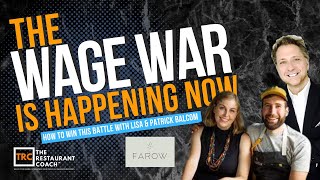
A recorded interview (Restaurant Coach podcast) with Lisa and Patrick Balcom of Faro Restaurant (Niwot, CO). The guests describe Faro’s emphasis on local sourcing/slow-food, their fair-wage model (an automatic service fee distributed to all staff, including kitchen), and frontline safety practices (a yellow/orange/red color-coded system for problematic guests). They discuss the history and problems of tipping in the U.S., the thin margins restaurants operate under (national net margin ~5–6%), leadership and culture (respect, empathy, directness), and practical self-care and operational suggestions for restaurants.
Chapters
Hey, and welcome to the Restaurant Coach podcast. It is the cure for the common restaurant. I am so honored today to be joined by two amazing restaurateurs and chefs from Farrell Restaurant. And you're gonna have to pronounce the city you're in, because I always, like, butcher it. But I have Elisa and Patrick Balcon here from Pharaoh Restaurant. Please introduce yourself. Tell people a little bit about Pharaoh and where you guys are at.
Oh, cool.
Well, I'm Patrick, and I'm the chef at Faro. And, yeah, we're just making good food with the best local ingredients we can get, so.
And I'm Lisa Balcom. I am the pastry chef and front of the house kind of face for Faro restaurant as well, and absolutely love getting up every single day and getting to work with our community on using our creativity and their amazing ingredients to bring some really incredible stuff to the table. And where do you live at the restaurant is in Niwat. I know a lot.
I would butcher it.
Everybody does. You are not all the time.
I'm like, oh, my God. I've ever have them say it, because I'll butcher it up. Yeah.
I feel like that's the way we figure out who's local and who's not.
Right. How'd you choose Niwat? You know, like, wave. One day, just look at a map and say, you know, sounds like a good place to be. I don't know.
Initially, we were planning on being in Longmont, which is kind of a bigger area just maybe 10 minutes outside of Niwot. Technically, Niwot's even part of it. It's just an unincorporated area, but I think the space kind of chose us. We had a lot of mishaps and adventures along the way of finding the perfect space. And then when this one finally presented itself, it wound up being everything we wanted it to be. And it's an amazing community. We're thrilled to be a part of it every single day.
Oh, very cool. And. And just full disclosure, too. So, you know, the Restaurant Coach podcast, I have coaching programs. Lisa and Patrick are part of my restaurant accelerator coaching program, and they have such an amazing story, and they actually have some really cool things that they're doing at the restaurant that I just like. You know what? I want to get you on the podcast because I want the world to know about some of this stuff you're doing, because the whole purpose of the podcast is to generate knowledge, help people kind of make better decisions, get, you know, a little bit more awareness. And one of the things that's been happening lately is labor. Labor. Labor's been, like, on the. On the forefront of a lot of stuff, and it's a serious topic, and there's lots of different avenues we would go down. What do you really think is the number one issue you see with the labor crisis?
I mean, I think it's just people have gotten used to. Well, the pandemic happened. People got paid a ton of money to do nothing. So then, you know, this business is notorious for treating people poorly. And they were like, well, I'm. I realize now, like, not working, just how bad it was. So, you know, it's like. So I just think it's a shift that's necessary in the industry as a whole, and that's why we strive to kind of treat people really well and be respectful and all that stuff.
I think culture has been a huge problem overall in the restaurant industry, and there are some places that really have gotten it right for a long time, and I think they serve as an example to the rest of us of, you know, maybe how we can do this a little bit better, that we can treat people fairly, that we can pay them well, that we can give them time off to be with their families. And we don't expect them to work 60, 80, 90, 100 hours a week, whatever it is, you know, just for a salary or a paycheck. It's just. It's been a little unbalanced for a while. There's a lot of little. Little things.
I think we've all done those stages before. I know you guys have done those stages before, too, those places that, you know, just like, crazy and just the hours are like, you know, you pretty much. I mean, I feel sometimes it'd be better just for me to grab a cot or a sleeping bag and stay at the restaurant, because I was only gonna get, like, three, four hours sleep, you know, back in those days. Yeah. And one of the things I really wanted to have you on the show about today is one of the things you guys offer that a lot of restaurants in your market do not offer. You offer what's known as fair wage now, and you also, when you mentioned that you do fair wage, you also get a lot of back push from it, from people that come to your restaurant. And I think the main reason I think there's a lot of back push is I don't think people understand what fair wage is. Yeah. So why don't you really talk about how this kind of came about and why you guys think this is like the. This is like a Great model. And it's not, trust me, it's not a model that works for every restaurant, but it really works for your brand. And what do you think that and why are you so passionate about it? And what do you think this kind of stem from? Give me some of the history about tipping and then how we kind of got to where we're at.
Yeah, well, tipping kind of started off, actually around the time that the Civil War ended. A lot of people started shifting that as a way of paying. Not really paying, but this is how people were being paid a little extra.
Extra.
Yeah. No, they weren't even getting a base wage, though, at that point. They were only getting paid off of tipping. The whole concept came from the European aristocrats who were, you know, tipping their servants as a bonus pay in addition to the regular pay. But the Americans went and twisted it in their own little way and decided to just use that as people's pay in general. Once we established a base minimum wage in 1933, 1933 with Roosevelt, we, the restaurant industry never adopted that and was never held accountable to that. So they were still just basing people's pay 100% off of tips. When we bumped up the minimum wage in 19, in the 60s, they finally gave a base minimum wage of like 213 an hour, which unfortunately is still the case in many states today. I think there's only seven that have actually adopted like a basic minimum wage that isn't below minimum wage for restaurant employees. So we're still kind of like, I think, feel like a little behind on that. I don't know of any other industry that relies on the generosity of their. Their customers to pay people like, you know, Amazon employee, if they're working customer service. They're not going to get a deduction in their pay if the person isn't happy with the way they handle their service. And I feel like it's kind of been a backwards concept for a long time. I think Covid's kind of give us, given us the opportunity to maybe look at how we're doing this. I think a lot of this leads to harassment and entitlement sometimes, too, between the guests and the employee. You know, at least 90% of restaurant workers have admitted to being for feeling harassed at some point during their work. And I think the tipping kind of perpetuates that attitude, like, well, I'm going to punish you if you don't do exactly everything that I want you to do, or, you know, or if you don't tolerate my bad behavior with A smile on your face. You know, I, I just feel like there's something pretty wrong about continuing that, that mentality.
Very cool. And, and you know, and we talk about psychological harassment A lot of times. You guys have a system, don't you, for like predatory guests or guests that just like, you know, you have like a, like a color system. Talk, talk about that real quick.
We do, yes. So we've created a. And I know other places have done this as well. It's kind of gave us some of the inspiration for moving forward on this. We do a color coded system. So yellow is vibes. So basically all the server has to do is come up and tell the manager that, hey, you know, we've got a yellow at seat whatever on table 43. You know, and we know at that point maybe there's like an energy there with the people. They haven't really necessarily said or done anything yet, but you can tell they're going to be a little high maintenance or they might be a little needy or aggressive with things. You're not really quite sure how it's going to play out yet. At that point, we give them the opportunity if they want to give the table to someone else or give it to the manager to take over, they can. If they feel comfortable continuing forward with that, they can. Orange is the next step for us. And that's when there's been like a verbal issue. At that point again, they have the opportunity to turn it over to a manager or another employee or, you know, stop taking the table if they prefer that, you know, they feel like they're uncomfortable with dealing with that person. And then a code red with is pretty much like it's gotten out of hand.
Grabbing people, right?
Yes.
Yeah.
And, you know, I think I've spent over 20 years in this business. I've spent a lot of it in the front of the house and I've definitely dealt with a lot of very uncomfortable situations with guests. And I wish we had things like this then so that maybe, you know, working didn't feel so strange sometimes people can be really ugly sometimes. And it's unfortunate but true.
That's true. It is very true. Yeah, I've always, I've. I've actually, when I had my restaurants, I kicked a couple people out. I never. Welcome back.
Yeah, I haven't had to do it yet, thankfully, but I'm sure the day will come.
Yeah, yeah, you'll get some. That just thinks that, you know, that you owe them and that they're, you know, you don't know Who I am?
Yeah. Oh, that's my favorite line.
You know who I am. I love that one. That's my favorite one.
You're the guy that's not eating here anymore.
You're the guy's not in here anymore. You're the guy's not welcome back here. That's who you are. I, I, I definitely know who you are. So I think a lot of times people hear fair wage, and then they hear the words tip pulling. What's the difference.
If you want to?
Well, so essentially we. The fair wage is a. Essentially, it's an automatic fee that's placed on the bill.
Right.
And then that is distributed to every member of the team.
Right.
So I guess the difference between that and a, A tip pool is that. So a tip pool cannot be distributed to people who do not interact with guests.
Right.
It's something that, you know, it still excludes the kitchen. And if there are places taking chunks and doing in a tip pool, like, you can get in a lawsuit over it, distributing that to, you know, people who don't interact with guests. The fair wage, we pay everyone. We pay everyone over the regular minimum wage for the state of Colorado, and we collect the fee which allows us to distribute that to everybody in the building. So.
So we're able to lift the kitchen staff's pay. You know, I feel like every single person on that, on our team has an impact on the guest experience. It's not just the servers, not just the bartenders. You know, it starts at the front door or over the phone and continues on from the people that clear plates and wash them to the people that have spent hours preparing your food and making sure that it's perfect. You know, I think there's just a whole team effort in making it the best possible experience for people. It shouldn't all just go to one. One side of everything.
And what do you see as far as, like, the impact as far as on the team members? Because I remember, you know, when I, I used to work, you know, when I was in college, I worked a line cook job, and then I worked, you know, and I had to work another job, you know, in another job, and it had multiple jobs when I was going to college. What do you. What do you. Do you see the impact of the fair wage where they don't have to pick up those second, third, fourth jobs and stuff like that? Do you see that they have a better lifestyle? What?
Yeah. I mean, it's a game changer for all kitchen employees. I mean, especially if you're somewhere that's busy. I mean, if you're cranking, I mean, you know, you're seeing kitchen staff making 25, 26, $27 an hour, where the business itself could never pay that. I mean, you can't, you know, with the way things go, I mean, you can't achieve that otherwise. So. Definitely makes a huge impact on people that are typically paid 15, 16, $17 an hour.
Huge. That's a huge impact.
Yeah. So, I mean, and I remember the first time I experienced this was during the pandemic. The restaurant we were in had started this model, and it. I mean, it changed my life for sure.
Both of us really. I mean, we were both hourly kitchen employees at that point, too. So, yeah, it's made a huge impact, I think, on. On the back of the house, front of the house. I think it's been a little bit of a shift mentally. They're not actually making any less money than they would be normally. We've kind of crunched the numbers both ways. It just becomes more of an hourly job than a shift pay kind of job.
Right.
And I think that's where the mental shift is kind of starting to happen a little bit with. With the front of the house employees. But it's. Honestly, it all crunches down to the same numbers either way. We've kind of debated this back and forth so many times, and it doesn't make sense not to keep doing it. I think there's just like a little education piece and kind of a shift in the way.
I think it's a huge thing to think about that. You know, I think the biggest conception, I think just like a lot of people that work in restaurants, they think the owners are rich. Well, a lot of people that come into a restaurant, they think, you own a restaurant, you must be making tons of money. Right?
Yeah.
I don't think they understand the thin margins that restaurants usually, you know, thrive on. I mean, the national average is 5%, 5 to 6%. I mean, that's not much. I mean, it's really not one mistake. And then, you know, you're upside down pretty much. Yeah.
When something really expensive breaks, like, you're walking cooler or.
Oh, yeah.
Or something like that.
I had, you know.
Yeah, yeah.
Now I just spent it all.
So. Yeah, it's like, perfect. Gone. See ya. Oh, I know.
Yeah. You made a. Also, you made a comment one time that sometimes customers have a skewed idea of what food costs.
Yes.
Yeah. Explain that a little bit.
Well, our whole concept is based off of sourcing locally, so we're you know, using grass fed animals that are raised appropriately, we're not buying into the commodity food system at all. I think the commodity food system in a lot of ways has kind of cheapened what we expect for the money. But there is a huge difference in quality and there is a huge difference in how it impacts the environment and your body and everything. And even being able to support small local farmers. I mean, most of these guys, they're lucky if they're making like 30,000 a year and they're out there like sweating and like grinding it out. Yeah. So we're doing our best to support their businesses in any way that we can. I feel like people just, yeah. Don't always understand the value in not paying $2 for the apple that was grown in Chile versus paying maybe 4 for the organic one that was grown up the street. And the difference in what it takes to cost wise to even make that. Most of the farmers that are producing these commodity crops are pretty much living in poverty and not getting a fair wage for the food that they're producing. The big companies that take it from them are, but they're not making anything. So it's kind of supporting the right systems, I feel like. And I know it's not important to everybody, it's something that's very important to the two of us, but I think it's something that more people should be aware of and just understanding what they're supporting when they go to buy something at the grocery store.
Seems like a lot of times the artists get taken advantage of. I remember like when I lived in New Mexico, I lived in Gallup for a little while and you know, the, the Navajos. Navajos would come into town and they would have their kachinas that they would sell and stuff like that. And these guys would just like beat them up for pricing, you know, and the guy like took like a week to hand carve this thing and would give him like a cup, a five bucks, ten bucks, and then turn around, sell this thing for 300.
Yeah.
You know, it's crazy. You know, it's like the system was broken.
Agreed. It's definitely one of the systems in our whole lives that's broken. And definitely the restaurant industry, that's. Food shouldn't be as cheap as it technically is.
Technically. Right.
Yeah.
Patrick too. Patrick has a really good network. And I know Patrick, you've many times you've said you've called up vendors and local farmers and say, hey, if you're sitting on extra stuff, let me know. I'll Buy it from you, and then I'll run it out. Right. As a feature. Right.
Yeah. I always. I always remind my farmers, it's like, hey, whatever you have that, like, is about to go bad, or you have, like, just a ton of that. Other restaurants aren't ordering. I make it a point to, like, make sure they let me know. Because our restaurant, the one thing about it that's so great is that we can change the menu, I mean, in five minutes, you know, because that's nice.
Because.
Because it's a. We're chef owners, so, like, we can. You know, we have. We just have that ability, and it makes it really nice. And I make sure I use that ability to help the people we work with.
So very, very cool.
Yeah.
Yeah.
So I've seen a lot of our vendors, too, wind up having more business because of us. You know, we just recently had dinner with the ranchers that we buy our meat from, and they're like, yeah, we've had a lot of people that have come to eat in your restaura that loved the meat so much that they've actually come and started buying meat from us now. And, you know, I've had that happen with our local Miller and same thing with some of our farms. So it's pretty amazing that we're able to help people that way, too.
Yeah. One of the things you're really into, and a lot of people will be confused by the name, is slow food. So slow food movement. I tell everybody, like, listening right now, slow food's not food that's slow. Okay. Basically supporting an ecosystem in time. You're basically in your community. That's what slow food is. It's basically. It's like the original kind of farm to table, basically, is what it really is. Yeah. So, yeah. And like, on you, if you go to their website and if you go to their website, their website is a ferrorestaurant.com. you'll see a lot of their information and stuff like that. It's. It's a list right here. Pharo restaurant dot com. And you'll see that they have won quite a few awards for the slow food movement that they do. So, yeah, I was like, I remember I said something to somebody the other day about slow food, and they go, wow, why can't they speed up the food? And I'm like, it's not.
Totally how that works, but.
So I know how that works. But, you know, leadership. You know, I'm really big about leadership. Leadership is really critical in restaurants. What do you think is the number one trait that makes a restaurant leader.
I think in the industry currently, I think the number one trait is just being able to be direct. I mean you like that's has to come first. I mean just being able to look at people and whatever needs to be done, they don't have a problem saying it. I mean that's for me, that's just the number one. Obviously there's a ton of different things that go into being a leader, but being very direct and still being respectful too, I guess. But yeah.
How about you, Lisa, what do you think?
I think empathy with their people is another part of that too. And again, the respectful part of it, having that self awareness of how you're responding to somebody, maybe about how they're perceiving the situation, removing, you know, your emotions a little bit perhaps, and understanding that there's a different viewpoint here and being quiet long enough to listen and to suss that out and see how you can work best with that person's personality versus just going headfirst into it and beating them up and not even, you know, considering that, hey, maybe there's another element to this story.
Exactly. Yeah. I think we had a training on the Restaurant Coach Nation this last Friday and I talked about the HHS kind of traits, you know, and I think the leadership has to be humble, hungry and smart. And smart's not like an intellectual smart. Smart's more on the emotional intelligence side. So in fact, if you ever wanted anybody out there listening, want to join the Restaurant Coach Nation? It's a free rest, it's a free group. It's on my Facebook page. Just go over to Facebook and you just type in Restaurant Coast Nation and you'll find it. So you guys both know because you're in my coaching program, I'm a real big believer in self care. What is one self care habit that you have changed since we started coaching or what that you've implemented since we started?
I think I've been better about doing regular meditation for sure. That definitely helps me a lot with either calming down at the end of the day or getting, getting my day started off on a positive note and just kind of going into it clear headed.
How about you, Patrick?
For me, I think my monthly deep tissue massage has been like game changing.
Game changing. It is game.
So yeah, I mean really helps with all the aches and pains.
It does, it does.
And it helps a little mentally too.
So yeah, it's like an hour long of just not having to think or do anything.
Right. So I always love to Ask chefs this question. What's the best meal you've ever had?
So my best meal was at Restaurant Zero in Charleston, and it was a seven course tasting menu. It's been a while, so.
But hey, well, here's the thing. It stands out. It's all these years, it's still like, it's still a good memory.
But I know it was incredible. And then anybody that asked me that question, like, that is always my answer. And I haven't had anything to top it yet. So just from the ambiance, the service, the experience and the food all combined, like, it was just pretty phenomenal.
So how about you, Lisa?
That was actually mine too.
Oh, yeah.
My favorite meal is, like, you, years and years ago. And actually the guy, the chef who served this meal to me, he actually wrote the forward to my new book, your restaurant culture sucks. Rick Tramano, he's a James Beard chef. At the time, he was running a restaurant in Chicago called Tru. And it was, again, chef's tasting menu. Most amazing experience I've ever had. It was, and it's still to this day, probably my favorite dining experience.
Yeah.
So let me ask you, Patrick, if you came with a warning label, what would your warning label say?
That I hate repeating myself.
I mean, that's a good one.
If.
Yeah, don't ask me. Don't ask me to say it again. That would be your warning label. Don't ask me to say it again.
Yeah.
What would you say? Content under pressure.
Yeah, probably you don't know when it's gonna explode.
Stay 10ft back.
It seems safe, but be careful.
Seems safe, but be careful. They're very cool. Yeah, Very, very cool. So, you know, I'm a huge believer about culture. My next book's all about culture. What do you think is the key to creating culture?
I think giving everybody a voice to an extent. Making them feel like they're a part of a bigger. The bigger vision, the bigger, bigger mission. Having, like, purpose, I guess, is the best way to put that. And communicating that purpose and then having everyone connect with it.
What's one thing? How about you, Patrick? What do you think about culture?
It's just, I mean, for me personally, it's just being kind to people. I mean, as like from the chef perspective.
Yeah, I know. Screaming and throwing hands at people, you.
Know, I'm pretty, pretty understanding. And I remember what it's like to be new and green and not know a lot and, you know, and just trying to be understanding.
I don't know. And then if you had to make A suggestion right now for restaurants, something they could do in 2022 to stand out. What would you say was a good suggestion you would make to any restaurant listening right now on the podcast?
I think just put your people first. You know, I think this whole overworking, underpaying thing has become really the biggest source of pain in this industry. I think there's still a ton of people that really love this industry. There's so much to love about it. Um, but, like, I think it's time we just kind of reevaluate how we've treated people in the past and kind of move forward with a different perspective and just treating people better.
And what do you think about ghost kitchens, Patrick? A fad. Here to stay.
You know, I don't hate. I've never eaten from one, but I don't hate the idea. I mean, you know, several concepts, utilizing the same ingredients to make. To go. Food. I mean, it. I. I mean, personally. What's that?
Would you ever do one?
No, no, it's just not for me. But, I mean, I. Yeah, yeah, I could see it having a place, you know.
Yeah.
Obviously, like, with the pandemic happening, there was an explosion of them.
Yep.
And there's definitely going to be a downsizing that's necessary, but I think they'll stick around.
Exactly. So let me ask you as a question, when you were kids, what'd you want to be when you grew up?
I wanted to be a psychologist of the weird.
Oh, my God, that's amazing.
Then I went into the restaurant industry. I guess that kind of fulfilled it to an extent.
I wanted to be an architect, but then I realized I couldn't draw for shit.
Yeah.
Damn.
All right.
I'm still.
Always wanted to be a chef.
No, I. It's silly. So when I was little, I was like, oh, I want to be a helicopter pilot. Well, I was terrified of small aircraft and, like, I don't know, I wouldn't ride in them, but for some reason, I wanted to fly them. I don't know, it was silly. And then, you know, I got older and just started cooking and never stopped. So there you go.
There you go. There you go. So what's a book? An audiobook that you recommend? Any good books you read?
The book I always recommend to people is the Third Plate by Dan Barber.
Oh, yeah.
You know, I've always felt a certain way about, like, supply chain and. But he really, like, explains it in a way to, like, really brings it home for you. Like, it's just incredible to read, and it'll help you understand just what is wrong with the food system, so.
Oh, very cool. Third plate by Dan Barber.
Yep.
Awesome. I'll write that one down, man. It's my list.
It's. Yeah, it's incredible.
I don't know if this fully counts. I. I'm a total book nerd, so I. Picking one was probably the hardest thing to narrow down, but I think as a chef, some of the most influential books for me were the Ottolenghi series, first with the Ottolenghi book, and then plenty and plenty more. Those changed the way that I developed flavor and changed the way my palate kind of perceived things. So many textures and flavors and things going on in his dishes. He's always been very inspiring to me.
Very cool. What's a quote you live by?
Ask yourself if what you're doing today is getting you closer to where you want to be tomorrow.
Patrick, you got a quote besides, just leave me alone, let me cook?
No.
It's that constant little bit of improvement that helps every single day.
Constant, never improvement. You know, in our coaching groups, we're really big about. We call it the 1%, 1% improvement. We just want to be 1% better than today than we were yesterday.
And I have to say that helps me a lot. Sometimes when I feel overwhelmed by all the things that I want to accomplish, and it's just too many. Too many things at once. I'm like, oh, 1% that I can do. 1%. That's easy.
What do you.
What would you say is the number one, the number one benefit of the coaching program you've gotten so far of the accelerator program.
Getting organized, being able to put systems in place, having support from both you and the coaching community. I feel like all of that is just kind of changed the game for us. You know, when we get our. Get in our little bubble every now and then, kind of get in our heads, it really helps pull us back out and get us refocused on. On getting the goals done that we wanted to do instead of just falling into the pit of despair. So it helps a lot. Doing the 5:15 every week has been really great for us too. That's very helpful with that 1% improvement and getting just those little things done every single week that eventually add up.
Perfect. Perfect. If people want to find you where.
They find you at, you can go to farorestaurant.com you can follow us at Farrow Restaurant, both on Instagram and Facebook.
You got a great Instagram page too, by the way. Yeah. If anybody wants to check them out on Instagram for sure. And definitely follow them. They got really, really great stuff. I mean, I love the storytelling they do. They do a lot of. A lot of Instagram stories about the farmers, about what's going on with their team. They actually have taken a lot of stuff that I teach in my coaching program to heart and really implemented them. And it's always. It fills my heart to see people actually taking that stuff and running with them. So I want to say thank you so much for being on the show today. Thank you so much for sharing, especially thanks for kind of shedding some light about what fair wage is and how we can actually start improving our culture by making making life a little bit better for our team. I. I think I'm like you. I believe that if restaurants really want to thrive as we move forward, we got to focus more on our people. We got to focus on making life a little bit better for them. You know? You know me. I'm a huge believer. It's like, I don't want your restaurant to run you well. I don't want your restaurant to run them. I don't want them to sacrifice their life and their family. You know, so many people have done that, you know, and, yeah.
Horrible in our industry and others, too. I think we're most notorious for it. I think the spot.
We're notorious. I mean, we've become a living kind of stereotype meme.
Yes.
Yeah. How many memes you see out there all the time about, like, jokes about restaurant workers overworking and drinking on the job, you know, doing crazy, stupid stuff. Right.
There's a reason why substance abuse is so prevalent in this industry too, unfortunately. And I think it's just the abusive hours, hours, time and behavior of how they've always been run. So it's been. It's time for us to start kind of looking at a different way forward.
I should tell my line cooks, like, you know, nothing happens. Nothing good happens at 8am at 2 in the morning, guys.
Ever.
Walk away. Nothing good happening at ATM at 2 in the morning. I'm just telling you right now, it's a bad idea to go home. You know, that's my words of wisdom. I'm leaving as a parting thing. If you're at walk away, go home. It's better. Definitely. Awesome. Well, thanks for being on the show today. I appreciate you guys so much. I'm so honored to have you in my coaching program, and I'm honored to be your coach.
Thank you. And thanks for being here for us too. We've been loving this awesome.
More from Donald




If your restaurant only works because you work 80 hours a week, it doesn't work.






