Unearthing Unethical Underbellies with Juliette Gust
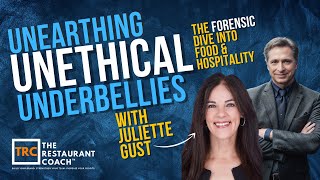
A Restaurant Coach podcast episode (YouTube) in which host Donald Burns interviews Juliette Gust, president of Ethics Suite, about ethics and compliance in the restaurant industry. Juliette describes her hospitality background, transition into forensic accounting, common ethical breaches (theft, time-theft, harassment), the value of whistleblower hotlines, and practical advice for building ethical foundations (onboarding, clear policies, documentation, enforcement).
Chapters
Sam. Hey, and welcome to the Restaurant Coach podcast. It is the cure for the common restaurant. I am so excited to be joined today by a good friend, Juliet Gust, president of Ethics Suite, who actually has a. They're located here in Phoenix, Arizona. Julian. Juliet and I have met a couple times. We met on the world stage when she was one of the speakers I brought over to Hospitality Innovation Planet. And I'm going to be really, really happy and honored to have her speaking this October in Tucson at the Restaurant Success Summit. Juliet, welcome to the. To the podcast. I'm so happy you can make it today.
Thank you for the invitation. It's great to see you again. And, yes, Spain was a highlight, so it's great to see you again.
I know it's been a while. I mean, we were in Madrid just as Covid was hitting pretty heavy, and, like, I mean, I think we all just escaped before they locked down everything the week before.
Yes.
Yeah, we were all, like, trying to scramble to get flies because everyone was texting us. So when you gotta get out, you gotta get out. And we're all right, we're getting out of here. We're getting out of here. So, yeah, it's crazy. Now, you have an amazing, amazing background, and it's really, really unique what you do. So why don't you give us a little history about your background in the restaurant business, how you kind of got started into it and where this kind of journey has taken you to what you do now with Ethics Suite.
Sure. So I have been in the restaurant business since I was a kid. I mean, I grew up around it. My grandfather was from Spain, but he went to Cuba, and he had nine restaurants in Cuba. And, you know, of course, with the Castro takeover, they lost all of that and came to the United States. But, you know, there was always a real love of good food and hospitality and warmth around the table. And I think that that. That translated, you know, as much as the language did into my culture. And then, you know, of course, as the child of immigrants, you. You work early. You know, I started working when I was 12 in a restaurant and never stopped since. So I was in the industry. And then I decided, you know, hey, maybe I can go to college for this. Because I was able to go to Cornell hotel school, although I couldn't afford it. So I only stayed freshman and sophomore year, and then I had to leave and work for a few years, and then I went to Johnson and Wales a few years later, and then to a hotel school in Switzerland I was able to attend. But this was all in between, you know, working in the industry. I went from, you know, busser to multi unit general manager. And what I found was that I was very weak in numbers. You know, I was a great operator, especially good with the staff and customers, guests, but weak with, you know, what's depreciation, I don't know what that is, or I don't know. And how to work with our bookkeeper who was, you know, constantly correcting me. And so I thought, I really have to shore this up. So I, one of the other things that I noted was the amount of theft and the issues that we had everywhere I worked and I worked in a lot of places, right. I worked in Europe, I worked in Las Vegas, I worked in New York. Very high volume, high traffic areas, which I loved. You know, I, I always liked the fast pace of high volume food service. So I, there was a lot of theft and, and other issues and I really enjoyed that kind of investigation. I enjoyed, you know, figuring out what was wrong, figuring out how to fix what was wrong, and then figuring out how to prevent it from happening again. So, so I went back to school, got an accounting degree and, and that's how I joke that I'm the only restaurateur turned forensic accountant that you are.
You're the one I know of who made that journey. Most people are like, they're usually accountants and then decide to dabble in restaurants.
Yes. And it's funny because I could never have guessed in a thousand years that I would get anything more than a D in an accounting class because I would never have guessed that math was not my strong suit. And here I am, you know, I ended up with a, a 4.0 GPA accounting. But I think, of course it was the background in, in the food service that really helped me a lot.
So now you've conducted, I mean, thousands and thousands of investigations across, you know, so many different countries. Any particularly challenging or memorable ones that kind of, you know, or cases that really stand out that you learn from or you use as a precautionary tale.
There are a lot, because one of the biggest themes I see is that things could have been prevented and they get to a point where either the loss is enormous or the reputational damage is great. And it could have been prevented because nobody acted quickly enough to fix the issue and at least to try and mitigate the damage before it happened. And you know, one example I can give you right from here, from the Arizona area is a very popular restaurant that was in business for years and they Had a couple of employees that were gay and their manager and other employees were kind of calling them names, and they complained to the managers who did nothing but join in and calling them names. So then they contacted the eeoc. So once the EEOC got involved, there was press, right? There was, there was a civil money penalty. And the press actually was what ended up hurting them the most. Because once it got in the news that this beloved restaurant had been treating their employees in this way, they had to shut down because the public reaction was such that, you know, people were angry and people didn't want to go there. So those are some of the things that, you know, could have been prevented really easily. I mean, you know how it, how it goes, right? It probably could have had a conversation and Easy.
Had a conversation.
Yeah.
And then someone just being responsible, being the adult, and just step out and saying, hey, we just, we don't treat people like that. We just don't do that people, you know, we don't use names and. No, that's why I'm a huge believer. And you know this. I'm a huge believer in culture. I'm a huge believer in core values and living by your core values. Integrity, respect, trust, are core values that every restaurant should just embrace, especially respect. Because if you don't have respect, things.
I love about what you teach is, that's absolutely true. And I don't know if people understand how much money that saves them as well.
Oh, huge. No, it's. It's a, it's a game changer. And like you said, you know, you can either do the work up front and be preventative or they have the problems they have. And like you said, financial loss is one thing, but man, damage to your reputation, that's just crippling. I mean, it just kills your self confidence. Kills there. You know, the money loss is one thing. Well, you damage your reputation and you're really.
It's hard to come back. I look at Mario Batali.
Oh, yeah, yeah. Most of those guys who are part of that stuff, they've never come back. You know, they're like. They're ghosts. You don't even hear from them anymore. Yeah. Yep, yep. So ethics suites. Ethics suite. Your company here in Arizona. What's the driving force that you did? You know, when you're like sitting there, like thinking about starting your own company, what was the driving force? You've been in a restaurant business. You've been. Did some accounting. You got, you understand the numbers part. What was the big thing? And I know you, you mentioned Some of it was, you saw that there was a lot of things going wrong in industry. What was the driving force behind starting the company?
It was really, I saw how much, how much I hate the term add value, but it really was value added to have someone like me and the team that I had address issues as they happened. And the reason that we were able to do that for the companies that we worked for were because we had whistleblower hotlines and we had trusted people that employees would reach out to to tell them whatever it was that was bothering them, whatever their concerns were about unethical or illegal behavior. And so it was almost in real time, hey, I, I, I get a call or I get a note over the, a web reporting forum that's telling me I have this issue in any country, right. All over the world. Because we were in over 100 countries. So you know, with the Internet it's, it's instant. So, so someone in the Middle east could send me a message that, hey, I have a team of managers here that don't understand that they're giving out their micros card and the bartenders are using it to steal hundreds of thousands of dollars because they think that they're trusted, but really they're just voiding all of the sales and pocketing the money, for example. So I thought why not do that for everyone? Right? We can do this for anyone that's interested in having a team like that kind of at their disposal to say, hey, we can, we can tell you what's wrong and you can fix what's wrong quicker than it'll cause the damage that we talked about earlier, both financial and reputational.
Definitely. That's a huge, that's a huge, that's a huge passion and a huge mission. And I tell you, it's really needed. And sadly, I think a lot of restaurants are afraid to reach out to people like you because they're afraid, you know, that, you know, and I always tell people, people ask me about your company and stuff like that. And I say the number one thing I'll tell you about Juliet is that she doesn't judge. She's not judgmental. She's a fact finder. She'll find facts and she'll give you honest information and input to help your situation. Yeah, and you've worked with like big huge brands. You worked with big huge brands like Starwood and stuff like that. And you've managed like, you know, global fraud in investigation teams. Has that really helped you shaped a lot of your, kind of your outlook and view about ethics and compliance on, I mean, like, on a massive scale.
To some extent it has. And I wish I could say it's in a positive way, but it's been more. Right.
Oh, no.
Yeah. It really has caused a little bit of a. But in a way it's good because a lot of people react to crisis, and most of the time it is a crisis. Right. If it's embezzlement or it's an allegation of a bribe or, or some sort of corruption, you know, that's a crisis for the business owner or for whoever it is that's running that organization. And so the good thing about being a little bit jaded is that you don't freak out. Right. It's like, hey, this happens. And I find that we're, we're almost like therapists a lot of the time.
Oh, yeah, yeah.
Calm people down and say, believe me, these things happen. Worse has happened to organizations bigger than you, with more resources. It's nothing to be ashamed of or embarrassed about. And it'll, you'll be. The better for it. You know, you'll come out the other side. The better for it, and so will your organization. So. So that, I think that that jaded part helps you keep calm and understand that things will be fixed.
And I don't think you can, I don't think you can't work in the restaurant industry as long as we have and not be a little bit jaded.
That's right.
It's a little bit, I mean, slight. A little bit. Yeah.
Yeah. I'll tell you. Yeah. But sometimes, just when you think you've seen it all, along comes something that you say, I, I, I can't.
I get that all the time. I tell you, I, it's like, it's shocking. I've been in business a long time too. Like 44 years. And I always think, man, no one could throw a curveball at me. Every once in a while I'm just like, whoa, I did not see that coming. That's a crazy, crazy thing. And you worked with, like, Price, Waterhouse Cooper too. What was that experience like?
That was wonderful because it was right when I transitioned from, you know, full time hospitality to trying to enter consulting services. And they were, I was fortunate enough that they had a hospitality and leisure practice. And so it was a good fit for me to go right into that. But they were very supportive in me branching out and learning the forensic accounting side from the forensics groups and the regulatory groups. Yeah. So I was able to look at, you know, not Just the. Because the hospitality side, a lot of it was development work. You know, where. Where would a hotel or casino or resort fit? You know, what's the highest and best use of land? Same thing for food service. I was actually really fortunate to work on a study when they first stopped smoking in Atlantic City. And it was a giant study trying to figure out, you know, how much money would be lost if there was no smoking. And that translated across to the restaurants as well. So it was a very impactful study that changed some of the ways that they set up those laws too.
Oh, that's crazy.
Working there helped me move from, wow, I've never had a New Year's Eve off in the last, you know, 15 years to a totally new world. But the interesting thing was that because of the, the nature of the consulting world, you know, you're out to dinner and you're learning, going to wine tastings. And so I got to me an even better view of the hospital industry from the other side as a guest. And, and I enjoyed that quite a bit. A lot of beautiful locations, hotels and restaurants. Yeah.
And one thing I was really. I didn't know about until I met, you know, until we went to Spain. But you are fluent, I mean, fluent. Fluent in Spanish because of your family.
Parents insisted that I taught them so much when I was young, but as I got older, I was very happy that, that they made me do that when I was a kid. And it was, we only speak Spanish in the house and, and I had to read a Spanish language, you know, newspapers and magazines, which I dreaded. But of course, as I got older, it, it certainly helped my career and, and I was very happy to see.
That and want to add on top of that, how do you feel like that, you know, having cultural differences and understanding different cultures, how do you think that has an impact on your approach and your sensitivity when you're handling ethic dilemmas or investigations?
It has a huge impact because not everybody can react to bad news or to having to share confidential information or maybe even having to talk about somebody that trusts them and sharing, you know, divulging information that they wouldn't want them to share. So it's really important to get people to like you, right? To establish, to tell you things they wouldn't tell anybody else and to feel safe while they're doing that. And I think the. It's two things. I think also it depends if there's a woman or a man involved. Right. Because a woman might feel more comfortable in certain situations than a man. Would. And there are men who are fantastic investigators and interviewers. There are others who are a little bit harsh. And so it depends on their style. But I've seen women as well that are just as harsh as some. So that whole, you know, light over the face kind of attitude, it's not helpful. And then some cultures are. Some cultures I. I can't investigate in. For example, I have counterparts in other countries in the Middle east, for example, where they wouldn't want me to be the interviewer. It wouldn't kind of go over well, or I might not even be allowed into the country. So having a team of people that can satisfy the different sensitivities is helpful. And it's certainly helpful to know what that team should look like.
And so, like, on your team, how many people are on your team?
It depends because we have a team of five, but we have people that we subcontract out to as well in special skills or languages. So we can do that as well throughout the world. And then we have ethics suite Middle east. So there's 18 countries. Yeah. Where we licensed our.
You've really grown some.
Yeah, they're. They're new out there, but they're working on it. They're the great people and very sharp investigators, too.
And so for all you people watching this, thinking, like, oh, I'm not. I'm in a different country, I really can't utilize Juliet's services. No, you can, no matter where you are.
No. Yeah, it doesn't matter. We have our own clients in Turkey and the UK and Singapore and we're growing internationally because like I said, it's really. You just need the Internet connection and the world has become a much smaller place.
That's true. That's like, same with me now. It's like I use, you know, before COVID I used to go out and travel to do a lot of my coaching. And I would say 90% of my coaching now is online. And also my mark has grown to like 23 countries because now I like you, I can get on the Internet, get on Zoom, and easily talk to people. Now sometimes it's weird for like, you know, you're up sometimes weird hours or late hours. But hey, you know, you make it work for the clients and the. And the members and make it. Everything all. All go pretty good.
So you get used to it. Yeah. I remember both working for Starwood in 100 countries. We had phone calls at 1:00am, 3:00am, 6:00am oh, yeah. And even now, just the east coast, you know, I've had the interviews at 2am and it's fine.
Yeah. You remember Ramon from Hospitality Innovation Planet, right? We went to his restaurant. Yeah, Ramon's actually coming over to see.
I saw his name on this.
Yeah, he's really excited. Yeah. When him, he and I did a, a podcast episode, he was like one o' clock in the morning, his time was like. I said, dude, I'm so sorry, man. He goes, oh no, it's part of the business, you know, I understand. I was like, yeah, it is. So it's really, really cool. So given your kind of multi unit restaurant management background, how do you believe your hands on experience in the restaurant business has really influenced your approach to ethics and compliance? Because, you know, you've seen what happens really firsthand.
I think it's helped me understand where people are coming from more. There are some in the space that can see something's wrong, but they don't empathize quite as much. So I feel like spending all those years in the industry helped me to empathize and understand why people might do what they do. You know, why are they drinking during a shift or why are they doing drugs during a shift or why are they speaking to each other in that manner? Or, you know, why is it so tempting for somebody in management, for example, to take that, you know, kickback from the vendor if they say, hey, if you buy 10 cases of my champagne, I'll give you a jeroboam. And because I was there, I totally understand and at the time thought, oh, there's nothing wrong with that, but, but you get it. So I think that's one of the bigger things.
If you had like, you've seen so much stuff, it might be putting you on the spot here. Vsa, what's like the top three ethical breaches? Theft, of course, right?
Yes. But you know, it depends on the scale because of course there's theft of what? Maybe I'm pretending that I have a case of garbage, but really it's a case of steaks and I take it out of the back door and I throw it over the fence or whatever and I take it. But there are other really egregious. I mean, there are people who have embezzled millions of dollars from their employers and been very clever about it and used different ways. And then some of the worst ones are usually from the people with power. So it's a bookkeeper, upper management, or even an attorney that you trust and who has been, you know, taking money as you go through. I, I think when you're a smaller Organization with less resources. You trust that people are doing the jobs that you're paying them to do, but somebody has to keep an eye on them as well. And if. If that's not your skill set, how do you know if your bookkeeper is doing a good job? There was a restaurant in Chicago not too long ago, they found their bookkeeper took $600,000. And I just helped a restaurateur in New York City whose accountant had Ghost, you know, ghost employees on the payroll. They had just a whole host of different ways that they devised to embezzle money from them.
So wasn't there a big company here? There's a big company here in Phoenix. They're a big restaurant. Maple and Ash, Aren't they in trouble? They're in trouble too, aren't they?
I didn't hear that. I'll have to look it up.
Oh, yeah. Maple and Ash is in trouble for PPP money. They misappropriated money.
That's been a whole other world. Ppp.
PPP money. Yeah. Like, you know, you think everyone thought was free money?
They did. And, you know, it was. It was a little bit unfair to some of the lenders because the rules were just. There were none. Right.
There were no rules at all. No.
Yeah. You didn't have to check anything. You didn't have to verify if what they told you was true. And so people got away with a lot. But I think, you know, they're still investigating TARP money fraud. So I think this is going to go on for a very long time. The PVP fraud.
Yeah.
Yeah.
So some of the common things we deal with in restaurants, of course, theft, you know, physical theft, money theft. Also time theft, too. I mean, I always say time is when people come in, clock in, and then they go hang out in the bathroom for a half hour. I say, you know, I always say it's kind of like time theft because I don't know what you're doing in there. I don't care. I don't really want to know what you're doing. But you shouldn't be on the clock if you're in the bathroom doing things that you shouldn't be doing on the clock. And then, of course, harassment is a huge thing.
You know, time theft is interesting and it depends, because if they're colluding with someone, then it could be even greater. Right? Somebody's clocking you.
Oh, yeah. You know, and I've seen that too. I've seen, like, my buddy. I know my buddy's gonna be late, so I Don't want him to get in trouble. So I'll clock in for him.
Yep. Yeah. And I mean, it depends how vigilant the management staff is, but in a large, large floor, how do you know? You know who came in at what time. But it could add up depending on who's there. With the. With work from home time theft has become an even bigger issue. But I don't see that too much in the restaurant industry for.
Obviously, it's hard to work from home if you're a server cook. Yeah. Hey, I work from home today. Well, you're on saute, so you.
Really. Sorry.
Yeah, sorry.
Exactly. So that hasn't been such an issue. Theft is a really big issue. You know, there are a lot of studies that have been out. I think the. The one I hear the Most is that 4% of inventory goes away and 5% of revenues are lost to Frau. So, you know, there was a really good study over. I think it was seven years, 88,000 different servers, a really big study. And they found that one of the biggest influencers of theft were the employees themselves. And so I have a paper that I wrote on it. But if you. If you hire someone, they're the most vulnerable in the first month. And so they teach each other to steal. And they also teach each other which managers are vigilant and which software systems are vigilant. So they know when the alerts are on the software. So, you know, the automated software that kind of catches the red flags. So they teach each other and they. They can steal more or steal less, depending on that. And so I try to teach people that. To really keep a close eye in the first month on their employees, because after that month, the influence starts to diminish. Yeah, yeah, yeah. And it's kind of like a magnifying effect where one person feels. And twos and three, then four, then five, and. But before you know it, you have a real ring going on in the restaurant. They all cover for each other.
They do.
It is.
It is kind of a collusion effect, and it's kind of like a team kind of thing. Like, do it. You cover me, I'll cover you. And everyone kind of gets their hands in the cookie jar. And next thing you know, I have a couple clients right now, a couple members of my coaching program that are dealing with some of that. That they've had some people that really, really crush. I mean, just a gracious, you know.
Yeah. And that's one of the things that people love about the being able to blow the Whistle is, you know, I don't want to feel like a snitch, but I also want to do the right thing. And I like my boss or I like my business, and I don't want to lose my job or I don't want it to go out of business. And so I, I want to tell someone that this is happening, but I don't know who to tell, especially if the supervisor is involved or a manager, which happens quite often with the manager, general manager is kind of in on it or doesn't believe them, then, you know, becomes a little bit more difficult.
So, I mean, you touched on the first 30 days and things like that. What advice would you give, like a budding, you know, a restaurateur or a hospitality professional about really establishing strong ethic foundations? What advice would you give?
You know, most people, especially in this industry, they, they hate. They say, I hate hr. Right. I hate hr. I hate.
Yeah, they all hate. They always hate it. Yeah.
Yes. But if you, you know, if the foundation and I used to feel this way about opening a restaurant, maybe you heard the same or feel the same, is that if you open it right, it, it'll, it'll continue to operate that way. But if you kind of get that initial part wrong, then you won't. So that's how I feel about onboarding. If you get that part right, you know, hopefully you'll have a much more loyal and understanding employee than you would otherwise. And the first thing is to, of course, the policies. It sounds so boring. But look, this is what you can do and this is what you can't do. And then you can't tolerate it. If it's wrong, it has to be enforced. So it's not like, well, you know, Alex is a really good server, and so we let him get away with murder. But, you know, Jane, we don't like much, and so forget about her. She'll get fired. It can't be like that. And the other thing that, that's very helpful for is if there is litigation, if people say there was a wrongful termination. Well, look, here's the policy that you signed. And you know that you couldn't do that and you did it. So having that documented is really key to help you preserve it. The other thing is if you, if you do get a complaint or an issue, to document everything that happened. Right. I talked to them on this date. This is what I told them, or I wrote them up. I think everybody's familiar with, you know, kind of progressive.
Yeah. But most people don't Write down. I always tell all my members, like, even if it's a verbal warning, make a note about what you talked about, what date you talked about, and who was around. Because I got to have some kind of record of it. Verbal warning is just that, it's verbal. But I want to keep records so I can keep threads and keep track of, like, you know, we've had this conversation now a couple times.
Absolutely. And the saying is true. If it isn't written down or documented, it didn't happen.
Not worth anything.
And. Yes. And people will take advantage of that. And so I don't know if people still use the red book. The manager's red book.
Oh, yeah, yeah.
Red locks are great.
Nowadays they're digital, which is awesome. I love it because they're digital. And then everyone can read them. Everyone can. And the number one thing I find is that most people have the digital logbook and they don't look at it. They don't review them. They just assume everything's going fine, you know, and they just assume everything's going good and they don't ever, ever look at it. And you got to review the data. You really do.
Yeah, absolutely. Where you stand if you don't review that data every day.
So setting up a strong foundation when they first get hired, setting up a strong. I always say it's a strong job description with clear, clear defined expectations and roles. A clear defined list of standards, rules, regulations. I call it a code of conduct and a standards of or non negotiables. I always make the joke that I would say a standard is called a standard because it's a standard. It's not called a flexible option. That's right. It's like, you know, just make sure that they understand there's a line in the sand. I used to tell my team at my restaurants is, I'm going to draw the line in the sand. Now you can walk up to the line, you can stand on the line, you can lean over the line. As soon as you cross the line, then we're gonna have some issues.
You took the words out of my mouth. The code of conduct is key. The way it's written is key too. For example, a lot of people will write, you should or you can, but no, you must.
You must. I always.
That's.
That's the word. I always say change that word should to must. I must. I always have people also, they write your job description. I have them write their job descriptions in first person. Because, like, most job descriptions are like, must be able to, like, you know, stand on your feet for eight hours, must be able to lift 50 pounds. I always say change that to I will be able to, I will make sure my station clean. I will. I always make sure all your job descriptions have to be in the first person because that gets ownership.
That's fantastic.
And then I also.
And another tool, if there's a wrongful termination, this is what you're, you're agreed expectations were and you agreed to them and, and you didn't meet those. So the code of conduct is key. The other thing is a delivery of the code of conduct. And I'll give you an example. I attended a hospitality company's sales training and it was great, right? It was rah, rah, very energetic, 30 salespeople in the room and the instructor was just on fire the whole time. This is what we do is five day training. And there were, I think, three hours dedicated to compliance type stuff. And in those three hours, it was the most boring person I'd ever met. It was, his attitude completely changed. And he sat down, right, walking around and I'm kind of like this dynamic person the rest of the time when it came to compliance, it was, all right, guys, we gotta do this stuff. And he sat down and just read from the book and made it the most boring training in the world. And yet these are the things that cost them millions of dollars when they go wrong, right? These are the things that you say got your reputation off damage and your financial damage. And so delivering the code of conduct during the onboarding, who does it, right? Is it, is it another server that could care less, right? Look, you gotta find this and. Or is it the owner? How important is it to you? You know, I've seen code of conduct trainings where the owner themselves shows up, says, this is important to me and I want it to be important to you. And that message gets across. I'm sure you've heard a thousand times. I always say the standard you walk past is the standard that you accept.
Oh, that's a good one. I'll mark that one down. I always tell my, my audience, hashtag wtsd, write this down. That was a good one.
Ah, I like it.
The standard you walk. The standard you walk past. Say it again just one more time.
The standard you walk past is the standard you accept. There you go. That's true. If you're walking through the kitchen and you hear your cook say, you know, kind of off color joke to somebody that they shouldn't or at all, and you keep walking, that's that's fine with you then, right by.
By default, I had to give credit to one of my. One of my coaching members today. He fired a guy who made an off color comment to somebody. And I said, you know, you've really changed. Because the old, old person I knew when you first started coaching with me, you would have just, like, turned ahead and you probably. He was kind of a shy guy. You wouldn't have said anything, but I'm really, really proud of you for standing up for your company, staying up for your ethics and for your core values and saying, we just don't tolerate that and you're done. And the guy, it was really hard for him. He was that kind of guy, you know, a lot. Sometimes it's hard for people to terminate people, but he's. He's changed so much, and he believes in his core values and his mission and his vision so strongly now that it's become part of his ethos. And then now he's just like, I won't tolerate anything less. And that's a great thing.
It is. And I think people get the message soon enough. And then it usually. It becomes a lot easier to manage because people just know. You just don't do that here. And they won't.
We don't do that. Yeah, we don't tolerate that. And I always. I have a thing. I always, like, tell people, like, make the timeout sign when you see something. Whoa, whoa, whoa. Timeout. We don't do that. What do you mean we don't do that? Like gossip. As soon as I hear. God, we don't do that. What? We don't do gossip.
That's great advice. Gossip is awful. Yeah. It's like.
You've heard of Dave Ramsey, right?
Yes.
Yeah. Dave Ramsey and his organization. He's huge on no gossip. In fact, this is his policy. The first time you gossip, it's a warning. Second time you gossip, you're gone. Because they do not tolerate gossip in his organization at all. So the first time you gossip, it's a stern warning next time you're out. Yeah, he's really, really big on that because he thinks that's the first start of a toxic culture where people just, like, feel like it's okay to talk about other people in a derogatory comment or a derogatory way without knowing the facts. That's all gossip is. You know, gossip is just hearsay real. You know that.
Yeah.
If you can't prove it in court, what good is it? Right?
And it's just disruptive and, like, you said, toxic. It's not necessary.
Now you've. And I was doing a little research about you before we got on the podcast, and I realized, I go, you won, like, the Wall Street Journal Award for Excellence in accounting in the International Food and Beverage Forum's Food and Wine founder, the Michael Batterberry Award. How have those allocates really. I mean, how they. Have they helped you? And I mean, I think it's a testament to your dedication to this career and this in the industry. But how has it really kind of really reaffirmed your dedication to do this work?
That was a really great. A great year. So the 2003 was the Michael Batterberry Award, and then 2004 was the. Was the accounting one. And it was great because I thought, of course, everyone in the industry thought, you're crazy. Why are you doing accounting? You work in hospitality, you know, and you're not very good at math. So. So it was really great to be able to kind of marry the two together and find a way to make them work and have them better each other. Right. So I would say at the time, it was helpful in terms of, you know, of course you love having something like that on your resume, but like you said, I think it displayed more that I love this industry. I've been in it for a very long time. I love the people in it. Actually, that's one of the things I miss the most about not being in operations, is the camaraderie and the, you know, family atmosphere. No matter how big the organization is, you still feel that way. I mean, even with Starwood, I remember going to hotels in countries I'd never been to, and it was like I was just a part of the family, you know?
Welcome.
Yeah.
That's so awesome.
That's so awesome.
So in. In your experience, what do you. What do you see as, like, maybe the future of ethics and compliance? You think it's going to get. I mean, you know, with everyone having a cell phone nowadays and everyone recording everything, do you think we're going to see stuff blow up bigger?
Yes, because I. I always say at the speed of the Internet, right? So it used to be maybe something happened and a couple of people might know about it. Now everybody could know about it in five seconds, right? You can post it online and that's good and bad, right? Sometimes you can fix an issue. I'll give you a good example. There was a harassment allegation at a restaurant, and the server posted it on Facebook, and before the owner could even. Even knew what was happening, it Already been shared more than 600 times. Oh yeah, See, so this is all in, in one day, right? In a few hours it's been shared more than 600 times. Their reputation has already been damaged. You know, they're, it's very hard to be proactive. You're like, you're kind of already already behind when you, yeah, you're already on.
The defense even before you gather information, you're already like, what's going on here? It's like you got like hit with a baseball bat and you're just trying to recover from the hit.
Yes. And it's interesting because that's how we see a lot of new clients as they come and there's already a problem and they need something fixed immediately, right away. Or I've seen lately a lot of the EEOC settlements requiring a hotline, requiring policies, requiring codes of conduct and so on. So they do that from the beginning. That would be really helpful. And I don't see that getting any better. I see it getting a lot more strict. And if you've noticed in other countries in the eu, for example, there's a whistleblower directive, so. Oh yeah, yeah. Every company with more than 50 employees, actually back when we were in Madrid at that event, it was just released, but not implemented well. So now this year is when it's all being implemented in the smaller organizations. And so people are trying to catch up because all the different countries have, besides the EU directive, they have their own laws that they've been putting into place. And we've seen that in Australia and we've seen that in other countries. And it's just a matter of time before we see that in the United States. I think because we already have a stricter money laundering whistleblower law that's just come out as part of a new giant anti money laundering effort. We have the individual states that have strengthened their whistleblower protection laws and we have some states that have made harassment part of the, part of the government, the reporting. And so they require that you put, for example, in your restaurant if you're in New York State. It's a good one. You have to put the number for, for them. So I always tell them, why, why don't you want them to tell you first?
More from Donald




If your restaurant only works because you work 80 hours a week, it doesn't work.






