Unlock Your Leadership Game with Yigal Adato
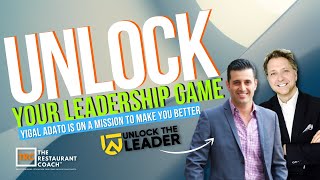
A podcast interview (Donald Burns with leadership coach Yigal Adato) about improving restaurant leadership, culture, and personal development. Adato contrasts internal (self) vs external (team) leadership, offers practical frameworks—"Wake up / Step up / Lead up" and the daily "Focus Four" (connections, condition, currency, conviction)—and discusses hiring, training, and creating leaders inside the business. The episode closes with promotion for Donald Burns' Restaurant Success Summit (includes 90 days of coaching) where Adato will present.
Chapters
Hey, welcome to the Restaurant Coach podcast. It is the cure for the common restaurant. I am so honored to be joined today by my good friend Yaga Adado Yagal. How are you, my friend Donald.
Honored to be here, brother. I'm so happy that I get to be on your show. I've known you for a while now.
I know.
And you finally invited me on, so I'm excited.
Oh my God. Oh, man, I suck.
You know what? This is, this was the right moment. You, you waited for the perfect moment.
You know, I, I decided I wanted to, you know, I wanted to up the game because I. Every year I do that restaurant Success summit. I wanted to bring in some different experts this year. So I reached out to you gal is and I'll have him kind of give you a little bit of his background. He is an expert. I mean, he is the guy I go to to ask about leadership and about leadership programs. He's, he's like my go to kind of mentor for that. So I was like, you know, instead of me just like asking him questions, why don't I just bring him out to the summit and he could speak to all my, all, all the people that attend the Restaurant Success Summit in October. And here we are. Right.
I'm, I'm super excited to be there to talk to your, your people who are going to be at the Restaurant Success Summit. It's going to be a great time.
It's going to be a great time. So why don't you give everybody a little bit of background about you because you got a, a brand, you got a, a really cool website and stuff like that. And we're, we'll, we'll flash up the web address for that. But why don't you give us everybody a little bit of background about you?
Yeah, I started my first business when I was young, like 18 years old, printing T shirts. And it just wasn't the thing for me. So I went into the family business, which was pawn shops. And let me be very clear, that's P A W N not P O R N. It's funny how many times people get confused like you owned porn shops. I'm like, no, no, pawn, pawn, pawn shops. And I did that for about 17 years. And the funny thing was that I grew the business into a multi million dollar operation all through leadership. And my brother, who is the, he was my partner, he's more of like the sales guy, the hustle, bustle guy, you know, encounter guy. And I just one day asked him, I said, hey, do you mind if I teach leadership to the management team and see what that does to the business. So I learned a lot of leadership when I was younger, was part of, like, this youth leadership movement. And so I instilled leadership into my management and my supervisors, and the business took off and we did incredibly well. Sold that business and got into coaching and consulting in the leadership realm. Because my belief is, is that better leadership equals a better bottom line.
Does definitely. In fact, on your website, you mentioned that you think leadership today is just broken.
Yeah, 100. So I'm on LinkedIn and I follow a lot of these, you know, these leadership gurus and coaches and stuff like that. There's two things I think that's broken. One is that they're extensively teaching external leadership. And what's the difference between internal and external? External is hiring, firing, meetings, coaching others, that type of stuff. It's what you do with your team member. Right. Yet how do you do that if you're not internally leading?
Well, exactly.
And if you don't have clarity and courage and commitment, which we can talk about kind of like the Unlock the Leader program. But if you can't lead yourself, how can you lead others?
Exactly.
So a lot of people walk in to the restaurants, to their businesses, leading with baggage. They're walking in leading with baggage. And I always say leading with baggage is misleading. So that's number one. Right. The second thing is that there's this big blame on business owners that it's their sole responsibility to lead the company and that everything lies on them, including if a team member is a. Can I cuss on here? I don't know if I'm.
Oh, yeah, yeah. This is an adult. We're restaurant people, man. We say fuck all the time.
Okay. And so it's like this big responsibility on just the owner. And I believe that, yes, there's leadership there, but it's. How do we create leaders in our managers and our supervisors, in our team members so we can all lead, so that we can all lead the company together. So all these people are saying, like, oh, you know, I'll teach you this, I'll teach you that, and, hey, business owners, you should, you know, put up kombucha and foosball tables. And especially in the restaurant business, Donald, there's no kombucha, foosball tables. And unlimited. I love this one. Unlimited vacation. What are you talking about, man? In the pond industry, we couldn't do unlimited vacation. So I. I understand the restaurant industry.
Yeah, yeah. Oh, it's like. Like a lot of these. A Lot of these corporate things now are remote work. Yeah. There's no remote work at a restaurant.
You know.
You know, remote work. No, no, no.
And so a lot of, A lot of, like the leadership training city are geared towards that. And you've got a restaurateur who's sitting there who's just like, what are you talking about? Like, how do I lead this team with what you're saying? And so the first thing is always, you know, the restaurateur, the owner, the manager has to think about themselves. Like, how do I become a better leader first.
Right. As I said, it always starts. It always starts with them first. Yeah. I teach a 3P framework, and it's always people, product, process. And in the people part, the first part of the people part is always you, your mindset. Yeah. Just like you said, if you can't lead yourself, you can't lead others.
Yeah.
It's the number one thing.
Yeah. And first of all, if you're Donald's client, I just want to say something. Donald is. You have amazing framework and content that you've built into your programs. So if you're Donald's client or you're thinking about being one, don't just jump on the other side of the fence. Like what you teach, your books, your frameworks are epic, my friend. Congrats to you on that.
You know what? Honestly, I have to say, so get a little backstory about Yagal and I. We were in a mastermind group years and years ago, and one of the things that got me thinking about frameworks is you all got me gone, going down the rabbit hole thinking about, well, what's the framework for? What's your, you know, what's your ask? And stuff like that. We started doing these flowcharts and stuff like that, and I was like, oh, my God, I love these things. And I started just expanding out on those frameworks, and then I started looking back at some of the frameworks I was taught early when I had my first restaurant. That helped me a lot. And I was like, man, this is like, there's no real secret. You know, you just got to follow the fundamentals and you'll get it, but you got to follow them. You just can't. Like, just to say, you know what? I think I'll change this around. It's like getting a recipe. If I gave you a world class recipe, I said, yagal, if you follow this recipe to the thing, you'll have a world class, award winning recipe. But then you take the recipe and you decide you Know what? I don't like that ingredient. I'm not gonna put it in there. You know what? I'm gonna change this around. You know what? I don't like it like this. I wanna do it like this. What happens to the recipe?
Yeah, it doesn't work out.
Doesn't work out.
Yeah. And it's the same with leadership. Like, I was thinking about this as you were saying that, that a lot of times you've got, you know, restaurant owners who might say to someone who's been with them for a while, hey, I want you to become the manager. Right? And then they become the manager because they've been around for so long and they trust them and things are going to shit. And they're like, well, what's going on? Well, think about it this way. If you've got a recipe in a regular oven, right? And then you put into a convection oven, something has to change. And so. Right. And so it's the same thing with that manager. You can't just shove somebody into a leadership role because they've been there for so long that they know the business with no leadership training. And then, like, just nothing happens. Like. Absolutely. They're sitting there like, well, why isn't this working? Why isn't the team motivated? Inspiral. Because you brought somebody up who knew the restaurant but didn't know how to lead. And that's so crucial today.
It is so crucial. Leadership and culture, I'm telling you, they are the driving forces. And I would say it's a one, two punch. You know, you gotta. Number one, you gotta be the leader. You gotta step up and be a leader. What you have on your. You have a framework on your website, too.
Yep.
That's like, step up. What? What? How's it go? It's a three.
It's wake. It's wake up, step up and then lead up.
There you go. I like that one.
Yeah.
What's the wake up part?
Wake up is to tell the truth.
I get to smack them.
No. Yeah. We'll do the ice bucket challenge.
Ice bucket challenge to wake up. There you go.
So Wake up is essentially telling the truth. And. And so many owners that I've worked with in different businesses, they don't tell themselves the truth of what's going on. You know, be. Before, we were talking about a friend's restaurant, you know, who's not doing so well, and they're still not asking for help because they're saying it's. I mean, it's just excuse after excuse. And when I came up with this framework, it was because I had some success in business. I came home after being married for seven months with my wife, and she basically said, like, hey, I didn't get married to be alone. And she was crying.
Yeah.
And so I had to wake up. I was Donald. I was 40 pounds overweight. I was pretending to be efficient at work, and I really wasn't. I just wasn't present. And so I had to wake up to the truth. And that's the hardest part. It's why it's framework number one. Right. It's like, wake up and look around what's actually not working. Tell me the truth. Stop lying to yourself. So we can now step up, which is framework number two, and do the work.
Yeah. How many restaurant owners. I mean, I think all business owners, especially entrepreneurs, restaurateurs, we all think that we have to become handcuffed to our business, and we think that we have to, by being in our business, putting in hours, that's being successful. Yeah.
So I'll give you a different framework that I work on as well. It's not even a framework. There are just levels. There's three levels of what I call business owning. Right. There's the tradesman, who is. Might be, in your case, the chef who opened up a restaurant and he just knows the trade. That's it. Then there's the business owner, which is one step above the tradesman, who's got some team members now. They've got some stuff going on and, and so they, they, they now see the business a little bit differently. Then you've got the entrepreneur, and the entrepreneur is essentially somebody who's leading and they've got their strategies going and, and they've got the frameworks that you mentioned down and so many things. And they're just not tied down to their restaurant. They're not tied to their business. And so if you want to go from tradesman to business owner to entrepreneur, there's different levels there that you have to work on. Right. And they all involve, you know, leadership and marketing and strategy and those types of things. But the first thing is you got to wake up and be conscious about where you are and then say, I want to move up to the next level. Because you can have. A lot of business owners are actually well paid employees, and some of them, Some of them not even well paid, Donald.
Yeah, exactly. Trust me, I know, I know quite a few. Yeah, yeah. You know how much you make it? No, yeah.
I mean, great example I went to here in San Diego today. I went to A place called the Little Pepper Deli. And the Little Pepper Deli is one of those delis that's in like the business corridors that are open Monday through Friday, 9 to 5. And this guy was on the radio back in the day. I mean, just marketing. I've never seen a five day deli this packed.
Wow.
I mean, there was 15 people online when I went, and then people walking in all the time. Just efficient orders were coming out. I got my sandwich and my soup within like four minutes of ordering. I mean, it was impressive. It was really impressive. And so my belief is that it all depends on, like, how are you leading and what do you want being honest with yourself? How are you stepping up to the game to learn leadership and how to run your restaurant like Donald teaches. And then how do you lead up, which is the third part of that framework, which is essentially how do you bring those with you to become better leaders, Your team, your managers, your supervisors. Because everybody has to lead everybody order to accomplish the vision.
True, so true, so true, so true, so true. So hey, if this stuff is resonating with you, I'll tell you right now, if you really want to get more of this, grab a ticket to the restaurant success summit. Go to restaurantsuccess summit.com, grab a ticket, your guy will be there. He is like, I and I keep this event really small for a reason. A lot of events you go to that, you know, the guy gets up there to speak or the expert, he talks and everyone loves it. And then all of a sudden, you know, he's out, he's. He takes off. Your guy will actually be there for the day. He's gonna hang out. He'll be available. If you want to pull him aside and ask him some questions. He's going to be offering some probably great deals for people who want to get into his leadership program and stuff like that. If you really want to up your game and break free from your restaurant running you, I'm going to have tons of people there at the summit to help you get there. Not just me, but I got, I am bringing in a lot of people that can help you. Whatever your game is, you need to work on. Some people need to work on their marketing game. We got some people coming in for that. I got people like you got coming in and helping with the leadership game. I got people working on the Ghost kitchen game. I got all kinds of stuff. So no matter what you're at and what you want to work on, we got something for you.
And the cool thing about your Event, Donald, that I'm reading here is that you got 90 days of coaching that goes with it, which is.
Oh yeah, yeah, yeah. It includes a mastermind group. Yeah.
So that's like in leadership, accountability is super important. Most, most of the times a business owner doesn't achieve their goal because they are afraid to hold somebody accountable. Management, supervisors, chefs, you know, people in the kitchen. And so the fact that you've added that 90 Day Mastermind is, is epic, man. It's awesome.
Yeah, well, just like you, you know, you and I, we've gone to a lot of those, like conferences like that. It's a great conference, you get a lot of ideas, stuff like that, but then there's no follow up. Right. So I decided like, you know, if I'm gonna do a summit, if I'm gonna have people come down, I'm gonna include 90 days of coaching with it. So you're 90 days into my restaurant mastermind group, where I basically hold your hand, make sure you follow the 90 day plan. When you leave the summit, we're gonna sit down and do a one on one call. You're gonna get a 90 day plan specific to your restaurant, and then I'm gonna help you hold a, help you, hold you to the fire, you know, give you a little tough love.
It's all about, I mean, if you think about it, you and I got to where we were through, you know, mentorship and coaching. And I think that a lot of people, when they open their business, they're not taught how to run the operation, they're taught how to do. I mean, it happened with me. I'm a third generation pawn broker. I was my father, my grandfather, my uncle, my other uncle, my brother. All pawn brokers.
Right.
When I had my pawn shops. And my father was brilliant. 12 stores, 190 employees. But he just knew how to be a pawn broker. There was a lot of luck involved. It was good timing. But he never taught me how to be a good businessman. And so if you don't know how to do that, if you don't know how to lead your team and check your costs and make some tweaks that can help, then you're just leaving money on the table. That's what I tell people all the time. To be a better leader, you have to invest in yourself so that your team can invest in themselves and what you're saying. And if you don't invest in yourself, then you have to ask her the question, why the hell should they?
Exactly.
If you're just showing up Listen to this. If you're just showing up for a paycheck because that's what we do in business, we want to get paid, then that's all you should expect your team members to do as well. But if you're going to show up and grow and learn, then that's what you can expect your team members to do as well. So that's how you lead. You show them that you're part of things. You're learning, you're reading, you're growing. And then they'll grow with you as well.
Exactly. Yeah. I talk about. I have this restaurant success pyramid, and I say there's four different levels of restaurant success. There's bad, there's good, there's great, there's outstanding. But with each corresponding level, there's a culture that goes with it. Like bad restaurants have a toxic culture. You know, good restaurants have a training culture. That's where they just train on the front end. It's very like that tradesman thing. I'm just going to teach you enough to do the job. And that's about it. That next level up. Great restaurants have what's known as a learning culture, where actually we're hungry. We have that 1% improvement mindset. I'm learning, growing, developing that kaizen that we like, you know? And then that top level is leadership. This is where the team runs the restaurant, but they run the restaurant your way.
Love that.
Yeah.
See, your frameworks are awesome, brother.
I love my framework.
And it's funny because a lot of business owners don't know that they have to, you know, summit the mountain. Like, you can't go from the bottom to the top. You're not Superman. You're not going to fly. You've got to take step by step by step. That's how it goes. You know, we grew our pawn shop. We were in a 900 square foot operation doing $150,000 a year. And we scale it to 5 million a year. But it took step by step by step to get there.
That's crazy.
And it took me growing differently, like you said, a different mindset, different leadership skills from one part of that mountain to the next.
Yep. That is so true. So let's talk about, like, some personal development stuff. What. What kind of methods do you use to keep yourself focused?
My focus is not easy. I will say a lot of people, I'm really focused.
I am constantly having to keep staying. I have nudges on my phone alarms. I have to keep myself always on track.
Yeah, like the fact that your Calendly sent me like eight emails was brilliant, right?
It's like, okay, I know I need that dud.
So we're actually in my, in my group, we're actually reading a book right now called Indistractable because our world is just full of distractions. And for me, the best thing on focus was I got coaching from a guy who wrote the book called no more Mr. Nice Guy, Dr. Robert Glover.
Oh, I love that book.
Yeah. And so I, I, I read the book and I thought he wrote my, my biography, so I called them up on the yo, how much is coaching? It wasn't cheap, but it changed my life because I realized that focus doesn't have a lot to do with me. You know, turning off my cell phone and, you know, putting the papers away and just focusing on something. It's more about saying no to the things I don't need or want to do. And the less I have to do, the more focused at those things I can get them done in and I can finish. So I created something called the Focus four of my day. And yeah, and the focus for is it's not like a to do list. There are four areas of my life that I truly care about. So it's my connections, which are my relationships, my wife, my kids, my family. It's my condition, which is my health. Right. It's my currency, which is my money, or you can call it currency or cash. And then it's my conviction, which is my belief in myself, my spirituality, whatever, like, drives your inner strength, right? And so every day I write down four things I'm going to do. That's it. I have another to do list. I get that there's a lot to do in every single business, but how am I going to connect to my wife and my kids today? How am I going to stay healthy today? What am I going to do? What am I going to do to make more money, save more money, or look at my money? And then four, what am I gonna do to have that inner strength for myself? If you're religious, it might be prayer. It might be, you know, whatever it is. Watch a YouTube video. That's all these, you've seen these YouTube videos. You can do it. It's like 45 minutes of, like, motivation. And so those are my focus for. And that's what I, what I focus on every single day. And then look at my to do list. Okay? Have I focused on what's important to me in my life? And what can I knock off of my list? And that's How I stay focused? Do I always do it? No. Am I always perfect? Absolutely not. But I built that framework that we talked about, that methodology that makes it easy for me, which is just four.
Things, focus for focus.
Four, because what happens in a restaurant, in a pawn shop, In a business, 8:30 rolls around, you open up the restaurant, the pawn shop, whatever time you open up. And what's the only thing that you focus on your business?
That's it.
That's it. I would work from 8:30 in the morning until closing, 8:00 clock at night. And that's all I cared about. I didn't care about what I ate. If I exercise, can I take a walk? Did I, you know, did I work on my mind? Did I connect with my nothing? And so all you do is, that's how you get burned out. If you just focus on one area of your life.
That is, that is so true. We, we all just get into that, you know, I call it that dimension of demand where, you know, other people just come and put their monkeys on our back all day. Yeah, yeah.
And because we're such nice people, because we're such nice people and good hearted people, we don't know how to say no.
That's true. Especially the hospitality world. I mean, it's all about hospital, it's all about other people. Yeah. I kind of rec, I kind of remind, here's, here's the analogy I use for people. It's like if, like, like you got, if you, like if I said tonight when you go to bed, you can't recharge your phone and tomorrow morning when you wake up, whatever you have in your phone for battery, that's what you got all day. How long do you think your phone would last if you couldn't recharge it? All day?
If I use it the regular day, it would last me like 17 minutes.
Yeah. But I, you know, I tell people that's how people are actually going into their businesses. Yeah. They're not recharging themselves. And then you expect, you know what. And I know about, I don't know about you, but when I run out of energy, I'm short with people, I'm snippy, I'm hangry, you know, I'm, I'm looking for Donald.
I'm looking for a new office space. And we met, we met up with the commercial agent and he's on the phone when I got there, didn't even acknowledge us. And he's talking, he's like, hey, I've got somebody who's here. To see 255. Do we lease that place out? And he put on speaker so I can hear the craziness that was going on. Hold on, let me get my paperwork. But you wrote the lease. I know, but give me. Why don't you leave me alone? It was like a fight right there, right? You could just tell, like, he was angry, shit wasn't right. And I looked at my assistant, I'm like, I don't want a lease from this guy.
I don't want this guy.
You know what I mean? So you've got to show up. And it's not easy. Like, listen, I get it, it's not easy to do, but you've got to show up with a smile on your face. That's what leadership is all about. How do you lead with a shitty attitude? There's something. Have you heard about social contagion? Have you heard about that? So social contagion is a psychological term that's used, studied, that basically shows that when you walk into a room. And if I'm pissed off, right, that pissed offness is contagious.
Yeah, it is, actually.
And so all of a sudden, my team, my wife, those around me, they're pissed off. And I'm gonna. And I'm gonna prove it to everybody listening. If you have a spouse, right? If you have a. Or a loved one that you live with, you come home, you're in a good mood, right? They're in a shitty mood. All of a sudden you're in a shitty mood.
Exactly.
And then the best part is that my wife, after 45 minutes will turn around like, why are you in such a shitty mood? You're like, really? Like, I came in in a good mood. You gave me that shitty mood. And so it's contagious. So you can't walk in burned out. You. And if you do, you're just going to burn out your team, you're going to burn out your customers, and in the restaurant business, you're just going to burn your food like it's just not going to taste.
Hey, man, I always say culture flows down, doesn't flow up.
Yeah. So it's, it's. And I think that there's a mentality and you can tell me if I'm. If I'm wrong. But you know, in the pawn shop industry, it was this mentality and we call it humping the counter.
Right? Yeah, I love that one.
Like being at the counter the whole time and not. Not being able to get away from it and micromanaging and you're humping the counter because you're afraid that nothing's going to work. But then you do everything and you have zero time to be able to spend time with your family. You have zero time to watch your kids grow up and to be able to go on vacation. Why the hell would you want that?
I gotta think of a way I can re retitle that. Humping the counter, Humping the host stand. That might be bad though. That might be bad.
That's an HR issue right there. You can't really say that.
Could be a really bad issue. Don't hump the host. No, the host stand. It's like so not p. Porn shop, pawn shop.
Yeah. So it's. But I think that what happens a lot of times that we're surrounded by people who live that way. And so we believe that that's the way to live.
Yeah. And you know why? It's because they've always done it that way.
Worst, worst words I can ever hear from a business owner. But we've always done it that way, Donald.
I know. Yeah.
But that's why you have a shitty restaurant.
That's why you're not making no money.
That's right. That's why you're not spending time with your family. That's why you don't have vacations, because you've always done it that way. And that's just. It's brutal. It's really brutal. And you can't do it anymore. Especially if your vision is to run a restaurant or a business and have time to spend with your family. Like, you know what's funny, Donald? All of these movies, it's funny because like Pawn Shop, Restaurant, all these restaurant movies that I watch, it's always like the people are slaving away in the kitchen. They have no time. Seven days a week, you know, 18 hour days, everything's going to. They're smoking the rally. There's no beauty. No beauty in it.
But everybody's attracted to it.
I just want to do that.
Oh my God. I want to be like that. I want to have a drug and alcohol problem. Oh, my God. I want to just live at the restaurant.
Yeah. My life.
And not have anybody.
And I think that like someone like you comes around like I did in my prior industry, the pond industry, and we make changes and we show that we can make change. And people are like, well, I can't believe that. Like, it's not what all my friends are doing, so why should I do that? But if you want a different way of life, if you want a different restaurant or business, then you make the investment to learn to see if it works out for you.
Exactly right. Yeah. I'm like you. Someone came along, my first restaurant, I was definitely like a tradesman. I knew how to run a restaurant, but I didn't know how to build a business.
Yeah.
You know, and I didn't know how to build a brand. And then I was very lucky that a businessman came and offered to mentor me and showed me, show me some of the fundamental frameworks that I teach today still. Because you know why they work? You know, it's like it's, it's not broken, don't fix it. It works. The fundamental things all work.
And what I always say is that it works and it takes a lot of work. So if you're lazy and you do want, you want to do this, do the same things as you always have done and you don't want things to change, do it right. But it takes time. I know you almost, you know, you, you, you were dead essentially. Right. At some point. I don't know if you've told that story in the podcast.
Oh yeah, I died. I died twice. But last Tuesday was my four year anniversary of dying twice.
And I'm sure if you come to the restaurant success, I mean, he'll share more of that story. Right. But that must have changed, like how you look at life and the things that you do.
Everything in my, in my third, my new book just came out. Your restaurant culture sucks. The first chapter, the first chapter is titled Dying. Dying sucks. It really does. It's like dying. Dying sucks.
Yeah. And so, you know, business wasn't made to be difficult. No, but we've been sold that for.
So many years and we try to make it difficult. We always think that it just can't. I think people just don't believe it. It can't be that like that. It can't be that simple. Yeah, it's simple. It's not easy. I mean, I mean, we estate. It's not easy. It's simple. I always say all the time, restaurant success is not rocket science, it's people science.
Yeah, I love that.
You know, 100. It is 100. 100.
But you've got to follow, you've got to think differently and you've got to lead. And that's what I always say, like when you come in with baggage, you can't lead. You know, when, if you actually want to grow, you've got to be somebody different. You've got to become and think differently. And because I promise you there is a different way. I took a business owner who is probably bringing in about $22,000 net a month, and he just checked in with me two months ago, and he's doing like 135,000 net a month, right? And he said, like, I never thought this was possible. And I said, exactly. But the biggest thing is that you took the risk. You took the chance to be able to do that. And the one thing that we worked on was leadership. Like, I led his team, I worked with his managers, his supervisors, and we built leadership in them, and we had to unlock the leader in him. And then we had different strategies. And so you've got to take that opportunity to think like, okay, I'm doing okay right now. Right? Or I'm not doing well and I want to do better. Let's do something different. Let's lead. You know, if you are with a bunch of friends who are in the restaurant business and they're not investing in themselves, then do something differently and lead. Lead the path, Lead the way. You're going to be made fun of. You're going to be looked at differently. But when you make a shit ton of money, everyone's gonna knock on the door and say, like, hey, what'd you do differently? Can you show me? Now?
Yeah. Now they wanna. Now they. Now they listen up. Yeah, yeah, yeah. When they see you making money and then also seeing you having a life, taking vacations. I have a client who started with me. They've been with me about a year now, and about. About five months in the coaching, they finally took their first vacation. First vacation in seven years.
Oh, my Lord. Oh, my God.
And then now they're like, oh, my God. I just, you know, I just. You just opened our. You changed our life, and now you. We have a whole different outlook on life, and now we understand that we're not. We're not working for the restaurant. The restaurant's working for us.
Yeah. And it's really funny, you know, somebody going on vacation for. Hasn't gone on vacation for seven years. I sat down with a. I went to a meeting for a community thing at a restaurant here in San Diego where the person on the board of directors for the community owns the restaurant. And I was asking like, hey, I'm talking at this restaurant summit, the restaurant success summer. Like, how's business? He goes, you know, we go six locations. Our goal is 10. He's like, but my biggest issue is my team. And I asked one question. I said, are you just training your team in how to run the restaurant or are you teaching them to lead?
Exactly.
And it was just like a blank look. Right. And so you've got to have both do very well. You have to have the restaurant members, the team members knowing the restaurant. You have to have, you know, get coaching from Donald on how to do your processes, your strategies, food costs, all that type of stuff, as well as how are you leading, how is your management leading? And when that happens, it's a whole different ballgame.
Yeah. I, I have a quote I say all the time is that restaurants become better when the people in the. Become better people.
Yeah. 100.
Yeah. And you guys gotta make people better people. Yeah. So let me ask you a question about something about leadership. You know, how important is it in giving people room to fail? So restaurant owners get. So they get. I'm just, I don't want them to make a mistake.
Yeah.
And that's why they hover on top of people so much.
So let's talk about the perspective of mistakes.
Yeah.
Okay. When you make a mistake in the restaurant. What Dog, give me, give me an example of a mistake in a restaurant.
Simple mistake in a restaurant that a.
Team member would make.
That team member would make. Putting the wrong table number in on the POS system.
Okay. Awesome.
The food goes to the wrong table.
Great. What would that cost the restaurant owner if that happens?
Probably cost like, well if like the food went to the wrong table. If they couldn't figure it out, I might have to scratch the whole table. Might have to like restart the whole ticket. It could be 100 bucks.
100 bucks. Awesome. So think about perspective and mistakes. When I was in the pawn shop industry, I had to trust my front counter team members when they were taking in ten thousand dollar diamonds.
Oh yeah.
And two thousand dollar pieces of gold. Okay. Guess what? They messed up. And I had to eat a lot of. Not a lot. Some cases of fake gold, fake diamonds. And all I thought to myself was, we have to better train people. It's, it's my fault on the training. Now there's a different part of this, right? If somebody messed up way too much, we called them pawn pirates. Right. They're just, they just didn't get it and they didn't belong.
Right.
So you have to do two things. One is look at the perspective of the mistake. What was it? What would the mistake cost me? If the mistake was made in two, can I fix it with customer service? Okay. My belief is the restaurant industry. If you made a mistake in my order, as long as you come in with A smile. You fix it, I'm there. I'm even going to give you a five star review. We're good. Right. So then one up your training. Right. How often are you training your people and what are you saying and what are you showing them? And two, is that person a good fit for your restaurant? Now we've got a bigger question, which is now with this whole people don't want to work, so people are just hiring warm bodies.
Yeah.
A lot of times that's what you don't want either. So I would rather as a person who goes to a restaurant, wait five, ten more minutes than have a shitty server. That's just me.
Yeah, I would too.
Yeah. So think about that. In the industry that I was in, a mistake would cost me anywhere from 2,000 to $10,000. That's what it cost me. So if somebody makes a mistake and you're micromanaging consistently, what happens is that they start depending on you being there consistently. Right. So now they're going to come up to me. There was a moment where I had 68 employees at one time and I had one employee, I'll never forget it, one team member who knock on my door like, hey, what can we give for this? And I'd say, well, did you do the research? Oh, no, no, I didn't. Why the hell are you coming to my office and asking me do the research? Let me know why. They were afraid of making a mistake because they have PTSD from a different boss.
Right.
Who would always hover around them. You've got to give room to make mistakes.
Yep.
You've got to be able to train mistakes. And when somebody makes too many mistakes, you have to have the balls to let them go.
Boom. Perfect. Exactly. That's a good one. You gotta have the balls, man. You do. No, I say it all the time, man. If someone's not a good fit for your team, do them a favor too. Allow. There's tons of restaurants in the market that accept and condone mediocrity. Yeah, I always, I always think of it as like legal sabotage. Let them go down the street, work for the competition, and allow them to sabotage their place. I mean, yeah, I mean, we, we.
Call it, let's share the mediocrity with our competitor.
That's it. Exactly.
Here you go.
Shirt of mediocrity.
Yeah.
If they're not a good fit for your team, I, I always say you're being selfish if you keep them.
Yeah. And it's kind of like being in a relationship that you're Kind of like in and out of that you haven't like, broken off. You don't open up the energy to somebody new coming in.
That's true. Oh, that's the biggest thing right there. I was talking about that today with some of my. My clients talk about energy. I said, the universe of hoards, a vacuum. You gotta let them go. And then something better comes in.
Yeah. Guess what? You're gonna have to work for three or four weeks. Another thing that we work on in, in, you know, with my clients is that one thing that I don't understand that I wish everybody listening will make this change, is that you always have to be hiring. Always.
Always.
Not when you need somebody. Always hiring. Keep the resume. And when you. When you've got an opening, open up the file folder of 60 resumes, pull them out and give them a call and say, hey, are you still looking for opportunity? Where we've got an opportunity that opened up. Because you never know, that person might always want to work for you or they eat your food and they love it, and then there's an opportunity that come work for you. So if you do it the other way, it's just going to give you a lot more stress.
It's perfect, man. You know, we, you and I share so much similar kind of mindset as I have four things I have all my clients do every day. They have to always be recruiting, they have to always be training, they have to always be marketing, and they always have to be learning. Love that, you know? And if they do those four every day, I say you can't go wrong. Yeah, yeah.
It's also like, I've, I've. I had a meeting last week with some friends of mine. They, they own a really famous, like, popsicle place here in San Diego. And the young generation is a little bit different today. They want to be able to work for somebody who believes in more than just the food.
Yeah, definitely.
Right. Like, they want the mission. And I know you talk about this all the time, but, like, what's your mission? Is it just about making money? Good luck finding more people. Right. Is it about serving your community? Is about doing something bigger, above and beyond. Just serving the food. That's what attracts the young generation, the new team members. Today it could be at, you know, whatever it is that you pay them. As long as the mission is bigger, then they'll be there for you.
Yeah, they want to be part of something bigger than themselves.
Yeah, 100%.
Yeah.
And the craziest thing is that a lot of business owners have such incredible story. I'll give you a great example. I work with a chain of pawn shops, 24 locations. And the owner, every year he donates, I don't know, $100,000 worth of musical instruments to schools.
That's crazy. That's awesome.
Why does he do it? Because growing up, he was too poor and he couldn't buy a flute or whatever it is to join the band, and somebody donated one to him, and that was a story. And so ever since then, every single year, he donates instruments to kids in schools. So we all have a story, right?
Yeah, we all have a story. Share your story. People love. People have a story.
Yeah.
Isn't Simon Sinek have that quote? People don't buy what you do, they buy why you do it.
Yeah, yeah. I think a lot of times, like in businesses, we think about just the product.
Yeah, right.
But it's also like the person behind the product. Who am I? We're not Nike or Gatorade where the brand doesn't exist. If you're a restaurateur, we want to see who you are and why you're doing this. Why does this matter? If this is like home cooking from a different country, why is this important to you?
Yeah.
You know, that's what I want to know.
Perfect.
And then if the food is good, on top of that, boom.
I'm there.
I'm there. Yeah.
All right. I got to ask you one off the wall question.
Sure.
Totally weird. You ready?
Do it.
How many chickens would it take to kill an elephant?
Three chickens would it take to kill an elephant? That's the weirdest question I've ever been asked. That's from left field. What?
Throw a number out there. I'm gonna say they have to be pretty pissed off chickens, though. You know what I mean?
I'm going to say four.
Four?
Yeah.
Just four?
Yeah.
All right.
Would you like to know why?
Yeah, I definitely want to know why.
So for some odd reason, I think it's ridiculous, but I believe that elephants don't just stampede to stampede and they watch where they're going for some odd reason. This is my thought. And so if there's four chickens at each one of the legs, they'd kind of like freeze or fumble the and fall over and something would happen. That's just my stupid. That's my weird, very weird answer back to you.
That's a good answer. That's a good answer. Listen, if you want to get a hold of your gal, just go to unlock the leader dot com. You can find Him a gal Adado. He's on Instagram. Is that probably your favorite social media platform?
Yeah, Instagram, Facebook, LinkedIn. I'm the only Eagle Ado out there. You're not going to find another.
He is the only one. You trust me. You go find your goddo. You will never find. Find another human being in the world.
Yeah, we're all unique, but just my name is very unique.
You're unique, and you are unique, my friend. Please join us October 24th, 25th. 26th. 3 days, 18 workshops. It is an amazing experience, the restaurant success summit. I do it every October here in Scottsdale. You can head over to the restaurantsuccess summit.com and grab a ticket. Will be there. He. He's gonna. You'll be able to answer any questions you have about leadership. And I know I'm looking forward to his sessions. I. I love having. Every time your girl and I have a conversation, I have, like, tons of notes right in front of me. So I'm like. I'm like, talking. Oh, yeah, okay. Scribbling notes. I like that. That's a good one. Yeah. Awesome.
100. And I will say that I always say, like, when I go to talk, I'm like, I'm gonna bring the heat, but a bunch of you, you know, restaurant people don't care about that. So I'm like. You're like heat ovens. What? We got that, but I'm gonna bring it too, man.
We got heat here.
Yeah, I'm. I'm gonna drop some. Some, you know, some diamonds, some gold.
Oh, there you go. Diamonds and gold. Now we're talking.
And the best part about it is that I want people to know who are coming to this. It's not just a presentation. It's a conversation. So I'll be there to answer questions and have a good time.
So. Perfect. Perfect. Thank you, my friend. I appreciate you being on this, on the show today. I know you're a busy man and I. I love our conversations and I look forward to seeing you in Scottsdale this month.
I'll be there.
Thank you.
More from Donald




If your restaurant only works because you work 80 hours a week, it doesn't work.






