Burnout Part #2
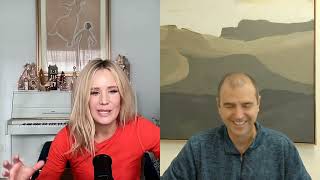
Carly Redd and Dr. Kevin Skinner argue that loneliness drives burnout more than workload. They share the Roseto Effect and other stories showing how social connection reduces stress, then walk through a six-item burnout assessment and practical fixes: schedule social time, say no to tasks, and notice how community lightens the load.
Chapters
Foreign. Welcome to Finding Noble, a podcast where we climb into the world of young people's mental health and where we provide support for the adults who support them. I'm your host, Carly Red.
I was looking at research on burnout and loneliness in the workforce, and it was a presentation I did. I don't know how long ago it was, but I did this presentation and it was absolutely fascinating to me that during the pandemic, loneliness and burnout, the correlation, the relationship was incredibly high. The lonelier they were at work, the more burned out they were, and they actually left the company, costing the company, depending on how many employees, thousands of millions of dollars.
Wow.
And so the concept of loneliness and burnout again in our own lives, when we're lonely, what do we do with it? Everything's harder. When we're lonely, everything is harder. And if we're going to reduce burnout, we need human connection. Loneliness, it's killing our society. In fact, I read a study, they said that loneliness, especially deep loneliness, it's like smoking a pack of cigarettes a day for our health. Don't recommend that pack of cigarettes a day.
I love the Rosetto Effect story. I'm sure some listeners are familiar with it, but if you aren't, the Rosetto Effect was termed from a group, a demographic of humans that lived in Rosetto, Pennsylvania, and they were these Italian American immigrants that created a community there in Rosetto, Pennsylvania. And what was so interesting about Rosetto, Pennsylvania is that they had one of the lowest rates of heart disease, a very jaw dropping low rate of heart disease. Nobody could figure out why. So they go to study them and try to figure it out. They were baffled because their diets were horrible. They ate so much meat and fat and fried foods, and the men smoked cigars and drank heavily. And they could not figure out what was happening. It didn't make any sense at all. But then they started to pay attention to the community and the culture. And what was happening is their cortisol levels, their ability to have a stress release from. I love what you talked about. A daily stress release from this type of connection was exactly what was creating this low rate of heart disease. And then as they aged and new generations came out and they migrated away from Rosetto, Pennsylvania, the heart disease rate went back to a more American rate, which I thought was so interesting that there's this huge link between community and health altogether. But we know that social interactions are the way, or at least not the only way, but one of the most significant ways of decreasing our cortisol levels. Our modern way of living isn't helping with this. We don't go to the store as much. We shop online. We seem to feel like we don't need other people for our basic survival as much anymore. We're busy with kids, like you said, sports and carpooling. We're very good at efficiency. I. I had this experience a couple weeks ago when I was in New York. I went for a weekend getaway with my mom. And we were there on the last day and walked into this really cute bookstore in Chelsea Market. And the books were arranged in such a way that it was very inviting and it was decorated for the holidays and it smelled like the holidays. And, you know, that is a community to me. People who love books. So I'm in there with all these people who love books and I'm talking to random people and I'm thumbing through all the pages. I love smelling the pages. I'm having this very visceral, connective experience. And then I pick up this book. I love the Beatles. So I'm looking at Paul McCartney lyrics and I'm like, oh, I need this. There's all these stories of how he wrote so many of his songs, but it's huge. It's like this big anthology. And I think, I don't want to carry this around for the rest of day. I don't want to pack it in my suitcase. I'm just gonna look on Amazon and purchase it there and ship it to my house. So I pull it up on Amazon. It takes me literally 10 seconds to type it in. There it is. Guess what? It's $12 cheaper on Amazon. So I click it, I buy it on Amazon, it ships to my house. And I have this epiphany of, oh, this is why I don't go to a bookstore and smell books and interact with other book lovers and have this book really wonderful experience because I can just click on Amazon. It takes me 30 seconds. I'm really good at efficiency and our world is getting an efficiency output. How much can we get done in such a short amount of time? And even for less, it cost me less money. And I thought, that is so sad because this was such a great experience. But at the same time, I was still drawn to this more efficient and also cost efficient choice.
What's interesting about what you just said is that bookstore paid you back.
Yes, it filled me.
I just listening to you speak about it, listening to the smell. The description that you gave of it walking into there was worth way more than $12.
True. But I Still didn't watch people. Dang it.
Okay. I'm not as concerned about that. I'm actually more interested in the experience of being in that kind of an environment where you were describing what was happening to you. See, if we're going to avoid burnout, we still need to be in the environment. Whether you bought it on Amazon or not. I'm way more interested in the experience that you had in the bookstore.
Right.
Whether you go to a Barnes and Noble or whether you go to a park or whether you go to a play. I'm most interested, if we're going to avoid burnouts, is that we're finding those places that our soul goes. It just goes, oh, that's lovely.
Makes us human. It's what makes us feel human.
Yeah. You talked about smells.
Yes.
You talked about. Right. Just the environment and the Christmas. I'm all of that. I'm like, exactly what I'm talking about. That's how we avoid burnout.
Yeah. That's really interesting, and I feel like I'm guilty of this, but I've had a walk or a lunch with a friend, and after we spend time together, they'll say, this was such a nice break from being productive. Or, this was such a nice break, it was so nice to do nothing. And I want to shake them and say, that is so offensive to your mental health, because this is precisely what you need to survive. This is precisely what you need to connect to your current life. It's what's making you human. It's what's keeping you human. And it's absolutely essential. It is being productive. But we live it in a society that tells us that is not being productive.
Adding on that real quick, define productivity.
Right.
What's the outcome I'm looking for? Again, it's this narrative that I again, have to get something done. Well, what if productivity is just being in this moment, having a conversation, being with another person, as Dan Siegel says, so they feel felt again. Burnout is significantly going to be reduced when I feel connected. In fact, in the research in workplaces, if they felt like they had a supervisor or a boss that they could connect to, their burnout levels go down. So, again, it's just. The science of human connection is the answer. We just aren't doing that part of it right now because we've got so accustomed to working from home, for example.
Right. It's efficient. Everything's efficient. And it's easier. It's so much easier to get a Walmart pickup order rather than going into a grocery store and Talking to people or picking up a Target order that I ordered online. I just stopped by, I see the person for two seconds and then I'm gone. There's not any of these interactions that we normally would have in everyday life, even outside of work.
So I live in a smaller community and there's a grocery store that I absolutely love. So my wife needs somebody to volunteer to go to the store and I'm like, I'll go. And the reason why is inevitably we've been in this town for 25 years, almost 25 years, and I walk into that store and if I don't recognize somebody that I know, it's abnormal. So I could go into that store and I can talk with somebody and I can have a conversation and I'm getting my stuff and I'm being productive. And sometimes my wife's like, how many people did you talk to at the store today? Because you were there for a long time. There's this connection of when I'm there, I'm with people. And to me that is what keeps me going as a human being. These are friends. This is part of my community. Again, burnout goes down when we have those types of interactions. We're losing it.
And it needs to not be few and far between. They need to be more daily and multiple times a day. When we were talking about this, it reminded me of a book I read last winter. It was a really long book by a Scandinavian author and he described this community in northern Sweden. And it was really interesting because as we know, Scandinavia is pretty much dark for most of the winter and it's very cold and blizzards all the time. But this community that he wrote about was so tight knit and so close and I felt like I was a part of it. And I thought it was interesting that I would find myself tuning into this when I wanted connection. Cuz I felt like I was a part of this community. But beyond that, I was so intrigued by why Scandinavians are reported year after year as the happiest countries and places to live in the earth when it is so bitingly frigid. And they live in this perpetual absence of light in the winter. And really, if you even go and look at the happiness reports from the World Happiness Report website, they say that the longer nights and colder weather in Scandinavia actually contribute to happiness by bringing communities together. They gather in geothermal pools in Iceland, they gather after work and even their kids come after school on a daily basis. They swim, they sauna in Denmark, they gather in in close friends homes on weeknights can you imagine that on a weeknight? And they light candles and they drink warm drinks and big hearty meals and yummy treats, and they just get cozy and hang out together. And they even have this phrase which I'm sure a lot of people are familiar with. It's called hygge, which is just basically getting cozy with other people. And it helps them survive these really cold climates in these really dark climates. But it clearly is not something that naturally is happening here in a lot of our communities. And I really think it's hurting us. But when you really think about what isolation has been for in. In a form of punishment like that, across time and cultures, people have been sentenced to. To isolation as one of the most severe forms of punishment that we know. We just know it's not good for us. I feel like we really have the. I don't love the word opportunity, but we do have an opportunity to start making changes. And I think especially as we are heading into the world of AI, the age of AI, what makes us human will be ever more important. What brings us connection as humans to other humans is the most important thing. And we need to get better at it. We need to schedule it, plan it in, make it part of what's making us productive. That's part of being productive.
Real quick, though, if I could just add to this the element of seeing and being with other people. So if I'm burned out, I can turn it inward, and if I turn it inward, then I feel overwhelmed, I feel stressed, I feel a burden. In contrast, if I have a conversation like you and I are having right now, there's just a simple interaction of a. Of a meaningful conversation, what happens to that internal voice? All of a sudden I start expressing it. I start talking about it. And so when I ask a child, hey, tell me about the most difficult thing at school today. Now, if I don't ask the question and I don't get the information, what do they do with that? They store it inside. Yeah, they don't talk about it, and yet they feel it. What would happen if I'm having this conversation about the most difficult or the best part of the day, I'm. What I'm doing is I'm actually helping them reduce some of the burden that they're carrying inside. Again, if we're going to reduce the concept of burnout, just a meaningful, bad type of conversation, if I don't ask the question and they carry it with them and they don't talk about it, there's something that's going to happen inside of them. Overwhelmed, stressed. And that begins to heap upon their emotional well being.
That's really interesting because when you were saying that, I was thinking about every time I have a meaningful interaction with someone else, especially a conversation with a trusted friend or family member, I always walk away feeling like, oh, maybe I'm not as crazy as I think I am. I'm just human. And I am sure they feel the same way. But when you're carrying that alone, you do feel like you're a little bit crazy or you're going crazy or it's too heavy for you to handle and there's something wrong with you.
That's right. I often say everybody has a story. And our challenge as a society is to help people express and share their story. Who are they? What's their burden? What's their challenge? I. I love something that Thich Nhat Hanh said. He said in Plum Village in France, they would get together and they would just sit with each other and they'd be there for about an hour and they would just sit and listen to somebody and they would just talk. It was. And their job was to practice deep listening. And. And he said if everybody had that someone, we would not need psychotherapy. I think that's a really interesting thing. Wow. Being a marriage and family therapist and a psychotherapist, whatever you want to call me, I wish people would relationship out of needing me.
Wow. That's pretty profound. Okay, so we've been talking about burnout, how we can not only heal from burnout, but to prevent it. Let's say we're not quite sure if we fit into that category. Maybe you can give us an assessment on burnout.
Okay, let's talk a little bit about if I wanted to know, am I burned out or am I at risk for burnout? There's really some simple things. This comes from a Copenhagen burnout inventory and it's on personal burnout. It's really interesting. So just a real simple question. How often do you feel tired? And this would be from a always to a never range. Just say a five if we're looking at it. So, so how often do I feel tired? Next question. How often do I feel physically exhausted? So how often am I physically exhausted? How often do I feel emotionally exhausted? So question three. So how often am I tired? How often am I physically exhausted? Emotionally exhausted? The fourth question is, how often do you think I can't take it anymore? So that's the fourth question. Then the fifth question is, how often do you feel Worn out. Again, this is always to never range. And then the last one. How often do you feel weak and susceptible to illnesses? And again, the higher your score, always on those, or more often than not, the higher your score, the more likely you are to be currently experiencing burnout. So what do we do if our scores are high? One of the challenges is we have to take. Okay, I have to take them one at a time. If I'm tired, I need to create habits that help me get more sleep. If I'm physically exhausted, I need to look and say, is there something in my environment that's wearing me out? And is my body not relaxing? So all of these things. Emotional exhaustion. How do I feel more peace, more calm. I've got my music playlist. I'm going for a run. I'm listening to things. Those are ways that we combat it, but we have to be intentional.
I think that would be probably beneficial for everybody to go through. I can imagine a lot of parents in there are going to say, isn't that normal just to be exhausted all the time, to never feel caught up?
And this is a very interesting question, and I'm going to pose it to you. What is the difference if I do the dishes before I go to bed or tomorrow morning?
It's nice to wake up to a clean kitchen.
It's really nice to wake up to a clean kitchen. What's the probability that if I do it in the morning, that I'm going to be more stressed, going to sleep?
I. I don't know how to answer that. Probably depends on the person, right?
It does depend on the person, but what's the difference? In my mind, if I leave those dishes there, what does that mean? Does that say something about me?
And.
And we. We become a culture where everything has to be done right? Because our brain, if it's not finished, it's like, wait a second, I've got to finish this. And so part of the way our brain is designed is it's designed to finish things. The consequence of that is we put too many things on our plate and then we try to finish everything, and we can't finish it all. It's not even probable, given all of the things that we're doing. So what we really need to do is we need to prioritize and say, this is enough for today, and I will continue on the journey of life tomorrow.
Whoa, that's good. I need that on my wall.
I often talk about the Zeigarnic effect. And the Zeigarnic effect is this. We spend up to 90% of the our time thinking about things that are not finished.
Interesting. 90.
Yes. Up to 90%. So if I have too many things on this life plate of mine, there's no way in the world I'm going to be able to finish all of those things in a day, which means my brain is going to bed with this and this and that and this. So I have to literally learn how to shelve things. In other words, put them in priority. That's tomorrow. Intentionally. And I'm acknowledging I'm going to get to you, just not today. So I'm telling my brain it will happen. I am going to finish this, but I'm not going to finish it right now. That's one of the ways that we can reduce burnout, is to acknowledge an order and put things in place to recognize I don't have to be doing something all the time and I'm not going to get everything done on my plate today. And then one other part, Carly, Sometimes we have to take things off our plate and simply say, it doesn't belong on my plate. I can't. It's too much. So we have to learn how to say no and simplify, which is probably something we really need to emphasize. We need to learn how to say no. I can't. Thank you for the opportunity. I appreciate it, but I can't right now. I've got too much in my life. Not that I don't care about whatever this is. I just have too much going on.
Yeah. It kind of harkens back to the exercise where we did what we value with what we spent our time on. And it just came to mind if we started to put the things that we value most. Spending time with my second grader and make sure I look into their eyes and I'll actually write it on our checklist of things to do or make sure when my spouse comes home that I look into their eyes and ask them about their day and make them feel like I see them and I care about them. Those are things that I value the most. I actually do value those things the most. And to do those doesn't take very much time, but it. It doesn't take a lot of time but to write it on a checklist and then to be able to cross off those most important things. Then I don't go to bed feeling like a failure because I think I actually did the things that were most important to me today, and those got done. And so as I go on to the next day, I feel like I'M progressing, I'm growing and I'm still filling the areas of life I want to fill. F I L L but also it could be F E E L but filling up the areas of life I want to put my time into.
That's awesome. It really is. That's exactly it. Living an intentional life where I know why I'm doing what I'm doing. I have. I, I just think it's essential if we're going to succeed in our relationships and also to help our mental health and well being. Otherwise, if we go, go, go, we're going to get burned out. That's not hard to do. You want to get burned out? We can do that. We're doing it real well.
Yeah. And I think it, I think really we're trying to make the case for scheduling in things that will fill your bucket. Before we leave today. We want to leave you with this exercise or even you could call it a challenge. We have tried to do this in our home this winter. Like I said, we winter can be long and lonely. Last winter we had a very long, wet, snowy winter here in Utah and it was awesome. We needed all the moisture. But I got nervous when there started to set in this year and I thought, I'm going to do it a little bit different. I'm not going to hibernate. I'm going to be like a Scandinavian and gather with other people. You don't have to do this in a cold environment. You can do it wherever you are, obviously. But I want you to plan time, to schedule in time with others that you feel comfortable with, that you feel you can trust and that you can have a laid back good time with people that you can linger with that you don't feel like. Am I overstaying my welcome? Did I say something weird? People that you feel comfortable around. And maybe you can make the environment cozy. You can bring treats, play games, I don't know, ask questions. You can download questions if you don't know what questions to ask. There's a million on how to get to know someone. But I think the real exercise is actually at the end of after this period of gathering. Right. You've invited people over, you've had this nice time together. But what I want you to do is pay attention to what are you feeling? Are you feeling lighter? Like it's maybe easier to smile like you've been heard and seen and it just feels good, like you're not as crazy as you, you think you are. But pay attention to the way these relationships and spending Time inside relationships makes you feel and the way your home feels, too. And I think for me, a lot of the times I feel a sense of relief, like an actual load is lifted. And, oh, yeah, life is pretty good. Life is not that bad. And a coldness has been replaced with a warmth inside my whole soul and even in my home. I love it. I love it so much. But that scheduling those things, yes, you might have to say no to something else to schedule something like that, but that it may be exactly what you need to heal from burnout to. To get rid of it, kick it to the curb.
I really enjoy that. That's a great exercise. I would encourage everybody to take the time and. And literally slow down, intentionally do an activity like that and just notice what happens to you.
Well, and I think even saying it out loud, I've had to do that because I feel like I've trained to be a certain way, to be productive in a certain way and to honestly say out loud, no, this was good. This is exactly what I should have been doing. This was so good for my family and for my marriage and for my children and for our home and for us to move on to another day with joy rather than a grind. I feel like we're all so caught in that grind and to have those elements within a day that lift us and not just give us reprieve, but give us joy.
Well said.
Thank you. Is there anything else you want to add before we conclude this?
If I could add just one other small part, and it's just a really simple concept. Life is always filled with choices. Sometimes when we get in burnout, it's because we feel like we've lost choice. We just feel like we have to do things. And if I could say, if you want to really understand how to reduce your burnout, live by your choices that you're choosing rather than just by the things that are always coming at you. So it's more of, I'm going to respond the way I want to respond. I'm going to live the way I want to live. I'm going to. I'm going to be the way I want to be. And that's why those core values are so essential, identifying those and living according to them. So make sure that you realize that you have choice. You don't have to always say yes. You can say no. And choice comes when we have the ability to slow down and really simplify our lives. Interesting thing. I consistently found in my own life that sometimes the easier things are, the better I am.
And I think we show up better in our relationships when we aren't stretched to the breaking point, which I think a lot of us feel a lot of worth by being stretched really thin. But interestingly enough, it's not really helping.
True that.
That was really good. Thank you so much. And thank you so much for this discussion. I've really enjoyed it and I hope anybody listening has picked up something that will be helpful for them. And we really do hope that people will learn how to find connection to the life that they're living, the human parts, and get away from the burnout. You've been listening to Finding Noble. I'm Carly Redd. Follow Finding Noble on all available podcast directories and find out more on our website, findingnoble.com that's finding noblenoble. And if you or anyone close to you are looking for further resources on young adult and adolescent mental health, Dr. Skinner and a host of other leading professionals working in the mental health world share courses and even answer your questions, all on parentguidance.org that is parentguidance.org brought to you by the Cook center for Human Connection.
More from Dr.

"Ask a Therapist": How do I Know if my Child is at Risk of Suicide? And is Prevention Possible?