Infidelity Recovery That Actually Works

In this Love Lab Podcast episode (episode 356, July 10, 2025), host Kevin Anthony interviews Dr. Monique Thompson, a licensed therapist, bestselling author, and infidelity‑recovery specialist. The conversation begins by redefining infidelity beyond physical cheating to include emotional, financial, and digital betrayals, emphasizing that true infidelity is a breach of explicit consent. Dr. Thompson introduces a fire‑analogy: the first step is to get everyone out of the burning house (stop the ongoing affair and protect the betrayed partner’s physical and emotional safety). She stresses the need for emotional regulation, using evidence‑based tools such as EMDR, bilateral stimulation, and mindfulness to treat the trauma “burn” in the brain. Authentic, day‑by‑day communication and “pause for consent” are presented as essential practices to rebuild trust. The hosts discuss how unmet sexual needs, lack of honest dialogue, and hidden companionship can precipitate affairs, and they agree that healthy sex is a barometer of relationship health. Dr. Thompson outlines a concrete recovery roadmap: (1) stop the cheating, (2) both partners must be in recovery, (3) engage in authentic communication, (4) address betrayal trauma with therapy, and (5) restore a satisfying sexual connection. She also highlights the role of self‑care (morning walks, meditation) and generational trauma awareness. The episode concludes with practical resources – Dr. Thompson’s website, her Infidelity Recovery Workbook, and Kevin’s coaching services – encouraging listeners to seek help before a relationship reaches a breaking point.
Chapters
Welcome to the Love Lab Podcast, the place to be for honest and real talk about relationships and sex. Whether you're a man or a woman, single or a couple, this is the show for you. I am your host, Kevin Anthony, and I am here to help you have the relationship of your dreams and the best sex of your life. All right, welcome back to the Love Lab Podcast. This is episode 356, and it is titled Infidelity Recovery That Actually Works. You cannot work in the space of relationships without dealing with the topic of infidelity. I have done some shows on it in the past where I've talked about my own thoughts on infidelity and why it happens and, you know, how we handle it. But today, I have an expert who has spent her life actually helping couples and has really amazing not only stories to share, but, but tools that you can use. And I'm really hoping that after this, you'll have a different perspective on infidelity and what it means to recover. Because I have unfortunately seen, and I'm sure some of your listeners have either experienced this or seen this too, where, you know, when infidelity happens, a lot of times people say, that's it, it's over, it's done. There's nothing else that can happen, right? And I'm hoping that this interview, this conversation, can maybe shift that perspective for you. Because just because infidelity happens doesn't mean everything in the relationship is bad or over or unfixable. Uh, so yeah, I— if you've ever experienced this, or, you know, you're maybe in a shaky place in your relationship now, please make sure that you stay tuned to the whole thing because I know there's going to be some really great advice in here. But before we do that, a short word from my sponsor, Power and Mastery 3.0. Power and Mastery 3.0 is the latest version of the popular men's sexual mastery course. If you are struggling with erectile dysfunction, premature ejaculation, or simply want to increase your skills in the bedroom, Then Power and Mastery is for you. Join the exclusive club of men who have taken their sexual performance into their own hands and become sexual masters. Mastering your sexuality is a key component to becoming the man she has always dreamt of and craves. Don't leave your sexual performance up to chance or the throw of the dice. Become a sexual master today by going to powerandmastery.com and joining the exclusive club of men who have taken their destiny into their own hands. It's powerandmastery.com. You know, if you're a longtime listener to this show that I read that ad beginning of basically every show. But in today's interview, I mean, it's almost always relevant, but in today's interview, there are 2 really important things that my guest is going to talk about today. And when we get there, you'll find out why men, when you're listening, it's important for women too, although that program is specifically for men, why that is so important for your relationship. We will get there. Before we do though, I would like to introduce my guest, Dr. Monique Thompson. She is a licensed therapist, bestselling author, and infidelity recovery expert with over 2 decades of experience helping couples rebuild trust and intimacy. She's the author of the Infidelity Recovery Workbook for Couples and has worked with more than 8,000 couples. through her private practice and coaching programs. That's a lot of experience. Welcome to the show, Dr. Thompson.
Thank you for having me. I'm so excited to be here. I love this podcast.
Well, thank you. I appreciate that. Uh, you know, my listeners know that I always do pre-interview calls with my potential guests, and I loved our conversation when we had the pre-interview. So I have been really excited to have this conversation, not only because it's an important topic that I think could really help the listeners, but also just because the conversation itself was so fun. All right.
Yes.
Let's just dive right in. My first question has to do with what infidelity actually is, because one of the things that came up in our discussion is that people's definition of infidelity has changed over time, especially with a lot of the modern technology. technology and things that we have. So I'm wondering if you could take a little time to sort of define what infidelity is, uh, maybe talk about how it's changed.
Yes, definitely. So, um, in a nutshell, we'll start there and then we'll kind of, you know, find other layers here. In a nutshell, it's non-consent, meaning one partner has done something that the other partner needed to say yes Or no, and they went ahead with whatever it was anyway. Pulling this into layers, this can be emotional infidelity, this could be financial infidelity, it could be what we traditionally see like in movies and in everyday life, which is when you have sex with someone other than your partner without your partner's consent. Here's where it gets complicated. The internet has given us access to things people don't know to say. yes or no to. And it also has given us these gray areas of, was it really cheating or was it not cheating? And so here's what I encourage when couples come to see me is for us to use authenticity. There can be 2 or more conflicting truths. And it could be true that, for example, you agreed to this, and it can also be true that your partner changed their mind. And one of the reasons that a partner may have changed their mind could be that they realize as they're experiencing something, what they were really consenting to is very different from what they're actually experiencing. And so those are the ways I look at infidelity is do we have full, and I'm gonna use a little tiny bit of language, hell yes, consent. Not assumed consent, not non-consensual consent where the person kind of knows and you think they kind of know, but nobody's actually saying anything. It's kind of an unsaid unspoken, understood, you know, thing that's happening, or sometimes where people have this level of discretion that they're expecting, like you'll do this but no one will ever find out that you did it and just keep it hidden from me, don't tell me anything. That's not what I mean by consent. I consider all those things to still be infidelity. And some of the pain of working through infidelity, in fact, when people do seek out help, is that now we need to Really look at everything and, and, you know, in the most excruciating level of, um, of, of integrity and face it and choose to heal.
Yeah, I completely agree. And, you know, the reason why I thought it was so important to start with that is because I think a lot of people think, well, infidelity is you had sex with somebody else, right? That, that's what most people would say infidelity is. Yes. However, though, I'm sure you've seen this a lot where, you know, you have people that are coming to you and one person in the couple does believe there has been infidelity, but there hasn't actually been any sex with anybody else.
Right, right. You're having lunch with this person all the time. You're telling them everything. You don't talk to me. You have spent thousands of dollars on this friend's situation and giving them money, money, money. We're suffering. You know, so there's this companionship we expect out of our relationships, and sometimes the infidelity can be loss of companionship. So there's so much need for people to kind of— I use the term, and I know it's a recovery term, but I like it for this, is one day at a time. Like, let's not look into the future, and let's not look at the past. Like, today, today, This is what we mean. So yesterday we had an agreement. I realize now that I've changed my mind. Or today I found out that although you told me about A, B, and C about the affair, there's now been more discovery. And whereas on Friday when I first found out and I thought you were forthcoming, I now have found out on Sunday these things. And I think this has deepened the level of betrayal. And so on the one hand, there is the act of infidelity, but then there's all these levels of a sense of betrayal. And some of the trauma actually can come after the infidelity, after it's been found out, when people are asking the person questions and feel like they're not getting forthcoming answers, or when they feel like they're still having to play detective instead of being told everything up front. Or heaven forbid, they've promised to stay too early. And now what we don't talk a lot about is the person who cheated feels betrayed because you said you were going to forgive me, and now here you are day after day bringing it up, saying something about it. And that era of quick to forgive instead of quick to pause— wait, wait this out, let me even see— with like getting out of a burning building. First, everybody needs to get out entirely. Out. Everybody's out there across the street. Then they want to see, are you okay? You know, is the human being okay? And finally, days, possibly weeks later, you'll go back in with your insurance adjuster and see, is this even salvageable? Can anything be saved? What do we want to do? I like that approach when it comes to infidelity. The house is on fire. First, get everybody out. But you don't know what caused the fire. You don't know how much damage there was. You don't know if there were things that cannot be replaced that were lost in the fire. You know what really happened? And if we're talking about your home, technically you can move to another house around the corner, but does that feel like home? You know, so then there's like the sense of being together, the companionship. How do we restore that? There's all those different levels of of betrayal. So that's that's what I feel like happens when people want a pedestrian peanut butter jelly. You slept with someone else. Don't do that. Okay. But now can we move back in that house? Yeah, you know, yeah.
There are so many things there that you said that I want to come back to. One of them that I think is important, you were just saying, like, you know, if the house is on fire, the first thing is get everybody out of the house, right? This is really interesting that you say that, because, you know, I've worked with couples, even though I don't specialize in infidelity, obviously doing relationship coaching, it comes up from time to time. And one of the things that I have, you know, always said to my clients is, okay, the first thing is, if you, if you really want to heal this, the first thing is, you have to stop the infidelity. Like, that's the first thing is like, get out of that burning house, right?
Yes.
And I'm amazed at how many times they're like, really?
We sit in amazement together. I, people say, well, why doesn't it always work? I said, well, sometimes the reason that the infidelity recovery counseling or relationship coaching or whatever it is they've decided to approach, the conference they went to, the retreat they went to. People go to great lengths. It's because, no, you never stopped. So it's not gonna work if you never stop. That's— it was— he's still communicating, or she's still, um, they still work together. I'm like, when you say work together, what do you mean? Well, they work together. Like, and people don't realize the majority of— when we say infidelity specific to a relationship and sex, some— a lot of those come from work. I think it's like 70%. Okay. So what will you do now that you need to earn a living and you need to recover from this affair and you work with this person? You may have to figure out a way to not work there anymore, a way to figure out what to do, or somebody has to transfer. One of the older books about affair recovery is not as, um, gosh, it's by Janet Spring. I can't remember this. After the Affair, Janet Spring. At the very back of that book, there's all these different things couples did to recover. One of them was the person had to be transferred. person, they had to move to a new town. They had to move to a new town. But I liken that to when you get out of that burning building, that house, and you have to move. Nobody, nobody questions that you're sad about leaving your home or that you're so sad that things that were precious to you are lost. Everybody's sympathetic and understanding. But when it comes to this, people want you to get divorced by 3, by sundown. By sundown. And you're like, but I don't know if I'm gonna get divorced. And then you find out they're still cheating and you say, well, if they're still cheating, why are you still there? You don't know yet. The betrayal can shut down your executive function. Your ability to think and reason is a little less than it normally would be because you have all this activity going on in your sympathetic versus your parasympathetic nervous system, and it's just hard to think. So first, everybody out of the building. Every— everybody out. Get across the street. Make sure your lungs are clear, that you, you know, that you're not literally— do you have burns on your body? Like, take care of your human body. And for this, when it comes to infidelity, that means that if I'm still being exposed to the fire, meaning you are still cheating, then I need to go someplace, maybe do some individual work to figure out what to do. Because every time I'm re-exposed, I get another burn. I gotta go back in. So I'm not saying leave by sundown, but I am saying put a hazmat suit on. The firefighters that's coming have on their stuff. Put your stuff on. Put the things on that you need to protect yourself while you're being overexposed to this thing. Now, it may change. The person may stop this behavior, but you and I know that does not mean this relationship is ready for recovery. Just stopping it doesn't mean it's ready. It does not mean that. And it continually doesn't mean that it's over. I know this sounds like I'm double talking, but I realize I'm talking to a colleague. You have seen this.
Yes, I have.
I've learned, I don't know how this story's going to end. When people come in, I say that now. I don't know how this story's going to end. But if we show up and we do the work one step at a time, we can usually find our place to peace. The first step is always protect the human, physically protect the human, get that body de-escalated so that you can regulate your emotions, so that you can talk, deal with the trauma, because you'll live past this person cheating on you, but you may not be healthy. It affects every system in your body. You'll find that you're sick, literally physically sick. And, and you won't know why. You say, I don't know what happened. Well, um, you had this affair happen and you did not go across the street and take care of yourself. And all those burns that could have— you could have healed from those burns if you'd taken immediate attention to them. Now there's deep scars and wounds. And fortunately we have science, you know, it's 2020. What are we in, 2025? We are in a new year. And the science has given us So many beautiful things. EMDR, Gobbin's got tons of research. I mean, we're not without our sources on what to do. You can Google an image of the brain with depression and physically see that it is an event that happens that can be treated and you can see it after. So we have so much science available, but this we tend to respond with emotion instead of actual, you know, methodical treatment. If you had a visible burn on your arm, People would ask you about that burn and you'd put something on it and you clean it and you'd make sure it was okay. This is literally a burn on your brain. You can see it. Dr. Daniel Amen has done studies on the trauma. You can physically see this little triangular presence on the brain when trauma is present. And after so many sessions, for example, of EMDR, it is gone. So it's, it's just a burn you can't see. But to make deep decisions, Like whether to stay married. Oh my goodness. Or to stay with somebody that you loved. Oh, you need to be in your calmest place. Can you imagine? Love is so rare. It's so rare and it's so beautiful when you have it. Can you imagine rushing to the judgment and decision to end something when you might have recovered and been able to keep it? Oh, it's just so important to stop. And pause and take care of the human. It is.
Yeah, I totally agree. And that, that ability, like you said, to get out, do whatever you need to do to get that pause so that you can start thinking rationally and not make, you know, hasty decisions about what you're going to do, even though there's so much pressure from everybody else telling you to make those hasty decisions. Yes.
Yes.
I want to come back to something that you mentioned At the very beginning of what you were sharing. And that is, the people don't always have the same idea of what infidelity is, right? And, you know, one of the core foundational pieces of a healthy relationship is good communication. And so, you know, what I'm saying is, when you start dating somebody in the beginning, this is part of those early conversations that you should be having about, well, what does infidelity mean to you? Like, maybe I have this you know, close friend that I talk with, or that I would like— would that be a problem for you? I wonder if you could talk a little bit about that. Is like, is that something that you try to help couples with, is that level of communication so they're clear?
Yes. And I'm gonna tell you, so I mentioned this almost every time I do like a podcast interview or a radio interview. Um, ironically, I have a radio interview in the morning and they really want to focus on like the male point of view on this. And I'm gonna tell you guys, In therapy, I've been practicing for 24 years. I see everybody along the spectrum of who's involved, and people come to me when they're thinking about cheating. They're thinking about it. And I have 2 stories, and I only share these 2, you know, with a sprinkling and with every identity carefully covered. But one, they had thought it all the way through and had been working in sessions with me, session after session. And they finally, you know, said, I I could get away with this. They figured every little detail out and they were like, I can get away with this. But they said, I decided not to. We've been in sessions for months on this case. And I was dumbfounded. I'm like, you decided not to? Out of just, I guess, my human curiosity, really wasn't clinical curiosity. I'm like, why? What happened? And they said, well, I didn't want to be in a room. And of course it's going to happen. This person was quite Logical thinker. I mean, almost like a computer, you know, zeros and ones. If this, then that. Is this gonna happen? It's just the law of chaos. It's going to happen that somehow we're going to be in the same place at the same time, and that person is going to be there. And I don't want anybody to know something about me that this person doesn't know, because I dearly love them. I love them. And the tragic ending to that story is that person was not with them much longer. They were in a a terrible car accident just a few months later, and the person passed away next to them. But the regret they did not have was this indiscretion, you know. And it made such a heartbreaking ending to the person's life a little, you know, a little, little easier to bear that I did not do something that would have haunted me. And when it comes to infidelity, when you're talking about somebody you love, I encourage that concept of You know, love is so rare. Can I live with this forever when they find out? Not if. Can I live with this when they find out? To just allow that in your equation and to see how you might— how might you feel about it for the when they find out. And I don't know, you might change your mind about in the first place, or as you just mentioned, and I encourage this, Just slow down for consent. I'm not saying don't do the things you want to do. Just slow down and wait for consent. You want to do something, sometimes it's not even another person. I have people, it's a sexual position or it's frequency of sex. It's everywhere up and down. Or sometimes when people are taking certain medications, high blood pressure medication, it'll turn— it'll mess the whole thing up or mess the whole ride up. Let one person start going through menopause. Now, You're like, what happened? What happened to my body? You know? So sometimes the betrayal is your body. Your body won't let you do what you want, but you need to still slow down and say, okay, all right, we're not having sex like we used to or in an enjoyable place like we used to. Does this, does this mean we need to have some conversations? And I'm gonna tell whoever's listening, yes, this means you need to have some conversations. But that's back to where I meant people start to assume things are okay without talking. You've assumed that things are okay. And sometimes people say, well, we weren't even having sex. So what did you expect me to do? You know, and I'm thinking, you know, everybody should have been talking about this this whole time because you should— and I don't like shoulds, but really back when you had erectile dysfunction, back when you started noticing the vaginal dryness, that's when this conversation needed to take place and say, hey, I don't know what's going on, but I need us to take care of this. And the other person say, well, I know you got to take care of this. I'm telling you, I got needs over here, and I've been having some thoughts, some ideas. Um, this lovely lady, her name was Peggy Vaughn. She's passed away since, but she did these convenient sample studies of interviewing dozens and dozens of couples. And one of the factors that decreased risk of infidelity was having those kind of conversations. having very straight-out conversations and say, you know that lady that lives next door? I can't tell— I can't tell you what's going on, but I don't know, her in that muumuu— and it's not even a bikini, it's just something about her in that dress— it's got me going. And you tell your partner that, and they need to have the emotional regulation and self-soothing ability to say, you like that? And you say, I, I do. I kind of like that. Did you want me to get one of those muumuus? I mean, I know it's kind of weird, but yeah, I'm, I'm I'm good on the, uh, Victoria's Secrets. I really want you to go to JCPenney. It's something off the rack and it's turning me on. You know, being, being open and forthright is preventative in the oddest way. It is preventative. And keeping secret is taking you toward cheating, all kinds of cheating, all the different levels of cheating. Yes.
You know, What sometimes amazes me is— so you started with that by saying that you have people that come to you because they're thinking about cheating, right?
Yes.
And what amazes me is like when something's not going right, you're not getting, you know, the sex, the kind of sex or any sex or whatever's happening that is not fulfilling your needs within your relationship. I'm always amazed at how many people just go, well, there's nothing I can do about that, so I might as well look over here. Right? Whereas what you were saying just now is, wait a minute, slow down, pause for a second. And then what could you potentially do within your own relationship to solve that problem? And having those conversations is like the start of that.
It's the start of it. Pause for consent. Just don't assume that you won't get a change out of this relationship. You cannot know that ahead of time. And that— I say that With all confidentiality right in front of my face, you cannot know. You cannot know what people might be up for. You're thinking that they may not be up for it. You will— you don't know until you ask. So my husband jokingly says, closed mouths don't get fed. I mean, I'm telling you, especially even when it comes to somebody spending more time with you, like, it's not always sex. Sometimes it's— the people can feel cheated on by somebody's job. They're like, you work all the time. And this little fun thing that people are saying that, like, my work wife or my work husband, that kind of thing, I I take it seriously. I'm like, tell me where that came from. What do you say when you mean— what do you mean by that? And really what they really mean is that I'm spending so much time, this other person knows me in and out, and your spouse at home or your committed partnership you have at home is missing out on all those parts of you. You've possibly also presumed that you couldn't share those parts of yourself with them without trying. So I just pause for consent. You don't know. Your partner may not have a problem with you texting and calling them. All day long. They may not even have the least problem with that. They may have a problem with you calling and texting somebody else all day long. They likely, they likely are going to have a problem with that. Yeah.
I mean, one of the things I, I will often say to couples in that position and go, okay, do you still love each other? Do you want to continue to be in relationship with each other? If the answer to those questions are yes, Then would you be open to figuring out how you can have each other's needs met? Right? Because what you said is 100% right, that a lot of times people just assume they'd never go for that. They would never allow that. And you would be surprised.
You would be surprised.
If you come to the person and tell them, here's a need I have, here's why I have that need. Especially if at the same time, they trust you and believe you when you say, I do love you, I do want to be with you.
Yes, yes. Well, and I'm gonna say, um, so I work with a nice cross-section of people. So the devout, you know, and people who are on the, the edges of what we would consider the normal curve of, um, your sexual expression of self. Um, everybody's pretty much the same. I'm, I'm, I mean, I, I don't mean to plain vanilla everybody, but At their core, people want to be as-is accepted. I call it the car lot level, you know, as-is accepted. The brakes don't work, the car windows do not come up. And yes, as-is acceptance is not accepting somebody and saying, well, I'm, I'm thinking if I tell you this, you'll change it. And because I told you this and you didn't change it, now I feel betrayed. Your ability to self-soothe and emotional regulate is key to preventing the demise of your experience. If you can come to somebody and in your mind say, they may or they may not, but I need to get pause for consent either way, because then somebody might say, well, I came to you and you said no. And if you cannot, because now you need to accept me as is. I said no. So instead of now going to do something that is anti my consent, defiles my consent, choose to leave. That sounds harsh, but I'm being honest. If somebody does not want to ride on this boat with you and you want to get from point A to B on that boat, and you're sure that I would— I have to do it, I have to go that way. Then now your other choice, your other responsible choice, is to leave them alone while you go and enjoy all of this. It's a very merciful thing to do, in my opinion, is if you know that this person is not for it and you think, well, I haven't asked them. Okay, so you ask them and they say, yeah, right, you were right, I was not gonna ever go for that. And now you need to, you need to go away and find another thing. But you know what sometimes will slow people down is love is rare. Love is precious, and it may slow you down. So then you now have a different choice to make, which I— back to the one-on-one time. I spent a lot of time one-on-one. Even when I'm working with couples, I sometimes, you know, want to give you some psychological space to say the things that we've got to get your courage up so that you can take it back over to the joint session and say this out loud, you know. And sometimes what you have to get back over here and say out loud is, I actually do want a divorce. I don't want to tear our family up. I don't want to not get to see my kids, and I still want us to be able to see each other when we're out of things, but I don't want to be in this marriage anymore. That takes some courage and some— sometimes a lot of one-on-one time to think that through. But I feel like that's a more honorable path than for you to pretend. And people will pretend, pretend, pretend, and then in the meantime, you're destroying the trust That you're going to need if and when this person finds out what's been going on so that you can have that very same list you wanted in the first place, which is to see my kids, for us to be able to see each other out in public and not be at war, for us to be able to amicably separate our financial lives. You're gonna need a lot of trust in that person to even do that. And these kinds of betrayals, that's when people online saying, can anybody find a shark attorney? So, you know, that's when you, you don't want the collaborative divorce. You, you don't want the mediated divorce. You want the, the War of the Roses. But in the War of the Roses, they both died at the end.
We don't want that.
No, no, they're beautiful lives. These people have such talent. That means I see such a beautiful cross-section of people that I'm often just in awe at how talented they are. And I think to myself, this almost took your talent away from the world. You know, when you, when you're so writhing in pain that you can't bring your beautiful self out in the relationship to the rest of us. So I selfishly ask anybody listening, please don't take yourself away from all of us. Just take some time away to gather yourself so that you can have compassionate, authentic communication with yourself first, and then with the person that you're with. So that you can make a decision on one way or the other. But love can— love can make people terrified of losing somebody, and so you're doing something that's going to guarantee that you lose them.
Yeah, I really like that point that you made about, you know, sometimes, you know, skipping past the hard work to fix the relationship and just taking the easy way out of cheating is literally taking the easy way out. And I'm not sure that a lot of people who cheat necessarily realize that, at least not consciously anyway. But a lot of times, that's the easy way. That's the— I forget the word that you used for it was. But whereas if you were to actually go, okay, there's a problem here that's not being addressed and actually taking it head-on and working towards resolving it, even if that means coming to the realization That you need to split up.
Yes.
That's the courageous path right there.
Yes. Yeah. There's such a thing as a healthy divorce. And there's such a thing as we came close, but we made it through. I've seen both. I've also seen where no one stopped. Or even with me, I'll suggest and recommend and I'll, and sometimes even insist we have to stop and get you emotionally regulated and get you emotionally regulated so that we can even have a session. That's not me just being a referee, right? Plus, I for sure know using certain techniques, you'll be calm enough in about a week or 2, depending on how many sessions we work in. It doesn't take 6 months, 5 years, 12 days, and snowmen. It just doesn't take all that. It takes a few sessions where you're focusing on emotional regulation. There are a lot of different techniques. Everything doesn't work for everybody. But people who do this all the time, I see the library books behind your head. I'm like— I have a box system. We've been doing this forever. We're not without actual evidence-based practice to get somebody emotionally regulated. We're not without that. Once you get across the street and you're emotionally regulated, you still have that house to deal with. And that's where we need to be. It's okay, now let's deal with this house. But these relationships where you want to pretend that the house was not on fire, So people are walking up to you saying, it's getting hot in here. I smell smoke. I don't smell anything. Everything's okay to me. The house is still on fire. The whole time, the whole time, the house is still on fire. So when you might have just walked out the front door, now you require heroic rescue from the same house where when you started smelling smoke and you started thinking that something was wrong, you could have walked out the front door. And that's what I'm meaning. As it comes to infidelity, I can trace back often my, my rule of thumb, and I do not have the scientific evidence, but this is the convenient sample of my practice. It's about 7 years before. It wasn't 2 weeks ago. It wasn't a year ago. It's about 7 years back when you stopped talking about things that really mattered, when you started just not being at home because you didn't want to did with A, B, and C. And so you developed a litany of hobbies. You allowed yourself to get into financial stress so that you could work more, so that you wouldn't have to be around your— I mean, like, all these subconscious things from 7 years before you actually see anything actively take place in the actual relationship. Plus epigenetics. And I'm— it's a fairly new field, but there's now evidence about the genetic markers on people from their grandparents. Some of the earlier studies were done on the children of Holocaust survivors that show that even some of this is from how you inherited the ability to cope with stress from generations past, which doesn't necessarily mean it's bad or good, but you just need to become consciously aware. So people who have like a parent who cheated or was cheated on, or a grandparent who cheated or was cheated on, which would pretty much be all of us, you need to pause and say, okay, what subconscious stuff is going on that may be driving me subconsciously, and I need to take on some practices. Meditation is a good practice. Mindfulness is a good practice. Taking some seemingly simple things like the, the, you know, quick morning walk where you're walking as the sun is coming up and letting your mind just, you know, having your thoughts in a look-but-don't-touch place where you can clear your mind. Clear yourself, and you find that you come back and you're like, "I'm feeling amazingly calm and peaceful." Like there was so much science going on in that walk. It was so much science going on in that walk. Bilateral stimulation from the walk. There was the instant decrease of cortisol by you just being outside for longer than eleven minutes. There was that your brain is going, "Oh, wake up and use prefrontal cortex because it's the morning time. The sun is coming up." All of this magic is happening just from something as. seemingly simple as a morning walk. And so sometimes I want people to think about, well, were you taking care of yourself before this? You know, before this happened, how much care and keeping of the self were you taking responsibility for? And you'll hear mothers say, well, I didn't have time to take care of myself. And I'm like, that's possibly— you could beg that truth to an interested audience, Except I know I'm a mom, I'm a wife, and I've lived the— I gotta take one for the team by taking care of myself. That is my taking one for the team, is to take care of myself. My, my youngest, um, calls me the Mad Hatter. The Mad Hatter. I said, well, she said, because it just looks like you got a lot, but you're, you're mastering it all. You know, I might ask my oldest, I'm like, you know, if you ever get in a situation and it's bad, somehow you end up in a bad situation with some somebody, you're in this partnership and it gets bad. I said, I need you to know something. Don't trust your thinking for a little bit. You find the smartest, non-judgmental person you could possibly find and you sit down with them until your thoughts are clear and your thoughts will clear up and you'll figure out what to do. I said, but your first step is to find the smartest, most non-judgmental person you can because right in that moment you won't be able to trust your own thinking. And she She said, well, I'll just come find you. And those are the 2 moments in my, my life as a mother that really touched my heart, is that they trust me that way. But I guarantee you this, I make sure they have access, both of them, to somebody where they can stop and think and get clear thoughts. And for people who are married, sometimes we wait until there's a fire before we stop and go sit down with somebody and get clear thoughts. But that's what you do with couples. You're a place where they can stop, speak to somebody, and get clear thoughts. And really, that is the essence of all therapy, is for you to have clear thinking and make your own clear-minded decision. But when you got a lot going on, if you don't stop, get somewhere where you can have clear thoughts, then all of these fires just start popping up everywhere. You know, you listen to the fire and the fire speaks to you and says, I'm here because of your inattention, you know. And then the other fire says, I'm here because you're ashamed. And then the other fire says, I'm here because you don't even think you deserve to be loved. And you sit and you listen to your fire and go someplace where somebody can help you to figure out what it all means. Even if you've had an affair, that's your first step, is coming clean with yourself, being honest with yourself, and not saying to your spouse, well, this is because every time I asked for sex you told me no. Instead you say, you know, this is because When I asked for sex and you told me no, I internalized that and I felt ashamed, like something was wrong with me. And then I believed that something was wrong with me. And because I believed that something was wrong with me, I started to behave in a way that's not even my character. But I couldn't, I couldn't find, I couldn't find my inner guard. And every time I thought about you telling me no, I felt smaller and smaller. And I did not stop. And that was my error. I never stopped and paused. to gather myself up again. And so I followed my broken self, and this is what happened. And I, and I also owe you an apology for blaming you. And I, I realized that that's what I said when you first asked me, but that wasn't true. That wasn't true at all. And I owe you an apology for blaming you, and I owe us an apology for not finding the time to take care of myself so I could come clean sooner. That's authentic communication.
Mm-hmm.
So yeah.
So many powerful things that you just shared there. You know, I have this sort of habit as an interviewer where when a guest says something that is really important, I like to sort of reiterate it and make sure that the audience hears it. There was just too much there.
I can't just—
please, if you're listening to this, like rewind the last 5 minutes and just listen to it again. Just listen to it again because every word that you said was great.
Thank you.
So we're, we're a little bit more than— yeah, yeah, we're, we're doing well, but we're, we're a little bit more than halfway. So I want to pause, uh, for a second break. And when we come back, I really want to talk about, uh, the idea that it is possible to recover. And I would love to hear your thoughts on that because I know there's a lot of people that get stuck in that there's nothing we can do, there's no way we can fix this.
Mhm.
So I want to talk about that. And I also want to talk about, uh, The 2 things that you look at that are important for couples to have success. Those— I want to make sure we cover at least those things. Uh, if we have extra time, I still have like 5 more questions, but at least I want to cover those when we come back.
Okay.
All right. Are you a couple? Are your relationship and sex life where you want them to be? Are there changes you would like to make but just don't know how? Maybe you think there is nothing that can be done. If you are not 100% happy with where your relationship or sex life is, Then get help today and change your life. Go to kevinanthonycoaching.com/couples and schedule a strategy call with me today so we can map out a strategy to get you where you want to be so that you can have it all your way. That is kevinanthonycoaching.com/couples and book your strategy call today. Now, while I do not specialize in infidelity recovery, it does come up from time to time, but mostly I'm trying to help you Before you get to that stage. So, if you're going out, like you said earlier, it starts 7 years earlier, which was a huge point. I was like, oh my God, I want to talk about that, but we don't have enough time. When you're somewhere in that prior 7 years, that's when you want to come work with me. And obviously, you can, of course, I'm sure, work with Dr. Thompson as well. And if you realize that that period went over and the house is on fire, then please, Of course, I will give Dr. Thompson a moment at the end to share where you can find her. But absolutely go work with her. From what I have learned so far from our conversations, she is excellently skilled and prepared to help you with that. Yes. Okay. Let's come back to this idea of it is possible to recover. I know you've worked with quite a few couples who you have been successful in helping them heal their relationship and get back on track. Could you talk a little bit about that process and the fact that it is indeed possible?
Yes. So one, number one is one of the reasons we know scientifically that it is indeed possible is because we see where people can recover from trauma within 8 to 9 sessions of a therapy called eye movement desensitization and reprocessing, EMDR. It is also true that people can recover from trauma through other kinds of therapies. So it is simply, it is a just a done deal that you can recover from the trauma. Recover from the trauma does not mean the relationship recovers though. So the next, the next thing that has to happen for there to be recovery of the relationship, one, you need, as you've mentioned, 2 willing partners. So that's number one. Number 2, as you mentioned, the cheating has to actually stop. That has to stop. Okay, so we're pre-referenced, pre, um, Prerequisite-ing this with you want to And part of you showing you want to is that the cheating has not continued. All right. So those 2 factors being true, next is authentic communication. So in the workbook at the very back, there's a link to an appendix handout that I have been using for 24 years. And the first question on that is yes or no. Were you honest with yourself and others all day about your thoughts and feelings, not just your partner, And not just with everybody, but your thoughts and feelings. And the answer is typically no, because you've been, you know, even white line things. Well, you gotta clean that up. I clean that up. Okay. And then the next one is, how did you go about it? How did you go about delivery? And sometimes you're able to pause. Somebody asks you, can we meet up for lunch? And you say, yeah. And then you think, oh, I can't do that. And then you tell them, well, you know, um, no, um, my car— you making up something? Well, now there's that. There's There's that tear in your integrity. Well, you call them back and say, you know, I said yes, but really I can't make it today and I'll have to check my calendar to see what I can. That's authenticity. You want to use that constantly. Why? Here's the science. The neural pathways in your brain, you learn, your brain learns what you teach it. So during infidelity recovery, you're having to literally teach your brain that even when it experiences emotional pain, it will be okay. You will self-soothe and you'll push through and you'll be able to be disclosed So you engage in approach behavior versus avoidance behavior. So those are the key components. Number one is we've got the brain recovered. You actually— there's betrayal trauma for both, not just the person who cheated, but both. The brain is cleaned up. Second, you actually do this work on authentic communication that is lifelong for the rest of the relationship.
Yeah.
And I think that's the key.
Yes. Yeah. I mean, that's amazing. And that was really important. Please, if you didn't quite catch all of that, just, just go back and listen to it again, because she just mapped out the steps for recovery right there. Right? So, so important. All right. I want to get to the 2 things that you look at that are important for couples, because they are things that I personally also think are really important. And I say this all the time, at least one of them all the time, the other one I don't maybe verbalize as much. And sometimes people kind of give me a funny look, like, really? So I would love to hear you share with your expertise, what are 2 things that you look at that are really important for couples to have success?
One is that you both Are in recovery, not just one. And I know people say, well, go— even if one of you starts before the other one, at some point both of you go because you're talking about the relationship recovery. So that's number one. Um, the other is sex. I know that seems so cliché, but at some point the sex is going to be a reflection, an indicator of the health of the relationship. So those are the 2 big ones. Are you both recovering together, and has the sex found its way to recovery as well?
Yeah, so when I was, when I was alluding to what those things were I— the one that I was saying that I share with a lot of people is how important sex is to a successful long-term relationship. And I can tell you from the work that I've done that there are a lot of people that don't really understand that. I can tell you that I see couples who are like, well, we haven't had sex, but we love each other and everything's fine. And I'm like, it sounds like— is it really fine? First of all, Mm-hmm. I mean, yes, it's possible maybe that you could be an outlier, but it is rather unlikely that you're one of those outliers. So then you have to ask yourself the question, is the relationship really working or could it potentially be working significantly better than it was? Right. And so, you know, I, I'm a big proponent. It's not just because I'm a sex, love, and relationship coach, but just from my own personal life experience. You know, I found that that is a really important component. And of course, they've done studies on this. So I'm not just making this up because, oh, he's a sex coach. Of course he thinks everything revolves around sex. But the reality is, is that they've done studies on this, and they found that relationships— couples who have healthy, successful sex lives tend to have healthier, more successful relationships in general.
It's just the science. I mean, sometimes it feels like you're just kind of touting something fun to say to somebody, but there's the science. Like you said, it's not something we're making up. It's just the truth.
Yeah. So for all those people who are going, well, my sex life isn't really where I want it, and I don't know, I guess it's okay. I don't know if it's, if it's worth, you know, going to see somebody like, you know, Dr. Thompson or maybe myself, like, Yes, yes, you should go see one of us. Because fixing that problem is going to have positive ripples throughout your entire relationship.
And tolerating it has opposite effect.
Yeah, absolutely. I assume that this is a significant percentage of the people that, that come to you with, you know, infidelity issues. But could you maybe talk a little bit about how frequently is the sex life within the relationship, uh, a common cause of why they end up in your office?
How frequently people are affected by the sex life, like how frequently that, that, that associates itself with infidelity?
Yeah.
Yeah. Yeah. Almost all the time. I mean, I, I would, I have not had, but maybe the smallest percentage of couples that said, oh, we were fine, and then there was infidelity. I, I don't really have that sample. Um, I have people who thought it was fine, plenty of them, but the other person was, like you just mentioned, not saying anything, not talking about their dissatisfaction. So was it really fine? No. So that's been the experience. It's exactly what you said. Somebody's not speaking up, and that assumption of things being okay is not true.
Well, there you have it, everybody who's listening. 24 years of experience, and the, the sex life matters because it is a component of every single couple that ends up in her office. So when I read that ad, you know, is your sex life where you want it to be? If the answer is no, just get help now before you end up on the verge of having to recover from You know, infidelity, or, you know, on the verge of divorce or anything else.
It's water.
Yeah, absolutely. Yeah, absolutely. All right. We are pretty much at the end of the show. I wonder if you could share with the audience where they can find more about you, your work, if they're interested in working with you. I know you have a workbook out there as well. That's helpful. So Yeah, tell them where they can find all of that.
Yeah, so my website probably is the easiest thing, um, drmoniquethompson.com. So M-O-N-I-Q-U-E Thompson with an H and a P, T-H-O-M-P-S-O-N.com. Um, at the site I have like my blog that has a lot of, you know, evidence-based articles where I'm trying to help you understand what's going on. You can schedule with me, you can kind of get started with the 12 steps for infidelity. Lots of different resources. Um, know that I do both relationship coaching and actual therapy, but I take people in to figure out where we need to go, and then I have my own colleagues that I have help.
Awesome. Well, those links will be in the description below, so it's nice and easy for you to find it. Dr. Thompson, I really want to thank you for coming on the show and sharing all of your knowledge and expertise. And some of the stuff that you shared was Really, really so valuable. I really hope the audience appreciated it. I know I did.
You know, when we had our pre-interview, I had so much fun, but today was even more fun. And I just want your listeners— I want you guys to know that if you ever get a chance to actually meet him in person, just give him a hug from me because I really enjoyed this. Kevin, I appreciate being on your show.
Oh, that is super sweet. Thank you so much. All right, everybody, that's all the time I have for this episode, and I will see you next week. I hope you liked this episode of the Love Lab Podcast. If you enjoy this show, subscribe, leave me a review, and share it with your friends. And for more free exclusive content, join me in the Passion Vault at kevinanthonycoaching.com/passionvault. That's kevinanthonycoaching.com/volt. Thanks for listening. And remember, as Celine used to say, you're amazing. You're amazing.
More from Monique
How long have I been calling my husband Big Daddy Wonderfulness The Unconquerable

Tune in tomorrow morning on K104 Dede In The Morning for my monthly mental health segment.
Catch me on K104 tomorrow morning, we're talking about couples disconnect and sexual dissatisfaction
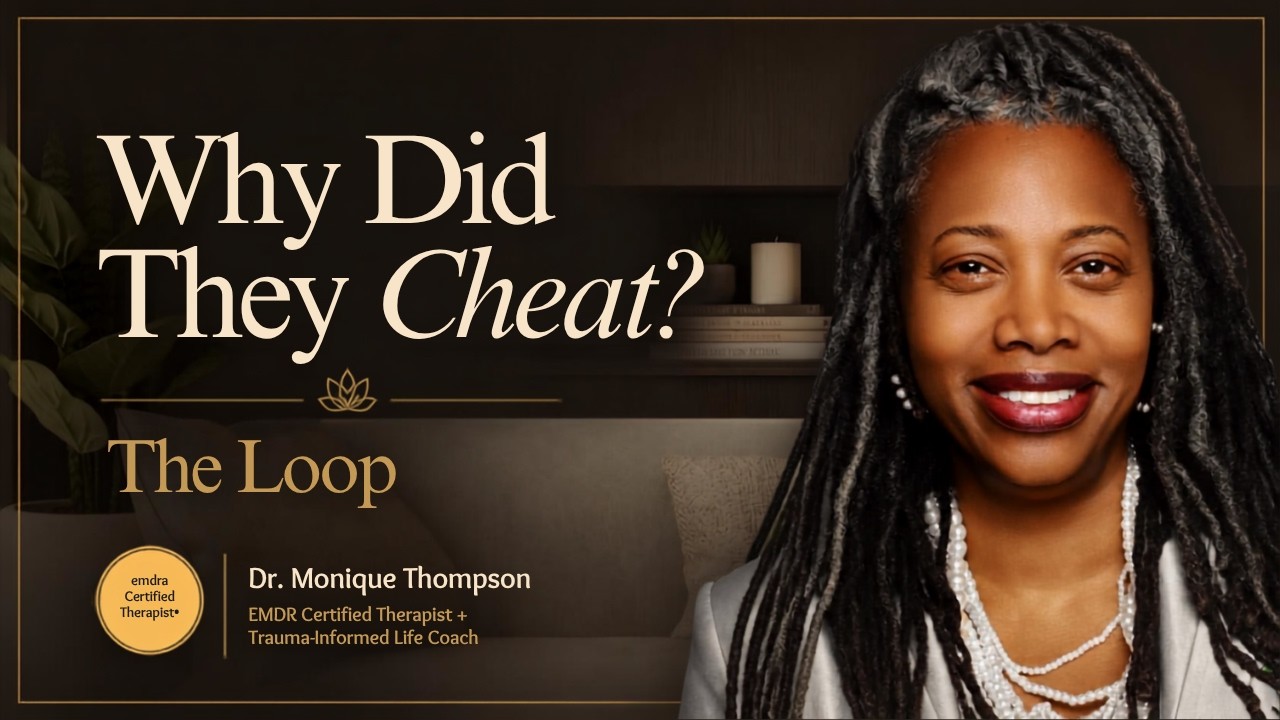
My partner said: I cheated because we weren't having sex. The "Why Did They Cheat?" Loop