The Betrayer’s Pain
In episode 62 of the Affair Recovery Room podcast, host Tim interviews Dr. Monique Thompson, a Dallas‑based psychotherapist who specializes in the often‑overlooked trauma of the partner who committed infidelity. The conversation begins by questioning why the betrayer’s pain matters, then moves into Dr. Thompson’s clinical perspective: the cheating partner experiences an identity fracture, shame, and avoidance that can be as damaging as the betrayed partner’s grief. She stresses that lasting repair must start from the inside out, requiring a pause, self‑compassion, and honest self‑inquiry rather than merely external behavior changes. Practical tools are discussed, including the “Understanding Why” course, an EMDR‑based trauma‑informed approach, bilateral‑stimulation walks, and simple if‑then self‑care routines. Dr. Thompson also highlights the importance of rebuilding internal trust, using compassionate self‑talk, and maintaining transparent communication with the partner. Resources such as her Infidelity Recovery Workbook, the EMDRIA therapist directory, and the affairhealing.com website are offered for listeners seeking further help. Throughout, the tone remains conversational yet clinically grounded, with a supportive and hopeful sentiment toward both partners’ healing journeys.
Chapters
She says she needs to understand why, but none of my answers are good enough. If I knew, I'd tell her, but I'm just as confused. It's not about coming up with the one answer. Understanding why requires gaining insight into your patterns, your choices. It sounds like coming up with excuses. No excuses. You made choices nobody forced you into. But how do good people make bad choices? What's a truer explanation than I just made a mistake? What answer gives you both assurance that you can be trusted again? That's what I need to figure out for both of us. But how? I've put good research and 20 years of experience into creating the Understanding Why course. It guides you through every step of self-exploration and leads you to a clearer definition of your choices. And the course includes 4 full coaching sessions with me to help you process it all. That's exactly what I've been looking for. Where do I start? Go to affairhealing.com/y to preview the course. The people who've worked through it consistently come out with a much clearer picture of themselves and a better answer for their partner. You can start today.
Gain insight into your past choices. Build a foundation your partner can trust again. And give your partner the answers they've been waiting for. Visit affairhealing.com/why to find out more.
When we talk about the pain of infidelity, most of the attention turns to where it seems most obvious— on the person who was betrayed. And that makes sense. The shock, the grief, the shattered sense of reality— those wounds are real. And they deserve care. But what about the other person, the one who broke trust? Is there pain there too? And does it matter? Today's guest says yes. Dr. Monique Thompson is a psychotherapist in the Dallas area who works with couples navigating infidelity with a particular focus on the betrayer's trauma. Her perspective is shaped not just by clinical training, but by a deep conviction that real and lasting change For anyone in this story has to start from the inside out. She brings a framework built on science, self-compassion, and the kind of honest, nonjudgmental presence that makes the hardest conversations possible. We talk about what happens inside the person who had the affair, the identity fracture, the shame spiral, the avoidance, and what it actually takes to do the deeper work that leads somewhere new. This is episode 62 of the Affair Recovery Room podcast.
Welcome to The Recovery Room, a podcast presented by affairhealing.com.
You have a unique focus on targeting that person who had the affair. The majority of people listening to this podcast are people who have been betrayed. And so there's just a lot of focus on the helps we give to the betrayed partner. I mean, I do that as well, the one who's been injured in all of this. And so we have a lot of empathy for the wounds that they carry. But you talk about the trauma and the wounds of the involved partner as well as being something that needs to be given attention to. And I don't know that everybody has a lot of sympathy for that perspective all the time. It's like, well, they, they deserve what they get. But talk a little bit where that comes from, from you and why you're motivated to Help?
Well, one, most of our lives have been touched by this experience. Either we had a parent or a person that we dated. It comes up all the time. So inviting the conversation, I would say, is the one thing that I tend to do. I'm by nature non-judgmental, and it comes up regularly. What I do find is when people come in and it's a couple There is somewhat a heavy-handed expectation that the person who was involved will be fixed, and that them being fixed will fix everything.
Mm.
And there are actual observable wounds on the one hand. On the other hand, the person who was involved, the person who violated the understanding of the relationship, likewise has work to do. Now, the easiest example I can give, Because I feel like it's just sort of publicly or socially understood and more accepted is when someone has taken the time to get on a long road of recovery from alcoholism. We somewhat have a socially accepted understanding of the long road that it is and that the person will have, beyond abstinence, will have engaged in recovery. And if they are working their steps, if they are engaged in actual recovery, not abstinence, but recovery. They present to their future relationships a different, healthier version of themselves. And that is equally likely when the person has been involved and violated the terms of their relationship. There is also a path to recovery from that. Part of it is that I'm heavy-handed on science. I enjoy using what we know now in 2026. What do we know? Now, and there's a couple things we know for sure now, that the person who cheated is in pain. That is not a hypothetical, it is true. We also know the person who is violated is also in pain. That is true. We can look at pictures of the brains. Helen Fisher has all these brain scans. We can look and see, like people who want show and tell, you can look and see that this is there. Um, and People do recover and go on to have healthy relationships in the future. That's just true. That's just true.
So, right. Yeah, I mean, it's easy for most of us to identify the pain, the trauma, the difficulty that the injured partner is going through. You talk about the trauma that the involved partner goes through as well. I don't know that there's always a lot of empathy or sympathy for that, or even an acceptance that that's true. What's their trauma? Talk about that a little bit.
A part of them has an identity moment where it feels like you have lost— a loss of identity. I am a person who— and they filled that blank in for a long time with, I'm a person who doesn't do this, would never do this, wouldn't do this to them. So now the I-am-ness is fractured, and that internal pain is very real and requires some putting back together. But that putting back together cannot be done by simply moving forward and never doing it again, which is sometimes the demand of the person who wants reconciliation. It's just, promise me you'll never do it again.
Yeah, let's put boundaries in place to make sure that doesn't happen.
Just make sure it doesn't happen again, right? But the real work is internal. So the person who cheated, or the involved person is needing to pause. And it's very difficult, I believe, for that pause to be accepted because we want so quickly for the behavior to just change. But for it to be lasting and authentic, you actually need to pause, take a breath. Pausing to connect with your felt sense of self, to listen to yourself and connect with your deepest truths is part of the work of the per— both parties, actually.
Mm-hmm.
But skipping that is the danger for the person who was involved or who cheated, because skipping that, now any efforts to do anything else, the success is a toss-up.
You're talking about being attentive to the inner work of change, not just the external shifts to kind of make me feel safer.
I could show you my phone. I could tell you I didn't go on these Mm-hmm. And I can make sure that I come home at this time and I am here at this time, and I can share my location with you. Those are all behaviors. But real genuine change and trust from within means that this person who did this can say to themselves, I trust me, not just say you should trust me. And so I would say I mean, I, I was fortunate enough to be married. I'm married. I've been married for 23 years, and my husband and I both work in mental health. We love talking about relationships and what our theories are. And it sounds so like Disney, but we really do go for walks and we try to talk about things, right? I said, you know, there's a pattern that I noticed when this happens. And he says, well— I said, well, there's some emotional disconnect.
Mm-hmm.
The person had with themselves. They may have still been able to show up, you know, they paid the bills, they came home, they were parenting or co-parenting, and they may have not necessarily been unkind to their spouse, but the emotional connection was broken. And unspoken, really not tended to. And sometimes people will push themselves a way to try to function. You know, I don't want to even think about these thoughts that I'm having. I'm just gonna just go to the bathroom, and I'm just gonna be on the site for a little while. It's not hurting anybody. But I'm not pausing to think about the thought I'm thinking. Because if I pause and think about the thought I'm thinking, then I'm likely to find myself, my most authentic self, and say, well, wait a minute, why am I doing this? Because I'm doing something that is outside of the agreement of this relationship, and I know for sure that this is probably not going to be popular if found out. And my hope now is to not be found out. But then, because I'm feeling all this shame and disgust with myself, I'm not using any self-compassion. I'm actually increasing the likelihood that this is going to happen again. So that is what I've— I mean, my, my training comes from a lot of forensics and things like that, working with a lot of various populations, and this is a steady truth. Everybody should know this, so this is something for everybody in the audience to know. Self-compassion is your gateway to your inner health. Oh, how you talk to yourself matters so much. And then we say, well, what happens when you're ending your day? Are you ending your day with the critic on high volume? Oh, you didn't do this and you didn't do that, and now look at you, you messed up again. The critic is just on high volume in that lovely self-compassionate voice is on mute. You know, so I say, you know, turn them the opposite way. The person— if this is you, if you're already— this is something you've done and you're saying you're gonna stop, but the way you're talking to yourself is with that critic's voice, just turn the volume down on this critic and turn the volume up to self-compassion. Visit with that part of yourself, listening, deep listening, compassionate listening to yourself. And the answer to what to do is probably inside of you. But that critic can get so loud, especially if you're doing something that's not socially acceptable. Oh, the critic is so loud. Oh, everybody's gonna blame me. You're gonna be the reason that working home, your kid's gonna be messed up. You're not gonna have a relationship with your kids. Somebody else is gonna raise your kids. Your ex is gonna take you for everything. You know, all this stuff the critic is yelling at you. And you don't hear the self-compassion. And so now you feel less than the whole world. Um, you go to therapy and you feel even more less than the whole world. So now you've actually increased the likelihood that you leave this relationship and you try to change your behavior in the next relationship, but you never paused to deal with yourself, with who you are. And so you're just taking you All around.
Yeah. And here we go again.
And here we go again.
Yeah, I know those times in my marriage when I was compromising the promises I'd made, the agreement that we had of what defined trust in our relationship. And I would do those things that I know is stepping outside of that agreement. I didn't do what you're suggesting is to slow down and to be thoughtful, like, wait, why am I doing this? What does it mean? I mean, My explanations would always be excuses. Well, of course, looking at all those external reasons why I could justify making these choices.
Yes.
But I needed to do that. I just didn't do it until everything just fell apart eventually. You know?
It does fall apart. Those excuses, though. So, I call them seemingly unimportant decisions. That pause that I was talking about, when you're in that pause, you'll sometimes notice your seemingly unimportant decisions. The pause is critical. But let's say you didn't pause. So now you're engaged in a tyranny of seemingly unimportant decisions, and you find yourself gently but surely moving toward something and away from something else. As you look at the person who was involved, how did they get there? It is such a long list of seemingly unimportant decisions.
Yeah.
And I realize that people who were brutally harmed, emotionally harmed by this, want to know why. And my pause there in caution is we're easily talking about minimum a million pieces.
That's daunting.
And a whole million pieces. We could instead say, okay, what is the core? Like, there's all these pieces and right there in the middle, what is the cog? Okay, there was one human choice to engage in this act and be involved, violate this. But then the second human act was to not come clean about it. So if I'm asking why, I would encourage couples who maybe are listening to this because they're thinking about reconciliation is to look at the second part and start your repair work on repairing, learning to repair. One of the most beautiful statements that I hope people will say to their partners, I couldn't possibly know everything. About why you did it, when it started, what all happened. I couldn't possibly know that, but I want you to, on your own, keep talking to me and telling me this story, knowing that I make you no promise to stay. I, I will try to listen. I'll try to hang in there with you, but I make you no promise to stay. I'm also making you no threat to leave. Making an agreement on the rules of repair and saying to each other, listen, we're going to clock in for this amount of time. And in the end, whenever we get to this agreed-upon time, we're going to each make a choice and respect each other's choice. We're just going to respect each other's choice because there's no way for me to spend the rest of my life sitting at your feet. While you try to explain to me why you did this, and there's this martyrdom that comes with it. Why did you do this to me? And I can tell you from working with a lot of partners that there's very few— I would say maybe there's someone I've forgotten about— that did what they did who intentionally hurt. But did they ignore the consequences? on every level. People lose big things from this— their marriages, their homes, their livelihood.
Yeah.
So no, they weren't setting out to say, you know, I know I have a medical degree, but what I'd rather do is lose all those years of medical school, never practice again, and lose my way of making a living. What I would rather do is a different occupation, and my pathway to this new occupation will be to sleep with this patient, and then I'm going to do it again and again and again until somebody finally reports me to the medical board. No one says what I plan to do.
That's not the plan up front.
It was not the upfront plan, right? But the excuses, the seemingly unimportant decisions. So this— I'm gonna use this same metaphor. The doctor, they get to work that morning and they realize, you know, there's so many people here, and they have a thought, huh, what would happen if nobody was here? A passing thought. An uncaptured passing thought. What would happen if nobody was in here? And so then they stay late one day. They agree to see a patient that they have not attuned— they have not attuned to themselves. I'm attracted to this person, and I'm kind of hoping this person's attracted to me too. So then that after-hours appointment turns into something else. But when did it begin turning? When those thoughts were uncaptured. That is when it started. That is when it started. So the critic in the head in that moment says, this is terrible. You shouldn't even be having those thoughts. The self-compassionate voice says, well, let's look at this. How are you feeling right now? Are you lonely? I bet you are. You've been working a lot. You know, you don't really get to go home and spend time with anybody anymore. You're tired. You know, why don't you call Bob, see what he's up to? Let's see what he's doing. He might be able to listen to you for, you know, just call him and tell him you're just checking in and say hi. And talking to yourself with self-compassion, saying, you know, I know where this is going to head if I let this person— you know, so now you find yourself going, yeah, I know, you know, you connect with yourself, but it requires practice. Sometimes what you discover when you, you know, really get into your inner conversation is that you do have some dark thoughts. You are not always beautiful. And the self-compassion says, I'll hug you anyway. And as I'm loving you, and I've always been with you, you'll suddenly go, I've never really been alone. I've never really been alone. My longest companion, oldest friend is me. I've been with me the whole time. But the critic will have you thinking the most horrific, horrible things about yourself until you do something to prove the critic right. And then the critic says, see, I told you so.
Yeah, I mean, I love that idea of pausing And recognizing that not every thought or feeling that comes to us is this terrible thing. A lot of it is, wait, that's the kind of thought and feeling a lot of people confront. Normal humanity. It's normal life. It's the question of what do we do with that when it comes? Do I take it? Do I nurture it? Do I imagine it? Do I wonder and tell myself, but I'd never do it, but I want to play around with it a little bit. I mean, that's where it starts getting into that dangerous territory.
Yes. You know, you asked what can someone do a little bit there? You know, like, what can I do? There's somebody else, just like you said, somebody else is having this same experience. And kind of a meditative breath that I encourage— I use this meditative breath myself, I teach it to my kids. Somebody in this world either is right now, will, or has had the same experience. And in your humanity, breathe in your own experience, just acknowledging it, and then breathe out what you hope for people who are having the same experience. And take another breath in. And breathing out my hope for everyone. Oh, what I'm hoping actually is that whether it turns out well or not, that I'll feel appreciated, that they'll be okay. And what else am I feeling? I feel— I really want anybody else having this experience to feel calm about this and to go about it with calmness. And so then now I bless myself with the blessing I'm sending out into the world. And I've also eliminated this thought that comes, this excuse that comes, that I feel like I'm the only one. Somebody else has thought about cheating on their spouse for no good. Yeah, somebody's thought about, oh, I want to have this delicious experience. I just think about it all the time. Yep, somebody's like, I'm having obsessive But yep, somebody else doesn't want to go home either. You know, so pausing, somebody else, what do I wish for them? And then suddenly, that self-compassion is coming out, because you can sense it sometimes when you say, what do I wish for someone in my same experience?
Yeah, what an interesting thought experiment to do, and how beneficial that could be if we could slow down and think that way about our circumstance. and kind of remove it from ourselves and say, wait, someone like me in the same situation, thinking the same thoughts, I mean, what would I want to encourage them? Or what would I hope that they would consider? It's so easy to have those thoughts and just think about the immediate, oh, but there'd be a thrill there. There'd be a pleasure there. Yes, there will be. There would be.
Mm-hmm.
But step back and you know where the story goes. What would you really tell someone like you? that was considering this. Knowing how these things unfold, it could lead us in a very different path if we could slow down enough to do that.
Yeah, yeah, yeah. Well, I can't claim invention. It is a Buddhist practice. And I love that particular practice. I link it to other things. There's plenty of research on mental practice, where we can envision ourselves doing something. So as you visualize something, as you train the brain, it learns. So in that breath, in that exhale of self-compassion, I'm self-regulating. So now my nervous system feels calm and regulated. I'm in my parasympathetic nervous system where I have creative ideas.
Yes.
Right. And I've kind of very gently pulled myself either up from a dorsal vagal state or I've pulled myself even out of a sympathetic state into ventral vagal state, and now I have creativity. I might even laugh at myself and go, what was I thinking? No, I'm not gonna do it. So now I'm in a place where my creativity is flush and open and accessible to me, which is that hindsight moment that people experience in recovery when they're way down on Step 12 and they finally decide to sponsor someone else, because now they're like, oh. So I get it now. You know, I get it. Why didn't I know? Well, it would have been nice to know this before. So you can kind of self-dose, settling the nervous system, hopefully accessing creativity and wisdom, you know, a sense of humor, things like that, which help you to move through with self-compassion. But that breath, I have to give credit, that is a Buddhist tradition that I enjoy that helps you to kind of breathe out this beautiful relief to the world for people walking a similar path. And you're, in a way, your inhale is accepting suffering and acknowledging suffering without approving or disproving of it.
I know from our earlier conversation, you talked about your work with EMDR.
Yes.
What was interesting to me about that was that it's very common to hear people who have been betrayed and dealing with the trauma of betrayal, Going to get help through EMDR, but you talked about using EMDR with the betrayer, with the involved partner. Yeah, and I'm sure some people listening go, "Wait, what? What do they need help for? They just to go out and had their fun, and you know what trauma did they go through?" But talk a little bit about why that's necessary and beneficial for some of your clients.
So one of the classic symptoms that tells me someone does need. to do some kind of trauma work, EMDR being one. And let me explain. EMDR is eye movement desensitization and reprocessing. It is a well-prescribed protocol that involves resourcing, identifying targets, using bilateral stimulation, which is— which just basically means left-right movements, getting a target to clear, meaning the person is able to visit this moment, this experience, this memory, And experience insight instead of experiencing this emotional charge or trouble, and they have adaptive thoughts moving forward. Okay, so having said that, I don't see how anybody would think a person who betrayed somebody wouldn't need those things, because clearly you're saying, well, something about this, you keep doing that. What is the that? So avoidance of the experience. So what experience is the person avoiding? And when I'm working with people who are the one that betrayed. They're often wanting to not think about it anymore. They don't want to think about it at all. So now we have a target. We have a target, and EMDR is toward being able to approach this target with adaptive thoughts. That's the— I think that's the most clear way to describe that versus approaching this experience with Maladaptive thoughts where you're thinking to yourself, I'm just a loser. I'm just stupid. I just don't care about people. You know, I don't know what got into me. I don't even want to think about it. Quit asking me questions. You know.
So here's what's— when I'm listening to you, the idea that's coming to mind is that typically when I've seen how EMDR has been used and applied in helping clients, you're going after that maladaptive behavior and you're trying to target it to bring it to a sense that they can process that without all of the other stuff attached to it. But at the core of what's attached to that experience, that trauma is about pain. You're describing something that, yes, there's pain there, but it sounds like shame. I mean, at the core of that, it's like, it's the shame that keeps me— I want to keep avoiding it. I can't talk about it. I don't want to think about it. Let's move on. That's a different kind of—
Exactly. You do need to— you need trauma therapy, or at least for some people, they may not need trauma therapy. therapy, but I do encourage trauma-informed self-care because some people are trying to figure it out and they're just confused. It's too much, you know, really. I meant a million pieces. It's too much. They'll start going down the road. They're actually trying to figure it out, but in the midst of trying to figure it out, you have your partner like, turn in your homework right now. You're like, I'm working on this.
Yeah.
What I thought was like a multiple choice question, I opened it up and it was a dissertation. You know, so some people are actually trying to figure this out and it's just hard. So for them, I recommend making like if this, then that type decisions. So let's say that you usually come home, you get in front of the TV, you then hang out, you do so. If this, then that. So in that window, there was no work being done on this dissertation. All right, but if I take a portion of that time, say 15 minutes or 30 minutes, and I go for a walk, and I say, during this walk, I'm going to just try to fill out maybe the outline of this puzzle. I'm going to take a little bit, a nibble of this thing, this elephant. How do you eat an elephant? One bite at a time. I'm going to try to, you know, maybe listen to a podcast like this one. I'm going to do something in that 15 or 30 minutes, and I'm going to walk while I'm doing it. I'm intentionally mentioning walk because I'm talking about trauma-informed self-care. Well, what's happening when you take a walk? It's bilateral stimulation, left, right movement. And I give myself maybe a tiny nibble of a hard question. Why did I do that? What was going on with me? Am I okay now, or what's going on now? You know, how do I feel? I'm asking myself some questions. I'm allowing myself to engage in deep listening, empathetic listening, self-compassionate talk. I'm practicing these things while I take this little walk until I feel something connect. And I go, there's a piece of that puzzle, you know, and there's a piece to it. I say, oh, there's a piece right there. Maybe I realized that, you know, I go too long during the day without actually interacting with anybody. You know, I focus, I put my head down to work, and I just focus all day long on working, and I'm not really connecting with them. I'm at work around people, but I'm not actually connecting with them. So maybe that's— I come back home, I have this aha moment. Maybe I share it with my partner, if my partner's also been doing their own work. They made me more apt to listen empathetically. Listen, I said, you know, I had found another piece of that puzzle. I don't connect with people all day long. I'm starved by the time I get home. And when I come home and you're with the kids, and then you're taking a phone call from someone else, it just increases my sense of loneliness. And then I feel like I don't know what to do, so I go somewhere else and sit by myself some more. And by the time it's time to go to bed, I feel defeated, like I'm alone in the world. You can, you can engage in those kinds of self-discovery. So trauma-informed self-care can sometimes help, because if this, then that. If I go for a 15 or 30-minute walk, then I might have a little piece to this million-piece jigsaw puzzle. If I do nothing, I likely won't have A piece to this jigsaw puzzle. And there it is, the if this, then that. So there's trauma-informed self-care, but over here with using professional treatment, it is a prescribed procession of movement. And for that, I kind of just need to show up. Usually you don't have homework with EMDR. You just do the session and then you come back for the next session. It's not uncommon for it to be back to back, meaning you did maybe a couple hours on a Monday and you did 2 more hours on Tuesday, and you can get through it. You don't have to have like the traditional weekly 45-minute-long session, come back the next week. You know, you can do it that way. So of the 2 paths, I would say at the starting point, a person could say to themselves, well, am I approaching this issue Am I— it's like you said, am I experiencing so much shame that I don't want us to talk about this? I don't want to think about it. I just want to move on. I'm having those thoughts. I need to go to probably see somebody for EMDR because I'm going to literally have inside of me— the protectors inside of me are going to like, no, no, no, no, no. I'm going to find every reason in the world not to schedule that appointment. I'm going to decide it's too expensive. I don't have time for it. I'm going to have so many reasons. All these protectors are in front of me. Or if I notice that I kind of think about it sometimes, this just seems complicated, but I do want to figure it out. Now, maybe using, I would say, still a trauma-informed self-coach, life coach. I do not recommend just life coaching for this. It just is so tender. I would say get someone who does trauma-informed life coaching or who is an EMDR-trained therapist.
So I'm thinking about the person who's had an affair that's listening to this.
Okay.
And maybe it's been months or years, and they really haven't done this kind of individual work. Where should they start?
In this particular human experience, I don't really recommend shopping, because it's not like stress, or work-life balance, or things like that, where a little shopping is not going to hurt anything. This tends to be a little time sensitive, and it tends to be an area of people's lives where if left untended, it worsens exponentially as it is untended. Start with EMDRIA. EMDRIA has a directory of EMDR-trained therapists and EMDR-certified therapists and consultants. If you said, oh, I don't necessarily want to do the EMDR, so how would I find a trauma-informed life coach? For me, the easiest way to find someone is to ask someone who's been there. So someone like you, Tim, who's been there, done that.
I'm going to list the contact information for you in the show notes. So people, if they want to find out more about you or get in touch with you, they can. And I also want to mention that in a very practical way, you wanted to provide help for couples that are trying to recover from infidelity. And you wrote a book a few years ago, Infidelity Recovery Workbook for Couples: Tools and Exercises To rebuild your relationship. And that's available if people want to buy that. I'll put a link to that in the episode notes as well. I really appreciate what you do and your passion to want to be able to help and kind of the unique perspective you bring in understanding what the involved partner is going through as well. So as someone who experienced that, I'm appreciative of that focus and that effort. So thank you.
You're welcome.
More from Monique
How long have I been calling my husband Big Daddy Wonderfulness The Unconquerable

Tune in tomorrow morning on K104 Dede In The Morning for my monthly mental health segment.
Catch me on K104 tomorrow morning, we're talking about couples disconnect and sexual dissatisfaction
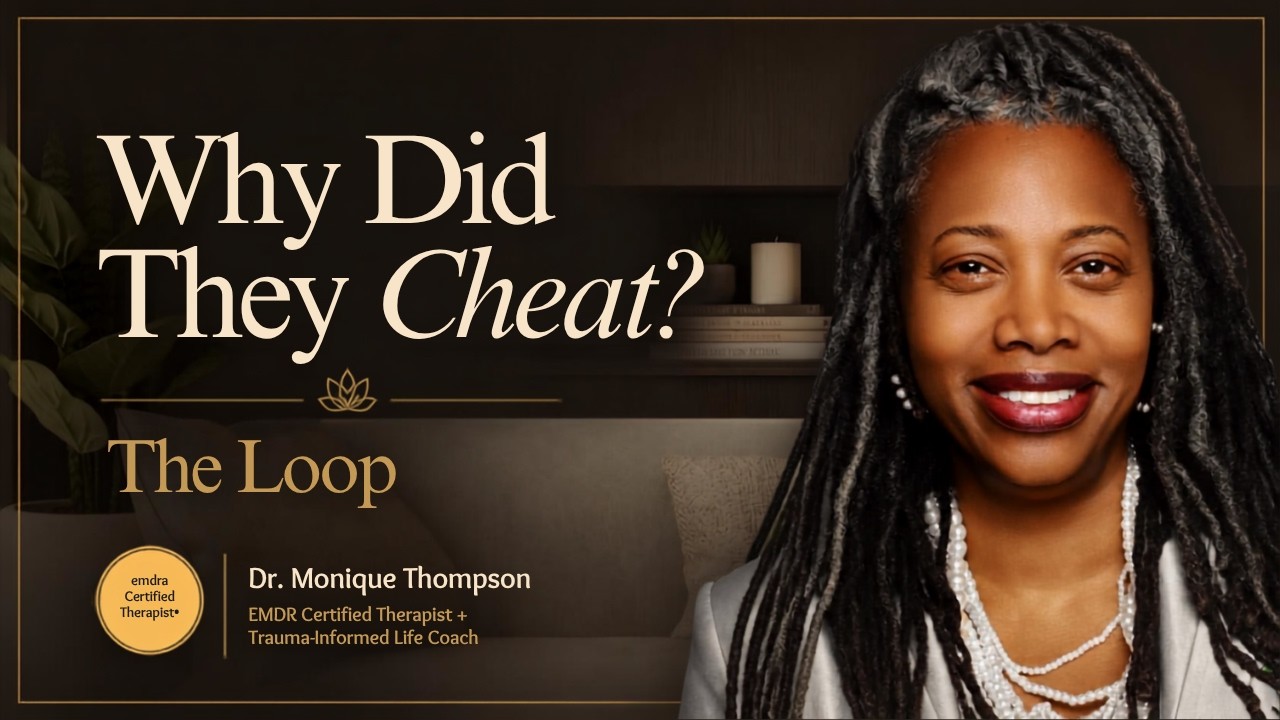
My partner said: I cheated because we weren't having sex. The "Why Did They Cheat?" Loop