⭐️ Recovering From Infidelity (Rebuilding Trust in Your Marriage After Adultery)

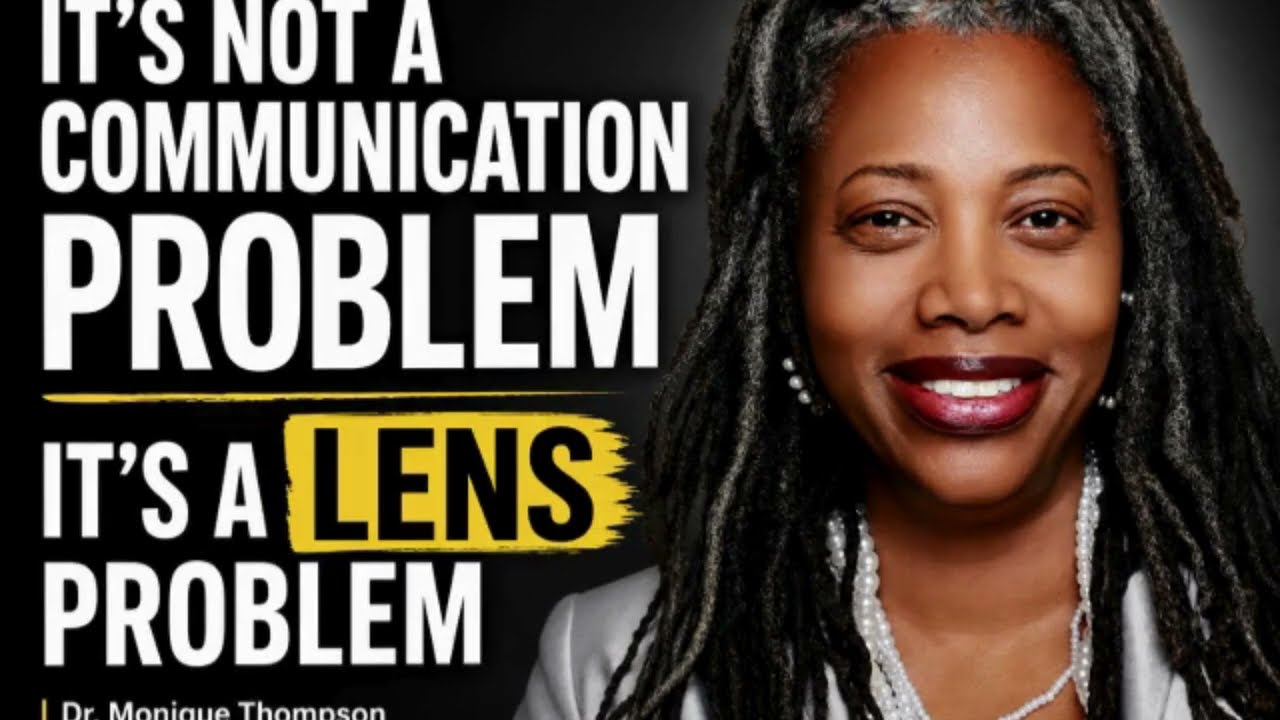
In this interview, therapist and author Dr. Monique Thompson discusses the pervasive problem of infidelity and offers a comprehensive framework for understanding, responding to, and healing from affairs. She reframes infidelity around the concept of consent, emphasizing that any sexual activity without a partner’s informed agreement constitutes betrayal, regardless of secrecy. Thompson highlights the lack of communication skills many couples enter marriage with and the role of shame, genetic predispositions, and trauma in shaping reactions to discovery. She outlines a concrete 24‑hour crisis plan—grounding, breathing (4‑7‑8), music, gratitude calls, shower catharsis, yoga, and sleep hygiene—to calm the “agitated brain.” The therapeutic process is described as a slow, safety‑first journey that may span a year, involving initial crisis counseling, a treatment team, skill‑building (Gottman, non‑violent communication), individual work for pre‑existing mental health issues, and targeted interventions such as EMDR for trauma. Thompson differentiates healthy reconciliation (requiring cessation of cheating, genuine remorse, and sustained work) from unhealthy reconciliation (avoidance, continued affairs) and outlines when divorce may be the safer option, especially for protecting children. She discusses emotional credit/debt, making amends without expectation of forgiveness, and the spectrum of infidelity motivations—from “never events” to addictive patterns. Practical advice includes avoiding alcohol, using modern resources (2024 clinics, collaborative law, EMDR), and leveraging her Infidelity Recovery Workbook. Throughout, she uses vivid metaphors (fire, boat, sour milk) to illustrate the process and ends with a hopeful message that, with current science and resources, most brains can recover from the trauma of betrayal.
Chapters
Infidelity is a leading cause of divorce, and whether you're the spouse who has just found out that your partner has been unfaithful, or you're the partner who has been unfaithful and now you're wondering if there's a road back, there's no doubt this is a difficult and challenging time in your life and in the life of your relationship. My guest here today is Dr. Monique Thompson. She is a psychotherapist who has been helping people navigate issues of infidelity and other issues in relationship, and she's here today to talk with us about infidelity. She's also the author of a book called Infidelity Recovery Workbook for Couples, and so she's a bestselling author as well. Dr. Thompson, we're so happy to have you here today to help us tackle an issue that is pervasive, that is common in many families and marriages, and to help us understand kind of the root causes and, and more importantly, how we heal from that.
Yes, I'm so glad to be here. It is such a warm environment to talk about a bad thing, right? Um, something that can tear people's generations up. You know, you see people whose grandfather, this happened, and then the family never came back together again, or at the funeral People find out, you know, what was really going on. You know, there's just this history we have of mankind, you know, from other cultures from around the world. It is something that is not unique to one segment of the population or one type of marriage. We see it across the globe, and we see it across human history. So then some say, well, shouldn't we just? I was just gonna ask you. You know, shouldn't we just accept it? And it turns out that no, because it's what I— one metaphor is a little bit like sour milk. Like sour milk has always been there too, you know, but how many times do you drink sour milk? Maybe one time. But are there marriages where they find buttermilk? Where they find a use for different ways to define the sexual tone of their marriage. So key, key to infidelity is consent. Is consent.
What do you mean by that?
Well, so let's, let's kind of broaden our spectrum here. And for one, and listeners, I hope you're hearing me, that this is not a pedestrian issue. It defies simplicity. And it invites open complex understanding. So if you ask 40 couples to define their sex life and then to talk about their enjoyment of it, their fulfillment of it, you're going to get such fluidity in the answers. And if you ask those same 40 couples 10 years from now, totally different answers, right? And if you rewind time and ask those people before they got married what their So there's such fluidity, right? So at any given point in a monogamous relationship, I would say for any partner to think about, would my partner, if they knew what I was doing, whatever that doing is, would they have consented? Would they have agreed? If there's consent, then I would not define it as infidelity, right?
I see.
But if there's no consent, even if your partner never finds out, And to be very transparent, I have everybody, right? I have people come in for work with me who are thinking about infidelity, people who have cheated and have not been discovered, people who have discovered and haven't decided what they want to do about it, right? I have couples who are thinking about maybe we should open the marriage up, maybe we should do ethical non-monogamy. What should you know? Maybe we have some different ideas about how to go about our sex life. And so in all of those things, you'd think, well, how many sessions? As long as it takes for us to get to a peaceful, authentic answer for that person's life. But for that person, if they're in a relationship, after you get your answer, you still need your partner's answer. as well, and without consent, I don't care what it is, you now have infidelity. And I see couples from— I have seen people from every continent except Antarctica.
That sounds like a challenge.
A little bit, you know, a little bit.
So this video makes it to Antarctica. Yes.
If you're in Antarctica, you can help me to close all the continents up and put that on my little therapist bucket list. But I've seen people from all the continents. All different kinds of mixes and matches. And it is consistent.
So consent then is the issue. But I'm thinking in order to have consent, you, you have to have disclosure, you have to have conversations, you have to have the vulnerability to— and safe space to share.
Exactly, exactly. Right.
And I'm thinking that a lot of us don't have the skills when we enter into a marriage to have those kinds of conversations.
Yeah, for any number of reasons, right? Now, I'm gonna be transparent here. I'm married. And the married people who are listening know it could be almost over behind the dishwasher.
That doggone remote control.
You changed my channel. You deleted my show. You know, or you did some Netflix cheating. You know, y'all were watching the series together. And then they went— I mean, you know, if you're married, it could be a number of things, you know. But communicating about this, there's shame sometimes that came from outside of the marriage.
Right.
We now know about studies on epigenetics where there's this inherited social response in your DNA that came from your father's father genetically.
Right.
Right? On both sides, like a genetic response in a coping way and also a genetic response in a maladaptive way can happen. that had nothing to do with the marriage, nothing to do with you, nothing to do with it. It was your father. So how do we get here to shame? Many, many, many ways. But let's say we're here, right? How do I have a conversation when I'm having a sense of actual pain about having this conversation and I'm terrified of losing this relationship? And again, to those listening, this is a good time to go talk to somebody first. I do not recommend— and this is 23 years, 8,000 couples, right? Do not go into that conversation without— that's your rough draft, right?
Right.
I don't recommend taking such a provocative level of content in this rough draft form to your partner. And now they are dealing with your rough draft that had you gone someplace else first, worked it out, got into your deepest truth, your authentic truth, where you have 2 coexisting complex truths. I both love you and I want to have these other sexual experiences. How do I communicate that? With a therapist first.
Mm-hmm.
Because sometimes what we find is that you didn't actually want You didn't want sex outside of your marriage. You wanted this kind of sex within your marriage, and you didn't know how to ask for that.
Right.
You didn't know how to ask for that. And you also assumed that your partner would say no when they didn't know that you were interested in it. And as it turns out, would've said yes. But then are you prepared for no? So all of these complexities come in, but authentic communication I would say for anybody, even just on very humdrum things, coming in to talk to somebody and work that out, that's not really difficult therapy per se. What is difficult is when people have told themselves yes, done these things that your partner was never going to consent to, and now the level of damage you could not have comprehended because it's not usually As simple as the dishwasher situation or the remote control, or you deleted my show, that I forgot that you deleted the show 4 weeks from now. You know, I don't remember what that was. You know how people say, oh, I don't even remember what we were arguing about. People are not going to forget what they were arguing about when it comes to infidelity. And most of the research bears out that this is a pain that is more akin to trauma. I often encourage people when it's intense that we may not even be able to start joint sessions until the hostility levels are down to a level where we can even manage things. So you're talking about a long-term commitment to recovery and repair, which could have been prevented if you start off without your rough draft.
And I'm going to intersect here because when people come into my office for divorce after an affair, there's so much hurt and the natural tendency is to want to cause the other person to hurt as much as you're hurting. And we see that play itself out in the divorce context. And that becomes an extremely expensive, incredibly destructive divorce.
On my side too.
Yeah.
On my side too, usually. So I've been doing this for a long time. And like any artist, you start getting particular about your studio and You know, what kind of music you're going to create, you know, those kinds of things. So I'm a little particular now because I know for sure that if we follow a fairly prescriptive approach, there is such a thing as a healthy divorce. There's such a thing as reconciliation. And with children, there is such a thing as avoidance of severe trauma. The children do not have to go through a traumatic divorce.
Right.
If you do not slow down, these things are likely, right? So it's like a speed limit on the highway or following traffic laws. Will the car go that speed?
Yes.
Will it likely cause damage if you do this in this school zone? Yes, probably.
Probably.
And so with this, when people come in, I want us to slow down. And that is typically the bulk of my work. The first 4 sessions is just getting everybody to slow down and agree to a process versus an outcome.
Yep.
So that we can say, well, we are all committing to a peaceful process. That means you have to put your guns down. You have to put your knives down. We have to set the children into a safe space while we now go into the studio, take a resting breath, a cleansing meditative breath for the therapist included. All of us roll up our sleeves and get to work. If there's children, no less than a year, no less than a year, no less than a year. It's not possible to get an entire family off the 9th floor of a burning building quickly.
So let's talk about this because I'm so curious of what does this look like? I mean, like I said, I know what it looks like in the divorce context. When you're working with somebody over the course of that year, what are there— are there predictive patterns and cycles and things that you see? Like, can you kind of give us—
Yeah, I can tell you if someone has not stopped cheating, we're not on the 9th floor of the burning building. There are still fires starting. And you just started a fire outside the door, you know, then you kick the ladder off the side of the building. You know, if they're still cheating, then fires are still being set. So that has to happen first if what we're trying to do is reconciliation, which is what my approach is about, is even if you're not trying to bring the marriage back together, if there's a family, the family is still a family after the divorce. So we still need the family system to be protected, even if the marriage is not going to make it. So still, the cheating either has to stop. Stop, or we have to do something akin to domestic violence therapy, which is escape and safety planning, which is, okay, you may not be able to stay in the same house together if this behavior is still going on because it raises the risk of violence. It raises the risk of a traumatic divorce. It almost guarantees that the children are going to be emotionally traumatized.
Right. So at least if you get them into separate homes.
If you're going to continue with the infidelity, You probably are going to have to live someplace else, which then now, now they're in your house, your legal community where, well, how do we go about that legally speaking? Which is not my, you know, that's not my wheelhouse. That means you got to find someone to help you with those steps because it's a legal process at that point.
So at this stage, at this very beginning stage, if somebody says, oh, I want to work it out, And they have to be willing to commit to end the extramarital affairs. But I would think the risk is that they're saying yes, because they want to stay in the marriage. But sometimes it's not really an authentic yes. And that can just cause more damage.
It comes out. I mean, I know it's an old wives' tale, so to speak.
It comes out.
It comes out. Oh my God, it comes out. It always comes out. Always comes out. And what's best is if the person is thinking that they're not ready to stop, they need individual therapy where they can talk about that with their individual therapist, not me. If I sense, and some of this is the seasoning of the therapist, if I get a whiff that I, and I trust my gut above everybody, if I get a whiff that I don't, I just say, you know, Yeah. We really need to separate out and do individual therapy and then come back together because I have a gut instinct about it. I don't say to the couple, I have a gut instinct that there's— But that's not true. I'm following my own ethical code here, but I will not do harm. And it would be harmful if I have a strong feeling that something's going on and I continue to bring us in this room. As if we're really walking down this road. So sometimes what happens is, and I'm willing to risk not seeing the couple anymore. You know, they go their separate ways. There's more discovery. They now for sure need to come back to me. But at that point, it's for a peaceful divorce.
Right.
We know we're not going to do reconciliation. Because you just found out that this never stopped or that it's been picked up with another person. So we— you cannot do reconciliation because we don't have consent.
Right. And so I think that the point that I see with people is to be, be honest about where you're at, right? Like, I, I get that, um, sometimes because I, I've had these— I've represented these people in divorce where they both want the marriage and they want the affair. The affair without consent, not an open marriage. And it just, you're not doing yourself any favors and you're certainly not doing your spouse any favors by staying in a relationship when that's not what you intend.
And so this is to the person who's not giving consent. Because I have, everybody comes in. I try to gently tell her, everybody comes through the door. The person who knows and has not confronted you is also coming to see me for therapy, right? And what they struggle with, what that community seems to struggle with is they're critical thinkers. So they've thought through if this, then that. If I confront this person and they're not ready to stop, am I prepared for them not being ready to stop?
Right.
They're smart enough to realize that I only know this part. What else is there to know? Am I ready for them to tell me everything? Do I want to know? The rest. I have people who've already hired the private investigator. They already have all the information and they are smart. And I, I kind of, I'm, I kind of like working with that group because they've figured out I need to process all, all of this before I do anything because I can't even look at these pictures. I can't even read these text messages without being ready to kill somebody, you know. So they'll come in and we'll unpack and process everything and they'll get to where, okay, I'm ready. I'm ready to do something.
Because let's just stop for a second. Betrayal is such a core human emotion that overrides everything most of the time. I mean, like, when people— when you are in that moment of betrayal, it is really hard to think clearly.
Impossible. Don't trust the agitated brain. Okay, so don't trust it. The agitated brain is wanting to annihilate the threat.
Yes, that's exactly right.
And you can't trust that. It is not the thinking brain. It's the agitated brain.
And it's instinctive, right? Like, it's something that happens kind of without our saying, I'm going to feel betrayal and my brain's going to be agitated now. That's not what happens. It gets triggered and it hijacks everything.
The amygdala hijack. That's what we call it. Yes. So that is the other— for professional therapy, that's a serious rough draft, right? Well, I'm going to just do this or I'm going to do that or confront the person. I'm going to show up at their job. They're going to stop doing this. People are working sometimes together and it is a coworker and they're going to show up at the job. Well, that confrontation is never going to go well. You're going to get carried out with security. Your spouse is not going to come. So then you're now adding embarrassment and shame. But I do believe in confronting all facts. I believe in it.
What is that?
Confronting all facts. In that book, I say, write down all your questions. Write down all the questions. I take a little bit of a 12-step approach where part of this is making amends. And to make amends, you need to come clean. You need to come clean. You need to admit the financial infidelity that was involved. Because I have yet to find where people engaged in infidelity did not also commit financial infidelity. You need to come clean about You know, this person is not crazy because sometimes that happens where the person was thinking the whole time that something was up with this or, and the person who was cheating was like, no, you're, you know, why you come up? So then you need to come clean that I'm sorry for making you feel like you were crazy. You were right. And it was also that I, you know, created enough. I created a sense that you weren't doing certain things so that I could justify me doing these things, you know. That's part of making amends with someone is going back and cleaning up all the emotional harms that you caused without expectation of forgiveness.
Oh, it's not a quid pro quo. It's like, now that I come clean, you owe me this.
Real amends, real amends is making amends out of ownership and responsibility with no expectation of forgiveness because that may be the toll that you pay. Is to live with that person taking their own sweet time with forgiveness, if they ever get there. You honoring what you did is being at peace with— it may take them decades. I may never feel their forgiveness. I'm willing to pay that penalty because I'm willing to make amends emotionally in that way.
That's powerful.
Yes. And now you see people making it through reconciliation. When I'm willing to give that, pay that debt, you know, it's an emotional debt.
But if you're paying the debt to get something, it doesn't work.
It doesn't.
If you're just willing to pay the debt.
If you're just willing to pay the debt. Emotional credit, right? Emotional credit. You just bankrupted your emotional credit card with this person. You have nothing left. So then when you want me to stay with you, live with you, co-parent with you, do all these things, Be fair in the divorce. That's asking for emotional credit. You don't have any in your account.
Right.
You don't have any in your account. So to build—
It's overdrawn.
Overdrawn. Yes. So to build emotional credit, I have to make deposits and keep paying on time, paying early, being proactive. And I have to move my sense of hope over to my hope in myself. Being someone who this is a never event. This is a never event. So for some parts of the population, infidelity is actually a never event. It's something they would truly never do.
Okay. So when you're saying it is a never event, what do you mean never?
I mean, there's nothing that could happen on earth that would make them actually cheat. And then there are other people on a spectrum, I would say, where under certain circumstances, this is up for grabs. And then there's some people who experience addictive levels of cheating.
Right.
And that's a different level.
I mean, that's a whole— then you're dealing with the infidelity as really like a disease.
Yeah.
With personal responsibility to heal that disease.
Well, or taking like the Al-Anon approach where the person who's who's married to the alcoholic has to at some point say that I have to put all these stones down and walk freely because that's their burden to bear, not mine to cure and heal them. But untangling that dynamic can be very difficult to do because typically one or both partners is coming in with unprocessed pain, unresolved trauma that is puppeteering a lot of what's going on. Over time, the brain bears the damage. Like you're saying, that agitated brain, we see people with very tender hypersensitivity, hypervigilance. Their level of emotional control is very low when we're talking about those addictive situations where their ability to manage their emotions is almost juvenile. Well, what about the person married to them? They've ebbed and flowed with this at some point. And now untangling that, we're back to, I need professional help to untangle this. How do I heal from this? Is healing possible? My answers to those are yes, you need professional help and you need community support. You can untangle it. I don't think you should do it alone. The person to help you untangle it is unlikely to actually be your spouse. But typically what we want is for you to stop— I'm going to use drinking— for you to stop drinking so I can feel better, for you to stop cheating so I can feel better, for you— so I need you. Well, if I give you that much power— But I think that's the core.
I think right there is the core of so much conflict in a relationship is I need you to change to make me feel better.
Right.
And the truth is that it's my job to feel better.
Right. I'm allergic to peanuts, so you can't fix anything with nuts in it. What actually the truth is, I can't eat anything with nuts in it. Okay.
Say that again.
If I'm allergic to peanuts, I can't eat anything with nuts in it. That doesn't mean that you can't cook anything with nuts in it.
See, I mean, I just— don't you feel— I feel like sometimes we live in this world world where we're— the expectations that everybody else needs to change to make us feel safe or whole or whatever. And I think the real truth that we're missing out on is that that power is within us.
It's power within us. Well, and some people, the energy and integrity of the relationship, it flows with— I mean, it's just beautiful. Right? So you, you have people where they would not take advantage of you. So there's a question on the BSI. It's a 53-item questionnaire that I use with a lot of people. One of the questions is, people will take advantage of you if you let them. And the answer is false. Because if someone's going to take advantage, they already knew your answer was no.
Yeah.
Right? So you didn't let them take advantage. They took Advantage. And who you want to be in a relationship with is someone who simply won't take advantage. If they just don't take advantage, then you don't have to worry. But if it's somebody who will take advantage, it's already a lost cause because at some point they were going to do that to you.
Right.
Right.
So I want to back up for a second because I do want to kind of explore a little bit on the sex addiction side. But if you've just found out that your spouse is having an affair, or if you're the one who's having an affair, The first thing is not to decide, are we going to reconcile? Are we not going to reconcile? The first thing to do is to bring that energy, slow things down.
Slow things down. So when you find out, and this is for anybody who just found out, the first 24 hours are critical. The first 24 hours, think of your brain as on fire, literally on fire. And This is going to sound counter to behavioral health, but I actually encourage avoidance the first 24 hours, meaning avoid confrontation, avoid making major life decisions, avoid deciding on the relationship. Just the first 24 hours, put the fire out that's in your brain. So here's some things that I like for that first 24 hours. I have not yet met an adult who did not have somebody who poured into their life, who helped them over a rough spot. Call that person and say thank you. Think about how they helped you to get through a rough patch, how they helped you to grow. Call them and say thank you, and you will really naturally release oxytocin, which is a Beautiful little hormone. It has a healing effect on your heart for the adverse effects of stress. And you keep dousing your brain that first 24 hours with all the happy chemicals you can find. Dopamine, you can release through music.
Hmm.
And during that first 24 hours, just get your playlist together, get your anthem together, and put the music on. Because One, it'll cause a nice little dopamine drip, which helps your brain to kind of calm down that fire, and your heart rate follows the rhythm of the music, so it's decreasing your heart rate. So we're helping you to exit out of that stress response naturally, right? If you have a job or kids or something like that, mindfulness. Focus on the thing in front of you, the task at hand. If you're driving, overly focus on you're going to be the best, most careful driver of all that day. If you're preparing a meal, this is the going to be a delicious gourmet meal. Whatever it is that you're doing in that moment, stay mindfully present in that moment. But remember, you've got your anthem playing in the background, so your heart's going to catch that. And then here's the hard part. In that 24 hours, you're going to set aside some time, about 15 minutes to an hour, for a full, complete, utter monkey food breakdown.
Okay? Mm-hmm.
You're going to literally, a good place that This is the season. Go in the shower, turn the water on, close the doors, turn the music up a little loud, cuss, scream, cry while you're in that shower on the warmest water that you can stand. Why? Because the warm water helps relax your muscles.
Hmm.
And as that warm water is helping your body to relax, you're having an emotional release. But it's almost like having a natural little pain relief while you're in there, right? And then once you come out of the shower, you're going to be a little tired from that, right? You're going to call person number 2 on your list. Thank you for pouring into me. I'm really going through a rough time right now, but I was thinking about how when I was 16 years old and I had to do this particular— you helped me. You told me I could do anything, and I'm keeping that in mind today, right? And then do whatever you can that day. To just go to sleep. Go to sleep. You're not going to get a good night of sleep. It's going to be pretty rough. But as you're going to sleep, you're going to do a breathing exercise, the 4-7-8 one. Okay? So out of all the breathing exercises in the world, this is the one that will shut that amygdala down a little bit better, help you to get to sleep in about 15 minutes. About 4 cycles of 4-7-8 breathwork, you should nap. You're basically kind of tripwiring your own brain to make it go to sleep. You need that sleep because you do have major life decisions, choices to make. You do have things to confront. You have many more discoveries probably to make, and you have another day to live tomorrow. So that day, that night, you've got to start putting out the fire. So that's an actual prescriptive day for the first day you find out.
So what is the 4-7-8 breathing?
4-7-8 breathing, you're going to inhale for 4, hold for 7, Exhale for 8. Now I would do this with you, but it puts me to sleep.
Okay. We won't do that. We got to keep the energy.
It puts me to sleep. But you only need like maybe 4 cycles of that with like a resting breath in between. And it naturally just calms the brain all the way down. My brain just goes— my brain literally goes to sleep after that. I teach it to my kids. I teach it to other couples when they come in. You've got to keep your brain out of those hotspots, especially like the first few weeks of therapy after discovery, we've got to constantly be putting those fires out. For another reason though, because sometimes this works all the way out. People stay together, they're happily ever after, and then they start getting sick because this is such a stressful event on your body. It affects your T-cell function. It increases your risk of stress-related illnesses. So you finally live through this. I mean, this is heroic. You live through it only to get sick.
Yeah, that's so true. We do see that a lot.
So you want to stay healthy through the process.
And so I'm just going to throw in some extras. It's a good time to stay away from alcohol.
Oh God, yes.
And it looks to me a little physical activity is probably a good thing too.
Physical activity.
Yeah.
Now here's something that is some physical activity I like for it. 10 minutes of yoga in the morning, any kind you like, chair yoga, anything. 10 minutes of yoga in the morning. And 10 minutes of yoga in the evening, at least 2 days in a row. It helps settle the agitated brain. So that was a convenience sample I did with my clients about 10 years ago because I'm like, we got to get this brain calm. And that's what worked. That's what worked was the 10 minutes in the morning, 10 minutes in the afternoon, 2 days in a row, and people were able to be calm.
So then on day 2, they're reaching out to you, right? I'm thinking really and truly the day 2 is what starts to get You're like, start to get help?
Day one sometimes. I mean, I get crazy. So I offer a same or next day appointment for most people. On the call, one of the first things I say is, are you in crisis right now? Is there an emergency? Is anybody thinking about leaving? Has anybody been put out of the house? Are you thinking about divorce? You know, what's— has there been any event of infidelity or domestic violence? So I need to know that so I know where we're starting. Typically, if somebody just found out, we probably do need an urgent crisis appointment. When a person comes in for that, we're probably not going to do what people would consider productive therapy because it's crisis counseling. But you are helping someone to avoid some of those major unfortunate, poorly thought out life choices. You're probably keeping violence from happening.
Yeah.
I'm just being honest. I have often, you know, my youngest says, you should get a first responder discount. And she jokes, I'm like, you're right. Because I keep the violence from happening often, you know.
Yeah.
But it's an important period of time. Anybody finds out or anybody who's been cheating and you just got found out, your first thing is actually for that person, I say, get the book, the workbook. Because there's a chapter in there for the person who cheated and for the person who Was betrayed. The person who cheated, those answers to questions on that first day. Get the workbook first, and people have reached out to me and said, "I wish that I had gotten the workbook before I opened my mouth because the things I said are now haunting us, and we're trying to work through this." But I wasn't done lying yet. I didn't even know. You know, so they just. made things worse, even though they honestly wanted to work things out. Men versus women, men who cheat and want to reconcile often do.
That's very interesting.
About 60%.
Yeah.
Men who cheat and want to reconcile often do. But this is to anybody listening, do you know they also stop cheating?
Yeah.
When a man says he's done and he's sorry and And he stopped cheating. He wants to reconcile. Now he's back to what we talked about before. You're going to have to sit with the possible consequence of unforgiveness for an indefinite period of time. Right. And the other person is now tasked, right, with how do I manage? I don't even— I might hate you now.
Yeah. But you're saying 60% of the times it works out.
Now, if the man is ready, if he stops—
what if it's the woman?
The woman is less of a— I know this is so bad, but it's about 35% of the time it works out.
I do want to— I want to go back real quick because you were talking about how you kind of stop domestic violence from happening. One of the things people may— mistakes that people may have is that it's okay if I Slap him if I find out that he was cheating, and I'm going to tell you right now: we live in an environment where if the police are called, they're going to arrest somebody. And if you were the one who was slapping, it doesn't matter that you caught him having an affair. You're going to go to jail, and now you're going to have to be dealing with domestic violence charges. So yes, call Dr. Thompson instead of taking out on him because it is. It just is. You know, the the. Police are taking domestic violence very seriously and it doesn't matter. In fact, if you're a woman and you're acting out, it's— I mean, it's likely you're going to be facing—
Right. And you're going to feel like it's unfair. And even if we all would ethically, morally, and emotionally side with you, you still have the law. Yeah, you still have the law. But you're right. So because more often More often it is a discovery. And again, this everything always comes out. It really, really does. And when somebody finds out, expecting them to think rationally, not so much. So I'm hoping, like, sometimes people are listening to podcasts, and it hasn't happened in their life yet, right? You know, but if you are married, it is not an unfortunate but not uncommon.
There we go.
It is unfortunate but not uncommon thing for people to experience. Here's— and this is, this is so unorthodox, but I'm gonna— do not decide beforehand that if I ever find out, if I'm gonna kill him, if I ever find out we're getting divorced, if I ever find out— you know, those declarations, you will program yourself. Possibly unintentionally, but your brain is always listening. And you possibly have programmed yourself to act in a way that was to your own undoing and sabotage.
Yeah.
Instead, just know, here's— say, I don't know what I will do. Or if you suspect that your partner is cheating and you don't yet have the evidence, you can confront them and say, listen, I don't know if you are or if you are not. I think you might be. And I'm letting you know, this is a good time for you to come clean. If I find out you are, I don't know what I will do. I don't know what I will do, but I'm telling you now, I'm not making promises to stay and work this out. I'm also not threatening to leave, but this is a window for you to come clean and tell me, because I think this is what's going on, but I'm not sure. And you can confront them and tell them that. But now your next call is what you— you're calling me. You're calling me and we work that out. And when I say work that out, I don't mean work it out for you to stay. Yeah, I don't even know if you're going to leave. But I, I want you to make a clear, conscious, rational, authentic choice that may not even be popular. Yeah, it might not even be popular.
Yeah. And you know what? Other people's opinions aren't your— they're not your business, right? Yes.
Can they please Oh, okay. Again, don't tell your best friend, your mom and your sisters. Don't tell your boy— your boys. Don't tell your mentor. Don't go telling everybody and telling them what you're gonna do. And I— when I find out— so now all these declarations have been made, and the embarrassment and shame was already going to be there, but now it's in. Yeah, yeah. Now you feel like you have to do something that you're trying to save face.
Save face. And that is such good advice because it's true. I always say one declaration people often make is, you know, divorce is not an option. And I say, actually, you need to live knowing that divorce is always an option. And it might make you a better partner in your marriage.
It really might. Yeah, it really might. Well, or even like sometimes people have come to me after the divorce. So everybody's— when I say I see everybody, people have divorced, decided they want to try again. They come in and they do try again. They remarry, but it's a different marriage. And I kind of call the other kind an invisible divorce where we had to leave the old marriage behind.
Yeah.
And say goodbye to it. And now you're reintroducing yourself as a cleaner version of yourself and the other person is coming as a cleaner version of them. And what I mean by clean, is more authentic. I'm not pretending that I'm okay with things that I'm not okay with. I'm not pretending that I'm giving consent to things that I really didn't. So now it was non-consensual. And I'm not pretending like I love our sex life when I have been in this— I have not been happy for years. for years. And I'm also, you know, not pretending like I can be the person you need me to be so that you can stay because we have all this financial stuff and these kids. And I'm trying to dance as fast as I can so you cannot divorce me. So I'm pretending like I'm, you know, I'm pretending like I have such regret about this affair and that I can't believe I hurt you. And I've been harboring though, this whole time, this passive aggression. And I can't even fit into the pretend human suit that I put on. It's too tight.
You know, I think you're just describing so many marriages, even if there's not infidelity, but it's pretending. It's not knowing how to be authentic in relationship.
Well, so that's really the number one reason people divorce is I can't be the person I really am. And often, like people say, I think that they were cheating because they were ready to leave. That's not uncommon either for people to like annihilate the marriage through an affair so that they can leave, so they can actually be who they wanted to be the whole time. Instead, you know, gather up the courage, often through therapy, because sometimes there's a belief you had from well before the marriage that is haunting you, and you got to unleash that unprocessed content so you can really be your real self. Your real self is likely more confident and courageous than you're giving yourself credit for.
Yeah.
You know, your real self, your real self is really beautiful.
But why do we hide it? Why? Like, what is just— I'm just thinking of so many situations where you're like, you tamp down that real self, those real desires.
We back to the complexity thing.
I think we're going to have to have another conversation about this.
This is so great. Yeah.
Um, we talked about the year-long process, and I know you have worked with couples and they do reconcile, right? And there's, there's healthy reconciliation, there's unhealthy reconciliation. Let's just touch on that a little bit. And I really, I want to hear about what it takes and what you see when marriages get back on track.
What I see when marriages get back on track, let's start with that one first. Um, we all get tired. When I say we, I mean the therapist And the partners, we all get tired. We cannot let tired be our reason for not continuing. Okay. But we genuinely all get tired because it is exhausting work. And sometimes there's a treatment plan and a treatment team usually involved. So quick walk into the clinical scope of this. I screen everybody for everything, every single person. And sometimes people have preexisting mental health conditions, prior to everything happening. Well, those untreated mental health conditions are now completely in full-blown all their glory, right? So those treatment— when there's a treatment plan needed, the condition has to be treated. So the person may have to go see other people. Let's say that there's, you know, The couple, their communication just was already bad. And we're going from bad to—
Yeah.
You know, I mean, it's nuclear at this point. Well, so now we've got to actually reteach, relearn. So you're using like Gottman's work. I like nonviolent communication. But those are skill builders, right? So sometimes the start of therapy is a lot of sessions Where some of it is education and skill building, and some of it is processing and unpacking, and some of it is joint, some of that is individual. So you can see why we all get tired, but it's the good kind of tired from like a good workout because you're getting tired from building skills.
Mm.
And from unprocessing and working through. So now about a month or 2 in, if we've done that, People are stronger, actually. They're stronger, they're healthier, they've been getting treatment. We can actually sit through a session without explosions. But then that has to continue. So the people who make it through continue. They don't jump out of the boat in the middle of the ocean. I'm just going to swim for it. Forget this whole thing. You were never going to make it to shore. But if you can stay on this boat with us while we think it through, figure it out, realize the radio actually still works, we could call the Coast Guard. Now we got to ration out this food and this water. You know, well, we're not in saltwater. We could actually eat from the— you know, so when you calm down, the calm mind is clever, innovative, strategic. And it's also warm and compassionate. So calming down is the first thing, but that takes several weeks of therapy, lots of sessions. And sometimes you need to do things that, I mean, you have to introduce people to other modes of therapy. EMDR is an example where we sometimes have to take a deeper dive into a specific part of your experience and actually get that fixed. It's not long-term therapy, but it's sometimes a fix.
Yeah.
That needs to happen. Department of Defense supports EMDR for PTSD. And I find that it works perfectly for trauma related to infidelity. But getting people to go, getting people to go, or people being open to it. A lot of people are afraid that it's hypnosis, that it's, that it's got spiritual woo. Yeah, like you're doing voodoo on my mind. Or I'm going to get mind blanked. I'm like, none of this is going to happen. So if we can get people to go do that, then the brain is less traumatized and a little bit more ready to work. So that's your first couple of months of it getting to— now the other one you asked me about, people who, they stay, it's not healthy. I can almost guarantee you we did none of that work I just mentioned.
Yeah.
People just kind of went back to their rhythm of day, which unfortunately usually involves a lot of avoidance of each other. They literally stop talking to each other. They're at the same address, but there's not a home.
No.
If there are children, the children almost start to show symptoms of the house that they're living in because it's not a home anymore. And these parents aren't talking to each other. I mean, when I say at all, I mean, at all. So now how would this child have a family?
Right.
And we know from— I mean, the science is not questioning certain things about our health anymore. We have definitive answers about does family tension affect the human brain during adolescence? Yes. Not abuse, not trauma, but just Family tension. Yes. Does it affect it in a negative way? Yes. Could it have been prevented?
Yes.
You know, is there stuff you can do about it? Yes. Should you do something about it? Yes. And when should you do something? Right away. So the response to all of that is, well, how did it end up that people had terrible, a terrible go of it? None of this treatment plan was followed. There are available treatment plans. Do people always need treatment or do they sometimes need life coaching? In this situation, possibly they need life coaching, but if it's gotten to a level of severity, we're not at life coaching level. We're at intervention treatment. And so I do both, which helps because I'm kind of one stop on that.
So I'm just thinking, I'm just sitting here thinking, but Dr. Thompson, I'm not the one who cheated. He's the one who needs to go do all that work.
He does need to do the lion's share of it and needs to show good faith effort. You have work to do too.
That's it, right?
Yeah, you have good— you have work to do too. And you're right, he is the lion's share of the effort. She has many questions to answer. They have a lot. That person really should get the workbook first and get started in it. But the other person has work to do too. It's a very triggering event. Sometimes the person is triggered deeply And some of it is not even because of what their partner did, it's from earlier unprocessed content.
I really like thinking about this as you were talking about kind of the, the steps for mental health. I mean, we do this with physical health. We know what it takes to work out. We know what it takes to be on a good diet. We know it takes effort. And it's painful at times as you're developing those new muscles. This is the same thing.
Yes.
And I think just the reality from Most people in marriages is you didn't come into this with healthy models, probably because there's lots of dysfunction out there and we don't know. We haven't had the skills taught to us and we need to get the skills.
Or we mistake emotional— we sometimes mistake emotional intelligence for mental health care. Like when we get involved in self-care, like self-care is a big buzzword right now. A pedicure and a manicure and a massage are lovely, wonderful activities. And emotionally, emotionally, you feel better. And there's a little bit of a mental health benefit. But think brain. Of the organs that you're taking care of for mental health self-care, the brain is the organ that you're taking care of. The manicures, that's your skin.
Yeah, that's not your brain.
It's your largest organ, but it's not the organ we're trying to take care of, right? So the brain kind of gets like a side effect of that because you're relaxed, but it actually needs care and keeping. So for the brain, we're talking about your hippocampus, your amygdala, your prefrontal cortex, the highway between the amygdala and the prefrontal cortex. And we want you to be, as you mentioned, not in your agitated brain. We want you in your thinking brain. That can be done unless you actually have a traumatic brain injury. Truly, for real. If you have a traumatic brain injury or some organic brain dementia, Alzheimer's, unless you actually have damage happening to those structures in the brain, then this is repair work and responsibility.
Oh, repair work. I love that. I love that. All right. As we wrap up our time today, what is your message of hope for somebody who is in sort of the throes of this right now with the struggling with infidelity?
Please use 2024 resources. I mean, I'm just, I'm not talking down, but I am being clear. So in 1982, we did not have a lot of things that we have now. All right. You also had a rotary phone.
It's true.
All right. Okay. If you missed a TV show, you missed the TV show.
And there were no guidance systems. You had to—
You had a map, right? You used a Mapsko map. Maybe, maybe you might not even had a Mapsko map. You were possibly still using landmarks, turn left at the greenhouse.
Right.
You know, so come to 2024 where we have lots of niceties and technology and we have professionals who are trained in today's science, not 1982 science, not even 1992 science, not even 2000 science, but 2024. So a lot of the pain that people are experiencing is pretty unnecessary. It's about as necessary as having allergies and just suffering through. You really don't even have to go to a doc. You can go to CVS Pharmacy, to the MinuteClinic. I mean, the unnecessary level of pain that people experience from this is almost akin to that. The science has evolved this community just like other areas of healthcare. So one, come to 2024. 2, do not, do not take a wait-and-see approach. The longer you wait, the more actual damage and harm is occurring, and it's already enough. It is already enough. And still, if you did, you waited, you waited, you waited, you waited, you kept planning to look on your insurance card, then you couldn't find a therapist that you like, then you found a therapist but they weren't available, then you found somebody you like but your partner doesn't Like them, you know, all that stuff happens. You can find somebody. You can find somebody. Again, it's 2024 and you can find someone. And when you do, be prepared to sit down, kick your shoes off and sit with that person you're working with until you're actually on the show. shore and you can step off that boat and enjoy the tropical paradise that you were trying to get to. Just don't jump out of the boat in the middle of the ocean and go for it. Just know that actually this is a 2024 boat. The boat already let everybody know where you were. The boat already changed its navigation system and was heading towards the shore. The boat is about to pass you as you're trying to swim for the shore.
Sure.
So just take advantage of the resources around you. You have great lawyers now. So even collaborative law is only what, 30-something years? No, not even.
Like almost 20 years.
Almost 20, right. So my point, use what's available today that wasn't even available 20 years ago. And even in my field, EMDR is an easy example because that was in the early '90s. It's young too. What I do, the book just came out a couple of years ago. So there's A lot that we know now, use what we know now. And my last piece of hope is unless your brain truly, truly is genuine, and I genuinely mean unless you had actual injury to your brain, there is no reason why your brain can't recover and repair. There's no reason. Okay. Just like a bad sunburn, you can go get that recovered and repaired, but you can see it. And this is akin to like a terrible, like horrific level of sunburn.
You have so many great metaphors. I have so enjoyed our time together. And if you want to learn more about Dr. Thompson, her practice, the resources available, we're going to include contact information as well as a link to the book. And I hope you found this information helpful. We'd love to hear from you. Please leave comments and of course subscribe and stay tuned for further content. Thank you so much.
Thank you.
Thank you.
More from Monique
How long have I been calling my husband Big Daddy Wonderfulness The Unconquerable

Tune in tomorrow morning on K104 Dede In The Morning for my monthly mental health segment.

Catch me on K104 tomorrow morning, we're talking about couples disconnect and sexual dissatisfaction
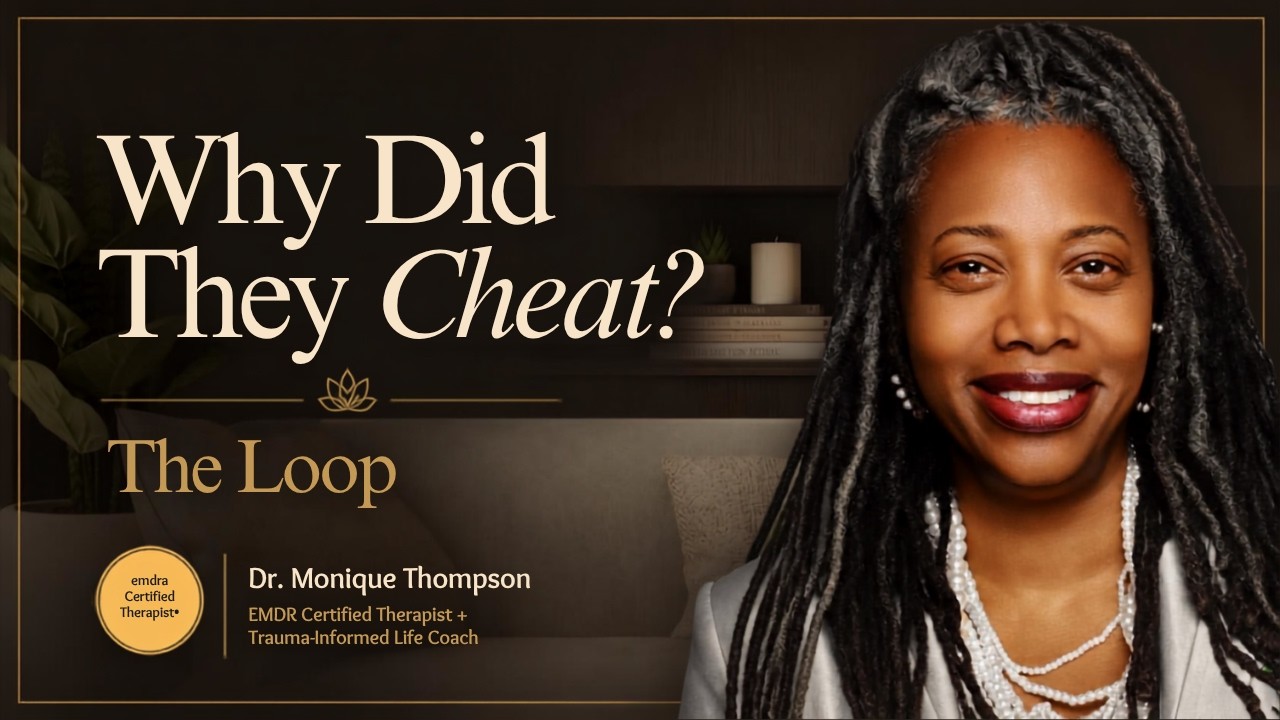
My partner said: I cheated because we weren't having sex. The "Why Did They Cheat?" Loop