Gharsat Amal 4th yr - First session (Intro and start GI)
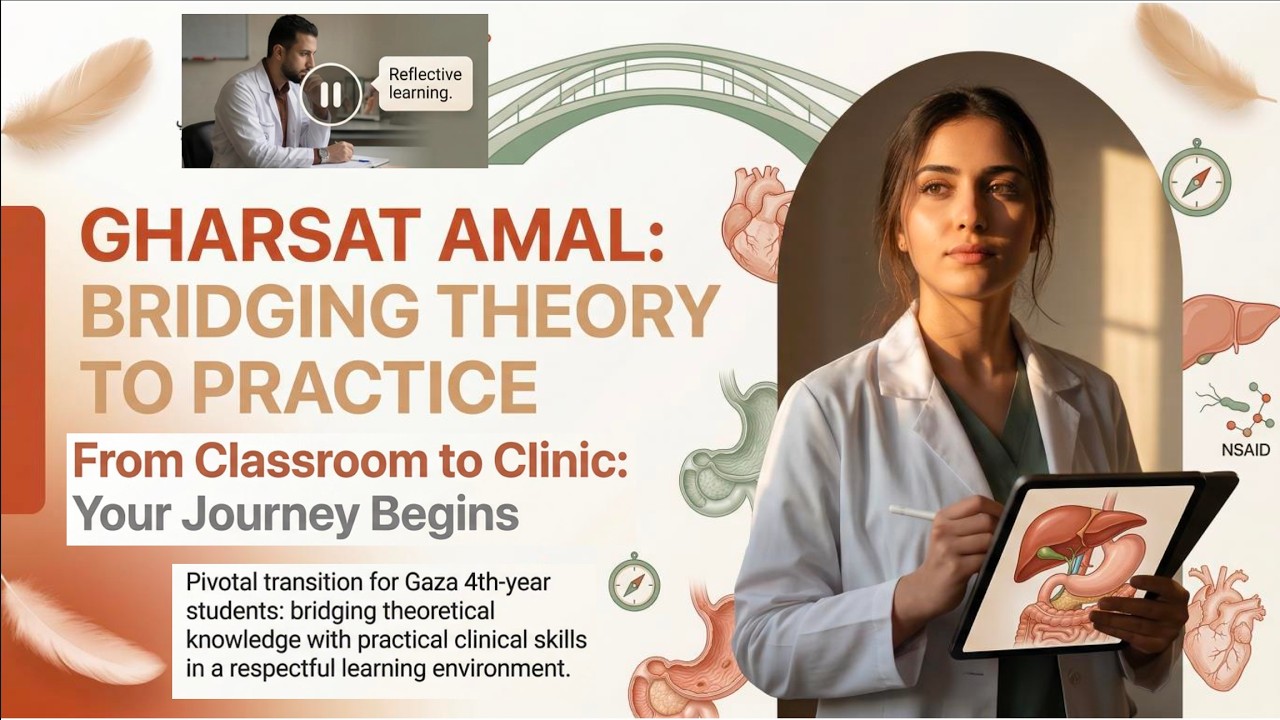
Dr. Hassan Bencheqroun teaches 4th-year medical students how to move from theory to patient care using OPQRST and SOAP frameworks. The session covers peptic ulcer disease, liver disease, portal hypertension, and emergency GI bleeding management including Glasgow-Blatchford risk scoring.
Chapters
Okay. يلا بدنا نبلش. Good morning. سلام عليكم. Good afternoon, everybody. Depending on when you are seeing this video, we are starting غرسة أمل. This is for today, for the third year moving to fourth year. Congratulations. ما شاء الله عليكم. I'm glad that the process is still ongoing. وتصدحيات كتيرة يعني إحنا مفتخرين فيكم والله. And I hope that things get better. We will continue to help as much as we can. The purpose of these sessions, الهدف. إنه we do what I call bridging theory to practice. شو معناته؟ معناه إنه you are starting to go, إن شاء الله, from didactics and books. To the hospital, you're starting to see patients. أولاً لما بندرس بيكون عنا المهم إنه نفهم ال pathophysiology، نفهم how things integrate with each other. لكن لما بنشوف العيان ولا العيانة تختلف لأنه we need to actually ask the patient to tell us. And then translate what they tell us into knowledge. بعدين the knowledge we take it into decision, and then from decision we take it into action, and we have to assess the results. So how are we going to start today? في رفيق ولا رفيقة منكن قالولي إنه ابتديت بالجهاز الهضمي. So today we will split into two sections. The section الأولى حتكون على bridging theory to practice. How can we get information from patients? And that means how do we ask patients questions, how do we extract that information and organize it from patients? And that's what we will be doing in the first half of our session today. And then after that, we will start with some Arabic and English mixed talking about الجهاز الهضمي. So today's session فيها كيف نسأل المرضى الأسئلة، كيف نستخرج منهم المعلومات، وكيف نرتب هالمعلومات وننظمها. منشان يكون عنا تشخيص للمرض وبعدين we might even talk about how to give challenging news, bad news, terrible news to people. We won't do that today, but we will do that next time. So we will start with the first half is The art of summarizing a patient case. When we ask patients questions, how do we organize that from the discussion to the patient? Now, we all know that How we ask patients? We ask them questions about their symptoms. We ask them about when did the symptoms start, how long, what is the intensity, all of this, right? So this is not about the— this is not about the basics, although if you want the basics, I'm happy to give them to you. But If you are listening to the patient, sometimes listening to the patient's story is the easier part, and the hardest part is to translate that into medical. ف إذا بدكم الأساسيات أنا ممكن كل سرور بعطيكم إياها. بس إذا كنتم فعلاً تسمعوا للمريض أحياناً سماع قصة المريض هو الجزء الأسهل يعني الأصعب أنه صياغة قصة المريض فهالجلسة حتكون بتراجع كيف نسمع قصة المريض ونصيغها into medical information How to bridge theory to practice زي ما بقولنا أهلاً أول أدهم مرحباً نحن بنحكي النص الأول على bridging theory to reality والنص الثاني حنبتدي إن شاء الله الجهاز الهضمي لأنه I heard you started with it فwhen we start reading in textbooks. Textbooks are clean, but in real life, especially in places like where you are, there is someone who may have come from afar. They moved, they were displaced. The family that they have, they, they may not be there to tell you. The patient themselves, they may be silent, or they may be talking too much, but not the important stuff. Their medical records, they're not available. They tell you, "I had a tumor." They you don't know if this is a tumor. It was an abscess or it was a cyst. So your job is to bring order without erasing the reality of the patient's situation. I will be trying to go between English and Arabic. So العرض القصة بالكتب يكون بشكل مرتب وواضح بس بالحياة الحقيقية خصوصا في أماكن مثل يعني where you are المريض ممكن يكون جاي من مكان بعيد تهجر أهله منهم available ما في المعلومات اللي ممكن to confirm اللي تركز وتوثق المعلومات اللي يعطيها لكم شغلنا إنه نجيب ترتيب وتنظيم لهالقصة وكيف نقدمها لل attending physician، لل professor ولا البعض بعضياتنا في كمان لما بنروح على البيت وبيكون واحد shift اللي بعدينا how can we present that story to them؟ so three questions. Three questions very important. Who is the patient? Why are they here now? What do you think is happening? Those are the only three questions that you have to answer. لأنو sometimes we complicate things for ourselves. So مين المريض؟ ليش موجود هون هسا؟ And إيش بتوقع إنه اللي بيصير معه. And then when I finish, I have to give a summary. And I have to give a summary so that I can convey the information to the other person. And the summary, we're going to talk about how you convey that. We call that a one-liner. One liner means that it's a summary لازم يكون ملخص وهالملخص يكون بشكل واضح فالone liner معناته انه بيكون قصير جداً بس ما يخليش أي information اللي مهمة أول بشغلة بتبتدي بها ال age و demographics very important. If you start telling your friends or your colleagues or your attending physician this is a peptic ulcer disease, ما بينفع لأنه peptic ulcer disease in an eighty-year-old is not a peptic ulcer disease in a twenty-year-old. A peptic ulcer disease in someone who had peptic ulcer disease in the past is not the same as a peptic ulcer disease in someone who just had the first time. So نبتدي بال-age and demographic. بعدين ال-context. For example, مبارح كان عندي عيانة. إجت بال what we call it mesenteric ischemia ولا ischemic bowel في عمرها سبعة وستين سنة. And she had just come from the Philippines. 18-hour flight. So you have to think to yourself, is dehydration something important here? So the context is important. And if it was somebody, for example, who was a smoker, then the circulation of smoking is affected by that. ف السياق مهم. ف السياق إت ال ال one liner مهم يكون فيها العمر and فيها ال ال يعني السياق الcontext. What is the chief problem? Why is it important? Why is the chief problem important? Because sometimes when a patient comes to the hospital, we discover something, and then we have to go back and say. What was the symptom that brought them to the hospital? I will give you an example. The example أول إنه كان عندي عيانة ودخلت المستشفى and she was telling me they were telling me that her problem was hypokalemia. The potassium كان ناقص عندها. We correct the potassium so can we get her out of the hospital? Okay, well congratulations. We corrected the potassium. But at the same time, nobody walks around with a sign that says my potassium is low. So سألت كلون الممرضة، medical students, everybody. No one could know, could tell me why she came to the hospital. لما سألت العيانة قالت لي كان عندي abdominal heaviness. My belly felt achy. It wasn't pain; it was just heavy. And I turned around and asked everybody, فعمري سبعة وربعين سنة. Anybody who is middle-aged woman with abdominal heaviness, you have to check for ovarian cancer. It doesn't come to you, but you have to check it. For Eclon, has anyone done an ultrasound or a CAT scan in her belly? No one did. And when we sent her, we didn't find ovarian cancer, but we found abdominal bleeding. And then I told them, do you still want me to send her home? So she came with the chief problem of abdominal problems. They discovered potassium and they were distracted. With the potassium. Okay. So chief problem is important. وبعدين time frame. If you have acute chest pain for two hours, it's not the same as acute chest pain for two days. فلما you listened to the patient and you summarized everything, and you want to summarize it to yourself, one liner في إيه؟ 45-year-old woman from Gaza City with no known chronic illness presenting with acute chest pain for 2 hours. 47-year-old female coming in with abdominal pain found to have potassium that is 2.7, now corrected, but still waiting for imaging of her belly to see why she had heaviness. But yeah, I need to tell you If you have any problem to answer, understand something, you can use the chat, or you can come off mute and interrupt me, or you can do reactions that are at the bottom. Either way, please communicate with me because I want this to be for you. I did not want to bring this from another place and make it Yours. So what is the golden rule? The golden rule is, if you conclude a diagnosis, the clues must already be in your story. What I mean by that is إذا وصلنا التشخيص. معين لازم كل الدلائل تكون موجودة من الأساس داخل القصة اللي إحنا بنعرضها. Okay? Why is that? If you have one thing that leads to diagnosis, check again. You might be missing something else. What are some of the frameworks to think? The SOAP framework. S O A P. I I'm talking about framework because when we panic at the patient bedside, it helps to have something in mind to go back to. Okay? ف ال framework معناته إطار تفكير. ل لما بنتوتر بنكون بال مع ال attending تبعنا ولا مع العيان ولا العيانة بسرير المريض بيساعدنا يكون عنا إطار تفكير واضح. لنرجع له. ف this one is one example subjective objective assessment and plan subjective what the patient says objective what we see assessment you will integrate everything plan what we will do okay I'll say it again subjective what the patient says in context objective is what we see What we measure and what we confirm. Assessment is what we have integrated and what is the possibilities, what we call differential diagnosis, and plan what we will do next realistically. And I add realistically, and no, we do not have the means to do what we want, so we check for alternatives. فالسوبجكتيف اللي المريض بيحكيه، الأوبجكتيف اللي احنا بنشوفه بنقيصه بنقدر نتبته ونتأكد منه، الأساسمنت كيف نجمع هاي المعلومات مع بعض وما هي الاحتمالات الممكنة differential diagnosis التشخيص تفريقي وبناء عليه شو الخطة الواقعية اللي راح نعملها بعد هيك. Subjective, telling the story. We focus on the timeline and the progression, and we look at the red flags. Timeline and progression, and we look for the red flags. We avoid repeating everything verbatim, word for word, and we avoid listing the symptom without connecting them. شو معناته؟ معناته انه بيكون عنا خط زمني تطور الحالة واحنا بنشوف الـ red flags اللي هم علامات الخطر واللي بنجتنبه ان نعيد كل شي حرفياً كلمة بكلمة من العيان ولا العيانة The bada. Okay. The objective. Objective is selective reporting. You are not reading the chart. You are summarizing the evidence, the vital signs that matter, the exam findings that support or refute the hypothesis. And the key important labs or imaging only. For example, if somebody had a colonoscopy two years ago and they're here for a headache, we are not going to mention it at that moment. Okay? فا إحنا بننقل المعلومات بشكل انتقائي ومدروس. فا مش قاعدين ن نقرأ الملف كلمة بكلمة إحنا بنلخص الأدلة المهمة العلامات الحيوية اللي إلها معنى علامات الفحص السريري اللي بتدأ بتدعم الفرضية أو بتضعفها وكمان فقط التحاليل ولا الصور المهمة والأساسية أوكي the assessment is a summary where the clinicians put together the story That's where the students hesitate because you do not know much in your mind, but you know a lot. That's the most critical part. A good assessment restates the case in one sentence, puts together the differential diagnosis from most likely to most dangerous, and acknowledges the uncertainty honestly. Example? This presentation is most consistent with. Pay attention to most consistent with. We do not say is. We don't know. Okay? فا الطبيب ولا الفريق الطبي بيجمع القصة كلها مع بعض وهون sometimes بنتردد لأنه الـ Assessment اللي بيكون عنا اللي مهم بنلخص الحالة كلها بجملة واحدة بنرتب التشخيصات التفريقية من أكثر احتمالاً لأكثر خطورة وبنعترف بصدق لو ما عندنا يقين للـ Diagnosis طيب El plan. We think in limits and constraints. شو معناته؟ Plans are contextual. A plan in London is not a plan in South Africa, is not the plan in Gaza. A diarrhea in Japan may not be the same as diarrhea in Gaza. It can be, but sometimes it's not. We have to look at priorities. What must happen immediately to stabilize the patient? Safety. How do we keep the patient safe within the current limitations? And the contingencies. If it didn't work, what is the backup plan? What's Plan B if the primary intervention fails? Okay. So when we speak of the plan, We have to make sure إنه الخطة دايما مرتبطة بالسياق الcontext فالخطة فيها إنه نركز على الأولويات شو الأشياء اللي لازم تصير فورا لحتى نثبت حالة المريض وبعدها safety السلامة كيف نحافظ على أمان المريض ضمن الإمكانيات والقيود الموجودة حالياً. وبعدين الخطة البديلة أو الاحتمالات الاحتياطية إذا الخطة الأولى ما نجحت شو البديل؟ Okay? Okay. Any questions so far؟ أهلاً زينب سهام أولانا. مرحبا فيكم لنعيد مرة تانية. We're going to start GI in just a little bit. Right now what we're discussing is theory to practice. You have the chat. ممكن إنكم تكتبوا فيه أسئلة. لو if you cannot, please put questions in WhatsApp. If you cannot, please come off mute and ask me. If you cannot, just give me reaction yes, no. Question, whatever you do. Okay. This session is for you. It's important for me that you, you enjoy it and you find it's helpful to you. Okay. The Some of what I saw in your, in your curriculum, I saw that you were discussing how to take a focused history. We're going to spend a few minutes on how to take a medical history. Please tell me if you do not see me sharing. Okay. فمنهاجكم شفت فيه focused history ووحنحن هنكلم على صياغة ال medical history. I even saw the OPQRST. So let's talk about this for a second. Why does it feel hard? When I was a student, I did not struggle because I lacked knowledge. I struggled because the patients talk like humans. They don't talk like textbooks. They jump between ideas. They use vague words. And they suddenly do not fit in our mind what we studied in the textbook. ف the gap between the classroom and the bedside can be overwhelming. and so أنا مشكلتي كانت عندي إنه كانت عندي معرفة بس المريض ما بيحكي مثل الكتاب بينتقل من فكرة لفكرة بيستخدم كلمات عامة ومبهمة فج فالقصة بتعود راكبة في بالنا بالطريقة اللي درسناها في الكتاب، بس ما بنعرف كيف نقرب القصة اللي بنسمعها مع القصة اللي درسناها. What a focused history is actually for. A focused history is not information collection. It's not every detail. It's a decision-making tool. It helps us make a decision. If it doesn't change what I do, it's not helpful. And we focus on clarity over completeness. My goal is understanding and action, not documentation. فإحنا العرب we are storytellers. We tell stories, but sometimes stories are distracting from what is important. فالتاريخ المريض بيركز على أنه تساعدنا على اتخاذ القرار مش مجرد جمع معلومات وتفصيل اللي موجود فبيساعدنا نعرف شو لازم نعمله إذا كانت معلومة ما رح تغير قراري أو ما رح تقتر على اللي بدي أعمله فهي غالباً مش مفيدة في هاللحظة. So that's what the focused history is. أهلاً محمد مرحبا. The mental model فصياغة اللي بالنا الإطار التفكيري لازم نحكي عنه لأنه الإطار التفكيري هو اللي يكون بيساعدنا لما نكون أبالت المريض وفي استعجال ولازم ناخد قرار يعني بهالساعة very very immediately. So it's important to have this framework. The framework, clinical thinking framework, is what could harm this patient today? Number two, what information would rule that in or out? Number three, what am I still confused about? After listening, this helped me a lot when I first started. Helped me a lot. شنو معناته؟ أولاً شو الأشياء اللي ممكن ضرها المريض اليوم؟ ثانياً شو المعلومات اللي ممكن تساعدني أثبت هل احتمال ولا أستبعده؟ والثالثة بعد ما سمعت المريض شو الأشياء اللي لسه أنا مش واضح عندي فيها؟ لو بعد القصة اللي قال لي المريض ولا المريضة لستني يعني مبهم. I'm sorry, you said you had pain three days ago, but you were just telling me about your daughter's wedding last year, and you said you had pain there. So it was three days ago or one year? I don't understand. فهمت علي؟ So it's you who has to repeat to the patient in order to clarify. فهل لحظة؟ I it's not important to be polite. You still have to be polite, but you have to also be a doctor. It's okay to tell the patient you said this and you said that. They contradict each other. Which is it? ممكن تكون polite إنك تسأل المريض بس you still you cannot be shy about it it's your job. سا فالالتهذيب it's not important أكيد لازم تكون ضل مهدب والمهدبة بل لكن لكن لازم كمان كونوا أطباء فعادي جدا نقول للمريض أنت حكيت هيك وبعدين حكيت هيك. وفي بناتهم تناقض أي واحد فيهم هو الصح. Okay, so what would the harm patient today? What could help me confirm or deny that? And what am I still confused about after listening? فال O P Q R S T فيها is is important onset when and how it started quality what is the character and description Severity. What is the impact and intensity? Provocation. What makes it better or worse? Radiation. Where does it travel? And timing. What is the pattern and duration? This is not a checklist. I want you to do it عادي يعني as a as a conversation. فا نبتدي بالبداية. Whatever symptom chest pain vomiting headache dizziness double vision falls passing out كله شو البداية؟ أنت بلشت وكيف بلشت؟ الطبيعة ولا الوصف كيف المريض بيوصفها وشو نوعها؟ الشدة قديش تأثيرها وقديش قوتها؟ العوامل اللي بتزيد ولا بتخفف؟ الانتشار لو كانت أعراض ولا ألم كيف بيمتد لمكان تاني ولا إمتى الوقت أو النمط الزمني شو النمط تبعها أديش مدتها so هدول ال O P Q R S T let's do it in an example okay if it's chest pain when did it start what were you doing number two does it change with walking Or when you rest? Number 3, how would you describe it without saying pain? Number 4, does it travel anywhere? Jaw, arm, back? Number 5, how bad is it at its worst on a scale of 1 to 10? Number 6, has it been constant or does it come and go? Many of you know that my father is in the hospital and he's fighting for his life. He gets better. He's not getting better. Currently, he's in the hospital. مبارح أحكيت معه بالتليفون وقال لي I have pain. فهو عنده cancer يا حرم. For pain, of course he's gonna be pain. بس I need to know which pain. Is this new pain? Is this old pain? فإذا كان عنده ألم في الصدر كان عنده ألم في الصدر فسألته إمتى ابتدى؟ وشو كنت بتعمل وقتها؟ فقال لي كان نايم. And a pain that wakes you up from sleep is very very dangerous. You can't just let it go. A pain that does not wake you up from sleep is not as bad. هل بيتغير مع المشي ولا بي لما بيرتاح؟ كيف بيوصف بدون ما يقول كلمة ألم؟ It's very important. فقلت له Dad, is this pain, or is this burning, or is this pressure, or is this crushing, or is this a needle? What is pain for you? This is important. Again, the question is: بدون ما تقول ألم، هذا وجع ولا حرقان؟ ولا ضغط ولا عصر ولا كتما ولا زي وخز الإبرة شو معناته pain you have to help your patient articulate the words to describe the symptom okay number three سألته كيف بتصف بتصف الألم بدون ما تقول ألم نمبر فور هل بيمتد لك لمكان تاني للفك للدراع للظهر؟ أديش شدة الألم في أسوأ لحظة على ميقياس من واحد لعشرة؟ وهل كان مستمر طول الوقت ولا بيجي بيروح؟ Severity alone is misleading. Context matters. 3 out of 10 chest pain with exertion is more dangerous than 8 out of 10 pain that you can reproduce on palpation. Always connect severity to physiology and functional impact. Okay? It is more concerning to have 3 out of 10 chest pain With exertion, and it's coronary cardiac pain versus ten eight out of ten chest pain. But if you press, it comes back. That's inflammation. Okay. So الشدة لوحدة ممكن تكون بتضلل تفكيرك. السياق مهم. الألم الصدر اللي شدته ثلاثة على عشرة بس. بتظهر مع الجهد ممكن تكون أخطر من ألم شدته ثمانية على عشرة بس أنت قادر تعيده أو تستفزه بالضغط على المكان لما بتفحص المريض دائما لازم نربط شدة العرض بالفيزيولوجي وتأثيره على المريض. Any questions so far? Anything you have not understood? Is this what you see every day? Ahlan, Suhaila. Is this every what you see every day? You can put it in the chat. You can put it in the WhatsApp. بس أرجوكم لو كان لو ممكن إن كنت تحاكم معي و وال twenty minutes left we are going to go into some of the GI symptoms. That we can discuss. And what I will be doing اللي بسويه إنه خلال الأسبوع زي ما شفته حكون بعمل exercises تمارين وفي كمان مرات بنتحاكى لأنه الإنترنت وال time zone الاختلاف بالتوقيت ف لازم يكون بناتنا interaction that is different. ضحة بشكرك كتير لساتكم ما نزلتو على المستشفى لما بتعرفوا. أوكي طيب هيدا بساعدني كتير. So we're going to move to GI. Is it true انه هالأسبوع بتدرسوا الجهاز الهضمي؟ Is that correct? And I'm going to open. صحيح في بعضنا بيدرسوه طيب okay صحيح يا دكتور إحنا بندرس جاي قاعدين حالياً يعني طيب الحمد لله طيب okay then we're going to be talking about بشكركم كتير هيدا بتساعدني لأنه في اختلاف بين اللي بعرفه أنا بالمغرب ولا بأمريكا أنا درست بالمغرب فإحنا كمان عنا سبع سنين تمان سنين بس فيه اختلاف وبعدين كان عندكم الله يكون فعونكم توقيت تتغير فإن لساتكم رحتوا من سنة الثالثة للرابعة فكان عندي perception different perception and I thought you were already in the middle of the year فأنتوا بتساعدوني كتير لما بتقولولي شو اللي بيصور معكم هالأسبوع الأسبوع الجاي إلى آخره طيب We are going to go into Continue to share. فلما بنحكي على الجهاز الهضمي، الجهاز الهضمي context in GI is very important. سلام عليكم أهلاً إسلام مرحباً. You came at the right time. We are just starting GI. فا it's very important إنه نحكي على السياق context is important for example ال peptic ulcer disease في رمضان is different from peptic ulcer disease خارج من رمضان physiology of the patient is different okay so السياق مهم كتير القرحة الهضمية في رمضان مش بضرورة تكون نفس القرحة الهضمية خارج رمضان ولو في واحد بيجي عندي بأبدومينال pain during رمضان I think about if abdominal pain happens while somebody is fasting I think about gallbladder I think about peptic ulcer disease. If they're not fasting, it could be something else. Okay? The context is extremely important. PUD is peptic ulcer disease. Peptic ulcer disease. What causes it? لما كنت بالmedical school, it was important to know that we used to think. We used to think in peptic ulcer disease is stress. We still think that sometimes. I used to read papers of some that says peptic ulcer disease ممكن يكون infectious cause, and we used to laugh at this. Turns out it was true. The cause of peptic ulcer disease is an infection, Helicobacter pylori. The mechanism in no, the H. pylori disrupts protective barrier and stops prostaglandins. Are you aware what prostaglandins are? You can just give me thumbs up here. You can just put something in the chat. Yes. Okay. فالاهليكوباكتر بايلوري الجرثومة بتخرب الطبقة الواقية في المعدة وهذه كمان نفس ال ال process اللي ال NSAIDs nonsteroidal anti-inflammatory. What they do is they inhibit prostaglandins, which protect the barrier, and that causes epigastric burning. Something very, very important: if someone has abdominal pain, if someone has abdominal pain that improves with eating, think about peptic ulcer disease. What is the danger? We talked about red flags. علامات الخطر. Bleeding, perforation, and obstruction. Okay. فمرة تانية لو كان في شخص عنده ألم في البطن بيخف مع الأكل لازم نفكر بالقرحة الهضمية. And when you talk about the patient When we ask the patient, we get the story of the symptoms— O, P, Q, R, S, T— onset and radiation, etc., intensity. And we also assess the risks. What is the danger now? What is the danger later? What should we do now? What should we do later? And what is our plan B? So what do we do? أولاً نسأل المريض نجمع قصة الأعراض الـ OPQRST كمان بنفس الوقت بنقيم المخاطر شو الخطر الموجود هسة؟ شو الخطر اللي ممكن يصير بعد شوي أو لاحقاً؟ شو لازم نعمل الآن؟ شو لازم نعمل لاحقاً وإذا ما زبت الخطة الأولى شو الخطة البديلة؟ معناته إنه لو إجا عندي واحد بالبابتيك ألسر ديزيز and the vital signs blood pressure pulse everything is okay عندي وقت بفكر وعندي وقت بعمل التشخيص Tests, etc. لو إجا عندي واحد بال blood pressure eighty systolic, I don't have time to think. I have to stabilize the patient first. So you assess the risk. Then you do pathophysiology recall. So you start to look. Do they take NSAIDs? Do they take H pylori? Do they have any history of H pylori? And then you do initial assessment. You recognize any signs of shock. Blood pressure. If there is, you start to put IV fluids. You have intravenous IVs to establish, and you commence resuscitation. Once you stabilize, you monitor, then you do further testing. Okay. When you have different— the peptic ulcer disease, you have to think of something else. What else could this be? Do you know how many times someone had a peptic ulcer disease, but it was hiding gastric cancer? But just because you think of something doesn't mean that is what the patient has necessarily. You can have 2 things. You can have 3 things. Especially لو المريض بدخن، especially لو المريض بي بي يشرب كحول. We are not here to judge people. We are here to give them relief. ف we have to always think of other things. Okay? So بنسجل الأدوية، بنسجل نمط الألم وعوامل الخطر. وفي كمان diagnostic approaches. We need to do what is non-invasive. What is invasive? شنو معناته؟ Non-invasive. What's our blood tests? What's our imaging, X-rays, ultrasound? And then invasive is where we have to go with a camera because you have to put it inside somebody. Okay. A peptic ulcer disease. You cannot just give them proton pump inhibitors, which are PPI. Okay. فهدول. Yes, you give it to them to turn down the acid. But we already just talked about H. pylori. هلجرتوما لازم نا to treat it. ف we give them 14 days triple or quadruple therapy antibiotics two antibiotics plus PPIs. قبل ما روحوا ممكن زيادة الهستامين سبب خرحة. Yes and no. زينب ما شاء الله عليك very very good to think of that لأنه it made you think of the prostaglandins بنقول بالمغرب ما عندي ميسالك good job ف it's very important to think about Extra things, but it has to be excessive histamine, and it's very rare. So it makes sense, logical, but يعني مش very often. أغلبية الوقت بتكون الواحد بياخد aspirin ولا بياخد ibuprofen ولا بياخد NSAIDs. وشارلتانية إنه الـ H. pylori is very endemic. The infection with H. pyloric is very endemic. You have to think about it, and you have to treat it with antibiotics, and you have to educate the patient. Patients still think إنه ulcer is stress. Our mothers and fathers tell us that. رح تجيبلي قرحة بهالمشاكل اللي بتجيبلي لأن أنا أمك ويعني I'm worried about you فالأيج بايلوري هي عدوى ومنتشرة جداً ولازم نضل نفكر فيها فلازمنا نعالج بالمضادات الحيوية لازمنا نعالج بالبروتون بومب إنبيترز ولازم ثقافة المريض ونشرح له الموضوع ونشرح لها لأنه it's very very important إنهم يفهموا إنه بيغيروا إنه هيديل مش stress it's an infectious problem ولا it's تغيير الإطار الحيوي لل stomach شغلة تانية اللي بدي بحكيكم عليها إنه liver الكبدة في صياغ غزة وفي صياغ القدس وفي صياغ اللي أنتوا فيه حتى بالمغرب فيه أماكن بيكون أكثر من من أخرى وهي الهايبوتيتيس. هيبوتيتيس is another reason to have abdominal pain and that's also an infectious disease. That can cause liver disease later in life. What kind of liver disease? Liver cirrhosis. Okay. فلما بنحكي على ال hepatitis, it causes التهاب الكبد. هو سبب تاني ممكن بسبب ويكون ألم في البطن. هو كمان مرض مرض بالكبد في وقت بيعطيك هو infection اللي بتعطيك لاحقاً في الحياة مرض بالكبد وشو نوع المرض؟ السيروسيس تشمع الكبد أوكي؟ فلازم الواحد يفكر بالهيبتيتيس بس كمان الهيبتيتيس ممكن تحصل ب other causes of hepatitis في hepatitis medication hepatitis في alcohol hepatitis وفي idiopathic hepatitis في كمان autoimmune hepatitis شو معناتهم؟ معناتهم إنه التهاب الكبد ممكن يكون من infection من الفيروس بس ممكن يكون بسبب الأدوية for example acetaminophen tylenol اللي بناخد في ال للألم والوصداع لما بياخد واحد أكثر من ثلاث جرام باليوم this is the safe dose above which there is higher level of medication hepatitis التهاب الكبد ممكن يكون بالكحول، ممكن يكون بسبب مجهول idiopathic، ممكن يكون autoimmune من المناعة الذاتية الautoimmune يعني antibodies antibodies attack your own liver فكل واحد هدول we treat it differently okay We need to make sure that we also talk about upper GI bleeding. لما بيكون واحد عنده liver cirrhosis. لو بتتذكروا anatomy and vascular anatomy, and I'll pull something when I'm done. Okay. If you remember when there is liver cirrhosis. 1/4 of the 5 liters of blood goes through the liver every beat, which means that when the liver doesn't function, there is a lot that can happen, one of which is elevated pressure in the portal vein. And when there is pressure elevation, It backflows in the circulation behind it, which is circulation around the stomach and around the esophagus. Small blood vessels become big. We call them esophageal varices. Okay. When you have esophageal varices, they can burst. And they can cause upper GI bleed. That's one reason. Another reason, we just talked about it. When the ulcer eats the stomach until it reaches a blood vessel, and it eats the blood vessel, and you have upper GI bleed. فإذا بدت ذكروا لما بيصير تشمع بالكبد تقريبا ربع one quarter. الخمس لترات من دم بتمر على الكبد وهذا يعني أنه لما الكبد بيكون ما بيشتغل بشكل طبيعي بيصير فيه أشياء كتيرة ممكن تحصل واحدة من هالأشياء هي ارتفاع الضغط في الـ portal vein الوريد البابي لما بيرتفع هالضغط الـ high pressure in the portal vein we call it portal hypertension الدم بيصير يرجع لورا في الدورة الدموية شو وراء في المعدة وفي الإسوفيجس هدول الأوعية الدموية الصغيرة بتصير كبيرة ومتوسعة وأحياناً بنسميها إسوفيجيل فيرسيز دوالي المرء وبصياغة بسياغة أسهل بنقول I can pull it in a minute we have to make sure that we stabilize the patient Resuscitation. Okay, so أول شغلة number one assess A, B, and C airway breathing circulation. Once you stabilize the airway, once you stabilize the breathing, you go to circulation. You establish IV access. Okay, ABC number one, number two IV large bore access, number three. Fluid resuscitation. Number 4, type and cross-match. Number 5, transfuse and then calculate the Glasgow Blatchford score. That is a score for risk stratification. What is your risk of the patient to get worse? فهدول الإسوفاجيل فيرسيز، okay؟ لما بيكون عندك ال normal liver normal flow cirrhosis portal hypertension and then the small little venules small veins at the bottom of the esophagus and the stomach become big and because of that unfortunately They start to burst, and you can have esophageal bleeding. So esophageal bleeding, when they happen, sometimes we have to do a camera endoscopy, and we have to tie them up, ligate, band. Those are 2 words that we use when somebody's having upper GI bleed. And then you also give Beta blockers to reduce the risk, prophylaxis of bleeding. وآخر شغلة لو في hepatitis, for example from alcohol, for example not virus. I'm talking about hepatitis from medication autoimmune. We can give steroids to reduce. Hepatitis, the inflammation. Here's the problem. القسم طبيب لابن الديه. We say first, awelin, do no harm. Don't harm your patient. But it's impossible. I just gave steroids to reduce the inflammation and make my patients better. It can give you side effects. So. If someone is bleeding, we cannot give steroids. It will make the ulcer and the peptic ulcer disease worse. If they stop bleeding and they have hepatitis from medication or autoimmune, steroids help. So you have to balance out. بتقيم الbenefits or risk. Okay. So تلخيصاً أول شيء ال A B and C بعدها establish ال IV IV بتكون large bore واسعة number three إعطاء السوائل وإنعاش المريض number four بن بنبعث ال cross match A plus B plus A B plus O plus what is it and transfusion وبعدين بنقيس تقدير الخطورة. We have risk scores we have to do. And I'm going to try to finish with liver disease and cirrhosis. We talked about viral hepatitis. It has its own treatments. We— I will leave it to your professors to go into it. But if you want me to go into it in detail, I'm happy to talk about it. Just tell me in the WhatsApp. Make sure your patient's malnutrition. I'm sorry, it's we have to understand in your context. بيسياق وين إنتو المالنتريشن is something to always ask about. You have to look at the the muscle, okay? The muscle to see if the muscle has atrophied because of malnutrition. My father. Has liver cancer. So over the last few months, I saw muscle become thinner. Where is the muscle that you see that tells you immediately that there is malnutrition? The muscle between your hands and the muscle here in your temples. They become very thin. You start to see the bones emerging. Okay, hadul with one sight. When you see it, there is malnutrition. Why is malnutrition important? لأن في كمان something called refeeding syndrome. Refeeding syndrome is very important to understand when you have somebody who has malnutrition. You have to be gentle when giving them food. You can't just feed them a lot in the first day because then there is a tsunami, a wave of nutrition that comes in and it overwhelms their body. So when you diagnose malnutrition, you want to be very gentle with it. There may be limited resources. You don't have the endoscopy, ولا gastroenterologist, ولا you don't have all of that. So you have to always use your judgment. And you have to be locally aware. Is there an increase in hepatitis B and C? If there is, then you will know hepatitis B and C causes liver cirrhosis about 7 years later, or even liver cancer. Okay. And lastly, when we are talking about talking to our patients, We— I will have a session to teach you. It was one of the most popular sessions a few months ago, how to give difficult news, bad news. There is a way to deliver news to our patients. We grow up trying to save or to protect the emotion of our patients. Don't do that. You have to be respectful, compassionate, but honest. And we will be talking about some contexts and frameworks to use. سيارة لنقدم bad news to people with heart and with compassion. So لازم نتعلم كيف نوصل أخبار للمرضى. يعني ما فينا إنه نحاول ننقذ مر يعني عيان من من المشاعر تبعه. We can't protect them. The most important thing is the trust that they have in us, so we can't hold it back. And the day that I had to go to tell my father he had cancer. And it was terminal. I couldn't just walk away, and I couldn't just leave it to somebody else. I trained in this. I want you to train in that. لأن كلمة دكتور بهالكلمة our patients بيصيقوا فينا التقى اللي عندنا. لي عندهم فينا هيدا مسؤولية وأمان عندنا فلازم نتعلم كيف نقول لهم يعني bad and challenging news. Okay؟ لازم نحترمهم ونتعاطف معهم بس مع نفس الوقت نكون صادقين معهم. This is six o'clock. I try to give a little bit of from theory to practice, how to talk to our patients, how to frame one-liner and the story that they tell us. And we started gastroenterology, peptic ulcer disease, liver hepatitis and cirrhosis, upper GI bleed, and how to deliver the news to our patients and how to detect Some other things like malnutrition, etc. I want to open for 5 minutes before we start— stop. Any questions? And please give me feedback. Do you want something else? Do you want more videos? Do you want anything? You tell me. The slides, in about within the next hour, they will be posted in the WhatsApp, on YouTube. And on the LinkedIn page that is for you. Okay, everything that we discuss, you can have it. You will never be charged for it. Absolutely not. That is haram in my, in my book. I'm giving it to you. If you need something else, connect with me in WhatsApp if you are shy to do it in a group. If not, If you want to do it in the group, I will include it. بالمرور next time for everything that we do, and I thank you so much for coming in today. والله ألوبنا معكن. والله we just we are helpless. We're looking for what to do to give you the best chance in the world. بس you inspire us with بتدحياتكم, your persistence بالمتابرة. And يعني بسأل منكم إنكم تتفهموا معي لأنه حتى العربي اللي بحكي معه I try to change it لأنه مو المغربي ف I try to make things accessible to you لا شكر على واجب زينب بدعي لكم ولو سمحتم ساعدوني لو سمحتم قلولي شو لبدكم؟ Your needs. This is not some curriculum from school. This is you. You tell me what you need. It will be there, insha Allah. And I want to make you excited. There are two things I will teach you, insha Allah, very soon. I just want to make sure that I understand your your your context a little bit. أول شغلة الدكاء الاصطناعي. أول شغلة. You will. I will teach you how to use it. Insha Allah, you will become pro. أول شغلة، ثاني شغلة، research. I want to teach you how to publish. I want to teach you how to think of research. I want to teach you how to go from I have this curious question to this is the projects I want to do to which journal I want to publish. Okay? إن شاء الله. بس كان ال zoom مفاجئ بالنسبة البعض. هل في مواعيد محددة؟ تمام أبو الأدهم بعتذر منك لو ما كان هذي واضحة كل يوم السبت كل يوم السبت إن شاء الله لو ما قدرت لو كان عندي اجتماع ولا كان عندي urgency ولا شغلي I will talk to you on WhatsApp بس كل يوم السبت نفس الساعة ساعة ثلاثة توقيت غزة Zoom live like this, insha'Allah. And every time what ساعة بعديها slides حتكون هناك with Zoom recording on YouTube will be posted and we will continue talking on WhatsApp. This is ongoing مستمرة كل أسبوع بدون interruption إلا لقدر الله كان فيه أرجنسي ولا نفس اللينك اللينك تبع اليوم نفسه. Please أي رفعاءكم لو كانوا في الضفة الغربية لو كانوا في راملا لو كانوا في ما كانوا it doesn't matter this is not الأزهر this is النجاح الأزهر wherever إذا كانوا في لندن إذا كانوا في مصر هاي دي لإخوتي من فلسطين. Please share it with everybody. Every Saturday, insha'Allah, ساعة خمسة الصبح California، ساعة ثلاثة غزة. You will meet with me. Okay? ولو عندكم أسئلة Is there something this Saturday? Is there nothing this Saturday? اسألوني يعني اسمحولي أن بيّب المستشفى عندي مسؤوليات لل المرضى تبعي عندي امتحانات تبعي so I have my own life so لو نسيت ولا please just ask me in the WhatsApp I will answer it immediately عملكم في priority okay الله يعافيك محمد جابر والله يكون فعونكم والسلام عليكم ورحمة الله
More from Hassan

ICU From Both Sides of the Bed "If you could not speak,what would you want us to know?"







