Championing Purpose from Talent to the Marketplace
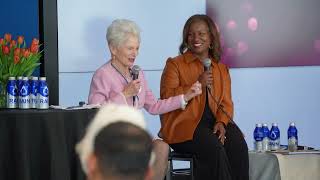
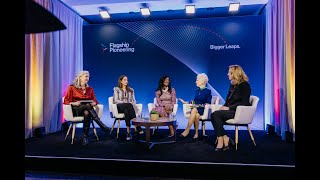
Panel discussion (YouTube) hosted by Edie Fraser featuring women leaders: Maria Colicurchio (Cindio), Lakshmi Ellas Varpu (Sanofi), Alison Maslin (Pinnacle Global Network), Justina Nixon St. Teal (IBM CSR), Krista Bourne (Verizon), and Crystal O'Malley (My Power Pack). Topics include pay equity and pay-transparency laws (e.g., California SB 1162), workplace equity analytics (Cindio: ~250 client companies, ~35% of Fortune’s most admired), ESG/CSR integration and measurable corporate commitments (IBM: ESG framework, large skilling and apprenticeship pledges), technology's role in pharma manufacturing and clinical trials (Sanofi: uses digital/AI to cut batch-release from ~21 days to ~2), purpose-driven entrepreneurship and employee benefits (My Power Pack caregiving app, B Corp), mentoring and scaling businesses (Pinnacle Global Network), partnerships (NYSE collaboration) and concrete calls to action (opportunity transparency, corporate sponsorships, accountability).
We've been talking about pay parity. There is a company with a woman CEO that stepped up and built it. And that's Cindy O with you, Maria. And is no longer. No longer can companies say they can't get the data. I know gender affair has done some. Everybody, some. But you have stepped up as a woman entrepreneur to build this company. Company for pay parity. And we salute you, Maria.
Thank you.
Go tell us.
Go.
Okay, introduction.
All right.
She said it all. So, hi, everyone. I'm Maria Colicurchio, and as Edie said in her warm welcome, I'm the CEO of Cindio. So we are a software company. We have a workplace equity analytics platform that helps companies analyze and resolve pay and opportunity gaps that are because of gender, race, ethnicity, or really anything companies have in their data. So they could look at sexual orientation. They could look at non binary. They could look at anything. And we serve today, 250 companies, about 35% of Fortune's most admired list. Companies that you know and recognize across all industries. Because as we've learned, this really is a ubiquitous problem that isn't just set for tech or health care or insurance or professional services or manufacturing or retail. It's everybody. And the companies that we serve have had a tremendous amount of momentum as pay transparency legislation has swept the country. They've had a leg up because they already know that not only do they not have pay equity issues, they also know how they're doing and tracking against representation goals. So we've set them up for success. They're seeing success, and we really believe in some of the stats that are now coming out around esg, that it absolutely drops your operating costs because it helps with retention. When employees see that you're not just performatively committing via lip service to some of these things, but you're actually doing it, and you're using technology and analytics to drive it and to prevent it. Ultimately, they are more dedicated to. They perform better. They stay with your company. They are a brand ambassador for your company, and we're seeing that in loads right now. So thank you. Thanks for having me.
Okay, let's continue.
Hi.
Please, an introduction.
Can we just say is Lakshmi. From Coca Cola to Boeing and now to Sanofi and to be the cio and so purposeful all the way. How honored we are to really have known you to be of purpose all the way along the way.
Well, first of all, I'm Lakshmi. Ellas Varpu.
And Edie.
You're gonna make me tear up because I call her my beacon. And our beacon of light. So I've had the opportunity to be with you all the way from STEM Connector, million women mentor in this, and you truly are a beacon of light.
I love you.
So as you said, and I started out my career at Procter and Gamble, so very excited and honored. For those of you who may not be as familiar with sanofi, we're a $46 billion pharmaceutical company. Most of us or our children have taken the vaccines. Our purpose is to chase the miracles of science. So searching for the cure for childhood cancer, Ms. We manufacture so many of the medicines that we take, both consumer health, but specialty care, and a lot of focus, even on the smaller kind of the populations that are impacted a little bit less than what you would think. So very much worldwide. And I didn't even realize the flu vaccine I got and the COVID vaccine also was manufactured by Sanofi. So you're seeing the dupixent commercials. But the point is, our first and foremost purpose is our patients and improving people's lives. So really honored to be here.
Great to have you.
Hi, everyone. I am Alison Maslin. I'm the CEO and founder of Pinnacle Global Network. And I met Edie at the WBENT conference. We sat together at one of the corporate tables, and then I was on the board about 15 minutes later. So I'm really honored to be here today and to be part of this amazing organization. So this year marks 40 years in business for me as a businesswoman. And I just found out from forbes that I'm one of 10 businesswomen to watch for 2023. It just took me 40 years to get here. So my company, now that I run Pinnacle global network, we're 14 years in business, and we mentor CEOs that are from the 1 million to 150 million in revenue to grow and scale their businesses. And I know many of you are founders, CEOs of your own company. And you know what the saying is, what got you here will not get you there. And it's like when you are in the jar, you can't see the writing on the jar, right? We're in it. We're in the box. And we are creatures of habit. And so the power of having a mentor and other CEOs around you to see outside of the box, to open doors to new opportunities, new ways of running your business, new ways of scaling your team, new ways to have a more diverse workforce. You know, all of the things that we're talking about today, that's exactly what we do. And really, really proud of that. I think being on the journey as a business owner for all of these years and in many different companies, I've had the highs, I've had the lows, I've been on all of the roller coasters that we've all experienced. Right. The pressures that business owners are under, it affects their health, creates divorce, all of those things. And so we really feel like we stand for the business owner, we stand for them because it is lonely at the top. So thank you.
Yeah. And there's two of us in my family, entrepreneurs. But thank you and congratulations. That's really terrific. Okay. Justina.
Justina.
So I've also known Edie for quite some time since stem connector and she's someone. Don't look her closely, don't look her in the eye because you will get signed up for something.
So.
Justina Nixon St. Teal. I head our global corporate social responsibility function at IBM. I've been there almost two years and within that responsibility is also ESG strategy and reporting and also our social impact communications as well. So IBM is 111 year old company. We put the first, I think black woman on the board in 1971. We released, yes, we released our greenhouse gas emissions in the 1970s as well. We released our first environmental policy back I think 50 years ago. So we've been a purpose driven company for quite some time and it was what attracted me to join the company as well. I think, you know, it was said already. We looked at some stats And I think PwC had done a survey and around 86% of employees say they want to work for a company that really cares about ESG issues. And we know the ESG issues are very connected to purpose, so really happy to be there. I don't know if you want me to add more right now, but we.
Keep talking about from CEO and we also, as you know, honored both IBM and Verizon. But it was so great to see the integration across the board of your entire leadership of Purpose, Justina. And you really built such a team together. Can you just maybe comment on that and then we'll go.
Yeah. So Arvind Krishna is our CEO. He became CEO I think maybe six months before I joined the company. And our strategy is hybrid cloud and AI. But as a company our purpose is to be a catalyst that makes the world work better. So you could not tie that better to the work that we're doing around corporate social responsibility and how we tracking our commitments around ESG as well. And earlier this year we launched an ESG framework that tied 10 big commitments across the entire business. And that's really how we're integrating purpose across the entire company. So we're building an ESG practice, we're working across the company. And again, this was said earlier, this is not just one function. It's every individual across the entire business that's aligned with those commitments and are integrating purpose and in the work that they do day to day.
And Jose, we're so proud of Verizon. Right. So, and again, honoring your CEO, seeing you of purpose, so many of your leaders with us.
Krista, thank you. Yes. So I am Krista Bourne, and I am the chief operating officer for the consumer group at Verizon. And I thank you and we are very happy to be a part of this. And of course, when you honored our CEO, that was wonderful. And our commitment to what we do is beyond the obvious. I think it's clear that we sell wireless connectivity, Verizon home broadband connectivity, but our mission is to build the networks that move the world forward. And when you think about networks, that goes beyond the hardware, it's networks of people, it's networks of what you care most about. And so we're also very focused on beyond connectivity. And I think in order to do that in a really authentic way, you have to have organic representation. I started my career at Verizon in the mailroom, and I moved my way through over 24 years so we could talk about representation and talent. I think that what gets measured gets done. And I think people need to be very deliberate, regardless of the size of the organization. I also think that as a workforce, now more than ever, we've been put on notice. So if you weren't paying attention, I think that we're all paying attention now. And I think there's something really brilliant about that. That's great.
Thank you. I'm a proud Verizon customer.
Oh, well, thank you. Thank you.
And we too. And Krista, you've really, as an entrepreneur, gone with purpose all the way. Tell yose with all of us why you have your passion for purpose.
Sure. I'm Crystal o' Malley and I'm the founder of my Power Pack and I have built a digital app. It's a community based digital app for caregiving. And it really is something where everybody in this room can support and empower and really take those that you love around you and support them with care. And so if you think about this, it touches all of our lives, whether it's a proud moment, a birth, or it's potentially Something a little less positive, a cancer diagnosis or something like this. And how do you connect your community that you've built? Not only your community of workers that you work with day in and day out, but the people that you have at the soccer field or somebody that's in your neighborhood. And how do you bring them together to rally around you and really lift one another up? And so there's not anything out there right now that exists that we can bring everything into one holistic place, all for the purpose of lifting someone up. You spent a long time building your network and when you need support, how do you get those people around you to rally? And, and so I really felt that was important. It was really a passion of mine to bring this to the world and we're seeing really positive results from it. And so we are intentionally a company of purpose. We're a B corp. And I think it's really important that we are in this world. It's self sustaining, that the model can fuel itself. It's not reliant on anything else. But everybody in this room. And so think about that person that you want to surround with love and care and those moments of friction thinking I should have called or I should have done this, like drop a heart, leave an uplifting moment. If you have more money than you have time right now, like some of you in the room I know, send a gift and send something that the person wants.
Right.
So can we connect people in meaningful ways? I think we can. And I think we can do a better job with it.
Right. Thank you. So I'm going to circle back to Maria. I don't know if I told you this before, but I started my career in Pay equity over 25 years ago in Canada. And I just can't believe we're still talking about this. Right. But we also, our survey says this is one of the top two issues that women face in the workplace. So tell me a little bit more about your assessment, but also any surprises that your companies that you work with, the 250 companies you work with. I actually spoke to one CEO a couple of weeks ago who mentioned how surprised he was that there was pay inequities in the organization, despite all the progress they've made in so many areas. So I'd love to talk a little bit about stories you don't have to identify companies, but just a little bit more about why this is still an issue and what, what, what customers are doing. Your clients.
Yeah. Thank you. Thank you for that. And she's, she's right The World Economic Forum just as we exited Covid estimated that we had actually made, we had eroded progress against the time it was going to take us to close the pay gap because of everything that happened during COVID as women were dropping out of the workforce and everything else that ensued amongst women and people of color that we had eroded the progress that we had incrementally started to make over time. I think there's a couple of reasons for this. Number one, pay equity used to be, and in large degree sometimes still is thought of as a risk mitigator. So when people think about pay and equity, they think about reducing the risk of a pay equity class action. And that is their motivation. And when you think about it that way, and the lawyers want you to think about it that way, you outsource it to a law firm and they do a remediation budget for you. And so what happens in a big Fortune 1000 companies, you outsource it to the lawyers and they give you back 150 page cross tab report which says here are the people for whom we cannot rule out that you're paying them less because of gender, race or ethnicity and here's to the penny, what you need to pay them, full stop. So if you think about that and the fact that that's how we've been doing this as corporate America for the past four decades, how could you ever learn anything about making progress? You don't learn anything about the underlying policies or behaviors that are driving the issue in the first place. You don't understand, to the degree that each department operates differently, you don't understand, we say we pay for performance, but do we or do we just pay top dollar to the best negotiator? That's what happens a lot of the time, especially in a tight labor market like today. So really I believe the problem still exists because that's the way we've been doing it. And so what we introduced was let's use technology, let's use innovation, let's innovate on this age old problem and not only tell people to the penny what they need to pay people, of course, but also what are the underlying policies and behaviors driving this problem? How do you fix them at the organizational change level and more so how do you moving forward, make sure that starting offer or promotion offer internally hits not only competitive pay, but also intersects that with equitable pay? Starting pay is the biggest factor in any pay equity analysis. And so until companies start looking at not just market pay and ingesting that as the full sale, what I should pay this person. But comparing that to what if folks in my company with the same skills, experience, level of expertise, make and set starting pay between those two things, they'll continue to backslide.
I've also heard that you say that like more than One third of U.S. workers will be under some form of legislation, pay transparency legislation, in the next year. Can you share a little bit more about that?
Sure. So California SB 1162 just passed on September 27th. It was, I think, seventh. We had new York City, New York, Rhode Island, Nevada, Colorado, Oregon, all passing pay transparency laws. California's is a little bit different and I'll tell you why. Most of the pay transparency legislation, it requires companies, in California's case, it's 15 employees or more to post a good faith salary range on job postings. So what that means is when you go look for a new job, you don't have to worry about setting your own salary expectations or having them ask you, breaking federal law, what did you make before? The salary range will be posted on the job postings. So a third of all workers will be impacted by just the states that have passed it so far. And so a lot of companies like Microsoft, like others are saying, you know what, let's just go whole hog into this. Instead of going jurisdiction by jurisdiction, we're just going to start posting our good fit faith, reasonable ranges on job postings from here on out. That's really good for employees, it's really good for candidates. It's really good for companies because now they have to think about, why do we pay what we pay? Because what's the first thing an employee's gonna ask you when they see a range for a job that's similar to the job they're doing? They're gonna say, I'm really low in that range. Why? And if management is not prepared to articulate why they pay people what they pay people, they will have a really tough of conversations. And I think what's interesting about California's law is that it also required median and mean pay gap reporting to the state. This is critical because what this reflects is the whole other side of the issue, which is representation, opportunity, movement, promotion. How are you moving people to the next level in terms of that pay band? And once companies start having to have opportunity transparency in addition to pay transparency, I think that's when we've made pretty meaningful progress.
Well, Johanna, I think that Jose, we'll probably see every company galvanized to what you're doing. Maria, let's go to stock.
You know, just before we move. But they just signed a partnership with the New York Stock Exchange, which is absolutely incredible.
I saw that. We should say something. Maria. Jose, that is really.
It's really incredible.
We said. We said we wanted to make history. Jose, today, I think I had to get that in. I think we made history. Can you tell us.
Thank you. And then I'll stop talking. I'm like, I'm taking notes on the rest of these incredible women. No. So we did. We signed a partnership with the New York Stock Exchange. The intent being the New York Stock Exchange wants to give their listing companies past listing or future listing opportunities to take action and measure the S&ESG. Because so far, the S has just been a big, opaque mushmash of nothing. What is social? What does that even mean? And what they want the S to be is go look at Cindio. The S to us is pay equity, cents on the dollar and your median pay gap, representation and opportunity. We want to help you take action and measure something against the S&ESG. And so they're really, really spearheading it and pushing it. So we were super proud of that and really excited to work with them.
So we all say congratulations.
Congratulations.
Really exciting.
Yeah, that's just great. So we should go. But I wonder, Lakshmi, you've led technology for so many companies now. Why aren't we soaring to see technology leadership when talent is so needed? You're going to find out technology on the next panel with our partnerships with what can we do? What are you leading with purpose with technology?
I think it's a. It's. We expected to see a lot more. Right. Whether it be our gender equity, whether it be compensation, and whether what we're seeing and driving in the technology in our stem and steam fields, you know, specific to Sanofi, which is a company of purpose, the reality is we need to have and we have the support of all of our executives. So our CEO Paul Hudson has made a commitment of over 50% of our leaders and executives, and we're held accountable. For those of us who are not aware, the headquarters is in Paris, France. So we talked about in the morning a little bit in terms of the impact that we have as we look at Europe and even how much further sometimes we have to go. Secondly, it's the first company in the pharmaceutical industry to have a diversity, equity, equity and inclusion board. So that actually has Dr. Rohini Anand from our own Women Business Collaborative. And finally, a lot of our ergs were focused on our gender, generations, pride, availability, and also in Terms of cultural and skills. So there's a lot of focus in that area, but specific to technology, if I may. And as you shared, I've had just the privilege of working for amazing companies like Procter and Gamble and Koch and Boeing and now Sanofi. Shelley, you can share even more about P and g. But even 25, 30 years ago, already so much that PNG was doing as I started my career there, on gender, on support, not many companies did that. As we look at these wonderful places, there is a thread of making sure that people who have accessibility issues have the systems, have the technology and that they are now very strong contributors to society. And even as we broaden that across, so those who may have low vision, low hearing, we're using technology and digital to help drive and make people's lives better. Using digital, especially when we were talking about consumer goods, was a lot of focus on if we don't have the right people and population in our own companies, how do we reflect what is there in terms of our consumers as we know so many of the women and the families and men to buy and drive that consumer goods. And then as we look at supply chain issues, making sure the products are where they need to be. As we talk about continuous replenishment around the world, not just in the US and how do we get product to over 200 countries in the world, coming into aerospace and defense and our veterans, so critical and important of the systems and as we know the importance of quality and how that literally impacts people's lives and for those who serve so well that we are able to give back to our own countries and how to our veterans, as far as defense specific to Sanofi, as I talked about, we make medicines. So I'm going to ask you two questions. First question is, do any of you know how long it takes for a medicine to go from a molecule to drug discovery research to our medicine cabinets? And I'm not going to let Diane Wiest, our digital R and D lead for Sanofi over there, answer that question because she will know it better. But any idea a multiple choice? Actually 10 to 15 and some to 20. You're exactly right. What Covid has done, unfortunately, not much good. But in here is shed that light on the importance of clinical trials. So we all are looking for gender equity and age and all that we're talking, unfortunately, there are diseases out there that don't make that differentiation. And so it's important that we have the right amount of people who are involved in clinical trials who as we look at discovery and we look at that information. We use digital. We use artificial intelligence, machine learning to use that data, to understand what are the effects of the medicine, how the efficacy of it, as we look at the digital markers and what comes out of it. It is so important and that we get our technology to the people who need it the most so that they can not only be a part of the clinical trials, but to use the medicines. So we've talked about telemedicine.
We.
We've talked about getting medicine out there to our patients. And then what is so important? I'll ask you a second question. I don't want you to raise your hands for this one. How many of you have been impacted by cancer or breast cancer? I don't need you to raise our hand, because I think everybody here has been impacted. So Sanofi makes breast cancer medicines. And as we think about supply chain and manufacturing, we need to get away from paperless. We need to go to paperless and Automate. So I'm going to give you a specific example of how important digital is. We make that breast cancer medicine in France. So normally it takes us 21 days to make a huge batch because there's hundreds and hundreds of pages that we have to go through for quality and the checks, which we must. And Sanofi does an amazing job, as does every other pharmaceutical company, by using what we call electronic batch records or automation and artificial intelligence. We are now decreasing that amount of time from 21 days to two days. So that's something that we've put in since I've been at Sanofi. That's what it means to say why digital and technology is important to what we do. So the last story I'll tell, and I'll end on this, is as I was touring that manufacturing facility, think huge stainless steel vats, people in all of the kind of quarantine type of a situation as we manufacture these medicines. So the young man who was giving me a tour, and it was just him, one on one, and he said, my mother is right now going through the breast cancer treatments, and every time she goes to the doctor, she tells him that my son works for the company that keeps me alive. And so there is no greater sense of purpose. And for all of what we do, all of us here, you are driving that. And I thank you from the bottom of my heart.
Thank you.
Thank you.
Okay, Allison, before Pinnacle, you have built 10 companies. 10 companies. I mean, my husband's a serial entrepreneur, and I think he's only at number four so 10 companies is a lot of companies. Tell me, has purpose played a role in any of these companies? And can you share a little bit about one or two?
Yeah. I mean, purpose is the driver of everything. And I wouldn't be here today if it wasn't for the purpose. I think obviously metrics measure growth, but purpose is really what drives growth. And what was said a little bit earlier, purpose was really is like our meaning in life. And so for me, I grew up in a very entrepreneurial family. My father, well, my grandfather had a store in Kansas City in 1955 called Maslin's and my father expanded that to 50 women's clothing stores across the United States and at the time was the largest privately owned chain of women's clothing stores. So he had such a passion for his work. And so I used to go with him as a little girl from store to store. And I think that energy really just, you know, came to me and I never really. I couldn't hold a job for more than two weeks. So I'll just be honest with you, that really was the thing. So, yeah, I think what I do now, you know, taking all that I learned over the years, I kind of. I built a full service ad agency in my 20s. We had clients like Ben and Jerry's and Supercuts and Charlotte Russe and we were really helping them grow and scale through marketing. But I didn't know how to scale my business and I was the control freak like a lot of business owners are. And working 247 and really kind of imploded from complete exhaustion. I had a car accident. And that was my real wake up call to say, okay, how do you build a scalable company that the CEO isn't working 247 how is it that these companies that I'm helping market that the CEO is not there with their hands in everything? So that really became my mission to understand how to do it for myself. And then once I figured out this formula, which I call now the scale IT method, we have been able to see this proven over and over with thousands of business owners that it works for them to build a scale scalable company and a team managed company that can thrive without them there. And as we're talking about purpose, as we're talking about really it's about the way we see it is building a team and a community of customers based on collaboration. And what we have been able to do at Pinnacle Global Network is to build a company based on collaboration. Meaning that yes, I am the CEO, but I really feel that our team is building this company. We have a team of CEO mentors. They've all built their own multi million dollar companies and they're at a place that, okay, I'm ready to give back. So we truly have all these leaders within the company, all these amazing brains to say, how can we change the world through business? And so, you know, gosh, business starts with a dream, right? It starts with an idea, it starts with an inspiration. How do we get it out into the world? There's a lot of support out there for startups, but I find there's this level of the forgotten entrepreneur, you know, that hits the ceiling and doesn't know how to get beyond it. So for me, for my whole team is really helping them realize their dreams in a much, much bigger way. And especially these last two years, I'll just wrap up with this. Going through Covid. I'll never Forget March of 2020. We will all never, never forget that time. And once the realization hit me, like, whoa, what was really happening here? We were all like, oh, no, this isn't going to be anything. And then we were like, oh, yes, it really is going to be something. My first thought was, these business owners are not going down on my watch. It was like the mom, you know, mama bear jumped in, you know, and I was so proud of my team because I never had to even ask. They jumped in, these mentors and said, okay, what are we going to do for these business owners to, you know, to maintain, to be able to stay in business, to get through this? And we did hours and hours and hours of pivot calls to help them find new ways to reach the market, create new revenue streams to meet the demand. And I can proudly say that 97% of those companies are not only in business today. Actually, we didn't lose one company, but they actually had growth. And many of them had record growth during the pandemic and now have a much more diversified company as we are obviously moving forward. And so as our role was to kind of keep them in a creative bubble, keep their head out of the news and negativity, and to really lean in and find new opportunity. And so, yeah, I mean, that's back to your question. That's what drives me every single day.
Yeah, well, and it begs the question, as you coach these business owners, is there a difference between women business owners and how they drive purpose and growth through their organization versus male business owners?
Yeah, well, I'm proud to say our community is about 70% female CEOs, and we do have 30% very heart centered male CEOs that we love having in our community. But I will say, you know, was really thinking about that. I think that women are definitely driven by their passion. We definitely see that it usually starts as something mission driven. The challenge and where they hit the ceiling is they don't know how to take it from that mission driven to okay, how do we actually put the hard strategy in place and see it as an asset and as an entity separate from me. And that is where they come up in the challenge sometimes in hiring and firing because we care so much that we see the potential in people, so much that will sometimes keep people that maybe are not a fit or maybe that are not as committed. And you know, what was the other thing that I thought about too when you were.
We'll take it that entrepreneurs are purpose driven. Why don't we go to two tech companies that have such purposeful C suite executives, right? In IBM and Verizon, You, Justina, from a CSR total perspective, you crypto, you have a business unit that you're really leading. So tell us from each of your perspectives because we admire you as C suite leaders, diverse C suite leaders that are just amazing drivers of change. So tell us on that driving purpose with your teams and back to your community.
Yes. So I lead a global CSR organization, around 150 people and sometimes growing because we're doing so many Tristan projects around the world. But I lead professionals, right, that are very focused on how do we leverage the solutions and the assets and the resources of the business to really demonstrate positive impact in the community. So we have a couple of really big projects that we lead. One is the IBM sustainability accelerator where we are creating, we are bringing in the solutions of the business. For example, we own the weather company. I don't know if a lot of people know that, but there's a lot of data that's a part of that, right? And when you look at smallholder farmers, for example, or even, you know, clean energy communities who lack clean energy, they need a lot of that data to make decisions, right? To support those vulnerable communities. So we are bringing in a lot of that data and a lot of those solutions and working with nonprofit organizations globally to support those vulnerable communities that are most impacted by pollution, by environmental threats, by lack of clean energy resources. We also have a program called IBM Skills Build where we made a 30 million commitment late last year that we plan to scale 30 million people by 2030. And again, this is a global commitment. We actually reached around 3.5 million people last year. But this is really around creating the talent pipeline. And in the US we are very focused on veterans, very focused on women, blacks, Latinos that have been excluded from the technology workplace. And not only providing the training and the credentials and the badges that they need, but also the workplace learning experiences as well. So a big part of our ESG commitment is around apprenticeships. We're going to invest 250 million in apprenticeships over the next five years. And this is really about making sure we reach untapped talent and people who have been excluded because a lot of companies have requested or, you know, posted jobs requiring a four year degree. And we all know that that's not always necessary to be successful in an entry level tech job. So we're investing in apprenticeships. We made the 30 million commitment. We are very focused also on D and I. So under our ethical pillar, we have a pay modifier where executives have an incremental bonus if we increase our diversity ranks. So those are all part of the 10 commitments that I mentioned that are part of our ESG framework. But overall, within my organization, I do have a lot of people who are passionate about this work. This is why they want to join the corporate social responsibility function. But one of the things that we care very deeply about, there are a lot of things to solve, a lot of things to solve. So as a leader, I try to get us focused, right? What are the areas that we really want to have an impact in. And that's where we aligned with the CEO and with other leaders to say education and skills and sustainability. And those are going to be our focus areas. And how do we drive against those commitments that we made. But otherwise, I do want to care for the fact that we have, although we have a huge team, we want to prioritize. Societal issues, unfortunately, are large. A lot of them are very challenging. And I think that's the way that we care for the team and make sure we can drive towards our commitments.
And Krista Born, Chief operating Officer of Verizon Consumer. You know, you've really got the talent in, but you've got the consumers out. Tell us about. And you drive that purpose.
Yes. So I have the great privilege to represent both sides of the customer equation, the internal and the external side of that equation. So in my world, my job is to really kind of deliver that last mile. So I have the customer service professionals, the sales channels and the experience layer in between. And our purpose is to connect you to what you care most about. So getting it right is pretty important. And then when you think about how your employees play a role, they've got to see themselves in this work. When you're doing the work that we're doing, it's so big, it's so massive. And it's really all of our day job, it's our life's work to make sure that it's more than just selling a phone. It's more than just connecting a tablet. This is a lifeline that someone's going to really rely on in a time of need. I often tell people it's the number that maybe is your first job on the other end. There's criticality to what we do. And so making sure that everyone in the organization finds themselves in this work is very, very important. And I think one of the ways that we do that at Verizon, and I certainly try to do it as a leader, is to make sure that we look like the communities we serve. And looking like the communities we serve does not mean it's one size fits all, and it means it's evergreen. And that is hard work. It's almost exhausting, to be honest with you. I mean, people and values and situations, they evolve and change all of the time. And so keeping up with that means that at the leadership level, you need to be very relatable, which means you need to have representation through all levels of the organization. Whatever diversity, whatever inclusion, whatever you're trying to lean into, you should look like it, you should feel like it. And at the end of the day, you cannot choose your boss, but you can choose your company. And you should go. And we should review our websites, our express commitments, because for me, I've got to bring those two things together. What is it that we want to be as we move through this navigating this competitive space? And who does our employee group want to represent? And how do we make sure we bring those things together? And that's what my team and I are focused on doing every day.
So I was navigating your website, and one of the things I found, and it really struck me was parenting in a digital world. And it was all about great tips for preteens and teens. And being in the middle of that, can you share this?
Passion comes from the workforce. So remember, our employees are our customers, too. They have lives, they're living, they have needs. And so our workforce tells us all the time they struggle, too, in the pandemic, you know, now there's a lot of screen time, and how do I balance that? How do I parent? We've got kids in the Background. So how do you manage someone who's working from home that's a completely different dynamic and deserves a different level of attention. So we pull these insights together. We work with outside organizations as well, and we try to bring those resources to the forefront. Like I said earlier, part of building networks that move the world forward is not just the wireless connectivity. It is networks around resources and things that people care deeply, deeply about. And we should all expect that. Our corporate dollar being spent is being spent being a good corporate citizen. And that's just one example how you can give that back.
That was very good. Very good.
And Yazak, Cristo, Malley. It seems like every company from their engagement would want to be part of my power pack to really. So share with us because. And what have you done? You've developed an app with Apple. What have you done? What have you built?
So our app is now on the App Store. It's also web based and it's. Thank you. So I think it starts from this vision of, you know, Kimber and who's here in the audience. She'll speak on another panel. Our good friend was diagnosed with breast cancer, and 10 CEOs from across the country were trying to navigate her journey. And only two of us lived in town. And so when the rest were kind of pouring in saying, hey, we'll give money, you know, I looked at our other friend Amy, and it's like everybody has to have skin in the game. We can't do this alone. We've got, you know, we're running companies, we've got families, we've got all these other commitments. And so looking for something was challenging. And the thing you guys that was most amazing is I think Kimber and I got more out of this than we ever, ever anticipated. It really just filled my soul to be part of a group caring for somebody going through a rough time. And it's like, I want to give everybody that feeling. I want to strip away androids versus iPhones. I want to strip away the friction of I don't know your address. Like, I heard several people worked at P and G in their last lives. Like, what about that coworker that you really loved? And if you heard they were sick, you want to send them a note, you want to send them a gift, but you don't want to ask them and put that another burden on them of what's your address? Or I haven't connected with you in 10 or 15 years. I just want to love and support you. Let's use technology to your point of let's use technology, build better systems to allow people to do that. So yes, I think asking everybody in here to like shout from the rooftops that there's now a digital app that we can do this. Like, let's do it. So the first five women I asked for run companies to partner with us as a corporate sponsor said yes right away. And the fifth company is a woman led company. They get it. There's 21 million Americans who are caregiving and working full time.
Right.
And they're not going, sorry, chief people, officers and CROs, like they're not coming to you to tell you that their best friend has cancer and they're going to be distracted at work and employees aren't coming to you to tell you this. They're literally on their own looking for resources. And believe me, 10 CEOs scoured the planet for something that could truly help. It's just not there. So how do we bring this? And that's the crazy part of being an entrepreneur. I have an experienced design firm and this idea was percolating like there's a better way to just lift your community up, remove the friction and get to what really matters. Like drop the heart. People like be a day maker. So I'm going to give my like little thing right now is like, I.
Know it's not a question answer session.
But I have a question for you, madam.
Couldn't that be a corporate benefit?
Oh yeah, sure.
Couldn't your app be a corporate benefit for employees? Yeah, absolutely. Yeah, absolutely. We would love it. Yeah, absolutely.
It would be awesome if somebody.
You know and just directly, it's really like no one's coming to you to ask you for this. So if you can bring it out to your people. And it's been phenomenal to see the responses. So a couple of the packs that I'm in personally that these people are, two of them are going through leukemia, one's going through breast cancer and them saying, on my worst day, I go back and read all the notes that everyone has left to give me additional lift under my wings. And these are people that they know and they're going back to reread these messages. And so I think we've talked a ton about community today and how to build it. And it's like that little note that you left, that little heart that you dropped, someone's going back to look at that and it's going to make their world. Like your small little moment has a profound effect on people. Not just in that moment, but long term. So yes. Thank you for the question you say.
Yes, I. We go all the way from pay parity and a new partnership with the New York Stock Exchange and really pushing to giving back to all the community and talent and all this of purpose. Right. So should we ask everybody what their action and what their request is? What do you think?
Yeah. What kind of what's next step for you? What's on the horizon? And also.
Yeah.
What actions are you going to take to meet some of the future trends?
I would just say with all the emphasis on pay transparency, my action and my hope is that we can start asking the question, what about opportunity, transparency? What about looking at opportunity, looking at movement, representation, promotion as the next step to move beyond just equal pay for equal work, which has become table stakes and move toward closing those medium pay gaps.
I think it's for me, connecting. I see so much of what we're doing and sometimes it just feels like silos. But I think being able to do what we're here, bringing us together, but also having people find their passion, never stopping to be inspired and never stopping inspiring others, to me, that's, that's my heart.
I would say collaboration also from a different perspective with the corporations, with your suppliers. So someone said it earlier, you know, sponsor, sponsor, sponsor your suppliers, support them to grow their businesses because they're going to become more capable, more resilient to get through the next many years, have more capacity to serve you, to be better vendors. And they will so appreciate that because they are so dedicated to you to support your growth.
Hi. So I have a couple. The first is when you think about DEI and all the work that we're doing and how we want transparent data regulations are coming, enhanced human capital requirements are going to come that will pretty much request that companies provide even more data for us to make decisions on. So I think that's a good thing overall. The other thing I would say is partnerships. We have a lot of public private partnerships, but also because we have a lot of clients, we are always seeking the private sector to join with us to have a bigger impact in the community. So if anyone is interested in working with us on some of the initiatives that we're doing around Skilling and also sustainability, we are happy to have those discussions.
I think you're going to have volunteers. Senator Verizon.
Yes, I would say my hope is that we'll all lean into the action that's available to you. Accountability, depending on where you sit, whether you're a people leader, an entrepreneur, or you're just contributing to a group, hold yourself and others accountable for the role that they play. And with every decision they make, it's so easy to forget that the choices and the actions of today will be the history tomorrow. So make it count.
Christa.
Never underestimate your ability to amaze. Be a daymaker.
Jose. And I want to say, does everybody in the room want to take one action based on all of this that you can connections, collaborations, and just help us? This gratitude of companies of purpose, I think is we all want to leave a legacy, but it's like, do it now. Right? And so, Gemma, thank you for everybody saying yes. So does everybody want to give Jose a great round of applause?
More from Edie
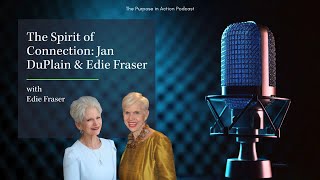
The Power of Purpose & Connection – A Conversation with Edie Fraser & Jan Duplain
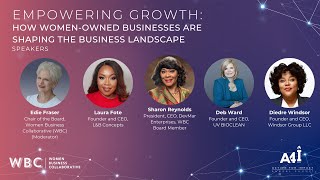
Empowering Growth: How Women-Owned Businesses Are Shaping The Business Landscape
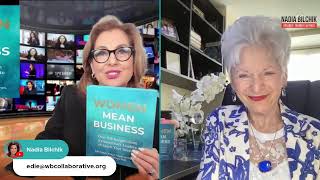
WBC A4I 2023: CEO Excellence in Gender Equality and Diversity Awards Opening Remarks Day 2