Driving Purposeful Leadership with Company and Community with a Panel of Experts
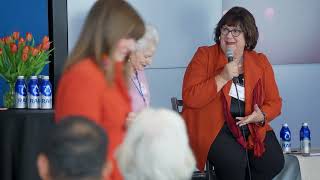
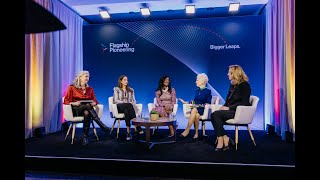
Panel discussion (Oct 2022) moderated by Jose with Edie Fraser and panelists Rachel Vinson (CBRE), Lauren Herring (Impact Group), Aileen Alexander (Diversified Search), Kelly Kollar (Kohlar Design), and Randy (USAA). The conversation explores how mission/principles drive company decisions, how purpose helps attract and retain talent, DEI practices and supplier diversity, place/space’s role in purpose (workplace design), and concrete community programs (veteran small-business support, clicks-to-bricks pilots).
You know, what we did with Diligent is take the S out of ESG and say we were really going to change. And when you look at it, just think about the human side of enterprise because unless we get that right, right. We're going to lose talent. Everything we've been talking about all morning. And the human side of enterprise takes it to the community, takes it to the suppliers. So yose, we're totally on board and yosea and I would like just to set the stage and introduce the panel because they're audacious and diverse. Jose.
Well, we're going to ask each of you to introduce yourselves quickly and then we'll get right into the questions. So maybe we'll start with Rachel. Sure.
Hello, everyone. So my name is Rachel Vinson. I work at cbre. I'm based in Dallas. I run our debt and structured finance group for the U.S. for those of you who may not know, CBRE is the world's largest global commercial real estate service provider. We have about, I want to say, upwards of 120,000 employees globally. It blows my mind every day how big this company is, yet it's maintained some nimbleness and some entrepreneurial culture. And it's the size of the Titanic but can turn at the speed of a speedboat, which is pretty amazing. So that's my story.
Well, and now she's in the executive suite. So we've seen her rise on the executive suite and we've had your CEO. So cbre, thank you.
Your support has been amazing. Edie.
Hi everybody, I'm Lauren Herring. I'm CEO of Impact Group and we are a global career and leadership development company. We are second generation owned. My mom, Laura Herring is our founder. She's here also. And in case you're wondering why there's two people that sound almost identical, Lauren and Laura. Anyway, so we were founded actually on the basis of supporting the spouse with corporate employees in their relocation process, helping the spouse find employment in the new area and settle in, which is also interestingly a very prominent aspect of what can support a DEI policy in the relocation process. Over the years we've added various offerings that support career coaching, but then also leadership coaching. And as a second generation women owned business, very passionate on the women in leadership space also. So that's a little bit of our story and we do this work globally. So excited to be able to push the mission. Since we're a very mission driven company, it seemed perfect for us to join the companies of purpose.
Can we say our theme as Gwen Young and All of us said was action for impact. So you got impact. And we go if we could just say a minute about Aileen Alexander and she'll introduce herself as the CEO of the Diversified Search Group. If it hadn't been for Diversified Search Groups supporting the idea of the Women's Business Collaborative early on, By January of 2019, when we were just starting to plan before the first board meeting in March, it has been indispensable for Judy Von Selnick, the chairman and now the CEO, to be there by our side. So we just all want to say thank you Diversified Search. Aileen, thank you.
Thank you Edie, because without you, who would be holding us accountable? And I'm a data geek at heart, so I love that you're always sharing the data. So thank you for all you've done in partnership with Judy, our chair and founder. And thank you for everybody here in the room and for just an incredible conversation thus far. It's just been just a really robust day. So yes, I am the CEO of Diversified Search Group. We are the 8th largest search firm here in the US and we are the largest search firm founded by a woman and now having the CEO only search firm in the top 10 with a woman CEO. So we're very, very proud of that. Our purpose is really grounded in cultivating new leadership for this changing world. We talked about that on the earlier panel. Lots going on out there. When we look at the economy, what's happening with technology, the geopolitical tensions that are out there with when we look at changes in terms of workforce expectations and what's happening in the workplace and then really operating with intentionality when it comes to DE and I and keeping that focus on performance and growth. And what we're proud of is that diversity is front and center and that we are placing leaders in the boardroom and across the C suite in Fortune 500 companies in mid market, venture backed, private equity backed companies, as well as nonprofit organizations, universities and healthcare systems. So we're honored to be here and to be in this conversation around purpose. So thank you.
Thank you. Can we also Margaret Milken, we do want to acknowledge you because you're a co chair of our advisory council, you joined Diversified Search, you head our insurance effort for Diversified for what we're doing for our whole effort for wbc. So thank you. Thank you to Joyce Baglio who also is working with us on our cyber. So thank you Diversified.
Kelly, thank you, Edie. I'm so honored to be sitting next to you today. I'm one of the newest Members here to the WBC board and I'm going to be co chairing the purpose committee. So I'm super excited about that. So I'm Kelly Kollar. I'm president and founder of Kohlar Design, where we unlock human insights so that we can unleash the soul of your company's purpose in space. So we're an interdisciplinary team of architects and interior designers and now data scientists where we really want to measure the impact of place on people. So how is your space? And I love that I have our CBRE partners here on the panel because I work so much with cbre. How do we actually use that capital expense of our real estate in this changing world? And what's happened since the pandemic? Our company has been studying in healing environments in health care space, the power of space for patients and families as well as staff. During the pandemic, we pivoted and pulled that model out. And now we've been measuring corporate, workplace as well as communities and economic development and corridors with the same model. So even though design is my hallmark right now, my differentiator is the power of this equity, inclusion and the power of actually measuring data driven analytics on how does space play a role in transforming your businesses. So thank you so much for having me here today. Can't wait to have this amazing dialogue. Thank you.
And Randy, I think the world knows and Eileen Alexander was just talking at usaa what you've done for veterans of this nation, what you've done for small business, what you've done. So we're thrilled that you are a strong gold sponsor and a company of purpose.
Well, thank you, Edie. And I also want to give a shout out to Margaret because it was probably about a decade ago that Margaret became my champion and advocate. And I see it as my role to pass that along and to be an advocate for this forum, for this mission. And it's a pleasure to be with you. It's seriously an honor. So I've been at USA now five years. It's been the most exciting and humbling part of my career, my journey with my family. It was 100 years ago this year that USA was founded by 25 army officers who were excluded. They could not find coverage for their families, for their insurance needs. They were underwritten and told no. So you know what they did? They were entrepreneurs. They said, we're going to start our own company. And they did that 100 years ago. And now we celebrate our 100th anniversary this year. We are 38,000 employees strong. 20% of those are veterans or the spouses of veterans. And we serve over 12 million members as the fifth largest insurance company in the United States. And we have employees not only in the US but also in Europe. So if we think about our members that are serving our country downrange on the front lines with the crisis in Ukraine, all of those crises, we are there to ensure their needs, to take care of them. It has been an absolute honor to serve now as the president of the PNC business. And you think about the things that are happening around our world. Supply chain challenges, raising the rates of auto and has anyone bought a car lately? It's pretty tough, right? Fix your home, all those challenges that are happening. It is the principal based companies that have a long term view that we really see as standing out for military communities and serving them with excellence. The winds are blowing that awful storm, the disaster with Hurricane Ian. You know, being there in the front lines to serve those families that served our country is a noble mission. So I always view it that USA has a heart and a soul and a long term view. We're financially responsible but ultimately here for the long run to serve the military, not only our members in their insurance needs, but also as employees. It's so important that we find ways for the military families to become teammates at usa. So it's an honor to be here today and to talk about our mission with all of you.
Wonderful. Thank you for your service.
Well, thank you all for the introduction and some of you have already touched on purpose, but going a little bit deeper because purpose means different things to different organizations. And I want to know a little bit what it means to your organization specifically, but also why is it so critical in your business to have to be purpose driven and what is the impact of that so far? So maybe I will start again with you, Randy, and work our way backwards and then we'll get into specifics.
You know, I think being principle based and mission based, I'll tell you, when I started at usa, I interviewed and I was blown away by kind of the process, right? But then you kind of wonder, is it really like that at USA when you enter those doors and when you become a teammate? And I'll tell you it is. And what I find is it is with every single action, every single moment that we can kind of drive that mission forward. So we start literally every interaction, every meeting at USA with a call to our mission. We start with the mission statement, why we're gathered for that hour to have this discussion how it ties to serving military Families and to our employees. And I feel like that's a real grounding during turbulent times because these are challenging times. We ask everyone from the C suite down to the front lines to adhere to that and to be part of that. We have in our PNC business 15,000 teammates. They're front lines, they're doing claims every day. They're answering the phone as an agent, serving needs. So it's really that frontline obsession that really has a connection to the member. We call them members, not customers. And really just taking every opportunity to reground in those principles. It would be very easy for us to kind of get off kilter during these times. But that mission moment, as we call it, is so critical and we've kind of been ingrained in it. And it really matters each and every time that we make it purposeful, that we are authentic with it, that we tie it to our why in the organization. So I think every action matters. We get all these at bats throughout the day to make the mission come alive. And that's how we ground ourselves.
Yes. I wonder if we'd just randy talk about because from your CEO across the board, you have such a committed talent. Tell us about it.
Well, we do. And it's our CEO, Wayne Peacock. He is our first civilian CEO, by the way, which speaks to diversity, right? I think that's important. And just to be clear, I didn't serve in the military. And I think that also speaks to diversity, that we want teammates that care about what the mission is and can relate to it. We view it as a craft. So if you're that frontline claims adjuster and I'll go back to military service. You know, this is one of the areas where we really see as a challenge for our industry, but I'd say more globally. So many of our military teammates, they find it really hard to make that connection into the civilian world. They're so talented, so confident, so committed, yet their skill set is just a little bit off from getting into the civilian world. So when we talk about talent, it really is important to find ways for veterans, spouses, teammates that may move three, four times even in a year, to serve our nation, to find a way into civilian roles. So we find ways through our development, coaching, hiring practices, having a diverse slate every time, to bring those military teammates in. It really kind of starts with that frontline role. One of our prior CEOs, he started on the front lines and that's where we really see the magic happen. And I just want to continue to kind of pound on that, you know, finding ways for veterans, those coming out of active duty, to get into the civilian world. It's a challenge with mental health issues. With that cohort, find ways to give them a chance because they're amazingly talented and they want to be part of organizations like all of you represent.
Randy, you've also done amazing jobs, right, to help entrepreneurs and veteran owned entrepreneurs, etc.
So there are 8 million small businesses in the US that are owned by veterans. 8 million, I think it's almost 9%. We view it as these one, they go serve our great nation and then they come home and they serve our communities. So at usa, actually Larry Williams, who's in the back, he's our general manager of our small business team, we actually launched small business insurance to take care of those veteran businesses. For the first time during the pandemic. That was one of our initiatives. We are serving small businesses. We're finding ways to continue to diversify. We started insuring those four wheeled vehicles. But there's so many things that our veterans are that make their dreams come true. Small business is one of those. Just remember, 8 million small businesses across our country owned by veterans who maybe couldn't find out their path in the corporate world and said, you know what, I'm gonna put out my own shingle and start my own business. So we're humbled and honored that we can serve them in their insurance needs.
Great, great.
Should we go to CBRE and then diversified and then impact?
Sure, sure.
So I think one of the, you know, I mentioned CBRE size and it's one of its greatest benefits and also one of its greatest challenges. And in addition to just being large in size, it's also incredibly diversified from leasing to sales, to finance, to valuations, to product property management, to project management, to facilities management, to our development arm. And then you enter in all of the various customer sizes, institutional, private, client, family, office, small, local, mom and pop. And then you enter into the equation all of the various asset types, office, retail, industrial, multifamily, hotels. And since the pandemic, everything is reacting differently. And then you enter into the equation the geography and what's happening in New York is different than what's happening in Kansas City. And so when we think about ESG and diversity and inclusion, how do we as a company make an impact and pull all of this together? And one of the things that I've been really impressed with with CBRE is their commitment to do this. And it's not just a three letter acronym that they're throwing around they're putting commitments out there and money where the mouth is, which is fantastic. And it covers all basis. And over the last couple of years, CBRE has done a really great job, I think, of really trying to understand what is at the heart of what's impacting diversity and equity. More importantly, and from a sustainability perspective, CBRE is the world's largest property manager with over 7 billion square feet under management. So you think about all of the suppliers and all the resources that CBRE has the power to engage and control across the globe. It's mind blowing. And so we've combined our environmental goal of being net neutral, although now it needs to be net positive. I like that. By, I think it's 2040 with a diverse supplier initiative. And our initiative there is to have, I want to say it's three, three and a half billion in spend with diverse suppliers. So last year in 2021, we had, I want to say, 2 billion in supplier spend with small companies and 1.2 billion in spend with diverse suppliers. And the diverse supplier program is threefold, really. And the first is around advocacy and reaching out and having conversations with our partners, with our stakeholders and making sure we're being intentional. And when I think about what does it mean to be a company of purpose, it's about being intentional and the school of thought. To reiterate what we heard a few minutes ago, the school of thought in the past has been the only thing that matters is creating shareholder value. Doesn't matter. The environment, the community, your employees, all that matters. The company's purpose is to create shareholder value. And that is no longer the case. And if you're going to create shareholder value and if you're going to be here for the long term, you have to have the environment, the community, your employees, that has to be part of your framework, otherwise you're not going to last. So I love this shift that in order to create shareholder value, you have to create value around your community and everyone else who's contributing to the company. So CBRE also has, when it comes to diversity, we've got 70% of our board is diverse. I want to say a little over a third of the employees globally are diverse. We have a lot more work to do. And one of the things that I really love about the metrics and the work that Jose is doing and just the fact that we're all here and we're talking about these statistics, we actually have the statistics, which is an effort in and of itself. But we went through this process over the last several years. Of checking the box, we have to have X number of diverse. And now, though, we're getting into the raw data and we're understanding, does the diverse voice carry the same weight? Does the diverse person's time carry the same value? And once we start digging in and understanding what's really the impact and the empowerment that we're giving our diverse populations at work, we can start to do some great things. So I'm super excited about where we're headed.
So it's incredible what I'm hearing, especially in your industry, which is not necessarily, you know, diverse and focused on these. These issues. How is CBRE being a leader in this industry influencing other organizations within the real estate industry so they can follow suit?
It's a great question. We are slowly but surely making progress. I would say real estate as an industry is woefully behind. And then my particular sector is finance, and that's also woefully behind. So it's a bit of a double whammy. And I actually had someone say to me, this was two weeks ago, and she left her firm and went to another firm. And she said, you know, I always thought if I left, CBRE would be the only place I would ever go. And she was in the finance sector of the industry, and she didn't come to cbre. I said, well, what happened? And she said, I looked at senior management and there were no women. And I thought, CBRE is not going to take me seriously, so I'm not even going to try. So I am the first female leader in capital markets globally at CBRE ever. Thank you. It's very exciting. But then also, really, how can that be? So my first order of business was, there's two of us now. But I think it's not so much what the company does. At some level, I think we as individuals have to be intentional and start making this a priority. I've also had some of our female leaders within capital markets come say to me, you know, I realized the other day that I could go work for this other company who has a female, but she's not hired any females because there's not that support internally. And so I think we having this group together, having these conversations, it's so important to have that support internally because that's where the change starts. Yes, we can have a diverse board, but that senior leadership between the board and the rest of the company is critical. And I think that's where we're starting to see change at cbre.
Aileen, thank you.
Great. Thank you. Congratulations. By the way. So I'm gonna. You know, I mentioned our purpose is around cultivating new leadership for a changing world. But I want to take us back to our foundation because that's really where it started. You've heard Judy von Zeldenyk's name now, and Judy founded this company in 1974 after spending a decade in Washington. And what Judy. There was Judy in D.C. around politics and power, and she took note of not only who was in the room, but also who wasn't in the room. And so with that vision of challenging the status quo, she focused on initially, how are we going to get more women into the executive ranks? And she got creative on that front. We were talking about nonlinear paths earlier today. Well, Judy was a first mover and had that purpose around women moving from the public sector into the for profit, for profit into nonprofit. Fast forward and think about where we are today in trying to realize purpose and I think what Harvard Business Review called tri sector competence. And so it's just incredible. So now, nearly five decades later, we move from really focusing on women and diversifying on that front to really, really diversifying leadership teams in the most broadest sense. If you talk to Margaret here, you know, Margaret brings that focus and that purpose not only in serving her clients in the insurance industry, but really leading within our company and connecting each of our team members why and why they do what they do to the outcomes that we're producing. Because we're placing these leaders who will then have impact, will then drive the purpose within their organizations and hold their teams accountable to the data. By the way. So just in 2021, 58% of our placements were women, 52% people of color. So it's just we're measuring too what we do and how we do it. And I get excited. I did start out in my career in the military. So thank you, usaa, for all you do and have done for me and my husband, who's also a veteran. And one of the things I learned early on as a lieutenant, people first, mission always. And I'm able to connect my personal purpose to our organization's purpose. And we ask each of our colleague to do that. So again, I'm very proud. I'm very proud of Judy. Look Judy up, by the way. She's amazing.
I love that. People first, mission always.
And it's actually. Is there anybody military here?
No.
Okay. It's actually the inverse of the saying it is mission first, people always. But I realized early on it's all about our people. And if we take care of our people. We connect them to purpose, we will accomplish the mission, we will achieve those strategic imperatives.
While talking about mission, the impact group, tell us about your mission because you are a completely mission oriented company.
Yes. So we are a mission driven company at our core in career and leadership development. It's easy to connect our work to people and to the mission because we're all about helping people find jobs and grow great careers. And the people that we hire are completely focused on what can I do to make that happen. So one of the things that I go back to is a research report done by Gallup several years ago looking at the number one driver of happiness worldwide. It is a good job. And so at impact group we're blessed because not only do we help people find or get a good job, we help people grow great careers. So when I think about what that means to the community, that means that people are better parents when they go home after they had a successful day in the office or they felt listened to, empowered, heard. It means that they're going to be better community members, that they are giving back to the community. And so by our work helping people to grow and find great careers, which is what our vision and our mission is to make a positive impact one relationship at a time. But our vision is to build a better world. And you know, it's when you connect that to the fact that the work that people do gives such value to who they are and their sense of identity. We're just very blessed to be able to make that kind of an impact on people's lives.
And what an impact you're making. That's great.
I'm passionate about it like so many people in this room are passionate about.
The impact group is right. Okay, Kelly, great.
I love hearing about all of these people focused purposes. It's fantastic because we focus not on the people part, but on the place part. So we practice at the intersection of people, process and place. And what is the role that your workplace plays in creating the most engaged and purpose filled people. And so people forget sometimes that space plays a role in how you do your daily work, how you connect with your co workers, how you connect with your community. And what are your organizations doing every day to enhance the lives and the experience of everyone, Especially in a diverse, in a diverse environment where now technology is such a powerful tool. So we are literally redesigning workplaces of the future with new ways of working in the post pandemic world. As everyone went from kind of me work spaces to now we work type spaces, we're literally like pivoting. Developing hubs around the world where corporations reassess their real estate value proposition. We're not seeing loss of real estate yet, we're just seeing repurposing of real estate.
Fundamentals are still strong.
Exactly. The markets are still strong. But mostly it's because we are so busy. I mean it's like literally crazy. They want us to completely redesign the envelope for a best in class collaboration. Did you know there's five different types of collaboration in the way that you work? And so we really get under the hood and unlock those insights of the basic human need. And there's kind of four ways that we found in the work that we do in workplace that really makes an impact. One is we are all human and we are all seeking connectedness. And I love hearing the purpose of the connectedness because I'm currently doing a VA hospital actually in Michigan on Ann Arbor. And it's also about connecting the patients and families better in that place. We're also working with another vet owned business which is fantastic. And so whether it's a healthcare environment, your home environment, or your corporate workplace environment, it's all about building more connectedness. Next, people are really seeking is mastery, right? How am I in my work and how is my company helping me develop to become an expert? And what is my company doing to enable me to do that? Through intersections, through connectivity, and also through workplace experiences. And then the next thing that we're really seeing is meaning. People are seeking meaning and value. So what an honor it is for me to be here with a purpose filled panel with these types of companies because every company needs to pivot. And I loved the social activation piece because it is so important for everyone right now to be focused on what really matters and what is the meaning that they're seeking. And then of course I think CBRE and I both will feel these pain points. It's all about autonomy. Everyone wants. And you saw it here today, right? With the. Whether your company's doing the 2010, 20 days in, 10 days out, or 20 days out or 10 days in, or you're doing the three two or you're doing the two, three or you know, it's like it's crazy. Every company is different and we are being called upon today to build that data driven analytics because it's not what we say as leaders, it's what they say as our people. So it's always a people first mindset. I love that you added that to my story about building a better world and having People first and mission always. So that really, really fits well with the work that we do and how we create transformational experiences for our employees and our partners as well. So thank you.
Kelly, can you add about your institute?
Oh, yes. Okay. So I started, we launched an institute to further the R and D and kind of the lab aspect of how does space actually impact people not only in the corporate office environment, but also in the communities that they serve. So I started out doing a study with Drexel actually and really understanding the impact to small minority and women owned businesses in all of our urban corridors across the United States. So partnered with Main street usa, looked at a lot of small cities as well as large cities, then focused back in Cincinnati, where we hail out of, to do five urban corridors. And out of those studies we realized the dollars that are being spent outside of the zip codes, that we really, really need the dollars to be spent inside hyper localism, building a folksonomy centric corporate culture to be continuing to not only build equitable and diverse businesses, but also local businesses to drive economies to the next level. And so that's some of the work that Edie knows that I've been doing and you know, creating all kinds of new types, new ways of working in the urban corridors that we're seeking. And one pilot that we're doing, we just got a grant actually to finish it now for another two years is we took five entrepreneurs, three women of color, two WBEs, and put them in a, in a clicks to bricks experience in a little neighborhood called College Hill called It's. And then the shop is called our shop. And what was so impactful about this is really helping, you know, women and minority entrepreneurs build their first clicks to bricks experience. There's so much fear to get into the real estate market and there's so much fear for, you know, they may have an online, they have a side gig, but there's so much fear to actually take that leap to build their business physically. And so we were able to find a way to get a grant to give them free rent. And then we did all the data driven analytics of all of their results and then did the wraparound services with training and advocation. I'm super proud to say two women are in the Step up program. They're continuing on. One woman already rented a thousand square foot space and one woman already rented another space. Different demographic than College Hill in our downtown kind of Etsy OTR area. And that makes awesome. And then one of the women was amazing. She made these vegan cookies. She Sold out every day. So we said, ecosystem needs to expand. We'll put you in a commercial kitchen. So we've laddered her over to that. So, you know, I think for small businesses like mine, I mean, being a woman entrepreneur for 32 years, you know, you gotta start right where you are, and you gotta make an impact one person at a time. We can do that in our companies. And don't forget the power of one. We all have the power of one here. So thank you, Edie, for asking about that.
Okay, Randy, you seem to do it all from your talent to the community. So how do you do that? Integration, Jose and I asked.
Oh, boy. Well, I try to get a good night's sleep. I think, you know, it really goes back to one empowering the team that you have. It's not just empowering. You know, I think so many times that I've seen with our teammates, you hold them accountable, but they don't feel empowered. You give them, hey, you're in charge of this. But you have to ask the question of. Or they have to ask the question of, what is it that I need to be able to feel empowered? It really is giving them that freedom. I think within our insurance industry, look, we've lacked diversity. We've lacked diversity in gender. We've lacked diversity in people of color. We are coming a long way. I would add to the comment of we go faster together, that we also can go farther together, faster and farther. We have to acknowledge where we've been in this space, particularly in our industry. And I think it comes back to having that healthy balance as a mission organization. If you focus on one aspect of your mission, profit first, you're going to miss the other pieces. If you focus just on service, you may miss the other piece of competitiveness. So you really have to have that balance around the way, empower and enable teammates who are accountable. And again, making sure that you have that holistic view of where you want to go as an organization. I think what's been so successful for usaa, particularly during this pandemic time period, was that we kind of stayed to our course of action. If you remember in the auto insurance industry, people stopped driving. How many people drove? A lot less during the pandemic? Right? A lot less. Well, companies all acted a little bit different during that time period. Some companies use that as a time to gain market share. Others said, you know what, we're going to give that premium back credits. Right? I think that noble purpose, that principle base, that balance allows you to kind of stay steady during those unsettling times. Because then after the pandemic, you started to see people started to drive, inflation started to hit. Same pandemic crisis, different aspects of it economically. So again, principal decision, what do we do? Is this a time where we're going to raise rates dramatically to get profit back faster or take the long term view? So you have to have balance both on the frequency side when claims are down, but also when claims rise. That's that kind of principled organization view that we really try to have. And doing that through teammates who really feel like they have the decision and then they're empowered through it.
Yeah, maybe I'll move over here. I know I'm kind of conscious of time and we've covered a lot, I think, that we wanted to cover, but, you know, we don't know what the future holds. Right. And we've, you know, we never knew we would have this global pandemic and all the social issues. But kind of, you know, think about the future and how are companies of purpose well positioned to handle, you know, even more things coming our way? Whether it's, you know, we have, you know, inflation, we have recession, we have, you know, we have a war, we have, you know, Covid's not behind us, but kind of saying, what do companies of purpose, what can they do, you know, going forward? And what do you kind of see as, you know, the trends that are happening now? Rachel?
Yeah, I'll start so at cbre. Just given our position in the market, in times of turmoil like this, when we see cycles or downturns, CBRE is usually, generally speaking, come out with larger market share on the other side of it. So we have, as a company, use this time to invest in growth. And there's always, always opportunity in disruption. Question is just, can you look past the noise? But there is always opportunity. And so I think that's something that from a perspective as a company of purpose, how are we going to be purposeful as we go through this? And there's uncertainty everywhere. All of our clients, everyone in this room, everyone's asking, you know, what happens next? How do we prepare for this? And we have a, we also have a young generation that this is the first time they will have gone through a crisis like this. I think the age is 38. If you're younger than 38, you've never gone through an economic downturn. And so we've actually spent some time speaking with our younger generations about that. It's okay to be scared because. But we will get through this. This too shall pass. And our clients are looking at us to be a steady hand as well.
For us, it comes down to sticking with our core values and then also finding organizations, whether it's the wbc like the collaboration we have here, or aligning with clients that are focused on the mission as well. So how can we figure out who's wanting to accomplish the similar types of work, where they're putting their people first and how do we connect with them? I was thinking about your story about that woman that didn't join the organization. And we had a client that went through a similar situation several years ago where they had been trying to get someone at the, a woman at the top of the house and she looked around, had the same kind of analysis and ended up joining a company that actually we had been doing a women in leadership program with. And we had been talking with this other company and they had rebuffed us at one point saying, you know, we're concerned about what the men will say, so we're not really going to do this right now. And then once the really the factor that turned their mind was this top talent that was not going to join their organization because of this. And they said, okay, now we see how this is going to affect us on a very specific real basis. And then they started integrating women in leadership programs and in fact then went from basically zero to top hundred companies for women in a couple years. So we've been able to see those kinds of alignments where then you get organizations that are ready to go all in and we'll go along with them.
Great, thank you. Great.
Again, we talked about purpose here today and our purpose grounds us, but it also connects us to the leaders that we're policing. And so we recognize that, that leaders looking ahead are going to be sorting out how to navigate and how to adapt and also prepare their teams. And what we've done during these moments is we stayed in it with those leaders. Right. We just don't recruit place and then move out. We tend to create some stickiness there and we'll see ourselves as being a sounding board, as being a connector, as being an advisor. And that's because of being grounded in purpose and not just profit. We stick with it, so that's how we'll do it.
Wonderful. I love this idea of the purpose filled workplace combining with the people that are really working there because of the company's purpose. So I think even from a change management strategy, I love that both of you are focused on not just the placement, but also enabling that corporation to Grow and change and shape through women leadership programs, et cetera. So we're doing a very similar type of effort as well with the workplaces that we're working with and we're encouraging them to go through these Pulse surveys, we heard about that earlier, to really understand how are you moving the needle, how is the engagement actually upticking? And if you're making a capital expenditure and a huge investment, how are you actually building better relationships with your people and allowing them to be able to have better connections as well? So I think know love this focus on the people and the purpose and how do you really create transformation in any of our businesses all the time. So thank you for that.
And what do you think? Because the question came out earlier, do you think people will come back one day, two day, three days, four days, five days, a week?
Well, you know, nobody can predict the future, but I would definitely tell you.
We'Re never going back, never going back.
To the way we were. I can tell you that for sure.
And aren't we hearing the word flexibility? It's going to be five for some, one for some.
And a lot of autonomy.
Autonomy.
Most people are doing wait and see right now in the Q4. I'm in like a lot of my clients are doing wait and see, but some others are actually prototyping their way to the future. Like we're working with US bank right now. They're measuring the impact of their retail all the way to their corporate headquarters in a transformational journey because they recognize their people or their biggest brand ambassadors and, and how critical it is for their success. So once you really recognize the power of your people, living your brand, being your brand and building your brand, then you can really start to change the needle.
We heard that from everybody. That's really the people are the brand. Randy, why don't you say, why don't we just do roundup all the way down in terms of what's our action? What's your action? Right. Yes.
A yes.
Well, I think during the these choppy waters that we have, if we look down, if we look towards the horizon, it is teams that care about each other, that trust each other, that hold each other accountable, that will win. This is a time for companies and teams to take share, to win. And it is those types of teams that will do that. So I have my eyes on the horizon and so do we at USA because this choppy water too shall pass. And that's how we go forward.
I really think the strength is in the team. And whether you're A small company or you're a large company. I mean, isn't it amazing how much every relationship matters, you know, with your colleagues, your co workers, you know, my board members, et cetera? I mean, every single relationship needed to get more connected and interconnected. So I think for us, that's what the future holds for all.
I'm just going to echo you both said so eloquently. Yeah, focus on team care. You know, the C word, Care for each other. We've learned that the last couple years, so we need to maintain that as we go forward.
And I would say it starts at the top and making sure that senior leadership, that CEO, is fully engaged in the vision of the purpose of diversity. And then how do you build that down? So it's like we talked about earlier today. It's about the system that you build in. Because once we've worked with some of our clients years over years over years, then the culture shifts because it's not just one person saying, here's where we're going, and everyone feebly following, but then the managers of the people and the women and leaders across the board are seeing that they're able to execute behavior change differently.
I would say we're not asking the questions, when do we go back? But we're asking, how do we go forward in the office? And we're using this time over the next couple of years to focus on training and development of the next generation of leadership within the company and also for our clients as well. And then we're using this time to strengthen relationships again. There is no better opportunity than what we have right now to build on that.
You say we get out of this.
That was terrific. Now you know why we had to split these two panels, right? There's so much, only so much we can take in. But these have been really great suggestions and excellent feedback. And for companies, it sounds like people.
Power, place, or we're going to build the whole future world because of all of you.
Thank you.
Thanks.
Thank you all. Thank you.
More from Edie
The Power of Purpose & Connection – A Conversation with Edie Fraser & Jan Duplain
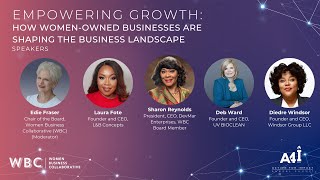
Empowering Growth: How Women-Owned Businesses Are Shaping The Business Landscape
WBC A4I 2023: CEO Excellence in Gender Equality and Diversity Awards Opening Remarks Day 2