In Conversation… with Frank Schaeffer • Edie Fraser

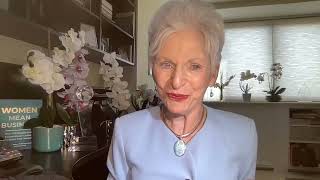
Edie Fraser, CEO of Women's Business Collaborative, talks with Frank Schaeffer about how the pandemic reshaped workplace culture. They discuss why gender equity makes business sense, the value of paternity leave, and how companies can build real allyship through WBC programs and best practices.
Questions this video answers
A nonprofit less than 3 years old.
Some 68 women's business organizations and reach to 2 million women.
A goal of $2 billion going to women-owned firms this year.
I'll never forget the impact that it had on me when I was at a Women's Forum meeting and the president of one of the top 10 firms in America, a woman got up and started crying and said, I've never had a family, I've never had time for friends and I'm worth multi, multi millions. But I've not had a life. And I think for those of us in the room, it made us stop and reflect.
This is Frank Schaefer and you are listening to and or watching In Conversation with Frank Schaefer, which is my podcast. And today I have a wonderful guest, someone that I'm very anxious to have you meet and get to know better. And because I don't want to screw all this up, you're going to see my eyes flick to my sidebar here that my producer Ernie, who makes everything happen here put for me so that I don't miss something. My guest today is Edie Fraser, who is CEO of WBC Women's Business Collaborative, whose mission is equal position, pay and power for all women in business and whose advisory board I, me, Frank Schaeffer, have recently joined along with my friend who introduced me to Edie, and that is Gender Fair CEO Jose Zylstra and Rethink author, another friend of mine, Andy Simon, who by the way, have both been past guests on my podcast here and who are friends. So with that introduction, did I leave something out, Edie?
Thank you, Frank, and to you. And let's just look at the picture of your book behind you. The whole subject of what you're doing to change society and to make us rethink and everything you've written about in your book is really build on. Let us stop and reflect and think. So yes, we'll talk about wbc. And a big shout out to Jose Saleh and Andy Simon and the others who adore you, Frank, but we will talk about wbc, but let us just thank you. The nation is going through turmoil. Your life, Frank, in so many ways was turmoil of reflection and change. To go from a religious right family and to rethink your life and end up a little bit of an atheist and truly a believer in love, rebalancing and connectivity with people. You've taken your mind and your heart with intention to your family. So when you say fall in love, have children, save the planet, be happy, put your mind and heart with intentionality, with love and with caring. The modern parenthood as you outlined it is not motherhood, it's familyhood because you call on fathers and grandfathers and grandmothers to all work together to realize that we can work differently, we can play differently, and we will have so much more love in our lives. So a big shout out to you personally and to your wife, Jenny Schaefer, as you think about what you did to give back to your three children and your five grandchildren and all the family of saying there's more to life than work. We want so much to think about that redesign with love and caring and passion, get rid of negative people in our life the way Maya Angelou said, and to make sure that our caregiving is uppermost as we think about the meaning of life and our legacy. So first of all, thank you for all of that.
Well, thank you so much. And let's talk about WBC in a moment, but let's follow up on this for just one second. It just seems to me that you and I, we've seen a few things and we've been around the block a couple times and we know something about American politics. But neither of us, I think, anticipated the pause that was given us by the COVID 19 pandemic that continues to this day, where people were literally given a timeout as grown ups. They didn't have to sit on the staircase and think about their misdeeds, but they were all sent to their room, as it were, for a very long grounding. I think a lot of us have had an opportunity, as I talk about in the book and you and I have talked about on some panels with some of the folks from wbc, to take a deep breath and just think, okay, this is the first day of the rest of our lives as we come back to normal, whatever that is, how do we want to change things? And I think particularly in the light of what I talk about in the book, which my point of view, humble point of view on this, is that we've come through a period of history where women have been welcomed into the workforce grudgingly, but women have been welcomed in strictly on terms most of the time set up by a male elite who themselves have acted as if they don't have families. And it's all about work. And so the choices have been very limited. It hasn't been, join the workforce and we will back you as a whole person. It is join the workforce and imitate us in a lifestyle which pretends that all that matters is shareholder profits and the bottom line. And that's not a good deal for men. It's an awful deal for men, but it's also a bad deal for women. So one of the things that I'm hoping with the WBC and whatever involvement I have is to keep challenging men, my fellow male creatures, to rethink the way they have denigrated family life, had not helped out with children, have not swapped off with wives and partners to get into a position where the wife, the partner, the person they're worth, the mother of their children, has an equal shot, an opportunity at career. That's my personal thing within a much bigger structure of what you do, maybe react to that. And then perhaps you can start telling us about the WBC and what you do on a daily basis that folks who listen to my podcast might not know about.
Frank a delight. You do see that we're going through a revolution in business, America and the world, but it is a revolution. We never thought that we would get the voice, not only of women and young people, to say what they needed. What we've learned is it has to be flexibility. We can't demand unless there are essential jobs that require five days a week, nine to five anymore. It is no longer. It is the world of adjusting to you and your family. And you say it so beautifully in the book and it then requires more of fathers and grandparents and as you say the learn to love. And as we look at on all of our zoom screens and you say it in your book, a salute to pets. We've never seen so many pets and pictures when we do our zoom meetings in terms of the love and the caring. But this is a really serious time and a serious time for the private sector to step up. So we'll talk about WBC and what we're doing, but the private sector stepping up for good and for leadership. The only way that we're going to see that the workforce wants to select companies based on what their policy, their positions and their love and respect and for caring about how are you feeling, what do you need and how do we support you? So we do see company by company and it's tough. It's tough for the restaurants, it's tough for so many people on the manufacturing floor or the Amazon workers. But there is a sense of now knowing we can adjust and not be rigid anymore. And we care about your life. The most important thing is work out KPIs of what you need to get done, but do it on your terms and do it with the greatest of flexibility so we don't continue to lose millions of women in the workforce, many going to very different jobs, others forced because they don't have the childcare. We have a new Positioning for business in America and where there's fight back from those that want to attack our communities for racial injustice. The private sector stands proud of standing up now far more as diversity and inclusion and gender are uppermost topics in the boardroom, in the executive suite, clearly for talent, for sponsorship, for mentorship. It is a new day and that we're seeing the most caring sense of CEOs. And when we think about the stories of some of the women CEOs, like Mary Barra when she became CEO of General Motors, or Karen at CVS or others, they said they took the first couple of months of doing nothing but listening and listening. And that's true of Trisha Griffith at Progressive and so many other women CEOs. That's what we heard because they wanted to be so sensitive to the needs of the workforce. So with men, Frank, the good guys. And we are working a program at WBC called Ally of her as you know, and people like you that are standing up to really support women as advocates, but to really be their advocates on that advancement. So WBC is so proud because we're a Nonprofit less than 3 years old with caring and love being so critical to our achieving equal pay and power for all business women. And with that, the new sense of where women can lead differently. There's a woman that runs a big company we were talking to last night and she was saying, I think if our workforce needs to leave at 3 to go pick up their kids, that's great. Let them pick up at 8 o' clock at night after they put their kids to work and to bed and to really so that whole focus on get the job done but have such a sensitivity for the health, for the wellness and the well being and with that the productivity and the happiness. You use so much data in your book and show that disruption is healthy. You also show that grandparents are so much happier when they're caregivers.
Yeah. Well, one of the interesting studies I have in the book that relates to me very directly personally and to my wife Jeannie. We have done the childcare for our three youngest of our five grandchildren now for 13 years. Actually. Nora is now seven and a half and she's in school, of course, and I do as soon as I'm done this, my next job today is to run off to the school and pick her up as I do every day. Cook her snack, play with her, take care of her till about six in the evening. We're running out of babies now, which is sad actually. It's a terrible thing to Watch doors shut behind you. But it's wonderful. They're all growing up. Lucy's 13, Jack is 11. But the perspective that I bring to the book from a male point of view, is that I think so many men, sadly, have bought into corporate culture to the point where they have not considered long paternity leave. They have not considered swapping off with their partner and their wife to do childcare. What I've discovered is that I have been happier taking care of these grandchildren than I have doing anything else in my life. One of the reasons I've been happy is it means my daughter in law, Becky has a wonderful career as a school administrator. My son John and her know that their kids are well taken care of. It's a situation where you feel that you've really contributed something over and beyond what you were able to do. For instance, professionally, in my case, as a writer and a media commentator, being able to do this personally. So the book comes from a perspective of someone who has taken the last 13 years to actually take care of kids. And I don't mean help my wife a little bit around the edges. I mean full time when they weren't in school. We sheltered together during the first round of the COVID pandemic. Turned the house into kind of camp Schaefer when they weren't in school and things were really upset. And what I found was a level of satisfaction that is greater than anything else I've done in my life. And one of the things I'm trying to do through my book is make sure that when we talk about parental paid leave, that paternity care, paternity leave, these things are reckoned as just as important and right up there with the needs of women who have families. I think it's time also for men to declare that they want a better rounded life. And I think a lot of the resignations and moving around in the job market are related to the fact that men, a lot of younger men with young families after the COVID lockdowns decided that they would like to adjust their life now and work from home more and not just be a good partner to their wife or to their partner that they're living with, but also really indulge more in the personal aspect of life. Okay, I know you have a lot to say on that, but I want to grab this opportunity, since we're talking about family, to jump into something else. Let me go way, way back in your own life here, Edie, and talk a little bit about your own life. How did you grow up who were your parents? Who are you as a human being first and then we'll get back to WBC and these big issues. Because I'm just curious for myself. I just think you're such a tremendous leader. You come from something amazing. I don't know much about it. If we were just sitting together on a plane and I was telling you about my mom and my dad and my crazy childhood, what stories would you swap with me? Who are you? Where do you come from? Tell me something about yourself, Frank.
Thank you. I usually don't like to talk personally. I think everybody that knows me knows that like to use we and not I.
Sure.
Because that's the only way we're going to drive change is it together. But I grew up in Atlanta, Georgia. I went to a Christian preparatory school and was Jewish and fought to be president of the school. I. I fought for civil rights. I fought for equality and equity and is clearly saw discrimination and knew that what we wanted to see is women rights. I am so old that when President Kennedy said what are you doing for your nation? I came here to Washington to join the Peace Corps staff and I did college recruiting and then I became a desk officer for Africa. And when Martin Luther King and Bobby Kennedy were shot, I said what's going on in our nation? Unfortunately, we're seeing way too much of that today. But I spent the next five years really working on domestic poverty programs. One year I went to 50 communities to look at inner city ghettos and to migrant camps in Appalachia, et cetera. I hired an all black team to go there at a very young age. Entrepreneurship was in my blood. My parents were marvelous people that were entrepreneurs who gave back. They started with some others, the clothing chain called Casual Corner and built three toilet stores. They always put family first and they always encouraged you to be what you could be and to give back. And is so clearly is that is in our blood of knowing that that was so important to learning about giving and is. I am so grateful for being married for 42 years and to having so much of a family and a broader family. And when we start looking at at our workforce as our family and we start looking at all of our communities as essential, we will bring about much more love and caring which Frank, you and I now know that that's what's really lacking in this country.
When you roll back a little bit in that history, which is remarkable by the way. And I only knew a little bit of before go all the way back to the beginning of what you were talking About. And I know that talking about yourself personally is not your favorite subject. I won't press too long on this. But when you say you went to a Christian school, do you mean some sort of a religious school or Christian in the sense that you were Jewish in a community that was mostly Christian and it was a public school, what sort of a school was it?
No, it's a private school.
Okay. Now, did any of those folks, if they were evangelicals and they had been like my mother, whose parents were missionaries, they would want to have tried to convert you so that you could become a Christian and become a completed, quote, unquote Jew, as they would have put it. So that's the world I come from. I know that somebody must have at some point tried to share the good news with you that you were going to burn in hell unless you changed your ideas. Did that ever happen to you in that context?
Yes. First of all, I went to the finest private school in Atlanta, Westminster. And I still support Westminster.
Yeah.
But I did find that there is and was prejudice. And yes, they did try to convert me. And I came home and told my mother and dad that I was going to be a Methodist. And they told me to go speak to the rabbi. And I went and confronted the rabbi with. With the arguments of why I needed to convert. And wisely, he asked me to just wait a few years before I made that judgment. So I think that we do see that. And another personal story. When I went to Duke University, I ran for president of Duke. And at that point, I wanted not to be in the Jewish sorority, but I wanted to be in the most popular sorority. And they wouldn't accept me because they had a national policy against letting in Jews. Hard to believe. And is when I came, not that long ago.
I mean, you say you're old, but you're not that old. I mean, that's. That's yesterday.
Yeah. And Frank, it was just incredible because I ran Health communications for the old Health, Education welfare in the U.S. government. And one day I came home and I had a letter. This was seven years after graduating from Duke. And. Or. And it said, I traced you down because I was president of that sorority that wouldn't let you in. And I've married a Jewish man and we're raising our kids. But I made one mistake in my life, and that was not standing up for the right values. And you were my very favorite freshman. And I just want to tell you what that meant to me. To understand we could change and we could care. And tears rolled down my face.
That's a lovely thing. Tearing up myself listening to it. That's a wonderful full circle. So yes, people did try to convert you and of course me coming from evangelical conservative. And then finally, sadly, right wing family people who were part of the foundation of the right as we now understand it, the trumped evangelical movement. I get this very well. And that whole idea that there was another who were not like us and not saved, of course now has been transposed into the entire stance of the Republican Party where you won't even cross party lines to vote for something like paid parental leave that everybody wants and everybody approves of, but because the Democrats are proposing, can't move forward. Which kinds of brings us back to wbc. So the organization was on that, Frank.
Thank goodness for the private sector, right?
Yes. And I was thinking of that the other day, by the way, in an interview I was listening to on Bloomberg where they were talking about the fact that the federal minimum wage is still $7 and change and there's 30 some states that have much higher minimum wages closing in on 18 and even $22 in some places. And that doesn't even take into account the private sector doing more for people. A little off topic, but because you've been around Washington so long and you know so many people and have done so much, why is it that the federal government has lagged behind on so many things from daycare assistance to minimum wage that would be helpful to families? Particularly when you think about the shtick of the right wing that I was part of sort of pitching family values, There's a level of hypocrisy there where when it comes down to the practical things that would actually help people have families, they just don't happen. And you touch it wherever you want. Minimum wage, maternity care, preschool, child care. Do you have a theory as to why the federal government and the Republican Party in particular has literally almost refused consistently to stand up or lagged so far behind, not just the private sector, but any other country that has a big industrial base that you can name. What's the problem?
I think the problem is a lack of understanding and leadership, of really coalescing together to understand the economic importance of making sure it happens. On the other hand, the private sector has stepped up and if you look at most of the major companies, be it Procter and Gamble or General Motors or any of them, and look at course around the world, every country has parental leave, has women leave. They've got the minimum wage they've got, but we are behind. But at this point, all we can do is hope for change and hope that we can see more child care. That's what is preventing so many women that are leaving the workforce as we know they may be able to make it with more flexible jobs at home. But it is very sad that we can see that we cannot make the changes that nearly every other country has made. And yet let's salute the positives of all those companies that are reaching out. They're reexamining all their policies and, and companies back. And that is a first question for many recruits when they go to the company is about those flex policies and about the parental leave and the other policies. So there is light on the horizon. Yes, as we get very frightened by the backlash. And Frank, as you write so much in your book, not only on racial justice, but the basis of love and caring, which you write about so much with so many examples, we have to get back to a society and clearly we see it in the business community of the love and caring. And that is going to be the best companies to work for, the best companies to do recruiting for and those that will be saluted of purpose and those that really do see purpose, like your daughter Jessica.
Yes.
And you endorsing her to take her dream to set up a venture fund that was green energy and that Jessica is now part of our WBC family with your blessing.
Yeah. And you know, I wanted to, I wanted to go back to one thing you were talking about when I was doing a zoom call in one of your WBC meetings. I put forward a question either in the chat section or I forget if I asked it. And an executive at one of, at one of the big German companies or. She was speaking from Germany, do you said. I was saying, well, does anybody. Is anybody part of a company that does what I call for in the book, amongst other things, which is to set up childcare facilities at the workplace, not just in the executive suite, but for everybody on the factory floor, that you have a first class Montessori run, mud water, sand play area. And she was saying, yes, indeed, her company has done this. And maybe my memory is hazy, but I think she says we've got childcare at 900 company sites. I forget her name.
Yes, Frank, she did say that. But we have to look at. And I haven't been lately, but when I visited Johnson and Johnson or Procter and Gamble, et cetera, they all have child care centers.
Yeah. And I mean the thing is, it's amazing to me that we don't hear more about that because with all the people I talk to who have either read the book or, or trying to rethink their work, you would think that a company that had childcare on site, where at lunch break or other times, if there's a problem, a parent, male or female, can go see their child, that this would be a huge draw. And it's a shame somehow that here I am writing books about this and I don't know who those companies are unless I happen to run into somebody when I'm on your advisory committee. So why is it we hear so little about what the private sector does positively in this area?
It's a good question and maybe we will. You know, WBC likes to shine a light in terms of who's doing it right. And we honor CEOs for doing it right in terms of their data on hiring and policies. So I think it's really important that we do look at all of that for those that are doing it. And as you know, gender fair we work with because you know, Jose. And yes, they not look, they not only look at women on corporate boards as we do, but they look at the breakup of the workforce both for women and people of color, but they look at the brand also for policies. And that is really important. They look at. Let's talk about the world of entrepreneurs because you know, we've got more than 13 million entrepreneurs and we represent them with 20 entrepreneur groups in WVC. They too band together and look at what they could do for child care and flexibility. So many of the women are setting up their own firms to have that flexibility. But but also is what do we do for the really unique contributions they're all making in this whole world of change? But let us do look at all of those that are making change and that are saluting it and sharing what they're doing because those are best practices and we can't say enough. And there's all kind of data to say that women led companies are far more sensitive. And we hope with that and a few more men, we know that women, if they've got the majority of 40% on corporate boards, they're speaking up much more for the women and women of color. And the same thing in terms of looking at the supplier ranks, of really moving up goals. You know, Procter and Gamble set a goal of $2 billion going to women owned firms this year and company after company is looking at that and looking at women and people of color for new contracts. Right. So it's so good. But we do need to highlight those positive changes and the change leaders so that we can really focus on being so constructive in this new world that you're saying will help us be much happier and joyful and productive and with that, a better bottom line.
Yeah. And I think basically when you look at this change that's going on in the corporate world, of course some of it is being forced to from the outside circumstances of trying to hold on to employees. But when it comes to women in leadership positions in companies, I think the same thing is true as you find in politics. By the way, personally, why I have, my general practitioner is a woman and has been for 20 years. You know, there are males like me who recognize that not only is female leadership superior, but on day to day work, for instance, when it comes to anything that you care about, really that gets in that has any personal impact. For instance, a two year process where Jeanne and I were doing estate planning, well, of course we worked with a woman because who wants some guy, you know, coming in with whatever the male agenda is of being right all the time and all the rest of it, it's much, it's much better. So whether it's my doctor or my lawyer or my agent or my editor or my publicist or whomever, with a very few exceptions in my life, I'd rather be working with a woman when it comes to her being in a leadership position where I get to follow what she's saying. You know, I'm one of these. I'm someone who does the same thing here at home with my wife Jeannie. She's literally in charge of everything except what I actually do, which is write books and do some college speaking and other things. So what I'm trying to say here is I've got a chapter in the book on feminism and arguing that I don't see this as a cultural movement. I see it as an evolutionary step. And that is that when you look at the fact that most of the destruction of our environment comes from a kind of profits only, no sensitivity, industrial base, where it's always just the bottom line. Without any childcare, without any social conscience. That's the old model that's being replaced by some men. But it seems to me that right now the female style of leadership is not an option anymore. And it would be nice to do. It's an absolute necessity. I really do believe the future of our planet depends on opening ourselves to the idea that caregiving has to balance career, that career has to be balanced by compassion, that compassion has to be balanced by practicality. So you want women who really do things like the new CEO, relatively new CEO of General Motors who is spearheading these incredible projects of taking their entire fleet electric up into including the Hummer amazing. And the first electric Cadillac coming off online in two years from now. These are not coincidences.
And she has 54% women on the corporate board and she wants to be the most inclusive company in the world of diversity and inclusion. And she's the first woman chair of the business Roundtable this year. So we've got so much. And I go back to your chapter you wrote on feminism because when you support it's the new equity for caring and well being.
Yes.
A different way of looking at feminism and caregiving the way you've presented it. So I think well.
And the point being from my point of view, you know, from the point of view of a male, it has nothing to do with, with altruism or being nice to women. This is pure self interest. I want to live in a world in which female leadership reshapes it because on a daily basis the world I live in with my daughter Jessica, who's a CEO of a company in New York, my wife who runs everything in our home and family and always has my capable daughter in law and all the rest of these folks, I have benefited so immensely by sharing the burden of, quote, leadership. And instead of all this hubris and poncing around, you know, when you step out of the way and let women do what they do best, which is a lot. And certainly when it comes to leadership, I prefer the style of female leadership to male leadership by any day. And that by the way, goes for my own because it's a tremendous burden to think that you are somehow divinely ordained by God to be head of the home and or run everything. I mean, who wants to carry that around? I talk in the book about the actuarial tables that the countries like Finland and Sweden and Switzerland and Iceland that have the most legislative kind of backing of women in positions of leadership and the most egalitarian societies, not only by law, but statistically, what do you know? These are the cultures in which men live as long as women or very close to it, where everybody else, you're five to seven years off.
So.
When you get down into the nitty gritty of why do men live longer in cultures in which women have far more place and dignity and honor and leadership positions, you're into actual statistical proofs that this works. Aside from being kind to people and so on. I must say as a man, it is pure self interest on my Part that wants to share caregiving. It is pure self interest on my part that wants to be in a world that is led for the large part, not 50 50, but by women. We will all do better as we look at what's happening to our planet in terms of economic catastrophe linked to ecological catastrophe. If caregiving and care for others does not become the leadership model for everybody, we are in serious trouble. That's my point of view. I'm not putting words in your mouth, but that's certainly how I see things.
Well, Frank, everybody that's listening and everybody that's read your book wants to say thank you. 1 Gratitude is our attitude as I say that you really see what it's doing in business. But you've also looked at the new fatherhood and the new grandfatherhood. So thank you for that. I think as we look at and yeah, every study shows that women are more collaborative. Women are. But we're finding that there is a sense from so many men, they want to be partners like you and they want to change and the younger generation. So I think again, we want to say that we've got to work together and build these relationships and it's why we're building our ally of her program to say to so many of these men, what do you want to do? And for those that really do want to change, it was so fun because we just said with Procter and Gamble, but when we gave them our CEO award and they were like 48% women in the executive suite, but they were not 50% women on their board. And in November they hit parity on the board. Shared it across the board. And again, how much can we celebrate when we see change leaders? Because we've got the good stuff now that we must share as we see this wave of negativity that is so sad and the media is part of it. And what we must do is really focus on the good news and is the good change and lead by example.
Well, and also favor the companies that are doing something. Our friend Yose Zelstra and Gender Fair with her app that allows you to look at a company and say, hmm, these people treat women well. And I'm weighing up, what airline do I book? Well, here's one that has a terrific track record in terms of gender equity and fairness. And here's one that doesn't. Guess who I'm going to fly on. I mean, that's a choice. So we can do that as well as someone who is not say in that company. But we can still make choices.
Sure. With Gender Fair and their new branding and that new app, 100%. There's a company called Trouble, a nonprofit that is really put together in terms of who are the troublemakers as the company and the women. There's so much going on that is positively disruptive. And we say we're not going to sleep until we build this new revolution. Not an evolution, but as you said in your book Revolution, to really get to parody and to get to the difference of that work life balance, as you well say in your book, it's a new day because when people are happy, the production rates are so much. And when we're thinking about legacy, it is clearly about what we do to give to others. You write so much in your book about enough unmaterial possessions, the real values of life. I'll never forget the impact that it had on me when I was at a women's forum meeting and the president of one of the top 10 firms in America, a woman got up and started crying and said, I've never had a family, I've never had time for friends, and I'm worth multi, multi millions, but I've not had a life. And I think for those of us in the room, it made us stop and reflect. Of all the things you're saying of how important it's not all the money that we've got. And we always say, if you want to go make money, what do you want to do to give back? Right. And is it is that sense that is going to make us so much healthier?
Yeah. And I think that one of the reasons that female leadership is so curative of the illness in our culture is that, you know, my argument that I'm talking about here sort of boils down to how do you define success? If you define success by the title of your job position, you're going to live one kind of life because it's all about money, power over others, how much you earn and your title. If you define success by the quality of your human relationships, ironically, it means that you can actually have a more successful career as well, because you are a fuller person and a happier and a more joyful person. And I think one of the qualities that female leadership brings, and why so many males have been threatened in the past, less now than before, but have been, is that women bring a caring and a collaborative view to life. And what's interesting is science has really switched as well. Because if you go back 35, 40 years ago and you read biology and evolutionary psychology and so forth, the term the Darwinian term comes out, of course, the survival of the fittest. But the last 25, 30 years of science, and certainly the last 20 intensely so, even with a book title that that follows. What I'm about to say is a completely different thing. And that is that the new science, the latest science, the most relevant science, talks about the survival of the friendliest and talks about the collaborative aspect of human evolution. That is we all staggered out of Africa 100,000 plus years ago and began to fan out across the world. Who survived? The people that collaborated in hunter gatherer society, you didn't share food and help out, you were all going to die. A baby's left fend for herself, she's going to die. Somebody has to pick that child up. It really does take a village, move that forward into the corporate environment. The people you want as leaders are the people who share that view that it's about the survival of the friendliest. Who would you rather work for? And so one of the reasons women are so successful is that unlike their male counterparts through the 30s and 40s and 50s and that part of American history, they never forgot that the real value of human life is the experience of the relationships in your life. And so they make actually better leaders who can actually perform better for their corporations because they have that aspect more front and center in their lives. And of course it's a tragedy that men don't as well because we males also evolved as caregivers, as I have discovered, caring for my five youngest, my five grandchildren, my three youngest full time off and on here for the last 13 years. So my view of female leadership within corporate America is not that the choice is between career and or family life. It's the exact opposite. The choice is to have both, but not hide one for the benefit of the other. Feeling that like my daughter who's a CEO in New York say one of the refreshing things about COVID is that the women she knows in business and, and some of the men too, don't hide their families as much anymore because they're on zoom calls and a toddler runs through or is sitting there at the table doing the homework, a child is there with them or a bank president she was talking to that I actually quote in my book. And she sent me an email saying, he said we got to talk quietly on the zoom call because I just put my toddler down for a nap. Well, when's that ever happen? In a meeting, in a boardroom, in an office, That's a very healthy thing. I guess it's a long way of saying that I think that women have done so much better at remembering life as a whole package. And I'm hoping, and I know this sounds a little crazy, that women can come out of the closet on family more now and just say, hey, no, I'm not in the office. I'm doing a school pickup right now. No, I'm not in the office. I'm on a plane because I'm flying to see my mother, who's pushing 90 and is not well. Yes. You got a problem with that? There's such a thing called family. And I think the fact that women are more likely to extend that to men who work for them in companies is going to make everybody's life better. That's my view.
So let's say what you just said, the survival of the friendliest, survival of the friendliest.
That's the bottom line of Evolutionary Psychology Collaborative.
And those that really understand the mental health and the health and wealth really come together with employees and executives and role models.
Yes.
So it's so important that what you're saying, Frank, and what you're teaching and we're truly seeing this change and how do we take the positives out of it? Right. And think about what we want? You know, I was lucky enough with Robin Spiceman to do a book of do youo Giving while you're living. Right. Maybe use 65 role models. I think that we all need to think about that because that goes back to your happiness quotient and is really being fulfilled. And with that, we're really proving those are the best companies going to get the most employees. And we have to learn to tell the story. We are looking with the wealth management industry and the investment advisory and just shocked when China has 30% women that are in top of wealth management and we're only at about 12%. We have to tell the story of the great careers. Just like you say you've got a woman as a wealth advisor. If women think about it and live longer, how exciting to think about women helping women with their wealth. We can take any career choice and really look at why. We can look at that as wise choices.
Yeah. And I think when it gets into areas that affect everybody too, you know, it ought to be men taking leadership on family leave. It's ridiculous that women have to bring this up as if somehow it's a female issue. Are you crazy? I mean, you know, excuse me, everybody. The word father, grandfather still ring a bell here? Parent, you know, my friend, Reverend Amanda Humbrich Ashcroft encouraged her male co Workers in New York to be the ones to fight for paternity leave and always take it. Because there's a lot of men who don't take it on the basis that if, if men take leave, when a man takes leave, it makes it easier for the women to do it too. Because there's a lot of men who won't take paternity leave because they think it'll affect their career badly. But of course, if they don't stand up, then, you know, again, by default it becomes a, quote, woman's issue. Like, oh, well, women are dangerous because they want to have this thing called families. Well, come on, guys, take the lead on this. It's a scandal that, for instance, when Pete Buttigieg wanted to take some time with his adopted daughters, he got mocked on right wing television shows that the rest of the time are all screaming about pro family agenda and all the rest of this. What do you think about that aspect of men needing to stand up on these issues? Not so that women get a break, but for themselves to see life as holistic for themselves? It just seems to me everybody would be happier.
In that case, the answer is yes. Right. And I think the shift is on for that because those as role models all the way up and down the system, whether it be parental leave or whether it truly just. That's a sense of leadership and that's a sense of retention. If we're seeing that one of the biggest problems right now is retention. The question is the goodness of that is we're seeing new policies and new actions from our top leaders. Anderson Cooper did the same thing as Pete Buttigieg, right?
Yes, he did.
But we're seeing that in the corporate sector. So let's focus on the positives and let's go support the companies that are driving change. Let's be authentic. Let's disclose the data, who's driving change and what the opportunities are. Because if we can spend our days on positive then and on connecting others. So the Women's Business Collaborative is both collaborative, but I think everyone within our framework is connecting each other to be more successful and happy. And we are listening to the personal lives along with the professional lives because we're there when someone is down as much as we need to be when they're up and we celebrate their achievements.
Yeah. Let me just pause to say that those who are listening and or watching. This is Frank Schaeffer in conversation with Edie Fraser. And this is in conversation with Frank Schaeffer is the name of the podcast, if you like it Please like it in the online liking sense so that we get a larger audience as time goes by. Everything we're saying here is online on all the places that we put things, including many podcast platforms. If you want to get in touch with Edie or talk to the folks at wbc, all the links to her organization will be posted wherever this is. So you will find everything there about ED and WBC and a way to correspond with her on that and crank.
It with us, the organization, because we've now got some 68 women's business organizations and reached 2 million women. And we want to hear from you.
Yes, and please do.
Please do our summit. And Frank wants to hear from you. Yeah, again is. And I remember there was a woman CEO that you may know in Minnesota who built Carlson Industries and took over from her vad, Marilyn Carlson Nelson. And, and when I first visited her, she said is make that circle bigger and bigger and bigger. You don't exclude anyone in our support systems. So we want to make those circles wider and more supporter and really make sure that we're connecting each other. Just like as we listen to your daughter Jessica and what she's doing on green energy. We want to make five introductions and take that and we do one at a time. But if we're all doing it, it's going to make this gigantic difference, Frank. Right. And you're just a great role model.
One thing I would like to ask you while we're talking about this and put the word out is that I was talking to my producer Ernie, a couple of days ago preparing for this podcast. And I was saying, I'm going to ask Edie in private. And then I said, no, I'm going to ask her when we're doing the interview. One of the things I want to do is promote speaking of role models, the women you're working with individually. For instance, let's just take the woman who gave this really great answer from Germany about the number of childcare facilities her company's running or other people who are doing things. I want to ask you, as a fake, to help me get in touch with some of your membership so that I can interview them. When I was on the last time we did a zoom call with you, there was a fabulous woman from India who was talking about things and who had written a book. There was somebody else who had just written a book. There are women who do speaking. I know you have people that will make incredible role models. And I can interview about their lives, how they balance family and work, their history, what they do how they're acting within their corporation. The wonderful French woman that was on the podcast that not a podcast. The WBC advisory committee meeting that I was part of, I know they're out there. I can't sort through list and know who those are. I know you do. Please help us find WBC members to interview on this podcast in conversation with Frank Shaffer so that we can keep pushing the ball forward. Thinking of how inspiring my daughter Jessica finds now discovering your group. I know there are other women there, but men as well. And I also know that you have women who have a great deal to say. I was so impressed by the quality of their comments in listening to those presentations. I was wishing that somehow it could all be transposed into my podcast. And I'd like to do that one moment at a time. If you can help me get to those folks and tell me, suggest and make the introduction and like Jose introduced you, that's why we're talking, because other people have helped that way. So I'm asking you if you would do some of that.
A thousand percent. I mean, we can give you and start with 25, but we could do so many. Yes, their stories and their connectivity and what they are is. And we say, not thought leaders. Thought leaders are important, but the action leaders. And as we are now saying, we're not a think tank, we're a do tank. It's all about the actions that we take and the results and the impact that we have. So it will be. We'll pick 25 people to start and give them and give you your background. And I think it's fun for everybody listening because even up on our website, we have the profiles of our advisory, our board members, our leaders, council. They're unbelievable.
And Ernie, my producer, asked me the other day, what do you want to do with the next season of podcasts? And I said, well, I'll tell you what I want to do. I saw an incredibly impressive group of women the other day when I was talking with Edie Fraser and the WBC Advisory Council. I just want to somehow get them all on my podcast and that that could be the whole next season of our podcast. So I'm very serious about that. And I, you know, you have to pick your fights. And if I'm picking one, it's to promote women leadership in all roles in life and especially within the business community. So if you'll help me do it, that'll be our next 25 podcasts.
Thank you for that commitment. And so I think the commitment to you to really pick some of these women business leaders and heads of organizations and their stories, and it would be enormous. So we will do that with you.
Thank you.
And we hope that we will drive impact in such a major way. And Frank, thank you for helping us do it. I think the other thing may be to give you some men that joined with us that really are committed to. To driving change and is, as we're saying, they are so committed to really this whole revolution, the expression of caring, of giving and impact.
Yeah, I'd love to talk to them, too. So, you know, you draw up the list that'll be our guests, and we may slip in a few other people that Ernie's already producing and working with. But in all seriousness, if the theme is an egalitarian workplace, a full human experience for people within the workplace, equity and care of women and children and minorities and families, I mean, there's nothing that would fit better with all the thinking I've been doing the last five or six years on this book. So I would just love that. I mean, it would be a real dream for me. So please. Thank you. Thank you. Thank you on that.
Thank you.
Yeah. And you can tell, you can tell anybody that you introduce me to that if they've written a book and they want to talk about it, I am going to do something about that. I will read it.
I'm just going to turn over and show you 10 of them that have been produced in the last three months. And it would be fabulous to take that and to just all of us think about what we could do. To do what you're doing, Frank. Yeah.
And I've had such great experience with, with the folks, you know, like Jose that I interviewed or, you know, Eve Rodsky and, you know, other authors who have written on this subject. I mean, I'm very hungry to get into their work and put this out. You know, even people, you know, theologians who are women who have written on a sort of a different view of biblical womanhood, we've been doing that, but it's hard to find. You know, there's so many way things out there. And I just think WBC can be our guide in this and. And really help out. So thank you so much for doing that, Frank.
It is our thanks and gratitude and is. It's so easy. And I think for all the listeners and those supporters. Let Frank hear from you. Let WBC hear from you.
Sure.
And is clearly we're there for you. Right. And we're there for each other as we really build this change system. And Particularly as WBC looks at business, women and the quality of life and the salute of men along the way. And let us just say that this country has a blessing of diversity. And some 30 years ago, we said, when I founded Diversity Best Practices, the reality is that this country will be a minority, will become the majority. Ten states, the minorities are the majority. That's getting some backlash. What we need to do and what WBC does is say, let's take our sisters of color and our GLBTQ and all of us and march together in this movement hand in hand because we're such a blessing to each other to be the advocates, the connectors, and the collaborators.
Yep. And I think, you know, this thing about the survival of the friendliest is where it's at. And so, you know, we are all caregivers today. You're being my caregiver by being on this podcast with me. And I'm trying to be a caregiver by extending the people who listen to what I do to you. And that is the way to do this. Edie, we need to wrap this up, but I just want to thank you so much for your time. It's a real honor to talk to you. You're such an incredible person and such a leader and someone who's lived such an interesting life. We have a lot more to talk about. We'll do it again sometime if you'll.
Come back grateful and with each other. And we reach out to so many that we care about and you reach out to others. Let's really have this such a fulfilling years ahead as we're really impacting others, because that's going to give us joy.
Well, thank you so much. And Ernie will be looking for the guest lineup for the next year that we're looking to you to provide, because there's nothing we would rather be doing than promoting what you're doing and the women, the incredible women you're working with. I've got to tell you again, you know, when I was part of that and I listened to all the comments, I was just thinking, wow, you know, any single one of these people would be just fabulous to talk to for an hour. I wish I could get into a conversation here. So if you can make that come true, I would be eternally grateful. Thank you so much for being with us today, Edie.
Thank you. And it's a joy. And we're going to make that happen big time.
Thanks a lot. Okay, well, much love to you and everybody we're working with. Thank you so much.
Thank you.
Okay.
More from Edie
The Power of Purpose & Connection – A Conversation with Edie Fraser & Jan Duplain
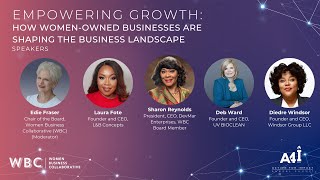
Empowering Growth: How Women-Owned Businesses Are Shaping The Business Landscape

WBC A4I 2023: CEO Excellence in Gender Equality and Diversity Awards Opening Remarks Day 2