WBC A4I 2023: CEO Awards Day 2
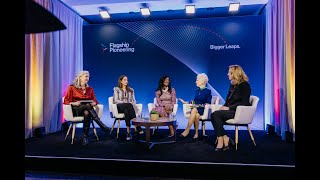
CEOs from CVS Health, Bristol Myers Squibb, Bank of America, and other major companies discuss their supplier diversity programs, community partnerships, and efforts to expand women in STEM and entrepreneurship. They share concrete targets and measurable outcomes while emphasizing the need for leadership accountability and continuous execution.
Questions this video answers
Almost $7.5 billion (2022) and sustained over 40,000 US jobs.
Estimated about $2.2 billion in total economic production and over 6,600 jobs; committed to spend $1 billion per year with diverse/minority-owned businesses by 2025.
Goal: purchase €2 billion per year with SMEs by 2025 for on-site services; current: €1.7 billion per year (end of Aug 2022 fiscal year).
$2 billion per year directly with diverse suppliers.
$3.5 billion of customer spend in the last year against diverse suppliers and diverse technology experts.
Well, we consider diversity from every angle. And our supplier diversity program has made tremendous impact on our business, our customers and our communities. It really does empower our communities by extending opportunities to diverse suppliers to do business with CVS Health. Diverse suppliers expertise and their unique perspectives are helping ensure we deliver the products and services to meet our customers needs. It also empowers our communities by extending opportunities for diverse suppliers to do business with CVS Health. In 2022, our engagement with small and diverse businesses led to almost seven and a half billion dollars of contributions to the US economy and has sustained over 40,000 US jobs. So when diverse and small businesses thrive, our communities thrive too.
Our supplier diversity program is actually one of the central pillars of our DNI strategy because of the fact that it touches so many different elements of who we are as a company. So first of all, it's really one of the ways in which we bring innovation into Restore Myers Squib. But it also helps us contribute to economic development, the creation of job and support for the communities in which we operate. We've been focused on this since 2019 and we've consistently experienced double digit growth in terms of the business we do with diverse minority owned businesses. And it really has taken a multi factorial approach. First of all, clear focus from a leadership perspective. But also we've developed some foundational elements to this program, key partnerships with some important external suppliers and we've been able to build over time. So you know, we are part of a group of companies that looks at as an example the economic impact in working with diverse and minority owned suppliers. And we've estimated that the work we do as BMS has created about 2.2 billion billion in total economic production. We have created over 6,600 jobs by working with diverse suppliers. And these are in many cases highly paying jobs where on average employees of Those firms pay $60,000 in federal income tax. Now, three years ago we decided to step up our efforts and we made a commitment to spend 1 billion per year with diverse and minority owned businesses by 2025.
Yes, I think we also have a big impact through our supply chain. And our supply chain is also a lever for inclusion in the community. So we've got several very concrete initiatives around responsible sourcing and inclusive procurement. So as you say, we have set up a supplier inclusion program and our goal is to purchase 2 billion euro worth per year with small and medium enterprise by 2025 for our on site services. And we are today at 1.7 billion euro worth per year. And that was at the end of August 2022, which is the end of our fiscal year. So we've got three more years and we hopefully should reach our targets. And this means that we are increasing the representation of SMEs in our supply chain with a priority on companies that are owned or managed by women and minorities. We have also the. I have another example in France, for example, we have launched a program called Impact plus and we have launched that in 2021. It's a support program for suppliers who are committed to an inclusive economy. So these programs aims to help them develop with the support of SODEXO team members through mentoring, coaching. And we launch the second cohort in the spring.
We made an initiative a number of years ago to really focus on supplier diversity. Now the trick to this is you have to be able to have a set of policies in your company that allow it to happen. And that's difficult, especially in the world of cybersecurity and the size of some of these companies and what they do. And so you have to be able to figure out how to do business with the largest companies in the world, which we do with as suppliers of capabilities, but also how do you acquire those companies to use suppliers to you that can help with diverse suppliers. But we do 2 billion a year or directly with those diverse suppliers and figure out a way to fit them in the paradigm, whether it's in our building constructions, whether it's in our work we do in our food services, or whether it's our work we do in our underwriting. You know, we, we bring in other underwriters on our own bonds. You know, we issue a lot of debt that are diverse underwriters because we want them to get business. And then we bring them into our clients deals, but importantly we bring them into our deals. So you just have to think of all different ways you can actually provide support for women owned businesses, minority owned businesses to make their way in the world. And then also though, and I advise the companies, you have to look at your rules because the natural tendency is to consolidate suppliers to simplify the supply chain. And as you do that, what can happen is you, you will cut out the people. So it does take a. Not only takes a planting but takes a care and feeding across many years to make sure that this doesn't get lost and that people constantly perpetuate a positive growth here as opposed to, well, this is inconvenient or hard, you have to always be after it or else it'll fall back.
In the last year alone, $3.5 billion of customer spend has been against diversity players, diverse suppliers, diverse technology experts in the market because of this connection that CDW is able to make. But that's not all. The amplifying effect equally impacts the communities that we serve, where we live, where we are part of growth, by creating jobs, by creating economic prosperity, by creating access, there is an economic ripple effect by bringing these constituencies together.
As we think about our supply chain and our suppliers, we have put a big focus on diversity. We've been working hard on ensuring that we have the same representation that we think about for our employees. We actually want to apply to our suppliers, so we ensure that we provide opportunity to a multitude of suppliers, that we provide opportunity to suppliers that are run by women or run by diverse ethnicities, and just making sure that we're providing equal access and ensuring that we have access to be a part of our supply chain. We've also taken training programs out and actually are training our suppliers on things that we've learned around how to create environments that are more conducive for gender diversity and gender equity. As an example, how to create a safer workplace for mother or pregnant women who may need to continue working while they're pregnant. And we also have really led, I think, in just this whole thought around creating a responsible supply chain. So whether it's human rights or whether it's environment, you know, the circular economy, I think it's just always been a part of what our team and our team did this quite naturally, which is fantastic. They just believe in having the best supply chain in the world, but doing it in the most responsible way possible.
Yeah, you know, we have made significant progress on supplier diversity and that was part of our larger commitment to ensure that we have diversity and inclusion at all points. Our company and we want to ensure that we are using suppliers that model our values and that we're making an impact in the communities that we serve. And so that increase has been a commitment from the company and then meeting and exceeding that commitment. And we continue to look for ways to increase supplier diversity and ensure that we're spending our money consistent with our values. And then the Shekeeper program is a really special, unique way that we articulate that through our Burt's Bees brand. Burst Bees is a natural personal care brand and we use shea as one of the primary ingredients in a lot of the products. And we've been able to partner in Ghana to create more access for women in particular and build capabilities in shea and beekeeping, something very important to the Burt's Bees brand. And that is creating opportunities for thousands of women and has the potential to create opportunities for tens of millions of women and in over 20 countries in Africa. And it's something that makes again for our Burt's Bees. It's a great example of purpose coming to life, but also creating great value for our consumers.
It's an extension of the same idea. If we think we're better off by having a broad set of experiences, skills, points of view and making that work together to drive our business strategies, then logically it makes sense that the ecosystem and the supplier base that we use is going to be more productive for us if it have a broad range of different capabilities and different backgrounds, including whether it be, you know, suppliers that are women owned or suppliers that are owned by different ethnicities. We absolutely want to draw on the best and the brightest out there to make us the most successful possible. Of course, you know, you have to nurture those ecosystems in different ways. So you know, we done some helping get people, get funding. There was a thing called rise up with crowdfunding so that when you get into the less well established networks, yes, you need to go out there and help attract those supplier bases or the Women's Business Enterprise National Council program, you know, some of the recognitions there. So it's really, you know, that sort of thing. And you know, we've partnered with some banks on certain initiatives. So it's really getting into the supplier base and saying what is it that will help nurture the best supply base out there? Including, you know, as I said, with areas for women owned businesses, areas with minority owned businesses.
So Cummins has been a member of the Billion dollar roundtable for 40 years. So this focus on diversity, equity and inclusion and the progress that we've made that really is wired into the DNA of the company. And because we think it's a critical part of our business success, as we articulated, as I articulated earlier and that includes our suppliers. And so this focus on ensuring that we are investing and developing diverse suppliers is important part of our business. In addition to that commitment to the Billion Dollar Roundtable where we have a seat as a member of their board, we're also focused in our community involvement initiative. Cummins powers women to help advance and develop diverse suppliers. And so we have a particular focus right now on women black owned business and helping to develop new businesses as a part of that work.
When we look out in the community, what we're trying to impact is we're trying to create opportunities in the community for companies to grow, for people to prosper that might effectively not otherwise get those opportunities. And so in the arts we put on some of the great exhibits and sponsor them in great museums in the world. But at the same time we have museums on us so people can get access to the arts for free if they just have a Bank of America credit debit card, you know, so it's democratizing access and capability. Thinking about opportunity, it's the same question. So we hire, you know, thousands of people a year and when they get a job in our company, they're getting a job with a great company. But we can't hire everybody obviously. So what have we done? We've worked a lot of other employers to try to figure out how to ensure that in Title 1 high schools we're going in and saying here's curriculums you can teach that we can bring people into entry level jobs in our company, which starts at $45,000 a year plus full benefits and is a career or in a job that they can go back and get their education while they're working for us with $10,000 tuition reimbursement, $275 a month for child care. And that creates the opportunity. But by the way, other employers do the same thing. They're large, but we got to find the people and open up new points access. So we work on that. The other thing we noticed is that the equity investments by the private equity business and venture capital businesses were very under allocated towards women and, and, and people of color. So we basically built a program beginning two years ago to invest in funds that would then turn around invest in businesses owned by the same, owned and operated by the same cord. So think about it. We're putting fund managers into operation and, and helping them grow if they're already in operation by expanding their, their capital. And then the second thing we're doing is actually getting those investing people are focused on women owned businesses and minority owned businesses and that leverage. We're up to $500 million in fund commitments, 150 funds and a lot of these are in their first round of financing or second round of financing. And so we've given them through our diligence process a stamp of approval that they're out in their second round and third round able to raise money much more broadly. It's a thousand companies have been financed and think of how small ingrained with those are. That's where the money needs to flow. If a company can get $100 million in private equity in a, in a funding round, they don't need our help. Those people are widely successful, or if a fund can raise a half a billion dollars to invest, they don't need our help. It's these smaller and more granular. So we've done that. And then with entrepreneurship for women overall, with the Cornell program, we have. We've, you know, trained. You know, we had an idea, and it morphed dramatically to where, you know, tens of thousands of women have gone through a training program to be better entrepreneurs. And then around the world, we've done other things. Even with our work in the water area, that is a lot about women's empowerment, because at the end of the day in these developing countries, that water is a scarce resource, meaning scarce not only availability, but also scarce, meaning it's miles away. The people who are experts in the field would tell me that, you know, 30 to 40% of a woman's day is going out and grab. Getting the water and bringing it back. You get wells in our hometown, you know, you can, you can change that. So it's all these different ways. Whether it's developing countries that are outside our either core banking footprint or whether it's private equity funds investing in companies in, in our poor core footprint or just the core way we run our business in our small business area and our women's entrepreneur sponsorship there, these are all ways that we actually are helping women become better and stronger entrepreneurs.
You know, community engagement, yes, is very important. And what have we done recently? I think making a positive impact in the communities where we operate has always been part of our company since the day one. You know, as I said, you know, that that's how. That was a vision of my father when he created the company. So it's very important for us to. It's very important, and we want to keep taking action in all the countries where we operate. And for example, this year, let me talk to you about the Stop Hunger. So Stop Hunger, it was created in the US in 1996 by a few SODEXO employees, and they wanted to prevent children from underprivileged areas from going hungry during the summer months. So Stop Hunger today. This year, they mobilize over 40,000 volunteers across the world. We partner with several hundred of food bank NGOs and charities today. There is a specific focus also on empowering women to fight hunger. And for example, Stop Hunger Women Empowerment Project, partner in the US with if, which is the Harlem Educational Activities Fund. And it works to bridge academic and opportunity gaps and ensure students from underserved communities across New York receive fair, equitable education and Career opportunities or we also partner with Together We Bake. And it's a workforce training program for women in need. And it enables them to learn and participate in food production, food safety, education and business skill. And then it's an opportunity for them, you know, also to find a job. Another example is SheWorks, so she works. It's a program we have run every year since 2019 in partnership with Stop Anger and Sew Together. And SheWorks aims to help vulnerable women to return to work by allowing them to discover professional opportunities at sodexo. And in four years, we have supported over 2,500 women in communities, reaching 33 local partners and acting in 27 countries.
We continue to be deeply engaged through the actions of the enterprise and through the actions of the Koch foundation. You know, across. And still very much a big part of it is female economic empowerment, whether that be in the hometown of Atlanta or going, you know, broadly out across the world. And so we are very much focused on that. We certainly stepped up our investments over the last few years for the obvious reasons. And we're going to be out there supporting communities around the world.
You know what we really try to connect community engagement is to our purpose and to the role that our brands can specifically play in the world and creating that world where people can thrive. Right now we're trying to do both the macro community events that we're talking about and make a bigger impact like in Shikeeper, where we're making a difference where our suppliers are located for Shea, but also in the local community. So a good example of that would be we have a parks initiative. We believe green spaces are incredibly important for people to thrive in communities. So for example, in Atlanta and Oakland, we've recently partnered with local parks to clean them up, to put in new equipment to ensure that people have access to green spaces and help their communities thrive. It's an example of where we can get very local, but it's connected back to what the Clorox brand purpose is around creating those spaces for people to thrive.
Right. Making a difference is an important part of our culture and our community orientation relative to that. And it's a bridge to the why. Maybe I'll take just a geographic example, one of the markets in the United States, Memphis, Tennessee, important long served market by our organization across multiple of our businesses. We have meaningful amount of colleagues there. We also have a wonderful healthcare delivery system partner that we've collaborated with Methodist Labonor and in that market and in that community, we've worked with Methodist Labana for Quite some time in terms of access to care, affordability, clinical programs, but also around what we know today as social determinants of health. That has helped us actually with some initiatives as I tied in earlier relative to Covid, as we were responding to Covid initiatives in the marketplace. Now building upon that, we've concluded we could further expand reach, including in Memphis and in greater Tennessee, but nationally with the Y. And we have a multi year commitment to expand access to services because we're able to see that expanding access to services, including for our youth, helps to put people on a path or increase the probability individuals will remain healthy, in the broadest sense of the word, physical and mental health and have a better opportunity toward, in our mission, having vitality from that standpoint. So it's a constructive collaboration, one of many constructive collaborations where like minded organizations see an ability to create a leveraged effect. So I do the attachment with a provider system partner in Methodist Memphis, Memphis with the Y within Memphis, but the Y more broadly across the United States. And it's all with the objective of having a larger impact on society, in this case, in most instances our youth.
We create a thriving environment in those communities. A thriving jobs environment, a thriving educational environment, a thriving economic environment. Earlier I talked about the concept of thriving as absolutely central to the environment we try to create at cdw. An environment with all of our co workers can thrive, be their best selves, deliver the most that they have to deliver to this organization and beyond. It is the same thing with our business diversity efforts. Our goal is not just to deliver for our customers the highest quality, the best experience, the precise outcomes that they need, but equally it is to contribute to the communities in which we source these partnerships and to ensure that we are contributing to those communities thriving. Because that creates a virtual wheel of success across the entire ecosystem.
I'm really proud that actually BMS is recognized in our communities as one of the companies that has the most thoughtful approach to working with diverse and minority owned businesses. I must say that not only are we doing something that supports these important communities, but we also have a feeling we have access to more agility, more innovation and there is a clear business advantage to that. And finally, I would say we partner with our suppliers on multiple programs. For example, we have a really important partnership where last year we collaborated with a minority owned woman owned business called Goodr. And there we're actually partnering on something very different. We fight hunger and we feed communities by using the power of technology and logistics. And we have distributed, we have distributed to over 1500 food insecure families across several metropolitan areas in the U.S. food and ingredients they can use for their meals. So that's actually an example of how we've taken a strong partnership with one of our suppliers and, and we've leveraged that relationship to have an even deeper reach into a community.
So one of the things that we've been doing relative to community, and let me just start with women, because you mentioned it. Women, as you know, are facing tremendous barriers when seeking equitable, high quality and convenient care. And women are mostly the decision makers around the health. They're usually the CEO of their families when it comes comes to health, you know, so we have made a commitment to women's health by focusing and improving access to care. We're trying exceptionally hard to eliminate systemic barriers that are preventing women from leading healthier lives. So, you know, we are committed to women's access by our 9,000, you know, pharmacy locations that have women's health services. Our minute clinic locations provide provide unique care services for women like heart health screenings, menopause care, mental health, and so much more. But you asked about our focus on pricing equity and you know, as a company, you know, we're incredibly committed to making sure that women and men are paying the same price for products. So our goal was to create price equity between so that women didn't have to pay more than men for the same product. So when you went into a CVS before we made these changes, women were paying more for a razor than a man, and we just eliminated that price differential. We also began paying taxes on period products on behalf of our customers in 12 states where we're really helping to eliminate that tax nationwide. We reduced the price of our CVS brand period products by 25% in our CVS pharmacy locations to improve access to quality period care. And the last thing I would just mention is that we are committed to women's cardiovascular health. I think we all know that cardiovascular disease is the leading cause of death for women in the United States. But awareness of the unique risks pose challenges to women. And their understanding of cardiovascular health has been declining over time. So one of the things that we've been doing is during American Heart Month, we offer free heart screenings for women in all of our minute clinics across the US and so the last thing that we're doing and very focused on is maternal health. I think we all recognize that a lot of people, a lot of women suffer from postpartum depression, something we never talk about. And you know, a lot of times women aren't equipped when they're leaving the hospital to really understand that they may experience postpartum depression. So one of the things that we're focused on and making sure that women have the available resources to address that should they suffer from postpartum depression. We're also thinking through patient experiences so that we have the holistic care plan. And we've been investing in communities to support maternal health because I think one of the things that is well known is that maternal mortality in diverse populations, beginning with black women, have been disproportionately affected and are suffering from not very good numbers relative to maternal health. We're very focused on that as well. First of all, just let me reiterate and thank the WBC for this honor. It's critical to have platforms for this conversation. And I know WBC is committed to changing the status quo and making a difference when it comes to diversity, equity, inclusion. And like wbc, this is a huge part of our commitment to delivering better healthcare for all. And you know, as you know, too many Americans, you know, have challenges accessing the care that they deserve. And despite the highest health care spending per capita, the US outcomes are failing behind other developed nations. So big, bold change is needed and it's going to take all areas that touch an individual's health to accelerate that change millions of times each day in people's homes, across digital platforms and throughout the network of community health destinations. It's imperative to reach people where they are and to help them so that we're collectively improving health, equity and outcomes for all. One of the ways for us to accomplish is our commitment to diversity, equity, inclusion because it is setting the foundation for a strong workforce, business and customer relations. I am incredibly proud of our 300,000 purpose driven colleagues who are bringing their hearts to work every single day. And their commitment and their actions will create true and lasting impact when it comes to equality in the workplace.
You know, I think at the end of the day, the action that needs to be done is just people to stay to the programs and make sure they continue mature and work across all industries. And so, you know, I think the banking industry in our company has been after this a while and we still have progress that has to be made. But the key is to measure that progress, to disclose that progress. And you can see in our annual report, we disclose, you know, our diversity statistics for everybody to see in an audited fashion. And so you got to make the progress, disclose the process. But Most importantly for CEOs out there, you got to have a business system that will produce the progress because the end of the day it's the right thing to do day it's the right thing to provide the opportunity for all people in, you know, in society and worldwide and importantly in America to be successful in a company like ours. And, and, but you have to have a business process which makes that available to people and ultimately helps them be successful when they're here. And so we're always learning, we're always getting better at. But I think the people, the stuff we do in the communities and supporting the one that's great. But in the end day we have 100,000 plus women at workforce. Having them have great careers with us is a big deal. And the families they support and their significant others they're with and even to the work with our company, both significant others work with our family, our company. The impact on society of those successful teams teammates is important and that takes a business system.
I think it would be amazing if there was only one single action that would have a major impact because if we have, we have not found the magic solution. Well, at least at Sodexo, you know, and with so many people we have not found yet hopefully one day but. So I don't see one action. I see it as a combination of our action as leaders, stakeholders, employees, you know, work with our suppliers, our, our client, our consumers. But I have to highlight two actions I'd say that are important for me. First, never, never, never stop challenging yourself. Otherwise you go back. That's one lesson I've learned. And then second action I think is you need to set targets and you need to measure your progress because I think what matters is not your starting point, but what matters is to have continuous improvement mindset. And that's very important because year after year you want to progress as a team, as a country, as a global organization. And that's I think what's important.
That's a very open ended question to say the least. Look, the purpose statement, we reissued it recently and you know, there was a big team working on it and they did lots of research but in the end it was very personally written and completed and communicated by me. And so you know, this is not something that someone else's corporate department in a drawer is very much led from the top. It's got a lot of thinking in terms of how our purpose connects and draws continuity from the long and rich history of the Koch company and how it connects to the opportunities ahead of us and what we need to do to bring them to life.
I think there's two things I'd say first, every moment matters. Every moment matters. I was recently talking with one of our co workers, Jackie Massera, and she had just received an award, an acknowledgement for the care that she delivers to coworkers every single day. And there was a story that someone told in that award about the first time she ever met Jackie and what an impact Jackie made, because Jackie made her feel welcome, asked her questions, was interested in this individual and why she had joined cdw, what her personal aspirations are, how she has fun during the week, about her family, and equally about her professional aspirations. Interestingly, Jackie told me I hadn't actually remembered having that conversation. And so one thing I would say, we won't remember every moment, but those moments will matter to other people. So I would say that make every moment matter. The second thing I would say is accountability is so important. It is what this organization is built on, accountability from the heart, that's powerful. One of my favorite Maya Angelou quotes that I don't hear frequently, but really strikes me as the essence of what accountability from the heart is, is when she said, I do my best because I'm counting on you, counting on me. If we want to have impact, make every moment matter. And remember, accountability from the heart means that others are counting on us. So bring our best every second of every day.
My call to action is to focus on building a culture of inclusion. I believe that is the most important element of the culture of any company. The ability to listen to different perspectives, to value different points of view, to leverage the strengths of that comes from a diverse workforce that speaks actively to the communities in which we live and operate. And that must be true globally. But it's also important locally and regionally to ensure that Companies like Bristol MySQB have a bigger and bigger impact in the communities we serve and in our case, for the patients we serve.
My call to action to other companies, leaders and people is we are all a part of creating diverse and inclusive environments and having impact. And that impact can come in big and small ways. And I encourage people to think about opportunities to do both. The big ways we can have impact is as leaders of our companies, programs, investments, and things that we do at a strategic level that can advance to diverse talent and pipelines in our communities, ensure we're attracting, developing and retaining a diverse workforce in an environment which, frankly, has headwinds to be able to do that. And so it's more important now than ever that company leaders continue to stay committed to that effort. At the same time, I think the grassroots Individual, small things can make a big difference, too. And each of us has an opportunity on a daily basis to impact other people's lives. And I think about that often because I would not be CEO of Cummins if it weren't for a couple of people that did that for me. Spotted talent, invested in me, encouraged me to think bigger about the opportunities and what I could do than I would have on my own. And so, you know, I often think, whether it's with my own two daughters, it's their friends, it's employees that work at Cummins, it's other people that I encounter in the community. What can I say to encourage, motivate, give confidence to individuals, to help community organizations that are doing the same and make those small differences as well. And I think it really takes both of those.
Look, I think my call to action is find your passion, and find passion that aligns with doing great things for society and for other people and for diverse groups and just get involved. And I think that we've really made a lot of progress over the years on this journey to understanding the power of diversity. And we went from years ago where we just said, we just need to increase the numbers, and that's important. And then we really understood the business value of diversity and having different people in the room who have different perspectives and different backgrounds and how do you solve problems, and they have different perspectives, and it's powerful. And I see that when just with the females that are on my leadership team, the way they approach problem solving versus others, it really is. It does help you from a business perspective. So I think we went from counting the numbers to really understanding the business value, and now I think it has to transition to, it's just a compassionate thing to do. It's the right thing to do for society and society's better if we get this right. So find your passion and get involved and just take action.
I think every individual who wants to have an impact has to look in the mirror and recognize it starts with them. You don't look left or right. You look in the mirror and take personal accountability. Secondly is having very clear, explicit goals. And the goals and the objectives should make you feel anxious, because they should be bold, anxious with excitement, but anxious with, I don't have perfect visibility how to get from here to there. Most great goals that are pursued don't have a clear path. That's why they're not easy from that standpoint. And then finally, there's an environment of just continuous execution and continuous improvement. And I apologize for talking my Hands a lot if you wrap around that. A willingness to engage with others, learn from others, and actually create a catalyzing effect with others is really important. But I think most importantly, it starts with you. It has really aggressive, bold goals, a commitment to continued execution and continuous improvement, and then looking for answers from others and support with others, then positivity is generated and continuous improvement is also generated along this real important journey.
I think we have a lot of work left to do, and it's great to see the progress in so many organizations, and I'm incredibly proud of the progress that Clorox has made. But what I'm really committed to is when I see something, saying something, and I think we all need to be committed to that and, you know, calling out when we see something that isn't working and then committing to making it better. And a recent example of that that I took to heart, we had an investor conference, a very big investor conference conference. And when I got the presenter list, I noticed I was one of very, very few women and the only woman CEO. And when I got on stage, I saw the audience, which also did not look as diverse as I would have expected, and I decided to say something, and it really resonated with people. And I think someone was waiting for someone to say something. And what it cost was, what can we be doing differently? And there was a lot of conversation in company leaders saying, you're right, this isn't where it needs to be. And one, I felt seen if I was a person who didn't feel like I was represented on the stage. But second, I had CEOs coming up to me and saying, what can I do differently? I'm trying to increase my diversity, and here's where I'm getting caught. So I think all of us, if we can speak up, if we can, then take action, and we can build community around the changes that we need to make. I think that's an incredibly good first step.
I'm going to start by stating the obvious. The technology landscape is changing at unprecedented speed, and there are two implications that stand out for me. One, as artificial intelligence is increasingly embedded into tools, many skills will begin to feel like commodities.
And.
And it is the creator's mind, the person that will differentiate performance. And it will be increasingly important that workforces look like consumers. And we all know that women are still significantly underrepresented. I'm Tally Bray, and I have the privilege of serving as Wells Fargo's Executive Vice President of technology, diversity, community and sustainability. I had a global team that drives workforce Transformation with a focus on people strategy, cultural transformation and sustainability. We continuously invest in programs and initiatives within Wells Fargo and beyond that support the advancement of women in technology. There are still far too many barriers, too much friction in accessing technology roles and this has to change. And through a number of external partnerships such as Girls who Code, Lesbians who Tech and Allies, Grace Hopper Celebration, Society of stem, Women of Color and High Tech that is changing. We're committed to making that happen. But there is much more work to be done, starting with understanding the barriers for access and the factors that compel women to leave the workforce. Understanding this will help us design environments, roles and workforce strategies that create space for women, all women to professionally thrive. All of these partnerships and opportunities, like the Action for Impact Summit remind us of something we all have and should all center our lives around. The power of voice. The voices in this room, when united can lead to transformational change. We are all co conspirators of representation, mobility and belonging. And I'm so honored that Wells Fargo, alongside Women Business Collaborative is part of this amazing chorus of voices. Thank you wbc. Let's keep fueling the next generation for all women and for all society.
Hi, I'm Justina Nixon Sinthil, Chief Impact Officer at IBM. In the fast paced world of technology and innovation, IBM recognizes the positive impact that we need to have in society. And we embed this in our culture. I can proudly say that I work at a company that prioritizes employees experiences and makes them feel valued and supported. Under our IBM Impact Framework, we champion women and diverse communities and provide programs and environments where all individuals can thrive. And our impact goes beyond IBM. For us, it is critical to invest in the future of work. We do this by creating an end to end holistic approach that provides access to training and education. This creates a pipeline of qualified diverse applicants. We're committed to skill 30 million people by 2030. And through programs like IBM Skills Build, we provide free personalized access to training especially focused on historically underrepresented groups in technology. We offer over 1000 courses in 20 different languages in in areas such as artificial intelligence, cybersecurity and cloud computing. And we offer those technical skills along with workplace learning skills as well. Since 2021, more than 7 million learners have enrolled in an IBM course. We also believe in sustainability and supporting vulnerable communities. That's why we launched the IBM Sustainability Accelerator, a pro bowl bono social impact program that uses IBM's technologies and solutions to support communities that have been most impacted by environmental threats throughout the Americas, Europe, Middle East Africa and Asia. We are empowering communities in areas such as sustainable agriculture, clean energy access and water management. Together we're tracking transforming lives, we are driving change, and we're creating a better future for all.
So corporate purpose has always been a critical, defining aspect of any company I've ever considered joining or joined or been a part of, because I myself as a leader, are driven by purpose. Purpose, kind of under the old true north concept. Bill George and others coined that phrase a long time ago. I find that in defining a business and defining a strategy, having a why, what's really why you're there, why are we doing this? What is the ultimate mission of the enterprise is critical not only in terms of me feeling personally fulfilled as a leader and feeling that I'm part of something important and that I align with the purpose, but also as a leader. I find that the best talent is working, sure, for money, because they're ambitious, because they like achieving, they're interested in what they do. But I think all of us as people want to be of part. Part of something bigger. We want to feel that collectively we're working together to achieve a greater purpose. So at our bank, M and T Bank, and also with Wilmington Trust, our purpose is to be a true member of the community and to make the lives better for. Make lives better for the individuals and the organizations that, that we interact with in a corporate sense. We're going to host the WBC November conference in Baltimore and I will tell you we're really excited about it. The overall theme is purpose, corporate purpose. But we're also taking a very particular look into what do women need to succeed and what kind of support systems, what kind of sponsorship, mentorship. One of the things that really get in the way of success and are things that all of us ought to be aware of and do something about so that it isn't such a lonely hard road in many cases.
More from Edie
The Power of Purpose & Connection – A Conversation with Edie Fraser & Jan Duplain
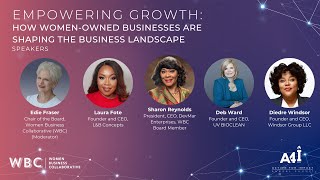
Empowering Growth: How Women-Owned Businesses Are Shaping The Business Landscape
WBC A4I 2023: CEO Excellence in Gender Equality and Diversity Awards Opening Remarks Day 2