WBC Global Call: "Localizing a Global D&I Strategy: Gender"
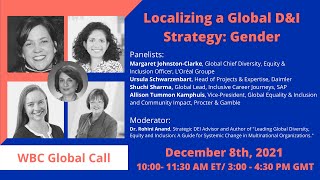
Rohini Anand and panelists from P&G, L'Oréal, SAP, and Daimler share five principles for global DEI work: make it local, leaders change to lead change, craft a compelling narrative, embed DEI across systems, measure what matters. They discuss what failed to scale, the need for granular data, and unintended consequences like part-time returns damaging women's careers in Germany.
Questions this video answers
L'Oréal's global paid maternity leave policy (14 weeks) referenced as in place for about a decade (per panel discussion).
Reported drop in the share-of-people who felt chores were the woman's responsibility from 79% (2015) to 41% (most recent measurement cited).
Good morning everyone. Or good afternoon depending where you're sitting right now. A big welcome to WBC's first session of our global event series Localizing a Global D and I strategy. The WBC Global Team. Johannes Zellstra, the CEO of Genderfare, Anya Skvortseva, Managing Partner of Odalus UK and Europe, myself, our CEO Edie Fraser and our Chief Operating Officer Gwen Young are delighted to welcome close to 200 people that have registered for our webinar today. Before we go into the matter of things, I would like Edie, Jose and Gwen to quickly introduce themselves. Handing over to you, Lady Edie.
Thank you and a warm welcome. Just want to say on behalf of wbc, we're the only we are so dedicated to drive change again, equal position, pay and power and against nine action items. And we see diversity across the board on everything we do. It is an honor to have Rohini Anand and her new book because we know that DEI is an answer us and around the world and Rohini has given such beautiful solutions. So just say Rohini, we cherish the relationship. We've worked together for over 20 years. I had the joy of founders best practices as well. And you and the speakers today are truly models of best practices learning and with that a sense of humility as we learn every day.
Thank you, Edi Shossein.
Welcome everyone.
I'm just thrilled to be part of the global team and on the board of wbc. We're looking forward to this session and.
Just excited to see what comes out of this and our next steps as.
We continue on this Deep Dive series.
Thank you. Shisei and Gwen.
Good afternoon and good evening and good morning everybody. We are so honored to have you on this call and I'm honored to be working with the Women Business Collaborative and our global team to really discuss an issue that's important, but really to discuss how we do it. What is similar and what is different across the globe in both companies and organizations and communities. Because we have a common thread that we're all looking for leadership that represents the communities in which we live and work. So we're honored to have you here today. I really look forward to this amazing group of speakers covering all sectors, both the public and the private sector and really to discuss how we can drive diversity, equity, inclusion and belonging. And I'm honored to have you all stakeholders of the WVC and to work with you.
Thank you.
And let's have a great call.
Thank you. Our CEO Gwen Young, Edie and Jose. The topic of gender diversity and inclusion is of great interest to many of WBC's global corporations and today's event will deliver impressive insights into how global companies localize their global D and I approaches to maximize impact and benefit for their employees, companies and communities in many countries around the world. Today is the first of four sessions and we will hear from four companies on their learnings and pain points with respect to their approaches localizing their global D and I strategies and we will focus specifically on gender. Today we are planning for another three sessions in 2022 on this topic, each webinar 90 minutes having a different deep dive area such as race and ethnicity, sexual orientation and disabilities. We are thrilled to welcome four world class speakers from Daimler, SAP, L' Oreal and P& G and are very fortunate to have one of the world's leading experts in D with us today, Dr. Rohini Anand. While Rohini is going to introduce all of our esteemed speakers, I will introduce Rohini it is my distinct honor to welcome and introduce Dr. Rohini Anand. We are incredibly fortunate to have her lead us through the topic through all events as she is regarded as the global subject matter expert on this topic. Rohini has had an impressive career as Sodexo's Chief Diversity Officer and Senior Vice President of Corporate Responsibility with amazing impact on Sodexo's journey of transformational changes under Rohini's leadership. Sodexo has been featured as a best in class case study by Harvard Business School titled Shifting the Climate of Diversity. Rohini has released her new book this Leading Global Diversity Equity and A Guide for Systemic Change in Multinational Organizations and at the book launch last Monday of many of you I know have been attending, she has been introduced by the Honorable Carrie domingos from the U.S. department of labor as a unique leader with a lasting contribution and leading authority in di. I think that speaks for itself. I am now handing the baton to Rohini. And again Rohini, we're delighted and honored to have you as a subject matter expert and guide us through all of our four events. The floor is yours Rohini.
Thank you so much Heidi. And thank you to Edie, to Gwen and to Jose for your introductions and for welcoming me. So I'm absolutely delighted to be leading this conversation about localizing your global gender strategy with five amazing DEI leaders we have and you have some information on them. So I'm just going to introduce them with their titles because I think there's a lot that we want to get started in talking about and a lot to unpack here. Suchi Sharma is a global Lead Inclusive Career Journeys at SAP. Margaret Johnson Clark is Global Chief Diversity, Equity and Inclusion Officer at l' Oreal Group. Ursula Schwarzenbach is the head of Projects and Expertise and former head of Talent Development and Diversity Management at Daimler. And Alison Tumman is Vice President, Global Equity and Inclusion and Community Impact at P and G. So we were talking just before this call started and saying just how amazingly global this group of individuals is. We have Suchi and Alison who are based in North America, Margaret is in France and Ursula is in Germany. So truly, truly a global panel. So with that, I'd love for you all to just put in the chat where you're dialing in from and maybe the organization that you're affiliated to so we can get a sense of where people are calling in from. So there's a lot to talk about on this particular topic, a lot of work that needs to be done, a lot of good work that has been done. But as context for the discussion, we're going to explore some concepts from my new book which is now available for order leading Global Diversity, Equity and Inclusion. So to set the context, I want to share these five principles in the book that we're going to unpack in our conversation. Because these are the five principles that I have found very useful and principles that provide a through line through all the work that I've done. So given the complex and dynamic nature, there's clearly no checklist or playbook. Best practices are not enough. The principles that I found as a throughline provider, they, you know, they're simple and they're very disruptive because there are no standards that I have found or no sort of plug and play templates based on what's worked in the US and that honestly has been one of the foundational mistakes that a lot of DEI leaders have. You know, they've led with what's worked in one particular country and, you know, that really doesn't work. You know, these principles have to be applied with sensitivity and, and can be applied in any cultural context and they empower global leaders to develop their own solutions without mimicking any one experience. So they're dynamic, they're simple, and yet they're disruptive because there really are no plug and play templates for doing this global DEI work. So the principle is just very quickly. The first is make it local. And in the book there are plenty of stories and you know, there's a lot of data and research and stories. My own experiences, the mistakes that I have made and, you know, the lessons that I have learned along the way as well, so that others don't have to commit the same or make the same mistakes. So global DEI change must be anchored in an understanding of the local context. You know, it has to be rooted in local particulars, informed by the history, the culture, the language, the laws of each place. And we have to consider how identity is defined, expressed and perceived, and what the power structures are. Who are the dominant and subordinate groups in different parts of the world. With this understanding of the context, it's a first step in providing strategies to advance underrepresented groups locally. And those underrepresented groups differ depending on where you are. It doesn't mean accepting the status quo. And outside influences can be catalysts for change. They can raise issues that those within a cultural context either not able to see, are not able to raise because of charged power dynamics. This work really, making it local and disrupting the status quo works best when there's partnership with local change agents, when local change agents are empowered to find the right entry points and the right and make these initiatives relevant. So first is make it local, and that's critical to doing global DEI work. The second is leaders change to lead change. I mean, everyone on this call knows that a commitment to inclusive leadership by senior leaders is absolutely fundamental to ensuring that DEI is sustained. And when leaders embrace DEI with authentic purpose and passion, organizations go from performative actions to sustainable progress. But to do that, leaders have to internalize the benefit of dei. And this requires a disruption of their worldview, a change that happens often with a very painful work of introspection. Ultimately, transformative leaders combine inclusive mindsets and behaviors with concrete actions. Personal behavior demonstrates conviction, and taking action signals a commitment. This requires, as all of you on this call know, and Ursula, Margaret, Suchi and Alison clearly know, that it requires intentionality to prioritize DEI as you would any other business imperative. The third, and it's good business too, you all know that a compelling narrative for change is critical. When that's absent 70%, a full 70% of change efforts will fail. But this change narrative can't be bolted on or siloed. It has to be congruent with the organization's purpose, how business is done, and regional trends that can be legal or financial or business or simply the right thing to do. Now, the last two go deep, wide and inside out, is about the fact that organizations are comprised of interconnected systems that work in concert with each other. DEI needs to be infused into the processes, the policies, the systems, and the structures. Principle 4 considers embedding DEI wide through scaling governance frameworks and structures and strategies, deep by seeding organizations with local change agents and inside out by integrating it into DEI to the internal and external systems and processes. And there's detailed lists of how and where to do that in the talent life cycle. And lastly, know what matter is encountered. You know, metrics spotlight problem areas. They provide possible solutions and instruments for change. And they're most effective when they align with the local context. And, you know, gathering data in different countries can be challenging. And they're most effective when leaders are held accountable. So getting the right global metrics is always a challenge because of the local nuances. So put your questions in the chat. I'll be looking and scanning for those questions as we go and integrating it into the Q and A into the conversation with the panelists. Keep putting your questions. So I'm going to ask each of you this first question and then we can get to the more specific questions. So the first question is for each of you that works, you know, each of you works in a global company doing DEI change work globally. Can you share with the with the participants what has been most frustrating for you in doing this work globally? What are the mistakes that you've made, the lessons that you've learned when it comes to your global gender strategy? You know, I'm very transparent about the missteps that I have made, the mistakes I have made in my book. So if you can share, you know, some lessons that you might have learned or missteps that you've made, that would be very helpful to the audience. So I'm going to start with you, Margaret. I'll go to Suchi, Ursula and Alison.
Thank you very much, Hohene and thank you very much everyone for, for being with us today. I think that one of the most frustrating things when I arrived in this position four and a half years ago, I've been in the company for over 20 years and prior to this in a nonprofit dedicated to inclusion topics. I have to say that a lot of wonderful gender equity programs were piloted and tested in France because this is where our headquarters were, including for instance analyzing gender pay gap since 2007. But when I arrived in 2017 in this position, one of the most frustrating things is that it hadn't necessarily gone global. We had a global policy for women in leadership. We had a global policy on sexual harassment issues. We had a global top issues on gender equity in many domains, but on gender pay gap, interestingly enough, we had had 10 years of experience to close the gap, but not necessarily to Spread the word. Assuming that by just showing a good practice in the headquarters would suffice to make sure that all of the HR teams would duplicate it locally. And obviously this did not happen. So this is something that I needed to quickly amend and really push forward. So I think that was one of the biggest frustrations for me.
That's so interesting, Margaret, because I think you're absolutely right. Sometimes you think that what works in one country at the headquarters is something that can be spread globally, but just the way pay gap is even calculated is very different from country to country. Right. So how do you attend to those nuances? Having and we'll talk a little bit more about sort of universal versus local strategies, but having sort of a policy, but then making sure that it's flexible enough to get implemented with attention to the local nuances. That's great. Thank you. Who did I say goes next? I don't remember. Was it you? Suchi Goh?
It was me.
Thank you.
And thank you so much for having me today, Rohini. It's really a pleasure to be a part of this conversation. If I were to think about what's been most frustrating, a few things come to mind. What I see working in a large organization and SAP is a software and technology companies that has grown to become over 104,000 people plus all over the world and 180 countries. And I would say that it is. My observation is organizations don't always have the capability, which by that I mean the people, the process, the technology platforms to really design for and measure impact. And so instilling that discipline and skill in the organization allows one to use resources more effectively to really mobilize change. Yet that's a mindset and a discipline that doesn't come naturally to business functions. And building that skill in the organization has been challenging and something I think that as practitioners we have to think more about how best to do. I would say. Sorry.
No, no, go ahead. Sorry.
One, one more thing is having the right granularity of data so you can really use it to tell compelling stories to leaders. We have the broad brush metrics, but it's in the deeper granularity where you can really tell more compelling stories that will also move hearts and minds. And then creating accountability around those metrics, of course, as you mentioned earlier, is a challenge.
Yeah, that's great. So in terms of your learning or sort of missteps, is that something that came to you as you did this work around the granularity of data was something that you started with a broad brush and then sort of evolve to the granularity, as you. Absolutely.
And we're probably still not quite there, but being able to tell a story, for example, around why are most women at a certain level leaving within a certain time period and looking deeply into what the root cause of that is, have not had an opportunity to do that. We may have missed some opportunities to alleviate some issues.
Yeah. And I think that's so important suchi because, you know, we all have intersectional identities. Right. So the experiences of white women may be very different from experiences of women of color or other underrepresented groups. Women of different age groups can be very different. And if you're able to unpack the data, then you can really get to the nuances around. Why are there certain groups of women at certain levels or in certain age brackets or certain ethnicities who are less engaged than other women if you lump everything together? Because I think this is the important piece that we are more than just one identity. And I think we need to parse that data. The granularity, I think, is a great point. Thank you, Ursula.
Hello everybody. And thank you, Rohini, for inviting me to be a part of that group. This afternoon when I was listening to Margaret and Sushi, I was thinking, it sounds like we are all working in the same company. Because they were exactly describing part of the journey I think we all have been through. So let me just add another piece of information to that. When I took over the responsibility and founded the global diversity office for Daimler, which was in these days an almost 300,000 people company, I thought, and I had experience in operational management for almost 20 years. When I started that, I thought, okay, it will take me half a year or probably a little more before I have implemented the values we want to see, before I have the data put together and all those kind of things. And it was very frustrating for me to see how slowly we were moving. It's not that the board of management didn't take the right decisions, so they all agreed to a diversity statement. We kind of tried to pull the data together. And you were saying, Margaret, as things were like being a project in France, it was things being a project in Germany. So if I was talking to my colleagues in China or in Saudi Arabia or in Japan, the story sounded totally different. And I think if you have this, and I really like the phrase to make it local, because it's absolutely necessary to say, what are we heading for in terms of this is the strategic framework we are going to provide as a whole organization. And if we want to improve gender equity in the executive management position. I cannot discuss whether you like that in China or not. We are just heading for that or whether you would support that in Japan. We are going for that. And this is the framework and a part of our value system. But on the other hand, we need to have the openness to leave them with their boundaries and their frames and their activities. And I think this is something which was for me, very tough to learn because I'm one who wants to change the things and drive them forward. And it took me like five years before I even got the proper data from my colleagues from some countries, which is fine now. But being patient was really one of my toughest lessons to learn.
Oh my gosh. I think we can all identify with that. Ursula, that's fantastic because you're absolutely right when you talk about making it local, there are very different approaches to that. Right. So there's a local approach where everything is built from the ground up. And there's sort of grocery chains, and I have an example in the book about Aho Dalhouse where they have these local grocery chains, local brands, and they hire in a 5 mile radiance radius. There is the universal approach, which is a top down. Right, which you sort of alluded to. You have to have flexibility. But there are companies that have taken a universal approach where you have a policy and that policy is going to be implemented no matter where you are in the world. And there is a food delivery company that actually did that with the best of intentions. So their US headquartered LGBTQ ERG distributed this badge in support of the LGBTQ employees and they distributed it worldwide. They wanted to show allyship to the LGBTQ community. But what happened was the employees in Egypt balked because in Egypt sex relationships are illegal. And they've gotten. LGBTQ employees have gotten used to basically being discreet and not being public about their sexual orientation. So that can have a negative impact. And you're absolutely right about what you said. A transversal framework where there's a global strategy, global metrics, but flexibility to really implement it country by country is really what works well. So thank you for that. Appreciate it. Alison, same question for you in missteps. Lessons learned in doing this work.
Yeah, thanks Rohini.
And thanks everyone.
Thanks WBC for inviting us to me to be part of this with you today. I'm just smiling a little bit since everyone sort of checked off some of the frustrations on my list. I think we, we all have some common experiences. I think one of the things that I. I don't know if we've sort of covered this specifically, but one of my frustrations has been turning the efforts in De and I into something that isn't just a check off the list. We've done that. You know, I've been to my, you know, unconscious bias training class and now I'm good. I can, you know, put my, you know, certificate on my window, my cube wall. But it's more creating this journey for people to start on and continue on during their time in the organization. And when you can get over sort of that episodic engagement and make it something that's truly built into the fabric of the way that the company or the business is running, that's when we've seen some real progress, both with leaders themselves and then them wanting to transform their organization. So. So getting from a stage of recognizing and sort of having some training, but into a sort of continuous interrupting of bias and noticing it when it surfaces and calling it out. I think that's one frustration to try and get more people on that journey. I think the other one is really impatience, frustration, impatience, constructive impatience. I guess for the dominant culture group, whomever that may be. Often it's men in the context of culture, this gender discussion, but that dominant culture group recognizing that this is not something that everyone else is going to take care of, but they need to be in that journey, in that conversation. And yesterday would be a good time to start, not later on in the future. I think having that happen in a way that brings more people into the conversation sometimes that's where I get a little frustrated. And that lack of comfort with discomfort, which often keeps the dominant group from joining in sooner, I think is something that finding ways, and I'm sure there's lots of advice and many people on this call from all around the globe. It's great to see people checking in on the chat. It's really about that discomfort becoming something that people are willing to take risk, to share, to learn together. I hope that Covid has actually given us an opportunity now that we've seen where people are sort of outside the office. We've seen a little bit more of their personality, their Persona, their life that surrounds them. I hope we'll be a little more open to having some of those more learning through discomfort kind of conversations, since we've learned a bit more about who we all are as we've sort of not just been in the office together, but we've been living through this experience over the last 20 plus months with these, each other at the same time. So those are just a few to build on what's already been said by the other panelists.
Yeah, no, I think that was awesome. That's excellent. And one of the comments questions in the chat, which I just looked at briefly, was around when and how to tell stories to bring leaders along. And I think stories can be really powerful in shifting mindsets and being disruptive. But I think, as you said, Alison, leaders have to take responsibility for their own learning. And what is really critical is that often the burden is on the person with the lived experience to keep sharing their stories again and again. And one has to be really mindful of that and maximize the potential of that story, but also be selective about how and where and when to use those stories. But leaders really do need to take responsibility for their own learning. So that's great. Thank you. So I'm going to go to the first principle because this was awesome. I think we really got into some of the nuts and bolts in terms of the challenge in doing this work. It's difficult work, but it's very gratifying work, and that's why we all are still doing it. I'm going to stay with you, Alison, and ask you this first question. During your conversations prior to this call, you shared some terrific examples about this first principle. Making it local. P and G has done an amazing job. You said Mark Pritchard is going to be honored tomorrow, I believe you said, in New York. He leads your marketing, has done an incredible job with the advertising. And what is incredible is how it's been localized to the various different markets with a deep understanding of the culture while pushing for change. I want you to share some of that, but if you don't mind, I'm going to share the one that I've shared in the book, which I just find incredible because it's an ad in India and it's, I think, share the load, where you have this older father figure who's watching his daughter ironing her husband's shirt. She's fixing her child's lunch. She's running around all over the place. And you hear him thinking and saying, I feel so bad for my daughter. She has to do all this. She played house when she was growing up, but that was because there were no other role models for her to see that things could be different. I was a bad role model. I never helped her mother. And then it cuts to him doing the laundry with his wife. Why I think it's so powerful, Alison, is because if that message had been delivered by anyone Other than an older male father figure, it would not have been heard. This is about a great example of really understanding the power dynamics in a local culture and then using those power dynamics to disrupt the status quo. It's not just that he's saying these things, but it's changing mindsets, but in a way that can be heard in the local context. I'll stop there because I know you have fabulous examples, but I just love that ad.
Rohini, I appreciate you sharing that with me because our team in India, they developed that in 2015. And what's unique about our conversation on this is I'm very familiar with that work and that ad, but I wasn't involved directly in the development process of it. It was just around the time I was transitioning into my gender equality role. And what you just shared is fascinating because I didn't see that insight that the team obviously saw developing that locally in India, why that was so important that it was delivered in that way by that character, you know, in the advertisement. So I appreciate you sharing that with me because I know part of what Mark and our entire brand building organization is looking to do around the world is to find those inspirational. I think it's really the most significant work we've had is often from the most powerful insights that are often representative of biases that we have all the time. So Share the Load is a wonderful example of that. It actually did travel outside of India, but was localized in other countries like France and the Philippines. And in the US now we have a home care led program called Come Clean to close the Chore Gap. And it's all about the disproportionate number of chores done in the household. What's really striking is the measured difference we've seen in India, for example, with Share the Load. So it's been a succession of stories. It's a book. I call it a book. And each chapter that gets revealed takes the discussion further. And so, yes, it started with fathers looking at their daughters. Then the next iteration was dads Share the Load. Then it was son Share the load. How are we raising our sons differently than our daughters? And then the most recent one during the pandemic, which maybe not everyone has seen in 2020, was Share the Load for equal sleep. And there was actually measurement of throughout the pandemic, the disproportionate impact on women and how they were literally losing significant hours of sleep compared to other members of the household. What's also been measured over that time is actually the person percent of men in India, who felt that all chores were the responsibility of the woman in the household, went from 79% when the campaign launched in 2015. Today it's 41%. Last year it was measured again. And so that is measurable change and shifting in cultural norms. Now it's only one norm. There's many more that need to be tackled and addressed. But it's quite a significant one. We have a firm belief at P and G and we share often, you know, we don't believe you can have equality in work, in the workplace and in society until you have equality at home. And so the things that we can do to, you know, take a stand periodically is important and share loads of wonderful example of that. The other thing we try to do in our advertising that you and I discuss is it's all about portrayal and representation. And so not only we do we try to demonstrate and portray women and girls in what could be in a local cultural context, a non traditional role or position showing the use of our brands and the things that we advertise about, but we also do the same for men and boys. So we have men in our nappy and diaper commercials changing diapers. We have men and boys doing dishes and household chores. And we also show women in professional roles, stem type roles and other business roles, things like that. So a lot of it is really what we try to do to demonstrate the true perspective picture of the world that we live in. Because those memories, advertising creates memories which leads to bias or can change bias. So we've had other examples like always is another one where we have measured change around like a girl was seen by 80% plus of people as an insult, now it's only 19%. There are ways that when you do take a stand periodically on these things, you can actually shift cultural norms, but your context and the local needs to adapt it is very, very important. Always. Like a girl would not work in certain parts of the world if it had been sort of replicated. But in different countries we've had very much that same approach of and we create a lot of our communications and materials on a regional or on a national or local basis. And it's so important. And the only other thing I'll add, because often when we have folks and I share sort of what we do and how we do it in our advertising, a lot of people say, well that's wonderful. You or l' Oreal or companies who do a lot of marketing to consumers, that's fine, you can do that. I can't do that in my company, but actually most companies are creating materials. Whether you're a B2B company, whether you are, what's in your sales materials, who and what companies are creating that for you. You have a lot of things that, if you stop and think about it, may not be a big direct to consumer marketing budget, but there are ways that you can, can reflect, accurately, portray essentially humanity in all its richest forms and try to, you know, even in your own industry, you know, disrupt some of that bias. So I'll stop there.
Yeah, I think those are just fantastic examples and I was just so, so intrigued when you shared some of them with me. There are a couple of points here, Alison. I think you mentioned it, right? So it's identifying the dominant group, and here the messages are being captured given by the dominant group. Right. So I think it's a fine line that we know we seek validation from the dominant group. But what P and G does so well is to use that to disrupt the power dynamic. So you're getting, you know, the message is being delivered by the mail, but it's to disrupt that power dynamic. And I think the other thing that you do so well in your ads is sort of partnering with local change agents to really disrupt the status quo. So, you know, it's. And both of those things, I think, are just so incredibly important. That's awesome. Thank you. So I'm going to keep going and suchi. Maybe you can share with us.
How.
You have some examples maybe of how you've localized your gender strategy, if that's okay with you. You're muted, Shuji.
Thank you, Arhini. And thank you so much, Allison, for your comments. I always say optics matter so much. And the work that P and G does is really transformational in terms of its storytelling and ability to shift cultural norms. We have really addressed our strategy on gender using that concept of transversality. And so with a strong global governance structure in place, we really localized how we're looking at gender on a country by country level. Originally, when we started that process, we took a very deep dive into every single country's data to understand what were the issues on the ground. And then from there, we developed different action plans and tactics that would be applied locally and then still continued to align them with our global metrics, which. And our global targets, really. So, you know, for example, what we found is that in, for example, in Brazil, we knew the market was very different in terms of hiring female technical talent. And so when we looked at our hiring process, we saw, okay, there's a place here where we're probably in our. In the steps that a person goes through to be hired, we may be losing candidates more because our competitors in the market have a very different process in place and they're sort of wooing them in a very different way that we need to be cognizant of. In other countries, we knew we had to address our hiring practice from in terms of making it more diverse, having more diverse slates. In India, we had a sponsorship effort that we knew needed to be in place because that dominant group really made a difference in terms of when we had women sponsored into leadership positions. That was what moved the needle there. And in a country like Germany, where we have a large share of the market and we have a large presence and employee brand, our hiring works really well. But we knew we needed to work on developing our female talent and putting in certain programs that are going to accelerate their trajectory in terms of getting into leadership positions. So at every country we've looked at the data and looked at at the context in which we're operating to understand what are the dominant issues that are driving some of the challenges we may see and address those. The other thing we saw is that when a specific country unit really embedded our strategy into their own people strategy at a local level, that's where we saw the most progress around gender. And it was everything from process to policy. And we do a lot of that at a global level. However, a lot of things change at the local level when implemented because of regulations, laws, context and culture, which you speak to in your book, Rohini. And I think that's proven true for us as well.
Yeah, I think that's a really important point, Ruchi, that basically the whole sort of beauty of this transversal approach is that outsiders can raise issues, can disrupt the status quo, can bring in sort of cross border sharing that helps a particular intact country or culture to then accelerate the speed of change. So I think this outsider insider partnership is very critical because outsiders can bring new ideas to a culture that those from within may not be able to even raise. So you just talked about the fact that where you saw the most progress is where the local country had adopted the gender strategy, but then implemented it with local nuances. That really speaks to that. There is a question I'm going to ask you this one, Margaret, before I move to Ursula. There's a question in the chat that I want to ask which is how have you seen the pandemic work from home movement now expanding to permanent status, changing things since men like me doing childcare for grandkids are now discovering home life so that women like my CEO, like my CEO daughter, finding that she no longer has to hide family to be successful. Will women find that they can be treated as equals in the workplace when home is a place of work? So what are you seeing, Margaret?
So we at Lore, Obviously we have 69% of our workforce that are women. So women seen as mothers. And definitely was part of what was just part of who we were because we've been supporting with maternity leave, 14 weeks of paid leave throughout the world, not just here in France, but really globally for almost a decade. This being brought. So making sure that we were there for women when they became mothers, when they had to work from home because their kids were ill and they needed to be there to make sure that everything was okay was already kind of part of the way we worked during the pandemic. I think it's changed a lot of things in the sense of this hybrid work, which I'm not sure has anything to do with, with being a mother. I think it's about dealing with finding the right balance for men and women to keep being engaged, to keep being able to work properly, even when located in a small apartment with none of the means. We've had a lot of people with disability suffering a great deal from working from home. So I think that really the idea here is to. We've had to switch. We were a company where we didn't do much homework. Home office, it wasn't part of our corporate culture. We did it in countries like the UK because it was kind of mandatory to be competitive. But the truth is we really brought people. So there was the public life and then there was what happened at home. As I said, we were very aware of what was going at home and when children were involved. But I don't think, I'm not sure the pandemic. I think it's changed in the sense that obviously people do have more flexibility. So it's given more flexibility, but I would say in a wonderful way to both men and women to be able to balance those chores that Allison was referring to in a more supple way. But it hasn't changed the way we perceive or what we do in terms of maternity leave or paternity leave or co parent leave. But it's definitely given much more subtlety. For instance, here in many countries like yours, when schools do shut down, it's great to be able to have fathers or mothers who work at l', Oreal, to be able to be at home and work from home while taking care of the kids. So I think for us it's just been more of a culture shock of this hybrid work and finding the right way. But it goes beyond gender equity. It's about a work life balance that is not only for. That doesn't only relate for women. So I hope I've answered your question, but it's one we definitely have been challenged with in the last 20 months or so.
Yeah. So I think what I'm hearing you say also is that because you have, you know, a dominant number of women, the culture is very different and, you know, sort of roles are almost reversed in your organization, which is great. And I think if it's okay with you, Ursula, I'm going to go to this to just to have you further unpack that. Margaret, you know, you talked about sort of universal parental leave policy. Can you talk a little bit more about that? What I found really fascinating was that the parental leave policy policy that you talked about was embraced by men in your organization, which is very unusual and different from other organizations where the focus is so much on changing the culture and highlighting male role models so that men will take that parental leave. Because in many organizations they don't because it hurts their career. And when we mentioned that to you on our prep call, you were surprised that more men don't embrace parental leave in other organizations. So can you share a little bit more about the policy and impact and then we'll go to Ursula, because I think that's another interesting twist.
So interestingly enough, we had our maternity leave global, as I said, rolled out globally in 2013. And what happened is that over the years we would give 10 days of paid leave for fathers. And the discussion started happening about co parents, but also about fathers around the world who wanted to spend more time with their newborn or with the children or adopted children. So it doesn't matter. It's the same policy. It's just about someone becoming a parent and having a child entering the home. The discussion, we decided to test it in two countries, which were the US and France in 2019. So we promote, we enhanced our parental leave and our fought for fathers and co parents to six weeks of paid leave. We really were testing it to see if people were going to feel comfortable taking it and how. And interestingly enough, as you just mentioned, we were a bit, as we say in friendship, became a victim of our success in the sense that men immediately were trying to not only obviously take their full six weeks immediately we thought that they would want to split it up to really be able to take.
Actually a week before or more before.
Just to prepare and then afterwards. And a lot of fathers came to us and said, is there any way I had a child a few months ago, could I like, you know, could I use that and get those six weeks of paid leave? Co parents as well. Very important. And I have to say we were a little bit.
Some of our managers didn't.
So it was a generational thing. I think a lot of more experienced and senior leaders didn't see that coming, that trend, and in a sense were very pleased to see, but didn't expect it to take upon and that they become very common for all new fathers or co parents. So we've seen a switch. So now what we've done is that it's obviously become global and we've said it's a minimum of six weeks. So for instance, the UK and the US decided to immediately bring it to eight weeks of paid leave. Some countries, like the Nordics, obviously have much more because they have a completely. A wonderful and genuine gender equity share of chores from the beginning. So it's actually several months. So it's a completely different thing and hopefully one day we'll get to that. But what's been interesting is that the switch happened so smoothly. We didn't need to rally, we didn't need to do leaflets, we didn't need to go and see dad saying, please. I think it would be really great and helpful if you did. They were very. And it wasn't in one country. I have to say this was interesting regardless of the culture. So obviously dads were quite young, but everyone really. It picked up very quickly. So I think it's a wonderful learning and I think it's a wonderful way of leading and speaking up on gender equity and how to share chores by also having men, even if we have fewer of them in our organizations, but by having them because tomorrow they will go up and be at the top and be able to lead in a very kind of equitable and interesting way, I think. So we're preparing also our future generations.
Yeah, I think that's great. And I think it speaks to the whole notion of this is why we do the work. Right. So it's not just one thing. We're an interconnected systems and you have to make your organizations more diverse, but you have to make the culture more inclusive and equitable. And in your organization, obviously the predominance of women had shifted the culture such that it was now the norm, you know, to take the sleeve and therefore the Men had to follow, which is really where we want to get to. So I think it's a great example. But what struck me was how surprised you were that that's not happening in other organizations. But it's not. So I think, you know, this is a great example of how, you know, culture can change with that representation to shift. So I think, you know, continuing on this particular topic, Ursula, you know, you shared a presentation once that was just completely fascinating to me. So I want to ask you, you know, Germany has a maternity leave policy that would be, you know, the envy of every mother in the United States. Yet there's been some unintended consequences. Right. Of that policy. So can you share a little bit more about the unintended consequences on the advancement of women and share a little bit about the cultural context in which the policy is grounded? I think that would be very helpful for folks.
Yes, certainly, Rohini. And let me first of all kick it off with setting the legal framework of what is happening in Germany. So before you give birth, you have six weeks of paid maternity leave and eight weeks after giving birth, that means a whole of 14 weeks with 100% salary. And then in addition to that, if parents decide mother and father, they can have up to four 34 months paid leave, which is paid through the state of Germany, which is making it possible so that parents can really look after their children and spend the first months with them. And the first years of course also. But there are not only wonderful, this is not only wonderful for those people because Germany is one of the countries in the world which has the most paid leave for fresh baked parents. But there are also other things going on. And especially if you look into the major companies in Germany, you can see that German employees are saying that a lot of mothers in especially are coming back after this child care time in part time assignments. And 52% of the German employees see that part time assignments are career killers. And I must say, from all what I know, not only in my organization, but also in other companies, as soon as someone is starting to work in a part time assignment, those people are perceived as being not ambitious enough. But if you then look after what is happening between men and women, it's like 66% of the mothers work in part time when they come back, compared to only 6% of the fathers who come back, which is something which is a cultural issue, I guess. Women are taking more than one year parental leave and only about 10% of men are taking one year of parental leave in the country. The full time employment Couples perceive the culture of presence at work. This has a little changed through the Corona situation, because work in the office is not taking place right now. But again, those who want to grow their careers, and you can perceive it, it's not that I have data about it, but you can see that those who want to grow their careers are still going to the office. They want to be seen in the office. In our country we have like almost 25% of fathers taking at least six weeks off in 2018 and 75% of mothers taking the parental leave allowances. If we look into those data, we can see what is happening not only on the basis of the data, on basis of analytics, but what is perceived inside the organization. Because most of the things which are happening around parental leaves are going under the unwritten rules perspective of what people think about people having a family. So and here we are still in the situation and I know again it will take some time, we need to be patient about it. But motherhood is very often perceived as the lack of career ambition and career orientation. Especially in times where it comes to the transformation of an organization. Women who become pregnant are seen from other managers as looking for a way to get out of this chaotic situation, so to say. And if women return and they return on a part time level, they always have to deal with a decreasing visibility, with a shrinking network and with a lot of obvious organizational changes, especially during the transformation. You sometimes go out of the organization for, let me say, only for three months, four months or something like that, and you return and your boss is not there any longer, your colleagues are gone and everything has changed. And this is really something very critical. If you want to go back and start your career back, you have to deal with holds a different situation. The reintegration of women very often goes below the qualification they had before they went on parental leave. And this is in combination with part time, very demanding. But it is what we can see in many, many companies happening if you are not steering against it. And what you also see is there is less professional experience of women due to longer career breaks and fewer weekly working hours. And this is may be true or not. It's sometimes perceived when it comes to promotion as lack of ambition, the lack of experience and in combination with the lack of the capability for leadership. And therefore a lot of people are still struggling when they have given birth and there is a change which came last year. People are now not only allowed, but they can ask for a full time assignment when they come back. But I think personally, and this is a Personal comment that the culture in Germany with part time assignments, which was designed to support families, is really more a burden for the women and is shrinking their career opportunities.
Yeah, this is fantastic, Ursula. I mean, I think this was complete eye opener for me. And you know, at the end of the day it's about, you know, you need systems change, you need good policies, but change happens at the intersection of the personal and systemic. Right. So the best of policies can backfire if the culture has not changed, if mindsets have not changed. Yeah, I think that's, we have to be working at both levels. There's actually a really interesting example. Yesterday I had a book launch and somebody from IBM shared this story with me. She said that IBM put in place during COVID and right after Covid this policy where they would pay for caregivers to travel with mothers so that they could meet clients. So caregivers would travel with the babies and help the mom. Then they realized that this was really unacceptable because they're reinforcing the role of the mother as being the caregiver. And this really needs to be expanded not just to women. So I think we have to constantly be examining our presumptions about a place, even when we grow up in that place. I think that, you know, it's still. But this is where I think disrupting the status quo, showing how things can be different is also very helpful. But that was, that was really very, very interesting. And so I'm going to just, we're going to open it up for questions in a few minutes, but I'm going to ask two more questions. One of Alison, which is Alison, this fifth principle is know what matters and count it. And can you share a little bit about how you use gender metrics globally and some of the challenges that you might have encountered along the way?
I absolutely can, Rohini. And I was, I put my hand up there just for one second. I wanted to share just bit a little, little quick anecdote about what you just shared about the responsibility sort of defaulting to the mother in this context or to women. And I noticed in the very earliest days of COVID when we all started doing our meetings, you know, like this, that you would see the little, you know, arrivals of children or even pets or whomever, but mostly children coming into the calls. And I would make it, you know, in leading a number of calls, I would make a point to stop and welcome whoever that was. Now we call them the interns when they arrive and appear in the calls. But after said visitor would leave and depart the call. I would always make a point that I had been noticing how many visitors we had had over the course of the last few weeks or months. And I would make a point to note how many of those visitors came into the women on our calls. And funny how I didn't see as many of the men. And I would leave it as an open question. And gradually, over time, we started to see a bit of a culture change where you would have some visitors to the. To the men's zoom boxes on our calls as well. But, you know, just stating that, you know, that was a noticeable effect, that, you know, the women were sort of default having the visits come in. It was. It was important. And we actually have a couple very senior male leaders who would have, you know, a child doing homework next to them or something like that. And we would welcome, you know, that child is the call. But it made a very big statement to the men in the organization that there was absolutely nothing wrong with you being the parent, you know, supervising adjacent to you, you know, whomever the child was who wasn't in school at the time. So I think sometimes just calling some of those things out and recognizing, you know, that that default could be there as the bias and that, you know, you want to interrupt that on your team. That's just one tiny example of something.
Yeah.
And Alison, I mean, have you noticed that when it's men that have kids coming in or something, they get a lot of kudos, right? Oh, this is wonderful, dad. And with women, sometimes it becomes, oh, this is another interruption that she can't seem to manage.
You have to take those on and address them so that it doesn't become a famous quote. I recall from one panel like this was, you don't applaud fish for swimming like they are in the water. So, yes, you're not babysitting around children as a parent. So, yes, I take that with you. But back to your original question, Rohini, which is around what you bet you get what you measure. In other words, you know, we have taken a very deliberate approach. We just launched our 2021 citizenship report yesterday as a company. And in there, we updated our representation data, which we started publishing for both gender and the US eeoc, minority groups, for our board, our entire workforce, our management workflow force, you know, is very well laid out or Global Leadership Council level. And you'll see in that data, which is readily available right on our website now, you know, we're tracking our Progress. We use 2015 as a baseline, which is the year that we actually Started measuring all of these things with, you know, objective targets, reviewing it on a regular basis and you know, quarterly with leadership. Obviously we were tracking things before, but we got very deliberate. And not only do we track our progress with leaders women, but we got very granular about how many women is this? We call it simple math is the, is the framework if you use a board example, because it's easy math. If you have 12 people on your board and you only have three women, you're at 25%. And we had a goal to get to 50%, which we achieved in October of this year. So we went from, you know, 30 some percent to 50% over the course of that five years. When you talk about it as going from 25% to 50%, that seems so daunting. Oh, how will we do that? You know, it sort of becomes this, you know, mental obstacle. But when you talk about we're looking for three women to do that and get it really granular, you know, we know in our objectives to reach, you know, our 40% multicultural representation, along with our 50, 50 at all levels across all functions of the company for women. We know exactly how many women that is to go from this level to that in this function in this region. You know, so we're, we're getting very specific and we're also looking at, well, how did we over deliver on our percentage of men in some cases? So usually it's just, well, hope and aspiration is not a strategy. You need to really measure these things and make sure that everyone is aware of what is the progress, what's working well, how do we reapply that in other parts. But it all comes down to the data. But the discussion, the data prompts is really the key. So I heard that as a frustration at the beginning, which now that we've been very deliberate about it for a number of years, it's becoming a strength to accelerate progress when you have that data.
Yeah, I think that's great because it really is about how do you use data to tell a story right? And what is the right way to use that data to tell the right story? And it may change depending on who the audience is. So I think that's, that's so critical because data in itself is, you know, it's okay. But if you can use it to tell a story, if you can unpack the pain points and use it to tell a story, then that's how you get progress. That's awesome. So I'm going to ask suchi you the last question and the Last question was if I can find that. It was the second principle that we have, leaders change to lead change. And we know that leaders, leaders sort of set the tone, they drive for the change and it's absolutely critical. But for leaders to lead with purpose and passion, very often they have to have a disruption of their worldview.
And.
See the benefit of diversity, equity and inclusion to themselves and to the organization. They need to get it not just in the head, but in the heart as well. So can you share some examples of how you've built a culture of allyship in your organization?
Absolutely.
And it's something that is also a work in progress, Rohini, but so important to the success of any DEI strategy. You know, I am of the firm belief that change also happens. When you talked about the personal, the intersectional, the personal and the systemic. Change can really happen one conversation at a time. And conversation is an incredible catalyst for change. And so we have done sort of a two pronged approach. One has been to globally, through our organization, really share a lot of education to build awareness and empathy for the experience of underrepresented minorities by bringing in some academic experts to speak about specific issues, whether it's in Asia or in Europe or in North America. And that's been really widely received. But then also engaging leaders in a series of dialogue that requires a lot of introspection and reflection, their own personal beliefs and mindsets. And we've engaged mostly the dominant majority of our organization, male leaders. I've worked very hard to identify champions of change because those are the people that are going to help you overcome that organizational inertia and resistance. And if you can work with them to really spark and drive change, they will set new cultural norms. But those people have to go through, through the journey themselves. And so we've rolled out a program we call Activating Men for Parity, which is an allyship based program which I always say is really the beginning of your journey. And it is a series of four facilitated guided dialogues that talk about what does it mean to be an inclusive leader and how do you actually, what kind of tools and resources can we give our managers to equip them with the right strategies, tactics, behaviors to start implementing that in that very moment in their day with their teams. And so each of those dialogues has those tools and resources. But first, going through that introspection and dialogue with other leaders to talk about inclusion privilege, bias from not only from a personal perspective, what they've experienced, what others have experienced, but also from a systems based perspective, how are our systems set up and what ownership and accountability do we as leaders have to really drive change? A lot of times our leaders come and tell us we want to get involved, but we don't know what to do. And so this series of dialogues really helps to engender that. Equip them with agency for change and.
Then.
Ask for their commitment and help show them how to be intentional and really demonstrate the behaviors to the organization that are going to start to shift norms. Because if everybody see those leaders acting differently, then they'll start to realize, oh, the game is changing. I also need to behave differently in order to succeed here. And this is what our culture requires of us to promote and progress people equitably in the organization. So it's a work in progress to scale globally, certainly, but it is something we are advancing upon.
I think that's great. You know, I think you're absolutely right. Change does happen, can happen one person at a time. And it's these conversations that help to spark that change. So you're absolutely right. And in the book, I actually talk about head and heart strategies and meeting leaders where they are understanding their ecosystem of beliefs and then designing strategies, whether they had data or using allies to carry the message, whatever it is, or using heart strategies. So reverse or reciprocal mentoring stories. And I have many, many, many incidents and stories in there of how you can do this, that. But I think you're absolutely right. It sometimes is, yes, you need the systems. You need to go deep, wide and inside out and make sure that all DEI is infused in the systems. But then it is about one person at a time too. So that's awesome. So I'm going to go to some of the questions here and the two that I'm going to ask are do you think that the countries which require women on boards, Germany, Norway, France, also have better parental leave policy? So if you could briefly, Ursula or Margaret, answer that question, I think that would be helpful. And then the other one I'm going to go to is in the US we're dealing with diversity fatigue unleashed by the political divide that has gained steam and become very negative and very vocal. Is this a trend in the global marketplace? So I'll ask that of Allison and Shuji. So if Ursula, Margaret, if you could answer the first one, which is, do you think that countries which require women on board, Germany, Norway, France, also have better parental leave policies?
Well, I know actually that in France, for instance, or in Austria, Greece, they also had almost the same policies, the same amount of weeks which they offer to women and Men for parental leaves. I am not sure whether it's always also dedicated to the men in the northern countries. Definitely. I'm not sure how it is in the southern European countries, but there's definitely more parental leave offered in Europe than it is in other parts of the world.
Yeah. So I'm not sure who's said that. There's some questions in the Q and A section too. I am pulling. Thank you for that, Ursula. I'm pulling the questions from the Q and A section, folks, so maybe I'll just add on.
I think.
France has been very proactive for the past decade, passing laws obliging companies to have 40% of women on their boards in 2011. Quite recently, actually today, has been voted and will be applicable very soon. Women in excomm level, but also in management committees. 30% today and in the next eight years it'll be brought up to 40% of women in large companies. So there's definitely a leading by example and enabling women with these quotas, which I have to say has enabled us, where our headquarters are based here, also to show and to go even further. So it's been. We've used it as a trigger, in a sense. Women in boards definitely were not 30% at the time. Today we're over 50% of women on our board. So it's enabled us to really kind of make that switch. So honestly, I have no idea if there is a correlation between those laws and parental leave policies. I'm assuming. Yes, but I'm not so sure. But what I do have to say is that I think that all of these different laws that we've seen, or the UK putting a gender pay gap law years ago and so on, has enabled that discussion, the measurement and the publication to really move forward. So I think it's enabled global companies like ours to see what's happening and to make it become part of our norm.
That's great. So it really is more about creating an enabling environment where you can put in place these progressive policies because there's sort of role models even at the board level. So I'm afraid we're out of time. I'm going to ask each of you, like literally 30 seconds, just a closing comment that you would like to make and then we're going to move on to the next section of this event. So, Alison, let me start with you closing comment and go to Suchi, Ursula and Margaret, very brief.
My comment is that we have a really important opportunity as we sort of continue to progress through the pandemic. I don't talk about coming out of it anymore because I think it's just a new, a new phase we're going to learn to experience together. But there's an opportunity to take a step back or there's an opportunity to take a step forward from this. And I think we actually have a film, it's called Choose Equal and it's around this very concept at work, at home, you know, and all the elements of your life and where we interact together. It's to really stop and make, make the choices today and don't just revert back to sort of the default bias or assumptions. So it's deliberate looking at the choices going forward and choosing the ones that create a more equal and inclusive world.
Thank you, folks. We're not ending the program. The program ends at 11:30, but just this segment is closing out and then there's an interview with Edie right after this. So just want to make clear that this is not the end. There's 15 minutes more, but go ahead, Shuchi.
I would agree with Allison. I'll just add and say I think we're at a real tipping point where we have an opportunity to re envision the entire workplace and corporations role in society. It's happening and it's our time to take advantage of this and create a workplace that is really designed for and not trying to fix women and underrepresented minorities.
Great. Thank you, Ursula.
And in addition to that, I would say that after the COVID crisis, work will definitely be different and we have not only to see what is happening for the better, but also what is putting more pressure on people. And especially if we are talking about homework, we are also talking about the mental health of people and the burdens they have to carry with homeschooling, being a parent, being a partner and being working from home. And I think we have to consider whether we broaden the aspects of diversity management also into this direction.
Great closing thought, Margaret.
Briefly, I would like to just say that we have a responsibility as big international businesses to continue being bold to trying out, testing out different actions to really reach equity and inclusion. Like different things that how you and I met on integrating refugees in the workplace, on domestic violence, on so many topics that remain taboo and that for so many years we expected governments or NGOs to lead and today we really should accelerate even more. And maybe the pandemic has enabled us to do this through calls and situations and opportunities like this one, to exchange virtually on amazing topics and to share experiences. So I do think we should really continue Being bold and testing and sharing as much as possible to move things ahead. Thank you.
Thank you all. Thank you, Alison. Thank you, Shuqi. Thank you, Margaret. Thank you, Ursula. And I'm going to turn it back over now to Edie Frazier.
Thank you all for such rich education and learning. And as we stop and reflect, Roni, for presentations including being bold about your five different principles and to be local and to really reflect, reflect the impact on recruiting and retention, the policies, be they mandatory or by discretion and the impact and all the metrics you see. And as Allison shares their new report this morning, and how do you see that? Can you take the totality of the new and tell us where do we go from here?
Yeah, I think clearly in my mind, I'm hopeful. Right. I think now we have more allies than ever before. We have more people who were previously on the sidelines who are willing now to get involved. And I think that's the positive story. I think so far organizations have been, I mean, there was a comment in the chat which talked about, you know, we've been talking about this for decades. Why haven't we made more progress? And I think the reason for that is organizations have not been ambitious enough or they've approached this work as a checklist of discrete activities. Very often competing business priorities have meant that, you know, the focus on DEI has been diluted. And we know that DEI is the very thing that can pull organizations out of these challenges. In fact, There was a BCG study where they looked at the S&P 500 index and they found that the S&P 500 index declined by 35% during a five year time period, but the stocks of inclusive companies actually increased 14%. So we know that this is important work. Also. Edie, the other thing I find is very often when leaders believe that DEI is sufficiently infused in the culture, they say that it's time to merge DEI with a broader talent agenda, which is fine. But if it's done too soon, there's an incomplete, there's an external ecosystem out there and there's an incomplete social justice journey that is still operating against these efforts. So many organizations view DEI as sort of incremental and dispensable activities, dispensable during crises. And during COVID many DEI budgets were cut, they downsized teams and then you had the disparate impact on women and minorities and marginalized communities. And then you had systemic racism that was further magnified by the murder of George Floyd and other African American men and women, accelerating the need for organizations to double down on their focus on dei. I think like the panelists said, we need to be bold. We need new approaches to dei, not more of the same. You know, during COVID organizations pivoted, you had telehealth, you had curbside pickup, you had, you know, flexi work, which was previously remote work, which was considered an anathema in many countries and in many cultures. So we need a more meaningful pivot in dei. And I think it's a good start to donate to 2 billion plus dollars, as has happened in the US to social justice causes. I think it's a good start to commit to increase board diversity and to appoint chief diversity officers. That's important, but it's not enough. And I believe that for beneficial actions that are just not performative, there needs to be a disruption of the status quo. That needs to be a no normalized part of conversations, not just when it's breaking news. I think that's important. And I think giving money, adding di positions is good, but it's sometimes the easiest thing to do. And it can feel like enough, but it's really not enough. So to me, I think at the individual level, so I think there are three levels at which organizations can be bold. At the individual level, I think we have to have new ways of identifying, identifying and understanding identity. Identity is intersectional and we need to add social justice to our discourse. At the organizational level, I think we need to be audacious in eliminating harmful practices that have favored some and we have to disrupt those systems that have supported their success. Now, what makes these oppressive systems tenacious is that leaders sometimes don't even recognize that it's gotten them to their positions. But they've got to be bold. And that's where this change happens. One person at the time and at the top. If a leader is a role model and can disrupt these systems, it can trickle down throughout the organization. And then lastly, as some of the panelists said, we've got to be bold. Society stakeholders are asking organizations to take daring and unequivocal steps. Stands on injustice in their communities. And we've seen that when that has happened, it makes a difference. There are a lot of organizations now that are stepping up. General Motors is one of them. They're really taking a public stand on many of these issues that they didn't before. What comes to mind is the 1916 North Carolina bathroom bill where transgender people were asked to use state run bathrooms that corresponded to the sex on their birth certificate. And organizations boycotted the state and that cost the state billions of dollars and they rescinded the bill. So it can happen. And I go back to the fact a I'm hopeful. I think they're more allies now than ever before. Those that were on the sidelines are now woke. The second, I would say is a transformation happens at the intersection of the personal and the systemic. We have to address the systemic. But it does happen one person at a time. And then I'll close with my favorite quote, which is Margaret Mead's quote where she said that never doubt that a small group of committed, passionate citizens can change the world. Indeed, it is the only thing that ever has. And I know that everyone on this call is one of those committed, passionate citizens that will change the world. So thank you.
Marini, where do you see as you take everything you said by being truly disruptive and bold and each of the four companies showed that. Where do you see that the CEOs and the now Mary Barra Chairman of the Business Round two table wanting to be the most inclusive company making it. And where do you see all of like the examples we heard about the brand impact that the CEO are getting it, the boards that are getting it and the totality of bringing it into ESG D and I in terms of the integrated strategy for change.
Yeah. So I do think that these are sort of artificial separations. Right. I think it's all interwoven. It's just that they reside in different parts. ESG DEI reside in different parts of the organization. But there's clearly a crossover. And whether they're structurally a blending of the two is irrelevant in my mind. I think they both come together under the values in the brand and the purpose of the an organization. And they've got to be treated in that way in terms of how the presence and the brand promise has to integrate both of those, regardless of where they reside. So I think the teams have to work together. They've got to be integrated. And I think it has a tremendous impact on the community and society, on the brand and the values. So that's why I talk about this. Go deep, wide and inside out, which is you have to look at it systemically, you have to look at this work holistically and you have to integrate it into everything you do.
And where do you think in terms of being authentic, as everyone has talked about, in terms of leaders and truly to be able to really share the data and metrics that you ask, but turn that into a reality internally and externally, to really see companies challenge themselves.
To be the best.
Where is that?
Yeah, I think there are companies that are doing it. And I think a lot of it is stakeholder pressure. Edie so it's external stakeholders, it's the investor community, it's your employees, it's the civil rights organizations, it's a community and the stakeholders have proliferated, it's your customers. So each one of us is a stakeholder in any organization so we can put that pressure. So it is happening in response to stakeholder pressure and I think once it becomes normalized as part of the conversation, organizations will have to do that as part of their day to day practice. So I think that stakeholder pressure is paying off. But there are many more stakeholders today than there ever have been, including social media and everything else. Right. One misstep and social media can bring down a brand as quickly, very fast.
So when you reflect, what's your challenge.
To all of us?
To change leadership and to really actively to really adapt and make a difference.
Yeah Mina, I would say two things, right? One is as I've said before, I think change happens at the intersection of systems and people. So I would say use yourself as an instrument of change. And what I mean by that is each one of us is a work in progress. Each one of us has to look within ourselves. And in the book Edie, I talk about, you know, it's sort of a meta story that I have, right? A story of the missteps and the mistakes I made and the challenges I encountered so others don't have to make those same mistakes. And also the story of my own DEI journey, you know, coming to the US as a young 19 year old single woman immigrant from India, my own growth. So I think each one of us has to look within and address these issues for ourselves in order to be instruments of change and bring about transformation in others. So I'll just leave it at that.
Well, can all of us stop and say most of us have been working on D and I for decades but we've learned so much from you Rohini with the book. So Procter & Gamble, PNG and L' Oreal and Daimler & SAP. Thank you for your stories today for really showing the totality of change, localizing it. And Rohini, we will just cherish as we go forward with WBC3 more forums but all of us sharing the stories and really driving what you've asked us to do on the five principles. So can everyone join with us at wbc? And I think Heidi, love you Jose. Let us just give thanks for the continued push in very difficult times when our policy leaders are being challenged when our companies are being pushed. All the new stakeholders that Rohini just cited. Thank Rohini and thank the four companies today for really making such a difference.
Thank you all.
Thank you Edie. Also a big thank you from myself and my co chair Johannes Alstra to all of these world class panelists. Of course I wrote it in the chat. Rohini, you are simply a superstar. What you have shared with us today is unbelievable. World class insights and combined with your practical approach. We're incredibly fortunate to have you also really being our subject matter expert. In the upcoming sessions you will all get invitations for March 24th. We're going to be focused on race and ethnicity. Then we have a session for July 22nd we're going to focus on sexual orientation. And then in October 20th we're going to focus on disabilities. All under the umbrella of localizing a global DNI strategy. We've had people from about 12 to 15 countries on the call today. The most amazing insights today. So thanks to everybody. Everybody wbc, we are so grateful that you have dedicated time on the calendars to really touch upon this amazingly important topic. Many thanks and happy holidays to all of you. Thanks Johanna to my dear co chair. Let's do what Edie said. We'll continue to push and we will make the change.
We will make the world change.
So thanks everybody.
See you soon.
Happy.
More from Edie



The Power of Purpose & Connection – A Conversation with Edie Fraser & Jan Duplain
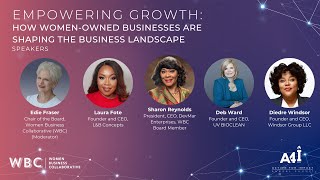
Empowering Growth: How Women-Owned Businesses Are Shaping The Business Landscape

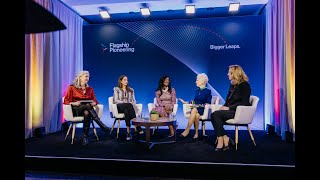


WBC A4I 2023: CEO Excellence in Gender Equality and Diversity Awards Opening Remarks Day 2