064. The Power of Brand Positioning for Building Demand with Jon Itkin
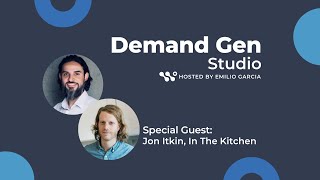
This is a transcript of a YouTube interview (Dec 7, 2024) where Jon Itkin—former agency/product marketer and founder of the positioning consultancy In the Kitchen—explains why CEOs must own company messaging, common positioning pitfalls, and how positioning differs from raw product capabilities. Key points: positioning includes trust, convenience and pricing (not just product features); Bain study cited that 80–90% of B2B purchases come from a buyer’s pre-existing shortlist; practical advice covers reverse-engineering buying triggers via 5–8 customer interviews and using AI on transcripts to surface themes and craft messaging.
Questions this video answers
December 7, 2024
80–90% of the products bought came from a buyer's pre-existing shortlist (per Bain & Co., cited as published in Harvard Business Review).
About two years ago.
Chapters
Foreign.
Hello everyone, my name is Emilio Garcia. Welcome to another episode of the Mangen Studio. With me, as always is Miranda Jenkins. How are you Miranda?
Good, how are you?
I'm doing good. And we also have a guest today, John Itkin. How are you? From in the kitchen. How are you John?
I'm great, thank you. Very happy to be here.
Thank you for joining us. So I will just dive right in. John, we connected over LinkedIn, you know, we, we're changing some messages there and I found your area of expertise quite interesting for our listeners. I think what you do is, you know, starting with me is typically misunderstood and really apply properly and I think it's super, super relevant because as you know, B2B marketers, demand generation practitioners, having positioning, branding, messaging right from the beginning is a great way to start your demand generation programs, especially clients. You know, if you're going to amplify something right through advertising, you better have a nail out very well. What is the message you want to convey? Because if not then you are just amplified garbage. So I'm really, really excited about it. John, tell us a little bit about.
You, about what you do.
How do you got into the industry?
Yeah, well, it's a long and winding road how I got to where I am today. I'll try to summarize it pretty succinctly. I started my life as a copywriter who was just a creative guy trying to find his way in the world. And I had a writing degree in, was interested in seeing if I could have a job and so it led me to become a becoming a copywriter. I, through just the twists of fate found myself consistently in situations where I was dealing with B2B marketing and complex subject matter, sophisticated products, sophisticated buyers. Right from the jump it was basically I was dealing with sort of dense and complex things, trying to make them simple and elegant. As a copywriter I got more into it. I did a lot of agency work. I became, you know, did more writing and creative work. I got very interested in strategy. I became a strategist and did strategy work. I became a head of strategy. I sort of moved to different agencies of sizes, different sizes, different sort of types of clients. And I wound up working in Silicon Valley and in through an agency called Article Group which remains, you know, great friends of mine and was all of a sudden embedded in product marketing organizations at great big companies like Google and Salesforce were clients a lot of big, big tech companies and it was, I was sort of like very embedded in product marketing processes and teams before I honestly even Knew what that was. I was just, let's just do the words, let's do the strategy, let's do good solid marketing and branding. And it kind of took on a life of its own. And then I got hip to what product marketing actually is all about. Went left agency world, went in house, ran product marketing in some startups and sort of integrated marketing. And throughout the whole time I kind of had this little buzz in the back of my head. It was like, you know, I think there's a great idea in here for me to have a consulting business where I help people sort through positioning, which is sort of my passion and core interest, but also bring positioning to life in, in different ways. And you know, twists of fate continued to play out. And then I wound up having a side hustle that became a front hustle. And then in the Kitchen was born about two years ago. In the Kitchen is at its core a positioning consultancy focused on, you know, sort of at scale growth stage B2B companies really for to, to work with me you really need customers, you need to be ready to kind of hit the button on growth. And it's really, I'm usually working with, with companies who are sort of at some type of like new chapter or crossroads. What got us here won't get us there. We have to think bigger, we have to go harder, we have to, we've reached a certain plateau and we want to get to the next, you know, so that's, I'm working with a lot of different types of companies of different stripes. Mostly tech, not all tech, some of it's sort of tech enabled service, that kind of thing. And we're working through how are we going to position ourselves, how are we going to change our positioning, how are we going to. Once we figure that out, we have to change the message. So it's usually positioning and messaging is really the kind of nucleus of what I'm working on with people. And I do brand work as an extension of that. So I don't take branding clients just who want brands from like a brand shop. But what I do do is I bring in some of these like very brilliant people who I've gotten to know over the years to help realize a new idea about how we'll position ourselves, a more powerful message that we'll use to galvanize the market and kind of bring it together in a revitalized package which is an updated and refreshed brand. And that's kind of where I stop because for as far as I'm concerned that's Sort of like the foundational things, the sort of very bottom of that layered sort of, you know, that marketing message stack, those marketing assets and then people, you know, then they go and run demand campaigns and then they go and create ABM campaigns and then they go and create content marketing programs, et cetera, et cetera. And that, that's like the next thing after I'm involved.
Yeah. Love it. Love it. I, I have so many questions, but probably the, the biggest one that I have and, and you know, I, I will also let you know, Miranda, to chime in on that one if you have some. But the biggest one that I have is from your experience, John, what are the typical pitfalls that founders, you know, CEOs and in general, the people in charge of the positioning, messaging for companies make? Right? What are the things that they get confused or put, you know, one thing ahead of the other? What are those people?
Yeah, there's a lot. So I'll just kind of think of a couple that I think are most dangerous, most problematic, and there's one that leaps to mind immediately. And it's actually not, it's a question not even of like this sort of tactics and process or whatever. It's a question of who's in charge and what's their role. And so I have like a line, like a stock line that I'll say a lot, but if you're in charge, you own the message, period, whether you like it or not, whether you recognize it or not. And so that, what I, what I'm saying is that, you know, it's the CEO who has to take on accountability and responsibility for shaping, owning and championing the message of the company is driving in the market. And so, and a lot of people say, well, no, that's the CMO's job. Or the CMO will say, no, that's my job. And I think it is the CMO's job too. The CMO should be the person facilitating owning, driving, creating, building that energy, using, you know, the team. But the, there has to be a high degree of participation and ownership. And I can sort of see when projects are like, I can. It's just much, much the likelihood of, of success for a project that I'm involved in goes way up when they're based on the involvement and participation of senior people and their feelings of responsibility for it. You know what I mean? And I try to get it every time. Yeah. But I think that's a really important thing. So like the CEO just has to take ownership because they, they are the sort of they have the biggest megaphone, like inside the organization, but also outside the organization too. You know, we live in a world where in B2B, you know, like sort of the personal brand of people leading companies is actually quite powerful as a distribution channel.
Yeah.
And so, you know, people can really make a lot of use of that. So and, and then, you know, if who's going to go on podcast and who's going to get interviewed and who's going to like present at big conferences and who's going to kind of be the champion, the avatar of the company, it's usually going to be that CEO. Yeah. And so that person really has to, when they, whenever they get in front of a microphone, that's an opportunity to reinforce a power, simple, powerful, simple and consistent message that positions their company and their product the exact way they want to be positioned. Great opportunity. The first 30 seconds of that interview, you're right there. Are you going to do it? Maybe you're a lot more likely to do it if you helped create that message. If you are so bought into that message as CEO that you were thrilled to do it. And if you look at the greatest CEOs of all time, their message discipline was very good. Like they are very good. The Benioff's, the Steve Jobs is of the world, are very good at being consistent with their messaging and positioning their products at every turn. Yeah. And it really worked.
Yeah. I, and I believe that you know, either instinctively or you know by instinct or in a train way, they, all of them understand that you are marketing or you, you are, you are sharing that position and you are sharing that brand. You are sharing your point of view all the time to multiple people. Right. Either to potential clients, to your employees, to your potential investors, to your vendors and suppliers, to your partners. You have to reiterate that positioning and that messaging over and over again. I think as you said, the great ones, they are in that mode all the time.
They're always doing it.
Might not be as, you know, public and some others, but I'm sure that the ones that we don't see on tv, the ones that we don't see, you know, on video, they're still doing it.
Exactly. You don't have to be like a freaking Mark Benioff playing at that level to still be a good champion and avatar of your products. I have another pitfall. This is like my such a big pitfall that I think is actually brutally hurting a lot of businesses right now. So this is the very deeply held bias and belief that success or failure in the market is a direct extension of the capabilities of our product, period. So the belief that if we win or lose, it is a result only of the capabilities of our product. Like, even if you go and read like some of the classic books or the books that everyone reads about positioning, like, I'm a big April Dunford fan and I'm very grateful for everything she's done. There's one point in her book though, when she talks about winning differences. We gotta figure out the winning differences between us and the competition. And the way the methodology that she recommends using is to talk about the product capability. What does our product do that people love? Like, of course. Right. Of course we start there. But the thing that really makes it tricky is if you snap back and ask yourself, well, why do people buy what they buy? Do we always buy the best capabilities for the job when we buy a product in our lives? Like, I think the answer is no. Like, we don't always buy the best thing for the job. Sometimes we buy the cheaper option, sometimes we buy the more convenient option, sometimes we go with just the trusted. The trusted option because it's not better. Well, I know that this new startup thing is better, but this, this other one's trusted. Like, like everyone, no one gets fired for buying, yes, blah, blah, product. You know what I mean? And so all those things being more trusted, being cheaper, more value for the dollar, being more convenient, that's positioning, right? That's positioning. So positioning is not just about here's how my capabilities fit a buyer's needs like a glove. It's basically, here's how my product is in position to be more successful in selling to my buyer.
Yeah.
Which means I have great capabilities, but maybe I'm also cheaper or maybe I'm really easy to buy, or maybe I'm like really good at showing up as a trustworthy trusted partner. Those are the things that you can really leverage to make positioning have dimension and also last longer. Because product capability advantages by their very nature don't last that long because someone else can just go and ship it. Yes. And now it's a lot easier to ship stuff. But you know what's really hard? It's like once you become like a great big famous company. Well, once you're like the well known sort of leader like that fame and notoriety is hard to displace because it doesn't live inside product like pixels and code. It lives in people's brains.
Yes.
A great example of that would be like OpenAI. Right?
Yeah.
Like, right, so open it OpenAI is going to enter a world where there are like our, where their product is probably at parody with a lot of different things. And it's probably, probably there already. Maybe like, I don't know, it's Claude Sonnet. Like, it's probably better and for some, for a lot. You know what I mean? But the One thing that OpenAI has that, that a lot of these competitors don't have and can't have is they got into everyone's heads first. He's very famous. All the hype, all the, you know, drama, all the notoriety, all the headlines, all that. What that did is that made Sam Altman and OpenAI very famous and gave them a huge, actually a credibility advantage and a convenience advantage really, because it's, it's more convenient to buy the company that you like. Boom. That you can think of off the top that, you know, others are using. Right, exactly right. It's credible because, well, everyone else is using it. And it's convenient because it's like, I don't have to Google it. I just go on their URL right off top of my head. There was this amazing study a couple years ago that I referenced a lot. It was done by Bain & Co. And it was published in Harvard Business Review.
Okay.
And they, they studied all these B2B buying decisions, like the actual decision processes and like thousands and thousands of. And they realized that 80 to 90% of the products that people bought in this, these buying process that they studied came off of a short list that they had before they started looking.
Yeah.
So basically that means they were in their heads. So 80 to 90% of these purchase decisions. And I'm submitted like we're talking about demand gen. So this is like. I don't want to know.
I agree. I have heard it in a, in a spin that the, the most powerful search engine is people's brain. Right. That's the one that you want to be first. But it's the hardest to measure. Right.
Because it's the hardest to measure and it's hard to crack you. Right. And you can't, you can't. Very hard to measure. Very, very hard. It's like how, how far. What's our brain penetration like? I don't, I mean, people have these different methodologies around that approximation with, with some grains of salt. But I do think it's sort of when you recognize that, that product capabilities alone don't sell my product, that it's very powerful to generate demand upstream before purchase, like before buying processes are triggered, I think that can Evolve your orientation toward demand gen in healthy ways. I just think it can, and I think it can do that by helping you develop just a more honest sense around what positioning really is and how to do it well. I think it can help you develop a really more authentic sense about what your competitive advantages really are. Yes. So that's what positioning. If I'm doing positioning work with somebody, like, you need to walk away knowing like this is what our advantages are. This is what we're going to lean into. So like, let's just say going back to my example, like my, it's not just product capabilities, it's also these other things. Like, let's just say we walk away being like we've learned from looking at our product, looking at our market, looking at our competition, talking to our buyers, just chewing on this, thinking it through, that we're actually really cheap and people love it. That's great.
Yeah.
So go make a bunch of ads that say we're a really, we cost, you know, one third the price of the leading blah. But we are just as good.
Yeah.
You know what I mean? That's nothing wrong with that. And like that's probably going to get.
And I took clients, I tell clients about that idea that is that price is a risk mitigation factor. Right. When, when, when you want to reduce risk, you can either bring in a ton of social proof. Right. And you know, you are, you are, I am IBM, you know, you'll be okay, that's great to you an example. But if you have that price is a way to manage risk, right. Because you can, in the, in the, in people's minds is, well, I can risk this amount.
Right.
Is manageable and I can try it out.
It's very powerful. It's very powerful. If you go back to the four P's of marketing, you know that from like the 1970s, price is like, that's a marketing lever. It's like as a marketers, they push it, they pull it, they move it so that they can move products more efficiently through to buyers. Like, you know, but like we, we've, we've, we have definitely, I think in our industry, like dramatically reduced the scope of marketing in ways that I find unproductive and sort of unhelpful. You know, we've, we've reduced marketing to being like campaigns and ads and, and, and, and I think that we have to think more holistically about going to market. And that's why I like positioning as a sort of an activity because it asks you to do that. Yeah, no, I do it.
That is because, for example, the way that we apply it when we are thinking about campaigns, either, you know, broader pay media or ABM ones is. Yes, we want to map out the type of companies that you want to work with. Right.
As a client.
Yes. We want to understand the buying committee and the nuances of each of the potential buyers. Of course.
Right.
We want to know their challenges and their pain points and the goals and all those things. But you said something that I translate in for us. Translated. What are the triggers? What you were describing at the beginning, right. Is you can have a company and a person that, that neatly matches all the things and therefore will be a great buyer for your capabilities. Right. For the things that you will.
Yeah.
But something has to happen in the life of that person that triggers the moment where they say, you know, I got to find may. They might be a very aware of potential solutions, but that trigger is the thing that we have to go after to be successful in our campaigns or efforts. And which is what I believe you are translating to be what are your, you know, the more emotional things that your brand brings to market? Because if you don't have those triggers, then you can be on a campaign forever and someone will not move. Right. They will stay on this kind of quo.
Yeah, you know, that's such an awesome point. And in my work, like my sort of standard issue workshop that I'm doing, I always talk about buying triggers because to me there's a couple ways to look, think about it. So if I don't understand the buying triggers, how can I understand who the competition really is? Yeah, right. So like we assume because we are this type of product, our competition are other products like us or the classical sort of classical mistake, the startup assumes that their other competition is the other startup, like their startup, when the reality is that they put the. All the startups in the category collectively have 0.01% market share and whiteboards in Excel has, you know, 99.9% market share. That's like the classic like. But I do really appreciate how April Dunford talks about competing alternatives and understanding them like what are the. Not the competition, the competing alternatives from the point of view of the buyer. Yeah, I can't know who that is if I don't know about a problem. They're trying to solve that and like the trigger event that led them to want to solve the problem. I definitely think that trigger events are so great if you want to think about crossover between foundational positioning work and demand gen. Like if we do a good positioning. We really understand a bunch of things, like who our best fit buyer is. Like, what's, you know, like, like what's our target segment? What's the sort of ICP look like? What's the kind of who is the buyer, you know, the champion at the center of the deal. All that. But also, like, what is causing them to enter a buying cycle?
Yeah.
And what are they looking for when they go into the buying cycle? Which then makes it a hell of a lot easier to figure out what to talk about when trying to capture demand because they're in a buying cycle. You know what I mean? Like, like, yes. You know, the Bain study is what it is. But of course we got a scrap for everything we can get. We gotta fight. We got to show up. Like, we, we gotta. We gotta. We gotta play to win. It's a tough world out there. Yeah. You know, so, so being really like, like knowledgeable or to buying triggers. Authentic, you know, like, not like, honest. Like, don't, like, you know what people do? This is what they do. This is what bugs me. We go in a room and it's like, let's talk about positioning. Okay. Let's talk about the buyer. Who are they? What's the problem they're trying to solve? Like, what's, you know, what are their motivations? What are the jobs they're trying to do? What are the buying triggers that lead them? And the person who answers those questions is the, The. The sales seller. Yeah. Right.
And like, marketer, even worse.
Right.
That have never talked to the client.
Yeah. Because the, I mean, marketers might not have spoken to buyers that much.
Yes.
And which is bad. Okay. Just if you're. Please talk to your buyers. It's not that hard. But. And sellers talk to buyers all the time, so they should know. Right. They should know all about this. Right, Right. They know. Right. Because they talked about it all day, every day. Do it for years. There's a problem with that, which is that sellers talk to buyers only in very specific contexts with very specific objectives. And their objectives aren't really, like, we're going to do discovery, but we're not really there to, like, learn deeply about and develop deeper insights about buying triggers. And like, we have a billion GONG calls that we can, we can put go and like, do whatever the hell GONG is doing now with AI to say, tell me about the buying triggers people talk about in these calls. And you should do that.
Yeah.
But my point is if you, if you simply just only ever get it that way, and you never just take the time to just sit down and have like I do these conversations with buyers that are basically reverse engineering the journey. Like design a conversation that's designed around like let's like with positioning in mind. Like and it's, it's just, it's like a this like simple set of open ended questions. But it's just they're different questions that a seller is going to ask and they, and also the entire conversation is dedicated to answering them.
Not like, yeah, not due to make a sale. Yeah, because.
Yeah, right. Yeah, it will.
The way that the customer will answer if they know there's a buying process will be completely different than if they're just having a, a casual conversation even of something that was already bought or was not bought. Right. Like, yeah, I didn't buy from you guys. Let me tell you why. Right. And what.
Yeah, right. That's amazing. Right? That's amazing stuff. And like, so if you can just sort of walk like what I like to do. I learned this from wonderful qualitative researchers. It's just sort of like trying to sort of take people on a journey back in time and how help them just describe what happened. Like just don't tell me what you don't tell me why, why is this better? What's this better? Tell me what you did. Tell me what happened next, then what happened and then what'd you do and what, what made the difference? And you sort of worked your way into more specific questions. That's like what is the impact of this technology? And you know, how did you evaluate which one was the best? And what about this helps you convince others that it was a great choice, like stuff like that. But, but the overall gist of it is just like take me through your process of getting, getting here. Yeah. Within an open minded way. That's not like leading the witness and that will be really powerful. And I think that if you like let's just say you're a product marketer or like, like you or like someone you're in like you're the head of demand. You're listening to this podcast. What do you do with that? Five calls, eight calls. Like identify like in segment. So we have our segment, we have our icp, we have our like definition of who we're talking to. Yeah, just like embrace curiosity and say to yourself, you know, just, wouldn't it be interesting to just chat with some of these people and then have a structure to the conversation, keep it open ended and it like honestly it can be as simple as this I mean if you go on my LinkedIn, you can see I've posted about it. But it's as simple as, let's just go back in time like toward, you know, when you tell, you know, when you decided to work with us and the weeks and months before that and it's just like what was going on, what happened? And you know, how did you, you know, it's like you're trying to get to like how did you get to our doorstep?
You're trying to get the triggers.
Yeah. And so you can know a bunch of things, jobs to be done, motivations, triggers, buying triggers.
Yeah. The lenses on. How do they see their problem, how do they search for it? Which is not as you said. Right. You are not searching for the name of this solution, you are searching for solving a problem. You describe it in a very different way when you're doing the search.
Yes. So great language around the problem is gold. And let me tell you, with my five calls, my five to eight calls. Okay. Or let's say you're a demand gen agency, like build it into your process if you can. It's hard to get those calls booked for the record. Hard you, yeah, but, and you want to talk to happy customers, not unhappy ones and they like, you know, anyway, you record them.
Yes.
And then you put them transcripts into chat GPT or if you can and if that's okay and you say hey, like what are the through lines, what are the themes, what are the triggers from this specific data set? And gut check your own thoughts, which you already have. You don't have the machine do the thinking for you. You have it make sure that you're not being biased in how you like react and you don't have happy ears and you're not just this over indexing on the last call you had. And then you can also have it generate ideas like creative, I mean like you know, you can have it generate copy, you can have it do cool things. You can have it. Or just help you figure out how to do like design a process to help us come up with great ads to do, you know, describe the need that you have. So there's a great ways to use this as fodder for AI that like it's very bespoke, you know what I mean? Like if you're going into AI with five calls that only you had, only you had those calls, no one else has that data. You're not being like a lame sort of like I'm just sort of defaulting to AI averaging the Internet like to do my job for me that's like. And come up with uninteresting things. You're saying I'm asking it to react specifically to a very constrained and data set that only belongs to me and I'm controlling it and I'm using it as a springboard for my own ideas. I think that's a really powerful way to engage with AI. Yeah.
I have a couple of questions for you, John, just out of curiosity. I guess in my experience, limited experience with position and all that, I find two camps of, of, you know, leaders that either they are in the camp of we are unique, we don't have competition. Right. Most of them have that syndrome that you're describing of they, they not seeing alternatives. Right. The best example that I use all the time is the restaurant that said there's no, there's no few, you know, like there's no Japanese fusion restaurant here in the whole town. Yeah, but people with free time has. One of the things that they can do is, can go to your restaurant, but they can do so many other things. Your competition is huge. So there's this camp of people that don't see alternatives. And then you have the, the other camp of people that, or companies that they don't want to commit to a, a position in the market. They don't want to, they don't want to have a exclusive point of view because they consider that a way of giving away market, you know, opportunities and share. So that's one, you know, what are your thoughts on that one? How do you, what do you find typically more.
Yeah, well, they both sound pretty startup, you know, like those are the points of view of people who have, don't have years of experience in the market, honestly. Because that will teach. Because it will humble you. Yeah. So it's. Those kinds of points of view are sort of like, you know, sort of feel like young, like young company kind of points of view. Yeah. And I do encounter them, you know, like I increasingly am working with more mature companies that are sort of have like gotten past those kinds of problems. And it's just sort of like if you're working with me, you don't need to be convinced that positioning is something that deserves your attention. Yeah. You know what I mean? Like it's pretty like serious, like you're already there. You know what I mean? Like, I don't want to spend my time on like a sales call trying to convince somebody that they should think about positioning if they don't think they should. Yeah. But my point of view on both those problems is that they are very, they are certainly very common. Right. So the first one, we don't have any real competition is just not that that's a result from having a sort of shallow or inauthentic point of view on your, on the buyer and the problem to be solved. So if you solve a problem for people that is like widespread enough to like support your business, then there are other ways that people are using to solve that problem and you do need to be aware of them. Like there's this sort of, like there. I like what people. The problem with this sort of especially attacking startups is like we sort of ping pong to this pendulum and it moves over here, we lurch over there, we go too far this way and we go too far back the other way, which I actually think is a function of perverse incentives of social media algorithms. But that's a whole other conversation. Okay, but so it's like, here's a good idea, let's see how far we can go with it until it's a bad idea. Oh, it's a bad idea now let's go have a reactionary response and kill it. It's dead. But anyway, sorry. So this idea that we don't have any competition, I think people can spend way too much time freaking out about these perceived competitors. And like, you know, like you can just really give yourself a complex by spending too much time sort of like staring at companies that you think are your direct competitors. And so it gives us this idea that, well, we should just be above that. That's healthier. Like if we don't, that we'll think bigger, we'll think bigger. If we don't be like, oh, I gotta compete like punch for punch with these seven companies. I get it. However, a healthier way to go about it would be just, just understand what the competitive alternatives are. Frame that in a clear, useful way, keep up with it, update your understanding and know why you win against them. Like there's a, that's a different thing than being like, I'm gonna do a constant daily check on all my direct competitors to see if our features are at parody. That's just a different thing.
Damn.
So sort of level yourself up. Don't go into the weeds too far. Level yourself up and say, what are the alternatives? Summarize them, categorize them, know them and know how you are beating them. Yeah, that's, that's a good, that's a healthy competitive awareness.
I love that. I have one last question. In your experience or at least for the company. The type of companies that you work with, do they typically have more of a positioning problem or a messaging problem? And how do you, if you are a, if you are a CEO or a founder that are struggling with those topics, how do you, what are the symptoms that you can use to, to see, you know, do I have a positioning problem? Do I have a messaging problem?
Yeah. Okay. So I think that, I mean, I work with people who have both of the problems, but sometimes like the way into the problem is through one or the other door. If you know, and like I'm willing to. If it's like a, for like a big company with a big messaging problem, like I like to talk, that's cool with me. Generally speaking, I really want to talk about positioning, period, and then do other things. So I want to start there. I think that there are lots of symptoms, like classical symptoms of positioning problems are, you know, just having very inconsistent understanding of what your product is. And so having first calls. Like the classic one is like our, our Reps are spending 20 minutes of the first call just trying to explain what we are because they're wrong. Because they have the wrong idea. The buyer, you know, that's like the classic problem. No, really, we're not. That, that's actually not what we're all about. That's a great symptom. Another one is just sort of like the company just doesn't really know who the buyer is. There's not agreement like, like on basic level, like, are we, what segment? You know, are we really Are really. Are we interested in mid market enterprise or SMB in our world? Like, where are, where's the focus? You know what I mean? Like, sometimes people can't even answer that question. That's, that's a, that's a positioning issue. Like a lot of, a lot of positioning problems manifest themselves as messaging problems where like the message is inconsistent. Where I got this rep is saying thing A, this one is saying thing B, this one is saying thing C. And marketing is saying things D, E, F and G. And none of them are kind of the same. They're all different because there's a lack of consistency and leadership and ownership around driving a clear, simple, concise message. Which gets back to my point about the CEO has to own it. It's like sometimes, sometimes the CEO has to go bang on the table with their fist and say, stop, you will stop. It's okay if you disagree, you will commit. Because I have to leave this company and it's imperative that we make some Clear, sharp decisions right now. Therefore, I'm asking you politely to change the message and align to this one message. And it's hard to reel that in. It's really hard to reel that in when the message is like gotten away from you and you have like a sales org and there's like people have been selling for a while and they've been there for years and you have, you know, a marketing org and they've been doing their thing for a while. Yeah, it does, it takes somebody inside the company kind of has to be like, I will take responsibility. I am saying we're doing this. Yeah. And that's, and that's a big issue. But that, that, that, that's the variety of message, the sort of inconsistency of message.
It's a great tale. Awesome. Well, man, you have, you have shared with us so much. I really, really appreciate it. I don't know. Miranda, you have any comments or questions for, for John?
I do have a question. I don't know how long of a rabbit hole it's going to get down.
Do it. Get it. Let's go.
I would love to hear more your like, hear more about messaging strategies and like how you. So I have very limited experience in B2B. This Boundify is my first experience working in B2B and so far I feel like I've seen messaging strategies as like where it's split in two, where you're focusing on pain points and like the problem that the customer is facing or you're focusing on more like pleasure statements like what the solution that the company provides and all of that. So I'd love to hear your take on like, is that the two camps are there. Like, what are the, you know, what are all the avenues and what, what makes you decide what messaging strategy you go with?
Yeah. So one of the things about messaging that is tricky and sort of confounding for me is that there's sort of like this idea that people want to have religion around it. As in like if you go on LinkedIn, it's like thought leader or person says this is the way to do messaging and that one says that's the way. And everyone says, no, my way is the way, here's the way. And be. Anybody who says here's the way is. Is instantly wrong because there is no the way. And unfortunately when I say things like that, it doesn't, it's not very popular to say that it's. But it's honest. That doesn't mean that there's no answer to Your question, it just means that the answer is dependent on the situation. And one of my favorite why I like to start with positioning work before doing messaging work is that essentially when we're doing positioning work, we're trying to walk away knowing this is our unique, differentiated value. That is very hard to get in any other way than with us for this person that we have isolated as our best fit buyer from our target segment in our target category. So if I just throw those two things, unique value, best fit buyer, and in the process, I've unlocked things like, what are the buying triggers? You have a lot of opportunity to do messaging work now that is authentic. Like, usually the message I try to lead with is, what is the unique value for our best fit buyer of our best fit, our target category? That's a good leading message.
Really cool.
You know what I mean? But the question of, what is that value? How do I articulate that value? How do I phrase it just so how do I make it stick in people's heads so they remember? It is a wonderfully unanswered question. It is a beautifully unanswered question because it allows you to be creative and it. And it's. And it gives you the freedom to not treat it like a math problem and you can treat it like a creative problem. So, you know, whether we're selling, like, we should really, like, like, sell to pain points, like, if you're experiencing these pain points, or we should really go hard after this competitor, we're 10 times better than this competitor for this price, or we should be. We should really lean into, like, cost to value because it's like, here's like, you don't have to spend 20 bucks a month for, you know, call recording software anymore. How about two? Or, you know, like, whatever those things are, is. Is really just a reflection of the differentiated value of a product. And so you don't have to have like, religion about, oh, it's gotta be a problem statement, or, oh, we really need to like, you know, I'll go all in on buying triggers, but maybe you do, you know what I mean? Like, you just like, like, like you can just sort of pick the. The way in that is most authentic to your product, the value it creates, and the pains, problems, and needs that the buyer is trying to reckon with.
That's good.
Awesome. You're good, man. Well, we cannot thank you enough. I think we unpack a ton of things on this one. Really appreciate it. John, if people want to, you know, connect with you, learn more about what you do, what would be the best place to do that.
I have a website, it's inthekitchen is, you know, I'm still a one man band, so I'm making it better and working on it. But you can go there, check it out. I am a very frequent poster on LinkedIn. You can catch me there. And that's pretty much. That's pretty much it. I would say go to my website or find me on LinkedIn. And I'm always interested in saying hello. So I love meeting fellow travelers and adventurers and happy to chat.
Fantastic man. Well, thanks so much, listeners. Until the next one. And John, thank you. Miranda, thank you as always.
Take care. Thank you so much for this. This is really an honor. It's been great pleasure. Yeah.









