How Ryan Closed $159K In His Agency - Master Filmmaker Case Study
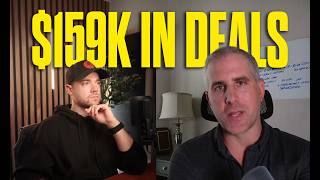
In this interview, Master Filmmaker instructor Eric Deeran talks with Ryan Maloney, founder of Media Love, about how Ryan transformed his creative agency from a chaotic, project‑based operation into a revenue‑driven business that has closed $159,000 in new contracts after joining the Master Filmmaker program. Ryan recounts his early career (Turner Broadcasting, agency work, night‑time freelance gigs) and the initial struggle of relying on ad‑hoc pricing, inconsistent client flow, and a lack of clear service positioning. He describes the core problem: scattered service offerings and a fear of sales that led to lost deals and volatile income. After joining the program, Ryan adopted three packaged pricing tiers, clarified his value proposition, and began using paid Instagram ads to target higher‑value verticals such as beauty, airlines, and medical practices. The new structure made negotiations smoother, helped clients self‑select tiers, and resulted in notable wins—a $59K beauty client, a $90K airline contract, and a medical‑practice deal—contributing to the $159K total. A major mindset shift turned sales from a dreaded activity into a coaching conversation focused on helping clients achieve their goals. Ryan also shares his first impression of the Master Filmmaker ads (they resonated with his frustrations) and offers advice to other creatives: invest in a proven sales system, be willing to do the work, and move away from the “send a proposal and wait” model. The interview ends with Ryan’s contact details (medialove.com, Instagram @rymaloney) and a forward‑looking note about scaling to even larger deals.
Chapters
What's going on, guys? I am here with one of our clients, Ryan, from Media Love, who's closed $159K since working with us. Some of those existing clients where we changed some of the packaging and pricing, and then a couple of those and one of those from the ad system where we're going after medical companies. Ryan, what's going on? How are you?
Good. How are you?
I'm good, man. For anybody who doesn't know you, do you mind giving us just a little bit of backstory on kind of where you are, you know, how you got to this point, maybe a little bit on your story, how you started the company, and then we can kind of roll from there.
Sure. So I started the company in 2013. I was previously working for agencies. I started off at Turner Broadcasting in 2005, learned the ropes, worked for a few startups. Then when I got into agencies, I would be the designer and the motion designer and the editor fulfilling all of the projects for clients. But I would always be so interested and curious, how were they landing these projects? Like, were they at a sales team? These salespeople, like, how, what was the magic they were working? Because I'm doing all of the work here. Why? Why can't I do this on my own? And then I would take on some projects at night. I, I used to do animated music videos and made one for a guy named Asher Roth who was in, in Atlanta at the time, uh, and that took off. And that was the first I would get inbound leads from my personal work. And then I just wanted more and more of that and then started picking up clients at night to the point where I had more clients than my full-time job. And then that's when I started Media Love. But the first 12 years of Media Love, I mean, even up until this year is it was all about create. I thought it was just you create great work, you get leads that scales and grows, and it's true to a certain point, but then any dips in the economy, any layoffs at companies, then you lose those clients and it's a complete roller coaster. Yeah. And I've always thought back to those salespeople at the agencies and thought that I need to implement that in my business because I need constant lead flow and constant projects coming in.
So I'm not just creating this work, de-risking yourself from people, like, so you don't have just a few clients where you're like, oh shit, like if they leave, I'm, I'm done.
Yeah.
That kind of thing. Exactly. Makes sense. And so like, what, what do you feel like was the kind of the biggest problem before you jumped in with us? Was it more of like the, it was kind of that, like, how do I get clients? How do I get those leads? How do I get the flow? Cuz to your point, I think it was, it's, it's a really good point. It's like, I think a lot of people have amazing work, But if you don't know how to market that in a way that's gonna get clients, then it's gonna be difficult to find those because it's like, it's the whole starving artist kind of mentality where I was stuck in there a lot when I was a freelance TV for a long time. It's like, hey, I'm so good at what I do, people should just find me. But that's just not the case, you know? And I think you've, you've seen that too.
Yeah, I think it was that, that is the major frustration. Also, I would, there would just be shakeups at these companies. I'd land a retainer. And then the person would leave 2 or 3 months later and it was just all over the place. And I'm like, how can I set up? And I'll look outside of the design and video industry at other companies that have sales processes and are marketing themselves and putting their face on camera and they're generating more business than companies that are great, but nobody knows about them. So I really just, I wanted to commit to the sales process, to learn sales, to learn marketing and make that my business. And then the fulfillment is always gonna be there cuz I love doing that. It's easy for me. It is easy for me to hire people to and manage that. So I just wanted to completely flip my business around and figure out what I was doing wrong and how, how I could fix it and just—
would you classify yourself as an animation business? Is that how you would, like, how would you classify your company? Cuz you do a lot of animation, obviously. I'm just curious like how you kind of classify it.
Yeah. Well, I, I think that that is also at the root of the problem of my business. I wasn't very focused. So I call myself a motion designer to one client, but I'd be a graphic designer to, to another client. Other clients are hiring me for video editing, and then I get hired to do book speaking for like illustration projects.
So it's—
Yeah. Okay. All over the place.
The fulfillment process was just different every single time, it sounds like. So it was just like, there was no consistency with like, it wasn't the same kind of fulfillment process. It was always a little bit different. And with these retainers, with these larger companies, were they, larger retainers? Like, what were some of the sizes, like deal values of these, these types of retainers? I just think it's helpful for anybody because we talked to a lot of people in the same position. So it's like, I guess, what kinds of deals were those looking like? Like, what did those retainers kind of look like with the companies that you'd work with?
In the positions I would put myself in as the creative, I used to think that I was in a powerful position, they would just hire me to do this, and they would pay me and it probably averaged out to be maybe $50,000 over the year per client. Okay. And then, but there's ups and down months. So sometimes if you're billing by the hour, you're gonna have a great month and then they don't need you the next month and then it's gonna average out to $50K.
So, yeah.
And you don't know if they're gonna come back.
So, yeah.
Working with large companies or with corporate companies is, is pretty difficult in that sense.
Yeah. And I don't think it's bad to do that. You just wanna have something else on the side as well to, to keep that buffered. Tell me a little bit about the, um, cause I know you posted a win in the channel around, I think you closed a beauty, a beauty company for, what was it, $59K, and then an airline company at 12 months for $90K. Tell me a little bit about like the experience. You said you had never used like pricing packages. These were previous clients obviously that you had worked with, but I guess you re-engaged with. But tell me a little bit about that experience and kind of like what you changed after working with us that maybe you feel like helped you land that.
So beforehand, the clients would come to me 'cause they knew I could do the design or the editing work. And I would just give them a price per project or a price per hour, a price per month, and that would be up and down all over the place. And then after working with you, I narrowed in on my offer. I said, this is, this is exactly what I do, and these are the 3 pricing tiers that I have. And then I put that in front of the same clients and I watched how, how much easier that process was. They began to negotiate against themselves. They would look at my higher price and say, no, we want the lower price. Then they'd end up in the middle. And it was a much easier process of landing that and increasing what I, what I had done in the past with them.
Nice. That's cool.
Yeah.
And previously you had just custom quoted one price, if I'm correct, when you were doing that, and then they would just try to maybe walk you down from that. Is that what was happening before?
Yes. That's how it would always happen. And occasionally they would lock in on one price and then halfway through the project they say, yeah, the video doesn't need to be 3 minutes. It, it only needs to be a minute. We want to cut this off the budget. So yeah, they have ways to trick you out of the, uh, the full budget.
Of course. Of course. And now we're obviously going after, like, we're going after medical companies, medical practices, and you closed an A deal there as well, which would equal the total. What's the experience been, kind of the mindset shifts behind, like, hey, I'm, I'm gonna now transition into working with medical companies? Because you've done a really good job with the ads and with the sales process. I feel like you've come insanely far away of, like, before versus where you are now in sales. Talk a little bit about, I guess, like, what you feel like some of those big breakthroughs were on the sales process specifically, like some of the calls and the flows and stuff?
Well, the funny thing is before this, before joining, I hated sales calls and I thought I could just make my work better and that would reduce the amount of sales calls I would have to have.
I think you're saying what every creative is thinking. Why did you hate sales though? Like why did you hate it so much?
Because I think growing up you would create things and people would react to it and that would generate the demand and it's true, to a certain point, but it's the word of, that's just word of mouth. And word of mouth is not controllable. You need paid ad systems to do that. But where was I? We were talking about before I had to—
Like in the sales process, I think a lot of people hate sales because they feel like they're pushing people to do things. And like for me, when I first started, and I think a lot of other creatives feel the same way, they're like, I don't wanna be good at sales because then I feel like I'm manipulating people to do things they don't want to do. When that's not the case, that's not what sales is. What sales is, is, helping people understand if this is the right fit for them and then helping them make whatever decision they feel like is best for them. And I think I saw you go through that mindset shift as we were working with you, because you're like, well, what if I say this versus this? I'm like, you're not doing it to them. Like, you're not— selling is not something you're doing to them. It's something that you're doing for them to help them grow, to make the best decision. And I saw that a lot within your process and kind of just your coaching with us too, which I think is super interesting.
Yeah, that's what I've learned. That's been, been biggest mindset shift is that sales is not selling or saying the right thing, trying to trick someone into buying from you. It's coaching and it's figuring out where they are and where they want to be and helping them get to that point. And then it's much easier to have a conversation. That's, and then it's not sales to me. Then it's just, all right, let's figure out a way to get this person what they want.
Yeah.
And what I can deliver and, and build that bridge to get them there. So, yeah, that's been the big transition. Yeah.
I think people are like, they, they don't want to do the sales, so they're like, I'm just gonna send a proposal or I'm gonna send an email or I'm gonna send you this thing and just be like, here you go, you know, let me know if you want to do it. And then they lose so many deals because they don't actually want to have that conversation, you know what I mean? Which I think is huge.
I probably lost 500 deals doing it that way.
Oh yeah, I know it is. It's crazy. It's like just people just want to be walked through something. And it's like what Sarah Peacock was saying on the call on Wednesday, it was like, or Monday, she was just like, because she's closed a ton of deals, she's like, just take the time and put some effort into like Speaking to people, helping them understand how your solution is going to help them. And if you just put a little bit of work into it, like people will close and they will move forward because you actually put some work into it. You didn't just like lazily send them a proposal and be like, see you later, whatever, right? It's like, I think that just rings so true where I think a lot of people are scared of just having that hard conversation and it loses them a ton of deals at the end of the day. You know, I'm curious, how did you end up finding us specifically? Like, how did you find the program? How did you find out about us? Like, what was the main?
I found out about Master Filmmaker through ads on Instagram.
Okay. And what did you— and you, I want you to be completely honest. What was your first impression? Was it like, this guy's annoying? Was it— cause I, I think so many people see my ads and it's good for them to kind of see what someone first thought of me versus what they think of me now. Like, what was your first impression when you saw our content, our ads? Like, what was that?
I actually thought to myself that your messaging was ringing true with the way I was thinking and feeling. And I said, I'm gonna go through with this. I'm just, you know, I'll fill out the lead form because I wanna learn what this is all about. And if this system is making me do this, then this might be a system that I want because it's, it's gonna get other people to take that step.
Cool. Yeah, no, that's interesting.
But I, I would say being on the inside of the program versus the ads on the outside, it's exactly what you think you're gonna get. I mean, the ads are what we're talking about in the program and Yeah. You know, you're exactly like you are in the ads and there's—
I hope it's good feedback. I'm always open to more feedback and constructive stuff, but no, that makes sense.
Yeah. No shadiness whatsoever. It's like, it's, uh, yeah, it's, uh, totally changed my way of thinking about sales. Pleasantly surprised. I love it, man.
And it's just, it's just the beginning too. Like once we, you have some ads that are working really well, once those start really taking off, we're gonna have a lot of clients and we're gonna have to keep up pretty quickly with that, which is huge. Last question, I guess, if anyone is maybe on the fence about just booking a call and seeing if this is the right fit for them, like what advice would you give them kind of knowing what you know now? Because obviously it's an investment, you have to invest in yourself. It's not a magic pill for everybody watching as well. You have to do work. It's like, what advice would you give them if they're hesitant about maybe even just booking a call and speaking with us?
Well, I'd say if you want to stay the way you are doing exactly what you are or doing exactly what you're doing now, chasing clients, sending out proposals, hoping that there's gonna be work tomorrow, then yeah, don't click that button and don't talk to you. But if you want to immediately start seeing clients that don't bat an eye when you give them a 5-figure or even 6-figure proposal, then you should definitely give you a call and at least discuss it because there are sales processes and techniques that you'll learn in this that will completely change the way you think about sales and marketing, but completely change your business and how you spend time. And it, you immediately start to see the light of like freedom at the end of the tunnel, probably within your first 2 weeks. And then you just have to put the work in to get to that point.
Yeah, for sure.
It's definitely worth, you know, it's worth a quick chat. Yeah. Yeah.
And you, you said the, the, the keyword there where it's like, you just have to put the work in. You just have to like believe in yourself and, and do the work. We give you the tools. But you have to come in and actually like do the stuff we need you to do to, to get the result at the end of the day. Ryan, where can people find you and your company if they want to learn more about you?
You can just go to medialove.com or Instagram @rymaloney. That's the— yeah, @rymaloney is my handle.
Cool. Sounds good, Ryan. Well, I appreciate your time. I'm excited to do another one of these once we are closing half a million, a million deals, and we'll see you there.
Let's do it.
Awesome, man.









