Live Q&A
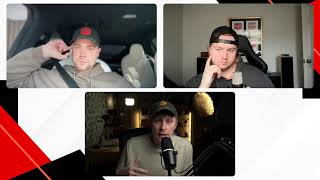
Eric Deeran hosts a live Q&A with Ethan and Evan about scaling a video business. They discuss selling outcomes instead of deliverables, handling sales calls effectively, and training employees to overcome limiting beliefs about hiring.
Chapters
You ain't gotta ask me, we can hit the road, got room in the backseat? Boys from the back street come so far Just singing over rap beats? See you on the way up, only looking down, Remember seeing where we came from? You ain't gotta wait up, never gonna slow back down? There's no shit now they can't take us down? There's no reason to fight this feeling Cuz a lot is right, yeah, it's all right? And there's no reason to stop believing to fight this feeling, yeah, love this life, yeah, love this life, yeah, love this life, yeah, love this life. I won't wait around for the cur. Life is not a race, it's on big show, I can see it now that the truth is go feels like letting go. Love this life, it feels all right? And there's no reason stop believing. Love this life. And the future's bright and there's no yeah, love this life, yeah, love this life, yeah, love this life, yeah, love this life. Love is life cuz I love this life. Everything's all right. It feel just right. It feels all right.
What is going on, guys? How are we? We are back for another live. I'm here in the car, traveling, so excuse the. The background. Ethan, what's going on, dude? How are you?
Not much at the supercharger right now.
Supercharger, dude, you can kind of see it behind me. I'm just charging up and figured I'd jump on here. Just been a. A travel week, so it's been a bit crazy, but want to jump on here, answer any questions you guys have around, scaling your video business, how to grow, how to get more clients, and we're gonna cruise through that today. I see you guys popping in here on YouTube. If you're tuning in, drop a comment down below, let us know where you're calling in from. And Ethan, what's going on with you? What are you seeing on the client side? How can you know? What are some of the things that you're seeing over there?
I mean, biggest thing talking about today, I guess this week is sales as usual.
Okay.
You know, kind of things between. Like a discovery call, seeing what the client needs are, you know, what's. What is point A? What is point B? You know, where we're looking to go, and then coming back with a. With a second call with a, you know, a diagnosis and an offer from there.
What do you think the biggest kind of problem is people have in the sales call, like, in the conversation, like, where do you feel like they maybe fall Short in some of those things, like, what are they doing? Maybe not getting enough problems, not getting enough pain points. Like, what are some of the problems that you're seeing there?
Yeah, no, that's exactly. It is. The is the pain points is, you know, why. Why are we doing this? What are we looking to do versus just asking, you know, like, do you guys want social content? Do you want a brand video? Do you want testimonials? And not focusing on the outcomes of, like, what does that do? And using the video as a vehicle to get from A to B. Yep.
So, like, understanding what problem your content actually solves at the end of the day and how it gets the client some sort of tangible result in their business. And if you're not doing that, then they're really just buying something that's kind of a nice to have, not a need to have. And it's harder to command higher prices and. And ultimately get them, you know, get them locked in on a retainer. Because I hear it all the time. I'm like, oh, well, my market doesn't want to pay for retainers. And it's the same markets that our clients are going after and landing retainers in. So it's like, if your clients are saying, well, you know, we don't want to pay for retainers, is that like a you problem or is that like the market problem? And a lot of times it's a market problem because they just don't see the value in paying for retainers. Right. And that's ultimately what it comes down to. It's like, you have to show them the value. It's not the client's job to understand the value. It's your job to help them perceive that value. You know what I mean? That's ultimately what it comes down to. And I think a lot of people get that wrong. What are you seeing when people are kind of going through this conversations, like, where do they get. Where do they get hung up a lot of times?
Yeah. I mean, I would say the value is a big part because, you know, you can't just, like, walk, you know, like, especially if you're doing outbound, you can't just, like, walk up and ask people, you know, hey, do you want a brand video for $8,000 or whatever you charge? It's more about, hey, do you want to build a system? Or, you know, have a way to consistently bring in clients that trust you and like you and know you, Versus, like I was saying, it was like, do you. Do you want video? Right. So it's what is it going to do for you?
Sell them the outcome, not the actual deliverables. It's like, you know, I think we.
Talked about it last week is, you know, we're selling the vacation, not the flight there.
Exactly. Yeah. I just. I was just. I got off a flight. It's like, they don't sell you the cushy seats, the snacks, the, you know, the leg room. Like, yes, that's part of it. But really what they're doing is selling you getting to a destination, getting to the world. Like, if you look at Delta's commercials, they're selling you connecting with, even, like.
The little inflight video that they show. Show you. Like, it's not about, like, hey, we're gonna give you snacks and a. And a Diet Coke on the flight.
Like, you're gonna love riding on this plane. It's gonna be so much fun. It's like, exactly.
You're gonna see the world and. Yeah, let's talk about the destination.
Yeah, exactly. Yeah. Evan. What's up, dude?
How are you?
How's the workout?
It was good, man. Strength day. So my legs are jello.
There you go. It's always a good day. We're talking about selling the outcomes, not selling the.
The.
The deliverables or the flights to get there. I think a lot of times, like. And maybe you could speak to this, like, as video people, we love the gear, the lenses, the shots. We're gonna do this drone thing. We're gonna. We're gonna do this. This. This cinematic, like, gimbal shot. We're gonna. Like, I was a DP for three to five years. Like, I understand all that stuff. Like, but that's not what the client's buying. And I think sometimes we get frustrated. We're like, oh, man. Like, we. Why don't they get it? Like, why don't they see value? And it's because you're not speaking in the client's language. You know what I mean? Maybe. Maybe you can talk about that a little bit.
Yeah, no, I mean, I. I completely agree with what you're saying there. It's kind of like, you know, in the movies, right? When the. When, like, the nerdy science guy kind of is like, why doesn't this make sense to anybody but me?
Right?
So that's. That's another way that I kind of look at it. But, you know, as an example, like, I'm. I'm cultivating a. Like, a podcasting offer, both in person and virtual. And I'm not saying, like, oh, we're Gonna just have like a fully automated podcast for you. But it's like my, my in is how to get 20 to 30,000 views per month to your channel. Yeah, right. I'm not, that's, that's what I'm selling you. I'm not selling you a podcast, which a podcast is just a vehicle, but it's just the language around what it is that you're trying to, trying to, to tell them that you're going to do for them. And I think that's just where we all get caught up in trying to understand.
It's. What is that? Yeah, it's. What does the podcast do? And even, even beyond views, it's like, what, do we want more views or do we want more clients? Do we want more views or do we want more qualified leads? Because like, getting more views doesn't always, and we can go down the rabbit hole of this, but it's like getting more views for your clients doesn't always equate. They get more clients, like, fair. It's not, that's not the same thing. Because it's like if you're making mass market content that appeals to anybody and everybody for your clients, then like you're just going to get the, you know, the everyday person, whereas what you want to be doing is creating content that's around their specific niche and the people that they're trying to solve. Even if it gets less views, oftentimes the lesser viewed content gets them more clients because it's more pinpointed towards a smaller target group of people who can actually afford the services that that business is, is providing.
Right.
Like, like we don't get a lot of views on our content. I'll be honest about it. Like, I don't, you know, but we in sales, because we don't need a lot of views.
Right.
We need the right type of views and the right type of people. And I think a lot of times people don't even realize like a hundred views is a lot. Like, that's a hundred people that have seen your content. Or a thousand views is a lot, or 5,000 views is a lot. Like, think about viewers.
Because if you had a hundred people who are the right viewers, they're all right.
Yeah, yeah. Like if you had 5,000 people become a client, you couldn't handle that in your business. Like there's literally no way. So you want to think about it in that term too, where it's like, like, am I making content that my target avatar would resonate with? And if I'm making Content for my client. Am I making content for my client's target avatar that would actually resonate with them or am I just making stuff to get views? And that's kind of the, the two kind of prongs you want to look at when you're making that type of content. Let's look at some comments, some questions here. Brett says sell the vacation, not the flight. Exactly. 100%. Brett, I know you're one of the clients. If you don't mind, share, drop a comment down below, let other people know kind of what your experience has been. I know you joined with us a couple months ago, but would love to see that as well. And just highlight you Ghost LC on Instagram says, what's a good script to use when clients that are looking for content to use with clients that are looking for content but are unsure? I think that's, there's a lot to unpack there. But Ethan, Evan, maybe you want to take that. I know that's pretty vague.
I mean, I would just start at the top and see like, you know, what are you hoping to achieve with con, you know, with content? Like what?
Get on a zoom call, talk to them. Hey, you know, how can we help? What are you looking for? What's the outcome you're looking for is kind of what you're saying.
Yeah, like, yeah, you mentioned you want to do content like, you know, what are you hoping to achieve with that?
Yeah, yeah. And then start from that goal and then work your way down from there.
Exactly. Yeah. Just sit in, in question mode like, you know, the, the curious five year old. Why, what, how, you know, just ask questions.
Yep, yeah, exactly. Absolutely. Any other questions on that? Ghost T or Ghost lc? It's more of like if, if they're unsure and you get to the end of the call and they're still unsure. I mean, if you did everything we talk about, like, if you go to one of my YouTube videos, I have a whole sales call breakdown of like what you should say. But if they're still unsure at the end of the call, you want to loop them back in on how do they feel about the process specifically? Like, do they feel like the content system that you're going to put in place for them is actually going to get them to the XYZ goal they told you about. And if they're unsure about that, then you need to tie down what specifically are they unsure about and what specifically do they not understand within that system? Evan, maybe you want to, you want to talk about that a little bit as well.
Yeah, no, I mean, because tying back to. They came to you for a reason.
Right. There was a.
There was a curiosity peak somewhere from. So it might have not came from you. It might have came from another creator or a piece of content or something, but something got them to being open to having that conversation with you. And you just have to dig into after obviously going through your. Explaining how it works and what you'll be able to do for them. Just like you said, looping back around to having them positive on, on, on going through that process. Because if they're unsure or not positive or anything like that, then they're not going to have success in doing anything with you. And that's kind of where you'll see the churn and people not return. And that's hard to create the monthly recurring revenue.
Yeah. You just want to figure out where, where specifically are they unsure about the process?
Yeah, get clarification on.
Yeah, because it could just be like, oh, well, I don't know. You know, I'm, I'm really unsure because I don't want to have to be on camera or, you know, that might be a limiting belief. But you don't know that. If you don't ask, if you don't clarify.
Yeah.
And you'd be like, okay, well, can someone from your staff be in the content?
Yeah.
Okay, cool. Problem solved. And a lot of times, like, the problems are not hard to overcome, but what most people do is they throw these smoke screens in front of the problem and they don't tell you what the real concern is. And then we don't clarify. So we don't understand what that, that problem actually is. If we actually got to the root of it, though, it's usually pretty simple to solve those things and just explain away whatever the concern is at the end of the day, you know.
Yep.
And yeah, same thing with, you know, handling sales objections. It's like, oh, it's expensive. Okay, well, yeah, we don't. You don't have to pay 15 up front. You know, we can chop it up for you. You know what, where can we, you know what, what can you get?
Yeah.
Is it specifically, like, is it too expensive? Or do you not see the value? And then trying to delineate between those two and figure out, okay, is it more of like a expensive objection or is it like, they just don't see the value in the services? Objection. And then if it's the value in the services, we don't want to discount. We want to go deeper into, like, why do you not See the value. Do you not understand how it works? Is there something I can clarify? Is there something you don't understand and you can go deeper there as opposed to just going straight into like, you know, pay plan, just depending on where you're at. Right. Let's see what other questions we have. Guys, we're going to scan through the chat here in just a second. Drop some questions down below on it could be around getting more leads, getting more clients, how to price yourself effectively. Evan, anything you're running into this week with clients, with yourself, with anything there?
No, I mean overall, I guess even in like personal self, I think something that I'm not necessarily going through but like trying to, to make sure that I'm always on top of as well is, is the, the speed factor of things like the not, you know, does this need to be perfect or does this need to be done before this thing? Finding that like happy medium of like making sure certain things are in place so other things work, but also not trying to make like the perfect offer or the perfect ad script or the perfect desert. Like just getting it done up and out and then iterating as fast as you can through it. Because not only am I kind of going through it, but there's, you know, some of the, some of the students and everything where it's just kind of like, okay, like we're still on this thing. We need to like get it up, get it out. And it's usually in the, it's usually in the small things that I see it, the mo. Like little tech things in the back like meta and, and you know, the CRM that we use. And just those things where it's like those things are the easiest thing to solve. Yeah, like, let's just get those things done. But for whatever reason, they are like a big bottleneck of understanding or we.
Call it, we call it majoring in the minors is what we say.
There you go.
If you get caught up in. And I think a lot of newer people do this as well. I definitely did it where it's like, oh, my logo has to be perfect or my color scheme has to be perfect. My brand package, my website needs to be perfect. It's like until you are consistently generating leads, generating calls, turning clients into money, you don't really have a business, you have a hobby. Right. And that's kind of harsh. But the reality is I think people like to like mentally kind of obsess over these little things as opposed to just focusing on the things that are actually going to move the Needle. But they're not really the sexy things. It's like getting a CRM set up, getting ads set up, getting leads coming in, working the leads, calling them, texting them, nurturing them, putting automations in place. Like all of the stuff that's not sexy, it's boring, it's not very fun. But that is the stuff that's going to make you money and move things forward ultimately. Right. So I think a lot of people get stuck and they're like, oh, it has to be perfect. Done is better than perfect. We can iterate, iterate, iterate and change things as we get feedback from the market. Like I've had clients come in the program, like their offer is almost never the same as it is when they first started with us. Like, because they get feedback, they take sales calls, they figure out what that market actually wants, what they're doing, like what's going to be more valuable to them. And then they change things over time. But you can't get there if you are just constantly worrying about the same thing over and over again and not actually getting anything out. You know what I mean? Yeah, I think that's where a lot of people struggle. It's like, don't major in the minors, get things done and then you can change it over time. Like it doesn't have to be perfect, we just have to get it out there at the end of the day.
Right. Your offer, your offer might change too. Like you could have it.
Not might, it will, it will change.
Yeah, you could have a, you could have a prepackaged and preset offer based around like lead generation and brand awareness. But if you, you know, a client ops into your ad and reaches out to you, maybe they need to like train onboard and you know, acquire employees more efficiently. Like that's. We got to build something from ground zero.
Yep.
Yeah.
That's why it's really important in like your, like for example, your ad messaging to really be centered around particular pain points because that's how you'll know when you get into those sales calls, like what they're struggling with. But if your thing is very broad and very generic, then they can, you can get on a bunch of different sales calls through one funnel that like this person experiences this or this person wants that or this, that and the other. And then it kind of does make it harder because I've gone through it with a few students where I'm like, you can have multiple offers and then just inject what problem are they trying to solve. And then you know, to sell Them this one and not that one. But if you go into a call, like, preloaded of like, okay, I'm. I have a lead generation package and that's all I do. And they don't have any problem doing lead generation, then you're, then you're not useful to them.
Yep, yep, exactly. I want to shift gears for a second and kind of talk about some limiting beliefs around hiring people, because I've had this for sure. But I guess Evan, Ethan, like, what would you say to people who are like, nobody can do it as good as me. I'm scared to hire somebody. Like, how, like, what would you, what thought process would you walk them through if that was the case? Because we definitely people were like, no one can edit as good as me. No one can do admin as good as me. Like, what are some of the things you walk through, people walk people through if they're having those sort of limiting beliefs, if that makes sense.
I think, I think your employees are only as good as your ability to train them.
That's good.
Yeah, I know, I know. Layla Hermosi talks about a lot about that. As you know, you know, you're only. They're only going to be as good as you can.
They're.
They're working with the information they're equipped with from you. You want things. If you want things done a certain way, you have to be able to communicate that effectively and efficiently.
And I think if you've never hired somebody before you, I think that's a default thing that you just tell yourself, right? Because you don't know that process of hiring someone. So you're just like, I don't even want to learn how to do that. Nobody can do it as good as me.
What if they mess up? What if they lose me money? What if they piss off a client? I mean, I'll be honest with you that all of that stuff will probably happen. But, like, what is the alternative? You become the bottleneck in your business forever and, like, you never get any free time and you're just a solopreneur freelancer, which, again, there's nothing wrong with. But, like, if you want to actually grow and buy that time back and, like, have more time for yourself, like, what's the alternative? Like, if you can get someone like 80 to 90% there, it's usually better than you doing everything yourself.
Yeah.
And to Ethan, to your point, it's like you are, like, your employees are only as good as you are as the leader. Like, the growth of the business kind of stems from Your growth as a person, too, I feel like. Because, like, if you're limited in mindset, you're micromanaging, you won't let go of any control. Like, you don't give them autonomy. Like, those are all things I've gone through and still go through right now. It's like, if you can kind of give them that and start to teach them how to think on their own, do their own thing, take ownership of projects, like, you can put yourself in a position where you have many leaders within the organization, I think, because, like, it's like, Ethan's head of, obviously, fulfillment for us, right? So, like, I give you certain tasks, and I say you have ownership over these numbers and these things, and then you run it, and then you come to me if you have problems, and I coach you through it, and we work through it. But it's like, you have to, I feel like, give people that kind of ownership once you've taught them the what, the why and the how, Right? So it's like, what do I do? This is what you do. How do I do it? Here's how to do it. And then I think the most important is, like, why? Why are you doing it? Because if people feel like they're doing pointless things that aren't really contributing to the growth of the business, then they're just like. It's like a. What is it called? A Sicilian task. What's the what is that? You know what I'm talking about, where he pushes the boulder up the hill and then it rolls back down and he pushes it up again. What is that called? I'm trying to remember.
I've never heard of it.
I don't know.
I know.
I'm just being honest here.
No, you're good. I forget. It's like a Greek mythology. You know what I'm talking about, Evan?
I know. I know the. I know the. The story, but I don't know what is.
But they feel like it's a pointless task if you don't give them the why. Right? It's like the reason why you're doing this. It's super important to help us with X, Y, and Z. And I think if you don't train people on the what, the why, and the how, then it's really difficult for them to understand what they're supposed to be doing, how they're doing it, and then why it's important at the end of the day, you know, so.
Yep, exactly.
People.
People need a why. Like, why am I doing this? I'm doing it. But why am I doing it?
Yep.
Yeah.
No one wants to do a pointless task. Let's look through a couple of questions. Let's see. Brett, I started with master filmmaker three months ago, knew nothing about how to get steady lead flow. Three months in, I'm on track. Dude, I love it. That's huge.
I love it.
Dude, that's huge. Absolutely. Let's see if we have any questions here. Concept designs, sequence of the course. Get some direction.
Yeah.
Reach out to us in Slack channel and we'll make sure that you're taken care of. Just hit us in the personal channel. And then Ethan and I and Alejandro can make sure that you are taken care of here. And then with the tracking sheet, what specific questions you have around the tracking sheet and drop those in below and we'll help you with that as well because we have multiple tracking sheets inside the program there. Yeah, drop those questions and then we'll make sure that we get those answered. What else? With hiring, like, you hired an editor, Evan. So like, what was the kind of main limiting belief before you did that? And then what were some.
It was. It was a little bit of the, you know, nobody can do it as good as me. I. It was also, for me, it was like interfacing with them, especially because I knew the person that I was ultimately probably going to hire was not going to be in my country. I knew that the help was going to be from outside of. Of the States. And that's even another like, kind of mind world that you have to kind of go through where it's like, okay, now I have to potentially have this like language barrier thing or whatever. And then just as you kind of go through it, you like find surprisingly out like, you know, they all work with a lot of us over here. So like, they're on our time schedule. They speak good English. Like, you figure out like these things that you thought were going to be the case just aren't. There is a little bit of that, like, okay, they're not as technically sound or this, that or the other. But it's also at the end of the day, for. I think what we're doing, it makes sense for the, For. For what you're doing for your clients. Right. So if like organic social media and like, you know, that's not maybe entertainment stuff, but just like informational stuff, talking.
Head, things like that.
Like, that doesn't need to be a Steven Spielberg production.
Yep.
And.
And thinking. I think we get caught up as the, the tech people.
Right.
Like, oh, they didn't. They did a bad job of this transition or this, that it's like, then.
Teach them how to do it better, right?
It's like, yeah, but at the end of the day, I think some of, like, some of the things, like we. We over focus on things that ultimately don't either move the needle or ultimately matter in the. In the grand scheme of things based on what it is in that piece. Now, if it's like a. You got hired to make a Super bowl commercial, that's a different story. Like, that thing needs to be more meticulously gone through and, you know, this, that, and the other. So I think there's just different levels to under of understanding of what it is that you're actually doing and trying to achieve and not trying to hold certain things to a certain standard where it, in the long run, it might not matter if it's done this way or that way or with this level of scrutiny. Right?
So.
Yeah, yeah, I agree.
I think it's. You have to let go of some of those little things because people are going to make mistakes. But then when you get the mistake, coach them on how to fix it, right? And say, hey, here's how I want you to do it next time. I think a lot of people expect people to just, like, come in and know exactly what they want in their head. And it's like, no one can read your mind.
You.
You have to train them on what you want. And like, just make like, I helped Clayton, one of our clients, do this. It's like, make literally a Google Doc where it's like, okay, here is what we do. Here's how you do it. Here's how you edit each video. He recorded a loom of him talking through how he edits each type of video. And then he puts the editor through that training before they go and edit for him. So it's like, if you do that, then you start to eliminate a lot of those questions. You build like an internal course for each position that you have.
Right.
Which is super, super key. I don't know how to pronounce this. Can someone try this? This is what we were talking about.
The Boulder Sisyphus bowl. I think he said Boulder Sisyphus is what you were talking about.
Yeah.
Okay.
Mythological Brett, always coming in hot with the good info.
Dude.
Brett's like a. Brett's like a book. He's like that.
That book that's on the bookshelf that you just like, pick up one day.
Like, Ethan's our calculator. Brett's the book mythological character rolled the border of the hill and then it would always fall back down and you have to push it. Yeah, exactly. That's how people feel when you don't give them enough direction on, like what to do and why it's important at the end of the day. Just super, super key. We got three minutes here, guys. What other questions you have? Scott, I think you're a concept design. Hit us in Slack. We'll make sure you're taken care of there. I had Ethan drop you a note, but what other questions do we have around scaling a video business, getting more leads, hiring people, growing. We have two to three minutes here. We'll answer as much as we can and then we'll get you guys rocking and rolling here. Anything else, guys, that we didn't touch on? Am I forgetting? I'm trying to think about any other takeaways I had this week?
No, I've had a. I've had a super personal busy week. So. Yeah, my brain's kind of everywhere.
Yeah, I think like focusing, just focusing on things that are going to make you guys money as a video business owner, as a videographer, like taking sales calls and then moving all the things out of the way, like generating leads, taking sales calls. Those are the two things that are going to ultimately make you more money. It's like, how can you move other things out of the way, offload those things so you can actually get more time to do the thing that makes us money at the end of the day? And that's the key thing you want to think about, so. Well, cool, guys, if there's no other questions, we're going to wrap it up here. If you guys want to learn more about what we do at Master Filmmaker, there should be a link below this video if you're on LinkedIn, YouTube, Facebook to book a call with our team. If you're on Facebook, you can go to our link in bio and we'll be happy to help you guys see if we can help. And with that being said, guys, if you have any other questions, let us know and we will see you guys in the next live.
Yeah, I'm feeling like a brand new me.









