Live QA - Master Filmmaker
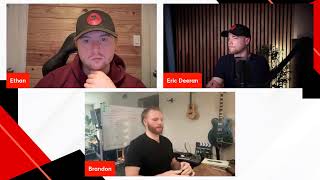
Transcript of a Master Filmmaker YouTube live Q&A (April 2025) where hosts discuss practical tactics for scaling a video/media business: pricing by outcome (value-based vs hourly), client acquisition (local ads, referrals, Facebook lead forms), CRM and pipeline management, SOPs and onboarding, hiring/training team members, and using AI tools (ChatGPT, transcription) to speed scripts, call diagnosis and SOP creation. A guest case study (Brandon) describes scaling a home‑services-focused video business to roughly $30K/month, building a 3-person team, and operational habits (testimonials, time-to-first-value, repeatable client journeys).
Chapters
Oh, let's go. You ain't gotta ask me, we can hit the road, Got room in the backseat? Boys from the back street come so far? Just singing over rap beats? See you on the way up? Only looking down? Remember seeing where we came from? You ain't gotta wait up? Never gonna slow back down? There's no stopping now, they can't take us down? There's no reason to fight this feeling? Cause I love this life? Everything's all right? And there's no reason to stop believing? Cause I There's no reason to fight the feeling, yeah, love this life, yeah, love this life, yeah, love this life, yeah, love this life. I won't wait around for the cur. Life is not a race, it's on big show I can't see it now that the truth is go. Feels like letting go? I love this life, yeah, feels all right. And there's no reason to stop believing? Love is life. And the future's bright? And there's no reason to fight this feeling, yeah, love this life, yeah, love this life, yeah, love this life, yeah, love this life. Sa your love is life? Yeah, love is life. Cuz I love this life. It feels all right. And there's no reason to fight the love this life. It feels all right. It feels just right. It feels all right. Sun is shining over me, I got a good thing coming. There ain't nothing like this right here. Got me see things get so clear, so high? I can find them all? It's gonna feel There's a fire underneath my feet? Got me rolling like a little deep? Let it flow? Cause I know my soul can lift me up. Got something coming and it's all I need. Everything I want in front of. It's a good, good Sam.
What is going on, guys? What is up? We're back for another live. Let me move myself over there. Ethan, what's going on, dude?
How are you?
Good, man. It's been a. It's been a quick week.
It has been a quick week. It's already Thursday. It's craziness. Let me turn off this portrait thing here. Perfect.
I know.
We're waiting on Evan Andrews. Let me get us live. Going on Instagram here, guys. We're live on Facebook, LinkedIn, YouTube, Instagram, all that good stuff. Back for another Q A. Answering any questions you guys have around, scaling your video business, getting more clients, getting more leads. Any of the kind of struggles that you're running into. Ethan, what's up, dude? Busy, busy day so far with clients.
Yep.
Busy day.
Good day, though. Business always good, though.
Absolutely. What are some things that people are kind of working through? Or maybe we can kind of come up with some topics and stuff as we kind of talk through this, as we wait for some questions. But what are some things people are struggling with when they kind of first come on board with us? What are some of those things that you see?
I'd say, like, you know, one thing is, like, kind of shifting the mindset is, you know, kind of getting into. Especially, like, with sales. You know, people are used to selling, selling a day rate, selling an hourly editing rate, and getting used to, you know, shifting towards results based, you know, selling based on the outcome.
Yep.
And using the content.
I saw a comment on one of my posts the other day, and it was like, how could you. It was. It was a. It was the. The raw. The raw video reel that I made, like, selling the raw footage to a client, and someone commented, they're like, how could you do that? Like, you're not putting any more time or effort into. Into that product. Why would you charge them for it? And I think it's perfect with what you said, because it's like, we have to switch our mindset from, you know, just charging based on our time versus charging based on the value. Because if I give them the raw footage, it's infinitely more valuable to them than if, you know, they didn't have that. And it didn't cost me any more time to do it. Right. But, like, it did put us in a place where it is valuable. Sorry, my camera's bugging out here. This cord is killing me, dude. It has been killing me, but it's. It's more. It's valuable to them, but it doesn't cost us more time. And I think sometimes people have to get themselves out of that thinking where it's like, you know, we're not charging based on the time, we're charging based on the value or the outcome. Because if you only charge based on time, you're going to run out of time. And then when you hire other people to do it, you're still charging based on their time, which puts you in a place of, like, a commodity, as opposed to charging based on the outcome or the result that they're going to get from the content. You know what I mean? Evan. What's up, dude? How was the workout?
It was good.
Let me.
I'm gonna turn my ISO up. Hold on one second.
You're good.
Living in the dark over there, baby. We get. Adrian has a question. We're looking to create Ads for brands. We also want to focus on a commission based structure alongside a retainer. Specifically, we'd like to earn a percentage. How can I set this up effectively? Good question. So depends if you're going to do a commission based structure, it depends on the business that you're working with. Because if you're working with a business that doesn't make a lot of money or they don't, you know, you're not super confident that they can increase, you know, the revenue or whatever it is, or they're not like in a stable place, then I probably wouldn't structure it as a commission based structure. Now if you feel confident in the business that you're going to actually help them increase results, they're going to grow, you know, they sell a product that's fairly high ticket, maybe you can give us some insight on what type of product are they selling and like what kind of business is it or what kind of industries are you looking to do a commission based structure with? Because that's going to matter a lot. Because if you're just doing a commission with like companies that don't typically make a lot of money, it's going to be difficult for you to make money, if that makes sense. And you also have to be confident that like you can actually get them a result and you can make money because you're putting your time and labor on the line by doing that, if that makes sense. Now if you do, you could do some sort of like typically we see like an inverse correlation like higher retainer, lower commission or no commission or higher commission and lower retainer or just higher commission and no retainer. Right. So you, you can't usually have like a high retainer and high commission. You have to have one or the other. And I'd make that decision based on how confident you feel in the brand that you're working with and how confident you feel like you can actually get them results. Right. If you're brand new, you don't have any results, probably wouldn't recommend that. I just keep your rates a little bit lower, get that experience, build more experience, work with them a little bit longer and then, and then build that muscle and build that confidence from there. But let us know what kind of companies you're typically working with there and maybe we can give you some more insight on that. Evan, Ethan, any, anything to add to.
With the, you know, you want to make sure like with the retainer you have enough to pay people that are working with you on it as well. Because like if we're just continuously creating the content and digging ourselves into a hole. By paying, you know.
Well, you're. Yeah, you're putting a lot of risk on yourself as the business owner if that company doesn't work out or like that, that you know, maybe they have a bad month or maybe there's something that happens that you can't control.
Right.
You're putting yourself at risk there. When you do a commission based structure, you just have to make sure you vet the business a lot better than just like hey can you guys make money? Or how much are you making? Or whatever. Right. We're vetting that business and making sure that it's, it has some sort of like basis or foundation. Otherwise you're putting a lot of risk on the line. Necessarily do that right off the bat, if that makes sense. Evan, dude, what's been the theme? What are question, what kind of questions do people have this week?
Dude, I've been just dealing with a lot of tech stuff. Honestly with the CRM it seems like they're like they do. They just kind of. We update a little bit. We update a little bit and it kind of throws people off. That's honestly been the majority of what I've doing been dealing with.
But maybe let's talk about CRMs because I got this question a lot. It's like people don't even use a CRM for their business. Maybe we kind of back up a little bit like what is a CRM and then what is the purpose of like having a pipeline? And like why is that helpful? I guess, yeah.
CRM I believe is customer relationship management. It's just a software that you use. There's a ton of them out there. We use a specific one here at the program. But it's just a way that you can manage everything that you have going on from getting new prospects and how you're moving them across your pipeline to getting them from they don't know who you are to purchasing with you.
Yep.
Right.
And there's no, I don't think there's one that's better than the other. When we talk about CRMs that are out there, the ones that I've seen that we, we utilize best. Because I know back way years ago, before we really implemented a full CRM here, things were a little bit, you know, kind of all over the place. But we streamline that for not only ourselves, but you know, the clients that we work with and everything. And I've just seen a, a big increase in the way that people are able to have results. The way that they want. Yeah, but it's just, I mean it gets people out of like sticky notes and like apps on your phone and like, where is this person? And a lot of slippage, like a.
Lot of people falling through the cracks.
If you don't have. Yeah. And it's, it's, it's transformed the way that I do a lot of stuff in my business. So I, you know, I thank you for kind of force feeding it to me all those years ago. I still remember, I tell that I tell students of, of master filmmaker all the time of. When I was a student here, I built everything out in the old way that we did it. And then I remember and I built my stuff out and then when I had gotten my first client, I built all his stuff out in our old way. And then I remember when you called me and were like, hey, we're shifting over to this. I highly recommend it. You don't have to, but I highly recommend it. And I like busted my butt for like 72 hours and transferred my stuff over to it, my client stuff over to it. And it was, it was just way better than what we were doing before. So.
Well, it's just like having pipelines, right? So it's like new leads, right? New leads, new appointments and then people that you took calls with, like, are they in the hot list? Are they in the follow up list? Did they no show. Did the deal close? And you just have these little blocks of clients or leads that you could just move across to different places so then you don't have to like remember where everybody is. You know what I mean? I think a lot of people struggle.
With that, like consolidate a lot of softwares into one. Because like before we had, we used to go, yeah, so we used to have like a calendly and a dialer and click funnels and just all these different softwares. You'd have to Go to like 6 websites to like book an appointment and like, you know, like write your notes down from a sales call. Like I just used to plug it into a spreadsheet.
Yeah, well, and, and here's the thing, like for our clients, deals could be worth up to 100k. So if you lose one lead, right, or you forget about someone or you don't follow up in time, that could literally be the difference between zero and $100,000. Right? And so like it's super important we tell our clients all this, like this all the time. But it's like you have to keep people in order, put the notes in, make sure Your team's putting the notes in, make sure you have everything organized. Because like business is just inputs equals outputs. So if you have a lead come in, it's like, okay, they booked an appointment, they showed up to the appointment, they're not quite ready. I need to follow up with them a little bit more and then we finally close the deal, right? But most of that, most of the deals are going to be in the follow up. It's not going to be in the first call. Like typically you're not going to close a 50k deal on a one call close. Like you're going to close that over a couple of meetings. And having a CRM and keeping that stuff in track and on track really does help that, you know. And I just have seen clients like I always say this to the clients. It's like you could like suck at sales, but if you're organized and you keep your pipeline organized and you know where things are, you will close deals, period. Like it will happen. You just have to keep things in order. And what I see a lot of people doing is like there's people like wrote down on a whiteboard and there's like stuff everywhere and they just don't know where it is. You know what I mean?
Especially if you're like a new like, I don't want to say new videographer, but like if you're new to like transforming in the way that you run a. Like if you're going from that freelancer to like actually have a business. I'll never forget like a lot of the testimonials and stuff that I did like for people for my services. That was one of the things that they mentioned with that. I've never worked with somebody in video or media company or something that ran their operations the way that, that I did. And that just spoke volumes to like oh yeah, that, that is a big separator between me and just some other person with a camera.
You look like you have your stuff together, you know what I mean? It's like someone comes in and like there's touch points, there's, you know, there's, it's organized. Everyone knows like you know where everybody is. You have emails that go out. When somebody onboards with you, they get a kickoff email. Like all of that back end ops systems are something obviously we help our clients with, but like that's something you have to have in place so your clients feel like you have your together, you know. And I was talking to Max Engage about this the other day and we were building out their client journey and just kind of walking through like, hey, here's when, when a new, like doctor onboards with you, with, you know, to create content with you. Like, here's what you need to do. When you drag them to the sale closed, we can set up an automation that fires a kickoff email and says, hey, welcome to our, you know, our media company. We're excited to work with you. Here's a short onboarding form that you can fill out just so we can get to know you a little bit better. And then I mapped through like going into Asana or Monday.com and mapping out the client journey where it's like, okay, we're going to do the onboarding call, then we're going to have scripting sessions for your short form content, then we're going to film the content, then we're going to do this. And it's like, it just, it's an organized, choreographed process. And I think a lot of video business owners can't really scale because they don't have some sort of like, organized system where a client comes in and it's like a conveyor belt and they get the same result over and over and over again.
Right.
It's always like something new or something different and it puts a lot of strain on the business because like you have a bunch of different, different clients and you don't really know where they're at. You know what I mean?
Yeah.
It also helps when you hire people because then that gives you a chance to create SOPs and train somebody versus just like, hey, I don't know, I've just been kind of flying by the seat of my pants.
And even, and for anybody watching this too, just like, I would challenge you to be like, okay, let me look at what do I actually do for a client? And like, how do I just like make a Google Doc and be like, step one, I book their kickoff call. Step two, I do their scripting. Step three, I shoot the content. Step four, I deliver the content. And then under each one of those things map out all the little micro steps. Like you're making a big checklist of when a client works with you. You're making a checklist of every single thing that you're going to do with them. And then that way, like Ethan said, when, when you onboard, like a CSM or an editor or like an account manager or somebody like that, you could just have them be like, you know, here's what we do with our clients. Go through this checklist when somebody onboards and then they're like, okay. Boop. Got it, got it, got it, got it. And that's also why we build out Monday boards for our clients too, because it's like when a client comes on with us at Master Filmmaker, it's like, we're going to build out your entire checklist from when you start with us to when you finish with us. So you know every single thing you need to be doing with us. And there's no, like, you know, ambiguity or confusion around what you need to be doing. And I think that helps a lot of people. We get a lot of good feedback on that. When people enroll, it's like, hey, it's really helpful that I have this checklist and I know exactly what I need to be doing with you guys to get more leads, get more calls, get more clients, and grow the business, you know?
Yep.
JBond Media says so good.
Yeah.
And if you haven't just map. Map out like a rough client journey, it really does help. So, you know, like, okay, new client, just signed client journey. Pop them in there. Now I. Now I need to get a new client, and I just keep doing that over and over and over again. It's a very choreographed process. Just like a dance.
Right.
And you know exactly what step you're going to be taking next. Real 40G Sanchez says. Awesome, man. Absolutely. For sure. What questions you guys have around scaling your video business. If you're watching this, maybe we can kind of center it around. Oh, we got Brandon link on the Instagram. Brandon, if you want to join the live, I'll send you a link to join if you have a friend.
Should be working. Brandon.
Should be working. Brandon, I'm going to send you a Slack to join if you want to join. Dude, I'll send you a DM in Slack here real quick. I think it'd be good to get some outside perspective rather than listening to me. Yeah. What's that?
I said live on set.
Yep, yep. I just closed my first client. Says the real G. Santa Sanchez. It's all new to me. Congratulations, man. That's awesome. I love that. Jayvon Media says going back to previous clients, mapping out what was done is a good place to start. Yeah, it's just think about you're just making like a checklist for people, right? One second. I'm gonna send brand this link. Yeah, you're just making a checklist so it's repeatable. Can you guys talk local IG ads? Yes. What about them? We need to know, like, who are you trying to target? What is the industry and Then Evan can probably walk you through that because Evan's the. Evan's our IG master and our ADS master. But yeah, Jaybone, if you want to tell us like who you're looking to target, we can kind of walk you through that process of what it would look like. Paul Anavaro film says, what's a good client journey? I don't really think there's like a good or bad client journey, but client journeys typically have. And Evan, Ethan, maybe you guys want to chime in on this. But they typically have activation points to where it's like there's like three activation points in every client journey. So it's like an activation point is like when somebody reaches that point it makes them far more valuable and more likely to stay with you throughout the process. So like activation point number one could be like getting your script done for them. They're like, woo, that's the, you know, it's a mini win. Cool. Activation point number two is like shooting the content, delivering it to them, getting their approval, right? They're like, yeah, that's awesome. I love that. And then activation point number three might be like actually getting them results and views and XYZ with the content. And I'm just trying to drag them from activation point to activation point as quickly as possible so they're happy.
Right.
There's also another thing called time to first value. And it's like after I sign up with your media company, how quickly am I going to get something? And if it takes a really long time, I mean, Evan, Ethan, maybe you guys can talk about maybe the time you bought something and you didn't get it for a while. Right. You're not going to be a happy customer if that happens.
Right.
So you really want to make sure that that time to first value is as low as possible. Let's see. Crunch Tonic Entertainment. I'm just getting started hunting down clients. I've been working off and on but need tips on getting for getting going beyond my current contact list. Evan, Ethan, maybe you guys want to.
Take that, ask for referrals. That's the easiest because they know like they already know like and trust you. And you know this is like one.
Client maybe has five referrals, right? So that's a tree right over here. If I can, that's a tree, right? And then another client has another five referrals over here, right? So it's like now you have 10 referrals total and like that's a really good way to get started if you don't have the money for like ads or an acquisition.
And then also look at how and what you're doing for that particular client. Like, is it just something that you're doing like a one and done, or is there opportunity in there to do repeatable things?
Can you upsell them to something?
Exactly, yeah. Because then that will turn into that recurring stuff that we obviously ultimately want.
To solve for those clients, right? Yeah, yeah, yeah, yep. So it's like what other. What other kinds of. You know, if you created a brand video, maybe they need traffic to drive to the brand video. So social content. So how could you upsell them to social content? It's just like really getting creative about what problems do you solve for your clients? And how can I continue to sell them more things that are going to help them solve those problems and, and solve those and create new problems from the solutions that I just created? You know what I mean? Jbon Media says most of my clients are out of state. I'm wanting to niche down and try to get some local work to scale. I am at a loss when it comes to targeting ads. Evan, you want to take that People are tired.
The question was about like not knowing.
I can reread it. So most of. He said most of my clients are out of state. I am wanting to niche down and try to get some local work to scale. I'm at a loss when it comes to targeting ads.
Yeah. So whatever city that you're in, pick the. The downtown. You know, I'm in Houston. Right. So I'd pick Houston. Mileage radius is up to you, but usually just have usually about a million people in an audience. When you're running your ads, you'll see metrics in the back end. As long as you have about a million people that you can advertise to, you don't need to actually target them with any interests, any things like that. You honestly really don't even need to do much with age. But sometimes it is applicable to. To test to see if just age brackets will. Will do okay for you. But really you don't need to quote, unquote, target. Pick a location. Put the mileage radius up to as much as you can. Usually 50 miles is the most that you can do. And then just add in neighboring areas there if you want to expand that far out. But you really don't need to do much. Put more emphasis in what you're doing in your creative. And I think that will do much better for you than trying. I call it sciencing your way into your ads. You can't really do that stuff as much anymore. So just set your location, set your age and go.
And then as far as creative, like if you're sending them contact form, I would do a Facebook lead form, JBond Media. It's going to be the easiest. And then just put like name, email, phone number, company name on the Facebook lead form. And then the creative could just be something like, hey, if you're a home. I got the home service pro master ultra guru over here, Brandon. But he loves that dude. But like your, your creative can be like, hey, if you're a home service pro and you're struggling to get more leads, get more jobs, we put together a video system that can help you get to XYZ goal that you're looking to achieve. If you want to learn more, click the link below. You know, enter your info, schedule a call.
Boom.
Like your ad can literally be that simple. And then you run them to a Facebook lead form and then you get those leads. You book calls, you call all the leads that are coming in. You book calls from that, you get on zoom calls and then you turn those people into, into deals. But Brandon, what's going on, dude?
How are you?
Ultra Guru home service pro Max over there.
Oh, I think he's muted.
I think. I can't hear you, man. Oh, brand just Mikey mistake. There you go. And then I'm freaking glitching out over here, dude.
Oh my gosh.
Both of you.
So, Ethan, how's it going over there? You know, just us professionals knowing what we're doing.
Good. Yeah, I got you now the pro Max guru is back. We're good.
Scarlet's letting me down, bro.
I get some comments on because you're in one of our case study ads. They're like, there's no way this dude's making money with an office like that. There's no way.
I'm making so much money that one of my guitars is in the shop. I'm getting.
There you go.
Fixed up.
There you go. Do you. Do you mind sharing where you're at right now if you don't want to? It's okay.
Pretty much the same as where it was.
Okay.
In the 30s.
Nice home services, rocking and rolling.
Yep. That's all I do.
What are some takeaways? Because you went from working in a full time job, right? At a church. Church is not one of your clients. Now you're doing home service videos for home service pros. You're doing in the 30k ish a month right now. Like, what have Been some takeaways leading up to this point. And what are some things that maybe you can share with other people?
Takeaways are. Oh, my goodness. Trust the program.
Well, don't make it about me. Don't make about the program. I don't want to add for master filmmaker. Just tell me about, like, your journey.
Personally, people don't. I mean, really, it's. It's about confidence, confidence in your work, knowing that what you do actually does help people. And it's not just about cool videos. That's the biggest thing that I see is, like, most creatives don't have confidence in actually what they do. They're more worried about all the. The little tiny things of their video that most people aren't even going to see. Like, I. I just recorded a VSL and the.
The.
The eyes of a filmmaker. It's horrible, but I know it's going to produce results. You know, it's. Yeah, so that's my. My thing is like.
Yeah, I think. I think that's a good point. It is. It's. It's a lot about, like, how do we. How do we create content that has the right strategy and messaging behind it? Not so much how beautiful is the piece of work, right? It's like if you're making an ad for a home service company, it's more about, like, calling out the target market. Hey, if you're a homeowner and you're struggling with these pain points, we're going to do XYZ service and help you achieve outcome.
Right?
That could literally be filmed on your iPhone and it would work. It would convert.
Right?
It actually converts sometimes better on an iPhone.
It's all about. Yeah, I mean, it's all about relating to your target audience, whoever it is. How can you relate to them? How can you speak to them?
Yeah, for sure. Yeah, it is. It's just making sure that you're really. You're hitting on those pain points. I think people just get too wrapped up in that.
All right, guys, I don't. I don't mean to be the. The bad guy here, but I gotta jump. I gotta lead. Just came in. I gotta go follow up with him real quick.
Yeah, you're good. Go for it.
All right.
You're good. Brandon, what's. I guess, like, is it just you? Do you have any team members? Give us some backstory. Doing 30amonth. Like, what is that?
So I have a. I have three now. Three team members. I have a videographer, I have an editor, and I have an appointment sales guy. That I'm training. I'm trying to run lean, as lean as possible and just pour into those guys and build them up as. Build them up as much as possible before hiring anyone else. So it's. It's unique, I guess, because my strategy is like, I wanted. I want better employees. I want better people working for me. Like, I could easily go out and hire a bunch of overseas, you know, VAs and stuff like that. But for me personally, I like to invest in people, so that's kind of like what I'm doing now that I have, like, this foundation of my business built, I can, you know, focus on other things.
Yeah, I love that. I love that. And so, like, with the people that you're working with, how was the process of, like, hiring, training? I know there's probably some people watching this that are like, I don't know if anybody. Like, how could I ever hire a videographer and editor? They're not going to do it as good as me. That's. What would you say to those people?
Let go.
Let go.
Yep. Yeah, because, like, you can't scale if you have. If you're doing everything in the business at the end of the day.
Yeah.
Just not possible. Yeah.
I mean, there's You. There's going to be a slight dip in performance like there always is, but you have to accept that and then know that that person is going to take over and own it more than you ever could, and they're going to be much better than you ever could.
Yeah.
So it's just taking that.
That first initial step there, and we'll hang out for another, like, five, ten minutes here, guys. I'm gonna open the floor up to any questions we have on the live. If you have any questions for Brandon, anything that he's doing, any questions around how he got to 30k a month and what he's doing. The home service space, we'll kind of open that up.
Oh, man.
Oh, man.
I know.
Sorry, Brandon, I'm putting you on the hot seat. You didn't know you're signing up for this, dude?
I. I was like, man, should I join this?
Should I today, bro, I talked to him enough. Leave me alone.
Yeah, we do need to send another call, though.
Yeah. Let's say I was DMing you on Slack earlier. I was like, we need to set up a call for next week. Quick question. Hey, guys, apologies if this has been asked before. What AI tools are you exp. Experimenting with right now that help you scale? Brandon, are you using any AI tools? Yeah.
So, I mean, Mainly chat GBT and just training, training the crap out of it. I use that for pretty much everything.
What are you using to give us a couple of examples? What are you using it for?
Hold on, I lost you guys.
What?
Where you at?
Oh, yummy.
There we are.
Okay, what are you using Chat GPT for specifically?
So script writing.
Okay.
VSL writing, call sales diagnosis. When I do discovery calls, I'm recording the whole conversation and then I'll. I'll drop it in the chat GPT and have it like spit back to me key things that I might have missed. Because when I'm on the call, it's more about me being present. So I can't. For me personally, like, I'm not a good note taker and conversator. So that's what I use it for.
So you're using something like Fathom, I think. Right? Fathom to record the calls. It has a transcript. You're taking that, putting it in ChatGPT.
Yeah.
And what are some of the things that I missed? And then you're using that. Are you using that to like properly diagnose on that next call and be like, hey, the things you told me about are like this, this and this.
Exactly. Because that's something that was a problem for me is I would miss a lot of things. And as I was talking with Dan, he was reviewing my calls, like he would point out stuff. I'm like, I'm just missing that. So, yeah, AI stepped into that area.
And then how are you using it on the script writing side?
So I kind of like have a formula that I've built and I've trained it to like know how to give me the scripts that I want. So I just give it the information on my client that I'm running ads for and it'll spit it back to me and like, it'll give me like six different hooks. Three, three bodies, you know, stuff like that. So it just, it just helps because if you don't like train it, like.
It'Ll give you kind of just spit stuff out.
Yeah. So that's, that's how I use it.
Nice.
And then with SOPs as well. Yeah, I mean, I think you were talking about that. Like, I'll record myself anytime I want to train something on something that I do, just do the loom video. And then what you can also do when I use Turbo Scribe, that's a really good transcriber, I'll load that into Turbo Scribe and it'll spit me a perfect transcript. I'll take that Transcript, Put it in a chat GPT, and then it'll give me an SOP killing.
And then you build that for, like, your editor for your appointment setter for your videographer, and then you have everything built out so you can just, like, pop it over to them. Super, super smart. I love that. Dude, we're gonna wrap it up here in just a second, unless anyone else has any other questions but major takeaways. Where are you looking to get to now? Like, what's the. What's the main kind of big goal? You're.
You're setting your eyes on scale while maintaining results for my clients.
Yep.
And I need to get more testimonials. I get so caught up.
Studies.
Yeah, case studies, testimony.
Like, I build that into your. Build that into your client journey, where it's like, you know, after they get a result, go back, hit them with a case study, do it on Riverside IO, and just get them on there. And then, you know.
Yeah, do that. And then also, what I'm doing is I'm just getting on the spot when I'm out shooting with clients on the spot. Testimonials.
Like, we're just.
Shoot.
Walk us through how you do that. How do you. Like, what do you do?
As soon as the shoot's done, they're happy. You know, everyone's loose, and, like, everyone's having a good time. I'll just be like, hey, you want to do a quick testimonial? Just tell me about your experience shooting with us right now. Just everything that you just experienced. Just.
Just.
Let's just have a conversation about it.
Yep.
My videographer will. Will just film us, and then I'll grab a mic, and we'll just talk back and forth.
How did you find your videographer? Like, how did. What was the recruiting process like for that?
He was at the church I was working at.
Really? Dude, I tell her. I tell people all the time. It's like, referrals are the best leads for people who are going to work for you. Like, just people you already know, like, and trust. So you just. And you don't need to tell us obviously, how much, but are you paying him a salary? Is it, like, just per gig? How did you kind of split that?
He's a contractor. I pay him on a monthly basis.
Nice.
Cool.
Perfect.
And he has incomes as we continue to grow, and he's. As he gets better and takes on more responsibilities, so.
Huge. Huge. Well, Brandon, I appreciate your time. We're gonna wrap it there, guys. If you have any other questions or want to meet and talk to Brandon. You can book a call with our team, see if we can help. A little plug right in there. And Brandon will be your coach. And I'm gonna peace out. And we'll see.
I'm leaving with you.
See you there. All right, guys, well, if you have anything or need anything, hit us up. Link in bio. You can schedule a call with our team and we will talk to you guys in the next one.
Peace. You know what I mean? When you see it gonna make you believe.









