Q&A Replay - How To Scale Your Video Business in 2024
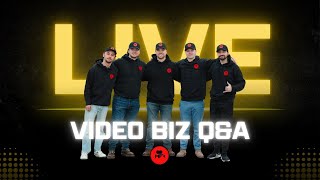
Eric Deeran, Evan, Ethan, and Danny discuss strategies for scaling a video business in 2024, including how to handle client objections and streamline operations.
Chapters
And then we will get to those. We'll answer those for you. Any questions you have about scaling your video business, anything you have there, drop them down, down below. I'm looking over here at Instagram as well. If you're on Instagram, drop a comment down below. We'll answer them there as well. But, Evan, tell us a little bit about what you've been working on. What kind of shoots have you been on? Have you been on?
I've been on a lot, actually. You know, I have a multitude of different clients. You know, some, some people don't want to pay for the monthly recurring stuff. You know, they kind of want to build those relationships and whatever. I have one client, a new client that is a gymnastics, like a gymnastics facility, but they have a dance side too, and they want two brand films done. So I shoot that next Monday. So I'll be out of the office next Monday.
I already told everybody on Slack though.
So there you go.
But knocking down deals in the office over here, dude.
But no, I got a lot, I got a lot of stuff going on. I mean, I've got, you know, my, my regular recurring short form people. I've got kind of a new hybrid offer thing that I'm. That I'm unveiling and kind of rolling out for particular kinds of people when I can tell that, you know, maybe they don't have the particular budget to have something done for them. I have kind of like a hybrid thing that I have going on for them as well. So trying a couple of new things and just trying to keep the ball rolling.
Absolutely, man. What are some things you're seeing? Like, I want to kind of keep a topic for this live, but like, I mean, what are some things that you're seeing? Like most people struggle with when they're just growing their video business. Like, like what are some of those, those specific things that you're seeing on your end?
Not making enough of their own content and expecting somebody else to buy it from them.
Oh, that's a hot topic. Talk about that a little bit.
Yeah, so, I mean, you know, me too, that, you know, I, for the past, I think I was looking back at my calendar and everything for like the past about two and a half or so years. I think I've missed a handful of days where I didn't have a post go out something. Right?
Yeah.
Because it's not necessarily all about, like, you have to come out with these big bangers of pieces of content. Like that can be part of your strategy, but sometimes it's Just literally, like I've said before, it's just putting this on a feed somewhere so that the. Your audience or the audience that you're trying to build has the potential of seeing you every day.
Yeah.
The more and more that they don't see you, the more and more that you leave their brain and you're not staying top of mind. And. And honestly, you can become your own best portfolio by doing it for yourself, to be able to sell it to somebody else. That's for, like, new beginners. Right. Like, if you're. If you've been a freelancer for a long time and you're transitioning into, like, really trying to grow your video business. Like, be your own case study.
Yeah. How do you expect other people to buy from you if you're not. If you're not doing it for yourself? Right.
Yeah. And, you know, it's. It's just about finding the right cadence and the right amount. Like, it's a perfect, like, trifecta of, like, time inputs and energy.
Yeah.
Right. And just figuring out what that equation is for you, because it's different for some. For everybody. Like, some people are super good and super fast at, like, editing and getting things up so they, you know, can save some time there. Some people are not as fast there, but they can set up a shoot and pump out filming the content, like, really fast. There's like, give and take everywhere. Right. So it's just finding that equation that works for you and then repeating it as many times as possible.
Yeah.
100. What are some mistakes people make with their own profiles? Like, when it comes to video production companies and video agencies, what do they do in their.
Oh, also, I'll take Instagram, for example. Not having a bio optimized for what you want to do. Telling people too many things that you do being not clear. One thing that you can help with. Sorry, my dog over there is talking to the world out there. It's probably a squirrel.
Okay. This is a lot. Who cares? Yeah.
But, yeah, no, I mean, just not having. Having too much going on also too. Like, so, like, Facebook bios are a little bit different. Like on your, like, professional business page, they're. They're a little bit different. You can have more links and stuff over there. I think it's really just about the. The. You have to take it on a platform by platform basis. So, like, instagram and. And TikTok are kind of the same in. In the terms of, like, amount of real estate that you have and kind of how they operate. Whereas, you know, YouTube and Facebook might work a little bit more the same where you kind of have at the top of your, you know, your YouTube page or your, your Facebook, you're putting.
I help this type of marketing.
Yeah, yeah, exactly. Like being very clear on whom it is that you are trying to talk to and not giving them too many options on how they can get more information.
Right.
That's it. Like, I mean, if you can, why.
Not give them too many options? Like why do people do, why not do that?
Because then people get, it's like analysis paralysis kind of thing. It's like, I don't know if I want this, that or the other. Or they get on, off on some, it's like why we don't direct people to an overall website. We would more rather put them into a funnel of sorts, like a simple landing page where we can tell them the steps that we want them to take and not have them peruse this big smorgasbord of information where it's like they were gung ho about when they landed there, but then they forgot, you know, five seconds in because they didn't know exactly where they were supposed to go or what they were supposed to read or. Yeah, you know, something like that.
So I, I, I want to talk about the website thing because I had a call with one of someone who was interested in joining the program. We were talking and he was like, why not drive all of the traffic to the website? Do you want to talk about that a little bit, Evan? Yeah, like a heated topic for all of us. We're like, don't do that.
I mean, so, so again, it's just, it's just so you don't, it's so you can keep the horse blinders on. Yeah, right. Keep the horse blinders on to the prospect and the eyeballs that you are generating. Because if they get too scatterbrained, they're not going to take the action or they're going to get confused on what action that they should be taking. Right. I mean, that's pretty much it.
I mean they give, you, give them too many options. It's like the YouTuber who's like, subscribe to my channel, buy my merch, go to my discord, join my mom's Facebook group, whatever.
Send them to your website after you've booked a course.
Call in. Yes. Yeah, that's, that's more of a nurturing. That's what I say too. It's like you have, you have the funnel, you have somebody come in, they become a lead, they watch your value video, they book a call, then what they're going to do is probably look you up online. That's when your website comes into play in that organic traffic there. And even if.
And even if they don't look you up online, be transparent. Say like, you can find my portfolio here and you can do this and you can do that and they'll appreciate that more.
I don't think most people need a website right now like they need. If you. As long as you have case studies important like you have. Exactly. Examples of what you've done. Like, yes, that could be hosted on a website, but it's. It's not required in my opinion, to really get started.
You don't even. And I haven't. I haven't unloaded this yet. Eric. On the master filmmaker community. We're going to have a private chat about this hopefully in the near future. But you don't even need a funnel anymore.
Yep.
Wait till I get that one too.
The clients a little bit about that.
But wait till I. Wait till I give that one to you. But you really don't need a funnel anymore. There's a way to do it without it. A big tech stack in the back end. Yep. And that. That one's coming soon.
For if you're a master filmmaker coaching program member. Evan's got some.
I've been dropping little nuggets about it recently to a few people. I'm trying not to like, get people off topic of what they should be focusing on when they come in. But for those that have been in for a while or you know, might be running into those brick walls where it's like, it doesn't feel like certain things are working and y just can't really work it out. There's. There's other avenues that I'm. That I'm coming into that I think they're definitely advantageous for many people, especially if like all that tech stuff, the CRMs and all of those things are really confusing for you. I've got a new process that I'm working on right now.
I'm excited, man. That's awesome. That's super cool. No, but I think you're right. It's like, it's. A lot of people don't have content on their page and it doesn't need. You don't need to be posting like every day. I know that can be kind of overwhelming, but you need to have a good base of content. So people come and look you up. They need to know that you practice what you preach. I think the other Side of that too is maybe you want to talk about this. It's the people who serve everybody. And like, a lot of them will wonder why they're not getting traction in their video agency if they serve all different types of businesses. Do you want to talk about that a little bit and kind of.
Sure. So this is honestly the topic that I struggle with the most.
Sure. Right.
Because I know that we've had conversations in the past where you can be kind of niched down in like a methodology, not so much an industry.
Yeah.
And I would still say that I speak to a lot of people now. I know there's certain types of people out there that I don't want to deal with.
Deal with. Yeah.
Right. Like, so I cut the cord a little bit on some.
You're more specific. Yeah.
Yeah. But I still think that, like the, the, the, the thing that I'm building out right now, I think it works for just about anybody I've.
You've niched down in the, in the method as for.
Sure.
For sure.
Yeah. Like, you still have to have like a, a clear and concise framework of what your offer is.
Yeah.
So that, you know that it can be. Because if you can test it across different niches and verticals, that much more valuable than it is just saying, like, it only works for roofers or it only works for, you know, whatever.
Right, Right.
But I've seen it even in my own, the, you know, my, my own community that I'm in and other things that, like there's people in my area that I have no idea who they are. And I, I know they're getting the same information that I'm getting from somewhere else because they're running the same thing. Right. So it's like, I know that it works for realtors. It, it works for everybody. It just, it's about putting in the, the bit of work that a lot of people don't want to do. And it's, it's really the investment into, into the content aspect of it because the implementation part is cake. Easy. Yeah. It's like, it's a couple of lever pulling and button pushing once a week.
For the client when they onboard.
You're saying, I mean, it's not, it's not a lot.
And I want to talk about that because that is a productized service. And a lot of people are like, what is a productized service? Well, if you think about what a product is, a product is, you buy it off the shelf, there's no fulfillment. Right. That company doesn't fulfill Anything for you. You buy the product. That's it. You buy the product. A service, on the other hand, is where you're actually going to give them a service. You're going to do a lot of work. Now you want to find that middle ground where it's a productized service, where if somebody buys something from you, it's very easy for them to. It's easy for you to fulfill on it. So it's very copy paste. Copy paste, Copy paste. Yeah, because then you can scale that because you do a lot of different units. You can do a lot of volume through that without having a lot of internal complexity. Whereas like a lot of our clients before they come to us, like I know Ben, Ben Roberts is one of them, like a bunch of people who come in, like, they're very boutique and they focus on like these huge custom projects, which again, there's nothing wrong with those, but you have to have a productized service bolted onto that so you can do something that's very scalable, that you can hand off to other people. You know what I mean?
Focus your time on those passion project style things that you want to do. And then you can even also charge a higher premium for those things too.
So, yeah, because the product has service, is the engine that pays your bills and pays your payroll, makes you money, makes you profit, all that jazz.
Right.
As opposed to having to custom quote everything and then feeling like you can't hand anything off because it's so custom and it's reliant on your brain every single time, you know? But yeah, I mean, what's your experience? Been building your product service? Like what did you. What was the thought process behind it?
I mean, for me, it's just making sure that whatever it is that I do for the inputs are just easily, easily passed down to the next person. Right. So doesn't have to be related to like, again, like the gear and stuff that I use. Like that doesn't have to be the thing that it's like, oh, the only reason it works is because we're using this kind of camera. Right, Right. It's like a matterport tour. While those are really great as part of your service and your offer, if, if not, if you, if you don't have somebody else that has that camera or, you know, you have two bookings for one day, but the camera's already gone and being used somewhere else, you can't do two at a time.
Yeah.
Right. So just making sure that what has to be accomplished and what has to be shot on whatever Given project that it is that it's just something that I don't want to say. I don't want to say this like despairingly, but like a warm body can step in and just say, okay, this is what we're doing next. There's like a checklist, right?
Yep.
So the. Yes. The more charisma or personality that the person behind the camera that's helping the client fulfill on. Because that I believe is a lot of value of what a lot of the good feedback that I get in terms of my, my process is like I've had somebody say, you know, if you weren't standing behind the camera and, and helping me get my thoughts out and my words out, even though it is there in black and white on our laptop or on our prompter or whatever it might be there. They say that if you weren't there to help me through thinking through that this would be a much harder process. So there is some kind of. I don't want to say they're intangibles because a lot of people can have them, but you have to fit a certain mold with the person behind the camera too.
But.
And I think that's just in the team building process that's just finding the right people.
That's. That's finding the right people. I think what you said too, it's like you don't want to just necessarily have like, you want to have it. You want to have a process that's built out to where you can have somebody like a warm body step in and they can knock it out of the park. Because that's how you're going to scale because you're not going to find these unicorn people all the time. You got to, you have to have a good enough process within the business to where you can plug people in and then they can just execute on your behalf. So because you have such a good process. And so like one of my mentors taught me this is a really good quote. It was like, you know, really amazing businesses, they have amazing processes, but they can, they can thrive with mediocre talent. And it's really interesting because it's like the mediocre talent is interesting because you're not always going to find these amazing people all the time. You need to build the business in a way to where someone can step in who has a base level of understanding and then you can kind of train them up to where you need them to be. But you can't. Your, your business can't be reliant on like unicorn people. Otherwise you're never going to be able to scale because you can't find more people to do those jobs.
You know what I mean?
Yeah.
You can't put a.
You can't put a Taco Bell manager at a cashier position. Like. Yeah, you just can't do that.
Yeah, yeah, exactly. 100. Ethan, what are you guys. What are you running into on your end? Like, I know we had some sales call reviews this week with the clients. What are some things you're seeing? And then we'll go to some questions here in the chat. We got a bunch of them.
Yeah, been. Yeah. More, you know, objections like you were talking for what we talked about last time. Yeah. Financial objection, business partner objection.
Yep.
And then, you know, really trying to take care of a lot of that before the call. You know, building trust, nurturing people, and really just hopefully whittling it down to the finances.
Right.
Because everything else really is your control. Building trust, educating them, qualifying them. The money is the last thing out of your control.
Yeah. 100. Absolutely. Let's go over some questions here. Cruz says what's up? What's up, Cruz? How's it going, dude? We got Pat over here. How do you guys approach lead gen? So that's kind of a loaded question. Evan, you want to. Maybe you want to do like a quick 30, 000 view on that one, and then we'll. We'll kind of.
So 30, 000 foot view on lead generation, clear message who it's for. Those are the two big ones. The speed to lead kind of mentality is. Is somewhat there. But I think a lot of objections like Ethan was saying, or even other. Even just questions and stuff, a lot of that can be overcome by what we kind of started this conversation with, which was your content cadence.
Right.
A lot of things can be answered. A lot of nurture can happen through just making content about your business, your offer, your service, whatever it is. But coming from a frame of giving, not so much like a me, me, me frame come from the Mimi me frame. Then it's gonna come off funny and weird and people are gonna be like, yeah, these guys. Not, not. It.
It's never about us as the business. It's about the customer and their needs and wants and their pain, pains and their desires.
Yeah.
Our.
Our.
The advantageous things that come for us are just a byproduct of that process.
Right?
Yeah. So if you do that part right, you will make money, you will get leads, you will have conversations, and that stuff will happen. But you have to. You have to provide all that value first, like her Mozzie says.
Yep, Absolutely. Cruz has a question over here. How do you propose the retainers to the clients? As in, how do you send them over? Send it over to them and go over why they need it. For instance, I talked to a head gym manager, social media branding. Ethan, you want to take this one?
Yeah, for sure. So let's see. So I'll answer one part of that question first. Is, like, the sending it over aspect of it. That's one big. No, no that I have is never, you know, email prices, deliverables, packages, because it puts you at a disadvantage. You know, there's no. No value without any. At any context.
Right.
Ask any questions. They could just look at the email and never respond to you. You can't handle any objections. Well, you could over email, but that's also something I don't recommend doing.
So what do you recommend? Instead of sending that. What do you typically do?
I would propose, you know, hopping on a call. You know, as far, you know, hey, you know, I came up with a game plan and a strategy for you guys based on our previous conversation. You know, do you have some time maybe later this week to sit down and run through that with me?
No, I want you to send it over email. What do you do then?
Well, then I would just say, you know, hey, well, you know, I've got a couple different ideas that look to, you know, like to run by you, and I also want to be available to answer any questions that you or the team may have.
Boom.
I love it. Yeah. Evan, have you ever done that? Sending proposals? I've done it.
I. I did it before I joined master filmmaker.
Yeah. So that's an acceptable answer.
Yeah. So I used. I used to do it like that. I mean, even now, I'm so. So let me take that back. I have done it before, but I. It's from a frame of, like, I don't need this work, right. If they really want it and they really want to work with me. 1. If I'm sending it over email, it's my Ferrari offer. Like, it's. It's a. It's.
It's having an offer that is literally priced so high, you're just trying to scare them.
And it's one of those things where it's like, if. If the. If the payment link comes through or whatever, it's like, okay, boom. I. That means I did everything else before, ie, the content, cadence, all of the other nurture. I did all of that. A thousand percent, the right way. And yeah, that did what it was supposed to do, but that's the only time that I, that I sent stuff.
Over email for sure. He said he has a follow up part to that and he has to get it approved by the owner. Now I have to send an email to the proposal, slash proposal to the owner. Ah, I love this one. Ethan, I'm gonna give this one to you.
Cool. Yeah.
What should have he done before this? Before he.
Yeah, so, yeah, should have. Yeah, should have made sure that the owner was on the call as well. But you know, I would just propose a call with. Who was it that she spoke to?
I think it was the head gym manager and manager. Yeah, the head gym manager was the one he spoke to. And then he has the. The owner now.
Gotcha. Yeah, so I would propose a call with the two of them and say, you know, hey, I'd love to chat with you and the owner also. Just get his thoughts on, you know, some of the topics and issues that we talked about together on our last call, get their perspective and be able to fill both of you guys in on the, on the strategy.
Owner is never around. Okay, so if the owner is never around, have you, number one, I would ask you, Cruz, have, Have you actually asked. Have you asked them if the owner can hop on? Because a lot of times if you, if you, if you dictate saying, hey, like, typically we take calls with the owner and any other people who are involved in this project. So I can understand everybody's perspective. If that's the groundwork you lay out, a lot of times they'll fall into that. But if you don't lay that groundwork, they're going to take advantage of you and say, no, he's not around, Evan. You're going to say something.
Well, and.
Well, I was going to say a second part to that. And obviously this, this can't, this can't go for everybody. But if they're not willing to follow your systems and your processes, that's a red flag and they're going to be a terrible client to work with.
Yeah.
So, you know, that's how I look at it.
Yeah, you said, yeah, I work out at the gym. Yeah, for sure. Yeah. I would definitely. Before you ever go over price, I would never email the proposal to the actual person because what's going to happen is they're gonna, like, that person's just gonna send it to the owner. They're not gonna have any contacts for the price. And then they're just gonna be like, oh, this is too Expensive and then they're gonna ghost you is often what happens. Whereas, like, if you can be there on the call, going over the price and the process, when they actually have the objection, you can conquer those objections. You have an infinitely higher chance of closing that deal at that point. Let's see. Pretty much explain why we need to. Do I create a pitch deck with Canva Google spreadsheet? Yeah, this is another good question. So we don't want to. I can take this one. So, like, we don't want to create a pivot pitch deck per se. Typically, our process, if you haven't seen our last live, I go through the sales process. I think it's like two lives ago. But typically we want to go through discovery. What are the problems? What are the issues they have? And then that second meeting, you're going over how your problem or your service solves the problems that they're actually having at the end of the day. So remember how you told me you guys aren't getting a lot of members into your gym? Well, what we're going to do is create this type of piece of content to drive more traffic to. To your Instagram page, to your website, to your, you know, foot traffic into your gym. Does that make sense? And then you're alleviating each one of those problems at every stage throughout that entire process. And so that's what you want to do. You don't want to go through a pitch deck and you definitely don't want to explain it all over email. I don't know, Evan or Ethan, if you have any thoughts on that.
I was going to say the pitch deck, quote unquote. If that's like your process or whatever, that should be your vso. They should already have watched it.
That should be a video they watch. Prior without price. Don't put price in your vsl. But that should be something you watch before. Yeah.
Yep.
Yeah, I love that dude. Because people will go through the same process on every single call. It's like, guys, we sell video. Like, why are we not putting this into a video to have them watch prior to the call, right? So, like, if you, if you don't have the. The structure for that, like, reach out to us. We can help you with that. But, like, you really want to make sure you're focusing on having that prior. So then by the time they show up to the call, it's really just like, is this the right fit? Should we work together? And you're not really selling, you're just closing and there's a Big difference there.
Yep.
Yeah, 100. Yeah. I'm gonna have to check out the previous live. Absolutely. Dude, check out the previous live. We go through the whole process there, but we don't want you missing out on sales because you're, you're sending emails. Otherwise Ethan over here is gonna come after you and, and help you close some deals.
Yes, sir.
Let's see, we got Cruise films, we got VSL Brand Video. Yeah, so VSL stands for Video Sales Letter. And so what you want to do there, basically we don't have enough time to go over it in this call. But Evan, maybe you want to give a brief overview of what a VSL is.
Yeah. So it's basically just a framework of your unique mechanism and how it is that you help people. So it's your system, your process, the cadence that you go through. Almost like that productized service like we were talking about before and how those components impact the business that you're working with.
Yep, hundred percent. Let's see, we have some other questions here. Let's see. This is dope. Appreciate it. Thank you. Part of my company. This is great to watch. I got Landon. I reached out to a friend of mine in inner circle and in my inner circle had a catch up convo with her and the conversation gave me some opening by saying she's possibly, she's super busy. So I brought up the.
Maybe I could help.
She said her intern needs more clients and said that she's running advertisements but doesn't have room in the budget right now when expires. Reach out. Yeah. What would you have done differently? Evan, you want to take this one here? If she's saying she doesn't have the budget, what would they do differently?
So if somebody says they don't have a budget, I mean, I go, I go into asking questions about what it's like numbers questions for there. For me, it's like, yeah, there's always, there's always room in somewhere where you can pull strings and if somebody has a big enough problem that they want solved, they'll figure out how to make it get solved. I know for like, you know, coaching and mentorships and things like that. It's like I don't have an extra 15 grand lying around or something, but we figure out how to make that happen in, in the understanding that we're going to do everything we can to see the quickest return on that and then it doesn't, you know, you can pay it over a long portion of period of time, but you have the money already. Coming back in from it. So there's. I. I just start asking questions around.
Like, get them into results based thinking as opposed to, like, how much is this really going to cost me?
Exactly.
Yeah.
Right.
Yeah. Because if we can start. If we can. If we can flood them with revenue coming in, it'll pay for itself, you know?
Yep.
Yeah.
Ethan, you're gonna go.
Go ahead. Yeah, I was gonna say I would clarify that too. You know, when like, she said she doesn't have the budget? Like, do you mean that the budget is just totally exhausted or you think you know what you have left of the budget would be better used somewhere else? Yeah.
Ask that question and say, like, how do you mean by you don't have the budget? Because that could mean 50 million things. It could mean you don't have the budget.
It means.
It can mean that the budget's coming in in two weeks, but they don't have it now. It could mean a million things. So you want to clarify, like, what. What does I don't have the budget actually mean? And then number two, like Evan said, it's like, ask them a question. How could you make something like this work? How could you make XYZ work? Like, how could you find the funds so that you can increase insert. Whatever their outcome or what they said they wanted is right.
Because if they're having. If they're having a. A monthly morale party or whatever, and that costs 1200 bucks or. Yeah. You know what I mean? Like. Like there's ways don't do that.
Yeah.
Figure out where you're spending money. That's not really.
Yeah, 100. Absolutely. Evan, I know you got to jump here, so feel free to jump whenever you need to jump.
Yep, no problem. Yeah, I'm gonna. I'm gonna be out of here, so I will be back next week.
Cool.
You guys just let me know where you need me.
Okay?
Sweet.
All right. Thanks, guys.
Yes, sir. You got it. Later. Later. Yeah, Evan is with us every day. Clients get him every day inside the program. So if you need to talk to him, just let us know and we can get you connected. Here we go. How would you counter a client response when they said your work is great, but too expensive, so we'll outsource to cheaper editors. Oh, that's a good one. Did I love it? So if somebody says, like, hey, your work is great, but it's too expensive, I would ask questions and clarify. Right. Let's see. But they requested the raws. We'll get to that one in a sec. Ethan, maybe you Want to tackle this one here? Like, what do you do if they say, hey, you're just too expensive? Like, we're going to outsource to other people, we can't do this. So.
So yeah, so with that I would like, you know, like we've been talking about, you know, clarify, you know, if it's too expensive.
What do they mean by that? Right?
Yeah, yeah. What do you, yeah, what do you mean it's too expensive? But then I would also see, you know, if it's, you know, something you could break it up either. I don't know if you're on retainer with them or if it was a one time package, but you could always, you know, start with, you know, hey, you know, totally understand that, you know, I guess, you know, what can you guys put down towards, you know, X amount of dollars?
Right?
I can figure out how to, you know, we can figure out together how to break up the rest of it together.
That, that and also saying something like, well, I guess is price the most important thing to you or is actually getting XYZ result the most important thing? So what I'm doing is I'm delineating between the two. So I'm saying, hey, is price the most important thing or is you getting more clients using content or getting more people to come into your business or getting more brand awareness, Is that the most important thing? And so typically there they'll be like, well, you know, like, we want to get that result, but we also need to be conscious of the cost. And then that's your in. And you could say something like, well, I guess, I guess like what, what sort of budget do you have set aside for something like this and you can dive deeper into what they actually thought it was going to cost. And you also want to seed a little bit of doubt with that question by saying like, yeah, just because those editors are cheaper doesn't mean that they're actually better. And it doesn't mean that you're actually going to get the results that you want at the end of the day. Right? And so you want to ask that question where it's like, is the cheapest the most important or is getting XYZ result the most important thing?
Yep, yep. Well, also, if not, sure, Ave Studio, if was the editing not a part of the package beforehand either? Like, are they trying.
That's what I was going to ask. Are you, are you doing full service or are you just an editor? And are you an editor for an agency or are you an editor for an actual client? Client like you're going direct to a business. That's what I'd want to know as well. So feel free to drop that here. Hey, and we got our boy Danny up in here who is one of our account managers over here at Master Filmmaker and he helps all of our. Our clients over here. What's going on, Danny?
Hello.
Hello.
How are we doing, gentlemen?
Good, man. We are good. We got a couple questions in here. We're gonna go through some sales stuff with you as well. Let's pull this up. You're a full service? Yeah, absolutely. So if you're a full service, then, Ethan, what was your question on that? Like, are they full service?
Oh, yeah. I was going to ask if the. If the editing is becoming an issue now, was that discussed as a part of the package beforehand or did they just, you know, kind of decide that they maybe don't want to pay the full price and are trying to, you know, itemize the package and take that piece out?
Right, yeah. So. And that's. That kind of comes back to a larger thing here. We want to know, like, are you invoicing them line items? Like, this is how much post production is. This is how much production is. This is. This much is like all, like, you should not be itemizing that. You should be keeping it within one package and saying, the three month package is this much, the six month package is this much, the 12 month package is this much. And then that way they don't have the opportunity to be like, oh, you know, we're paying him $2,000 for editing. Why don't we go find somewhere cheaper? Right. As opposed to just keeping it all in house. Right. Good question. I want to switch gears here a little bit and talk a little bit about mindset, because I know, Danny, you work with a lot of our clients enrolling in the program, getting started. What would you say kind of the biggest mindset fear is? Like, what's some of the biggest fears people have before making a bet on themselves, jumping in the program, getting coaching, whatever it may be?
Yeah, yeah. Well, the number one thing is even if you're speaking with a potential client, and they're entirely bought in on the process, it's itself. Yeah, they trust you. They love the process. They believe in it. There will still be an objection 80% of the time, 70%, 60% of the time, a good chunk, just due to the fact that it's unknown. They haven't done it before yet. So a lot of people would want to do something. If you're very good at Sales, they're bought in on you and the company in the process, then the only final step and the biggest thing for a lot of people is just walking them through, making that scary decision.
Right.
In an authentic way. That's the biggest thing. So it's not being pushy, but it's just saying, hey, like, in terms of where you want to be at in the business, let's make sure that you feel good about us, first and foremost. And second of all, let's make sure you feel good about being our partners well through this process. So we can get you to X, Y and Z.
Right.
Is there alignment there? 100%.
Cool.
And just helping them again, instill some of that confidence that, hey, you can do this, we have your back all the way through and we're going to make sure that this happens.
Yeah.
So it's just that final step of the unknown. Because they haven't done something like this before in probably a very long time. This big of a bet on the business.
Why do you think people. Because I think we all do it. But why do you think people struggle with making a change in their business, in their personal life, whatever it may be? I know that's such a loaded question.
It is, and I'm going to give a very cliche answer as well. But common sense, unfortunately, isn't that common. Right. So I would say the biggest thing. And if. If I'm gonna give a very cliche answer here, the real truth is that it's just uncomfortable. Like it's, it's. It's doing new things in life are uncomfortable, even if you know it's the right thing to do.
Yeah.
Right.
Primarily, it's just a. It's a pattern shift in your day to day.
Right.
If you work with a new video agency, for example, we might be doing ads for the first time ever in this company, posting all sorts of different content and putting ourselves out there differently for the first time.
Yep.
Right.
So it comes back to that unknown factor as well. It's like, what's going to happen? We don't know until we do it. So it's just the pattern shifts. Like, we're humans, we like things to be very consistent, for better or for worse, unfortunately.
Yep.
So that's the biggest thing.
100%. Yeah. No, I mean, it really is true because I remember when I first joined my first coaching program, getting help I need. Like getting the help I needed. I mean, I started just as like a. I was literally a broke country club server before I started my video production company. And I was making like 12. I mean, Ethan was there with me. We both served at the same, the same country club dude. And we were like, we were serving and like I was trying to make the video stuff work on the side and I, I had a call with a coach to help me scale my video agency and I was just scared like shitless. Excuse my language, but I was just, I was scared shitless because I was like, I don't know what's going to happen on the other side, right?
Yep.
But a lot of times people put these like self imposed fears on themselves and they hold themselves back and like, ultimately the best decisions are usually on the other side of that. Like, oh my God, I'm so scared. I need to do something. Because like in your gut, you know, you know it's the right move typically, or, you know, it's, it is or isn't the right move and like that first initial gut instinct where you're like, I know this is the right thing, but it's hard. Like usually is the thing that you to do. And so then I ended up putting the money on the credit card. It was ten grand for this coach. I put the money on a credit card and I got in and I had the mindset of like, I was like, I'm going to make my money back from this no matter what. I don't care what happens. I don't care if I get hit by a tornado. I don't care what the hell happens. I'm going to make this work. And I think the mindset because Ethan, Ethan helped me because he joined the program as well with me. And it was funny because we look at these things and we're like, we look around and some other people in the program like weren't getting the best results. And I was like, but you know, we've made our money back three, four, five, six times already. And one of the biggest things we found was like, it's not will this work? It's how can I make this work. Right. And that's the big mindset shift a lot of people have to have to switch over to. What do you see as far as that? Like, do you see a lot of those minds, like flawed mindsets around, like, will this work versus how can I make it work?
Yeah, yeah. And it's, it's just a survival instinct a lot of the time. Right. As humans again, it's like, how do we not put ourselves in a risky position even if the ROI is, is very apparent. The thing I was going to say to the fact of being comfortable is there's a little thing I forget. Who says it might be Tony Robbins? But there's two devils in life. You know what they are, Eric? The two devils?
No, what are they?
The devil that you know and the devil that you don't know.
Right.
Now, Eric, on your end, and Ethan, you as well. It sounds like there was a point in time in the past where before you dropped that 10k, you looked into different courses, you had a moment of realization of like, okay, well, what happens if I don't build something for myself? What happens if I don't utilize the time I have on this planet, build something big? So I'm proud of myself, right?
Yep.
What does that reality look like? That's the double that, you know, consequence of inaction, essentially. Right now, the issue. A lot of people don't know the devil that they are supposed to know. They don't even think about it.
Right.
They just go day to day without making too much changes, without too many ripples in the water.
Yeah.
You guys had a moment of like.
Oh, enough is enough. Yeah, yeah.
The devil that we know isn't too pretty. We'd rather have the devil that we don't know and take a bet on ourselves and see what happens and make it work. Like you were saying, Eric, on your run.
Yep. 100. No, I mean, it really is. It's. It's. People don't usually make a change until the cost of being where they're at is so painful that they know they need to make a change. And a lot of people would be further in life if they, if they made the shift, made the uncomfortable decisions that are uncomfortable in the short term. Like, maybe you give up that vacation. Right. Maybe you give up that, that new car you were going to lease. Right. But it's like, are those things ultimately going to help you get your business to where you want it to be? Probably not. Is making the hard decision to work on yourself and invest in yourself, whether you join this program, any other program, doesn't matter. Like, is that what you need to do to see the results you want to see? If the answer is yes, then you know, you need to make that hard decision even though it's uncomfortable, Right?
Yeah.
Because, I mean, we've. You've been with us for almost over two years now, right, Danny?
I would say just about. Yeah. If not more.
Yeah. So it's like you've seen people who've had calls with you like two years ago who are thinking about enrolling and then you see People who, you know, wait a while, say, hey, I'm going to figure it out on my own, and then end up coming back and say, like, hey, I just wasted a year of my life and, you know, trying to figure something out that I didn't know how to do. And I think a lot of times it's like, we're paying. We're paying for the shortcuts. We're not paying for, like, you know, information necessarily. We're paying for information that's going to short. Shortcut our success and play on the success of other people, you know?
Yeah. Yeah. 100. I don't like to harp on it too much with people, in fact, and rarely ever do, but I think we're all familiar with the concept of opportunity costs as well.
Yeah.
What really sucks as a coach to see people coming back after 12 months or 18 months is knowing that not only them, but their family, their wife, their husband, or their kids could have been in a much better position, significantly different in life had they took that bet on themselves a year and a half ago. Like, that hurts. That sucks to see. But again, going to be here when they come back to say, hey, like, I need some help, and welcome them with warm arms, you know what I mean? So, yeah, I hear with that.
100, man. Yeah, I think it's. It's a lot of people don't think about the opportunity cost of what they could be making. It's like, you have people who come in here in 30, like, in 30 days and close a 44k deal. Like, are we promising everyone's going to do that? Absolutely not. Because we don't know if you're going to put in the work. We don't know, you know, who you are, if you're going to actually do what we tell you to do. But we've had people who do that and are like, dude, I mean, we had Ben who, like, waited two months or a month. I think he was. You were his account manager, right?
Yeah, I was thinking of Ben, man, I'm so proud of that kid. I love Ben.
Proud of him. He's awesome. But it's like, you have people who wait and that's okay, but then it's like they come in and then crush it. And it's like, we just needed to give you the right information. You need to be operating off of the right strategy. And I think one of the most frustrating things and scary things in life is, like, if you're digging a hole, like, you're digging really hard, but you're not digging in the right place so that you could be working really hard in your business. But if you're not growing year over year, month over month, week over week, then you're physically not working on the right thing.
Yeah. And you know, the worst thing is, work is when you're very inefficient. Yep. You can be stressed out. And that stress can build up over time, more and more and more, even if you're making money. Yep. And what do you think happens when the stress gets too much?
Yep.
Crash and burn.
Crash and burn, Exactly.
Yeah.
Yeah, dude, it is, it's. It's. It's crazy. I mean, we love what we get to do. We love, we love getting to help you guys and help as many video businesses, business owners as we possibly can. And it really does come down to, like, I think mindset's one of the most important things because you could have all the tactics and strategies, and we talk about this as a team all the time. It's like you could have all of those things in the world, but if your mindset isn't right, you're not going to make use of any of them. Right. And like, if all you're doing is looking for reasons for something not to work versus something to work, it's like Tony Robbins has that quote, too. I know we're quoting a lot of Tony Robbins, but, like, you look around the room, look for everything that's red. Right. Look around. Red, red, red. Okay, this is red. This is red. This is red. This is red. And then close your eyes. Tell me everything that was black in the room. You can't, because you weren't looking for it. And so if you're looking for negatives, if you're looking saying, hey, my clients are too cheap.
Right.
They don't have the money to pay me, you know, no one wants to pay me higher, higher rates. No one's going to go on retainer. If you look for those things, you're going to find those things. Whereas if you look for reasons for people to pay you more, then you're going to find the reasons why they're going to pay you more, you know?
100. Yeah, 100.
Any other things you feel like, really hold people back from growing, Danny?
Hold people back. I mean, it. It ultimately just comes down to fear at the end of the day. Logistics, in my mind. AKA money. Right. Finances. Yep. There is always something somebody can do to be resourceful, and it doesn't mean they're going to close on that call. Right. But if someone is Truly in you help them overcome their fear, force. And first and foremost, if you guys run into finance, like financial concerns or objections, they're really in. You've done a really good job on the sales front. Like, they will find a way to hop in with you. No matter what it takes, no matter what the downsell is, they will want to be with you. That your time will grow into something beautiful.
Y.
Absolutely.
I used to do the, the Lambo Close.
Yep. Yeah.
Would you rather Bentley or is that the one?
No, it's so like if you have a client, like if you have a video agency client, right? And someone who's like, hey, I don't know if I can. I don't know if I can do this. Like, I don't know if I can find the money. You know, you do something like, well, hey, if I, if I had given you, like, if, if I give you a brand new Lamborghini, right, and I offered it to you for $10,000, would you, like, what would you do if you don't have $10,000? Well, I'd go find it, right. I'd go find the money. And so the same thing with, with your clients. If your clients are saying you're too expensive, we don't have the budget. Right. Usually it's because you haven't built a big enough gap of where they are to where they want to be and shown them that gap. And how if they spend 20, 30, $40,000 with you, they're going to get some sort of return from that. And so if people don't think they're going to get a return, it's going to be really difficult for you to be able to charge higher prices. Sweet. Guys, let's see if I have any other questions. If you have any. Any other questions, drop them in the chat, guys. Drop them on Instagram. We got a bunch of people on Instagram. I'm just looking over here at this screen. If you have any questions, subconscious beliefs. Yep, absolutely. You have to act like those problems aren't there for. For sure. Let's see what else we have. Any other questions, guys? And we're gonna wrap up here soon and then we'll see you back here next Tuesday. Let's see, anything else? Ethan, on your end, what are you seeing? Like, what are some. You said financial objections are some things that people run into. Like what sort of financial objections specifically?
Kind of like we were talking about with. Who was it, Landon, about, you know, the budget question, you know, clarifying that. Is it that it, you know, the Budget's just totally exhausted and we're at zero for the year or the quarter or the month or whatever it is, or, you know, do you just, you know, think that what you have left of it would be better used somewhere else?
Because that's a different objection. Danny, maybe you want to speak about that. But if it's like, if they have the money but they don't see it being fit, allocated towards this, right? Like, what. What do you do at that point?
Well, that means we haven't done our job on the call, right? We dropped the ball somewhere. We didn't create a big enough gap or, you know, build enough trust or. Or the two of them. And like, when Evan was on, he was talking about, you know, having your, you know, your content stream, having testimonials, all of that stuff before the call. And then you build the gap on the call.
Yeah, 100%. Absolutely. And I think it's really important that you have those assets that like, Like, Danny will talk to you about this too, but it's like you want them to go through all of the content prior to getting on the phone with you or getting on the Zoom call. Like, you don't want people hopping on a Zoom call with you being like, oh, what do you guys do? Who are you again? Because it's just gonna be really difficult, like, to close them or like to get them moving forward, you know, it really, really is. Let's see. Comment over here on Instagram. Sorry for joining late. This is great content, man. Absolutely, dude.
You got it.
We're doing these every Tuesday and Thursday. See if I have anything else in the chat here. Let's see. Danny, maybe you want to answer this last question, but, like, what's the best way to build a gap on calls? I know that's such a loaded. That's such a loaded question. Can you give me a 30,000 foot view? Yeah, we got. We got like five, ten minutes here, so.
Oh, man.
Okay. Well, if it's obviously B2B, like video services, maybe I shouldn't speak to video services. That's more of Ethan's domain. I'm more on the front end over here. But Gap can go a couple ways, right? Gap can be very basic when it comes to revenue. Right. So when you identify someone's essentially ideal outcome as a result of having video, for example, or business coaching, revenue wise, what are we looking to make, right, Per month? Per year. Okay. And then I guess relative to that, like, how far would you say we are right now? So I have an idea right over $70,000 off a month. Got you. All right, so right there we have a $70,000 gap, which times 12 is.
What Ethan, quick math, 84,000.
Ethan's our calculator over here.
That's eight hundred and forty thousand.
Yeah. Eight hundred and forty thousand dollars a year. Right. That they're not making right now that they want to be making.
Right.
That's one simple, super, super simple gap. But obviously we want to go a lot deeper than that, which is as a result of your business making more than three quarters of a million dollars. Where does that go to?
Right.
What is the purpose of having that much cash flow? We want this and this and this and this. These are what we call their north stars. They're real deeper desires. And if they want something, that means that they don't have something.
Yep.
Right. So that's the real deep gap that we want to be getting in the sales conversation.
Oh, I think we lost your mic. Danny. Ethan, you can still hear me?
Yeah, no, I got you.
Yeah, I gotcha. I don't know if Danny can reconnect here. We'll see. Nah, try re rechecking that mic. Yeah, I gotcha. Yeah, I got you. Now, you were saying the gap, like building that gap between those two.
Yeah, yeah. Audio quality is low, by the way. It's the MacBook mic, not the studio.
That's fine. You're good, man.
All I was saying was that's the deeper gap that we want is revenue is one thing. It's an easy one to get, but we want to go obviously a lot deeper. So if they want something, what I was saying was that means that they don't have it. Exactly, exactly. So that's the biggest thing. It's like instead of right now, what you want, desires wise, what do we have in place right now? Right. What you've seen, like, why do you feel like we don't have these things just yet? Just so I can see if I can help out.
Right. Building that. Here's where you are right now and here's where you said you want to be. And by them admitting that there's a gap. John says, I didn't even know what a gap meant, but now I'm starting to get the idea. Absolutely. Yeah. That's the biggest thing is you got to build that gap of where they are to where they want to be to ultimately get them, get them to close that gap. And then what are some questions you might ask to get somebody to dive a little bit deeper on something? Like if they said, well, I want to make more money for my family. What would you, where would you go from there? Like, if I'm a business owner, I.
Want to make more money.
Oh, super.
I mean, I used to overthink this. My beginning of this, this game. Super simple.
Just.
Just keep it simple. Just how do you mean exactly? Yep. Right. Give me a little bit more clarity on what you mean by that.
Right. Work out.
So.
Obviously depending on where you are in the call, you can ask a lot more heavier hitting questions. Yeah, they're like, I mean, I know this is. You guys are selling video services. For us. It's more of a, you know, consulting across multiple fronts. More B2C almost. It's almost B2C now with us, it's like, okay, so 25k a month. You said you're dad of three. Yeah, yeah. Okay, so if I can ask them like 25k a month, would that like impact the, like the little ones at all? Like the wifey working the two jobs you were mentioning as well, or would it not really affect that too much? Just curious. Oh, 100% it would. So again, just like the revenue gap. Same thing with this. You can keep it really simple. How do you mean? To get some clarity or if you really want to peel back deep layers, that's where you need to start asking more, the harder hitting questions. And Eric and Ethan, you can give these guys more advice on the specific video search sales question.
Absolutely. Yeah, absolutely. Guys, well, anything else? We'll wrap up if there's nothing else. Any, any other questions? Guys, I'm checking Instagram here. Got a lot of people joining here and then we have YouTube. See if there's anybody else here. There's nothing else, guys. We will wrap up and we will see you next week. Danny, thanks for jumping on. Ethan, thanks for jumping on. Let's close some more video deals, guys. Let me know if you need anything. And if you need any help from our team, feel free to click the link below. And there should be a link to book a call with us or talk to our team. You might talk with Danny, Hakeem, someone else from our team, and they'll be able to help you out and try to figure out what the main bottleneck within your business actually is and where we go from there. So we, with that being said, let's, let's see you guys Tuesday and keep crushing. It's a good, good Sam.
Got good day coming and it's all I need Everything I want in front.
Of me Stuck it up and I'm down Sun is shining over me I.
Got a good thing coming Just wait.
And see It's a good, Good sa.









