Episode 7: Don Wiseman
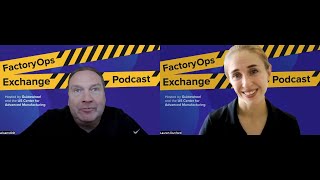
Lauren Dunford talks with Don Weissman, CEO of Technor Apex, about taking over a century-old materials company. Weissman brought in process mapping, a single source of truth for data, and digital tools to reduce variation and track operator performance. He emphasizes consistency, care, and letting people make original mistakes to move faster.
Welcome to the Factory Ops Exchange podcast hosted by the US center for Advanced Manufacturing and by Guide Wheel. I'm Lauren Dunford, CEO and co founder of Guide Wheel and executive committee member for the US center for Advanced Manufacturing. Today I am honored to be joined by Don Weissman and CEO of Technor Apex and a 38 year veteran of plastics and specialty chemicals. Don is an incredibly wise leader and he's led across public, private and private equity environments, so brings a unique perspective there. He is now steering Technor Apex, a century plus old business, into a very exciting next chapter. In this episode he shares how to build followership, why people are a business's durable competitive advantage, and how his team is using digitization to raise standards, reduce variation and recognize exceptional work. We'll also get into leading with consistency and care, making original mistakes and moving with the speed that today's environment demands. Let's dive in.
Foreign.
To start with a quick intro. Don, I am so grateful to you for making time Today. You are leading Techno Apex, one of the most innovative materials companies on the planet. And you've built an exceptional team that blends 100 year legacy with forward thinking. How are we, you know, diving into the next generation of what's possible, technology, culture, all of that. So you're a leader I really admire. I'm so grateful for the opportunity to get to dive in together and maybe I'll turn it over to you to introduce and share a little bit about where you're coming from.
Well, I think you're very kind. There's so many great leaders I'm sure you get exposed to. So thank you for taking the time. I've been with Tector now almost two years. I'm about six days short of two years. And you know, I come from the industry. I'm in plastics and specialty chemicals since I've been 20 years old, so 38. Eight years. You know, I've been lucky enough to be in public, private and private equity. So I love what I do, right? I love what I do. I love talking to people like you who are, you know, moving everything forward at a faster and faster rate, which is, it's really cool for Technor. We have so many good people and the tools that we're introducing to the company are really allowing us to leverage those people to go faster and make better decisions.
Yeah, yeah, I love it. I think one of the areas I wanted to start with because I think there's a lot that our audience could learn and that I could learn from you. One of them is, is just Thinking about how you stepped into that role two years or almost two years ago, coming in, what was on the list of things that you were not touching in the, in the initial period of time and walk us through those moments.
Yeah, it was, I mean, it was such an honor to get offered the position. Right. I mean, I've known Technor for every bit of the 30 plus years I've been in the industry. Right. Customer, supplier, competitor. And I got to know our investors when I was at our. One of the bigger competitors at Polyone.
Yes.
So we built, you know, I think we built a really good competitive relationship around, you know, how we grew the industry, how we supported the industry and I think we built a lot of trust. So when the job came up, I was honored and I think it was a huge decision to go outside. Right. Jonathan Fain was our CEO 53 years. So you know, what did I decide not to touch? Pretty much everything. I mean the companies, it, it's, I mean we have no debt. Right. It's a well run entrepreneurial company. My, my goal was to build followership coming out of the gates. How do I build followership? How do I prove to these people that have been here for decades.
Yes.
That I can bring value and that's, you know, so we went really slow. In fact, you know, sometimes I look back and I'm like, we should have gone so much faster. But that trade off of the followership in our business, I don't think it was worth it. Because a company like ours, our most important asset is our people. I mean, all the tools that we're going to talk about today and everything else, they make our people faster and more efficient. But our business, you know, everything else in our business can be copied with time and money. Our people are our only real competitive advantage. So went slow, learned the pain points, learned that, you know, Technor got here a hundred years ago or started 101 years ago now, based on people and entrepreneurial spirit. Right. And those things are still strong in the company. What we did decide to dig in relatively early was process because there's, it's rare that we. I sit with anybody who's been a techno or retired from techno that says and ask them a question and they, no one ever says we used to do that. It didn't work right. So it's not the old company that you would expect people would be like, oh yeah, we used to do that and be like, why'd you stop? Well, so and so retired, so and so got promoted. So it was always driven by the people, which is what you want. But the process is for people to pick up. There was always a level of dilution that's, that's been really what we've been working on is how do we really map out what our processes do around. Because knowledge management is going to be really key for us. Right. Being as old as we are senior, we have a lot of senior people been with us 20, 30, 40 years.
Yes.
How do we do knowledge management in process mapping and process improvement? It's our biggest opportunity.
Yeah. I love it. And the, the concept of how do you plug in and see what's really working? I will say I worked with some of your people. They are exceptional. So great. How do you take what's working and then how do you put. Put in place the pieces that can maximize that around process and knowledge management? That is something so many people are also struggling with and thinking about right now. How did you go about it?
You start with one source of truth, right? You gotta have real data.
Yeah.
And one source of data, like.
Yeah.
Because, you know, I, I don't think there's a company that I've worked for that at some point in the journey, we didn't have two functions with two different sets of numbers.
Yes.
And now we've, you know, after almost two years, it's well known. Don't come in to have a discussion. If you start with, just ignore that chart up on the left. The numbers aren't right. Let me tell you what they really are.
Yeah.
Be surprised how much it happens. So we're through that phase. We're through the storming. I think the team is really starting to norm and lean in and. And now we're really starting to apply that data to multiple digitization opportunities. Including Guidewell. Right?
Yeah, yeah, absolutely. I love what you said about followership and even that example of coming into the meeting and now people don't put up the graph and say, don't refer to it. Any tips that you as a leader or strategies you as a leader have around building followership, listening. Well, any things that you have built or learned over the years in terms of that leadership playbook.
I think everybody's style works for them. Right. Generating somebody else's. I've tried to be other people before. It never worked out very well.
Yes.
Because we always do. We always revert to ourselves under pressure. Right. It's just. And not always the best version of ourself. So mine is just be brutally, unconditionally transparent and honest.
Yes.
And that doesn't mean you need to say things that don't need to be said. Right. There's things that are true that don't need to be said. But defining success and being the most consistent person in the organization, that is my job. Because if I'm not consistent, I mean, we've all done water sports and different things. The further you get from the center, the more wild the variation.
Well said. Yes. What does consistency mean to you? How do you think about consistency?
I mean it in every day. Like, Like, I always tell some of my people because style is so important, but it's really to the individual. I would rather have great contributors that are very diverse in style and thought because I tell some of the people, you know, because sometimes you have a difficult person, occasionally, maybe in some other companies, never a technor. Someone will always complain. Right. And it's just be. Just be yourself. Right. Just be true to who you are. People value consistent more than nice.
Yes.
People do not like to be surprised. Right. Yep. So that whole consistency is. How do you avoid the surprises?
Yeah, I love it. I also love seeing great leaders in manufacturing who are so passionate about this space and have been with it and, and growing within different pieces of manufacturing. Was there a moment in your career when you just felt, oh, this is my world, this is the spot I want to be in terms of the.
Industry, I mean, I mean, yeah, I was probably 20. I was 19, 20 years old. I was working for a company called Packard Electric that eventually became Deli. Yeah, I, you know, I really, to be honest, didn't want to be in college. I was happy, man, being a produce manager. And I got hired into Delphi as a technician to run extruders and had a really good guy. He was young. Well, I thought he was old at the time, but he's probably 26. And he, he taught me about plastics and materials and how to make them. And then within six months later, my grades, like, I actually start going to class. My grades went to straight A's. And it's been. And I've been. I've been blessed with really good leaders and mentors my whole career. One of the few people that can actually say, I've never had a bad boss.
Yeah, that is incredible. Any bosses you remember specifically because of what they taught you or what it was like being led by them, I mean, it's.
It's always the right person at the right time, right where you are with your growth. So I think about. I mean, I worked for a guy right out of college named Evan Crook. He was Such a gentleman. He was so kind because it had been at Roman House 38 years when I went to work for him.
Wow.
And all he wanted us to do was invent stuff. Right. It was very clear. Right. Raj Gupta was running our business back then, before he really started, started moving up in Roman House. And it was all simple. Grow revenue, please the customer. Everything else will take care of it. And you start with that. And then, you know, as I got to go into operations and get promoted, I had a really good boss on the safety culture, a really good guy who was brutal to work with named Bob Tabit. He cared so much about us, but he did not let us act like fools. Like, you know, everybody has a point when they're pretty sure they're smart enough to have the job. If you decided to show that in a meeting or your team, you would. It was instant feedback. It was instant. It was sincere. It was not mean. But it was difficult. And it took years to not let ego and the pettiness get in the way of great results and having people follow you.
Yes. Oh, love it. Just learning from the right person at the right time. You also, as you mentioned at the beginning, have had the opportunity to lead in different types of businesses within the industry. PE backed, public, private. What, in your experience are the common threads, the fundamentals that have carried over well of how to lead at those different environments?
It's been such an experience, and I think mine's just been a little bit different or maybe I'm just more adaptable when I had such a hard time going from private. So I worked for a company called American for 13 years, and when I got one of my advanced degrees, I wanted to try public, right? And people were like, well, you don't. You don't know how to run public company. Right? I'm like, it was really hard. I got a really great job offer eventually with Cabot microelectronics was small, 500 million at the time. Specialty chemicals and specialty plastics is about selling value. What I know is true is people are. People know what your investors want. It doesn't matter if it's one investor or mutual funds, right? It's. Know what your investors want, be clear, and wake up every day wanting to be better than you were yesterday. Biggest thing that I try to teach our leaders, and they teach me, too. It. Because not everybody's. I don't wake up my best self every day, right? So it's. How do you. How do you just know that you got a little bit better every day? I mean, Those comp, those, those tweaks compound on themselves.
Yeah, I love that. I mean, that's such good wisdom for any, any leader, any stage company. I'm thinking that applies. And in my world for sure as well. You also have a really interesting perspective, not just of the career you've built, but all the people you've seen coming into the companies you're leading and building their own careers. We're in a moment when technology is changing a lot. There's a lot of different tailwinds and headwinds in different spots. If you were coming into the industry today, where would you be focused in terms of what skills to build? What capabilities are most important today?
I mean, everything's just faster, right? It's, it's the same principles, right? The right people with the right training. I've always believed if you give good people correct data, they will make the correct decisions. All that's really happened in the last 30 plus years for me is it all got faster. It, I mean, significantly faster. You know, you used to be able to get a get away with regional pricing from New York to California. You could have radically different prices for months. You're lucky if you can keep it for an hour now. Okay. I mean, and it's, you know, and you can always argue freight and these things, but there's just, the world is much more efficient data. I mean, I remember working for some early bosses when I was in sales that knowledge was power. And it's still the case. Right. It's just you can't hold it to yourself anymore because it's a network effect. Right. You have to give knowledge to get knowledge. In today's world, it's just, that's the whole thing is just this network effect of speed and efficiency. That's where I would spend all my time, still working on leadership skills, still being deep in the data, understanding the business and understanding our customers. Right. That, that hasn't changed. We just can get to customer preferences so much faster now.
Yeah, the what, the what hasn't changed. It's just the how that. Yeah, that's different. And the speed. Yeah.
And your risk profile has to change because if you wait for perfect information, you're done.
Yeah, yeah, absolutely.
That's the biggest change, I think, is the ability to take risk, you know? You know, maybe as a young Engineer, you want 100% of the data before you make a decision. And now it's what data? Right? There's so much data. What's the right data? How much of it do you need? And when do you make a decision? And that's, I mean, that's really why at Technor, when we get stuck about what to do, what risk to take, where to invest, it's go, do the experiment, make original mistakes, do the experiment, fail fast, make original mistakes.
It's the. Make original mistakes is really good. I love that. There's so much in that phrase.
Yeah. You know, I used to have a boss that would say, go make mistakes. And then I had a couple buddies and then it was like, you're still making that mistake. I'm like, yeah, you want to tell us to make original mistakes? Yeah, I love that.
Yeah. The worst mistakes to make are those that are not original. Speaking of mistakes, everyone, of course, as we're growing and learning, has lots of moments where things don't go so well and we get the opportunity to learn any turning points or challenges or times like that that shaped how you lead today.
I think it's all about it all. To me, it comes down to this assessment of risk and confidence. Right. And I don't know about others, but for me, I can go from exceptionally confident to losing my mojo in a quarter just because stack up, either get in streaks. So it's being aware of how do you let all that noise go and focus on what's important, right. And try to make this as unemotional as it can be. You can be passionate, but you can't. It's. You can't carry around all these mistakes. You got to learn from them, prioritize them, and forgive yourself.
Yeah, beautifully said. We're going to go into a little bit more just factory floor manufacturing stuff. If you had to pick the biggest levers that you've seen for improving performance, kind of getting the factory floor performing and efficient. What have you seen? What are the greatest lovers in your opinion?
Well, first is communication, right? It's what does good look like? But then the vision of what good looks like. Coaching, development, training, and always the more visual we can make things right, the more visual we can make it even like we make pellets, we send pellets to our customers. This should be. I mean, I'm a big believer. You put visual standards of stuff that has either been returned or if customers have cried about that, it's the best thing they've ever had. You put those out there so people know what good looks like. You know, that's one of the things that digitization's brought, is it shows we're finding that, you know, we can say, this product has been run. I don't know, 60 times and you've, you've written the last three times you've run it, you've done really well. No quality complaints, and here's how you run it. Compares to someone else. Right. And so how do we get. Because the more we standardize, the less variation. The less variation, the better things work for our customers. Right.
Yeah.
So. And then it's at the end of the day, it's then the three words and recognition. Right. People want to know that they're winning or losing. There's very few people I've met. I'm sure I've met a couple, but I don't think I got to realize that they woke up hoping to lose up and says, I'm gonna go to work today and I hope no one does notice I do a crappy job. Right. No one says that. I mean, people will wake up and they go, I'm not feeling that great today. I'm gonna do my best. But that's. It's still. They're wanting to be their best self.
Yes. Yeah.
So to me, it's. Where does all this fit together? It's how do we get the right data in front of our people to make real time adjustments in our process that reduce variability in our customers?
Yeah. I love it. And the reduction in variability also does. It's that theme of consistency. That's what provides trust over the long term. Anything that you've done recently. Because I totally agree. And it's so well said about people wake up wanting to do their best. Let's support a shop floor environment that shows people if they're winning or losing and makes it easy to see what good looks like. Any investments that you're proud of that have kind of supported shop floor operators that, that just. You think, wow, that was great.
Yeah. I mean, there's a. There's a couple of key things that we've built or some stuff that we're not quite ready to share that we're testing out both around paying for performance. Right. Managing skills for our people. So. So if we can get to a model of we don't care when people work. We care that the machines are running.
Yes.
So that we have a flexible workforce. Then maybe it's not pick or choose. Right. We're not. But you know, you can look out far enough to know you're going to have a gap.
Yes.
Schedule, you know, people with these skills and they just fill these openings naturally. Right. So there's, there's some things we're building around that. The thing I'M most proud of is the team started this journey around digitization a little bit before I got here, building a tool, internal tool that we call connected operator. That's exactly what we talked about earlier. You badge into your line says, you know, good morning, good afternoon. Here's what you're running today. Here's, here's the history on this product, here's how your peers run it. And then, you know, at the end of the week, you get a private report card. And we got to stay true to that is we don't want that report card to be anything but for that operator. Right. We're not grading it. It's an opportunity to show here's how you do versus your peers. Because everybody wants to. I don't know if everybody does, but a lot of people want to increase their skills so they can increase how they provide for their families. Right?
Yes.
So how do we enable that without bias? Right. So there's some in going to data based in facts, it's not, well, you know, Don like so and so better. So they always get to work Wednesday. It's, you know, like I said, the further you get from the center, it doesn't take long to build giant incorrect beliefs.
Yeah, yeah.
So driving this towards data and recognition and engaging our employees. The other thing that it's driven us a lot more like 1 on 4, 1 on 5, 1 on 6 meetings, sitting down with the people in the plan about what's the hardest part of your job, what makes you so glad to go home. Right. And how do we, how do we take those things away?
Yeah, I love it. Such a great mindset of just learning and listening and looking for all those. Those opportunities. All right, we're going to wrap with the lightning round. Take these in whatever direction you want. Favorite manufacturing process.
I'm a twin screw compounding guy my whole life. I mean, that's what I love.
Amazing book or leader who's inspiring right now, right now.
Her name is Jacqueline Carter. Jacqueline's awesome. She is. She's wrote, I think she wrote a couple of books, Leaders mindset. The other one is, it's. It's where I, where I really like. What Jacqueline teaches is around caring. Caring for our employees. And caring is. People confuse empathy and caring a lot. Empathy is you listen. And I understand. Caring is saying, I understand. How can we help you change this?
Yes.
Right. It's having. It's having. Maybe it's a difficult conversation, but if you never have that difficult conversation, people won't know you care about them.
Yeah, yeah.
So it's that whole how do you. How do you become that leader that doesn't wait for an event to have a difficult conversation or a good conversation? Right.
Yes.
Do it in real time so it's fresh and people know and that, you know. Jacqueline's inspiring. I. I used her for an executive coach for a little bit. She's just. She's a wonderful person. I encourage everyone to read her books.
Yeah. Love it. Anything else you want to add? This has been fantastic.
No. Hopefully this works for you and I'm grateful for you taking the time. I've enjoyed getting to know you over the last couple of years, so thank you.
Oh, Don. It's mutual. I feel like. I just. Yeah. I really admire a lot of the ways that you're approaching tough things, exciting things, the team you've built, and I think there's so much I can learn from you. Thank you. Thank you.
Thank you. Have a great weekend.
Thank you, dawn, for a fantastic conversation. Key Takeaways Define one source of truth and stick to it. Make knowledge visible through process. So great habits outlive individuals. Show operators what good looks like and whether they're winning. Recognize performance and have a bias for action. Run the experiment and make your mistakes original versus repeating the same ones. Consistency and caring leadership compound, especially as decisions speed up. Thank you so much for joining and if this was useful, please share with a colleague and follow the Factory Ops exchange for more discussion with leaders building the future of manufacturing. Thanks for listening.
More from Lauren
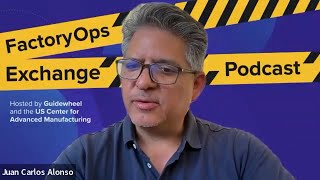
From Davos to the Factory Floor: Lauren Dunford’s Guidewheel Journey | Culture Talks
Lauren Dunford of Guidewheel on Data-Driven Efficiency, Sustainable Factories, and Finding Champions