Episode 9: Jeff McNabb
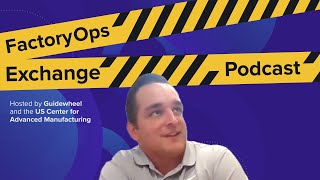
Jeff McNabb, Associate Director of Supply Chain at Myers Industries, talks about his path from the Navy through Dow and Abbott. He emphasizes people-first leadership, using X-matrix for goal alignment, and the importance of clean master data for digitization. Change management works best with clear charters, scope control, and identifying early adopters.
Questions this video answers
Jeff McNabb — Associate Director of Supply Chain at Myers Industries.
Love is the Killer App.
Four years in the U.S. Navy.
Ohio State University.
Dow Chemicals and Abbott Nutrition (before joining Myers Industries).
Welcome to the FactoryOps exchange podcast hosted by the US center for Advanced Manufacturing and Guidewheel. I'm Lauren Dunford, CEO of Guidewheel and executive committee member of the US center for Advanced Manufacturing. Today I'm joined by Jeff McNabb, associate director of Supply chain at Myers Industries, a leader whose career spans the Navy to Fortune 100 companies. In manufacturing, Jeff shares lessons from pacing change, aligning teams with the X matrix and implementing AI and automation in ways that stick. Let's dive in. It is my absolute pleasure to be here Today with Jeff McNabb, Associate Director of Supply Chain for Meyers Industries. Jeff, thank you for making time. I really appreciate it.
Yeah, thanks Lauren, for having me. It's awesome to be here.
This'll be fun. And maybe just as we head into your thoughts on current topics, just starting with how did you get into manufacturing? I know you have a bit of a unique background. Walk us through your story.
Yeah, yeah. So to keep it brief, you know, I was in the military for four years in the Navy and that was my first exposure to really the supply chain. But you know, turning wrenches. I was a gas turbine electrical engineer and you know, that opportunity helped pay for my education. So from there, you know, I went to the Ohio State University, got a operations management degree and then from, from there went into Dow Chemicals rotational program where I held a variety of supply chain and manufacturing type roles. From Dow I went to Abbott Nutrition in Columbus, Ohio where I got to work in procurement, work in S and O P and work in the plant where I really got to get hands on with manufacturing operations and supply chain and inventory. From Abbott I left and went to Myers Industries. And at Myers, you know, I've held a few different roles within supply chain but really have been most recently focusing in on supply chain and operations and how do we opt, optimize our network footprint, optimize our operations to make sure that we're being the most effective, really trying to do the most with the least amount of cost to really help Myers win. Love it.
And you have such a wonderful, I love getting to work together because it's like, yes, we're going to win together. Any moments you remember on that journey where you thought this is, this is an awesome industry, this is where I was meant to be. Any memorable moments for you?
Yeah, I mean, thankfully I've got to work in a few different industries. Coming from more of a science CPG at Abbott and then taking some of those learnings that I've had there and from Dow Chemical, which are both Fortune 100 companies and applying them to a smaller manufacturing based company. There's a lot of really impactful opportunities at Myers and at a medium, a medium sized company where we can apply some of those things that were common at a Fortune 500 company and some of the technologies that were common at a Fortune 500 company and really make huge impact at a medium sized company. So I think being exposed and coming into more of a medium sized company really opened my eyes to what opportunities exist and not all the low hanging fruit had been picked. And you know, it's really a great opportunity for having a wider span of control and making a larger impact. So that was a real big learning coming from a really large corporation where I was a small cog in a big wheel to just having a really wide breadth of influence and being able to make some serious change.
Yeah, yeah, it's been awesome to get to watch some of the change that you've made. Any mentors or lessons that stood out for you along that journey? Things that shaped how you think about operations, manufacturing, supply chain?
Yeah, yeah, I've had some really awesome mentors along the way. There's one at Avid that sticks out in my mind. His name is Gustavo. He actually works in the dairy procurement team, leads the dairy procurement team there. And he recommended me a book that was called Love is the Killer App. And it was really about approaching team management and teamwork with, you know, out of a place of love and like nurturing and development versus a place of like power and respect. And you know, it's really helped me from leading within on my teams and making sure that I'm leading out of a place of like selfless selflessness and love to try to help develop my teams and push us towards winning and push us towards finishing versus, you know, just a pure command and control mindset which doesn't work. I mean, I'd rather be respected than feared any day of the week and being able to apply that in my daily life and work has had a huge impact on me and my career.
Yeah, I love that so much. I'm gonna get that book because I think the, the unique kind of Navy winning love combo, like that's pretty killer. If you were starting over again today in your career. A lot of what we think about is how do we, how do we help next generation leaders see the awesome opportunity in manufacturing? What would you do the same? What would you do differently? Anything. Yeah, anything you'd change about how you approach it.
When I was really young in my career, I had a mentor tell me that it's a marathon and not a sprint. And I blew him off. And I was like, yeah, right. Like, watch me sprint. I'm going to sprint all the way to the finish line. You're just telling me that because it's a. You want me to, you know, be here longer or do something. Right. But in reality, you know, being able to pace and even if that's keeping up a high level of pace and making sure that you're taking care of yourself and taking care of your personal life and alongside all of your career aspirations, I think is very important and something that I want it all in. In my career. And there's times where I put my career above myself. And, yeah, I guess sometimes you may have to do that. But I would always recommend making sure that you are a true advocate for yourself and maintaining, like, your health and wellness, because if you're able to bring your best self to work every single day, then you're going to have the best output. So you have to take care of yourself. I would have done that a little bit differently. It's just now in my, you know, mid to late 30s, that I'm, you know, kind of rebuilding that and making sure that I'm putting, you know, myself and my health first over my career. Yes.
Oh, I empathize quite a bit with that. How do you bring that to the team? Have you found any ways. I know it's hard, too, because there. There are needs to move fast, business outcomes. Any ways in which you have found that work that, channel that, to channel that with your team?
Oh, yeah, yeah, absolutely. No, I really emphasize development plans. Yeah. Making sure that a development plan exists. It's well thought out and that it's not focused purely necessarily on career items, but, like, what are your personal goals? You know, where. Where do you see yourself both in your personal life and your professional life within the next three to five years? And making sure that, you know, I'm very in tune to what my employees want and making sure that we're working together towards those goals because I want my version of success for them to be the same version of success for them, and we're on the exact same page, so there's no disconnects. And honestly, it's. It's. It's been great. You know, they've. They've really appreciated that. And I've seen folks on my team get to develop into just really wonderful people and professionals.
Yeah. Oh, I feel like that's one of the best things in life, is so rewarding.
Yeah.
Any tough Times, challenges, you know, things that you learned a lot from that were harder or mistakes or unsuccessful. I think we all have. Have those in life. Any that come to mind?
Oh yeah, yeah, several. Several that come to mind. You know, it's through the failures that I think we learn the most here at Meyers. I've got to be a part of a lot of really cool projects. Some of those were plant startups and also plant shutdowns and you know, those projects are not necessarily the most fun, especially on the shutdown side, but sometimes necessary to, to make sure that we're really focused on the sustained long term sustainability of the company through those chall. I mean it's a lot of, it's about persistence and, you know, empathy, working with teams that, you know, that are going through tough times and also just making sure that everybody fully understands the why in the mission and putting the right structure around the projects to make sure that we can continue to push them forward and planning for all the different what if scenarios that could occur as curveballs along the way.
Yeah, yeah. Oh, that. I, I can only imagine the nuance and thoughtfulness with which you need to manage a lot of moving pieces in those projects.
Yeah.
Any crises or breakdowns or kind of surprises, things that, that came up that changed your approach to operations or how you operate as a leader?
Yeah, there's been a lot of things that I've, I feel like that I've evolved over time on. There's been some projects that have been flops where the project just didn't take off or there wasn't the buy in and it's really changed my perspective and approach on change management. So, you know, back to my comment around it being a marathon, not a sprint. Well, a lot of times with change management and some of these projects I get so excited and I just want to implement and do and you know, get things going. And in reality if you're not bringing everybody along with you and really managing the change and you know, managing, managing the cultural change that comes with it, especially if it's a fundamental change to how they've been doing business for the last 20 years, it's going to be a flop. So you really have to slow down, bring everybody with you, make sure everybody understands the why and then make sure that it's sticky enough and you have the right controls in place to ensure the longevity of whatever process or metric or technology that you're putting in place.
Yeah, Yep. That. I never get excited about anything.
No kidding.
I get way too excited. And the change Management piece of how to make sure we do things at the right pace has been huge. Any lessons where you think, hey, for someone approaching that topic, here are one or two small changes, tweaks to how I do things, steps in the process that have made an outsized impact for you?
Yeah, I would, I would say like a couple things. One, I would say project structure, like getting back to the fundamentals. Make sure you have a well defined charter. Make sure that you have really clear definitions on what's in scope, out of scope so you can avoid downstream scope, scope creep and making sure that you have well thought out communication plans and different channels of communication ahead of time. And then with that I would say identifying who your early adopters are and really like working with them because of the folks that are super excited. You'll have a few folks in the middle and then identify your laggards, right? And for those people giving them the special attention to figure out how to get them on board, sometimes that's involving them directly in the project so their voice is heard so they, they really help drive the buy in. The more folks in the laggard category that you convert to either the middle or even like the early adopters that are excited, the better and then the faster you can go and the more successful the change is going to be.
Yeah. Oh, love it. Anything from. Because you bring this knowledge of best practices like you've been part of teams that are just operating at, at kind of a really anything that you've decided to leave behind from the traditional way that things are done.
That's a good question. I would say that I try, especially working in large corporations, I try to leave as much of the red tape and bureaucracy behind. I know that's, you know, I'm saying that a little tongue in cheek but you know, I really try to empower my team to know what decision rights they have and to go make those decisions. Because the more folks that you have making data driven decisions at the lowest level, the better the business is going to run and getting into either analysis paralysis or getting held up on needing 10,000 approvals to make one small change really bogs things down. So yeah, I'm happy to leave that behind.
Sounds definitely great to not bring any operational strategies or tactics you love and wish more people used.
One thing that we are deploying now that I had not used in the past, but I really like is X matrix or some, I think maybe called Hoshin. But it's an X matrix goal deployment and it really ensures that the entire organization is Fully aligned on what the goals are, even at the CEO level. And it has a very awesome way of cascading all of those goals down to each area, each function, each business, down to even the operator level. And with that, like, with embedded within that are bowling charts that have, like, grading on how you're performing against each one of those commitments. So it really increases the accountability and visibility, in turn increases the execution. So I'm really excited about that.
That's awesome. So you said it's X. I've never heard of this. X Matrix. And then Boolean.
Okay.
X Matrix Love is the killer app. And X Matrix, this is already this great stuff.
I'm really excited. We're, we're in the phases of rolling it out, you know, from, from top down. And it's. I'm really excited about it because I think it's really going to drive visibility. So everybody knows what we're doing and why we're doing it, and then accountability to action. So there's no, there's no, you know, people off doing their own thing. It's everybody marching in the same direction, which is going to be great.
Yeah, that feels darn good. Any tools, systems, kind of operational tweaks that for you have been outsize things that you would bring with you anywhere.
Yeah. Obviously a shameless plug for guide wheel. And for the record, you didn't put me up to it in an industry or in some of our technologies where a lot of our operations monitoring was done on paper charts. Yeah, right. And anywhere that you can have a plug and play technology to digitize how you're running your machines and how well you're running your machines can make. You can get a very good view of the operations and where to make changes very quickly.
Yeah.
I'm always a huge advocate of master data for any of our systems. So the cleaner you can get your master data, the old saying is garbage in, garbage out. So what I found in my career is the cleaner I can get our inputs, especially in our ERP system, the better everybody performs. Because we're working with good input data to get good outputs and are making better decisions.
Yeah, yeah, absolutely. Maybe taking us a little bit in our last few minutes into what's happening in the overall manufacturing ecosystem. Any trends you think are especially meaningful applications of AI or automation that are delivering real value versus those that are overhyped or, you know, not as impactful?
Yeah, yeah. I mean, just overall trends, I, I see, you know, there's, there's some aspects and this is, this is largely from My vantage point of, you know, figuring out ways to consolidate and figuring out ways to potentially vertically integrate. Right. I see a lot of different manufacturers partnering with upstream and downstream supply chain partners to either merge or figure out how they can work even closer together. And I think there's a lot of opportunity in tying out systems and giving visibility across the supply chain with key, with, with key partners. You know, obviously you don't want that visibility for everybody. But for your strategic partners, even using forecasting or even just plant output or something like that as the example, if they know what your typical output is or if there's major changes in that, then you know, your suppliers can react quicker or even downstream, your custom didn't know what to expect. For better or for worse. I think there's a lot more that could be shared across the supply chain for sure.
Yeah, super interesting. Just, I love that because the more strategic you can be upstream and downstream, that just opens up all these possibilities and it's an application of technology I haven't heard people talk about, I think enough.
Yeah, yeah, yeah, yeah. It's super interesting and I've seen different areas like dabble in it, but I don't think anybody's really. Aside from I guess a handful of major corporations really venture too deep into it.
Yeah, fascinating. Oh, I wish we had more time. But I'm going to take us to the last question, which is just if you, Jeff, had unlimited budget, no red tape, what's one change you would make overall? It doesn't have to be within Myers. It could be for the world.
That's a great question. That's a great question. Unlimited budget and no red tape. Yep. Yeah, I'm thinking about it. Yeah, I want to do like a, more of like a PC, not a PC response, but like a, you know, I want to solve world hunger with that. But no, but in a true manufacturing sense, you know, if I were thinking about Myers Industries, you know, it would be very cool to have a highly trained and highly flexible workforce that was deployable to different plants to where if one plant was experiencing a peak in their utilization, we could deploy the right resources there immediately and then pull them back and send them to a sister site when, when we didn't have that and they were highly trained. More like a highly trained like SWAT team. I think that would be really neat or even just, you know, a super large centralized warehouse that holds all of a lot of our raw material. So you could risk and, but optimize the inventories because you're not holding inventory at so many different nod so you can actually hold less but minimize the risk at the same time. I think those would be the two Meyers things that I would do.
Yeah, I love it. Such creative ideas. Jeff, you rock. Every time I talk with you I just feel stoked for where the world is going. Thank you. Thank you. Anything? I didn't ask.
No no. I appreciate it Lauren. Thank you very much. It's been awesome and I hope to talk again soon. Amazing.
Thanks. So.
Huge.
Thank you to Jeff for such an open and insightful conversation. His story shows how lasting change comes from pairing the right technology with clear goals, disciplined rollouts and a focus on people. I loved his book recommendation in particular. If you enjoyed this episode, please share it with a colleague and follow the Factory Ops exchange for more conversations with leaders building the future of manufacturing. Thanks for listening.
More from Lauren
From Davos to the Factory Floor: Lauren Dunford’s Guidewheel Journey | Culture Talks
Lauren Dunford of Guidewheel on Data-Driven Efficiency, Sustainable Factories, and Finding Champions