From Davos to the Factory Floor: Lauren Dunford’s Guidewheel Journey | Culture Talks
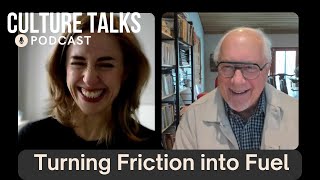
Lauren Dunford, CEO of Guidewheel, talks about building a company that gives factory workers visibility into operations. She emphasizes vulnerability in leadership, sleep as non-negotiable, and how the company's values shaped hiring. Customers report significant runtime improvements from using their platform.
Questions this video answers
About 250 big brand names.
Guide was one of 100 companies recognized; 15 were invited to Davos/Switzerland (host's claim).
A cited customer showed ~25% improvement in runtime over two months.
Chapters
I try to be open when I'm not perfect and also just share the day to day life stuff. So we have a little prompt that goes out every Monday morning and it says, you know, how was your weekend? Share an image. And so for those images I always try to share the like screaming toddler.
Hurry, like whatever. And I just, I think I want people to see that in the same way, you know, if I'm getting to meet Bill Gates or Prince William or these people, they're, they're people too. That definitely a person too. And that's important to me because I think it's really valuable to have a team who's eager to question and eager to take ownership. And if they think I'm perfect, first of all they're definitely wrong. And second of all then why should they take ownership over decisions? Because oh, Lauren's just making the perfect decision.
Oh no.
So even in these little check ins that I have with folks, as they start, I'll say I challenge you to take more ownership than you think is possible.
Hi, I'm Loren Rubas, the host of Culture Talks where we meet next gen leaders and find out how they're taking on the world's nastiest problems and making better workplaces. So we're learning about them, you know, what they're doing and why they're doing it and to give you some insight there and today we're fortunate enough to have Lauren Dunford who's the co founder and CEO Guide Wheel. And I know that you'll want to go and get all the information that you want both through LinkedIn and through their website, but just level set a little bit. Guide Wheel is sort of the Fitbit of manufacturing. They are a factory ops powerhouse that gives insight to anybody that's running any kind of machinery frankly around how to do it more efficiently, productively. It's more engaging for team members because their dashboard really kind of gives insight as to what's going on. And as a byproduct of that practical productivity impact, they're making a big difference to sustainability. So they're around the world right now. You've got, I know 250 big brand names that are part of you. You're knocking it just out of the park. And a little bit about Lauren herself. She's got a Stanford mba, Fulbright Scholar, just all the bells and whistles. But I want to take you to somewhere that very few of us, Lauren ever get a chance to go. Just recently Guide was one of a hundred companies that are recognized by the Davos people 15 are actually invited to go to Switzerland, to go to Davos, and there's a picture of you with Bill Gates right beside you, and then Prince William, and you're having a conversation with them. And if you can talk about it, and I don't know if you can or not, but what were you talking about? What did that moment feel like? I mean, for most people, just thinking about going to Davos, most of us are never going to get there. And most of. Most of us don't hang out with Bill Gates and Prince William and they do it at the same time. Can you describe that experience? What's going on in your head?
Well, it's so funny. That was. Yeah, it was a fun summit. And.
The time that Bill Gates was going to come by, the person who, you know, knows me well and also knew what his schedule was, warned me. This was actually Tuesday of that week. The picture was taken on Thursday. And on the Tuesday of the week, she said, you know, Bill Gates is going to be coming by and, you know, you should talk with him about what you're doing and guide wheel. I said, sounds good. And she said, so just give it a go and if it goes well, he'll be bringing someone else by on Thursday. And so I had to Google at that moment, my Google search was, who is more famous than Bill Gates?
Who would he be bringing by?
You know, Elon's busy somewhere else, so.
It'S not him exactly. So, yeah, it was just wonderful. I mean, I think the really nice thing as well is Bill Gates has the very technical. He wants to understand all the details and the equipment and how it connects and where the electricity and the heartbeat is. And that's something I love to nerd out on. And then Prince William is very much more focused on the people and kind of learning about the origin story. And so it was a really good mix. And I think that, yeah, it's fun to get those two things blended together.
So when you're flying back, Lauren, and you're thinking about that experience, what kind of impressions were you left with? What lessons did you learn? And if you were to impart any kind of insight to our audience, who are really, you know, emerging leaders themselves, what would you. What are some of the AHAs or insights from that whole experience?
Yeah, well, it's funny, so that that experience was actually in London in the Breakthrough Energy Summit, Davos itself, very similar experience of, wow, these are really powerful people. And it's funny, as you're asking that question, the things that the thing that is Coming to my mind is actually the preface to a children's book that I was reading to my daughter the other day. And the preface is a person is a person, no matter how small. And I will say that's been my takeaway of a person is a person, is a person, is a person. There are so many smart, committed, thoughtful, curious people on this planet. And just because someone is a name we all recognize doesn't mean that they're not all those things, too. Or that they don't wake up in the morning and wonder why their hair looks like they don't want it to. That type of thing. So I would say going into these types of things, the goal of being present and being connecting as people is usually what tends to serve me best. I also had a. You're getting lots of. Lots of tangential thoughts on this, but my husband is someone I really admire. He swam professionally for many years and represented his country in the Olympics. And we had an experience. We've been together almost 20 years, so I was lucky to be with him. Not physically, but we had been together when he was getting ready for Beijing. And hearing about his time in Beijing was just amazing. He was having such fun. He was experiencing everything as if it was all upside. He was interested, he was learning, he was meeting people. And then he swam very well because he was having a lot of fun. And then as he trained for London, the stakes felt so much higher. He was hoping to get a medal and ranked to be in the mix. And he was selected to carry his country's flag, which was a big honor. And it was like suddenly the weight of the world was on his should. And then he did not swim like he wanted to in that race. And so our household talks about, do we make it Beijing or London? Are we gonna Beijing it or London it? And in all of these things, I try to put on my hat of this is a once in a lifetime, really incredible and crazy thing. And it's all upside. Let me have a little fun while I'm here.
Yeah. Thank you for that. You know, when I first met you, we're both fortunate to be connected to the unreasonable group of companies. You're a fellow, which means you're one of the founders and CEOs that are part of about 400 incredible companies worldwide. And I get a chance to be a mentor there with a thousand or so folks. But we were at a conference together, and I was. I didn't know you. I hadn't met you yet, but you were in the room and you had Just lit up the room. And I say this without trying to, you know, not in any kind of patronizing way. You just, like, had this magnetic energy about you. And I just. It just was just so obvious that where does that energy come from? And I. And it's not a perfect day every day, right, Lauren? You know, I mean, you know, you talk about a person as a person, right? The book you share with your daughter, Tell me about where does the energy come from? And then. And then how do you navigate those crappy days?
Yeah, well, the. Where does the energy come from? It was a topic in the speeches at our wedding. It's been just like how I, you know, how I grew up. Is that kind of. Some find it very annoying, but, like, real, real intense energy. I will say it comes from getting a lot of sleep. So just making a plug out there that in my seat as CEO, I think it's a really good excuse to make sure I'm in a condition to be making good decisions. So I have a sticky note on my computer that says the number one job of the CEO is to make good decisions, which gives me an excuse to go to bed really early and get plenty of sleep, because I know I'm not making good decisions if I'm sleep deprived. And I also do that calculation, which really made it clear of if you're working at 95% or 90% for 10 hours or 12 hours, that's actually a lot better than working at 70% or 60% for 18. And so I don't try to over optimize how much I work. I love my job. And so it's. It's fun to get to lean into this exciting moment, but thinking about, let me be effective and smart in how I'm working and in how I'm keeping myself in a position to be making good decisions.
Yeah. And I know, I think your daughter's, you know, without getting into all the personal stuff, but I think that she's under a year old. Right. And.
I know you love to dance and to run until you do a lot of things to keep yourself try and keep yourself fit. I mean, if you're selling fitness in theory. Right? There you go. But I remember I listened to one of your podcasts that you were talking about having a moment when you were doing funding, and it was hard and was really tough, and you were talking to your dad about how hard it was and how you navigated that. And what's your insight about that? Because I think that's helpful to other leaders to think about what, how do you, how do you know, where do you tap into reserves to get yourself going through some of the hard and really hard, hard stuff, Doing the hard work of the hard things. Right?
Yeah. And it is so hard. Like I think the, the moment that you're referencing, I think I had just been just slammed with rejection after rejection and I was going and complaining to my, my dad because I was living in my parents basement during COVID and, and what he said was, wow, sounds like you're learning a lot and you always loved to learn. And so leaning into learning as a mechanism to be approaching the challenging times with the silver lining mentality is something I do quite a bit. So from a practical perspective, I like to structure. Hey, what am I focused on learning right now? What's important for me in the CEO seat to be upskilling or improving and then treating that as like, oh, wow, I'm getting the best possible course in the world on this thing if I supplement it with books and some mentorship and those types of things. So leaning into wow, this even though things are not going my way or it feels like the whole world is coming down around me, could there be possibly a better learning, learning opportunity than this? And usually the answer is no. I've chosen this job partly because I love it and I would do absolutely nothing else if I had all the money in the world or a choice, but also because I could not be learning this much in any other role. And so if I ask myself the question, could I be learning more than this or could I be in a position of learning more than this that I think helps me get the most out of where I am and always makes me feel like, wow, I'm the luckiest ever to be where I am, even if it feels absolutely terrible at this moment.
I know there can be a lot of production people and engineers and operating people that are going to want to nerd out on the technology, but I'm going to move you on the other side a little bit on the culture side right there on your website and other people, many organizations have it. But Lauren, knowing a little bit about you, when you put your values, integrity matters, Weak brackets actually care, data makes decisions and a growth mindset. How did you evolve those values and how do you make them real so they're just not on the wall. They're not just BS that at Guide Wheel, they're real stuff.
Yeah, totally. So arriving at those values was actually one of the first things my co founder and I did. And what we did was grab a Ton of sticky notes. Classic, classic approach. Grab a lot of whiteboard, white pieces of paper, et cetera, get a big table space and try to put out there what we thought was important and also what we thought was true about the constituencies of Guide Wheel, with constituencies being us as co founders, we were going to be involved and so putting things out there that was going to be true of us anyway would make sure that the values aligned naturally. So, you know, data driven decision making integrity and care are very core to both who Weston and I are. So that was one piece of what's going to be core anyway. And then constituencies also include our customers, our investors, our team. And so thinking about who are the customers we're serving and these hardworking manufacturing teams, what are their values? So growth, mindset and continuous improvement are kind of two sides of the same coin. And continuous improvement and lean principles are such a way of operating on the manufacturing floor. Data driven decision making is so core to what Guidewheel brings our customers, in addition to core to how we, we run the internal culture. So defining those values and really narrowing in on here are the things. And at some point they'll need to evolve, of course, with the company. But so far they've really stood the test of time and we do do a very, you know, intentional practice of hiring to those values. So every single hire within Guide Wheel, we've got what we call a culture interview where we're asking specific questions about each of those core values. We then give folks a score on that and have turn people away if, if they don't meet the culture interview our standards, even if they meet all the other things. We've also fired. Cut. Oh, you go.
No, you go.
We've also fired customers for not adhering because it's, you know, it's. The whole community of our customers are helping build with us what are the next features going to be. And we really need them to align in terms of value. So we tried to live that and make sure that we're keeping the community of Guide Wheel stakeholders aligned around those values. We've incorporated as a public benefit corporation to build the mission into how we're allowed to make decisions as a board, etc. And then we've tried to do a better and better job over the years. And I think we're getting pretty, pretty good at this, at making sure that we're talking about and sharing stories of how the values are coming alive day to day. So in our team meetings, we have a appreciation section at the end where we have folks shout out Other people on the team for living those Guide Wheel values. And is every shout out about the values? No. But are there more and more, you know that are? Yes. And then we have monthly and then quarterly Guide Wheel values awards. So for each of those categories, folks, not just managers, but throughout the org nominate people who really embody those values. We also have a Wins and Grit channel which is really fun. We talk about Guide Wheel Grit as not a core value but something that's really important in this market, especially because we have such hard working customers. And so having the opportunity to focus in on how do the things that we highlight in the Wins and Grit channel also align to the values is something we're always watching for as a leadership team.
You know, if we just stopped the interview right now and just did this piece, so many companies and merchant companies, but also companies, they do the checklist on the values piece, right? It's like a checklist. I've got them, we can put them on our website. But to hear you talk about how you've really tried to embed them from the culture interview to the shout outs to the storytelling, because it has to be authentic, Lauren. It has to be like if you and your co founder are walking around, people have got to see those values in you. Otherwise it just doesn't play and it's got to be scalable. Can you give me and this might be putting a little bit on the spot, but can you give me an example around if I was going to be applying and wanting to work at Guide Wheel, what would be some of the questions you might ask me around any one of the values? What might you dig in?
Oh, you're not putting me on the spot. I'm just going to reveal my questions now. I haven't had to update them in years. Lauren. I'm going to have to update them after this interview. But that's okay. They probably needed to be updated anyway.
Just a couple of them, Lauren. Not all.
I'll spill the secret sauce. So one of the questions that I always like to ask, we look for both positive and negative examples. So I'll give you a couple positive question I ask is looking back on your career so far, what's the proudest example of really living a value of care either for customers or for a teammate? So that's positive. The negative one. I always say this question can be a little bit hard to understand as well. And I say the intent is not to confuse. But looking back, what has been the biggest misunderstanding someone has had about your decision making? That's actually very interesting because it is a little hard to understand at first. People usually get it and of course they can ask clarification questions if not. But if you're getting to a time when someone made a decision, it was really misunderstood and the reason it was misunderstood was because they were bringing data, etc. I've heard so many interesting things in response to that question that either give me confidence or don't in terms of how that person is both making and then communicating decisions.
Yeah. So. And what, and what is the, you know and what are you looking for there around that characteristic? Around the response to that. Lauren, what's the, what's the, what's the insight that grabs you or what that starts to make you maybe not this person?
Yeah. Data driven decision making is what I'm looking for. So that's the value that that question hones in on. And when that person shares an example of here's why I was making a decision, you know, based on XYZ things that I saw in it. And they're using data to come at a really well thought out conclusion and then it's not understood at first or they're having to win people over and then they're reflecting on it. Growth mindset. That's a really, a really strong example. If someone talks about a decision to do something where the way they were thinking about it, I'm like, I don't know about the data being used there or that doesn't. It's not too often that by the time people are reaching me for that final culture interview they're dramatically off. But there have been some where it was just not in line with how we like to make decisions using data and collaboratively looking together.
Right. About needing to. To move fast, using data to help you and where you're not, you're honoring the emotions that attach to it. But that's not driving the decision making. It's the. And because you're a data driven company in a lot of ways. Right. That's what you do.
And emotions are data too.
Yeah.
Yeah.
So you know, and without getting into specific case but.
And about firing a customer, when would the customer be out of line with can work together. It doesn't make any sense.
Yeah, I'll share a real example here. So we had a customer we were pretty excited about and a team went on site to visit and that team included a male engineer and a female customer success manager who was not white. And the person that we were selling to kept looking at and would not really kept looking at the man and wouldn't interact with the person who was actually supposed to be leading the meeting, who was not white and female and was not treating their team with a level of respect and honor that matters to a lot, matters a lot to us around how operators on the plant floor, supervisors, et cetera are treated. And so we just, you know, respectfully did not serve that customer, you know.
And I think that's when it becomes so real. Your values become real. Because that story is going to get told throughout Guide forever because you could have said no the revenue or you need the brand or you want sometime walking away makes the story and the value more real than the shout out around how you embrace it. I'd like to dig further into this idea about being a public benefit company because a lot of people don't aren't that fully aware of how that connects with being purpose driven. Can you talk about that? How that helps you drive your purpose along with your profit, Your profit in combination?
Yeah, definitely. So we're very much a for profit company, but very strongly purpose driven. Like you said, what being a public benefit corporation allows us to do is we're actually a different type of entity than a traditional C Corp. So for tax purposes and everything else, it operates just like a C Corp. But what we've got is the ability to care about our broader community and stakeholders built into what the board is legally allowed to care about. So this is. You also probably have heard about B Corp and other types of things. B Corp is a traditional C corporation that's then audited to comply with B Corp stuff, which is great. This is in some ways an even stronger thing because it actually changes what's legally allowed by the board, which was really important to me and my co founder from the very beginning. Even though when we incorporated as a public benefit corporation, this was not something people had heard of. And so I remember it was one of the really crushing moments during the fundraise. I was coming out of another pitch and I was in a co working space in Oakland that was not mine. It was like the investors. And I remember seeing a call from a VC firm that had already committed to put in money and I was like, oh, like what is this call out of the blue? So I call back as I'm walking into this little phone booth and I walk into this little phone booth in the co working space and they're like, what is this pbc? What does this mean? We don't believe we can justify investing in something that's not a for profit company. Because they're very much traditional VC and so we are a for profit company. They got really comfortable with it after they learned all the examples. Patagonia is a PBC Kickstarter. As a PBC there were examples out there but it was something that was so unheard of. Importance of getting that right from the start and making sure that as we go on this journey we can continue to build the mission in. Can we build the mission in. In ways that don't drive the profitability of the company? No, because that's not going to drive the biggest impact anyway. It has to be aligning the business impact with the purpose that we have. But we really like that incorporation because it gives us the ability to not have to justify every single move that might seem like a way too long term and to instead be able to think long term about building a generational company from the start. But have it be clear that it's okay for the board to, to do that.
I just love that you and your co founder have done that Lauren. And I'm glad that these VCs, the more traditional ones who are willing to learn themselves because I could see that being saying hey that's not part of our covenants. We can't do that. But what it does, it makes the end with it puts definitely profit driven but you're not going to be hopefully put in a position where you're going to have to do something that contradicts your belief in sustainability or taking benefits away from people just because you have to. To drive EBITDA up or you know, anyway, you know that's just a powerful leadership thing. So thank you for just. I hope people explore that further when they listen to this. You have something on your website with one of your. I have never seen this in any company and I study companies all that's all I do. I've never seen this right on the top tier team you have a head of culture and onboarding on your team. Do you still do that? Is that a real. Tell me about that role.
Oh my gosh, let me.
I mean yeah. Again for all you audience please. You know this is a hard nose driven. You know you got a Stanford mba, you got all the. This is. And you've got on your top team ahead of culture and onboarding. Why? What do they do?
Yeah, this is a cool role and an even more amazing person. So we had heard horror stories of companies at a similar stage to ours coming out of serious B, stepping on the gas, having product market fit, building out those key pieces of the company and having it all feel good until boom. It wasn't because the cultural foundation that had been there at 45 people really wasn't the same at 90 or 150, et cetera. And I'd heard enough of those two stories that it felt like a very important decision to resource the people side of the equation as we were building out the additional people on the team. And we were lucky to have just one of our most stellar teammates who had grown with the company. The kind of person where working with her is like best of the best of the best, super fast moving, results driven, but with a also warm heart. One of those like awesome people. And so Charlotte, who's this, who's in this role, was the person that we promoted into owning. How do we keep the amazing culture that we've built and even make it better? Because it's got to become worthy of a company that's, that's, you know, Series C and beyond as well. But how do we evolve that in a way where we don't get over our skis? We do keep the foundation strong, we do keep the company cohesive. And I've been really pleased to see how that role has been paying off. It's actually quite a, I think definitely a business decision. So her outcomes are around account executive productivity. So how many of our account executives are crushing quota? What is average quota attainment? They're numbers, but they really tie not just to supporting the account executives and making sure we hire the right ones, which is important. That's the growth engine of the company, but also to engineering and production, product and product marketing and all of these things around the company, which. An account executive isn't going to be productive long term if those things aren't in place. So it's actually been really wonderful to see how that's playing out. She shifted into that role in December, so she's been in seat for about three months now. And I'm just blown away with how impressive it is.
It is just huge. You know, like the, I mean you do have a chief people officer. It's not like you're, you're not. This is not chief, just a. This is a separate role from. It's a complementary role.
Yeah.
To that role. And, and it's like. And then. And the view that it's speed to align contribution because results. No results, no job. Right. I mean, it's that. But what are some of the things that you're doing though, to kind of accelerate that? What are some of the actions you've seen Taken that people listening to this can learn about and apply in their own world.
Yeah, totally. It's not rocket science, but it is hard to do. Right. So she's been building out phenomenal onboarding for each of the key new teams, starting with the ones that are closest to account executive productivity and then going out from there. Onboarding rules of engagement, making sure people have that clear, here's exactly what you do when you come in, etc. Building out as well the understanding of the market and customer that we serve in for those account executives. So we have a whole section on introduction to manual Manufacturing. We assign people to read an excellent book if anyone's interested in factories and looking for a novel about factory management. The best one I have to recommend is called the Goal by Elia Fentanyl.
I've read it. It's an epic classic.
Exactly. Completely. Yeah. So we have everyone read the Goal. We get them aligned in cohorts. Before we had been hiring people ad hoc. Now we have dedicated cohorts. So they're part of a group of people where they can be asking questions and getting to know them. Seeing the cohorts name themselves and you know, have a big, you know, a lot of fun is really great. We also have started to institute much more thoughtful use of company meeting times. Things like how do we reinforce the key aspects of a company. Just last week we had heard a piece of feedback that people didn't understand enough about the details of the product and engineering work. We said, oh my gosh, well that makes sense because we don't have an AI and engineering portion in the weekly meeting that we do. Let's add that in, let's make sure those pieces are reflected, let's provide leaders with the right guidance and let's do surveys and make sure that we're keeping a really tight pulse on everything that's happening with the team. With an eye towards we're building a dominant generational category creating company here. So every second of time that we're spending should be used towards that. We also I'll add one last thing which is has been fun. This is not a new thing, but we like to have the team choose a quarter a quarterly song. So every quarter when we're doing the team survey, you have to fill out the survey on, you know, different things that you like or dislike or recommendations you have about the company ratings of I measure myself on 1 to 10. How likely are you to recommend Guide Wheel as quote, a place where values driven high performers can reach their full potential. So all that survey stuff gets bundled together with. You can suggest a song for the quarter and then the company will vote on it. And our song for this quarter is from Hamilton the Musical and it's my shot which is all like such a. Oh wow. This is the moment. And I was just when I saw that that team vote come in I got real happy and now I've been listening to it on repeat.
I love that. And the data, collecting the data around that question is that that's made transparent for everybody to see how you're doing and that's one of the core measures that that you have around how you're advancing your culture on that particular. You want the high score there on that obviously.
Yeah.
That is what other kind of data points that you look at around what are your indications Lauren that the culture is moving in the right direction. What are the data points for you?
Yeah, totally. We actually just got a much more in depth survey results came in yesterday and so the people team had compiled it. So I wasn't seeing the specifics but things like I feel like I have the training and processes needed to perform in my role. I think that definition of it's a good place to work if you feel like you've got the skills to succeed. Things about management I'm learning and growing under my manager. I know what the next set of roles are for me. Those types of things I feel, you know, inclusion, belonging. I forget what the exact questions were but there were a number of different sections that covered a lot a lot of different pieces which was helpful to.
Have the data on one of the. One of the areas that over my years of learning that I've come to be an enormous sense of frustration and getting in the way for people advancing that.
Companies lose sight of over a period of time. I'm just curious around how you're trying to tackle it early on as you're building and that's taken negative friction out of the company. In fact two of your Stanford profs have written the book called the Friction Project. That's which is a very powerful book. What do you do to keep stupid rules unnecessary bureaucracy, all that waste creeping into guide you?
Yeah. Doing our best. And I'm sure I could also get some good advice from you on this and be doing even better. So if anyone listening has ideas to help do this even better, let me know. Right now what I'm doing is first of all watching the metrics of the growth engine and those need to move forward fast. Otherwise we need to debottleneck. We always Focus our strategy team kind of leadership team off sites on the top bottleneck. I'm also right now because we've been growing so fast and because I want to make sure I understand everything that's happening across the company. Not everything, but the key things that are happening across the company as it grows. I've also been doing 15 minutes with new folks about a month or two in and then with a lot of the people that I really trust who have been on the team for a long time, getting those quarterly pulse checks in and asking who are the three people you enjoy working with most here at Guidewheel? If you couldn't report to your existing manager and were to choose a manager from among all the people at Guidewheel, who would you choose? Can't be your existing one. And then what are some areas where you think I should take a look at where there might be friction, where there might be challenges, etc. And those areas of where to take a look as well as the bright spots of where things are going really well, has started to be quite helpful.
Yeah. And that's. I think it's powerful that you're building that in. And part of this relentless thing to take that negative friction. I mean friction is important for growth, but negative friction where it's getting in the way for people to create value. You wouldn't believe, Lauren, how many people that I talk to and work with where they go home saying, I go home every day and I feel like I can't be successful in my day. I go home and I. There's half of my time is fighting through, you know, bureaucracy and waste and, and of course the bigger the organization gets. But you've got scale issues as you go forward to try and keep that out of your system as much, as much as possible. Can I dig into.
This commitment statement you've got on your team? Right on your. It's quite interesting on your website where you talk about, I think you talk about our team. We are honest and transparent with each other. You have this commitment statement there. How did that evolve and like. And what do you do with that? Like, is that part of the onboarding thing you're doing? Is that how does that work?
Yeah, totally. So that involved actually building off the values, but separate from them as the values are the internal, the commitments are okay to be external. And these are how we think about things with customers as well. So those are part of the how do we interact with customers guidelines that anyone who's customer facing, which includes, you know, product team as well, because they're joining customer advisory calls, et cetera. And those commitments have formed as well, how we build this brand. So Guide Wheel and who we are has evolved from here's how we operate with customers. The brand voice, for example, comes actually from those pillars as well. So we take those pillars of we're honest, straightforward and sincere with ourselves, with our customers, with our investors, et cetera. We then try to translate that into, okay, how do we write, how do we show up, are we on time for meetings, do we bring value to our customers, that type of thing. And some are easier to translate than others, but trying really hard to have there be the foundation of the values, the big goal of the mission and vision that we're building towards, and then have the how we build towards that be aligned with those values and ways of working as well as the what we're building.
Yeah, so I want to just close the loop on this and then I want to move on to when you've got people that obviously that your account executives are right close to the customer people right in the, you know, in the wheelhouse, as it were, the guy and where Guide Wheel lives. But then you've got, you have to have all the support people too, that you're building on. So you've got IT people and you've got, you know, you're gonna obviously doing stuff in AI and you've got accounting people and that kind of stuff. What do you do to really connect everybody into the purpose that they're in the business, that they're. What do you do to make them have them really deeply have a personal, emotional connection to your purpose?
Yeah, so this is super important to me. And it's something I think we're like, everything getting better at every day. We try as much as possible to bring that broader vision and purpose into our team gatherings. So when I do my little founder spotlights, I'm usually bringing in, we're supporting the world's 10 million factories to get to sustainable peak performance. Here's the real time layer. We're building that across all of those factories can be recommending the right action, eliminating waste, supporting the team teams, et cetera. So trying to build in those reminders of what are we building and why. We did a good job early on getting a very crisp point of view in writing on what are we building and why, what is the problem we're solving. And so that's something that shared actually with everyone.
In conversations around, having them join. So in the recruiting process and candidate interviews, we'll share that one pager we also share it in the onboarding material, materials and then the reminders of it. I try to keep in at least 50% of my times to speak in team meeting. What we're building and why is important. The other thing we try to really bring in is the voice of the customer. So as part of the onboarding we have a whole series of calls with customers where they are sharing their advice and their day to day and what keeps them up at night. And I love our customers so much. These VPs of ops we serve are so good, team focused and hard working and practical. And so I want people to hear it from the customer. So we have this set of calls that folks are supposed to listen to before they get into things like product demo, et cetera to really ground in the customer first. We then have what we call a wall of love which is this like infinity pool of quotes and nice things from customers to try to have people be able to link in and see okay, what, what is that? What do we want customers to be able to, to say about us? Here are examples of what they have said that we'd like more folks to of course be able to say. And then we try really hard to bring in the voice of the customer to every single full team meeting that we do. The customer experience team owns that, so they're responsible for preparing a highlight from which we can learn that spotlights a customer team. So yesterday's was a fun one because it was a manufacturer of animal crackers or animal cookies, I don't know, whatever. They had little kid, kid. So we got to both learn a little bit about the process as part of the fun of like oh my gosh, we get to work with people making all these things. So yeah, let's learn about animal crackers and how they're made. And then we also got to learn about how one of our new customer success managers was applying this onboarding process where they were able within, I think it was the first like 24, 48 hours of working with that customer to identify for them a valuable insight that helped them XYZ improve. And so those types of trying to be as quantifiable as possible, as customer centered as possible and really bring the full team into the world of our customer, even if it's for three or four minutes during a team meeting is important to us. And then of course that wins in great channel. That's where we encourage people to share more and more of those as much as possible. Also there was one that came in two days ago where it was a perfect example of you could just see the guide wheel data from the customer being pulled and it was the same beautiful trend line of their runtime since they got started. And you could see when they started and where they are now. And it was beautiful. 25% improvement even just over the course of two months. So bringing that data driven decision making as well into how we encourage people to share, show care, show data driven decision making highlight when someone has brought integrity as much as possible with that customer focus.
You know, you've made that so much part of your role as a CEO to make that happen. And that's again another insight for our audience here around the energy you're putting into that. Lauren, to make sure that it happens with intentionality doesn't happen just by hope that some Armenian. So the Wins and grips channel, is that actually like a teams channel or a slack channel or something like that? Is it actually a real platform that people go on and jump on and put their stories on there?
Yeah, it's a slack channel. So of course we use slack as a company. And so we just created wins and grit so it could be grits, which is great. But it's. We talk about guide wheel grit and so it's focusing on either a win, something went well or something where you saw perseverance, grit, that guide will grit from one of your teammates.
Okay, so one of the things around growth and fast learning is how you deal with mistakes. I mean, you've had some. This may not, but I'm going to use it because something. Right. It just went just south with a customer or something happened. Okay, how do you deal with that? What do you. How do you make that constructive and positive?
Yeah, sometimes better than others usually trying to look for. If I were to take this thing that happened, this customer stuff that went wrong, or this, oh my gosh, how did we forget to do that? And somehow that were to have been the best possible thing that could have happened, what would we have had to do with that thing? And so I don't know if you've read the 15 commitments of conscious leadership, but there's this principle of and it's going to sound a little weird, but all people and circumstances are my allies helping me learn the most important things for my growth. And so if we were to think of that bad thing that happened, not as a person throwing things at us or hitting us with stuff, but instead as a friend throwing a gift our way and it were our responsibility to catch the gift, open it up, we have to do things with it to turn it into value and then unlock either the knowledge that now we've learned X that made this a good thing that we're glad happened, or we are growing our own ability to persevere and not freak out or whatever, we're glad this happened, or wow, we were inspired to build or do this other thing because this thing happens. So the gift of knowledge, the gift of power, the gift of inspiration, how do we take that, that gift, unwrap it and find one of those things so that we make it an ally, the best possible experience we could have had for our learning and growth. Do I do this all the time? No, but I try.
And I've heard you talk about before about unwrapping these issues like gifts and using that metaphor as well. And you know, you are both confident and humble, but you're not perfect. Right? But I could see you being pretty damn intimidating like. And, but you, you started with talking about the book you read to your daughter about every person is a person. So what, you know, what, what's, how do you, how does Lauren, how are you? Both inspirational but also vulnerable and accessible at the same time. Like what makes you that?
Oh gosh, I do not know the answer to that. Maybe my team does. I try to be open when I'm not perfect and also just share the day to day life stuff. So we have a little prompt that goes out every Monday morning and it says, you know, how was your weekend? Share an image. And so for those images I always try to share the like screaming toddler or the.
Like whatever. And I just, I think I want people to see that in the same way, you know, if I'm getting to meet Bill Gates or Prince William or these people, they're, they're people too. That definitely a person too. And that's important to me because I think it's really valuable to have a team who's eager to question and eager to take ownership. And if they think I'm perfect, first of all, they're definitely wrong. And second of all, then why should they take ownership over decisions? Because, oh, Lauren's just making the perfect decision. Oh no. So even in these little check ins that I have with folks, as they start, I'll say I challenge you to take more ownership than you think is possible. What I want to hear is three people come to me and complain that, you know, Lauren or Eric or Bill took too much ownership. And the first time I'm going to be delighted that I hear that you took too much ownership. The second time I'M going to be delighted that I hear that you took too much ownership and they're complaining the third time. I'm going to still be delighted and we're going to have a conversation about what we might need to tweak. So. But then I say, and I've. I really only have people so far having one of those, so I challenge you. Three. Please bring me three. And just trying to make it okay for them to overstep or make mistakes as long as they're in the direction of too much ownership versus too little. I do not like too little ownership. And then also not feel like I'm going to make the right decision all the time.
So as we kind of go to wrap up here and we, you know, because there's so many things I want to talk to you about everything from, well, maybe just one stop over. When you were at Revolution.
And you were there for like five or six years at Revolution Foods, at that time, did you picture yourself the CEO of this company? Did you see yourself as the CEO of Guide Meal that you were going to? So when what. What was the bridge from. You were chief of staff for five years at Revolution Foods. I know you were really big on supply chain and sustainability, but something triggered, something flipped you over the edge that you went in the best way towards this. I'm gonna go create something and I'm gonna make it meaningful and big and impactful.
Yeah. I had actually always been the person who said, I don't wanna be a founder. I just wanna find the great idea someone's already working on and pour my whole heart and soul behind it. Because for me, the measure is, what impact am I having? And I'd always thought, oh, that zero to one stage. Like, that's. I don't know about me having impact during that. I just want to find the great things and scale those. Because scale is what really gets me excited. And what changed was I had the opportunity to start business school, and my husband and I were going together and doing the MBA at Stanford. And it was the August before we started, so about a month or two before the first day. And we were listening to a talk by Irv Grossbeck, who's one of the Stanford professors who's super thoughtful about entrepreneurship. And in that talk, he reframed this thing that I had been deceiving myself about for years, which was I had thought that starting an idea would mean I would have to use my own money and be completely.
Impoverished for the rest of my life if it didn't work out. And he was like, oh no, there are capital providers that actually exist. If an entrepreneur wants to start something, their job is actually not to be constrained by the amount of capital they have, but instead to match the resources they gather to the size and scale of the opportunity and the impact they want to have. And I thought, oh wow, that's actually me that I love. And so, because also I was like, I don't have a lot of money, like, why would I. This is, this doesn't feel like the right thing to go 0 to 1. And then I thought to myself, there are people that exist that want to bet on people who want to tackle the problems and marshal the resources based on the size of that problem. And then I thought, I'm starting a two year adventure in business school. Will I learn more or will I learn less? If I'm focused on starting a company during business school? And I thought, well, there are ways in which I could learn less. If I just totally don't take advantage of the once in a lifetime opportunity to do the MBA and do only my startup, then I'll learn less. But if I'm able to work on the company in ways that align to the classes, what that'll give me is an opportunity to focus each class on something practical, care a lot more about the topic, and pull in different members of the class to work with me on the topic, kind of rotating in and out and learning about things. And I thought, well, that doesn't really have that much of a cost associated with it, as long as I can prevent myself from, you know, just going into a dark hole and not emerging and thinking about anything about the startup. And I thought, okay, I think I can give that a shot, and just dived in and said, worst case scenario, I end up learning a lot and saying this doesn't have legs at the end. And then it got too close to the end and I was like, oh dear, this has legs.
And so, yeah, what a great story. You know, two quick things and then, then, then, then a wrap. One is that if you were to share this daunting issue, scale. What have you learned about scale right now? And then, just a final comment. What, What's. If you shared up one lesson above scale, what would it be? Ooh, thoughts about hard scale. So freaking hard.
Yeah, I mean, I certainly haven't mastered it yet. So just for avoidance of doubt, I'm in the process of figuring out how to do it. I do think one of the really important things I've learned about scale is that it really matters how Big the market is and how big the size of opportunity not of the first thing that you build but of the potential.
Is we got 10 million factories in front of you. Right.
There's just so many factories and the manufacturing it's just, you know, it's if US manufacturing alone and sometimes we don't think of the US as a manufacturing company country. If US manufacturing alone were a country, it would be the ninth largest in the world. Manufacturing is a third of the world's global emissions. So I think that quote of dream no small dreams for they have no power to move hearts. That's the thing that I think I've learned about scale is even if we're clear that here's where we are right now showing the where we're going and making sure that that's real and there so that there is that that path to the dominoes getting you to that scale matters. But I don't know if that's terribly. Anyway that that was what came to mind.
Yeah. You know and I think it's encouraging and I think it just opens up the, expands the lens for people that are listening. You know you talked about betting on people and I, and I, Lauren, I, I could, you know, like you've got to be able to bet on the leader. Like when I hear you and listen to you, like it's like you can't fake it. Right. And so you know, I know why, you know you would lighten up that room because people are betting on you and I and thank you for investing in us here to share your just who you are and I know how much you love life and being a mother and leading a company and I'm excited to see see you at the top of that glass or comparably list with your culture. Really, I mean it. I, I think you're going to be the a 4.5 company with a high recommend to a friend CEO rating and because I think you're working on the right, on the right stuff. Not just the business model but the end of the culture that you're building creating a great place, not a perfect place to work and to be a great and not a perfectly and thank you for your insights and inspiration and I look forward to just following you and just cheering you on. So thanks Lauren.
Thank you. I'm so grateful. I really appreciate your time as well. It's such a fun conversation and just I don't take for granted the trust that folks, everyone who's supporting us in all these different ways have placed in me. So I take it super seriously. And even if I have fun while doing it, let's do this the right way.
Even as we do just the beginning, right? So. All right, bye for now.
More from Lauren
Lauren Dunford of Guidewheel on Data-Driven Efficiency, Sustainable Factories, and Finding Champions