From the Fabricator- S5E7- James Hatch (Kovach) Lauren Dunford (Guidewheel)
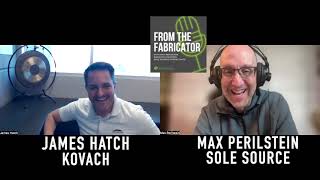
James Hatch of Kovac Enclosure Systems talks about the company's shift to 100% ESOP ownership and projects like ASU Law School. Lauren Dunford of Guide Wheel describes her factory-monitoring sensors, which she calls a "Fitbit for factories," and how they help reduce unplanned downtime on the plant floor.
Chapters
I know.
Okay. Okay. Welcome back to the from the Fabricator podcast. I'm your host, Max Pearlstein. Thank you so much for joining me. Got a heck of an episode for you today. Very excited to get to my two guests. They are fantastic young talents both in and kind of adjacent to our industry that you'll want to hear from. But before we get to that, special thanks to the sponsor of this episode, the fine folks from FHC. They're celebrating 1 million cycles. That's the number of cycles just completed by FHC's new Next Gen frameless shower hinge. The patent pending design features proprietary anti slip technology utilizing an integrated gasket permanently bonded in a recessed body and constructed of a unique, innovative engineering grade glass grip gasket material. If you open your shower door 20 times a day, every day, the FHC Next gen shower hinge would last over 130 years. All FHC frameless shower hardware is now backed by an industry leading 15 year warranty. You install glass, FHC installs confidence. Visit fhc-usa.com so thank you to the gang there. Okay, let's get to the podcast. Two guests start off with James Hatch of Kovac and you know, a fascinating company, fascinating story, really, really a fun, interesting, genuine guy. And then followed by another fun, interesting, genuine person, Lauren Dunford of Guide Wheel. And this is a group that you want to hear about because I will bet you in the next few years Guide Wheel will be all over the glass and glazing industry and Lauren is just fabulous, fabulous talent. So we start off with James, we go to Lauren and then at the end I come back. We'll talk a little TV before we go. So thanks for checking it out. Let's go to James Hatch and we'll see you at the end.
Foreign.
Kicking it off this month on the from the Fabricator podcast, I'm thrilled to be joined by James Hatch, Chief Strategy Officer of Kovac Enclosure Systems. Find them online@kovac.net that's K O V A C H.net James, thank you so much for doing the podcast.
Glad to be here. Thanks for having me.
I'm thrilled. I'm excited to get to know you, even though I couldn't say Chief Strategy Officer correctly. So I'll call you.
It's a mouthful.
A cso. CSO I think would work. So let's talk about you and your past. We'll start with that and then we'll kind of dig into what Kovac does and some of the exciting news that you guys have. Where Were you born? Grew up? Talk. Take me through the past of James Hatch.
Yeah, you know, let's say I kind of, I probably shouldn't be here. My, My dad was 52, my mom was 54. Youngest eight kids. And they say I was meant to be here, but I think differently maybe. Um, but you know, from a young age, being born, youngest of eight had to kind of thrive. My dad was a counselor, shared a bedroom with three kids. And yeah, it was, it was interesting. Being raised in Phoenix, Arizona, I grew up seeing the community we live in grow and expand. Like Phoenix is one of the hotter markets for residential growth. And as a kid it kind of bugged me a little bit that hey, these things are changing. And then I, you know, I got into college and I said, you know what, if this is the market we live in, why don't we go into something that helps build that?
Right.
And I thought I was going to do finance for a little bit, but then I said, you know what, I want to go into architecture. I went to Arizona State University, got a degree in architecture. Did not go on to get my masters just because I, I didn't feel that draw to be a formal architect. But I graduated in 07 and that happened to be a wonderful time in the economy when it was just going like street down.
Yeah.
And, and I really, I looked at the marketplace and I said, you know, where do I go with this? And there was a company called Trainer Glass Company in Arizona and Paul Main was working there with, you know, Bob Trainor was the CEO at the time and they were willing to have me as an estimator and kind of fell into the glass world. Started estimating in sales and business development quickly after that and really grew to, to love it. Very nerve wracking when you get in this industry. Yeah, there's so much to know. Thousands of different types of glass. The extrusions, the panelization. And after the first kind of two years of anxiety, really grew to love what this industry is. And my wife had an uncle and he said, I'm just going to warn you, once you dip your toes in glass, you're never getting out.
Absolutely, you nailed that one. Yep.
And the, the rest is history on that side, but I'll make it quick. So with this with his trainer for about four to five years. And then unfortunately, Trainer had some setbacks and made friends with the Kovac family and they were doing metal panels and roofing systems at the time. And they said, hey, would you. And I don't know if you know, Marty McKinley at the time, hey, come over. And you can kind of be the pre con and Marty can be the operations guy and start the glass arm of Kovac. And that was an 11. And here we are 15 years later.
Nice, nice, nice. And we're going to talk to you about Kovac. But you and I have something very much in common. My parents were pretty old when they had me. They weren't as old as yours, but the second part, when you said, you shouldn't have been here. So I had a. When I was born, I had a sister who was 14, a sister who was 12, and a brother who was 10. And they said, oh, yeah, you were planned. Yeah, yeah, sure, I was.
Yeah. What else are you gonna say? Mom and dad?
Exactly. Oh, no, we were planning on having you all along, back in the 60s, like, yeah, you're really gonna have, you know, a baby when you have a 14, 12 and 10 year old. So, you know, and I'm reminded that the only reason my brother and sisters were happy that I was born was it my mom forced my dad to put air conditioning in when she got pregnant. So. So I, I was able to bring them air conditioning. So that's pretty much the only thing I brought to the table. But I love the fact you were the baby and, and we have that in common, so that's, that's very cool. And you're a sun devil. You went to asu. I like that through and through, my friend.
Yes, absolutely. Awesome pitchfork right here behind the screen. So.
Yeah, awesome. Greatest colors in college sports. Greatest colors. I mean, you.
We got a decent football team too, last year. Yeah, we'.
Good old Cam. Scatter. Boo. That is a heck of a player there. So I love it. I love it. But I love that you're. You, you fell in love with this industry and that. That's so true. I mean, you, you get in, you don't leave. And I love that you, you know, are into it and, and what you've been able to do. Now, let's talk about Kovac, because a lot of people, you know, have heard the name, seen you on lists, you know, you're on the top 50 glazier list and so on. But talk about what you all do there. You, you got started, you know, in the glass division there and got that going. But what does Kovac do with your bread and butter?
Yeah. So kovac going on 60 years in business, based in the Southwest United States. We do work all across the U.S. tennessee, Texas, Kansas, Nevada, California. We started as a roofing contractor. So at one point 50 years ago, we were one of the largest roofing contractors in the United States. And we've evolved with the time when products that we were doing became commodities. Like, at that point, you know, roll form, metal roofing was kind of more commoditized, and we had to evolve. And we got into the rain screen facade systems about 20 years ago, saw the need for glazing and the full enclosure package offering. And 15 years ago, when. When Kovac was a metal panel company and brought in the glass, there was some excitement, but I think we also realized that there's. There's kind of a cemetery of companies that have attempted to do that.
Sure.
And they struggle immensely because you got to get good at something and be consistent. And I'm not going to say we've had our struggles along the way, but I think as you go through those, you learn. And so if you were to ask what's kind of Kovacs bread and butter? We're very heavy on design. We spend a lot of time. We're kind of three companies in one. As I describe it, we design, we fabricate, and we install. And each one of those entities of our organization has a very unique and specific process that you have to follow. But we're heavier on the preconstruction side. We got a team of 24 people that estimate that design that help get these projects from the initial inception to something that's. That's a reality. Our ideal project, you know, we're doing the A's stadium right now. And that one, we have these metal dragon scales on it. And that's. It's not. Not a ton of glass, but very unique zinc facade. But I would say a project that we do is 50.
50.
50 glass, 50 metal. But we'll also do many towers. We have Republic, which is a waste management company in Phoenix. They're doing their corporate headquarters. We're doing all the unitized glass system. We have our own systems that we've designed. And so we're not ready to do that.
Super, super. I love it. So, yeah, you guys are. You guys are rolling. I've got James Hatch, the chief strategy officer of Kovach Enclosure Systems. Everything he just mentioned you can check out@kovach.net that is K O V.
And where you guys made some news when I ran into Pat Pennington, who I love, ran into him at BEC as I run into him every year. And it's my five minutes with Pat every year. And don't talk to him for another 364 days. He said, hey, we've got great news. And you know, check it out. You guys are now 100% employee owned. I love it. I love it. I mean, there's some great companies in our industry that have gone that way and are doing really well. How did that all come about? How was the process? You still have a full head of hair, so it looks like it must not have been too bad. How did it all go?
Receding a little bit. Yeah, you know, we, we had quite a, quite a track. So the company had gone through some ownership changes over the last 20 years with family members. Long time Kovac family ownership. And we, we did take a misstep about, let's say, eight years ago, where we went the private equity route. Okay. And we decided that, hey, let's, let's try to bring in private equity to allow some owners to leave. We learned really quickly that wasn't the right path to follow. We, we had about three years of struggling with expectations and goals to try to grow and flip the organization and strategic. And learned a lot. I'll tell you, Max, the greatest MBA you could get is sit in board meetings with Harvard MBAs and private equity folks and see what works and see what doesn't to scale a company.
Sure.
So what happened is Steve Kovac and Kelly Sands bought the company back in 2019 when it didn't work with private equity. They brought in myself, Janssen and Kyle. So there's four partners, Kelly, Jansen, Kyle, myself. We bought it back about three years ago. And bringing in more employees. We decided, how can we scale this company without having to go back to private equity? And ESOP was the only thing that made sense. And I love the platform that Bec. That Glassfield brings in. Talking to folks like Jeff Haver with WW and some of these other companies that have had great success with ESOP made a lot of sense. And so we decided to go 100 ESOP, not just a 10 ESOP. And that was official in November. And it's been so amazing for everybody. You, you look at what we do, right? And a lot of us, we go to jobs from, from 8 to 5, but we're thinking about generations to come and how our employees can retire and succeed. So it's been amazing.
It's tremendous. It's a great, It's a, it's the ultimate culture builder too, because everybody's got a piece.
Absolutely. And I'll tell you, when we thought about scaling a lot of companies, you have to pay to play, right? Hey, we got it, we got to get talent, we got to pay a premium for salaries to recruit. And when you're in an ESOP structure, it's more than just top line salary. It is the full package of retirement. And, you know, you thought a 401k was good.
Yeah.
And look at what that ESOP stock does for you as we scale. So it's pretty fun.
That's awesome. That's awesome. Congratulations. And I'm, I'm happy for you. And yeah, Jeff. Jeff Haber. Tremendous, human and, you know, trailblazer in so many ways. So I love that you called him out on that. That was fantastic call by you.
Absolutely, Absolutely. Hey, if it works for those guys, it's going to work for most. Yeah.
Good man. Good man. So let's talk a little bit about products. You know, again, you mentioned, you know, you've got the metal side, you've got so many different things. I'm curious what you're seeing is a hot product option out there. What are, what are the, you know, you guys are designers as well. What are your developers asking for? What are the architects you work with asking for? What's the hot product you see out there right now?
I mean, it changes, right? I would say you look at the product type and if we were talking six years ago, you had airports and you had higher education projects and you had mixed use towers going. We've seen a marked shift to these battery facilities, to semiconductor facilities. And it'll be interesting as we see some onshoring with the tariffs that are transitioning. So we're keeping an eye out for that. What we're doing a lot of is panelization.
Right.
So we saw a need in the marketplace where our clients, owners, general contractors, architects, they don't want finger pointing. When there's something that might be a challenge on a project and you think about designing a facade, where is it going to leak? It's going to leak at the transition point, usually between two adjoining substrates. So I would say a product that's really hot for us is our panelization that we're doing. We're doing a lot of glazing, but we're incorporating more products into that glazing system. It's not just glass, it's not just metal panels. It could be anything from, from terracotta to stone or anything like that. So we try to keep the base of our system the same and repetitive so the team understands how to detail it, how to fabricate and how to install it. But we can change the outside of that with pretty significant Changes and not interrupt that water line. That's.
We're doing a lot of tremendous, tremendous. It's good stuff. I like, I like it. And you're the ultimate diversification play because you have so many different angles to go after. So it's awesome.
It is. It is nice, I'll tell you, because as you see the economy slow down in one space, you can kind of pivot to something else temporarily. So it works.
That works. That works. So I always break up the, the podcast with a fun question in a lighter question sort of thing. Curious on this one, especially now that I know about your past growing up one of eight kids and so on. You can have dinner with two people, dead or alive. They could be, you know, real or not. Who would that be? Who would. The two people that James Hatch would say, I want to have dinner with those two people?
Absolutely. Well, besides the obvious religious folks, which I could go down a path on that.
Me too.
But I think there's two people that really stand out to me. And I know recently, you know, one of them was involved in politics a lot. And that aside, I've been so impressed with what Musk has done living. And I want to talk about a little bit why I would say that the, the automobiles that he's produced. I recently got a Model Y and by far the best vehicle I've ever owned.
Wow.
And, and I'll tell you what he's done with the automotive industry and then SpaceX, those two things really impressed me. And I'll tell you how they kind of apply to business for me. The original automobile had 200 plus moving parts. Right?
Right.
He created a Tesla that has 20 moving parts. Right. I mean, this is, this is someone in our generation that is challenging the status quo. And then I've been following what, what SpaceX does with their Raptor engines. Right. They essentially doubled the thrust from the Raptor 1 engine to the Raptor 3 engine. They eliminated 50% of the parts on that engine. And as a business, that's something that, that I have been impressed with. We had a chance to do the, the Gigafactory project in Austin with them, and those efficiencies have, have been interesting to us. How can we take something like a complex facade and say, how do we trim this down? Is there a better way to do it? And the other person that's not living would be someone like Michelangelo, the artist. I don't know if you recall the statue David. Right? Yeah, the, the Pope was talking to, to Michelangelo. Hey, how did you create such A beautiful sculpture. And his comment was, I took away everything that wasn't David. And there's a. I just read a book recently about the art of thinking clearly. And he finishes with that statement saying, as we go into business, we have to focus on what we do best and eliminate the distractions. And so we, we don't always know like the, the perfect answer of what it's going to be, but we know what doesn't work. We know the distractions. Right?
Yeah.
And I've always thought about that. What is the stuff that we're doing as an industry that is distracting us from what we do best and preventing us from going to that next step? So those are kind of the two folks that I think would be interesting to sit down and chat with.
Tremendous, tremendous, tremendous. A couple of comments. One is our industry is known for. That's the way we've always done it, you know, and I'm sure when you're a trainer, that was probably a line that you've probably heard a billion times, that's the way we've always done it. And so I love that you bring up Musk because he blew that all up, you know. You know, that's kind of the whole format of, you know, I don't care how that car or that rocket was built, you know, and we could do it better. And, and on the rocket. I'm a space geek, So I love SpaceX and I love the reusable rocket is mind blowing to me, you know, and he lands it. He shoots it up and he lands it. It's, it's amazing. And, and then the distraction aspect with Michelangelo, I mean, you know, when we lose our focus is a killer. And so I love it. I love this question and great answer by you and I don't think I could top that. If you asked me, I would probably give some. Two sports guys with no substance. So that was beautiful. You are a good man, James Hatch. Good man. Continuing on because you're blowing me away here. Your website talks about every project tells a story. So I'm very, very curious. Most memorable project for you. We go back to the early, you know, the 2008, 2009, when you started in the business. And Kovac, you've been there a while. What's the most memorable project for you?
So you could say this is one of my strengths or one of my flaws. I'm not sure what it is quite yet. But on projects I do love to get involved. I love the hands on fulfillment of being engaged and a project that probably Stands out above all of them is a project called ASU Law School.
Okay.
And it was with Eniad Architects out of New York, DPR Construction as a contractor. And they had some stuff they want to do that really hadn't been done in our marketplace before. They had this sandstone that they wanted quarried up north. And the only way you could get it was pretty thick. It was like two and a half, three inches thick. So it's really heavy on the facade. There wasn't really a good way to attach it. Then they wanted to not keep it in plane. They wanted it to project out at a 45 degree angle, creating water line issues. They wanted to incorporate metal fins and glass. And that was one that, that we were able to as a company take on. And it was kind of funny the way it developed. I was up in Prescott one weekend and there was a mason that happened to have thin sandstone. And I said, where did you get that from? And he's like, well, there's a, There's a retired 747 pilot up the street that has been making saws that can cut sandstone down thinner. So I went and met this guy, Don, a character. This guy was like 85 years old and was just bored when he retired. So what he was able to do was come up with a saw that could get that stone that we wanted in curtain wall system sawed down to one inch thick. So it got much lighter. Then we went to Europe and found an anchor that could attach it from the back that was kind of unique to this market. So we came up with a thinner stone with a back cut anchor. And, and then we took kind of that, that, that philosophy of a metal panel company and a glass company, incorporated some insulated metal panels, wrapped it with extrusions, connected it with this thin stone, these back cut anchors. And it was to me, max, kind of like that culmination of everything that, that we are. That ability to take multiple complex products, simplify it, get rid of that Raptor Engine 1 and build kind of that Raptor version 3. And you don't always get that opportunity, right, because there's got to be a budget, there's got to be a vision, there's got to be a product. And so I would say we get a job like that that you really. It's like a passion project about every 5 to 10 years. So ASU law would be the project for me.
Gotcha. Gotcha. Well, next time I'm out there, you got to take me to that one. I want to see that in person for sure. Wow, that's awesome. Couple more questions for James Hatch, Chief Strategy officer at Kovac Enclosure Systems for Find them online at Kovach K O v a c h.net Good website too. Very good stuff on there. A couple more for you. Last one on really the business or our side of the industry, what do you think we're doing well as an industry? I mean you go back now quite a bit and what do you think we should be doing better as an industry?
I've been impressed with the associations that are in the industry. I think the economic data that comes out from nga, from the Glass association, from the various net networks in states that's been. Well, some things that I think we need to be aware of as an industry is the contract language that we see grow and grow and grow. And it's a concern to me because we can't ignore the fact that there's multiple glass companies that struggle a year and one or two that might go out of business. And these aren't small companies. Right, right. And I think a lot of that can be driven by unrealistic schedules that we sign up for contract language and a 500 page contract that most glass business owners, they don't want to be attorneys, they want to build beautiful buildings. And so I think as an industry making sure we're getting payment terms that are fair statutes that back that up when we look at contracts and we're competing with each other, that we pause and say, hey, let's protect our brothers here and not agree to something that is going to set a standard that hurts us all later because we're better than that.
And so I think as an industry making sure we're getting payment terms that.
Right. Yeah. And as an industry, we've unfortunately sometimes been known as a whipping post. You know, the GCs have known in some markets that they could just lean on us and we will give. And that sucks. And like you said, you know, for the, the greater good we should be, you know, at least be, you know, protecting ourselves. And especially the contract thing, I hear a lot and I, I'm assuming it's not getting better, it's only getting worse.
You know, I don't like to be a pessimist on that. I think it is if, if we are not taking the appropriate time to vet those contracts and I would say just from our perspective, we take them very seriously. We take a couple weeks, if not three, four weeks to go through those contracts, bloody them up and, and fight for what we believe in. And I'll tell you, it's. It's something that we face head on and we look them straight in the eyes and say, why do you think this is fair that we agree to be jumped around this entire building anytime you want?
Right.
Yeah, it's. It's just I. If we are reasonable with our clients, we should expect the same from that.
Exactly, exactly. And I assume the complex situation now with the tariffs probably adds a whole nother kerfuffle to it because pricing now is really volatile from day to day. So I assume that's going to be tough for you when you're quoting people of like, you know how long you can hold that quote? Because I'm sure your suppliers are telling you they can't hold it that long like we were used to in the past.
Yeah, that's a struggle. And it's something that we unfortunately can't control terribly right now. I get that question every day from our clients. And it changes every day.
Right? Especially now. Yeah.
Where does it. I mean, I think just today the tariff for China got dropped to 80 or something. And so you're like, okay, that's good. But I think what we want to do with the tariffs is, you know, the goal of that is to base U S manufacturing. Right. And I think that that could ultimately help us. We're going to play the game. That's the cards that are put in front of us as good as we can. But one, one push that I would recommend as an industry that I think we need to be careful of is they're pushing that. Hey, let's, let's see what your quotes are. Show us your quote before. And show us your quote before now to see what the is. A lot of our wonderful clients don't understand the margins that are required in our industry to stay afloat.
Yeah.
And those aren't 3% GC fees, you know, and so I think fighting that a little bit, saying we'll be transparent to a point, but we're not going to give you our competitive advantage on the profit that we need to make as a company.
Absolutely. You can't, you can't. And it's funny, I wonder if they ask that of other trades. Sometimes it seems like we get it more than others. But I'm more obviously, obviously tunnel vision here.
Yeah, yeah. It seems like every job at one point they ask, you know.
Yeah, unreal, unreal. What interesting stuff. I've got James Hatch with me. Got one more question. Chief strategy officer at kovac Enclosure Systems, kovac.net K O V A C H.net so this year has been, we kind of just touched on it with the tariffs and every day is different and the fluidity of the day. You know, we're almost about halfway through 2025. How's it been going for you guys, you know, this year? What's it look like towards the end of the year and 2026? Are you guys optimistic? Are you pessimistic? I mean, how are you feeling about the overall market? Because I know right now, like, the visibility is mud. You just have no idea what's going on. But how do you guys feel right now?
You know, if you look at the, the overall indicators, ABI and other stuff, it's, it's concerning, you know, you can't, you can't look at that and say, oh, yeah, it's all, it's all roses. But I would say we have no other option than to be optimistic as a company because we got families to feed and that's really on us as leaders to find ways to navigate that. And a mantra that I've been using that our team uses is disciplined companies make smart decisions, undisciplined companies make dumb decisions. And what I mean by that is we, look, there's no shortage of bids across the U.S. but we, we distill that down a lot. We're, we're going after jobs that we know first and foremost that we have people that we want to work with. And these jobs come across, they're very attractive, but sometimes they're folks that are just impossible to deal with. And I hate to say that, but Warren Buffett said he's like, look, you can't do business with crooks. They'll find a way to, to, to get one over you. And it's just, there's most the industry, there's, there's great people, but being aware of, what if it smells funny, looks funny and walks funny, yeah, it's probably going to end weird, you know.
Yeah.
And that's what we try to do. We try to be very disciplined. We feel that the markets we're in, there's still some upward potential.
We see that the, the higher education is struggling a little bit. We had a job recently that was funded by. Nah, some of the medical funding got put on hold, so that was a concern. Some of the private developer stuff is a little bit slower.
I do believe, though, with, with Trump's background, with his business preference, that at some point soon he's going to say, all right, enough's enough on where the market's going. Let's add some fuel to it and we're optimistic that that does happen in the next six months.
Good deal. Good deal. Yeah, it's got to, I think there's, it's now it's building up. It's a pent up sort of thing. And eventually that dam is going to break. I mean, there's, there's a lot of, a lot of money and work sitting on the sidelines right now, at least in my view.
Yeah, same for us. Yeah, absolutely.
Awesome. Awesome. Well, this has been good. I've loved kind of learning a little bit more about you and the company. It's exciting stuff for me. Congratulations on the esop because that's good stuff. And I've had James Hatch with me, Chief Strategy Officer at Kovach Enclosure Systems. Impressive company. Check them out@kovach.net that's K O V A C-H.net James, I look forward to seeing you at Glassbuild or the next bec or one of these things. And maybe I'll get five minutes with you instead of Pat this time. No offense, Pat, but hopefully I can get a few minutes with you. I look forward to seeing you here one of these days.
Hey, thanks, Max. Thanks for having us on.
Absolutely. Take care. Thank you.
Hey, Glazers and Fabricators fhc, the frameless.
Hardware company is here to support your business.
In addition to offering a complete selection of glazing tools and supplies to get the job done right, we design, engineer and manufacture a comprehensive offering of frameless.
Shower door systems, heavy glass doors, aluminum.
Entrances and storefronts, architectural railings, transaction and display hardware, privately owned and American made. FHC prioritizes you, the customer. You now have a choice. Visit fhc-usa.com okay. Okay. Next up on the from the Fabricator podcast, I'm thrilled to have Lauren Dunford CEO and co founder of Guide Wheel. You can find them online@guidewheel.com you want to sit tight and listen to this interview because this is a, this is a piece that can make a difference in your operation and in your business. Lauren, thank you so much for doing the podcast.
Oh, Max, thanks for having me. The honor is mine. I'm so jazzed for this.
I am too. I am, too. I have like, so many questions for you all over the map. But let's start with your background. Where were you born? Where'd you grow up, go to school and all the way up until today. And then we'll talk about Guide Wheel next. But talk about your background a little bit.
Yeah, totally. I Was born in Sacramento. So California. Grew up in the East Bay of the Bay Area near San Francisco. Went to Stanford undergrad, and then kind of lucked into getting the opportunity to work in manufacturing, which I just, it like, opened my eyes to get to work out of a fresh food manufacturing plant for five years. Okay. That was one of the things that fed into starting Guide Wheel as well. I don't know if anyone else has had the experience of standing outside the plant and having to call customers and tell them, you're not going to make it.
Oh, I think everybody. Everybody listening and watching has been there for sure.
Yeah. So I will never forget we were providing healthy food to students. I hadn't really thought of cooking as manufacturing, but turns out everything at scale is manufacturing. So. Yeah. I will vividly remember for the rest of my life what it feels like to have to call and say, your kids are going to be hungry for a little while longer because our production is running behind. And don't. I don't want anyone else to have to feel that.
Yeah, yeah. So good deal. So you went to Stanford undergrad and, you know, you kind of went into the manufacturing side of the world and see, in our industry, when you don't deliver your material on time, that means the job site gets completely, like, stopped sort of thing. So that's the same sort of thing. So our people won't eat either. Yeah, on that one. Let's talk about Guide Wheel again and check out guidewheel.com and you can check it out after this podcast and Lauren's going to talk about it. What spurred this idea? I know you mentioned, you know, you're working in the food service business and you want to. You wanted reliability, I assume, and visibility. Talk about, you know, you know, how did Guide Wheel begin? And then obviously what it does.
Yeah, totally. So it's actually all going to be our customers. There's me starting with a bad idea and then our customers improving it. But I, yeah, kind of got hooked.
On, wow, China got dropped to 80% or something. And so you're like, okay, that's. That's good.
But everything in this world is manufacturing. You look around and, like, I'm in a room right now. I think probably a lot of us are where nothing that I. That I can see is not manufactured. So seeing the size of the impact that manufacturing has and then also being motivated to think about how we kind of figure out how as humans, we can, you know, continue to exist on this planet and make sure, you know, climate change doesn't. Doesn't make us all die by fire or flood or whatever. So I, I started looking at manufacturing both from a perspective of how do we solve real pain for real people? Because I had spent time just seeing how many challenges there are in day to day. You know, real materials, real people, real machines, day to day changes, people calling out just so much day to day stuff, stuff. But then also how do we, from a big picture perspective think about efficiency and productivity being things that tie also to climate and emissions? So I originally started by focusing in on energy and saying, okay, energy is a big cost. I talked with hundreds of different manufacturers. They were telling me energy was a really important cost. I was doing my MBA and gone back to Stanford to do my mba and they have a great entrepreneurial program there. So doing customer discovery and then starting to prototype. And so the first thing that we prototyped was energy management system. So we for energy management, anyone's been in that field before, it's sensors that are like little smartwatches that you can clip around the power going into each machine. They measure the amperage flowing in. So customers told us they cared about energy, wanted data to manage their power. We said, great, clipped all those different sensors on their machines and launched. Very, very excited about the impact that we were going to be able to show. And no one used the system.
It was clear energy was a big cost, but also they had so many other priorities day to day. And we just could not figure out what was going on. So we looked at all the data that we had about who was using it and basically it was like the desert. It was awful. I was staring at those usage stats and I would never forget how sad that felt. But then what we saw was there was a little bright spot of two guys that were actually using the data all the time. So drove out to their factory and it turns out what they were doing was the smart idea that then we pivoted guide wheel around, which was they had realized the amperage flowing into their machine. The electrical heartbeat of their machines was the heartbeat of how their machines were running, which was the heartbeat of their production, which was actually the priority because production is the heartbeat of their business. So we tried to listen and learn and then pivoted saying, okay, how do we have energy management be a nice byproduct, but something that's built into what someone coming in to run everyday production cares about, because production is going to be the goal. A factory does not exist to save energy. A factory exists to produce. And what that resulted in with what guidewheel Is today is we've been able to turn that into kind of the most magical.
Intentionally simple to start. You clip, clip a smartwatch on Fitbit for factory is kind of clip a smartwatch on each of your machines. But then we can grow really powerful over time as we're starting with high quality IoT time series data layering on top of that. And it's on the most important metric we can tell, like you don't have to tell a smartwatch or a Fitbit, hey, I'm running or I'm resting. It knows we can know how a machine is running, how it's producing, how much we can predict problems before they happen. And then we can layer on other sensor types, temp, humidity pieces, photo eyes, vibration, whatever it might be. Layer in context by being interoperable and connecting in to ERP CMMs, taking in human context from the plant floor of what's happening. And what that means is Guidewell is getting smarter and more powerful with every machine, every factory and every user. So that combination of start simple and grow powerful has actually started to get really exciting.
That's, that's incredible. And I love, I love the Fitbit for a factory sort of thing. You know, it's just because you really, you know, when you get the factory rolling in your machines, you know, you lose visibility, you know, and this is like a peek into, you know, you know, behind the curtain, per se.
Exactly. Yeah. And some books will have a lot of visibility, you know, SCADA systems, MES systems. There have been ways to get visibility in the past, but a lot of them have been like open heart surgery on your machine. Sure. Especially if those machines aren't all brand new of the same naked model, which rarely would be the situation. And so what this is, is, it's, it's kind of taking that visibility into the plant floor that we know is valuable to drive productivity, data driven decision making, et cetera, and democratizing access. Let's give everybody access to great data to make the right decisions and be transparent for their team to have the right information, share a source of truth so we don't have to argue about what happened or pull up an Excel spreadsheet and say it was that cell. Right. But, but then also to build on that because we've done it in a way where power is common across every machine. So we have a bunch of compressors, chillers, CNC machines, whatever type of machine we can then be getting, not just the basic visibility that was possible in the past, and we can make it accessible at a fraction of the cost. We can actually get a lot more power and meaning to gu guide action from that visibility nice, which is what everyone wants at the end of the day. No one wants just data, for sure.
Well, yeah, because data is nothing if you don't have an angle to do something with. Always cracks me up when companies create an analytics department and then they do nothing with the analytics and you got to do something. So it makes sense that you've got something, then you have the actual steps. I've got Lauren Dunford with me, CEO and co founder of Guide Wheel. Check them out@guidewheel.com in the glass industry, we run the gamut. You've got small companies that are running small machines and then big companies that are either running a float line or a tempering oven and so on. Where does Guide Wheel fit in? Does it only cater to one or the other or to all?
Yeah, I mean, I think it's never successful to try to cater to. All that said, I'll describe where we're really good and where we're not great right now. And then of course, we've got a team of 100 lots of engineers building lots of new things. So. So this may all be out of date in the next couple of days, but where we're really great right now is whether you're a small company or a big company. But if you don't have visibility to drive reductions in controllable downtime on equipment, that matters. Key bottlenecks. We often, as we're trying to. It's all about finding the right puzzle piece of where can we drive. A lot of sustained recurring value in those conversations. We typically bring up Billy Bean. I don't know if you've seen Interesting Moneyball with Rock.
Absolutely. Oakland Ace. Yeah, for sure.
Yeah. Oakland Ace. Exactly. And. And so what we say is, you know, the way prior to Billy Bean of managing and choosing a baseball team was to look at all the different kind of ways a player would walk and how they presented themselves, maybe how they talked, all this kind of fancy stuff. Lots and lots of data. But what Billy Beane did was say, I'm going to throw out all that data. And I'm just. I don't know if you've seen Interesting Moneyball with.
Absolutely. Oakland Ace. Yeah, for sure.
Yeah. Oakland Ace. Exactly. And. And so what we said, going to look at one piece of data to start, and I'm going to look at the piece of data that really matters, which is on base percentage. Right. As we can't. We can't win if we can't score and we can't score if we're not on base.
Right.
And so it was super unsexy to start. You probably know this story better than I do. I'm just a Brad Pitt fan. So he optimized his whole team around on base percentage and was able to drive outsized level of performance with the players he had. And so we always think about, we don't really want to work with folks right now that are trying to get every piece of data on the planet and optimize everything and layer on more and more fancy stuff. Where we like to go is controllable downtime is nearly always the biggest lever for P and L. Direct margin benefit, bang for your buck. This can be addressed controllable things. Not just like mechanical breakdowns or things like that, but setup time change over time. Did your shift start on time? I heard a story earlier this week of someone who had been losing, I think it was something like 500k to late starts alone and all of that stuff. We say if you can benefit from controlling controllable downtime and don't have the visibility yet, that's the gap for you right now. Yeah, the gap is something else. Like you don't have labor, then we won't fix that. But it's visibility to. To control unplanned downtime is. Is your gap. That's where guide wheel can plug in right away. Whether you have five small machines or one small machine or 500 huge pieces of equipment, whether you're process industry or discrete. Of course there are variations by industry and level of automation. But if you don't have the visibility and want visibility to control controllable downtime, guidewell's best in the world at that. Doing it simply and fast because simple is actionable. We also have lots of other things that once we start with people by doing what we're really great at, we'll layer on. But we don't like starting. If someone doesn't have that core problem.
And probably the big question that people are saying to themselves, you mentioned earlier, it's not open heart surgery. What does the guide wheel controller look like? How big is it? Is it bigger than a house or is it like a iPhone? What are we looking at?
Yeah, yeah, it actually is. I mean, they vary, but it's actually kind of the size of a Fitbit. So if you think of a Fitbit, that is pretty much what the sensor looks like. I wish I had one so I could just have it in my backpack and pull it out I should have put it in my backpack. But yeah, these are tiny little things and then where they go is we did not invent the sensor. These have been around off the shelf. They're a thing called a current transformer or CT that any maintenance technician on the plant floor has used before. And there's actually an air gap. So it clips around the power going into the machine. Usually we just do that in the power room or distribution board.
Sure.
And we can actually just clip, clip, clip, clip, clip the power going into a bunch of different machines at once or components within the equipment to determine the exact piece that's having a problem. And so it's a very non intrusive. We're not controlling the equipment or even touching the PLCs, which means that. And it's just collecting amperage data. So it's not any private data, not controlling the machines. And so it teams can be very happy and kind of give the okay, you can get started with this without having to, to have us be involved.
Right, right, right. And I think that's the biggest key is these, you know, production houses in our world are always going, you know, 24, 7, 365, especially when we're busy. Right now we're a little soft, but you know, when we're busy, you know, people can't stop. And so this doesn't, you know, this doesn't make that happen. And then the other thing I was thinking about is I wish we had this back in my day because we were running 24, 7, 365 and we were always very nervous of when is our oven going to break. You know. You know, and you know, you just didn't know. You just, you knew it was going to go down eventually because it was a workhorse. But it would have been nice to be able to look at it and say, okay, we got like another day, you know, and then we got to do something. So. And that's the visibility that you give now?
Yeah, yeah, we have visibility into how everything's running. And then we also have some awesome things that weren't even possible years ago. So I'll just give one little teaser, but there are a bunch more is we have this algorithm called Scouts, which is an ultra rare event detection algorithm if you want to nerd out about machine learning stuff. But it's the PhD thesis of our head of AI and then he built it in production and has decades of kind of how do we roll this out at scale on that AI team? What Scout does is it's looking all the time and it has a series of ensemble models so different models on different aspects of the data coming in and it's looking for the anomalies there with a zero shot learning approach so it doesn't have to see something bad happen. It can look at all the different data and it can't say what is happening or tell your maintenance team what to do yet. We are not there at this point but right now it could give you the hey, something is really starting to, there are a lot more anomalies in, in that oven. You might want to start taking a look and that, that ability to get the heads up and start to feel like you can connect into the, the details of the heartbeat of the equipment can be really fun.
Yeah. Planned maintenance is the, is the key. Unplanned is quite scary. Quite scary. Very cool, Very cool. I've got Lauren Dunford, CEO and co founder of Guide Wheel with me. Guidewheel.com it's, it's a game changer. It's, it's something that, that is huge for your facilities. I gotta ask you though, you know, you built this company, you, you have great team. What was the biggest challenge that you faced as you were building from the start? I, I, I'm always curious with the entrepreneurial spirit. What, what have you, what have you run into that's been like, oh my.
Gosh.
So many challenges. The biggest one I'm going to say is one I bet a lot of people will be completely shocked by, which is change management on the factory floor.
Yeah, I think there are so many barriers to getting visibility and increasing productivity on the plant floor that are just technical and those have actually been really easy for Guide Wheel to overcome. Compared to change management. No system does anything. The most powerful platform in the world can't do anything if no one takes action on it. And so we have dived into a specific way of approaching how do we crawl, walk, run to get folks using and getting value from the system and how do we equip the champion within the operation with the right playbooks for change management tools to get operator engagement and support when they want to do that. We might not want to start with that but boy if we do, we need to do it in the right way and that we built out all of these different resources and I will say it's still hard. I think we still have areas where we have our product team on the ground working with operators saying how do you love this? This? I can't wait to find new ways to gamify and make that Experience fun and have this be something where, you know, any operator can get started with guide wheel and have their life be so much better because of it.
Oh, yeah, no, there's, there's, there's no doubt. But I agree, the change, change is tough. And I mean, we joke in the glass industry that we move at the speed of a glacier, but that's more for product introduction. I mean, you know, we have come a long way with machinery. We're not quite full robotics yet sort of thing, but we've come a long way with the machinery side of things. But, you know, something like this is something that there's so many facilities that could use it because again, you, you can't break down, you know, I mean, it's just, you know, the certificate of occupancy is in the, in hanging in the wind if you're breaking down and that's, you can't have that. So that's why I was into this. This is exciting. I'm enjoying this conversation. But I always break the podcast up halfway through with a fun question. And for you, very, very curious because you didn't mention this. You know, you grew up in Sacramento, Stanford, but what did you want to be when you grew up? You know, you want to be an astronaut, a physicist. I mean, you're very brilliant. So I'm thinking it's big and bold.
Oh, I don't know about that. I had lots and lots of different things I wanted to be. Marine biologist was probably the like 17 or 18 year old Lauren then for. Yes, marine biologist is the probably most frequent.
I love it. I love it. Yeah. When you're out in California, you could have went south to Southern California and.
Make that experience and have this be something where, you know, any operator can get started with that.
More from Lauren
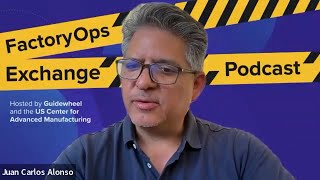
From Davos to the Factory Floor: Lauren Dunford’s Guidewheel Journey | Culture Talks
Lauren Dunford of Guidewheel on Data-Driven Efficiency, Sustainable Factories, and Finding Champions