APOSTOLIC FOUNDATION FOR THE ENDTIME CHURCH
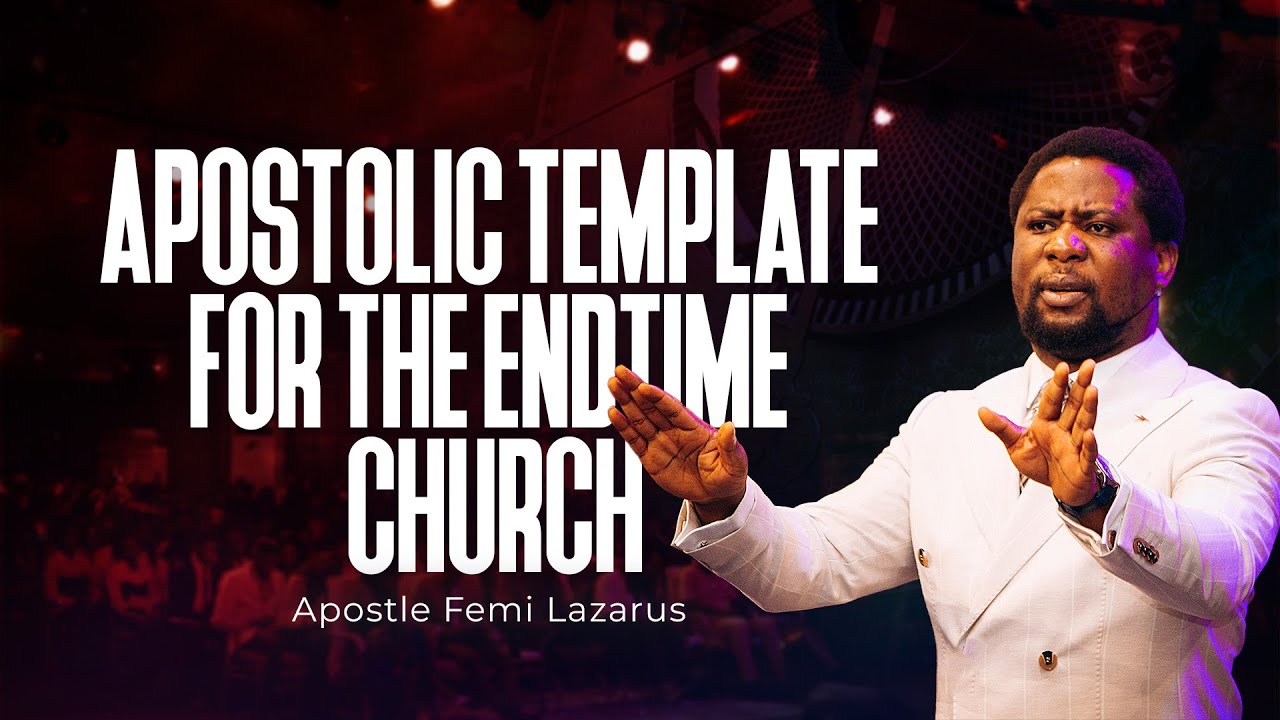
In this extensive sermon Femi Lazarus exhorts believers to return to the apostolic blueprint for the church as the end‑time approaches. He argues that the early apostles left a concrete "blueprint" (1 Cor 3:10) that defines the church’s purpose, governance, and ministries. He outlines the fivefold ministry (apostle, prophet, evangelist, pastor, teacher) and explains each role with biblical support, emphasizing that true leadership must mirror the New Testament pattern rather than modern, business‑oriented structures. Lazarus distinguishes a music minister (a servant who uses music to edify the local assembly) from a music artist (a commercial entertainer), warning against worldliness, doctrinal compromise, and the commercialization of ministry. He addresses practical concerns: criteria for full‑time calling, appropriate compensation, the need for formal training, and the dangers of operating without accountability. Throughout, he calls for fervent prayer, spiritual warfare against the forces of hell, and steadfast adherence to apostolic doctrine, urging the church to avoid deviation, maintain humility, and serve with a servant‑heart.
Chapters
Thank you, Lord Jesus. Lift your hands, everyone, where you stand, and let's give Jesus praise. Come on, let's do so from the depth of your heart. Lift your voice loud and clear, loud and clear. Give Jesus praise from the depth of your heart. Don't stop. Don't stop, don't stop, don't stop. Come on, lift your voice loud enough and give him praise from the depth of your heart. Oh, blessed be your holy name. Everyone under the sound of my voice, I want us to pray in the Holy Ghost loud and clear. Pray in the Holy Ghost. We bless your holy name, Jesus. In Jesus' mighty name we are praying. Thank you, Lord Jesus. We bless your holy name that it will be you speaking. You will help us, and let it be your counsel in Jesus' mighty name. Let's give Jesus a big hand. Amen. So we have a very serious transgenerational assignment to do, all right? And I've prayed, I've told God we will do this and leave it for a witness to a generation that the truth was taught. Amen. So that's why I'm having my laptop here. —so I can— not that we are doing coding. Amen. All right, so I'm going to be teaching on a very important subject, particularly, um, for this generation. So you can help with my slides. Apostolic template for the end time church. All right, what is the apostolic template? And so let me give an historical background to the church itself. Now, you must understand that the concept of church, or the idea of church, has historical background. Our faith has a history, and the church in itself— permit me to use the word— that our story is still young. The birth of the church in itself is barely just a little bit above 2,000 years, and we have transitioned from one phase to another, one understanding to another. Um, we've had challenges, we've had— we've recovered from them. We've had problems, we've recovered from them. But one thing stands out: as long as the practice of Christianity remains a religion We are worse than every other people or every other religion on earth, and our story has shown that. There's a template for the church as given to us by the early apostles, so that in looking at their lives, their emphasis, and the ordinances they laid This is the way Paul puts it in 1 Corinthians chapter number 3, verse 10. He said, I, as a wise master builder, I have laid the foundation. Look at it. According to the grace of God, she's given unto me as a wise master builder, I have laid the foundation. And we saw the word foundation for in Message translation as the word blueprint. So the church has a blueprint. Well, one of the things we have seen everywhere is that different church can have different faces. We understand that there are different emphasis based on different callings and all that, but there is a center focus of the church, and the message of the center focus is Christ. So there's a blueprint that we have received from the early apostles as touching how the church should go. And any form of deviation from that blueprint is going to bring in chaos. We cannot deviate to the right, we cannot deviate to the left. I understand the power of creativity, I understand the power of innovation, I understand the power of skillfulness in touching some things, in touching some things, in tweaking some things. It's powerful, but we must understand that there is a center focus and a goalpost for the church, and this must be taught now before it becomes late. Now, some people have the belief when things are going wrong that Jesus said, I will build my church and the gate of hell will not prevail against it. So, you know, the church cannot be destroyed, the church cannot— see, when you speak like that, it's because you don't have knowledge of church history. There are territory now that belongs to the other faith that were once the territory where the early apostles preached. Read the book of Revelation chapter number 2, Revelation chapter number 3. Jesus— listen to what I'm saying— look at the letters Jesus sent to the church. If you pay very keen attention to the messages that Jesus sent to the church, then you will understand that the owner of the church— and I'm using that word, the owner— is not taking his church with levity. It means so much to him. He spoke about the church. He said, you have the record of being rich, but you are poor, you are wretched, and you are naked. You know, my fear is that there is a possibility that the more sophistication we have, the less worshipers will become. And many of you may not know— thank God for the music, thank God for percussion, thank God for sax, thank God for the keyboard, thank God for all— they have good music, they have all that. What if We have to clap our hands and sing and shout. Are we still worshipers? Look at the way the Bible describes the life of those who paid the price for this faith. To be handed over to us. Jude said that we must contend earnestly for the faith that was once handed over to the saints. So what we're going to this morning is going back to the blueprint, the standard, the structures they laid. Look at the way the Bible described them. Hebrews chapter number 11. We read from verse 32. And what more shall I say? For time would fail me to talk of Gideon and of Barak and of Samson and of Jephthah, of David also and Samuel and of the prophets. What's the next verse? Read together, 1, 2, 3, go. Who through faith subdued kingdoms Wrought righteousness, obtained promises, stopped the mouth of lions. Let me read verse 34. Quenched the violence of fire, escaped the edge of the sword, out of weakness were made strong, became valiant in battle, turned to fight the armies of the aliens. Women received their dead raised to life again. Others were tortured not accepting deliverance, that they might obtain a better resurrection. All right, still others had trials of mockings and scourgings, and that's kin, and of chains and imprisonment. They were stoned, they were sawn into two, were tempted, were slain with the sword. They wandered about in sheepskins and goatskins, being destitute, afflicted, tormented, of whom this world was not worthy. They wandered in deserts and in mountains, in dens and caves of the earth. This was their life. This was what they did for us to receive this gospel, you know. We thank God for the deliverance. Thank God for Light Nation, that, oh, we are waxing strong. But do you know that in Borno and in Maiduguri, they will bomb a church on Friday and they will gather on the ruins on Sunday and still sing songs? You can become so sophisticated and too sophisticated for God that the basis for attending church for you is not the word or leading of the Spirit, but it's a place where all things are ready. We can become so relaxed that you completely lose sight that this same Jesus we've come to learn about is going to come back. You can lose sight of it, and you can begin to prepare your life like you're going to live on this earth forever. I was seeing online the abandoned house of one of the ex-presidents in Africa. It's become useless. All those money, the influence, the affluence, the empire— those who used to bring jeeps from around the world and park and have dinners and have meetings, the moment he died, they all stopped coming. So, ah, the church has a story and has a blueprint that we must know. And we must also return to the foundation that was given to us. We must return to that blueprint. And that's what I want to look into, um, this morning. And I want us to— because this is going to be like a mini, um, School of the Ministry for some of you. So I'm going to show you something in the book of Acts of the Apostles, chapter number 2. Acts chapter number 2. And we're going to read If you're there, say amen. If you're not there, say wait for me. All right, amen. Thank you, Lord Jesus. Acts chapter number 2, and we're going to read from verse 41. Acts chapter number 2 We will read from verse 41. Acts 2, from verse 41. Then they that gladly received his word were baptized, and the same day there were added to them about 3,000 souls. This was the early church. Those who received the words became baptized and were added to them, about 3,000 souls. And verse 32— verse 42 now. And they what? Continued steadfastly in the apostles' doctrine and fellowship and breaking of bread and in prayers. And that brings me to the next subject: what is an apostolic church? They continued in the apostles' doctrine. The word doctrine, that is the word teaching. They continued in fellowshipping, they continued in prayer. And that's why you read in Acts of the Apostles chapter number 6, the Bible says, as the number of the disciples greatly increased, there arose murmurings between the Grecian Jews— they were all Jews, but the enlightened Jews and the Hebrew Jews, because now, because of civilization, you know, in the Old Testament you deal with Hebrews, in the New you deal with Greeks. So there was murmuring there. Some said, we are the old ones, you just met us, because their widows were neglected in daily distribution. So Peter came, he said, it's not a reason for us to leave the word and serve tables. Let's look amongst us men of honesty, a pot full of the Holy Ghost and wisdom, that we can appoint over this thing, this work, this business, this vocation. He said, but we will give ourselves to prayer and to the ministry of the word. You find those two in an apostolic church: prayer and the word. Prayer and the word. So what is an apostolic church? An apostolic church is a church that believes church government is to be exercised through the New Testament beliefs of the apostles and other ministry gifts in order to experience the same kind of leadership as exercised by the original apostles that followed Christ. Now, the Apostolic Church is the template for the church. So the church believes that church government is to be exercised through the New Testament beliefs of the apostles and other ministry gifts in order to experience the same kind of leadership as exercised by the original apostles. So you see, in the early church, it's not a one-man thing.— that one man is the one who preaches, is the one who knows the tithe, is the one who takes the offering, is the one who signs, is the one who sends all that. There's a system laid down. That's the blueprint for the church, that if we follow the pattern of the apostles, we're going to experience the same similar or the same kind of leadership that they experienced. The leadership the church had then that made few, they took over the world. The Bible said these are those who have turned the world upside down because they got something Right. How have we become so many and yet ineffective? Something is wrong. There's a deviation. There's a deviation. An apostolic church is a church whose doctrine and practice is in direct consonance with the doctrine and lifestyle— doctrine and lifestyle of the early apostles. And one of the things the lifestyle of the early apostles shows us is meekness.. It demonstrates as a template that this world is not our own. That's the template. An apostle is a church whose doctrine, teachings— so what that means is, and if you look at the way Paul puts it when he sends his message to Timothy in 1 Timothy chapter 3, he said, if anyone desires the office of a bishop, he desires a good work.. He calls it a work, not a good title. A good work, a verb, not a noun. He said— are you awake now? Look at it. Verse— let's go to verse 2 now. He said, the bishop must be blameless, the husband of one wife, vigilant, sober, of good behavior, given to hospitality. What's the next thing there? Apt to what? Teach. So there's no such thing as, well, this is a prophetic church, so we don't teach. You are not permitted to lead the New Testament church if you can't teach, because that's how people are established. It is the teaching of God's word that established people, not prophesying. So we don't come to church and listen— and please get me right— despise not prophecies, all right? Prophecying. So we don't come to church and Out of 2 hours or 1 hour 30 minutes for preaching, 1 hour 10 minutes has gone into there's somebody here. People will not be established that way. Anyone who is going to lead the church, he said, apt must be able to teach. So there's the office of a teacher, but there's the discipline to learn how to teach. Is that okay now? So it doesn't mean that primarily everybody must be called to the office of a teacher, but you have no business leading the church if you can't teach. That's what the Bible is saying. That's the template. So it means that— and listen, if we don't teach men how to teach, we're going to have more managers than pastors. Those whose duty is to manage tithes, offering, attendance, and to make sure that everything doesn't go down, but they can't teach. Nobody's been edified, nobody's growing, nobody knows their right to their left. People have attended church for 10 years, they don't even know what redemption means. They explain— parents, if your child comes back from school and say, Mommy, tell me what's redemption, do you know it? Our boast as Christians is not the number of Jeeps we bought, but Christ that we know, that we've been taught Christ. Is that clear enough? All right, still looking at the apostolic Church. Are you with me or you're getting tired? Now you must understand that according— there is a blueprint laid down. We see that in Ephesians chapter number 4. According to God's design, the leadership of the church and equipping of the saints is done through the fivefold ministry gifts of the apostles, prophets, pastors, evangelists, and teachers. So for instance, I stand in the office of an apostle, and I'm privileged to be the lead pastor of Sphere of Light Church. I'm going to show you how the apostolic ministry is being expressed and how my duty as a pastor is being expressed, but according to God's design. So we call these ministry gifts, all right? The same who descend, same who also ascended far above all heavens All right, and give some apostles, prophets, teachers, evangelists for the equipping of the saints. Oh boy, give us that scripture. For the equipping of the saints for the works of ministry. That's the template. You have been equipped to do ministry. What did I say? You have been equipped to do ministry. You have been fortified. For the edifying of the body of Christ. So your equipping is not to be bench warmers all your life. If you go and harvest the fruit and you keep the fruit on the table, it starts getting rotten. So we brought in the harvest. The harvest is to be processed for deployment. So when you go out there, that's you going to your ministry post. But you are here to be what? Equipped. Are you following what I'm saying here? Let's break it down. And all right, because we have a long way to go, let's look at it. All right, um, quickly, let's break down the ministry. I'm just going to run through that of these fivefold ministry gifts. All right, who is a pastor? A pastor is a shepherd, one who primarily sees to the affairs of the flock in doctrine and care. So you see two things associated with the pastoral ministry is the one who sees the affair in doctrine and what? And care. All right, and that's the word— the Greek word for the word pastor is the word poimen, all right, which means shepherd. The way shepherd is, that's the way a pastor is. As a matter of fact, you see, if you look at Ezekiel 34— you want to write that down, I'm not going to go into it— you see God making lamentations about the pastors, the shepherd of Israel. He said, all right, woe to the shepherd of Israel because they fed themselves and not the sheep. They fed themselves and not the sheep. Said those that are lost, they have not sought. He said because the shepherd have not done their duty, my sheep have become prey for every beast on the field. It is the duty of the pastoral ministry to bring people under one umbrella and establish them in word and doctrine, and also have structures that make sure that their affairs are being catered for. Are you following me now? Very important. All right, let's go to the next. And let's check the office of an apostle. The word apostle is made up of two Greek words: apo, which means away, and stolas, which means I sent. An apostle is one who is given the authority and sent to a new territory to take it for God and establish the saints in doctrine to the end that they start— all right, they stand in a new culture of heaven and do God's work. So an apostle is one who is sent with the authority to chart and open new territories, establish the saints so that they can now be established strong people. We came here 2 years ago, we're not here, we're in Ibadan. But I was not in Ibadan some years back, so we are moving and establishing people. And before you know it, you've opened new territories and men are standing strong. That's the duty of an apostle. So it is not a title. It is a work. And let me also give this for the balance: no true apostle begins the ministry as an apostle. Let me say it again: no true apostle begins the ministry as an apostle. First, you see Paul, they were sent as brothers, they went on, all right? And before you know it, in doing the work, the office was conferred. Are you following what I'm saying here? So this is not something you just sit down and say, today I just feel like adding Apostle to my name. That's not it. Let me say this to you: there's a template for the church. I understand that God has called you, but what heaven has ordained, the earth must confirm. In Acts of the Apostles chapter number 13, all right, give us that scripture. Certain prophets and teachers gathered themselves together in Antioch, all right, and they were doing so with fasting and prayer. And as they ministered to the Lord, the Holy Ghost said to them Through them, the Holy Ghost said, separate unto me Barnabas and Saul for the work whereunto I have called them. So listen to what I'm saying here. Nobody just starts a ministry without the backing of the local assembly. One of the reasons why we've had so many terrible issues in the body of Christ is because there are those who are running churches, we don't know who trained them. No background, no foundation, no pastor over their head. Beware of a pastor who doesn't have a pastor. Be careful. Beware of a pastor who doesn't have a pastor. No one can call to order. There's no one he's accountable to. You see, by the grace of God, I, I, I'm, I'm privileged by divine election to, to be one who has access for too many people in the body of Christ. But guess what? My spiritual father is my spiritual father. And what determines fatherhood is not popularity, it is not size of church, it is not money, it is divine instruction, it is grace. Listen, God is the one who sets the solitary families. So we don't change fathers because we have become big. How can people who labored over you when you were nobody become suddenly too small? Because you are somebody. How? And unfortunately, in the body of Christ, there are those who have grown big who use sons to leave their fathers, because according to them, the covering can't cover enough. And the covering you now need now requires some Jeep and some cars. This is how we break the fabrics and raise people who are fragmented and have no commitment anywhere. Are you following me? Stay with me. All right, let's go to the next. Um, we've seen the office of the apostle. Are you getting tired? All right, let's look at the third, which is the office of the evangelist. The word evangelist is from two Greek words, which are eu, which means good, and angelis, which means messenger. So primarily, an evangelist is the one whose core calling is to the lost, all right, and carries the message of the good news. All right, see in Luke 4:18, Jesus speaking, that the Spirit of the Lord is upon me because he has anointed me to preach good tidings to the poor, to set the captives free, and all that. So that's the work of an evangelist, all right, which is— their work is to proclaim good news. An evangelist is a preacher, is a proclaimer, is an announcer, is one who comes to declare good news to those who are lost. The ministry is especially, all right, to the lost. Who is a prophet? Who is a prophet? And this is one that has become quite controversial in recent times. A prophet is one who speaks forth, particularly on behalf of God. A prophet, he speaks on behalf of God, a message received from God. He is a man with a special message for a special place and a time received directly from who? God. As a matter of fact, the Bible went on to say that the testimony of Christ is the spirit of prophecy, which means you are not qualified to be called a prophet because you prophesy. You are a prophet because you can divide Christ. Eh, this is what I'm saying. One strong thing that moves with the office of a prophet is a very strong teaching grace. And you see prophets who have operated in this office, you see people like Kenneth E. Hagin. These are men who can break down scripture. The prophetic office is not based on gifts, it is a calling. It is not the fact that you prophesied or that you can prophesy that makes you one who stay in that office. And let me say this also as I leave this place. For all these offices I've mentioned, none of them can function well without training. And I've said this, all right? Okay, I'm still going to go to teacher. Listen to what I'm saying. It will take you 6 years of studying hard back to back to earn that title, doctor, to be a medic, 6 years. All right, at least 5 to 6 years to be called an engineer. To take you years of studying to be chartered accountant. It can't take you one night dream to be called an apostle or a pastor. It can't take you feeling, it takes training. And the challenge we are having now is that there are people who are occupying offices that they are clueless about. Particularly in Abuja, we like titles. You see people wake up with new title overnight. They've gloated. There's training required. Training in doctrine, in doctrine and in character. There is what a minister of God must look like, and there is what you don't look like. So training is required. You see that even Paul, after he was called, he went to hide himself to be trained for how many years? And the last I'm going to be talking today is the teacher. So who is a teacher? The word for teacher is the word didaskolos, which— all right, that's in Greek. Now in Hebrew, the word is rabbi, all right, which means one who has been given the special grace to explain, to interpret, to bring Scriptures are life. All right, but the word rabbi actually means like what a— what a— let me use the word— what a teacher means to an apprentice. So a rabbi is one who cultivates people like that and matures them. It's a special anointing to be able to interpret, to be able to bring to life scriptures, to explain. A preacher proclaims A teacher explains. That's the difference. Is that okay now? A preacher proclaims, a teacher explains. That's the difference. All right, so the apostolic template for the church, all right, is that equipped ministry gifts are set over the leadership of the church for the purpose— listen— for the purpose of maturing the saints and catering for their needs. So you can write down the book of, um, oh, are you still there? Lord help us. You can write down the book of 1 Timothy chapter number 3, verse 1 to 7. 1 Timothy 1 to 7. So one of the questions we want to ask here is that, all right, are there other ministry operations apart from the fivefold ministry gift? Or is it that if you are not an apostle, a prophet, an evangelist, a teacher— all right, are there other ministry operations? All right, apart from the fivefold ministry? Oh yes, there are, and I'm going to show you a scripture. Turn our Bibles, all right, to the book of Romans chapter number 12, and we're going to read something there. Romans chapter number 12. Are you learning something this morning? Yes, sir. Oh, thank you, Lord Jesus. Look at it. Romans 12, let's start reading from verse 4. Romans 12 from verse 4. For we have many members in one body. Romans 12 from verse 4. And all members have not the same office. So we being many— are you with me? Is it in your Bible? So, right, we being many are one body in Christ, and everyone members of one another. Having gifts differing according to the grace that God is giving to us, whether prophecy— let us prophesy according to the proportion of faith— or ministry, or ministry, or ministry. The word there in verse 7 is the word practical service. That's the word, practical service. It's a calling. Let him give himself to serving. So that's where the word ministry is even taken from in the first place, all right? Because the word ministry is taken from the word diakonia, which means to serve. That's what it means. So I'm a minister. Who am I? A servant. Listen, look at— fix your gaze on me. The fact that I occupy this office and I'm privileged to talk to you does not in any way make me better. The calling is to what? Serve. Are you following what I'm saying here? The calling is to what? Serve. That's what it means. That's where a minister is. A minister is not a side. All that you can prophesy, that makes you one who stay in that office. And let me say this also as I leave this place: for all these offices I've mentioned, none of them can function well without training. And I've said this, all right? Okay, I'm still going to go to teacher. Listen to what I'm saying. It will take you 6 years of studying hard back to back to earn that title, doctor, to be a medic, 6 years. All right, at least 5 to 6 years to be called an engineer. To take you years of studying to be chartered accountant. It can't take you one night dream to be called an apostle or a pastor. It can't take you feeling, it takes training. And the challenge we are having now is that there are people who are occupying offices that they are clueless about. Particularly in Abuja, we like titles. You see people wake up with new titles, overnight they've gloated. There's training required. Training in doctrine, in doctrine and in character. There is what a minister of God must look like.. And there is what you don't look like. So training is required. You see that even Paul, after he was called, he went to hide himself to be trained for many years. And the last I'm going to be talking today is the teacher. So who is a teacher? The word for teacher is the word didaskolos, which— all right, that's in Greek. Now in Hebrew, the word is rabbi. All right, which means one who has been given the special grace to explain to interpret, to bring scriptures alive. All right, but the word rabbi actually means like what a— what a— let me use the word— what a teacher means to an apprentice. So a rabbi is one who cultivates people like that and mature them. It's a special anointing to be able to interpret, to be able to bring to life. Scriptures to explain. A preacher proclaims, a teacher explains. That's the difference. Is that okay now? A preacher proclaims, a teacher explains. That's the difference. All right, so the apostolic templates for the church, all right, is that equipped ministry gifts are set over the leadership of the church for the purpose— listen— for the purpose of maturing the saints and catering for their needs. So you can write down the book of, um, oh, are you still there? Lord help us. You can write down the book of 1 Timothy chapter number 3, verse 1 to 7. 1 Timothy 1 to 7. So one of the questions we want to ask here is that, all right, are there other ministry operations apart from the fivefold ministry gift? Or is it that if you are not an apostle, a prophet, an evangelist, a teacher— all right, are there any other ministry operations? All right, apart from the fivefold ministry— oh yes, there are, and I'm going to show you a scripture. Turn our Bibles, all right, to the book of Romans chapter number 12, and we're going to read something there. Romans chapter number 12. Are you learning something this morning? Yes. Oh, thank you, Lord Jesus. Look at it. Romans 12, let's start reading from verse 4. Romans 12 from verse 4. For we have many members in one body. Romans 12 from verse 4. And all members have not the same office. So we being many— are you with me? Is in your Bible? So, right, we being many are one body in Christ and and everyone members of one another, having gifts differing according to the grace that God is giving to us. Whether prophecy— let us prophesy according to the proportion of faith— or ministry, or ministry, or ministry. The word there in verse 7 is the word practical service. That's the word, practical service. It's a calling. Let him give himself to serving. So that, that's where the word ministry is even taken from in the first place, all right? Because the word ministry is taken from the word diakonia, which means to serve. That's what it means. So I'm a minister. Who am I? A servant. Listen, look at— fix your gaze on me. The fact that I occupy this office and I'm privileged to talk to you does not in any way make me better. The calling is to what? Serve. Are you following what I'm saying here? The calling is to what? Serve. That's what it means. That's where a minister is. A minister is not a celebrity. You are a servant. Listen, Once you remove service from ministry, there's nothing left. Once you lose that consciousness, you're gone. All right, listen, thank God for people who have been blessed. Many times I meet people, they burst out in tears, and I understand they've been touched. But it's a privilege to be blessed or to be a blessing. Are you still there? Oh, thank you, Lord. All right, our ministry, let us wait in what? Or to be a blessing. Are you still there? Oh, thank you, Lord. All right, our ministry, let us wait in what ministry? Or he that teacheth on what? Teaching. Or he that exhorteth. He who exalts, who encourages. That's what it means. He who encourages to his exhortation. Is that in your Bible? Or he who contribute, he who give. So you understand that even giving is a ministry. There are those who have seen it as their own divine assignment to give. He said let him do it with simplicity. Let him do it with what? Simplicity. All right, the word there, or he that ruleth. Now the word rule there doesn't mean one who lords over people. The word there is the word— the one who superintends, the one who is privileged to be in a position of authority, the one who is given the position of governance in the church. Say, let him do with zeal and singleness of mind, he who does acts of mercy. This act of mercy with genuine cheerfulness and joyful eagerness. Welfare, mercy. We are always on the lookout for how we can help people, how we can help them get established. What can we do? Sometimes— and let me say this to you, all right— sometimes NGOs run by believers can fall under this category. Are you following what I'm saying? So there are also other forms. Now let me show you a scripture. 1 Corinthians, let's go to verse 12. All right. If you're there, say amen. I want to show you something. 1 Corinthians chapter number 12, and we're going to jump. Let's go to verse 28. 1 Corinthians 12:28. And God has set some in the church: first apostles, secondly prophets, thirdly teachers, and after that miracles and gifts of healings. And what's the next one? Helps. What's the next one? Helps. Let me read verse 28 in Amplified. Say, God appointed some in church for his own use. For whose use? Hello, for whose use? So when you walk in church, who is using you? For his own use. First, apostles, special messengers. All right. Second, prophets, inspired preachers and expounders. Third, teachers, and then wonder workers, and then those with the ability to heal the sick. Then helpers, administrators. So there is what is called helps ministry. So what does this mean in the first place? Let's, let's, let's get to my slide, all right, so I, I don't leave you behind. All right, so other ministry operations apart from the 5-fold we have, all right, helps. It is under this helps ministry that you have the music ministry. The music ministry is not a standalone ministry. Now let me say this to you: the moment the music stands alone without the local assembly, it has failed. It is helps primarily, primarily for the edification of the local church. Primarily. All right, another department that falls under the helps ministry are the ushers, the protocols, the marshals, kind of, you know, those who— traffic wardens, administrators, those who use their skills, their gifts to make the smooth running of the church go better. Say their duty is to serve with their gifts for the smooth running of the local church. Their primary duty is to make the administration of the local church smooth. They are to primarily serve in the local assembly. All right, so because— let me— before we get to the next slide, because I'm telling you, I will I will deal with the issues. Let me tell you this: any music minister you can't trace to a church is not a minister, he's an artist. Yes, sir. Yes, sir. Any music minister you can't trace to a church to see a pastor where the fellow is primarily learning doctrine, that is seated on a Sunday morning now like all believers Femi Lazarus is an artist. There's a difference between a music minister and a music artist. The music minister does music as a ministry, the music artist does for a business. They are two different. Once the minister does it for a business, he's not a minister, he's an artist. All right, so the next slide. Who is a music minister? A music minister is one who uses songs or music as primary tool for the edification of the local assembly and by extension the body of Christ. Primarily your church, then by extension the body of Christ, which means that you can cancel any invites because you have to be seated to learn. That's the way the church is. That's the apostolic template. All right, a music minister is one who does music as ministry. So what is ministry? Ministry— listen up— ministry is service. One who does music primarily as a calling. Are you following what I'm saying? All right, so let's go next. What are the characteristics of a music minister? Number one, must be born again. You have no ministry if you are not saved. Every minister must be saved first. All right, number two, one who is trained in the work of ministry and express it through music. So what that means is a music minister must also be trained in Bible school because you are communicating doctrine in lyrics, you are communicating doctrine in melody. Listen to what I'm saying. It is not by the smoothness of the sound, it is by the accuracy with scripture. So a music minister is given the same training we give pastors. While Femi Lazarus preach and teach, you sing. And instrumentalists fall under this category. Under— while a pastor preaches, as I express my ministry through teaching and preaching, you express yours. It's service to who? Who is using you? Who are you serving? That's ministry. Yes, sir. All right, number 3: a music minister is one who stewards the gift without commercializing it. Hold on a minute. You don't commercialize it. Let me tell you this: the moment you have to bargain to sing, you're a businessman. The moment you have to say, I pay this amount, this amount, okay, 50%, this, and it's not ministry, it's business. And I've seen some who have what they call music business and all those things. Oh, Femi Lazarus business. And let me tell you this, there's nothing wrong with music business, absolutely nothing wrong. Just don't claim to be a minister if you're an artist. And I'm putting this out as an extension to the body of Christ. If you are a pastor, you call a music minister, who charge you and you pay, God will judge you. He will judge you. He will judge you. Sit down. Sit down. He will judge you. Sit down. Listen, one who stewards— what is the meaning of stewardship? It is to communicate with service. The primary understanding of a steward is that you don't own it. That's the primary understanding. You don't own it. This teaching is going to be the biggest breakthrough for music because I'm going to show you how to make money. I'm gonna show— I'm not just gonna pull down, I'm gonna build for you. I'm gonna show you, so stay with me. Number 4: a music minister is one who is primarily established in a local assembly from where he primarily operates. And yes, if you say there are no templates, I tell you there are templates. Nathan Ebase is a template. He's a template. You see people like, um, what's the name of this man that plays the saxophone? Daddy Joe. He's a template. You go to Redemption Camp— I've been to the camp, I, I was a pastor. You don't see Bukola Bekins miss Holy Ghost meetings. You have no access to the body of Christ without the authorization of the local church. That's it. You have a primary base, and that's the church. Are you following me? Number 5: a music minister is not just one who sings, but one who is sound in doctrine and full of the Spirit. Somebody said, how can you be charging when the atmosphere is not charged? One with sound. Sound. Listen, listen, sit down, sit down, listen. And let me give you a correction. I'm not standing here to break tables. We are standing to straighten out a generation. So listen, a music minister is sound in doctrine. Anybody who doesn't enjoy being taught— I want to sing— that's a business fellow, you know. And I think it's a common thing, people just There's nobody who is playing here who didn't go through orchestral training. See, and what you don't know about Light Nation is that we don't mind clapping. Yes, sir. Yes, sir. Yes, sir. We don't mind. Thank God for you. But we can't mind. All right, number 6: a music minister is one who has a pastor, not a floater. All right, the next slide. What is the difference between a music minister and a music artist? A music minister is one who expresses his ministry. See, see, see, when I brought some correction in recent time, I saw church instrumentalists. One of them sent me a message and said, you're a bastard. So I said we have gotten contaminated fingers who are skillful because we want to prove points. You'll be amazed. And I saw different bloggers call people who are not ministers. Listen, the matter of the local church and the body of Christ. It's not a conversation for every Tom, Dick, and Harry. Hold on a minute. There's an established template through which God addressed his church. Hold on. The church is not the place where bloggers come to discuss what happens. There is the authority structure of the church, and the duty of an apostle is to bring order. Is that clear? A music minister expresses calling through music as a ministry. A music artist is not a kingdom-based minister. Hence, a music artist is not for the church. Yes, sir. Churches, we don't have music artists, although there's nothing wrong with being a music artist. But there is a music— there is what we call what? Music ministers. Those who do music as a what? Ministry. Are you following me? There's difference. There's difference. So if you see me bring correction to the body of Christ, I'm speaking to music ministers, not music artists. Now to the question, what was the next slide? All right, should music ministers charge? Hey, stay with me. All right, are you following what I'm teaching? At least you know, right? Because Are you following what I'm teaching? Yes, sir. Should music ministers charge? All right, down to the next slide. If your calling is ministry, right, show me the next slide, then you cannot— not you should not— you listen, you cannot commercialize it and join us on the queue for reward. Which reward? You were paid for your job and that's it. You were not honored, you were paid. You can't pay, you can't charge, and at the judgment seat of Christ you also stand on the queue as one who serves him. Listen, sit down. Now I've given out a few solutions here, few solutions. A music minister can have music academy or school, which definitely can be paid because here people are coming to gain knowledge professionally. Number 2, all right, such is an academy where you use your skills to equip people who enroll in your academy, same way people enroll in school. What God has sent me to do is not to be light. We will dig to see the level of reprobacy in the body of Christ. And listen to what I'm saying now, listen to what I'm saying. If you look at me by now, you know I am accountable to the one who sends me. To him I stand, to him I fall. So listen to what I'm saying. There is no stopping where this will go, because if I— you pay Femi Lazarus music minister, then Oshas say we are standing for so long, we have to pay else. All right, the same way people should pay to be in this church for learning, people should pay for music schools. All right, how can I— what's the next slide? How can I sustain myself as a minister if I don't charge. Now please listen, and this is where wisdom comes in. There is a first question I want to ask those who have that question and who are sincere. Question 1, give it to us quickly: did God call you into full-time? If not, get a job. Even as a pastor, listen, and this is not just for music ministers, it's for all ministers. If God did not call you as a full-time minister, work, get a job. Sit down, let me teach you something. One of the books— listen, listen— one of the books I read already years back, and this is about 15 years ago, was a book by Alan Isaacson. It's a compilation on the story of Deeper Life Bible Church and how Deeper Life Bible Church started. Listen, in that book I saw a wisdom there that nobody was allowed to be a full-time pastor by a local assembly if the local assembly is not strong enough to cater for the person's needs. Now, for 7 years I stayed without a job as a full-time, and guess what? I suffered for it. And it was an instruction, but it came with pain. It came with pain, but it was an instruction that I'm preparing you for something. So you're going to stay and wait on me, preach, teach, all right? And then, but primarily give me your attention. That's the calling. And the moment it is a full-time calling, there are things that comes with it that you should embrace. Yes, sir. Yes, sir. Give us a slide. All right, if God did not call you to full-time ministry, get a job while you serve with your— there are people who are here, some of them are real estate man. And let me tell you this, if you allow people limit you to 150K, 200K, you will not rise. If you are young people, there are many opportunities out there that you can do. You can do all those things, fly around the world, come back to church and still pray. So what I'm saying is that music ministers, don't let anybody limit you with pity. You have an entire life that you can do. If God did not say follow me in full-time, plan your life. Listen, if not, you will suffer. You say it was church that used you. How can you be on a full-time that your local assembly didn't even know? And what are you doing with the full time? Sleeping, waking up, going to studio? What are you doing with it? It is very possible that a local assembly decides to put you on salary. It is possible, and that can be correct. The local assembly can say, see, you, we, we just need you to ourselves. So you didn't say, I'm not going to see if you don't pay me, but just— I said, we just need you and we, we, we want you as a staff. That's correct. All right, for the purpose of being dedicated and committed without distraction, and it is 100% scriptural. Are you following what I'm saying here? Because, because if you look at this place, there are many of them who are doing different businesses and all that and doing amazing things. All right, what is the criteria for full-time? Number one, must be a calling. That is, full-time must be a calling. Number two, must remain a ministry, not a business. That is now full-time doesn't give you the authorization, all right, to make it a what? Business. Number 3, which is where people miss it: viable structures must be on ground. See, if you marry and you claim to be full-time and there's no structure for the way your family is to be fed, the Bible said you are worse than an infidel. People are suffering for things that God didn't call them into. You can't be the MD of a bank and yet the keyboardist. Yes, sir. Yes, sir. Yes, sir. Are you saying it? I start calling out your profession. Some of them are lawyers, some of them are doctors. You be amazed. You— and if you, if you're on call, we understand you're on call. You go and do your stuff. Are you feeling— I'm saying, yeah. Ah, so must remain a calling, not a business. All right, can the church— what's the next slide? Can the church pay staffs? Yes, the local assembly can employ the service of an individual based on the need on ground. But the person must also understand, all right, that salary is coming, it doesn't mean that's the end. It must be carried out as a ministry and not transactional. In all, never lose sight of ministry. All right, are you— I'm saying here, so, all right, so, so I just have something I want to touch on that in the midst of all these things, all right, because Tell you this, something happened a while back and that's where I saw the rot and the decadence in the church. Somebody posted one of our videos and said in the caption, Apostle Femi Lazarus said you should not marry a girl that is broke no matter how spiritual she is. So it's, it's called— well, because you have to put the next slide there now where YouTubers come on board. So it's— those who do that are those who are not born again but around YouTube platforms because their only focus is the views and the money that come from it. No Christian YouTubers— listen, that if you are a Christian YouTuber, understand, understand that you chose it. But what you want to do is that you are trying to publicize doctrine. You are trying to publicize the word, not Apostle so-and-so has lied. Apostle so-and-so— if you divide the body of Christ for dollars, you will cry for it at the end. And unfortunately, many can talk because the YouTubers gives them visibility. It is not bloggers and YouTubers that determines the one whose voice is heard. Yes, sir. It is God who gives men voice. That's it. Pastors should stop the pressure of bankrolling with millions of naira. You see, if God has not promoted you, you cannot promote yourself. Because you have become kingmakers. That pastor say, just push us. Even if it is controversial. And many of them lie outrightly. Once there's a controversy, opportunity to make money. Some of them are not even born again, they don't even know God. It's business. Anybody can open YouTube and call it Kingdom something or Zion something. Ah, you follow what I'm saying? Or should I get out of your sight? All right, so I want to address some notable complaints I've seen from music ministers. Notable complaint. In fact, I would have loved to read a message that the music minister sent to me and my reply. But it's okay, I don't have the time. Number one, the church is using me. Now this is the frustration that comes in when you don't understand the one you are primarily serving. Once you lose sight of what you do as ministry, you feel used and you burn out. All right, what's second one? All right, I can't afford my bills. I've said that. That only happen when you go the length that God has not called you. Is he called you to full-time? Have plans, have businesses, go to school, have a certificate. Education is not scam. Yes, sir. If you want to do some freelancing work that will allow you do other things Do them. You want to volunteer in a studio while you're working there, you're getting paid, do them. But you must have a source of income, except your local assembly called you full-time. Number 3, how do we pay for the expensive studios that we are using? Let me tell you this, and this is a very common complaint. Why do we have to produce music and then we have— the studios are expensive and all that. All right, let me answer you. In Matthew chapter number 10, when Jesus sent forth the disciples— and because I'm going to go back to something now— he said, go to everywhere I've sent you. Said, don't take pulse, don't take this. All right, so every house you enter, you let your peace rest there once they accept you. If you take this thing as a calling, you will grow from down up. There is— listen to what I'm saying, please don't get me wrong. The— where the frustration is coming from is that many wants to climb the tree from the top. All right, grow from where you are. If you want to produce a song, all right, because— well, so you understand, because, uh-huh, where we— before they demolish our former assembly, you see that there are several structures at the back. One of the structures at the back is a musical studio. One is for audio, the other one is a musical— is a video, all right, studio with where we plant light screen where they can do their music videos. Femi, our own choir, free. That's why you have a home. That's why you have a local assembly to assist you. The whole problem didn't let us achieve it because they even put stop work there. So it means if we are getting a producer for our choir, who pays the producer? Us. Because you have a family, that's the way it works. Many people are struggling from this because they become spiritual orphans. But let me also say this: pastors too should learn to be kind. Yes, sir. Let's be kind. Let's be what? Kind. I'm just going to leave it there. All right, the next. All right, how do we get good music if the cost is not cheap? I've answered you. Pastors collect tithe and offering. Why shouldn't we charge also? Point of correction: pastors don't collect tithe and offering. If the pastor is eating tithe and offering, he's a devil. Church What is used for the running of the church is what goes, is what the tithe and offering is for. And I've said it again and again, in Light Nation we manage accounts like one who has court case. And guess what? I'm not a signatory to any account. Why? I'm not a signatory. I'm as free as a bird. My God, church money, I am not a what? Signatory to any, and I don't take salary. And don't say kayo because this, you know, because you can go and say kayo now, say, ah, I go— listen, I have structures that make my wife to be fresh. Listen, oh, sit down, sit down. All right, listen, oh, while I do what I do, my wife has her streams of income, right? She has— she's a therapist, she has a fashion brand, she has— so structure. Why should you be full-time and your wife is full- They'll be suffering. There's no planning. I genuinely feel the pain of many music ministers because they've not had pastors to help them. That is the way life works. You've not had— one time I called a guy here, I said, see, listen to what I'm saying. You will keep jumping from church to church till you become too ashamed in your 40s and you'll be lonely. That's what I told him. I said start an academy, set the structure, endorsed it. Then you talk about it like this. Because let me tell you this, let me tell you this, let me tell you this. See, Let me tell you, keep jumping from church to church, every pastor knows nobody will build anything strong around you because they know. See, you think you are using the church, but the church is also using you. They see the way to be established in life, that your establishment can be predictable, is commitment. You cannot get as an ayale what is for sons. You cannot. Every organization is committed to those who are committed to them. That's the way it works. Chike na, that's the way it works. All right. How do we pay our band? Are they full-timers? Why? See, because what I'm saying might look harsh, but see, what I'm saying might look harsh, but it is not. Let me tell you why I said it is not. People don't actually know. I want the media to project an invoice. I don't know what to call it, of a music minister in Nigeria. This is the invoice. The name is not there, of a music minister. So I'll show you. Yeah, so this is it. Let me read what is there. All right, hold on. Minister will be accompanied with a minimum of 40 persons. They will all return the day after the event. All right, 4 male members. Travel arrangement: flights will be booked for both the outbound and return journeys. Artist will fly first class, compulsory. Team will fly economy. Hotel reservation must be covered by the church. Executive suite for the minister, 2 executive rooms for the 4 males. Meal must be provided for minister and the accompanying person. Preference will be given to Nigerian cuisine. Breakfast, lunch, dinner. Honorarium, listen, $10,000. Mode of payment: a non-refundable 50% payment has to be made before we have— we can have this event on our calendar. The balance of 50% must be made 2 days before the event. Thank you. May God bless you. Are you still here? Now pay attention. The mistake on that stuff is the word honorarium used. Just tell them the price. And I said it, and I said it again, when they pay you this kind of money, you have to act drama to justify the amount paid. You roll on the floor, you will scream, you shout, but those who know God knows he's not there. So now this is the, this is, this is the trick. Many charlatans like this don't build big pastors because they use big pastors for endorsement. We've had a music minister in this city begging that he wants to sing here, even if for 5 minutes. Why? If you are called, your calling should make way for you. That's dishonoring to God. That's dishonoring. All right, I'm trying, I'm trying to tie this up. All right, so there is a, there is a popular statement that we need to look into, and this statement is very serious. People say things like, well, people like Nathanael Bassett don't charge because people already know their worth. Their worth. Let me read for you what I wrote for Patience. Are you still there? All right, people like— they don't charge because people already know what to give them. The answer is, it's very simple: they grew. People honor— there is honor that growth brings. There is the honor that God put on you. You can't demand for such without growth. So why are we being saved? You've been at IBATU, you already know what is what. Because he didn't demand for it. God put that honor. If you grow, he will put that honor. See, demanding is you trying to attain what God confers on men with your own mouth. All right, so, so let's see, so, so I can be balanced, um, let me— I want— I didn't want to do this, but I'm going to do it. Let the media team send the message that we used to send when I accept an invite. We've read somebody's own, we should read my own too, right? Ah, that's the balance. All right, so let's read mine. Uh, can you zoom it a bit? All right, so let, let me— warm greetings in the name of our Lord Jesus, our Lord and Savior Jesus Christ. Let me read from my notes so I don't go read what you know. I'm going to read from my notes. All right, okay. So we extend our heartfelt gratitude for extending this invitation to Apostle Femi Lazarus to share in the divine fellowship and minister at your forthcoming event. It is with great joy and anticipation that we begin on this journey together, trusting in the leading of the Holy Spirit to guide us every step of the way. All right, speaking arrangement for Apostle Femi Lazarus. Administration protocols: Apostle holds dear the sanctity of worship and seamless flow of God's Spirit during administration. To preserve this sacred atmosphere, he kindly requests that his profile should not be recited before his administration. Instead, he prefers to enter the stage amidst the worship allowing the Spirit to lead the way. Number 2, understanding the import— way to— understand the importance of divine impartation and scriptural edification. Apostle Femi Lazarus' standard for administration slot is not less than an hour. Your consideration in accommodating this time frame within your event schedule is deeply appreciated. All right. For events held beyond the borders of the Federal Capital Territory, we kindly request for your assistance in arranging suitable accommodation, welfare, and travel arrangements for Apostle Femi Lazarus and his team. Well, I made a guey lo. Yeah, and in the city I go frequently, I already have my house, so I don't put them under pressure. Your thoughtful coordination in this regard ensures smooth and focused ministry engagement. Number 3, Aboswemi Lazarus values a peaceful, hygienic environment to ensure he can focus fully on his ministry duties. Therefore, we kindly request accommodation arrangements that prioritize cleanliness and serenity, as these greatly contribute to well-being and effectiveness in serving during this event. Please know that as a ministry, we don't operate— we, we operate on the principle of freely giving as we have received from the Lord. Therefore, Apostle does not charge any fee for his speaking engagement. We firmly appreciate whatever the host deems to honor with, should you, all right, want to honor, because there's ways where you know they come. Apostle Femi Lazarus will kindly request that it be provided as a check or electronic transfer directly to Apostle Femi Lazarus. All right, the gesture not only honors his ministry but also serves as tangible expression of partnership in advancing the kingdom of God. To maintain consistency and integrity in accommodation, we kindly request that only approved photographs and biographical information provided by our team be used for promotional purpose and media communication related to Apostle Femi Lazarus' participation at your event. Following his ministration, we eagerly anticipate collaborating with your media team to obtain the recording of Apostle Femi Lazarus' message. This invaluable resource allows us to extend the reach of God's word to bless everyone, even more lives. Number 7: With your permission, we will be honored to set up a resource stand showcasing Apostle Femi Lazarus' books, resources, and materials at the event venue. This serves as opportunity for attendees to access additional spiritual nourishment. For growth. I've never taken my book anywhere, okay, except our program in Kano. Number 8: We maintain a policy of discretion regarding social media presence. Therefore, we refrain from recording invitational videos or posting about Apostle Femi Lazarus' engagement on Apostle Femi Lazarus' social media platforms. This includes abstaining from sharing flyers and promotional materials. Number 9: We request, we kindly request that media content depicting reception or welcome of Apostle Femi Lazarus, whether at the airport or within the event premises, not be posted or circulated. We value privacy and humility in all interactions. Number 10, this is, this in the event, all right, that there is misalignment for values at any given time, we reserve the right to cancel that. If you change our schedule, we have a strict calendar, we reserve the right to cancel scheduled meeting. But this is not 50% upfront. All right, regarding travel arrangement, Apostle Femi Lazarus exclusively travel business class to streamline the process. And let me say about this, 80% of my meetings I fund my trip, 80% I fund my trip myself. We don't want to stress you. All right, so to streamline the process, we prefer the host coordinates and all that. All right, number 12: as we join it together, be rest assured our ministry support intercessory team joins hand in fervent prayer with yours. Together we trust God in the faithfulness of our Heavenly Father to accomplish his perfect will during this sacred meeting. Should you require any assistance, here's the number to call. In closing, we express our deepest appreciation for your partnership with Kingdom work. May the love of our Lord Jesus Christ continue to abound in all that you do, and may this event be a catalyst for transformation and revival in the heart of all who attend. The next thing that follows is the citation or profile or whatever you want to call it. That's— and we keep it as simple as it can get. Now, this that I've read Is not to prove or to show that I'm the best or I'm a saint, but to show us what ministry is and what ministry is not. And if I can't lead by example, I have no right to preach this message. I have no right. I've gone to preach where they gave me check that is fake. I've gone to preach where they gave me check that bounced. I've got— listen to what I'm saying. I've gone to preach where they never brought me water for 3 days and say, what will you eat? I've gone to preach several places where they will not even check. I've traveled 18 hours by road to preach. When I got to the venue, the host said, the people selling amala has closed. I said, I want to go and rest. By the time we got close to the place I was to stay, he said The person selling indomie, he has closed. We got to the house, he entered the room and came out. Ah, I forgot that the matches has finished. I said, sir, excuse me, I want to ease myself. He said, the toilet. He said, sir, you can use the bucket. I said, see, I will just go on a stroke. All right, following morning I said I want to bath, say, you know what, the same bucket that he draw for urination, same bucket for— guess what? It is ministry. If we all begin to mention the things we've gone through in ministry, that's why we'll be rewarded. We don't because of those things get into self-preservation. That's why he rewards us. We have an account funded for trips to be able to return. And I'm sorry to say this, to meet up with the meeting yesterday, I had to book 3 flights. One was moved to 5, booked another for 2. I said, if I delay further this meeting, say, check for me any flight now, now, now. Say, one is going now, one. They said, call them. Got my— I moved to Abuja, they brought my bag later. From the airport, I was driving here just to make sure I honor a man who honors me. Let me say this to you, and I, I say this is not anybody's standard. My people are here. Majority of the places I go to preach, I tell them, live on, not because— so that in my heart, whenever I am traveling for ministry I am not going for business. Now, I'm not saying it's the Bible. It is my way of protecting my conscience. I don't know how far my heart will deviate based on size of platform. In order for me to manage it, many times I kneel down and I say, speak a word into my life. The blessing is more than this amount. Guess what? I get rewarded. All right, are you following what I'm saying? Now somebody say, look at the next argument around music ministers and the reason why many now play in clubs. Nobody who has met Jesus will leave the church for club. Listen, anyone who come on any platform and say, I used to be playing in church, he was never born again. No one who met Jesus leaves the church for clubs? No one. See, people will offend you, people will stab you, people will do that. The fact that you have encountered him— they dragged the disciples, they dragged them on the floor, they killed them— they stood. Such is an indication that you were never discipled. Never discipled. It's not church or the club. If you leave church to play in club, you've always been a club boy. All right, now this is a very strict prophetic warning. This is my final concept, concerns about musical innovation, particularly the Afro gospel, which I have given platform to for them to hear what is about, for them to say what is about, for them to speak freely. We livestream their songs on our platform, on our TV station, and we've invited a few of them here. But I want to give you balance. Two, the dangers I observe that the church will be exposed to, and these are my concerns. Number one, worldliness. I've been to some Afro event and whatever, this, this, this, that, that you see Christians who are worshiping or singing event doing like this. This has a meaning. Worldliness. Hype men in worship. Hype men. You've seen songs trending and you wonder, could this be a church? Worldliness. Thank God for innovations, but let's be careful. Worldliness. Number 2, misrepresentation of Christ. It becomes painful if we attend whatever you call musical concert or Afro Gospel Award and the dressing in those places is like the dressing for Burna Boy's event. Breast are outside, it's mini micro mini skirt. Or you're a worship minister or a creative and all the time we see your cleavages. You are not a minister. Be careful not to misrepresent Christ. Number 3, shallowness. We seem to be preaching the gospel, let them go into all the world, but are they prepared to withstand the heat? Because many go and never return. Do you know what it means to be preaching to the people who go to club? If you're a girl who is loose or a boy who is not disciplined, The equipping for those who should go should be stronger. The strictness needs to be more because it's fierce out there. And guess what? People are afraid to teach this because they will not come to your church. Number 4: imbalance. What are the lyrics like? What's inside? Recently, Dr. Panam Pasipaul raised the voice and raised his concern about some new things. The way Panam Pasipaul trended— yes, it took me time to know this in Nigeria. Without Telegram group for promotion, without YouTube, without all those things, just on the wings of the Spirit, singing songs accurate and relevant for all Accurate. Flows of the Spirit. You hear some— there's this man, Pastor Daps something. Oh boy, recently I found out, but many of the spiritual songs we sing, he sang them. I remember sitting on campus with my earphone and listening to some talk. Papa Chris Delvan. These are foundations laid. You listen, in the early 2000s is your name in the Book of Life. Nathan Ebasi, you'll be amazed. Listen, and one of the solutions we have employed in Light Nation is that we have cancelled, apart from Moses Akor, invitations. Our choirs will be groomed, they will sing here. Guess what? We will honor them with the same honorarium that we should have given anyone flying in, the same thing. All right, let me wrap that up so we can close for the day. I know I've taken longer than I've ever taken, so I'm going to wrap up the service myself. All right, all right. Lack of— okay, so number 5 is doctrinal deficiency. These are my concerns for the innovations in music ministry. Number 6, lack of accountability. You have floaters, music ministers that can be traced to any man anywhere, any church, any doctrinal persuasion. That becomes worrisome. Christian creatives that are trying— they are striving so hard to look like the world, striving so hard in communication, in mannerism, in dressing. Once you stand that you are a minister, everything about you must represent Christ. You can't flaunt your breast when you feel like— you understand what I'm saying? We are seeing your laps outside, we are seeing your breasts outside. You're Jezebel. You are bring— listen, and I'm going to show you from— oh yes, give me Revelation chapter 2. So when you allow that Jezebel, the adulterer woman, to speak, to minister on the altar, you're coming to the altar to minister and your skirt is slit, you are casting spell of lust. Spell of lust on people. Slit skirts. Or people follow you because they were blessed by you, but when they come to your platform, you are the one who posts bombshots. You are a different person in church, a different outside. That's idolatry. And it must be clear where the church starts. There are people buy apostolic templates not to be allowed to stand on the altar. And let me say this to you. One time I was in London and I was following our service before our service in London, and I heard somebody singing. I said, we carry favor for Femi Lazarus, carry favor for Femi Lazarus, favor, favor, favor. And I heard, for those who are single here, we carry boyfriend for Femi Lazarus. I said, stop! I call, stop that ministration now! Let someone else take the mic, delete it! Femi Lazarus. Now, the person who did that is one of mine, and I believe in her, but we can get carried away. There could be moments— that's why there's a need for a pastor. She is one of the most— listen— gifted, humble, kind-hearted person you can see. Even people who are good can miss it, but a pastor is to ensure order. That's it. We can get carried away. You can be singing, I don't know that the beat you want to do, what you want to bring in, you heard from Olamide. All right, and because I said that, because I called, I said put that through to me. The moment I feel I finished speaking with her after, oh my, you need to say repentance. I said, why are you to talk to me? I'm gifted. Okay, let me tell you something, because I said this yesterday at Bright's meeting, that it's a lie when they tell you that if you are loaded you'll be needed. You can be loaded and people don't want to have anything to do with you because your character stinks. Are you what I'm saying there? There are many loaded people who live lonely lives. They've desecrated everywhere, and people don't see. Let me tell you something, people have seen people— let me keep quiet. I will keep quiet because listen to what I'm saying. As people stand in church, do whatever they do, whether singing or people who know cause, be careful. Why would you be a person who is doing something in the church and 10 pastors are calling Be careful. It means the character has gone like a stench, destroying every open doors and possibilities. You see our children and the teenagers, when song is going on, they are here dancing. They must hear what they devise and know how it is done. And I want to thank God for Streams of Life because I know that many bloggers are on your case. To go through your songs and say, this is Apostle Lazarus Church, for you will make Jesus proud. All right, may we all stand as I do the final reading of the word today. Acts of the Apostles, chapter number 2. Are you following me? Are you still here? Acts chapter number 2. Then we are going to read. If the Church of Jesus will put to subdue the constant arrows and attack level against the church, this is what we must do. Acts chapter number 2, verse 42. And where there is they, we will put we. And we must continue steadfastly in the apostles' doctrine and fellowship and breaking of bread and in prayers. We must— the teachings of the early apostles. Revealing Christ. We must continue in the doctrine. We must continue— even when we embrace innovation, there must be continuity. We must continue breaking of bread. We must continue what? Prayers. Everyone join your hands together. There is something we are going to do this morning. We curse the root of the spirit of Jezebel. Trying to ravage through the church. We break down every structure that Jesus did not erect. It crumbles this morning. Now let me say this: if you love Jesus and his church, pray this prayer like your life depends on it. Lift your voice loud and clear. We confront the forces of the gate of hell. We confront them over the Nigerian church, over the church in Africa. They will not stand. They will not stand. They will not stand. The church is preserved. There's sanity, there's help, there's spirituality. There's sanity, there's help, there's spirituality. Let fire return to the altar. Let fire return to the altar. Let music ministers Receive a voice. Let them be talking now. In Jesus' mighty name we're praying. Paul speaking said, I will boast in my afflictions. You know, sometimes People feel, well, because you're a pastor and you, you, you, you ride Jeep and you wear nice suit and then you know air-conditioned church, so why, why won't you try to tell us all these things? Let me tell you something. For this same gospel, I've been accosted twice to be killed. I've been dragged from the pulpit with my trousers. I've been carried to dens where they kill people for the gospel, not for anything else I did. For this same gospel, I've been slapped. Someone asked me, how do you usually feel when they are dragging you? No feeling. They drag the earlier apostles on the floor, you drag me on social media, no pain. I've been threatened. There was a time that if I'm traveling, we have to take two cars to escape with one for the gospel. Or you think that our building was demolished because of Eni Road. First service here, the next day was a quit notice after paying and spending what you see here. I came into this city and for one full year was on both Even when my teachings were everywhere, my wife and I and our people will be the last to leave the church. Many times I enter boat and they say, ah, ah, this is Pastor Femi Lazarus for the gospel, not because I didn't have a car. Paul said, I count all things but dung for the excellency of Christ. I'm not one who want to beat his own drum or blow his own trumpet, but if I've gone the route of academics like I wanted to, you should have an idea. 7 years of my life was a standstill, and I complained to no one. The first salary Light Nation could afford to pay me was ₦35,000. Up till the recent time, they moved to ₦50,000, then ₦200,000, and I said, stop, let me go and find God. We've emptied our accounts before, and there was no money to buy diapers for our daughter. We're making plans— so you can check our age and check out what I'm saying is not 10 years ago— we're making plans on how to get our handkerchiefs that they've given us in church to fold into our panties to use for our diapers, trusting God to provide. In the midst of that, we're leading loads of people. We could have manipulated you for money. When we're going to come here, did you see us call if you have 10 million, if you have this? We won't do that. And because we don't do that, many take us for granted. Do you see me passing with 10 protocols shielding me? I walk. But some come and insult our pastors, say, who are you to stop me from seeing him? Because although this is what we need, pastors who are human, but we treat them like trash. This is the reason why people are forced to push other parts. It's the church. If a pastor doesn't have Jeep, you don't respect them. Young pastors are under pressure. Young ministers are under pressure. I can't take bike and come for a meeting in peace, you think God has not answered my prayer. It's the church. It's our own making that now we believe you don't have money, you have failed. What's the asset of a church? Jesus. That's our asset. Light Nation, may your joy not be full because we are here, but your joy should be full because we are indestructible. That if we have to come and there are no ACs, there are those who are under the sun in Bronu as we speak. It is the same Jesus. You have not become too better. The pastors in Brno, the ones they are slaughtering, are they— are we better than them? We can become so tush that we are not preparing ourselves as the bride that Jesus is coming for. This is the church. Let's go back to sanity. Young pastors, don't be under pressure to bring a popular face so it will look like you are doing well. Run your meetings. How many times have you seen me just invite? Run your meetings. God has helped you. Grow from where you are. Grow from where you are and let him lift you. He's the one who lift the beggars from the dung heap. And set them among princes. Let me be very vulnerable with you, and anybody can do whatever they want to do with it. I will not tell you which event. One time I had an event and just almost broke down in depression because I just asked myself, I said Ah, these people, you say that I'm not a blessing to them? Not even one person say, I bought you this cornflakes. Now, wow, how will love oppress us? But if a pastor manipulate you and say, it's my day, everybody, 10 million for 10 extra years. What I'm saying is people seem to be entering a demonic wisdom that if you don't add something to it, you die alone in church. But you must stand. Let God who has called you lift you. Are you following what I'm saying here? Have you been blessed this morning?
More from Femi




Wisdom born from pain recruits people into bitterness, offence and wrong decisions.



Can we serve God and fail? If you’re not doing the right things,you can love God and still struggle.

The people who stand before king are not merely gifted. They are skilled and diligent in their work.

Get ready for another session of Public School with Femi Lazarus this Sunday.


If those you trust question what you see, will you still have the courage to move forward?