REVERSING INFERTILITY IN MEN & WOMEN
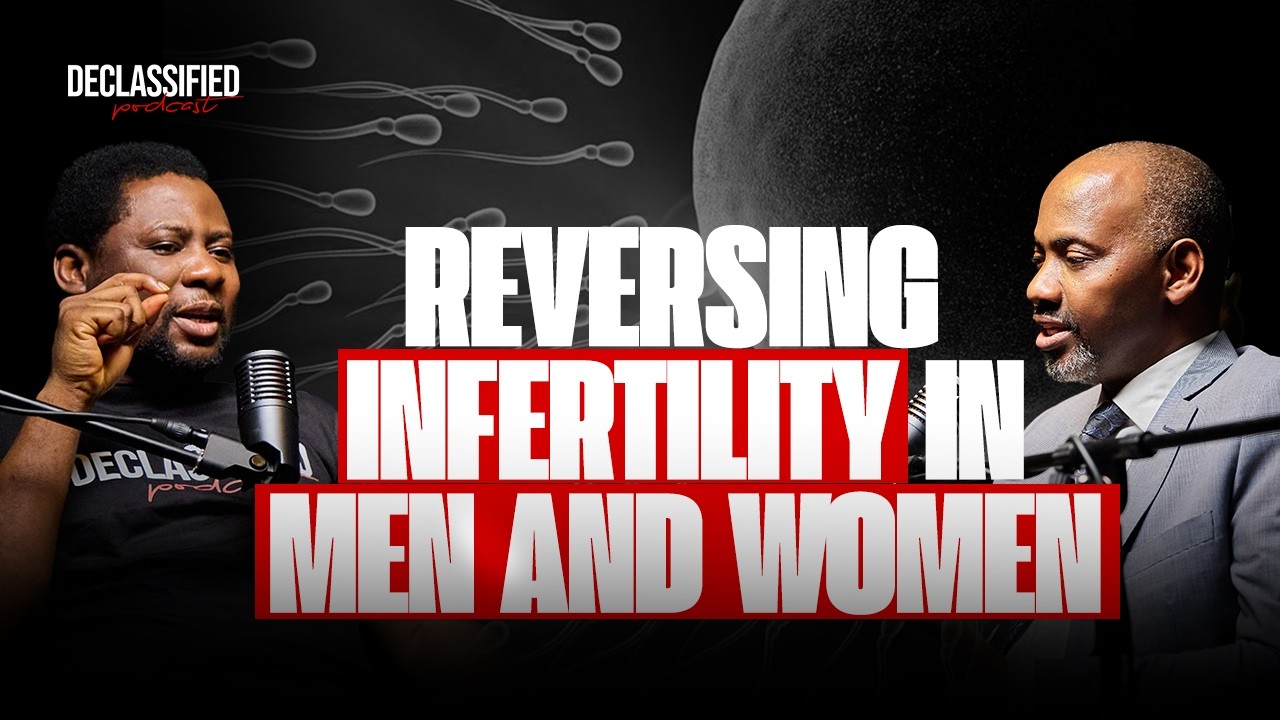
In this classified podcast episode, host SPEAKER A interviews Dr. Sunday Onu, a fertility specialist and founder of Deda Hospital, about the multifactorial causes of infertility in both men and women and the range of diagnostic and therapeutic options available in Nigeria. Dr. Onu emphasizes that infertility is equally a male and female issue, highlighting tubal disease, fibroids, PCOS, ovulatory failure, and low sperm count as leading causes. He debunks common myths such as sperm accumulation causing pain and the impact of masturbation on sperm count. The discussion covers lifestyle and environmental contributors (diet, preservatives, toxins, vitamin D deficiency, smoking, alcohol, stress) and how they affect sperm quality and ovulation. Dr. Onu outlines treatment pathways from simple ovulation induction and timed intercourse to intra‑uterine insemination (IUI) and in‑vitro fertilisation (IVF), stressing the importance of age, ovarian reserve, endometriosis, adenomyosis, and autoimmune factors for IVF success. He details male fertility concerns, including infections, blockages, and recommended frequency of intercourse. The episode also explores PCOS pathophysiology, weight‑related insulin resistance, and management through diet and exercise. Fibroids are discussed in terms of prevalence, genetic predisposition, and the role of vitamin D. Miscarriage causes (chromosomal abnormalities, infections, hormonal issues) and gestational diabetes complications for mother and neonate (large‑for‑gestational‑age infants, lung immaturity, neonatal hypoglycaemia) are examined. Finally, Dr. Onu walks through the IVF workflow, from pre‑treatment assessment, hormonal stimulation, egg retrieval under ultrasound guidance, to embryo handling, while addressing emotional aspects and common misconceptions about egg depletion.
Chapters
From your experience, Dr. Onu, what are some of the most common causes of infertility?
The commonest cause of infertility in our environment is tubal problem. When we look at women, you know, when we're talking of cause of infertility, we have to look at the woman's side, we have to look at the male side. Both men and women share equal weight of problem. Before now, it's believed that it's the women that have the problem and men don't even bother to come for tests, you know, because if you are not conceiving, You are the woman, you are the one. But I mean, it takes two to tango. You know, without the sperm, the egg cannot just form a baby. Dr. Sunday Onu, the fertility specialist and founder of Deda Hospital, who trained in Copenhagen.
I've heard some people throw fallacies like doctors have said that if they don't sleep with a girl, the sperm will keep accumulating, causing stomach pain.
Those ones, those ones, you know.
You've heard some of these things?
Of course, no, I've heard that. I mean, I've even heard them telling a girl that if she doesn't sleep with men, that she will have a disease, you know, because I mean people try to bring fallacy to woo, to mislead young girls and young men.
Does masturbation cause low sperm count?
No. Mastered the science of human reproduction and came home to Abuja to give thousands of Nigerian families. Sperm count have been on the decline over the years.
Over the years?
Over the years. I mean, when you look at the past 100 years, for for instance, over the decades, over the years, is reducing. Yes, and it's all because of this environmental toxins, preservatives, things we eat, we don't eat well, we don't eat— yeah, it's accounting for it. Even the WHO have been lowering standards of what is normal sperm count, you know, something they had almost stopped believing was possible, a chance at parenthood. When we did this study, even though it's quite some time now, about getting up to 10, 15 years, We discovered that apparently there was no difference in terms of sex ratio. At birth, we tend to have more males than females. At birth.
At birth.
At birth. At birth. But when you go higher, at adulthood, there are more females than males because females are more resilient. They survive childhood better than males.
Ah, some people believe that if you are going for IVF and you have to choose the gender that you want, that means you are playing God.
No, I'll say no, because if IVF were an automatic pregnancy, then that becomes— IVF, no matter how excellent the centre is anywhere in the world, IVF does not guarantee pregnancy.
True.
So where is the God playing there? You can choose the embryo gender that you want to put, but you cannot guarantee that there will be pregnancy.
Now, considering now the wider range of options for people who are dealing with fertility issues that they can explore. Are there things that can increase the chances of IVF working and things that can reduce the chance of IVF not working?
Oh yes, there are.
Hey friends, I want to welcome you to the Classified Podcast. Myself and my team, we've been working so hard behind the scenes to get different intellectual conversations across to you. We know that these conversations will form the basis for what will change our world as we know it, because words form narratives, narratives shape culture. And this is the reason why I want to invite you to join me on this journey, not just as one who is going to view this today. I want to have you on board with me, and I like for you to just do these 3 quick things for me. Number 1, I'd like for you to like this particular podcast. You know, don't just watch, just like it. I want you to do that for me. And when you do this, the algorithm takes this to as many people as possible who can now have access to enjoy the very same thing you're enjoying. Also, I'd like for you to drop comment. Let us know how this has impacted you, things you've learned, and sometimes just your own view. And I'd like for you to also subscribe on this YouTube channel. I'd like for us to grow together as a community. I look forward to having you again and again on the Classified Podcast, and I can't wait to see you some other time.
Thank you. All right. I want to really thank you. This is the first time we are starting this conversation with a thank you. For some reason, we just like to shoot and just go straight to the conversations. And I know what it takes for you to make out this time to be seated here. I think you are by far the most busy doctor in Abuja.
I wouldn't say so, but I mean, I know I'm busy.
No, I think by far. I mean, everywhere we have conversations relating to fertility with women in respect to that counseling and all that, one name stands out all the time. Dr. Onu. Dr. Onu. Now, I just want to get straight to it with some of the things that you do now. In this field, the knowledge available even here in Nigeria, do you believe that women still have reasons not to have kids?
Yeah, apparently. I mean, that's, that's a deep question, and, um, and, uh, it's deep-rooted. I mean, if we look at this scientifically, but on the surface, um, just to summarize There are a wide range of options now that—
Wider range.
Wider range compared to what existed before that you say, look, I mean, it's apparently difficult to say a family can go without children because options exist. However, you know, some of these options have some limitations, so to say, limitations of acceptance because of the depth of knowledge people have about, you know, what is offered and people's belief, you know, and set mind. You know, these are just the things that are constricting, constraining some couple in achieving Dr.
Onu, do you want to run us through some of the options that we have on ground now for women, and let's say family generally, that are going through fertility issues that they can choose from, and some of the limitations or the pros and cons of some of these options?
Okay, yeah, the options are very— they are varied, they are wide, uh, and if you look at it, sometimes what the couple need to actually achieve conception is, is small, but they are looking for the big answer. I mean, looking for a bigger solution. Uh, something happened yesterday. I was pleased and amazed. A woman came to me, you know, routine normal clinic fertility check and the rest of them. And, um, she said apparently she want to do IVF, but however, however I should just use my medical judgment to give her the best option because a friend of hers came to me, you know, and was coming with the mind of IVF. And I told her, me, I've forgotten, I can't remember what this is. I told her that, no, she should just wait a little bit, that her case might not just be an IVF. And I gave her some medication and, She has her baby now. I was surprised, you know.
Wow.
I was surprised. You know, some people— to some people, it might just be simple advice. You know, do it this way, do it this way. Then some people, they will need medication. It's just to give some tablets and monitor their cycle to know exactly when they ovulate so that, you know, they can meet with their husband at the appropriate time. That's what we call ovulation induction and timing of intercourse, timed intercourse. Then there is other option of just giving some medications that have suppressed the person from ovulating, you know, and ovulation comes and pregnancy enters. Then in terms of interventions that are invasive, I mean, when we say invasive, I mean when you have to handle gametes, there's the one we call the intrauterine insemination, that is a little bit going a little bit higher. Where you have to just take the sperm from the man, try to prepare it. Inseminate the woman.
Yeah.
Prepare it very well because you can't inseminate a raw sperm into the woman's uterus because sperm, even in the natural pattern, the raw seminal fluid don't go into the uterus. It stays in the vagina. It's the sperm that swims up. And there's one thing that, yes, I usually don't withhold clarifying because some women believe that what the man ejaculates is what goes in everything. No, the sperm cell inside the ejaculate is something naked eye cannot see. And it's in millions, you can't see them. And it's a very small percentage of the whole volume of fluid that is ejaculated. And that is the active ingredient that we need for fertility. So to say. So we want to, I mean, prepare the entire seminal fluid to sieve the other components so that we can concentrate sperm alone and, you know, make the active one, you know, available that you now inject directly into the womb by way of insemination and allowing them to go on and do the duty as it would have been ordinarily.
From your experience, Dr. Onuoha, what are some of the most common cause of infertility?
Yeah, the commonest cause of infertility in our environment is, is tubal problem. When we look at women, you know, when we're talking of cause of infertility, you have to look at the woman's side, you have to look at the male side, you know. Uh, so, and before I say further, I want to say that, I mean, both men and women share equal, equal, equal weight of problem. Before now, it's believed that it's the women that have the problem, you know, and men don't even bother to come for tests, you know, because if you are not conceiving, you are the woman, you are the one. But, uh, I mean, it takes two to tango, you know. Without the sperm, the egg cannot just form a baby, you know. So when we look at the women's side, the tubal problem is, um, is the leading cause in our environment. That's tubal blockage, you know, tubal disease, from one thing one thing or the other. And why is it very common? Because infection is very common in our environment. I mean, sexually transmitted infection, other form of pelvic infection, you know. Then, um, because we have a problem that leads to surgery. I mean, fibroid is very common in our environment, and fibroids are the number one solution to fibroid in our environment generally is surgery. And you know, when you do surgery, no matter the degree of precision and accuracy, there is bound to be scar tissue formation. True. Anybody that has a wound forms scar. Yeah. So, but different people have different tendency of the extent of scar they form. You know, some form excessive scar, some don't form at all. Then the manner in which the surgery is done also influence the degree of scar formation. You know, so when you do fibroid surgery, one of the complication is that, okay, scar might form and that will involve the tubes and will lead to tubal blockage. But if the surgery is done by a specialist, that's what we advise. If you must do a fibroid surgery, make sure it's done by a specialist who have the knowledge that, okay, it's not just to take out the fibroid, but it's to take out the fibroid and leave the woman fertile, you know? Leave her fertile. Yes, yes. So care is taken in where and manner you handle or manipulate the uterus, you know? And other surgeries, some people have appendix, appendix that will rupture can affect the tubes because it's an infection. It's an infective, uh, uh, uh, yes, it's infective. And when infection comes, there's inflammation, there's tissue reaction, and the end of it is scar formation. And this will affect, you know, the tube. The lumen of the tube is very narrow, so any small thing can just block it, you know. So that's why it's, uh, it's leading cause in our environment. Uh, the other cause could be ovulation problem, you know. So women don't ovulate, or they don't ovulate effectively. They don't ovulate effectively, and that could— I mean, without ovulation, egg is not released, and if egg is not released, even if sperm is there in millions, nothing to fertilize, you know. So these are issues. Then we look at other problem like, okay, masses, like fibroid. Fibroid and fertility, they have, uh casual and causal relationship. Casual means, you know, the infertile population tend to have, you tend to see fibroid more in those population. And there are some people that, okay, it is the fibroid that is actually the cause of their fertility delay or fertility challenge, you know, depending on the size and the location of the fibroid. Very key, you know, you have You can have a big fibroid that will not even interfere with fertility.
Yeah.
If it is located on the outer wall of the womb.
Of the womb.
You have a small fibroid like this, that if it's sitting right inside the cavity of the womb, that will prevent the woman from conceiving. Yeah. No matter, I mean, how small it is. So location and size is very key when we're talking about fibroid. And some could just be close to the tubes and the— Because of the effect of the mass, it blocks the tubes and, you know, we'll have fertility challenge there.
Now, Dr. Nwobu, before we still get to, you know, talk, looking into the wider range of options for fertility for women, we're talking about the cost now. This issue that you're on is a very serious issue now, the issue of fibroid, the issue of PCOS also. It's like there are many more issues that I don't know, maybe kind of is reducing the, I don't know, the probability for conception. Women have to deal with hormonal issues and they are becoming more prevalent. Fibroid is almost everywhere. It's like you're looking at 1 out of every 3. And then you're looking at also PCOS. What are the causes of some of these things and what can be done? Maybe a single person is watching right now or even a married person, are there lifestyles, things that can be done to avoid some of these things?
Yeah, I would say unfortunately, you know, these two things you mentioned are major factors in fertility.
Yes, they are.
Particularly in our environment. And if you take PCOS, that's polycystic ovarian syndrome.
Yeah.
World over, if you look at the number one cause of infertility, if you take the world, I mean the developed countries, ovulatory problem. And PCOS is the major cause of ovulatory problem. That's anovulation. You can see that it's a major, major, major factor. The PCOS is actually, it's a condition that people are born with. It's not like you acquire it along the line or something like that. It's a nature of the ovary, you know, that appears polycystic in nature. You know, then when, but when we talk, some people have polycystic ovary without having the polycystic ovarian syndrome because the syndrome is like when other things have now come up and are involved, you know. The polycystic ovary can give, is the foundation, you know, to having PCOS.
Yes.
Of course, and we know that some people can even have PCOS without having polycystic ovary. It's a very minor percentage of people. I mean, we call it the other variants of PCOS. Now, I say that 1 out of every 3 women, you know, in reproductive age have polycystic ovary. It's common, but you know, it's not all that are syndromic. It's not all that are polycystic ovarian syndrome, and it's not all people that have the syndrome that actually have fertility challenge. You know, some can escape it and some will just have, the challenge, because polycystic ovarian syndrome come with different, different symptoms. Some is excessive hair. You see a woman growing hair like man, and then acne. Yeah, so much of breakouts on the face everywhere, you know, because of hormonal change. They have excess of the male hormone in them, you know, and this change in hormone actually affect ovulation. And that's also have other health implications like diabetes mellitus in later life, cancer of the endometrium, cancer of the womb because of prolonged absence of menses and the rest. Now, when we talk of PCOS and lifestyle changes, yeah, there's a relationship. You know, when you have polycystic ovary, even without before the syndrome, you know, there are things you can do to, I mean, in terms of lifestyle adjustment that will prevent the syndrome as it were, because the polycystic ovarian syndrome is a hormonal derangement kind of that will now lead to the cascade of event that will happen. So if one is careful, diet, you know, trying to avoid carbohydrate, diet, that's too much of sugar. Yeah, yeah, because polycystic ovarian syndrome, the larger variety of it, have what we call the insulin resistance pattern, you know, and that is a major, a major factor. Uh, if there is insulin resistance— insulin is the hormone that is responsible for driving sugar into the cell from the bloodstream— so if there's resistance to it, it means you have accumulation accumulation of sugar within the bloodstream. And accumulation of sugar causes a lot of damage to tissues, to organs, I know. And that is what eventually will lead to diabetes, so to say. So if you're mindful of your diet, take down carbohydrate, increase your veggies, you know, and increase your protein, watching the carbohydrate side, then you can You know, balance this to a large extent. Then exercise, you know, to avoid excessive weight because with weight, there's more of the female hormone and the female hormone, which is the estrogen, you know, can be turned into the male hormone by a process within the system. If it's much, it gets, we call it aromatization. It now have much of male hormone in a female. —then you now begin to make the system— —to work towards the male side. And male shouldn't ovulate, if we want to say it that way, you know. So these are the mechanism because one is born with it. You know, there are things you do, you know, to try to limit or to negate— yes, the manifestation of this thing, or even where it exists, you can actually put this together to make it lighter. Like polycystic ovarian syndrome is also associated with weight gain, so to say. So if you are now conscious about the weight and you bring down weight, studies have shown that people who are obese with polycystic ovarian syndrome, when they lose weight, it reverses a lot of imbalance that there is. And a lot of people have conceived treated by doing weight loss alone. Yeah, I know, if the anovulation is their major problem, that's the PCOS, if there are no other factors of fertility. Then going to fibroid. Fibroid is also as common, I mean, it's that common too, you know, particularly in our environment. And it's something that we're born with, uh, there's no such thing that you do at adulthood that will not make you have fibroid. I mean, as per— not that you are born with fibroid, the predisposition to have fibroid is in us, it's in the Black gene, so to say. The white, the Caucasians don't really, they don't have, they don't deal with fibroid. They have their own problem, you know. Everybody have their own disease. So to the extent that the Blacks in the West, in the UK, in US, you know, they have more fibroid than even the white there. So the thing is taking, associated with the, the, the, the black, the gene. Now that the gene is a predisposing factor, you know, there are some other, there are some things that have been said to try to, um, potentiate or, you know, uh, aggravate the development of fibroids. Even though there are theories, you know, some theories have said that lack vitamin D, you know, vitamin D deficiency. Yeah. You know, and you know that in modern day life for us now, uh, I'm also guilty, um, we move from dark to dark, you know, dark to dark. I mean, from your house in the morning, you enter the car, no light, no sunlight. You enter the office, the time you are closing, the sun is down. You go back to the house, you know, You know, sometimes for one week I might not even see the—
But there could be supplements that one could—
Yeah, exactly. That's where supplementation comes in. You know, we need to check, I mean, what's your vitamin D level? One thing is, okay, vitamin D, even though supplemental, it shouldn't be taken blindly. Yes. Because excess of it is bad. So before you start taking vitamin D, you must check to know the level. Yes. And when you check randomly, you find out that, A quite percentage of us have low level of vitamin D these days, you know, and even abroad too, you know, that's why they like coming to do sun tanning, this and that and that. Yes, so vitamin D supplementation is important. It's even good for fertility too. When there's low vitamin D, you know, it affects implantation, it affects the quality of the egg, you know. So all this, uh, vitamin— okay, yeah, not too much digression from the fibroid itself. And fibroid, as it were, you know, we're talking about fibroid, is common, but not all fibroids are really troublesome. I would say not all, because, you know, it depends, I say, depend on the location, the size, and the symptom that is presenting with. And one of the major symptom is excessive blood loss during menses. You know, particularly those that are inside the cavity of the womb, or the large ones that are in the muscle wall. They increase the surface area that bleeding happens from within the lining of the womb. And you know, so when menses comes, you bleed so much, it comes heavy. Then if you are the type that you don't really eat right, you know, and you are not supplementing iron, then by the next menses you bleed heavy, you don't recover, another menses after some time you become anemic. And some people have even gone to the point that needing blood transfusion and the rest of it just because of that. So, um You know, we need to be conscious of our lifestyle. Yeah, yeah, these are, these are—
let's talk about males. Two very sensitive questions I want to ask. Look at some fact, some things that males deal with. You can also include some other ones. Um, low sperm count, and, um, let's, let's deal with that. What makes a man predisposed to that?
Okay, a low sperm count, you know, uh, talking about males, low sperm count is is just the main factor. I mean, low sperm count or no sperm is the main fertility factor for men because it's the sperm, you know. Yeah, it is very, very easy to diagnose that a man has a problem. That is, bring your seminal fluid to analyze and the result is just there. Yeah, but the question now is finding a solution is more difficult. It's more difficult. It's more difficult, yeah. Because most of this low sperm count, when you diagnose it, you know, finding the cause becomes another, I mean, task, you know. And most of the time we don't get to even see any cause because we just say it's a genetic predisposition. The thing just start at a point and it start going down, you know. And that's why we also encourage that, okay, people should not, once in a marriage situation, once there's delay, don't keep waiting forever, you know, check early so that we know where problem is. Don't push your wife alone to go checking, you two should just check, you know. Yeah, so that, uh, I mean, it can be nipped early. So now there are some things that are known to be responsible for low sperm count. Number one, infection is there, you know, infection of the testis, you know, infection of the passage, you know, just like we have tubal block in women, we also have the blockage of the tube of men, you know. If it's blocked, you can be producing sperm normally, but it's not coming out, so it's of no use. It can't function, you know. But technology have come that we can overcome such—
Does that put any weight on the seminal vesicle? It doesn't? The tube, no weight on it? No, no.
Seminal vesicle is there producing fluids and the rest. Even if seminal vesicle is blocked, it does the vesicle produce fluid. It's the testis that produce the semen, the test— the sperm, sorry, you know. And now is the seminal vesicle that produce most of the fluid that the sperm now come and flow in.
And now that is not—
the tube is blocked. If the tube that is leading the— from the testis down to the urethra, if it get blocked, no, nothing, nothing, uh, flows. So when sperm is produced, what happens that after 90— after sometimes it dies off. Inside, and the body takes care of it, so it doesn't really accumulate to cause problems.
You know, some people— I've heard some people throw fallacies like, um, of course I know medically, but you know, like, um, doctors have said that if they don't sleep with a girl, the sperm will keep accumulating, is causing stomach pain.
Those ones, those ones, you know, you've heard some of those? Of course. No, I've heard that. I mean, I've even had, um, I've even had telling a girl that if she doesn't sleep it meant that she will have a disease, you know, because I mean, people try to, to, to try to bring fallacy to all those things, to, to, to mislead young girls and young boys.
Does masturbation cause low sperm count?
No, emphatically no, in terms of that, because, uh, the, the— what, what happens with sperm production, sperm production is a daily event. Yes, it's a daily event. It's all like the egg that have a cycle, you know. A lot of the sperm that starts— I mean, that starts his journey from production site, the factory, which is the testis today, will get matured in 67, 74 days' time. The one that starts tomorrow will mature another. So every day you are seeing matured the one that— so it's a continuous thing. So if there's a break in channels, or if something affect this production line, you know, that's why it's going to affect a lot of, uh, sales, you know, I mean production. So, uh, and even if a man ejaculates every day, eh, it does not stop the production. What happens is that the volume goes down, reduces, the volume reduces because the volume is coming from the seminal vesicle largely. The volume reduces because you've not given time for accumulation before ejaculation. And that's why we advise, uh, in a marriage situation, a couple relationship, uh, where there's— for maximum fertility outcome, you know, I would say, okay, meet with your wife at least 3 times a week, but not like, uh, 3 days straight on, then 4 days space gap. So you give gap in between. I mean, that allows re— accumulation of the volume, you know, for—
The 3 days, is it a recommendation for every couple, for those who are looking for pregnancy?
No, that's fertility recommendation. I mean, looking for pregnancy, fertility. I mean, if— I mean, a couple relationship is at their discretion, but where there is now a problem, then we'll now do a prescription. And the reason is not just out of the blues. There's a reason for that. The reason is, if you can know your ovulation time and everything, our prescription is meet at the ovulation time, you know. But because, you know, sometimes it's difficult to begin to do this, do that. What we know, science knows that if a woman ovulates today, yes, the egg will not die today. Yes, it can stay 24, 48 hours. Yes. If a man ejaculates today into the woman system, the sperm can live in the reproductive tract of a woman for 24— I mean, 48 to 72 hours. Meaning that if you meet with your wife today and the wife ovulates tomorrow, the sperm can still be there waiting. Yeah. Yeah. So that we don't lose any time, you know, that's why I would say give this gap. If you meet with your wife today and apparently she's ovulating tomorrow, you have not lost anything. This one is still—
you've got the point, just waiting for— yeah. You want to list some of the lifestyles, lifestyle change that men need to have to be very, very fertile?
Yeah, okay. Yeah, lifestyle modification for male is also— I mean, it's very important because, uh, some of the things that are associated with low sperm sperm count are some of these endocrine diseases, diabetes for instance, hypertension on one other side too. And people, I mean, excessive, I mean, smoking, cigarette smoking, alcohol, excessive alcoholism, you know. So all these are things that affect sperm function. You know, some people, some people might not even have problem with the count, but the function You know, sperm is— you have good count, but they are not moving. You have good count, they are dead, you know. So I mean, diabetes can cause that, you know. I mean, all these things are— so if you diet well, yes, if you good exercise, you know, and try to reduce mental stress, because mental stress affect performance, sexual performance, in terms of some men who say, oh, they go home, they are tired, they can't meeting their wife, and that is the time that ovulation is taking place, you know, and this circle, you know, I just remember the case now, and let's, let's, let's discuss this hypothetically.
He's a guy, whenever he meets with the wife, the following day he can't do anything. He's so tired, he's breathing, and he's saying, look at the stress. Just yesterday you've caused all this. He's breathing hard, he will sleep throughout the entire day. What do you think can be wrong?
No, that, uh, that is an abnormal situation. It's not normal because we know, yeah, I mean, the— you need a lot of energy. Ejaculation takes a lot of energy from a man, that's granted, but not, not that, not that extent. So such person needs to get checked because there might be other issues. You know, there might be other issues that have been brought forth with that. Yes, it needs to get checked. So that should not, I mean, you check out, I mean, let's look at some men have 4, 6 wives. Yeah. And they have businesses. They're all around and they're doing well, you know, so. You know, true, true.
Do you think that maybe some of the modern foods that we take now has also affected? Oh, oh yes, yes, yes, yes.
We can— I mean, we cannot exonerate a lot of things because of, I mean, preservatives that are in the food. Not the food itself, but you know, a lot of preservatives. These things are not just free of harm, just that we don't know the extent, you know, because over the years, over the years, I'll tell us that, okay, the The performance for men have been, in terms of, I mean, sperm count have been on the decline over the years. Over the years? Over the years. I mean, when you look at the past 100 years, for instance, over the decades, over the years, it's reducing. Yes, and it's all because of this environmental toxins. I mean, preservatives, things we eat, we don't eat well, we don't eat. Yeah, it's accounting for it. Because if you look, and critically because of that, Even the WHO have been lowering standards of what is normal sperm count, you know, lowering standard. Because when you now check, but the good thing is, even with the decline, as it were, you know, it's also discovered that, uh, even as it's declining, it's still performing. I mean, so that's why the standard is lowered, you know. In the past, they say, okay, sperm count, in recent past The minimum count taken as normal was 20 million per mil, but now it's now 15 million per mil because they discovered that people who have between 15 and 20 were performing the same thing people have over 20, and now less number of people are now even having up to that 20 to meet up. Yeah, so the bar was dropped, you know, for what is normal count, because Even at 16, I mean, performance— I mean, fertility was still, uh, optimal.
Optimal, yeah. I mean, recently we've seen, and I don't know if something you've noticed also as a fertility doctor, that there's been reduction in number of males that have been born.
Eh, no, apparently, um, do you think that's true statistically? No, statistically it's not really correct. So, so, I mean, not, uh, I mean, we can't— I did a study, I mean, uh, on, um on sex ratio. I mean, try to check those born by IVF. Yes. Those born conceived naturally. Naturally.
You know, IVF is more predictable.
No, you can choose. You can't— I mean, that is when you are now intentional. Yes, when you are intentional. But you know, a lot of people do IVF not being intentional, as per I just, I want a child, anything God's give me I take. Is people come been intentional, okay, I want a girl, I want a boy because I have 2 boys, I have 1, you know, that's different. But you know, when we did this study, even though it's quite some time now, about getting up to 10, 15 years, we discovered that apparently there was no difference in terms of sex ratio. Yeah, at birth we tend to have more males than females at birth. At birth. At birth, at birth. But When you go higher, at adulthood, there are more females than men because females are more resilient. They survive childhood better than males. Ah, ah, yeah, it sounds, you know, it sounds somehow, you know. So, uh, till now, yeah, I mean, so unless things are now changing in this, I mean, in this era, decades, but sex ratio has really been on the balance There's a slight male preponderance, you know, but now, you know, with advent of IVF, with advent of gender selection and everything, so it's going to change the scenario in the world because things are no longer, um, I mean, it's no longer left to, to, to nature.
Some people believe that if you're going for IVF and you have to choose the gender that you want, that, that means you are playing God.
Um, Not, no, I won't say, I'll say no, because if IVF were an automatic pregnancy, then that becomes, IVF, no matter how excellent the center is anywhere in the world, IVF does not guarantee pregnancy. True. So where is the God playing there? You can choose the embryo gender that you want to put, but you cannot guarantee that it will become, that there'll be pregnancy, you know. And science will also tell you that even if when we're doing gender selection with the most precise technology, you know, it will still give you error margin. Second error margin. Yeah, yeah, margin of error. You know, that look, oh, we have selected this is a girl, but it likely might just come out to be a boy. And we have had a lot of cases, I mean, coming up that way. Just that if the people that are coming forth for this are well educated and well counseled, they know and they'll take whatever comes in good faith.
You know, another thing that jumps my heart right now to my mind is the fact that we seem to be having more cases of miscarriages than ever. And this is a subject that really bothers lots of families, um, that many can't talk about publicly. And what— can we, can we just dive quickly into this?
Yeah, yeah, because it's part of a challenge in infertility too. Yes, the aim of conceiving is to have a live birth, not to, to have a miscarriage. Miscarriage is also rampant. You know, the incidence of miscarriage is slightly increasing for reasons, uh, because in some— in the past, you know, diagnosis of miscarriage, people hide, hide it, you know, without even coming forth. And some people even had miscarriage without knowing because they feel they have delayed menses, you know. But with improved technology, people come to check early, you know, you're pregnant, and then I mean, in a while it's gone. Miscarriage is common, and because, you know, a lot of— there are things that could predispose to miscarriage. I mean, atypical infection, even hormonal deficiencies can be associated with miscarriage. But the commonest cause of miscarriage, among the causes that are known, particularly in the first trimester of pregnancy, that's the first 3 months, is genetic abnormality. Chromosomal abnormality in the fetus, in the, in the developing. It does not mean that the parents are genetically abnormal, just the process of formation of the fetus, something goes wrong, you know. So nature, we try to sieve them out, you know, to, um, prevent the agony of having a child that is malformed, congenital issues. Yes, you know, there are some babies that could be born without head. You know, a large majority of those children are—
can we also look at the case of lifestyle of the mother in pregnancy that can make her less predisposed to having a child with congenital deformity?
Yeah, I mean, lifestyle that could predispose to congenital malformation is what we rather want to talk about. Yeah, you know, because because there are some medications that are associated with birth defects. Yeah, there are some medications, you know. So for anybody that is planning to conceive, should be careful on what you take. You— I mean, has to be prescribed medication. There are even some prescribed medication that also have issues, you know. And, uh, we, we caution that if you are planning to take, uh, take in avoid this medication if we're trying to prescribe those medication that we know that are associated with, uh, uh, beta issues. Uh, there are some people who have undergone some cancer treatment, you know. Yes. Even though they still, uh, can conceive and deliver, we advise them after this treatment, you must wait for 3 months, 6 months for the effect of the drug to wear out before you conceive. Because once you, if you conceive within that limit that the medication is still there, it can predispose the child to having malformation. There are some drugs in the past that were even manufactured to help children, to help pregnant women to prevent vomiting in pregnancy. Yeah. You know, but that drug was abandoned long ago in, in the '70s, early '80s, '70s. Is Avomine safe? Avomine is safe. Avomine is safe. Uh, you know that one, we call it thalidomide. Yeah, thalidomide. They were giving them, it was solving the morning sickness, but they discovered that children that were now born, some no hand, some no leg, you know, kind of, you know. And before it was discovered and traced to that medication, of course it's out of the market a long, long time ago.
So you were going to talk about the lifestyle that can, should be avoided?
Yeah, yeah, yes, yes, yes, yes. You know, drug, you know, some people are addicted to some drug or dependent on some drugs. You know, there are some drugs that are not really good.
Drugs or medications?
Medications or drugs. Yeah, you see, pharmaceutical, I say drug is, Panadol is a drug. So let's, but you know, when we talk drug now, people will think, I think we're talking of cocaine, hard substance, and the rest of them. Yeah, okay, let's say medications. There are some medications that are really not good for early, I mean, first trimester pregnancy, you know? And so we very careful, you know, giving pregnant women some of these medications. Then there are some infection and infestation. This malaria that we commonize is one of the factors that can cause miscarriage. Miscarriage. So, I mean, taking care of our environment is part of, you know, taking control of this, you know, trying to, I mean, decrease exposure to this. But luckily, I mean, because we're in the malaria belt, you know, we all have immunity, you know. And so the degree of malaria that will cause us problem is, uh, it has to be, to be high. However, for pregnancy, it's different. Because there are some people who are not symptomatic, who have asymptomatic parasitemia, and they have the parasite in the system, it can cross the placenta and cause problem to the baby, not the mother. Yes. You know, and then alcohol. Yes. Cigarette smoking, excess of nicotine. You know, some people would like taking this tea with caffeine. Caffeine. Too much of caffeine. You know, these are substances that can cause blood flow issues within the placenta bed, you know, and can affect pregnancy. So, so those things we try to, I mean, downplay on them. Pregnancy on its own is a risk factor to developing diabetes. Yeah. You understand? So if you know that pregnancy is a risk factor to developing diabetes, then when you are pregnant means that you should be careful not to take too much of carbohydrate, too much sugar, ice cream, this one, that one. Cut it down. Of course, I mean, there are cravings, you know, and, uh, there's something they call cheating in diet. Yeah, there are some days you can just forget yourself, feel good, but I mean, that should be occasional, not like— I mean, you see some people, because they feel they are craving, every day of their life they are drinking Coke because—
I mean, some people like that. I mean, pregnancy-induced diabetes is a subject I would have wanted us to major on, but because this is a whole broad issue that we are discussing here. In a case where, let's just touch one thing there, where a mother is having gestational diabetes, and what are the risks that can pose to both the mother and child?
Okay, yeah. Gestational diabetes can actually pose a risk to either side, yeah? Yeah. Let's talk about the child. First, for the child, you know, because the blood sugar of the mother is high, sugar flows freely into— through the placenta to the baby. Yes. Yeah, so the baby is bound to grow bigger than usual. You know, they are bound to grow bigger, and because they are growing excessively, and too much of sugar leads to delay in maturation of some organs in the system. Yeah. Particularly the lungs, that's the breathing. Yes, you know, so babies that are born, a baby from diabetic mothers tend to have slow maturation, uh, this thing. So a baby that is born at 37 weeks to a diabetic mother could be equated to a baby that is born at 35 weeks to a non-diabetic in terms of lung maturation. Lungs, precisely. Precisely. But size is bigger. Size is bigger. Yeah, you know, that reminds me of one of the cars I had in the past, this Camry 2005 model. They say big for nothing. They call it Big Daddy. Okay, you know, so the child is big but not mature internally, you know. And, you know, and such, such problem gives rise— okay, now one of the major problem that children of diabetic mothers faces because they depend on free sugar coming from the mother. Yeah, you know, when they are born, and because of that, their, the, the sugar, the rate at which they metabolize sugar, their insulin, which is the hormone that is responsible for sugar metabolism, pushing sugar into the cell, is active because our sugar is coming, is pushing it into the cell, and cell is growing. That's why they are regrouping. Insulin is active now. Once the child is born, that free flow is cut off and the insulin is still firing. Before you know, the blood sugar goes down for the baby.
So they can have hypoglycemia.
And if care is not taken, that can kill the baby. Wow. You understand? So that's one of the risks. So that, that's why that anybody, any baby that the mother is diabetic, once she's born, the first thing doctors are doing or the nurses just to check in the blood sugar to make sure that it's— At intervals. Yes, and also early feeding, you know, to feed the baby to, you know, equate. So that until the body sense that, ah, this sugar is not coming freely again, no.
Does that make such a child more predisposed to insulin resistance?
Not really, not really. They are not really resistant to insulin. The insulin is working and pushing the— pushing the sugar into the cell. So the insulin is active. You understand? So what now happen is that if the sugar is not coming freely again as it used to come, then the insulin start cooling down. Yes. You know, coming down to meet with what is now happening, you know? So, but that first few hours, 24 hours is very critical for the child. If not, the child will have those problem. No, no, okay, go ahead, go ahead. The other factors, you know, then we talk about lung maturation. Yes, absolutely. Respiratory distress syndrome. Yes. Yeah, you know, because the child will come, because the lung is not mature, you won't be able to breathe well.
Can that make them predisposed to bronchiolitis?
Yeah, I mean, that bronchiolitis, uh, is, is a different, slightly different, uh, different, uh, uh, ball game. But this one now is, um, um, from lung immaturation. The, the, the functioning of the lungs is is low, so there's no— there's high pressure within the lungs. So the shallow breathing the child is taking cannot push air down into the lungs. So such child will now need artificial assistance. Yes. You know, machine to drive the air down. We call it CPAP, you know, and sometimes they might even need intubation. But most of the time, CPAP would do. But now there are medications that also can be administered into the lungs. You know, that is surfactant, we call it, because that's a chemical that is actually produced that opens the lung channel because they don't develop surfactant early because of the high sugar level. If you give that medication, it helps them, you know, calm down and the breathing, I mean, comes to normal. And such children, I mean, once there's respiratory failure, respiratory distress, it comes with other metabolic issues within the child. And sometimes, because of the low oxygen level that is being circulated, it can affect the brain— wow— of the child, you know. So that's why it's not taken lightly, you know, it's not taken lightly. The child needs to be monitored, make sure it's breathing well, make sure— and thank God now that facility— I mean, technology exists that any baby that is born, you can just put a monitor to tell you real time what oxygen is going— I mean, the saturation of oxygen in the system, the pulse, the heart rate, and the rest of them. And they're quite accurate. Yeah, so that you can act fast. Yeah, you can act fast because the problem is not, uh, the issue itself, but how fast you act to reverse it. Yeah, if you reverse it in time, it will just be like nothing happened. But if it has gone too long before you start acting, yeah, then some damage could have been done, could have been done before then. Now these children also are prone, more prone to infection. More prone, yeah, more prone to infection. So there are a whole lot of issues that comes with, uh, baby born with diabetic mother. However, if the diabetes is well controlled while the mother is pregnant, it reduces all these issues.
Can a pregnant woman take apple cider vinegar?
Yeah, I mean, apparently it's not like completely contraindicated, but it's, it's, you have to individualize. It's not a blanket statement.
Now, considering now the wider range of options for people who are dealing with fertility issues that they can explore, we've talked a bit about IVF. What I just want to talk about before we move to another subject is that Are there things that, that can increase the chances of IVF working and things that can reduce the chance of IVF not working? Oh yes, okay, there are.
Because, um, if we want to do IVF, we do not just jump and start doing IVF. We must do some— there are some certain tests we do, assessment, to, to actually find out the state, you know, and if there are factors that are there that could affect the pregnancy, as it were, you know. Then you must have to correct those before you even go into the IVF itself, you know. Some factors— one major factor that affects IVF is age of the woman. Of the woman? Yeah, age is a major factor. You know, uh, the older, the less successful pregnancy generally.
From what age will you say is old?
Um, okay, I mean, uh, fertility-wise, the prime age is below 35. Generally, good age is below 35 when we talk fertility. But when we say prime, below 30, you know, about good age. But anything after 35, naturally fertility starts to dwindle. Okay. But it becomes more manifest from 40, age 40. So, um, so if we're seeing patients, you know, that come for IVF and your age is below 35, you know, we are more at, at, at, at room, not at home, you know. But, but then, but then there are other factors too that comes in. You want to check the hormonal status. We talk about ovarian reserve. What is the state of the ovary in terms of the capacity to produce egg in number and in quality. You know, that's ovarian reserve. Some people, usually before 35, ovarian reserve is very, very good. You know, after 35, you know, it starts to dwindle, you know, and by 40, it nosedives. Be that as it may, there are some people that even at 25, their reserve has gone down. Wow. Yeah, we call it, I mean, premature ovarian failure, primary ovarian failure. You know, some So sometimes this has to do with the genetic makeup of the person. Then sometimes because maybe they are exposed to some toxic substance. Chemicals. Yeah, chemicals in early life, you know, or— Or creams. Sometimes, yeah, this could come from creams. But I mean, exposure, environmental exposure, irradiation exposure, or they've had a car accident cancer treatment, you know, in the past. And these are things that can affect the ovary and brain. And some is just genetic, you know, that the ovary retires earlier than it's supposed to, than it's supposed to. So I mean, there are some genetic factors that, that could contribute to this a lot. So, you know, so if the ovarian reserve is already down, you know, you now have to modify, you know, the protocol or whatever you want to use to try to up the chances. Then there are some factors. There are some people who have what we call endometriosis. Endometriosis is a big chapter that, you know, that affects the ovary. You know, it also affects the environment that will affect implantation. You know, if it's there, these are factors that will affect the success of IVF. Some people have what we call adenomyosis. Adenomyosis is like fibroid, but not fibroid, you know. It causes enlargement of the womb. What happen is the cells that you find in the lining of the womb, that is, we call it the endometrium, where it's shed during menses every month, you know. If you find such cells in the muscle wall of the womb, you know, every month that the woman is menstruating, that cell will menstruate where it is, but nowhere to come out from. Oh. Yeah. So because of that, you know, there's like blood, minor blood accumulation within the wall of the womb. Yeah. You know, the body wants to take care of it, inflammation happens, it enlarges. So every month this thing keep enlarging, enlarging, enlarging. Can that cause sepsis?
Sir?
Can that give rise to sepsis? No, no, no, that wouldn't. That's different from sepsis because the blood is sterile, no infection. Yeah, it's sterile. So, so in So it continues in that way and it now change and distort the architecture of the womb lining. The wall becomes thick, you know, and this affects implantation, you know. So people who have that and are doing IVF, you know, have to take that into consideration because these are factors that actually reduce implantation rates and, you know, eventually the success of IVF. Of IVF. Then we also talk of even lifestyle. I mean, alcohol, I mean, hard substance abuse, all these things comes in to affect the quality of the environment and also affect our success rate. See, so these are things we look out for, you know, and try to correct. And sometimes vitamin deficiency, like I said, you know, vitamin D, ferritin, that's iron, I mean, iron, iron level. I mean, these are micro things. Then there are some people who have what we call autoimmune disorder. Autoimmune disorder in this case means the body, you know, has some— elaborates some substances, some chemicals, some defense mechanism that fights its own. You know, when something— I mean, if embryo is coming in, or when sperm comes in and fertilizes the egg, as the egg wants to implant, it recognizes as a foreign body. Yes. And it starts fighting it, and the next thing is to kill it. And this also can happen to cause recurrent miscarriage. Wow. That's miscarriages. You know, some people have such. If we do tests and we find out, you know, then there are some medication you now have to give to the person to calm that area. Yes. Do not recognize me as foreign. I'm a friend, you know, kind of, so that this time will pass. And so if such exists, it also affects a success rate of IVF. Wow. I mean, even spontaneous pregnancy. Is in trouble in that scenario.
That's not good. Yeah. What does an IVF process look like?
Yeah, IVF process is actually, I would say, is it involves time, it involves emotion, you know? Emotions. Emotions, you understand? Yeah. Why? No, emotion because there are a lot of anticipation. You know, anybody coming to do IVF is because he's looking onto something. Yeah. I want to conceive and everything. Now that you have started the journey that you know that the end could be to the right or to the left, anxiety comes in, you know? So, I mean, we try to advise and encourage people when they are coming for IVF, anything you yourself do not have control in, you know, do not worry too much about it because your worry will not even control it, but it will— might bring some harm, you know, to the whole scenario. So the process of IVF, number one, it starts with the evaluation to make sure that, okay, everything is fine, you know, and if it's not fine, we correct before we go in. And it involves taking injection on the woman's side, injections to make the woman produce egg. I mean, not one egg, not two eggs, you know, we want a good number of eggs, like upwards of 3, 3, 4, 5, 6, 7, 8, 9, 10, you know. The reason why are we talking of upwards is it's not all egg that you produce that are good, that are being—
so in the process you have to extract.
We're going to extract, yes. And the process, I mean, the process we're going to extract. And now I want to say something so that to correct some myth or some misconception that people have. You know, they believe that, okay, when you do IVF, when they are doing IVF, you are exhausting the egg in the person's system, you know, and everything. Naturally, naturally, the woman is tuned to produce 15, 20 eggs in a month, in a cycle, you know. From the start of a woman's menstrual cycle, about 15 eggs is being recruited, follicles recruited to grow. But by day 6, day 7, naturally one become dominant and suppress the other ones. Yes. And that dominant one is the one that carries on to ovulate and go on like that. What IVF does, the medication given in IVF is to make sure that not that one, it's not one that will be dominant. Those ones that ordinarily were supposed to be suppressed, yes, it carries them along. You can have as many dominant as possible. Yes. So that, you know, at the time of extraction you can now get more than one egg that nature— I mean, naturally you would have gotten. Be that as it may, at birth, you know, just when a lady, a girl child is inside the womb, you has about 2 million potential eggs by month 5. At birth, those number would have reduced significantly. And by the time the woman gets to puberty, you know, this would have been reduced to hundreds of thousands, about hundreds of— I mean, 500,000 thereabout. Now, this 500,000 that you have at puberty is what would you be releasing every month, every month, till you get to menopause. And if you really want to take mathematics, Let's assume that every month the woman is— 20 is being recruited. Yes. You know, before— if you take the mathematics, you cannot exhaust it before menopause. You can't. So menopause just comes and all the eggs that are remaining will just die off. Not that because the egg died that menopause come— I mean, is coming. Because you don't have eggs again. But it's just a process. At that menopause, the remaining one are no longer viable, you know. So the IVF is taking advantage of those that would have just been wasted, naturally suppressed. Don't be suppressed. We encourage them to grow. Then extraction. The process of extraction is with needle, fine needle, and under ultrasound scan guidance. So there's no surgery, there's no cutting or stitching or whatever. Needle under ultrasound guidance, go straight so that, uh, you know, because in the pelvis there, there are other structures. The intestine is there, there are blood vessels. So why we do it on the ultrasound guidance? To make sure that you don't cause injury to any of those organs. You are going straight into the ovary and you extract. And once egg is— once it's extracted— and one other thing What we are aspirating is the fluid that contains the egg. That's the follicular fluid. Yeah. We cannot see the egg. No, you can't. We can't see it on that scan, you know. So it's the fluid that contains it that we are seeing, and that's the fluid we are aspirating. Once we suck it out, then we now hand it over to the embryologist. Yes. That now looks at it under the microscope. You know, to try to identify the egg out of that fluid and pick the egg from the fluid and put it in a special media fluid that is already prepared for it. Then sperm is now obtained to use to treat the egg, you know, and the whole process.
The process of extracting the egg for the woman will be quite stressful.
Yes, I mean, ordinarily it's supposed to be stressful, but, you know, we do it under analgesia. You know, the pain, I mean, painkiller, some conscious sedation, some sedation, so that, I mean, in a scale of 1 to 10, there should be, I mean, in terms of pain severity, 1 being the mildest and 10 being the highest, we should have 0 to 1. 0 to 1.
Yeah. Interesting. Dr. Ono, let's, let's look at another very important option that people have in case of infertility, which is the case of surrogacy. There was a time that this was not a thing in Nigeria accepted. Am I correct? Taboo. Is it now accepted? Is it legal now in Nigeria?
Okay, now Surrogacy, as it were, there is no legal framework in Nigeria around it, around it, you understand? But it is not illegal, you know, it is not illegal, it's not illegal. But the only thing is that the, the, the regulation, there's no strict regulation by the government. Yeah. Around it. So what practitioners are doing is, you know, leaning on the British legal framework, leaning on American legal framework in terms of building, uh, uh, the, the surrogacy framework. However, the Association of Fertility and Reproductive Health of Nigeria, that's the fertility society, has been doing a lot of work, and I think there's a bill on the floor of the of the National Assembly now in terms of regulating, uh, surrogacy practice in this country. Yeah, granted, it is not illegal, as it were. However, some— anything that does not have, um, that does not have, um, uh, a legal framework, I mean, a national framework, is subject to abuse. So that's— yeah, that's, that's the problem that we're having, subject abuse. Some people, you know, try to abuse, abuse it because there is no concrete framework. However, you know, a lot of work is going on now, and I tell you that the acceptability of surrogacy is very, very high in Nigeria now compared to previously, and people are not even hiding. I've seen people who are executive women. I mean, they work in a high place, highly placed institution, and they don't give a damn. And they tell the institution, look, I'm doing surrogacy, you get the point, and I'm expecting the baby, so I deserve the right to go on maternity leave. Yeah, because, I mean, because you didn't see me pregnant does not mean You know, you know, so, so it's come to that level that, uh, people are not, uh, I mean, hiding. People are not, they are not, um, I mean, labeling, you know, before, ah, no, surrogacy, why this, this and that, you know. So that's the— what was the process until— yeah, the process of surrogacy is, is cumbersome. I put it that way. It's not just as it is on the surface because it involves a lot of, uh, a lot of legal processes, you understand, and consenting because it is not a commercial venture. Yes. It's a voluntary, it's a free will venture that between, there's a contract between the gestational carrier, who is the surrogate now, and the intending parents, you know? So it's not like, commercial thing. No, it's a voluntary process. The person who is going to carry, who is the gestational carrier, you know, must know in details what and what the process is involved.
So the process is going to get eggs from this person, fertilize it.
You get egg from the intending parents. That's the people, I mean, involved now. I mean, that's the couple. That have the fertility challenge. You know, egg from the woman, sperm from the man, fertilize, then transfer the fertilized egg, which is now the embryo, into the gestational carrier. That is, if I want to say it in a common language, womb borrowing. Yes. Lend me your womb for 9 months, you know, and after that "Okay, you know, you can go. Thank you." You know, so the intending, the surrogate, which is the gestational carrier, carries the pregnancy, you know, for 9 months, delivers the baby, and goes through the process of releasing the baby to the intending parents, you know, because of course, you know, this baby has no genetic relationship to me.
With the person who carried.
Yeah, who carried, you know. You know, has no genetic. And by, For somebody to also do surrogacy, you know, it's not like anybody can just walk in and say, "I want to help." No, they have to check, screen the person is free of disease. The person too is not at risk of having any complication. Yeah. In the process of the pregnancy. Of the pregnancy. You know, so a whole lot of, it involve a whole lot of—
So there are, instances where certain couples, um, this woman can't carry this thing. Yeah, yeah. And now this option that is available now is surrogacy.
Yeah, yeah, yeah. There are several instances like that. Like, I give, I give an example there. I give an example, like, if somebody who for one reason or the other has the womb removed. Oh yeah, yeah. A womb can be removed in the course of maybe doing a fibroid surgery. Yes. And I discovered that after removing all this fibroid, this womb will be a problem to the woman, and the woman is trying to bleed to death on the table. You just have to remove the womb to save the life. Even after that, so far the ovary is left behind. Yes, yes, the woman is still fertile, just that you cannot carry.
Yes, so you can get— and that exists as an option. And you know what is beautiful is the fact that It is God who gave this wisdom and this, in the sense that we are so privileged that, you know, we are having lots of this advancement. These are cases that people would have died and believe God didn't want them to have a child. Yeah, correct.
And now a lot exists. Yeah.
What about the case whereby a woman is now approaching menopause and she's saying that maybe we can have the eggs stored and then fertilized and then a surrogate mother or something like that.
Okay. Yeah, a woman, I mean, okay. You know, the concept of fertility preservation comes in now that we have this knowledge. Long before you enter menopause, you know, if for some certain reason you discovered, okay, I'm 38 now, I'm 39 now, and it's like, okay, I don't have a husband, I'm not married, but I know that I'm gonna get married. Okay, I want to preserve my eggs because the performance of my eggs at 37 is far, far better than when I'm across 40, you know. And this person could not preserve the egg. Maybe, uh, 5, 6 years down the line, now this husband and menopause have set in. All you need to do is you go back to your egg because the egg will still remain at that age.
For how long can it be stored?
Yeah, you know, before COVID the law for preservation was like 5 to 7 years, but when COVID came, it was extended to 10 years. Wow. So, and, you know, and you know, because when anything is coming afresh, you need to do research to make sure that, okay, this egg that have stayed this long, is it still going to bring a baby that will be okay and everything? So researchers have gone and discovered that 5 years, nothing has happened, no major difference or something. So we extend, extend until you can extend much more. So everything is per time.
If during the process of one of these things, egg extraction or something, someone has a complication, dies due to one complication, how many years after can you, can you still fertilize the egg?
Yeah, it actually depends. For them, we'll say 10 years. But you see, those scenario those scenario now becomes very, very dicey, kind of, you know. There are some couple that, okay, that already, you know, have maybe some challenge and everything. They say, okay, no, we agree we're going to— can do surrogacy. Yes. Even before any accident, any mishap, you know. But when the mishap now happens, like if in a couple situation where there's egg storage, yes, when we are trying to store egg or store embryo, yes, there's one thing we do, we have a consent because you must consent to us preserving it. Now in that consent there's also, there's a clause. If it is an embryo, that is, that's the fertilized egg already, yes, you know, it's a joint ownership, yes, the man and the woman, yes, if it's fertilized already, yes. If it is not fertilized, if it is egg, yes, it's for the woman. If it is sperm, it's for the man. Now, for a fertiliser which is joined embryo, when for— if we are freezing, if we are going to preserve— You freeze embryos too? That we call it freezing. We call it cryopreservation. That is a— cryopreservation is not the word we use because when we talk freezing, it causes a lot of misconception. I've once told somebody that, yeah, we're going to freeze the sperm, bring it, so it He got the sperm at night and went to put it in the freezer and brought it to me in the morning that, yeah, I started the freezing from home because I couldn't come. Of course, the whole sperm were dead by the time I was coming. So that's why I would like to use the one—
he froze it himself.
Cryopreservation is a different—
it's not a different process.
The truth is we don't even need electricity for this freezing. Oh wow. It's not— electricity is not needed at all, you know. The freezing process is, I mean, you call it liquid nitrogen. That's what we use to freeze. And it's not electricity, it's not dependent on electricity, just to be topping up from time to time. Though the gas is expensive, you know, the natural liquid nitrogen.
But you're saying that from the medical intervention that we have now, if someone passes—
No, that's okay. I was going, I didn't complete this. So in the process of signing, I mean, when we are doing the preservation, we give a form. Because we know that nature— so, and in that consent there is a clause that in the event that one person dies, what happens? What happens? So you have to also give that consent that the partner can take— go ahead— it said that partner can go ahead, or we agree that no, no, no, if one person is not there, then destroy the— I mean, uh, discard the the embryo, or give to couples that, other couple that, you know, there are a lot of options, you know, so that it is clear from there what we should do with the, with the frozen consent. Yeah, no, that's, yeah, yeah. And even 10 years, most, most of the time there's usually consent. That's, yeah, I mean, most of the time, I mean, from my experience, it's a consent. Okay, if I'm not around, just let my husband decide what to do, or let my wife decide what to do with it. It, you know, and that makes a lot of things easier for— so after maybe 4 years, 5 years, you still want to make use of that embryo. Yes, you can, you can.
Dr. Onu, it's been so amazing speaking with you. Just last question, then I let you go. I know how busy your schedule is. Apart from IVF, surrogacy, and the drugs too and all that, are there other options that people can also take advantage of now? Yeah, I mean, for them to be fertile.
Yeah, I mean, fertility is, I mean, wide range. There's, we have, I mean, we talked about third party, third party. And if we want to go much higher, there's organ transplant. I mean, that's grafting. Okay. You know, ovarian transplantation. Womb transplant. Yeah, these are, you know, these are advanced options. But, you know, but womb transplant has really worked. I mean, there are cases now, people delivering with transplanted womb and the rest of them. Yes, but, you know, the cost is out of this world. It's only, I mean, people that are sponsored and everything, or institution. Yeah, anyway, well, we have some people who can still fund this by themselves. However, the large majority of people that need it apparently cannot fund by themselves and the rest of them. Then we'll have third-party reproduction. That is where you bring, I mean, we talked about surrogacy as a third party. Then, you know, there's an area that I just want to touch. You know, there are some people who are ordinarily azoospermic, I mean, no sperm. Yeah. But their problem is a blockage. Not that the sperm is not produced in the testis. Yeah, what we do in such situation is just to go straight to the testis to, to, to aspirate the sperm, you know. The way you are saying it, like you see people— so surgical sperm retriever, retrieve the sperm and you can use it in IVF, you know. So it's a lot of people have benefited from that, but ordinarily it would have been a no-no situation because, yeah, Sperm is not coming out at all. There's no sperm at all. Then there are some people who, because of one reason or the other, maybe they've done prostate surgery or this and that, so they have— when they— once they ejaculate, the sperm goes into the bladder. Really? Yeah, rather than coming out. Yes. You know, so call it retrograde ejaculation. So what we do in such situation— and you know, once the sperm enters the bladder, it just takes a few minutes before it dies off because urine is acidic. Uric acid. Yeah, it's very acidic. So what we do is give such a person medication to make the urine alkaline over a period of time, 2 days, 3 days. Yeah, so now allow the person to ejaculate and now urinate after ejaculating. So from that urine, we can now sediment and pick the sperm cell that we can use for process of IVF.
And these are things that many would probably believe that maybe it was not in God's plan for them to have children.
Yeah, because there's no sperm cell.
But now we are seeing God's plan through the availability of the wisdom is given to us. I want to really thank you, Dr. Ono, for coming. Um, you've been instrumental in many homes, and, um, um, we beg that we're going to bring you at some point again. I know how busy your schedule is. Want to thank you so much, and to everyone connected, thank you, Dr.
Thank you very much. It's a pleasure. You know, I actually I actually take a delight in sharing knowledge to people, you know, because knowledge is power. And a lot of people have a lot of misconceptions that will not allow them to have the full benefit of the blessings that God has for them. Yes.
Thank you so much for coming. Thank you, sir.
More from Femi




Wisdom born from pain recruits people into bitterness, offence and wrong decisions.



Can we serve God and fail? If you’re not doing the right things,you can love God and still struggle.

The people who stand before king are not merely gifted. They are skilled and diligent in their work.

Get ready for another session of Public School with Femi Lazarus this Sunday.


If those you trust question what you see, will you still have the courage to move forward?