THEY ARE RECOLONIZING AFRICA AGAIN
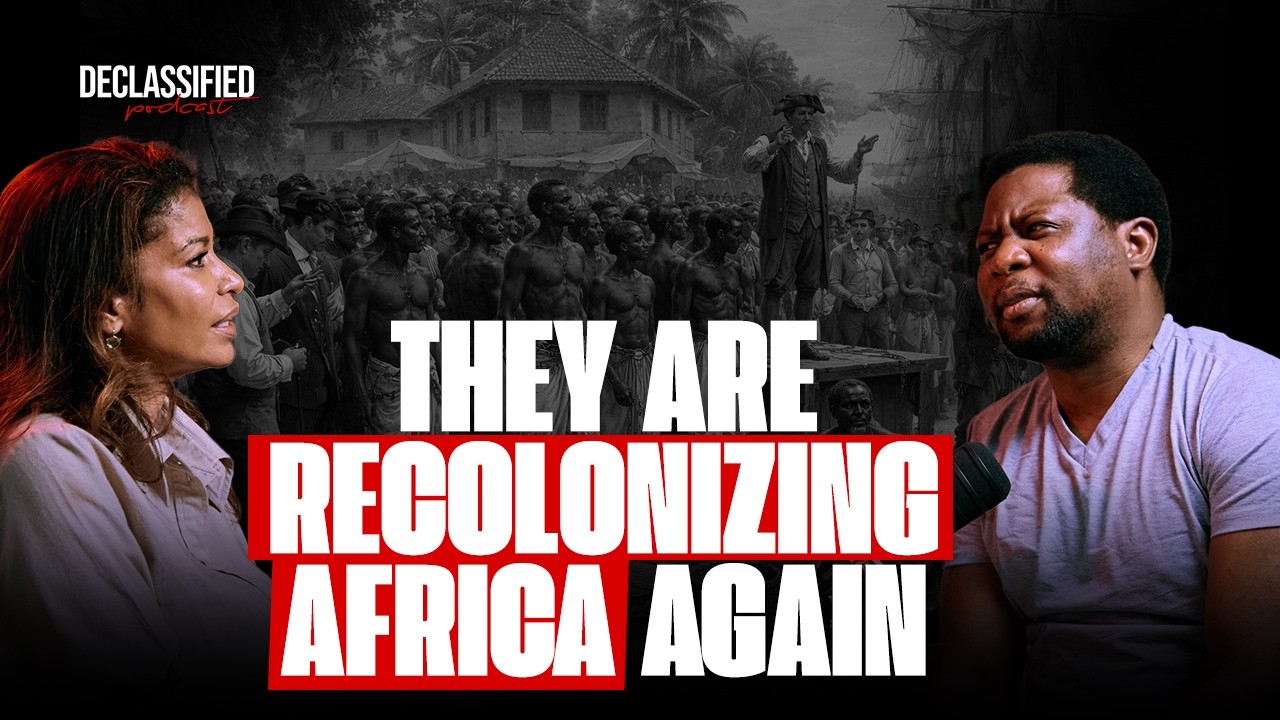
Kenyan journalist Julie Gichuru left her role at a global foundation to start the Africa Leadership and Dialogue Institute, driven by what she calls recolonization: foreign military bases, external interference, and economic control. She argues Africa needs its own security force, currency, and nuclear deterrent, grounded in Ubuntu and African unity rather than dependence on outside powers.
Chapters
When Gaddafi died, did you feel Gaddafi was a bad person?
I didn't know, I wasn't sure. And this in itself is a problem.
Yes.
And I remember a debate, my friends, all of them, and maybe even in your environments, people were debating and some people were saying, leave Gaddafi alone. Others were saying, it's time for Gaddafi to be taken down, his people want him to be taken down. He's been a bad leader. Now, the question I will ask today Whatever we thought of Gaddafi at the time, yes, are the Libyan people in a better condition today than they were?
Yeah.
Is Africa in a better, better place today? And actually, the whole region was destabilized as a result of the removal of Gaddafi.
Yes.
The other question I would ask us now as Africans is, where does the oil revenue of Libya. Libya, go— how many years is it now? They've just— it was supposed to be a democratic process.
Yes.
And now happening.
Yes.
Gaddafi's son was just assassinated. I don't have any skin in that game, but I can ask some questions. As they go to another process, another assassination happens. Until today, who knows where the wealth of Libya goes? Julie Gichuru is an award-winning Kenyan journalist, media entrepreneur, and philanthropist who whose commanding presence across television, radio, and digital media has made her one of Africa's most recognized and respected voices.
What keeps you awake at night?
I worry about the recolonization of Africa. I do. And that keeps me awake.
Do you feel it's happening already?
Yes. And in fact, I left my last role. I was working at a fantastic global foundation. I had a senior role.
Yes.
Everything ahead of me.
Yes.
I started Africa Leadership and Dialogue Institute because I could see it coming. I could see it coming, and I felt like we cannot see our great-grandparents bleed and die for Africa.
Yes.
To put our children and our grandchildren back into shackles. And we are going there. Every military base that is not African on the African continent should not be on the continent. It should be off. Go back to African unity, peace, and security. Our own forces that protect us.
Wow.
Our ability to protect ourselves globally. Our love for each other. It's actually simple. When you start with Ubuntu and then you say to the African Union, take your place. Because as much as we are feeling cynical about the African Union, it's what we have right now. How do we help it to take control. If we just look internal, I don't think there's anything—
you believe Africa has all the solutions to all our problems?
We do, and we need to be bold and unapologetic enough to say we are enough. Yeah, we are enough as a people, and then meet us on our terms, because as a united Africa, we are a juggernaut. We are unstoppable. There's nothing like us.
Do you think religion has helped Africa?
No.
Femi Lazarus.
Hey friends, I want to welcome you to the Classified Podcast. Um, myself and my team, we've been working so hard behind the scenes to get different intellectual conversations across to you. We know that this Conversations will form the basis for what will change our world as we know it, because words form narratives, narratives shape culture. And this is the reason why I want to invite you to join me on this journey, not just as one who is going to view this today.
I want to have you on board with me, and I, I like for you to just do these 3 quick things for me.
Number 1, I'd like for you to like this particular podcast. You know, don't just watch, just like. I want you to do that for me. And when you do this, the algorithm takes this to as many people as possible who can now have access to enjoy the very same thing you're enjoying. Also, I'd like for you to drop a comment. Let us know how this has impacted you, things you've learned, and sometimes just your own view. And I'd like for you to also subscribe on this YouTube channel. I'd like for us to grow together as a community. I look forward to having you again and again on Declassified Podcast, and I can't wait to see you some other time. Thank you.
The first video I saw of you was the video where you were speaking to some— I think a kind of program, telling some of the people there, particularly about the death of Gaddafi. You described something very painful, that some African leaders were trying to intervene and it was communicated to them that they cannot guarantee their safety. You want to get deeper into that?
Sure, I'd be happy to. Um, so this story was revealed, um, when I was at a forum in Tanzania, Dar es Salaam, and we were hosting African presidents and former African presidents. And, um, at the Africa Leadership Forum, we had, um, former president of Ghana, Charles Taylor, there. And he was on a panel and we were talking about African solidarity, African unity, African strength.
Yes.
And he said, wait, let me tell you this story. And as he started to tell the story, he broke into tears. He actually cried tears and said, we should have ensured that this did not— it should not have happened on African soil.
The killing of Gaddafi.
The killing of Gaddafi and the lack of control. Africa had no control over the agenda. It was not our place.
Yes.
Right. According to powers that be.
Yes.
So this story was revealed. And I think ultimately when I spoke about it, the forum I was speaking at was the International Security Council on Africa. It had just been launched and we wanted to have a conversation that was rooted in the realities. That room in Kigali where I told that story Yes. When you saw the video, was filled with military ministers of, you know, internal security, defense, etc. So these are people who can make serious decisions at country level when it comes to security, but also need to inform the security apparatus of the African continent.
Yes.
And my question to that room is, do we have any control? Do we have any power on our continent, or truly are we just powerless?
Yes.
And I wanted to trigger the question.
When you were asking that question, was it supposed to be rhetorical? Were you expecting answers from them?
I was not expecting answers, but I was hoping they would then take accountability for where we are.
Okay. When Gaddafi died, did you feel Gaddafi was a bad person?
I didn't know I wasn't sure. And this in itself is a problem.
Yes.
And I remember a debate, my friends, all our, and maybe even in your environments, people were debating and some people were saying, leave Gaddafi alone. Others were saying, it's time for Gaddafi to be taken down. His people want him to be taken down. He's been a bad leader. Now the question I will ask today, Whatever we thought of Gaddafi at the time, yes, are the Libyan people in a better condition today than they were under Gaddafi?
Yeah.
Is Africa in a better condition today? And actually, the whole region was destabilized as a result of the removal of Gaddafi.
Yes.
The other question I would ask us now as Africans is, where does the oil revenue of Libya. Libya, go— how many years is it now?
Several years.
They've just— it was supposed to be a democratic process.
Yes.
And now happening.
Yes.
Gaddafi's son was just assassinated. I don't have any skin in that game. I, I don't vote in Libya.
Yes.
I can't profess to know the ins and outs and all the details, but I can ask some questions. As they go to another process, another assassination happens. Until today, who knows where the wealth of Libya goes?
There are certain facts that came out about Libya after the killing of Gaddafi. I think the one that probably made it to mainstream media was the fact that Gaddafi was killed, of which most Africans celebrated at that time, particularly because of the narratives around him, more like he was a dictator. There was something quite similar about Africa, that African leaders, some of them we need to pay attention to. Look at people like Kwame Nkrumah. Um, at some point he wanted to extend his stay. Um, Gaddafi did. We saw the likes of Robert Mugabe did that. We have some people who are still doing that now, whether it's good or bad, their territory can tell. But we also have another key example in Nelson Mandela. Who did his tenure and left. But I personally don't think South Africa is better for it. I think that at some point some of these guys discovered that if their tenure cannot be engineered, those coming after them can be engineered to destroy their legacy. Now, looking at that and the killing of Gaddafi in respect to that, the way they shaped the stories, because what you said now is very concerning. That as at the time that happened— now, at that time, you were already functioning as a journalist.
Yes, yes.
And you couldn't tell where to place him, whether he's good or was good or bad.
I have always admired Gaddafi's Pan-Africanism.
Yes.
And I think that's something that—
is there something you don't admire about him?
No, no, no. Just observing and trying to understand what do the Libyans think. I can't I couldn't tell. And so Libyans were on the streets at the time, right?
Excited.
But so we couldn't tell. Now let me observe a little bit more.
Yes.
Yes. So we had at one point what they called the Arab Spring in the north of, cutting right across the north of Africa and parts of the, the, the, the Middle East. And I recall this energy from the Western powers, the Arab Spring, the Arab Spring. But I was watching it and I was asking myself, where is this going to take Africa, right? If you track several of countries that went through the Arab Spring, you've got to ask, did they end up in a better position as a result of the Arab Spring, or did they not? And some did not. And so just watching those things, and then what concerned me as a journalist and made me stop and pause, and I've learned as a journalist I know less. I will not profess to know everything, but I will observe. And hopefully we will, as Africans, build a narrative from what we observe and what we know.
Yes.
As that Arab Spring happened, it was really— there was an effort to bring it to East Africa, this wonderful positive thing. But a lot of countries ended up under stronger military rule or in a position that was even worse than before. So then we've got to ask ourselves, so what is the intent of these things? And especially when there's outside interference or celebration from the West, or funding or support from the West, is it really something that is coming from our own African communities that we are looking for, or is it coming from somewhere else? And how do we as Africans define what that is? Now it brings me to our own aspirations.
Yes.
When we feel under attack from our own leaders, when we feel abandoned.
Yes.
Yes. We must be able to coalesce ourselves and push. But we also have to be aware that even in those pushes, there are ways for people to come and ride on our waves.
Yeah.
So as Africans, we've got to decide when we're taking action on the streets, Yes. When we're doing the things that we're doing, we have to think about it from inception.
Yes.
Of the idea to the end of the idea. Because if we don't do that, yes, our agendas are so easily manipulated, manipulated, overtaken, controlled.
Yes.
And then we end up where we never intended to be. But we were the ones that did all the work.
Yeah.
To drive the change.
More like someone waiting between the line to change the course of everything.
Absolutely. Absolutely so strategic, so strategic. And then they see the wave and like, and like a surfer, they see the wave coming and they just ride on the wave. And they ride on the wave to the detriment of the very people who started the wave. So there's something about intentionality.
Yes.
There's something about strategy.
Yes.
There's something about following through and not leaving something, following your actions through to get the intended outcome.
Maintaining the, the reason why you started in the first place. Now, when you— because what you have just opened up is very concerning. Many moves, many waves have been hijacked like that, and before you know it, you don't even know where, where, where did this start from in the first place. When you look at Africa from where you stand, what do you think is the most important need of the continent now?
Well, I can answer that. Yes, I can answer that. You know, we're living in a world where Africans were told for so many years we were so corrupt. Yes, we didn't have institutions, we needed democracy, we didn't have proper constitutions, we needed to learn from the countries that knew the stuff. We were encouraged to let go of our culture because, you know, it was primitive or savage, or, you know, we needed to be refined, or we needed, you know, and a lot of us, our societies accepted that. And so when we went into independence, we kind of shaped this new— after the colonial masters, after the colonial masters, shaped this new Africa and modeled ourselves, education systems, government systems on our colonial masters. And if you ask me today, when we look at our colonial masters, you just have to look at the US today. You have to look at the Jeffrey Epstein saga and everything that's coming out.
That's coming out, yeah, right.
You have to look at the exploitation, um, even before independence of our peoples and, and, and what their systems did over many years. And yes, I have come to the conclusion that actually Africans are incredibly good people. Yes, we are less corrupt, far less, and less exploitative.
Yes.
Than other— many other communities. It's not to say we are perfect.
Yes.
But we are built on systems that believe on Ubuntu, community, harambee, right?
Yeah.
Togetherness.
Togetherness.
Yes. Um, we— I, I talk about, you know, when we talk about corruption, corruption, yes, and there is corruption.
Yes.
But there's also the systems where in our cultures, if I go to my neighbor, I don't go with an empty basket.
Oh yes.
Yes, I'll carry some bananas.
It's a communal structure.
Yes. And when I leave, I will leave with something. If you go to see the chief, you might carry a chicken. Oh, yes. And so how do we also understand, you know, cultural respect and traditions versus what is corruption? When are you paying for an outcome?
Yes.
Which is a different thing. We were never even allowed to go into the contemplation of those two different things. Yes. Because everything we did in our cultures was considered less and not ideal, right? But so I, I'm in a position where I truly believe that as Africans we need to relook at ourselves. Yes. And love ourselves.
Yes.
We look at our cultures and understand what was good.
Yes.
That you want to retain and keep. What was less ideal that we need to let go of, right? But can we build our systems and our policies with an unapologetic appreciation?
Yes.
For the stomach of for our true being, right? So I've set up something called the Africa Leadership and Dialogue Institute, and it is a place of African contemplation, African storytelling. When you come there for retreats, come as you are. Don't come, you don't need to wear a suit. You want to come in your slippers or akalas, you know, akalas are shoes we make from the rubber of tires even, yeah, right? Come as you are. And in fact, when you come into a room dressed as an African, you probably are likely to speak from a position of— your language will change. When you wear the three-piece suit, yes, something's quite European about it. Your language changes. So there's that kind of thing. But you asked a question, what's most important? Love ourselves. Understand who we are, where we came from. Love ourselves. Understand the stories and the history. Number two, I truly believe that African unity is crucial, crucial. And it goes beyond just Ubuntu unity. It's about our leaders loving their people.
Yes.
And, and loving the continent.
Yes.
And where we have conflicts right now, sit down and sort those conflicts out because there's somebody waiting for you to finish each other off.
Definitely.
Or funding you, in fact, to finish each other off.
Conflict has proven to be one of the most lucrative businesses in Africa.
Absolutely. And so funding to finish each other off as they utilize our resources, as they earn from weapons, all these other things. We have a responsibility to think deeper. So that appeal is to our leaders. If we do have an African Union, and we do, yes, can we be a union? Can we be a union for peace and security? And can we be a union for economic prosperity.
Yes.
Of all our nations.
Do you think Africa can protect itself?
That's my third point. Africa needs an African force, a vibrant, very vibrant, strong African force.
These were the dreams of Muammar Gaddafi. These are the things he wanted.
Coming back to who he was and what he wanted. We need a force.
Yes.
I won't even come to a currency because that was another thing.
I think there's a need for that. I think, I think we need to talk about that.
We need a currency. Okay, well, let's, let's stay with the force for a minute. Africa needs a force.
Force, yes.
That first of all protects us, unites us, builds us.
Yes.
Africa needs nuclear weapons.
Oh, we do.
Yesterday. Yesterday.
You said yesterday? Yesterday. Yeah, again, we need it as quick. That's the basis for international respect.
We need it.
Yes.
Thank you. Without that, yes. We have no respect.
Yeah.
And we cannot continue.
Yes.
We are the wealthiest continent in the world.
Yes.
We think people have good intentions around the continent?
No.
No, people are tired. Marco Rubio has just given a speech in Europe talking about recolonization of the world. Recolonization of who? Who are they looking to recolonize?
Africans. Now, you talking about these things that we are currently discussing, the unity of Africa. Gaddafi stood for it. Kwame Nkrumah said Africa must unite, and unite he must even now. And we've seen how that threatens the Western community. What exactly is the reason you feel they are threatened?
Well, for many reasons. I, I, I can't answer that question you know, fully. I think there are many things. I think first of all, there is a superiority complex in the West, and whether it comes from white superiority or somewhere else, I don't know. But the idea that the continent is rising and that the continent could be independent—
yes—
and that the continent can harness and utilize its own resources—
yes.
Is a massive threat to the world.
Meaning that these— you feel these guys cannot really survive if we play on a leveled ground?
No, they can't.
They can't survive?
No, they can't. Their economies have thrived for years because of Africa, because of Africa and other parts, a few other parts of the world.
But yeah, there's something I quietly believe. I believe that one of the ways they've probably prevented revolution in Africa is by opening the door to kind of bring the best of the best amongst us to international communities, special talent visas, educational route and all that. What do you think about that?
That's very interesting. That's very interesting. But there's still best of the best here on the continent.
Oh, we still have.
I think, I think you might call it a brain drain for some of those who've gone.
But do you think it is?
I think it's very important for Africans to be in the international scene. However, I'm gonna put a caveat on that. If you go unapologetically African, if you enter those rooms and wear the suit and become the suit, yes, that's something really serious. Then, then, you know, but how do we have Africans in those spaces that can influence systems, systems, and say this is, this is the playing field that is needed in the world today. And Africa can be a major voice in so many ways, right? Um, on the continent we have incredible talent, so I wouldn't even be worried about those going, about— because I think there are enough on the continent that can make a difference. I think the problem we have had was, um, you know, the takeover of our education systems.
Oh, I was going to go there. I'm seeing.
And the dissection of our media.
Yes.
So our African media tended to focus on national issues.
Yes.
And I remember one time many years ago when I was starting Africa Leadership Dialogues, that show I used to do, and I said, no, Africans want to learn more about Africa.
Yes.
And we need to see and hear from different kinds of leaders who are doing different things so we understand beyond our borders.
So our media is kind of structured to focus on just our countries. Yes. So you have Kenya media focusing on Kenya, Nigerian media focusing on Nigeria.
Do you think that as—
that as—
okay. Yes. Then when we We pick up the stories of African countries, we're getting it from Reuters, we're getting it from—
so we're from BBC, from Al Jazeera, from those who have changed the narrative.
Imagine that.
And that's concerning.
And those narratives, now we know there was a time in the world where we thought these were independent media and wanted to model ourselves on these media.
Yes.
They have never been independent.
No, they've never been.
They've never been.
So we were always feeding our populations.
Yes.
Propaganda.
Yes.
Whether it was in education systems or through the media.
Yes.
And that's why even at local level, those who are here, the great talent we have—
yes—
we have not penetrated the knowledge that we needed to, to understand where Africa needs to go.
Yes.
So how do we unpack that?
Do you think that the model, the educational model we have on ground now in Africa, can drive Africa to where she should be?
No, it needs to change. It needs to change. And one of the key things we need to do, and we started some of those conversations, I've been in rooms with African ministers of education and had the conversation of what are we teaching in our schools? And I have to say, even they were upset. You know, the minute you start really talking about what are we teaching—
Upset with who?
Yeah, with our education system.
Why are they not changing this?
But you need to get them upset to get them to change. So, you know, some people who say, It's all talk. We're not moving things. Yes, the talk drives the mindset shift.
Yeah.
And then the mindset shift drives the—
so the talks needs to happen.
They need to happen, but they need to drive the change that we need to see. So I do feel that we are at a point where now we can make a difference, or we need to continue doing the things that bring us together. And if one or two countries start to break the patterns, they can, you know, create the case studies that help other ministers go back and say, hey, it's already been done here.
Yes. So we can now do this here.
We can now do this. And even when we look at the continent and we look at organizations like Africa Leadership University, Ashesi in Ghana, you know, these are African universities that have built their own educational models. So things are happening. And that for me is exciting. But of course, we need to do so much more.
What are the things you feel needs to be introduced to get the spark that we need?
So first of all, we need to start with history. And, you know, some young people say, ah, I don't want to know about history and old people. No, no, no, no, no.
We need to start with history.
You need to know why, for instance, did the Mau Mau sacrifice their life for the independence of Kenya. So I was taught, and until maybe 5 years ago, I thought Dedan Kimathi, who was one of our Mau Mau freedom fighters, he was the leader of the Mau Mau. I thought he was— we were told he was uneducated and he fought from the forest, and we honored him and we love him for doing that. But I started doing some research and I realized Dedan wa Siuri Kimathi was a very educated man. Wow. Highly educated. He was working in a lab, a laboratory at that time.
Wow.
When he decided to put everything down, sacrifice, he obviously had a good job. If he worked in a laboratory and had gone into, you know, had not fought for independence, he probably would have been one of the top-tier families of Kenya, you know, wealthy. Everything. He gave everything up to go into that fight for independence. For what?
For our land. Some people believe that the sacrifice of the Mau Mau has kind of caused like a cultural change in the system, in the sense that maybe more like now you have more women taking charge of things. Do you think that's true?
Not necessarily. And I have to say, women were alongside the Mau Mau. So even in the Mau Mau, Yes, yes, yes. They had Field Marshal Modoni on the front lines. So there were women in there and a role the women in the community played very much. They would cook food and take it to the men in the forest, to the forest, leave it in a certain place. So there were many systems. The men were there and the women were there too. You will know of people like, you would not know Wamboi Otieno, but you would know Wangari Maathai, who was at the front lines even post-independence of being a voice for, you know, and fighting for our rights. So women, I think, in Kenya have always been bold. And I believe in all African countries, if you really trace, and maybe this is where the problem is, we don't properly trace the stories and tell all the stories. So some stories remain untold. But I believe in African communities, the role of the man, you know, as clear as it was, women have also always been pillars. So I think of my grandmother, you think of your grandmother, Think of your grandmother.
Yes.
Out in the farm.
Yes.
You know, probably tilling the land.
Yes.
Unapologetically.
Yes.
In the market trading.
Yeah.
Bringing earnings home just as much as her husband was doing the same. You know, so, and again, it means, and I always say like, we speak to bankers a lot and we're trying to find out how to give more Africans access to finance, but not just finance, affordable finance.
Affordable finance.
And I like to ask bank managers, same thing. Look, think of your grandmother.
Yes.
They say, "Yeah, yeah." And I say, "Think of what she did. Think of her." Think of how she used money, how she traded. And they say, yes, she did so much. And I say, but if she walks— that woman walks in your bank, you will not give her a loan today. That woman, you know who she is, but you'll tell her, I need this, I need collateral, I need the other. You will not give her a loan, but you know who that woman is.
Yeah.
And that's why I say, for us as Africans, even our banking systems, everything needs to change to say Let us truly understand ourselves. Yeah. Our communities.
Yeah.
Where the value lies. Yes. What guarantees might we require that are different from the collateral that formal banking systems require, you know? And then change things to make sense for our people.
Our people, unique for us.
Yeah, yeah.
So going back to the conversation, you talk about history, and I want you to stay on that in terms of the reform we need in an educational system. Yes, please continue from there.
Yeah, so, so I think so the history is crucial, right? Because the minute you understand where you came from, like that Gaddafi story is an eye-opener for all of us. Why is it an eye-opener? Because for so long, us as Africans, we were saying to Western powers, oh, come and help protect us. Oh, there's corruption, help clean us up.
Yes.
Oh, who are you asking? Who are you asking to come and help us? The one who is waiting to pounce is the one you are calling in. So, so history is important to give us context and understanding.
Yes.
The second thing, you know, I was speaking to University of Nairobi recently. I was speaking to the medics and the doctors, and they were saying, you know what, we need to study our own skin. We need to study. We need to put our backs into not just building our health systems, but doing the research and studies and understanding. Look at COVID. COVID happened in the world and somehow Africa was less affected in terms of fatalities than the rest of the world. So what do we need to learn about our immune systems? What was it that held up? Leave health and go to nutrition for a minute. For a long time, we were disconnected from our natural foods. And some of the foods we eat today were not our— we think some of the foods we eat today, we think were our traditional foods, but they are not.
Yes.
But if we go back to our traditional greens and our traditional foods, there was so much wealth. And today we call— today in Kenya, some of those crops, we call them orphaned crops.
Yes.
Orphaned crops. Right. So, and yet, you know, when you really think about it, if we are eating those foods today, if our children are eating those foods today, you know, our bodies, our minds would be sharper, stronger. So there's something about reorienting unapologetically everything. Yes. How do we start to reorient? And I'm not sure what that looks like on my own. I'm not sure. But I think when you bring all the different actors together, finance, You know, arts, history, social science.
Even entertainers.
Even entertainers, sciences. But let me say this.
Yes.
Even for entertainers, I love that there's something about us. When you hear an African beat, you know it's an African beat.
Oh, yes. You can't steal that.
Yeah, you know, there's something there that is very beautiful and strong. And in fact, a lot of African music rules the world. You know, and so the Afrobeats. But maybe I would say when it comes to our TV series and our going back to the stories and how do we invest and who will invest, actually it shouldn't be other people investing, should be us, should be us investing in the stories and the realities, whether it's documentaries or TV series or historical dramas.
You know, some people believe in telling it as it is. And I feel sometimes maybe the implication of that is that we may show some part of Africa that we, we have no business telling the world that already wants to see us as people who are unfortunate or less privileged. Do you think in telling the stories of Africa, it should be done constructively in a way that we are telling the world what we want the world to see about Africa? Because for so long, that's how the West have told their stories. Do you think Africa should model after that?
So the Hollywood narrative that made us think America was better?
Is one kind of heaven.
I think Africa is phenomenal. And even if we were to tell the full spectrum of stories, there will be some hard, tough stories to tell, some painful things to look at and confront. But if we were to tell the full spectrum, it will have the color, the the vibrancy, the beauty, the wonder. Full spectrum. Yes, the full spectrum. I think as much as we have very much that is hard and painful, we have even more that's wonderful and remarkable.
Oh, that's wonderful, yes.
So I think, you know, we don't need to sugarcoat anything. We shouldn't sugarcoat. I don't think we should. And I don't think we should tell stories for anybody else first.
Tell it for ourselves.
I think first we should tell stories for ourselves. That doesn't stop us in those stories from saying, okay, what are some of the mindset shifts or outcomes we want communicate broadly, even beyond the continent. But I don't think we should be worried. There's some hard things to look at everywhere in the world. I don't think that honestly Africa has harder— we look at some of our villages.
Yes.
Um, and some of our countries are getting more electricity. Yes, access to electricity, all of that. Access to water is very important. A lot of people now are even leaving cities to go to the villa. I mean, I— maybe it's an age thing because now I'm in the latter half of my century. Yeah, yeah. But I'm I'm really keen to go towards the village and the simpler life. And the simpler things are what my heart is now seeking.
Wow.
And, and do we see the beauty in those simple things? Let me tell you about where we're building our campus, the Alandi campus. It is 2.5 hours outside of Nairobi.
Wow.
It's a place called Elementaita, and there's a mountain called— they're called the Sleeping Warrior Mountain. And that land was very rocky. In fact, the local term in Kiswahili, there was a name that they used that meant the place where God went to the toilet, the place where God shits. Sorry.
You wanna call it, say it in Kiswahili?
It's Maasai, it's a Maasai term. I'll get you the term, I'll get you the term. But the rocks, everyone kept away. They couldn't farm the land. So they kept away from the land. Now we're finding out that that basalt rock is the answer to decarbonizing the world. What? All right. But also, when you go a bit deeper and you irrigate the land, the soils are the most fertile soils you will ever find. In every African tough story, I challenge you to look around and you will find the beauty. In every African challenge, I challenge you to look around, you will see the opportunity.
Wow.
Every African problem has a solution that is an opportunity waiting to happen.
Yeah.
So I believe the continent that has the greatest opportunity today is ours.
True.
Because we have challenges that need to be resolved. And if we find our local solutions, yes, we will benefit. If we wait for others to come and either extract, take away, or find the solutions, we'll be paying them for what we should have figured out anyway. So I think unfiltered is important. So we learn unfiltered and we jipanga. Jipanga means you position yourself, plan yourself. Yes, plan yourself and you benefit from the raising of Africa because it is us that will raise it.
Years back I saw something and Thank God I was able to pass through some of those fields yesterday. The tea business in Kenya, beautiful scenery.
Yes. Yeah, yeah.
But most of them are not controlled by Kenyans. And you see the same thing in South Africa. As a matter of fact, the Black only controls about 6 to 8% of the economy. How detrimental is this kind of narrative to Africa?
It's heartbreaking. It's heartbreaking. But I've seen something else very powerful happen. I've seen something else very, very powerful happening. So in Kenya in the '80s, yes, um, you know, coffee for instance was owned until today in, in many ways.
So you guys are kind of one of the largest?
Yeah, we are an important coffee country, um, and a lot of coffee farmers were local and they built their coffee cooperatives, and cooperatives became very powerful because in unity, yes, there is strength, right? And so I always watched that cooperative model and kept asking myself, why don't we do more in more sectors? Why don't we do more cooperatives? Because we are— everybody's, you know, struggling by themselves. And yet when you come together, you have the power of negotiation, you have the power of capital, you have the power of so much more.
Yeah.
So coming to that, I've noticed in Africa, our pension funds are growing. And let me cite Uganda, the Ugandan Pension Fund. When I was working for one of the global foundations, Mastercard Foundation, which works with young people on the continent to give them dignified and fulfilling work, Uganda's NSSF was one of the partners. So they work with local partners, which is what I love. So they also supported the growth of Ashesi University, ALU, to say, actually, we need to— as a foundation, we need to fund African organizations to do African work, not others to now come and do good work in Africa. There's a difference.
Well, we're going to get to that.
We'll get— we should get, and we should get to that. So I noticed NSSF Uganda is doing work with young people, building young entrepreneurs, financing young entrepreneurs to build their businesses.
Yes.
And, and if you look at— and recently they had in Uganda, uh, coming together of pension funds, and they were asking what is the role of pension funds in Africa. So Why are African pension funds not looking at sectors like that?
Yes.
T-Sector, for instance, is saying, we want to buy—
it's a lot—
we want to buy out as much as possible international partners, or we want to build something that has African agency and local owner. You know what I mean? Because now we are getting access to funds that are African funds that can make a difference.
From where?
From the pension industry. Yes, from National Pension Industry. Please go and have a look.
Well, maybe, maybe the area that gives me quite some concern is the fact that many of these international organizations that are on some of these projects in Africa, they have the tendency to use our people for cheap labor. In fact, there was a time that there was a scandal, something revealed like about that in Kenya some 5 years ago where they were digging into the tea companies, tea sectors. And for me, it's quite heartbreaking.
Yeah, I think, I think, and I think that's still, that's still going on. Yeah. And that's why I say if, if we can identify at national level, for instance, you say here are 3 key sectors for us.
Yes.
Agriculture.
Yes.
Health.
Yes.
Um, education, whatever it is.
Yes.
And then where you see dominance by international actors, it could be a strategic decision that we need to go in and take action. But even alongside that, when you talk about labor laws, labor laws generally need to be better anyway, right? So that's another thing that our—
well, you see what the the president of Zimbabwe is doing, more like wading into it and, um, taking some of those things back from the private people running it and then government running it and then giving people better treatment. Do you think Kenya might have to look into that?
I, I can't comment on that because I'm not sure what he's doing and how it's going.
So it's not really going well.
Oh, it's not going well. I, I haven't been observing that. I think I think generally we need better labor laws across the continent. And, and that's also, um, so what's happening right now in the world is populations are decreasing. Europe, for example. Oh yes, European countries are seeing population decline.
Yes.
And as much as nationalism is growing, yes, they need workers to come in from other countries. So of course Africa is one of the continents where they're taking their workers. Same thing happening in Middle East and other places.
Maybe, you know, um, there are quite some African issues going on in the Middle East. Yes, that's, that's a conversation for another time.
But, but let me just come to this, that when we talk about labor policies, it shouldn't just be for what happens on the continent. Anybody who purports to take an African to another country, there should be policy. African must be protected by significant labor policies where, listen, by the way, if you mistreat our people, just In a year or two, these countries will so urgently require African labor that we must determine our terms. And we cannot create another cadre of slavery.
No.
For Africans, we must go as expatriates. I don't care whether you're a nurse, a security guard, you must go on some kind of terms that respect your role.
And this can only happen if we unite.
It can only happen if we unite. It's helpful if our countries form And this happens under an organization like the UN where we standardize and say you can't go to one country because the labor laws there are terrible. Let us create a benchmark and standards. So when they come for any Africans, the individual benefits and is treated with respect and is protected. They don't go and then get exploited. So these are some of the things. It's not just at local level.
This is phenomenal. I have a background in public health.
Okay.
So I'm always quite concerned about health issues. We saw what happened during COVID Africa was left to herself.
We were.
All nations focused on themselves. Although we have less casualties. But you also mentioned something very important. I think it's been discovered that the future of the world is black. We are the only ones quite reproducing well enough.
That's a very highly controversial statement. But it's true.
The Europeans are not giving birth to as many children. In fact, there are countries now— I know for India they are asking them, I think there's a law around just give birth to one because of the population. Um, in some other places, in Canada for instance, they are not doing that. In America, someone just prefer pets. Now we've seen more influx of vaccines, different kinds, in Africa, painfully More in Kenya. Some of these things have been found to be things that can even render people sterile. In fact, my wife bought a watch, a wristwatch. I, I bought one for her from London, a store in London, and someone also gave one as a gift from London. And she just looked at the back of the wristwatch, the pack, and it was written there, this can make you sterile. Oh yeah, no, it can lead to infertility, but something about infertility.
The watch?
The watch. And also make you predisposed to cancer. The watch. So I was interacting with a journal recently talking about how that some of the vaccines from Bill Gates Foundation were rejected in Europe, and guess where they jumped at those things? Africa.
So let me say, let me say a few things.
Yes.
Um, first of all, during COVID I remember that, um, Africa was left alone.
Yes.
And at one point, even when the continent said, we do need vaccines, yes, the world is vaccinating, you're going to leave us out, what's going to happen? And actually, the, uh, a team of champions, Strive Masiyiwa and several others, Cyril Ramaphosa, was set Femi Lazarus to go and negotiate on behalf of Africa. One of the things that happened in that whole process was they said, no, all the vaccines are booked up, all the other countries have bought vaccines, and so Africa can't get vaccines till 2020— I don't know, 2022, 2023. That was in 2021. I think the vaccine had just started coming out. And, um, in South Africa, they actually package they actually produce some. There is a factory in South Africa that produces vaccines. However, those vaccines were then taken to Europe for packaging and then distributed globally. So, South Africa put its foot down. South Africa said, okay, you guys have decided you're not giving Africa vaccines for the next 12, 18 months. That's okay. You will not get a single thing from the factory in South Africa.
Wow.
Because we— they are produced in South Africa. They're taken to Europe for repackaging.
Yes.
And then distribution.
Wow.
That brought them to the table and changed the conversation.
Changed the conversation.
All right. So this part of this is— and following that, I've seen that Africa and even now there was an AU meeting where there was this restatement of Africa's producing her own medicines.
We have to.
I have to tell you, Welcome Trust a few years ago was doing a test in a county called Meru in Kenya, looking at a certain indigenous crop which could be the answer to antimicrobial resistance in the world. So back to, we were told, leave your crops, your medicine men are rubbish, they don't know anything. And now we're back to now testing certain African—
and discovering—
that we were using.
Yes.
And saying, oh, actually, now we're seeing. And then I wonder who's going to pass patent it. That's— we need to patent it. And these are some of the conversations we're having even with the University of Nairobi. What are the studies that we do here?
Yeah.
How do we study our own, uh, hair, skins, produce things for that work even better for us? Um, and, and so absolutely crucial. So I think for me there are so many elements to this, but again, it comes back to that when you are aware and you know. Yes. And you understand.
Yes.
You can start to change your behavior. In changing your behavior, demand a seat at the table that earns you respect and decision-making. And if that table does not work for you, we build our own table. We should have an Africa table.
We should have that.
Actually, today we should have an Africa table. And then other people are told you can come once in a while if Africa so determines that it opens. What is it that we don't have? Even internally, what is it if we really look across all our countries today? Tea, coffee, oils, everything. You know, I keep saying in Rwanda there's this wonderful pepper. Who knows what that pepper is called? It's called— oh, I'll remember what it's called. I keep saying that pepper and Nigeria will melt perfectly because you guys love your pepper.
Oh, we love pepper.
We do. And that pepper is so good. If we just look internal, I don't think there's anything—
you believe Africa has all the solutions to all our problems?
We do. And we need to be bold and unapologetic enough to say we are enough. Yeah, we are enough as a people. And then meet us on our terms, because as a united Africa, we are juggernaut. We are unstoppable. There's nothing like us. And even back to education systems, look at our map and tell in African schools and around the world, put the correct map that shows the real size of Africa, that shows who we are even geographically in terms of scope.
There's a very funny question coming to my mind. Are you a religious person?
I believe in God. I'm spirit— I would say I'm spiritual.
You're spiritual?
Yeah. Yeah. Interesting. I had an, uh, my father was Muslim. Passed away last year. My mother was Catholic, so I grew up knowing God is God. I believe Allah is Allah. I believe God is God, and I believe we are sisters in faith. Those religions should love each other more than they hate each other. Wow.
Do you think religion has helped Africa?
No, no. You know, um, I went to a convent. I I believe in Jesus and I love him deeply. I believe Jesus, yes, but I believe Jesus is much bigger than the boxes that we put him in so often. Yeah, I remember in my convent asking one of the nuns, I was maybe 12 years old and we were in catechism class and we were talking about what is the, the, the verse that tells us that it's about the eye of the camel going through the eye of a needle.
It's easier for a camel to go through the eye of a needle than for a rich man to see through.
Yes, we were debating that, and we were debating the name of Jesus, you know, that you can only go to the Father through the name of Jesus. That was like the— And then I said to my— I said to the nun, but isn't this a little bit self-righteous, judgmental? If you have a Say you have a rich man somewhere in a desert. He has many, he has many cattle. He's lived a good life. Yeah, he's lived a good life. He's looked after his family, he's cared for the less privileged. He's lived a good life. He's never heard the name Jesus all his life. He's never had a chance to hear the name Jesus, and then he dies. But he has been a good man, and he dies. Are you telling me the God that I know will not open the door to heaven because he never knew the name? I said, does Jesus not live in him, that even if he didn't know the name Jesus, that the Spirit of Jesus lives within him. And then there are some people who will say the name of Jesus every day. Some may be wealthy, they say they go to church, they say the name of Jesus every day. They'll never— they will never, because of the way they behave, some can be quite wicked. Some may be even poor and say the name of Jesus every day and may never get— is it not that he lives within us through what we do and our actions. And I just wonder that if the world was just kinder, more caring, more merciful, that is not the representation of who Jesus is. You're seeing in America now that professes to be evangelical Jesus Christian. Yeah, but is the antithesis of who Christ was.
Yeah.
And what he profess.
You feel they use it More like to—
yeah, it's weaponry. It's weaponry. Like colonialism was weaponry. Like colonialism was send, send the missionaries first. Frontline was strategy. Frontline is the missionaries.
Yeah.
And then after the missionaries—
people find that quite controversial, but it's true.
It's true. No, no, no, it is 100%. And I'm saying this as someone who grew up in the missionary system for education. And a lot of those—
do you think those missionaries knew they were using them?
I think some did. And I think some came to do good. But I think some did. And I think there was, I do believe that if you even look at the records and the history, there was collusion.
Yes.
Between the empire.
Yes.
And the church. And the church, yes.
Do you feel some of them taught the Bible in such a way that will subdue Africa?
Oh yes. Yeah, yeah.
Do you think there were some changes in the Bible with some certain use of words in a way that we don't get to give meaning as to our dominion?
I've heard of that, but again, I cannot profess to know. I like to read it. Things before I comment with knowledge. What I do know, and one of the things I want to do as Aladi, we want to set up a library. Yes. An African library. And we want to encourage Africans to write and read. But we will read everything. But, but I understand there's a Bible in Amharic that is one of the earliest Bibles.
Yes.
In Amharic. And we are looking, I'm really trying to figure out how to access something like that. So we as Africans can then even have documents.
Yes.
That that are early, early.
Yes.
That we can then refer to and say, okay, what does this say? Wow. You know, how do we translate this? How do we understand it? What does it say? Um, but yes, religion has been a tool to make the continent submissive.
Yes, many countries in Africa have had their Femi Lazarus. Nigeria, we have our Femi Lazarus. Kenya, you do also have your Femi Lazarus. Uganda, South Africa. Do you feel at some point these things will have to be regulated?
Uh, Rwanda is regulating.
Yeah, I'm talking about Uganda.
Yeah, yeah, yeah. I, um, I think, I think regulation is important because sometimes it goes a little bit nuts. But what that regulation should look like, again, I don't want to comment because freedom of, uh, religion, freedom of religion is also a very important thing and it's a personal thing.
Maybe regulation in terms of looking at the human rights practices within the space of the practice of the religion.
Yeah, I mean, Kenya had the Shakahola disaster where people went and were told not to eat and bodies were found. And this, you know, whether this was exploitation for— it is horrendous. And so religion has the power to do a lot of damage if it is not in some way checkmated, in some way.
And what that looks like, again, I think sometimes some of the biggest problem is people trust in the one who's coming to do the leverage, who is coming to checkmate them.
And let me just say this, you know, my true belief is I do not need another— um, God gives us a channel to Him.
Yes.
Gives us a direct channel to Him. As much as we go to our churches, our mosques, our temples, and that is important, if we do not maintain our relationship directly with God, the Bible also tells us He's a jealous God.
Oh yes.
And so you can easily be misled. So, you know, anyway, religion is complex. I also believe our African traditional ways had some value. And so how we take a look at what some of those things were and interconnect them. For instance, you know, a lot of us in Kenya take our children through rites of passage, cultural, and it's very important. And yet we may be in the church or in the mosque as well, but we found ways to merge our cultural practices and, and, and religious beliefs. And so maybe that's an interesting journey Africa should continue on.
You know, um, thank you for, for the balanced perspective. I know I saw how careful you've been, and I understand. Everyone we told we're speaking with Julie Kishore were quite excited. You have Very good track record.
Thank you.
And not just here in Kenya, but also in Nigeria. You're known.
Thank you.
And you're loved. Many young people look up to you, particularly young ladies. And I've seen a pattern that sometimes when people feel, okay, now I can start slowing down, rest, catch my breath, I've done a lot, then a new job shows up. If for any reason, at some point, I'm just thinking in my head, yeah, what if this woman is called— can you be a president? No, you won't go for it?
No, no, no, no, no. I don't think, um, and I would encourage more young people and young women as well to go into politics and public service. It's not for me. I think I know myself. I know myself, and I feel like I am— I'm most helpful now at where I am in life at telling the African story and to help young people find a way to communicate their voices. Because they, you know, like sometimes when you see young people go like this and— let me tell you a story— um, go to the streets. Yeah, go. But when you leave, what is the outcome you are looking for? And if the streets is not the best way and you need an additional pillar, yeah, Or you need a pillar that goes to actually brings, you know, I don't know, ambassadors within the leadership to push policies, to change laws. What is the best way? Now it may be this, it may not be this, but have you thought through and who are the allies you need to? I want them to think more strategically. Yeah. To be able to drive true change.
Yes.
And not to sacrifice, bleed, pain without an outcome. Yeah. When I had my first child, I was at the hospital, and childbirth is not a joke, oh.
It's not.
It's not a joke, oh.
It's not.
And so this young woman is in the hospital, and it's happening. And you know, your body opens to release a human being. It's not a joke.
It's not a joke.
And so my body is going through these things, and I'm screaming. I'm like screaming because—
You've never been there before.
And I'm in a panic. I don't know if I'll survive it. And the midwife, the nurse— was it the nurse or the doctor who said to me, Julie, stop screaming. So first of all, you're scaring every woman in this place. Hey, some of them are still coming on this journey and you're screaming like that. They all think they're going to die. Stop it. Yeah. And she said, Julie, that energy you're using to scream, put it into pushing your child out.
Wow.
And I looked at her and I closed my mouth. And I—
you channeled the energy.
Pushed once, I felt my body rip because even our bodies rip.
Yes.
Felt. And then I pushed again and my son came with that second hard push. I always tell my eldest son he was very good. He didn't, he didn't put me through too much of a nightmare. And had I kept screaming, how much longer would I have been in labor? That was such a powerful lesson for me, that what is the strategic action you need to be taking, right? That's how I can help Africa today.
Wow.
I can say stop. Let us as a continent be strategic.
Yes.
African leaders, naomba, naomba. I am begging you, African leaders, be strategic for your people. Love us first. Yes, first commit. You will love us. Yeah, you will care about our lives. You will care about our well-being. You will build economies that don't face outward first.
Wow.
They feed our homes and our families so we don't beg for free education and other things. We can pay for the things we want and even give us the free education as well. Do that. So how do my voice to drive that, to drive Africans who are trying to change things, to be strategic about how to change things, to drive an Africa that loves itself. Because the question I've been asking myself over the past few years is, Dedan Kimathi, if he rose and looked at us today, would he be proud or would he mourn? And never, never, never can any of us say, and some people say, oh, it would have been better if we never had— don't ever say that. Because, wow, you just need to look at them. Please Google Namibia. Whoever's watching now, Google Namibia and see what they did to Namibians. And that there are skulls of Namibian babies whose heads were chopped off in Europe today. Wow. In universities, because they were studying the brain.
They were studying.
And that Namibian women had to pull the flesh off those skulls. They were forced, of their own people, to send them to the— what kind of people do that? And then you're saying like maybe we shouldn't have had— we don't go in that direction. But we say the Africa we are building, how can the Africa we build honor our forefathers, and especially the ones who died for the Africa we have today? That's my— that's my role. That's my role.
Before we leave you, I know you have a lot to do. There's one question I'd like to ask you, and maybe this is my personal take same question. What keeps you awake at night?
Yeah, it, uh, it's, it's, it seems run— it seems very far. I worry about the recolonization of Africa. I do. And that keeps me awake.
Do you feel it's happening already?
Yes. And in fact, I left my last role. I was working at a fantastic global foundation. I had a senior role.
Yes.
Everything ahead of me.
Yes.
I started Africa Leadership and Dialogue Institute because I could see it coming. I could see it coming. And I felt like we cannot see our great-grandparents bleed and die for Africa.
Yes.
To put our children and our grandchildren back into shackles. And we are going there. We are— let me not I'll finish by saying every military base that is not African on the African continent should not be on the continent. It should be off. I'll go back to African unity, peace and security, our own forces that protect us. Wow. Our ability to protect ourselves globally, our love for each other. It's actually simple when you start with Ubuntu. And then you say to the African Union, take your place, do what you must do. Because as much as we are feeling cynical about the African Union, it's what we have right now. And so who— how do we help it to take, to take control?
Thank you so much.
Thank you. Such a joy having you on the spot for what you do, you and your Thank you. Yeah, thank you. God bless you.
More from Femi




Wisdom born from pain recruits people into bitterness, offence and wrong decisions.



Can we serve God and fail? If you’re not doing the right things,you can love God and still struggle.

The people who stand before king are not merely gifted. They are skilled and diligent in their work.

Get ready for another session of Public School with Femi Lazarus this Sunday.


If those you trust question what you see, will you still have the courage to move forward?