How to Save 5-7% on Your Home Purchase. #firsttimehomebuyer #homebuying #buyersagent #mortgage

Real-estate broker Ben explains how first-time buyers can save 5-7% off list price by using non-price levers like inspection contingencies, closing timeline flexibility, and earnest money terms. The listed price is just a starting point. A rational, data-driven offer beats an emotional bid.
Chapters
All right. Hey, welcome to a conversation between Ben and I. Ben has been looking forward to this for so long. He's excited to be here. You can tell by his facial expression. What we're going to cover is, you know, a lot of first-time buyers are squeezed out of the market. It's hard to buy your first home. It's scary. It's expensive. But one of the things we wanted to talk to specifically and kind of walk through is how do you structure a better offer? What happens when you lean in and you find that home, that dream home? And it's listed for, you know, $300,000, $400,000, $500,000, $600,000, what do you do? How do you make an offer? And one of the things we've learned is you can actually save somewhere between 5 to 7% compared to the list price. And so we wanted to walk you through, given our experience in working with first-time buyers and buying homes and, you know, making offers, what are some of the leverage points that you have and that you can apply? So most first-time buyers assume that the list price is the price. And obviously that's what you see, that's what you see on Zillow, Zillow or your local MLS, that's what the agent tells you, and that's the price, quite frankly, that the seller wants, but it's not necessarily the price that you should be paying. So figuring out what price to pay is really a big part of creating overall an attractive entry point and figuring out how to afford that home. Ben, what do you, what do you see when, when you look at a Zillow listing and someone has priced a home at $400,000 or, or often $399,000.
Yeah. Wishful thinking, advertisement, a hook to get folks in the door into a bidding war. Oftentimes sellers are very hung up emotionally on their property too and believe it's worth more than what the market will bear. And those are all things that get flushed out and fleshed out over the course of the kind of due diligence process.
Yeah. Yeah. So, so the price that, that the list price out there really is the result of the seller having a conversation with a listing agent, right? So the seller hires a listing agent, the listing agent gets a commission once, once the deal closes. And part of the job of the listing agent is to recommend a list price. And obviously sellers have opinions, right? They, every seller probably goes on Zillow and looks at what's this estimate, right? That's has been, as you say, wishful thinking often, right? And then there are all sorts of strategies that a listing agent might recommend. They might say, well, you know, list it at the Zestimate, list it at what's called a CMA or comparative market assessment. So a good assumption is that the Zestimate and the list price reflects kind of the output of that process. Sometimes listing agents will say, well, it's listed below market to create a bidding war, right? And so Ben, to your point, could be deliberately priced low to create a lot of excitement. Sometimes the seller insists on, well, I want to see what I can get, and they listed a little above what a CMA or a Zestimate or an AVM, right? A competitive market assessment or an automated valuation model would suggest. But in any scenario, whatever price you see is not the price that you should necessarily pay. And so the seller looks at it through the lens of what am I getting minus the 6%, 7% that I'm paying, you know, my broker, the buyer's agent, the listing agent, maybe the closing cost, and then I have to pay off my mortgage. And that's really what I clear at the end of the day. So the seller looks at it again through a very different lens. What happens, what happens next?
Yeah. And so unfortunately a lot of what comes with making an offer as a traditional buyer is wading through the lack of transparency as it relates to the demand for that particular house. So in your example of a $300,000, $400,000 house list price, the selling agent is not going to tell you how many other people are interested in this home, or they, they may, and they may say there's 30 people that have all put in offers, but you don't know what those prices are. And so it's a kind of a blind bidding process in some respects. And, and so what you end up having is a bunch of folks, including yourself, negotiating against yourself to try and put your best foot forward in order to maximize the outcome, i.e., you winning the house, but at the right price, which is a difficult proposition for the average consumer.
So, so you and I are, we're extremely rational human beings, as, as you can tell, right? We're also real estate brokers. We're also investors. We're also both homeowners. So we've gone through kind of all of these journeys wearing different hats, right? And one of the things that happens is when you're a first-time home buyer, you're wearing a fairly emotional hat. You're kind of looking at this through not the rational, necessarily the rational lens of I'm an investor, I'm buying an asset, I want to pay fair market value, and ideally I want to get a deal. You're looking at this through the lens of, oh my God, we love this house. It's beautiful. It has a yard, has all the things we've always wanted. It's right next to the school we love, right? It's just like, this is the one. And so you have this emotional attachment that you're forming, which is directly opposite from making a rational pricing decision. And you are dealing in this process with two professionals whose goal is to get this transaction closed, right? So generally every transaction has a listing agent and a buying agent, right? And we've been on both sides of that spectrum. And so what a buying agent will do is they will try to understand how much do you love the house and how much do you want to lean into this? And a lot of that conversation ends up being emotional, right? And so you'll hear in this conversation, you'll hear things like, well, this is a stunner. This one isn't going to last, right? This one will be gone by Sunday night. And so that's what your buying agent tells you. And they pick up on the signals, right? They pick up on the fact that during the walkthrough you said, wow, this is great. We really love this one. This, you know, and the listing agent will do exactly what Ben, what you just suggested, right? Which is, well, you know, we had an open house and there was a lot of traffic and we've had 30 people and, you know, we're expecting offers at 5 o'clock on Monday. And this one will go over asking. I'm pretty certain, right? So both sides will play up the emotional, but not necessarily the fact-based data-driven conversation, but the emotional piece. Well, why is that? Well, both agents ultimately benefit from number one, the deal getting done, right? The number one motivation for most agents is get the transaction done. That's how they make money, right? They're splitting 6% of the purchase price. So when, you know, when you buy a $500,000 home, $30,000 of commission, right, gets split between two agents. So there's a real meaningful incentive to getting the deal done, not necessarily at the highest price, but certainly the higher the price, the more both parties make. So there's this emotional thing happening, right, where, where this conversation kind of isn't necessarily data-driven. It is about, can we win the deal? So how do we counter, how do we counteract that?
We being Onify or we, we in general as consumers?
I mean, as a first-time buyer, sure. Yeah. What do you, what do you do?
But who, yeah, it's hard.
Who can you talk to that, that doesn't have a vested incentive to making you pay more, right? Yeah.
Unfortunately, right. If you fall in love with a house for X, Y, Z reasons that you mentioned, chances are somebody else has also fallen in love with that house. As well. And so that emotional attachment kind of can, can work against you in many ways with respect to the price you end up paying. But not just the price you end up paying, but also this anchoring concept whereby you may have extreme disappointment on the back end if you lose out on the house. And that actually makes shopping for, continuing to shop for your house actually harder. You, you often see folks that have put in 8, 10 offers and lost, and now they're just looking for anything. And I, I mentioned that just to say that I think while difficult, if you can go into the home buying process as we're looking for a place for our family, a roof that, that meets these minimum requirements rather than all these nice to haves, having a, a very clear budget in mind helps, I think, to detune the process a little bit. In other words, not necessarily feeling like you overpaid if you won, and also not being extremely disappointed if you lose. Again, that's very difficult. And you see that on the seller side as well. They're like, well, our kids grew up in this house, so, and it has great schools, therefore this house is worth, you know, we have these cool features, it's worth $400,000. And the market says, but it's not worth $400,000. So there are a lot of these things I think that are difficult on the margin that you, you need to pull yourself to the extent you're able to pull yourself out of that and, and focus on the rationality of the, the purchase at the right price.
Yeah. Yeah. And there is, there is a price, there is a valuation, right? One of the things that we have through technology is we have very, very good estimates of what the market value, the true objective market value of homes are, especially these You know, if you look at, you know, the average $400,000 home, the average 3-bedroom, 2-bath in most major cities, there's a lot of them that are on the market that are selling. And so the ability to put an accurate valuation on a home is there. The problem is that the folks involved in this conversation, the seller, the buyer, the seller's agent, the buyer's agent, all play on the emotion. Because there's a vested incentive to get people to make decisions based on emotion rather than on rationality. And it's hard because to Ben's point, to your point, right? It's like, well, you've made 3, 4, 5, 6, 7 offers. You've lost them because you were rational. Let's get them. That's frustrating, right? So let's lean in. So one thing obviously we can do as Ownify is help be the rational investor, right, alongside you to say, look, we're gonna look at this house with a rational lens, including, you know, understanding the school district and all the features and all that. But we're gonna make a rational decision as to what's the right price. Now, the negotiations start before you put in that offer, right? And one of the things that I think is important is really working through what that offer should look like, being prepared, being credible, and purchase price is not the only lever. So Ben, let's talk through, in addition and separate from price, what are the things that matter?
Yeah, so obviously price is important. Certainty to close is a big part of that. And so that means, for example, with a financed offer versus a cash offer, financed offer usually has contingencies. In other words, the financing is going to close. There might be a contingency on the sale of the buyer's current home in order to proceed with the offer. Those are viewed negatively by the seller, all things equal. Additionally, there's earnest money. How serious are you about this offer? How much money are you willing to put in escrow in order to proceed? In North Carolina specifically, there's a due diligence fee, which is a non-refundable fee that can tip your offer in your way. Then there's additionally some features around the due diligence period itself and the closing timeline. So can you do an all-cash close in 10 days with no contingencies? Sellers will look pretty favorably on that depending on the discount to other offers they receive. And then again, sort of what Frank Rohde was saying, you're kind of negotiating in the beginning. This is part of it with the offer prior to being accepted. Is there may be a number of back and forths. You may put forth an offer that has some of these variables, and then you may get a counteroffer that pushes back on a couple of those, say, no, we don't want a 30-day close, we want a 21-day close. You only get 1 week of due diligence, not 2, things of that nature. And you go back and forth until you either settle or you don't on something that is up to that point acceptable to both the buyer and seller.
Yeah, yeah. I mean, one thing that's interesting, it's back to the whole notion of rationality and, you know, looking at, at data, right? And being data-driven, on average, the likelihood of a mortgage-financed offer to fall out of contract is about 5%, kind of generally. And sometimes that goes up to 10% and 12% and 15%, right? Because if you have a financing contingency in an offer, it gives the buyer the ability to pull out, right? At relatively limited penalties. Depends on whether, you know, how the due diligence gets structured. And that depends on the state. But generally, a mortgage-financed offer is less attractive to a seller than an all-cash offer, right? And generally what we found, and I think this is pretty much market, is that the value of that cash offer, just the, on the surface, right? On day one, the value of the cash offer is worth somewhere around 5, 6, maybe 7% relative to that mortgage-financed offer.
Right.
And the specifics really depend on, you know, what the seller is looking for. Do they need a fast close? Do they want a fast close? Are they okay waiting 30, 45 days? And that's an important piece to understand, right? So understand who the seller is, you know, are they still in the home? Have they moved out? Have they bought another property? Are they in the process of buying another property? Right. Do they still have a mortgage on that home? How much in monthly payments are they paying on that mortgage, right? All of those pieces contribute to the carrying cost and the urgency, and therefore ultimately the price sensitivity of that seller and their willingness to accept, you know, a cash offer that is maybe lower on the nominal value than a mortgage-financed offer, but has a higher likelihood of closing, a faster close, fewer contingencies, all of that, right? So generally speaking, that's worth probably 5, 6 points right, on the offer itself. Okay, so let's say we go in, right? We run the numbers, we do the research, we establish a good measure of price sensitivity for that specific transaction. We make our best offer. And as you mentioned, Ben, right, sometimes the seller says, well, no, I need, you know, a little more or slightly different conditions, right? So there's a back and forth and then we go under contract. So, so eventually we have an accepted offer. Then what happens?
Yeah. So as soon as we have an accepted offer, right, to the, on the earnest money point, for example, typically that gets sent to the escrow agent or attorney to kind of solidify that, that initial contract and the due diligence period begins. And the due diligence period is, is for a couple of reasons, but primarily the physical inspection of, of the home and its structure and systems. And so what most people refer to as a home inspection, that's a general home inspection. That is somebody licensed going through, going under the crawl space, trying all the appliances, looking for defects in the home and producing a report based on those findings. Additionally, it matters whether the home is on septic or sewer, for example, which requires a different set of inspections. Maybe if you're in an area that gets a lot of hail, you might want a drone to check out the roof if your roof slope is too steep for someone to walk it. And so there's a number of kind of other inspections, pest inspection for, for past termite or current termite damage, for example, that need to be done. Once all those reports come back, you, you have armed yourself with information that some of which the seller may not even have, to say, hey, look, we've identified a number of critical issues. And while, you know, you've accepted our offer here, these materially impact the price we are willing to pay, and you either need to come down on price, remediate these issues, or we may walk away.
Right. And this is the interesting thing here is there's, there's the notion of an inspection contingency that you might have depending again on the state where you find something or we find something during the inspection and it gives us the right to walk away. And then there's the notion of the leverage, the, you know, call it inspection leverage, the leverage you get to say, well, look, we're still interested in buying this home, but we found that there is, you know, $5,000, $6,000, $7,000, $8,000, $10,000 worth of damage that needs to get fixed. And again, to, to Ben, to your point, right? You either ask the seller to fix it or you ask the seller to come down in the purchase price. Usually it's a reduction in price. That's quite frankly easier for both parties, right? And then we will lean in and fix it. Or as a buyer, you might lean in and fix it, but things that are legitimate findings need to get fixed, right? Otherwise you're buying a home that has, you know, negative cost and damage and potential and, you know, all sorts of issues associated with it. So one of the interesting things that I think a lot of first-time buyers don't appreciate is, you know, you do have leverage during this inspection period. And specifically, the reason you have leverage is that once you find something during this inspection and it's material and you disclose it to the seller and the seller's agent, that seller and that seller's agent have to disclose it to the next buyer, right? And that is really one of the things that sellers don't like and sellers' agents don't like, right? And so in a lot of states, sellers don't do a presale inspection because quite frankly, they don't want to know what's in the basement or, you know, what's lurking in the attic, so to speak, and what all the inspection might show. Because once you know that, you know, generally you are required to disclose that. To a buyer and a buyer's agent, and any buyer and buyer's agent will use it to negotiate price down. So you do have real leverage here at that point, but if the inspection shows legitimate and material damage and things that need to get fixed. So that's the second leverage point, and you know, probably worth what, 1, 2, 3 points? Ben, what would you say?
Yeah, it depends on the age of the home. The older the home, certainly, the much more impact that'll be, you know, depending on what you find in the inspection report. I'd also just note too, as an aside, I tend to take sellers who have done a pre-inspection report or an inspection report prior to listing much more seriously. They are ready to transact and they are being transparent, and it's usually much easier to get on the same page about an offer where the seller and buyer are already on the same page about what defects exist and what needs to be remediated.
Yeah. Yeah. So, so I think that, you know, a couple of takeaways here. Um, anything else, I guess anything else we want to cover? So post-inspection, what does that actually look like? So let's say we do find, you know, we, $3,000, $4,000, $5,000, we just, execute an amendment, right, to the purchase contract.
Yeah, typically. And that, right. And it would, again, to, to your point, it comes in the form of a, a reduction purchase price, cash, cash at the closing table, or, which is my least preferred option because then you have to do basically a, a double walkthrough, is having the seller have any of the repairs done themselves through obviously a licensed or, or, person or handyman.
That oftentimes— just to point out the obvious, why is that the least preferred option? Is because you don't have quality control?
You don't get to control who does it. You, you really can't force it to be done a certain way. I mean, you could say this needs to be— this HVAC needs to be replaced, whatever. And that'll be done. And then you need to go reinspect. Different from the closing day walkthrough. And so I think it, in my experience, it results in a lot of issues where these things have not been done either appropriately or done on time. So then there'll still be cash at the closing table or the closing will get pushed. It's just much easier to own these things yourself as the buyer, deciding what's going to happen to your future home rather than having someone else decide that.
Yeah. Hey Ben, so you've, you've bought, you know, over 5,000 homes in your career. What are the craziest things you've seen?
The one that popped immediately to mind is, it's exactly this walkthroughs. And so oftentimes, right, you, again, if the, if the home is already vacant, you, you know, this person's ready to transact, they've moved on, right? If they're occupying the house, a lot of times they also might ask for a leaseback or something that, which I generally don't recommend unless you absolutely have to do. But in any case, if there are people in the home or not, you need to do a walkthrough before you— so you've, you've wired all the money to the escrow agent or closing attorney, depending on the state, and they're waiting to release that to the seller and the bank, right? To pay off the mortgage. You don't release that money until you've done the walkthrough. We had one, one time where The house was clear, but the moving truck was still on the property. The agent did the walkthrough, cleared the wire to, to send, and the moving truck, uh, instead of pulling forward out of the driveway, backed into the carport, uh, which then ripped off the side of the house. Um, that was a not great, uh, not, not fun experience to deal with. There's things happen, right? Uh, Houses aren't cars, they're not commodities. Everyone is different. That presents opportunity, but also presents a bunch of headaches at times.
Yeah. So I think a couple of takeaways, right? So I think this is a big one, right? Houses are not commodities. Each transaction is different. You need a credible partner and advisor, whether that's your realtor, whether that's, you know, an Ownify or someone you work with. That's an important part. I think that another takeaway is you don't save money by being aggressive. You save money by being credible and prepared and buttoned down and doing your research, right? You don't save money by being emotional. You save money by being rational. And again, that goes back to credibility. Sellers price for risk, right? Not just value. So the notion of a speedy guaranteed close, right, is important. Because at the end of the day, there's real value to that. And that means that the right structure can matter more than the highest offer, right? If you are a credible cash offer coming in, I think that's an important one. I think another takeaway is really this notion that you have to understand when you speak to folks that help you, you have to understand their motivations and how their compensation structure impacts what they tell you. And this is one of the things that I think a lot of first-time buyers are struggling with. Everyone you talk to wants you to pay more. Everyone you talk to has a vested incentive to get you to buy this house for as much money as you can afford. And that's why you hear a lot of things like, well, look, that monthly payment doesn't go up a whole lot when you pay $20,000 more for the house. That may be true. But really think about why that person is telling you that, right? Are they getting paid on the mortgage? Are they getting paid on the transaction? Where's the commission incenting them to, you know, recommend those things? So, you know, a home purchase is complex. It takes a long time. You need the right partner. It's not just a purchase, it's a negotiation, it's an investment, it's a learning experience. And working with the right partner can pay. And I think at the end of the day, you can probably realistically expect to save 5 to 7% on that list price if you play your cards right, if you have, you know, a credible partner to help you with that offer.
I would just say on the, I would just say on the list price too, right? List price is, it's a, it's a data point, but it's a data point determined by one, potentially two people, um, that may be set at a certain, uh, value for a ton of different reasons, right? To, to create a bidding war, to basically throw a flyer out there like, I'll sell my home if I get this price. And so, you know, fixating on list price, which a lot of people do, I think is also a mistake, right? You don't have better information than looking at list price on the MLS through Zillow, Redfin, what have you, to determine the inventory of homes from which you want to select. But even within a tight band, the trade price for those homes could be wildly different. And I think it's important to note, just because this house and this house and this house are all listed for $400,000, when you talk about value, value is a completed transaction. If someone was willing to pay $450,000 for it, then, you know, in theory that, that is the value of that property. Whereas another one might go for $390,000, um, is an important thing to keep in mind and not be frustrated, right? Uh, again, they're not commodities. And so, um, list price can be extremely deceptive. Just as a caveat.
Yeah. Yeah. It's a starting point at best, right? Yeah. Wait, I want to hear what was the story when we were closing on that house in North Carolina and they had to redo the septic and they were in the hole late at night and they wanted you to show up with cash.
No.
So they could take the cat and dump you in that hole.
Yeah. So we were having, um, the septic tank dug up, um, redone. Um, happened to be at nighttime. Uh, I drove over to see how the work was going. It was dark. Um, there's floodlights, but only on, you could not see anything except the, the septic tank itself. Uh, and I was just checking in, the work was good. It's like, all right, let's, uh, let's get you paid. Uh, and, uh, you know, he reaches up and it's like, pull me out of the pit. And his, you know, he's soiled. Uh, uh, so that, that wasn't ideal. Uh, and yes, then—
So my mental image, this is a scene out of The Sopranos. Like you're in the hole, right? There's a dude with a shovel and, uh, Ben, you better pay me now. Otherwise you're staying out there.
They were, they were nice guys and it's, uh, it's real. I mean, it's incredible. They did incredible work. Um, I just didn't want to, uh, get feces on my bare hand at that moment.
Feces on my bare hands. Maybe that's the title for the YouTube video.
More from Frank
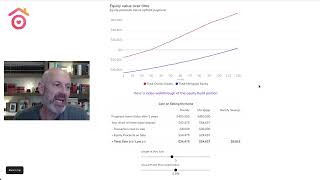
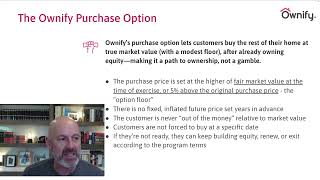
Ownify University: how does the purchase option in fractional ownership work?

Claude MLO Agent boosted homebuyer engagement by 8x! #mortgageloanofficer #mortgageloanoriginator
Wall Street vs First Time Homebuyers Understanding the Housing Market #housingmarket

Homeownership: Your Ultimate Wealth Builder Explained by Frank Rohde #housingmarket


Why ONLY 2% of Young People Win the Homeowner Race #realestate #firsttimehomebuyer