Ownify lets tenants buy ownership stakes in their home over five years, reducing their rent as they own more. Unlike traditional rentals that raise rent 3.4% yearly, Ownify embeds that growth upfront, then redeploys the cash when tenants buy bricks, keeping investor returns steady while tenants build equity.
Chapters
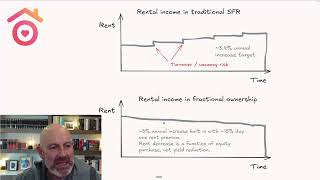
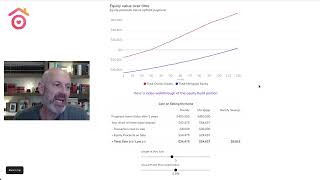
Hi there. This chapter is about how the rent works for a fractional ownership structure like the one we have defined at Ownify. So this is really a chapter for both investors, agents, and first-time homebuyers to understand. And it's an important component because the structure we've built, fractional ownership structure, really is predicated on the fact that the customer only ever pays rent on the fraction of the home that they haven't bought. So the more bricks, the more membership shares, the more interest in the home the customer accumulates over time through the brick purchase, the lower their rent. So let's take a step back and look at how does rent work normally in a traditional single-family rental, SFR, arrangement. So at the top of the page here, you see how rent is calculated. And generally from an investor perspective and from a consumer perspective, right, investor being the landlord, consumer being the tenant, rent goes up over time. On average, rent increases about 3.4% per year. That's according to John Burns National Statistics. Obviously, that can be higher or lower depending on the specific market that you're in. But over time, as you see here, you know, every year you have this step up in rent. In year 1, it might be, you know, $3,000 a month. In year 2, it might be $3,150, $3,200, and so on and so forth. So every year, generally, you see this increase in rent and every year you also have turnover, right? So as an investor, um, generally landlords try to get rent increases over time. And as a consumer, obviously you don't like rent increases because you're living in the same home. Uh, the home hasn't improved. In fact, it probably got a little worse, but you're being asked to pay more. So generally there's a little bit of tension there in this, you know, can, as an investor, can I get a rent increase? As a tenant, can I not pay a rent increase? And what that leads to is this turnover or vacancy risk, right? Every time you have, a rent renewal, the consumer, the tenant, has the ability to terminate. The landlord tries to get a little bit of a rent increase. And so what that means, you know, as an investor, you look at kind of what's the overall rental yield I can get over some period of time and how do I maximize that rental yield? And that is really the goal of, you know, landlords, real estate investors, property management companies over time. Now, in a fractional ownership structure, the way we've defined it and built it at Ownify, rent works differently, which is rent actually goes down over time. And that's a really important component because it is driven by the fact that the customer only ever pays rent on the fraction of the home that they haven't bought. And again, in our model, you know, the customer starts with 2%, that's their contribution on day 1, and then they effectively build equity over the next 5 years that takes them from 2% to 10% ownership. So the ownership goes up while at the same time the amount that they have to pay in rent goes down. So in a sense, the customer is buying down their rent, which means that, you know, if you graph this out over time, the rent kind of looks like this for an investor. And what's important to understand then, as, you know, as an investor, is the total amount of rent that you're collecting. So the area under this chart in a fractional ownership structure is roughly the same as the total amount of rent that you're collecting up here, only it is more front-loaded rather than, you know, here you're trying to get rent increases every year. Here, that 3% roughly annual increase is already built into the underlying formula, which means on day one you actually get a little bit of a rent premium above and beyond where market rates are. Now, I think that's defensible, and we found that to be defensible because the consumer gets a much broader choice of homes, right? They get the choice of homes that are on the MLS rather than the choice of a much, much smaller set of homes that are not on the MLS but listed for rent. And so for the consumer, that means they can pick nicer homes, they can pick homes in nicer school districts, they can pick homes that are not normally for rent, and that allows us to get a rental premium, right, a rent increase relative to what maybe that same home in a slightly less desirable neighborhood would command. So rent decrease then over time really is a function of the equity purchase by the customer, not a reduction in yield. And that's an important construct and component for an investor to be aware of. If you're investing in Ownify Bricks or fractional ownership of single-family homes, and those are being rented by Ownify customers, the yield that they're paying on the bricks does not go down. What happens is that the customer buys bricks, and obviously as soon as they buy a brick, they don't pay rent on that brick, which means that rental income or that brick purchase returns cash into the fund, and that cash gets redeployed immediately into new bricks on new homes. And so as an investor, you're seeing a constant yield on your capital while as a consumer, you're seeing a decrease in the rent for any specific, any individual home. And so that's really a win-win situation where as a consumer, I can buy down my rent. I can have the benefits of renting with the benefits of building equity at the same time my rent goes down over time. And as an investor, you know, I have an aligned customer, an aligned tenant who is paying me a rental yield that compares very favorably to the market and does not decrease over time. Hope that makes sense. There's a lot of math behind the scenes here on how this exactly works. And, um, if you want to learn more, check out our other videos on this topic or ping us and, uh, we'd be happy to explain how fractional ownership for first-time home buyers works in detail. Thank you.