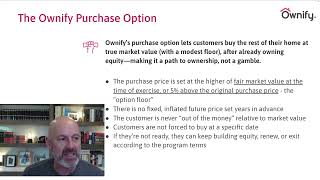
Ownify's fractional ownership model lets customers buy monthly "bricks" toward a down payment while holding a call option to purchase the home at fair market value, with a 5% price floor. If they exit instead of buying, they pay a relisting fee starting at 4% of the property's value, tapering to 2% by year five.
Chapters
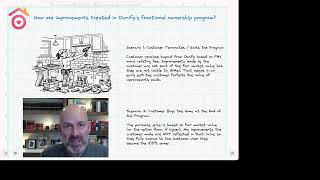
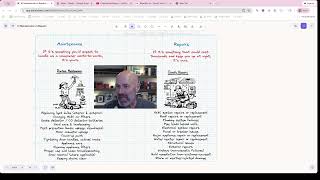
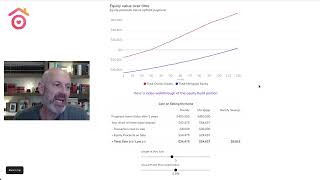
Hi there. In this chapter, I'm gonna explain the purchase option and the relisting fee. Those are two important contractual items in the Ownify agreement that make fractional ownership work. So, the customer has chosen their home, they've paid their 2%, they're living in the home, they're paying rent, and they're building equity over time, right? Every month they're buying bricks, always at fair market value. At the same time, the customer has a purchase option that allows them to trigger the purchase of the home from the LLC, always at fair market value, the same fair market value that is underlying the monthly brick purchase. Now, that purchase option at fair market value has a floor, and that floor is an increase of 5% above the original entry price, the original property value, initial property value as we call it in the contract. And that 5% increase is really there to protect our investors from a short-term fluctuation in the value of the home and really discourage the short-term kind of use of this product as a bridge product, as short-term financing, right? The goal here really is to create this on-ramp for the consumer, for first-time home buyers, allow them to build equity and then exercise the purchase option when the home will have appreciated, usually above 5% on top of the initial purchase price. So what that means is that compared to other rent-to-own programs that you might have seen, Ownify does not set a purchase option price in advance. We let the market determine that purchase option. And that means that in option speak, the call option that the customer has is always at the money. It's never in the money, it's never out of the money. It's always at the, fair market value of the home at that future point in time. So the process is obviously that the customer gives us notice, and we will arrange the paperwork, and the customer technically then buys the home from the LLC. So that transaction, for the mortgage folks out there, is actually a purchase transaction. It's not a refi, right? It's a purchase transaction where the LLC is a seller, the customer is a buyer, and the value of the shares that the customer has built up are used to fund the down payment. So the benefit of that to the consumer is they're never out of the money. They always know exactly at what point and every month they know that the value of the home is what they just paid for their shares. And that's the value at which they can also trigger that purchase option. Now, if they're not ready, they can keep building equity. So stay in the program for the first 5 years. They can renew at the end of 5 years for another 5 years, keep building equity, stay in the Ownify program. So if someone isn't ready, Maybe they don't wanna get a mortgage, they can't get a mortgage, they're not exactly sure, they can always renew, stay in the program, continue building equity, or they can exit at any point according to the program terms, right? Now, an exit means that a customer gives us 60 days notice, they can terminate their participation in the Ownify program, and at that point, their lease terminates and their equity share terminates, which means we will buy back their accumulated equity also at future market value or fair market value. It's always the same price no matter whether we're a buyer or a seller. So if someone exits according to the program terms, gives us notice, the value of their shares stays and we will buy back those shares at fair market value. However, we will charge a relisting fee, and that's the next important concept to understand. Now, what is a relisting fee? If a customer terminates their Ownify contract, without purchasing the home. So this is only really applicable in the scenario where the customer doesn't exercise their purchase option. If they terminate the program, we charge a relisting fee. And that relisting fee is 4% of the property value, again, of the fair market value of the property at that point in the first 30 months. So 2.5 years of the program, and then that 4% gradually melts away. It reduces to 2% by the end of 5 years. If the customer is not in default. If the customer is in default on any of their contractual obligations, it stays at 4%. And really, the way to think about the relisting fee is it's the equivalent of the, the transaction cost the customer would have incurred had they bought the home with a traditional mortgage. And if a customer had bought that same home with a mortgage, and let's say 3 years in, 4 years in, 5 years in, they decide to sell the home, they would incur probably around 7% of transaction costs, right? 3% for the listing agent, 3% for the buying agent, maybe another point in closing costs that are seller-paid, listing fees, staging fees, etc. So 7% compares to, you know, what is arguably a favorable relisting fee of 4%, going down to 2% by the end of 5 years. But that is an important component to to understand. So there is a little bit of a penalty function to protect our investors and to really make sure that the consumer understands, you know, this is a program that is designed to help you get into the home. So if you take over the home, you exercise your purchase option, you buy it with a mortgage, there is no relisting fee. But if you exercise your termination, you leave, obviously we need to sell the home at that point. And the relisting fee of, you know, 4% 2% covers some of our costs in that, in that eventuality.