Ownify University: Calculator Walkthrough
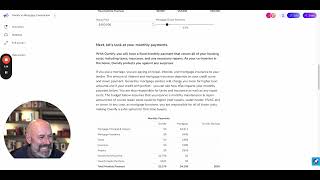
Frank walks through Ownify's calculator comparing its 2% down payment and fixed monthly payments against traditional mortgages over five years. For a $400k home, Ownify costs $172k total versus $225k with a mortgage, saving about $53k by avoiding upfront closing costs and mortgage insurance.
Chapters
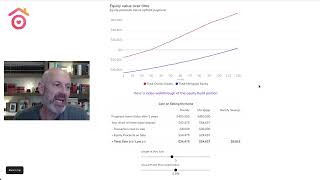
Hi guys, it's Frank with Ownify. I wanted to run you through the Ownify versus mortgage options calculator. So you're on this page, you're watching me, you already found the right spot. What this calculator allows you to do is really compare Ownify versus different mortgage options. And let's walk through this in a couple of different sections. The first section is really kind of your basic inputs into what are you looking to do, and you can start out by Putting in a home price here, right, between $200,000 to $750,000, that's where Ownify operates today. And really that's the price that you expect to pay for a home that maybe you've seen on the MLS or Zillow, or, you know, that you're discussing with your agent. Second question is, with Ownify, your down payment is usually 2%. With a mortgage, you can put down, you know, 5%, 10%, 20%. An FHA allows you to go as low as 3.5%. Or for conventional, you have sometimes a 3% option. So you can go down and flex this. And let's say we start out with a 3.5% mortgage down payment, again, to build the comparison, right? You have the choice between a 30-year conventional mortgage, that's the Fannie Freddie kind of traditional mortgage, or an FHA loan, first-time, or a Federal Housing Administration loan. Either one of the two applies here. The difference is really that the FHA loan has upfront mortgage insurance cost and mortgage insurance through the entire 30-year term, while the conventional mortgage requires mortgage insurance only up to, to the point where you hit 80% loan-to-value ratio. So mortgage insurance is not required for the entire length of the loan. However, conventional mortgages penalize some borrowers with higher rates for higher loan-to-value ratios and lower credit scores. So there's something called loan level price adjustments that are built into this calculator. Ultimately, you know, the, the comparison to a mortgage really depends on what specific mortgage you can get out there in the market. But that's your choice here on mortgage options. Obviously, one big question is how long do you expect to stay in the home before you either sell it or before you refinance it. In the case of Ownify, you know, you might refinance with the mortgage after 5 years after you've built up your down payment, or if you renew, you might do that after 10 years. And so you have the ability to put in different lengths of stay here. Let's start with 5 years just to keep it simple. Your credit score, you know, starts at 600. Some folks have credit scores below that. Work your way up to 600 at least, and then you can plug in kind of where you are. That has an impact on the underlying mortgage rates. It doesn't really have an impact on the underlying ownify payment structure. And then importantly, you have an input here around annual home price appreciation. Now that is a forecast and an estimate that obviously can vary. We assume 3%. That's kind of our baseline assumption baked into the payment structure for ownify. And that means that the home price, let's say you, you, you start with a home that's $400,000 today. Your home price will actually go up to about $463,000 over 5 years. Now again, that's a forecast. It could go up, it can go down, it can go sideways. That's anyone's guess. All right. So now once you've plugged in all these values here, you, you have effectively this one number, this big number here, which is how much is the home worth in 5 years, right? If you buy it, you live in it for 5 years, whether with Ownify or with a mortgage. And then the next question really is how much does that all cost me? So what's my total housing cost over the next 5 years, right? Or if I, move this up or down, it could be longer. And so the way we look at kind of the financial decision for you as a potential home buyer is what are all the components of the housing costs over the next 5 years? And your total housing costs really break down into 3 pieces. The first one is your upfront cost. So that's your down payment, your closing costs if you use a mortgage, any commission you might pay to a realtor or broker, any other closing costs that you have up front, right? That's what you have to have ready to go to buy a home today. With Ownify, again, that's always 2%, or usually 2% of the home price. So for a $400,000 home, that would be $8,000. With a mortgage, that really depends on your down payment. So as you move that, you know, up and down, that number changes. But it also, for a mortgage, includes closing costs, maybe appraisal costs, etc. We'll go through those in detail in a second. The second category are your monthly payments. So with both a mortgage and Ownify, you make a monthly payment over time, and the total of all of those monthly payments over 60 months, you know, is a dollar figure. For Ownify, in this case, would be $202,000. For mortgage, it would be $252,000. And then the third piece is your gain or your loss on sale. That's really the equity value that you're building over that 5-year horizon, right? So the difference between your starting price, $400,000, and the projected home value at the end of 5 years, but minus all the transactional costs. So your brokerage fees, your staging costs, etc., and so forth. And so we'll walk through exactly how we calculate those in just a second. So let me pause here and I'll see you a little bit later further down. All right, welcome back. So let's start with your upfront payments. Again, with Ownify, your upfront payment is 2% of the purchase price. That could include some upfront repair costs or make-ready costs as we call them, but generally it's 2% of the purchase price or pretty close to it. Now, if you use a mortgage, you might have to pay for additional components or, you know, costs along the way. So the first piece is your down payment itself, and again, in this scenario, we're assuming 3.5% for a purchase price of $400,000. So for a mortgage, that would be $14,000. You also have closing costs. Now closing costs include things like loan origination fees. You might pay points up front to buy down your mortgage rate. You usually have to pay for an inspection If you have an FHA mortgage, you might have upfront mortgage insurance. You'll have cost for an appraisal, and you usually have as part of closing costs, you prepay taxes and insurance as well as title insurance. And then since the settlement between NAR and the Justice Department in the summer of 2024, you may also, you might be on the hook for buyer's agent commission depending on what you agreed to with your buyer. Now, usually those are still paid by the seller, but that could be something that comes back and that changes over time. So if you look at this, ultimately you're responsible for the down payment, closing costs, potentially buyer's agent commission, which could significantly increase your upfront payments required. And again, this is something that you should walk through with your realtor as well to understand what exactly are you on the hook for. With Ownify, generally that is a 2% number. With a mortgage, it could be more. And again, it depends on, you know, where exactly that mortgage down payment dials in. So that's your upfront cash required that really you should have ready to go before you make the decision to purchase a home. Now, next we're gonna look at your monthly payments. So scroll with me a little further down and I'll meet you there. All right, welcome to the monthly payment section. So monthly payments with Ownify are very simple. You make a payment, it's a fixed monthly payment. It's the same payment for 5 years, so 60 individual payments. And in this scenario, again, we looked at a $400,000 home. With Ownify today, that would be $3,379. Now, that payment splits into 2 pieces. One is a rent payment, and we're using the average here over 5 years. So you have a rent payment of about $2,750, and then you have an equity purchase payment which buys BRICs. Now, what are BRICs? We're explaining that in a separate video, but BRICs are effectively ownership shares in the LLC, in the limited liability company that holds title to the home. So that's how you're building equity. And as you build equity over time, your rent payment goes down. We're showing you two numbers here. That's the average over those 5 years. So in year 1, your rent payment will be a little higher, your Equity Purchase Plan a little lower. In year 5, that rent payment has come down, your equity purchase has gone up a little bit. What's important to understand, the payment is always— your total payment is always the same over that 5-year horizon. Now, you don't have to worry about all the other things here. However, we did outline them so that as you compare, you know, Ownify versus a mortgage, you're really looking at an apples-to-apples comparison. So with a mortgage, You're taking on a loan and the lender lends you money and you use that money to purchase the home and then you pledge title to the mortgage company and you pay off that loan over usually 30 years. So the first thing you're paying is what's called principal and interest. So interest is driven by the cost of money and interest rates. Principal is effectively the value of the home that you're actually buying while paying down that loan. So the way an amortization works over a mortgage, and we'll talk about that a little later, is you pay a lot of interest up front in the early months and early years and relatively little principal, then over time you're buying more principal and you're paying less interest. However, your principal and interest payment over the life of the mortgage is fixed, usually fixed unless you have a variable rate mortgage. So in this scenario, again, for a $400,000 loan— $400,000, sorry, purchase— With 3.5% down, your mortgage balance on day 1 is $386,000. That's the mortgage, and you're paying $2,911 a month in principal and interest. Now, with a low down payment mortgage, you also have to pay mortgage insurance, which in this scenario is about a point, so that's $400, a little over a point, so that's about $400 a month. You're paying taxes, so property taxes of about $359. That depends on the community you live in, sometimes higher, sometimes lower. You obviously have to pay for insurance. That's your responsibility, homeowner's insurance. The lender will ensure that you do that. And you have to have a budget for repairs, right? As a homeowner, you're on the hook for that if you use a mortgage to finance your home. So all of those payments together is about $4,200, $4,209, compared to a mortgage, an Ownify payment of $3,379. So significant savings here. And one of the things that is important to understand is most of the time when you look at mortgage calculators, you'll see the principal and interest number. You might see the mortgage insurance number, maybe taxes and insurance. Often those calculators forget about the repairs that you are on the hook for. And this is an estimate. It could be higher, it could be lower. The important piece here is to understand that Ownify covers all of these, so you're never on the hook for insurance or taxes or repairs. We cover that. And that creates, quite frankly, certainty around your payment. So in this scenario now, and again, you can run these across different home prices. And also across different credit scores to understand, you know, if your credit score is better, you might get a better mortgage rate, so the mortgage payment comes down. As your credit score goes down, right, your mortgage payment might go up with a 30-year. With an FHA, your mortgage payment generally stays the same. However, you have upfront mortgage insurance, so that goes back up to the prior point. You might have more upfront that you need to put down, or if you wrap it into the monthly payment, your monthly payment goes up. So in either scenario, you can compare here, you know, what those two options look like on a monthly basis relative to the Ownify payment. Okay, welcome to the equity build section of this walkthrough. Now, how do you build equity? There's, uh, Ownify versus the mortgage path are very different paths. With Ownify, you're buying equity in the home through the process of buying bricks or shares in the LLC that holds title to the home. So we can't fractionalize a title, but we can fractionalize the entity that holds title to the home, and that's what we're doing, uh, where each home is fractionalized into 10,000 bricks, and an owner, you as a customer, buy those bricks over time as equity. So that means that in this scenario, on day 1, we purchase a home together for $400,000, You contribute a small portion, i.e., 2%. We contribute the remainder. And then over 5 years, you buy equity from us, from Ownify, at whatever current market value. So in month 1, that might be $400,000 for the total home, and you're buying bricks at $40 a brick. And every month you're buying, you know, roughly 13 bricks. Over time, the price of bricks goes up to $41, $42, $43, maybe $44, $45. In this case, $46 at the end of 5 years, right? $463,000 divided by 10,000. So now bricks cost $46. As you're buying these bricks, home prices go up, you buy at a slightly higher cost. Home prices go down, you buy at a slightly lower cost. You're actually dollar-cost averaging the purchase of these bricks. And the benefit is that you can never be underwater because you don't owe a mortgage balance, even if home prices fall and the value of your bricks goes down, right, they'll always be worth something. And this is the really interesting scenario you can play with this calculator is to say, well, let me look at Ownify, right? If home prices go down over time, well, I'm still building equity and it's still positive at the end of 5 years, whereas with the mortgage, my equity is actually negative. But that's a concept known as being underwater, right? And home prices usually go up. They may not always go up. So this is really a way to protect first-time buyers with the Ownify structure to say, build equity. You're sharing the equity gain with your investors, but you're also sharing the equity risk and the downside with your investors. So this calculator allows you to run these different scenarios and see what happens over time between the Ownify versus mortgage path. Now, Let's, let's look at this in detail. We start out with the same home value at the end of 5 years. So we bought the home at the beginning here for $400,000. Let's say it goes up by 3% a year. At the end of 5 years, it might be worth $463,000. Again, that price could vary and you can play different scenarios. 3% is probably a good assumption. Now, how much of that value do you actually own? Now with Ownify, at the end of 5 years, you should be at roughly 10%. So Here we are at $46,500. That's your share of the total value of the home. With a mortgage, you actually have a higher equity share at the end of 5 years because your mortgage balance was fixed and you've paid it down a little bit. However, what happens when you exit, when you sell? Well, with Ownify, at the end of 5 years, you can either renew or, you know, sell your equity back to Ownify or buy the home with the mortgage. And in this scenario, what we said is, well, what if you sold your equity back to Ownify? At that point, we would charge you a relisting fee, in this case 2%. So you're selling $46,000 worth of equity or shares back to Ownify. We charge you a relisting fee and your proceeds are $37,228. You actually get a little bit of a tax benefit, so your total gain is $38,000. Now with the mortgage, you can start with the $463,000. You, you own about $95,000 of that. But your transaction costs on sale are significantly higher because you have to get the home ready for sale. You probably have to move out. You have to hire a broker, an agent to list it for you. And generally sellers' transaction costs on sale are between 6% to 8%. So we assume 7.5% here. That's about $35,000. So that leaves you about $60,000 equity proceeds on the sale. Now that's still more than the Ownify scenario. But keep in mind your upfront cost, right? If we go back to the very beginning here, you put $34,000 down versus $8,000. So, you know, your net gain, if you take into account how much you put upfront, is actually significantly less than that. And so meet me further down, we'll put it all back together. Okay guys, we're almost done. So we talked about the upfront payments, we talked about the monthly payments. Your gain on the equity build. And really the right way to think about investment in housing, right, and how much you're paying and how much you're gaining is what's your total housing costs over, let's say, 5 years. And so again, we're still in the same example, $400,000 home. We bought it together, we own it together for 5 years. You then exit, sell your shares back to Ownify, or you compare the same thing doing that with the mortgage. Your total housing costs are what you've put down up front, so that's $8,000 with Ownify versus $34,000 with the mortgage. Your monthly payments over the 60 months, $202 versus $252, and then whatever gain you have. Now the gain is a negative because you're getting money back, right? So it actually reduces your cost, your total housing cost, because you're getting that money back. And net-net, Over 5 years, it's about $172,000 with Ownify or $225,000 with the mortgage. So Ownify pretty solidly ahead by $50,000, $53,000 in this scenario, right? And again, I encourage you to play different scenarios, uh, length of time, home price appreciation, obviously entry price and all that. Now, one of the things that a lot of folks will tell you is, well, what about the mortgage interest tax deduction? And the reality is that unless you have a very, very large mortgage, you are taking the standard deduction and you're not itemizing your deductions. So the average first-time buyer with, you know, income of $120,000, $130,000, $140,000, $150,000 buying a $200,000, $300,000, $400,000, $500,000 home, you're not generally itemizing taxes. So really what we're looking at here are the true out-of-pocket costs between Ownify versus the mortgage. All right, thank you for sticking with me for so long. You've made it all the way through this walkthrough. If you think Ownify could be the right choice for you, come meet us in our main page. You have a lot more materials where you can learn, you can apply. It takes 15 minutes, it's very easy to see if you qualify, and then schedule a call with the concierge that can— who can walk you through these options in detail. Thank you for your time, and I look forward to meeting you.
More from Frank

How to Save 5-7% on Your Home Purchase. #firsttimehomebuyer #homebuying #buyersagent #mortgage
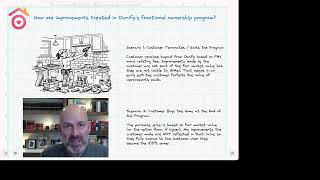
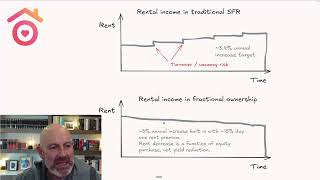

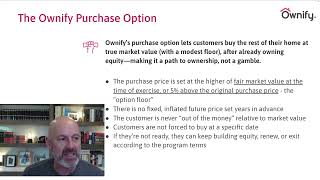
Ownify University: how does the purchase option in fractional ownership work?

Claude MLO Agent boosted homebuyer engagement by 8x! #mortgageloanofficer #mortgageloanoriginator
Wall Street vs First Time Homebuyers Understanding the Housing Market #housingmarket

Homeownership: Your Ultimate Wealth Builder Explained by Frank Rohde #housingmarket


Why ONLY 2% of Young People Win the Homeowner Race #realestate #firsttimehomebuyer