E08 - From Michigan Tech to the fastest growing EdTech company in the world - The story of Handshake
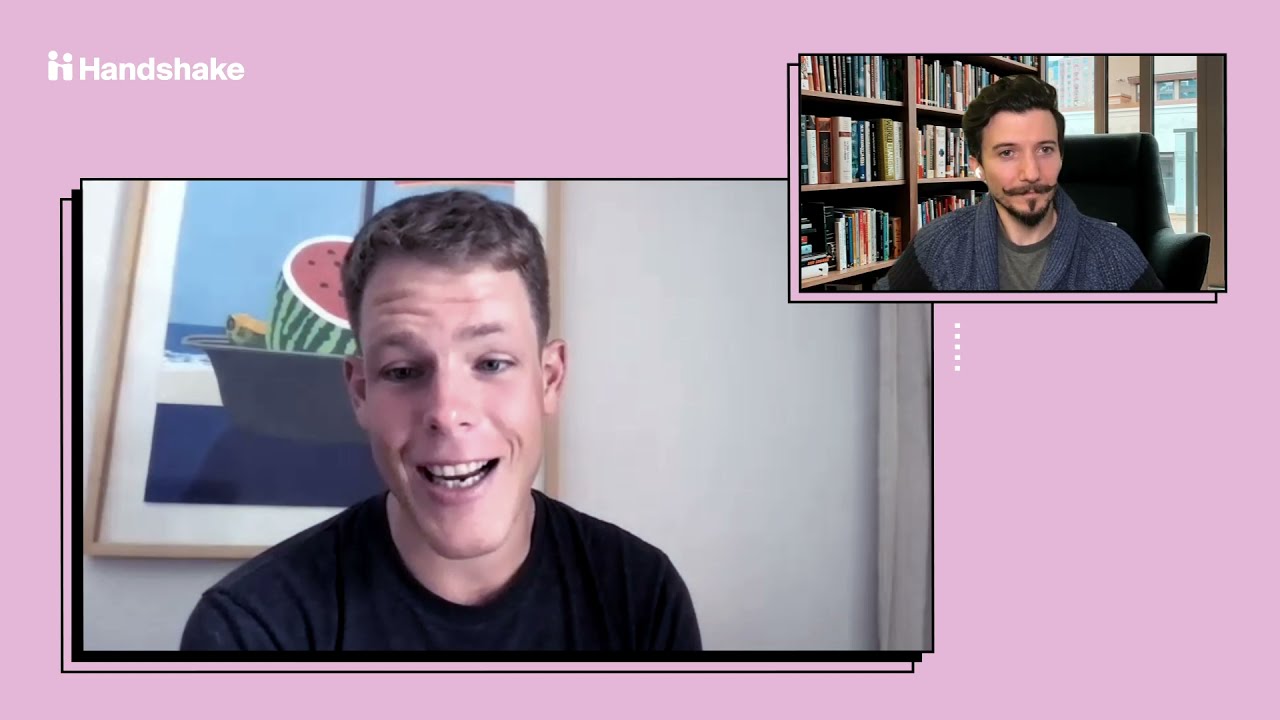
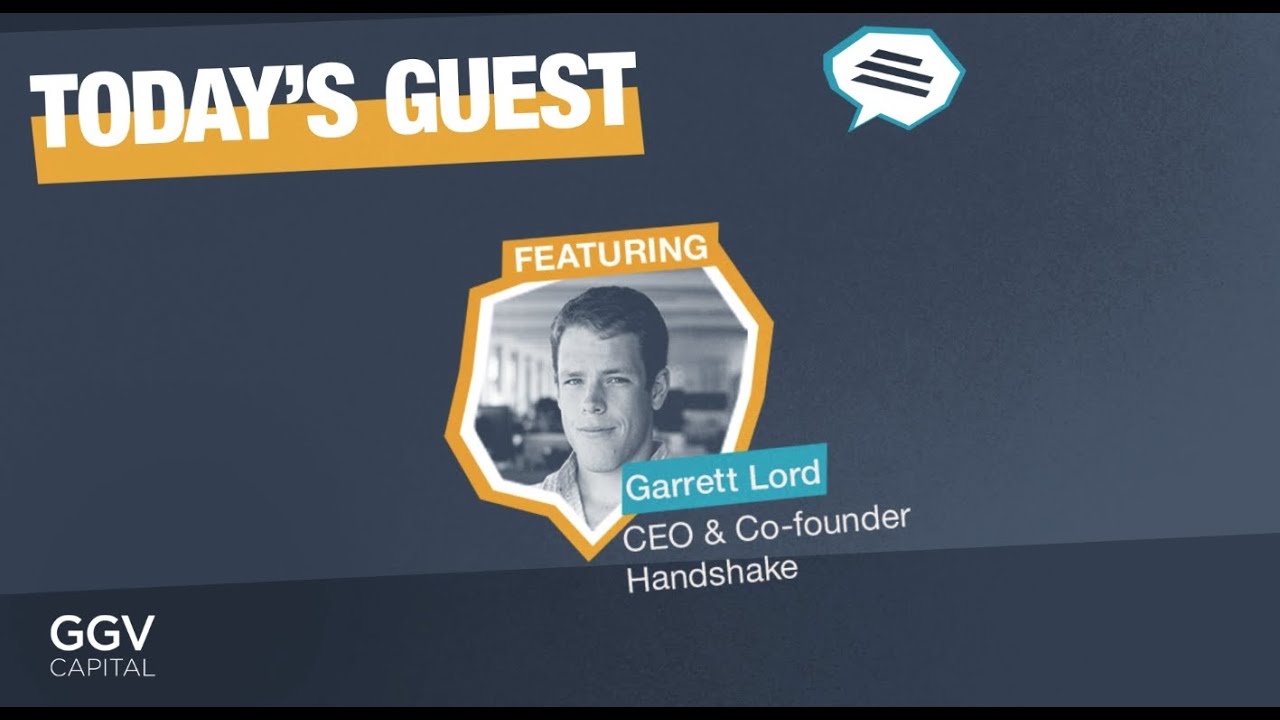
In this episode of the Handshake podcast, host Dimitar Stanimirov interviews Handshake co‑founder Garett Lord. Lord recounts his upbringing in a working‑class family in Michigan, his early struggle to find internships, and the moment that sparked his desire to make the recruiting process more equitable. He describes how, while at Michigan Tech, he conducted deep user research with career‑center staff, employers, and fellow students, uncovering the frustration with antiquated technology and the inequities tied to school prestige and parental networks. Armed with those insights, he and his co‑founder Ben built the first version of Handshake, driving across the Midwest in a broken Jeep, sleeping in McDonald’s parking lots, and selling the platform to six pilot schools. After a pivotal seed round of $3.5 million from True Ventures and Lightspeed, they hired a COO and expanded rapidly, growing from 5 schools to over 750 within a few years. When COVID‑19 hit, Handshake closed its offices, prioritized employee safety, and pivoted to a fully virtual recruiting suite, facilitating over one million unique student‑employer connections, reducing hiring costs, and dramatically improving diversity outcomes. Lord explains how the three‑sided network (universities, employers, students) creates a defensible moat, and outlines the current roadmap: enhanced video, scheduling, analytics, and hybrid‑virtual experiences. He shares growth metrics—revenue doubled, team expanding from ~300 to 550‑600 employees, and a vision of thousands of staff worldwide dedicated to equitable talent distribution. The conversation ends with reflections on the mission, predictions for the next three years, and a promise to revisit these forecasts in future episodes.
Chapters
What's up everyone? I'm Dimitar Stanimirov and I'm a London-based SaaS entrepreneur and operator. I've been in the talent acquisition space for the better part of a decade, but spent the last couple of years building machine learning forecasting software for sales. After a brief hiatus, I'm back in the talent acquisition space, having recently joined Handshake, the world's largest early talent network.
Ascend a VMEA.
In this podcast series, I catch up with some of my old industry friends and thought leaders to discuss the latest trends in the emerging talent space. I speak to some of our employer partners who provide tactical advice on how to best identify, attract, and engage early talent. And lastly, I chat to some of my colleagues here at Handshake, giving you a behind-the-scenes peek into how the world's fastest-growing edtech company is being built.
Thanks for making the time. I know how busy you are, so it's very much appreciated. Um, as I was just saying, part of the idea behind the podcast is to, to quite literally be able to put the spotlight on the people who are actually building Handshake, uh, which in the intro that normally plays at the beginning of this podcast is the fastest growing educational tech startup in the world. And I thought, what better place to actually start than talking to you? the man who actually started everything. And so this is what we're going to do in the next 30 minutes, give or take. So again, thanks for making the time. And I thought we should start with a very quick introduction and kind of take it a way back. So obviously introduce yourself, but kind of go a step back in time and kind of talk about— I thought a good starting place would be to talk about your sort of early experience, kind of, you know, maybe your penultimate year, maybe your final year, when you kind of started. exploring the move from sort of university to the professional world and what that kind of looked like for you.
Yeah, well, it's awesome to be on with you, Timmy. I'm really excited to be here, and it's an opportunity to share the story with a proud colleague of mine. So the problem for me was really personal. Maybe just to tell a little bit about my story, like, I grew up in Michigan, Uh, I went to school, my dad's in construction, grew up in kind of a working-class family, uh, and I really didn't know a ton about what was out there. I mean, to make a joke, I thought, you know, iBanks were internet banks. I really never been to San Francisco before. Um, and my, uh, experience, uh, you know, and really why this problem resonated with me is I struggled pretty deeply finding great internships and navigating through this process. And I thought the overall process was like really unfair, you know, it was really rooted on as I learned more about it, it was really rooted on kind of what your parents did and what school you go to had such kind of big factors in what type of career success you had afterwards, who your parents knew and what information you had. And so my story was I went to Michigan Tech. A professor helped me find an internship my freshman year of college at a national laboratory where I met other— I was always a huge nerd. I loved computers and I was pretty good at computers. It was one of the few things I was good at. And I met other students that were all mostly postdoctoral students. These are ex-PhDs from some of the most prestigious institutions in America, your MITs, your Stanfords, your Carnegie Mellons. And it was there they were talking about their internship experiences, interning at Google, interning at Facebook, interning at startups. And I just remember being in such awe of the opportunities they had in front of them and the sophistication of which they talked about educating me on how to get those internships. And so from that experience, I then broke out into Silicon Valley and worked at a startup called Palantir, which again changed my life. I went to San Francisco, which is a city full of kind of nerds like myself who love technology. And a lot of these people were talking about their collegiate experiences and all the opportunities they had in front of them as well. Palantir was a pretty high degree of talent, which recruited from some of the best schools, but I actually did really well from this no-name school and kind of made a name for myself. And I helped many friends get internships at Palantir and jobs at Palantir. And I was like really fixated on this idea that I couldn't believe that my friends who were struggling to find internships and find jobs were now having these kind of transformational career experiences going to work at Palantir. And I was like, there's a huge problem here around inequity of access and information. And I met a couple other students. One other joke is they were talking about building startups, you know.
Right.
And I remember calling my dad and being like, Dad, like these other software engineers, like they're building companies, you know. And, you know, he's like, lawn mowing companies? Like, you know, what are you talking about here? And, and I'm like, no, software companies. So on my side, I went back to school after my sophomore year internship at Palantir and went, I want to start a company trying to make and bring more fairness to this system. And I want to do it with students, employers, and universities. Really, universities at the core of the network. because universities were under a lot of pressure to demonstrate outcomes. They're trying to help their students navigate into careers. But there was only one career counselor at my college. That career counselor actually helped me a ton. Edited my first resume. I did a mock interview, which was really helpful to get that Los Alamos internship. And I wanted to build software that kind of connected all 3 sides together. And, you know, maybe fast forward to today, it's really been a dream. I mean, I think we're still in the early days of what this company could become. But we're already making a huge impact with students at scale.
Yeah, and this is incredibly fascinating. So thank you for sharing. And you touched upon something interesting that you kind of saw connecting universities, employers, and students, which is kind of very unusual, you know, when you kind of think of marketplaces and building the business together as the unique way to kind of solve this problem. And so I thought it might be interesting to kind of shed a bit more light as to, you know, how you came up with that idea. Obviously, you kind of touched upon it when you said, You know, I went to Palantir, I got myself one way or another there, and I was as good, if not better, as many of the students who were interning. But for whatever reason, those opportunities were, you know, never made available to me. So maybe talk a little bit about, you know, kind of this unique insight that you had during that time that kind of led you to believe if we actually bring all the career services in a single network, that problem more or less goes away. Does this make sense?
For sure. I mean, maybe I'll just take it from more of like a even just a lesson as an entrepreneur, like, that I would share with other entrepreneurs is, you know, there's— I did a lot of reading around, you know, trying to start a business. And what I consistently heard was you got to start with talking to your users to really understand the problem.
Right.
And so when I went back to school my sophomore year, I sat down with our career center, the director of the career center, the career counselors, the employer relations folks. I sat down and basically started asking them, I was pretty curious, you know, college student, asking them, you know, how do you structure your team? What goals do you have? Like, what software do you use? What do you think the world could look like if there were better software? I was pretty inspired by—
Yeah.
What I heard from our Career Center was a really kind of deep frustration that they were using kind of antiquated technology, technology that, you know, you looked at the iPhones they were using even back then, or, you know, their Android devices, and the level of, you know, sophistication in consumer applications like Facebook and Instagram and LinkedIn, like that wasn't the level of technology they were using at the career center. And they all were kind of inspired by the opportunity. They said there was frustration. And I was like, well, that means there's opportunity.
Right?
And then I also realized that the universities, they actually, the university career center helped introduce me to a bunch of employers to actually sit down with them. I went to a campus that was fairly excited about entrepreneurial student endeavors. And so they helped support me.
Yeah.
And so they introduced me to employers. And I would actually sit in the interview rooms during career fairs and meet and talk to different employers. How do you do your college recruiting? How do you pick your schools? How do you work with career centers? What do you want to see from students? How do you leverage other internet platforms? And I got really close to them. And then on the student side, I felt like my friends and my sister and kind of— it was a fairly deep understanding of the problem that we had. And so On our side, we were really convinced from early on, in order to create change in this ecosystem and really, you know, bring more equality to it, we have to work with all sides.
Right.
Because to leave the, you know, to leave one side out, you're not really taking into account what's actually happening, right? Employers trust the universities. Employers have great relations with universities. Universities help their students, freshmen, you know, first year, second year, third year. They play a meaningful part in the career development process. So we wanted to bring all 3 sides together to reimagine it. So I mean, it is, in retrospect, still pretty kind of bold to think about just like how much has changed since we first started the business.
Yeah. And we're going to talk about this in a second, but before we even get there, I thought, you know, I'd love you to share a few of the stories that, you know, I heard when I joined the company and all the new starters kind of hear, because it's been such a wild journey. It's, you know, it's the kind of thing that, you know, you read in books when it comes to crazy entrepreneurial journey and crazy ride. So I'd love if you could share a couple of stories of what those early days after you came back from your time with Palantir and you started validating the idea were like. So you mentioned going to your career service and speaking to them, but then you took it a step further, right? You know, kind of buying that secondhand car and like traveling and going to other universities. I'd love you to kind of share that story, 'cause that is absolutely mind-blowing.
Yeah, well, the early days were pretty, I mean, like a lot of these entrepreneurial ventures you read about, even companies like Netflix and eBay and, you know, all these companies, um, there's pretty humble roots for a lot of them. And for us, it was, it was, it was pretty real. I mean, so we had this idea, we started building it in college, this software with our career center that we're driving between career center. Many— I had about 8 to 12 relationships that were all super passionate about helping us. One of the beautiful parts about working with colleges and universities is they have big hearts and they wanted to see us succeed. So we, we would drive down basically through the night. Our school was really far away. It was like 8 hours away from Chicago, 6 hours away from Detroit. And we drive down and speak with first center staff members. We basically sit over their shoulder and be like, what do you want out of this experience? How do you manage your appointment scheduling flows? What does a career fair look like? How do you, what do you want the registration process, payment process look like? Basically getting a ton of user data.
Yep.
Because as an engineer, you really needed to be talking to users, user-centric in order to build a product that was valuable for them. And so what happened though is my car was like, you know, I had an old Jeep. I didn't have much money in college. I was working my way through college and, you know, it kept on basically breaking down. I would have to like miss class because I'd try to bolt down on like a Monday night in between, you know, you know, basically skip a day of classes to speak with the different university career center. And we'd drive back, and then I'd get skunked on the way back. The car would break down, and I would basically miss a bunch of class. And so, you know, that story kind of continued on my junior year and senior year. And about halfway through my senior year, I was telling— talking to my dad. I have a bunch of student loans. And I was like, I really— you know, he saw me kind of fall in love with this idea and all almost get crazy about it, like just talking about it all the time. And I was like, I'm going to have to go take the job at Palantir. Palantir was very supportive, by the way, of me doing this. But I needed to pay back my loans. And my dad refinanced his house. He's in construction and sold a property he owned, like, you know, that he was going to build a house on, and wrote us our first check.
That's incredible.
When he delivered the check, he drove up a Ford Focus. Because you needed to have a car that wasn't going to break down driving from school to school. And that Ford Focus, when we graduated, well, you know, we kind of finished school, I've lived out of that Ford Focus for like probably 3 or 4 months, my co-founder Ben, basically driving from school to school to school, trying to sell and get them on board our first version of Handshake. And we sleep in McDonald's parking lots because they're well-lit and there's always Wi-Fi, 24/7 Wi-Fi, and you didn't have to pay your cell phone bill to get internet. And we'd sometimes sneak into like the pools at the school, shower, because we wouldn't get hotel rooms. And it was pretty— I'm glad I was just right out of college because, I mean, it was pretty tiring, really tiring and exhausting, you know, period of time.
Yeah.
But I feel so fortunate. I mean, we partnered with our first 6 schools, and I can still name every director. And, you know, I remember the conversations vividly where they took a chance on us and believed that we could build the future together with the university at the core of our network. And yeah, I mean, you know, we went from 5 schools our first year to 60 schools our second year to 160 schools the year afterwards. So it was— those first 5 schools were instrumental at really allowing us to kind of hone in on the right set of features. It was still early. Yeah, that was the story. My co-founder Ben and a couple of other friends were working from Michigan still. But yeah, the early days are something you can never forget.
Yeah. And the story doesn't stop here, right? I mean, this is like, it's incredible. But then, you know, once you kind of validated the idea and you said obviously the first year you went from, you know, 0 to 5 schools, you then decided to fully commit, not that you weren't at that point, but went completely all in, and you actually moved to Silicon Valley, right?
Yeah.
Can you talk a little bit? Because yeah, that is also almost like a Social Network-esque situation where you all kind of went into the same house and were working like 18-hour kind of days. And it was like work Monday through Friday and the weekend. So it'd be great to share a little bit more of that as well.
Yeah. So when we got to right around almost signing up 60 schools, we started running out of money. And the place that, you know, now money, at least in America, for these ideas are far more distributed across the country, which I think is beautiful. But back when we were getting started, you know, maybe this is 6 or 7 years ago, really the nexus of money to fund technology ventures came from the Bay Area. San Francisco Bay Area. And so I flew out to go raise money, which is also pretty, really kind of emotionally challenging experience, you know, really quite scary time. But we ended up partnering with 2 phenomenal venture capitalists, Tony Schneider at True Ventures, who really is passionate about education and equality, and Will Kohler at Lightspeed, who really understood the idea from the earliest days of Handshake. And they believed in our vision. And they gave us— they wrote a check for $3.5 million, which really helped take Handshake to the whole next level. I mean, we could hire more engineers, we could hire more account management support staff to help our universities implement. And that initial kind of real cash infusion just led fire to the momentum that we had in this— in the market.
Yeah.
And San Francisco also was a really beautiful place to hire people that we hired a gentleman named Jonathan Stoll, who's our COO, very early days. And he had built technology companies before. He had seen this many times over. And he was— he had gotten his MBA and knew a lot. And now, like, an MBA is everything, but really helped kind of structure the finances and outcomes of the business. So I think it was a critical time for us to mature the business from kind of really early-stage startup to this business is a viable entity with, you know, 30 people working on it, which led us to then grow from 60 to 160 to 450 to 750 schools over the next couple of years. And we raised money all the way along that juncture from mostly Silicon Valley investors up until we raised money from EQT, a gentleman named Alistair Mitchell, who really believed also that this problem is not only common in America, but it's common common in many international markets. And on our side, it was a wonderful partner to help us kind of mature our thinking of how we could build a global business together.
Yeah, incredible. Well, let's talk about this now then. So, I mean, incredible story, 0 to, you know, 1,200+ partnerships. Where are we at? Like over half a billion active employers on the platform, 100% of the Fortune 500. So it's mind-blowing, right? And so, Then COVID hits, right? So about a year ago now, and everything comes to a standstill. So it'll be good to kind of reflect on the last, you know, 12 months or so and what that meant for you personally, for the business, and how we kind of regrouped and, you know, bounced off and what we basically have done over the last 12 months and how, I guess— well, I'm throwing lots of questions at you, Garett, here, but— how I guess that has served almost as a catalyst for the business.
Yeah. Yeah, good question. And help guide me here if I'm kind of not hitting on areas you'd love me to hit on. But I mean, when COVID first hit, it was very scary, just scary for our employees. You know, I think it's in the hardest times of building a company where your values are really defined. So in the hard decisions, right? And right away when COVID hit, we just, we encouraged, we closed our office and we encouraged everyone to just Stay safe, be with their families, like, you know, focus on them. That was your personal safety is the number one priority. And the business doesn't even fall in the top 5 set of priorities for you and your family. So we did that. And right when that hit, I immediately started calling all our customers, university partners, employer partners, talk. We ran big student surveys, trying to understand. It was a very fluid situation. Things were changing every single week, you know?
Yep.
we didn't understand whether there would be a global economic crisis or we'd enter a recessionary environment. We didn't understand how employers and universities thought about, you know, their future, what they— and they didn't know, right?
Yeah.
And so as we held the situation, it was, you know, it was really on our side. I'm used to as an entrepreneur having to make the kind of large calls with limited information, right? And we make these calls— the way I've made the most successful calls over time is actually by really bringing to bear like what our partners are saying, right? Like what's the consensus of what they're saying? And what was challenging about it is I was hearing a lot of different things around what the future would unfold. Fast forward kind of 3 months into COVID, it became fairly clear that companies and universities were going to be responsible for educating their students in the fall. They would graduate the next cohort of students who would need internships and jobs. Employers, some employers by industry secularly were turning off employment. You know, hospitality, travel, transportation. I mean, these industries were shuttered by COVID, right?
Yeah.
But there were many other industries that were actually growing, right? You looked at healthcare. So on our side, we really tried to focus on what would the world look like if it was completely virtual in the fall, which it was becoming clearer and clearer that it was going to be a completely virtual fall because this was, you know, It's almost amazing, Demi, to remember back to 3 months into COVID. We didn't know how long this was gonna last for or the severity of the virus. So we pivoted our entire roadmap. I mean, basically threw everything out the window and went, what can we build to best equip our partners, uh, in this completely virtual experience?
Yep.
And our team, I am, I mean, some of the most, uh, it's moments I'll remember for the rest of my life where the team just really rallied behind this new vision and our ability to really way we motivated and we talked about is like, we have an opportunity to— maybe it's a little bit overblown, but maybe— but I call it like being heroes to our partners, right? Like, these universities didn't have video technology, employers didn't know how to recruit at scale. Let's really rally to try to deliver solutions for connecting on all 3 sides virtually.
Yeah.
And I'm proud to say that, I mean, COVID has accelerated our business because of some of those calls made across our team and all the hard work. We've seen the industry change more in 6 months than we thought would change in 5 years.
Yep.
Companies are— universities are running intensive at-scale events to their entire student population where they're interacting and introducing students with employers via video, coffee chats, one-on-one interviews, virtual fairs. The product our team built facilitated over 1 million unique connections. There were tens of thousands of employers that virtually recruited, hundreds of thousands of students that interacted with employers. And companies, funny enough, they actually saw, they actually saw incredible outcomes.
Yeah.
I mean, they saw their overall costs be reduced. They saw the diversity of the talent they were seeing go through the roof. More women, more Black students, more Latinx students at scale because they opened up their net. They weren't going to be going to campus. They're might have thought about recruiting from more schools. Our university partners, we tried to equip them with data around the interactions they were having because they were a little bit scared. Like, how do we measure this? How do we know what's going well? How do we know what's going well? So we're now in kind of, I'd say, like the second or third inning of this virtual journey. But a couple of things are clear. Number one is like, it's clear that this is here to stay. Like this has changed recruiting forever.
Yep.
I think things will return back to a very hybrid world. But there will be far more virtual components along this journey of cultivating the student career development process and introducing them to companies. There'll be far more virtual-first interactions than ever before. And from a mission standpoint, it's pretty beautiful in the fact that I think this is a far more fair way to do college recruiting.
Yeah.
Really speaks to our mission. Does that hit on the question you asked?
Oh, absolutely. And I didn't need to kind of prompt you in any direction. So this is beautiful. And just to kind of add some color to what you said, I think you're being probably a little bit modest here in terms of how big of a lift the team did. When you talk about the pivot that we did, we became overnight— well, not overnight, but in the last 3 to 6 months, the largest provider of virtual fares, right?
We are the—
By far, right?
Yeah, we are a significant market leader. I think there's like less than 3% of our universities are using any other tool than Handshake. We're, you know, 50, 100x bigger than any other platform. And it's really because of all 3 sides working together, right? When you approach this from how do you bring something to market with university students and employers, and you bring all 3 people in the equation, user groups in the equation, and you try to problem solve that way, that's what led to our success. Not trying to go around universities or working direct to students, or— and the scale too, these 500,000 companies using this, this has become their primary virtual platform.
Yeah, amazing. And so you mentioned something interesting, and this might be a good way to kind of start kind of thinking of wrapping up things. Um, you mentioned something interesting that, you know, sort of this sort of virtual world is here to stay. It might be some sort of hybrid model, but, you know, what we kind of experienced in the last 6 to 9 months will sort of continue. So could you talk a little bit about what this means in terms of our roadmap at Handshake? Like, what are we thinking? How are we going to facilitate this? What are we working on? Because there are like so many exciting things in the pipeline right now, this year, next year. So it'd be great to actually speak about both how you see the future— and you touched upon it— but also what that means in terms of product and, you know, Handshake in general. Totally.
Maybe I'll separate it out in kind of 2 components. One, the second component is, I think technology platforms have an opportunity to reapproach how things are done from first principles. First principles isn't saying, you know, Elon Musk didn't go, how do automobiles work? And how do I just make, add batteries to the equation? He built the whole car from the bottoms up, in first principles, completely reimagining. Anyone that sat in a Tesla, I think, feels that it's a completely unique experience. I think there are better examples than that that I could probably pick, but Uber, great example of just completely reimagining the transportation experience with scooters and autonomous vehicles and food delivery. On our side, what we spend a lot of time trying to think about is how can we completely reimagine this experience in a more delightful way for all of our users? in a more fair way. And then, uh, and that's really exciting. There's a ton of innovation happening around basically helping, uh, prospective candidates or students learn and build relationships with companies in ways that are approachable and scalable, um, uh, at scale, right? Like, um—
Yeah.
And that means more video, more speaking to young employees at companies, more, uh, transparency in meeting hiring managers and hearing about job prospects and what other students are doing. In a way that's actually really exciting, and students are saying that they're loving it, and employers are saying they're loving it as well. And then the other thing we're doing alongside of that is also trying to like hedge against this, you know, completely reimagined experience and also make sure that we're making continued kind of sustained progress on a set of features that everyone expects from us and needs, right? So that's better fare management, that's better appointment scheduling, that's better emailing communications, that's better reporting analytics. better outcome tracking. On the employer side, that's more sophisticated campaigns and messages and brand-building experiences. And on the student side, you know, so there's this, there's this kind of momentum around a very traditional roadmap that we're continuing to invest in while, while also spending time trying to really understand what the future could look like. And I think what we'll see play out, if I had to predict the future over the next 3 years, is a lot of these historical experiences really being disrupted by virtual-first approaches on company side— on the company side. You look at a company like General Motors, you know, they are, they are completely virtual-first. They don't step foot on, on campus. Uh, they hire more women they've ever hired before, more Black students, more Latinx students. They do so at scale and a lower cost per hire. The candidate experience, when measured from a candidate perspective, is actually higher than the actual physical in-person experience they had. And that's driven all the way up to the CEO of the company who wants to build a representative workforce in the future and wants to hire more technical talent. So I think we'll see, if we look at the logos that we partner with today, we're working with some of the most innovative companies and the largest companies in the world in almost every category of business.
Yep.
And what we're hearing from them very consistently is that they want virtual or predominantly virtual, some hybrid aspects, and they're excited about reimagining the overall experience.
Yeah. And final thing to wrap it up, we're almost at time here. Kind of tied to this question, what does this mean for Handshake? So, you know, we're growing at an incredible pace, right? So, you know, I've seen like this happen, you know, the proverbial hockey stick, you know, in the last 6 months since I've been with the company. But what does this mean in terms of, you know, headcount for us, where we're going? You know, next time we speak to you, hopefully, you know, you'll be coming on the pod again in the coming months. Where do we expect to Yeah.
So what's— where we're at today is just like, just investing deeply in the future. I mean, we're very well capitalized, we have a very strong business model, we have a very strong team and leadership team, and we're just investing in sustainable growth. But we're growing very fast, but we want to make sure we do so in a sustainable way. You know, this year we'll double the size of the team almost. We'll go from about 300 people at Hinchinck today to, I think we'll probably plan to end the year at like 550 to 600 folks, both in London and New York and San Francisco, Denver, and all, and we're also hiring a lot of remote talent.
Yep.
Trying to live our mission that talent's evenly distributed in that respect. Revenue doubled this year. We'll double revenue this next year. our investors and our employees are really happy with the progress of our growth. And so, you know, maybe 3 years from now, 4 years from now, I mean, I think Handshake will be, you know, thousands of employees operating all over the world, really waking up every day to try to bring more equality to this mission of education to employment. So yeah, that's a bit more where we're at. And I think—
Yeah. Amazing. Look, well, thank you so much for the time. Again, we'd love to have you on the pod again in the coming months. And next time we do this, we'll compare, you know, the predictions to where we're at. Again, appreciate the time.
And we can do it in person too. That would be a real dream.
Fingers crossed. We're almost there. But even if we cannot do it in person, it would be great to have you on the pod and talk about this again. But again, appreciate the time, Garett.
Thanks, Dimi.
More from Garett

Handshake's remarkable refounding: a lesson in how the next AI fortunes get made | Garrett Lord