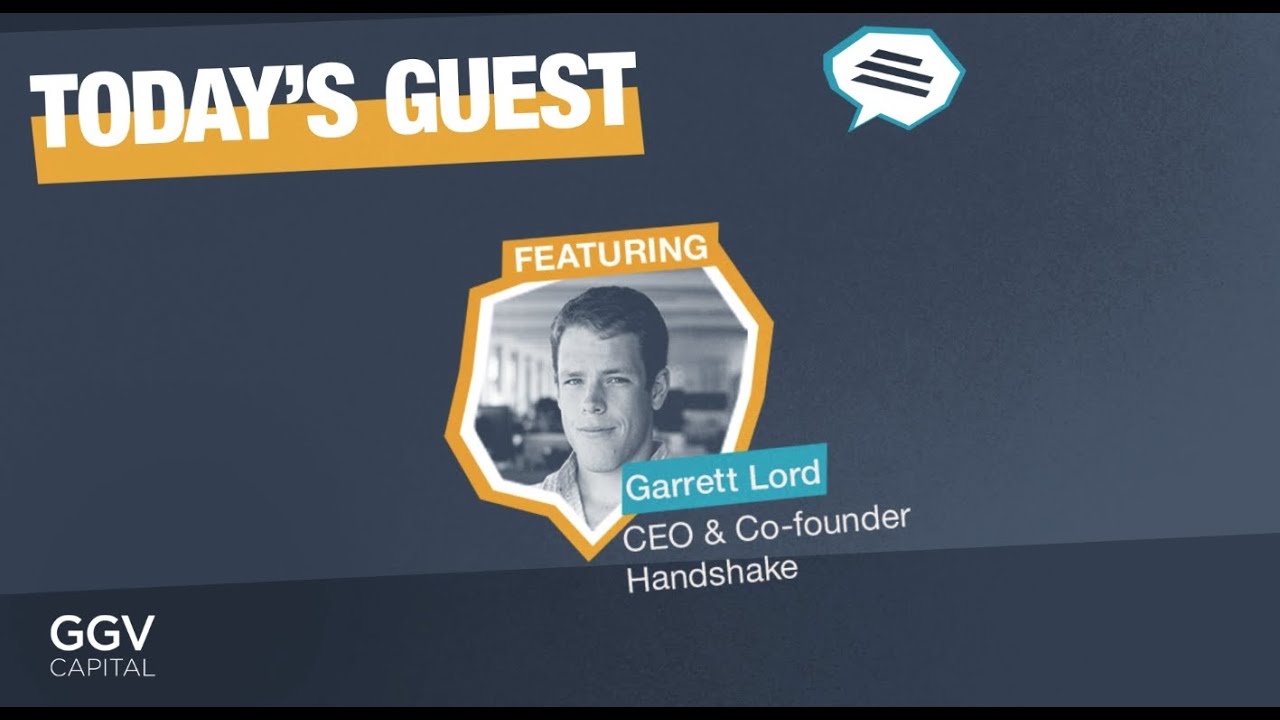
Garrett Lord went all in on Handshake AI — now it’s at nearly $1B

This content was created by Garett Lord. This content was uploaded by Garett Lord. This is a YouTube interview episode titled "Garrett Lord went all in on Handshake AI — now it’s at nearly $1B" (posted 2026-04-23). It features a conversational interview between host Jeff and Handshake co-founder/CEO Garett Lord covering the origin and rapid growth of Handshake, the launch and scale of Handshake AI, how the platform connects students and professionals to AI work and human-in-the-loop model training, key metrics (≈22M users, ~92% of higher education, rapid revenue growth approaching $1B), product and go-to-market strategy, and some personal reflections on leadership and family.
Chapters
We want to be the number one place where you're earning money, learning, and finding jobs in this new AI economy.
And about a year ago or a year and a half ago, you had the inspiration for Handshake AI, one of the most exciting things I've ever seen.
That business in less than a year has actually become bigger in terms of like revenue and scale than our core business.
Garett Lord is the architect of modern opportunity. As the co-founder and CEO of Handshake, he oversees a network of 22 million young professionals and powers 92% of higher education in America. While the world debates If AI will take our jobs, Garett has built the infrastructure ensuring it doesn't. All right, well, Garett, thanks for doing this. Great to see you.
Of course, excited to be here.
I thought a fun place to start would be sort of the origins of Handshake.
Well, I started Handshake out of like a personal place and a problem that I had when I was in Michigan. I went to community college for 2 years, paying my way through school, and then transferred up to a state school called Michigan Tech, as you know. And it was there that I had 2 internships that changed my life. One was at Los Alamos National Labs and the other one was at Palantir. And I was really kind of frustrated and fixated on this problem of like, why is that depending on kind of what your parents do or what school you go to, there's just such radically different access to opportunities and information. And so started Handshake, you know, over a little over 10 years ago with the real like dream of trying to make it easier for students like myself to navigate from college to career and chase their dream jobs. We had a contrarian idea, and that was that we were gonna work with higher education directly and help them help their students find internships and jobs. And people had never seen a higher education company grow as quickly as Handshake. I mean, we grew faster into higher education than any company has in history. Fast forward to today, Like, we're the number one place that young people in America turn to to find internships and jobs, and there's a million companies that use the network. There's 22 million students and young professionals. We power about 92% of higher education, so it's about 1,600 universities and community colleges, and feel really proud of, like, the impact we're making on millions of people's lives.
You know, you go through that, those early days, you're raising money from, you know, friends, family, doctors, whoever. You're signing your first customers. Then you go and you raise a Series A with KP, which is right about the time that we met, and I remember you telling me, hey, this is the plan. You had this huge vision. You said, hey, LinkedIn exists, but it doesn't really address college students, and we're solving, you know, we're creating a modern version of career services for the schools, and then we're gonna create a great pipeline for employers who wanna hire all these amazing kids from schools other than the ones they traditionally recruit at, the top, you know, 10 or Ivy League or whatever. And I remember you telling me that, And I left and thought, wow, that is a very big vision for a company that today, I don't know how many schools you guys had at the time. It wasn't a ton. It might have been the first 60.
Yeah. Recruiting on campus required this, like, immense kind of brand building, boots on the ground, guerrilla marketing exercise, unless you're anything other than, like, the biggest companies in the world that students find attractive. And so not only was it, you know, you had to fly out there, bring a couple recruiters, you know, then you're hosting an info session where you have, like, no ability to actually drive student awareness. There's 200 other companies on campus. It's just the definition of like the most antiquated, non-tech-driven, non-analytical, expensive process. And then what do companies care about? They care about like the quality of hire and, and really the cost to make that hire. And so I just believed that there was like a different way that we could do this, where you can identify the smartest kids in the country, you can match people better based on their interests and their experiences, you could help students learn from one another. There was this tipping point in the network where Handshake kind of isn't that valuable when we're just at 60 schools, and isn't that valuable when we're only at 100 160 schools. We really start to become valuable when we have like hundreds. Now we partner with 92%, right? So you can basically reach any single college student in the country, and we can help you find the best fit out there. And so companies now have really flocked to this more, I'd say, proactive, digitally driven process. And we get along talking about what AI can do in recruiting. But I think AI, I mean, what recruiting is, is like, it's sourcing, it's selection, it's screening. Like AI is making a huge impact on like small abilities, small companies' ability to to like hire great candidates. But yeah, the network really started to tip when we were at about 450 schools. Then we turned on monetization. Companies use Handshake for free. So there's a free product and a paid product. You can still get a ton of value out of the free product, but if you want some of these premium features that help you more intelligently connect with the best students, you have to pay for the product. And so yeah, I bought a sport coat from like Men's Warehouse and like flew to New York. I was told like, you know, go, go do enterprise sales. And like started knocking on the doors of like Goldman Sachs and JPMorgan and McKinsey and Google, and they all became customers, right? So to fast forward today, 70% of the Fortune 100, they pay for the product, and 100% of the Fortune 500 uses the product. So we're actually like the largest hiring network outside of LinkedIn and Indeed in America. And LinkedIn still asks you, what's your first job? Yeah, it's like, it's like, if you're a software engineer, I don't, I don't have a job, right? Maybe you just took the backdrop up until 2021, the company had been like doubling in revenue every single year, right? Doubling in headcount every single year. We saw this like hyper acceleration during COVID where basically Handshake became like critical infrastructure for hiring in America because companies couldn't physically visit campuses, right? So it, it really pulled forward this like massive tech adoption of thinking about new ways to recruit that accelerated the recruiting industry in a lot of ways.
Business is going great. And about a year ago, or a year and a half ago, you had the inspiration for Handshake AI. Maybe talk folks a little bit about what the inspiration was and sort of where you had the idea for this new opportunity.
Long-term, where we want to take Handshake to is this world where you're earning money, you're learning AI skills, and you're finding jobs. I think the economy is going to get far more fluid in terms of people transitioning contract work. There'll be this whole category of managing agents and actually almost managing digital workers that are doing work for you. And there is a huge opportunity in this deck reshuffling of software businesses on the internet right now to take You know, to plant a huge flag in the ground and say, like, what we really want to be is, is the job search kind of ecosystem where you're earning money, learning, and finding jobs in this new AI economy. And that pillar we really saw take bear with, like, a lot of the frontier model companies are reaching out to us, trying to work with us to try to find talented PhDs, master's students, and bachelor's students.
Because you've got 22 million of them on the Handshake platform.
Correct. Yeah. And they were coming to us trying to work on projects that really help make the frontier of their AI models better. You know, that business in less than a year has actually become bigger in terms of like revenue and scale than our core business. We've seen just incredible growth.
Talk to a little bit about what is that space like? Why, why does that space exist? Why is it important?
You have algorithms and then you have data, and data is really what fuels the modern large language model, right? So you have on the data side, you have like a pre-training. Pre-training is basically a scrape of kind of the entire corpus of the internet, every document that exists, every video that exists on the internet. That's on the pre-training side. And then you have what's called post-training. And post-training is helping build advanced capabilities across every area of interest that matters for the labs. So what that looks like is model builders want to be better at personal finance. They want to be better at shopping. They want to be better at travel and flights. They want to be great at STEM domains. Like if you think about accelerating science and drug discovery, they want to be great at ground truth knowledge in physics and biology and chemistry and mathematics. They really dream of building interdisciplinary interdisciplinary breakthroughs at the intersection of science, even take like material science. And then on the professional side, you obviously see like, you know, they really dream of building like professional copilots, right? So you see that is most clear to folks when they're interacting with like QuadCode, right? Or Cursor. But that is the first true like copilot companion AI product that is absolutely exploding right now. And it's kind of, I'd say, arguably like reinvented the job of a software engineer, especially over the last 6 months. And so if you think about this aspiration of professionals, like we have lawyers and doctors and investment bankers and accountants and wealth managers and folks in oil and gas manufacturing. Like we are working across hundreds of different categories of real professional work to help model builders improve the state of the art of what their models can do with professionals, with scientists, and with kind of generalist and consumer use cases. For as long as humans are smarter than models, humans will be needed to train models. And so what that really means is, you know, hiring and training and putting tens of thousands of people on our platform to help them kind of contribute what they know about their industry or their expertise to improve the state-of-the-art frontier model performance.
So you launched Handshake AI a year ago. It was an idea that you had in kind of December of '24.
Yeah, Christmas and New Year's.
Yeah, I remember.
Spent every day on a plane. My wife's still mad about it. Yeah.
Yeah. And I remember you came into January with a full head of steam and said, hey guys, we need to do this.
Yeah.
How did you decide to go all in on it, and how did you build the— build this essentially new company?
The first thing I did was I went out and recruited like an amazing team. The first guy I recruited was already had signed another job, so he was gonna accept a new job in the new year, and I just like, no, you're not. Like, I'm gonna fly to San Jose and drive to you like every day. And I basically would like commute back and forth from Phoenix, where my family was over Christmas and New Year's, to like chase down these team members. And we quickly built that team from 3 people to 15 people. I pulled over some of the best and brightest people at Handshake who were interested in new adventures and kind of like getting restless in their, in their existing jobs. There's been some highs and lows along the way, but it has been incredible. I mean, this business will go— well, I mean, went $0 to $500+ million running revenue in like 8 months.
And which is incredible.
Yeah, I think we'll do far, far north of $1 billion this year.
And from a standing start a year ago, it's been extraordinary.
I think the The main learnings for me was just like, I mean, this is our like 4th zero to one inside the business. I don't think a lot of people appreciate that. Like we had, we built the fastest higher education company in history, like with an incredible team like that went zero to 1,600 schools in like less than a decade. We had to figure out how to sell companies in the network. So I'm going to talk about buying a sport coat from Men's Wearhouse and like flying to New York, but I had to figure out how to like build a multi-hundred person sales team and sell, you know, small businesses with a product-led growth motion all the way up to big enterprise customers. And then we built like an incredible consumer business, which millions of people use with short-form video, groups, messaging, profiles. The business has really been— we are a 3-sided marketplace. And so I think as a leadership team and as a company, we've really learned how to like incubate 0-to-1 innovation inside the business and launch new big bold bets. It just so happens this new big bold bet is in like the largest market ever with the most explosive tailwinds behind us. And we have this just like massive structural advantage. I mean, that was the insight that I had to enter this business is that Basically, every single human data company was coming to us, pleading with us. Can we please recruit PhDs, accountants, lawyers on your network? Can we recruit bachelor students on your network in film and theater and music? We have the highest quality people on the planet. I mean, 92% of the top 500 universities in the country use their product. Like, basically every single top school in the country uses their product, and they trust us. Like, pretty much everyone under the age of 32 in America has heard of Handshake. Most of them were on it, right? Most of them have profiles on it. So our ability to turn around very quickly and produce the highest quality people on projects, and where these people trust us that we're going to pay them on time, that we're going to teach them and train them effectively, is like just miles ahead of our competitors. And that's what's allowed us to build, you know, this incredible franchise with AI Labs. It's been an extraordinary journey. I mean, the new business actually very quickly became much bigger than the business we spent a decade building. And I really think the combined version of Handshake moving forward is like taking a much bolder and aspirational, like top of the hill stance, which is like, well, you know, we we want to be the number one place that people learn AI skills, that monetize their knowledge and learn how to use complex agents and tools, and we want to help them, you know, update and then reflect that on their profile to find and you know get ultimately recruited by companies on the network. I think it's to only be building a human data business or to only be building recruiting business is I think missing the longer term opportunity of you know being a platform that really helps with the job displacement that's about to happen.
Well, Garett, this has been awesome. You know, one last question for you, just more of a personal question. You and I have been friends now for quite some time.
Yeah.
How has your job as a CEO changed and your life changed since you got married and had your first kid? I'm just curious, advice for other founders and entrepreneurs, because, you know, I know when I started my second company, I had my first baby and just got married, and it's such a crazy experience to have all the excitement of building a company, and then you're trying to Start your life as well with a partner, and you've got all these new additions. So I'm just curious how that's been.
I love that line around like the most important decision you'll ever make in life is like who you decide to pick as your partner. I am in such awe of like my wife and just like what it takes for very strong women in our lives to like lead our family and like raise a baby. And I try to be super present and like be a supportive partner in that journey, but it's like, it's been so beautiful to see our relationship come together and like We now have like our own like familial unit. And then I think on the work side, I really am trying to work on being like more patient and present.
Mm-hmm.
And just like enjoying the process and being less focused on like the outcome and just like enjoying the time with the kid and being less focused on the next thing I'm doing. And like, that's probably like one of my big goals in 2026 is just really enjoying the moment and all the highs or lows or struggle of the moment at work. And like, you know, leaving that behind you at work and coming home and being present for your family.
And I know for me, it forced me to prioritize, and I think I became a better leader because I was prioritizing my time more effectively. And also just realizing the things that— the ups and downs that happen at work are part of the journey.
Totally.
Right? There's so many times you get punched in the face as a CEO or as a leader, and when you're younger, you're like, oh, I gotta fight back. And what you realize over time is, no, that's just part of the process. We're building— just like building a family, there's going to be a lot of ups and downs. Trust me with having kids, as somebody who has 4.
Yeah.
There's a lot of moments that, you know, you look back on like, oh my God, I can't believe we lived through that. But, you know, ultimately your kids grow up and go on to hopefully be successful and it's super fun. And your company at the same time is growing and the people around you see you growing as a leader. So it's been, it's been fun to watch as an investor and a board member just through that, through that journey. And yeah, it's pretty cool.
Awesome. Thanks for having me, Jeff.
Thanks for doing it. If this episode changed the way you think about the future of work, subscribe now to stay locked into the conversations shaping the AI frontier.
More from Garett

Handshake's remarkable refounding: a lesson in how the next AI fortunes get made | Garrett Lord


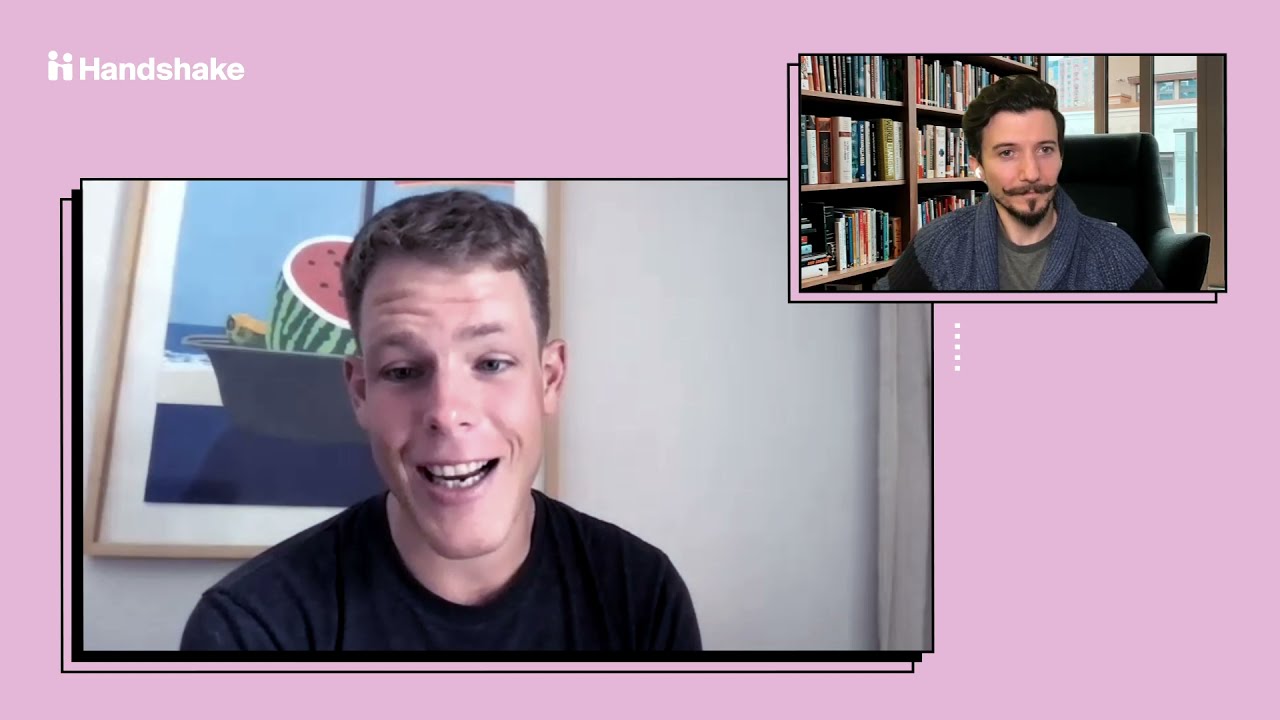
E08 - From Michigan Tech to the fastest growing EdTech company in the world - The story of Handshake